

Session Dates: 13 May - 22 May 2026
The IMO Maritime Safety Committee (MSC) held its latest session, making substantive progress across a broad range of maritime safety, security, and operational regulatory areas. The key milestones of this session were the adoption of a non-mandatory International Code of Safety for Maritime Autonomous Surface Ships (MASS Code) addressing the growing need for a standardized framework to regulate this developing technology, the introduction of the Very High Frequency (VHF) Data Exchange System (VDES) as an alternative to the traditional Automatic Identification System (AIS), enhancing operational capabilities of the technology in the sector, and the allowance of the use of remote inspection techniques for bulk carriers and oil tankers.
This Brief provides an overview of the more significant issues progressed at this session.


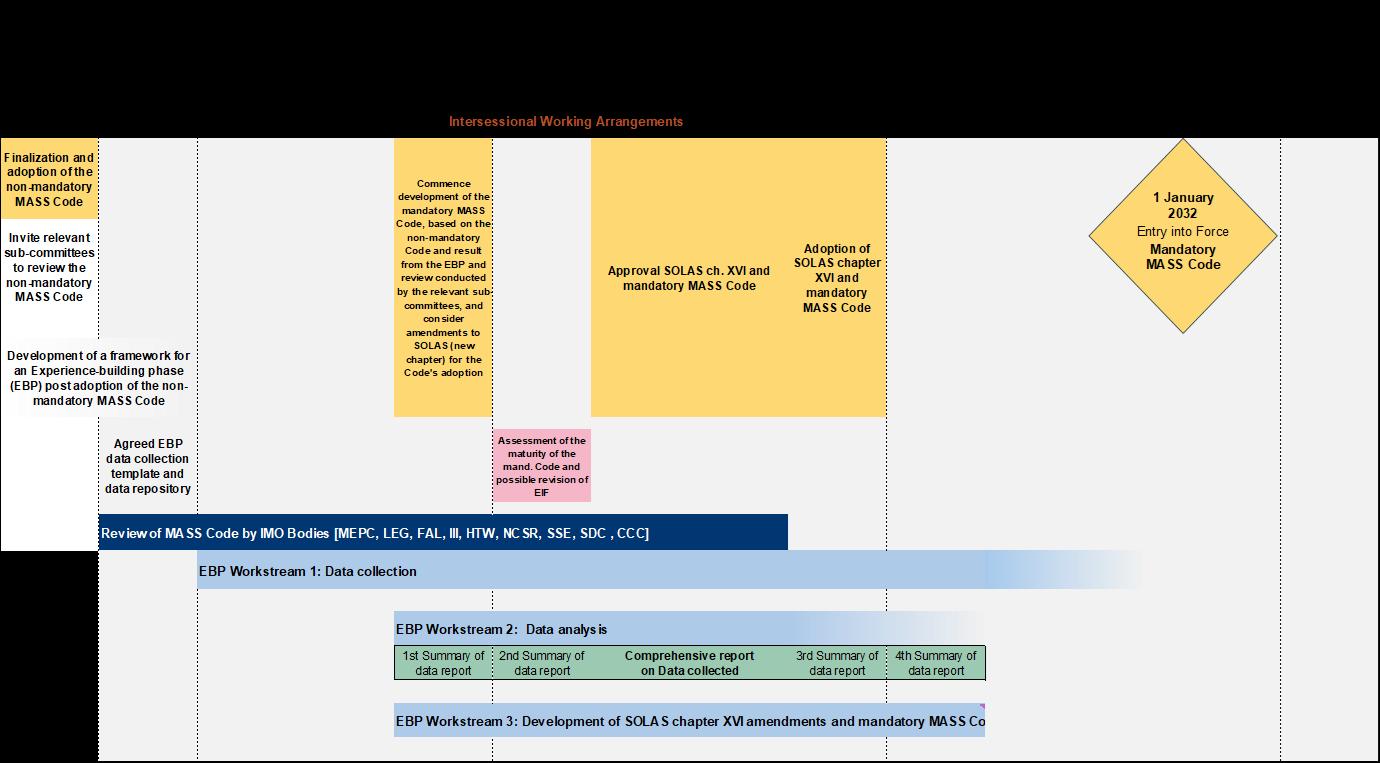
1. Non-mandatory MASS Code adopted: The Committee adopted the non-mandatory International Safety Framework for Maritime Autonomous Surface Ships. An Experience-Building Phase (EBP) will now follow to monitor real-world implementation, driving the development of the mandatory MASS Code which is targeted to enter into force on 1 January 2032.
2. Amendments to Mandatory Instruments adopted: The Committee adopted amendments across the following mandatory instruments, entering into force on 1 January 2028.
• SOLAS, HSC Codes: VHF Data Exchange System (VDES) is permitted as an alternative to AIS
• 2011 ESP Code: Remote Inspection Techniques (RIT) allowed for bulk carriers and oil tankers
• LSA Code: Amendments for Lifejackets, Lifeboats and Launching Appliances.
• IMDG Code: Amendment 43-26 to the IMDG Code (update for the carriage of lithium/sodium-ion batteries and other dangerous goods).
• IP Code: Increase industrial personnel weight from 75 kg to 90 kg
• Load Line: Address guard rail and bulwark requirements around exposed decks.
3. IGC Code amendments: Consolidated amendments to the IGC Code were approved for submission to MSC 112 for formal adoption. The application of the amended Code to new ships will explicitly follow the "three-date system" format.
4. “One Ship, One Code” policy: To accurately reflect this policy decision and prevent any interpretative ambiguity, amendments to SOLAS and IGF Code were approved at this session with a view to be submitted to MSC 112 for adoption. Where alternative fuels fall outside IGC scope, a combined, administration approved approach is introduced, supported by aligned SOLAS and IGF amendments.
5. Ammonia cargo as fuel: Approved interim Guidelines for ammonia cargo as fuel establishing a goal based safety framework to enable its use on gas carriers, supplementing the IGC Code with risk based design and operational requirements.
6. Hydrogen as fuel: Approved interim Guidelines for hydrogen as fuel establishing a goal based safety framework, aligned with the IGF Code, to support its safe adoption across ship systems.
7. Liquified hydrogen in bulk: Adopted revised interim Recommendations for liquefied hydrogen carriage in bulk (revoking MSC.565(108)) strengthening the IGC framework by addressing the unique risks of LH2, particularly through new requirements for enhancing structural integrity, safety controls, and system definitions, providing a more robust and consolidated baseline for LH2 transport.
8. GHG safety work plans: Endorsed the safety regulatory work plans developed by the CCC and SDC Sub-Committees, agreeing on priority items to support the reduction of GHG emissions from ships using new technologies.
9. Escape trunk below bulkhead deck: Agreed to issue a revised circular (MSC.1/Circ.1689/Rev.1) confirming that the term "lower part of the space" in SOLAS regulations II-2/13.4.1.1 and 13.4.2.1 should be regarded as either the lowest deck level or a platform or passageway.
REDUCTION OF GHG EMISSIONS FROM SHIPS
• Development of a Safety Regulatory Framework Supporting GHG Reduction from Ships Using New Technologies and Alternative Fuels
• ‘One Ship, One Code’ policy
AMENDMENTS TO MANDATORY INSTRUMENTS
• Amendments to the 1974 SOLAS Convention
• Amendments to the 2011 ESP Code
• Amendments to the 1994 & 2000 HSC Codes
• Amendments to the IMDG Code
• Amendments to the IP Code
• Amendments to the LSA Code
• Amendments to the Requirements for Maintenance, Thorough Examination, Operational Testing, Overhaul and Repair of Lifeboats and Rescue Boats, Launching Appliances, and Release Gear (Resolution MSC.402(96))
• Amendments to the 1988 Load Lines Protocol
MARINE AUTONOMOUS SURFACE SHIPS (MASS)
• Adoption of non-mandatory International Code of Safety for Maritime Autonomous Surface Ships (MASS Code)
MARITIME SECURITY
• Measures to Enhance Maritime Security
• Piracy and Armed Robbery against Ships
• Unsafe Mixed Migration by Sea
SHIP DESIGN AND CONSTRUCTION (SDC)
• Steering and Propulsion Requirements for Both Traditional and Non-Traditional Propulsion and Steering Systems
• Escape Routes from Below the Bulkhead Deck and the Location of the Escape Trunk
• Guidelines for Use of Fiber-Reinforced Plastics (FRP) within Ship Structures
• Revision of the Interim Explanatory Notes for the Assessment of Passenger Ship Systems' Capabilities after a Fire or Flooding Casualty (SRtP)
• Amendments to Chapter 6 of the 2009 MODU Code
• Development of Engine Control Room Alert Management (ECRAM) performance standards
HUMAN ELEMENT, TRAINING AND WATCHKEEPING (HTW)
• Human Element, Training and Watchkeeping
NAVIGATION, COMMUNICATION AND SEARCH AND RESCUE (NCSR)
• Routing Measures and Ship Reporting Systems
• Revision of MSC.1/Circ.1657 Procedure for responding to DSC distress alerts by ships
• Development of Global Maritime SAR Services
• Development of Procedures for the Recognition of Augmentation Systems in the Worldwide Radionavigation System (WWRNS)
• Development of Guidelines for Software Maintenance of Shipboard Navigation and Communication Equipment and Systems
• Guidelines on the Carriage and Use of Electronic Nautical Publications (ENP)
• Revision of Performance Standards for Shipborne BeiDou Satellite Navigation System (BDS) Receiver Equipment
CARRIAGE OF CARGOES AND CONTAINERS (CCC)
• Amendments to the IGC Code
• Interim Guidelines for the use of Ammonia (NH3) Cargo as Fuel
• Interim Guidelines for the safety of ships using Hydrogen (H2) as Fuel
• Revision of the Interim Recommendations on the Carriage of Liquid Hydrogen (LH2) in Bulk
POLLUTION PREVENTION AND RESPONSE (PPR)
• Chemical Products and IBC Code amendments
UNIFIED INTERPRETATION OF PROVISIONS OF IMO SAFETY, SECURITY AND ENVIRONMENT-RELATED CONVENTION
• Unified Interpretation on 2nd Barrier Testing
• Unified Interpretation of paragraphs 4.4.7.6 and 4.7.7 of the LSA Code
OTHER DEVELOPMENTS
• Performance Standards for AI Systems in Marine Equipment
• Review of the Financial Architecture of the LRIT System
• Safety harnesses color requirements for free-fall lifeboats
• Recommendations on the safe use of pesticides in ships applicable to the fumigation of cargo holds
• Development of non-mandatory safety guidelines for non-self-propelled floating power units with nuclear reactors (FPU)
• Cyber Risk Management
Development of a Safety Regulatory Framework Supporting GHG Reduction from Ships Using New Technologies and Alternative Fuels
MSC 110 tasked the Sub-Committees with developing a holistic work plan to assess gaps, identify barriers, and determine which instruments require amendment to support the safe reduction of GHG emissions using new technologies and alternative fuels. Following these instructions, the Sub-Committees on Carriage of Cargoes and Containers (CCC) and on Ship Design and Construction (SDC) prepared comprehensive work plans. These plans prioritize tasks and take into account related ongoing or completed work, aiming to systematically remove regulatory barriers and fill safety gaps identified by the Working Group on GHG Safety.
MSC 111 endorsed the work plans developed by the CCC and SDC Sub-Committees outlined below:
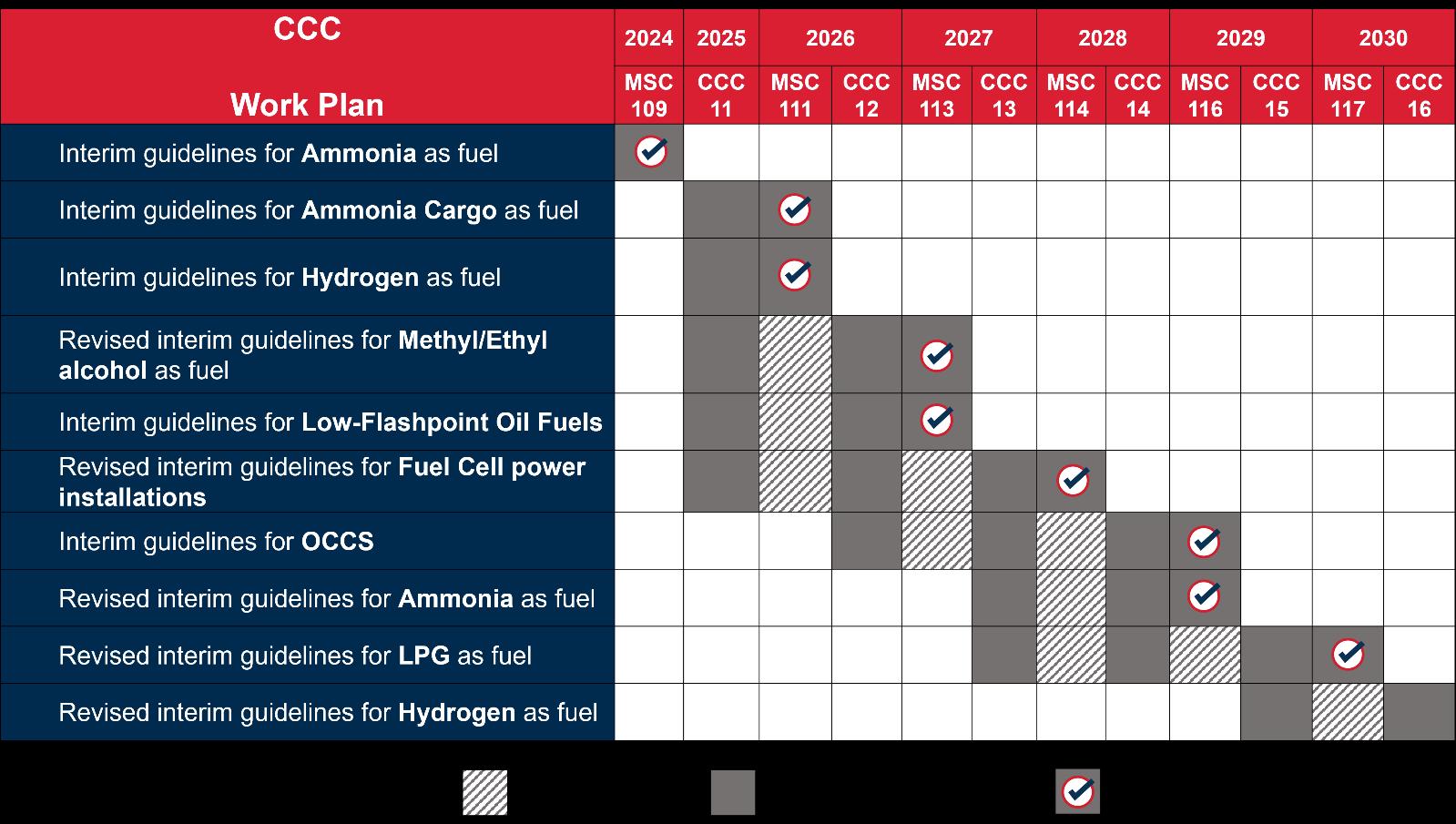
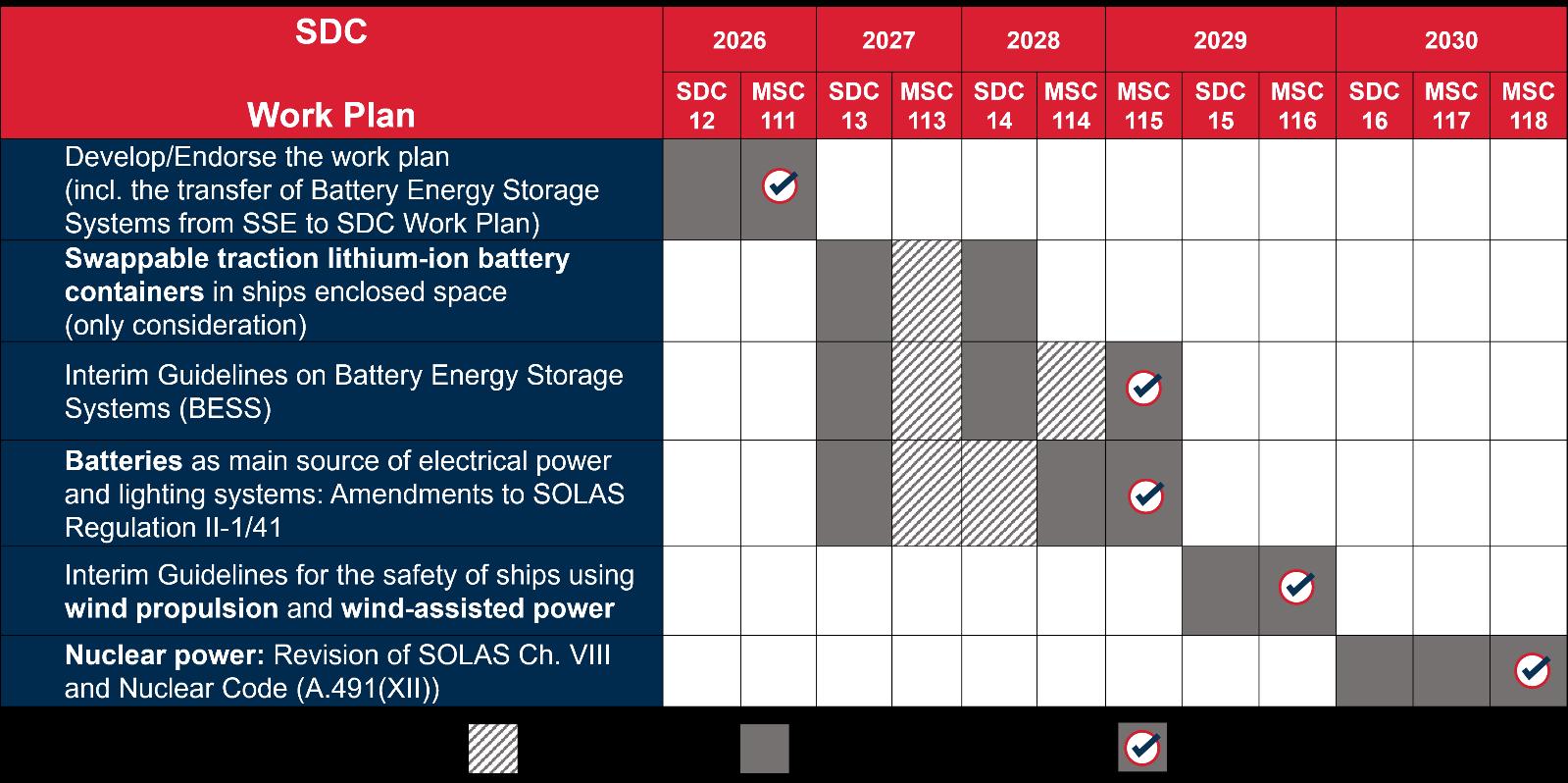
Next steps: The work is to be progressed intersessionally at each Sub-Committee as per endorsed work plans above. CCC Sub-Committee will prioritize methyl/ethyl alcohol as fuel, low-flashpoint oil fuels and fuel cells, while SDC Sub-Committee will focus on battery-related matters (highest priority), wind assisted propulsion and nuclear power. LEG and FAL Committees are invited to consider civil liability aspects of nuclear power on ships. The Committee noted that these work plans remain dynamic and may be adjusted based on future working group decisions, including the potential addition of new alternative fuels and technologies.
Re-establishment of the Intersessional Working Group on Development of Technical Provisions for Safety of Ships using Alternative Fuels (ISWG-AF3)
In alignment with the CCC work plan and its priority items, the Committee approved the re-establishment of the Intersessional Working Group on Development of Technical Provisions for Safety of Ships Using Alternative Fuels (ISWG-AF3) for 2026. Falling under the purview of the CCC Sub-Committee, its terms of reference are to:
1. further develop the revision of the Interim guidelines for the safety of ships using methyl/ethyl alcohol as fuel (MSC.1/Circ.1621), aiming for finalization at CCC 12 (September 2026) to support future mandatory instruments.
2. further develop the draft interim guidelines for ships using low-flashpoint oil fuels
3. further develop the revision of the Interim guidelines for the safety of ships using fuel cell power installations (MSC.1/Circ.1647), with a view to developing future mandatory instruments
Next steps: The ISWG-AF3 is scheduled to meet from 7-11 September 2026 and will submit a written report to CCC 12 (September 2026).
Establishment of Correspondence Group on GHG Safety under the purview of the SDC Sub-Committee Based on the SDC work plan, the Committee noted the establishment of the Correspondence Group on GHG Safety and expanded its terms of reference to tackle the following critical areas:
Nuclear Power:
1. Collate information on relevant hazard identification exercises conducted previously.
2. Prepare an inventory of topics/challenges relating to the use of nuclear reactors for maritime applications by considering the discussions that took place at MSC 111 regarding the security of the ship (hijacking,
piracy, terrorism and cyberattacks) and its sensitive systems faced with unauthorized access, sabotage or other forms of intentional interference.
Wind Propulsion and Wind-Assisted Power:
1. Review the Intact Stability Code and the second-generation intact stability criteria and identify which parts should be revised for ships with wind propulsion and wind-assisted power.
2. Consider which parts of IMO instruments could be relevant for the development of interim guidelines for the safety of ships using wind propulsion and wind-assisted power
3. Collate information on relevant hazard identification exercises conducted previously
While work on lithium-ion batteries and swappable traction battery containers was initially tasked to the SDC Correspondence Group, MSC 111 agreed to shift the active consideration of these items to the Correspondence Group under the SSE Sub-Committee. However, the work will remain in the SDC plan. The SSE group is now tasked to:
1. Develop interim guidelines for ships using battery energy storage systems (BESS)
2. Consider development of draft amendments to SOLAS regulation II-1/41 to allow for batteries to be used as the main source of electrical power and lighting systems
3. submit a written report to SDC 13 (Spring 2027)
Next steps: The respective Correspondence Groups will submit written reports to SDC 13 (Spring 2027).
‘One Ship, One Code’ policy
MSC 95 established the ‘one ship, one code’ policy which dictates that the IGF Code does not apply to ships already covered by the IGC Code. However, at MSC 110, a regulatory gap was identified concerning gas carriers using alternative gaseous or low-flashpoint fuels (such as methanol or hydrogen) that are not listed as products in chapter 19 of the IGC Code. To eliminate regulatory ambiguity, MSC 110 confirmed whether a product listed in chapter 19 of the IGC Code is carried as cargo and used as fuel or used as a dedicated fuel without being carried as cargo, the gas carrier concerned remains subject solely to the requirements of the IGC Code. For gaseous or low-flashpoint fuels not listed in chapter 19, MSC 110 recognized that the IGC Code does not include specific provisions governing their use as fuel on gas carriers. At the same time, safety provisions for such fuels have been developed within the IGF Code framework, including through interim guidelines (e.g. for hydrogen and methyl/ethyl alcohol as fuel). MSC 110, therefore, agreed that, in such cases, relevant requirements derived from both Codes would need to be considered to ensure the safety of the fuel system and the cargo.
To accurately reflect the ‘one ship, one code’ policy decision and prevent any interpretative ambiguity, the following draft amendments to mandatory instruments were approved at this session:
• SOLAS Chapter II-1: The term "gaseous fuel(s)" should be used consistently throughout the draft amendments to SOLAS chapter II-1 and the amended SOLAS regulation II-1/56.4 (Application for ships using gaseous fuels or low-flashpoint fuels) excludes gas carriers, as defined in regulation VII/11.2.
• Preamble of the IGF Code: The amended first paragraph of the preamble of the IGF Code should read "The purpose of this Code is to provide an international standard for ships, other than gas carriers, using gas or low-flashpoint fuel "
The above amendments are aligned with the IGC Code amendments (new paragraph 1.1.1.2). This new paragraph establishes the explicit requirement that ships subject to the IGC Code using fuels not listed in chapter 19 must be approved by the Administration, guided by the specifically developed recommendations for those ships. The amendments to IGC Code have been approved by this Committee (refer to “Amendments to IGC Code”)
Next steps: The approved draft amendments to SOLAS and IGF Code are anticipated to be formally adopted at the upcoming MSC 112 (December 2026) with entry into force date of 1 July 2028. IGC Code amendments are also expected to be adopted at MSC 112.
Amendments to the 1974 SOLAS Convention
The Sub-Committee on Navigation, Communications and Search and Rescue (NCSR), at its 12th session (May 2025), considered amendments to the SOLAS Convention and Resolution MSC.509(105) regarding the provision of radio services for the Global Maritime Distress and Safety System (GMDSS). The primary aim of these amendments is to explicitly mandate the dissemination of Maritime Safety Information (MSI) and Search and Rescue (SAR)-related information through all operational recognized mobile satellite services (RMSSs).
Moreover, growing concerns over malicious AIS information and spoofing, combined with progressed technical work on the VHF Data Exchange System (VDES) and the upcoming rollout of S-100 capable ECDIS on new ships from 2026, drove the decision to formally introduce VDES into the maritime regulatory framework. Initially considered by NCSR 12 as a non-IP-based backup communication link, MSC 110 approved the proposed SOLAS amendments, setting the stage for final adoption at this session.
At this session, the Committee officially adopted the consolidated amendments to SOLAS regarding the above topics To facilitate the seamless introduction of this technology, the Committee also adopted a Resolution, which establishes that any references to the carriage and use of “automatic identification system” or “AIS” within the IMO regulatory framework should now also be understood to encompass the AIS component of VDES.
These amendments, outlined below, have an entry-into-force date of 1 January 2028:
IV/5.3
Provisions of Radiocommunication services
V/4
V/5
Navigational warnings
Meteorological services and warnings
Each Contracting Government to undertake to use all operational RMSSs in their area of responsibility when disseminating MSI and SAR-related information via the Enhanced Group Call (EGC) service
Revised to require prompt dissemination and alignment with SOLAS IV/5.3
Cross-reference to SOLAS IV/5.3 introduced
Improve redundancy and global coverage
V/18
Approval, surveys and performance standards of navigational systems and equipment and voyage data recorder
Addition of performance standards for shipborne VDES in the footnote to paragraph 2, and amendment to paragraph 9 requiring annual testing of AIS or VDES by an approved surveyor or testing facility, including verification of correct programming, data exchange with connected sensors, and radio performance measurement
Integrates warning obligations with communication systems
Ensures consistent multichannel dissemination
Aligns VDES with AIS oversight requirements
V/19
V/19-1
Appendix
Carriage requirements for shipborne navigational systems and equipment
Long-range identification and tracking of ships (LRIT)
• Record of equipment for passenger ship safety (Form P)
• Record of equipment for cargo ship safety (Form E)
• Record of equipment for cargo ship safety (Form C)
VDES permitted as alternative to AIS (reference to the Guidelines for the onboard operational use of shipborne VHF data exchange system (VDES)
Exempts ships fitted with AIS or VDES operating exclusively within sea area A1 from the LRIT requirements.
Automatic identification system (AIS) or VHF data exchange system (VDES)
Enables adoption of nextgeneration technology
Consequential amendment reflecting the recognition of VDES as an alternative option to AIS
Consequential amendment reflecting the recognition of VDES as an alternative option to AIS
Revision of Provision of Radio Services for the Global Maritime Distress and Safety System (GMDSS)
In accordance with the SOLAS amendments, the Committee adopted the revised Resolution on the Provision of Radio Services for the Global Maritime Distress and Safety System (GMDSS) as resolution MSC 105/Rev.2 (revoking the previous Rev.1) The revised Resolution contains six annexes defining Government obligations and criteria for establishing shore-based DSC facilities, sea areas, NAVTEX, NAVDAT, and EGC services.
Crucially, the new Annex 6 introduces substantive changes, establishing that:
• Contracting Governments must ensure MSI broadcast via EGC is appropriately disseminated through all operational RMSSs providing coverage within their areas, ensuring ships receive the data regardless of their specific onboard EGC equipment.
• MSI providers must obtain authorization from the relevant international organization to access EGC services directly.
• Contracting Governments must similarly disseminate SAR-related information through all operational RMSSs within their SAR regions.
• SAR authorities must either establish arrangements with an existing authorized EGC information provider or obtain authorization from the IMO EGC Coordinating Panel to access EGC services directly through their designated RCCs.
Performance Standards for Shipborne VHF Data Exchange System (VDES) and Guidelines for the Operational Use of Shipborne VHF Data Exchange System (VDES)
To finalize the technical framework, the Committee adopted the Resolution on the Performance Standards for Shipborne VDES and approved Guidelines for the Operational Use of Shipborne VDES, which establish the following critical baselines:
• System Integration: Defines VDES as integrating four components: the AIS component, ApplicationSpecific Messages (ASM) component, terrestrial VHF data exchange (VDE-TER), and satellite VHF data exchange (VDE-SAT);
• AIS Compliance: Requires the AIS component to comply with existing AIS performance standards (Resolution MSC.570(109)) and Recommendation ITU-R M.1371, ensuring no interference with AIS position reporting;
• Priority Hierarchy: Mandates that VDES gives highest priority to AIS position reporting and safety-related information, followed by ASM, VDE-TER, and VDE-SAT;
• Exchange Capabilities: Ensures the system can exchange data across all domains (ship-to-ship, ship-toshore, shore-to-ship, ship-to-satellite, and satellite-to-ship);
• Cybersecurity: Requires cybersecurity measures conforming to IEC 61162-460 and IEC 63154, and capability for verifying digital signatures to ensure data integrity and authentication of the sender;
• Operational Readiness: Requires operational readiness within two minutes of being switched on and power supply from the ship's main, emergency, and reserve sources of electrical energy;
The SDC Sub-Committee has been working to modernize statutory survey regimes by safely integrating modern technologies, such as Remote Inspection Techniques (RIT). At its eleventh and twelfth sessions, the SubCommittee developed a comprehensive framework and accompanying goal-based guidelines for the use of RIT during surveys of bulk carriers and oil tankers. These guidelines were designed to provide comprehensive direction on RIT application, including thickness measurement capabilities, surveyor guidance, validation and verification of equipment, and training requirements.
At this session, the Committee officially adopted the amendments to the 2011 ESP Code to formally introduce the comprehensive RIT framework. These amendments apply consistently across all four parts of the Code (singleand double-side skin bulk carriers; double-hull and other oil tankers). Concurrently, the Committee approved the associated MSC circular containing the Guidelines on the use of remote inspection techniques (RIT) for ESP Code surveys.
The principal amendments to the Code include:
• Definition of RIT: Defined as a means of survey of any parts of the structure without the need for direct physical access by the surveyor. An associated footnote refers to the newly approved guidelines.
• Thickness measurements and close-up surveys: For periodic surveys after the third renewal survey, the use of RIT is subject to the agreement of the Administration, who may impose additional requirements or limitations.
• Procedures for the use of RIT: RIT shall be conducted by a certified firm under the continuous direction and control of the surveyor. Where RIT reveals damage or deterioration, traditional close-up survey shall be required. Random confirmatory surveys shall be carried out at locations selected by the surveyor.
• Renewal survey: RIT may only be used to assist close-up survey where access is not provided by permanent means of access. RIT shall not be used in ballast tanks or spaces where a hard protective coating is required and found in less than GOOD condition, or in areas with a significant history of structural failures (corrosion, cracks and buckling).
• Tank pressure testing: Clarifies that testing must be carried out within the renewal survey window and not more than three months prior to completion of the overall or close-up survey.
• Survey program: RIT proposals shall be submitted before the survey, discussed, and approved by the Administration, addressing RIT limitations, areas to be covered, and conditions for use.
• Preparations and equipment for survey: All spaces shall be clean and free from obstructions. The surveyor shall be satisfied with the method of data presentation and two-way communication. RIT shall be validated on board prior to every survey taking into account existing conditions.
• Survey planning meeting: Expanded to include the RIT firm representative and to address RIT limitations, areas proposed for RIT coverage, and confirmatory surveys.
• Certification of RIT firms: New annexes establish procedures for certification of firms engaged in closeup survey using RIT, covering supervisor and operator qualifications, training, equipment requirements, auditing (including on-board demonstration), and certification valid for up to three years. Certification may be withdrawn for improper conduct, deficiencies, or failure to report alterations.
• Survey reporting: RIT reports shall include all videos and images, details of areas covered and damages found, RIT firm and equipment details, and evidence of review and approval by the attending surveyor.
Next steps: The RIT amendments to the ESP Code, along with the accompanying guidelines, will enter into force on 1 January 2028.
Equivalent means of fracture detections
SDC 12 considered the requirements for methods for testing the tightness of bulk carrier hatch covers, which specifies that the effectiveness of the sealing arrangements of all hatch covers shall be checked by means of a hose test or an equivalent method. In practice, the ultrasonic testing method has been increasingly applied to inspect the tightness of cargo ship hatch covers. However, the equivalence between ultrasonic testing and hose testing has not yet been formally recognized.
While paragraph 5.4.2 of parts A and B of annex B (for oil tankers) includes “other equivalent means” for fracture detection, paragraph 5.4.2 of parts A and B of annex A (for bulk carriers) lacks this option. SDC 12 finalized draft amendments to paragraph 5.4.2 of part A and part B of annex A (for bulk carriers) to read as follows:
One or more of the following fracture detection procedures may be required if deemed necessary by the surveyor:
.1 radiographic equipment;
.2 ultrasonic equipment;
.3 magnetic particle equipment; and/or
.4 dye penetrant.; and
.5 other equivalent means.
The Committee approved in principle the draft amendments to the 2011 ESP Code.
Next steps: The amendments to the 2011 ESP are to be submitted for formal approval by MSC 113 and adoption by MSC 114 (2028).
Technical Provisions for Means of Access for Inspection (MSC.158(78))
SDC 12 identified inconsistencies in the implementation of the Technical Provisions for the Means of Access for Inspection, resolution MSC.133(76) (as amended by MSC.158(78)) and the 2011 ESP Code (resolution A.1049(27), as amended). The discrepancies are related to the use of portable ladders as the means of access for close-up surveys to cargo hold side shell frames of single-side skin bulk carriers.
Consequently, in order to align the Technical Provisions with the 2011 ESP Code, amendments to resolution MSC.158(78), the Committee approved amendments to MSC.158(78), restricting portable ladders to not more than 5m in length as per paragraph 5.3, Part A of Annex A of 2011 ESP Code.
Next steps: The amendments to MSC.158(78) are to be submitted to MSC 112 (December 2026) for adoption with expected into force date on 1 January 2028
Following the adoption of SOLAS amendments introducing the VHF Data Exchange System (VDES) as an approved alternative to the Automatic Identification System (AIS), consequential updates were required for the High-Speed Craft (HSC) regulatory framework to ensure technical and operational consistency across all mandatory instruments. The Committee officially adopted consequential amendments to Chapter 13 (Regulation 13.15) of both the 1994 HSC Code and the 2000 HSC Code.
These amendments replace existing references to “AIS” with “AIS or VHF data exchange system (VDES)” and subsequently update the Record of Equipment for High-Speed Craft Safety Certificates. Notably, the Committee ensured alignment with the existing architectural framework of the Codes: the 1994 HSC Code incorporates VDES using recommendatory language (“should”), whereas the 2000 HSC Code applies mandatory language (“shall”).
Consistent with the overarching timeline for mandatory instrument updates adopted at this session, these HSC Code amendments are expected to enter into force on 1 January 2028.
The Committee adopted Amendment 43-26 to the IMDG Code with enter into force date on 1 January 2028 In accordance with the amendments, the Committee also approved the revised circular on new EmS entries for new UN numbers (MSC.1/Circ.1588/Rev.4)
The principal amendments are as follows:
Lithium/sodium ion batteries
Vehicle transport (SP 980)
Vehicle transport (SP 961/962)
Infectious substances (class 6.2)
Corrosive substances (class 8)
Energetic samples (class 4.1)
Desensitized explosives (class 1)
Dangerous Goods List
Pressure receptacles
Packaging’s Fiberboard boxes
Portable tanks Degree of filling
FRP service equipment
ISO standard updates
GHS alignment
Hybrid battery provisions; new UN entries (3563, 3564); unified "battery mark"
Pre-transport safety assessment; prohibition of damaged/impacted vehicles
Restructured exemption conditions by fuel type; clearer decision logic
Simplified category A/B classification structure
Criteria tightened: both ingestion and dermal contact toxicity now required (previously "or")
New provisions for energetic samples with functional groups for testing purposes
Updated exclusion provisions for substances diluted out of class 1
New entries (UN 3561, 3562 chlorophenols; UN 3563, 3564 batteries in CTUs); reclassifications; subsidiary hazards added to multiple entries
pV-product concept replacing fixed water capacity limits
Updated moisture resistance testing reference to ISO 535:2023
New provisions for maximum degree of filling (4.2.1.9.2 and 4.2.1.9.3)
New section 6.10.3 for FRP portable tank service equipment
Multiple updated standards with transitional periods (to 2028–2030)
Updated to GHS Rev.11
Keeps pace with evolving battery technologies in transport
Addresses fire and safety risks from vehicle shipments
SP 962 caps flammable liquid fuel at 250 litres (or one quarter of tank capacity); batteries must be protected from damage and short circuit
Improves clarity for emerging pathogen classification
Raises the classification threshold, potentially reclassifying some borderline substances
Allows transport under self-reactive type C entries without full test series, subject to decomposition energy thresholds
Provides a more systematic framework for listing desensitized explosives in class 3 (liquid) and class 4.1 (solid)
"Refrigerating machines" expanded to include "heating machines" (UN 2857, 3358); Column 17 enhanced with structured properties table by class
Modernizes containment sizing criteria
Aligns with current material testing standards
Clarifies filling limits for certain liquid categories
Enables use of composite materials in portable tank components
Ensures alignment with current manufacturing and testing standards
Maintains harmonization with UN dangerous goods recommendations
Emergency response (EmS Guide)
Battery mark labelling
The Committee approved amendments to new EmS entries for new UN numbers
"Lithium or sodium ion battery mark" renamed to "battery mark"; simplified marking requirements when equipment contains button cells
Consolidated revised EmS Guide issued as MSC.1/Circ.1588/Rev.4
Reduces labelling complexity; button cells in addition to main batteries do not count toward package limits
Next Steps: Amendment 43-26 to the IMDG Code enters into force mandatorily on 1 January 2028. The next amendment cycle (Amendment 44-28) will be considered at CCC 12 (September 2026).
Amendments to the IP Code
The Committee adopted amendments to the International Code of Safety for Ships Carrying Industrial Personnel (IP Code), Regulation 2 (Subdivision and stability), Part IV entering into force on 1 January 2028.
At MSC 110, the Committee noted that ships certified under Part V of the IP Code (High-Speed Craft) had a designated per-person weight for stability calculations, while ships under Part IV used the general 2008 IS Code requirement of 75 kg creating an inconsistency where the assumed mass of the same industrial personnel varied depending on the type of ship they were on. The Committee approved amendments to address this and to establish a comprehensive tiered subdivision and damage stability framework.
The revised paragraph in 2.1 introduces the following principal change:
Assumed mass of industrial personnel
The assumed mass of each industrial personnel is increased from 75 kg to 90 kg for ship stability calculations. This applies to ships:
• for which the building contract is placed on or after the date of entry into force; or
• in the absence of a building contract, the keel of which is laid or which is at a similar stage of construction on or after the date of entry into force + 6 months; or
• the delivery of which is on or after the date of entry into force + 4 years.
The increase from 75 kg to 90 kg ensures a consistent approach to calculating stability for industrial personnel regardless of whether the ship is certified under Part IV or Part V of the IP Code. Existing vessels are not affected, but newbuilds contracted from the date of entry into force will need to account for the increased per-person mass in their stability documentation, with potential implications for maximum carriage capacity and vessel design.
Assumed personnel mass
Increased from 75 kg to 90 kg per person for stability calculations
Newbuilds from date of entry into force
Ensures consistent perperson mass across Part IV and Part V vessels
The Committee adopted amendments to the LSA Code to insert application provisions directly into the Code text and to consolidate the record of all historical amendments. The amendments will enter into force on 1 January 2028.
The Committee had noted at MSC 108 and MSC 109 that application provisions in previous amendments to the LSA Code had been inserted inconsistently in some cases within resolutions rather than the Code text itself and agreed that a systematic approach was needed. The present amendments address this across the following areas:
• Lifejackets Requirements for lifejackets provided on or after 1 January 2026 to turn the body of an unconscious, face-down person in the water to a face-up position where the nose and mouth are clear of the water in an average time not exceeding that of the Reference Test Device (RTD) plus 1 second. "Lifejackets provided on or after 1 January 2026" means lifejackets having a contractual delivery date to the ship on or after that date or, in the absence of a contractual delivery date, actually delivered to the ship on or after that date paragraph 2.2.1.18
• Lifeboat Fittings Hook Release Mechanisms Requirements for lifeboats installed on or after 1 January 2026 that the release hook shall not be able to support any load unless completely reset. These apply to multiple and single fall and hook release systems, and both on-load and off-load release systems. The same contractual delivery date application provision applies , paragraphs 4.4.7.6.17 & 4.4.7.6.18
• Totally Enclosed Lifeboats Ventilation Requirements for totally enclosed lifeboats installed on or after 1 January 2029 to provide ventilation at a rate of at least 5 m³/h per person for the number of persons the lifeboat is permitted to accommodate, for not less than 24 hours. Ventilation openings shall be provided with means of closing, operable from inside the lifeboat. Additional provisions address free-fall lifeboats, self-contained air support systems, and fire-protected lifeboats, paragraphs 4.6.6 & 4.6.7.
• Free-Fall Lifeboats Release Testing Requirements for free-fall lifeboats installed on or after 1 January 2031 for an arrangement to test the release system under load without launching the lifeboat into the water, designed with a safety factor of at least 6 based on the calculated maximum working load with full complement of persons and equipment, and constructed from corrosion-resistant material, paragraph 4.7.7.1 & 4.7.7.2.
• Launching and Embarkation Appliances – Amendments were made to paragraphs 6.1.1.3, 6.1.2.8 and 6.1.2.10, with new application provisions inserted as paragraphs 6.1.1.3.1.1 and 6.1.2.14. The amendments clarified the application of existing requirements for launching appliances by embedding precise application provisions directly into the Code text. In summary:
o The exemption from stored mechanical power for rescue boat launching appliances on cargo ships applies to rescue boats installed on or after 1 January 2024, subject to conditions on manual operation, crank force and bowsing arrangements
o The minimum and maximum lowering speed requirements (formula-based minimum; 1.3 m/s maximum) apply to survival craft and rescue boats installed on or after 1 January 2026
o For both sets of requirements, "installed on or after" is defined by reference to contractual delivery date or, in the absence of a contract, actual delivery date.
• Amendments to the MSC Circular for the revised guidelines for developing operation and maintenance manuals for lifeboat systems (MSC.1/Circ.1205/Rev.2) were approved by the Committee.
• The committee adopted the resolution on amendments to the Revised recommendation on testing of lifesaving appliances (resolution MSC.81(70), as amended) amending minor number issues and adding in further clarity to paragraph 6.1.1 factory overload testing.
• MSC.1/Circ.1578/Rev.1: Revised guidelines on safety during abandon ship drills using lifeboats approved for simulated launching sequence (SOLAS III/9) for free fall lifeboats
• MSC.1/Circ.1630/Rev.4: Revised standardized life-saving appliance evaluation and test report forms has been approved.
Next steps: The Committee agreed to establish an Expert Working Group at MSC 112 (December 2026) to consider the policy framework underpinning the application of LSA Code amendments.
Amendments to the Requirements for Maintenance, Thorough Examination, Operational Testing, Overhaul and Repair of Lifeboats and Rescue Boats, Launching Appliances, and Release Gear (Resolution MSC.402(96))
The Committee adopted amendments to resolution MSC.402(96), consequential to the new LSA Code requirements for free-fall lifeboat release testing arrangements. The amendments will enter into force on 1 January 2028, applying to free-fall lifeboats installed on or after 1 January 2031.
The amendments add the release testing arrangement (arrangement to test the release system under load without launching) to the mandatory annual thorough examination and operational test regime, and introduce a revised
step-by-step procedure for the operational test of the free-fall lifeboat release function aligned with the manufacturer's operating instructions.
Table 4: Amendments to Resolution MSC.402(96)
Annual examination
Operational testing
Release testing arrangement added to mandatory thorough examination items for free-fall lifeboats
Revised procedure for testing free-fall release function under load without water launch
Amendments to the 1988 Load Lines Protocol
Free-fall lifeboats installed on or after 1 January 2031
Free-fall lifeboats installed on or after 1 January 2031
Aligns examination regime with new LSA Code design requirements
Ensures testing procedures match new release system design standards
The Committee adopted amendments to regulation 25 of the 1988 Load Lines Protocol, applying to ships the keels of which are laid, or which are at a similar stage of construction, on or after 1 January 2028.
Building on discussions at previous sessions regarding the "sag of chains," the amendments address guard rail and bulwark requirements around exposed decks as follows:
Table 5: Amendments to 1988 Load Lines Protocol
Guard rails and bulwarks
Guard rail courses
Chains in lieu of guard rails
Required around all exposed decks and sea access holes (e.g. moonpools); minimum 1 m height
Minimum three courses; max 230 mm below lowest course, max 380 mm between courses
Chains to be tightened as much as reasonably practicable and shall be detachable
Ships constructed on or after 1 January 2028
Ships constructed on or after 1 January 2028
Ships constructed on or after 1 January 2028
Extends crew protection to previously unaddressed exposed areas
Standardises guard rail spacing to prevent falls
Resolves long-standing ambiguity on chain sag standard
Adoption of non-mandatory International Code of Safety for Maritime Autonomous Surface Ships (MASS Code)
The IMO non-mandatory MASS Code is a critical step in addressing the growing need for a standardized framework to regulate Maritime Autonomous Surface Ships (MASS). As autonomous technologies continue to evolve, the Code provides a structured framework to address key considerations such as safety, security, and environmental protection, while enabling innovation and operational efficiency. The main principle of this Code is not to reiterate existing requirements applicable to SOLAS cargo ships, but should instead address those areas where, due to the nature of their design or operation, MASS cannot fully comply with the existing IMO regulatory framework The voluntary nature of the Code allows for flexibility in adoption, enabling stakeholders to test and refine autonomous systems within a structured framework before mandatory regulations are established, thereby supporting the industry’s transition toward autonomous operations while maintaining standards of safety and reliability.
During this session, the Committee agreed on the following key topics:
• Authority to issue a MASS and Remote Operation Centers (ROC) Certificate: Aligning explicitly with SOLAS provisions, which permit certificates to be issued by ROs duly authorized by an Administration in accordance with the RO Code. However, provisional MASS/ROC Certificates can only be issued by the flag State.
• Training and certification of remote operators: The flag Administration is to designate the ROC as a directly associated location to the navigational bridge or as part of the machinery space for the purpose of meeting the requirements of the STCW Convention and Code.
• Master required to be on board: If there are crew or persons on board, the master should be physically present on board to ensure the safety of personnel and operations.
• Infrastructure for connectivity is not required to be acceptable to the Administration.
• Emergency towing: The emergency towing arrangements in SOLAS regulation II-1/3-4, even though only applicable to tankers of not less than 20.000 dwt and, as of 1 January 2028, to other ships of not less than 20.000 gross tonnage, should also apply to all MASS, and means should be provided to enable remote or autonomous activation where no alternative means of rapid deployment are available
• Forms of Certificates and associated records for MASS and ROC: The Committee agreed on the standardized forms for the MASS Certificate, provisional MASS certificate, MASS-ROC certificate, the Record of MASS, and the Form MASS-ROC.
The Committee adopted the non-mandatory MASS Code along with its associated Resolution, with an entry into effect date on 1 July 2026. The contents of the non-mandatory MASS Code are depicted below:
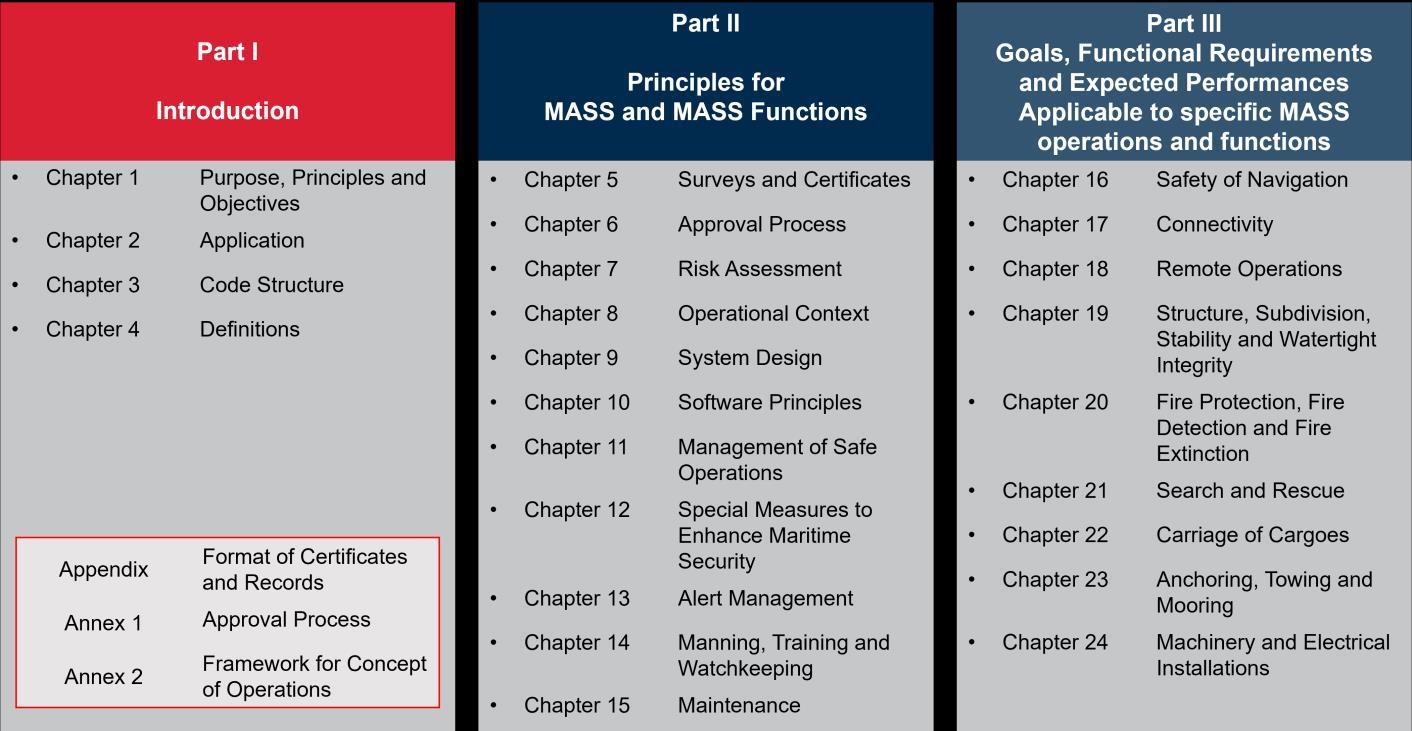
To gather practical insights following adoption, the Committee developed a framework for an Experience-Building Phase (EBP). This phase will focus on monitoring implementation and collecting operational data on the following priority topics to assist in developing the mandatory Code:
Priority EBP items
• Definitions for “Remote Operation Management (ROM) company” and “ROC
• Development of ROC Management Certificate (Appendix)
• Modes of operation (Appendix)
Safety Management System (ROCSMS)” (Chapter 4)
• Human interaction (Chapter 4)
• Term “Remote Crew” (Chapter 4)
• ROC Security Assessment (Chapter 12)
• ROC Security Plan (Chapter 12)
• ROC identifier (Appendix)
• Addition of requirements for data and access to storage location (Chapter 9)
• Safety of Navigation (para. 16.3.2)
• Carriage of Cargoes (Chapter 22)
• Anchoring, towing and mooring (Chapter 23)
• Machinery and electrical installations (Chapter 24)
Next steps: The LEG, FAL and MEPC Committees are invited to note the adopted non-mandatory MASS Code for informative purposes, while the CCC, HTW, III, NCSR, SDC and SSE Sub-Committees are invited to provide their technical expertise for the development of the mandatory Code Future work will progress based on the revised road map below, which ensures a structured timeline and clear path forward. A dedicated working group will be established at MSC 112 to continue this work.
MARITIME SECURITY
Measures to Enhance Maritime Security
Advance Passenger Information (API) and Booking and Reservation Information/Passenger Name Record BRI/PNR
The Committee noted progress on the extension of API and BRI/PNR frameworks from air transport to maritime transport, following IMO's approval as a partner in the WCO-hosted API and BRI/PNR Contact Committee FAL 50 approved a draft FAL resolution amending the FAL Convention concerning the collection of API and BRI data, with a view to adoption at FAL 51 It was decided that the decision on whether to collect API or not should be up to the Member States.
This remains an evolving development with potential future implications for passenger ship operators including cruise and ferry sectors particularly in relation to reporting requirements, data handling obligations, and alignment with broader digitalization and border control frameworks.
The Committee adopted the Revised Guidelines on the Prevention of Access by Stowaways and the Allocation of Responsibilities to Seek the Successful Resolution of Stowaway Cases, together with consequential amendments to resolution MSC.448(99). The revised guidelines update provisions to reflect current operational practices and regulatory developments, and are directly relevant to ship security plans, port facility security assessments, and the obligations of shipowners and masters under SOLAS Chapter XI-2 and the ISPS Code.
Table 6: API/BRI/PNR and Stowaway guidelines Area
Draft FAL Convention
API/BRI/PNR
Stowaway guidelines
amendments being progressed; API collection likely at national discretion; BRI as Recommended Practice
Revised guidelines adopted with consequential amendments to MSC.448(99)
Potential new reporting and data handling obligations for passenger ship operators
Impacts ship security plans, port facility security assessments, and shipowner/master obligations
Next Steps Draft amendments to the FAL Convention annex on API and BRI were progressed at FAL 50, with adoption targeted at FAL 51. The revised stowaway guidelines will require review of existing ship security plans and related procedures to ensure alignment with the updated provisions.
There were no changes to SOLAS Chapter XI-2, the ISPS Code, or any mandatory security requirements arising. However, owners and operators particularly those with vessels trading in the Straits of Malacca and Singapore or the Gulf of Guinea should review Ship Security Plans and Ship Security Assessments to ensure they reflect current threat levels, and brief crews on vigilance and reporting procedures. For vessels transiting the Red Sea and Gulf of Aden, the IMO piracy statistics may not fully capture the broader security situation; operators should continue to follow guidance from UKMTO, MSCHOA, Flag State advisories, and applicable Best Management Practices.
MSC 110 and FAL 50 Committees jointly approved the Guidelines Concerning the Recovery of Deceased Persons and Death After Recovery, subsequently issued as MSC-FAL.1/Circ.4. The guidelines are non-mandatory and supplement resolution MSC.528(106) and volume III, section 21, of the IAMSAR Manual, which did not previously address the transfer of deceased persons between the various organizations involved in rescue and disembarkation operations.
The guidelines set out recommended actions for Rescue Coordination Centres, masters and management companies, flag, coastal and port States, and port authorities, covering notification, coordination, respectful handling of deceased persons, contagious disease assessment, and cooperation on handover arrangements. At MSC 111, the Committee noted the issuance of the circular. No mandatory requirements are proposed and the item is now considered closed.
The current SOLAS regulations do not adequately address the use of modern propulsion systems that integrate both steering and propulsion functions. To address this gap, new rules are being developed to introduce sufficient technical standards and redundancy for these systems, alongside mandatory requirements for ship maneuverability performance.
While previous Sub-Committee sessions developed draft SOLAS amendments (along with new draft SOLAS Regulation 28-1 Means of Going Astern and Stopping and Regulation 29-1 on Steering) and a new resolution for International Standards for Ship Maneuverability (ISSM) targeting a 2032 entry into force, SDC 12 determined that finalizing these highly technical standards requires more practical operational data. The Sub-Committee agreed to the drafts in principle but noted that assessing the performance of non-traditional systems, specifically regarding stopping performance and zig-zag maneuvers, requires more maneuvering trial data before the rules can be finalized.
Next steps: The Committee noted the agreement to defer further technical debate to SDC 13 (Spring 2027), where work will resume on the revision of SOLAS Chapters II-1 (Part C) and V. In the interim, Member States and international organizations are strongly encouraged to continue submitting relevant maneuvering trial data covering different types of propulsion systems to support the completion of this framework.
In the context of port state control (PSC) inspections, MSC 110 noted the existence and impact of divergent interpretations of SOLAS regulations II-2/13.4.1 and 13.4.2, specifically regarding the term "lower part" used in connection with the means of escape from spaces below the bulkhead deck for passenger ships, and from category A machinery spaces for cargo ships. To address this, MSC 110 approved circular MSC.1/Circ.1689, recalling the responsibility of flag States to approve relevant arrangements in compliance with these regulations. The circular established that PSC officers (PSCOs) should in principle accept the design arrangement approved by the flag State and, when appropriate, consult with the flag Administrations in accordance with the Procedures for Port State Control, 2023 (resolution A.1185(33)).
At this session, the Committee noted the agreement of SDC 12 that no safety issues were demonstrated resulting from the application of the existing SOLAS regulations II-2/13.4.1.1 and 13.4.2.1, and that no further discussions or SOLAS amendments were needed. Consequently, SDC 12 invited MSC 111 to simply revoke circular MSC.1/Circ.1689
However, deliberations took place at this meeting regarding the revocation of MSC.1/Circ.1689. The Committee recognized that outright revocation without replacement could lead to a recurrence of the original problem, because of the use of phrase "lower part", which remains in SOLAS without a unified interpretation. To prevent this and provide all parties with an unambiguous decision by the IMO, the Committee agreed that the conclusion of SDC 12 (that current arrangements provide a satisfactory level of safety) must be appropriately disseminated through a revised circular. Further, on that basis, the Committee confirmed that the terms "lower part of the space" in SOLAS regulations II-2/13.4.1.1 and 13.4.2.1 should be regarded as either the lowest deck level or a platform or passageway
Next steps: Following the closing-out of this agenda item, the Committee agreed to issue a revised circular, MSC.1/Circ.1689/Rev.1
Guidelines for Use of Fiber-Reinforced Plastics (FRP) within Ship Structures
Fiber Reinforced Plastic (FRP) composite is a lightweight material composition with high strength to weight ratio and corrosion resistance compared to steel. However, a key issue when considering combustible FRP elements within ship structures is fire safety The SDC Sub-Committee has progressed through several rounds of revisions to the FRP Interim Guidelines (MSC.1/Circ.1574), and at its latest meeting, this work was officially finalized.
The Revised Interim Guidelines address FRP elements across three categories: non-load-bearing elements, loadbearing elements not contributing to global strength, and load-bearing elements that do contribute to global strength. They are designed to assess the fire safety of FRP structural elements against hazards such as the probability of ignition, fire growth potential, potential to generate smoke and toxic products, fire containment, firefighting capabilities, and overall structural integrity.
Additionally, the guidelines provide direction on operational matters, including onboard training and drills, the carriage of dangerous goods, casualty thresholds, and safe return to port. These Interim Guidelines should be used as a supplement to the Guidelines for the approval of alternatives and equivalents as provided for in various IMO instruments (MSC.1/Circ.1455) and the Guidelines on alternative design and arrangements for fire safety (MSC.1/Circ.1002, as amended by MSC.1/Circ.1552) when approving FRP elements within ship structures.
Therefore, at this session, the Committee:
• Approved the revised circular: Officially approved the Revised Interim Guidelines for the Use of FRP Elements Within Ship Structures as MSC.1/Circ.1574/Rev.1.
• Agreed to exclude recycling provisions: Agreed not to include recycling-related matters in the draft revised FRP guidelines, reiterating that FRP recycling provisions and any other relevant sustainability matters related to the use of FRP in ship structures should be discussed by the MEPC and PPR
• Agreed to delay further regulatory amendments: Agreed not to indicate specific additional instruments or regulations to be amended (e.g., SOLAS, FTP Code) at this stage, considering the currently immature level of experience and the ongoing revision of the 2010 FTP Code by the SSE Sub-Committee
Revision of the Interim Explanatory Notes for the Assessment of Passenger Ship Systems' Capabilities after a Fire or Flooding Casualty (SRtP)
MSC 102 had considered a proposal to revise the Interim Explanatory Notes (EN) for the Assessment of Passenger Ship Systems' Capabilities After a Fire or Flooding Casualty (MSC.1/Circ.1369) and the related circulars. The objective was to reflect technological developments, the uptake of alternative fuels, and experience gained since the entry into force of SOLAS Regulations II-2/21 and II-2/22 on Safe Return to Port (SRtP).
Following the completion of work at SDC 12, the revised Explanatory Notes introduce substantive updates and clarifications compared to the latest circular (MSC.1/Circ.1369). The key areas of revision include:
• Lifecycle approach: The scope is expanded beyond initial design to cover the full ship lifecycle, from precontract phases through to operational procedures.
• Return to port voyage parameters: A minimum ship speed of 6 knots while heading up against wind and waves in adverse weather conditions should be reached and new provisions to define the duration of the dimensioning SRtP voyage are introduced.
• Systems Categorization & Restoration: To be ensured that the systems are designed and arranged so that they can be restored and remain operational during the voyage back to port. Category 1A (Propulsion/Steering/ Elec. Power) requires immediate restoration with minimal manual action. Categories 1B (Navigation/External Communication) and 2 (Fire Safety/Watertight Integrity/Internal Communication) must be restored within 1 hour. Category 3 (Safe Areas) must be restored within 3 hours. SRtP systems should be designed to minimize the need for manual intervention by the crew to restore them.
• Technical system requirements: (non-exhaustive list follows):
o Communication: An extensive list of radio installations is provided. VHF Data Exchange System (VDES) will be considered at a future revision.
o Ballast System: The ballast system equipment and functions should remain operational only to the extent they are necessary to ensure bilge pumping functions.
o Oily Water Treatment System: The oily water treatment system need not remain operational after an SRtP or OEA casualty, as MARPOL Annex I allows for discharge under emergency conditions.
o Gaseous- and low-flashpoint fuels: Specific requirements needed to keep the fuel storage & supply and transfer systems safe for the duration of the return to port voyage are provided.
• Documentation, verification and testing: Comprehensive requirements for the documentation structure across project phases (early, detail, late design) and specific testing protocols, including sea trials for worst-case degraded propulsion.
• Audit and Inspection: At the first ISM audit and at each PSSC survey SRtP compliance, documentation and procedures should be confirmed and assessed, respectively.
At this session, MSC 111 approved the revised Explanatory Notes which are issued as MSC.1/Circ.1369/Rev.1. Moreover, the Committee noted the agreement that merging circulars MSC.1/Circ.1400, MSC.1/Circ.1532/Rev.1 and MSC.1/Circ.1589 will be further considered in future sessions only if relevant proposals of interested Member States are submitted.
Applicability: The revised Explanatory Notes are to be applied to ships contracted on or after 1 January 2028, or in the absence of a building contract, the keel of which is laid on or after 1 July 2028 or delivered on or after 1 January 2032.
Next Steps: The approved revised Explanatory Notes (MSC.1/Circ.1369/Rev.1) will be submitted to the HTW and III Sub-Committees to further consider whether existing instruments under their remit needed to be amended in relation to this matter.
Amendments to Chapter 6 of the 2009 MODU Code
Recognizing that the MODU Code does not address emergency shutdown (ESD) systems arranged with multiple levels of ESD, MSC 105 proposed a new output to revise paragraphs 6.5.1 and 6.5.5 of the 2009 MODU Code to clarify the application of requirements to electrical equipment that is capable of operation after shutdown. For ESD systems arranged with multiple levels of ESD, clarification was needed as to whether the term "after shutdown" in paragraph 6.5.5 of the 2009 MODU Code relates to any single ESD level or to the total shutdown level of the unit.
Following the finalization of work by SDC 12, the amendments to chapter 6 of the 2009 MODU Code provide that at least the following facilities should be operable after an emergency shutdown:
• emergency lighting under paragraphs 5.4.6.1.1 to 5.4.6.1.4 for half an hour
• blow-out preventer control system
• general alarm system
• public address system
• battery-supplied radiocommunication installations.
Furthermore, the amendments contain provisions for selective disconnection to enable the isolation of ignition sources on the basis of shipboard location, system or function, and that equipment which continues to operate after each stage of ESD located in open areas or within spaces not protected should be suitable for installation in zone 2 locations, and in eclosed spaces, be arranged with appropriate mitigating measures.
At this session, MSC 111 adopted the Resolution on Amendments to Chapter 6 of the 2009 MODU Code which clarifies requirements for electrical equipment that must remain operational after an emergency shutdown. The Resolution will be applicable to units constructed on or after 1 January 2027.
At MSC 110, the need to address alert management in the engine control room (ECR) was highlighted to reduce operator fatigue and improve situational awareness, referencing the Viking Sky incident. Consequently, MSC 110 tasked the SDC Sub-Committee with developing Engine Control Room Alert Management (ECRAM) performance standards, targeting completion by 2028. The Sub-Committee further noted that any consequential amendments to the Code on Alerts and Indicators, 2025 (resolution A.1204(34)) should be considered at a later stage under the same output, following the conclusion of the ECRAM performance standards
SDC 12 approved the following guiding principles and quality attributes for alerts to guide the development of the standards:
• Format: Goal-based performance standards with prescriptive requirements, if considered necessary
• Approach: A life-cycle and top-down approach should be followed
• Scope: All ships should be covered
• Stakeholders: Relevant stakeholders should be identified, and existing experience utilized as far as practicable.
• Terminology: The term "alert" and its associated four priorities should be used, as defined in the Code on Alerts and Indicators, 2025.
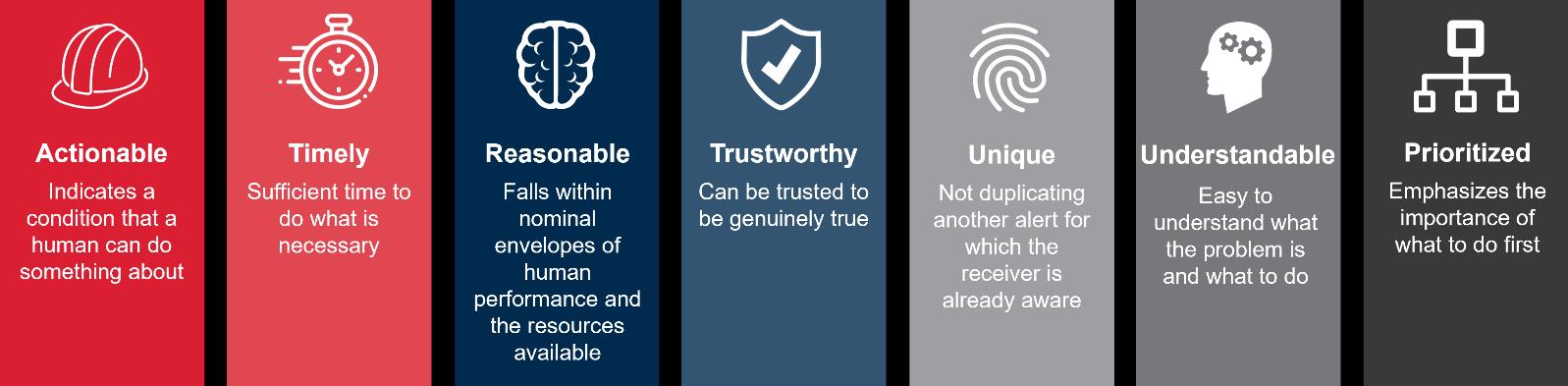
At this session, the Committee noted the agreement for the development of a stand-alone goal-based performance instrument and endorsed the roadmap for the work.
Next steps: The ECRAM performance standards based on the agreed principles and attributes will further progress at SDC level. The work is expected to be finalized at SDC 14 (2028), with a view to adoption at MSC 114 (2028).
Human Element, Training and Watchkeeping
The Committee considered the report of HTW 12 (February 2026) and took the following actions:
• Alternative fuel training guidelines approved interim training guidelines and associated STCW.7 circular seafarers on ships using methyl/ethyl alcohol and ammonia as fuel, inviting MEPC 85 to note accordingly. The interim guidelines address the immediate training gap as alternative fuel-powered vessels enter the fleet, pending formal STCW amendments.
• Ammonia cargo as fuel (IGC Code ships) In line with the "one ship, one code" policy, the IMO has integrated seafarer training requirements into the main alternative fuel training framework. Ammoniaspecific competencies are being developed by the HTW Sub-Committee to apply uniformly across both IGF and IGC Code vessels
• STCW comprehensive review noted that the Sub-Committee initiated phase 2 (revision) of the comprehensive review of the 1978 STCW Convention and Code and endorsed the work plan for training provisions covering alternative fuels and new technologies.
Table 7: HTW updates Area Key Outcome
STCW comprehensive review
Methyl/ethyl alcohol fuel training
Phase 2 (revision) initiated; work plan updated
Interim training guidelines and circular STCW.7/Circular.26
Long-term impact on seafarer qualification and certification framework
Addresses immediate training gap for methanol/ethanol-fueled vessels entering service
Ammonia fuel training
Ammonia cargo as fuel (IGC Code)
Alternative fuels work plan
Interim training guidelines and STCW.7/Circular.27 circular approved as a base document.
Approved the MSC circular on Interim guidelines for use of ammonia cargo as fuel MSC.1/Circ.1681 & Interim training guidelines and STCW.7/Circular.27
Work plan endorsed
Addresses immediate training gap for ammonia-fueled vessels entering service
Potential regulatory gap between cargo carrier and fuel-user training regimes
Sets roadmap for training provisions aligned with fleet decarbonization
Next Steps Phase 2 of the STCW comprehensive review will continue at HTW 13, supported by the intersessional working group.
Routing Measures and Ship Reporting Systems
Due to accident patterns involving cargo ships, especially bulk carriers and coastal fishing vessels (fires, failures, and drifting), NSCR 12 proposed the creation of an area to be avoided (ATBA) off the coast of the island of Réunion in the Mascarene Basin aiming at reducing the risk of maritime accidents, improving the safety of navigation and protecting the marine environment.
In accordance with resolution A.858(20), the Committee adopted the ATBA for the coast of Réunion and it will be implemented after six months (since the adoption date). The Committee also endorsed updated datum chart and minimum depth information for the South Åland Sea deep-water route (SN.1/Circ.272/Add.3).
The following MSC Resolutions on Ship Reporting Systems were also adopted by MSC 111:
Adriatic Sea (ADRIREP)
• Expanded participation to Albania, Bosnia and Herzegovina, and Greece
• Automated reporting via SafeSeaNet to reduce crew burden
• New category: ships ≥10,000 GT (high pollution risk)
• VHF backup using IMO Standard Marine Communication Phrases
Baltic Sea (SOUNDREP & BELTREP)
• Electronic pre-entry reporting maintained; VHF for entry confirmation
• Insurance certificates (Designator X) accepted via SafeSeaNet, email, or online or VHF if advance submission not feasible
• Compliance monitoring and enforcement procedures unchanged
Table 8: Routing and Reporting Systems updates
Area to be avoided Réunion coast Adopted May-26
Reporting system ADRIREP (Adriatic) Adopted May-26
months postadoption
Reporting system SOUNDREP (Denmark-Sweden) Adopted MSC.314(88)/Rev.1 May-26 6 months postadoption
Reporting system BELTREP (Storebælt) Adopted MSC.332(90)/Rev.1 May-26 6 months postadoption
Routeing update South Åland Sea Endorsed (SN.1/Circ.272/Add.3) Immediate
Revision of MSC.1/Circ.1657 Procedure for responding to DSC distress alerts by ships
Noting discrepancies between the Procedure for responding to DSC distress alerts by ships (MSC.1/Circ.1657) and the relevant provisions of Recommendation ITU-R M.541-11 as well as of those in Recommendation ITU-R M.585-9, NCSR 12 approved the revision of the MSC.1/Circ. 1657 to enhance consistency and alignment
Consequently, the Committee adopted the revised circular MSC.1/Circ.1657/Rev.1
In order to improve the entries of information on search and rescue services into the IMO’s GISIS Global SAR Plan, NCSR 12 considered the Guidance for entering and updating information on search and rescue services into the Global SAR Plan and on how to get access to the information for operational use.
NCSR 12, having supported the guidance and improved the text of the guidance to align with the IAMSAR Manual, finalized and approved the draft COMSAR circular on Revised Guidance for entering and updating information on search and rescue services into the Global SAR Plan and on how to get access to the information for operational use.
Therefore, the Committee endorsed the action of NCSR Sub-Committee in approving COMSAR.1/Circ.61 on Guidance for entering and updating information on search and rescue services into the Global SAR Plan and on how to get access to the information for operational use
Development of Procedures for the Recognition of Augmentation Systems in the Worldwide Radionavigation System (WWRNS)
The IMO has recognized the following systems as Worldwide Radionavigation Systems: Global Positioning System (GPS), Global Navigation Satellite System (GLONASS), Galileo, BeiDou Navigation Satellite System (BDS), Indian Regional Navigation Satellite System (IRNSS) and Japanese Quasi-Zenith Satellite System (QZSS). However, the accuracy and integrity of the data provided by some of these systems could be enhanced using augmentation techniques.
Radionavigation systems and global navigation satellite systems (GNSS) are assessed and recognized following the procedures and criteria set out in resolutions A.915(22) and A.1046(27), but procedures and/or criteria for the recognition of augmentation systems as part of the WWRS have not been established.
Consequently, amendments to the annex of resolution A.1046(27) were developed by NCSR 12 to include the appropriate procedures and requirements for recognition of augmentation systems. Additionally, NCSR 12 recommended the development of performance standards for shipborne radionavigation augmentation receivers in a generic goal-based manner to be future-proof, outlining the minimum functional requirements to assist future technological advancements. The scope of such functional requirements could include cyber security, resilience, operational feasibility and interoperability.
The Committee adopted MSC resolution on amendments to the annex of resolution A.1046(27), laying down the procedures and requirements for the recognition of augmentation systems in the WWRNS & resolution MSC.379(93)/EV.1 Performance standards for shipborne BEIDOU Satellite navigation systems receiver equipment.
NCSR 12 considered a draft MSC circular on guidelines for software maintenance of shipboard navigation and communication equipment and systems, aiming to improve the efficiency, effectiveness, safety and security of shipboard software maintenance by introducing a standardized, controlled and transparent process.
The guidelines are to be applied on a voluntary basis, and provide guidance for:
• Training and certification of service technicians by manufacturers
• Guidance for the manufacturer
• Guidance for the contracted service provider and certified service technicians
• Guidance for the (shipping) company
• Additional guidance on remote software maintenance
• Electronic service reporting
The Committee approved the MSC circular on Guidelines for Software Maintenance of Shipboard Computer-Based Navigation and Communication Equipment and Systems
the
Electronic Nautical Publication (ENP) are normally used and viewed through software installed on a computer rather than a dedicated shipboard operational system, such as the Electronic Chart Display and Information System (ECDIS). Thus, the guidelines are intended for digital publications based on existing paper publications used on ships, as opposed to ENP displayed on ECDIS.
The guidelines address the general requirements for the carriage and use of ENP, such as adequate backup arrangements and power supply, rather than defining specific performance standards. They provide guidance for the carriage and use of an ENP system on board in form of requirements for hardware, software, power supply, display, back-up arrangements, and operational requirements for updates, system malfunction, familiarization and cyber risk management. They further contain provisions for documented procedures for operation, inspection and certification documentation required to be verified by the Administration, and recording of the ENP in the relevant SOLAS Safety Certificates.
The Committee approved the MSC circular on Guidelines on carriage and use of electronic nautical publications (ENP) system
Revision of Performance Standards for Shipborne BeiDou Satellite Navigation System (BDS) Receiver Equipment
The BDS space segment is a hybrid constellation consisting of satellites in three types of orbits, and is capable of providing positioning, navigation and timing (PNT) and data communication services. Specifically, it offers seven different services, including PNT, messaging and international search and rescue (SAR) services worldwide, satellite-based augmentation system (SBAS), ground augmentation system (GAS), precise point positioning (PPP) and regional messaging services in China and its surrounding areas.
The revision of the performance standards enables the shipborne BDS receiver equipment to support or integrate new navigation signals and support the use of single-frequency and dual-frequency modes with enhanced positioning accuracy and sensitivity. This will promote the development of equipment in the maritime industry and enable maritime users to utilize the improved services provided by BDS.
The Committee adopted the revision of resolution MSC.379(93) on Performance standards for shipborne BeiDou Satellite Navigation System (BDS) receiver (MSC.379(93)/Rev.1).
Amendments to the IGC Code
The process of amending the IGC Code has progressed through several IMO sessions. Since 2024, the CCC SubCommittee finalized a set of draft amendments addressing design, operational, and editorial changes. These include requirements for pipe insulation, stress corrosion cracking, cargo tank filling limits, the use of LPG as fuel, and the incorporation of various existing unified interpretations. Initially intended for adoption at MSC 110 with an anticipated entry-into-force date of 1 January 2028, MSC 110 identified additional substantial amendments relating
to fire protection, ventilation, and personnel safety These new items were subsequently finalized at CCC 11 (September 2025).
At this session, deliberations focused primarily on how each amendment applies to existing ships (constructed on or after 1 July 2016) versus new ships (constructed on or after 1 July 2028). A key discussion point was whether the term “constructed on or after” for new ships should be based solely on the keel-laying date or the standard “three-date system”
The Committee agreed to introduce the three-date application system for new ships by adding a new paragraph 1.1.2.2.1. Consequently, this leads to the modification of the model form of the International Certificate of Fitness (CoF) for the Carriage of Liquefied Gases in Bulk in appendix 2 of the IGC Code. Under this agreement, the expression “ships constructed on or after 1 July 2028” applies to ships meeting any of the following criteria:
• For which the building contract is placed on or after 1 July 2028.
• In the absence of a building contract, the keels of which are laid or which are at a similar stage of construction on or after 1 January 2029.
• The delivery of which is on or after 1 July 2032.
Furthermore, the Committee clarified that only the products listed in chapter 19 of the IGC Code should be included in the aforementioned CoF. Editorial changes to paragraph dealing with both the fixed fire-fighting system in the engine-room and the two hydrants (para. 11.2.6.3.1) were agreed in order to incorporate the appropriate references to the text Finally, MSC 111 officially approved these consolidated amendments to the IGC Code.
Next steps: The approved, consolidated IGC Code amendments will be submitted to MSC 112 (December 2026) for formal adoption, targeting an entry-into-force date of 1 July 2028.
Guidelines for the use of Ammonia (NH3) Cargo as Fuel
As part of the maritime industry’s decarbonization efforts, and to progress the safety aspects of the new fuels and technologies being developed, the Committee approved the Interim Guidelines for the use of Ammonia Cargo as fuel
The purpose of these Interim guidelines for use of anhydrous ammonia cargo as fuel is to provide unified and specific guidance for gas carriers as defined in SOLAS regulation VII/11.2 using ammonia cargo as fuel and complying with the IGC Code. The Interim guidelines are a supplement to the existing provisions of chapter 16 of the IGC Code and are applicable outside the cargo area in accordance with 16.4.1.1 of the IGC Code.
The interim guidelines are a goal-based document that provides guidance on safe and reliable operation of fuel supply systems and consumers for use of ammonia cargo as fuel. The guidelines provide for a risk assessment of the entire ammonia fuel system design and arrangements to document that the same level of safety as natural gas is achieved. More specific requirements are given for arrangements of spaces containing ammonia fuel consumers, ammonia fuel supply, fuel plant ventilation and liquid/gas detection, alarms and shutdowns, and combustion equipment
Guidelines for the safety of ships using Hydrogen (H2) as Fuel
As part of the maritime industry’s decarbonization efforts, and to progress the safety aspects of the new fuels and technologies being developed, the Committee approved the Interim Guidelines for the safety of ships using Hydrogen as Fuel.
The basic philosophy of these Interim Guidelines is to provide provisions for the arrangement, installation, control and monitoring of machinery, equipment and systems using hydrogen as fuel in order to minimize the risk to the ship, persons on board and the environment. The guidelines follow the goal-based approach and have been aligned with the International Code of Safety for Ships Using Gases or Other Low-flashpoint Fuels (IGF Code).
Revision of the Interim Recommendations on the Carriage of Liquified Hydrogen (LH2) in Bulk
A ship carrying liquefied hydrogen (LH2) in bulk should comply with the relevant sections of the IGC Code. However, the Code requires that a gas carrier should comply with the minimum requirements for the cargo listed in chapter 19. For hydrogen, these minimum requirements are found in the Annex containing the Interim Recommendations for carriage of liquified hydrogen in bulk.
MSC 108 had adopted resolution MSC.565(108) on Revised Interim Recommendations for carriage of liquefied hydrogen in bulk, but MSC 108 and MEPC 82 had agreed to keep an ongoing agenda item on its further revision.
In September 2025, CCC 11 finalized the revision of the Interim Recommendations for carriage of liquefied hydrogen in bulk, to include the following amendments:
• A new Part D: Cargo containment systems of a membrane-type cargo tank maintaining the insulation spaces under vacuum, addressing the specific safety challenges associated with the transport of liquefied hydrogen
• Definitions for the primary insulation space and secondary insulation space
• Special requirements for membrane-type cargo containment systems with the insulation space under vacuum
• Structural integrity of components, vacuum control in the insulation space, and emergency control
At this session, the Committee adopted Resolution on a new consolidated version of the Revised Interim Recommendations for carriage of liquefied hydrogen in bulk. Subsequently, MSC.565(108) is revoked.
Chemical products and IBC Code amendments
The Committee agreed to draft amendments to the IBC Code being prepared by the PPR Sub-Committee (February 2026) to incorporate entries in List 1 of the MEPC.2/Circular which are valid for all countries and have no expiry date into chapters 17, 18 and 19 of the Code. The MEPC.2/Circular is a periodically updated circular that provides provisionally assessed carriage requirements for liquid substances carried in bulk that are not yet formally listed in the IBC Code. List 1 contains products that have been fully evaluated and assigned carriage requirements applicable to all countries without time limitation effectively products that have reached the same level of regulatory maturity as those in the Code itself but have accumulated in the circular over successive editions rather than being incorporated into the mandatory instrument.
Consolidating these entries into the IBC Code will provide a single authoritative reference for carriage requirements rather than requiring operators and surveyors to cross-reference between the Code and the circular. The scope also includes minor amendments to chapter 21 of the IBC Code to address editorial inconsistencies identified at the Technical Group on the Evaluation of Safety and Pollution Hazards of Chemicals (ESPH 30) and potential improvements to the assignment of carriage requirements in column l. The work will be progressed through ESPH 32 (2026)
The Committee approved the Unified Interpretation concerning secondary barrier testing and effectiveness assessment for membrane containment systems on gas carriers, as defined in the IGC Code and the 1983 IGC Code, in paragraphs 4.1.5 and 4.2.2, respectively.
The five agreed interpretations clarify the following key expressions:
1. “Any envisaged leakage of liquid cargo” should be interpreted as a leakage, which may have resulted from a failure of the primary barrier resulting in filling of the inter-barrier space with liquid until a static equilibrium state is reached between the tank space and the inter-barrier space.
2. “Capable of being periodically checked” specifies that the effectiveness of the secondary barrier should be checked at the initial survey during the time of construction, and no less than at each renewal survey when the Certificate of Fitness is due to be renewed. For containment systems with glued secondary barriers, tightness
test is required at the time of construction, whereas for the systems with welded metallic secondary barriers, such test should not be required.
3. “Full secondary liquid-tight barrier” / “complete secondary barrier” should be interpreted as a secondary barrier forming a liquid-tight secondary containment capable of containing any envisaged leakage from the tank through its primary barrier
4. “Effectiveness” refers to the ability of the secondary barrier to prevent passage of liquid cargo in ways and quantities likely to cause unsafe cold spots to the ship structure. The effectiveness of the secondary barrier should be verified by an approved method described in the inspection / survey plan, such as tightness test, thermographic, acoustic emissions testing or any other equivalent method suitable for the specific cargo containment system design.
5. “Other suitable means” / “another suitable method” indicates that any alternative approach should be specified within the approved inspection and survey plan.
Unified Interpretation of paragraphs 4.4.7.6 and 4.7.7 of the LSA Code
The Committee approved the Unified Interpretation (UI) on paragraphs 4.4.7.6 and 4.7.7 of the LSA Code regarding lifeboat release and retrieval system requirements (MSC.1/Circ.1529/Rev.1) The UI clarifies that where stainless steel has a Pitting Resistance Equivalent Number (PREN) of 22 or more, such stainless steel does not need to be subjected to standard ISO 9227:2012. Although, materials with PREN less than 22 should be qualified by corrosion test according to standard ISO 9227:2012
Performance Standards for AI Systems in Marine Equipment
The Committee noted the information provided and invited interested Member States and international organizations to work with the co-sponsors in developing a proposal for a new output on a non-mandatory instrument addressing the use of AI systems in safety-critical equipment, for submission to a future session of the Committee.
Review of the Financial Architecture of the LRIT System
The Committee approved the draft amendments to SOLAS regulation V/19-1 (MSC.263(84)/Rev.2.) to introduce a free-of-charge policy for the provision of LRIT information to entitled coastal States to be adopted at MSC 112 and with expected entry into force 1 January 2032. The amendments address a long-standing issue whereby the cost of accessing LRIT data has acted as a barrier to its effective use by coastal States, particularly developing States, thereby undermining the system's purpose of enhancing maritime domain awareness and security.
The Committee approved the revised performance standards in principle (MSC.263(84)/Rev.1) agreeing that the entry-into-force date should similarly follow the regular four-year cycle to align with the SOLAS regulation V/19-1 amendments and ensure a coordinated implementation with a view to adoption at MSC 112
The Committee agreed to include a new output in the post-biennial agenda to address ambiguities identified in paragraph 4.6.3.1 of the LSA Code regarding the color contrast of safety harnesses fitted to immediately adjacent seats in free-fall lifeboats. The proposal notes that the current regulatory language could cause confusion during abandon ship situations and lead to improper use of harnesses, endangering persons on board. The SSE SubCommittee was assigned as the associated organ, with one session expected to be sufficient to complete the work. Any resulting amendments would follow the standard four-year SOLAS amendment timeline.
The Committee agreed to include a new output in the 2027–2028 biennial agenda to address amendments to the Recommendations on the safe use of pesticides in ships applicable to the fumigation of cargo holds (MSC.1/Circ.1264/Rev.1) and the Recommendations on the safe use of pesticides in ships (MSC.1/Circ.1358/Rev.1).
The proposal highlighted that at least 49 seafarers and shore workers have lost their lives and a further 86 have been seriously injured as a result of exposure to hazards associated with cargo hold fumigation since MSC.1/Circ.1264 was first approved in 2008. The Committee expressed strong support for the new output given the documented fatalities and injuries and assigned the CCC Sub-Committee as the responsible organ, with a single session (CCC 13) expected to be sufficient to complete the work.
Development of non-mandatory safety guidelines for non-self-propelled floating power units with nuclear reactors (FPU)
The Committee considered a proposal for a new output on the development of non-mandatory safety guidelines for non-self-propelled floating power units with nuclear reactors (FPU). While there was broad acknowledgment that this work will need to be undertaken at some point, given the latest technological developments, views were divided on the appropriate timing. The Committee noted that the IAEA had commenced work on floating power plants but had not yet addressed the ship or marine safety aspects. Rather than formally agreeing to the new output at this session, the Committee instructed the Secretariat to liaise with the IAEA and report back on the status of their work and invited interested Member States to submit proposals to a future session to advance the matter further.
Update to the revised guidelines on maritime cyber risk management was approved at the FAL50 and at MSC 111 and issued as Circular MSC-FAL.1/Circ.3/Rev.4 to include the reference to the IAPH Cyber Resilience Guidelines for Emerging Technologies in the Maritime Supply Chain under section 4.3.
• ABS Regulatory News (link)
• ABS Regulatory Lessons (link)
• ABS Safety in Minutes Video Series (link)
• ABS Remote Survey Services (link)
• ABS Port State Control Checklist (link)
• ABS Rules and Guides (link)

1701 City Plaza Dr. Spring, Texas 77389, USA
Tel: +1-281-877-6000
Email: RegAffairs@eagle.org
© 2026 American Bureau of Shipping. All rights reserved.