Chronicles Buddha of the
Published for free distribution only. Not for sale.
Kong Meng San Phor Kark See Monastery
Awaken Publishing
88 Bright Hill Road, Singapore 574117 (65) 6849 5342
E-mail: publication@kmspks.org
Website: kmspks.org
1st Edition (English) | May 2026
ISBN 978-981-94-4400-7
© Kong Meng San Phor Kark See Monastery
Translated into English from the original Chinese publication, 《佛陀传记》.
Project Editor: Christina Bong
Translator: Koh Rui Ying
Illustrator: 黄汉文
English Typesetting and Layout: Mabel Tan
Reprinting our books for free distribution is encouraged as long as the publication is reprinted in its entirety with no modifcations (including this agreement clause), and credit is given to the author and the publisher. You will need to obtain written permission from Kong Meng San Phor Kark See Monastery to ensure that the latest edition is used.
Please handle this Dharma book with utmost respect and care. Please pass this book to someone else if you do not need it anymore. May all have the opportunity to know the Dharma.
kong meng san phor kark see monastery kmspks_monastery
Please visit kmspks.org/awakenonline for a detailed list of our published books.

Chronicles Buddha of the



CHAPTER 18 The Expansion of the Sangha: The Kashyapa Brothers
CHAPTER 19 The Buddha in the Kingdom of Magadha (I)
CHAPTER 20 The Buddha in the Kingdom of Magadha (II)
CHAPTER 21 Return to Kapilavastu
CHAPTER 22 Ordination of the Shakyans (I)
CHAPTER
CHAPTER
CHAPTER
Ordination of the Shakyans (II)
The Noble Eightfold Path: (I) Good Conduct
(II)

Editor's Note
To understand the teachings of Buddhism and how they apply to our daily life, we must first understand the character and wisdom of Buddhism's highest teacher — Shakyamuni Buddha.
This textbook is an adaptation of “Buddhist Studies“ 《佛 》 by the Curriculum Development Institute of Singapore. It focuses on the life of Shakyamuni Buddha, from his birth, childhood, youth, renunciation to enlightenment. Through engaging stories, accessible vocabulary and eye-catching artwork, this book narrates the life of the Buddha and introduces his fundamental teachings
Learning Objectives:
To nurture students' understanding of Buddhist teachings and foster the development of the right mindset.
To encourage students to practise the Buddha's teachings in their daily lives, refining their actions through self-reflection.
Contents:
Each chapter consists of three elements: a story, discussion questions and words of wisdom. After each story, students would have the opportunity for self-awareness and reflection, guided by discussion questions that lay the foundation for their understanding of Buddhist teachings. To encourage students to apply the teachings to their daily lives, words of wisdom were also included to inspire practising goodness from within. This approach balances understanding with practice, achieving the goals of learning and application.
Should there be any inadequacies in this textbook, we welcome your feedback and suggestions.
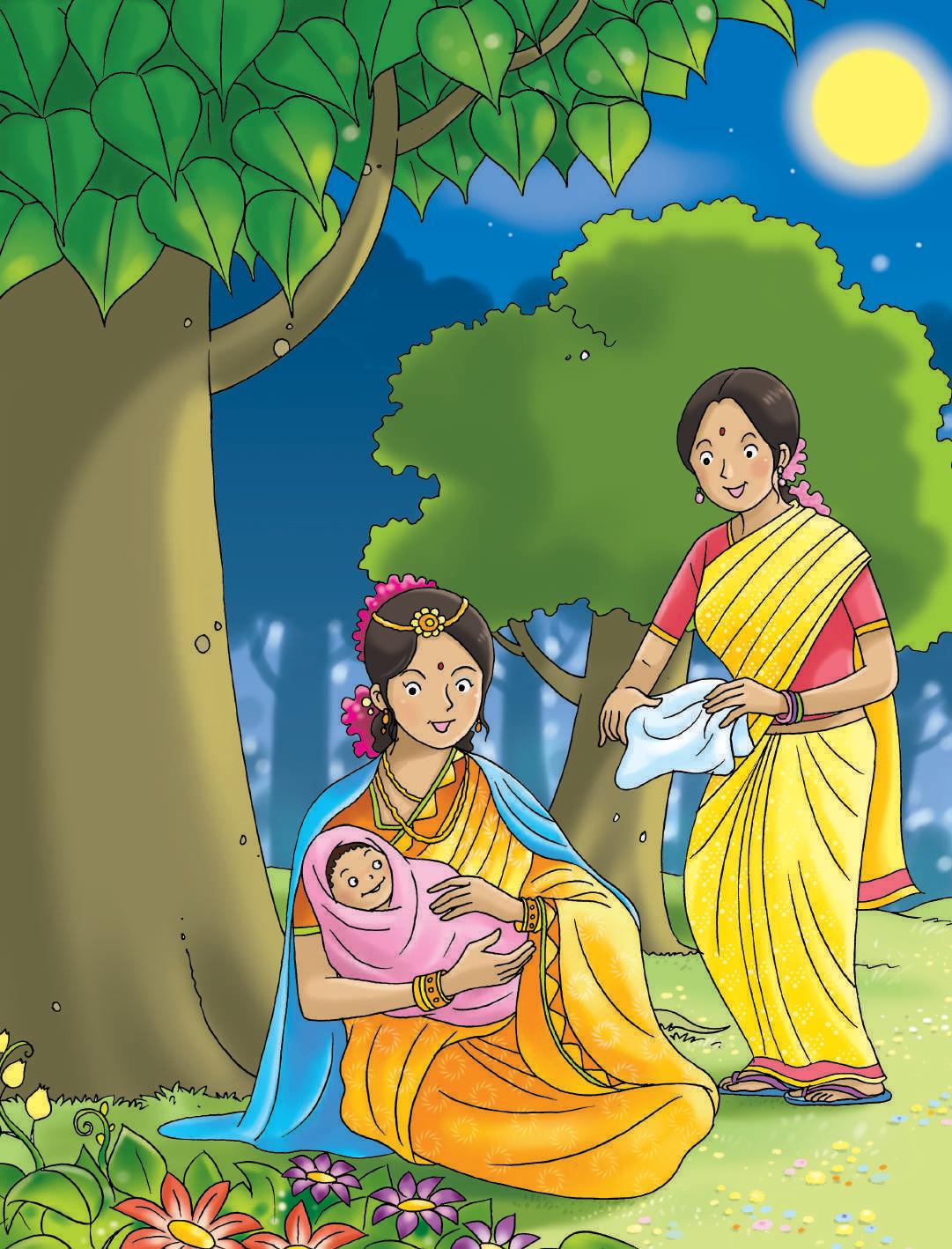
The Birth of Prince Siddhartha
Over 2,500 years ago, within the mountainous region of northern India, was the prosperous Kapilavastu kingdom. Its ruler, King Shuddhodana, was a kind and compassionate monarch who cared deeply for his people.
Queen Maya was a beautiful and gentle companion to the king. One night, Queen Maya had a strange dream where she saw a white elephant entering the right side of her body. Not long after, she found she was pregnant. As the time for her delivery approached, she returned to her mother's home, accompanied by palace attendants.
Along the way, Queen Maya decided to take a stroll in the beautiful Lumbini Park. On this joyous full moon day in May, she gave birth to a baby boy.
Then, in the mountains close by, an old sage named Asita sensed a radiant glow coming from the palace. He realised that a prince had been born. Immediately, he went to the palace to see the royal baby.
The proud and happy king quickly brought the newborn prince to Asita. The old sage was delighted to see the baby at first, he smiled with joy but soon began to shed tears of sorrow.
Confused by the sudden shift in mood, the king anxiously questioned, "Will some misfortune befall the child?"
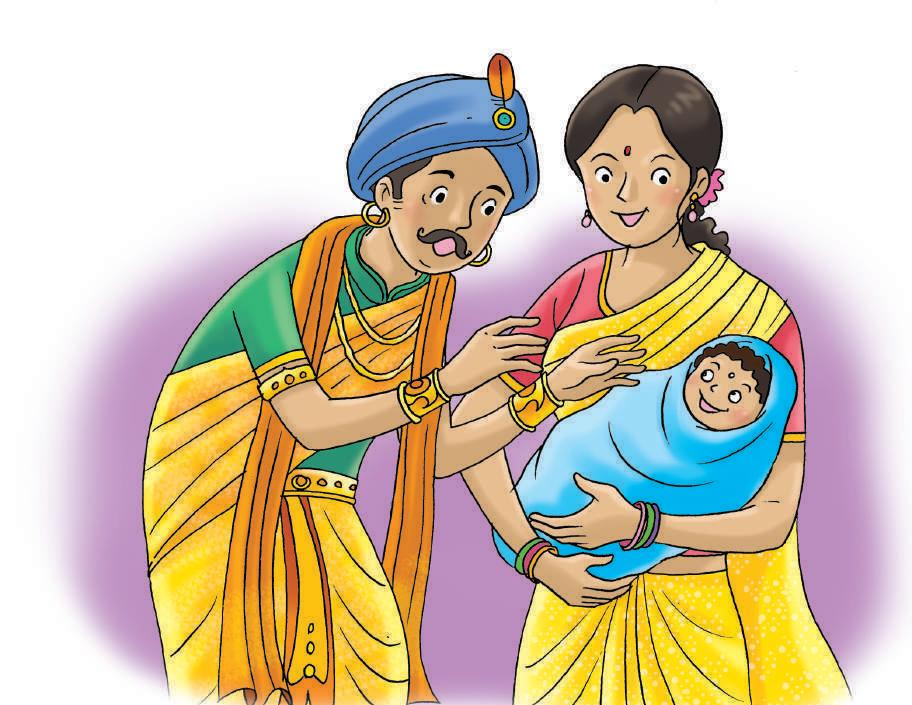
Asita replied, “I foresee no harm for the boy. He will achieve the highest knowledge and become a Buddha, a sage of unparalleled purity. Through compassion for many, he will spread his teachings. But little time remains of my lifespan, and I will not be able to hear his good teachings. This is what saddens me.“ After making this prediction, Asita left the palace.
Another priest also told King Shuddhodana, “After seeing forms of suffering in life such as old age, sickness and death, the prince will surely renounce the world and seek enlightenment.“ So the King decided to name the prince “Siddhartha“, which means “all wishes are fulfilled“.
Seven days after the birth of Prince Siddhartha, Queen Maya passed away. The queen's sister Prajapati took over the responsibility of being a mother to the prince and brought him up with love and care.
What is the name of Prince Siddhartha’s kingdom? Who were his parents? What dream did Queen Maya have? What did it symbolise?
On what day was the prince born? Where was he born?
What is an “awakened one”? What is a “sentient being”?
Do you believe that “birth, ageing, sickness, and death” are forms of suffering? Why?
By practising loving-kindness (mett ā ), a person thoroughly uproots greed.

Dear students: Studying Buddhism is to learn good conduct and to apply it to your family, teachers, friends, and strangers whom you share karmic affinity with.
comments — Mahaparinirvana Sutra, Chapter Twenty-One: On Pure Actions
Signature: Signature:
2
Prince Siddhartha's Childhood
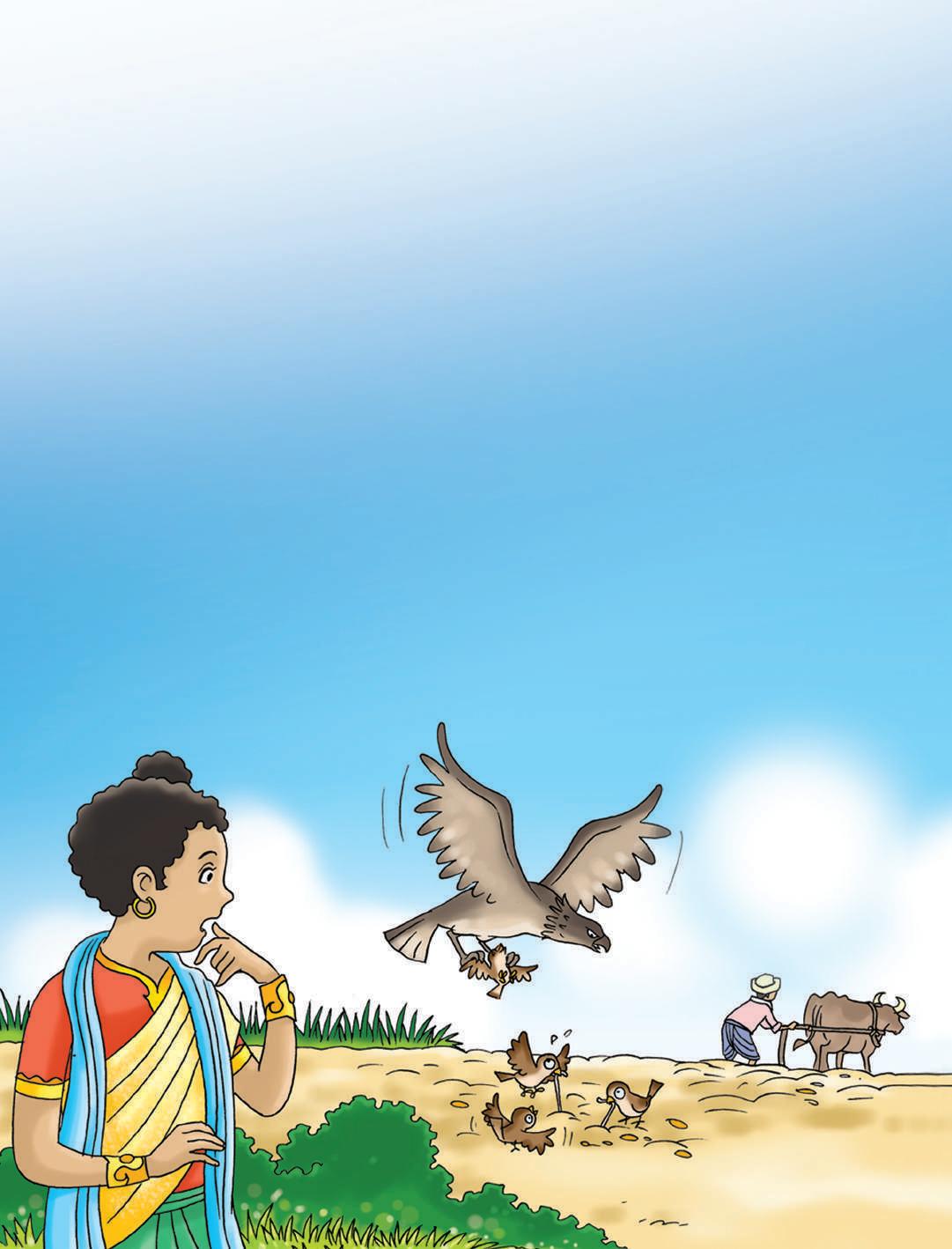
As a child, Prince Siddhartha was kind, compassionate and thoughtful. One day, at the age of seven, the prince noticed a group of birds jostling one another for the worms unearthed by the farmer’s plough.
Suddenly, an eagle swooped in and caught one of those birds eating the worm. The prince was greatly disturbed by what he had seen. “Alas! Do all living creatures kill each other?” he thought to himself.
Sitting alone under the big tree, he began to ponder in sorrow over what he had seen. As he focused his mind, he began to experience the joy of meditation.
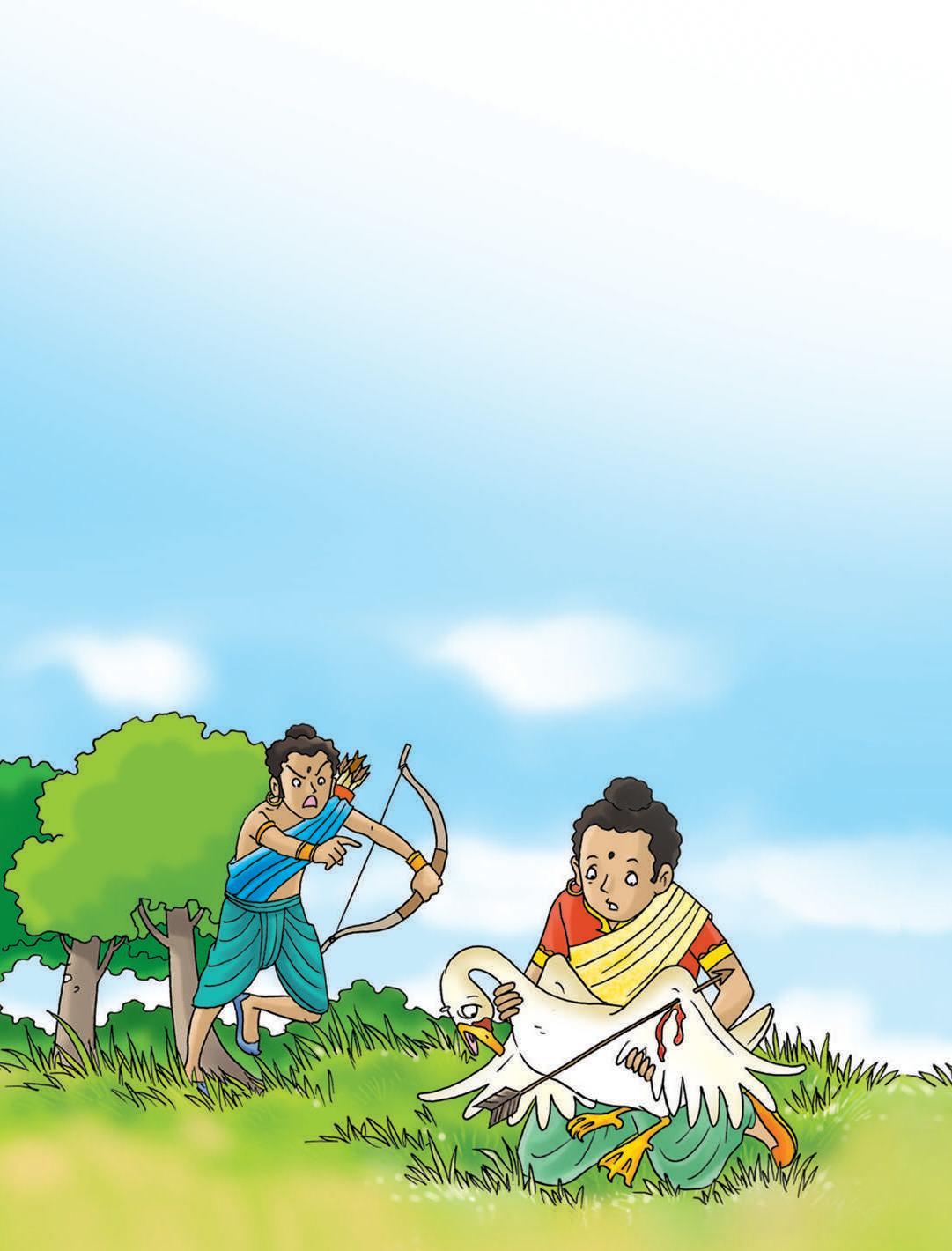
At twelve years old, Prince Siddhartha and his cousin, Devadatta, were walking in the woods when they spotted a swan in flight. His cousin shot the swan down with his arrow. The prince could not stop Devadatta's cruelty, so he immediately ran to the injured swan and removed the arrow from its body.
While the prince was bandaging the swan’s wound, Devadatta came and demanded the swan. Prince Siddhartha refused and the two began to argue. To resolve the matter, they sought the counsel of the court’s wise elder.
After listening to both sides, the wise man remarked, “Life is precious. Whoever protected the swan should be its owner. The swan rightfully belongs to Prince Siddhartha.” The prince was very pleased and took the swan home.
According to Indian tradition, Prince Siddhartha must study five main subjects: (1) language, (2) craftsmanship, (3) medicine, (4) logic, and (5) religion.
In addition, the prince also received training in archery, horse riding, elephant taming, and the use of various weapons. He excelled in all aspects and grew into a man of wisdom and skill.
How did the prince feel when he witnessed living beings harming one another?
What kind of future did King Shuddhodana envision for his son?
Do you agree that the swan rightfully belonged to the prince? Why?
What are the differences in Siddhartha and Devadatta’s personalities from the swan incident? Why?
How can we demonstrate respect for life in our own actions?
Even as a mother protects with her life her child, her only child, so with a boundless heart should one cherish all living beings.
Dear students: Studying Buddhism is to learn good conduct and to apply it to your family, teachers, friends, and strangers whom you share karmic affinity with.
(Please record your good deeds or diligent efforts this week.)
— Karaniya Metta Sutta (The Buddha’s Words on Loving-Kindness)
3
Prince Siddhartha's Youth
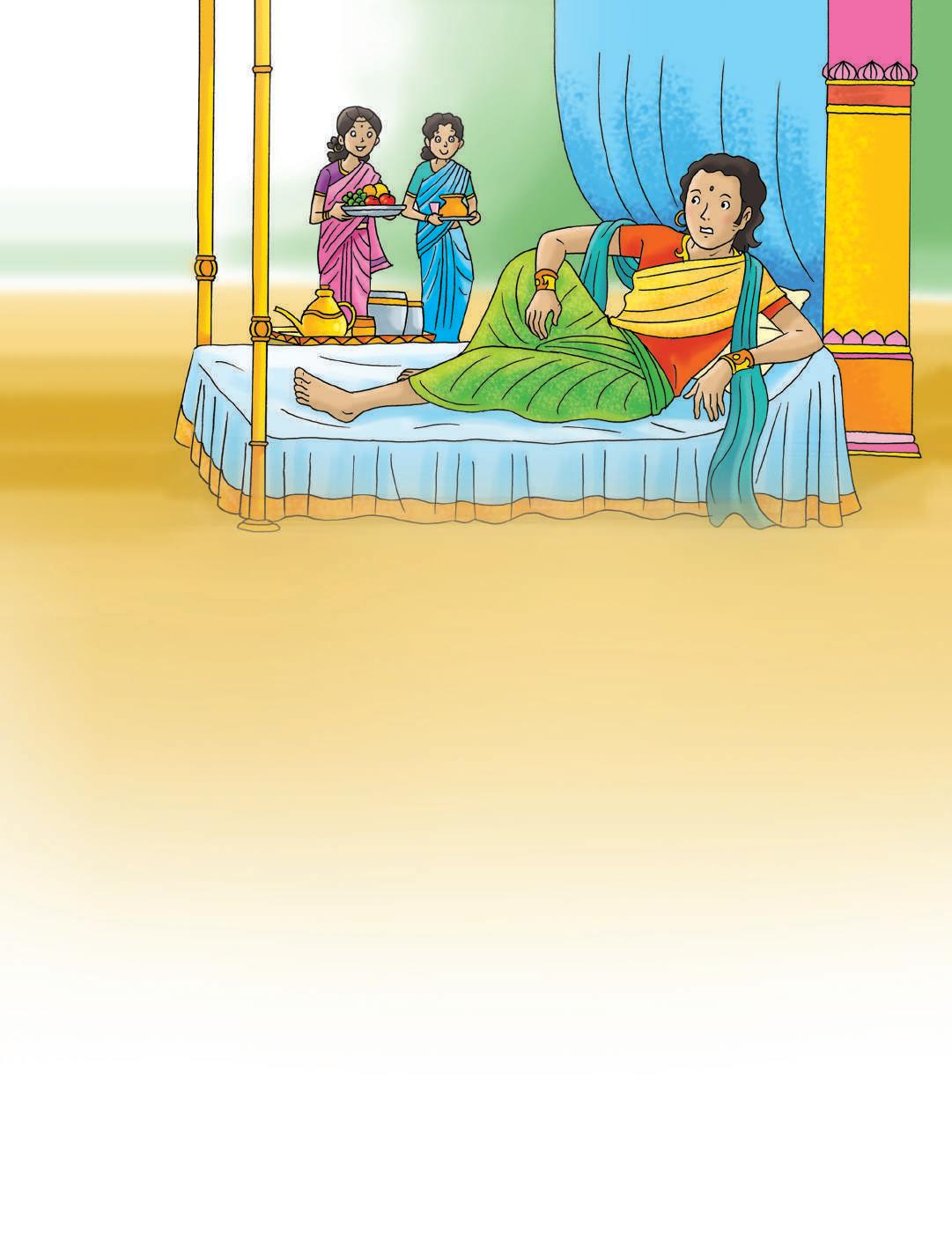
King Shuddhodana feared that Prince Siddhartha might leave the royal family to become an ascetic, leaving no heir to inherit the kingdom. To prevent this, the king tried every possible way to surround the prince with a life of luxury and comfort, hoping to deter any thoughts of renunciation.
The king built three palaces for the prince to live in — one for each season: winter, summer and the monsoon. This way, the prince would be protected from any form of discomfort, whether from heat, cold or rain. The king also built a beautiful garden, tended by attendants who ensured that all withered flowers or leaves were removed immediately so that the prince would never witness signs of death.
Everyone in the palace wore the finest clothes and enjoyed the choicest foods. Even the prince’s servants and attendants were well-treated. No one was allowed to talk about old age, sickness or death as these topics would prompt the prince to think about suffering.

Next, the king decided that the prince should marry. The prince said, “Father, if you wish for me to be married, I will do so. But I would only marry a woman endowed with good virtues. She must be compassionate, truthful, faithful, kind, and considerate. In short, she has to be pure in body, speech and mind.”
Thus, King Shuddhodana held a grand banquet for the prince and invited the ladies of royal lineage to attend. At the banquet, the prince personally distributed gifts, but found no one who captured his interest. That was until a beautiful lady, Yashodhara, approached him and bowed deeply. Her elegance and noble temperament caught the prince’s attention, prompting him to gift her his own necklace and ring.
Later, the prince won a national competition, defeating all the other contestants with his knowledge and skills. Yashodhara's father was very pleased and immediately consented to their marriage.
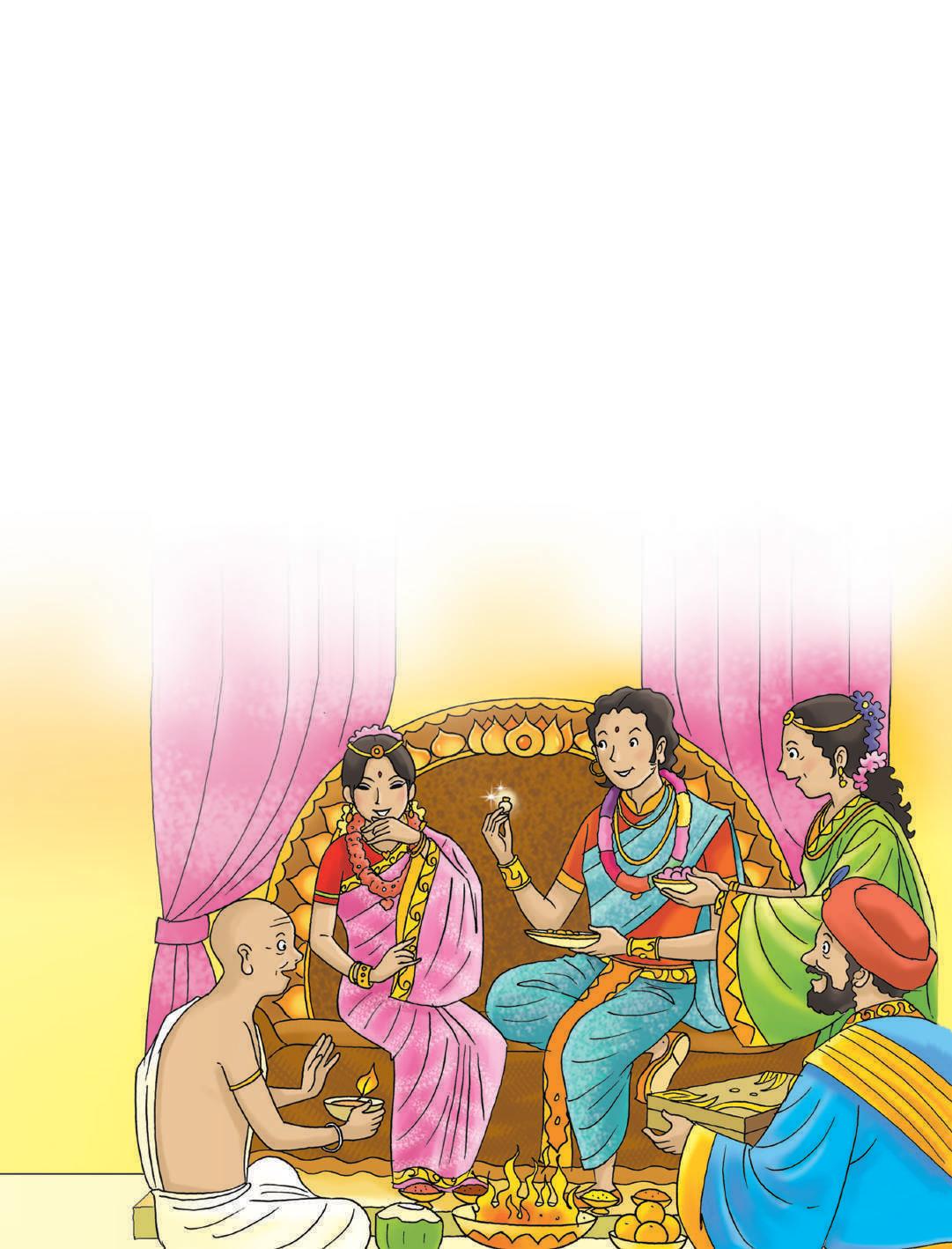
After the marriage, the prince and his wife lived happily, bringing great joy to King Shuddhodana, who believed this son would one day inherit the throne and become the leader of all kings.
Why did King Shuddhodana build three palaces for the prince?
Do you agree with King Shuddhodana shielding the prince from life’s sufferings? Why?
What virtues did the prince seek in his ideal partner? Which ones can you achieve?
Do you think a luxurious life can bring you lasting happiness? Why? What aspects of your life do you feel satisfied or dissatisfied with? Do material possessions ensure happiness?
Dear students: Studying Buddhism is to learn good conduct and to apply it to your family, teachers, friends, and strangers whom you share karmic affinity with.
(Please record your good deeds or diligent efforts this week.)
I did all of these I did some of these I need to work harder
— Mahaparinirvana Sutra, Chapter Twenty-One: On Pure Actions
4 The Four Sights : (I) Old Age (II) Sickness
All this while, Prince Siddhartha had been living unaware of the realities beyond the palace gates. One day, he heard of a beautiful park and asked for his father’s permission to visit. Unable to dissuade him, King Shuddhodana sent his faithful charioteer to accompany the prince on the trip.
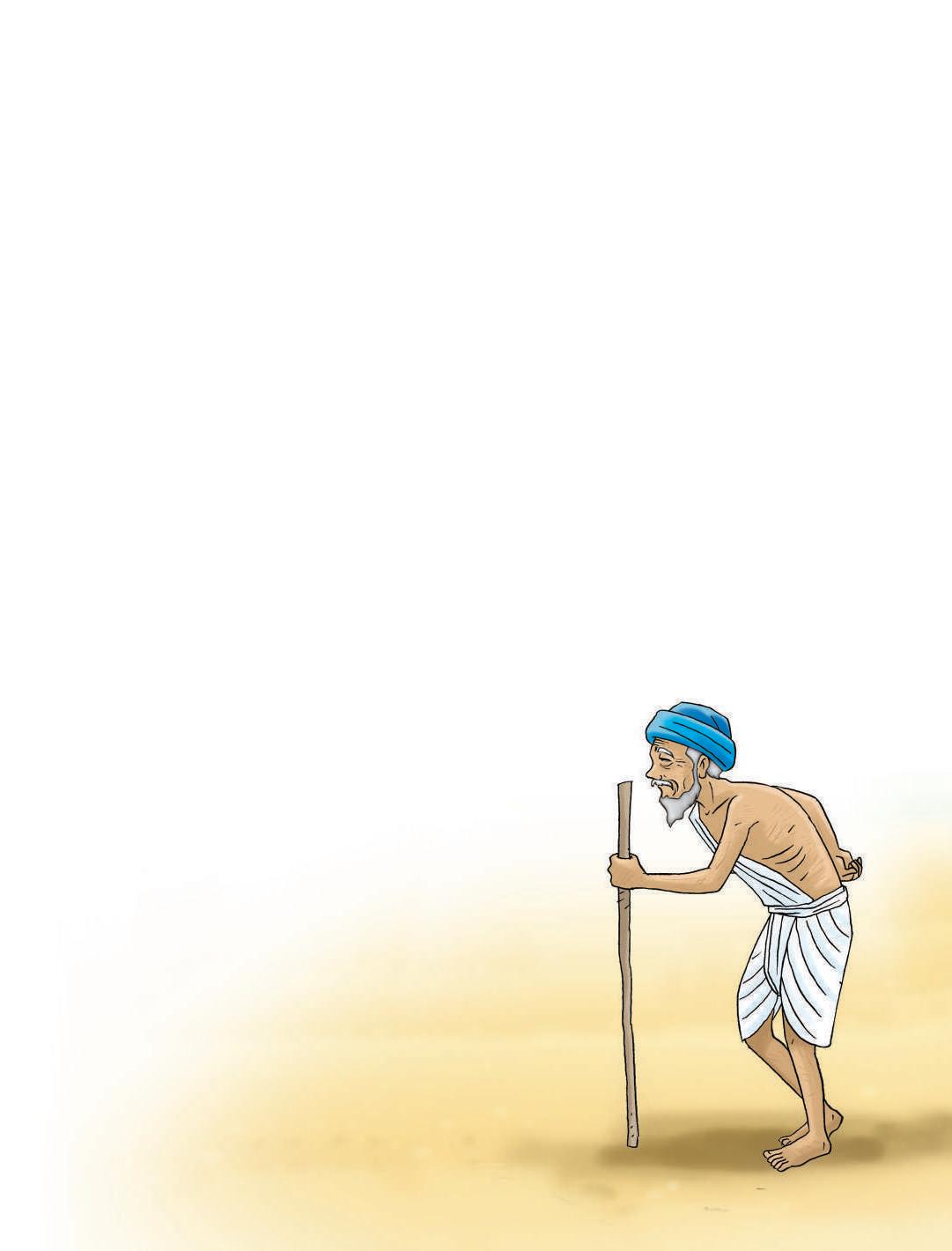
During the first outing, the prince encountered an old man with no teeth and squinting eyes, walking with a hunched back. He approached the prince to beg for food. The prince, who had never seen such a person before, was very surprised. He asked his charioteer, “Why can't this man walk upright? Why is his hair white, his teeth gone, and his sight weak? Is he truly human?”
The charioteer replied honestly, “Your Highness, this is an old man. He was once young and strong like us, with black hair, smooth skin, strong teeth, and sharp vision, but age has changed him.” The prince inquired further, “Is there no way to prevent old age?” the charioteer replied, “No, everyone will age and look like this eventually.”
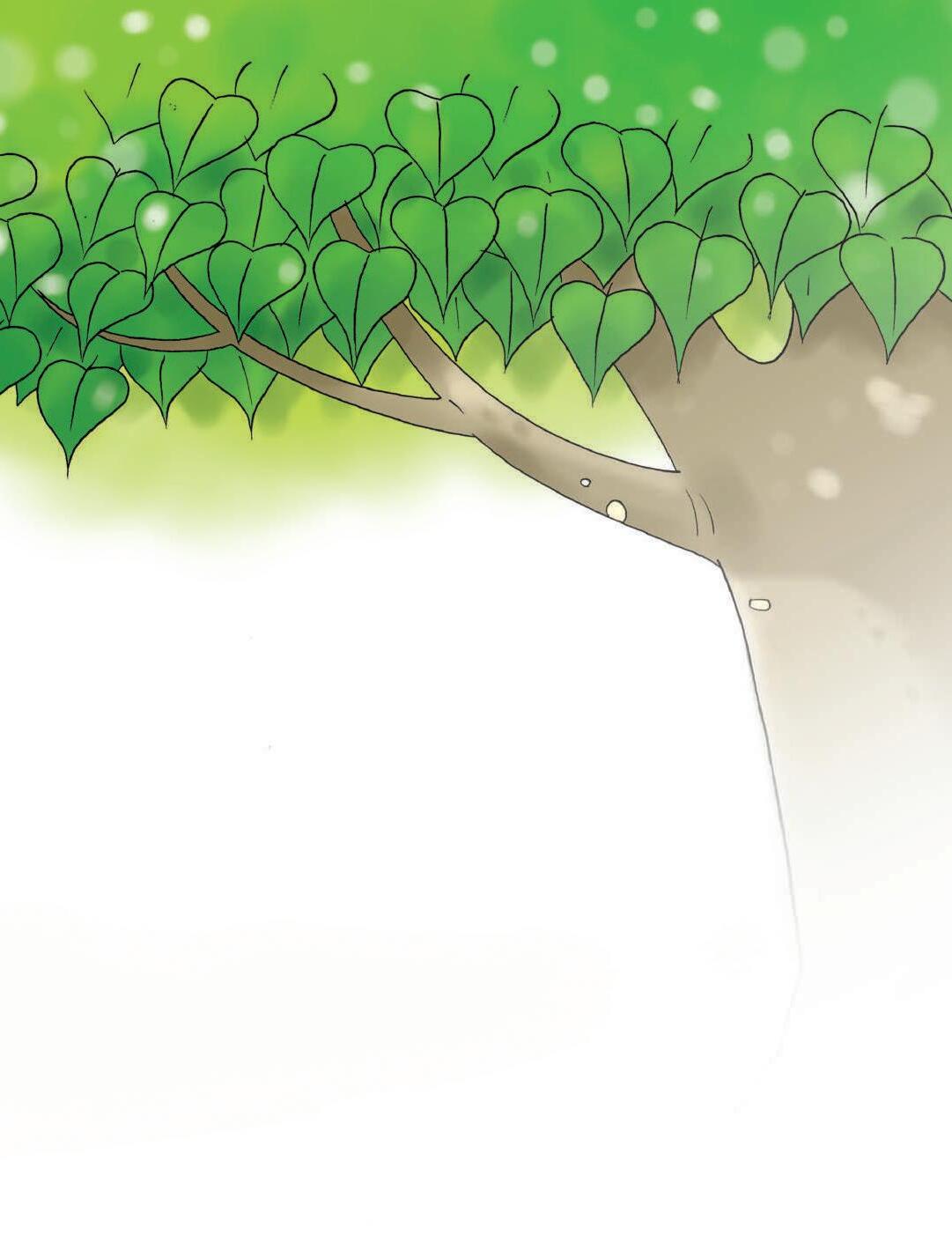
The prince sighed and remarked, “Ah! The reality of ageing lies openly before all, yet men live as though they do not see it.” the prince exclaimed. Deeply troubled by such a sight, he ordered that they return to the palace immediately. He was full of sorrow upon discovering the true nature of old age.
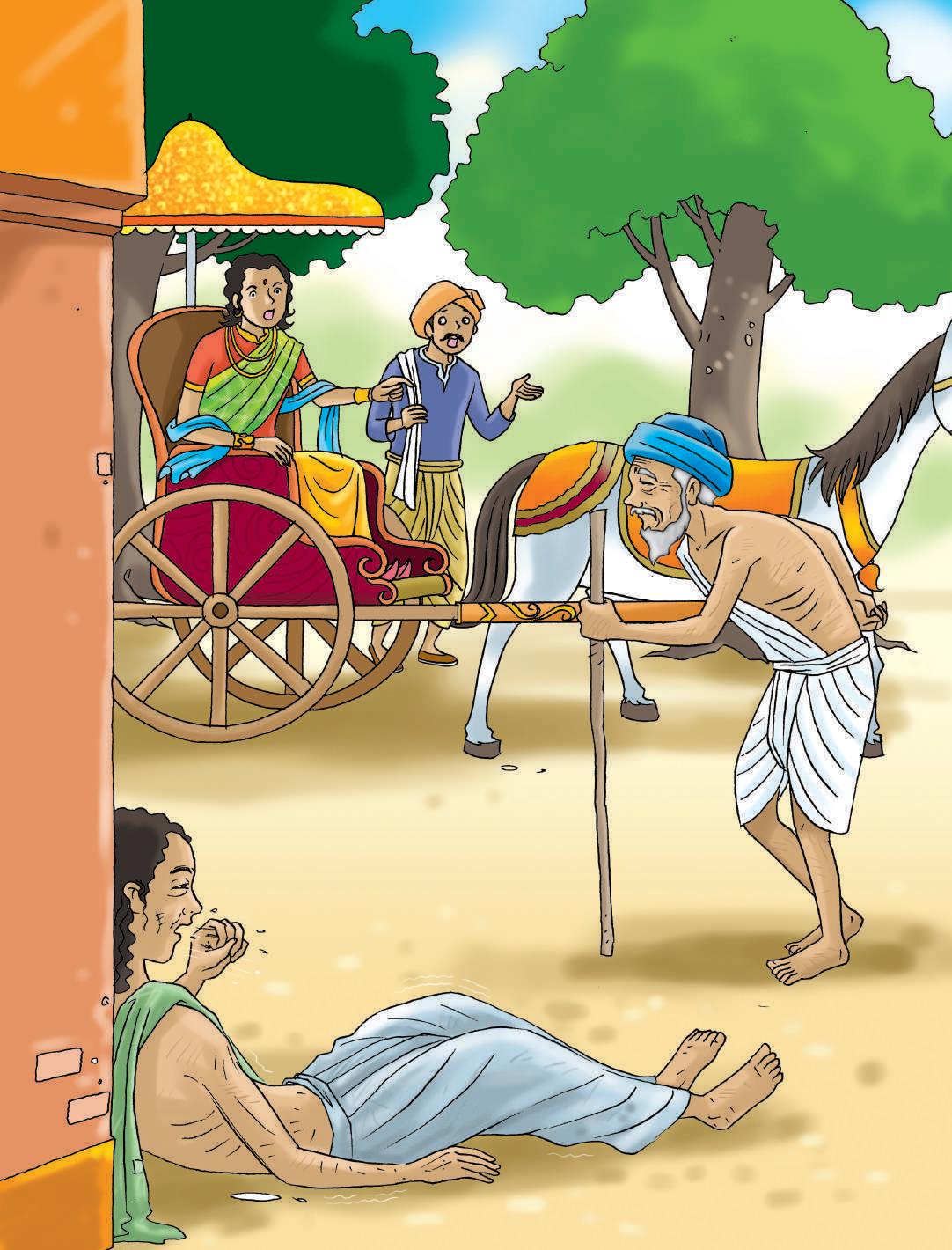
On his second trip, the prince saw a man lying on the ground. His face was pale, and he was groaning and wheezing in pain. The prince had never seen such a scene before, so he asked nervously, “What has happened to this man? Is he weeping? Why does he lie upon the ground?” The charioteer explained that the man was sick and in great pain.
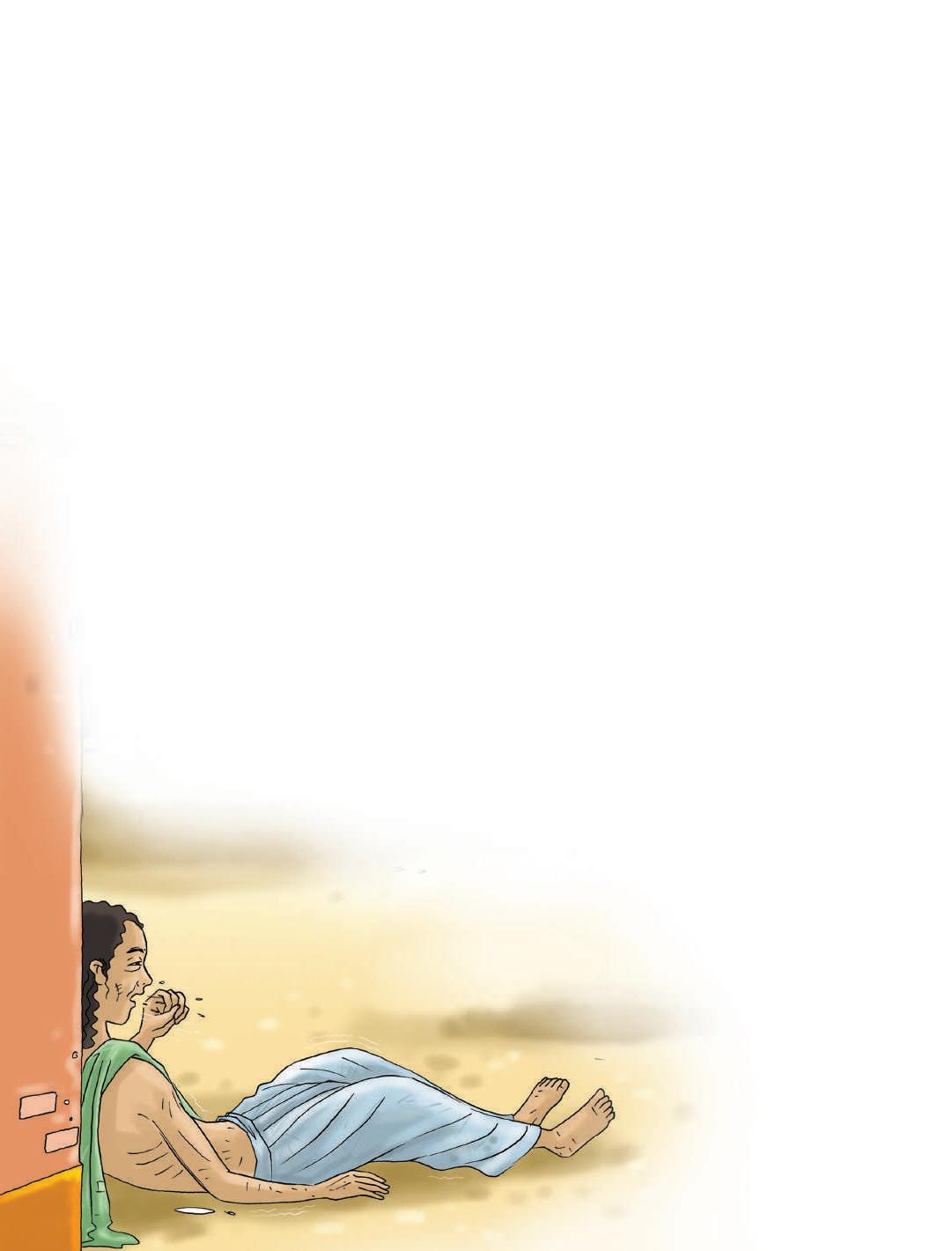
The prince questioned, “How could he fall ill? Is there no remedy?” The charioteer answered, “Everyone will fall sick somehow. Some illnesses can be cured, but some can't.” The prince, distraught, replied, “How ignorant are men who still find joy under the shadow of illness!”
Having once believed that everyone enjoyed the same health as he did, the prince then realised that life was not as he had thought to be.
What did the prince witness on his first trip? How did he feel? Will you also grow old in the future? How do you feel about this? Why? What did the prince witness on his second trip? How did he feel? Have you ever been sick? How did it feel? Please give an example. Why are people ignorant about “ageing” and “illness”? What do the phenomenon of “ageing” and “illness” in life mean to us?
To liberate sentient beings, one endures all kinds of extreme suffering without ever abandoning the great Bodhi mind. This is a defining quality of the great compassion of buddhas and bodhisattvas.
Student Journal
Dear students: Studying Buddhism is to learn good conduct and to apply it to your family, teachers, friends, and strangers whom you share karmic affinity with. I did all of
Signature: Signature:
— Mahaprajnaparamita Sutra, Vol. 567, Section 6, Chapter 3: “Manifest Signs.” (Adapted)
The Four Sights : (III) Death
(IV) Renunciation
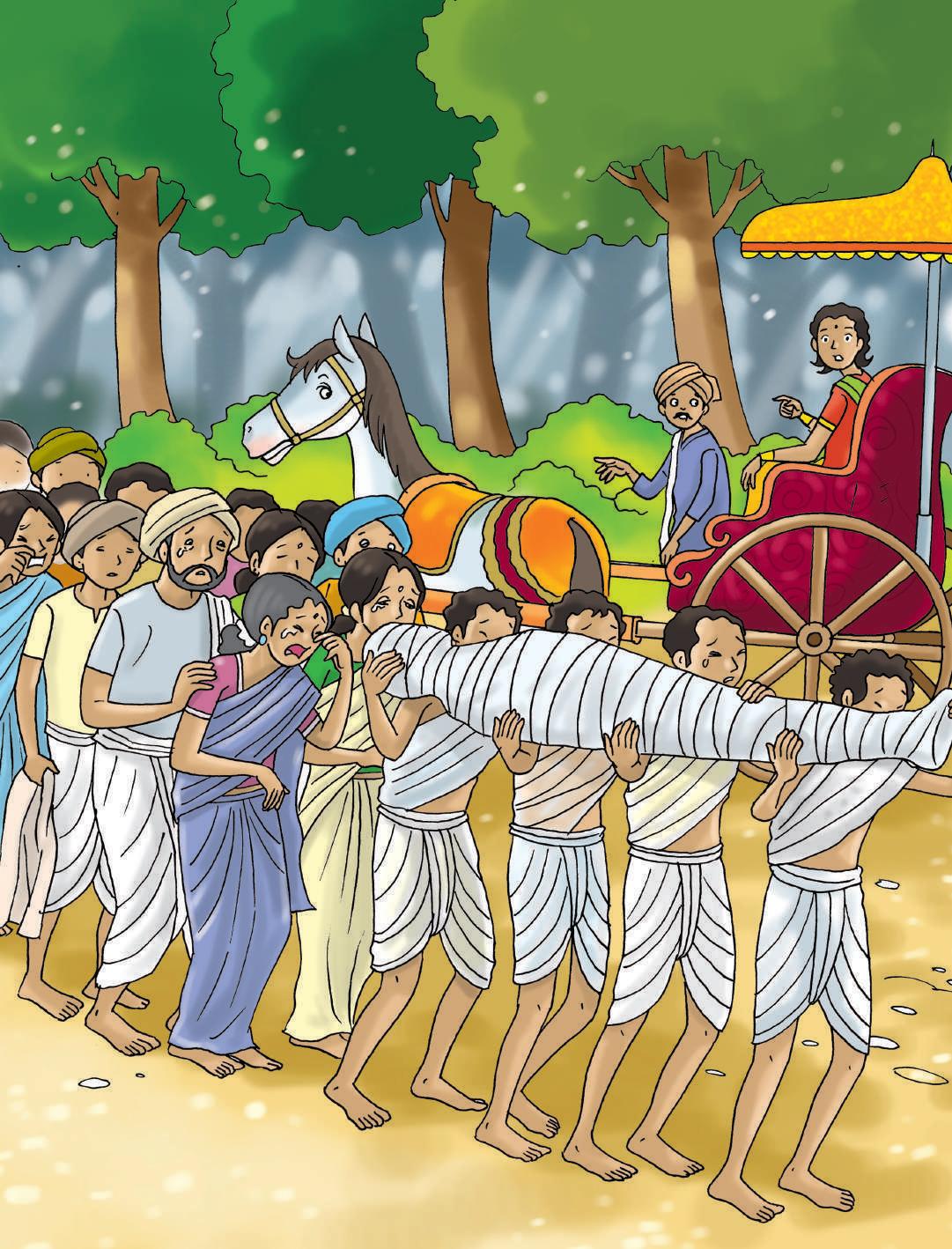
On his third outing, Prince Siddhartha saw a group of mourners carrying a lifeless body wrapped in cloth, moving slowly and weeping. Puzzled by the scene, he turned to his charioteer and asked, “What are those men doing? Why does that one lie upon the plank so stiff and motionless?”
The charioteer replied, “This man has passed away, so he is wrapped in cloth. His family grieves because they will never see him again.”
With a growing sense of unease, the prince asked, “Why must the living die? Is this inevitable?”
The charioteer answered, “Death is inevitable.”
Sorrowfully, the prince remarked, “Death is the end for all men, and yet people care not for it!” The prince was overcome with sadness and instructed the charioteer to turn back as before. However, the charioteer continued the journey to the park, where entertainment had already been arranged by the king.
The prince, preoccupied with thoughts of ageing, sickness and death, took no pleasure in the scenery before him. Suddenly, Prince Siddhartha noticed a monk in a yellow robe, who appeared very serene and happy. The prince could not help but approached him and asked, “Who are you?” The man replied calmly, “I am an ascetic who has left home in search of the solution to old age, sickness and death.”
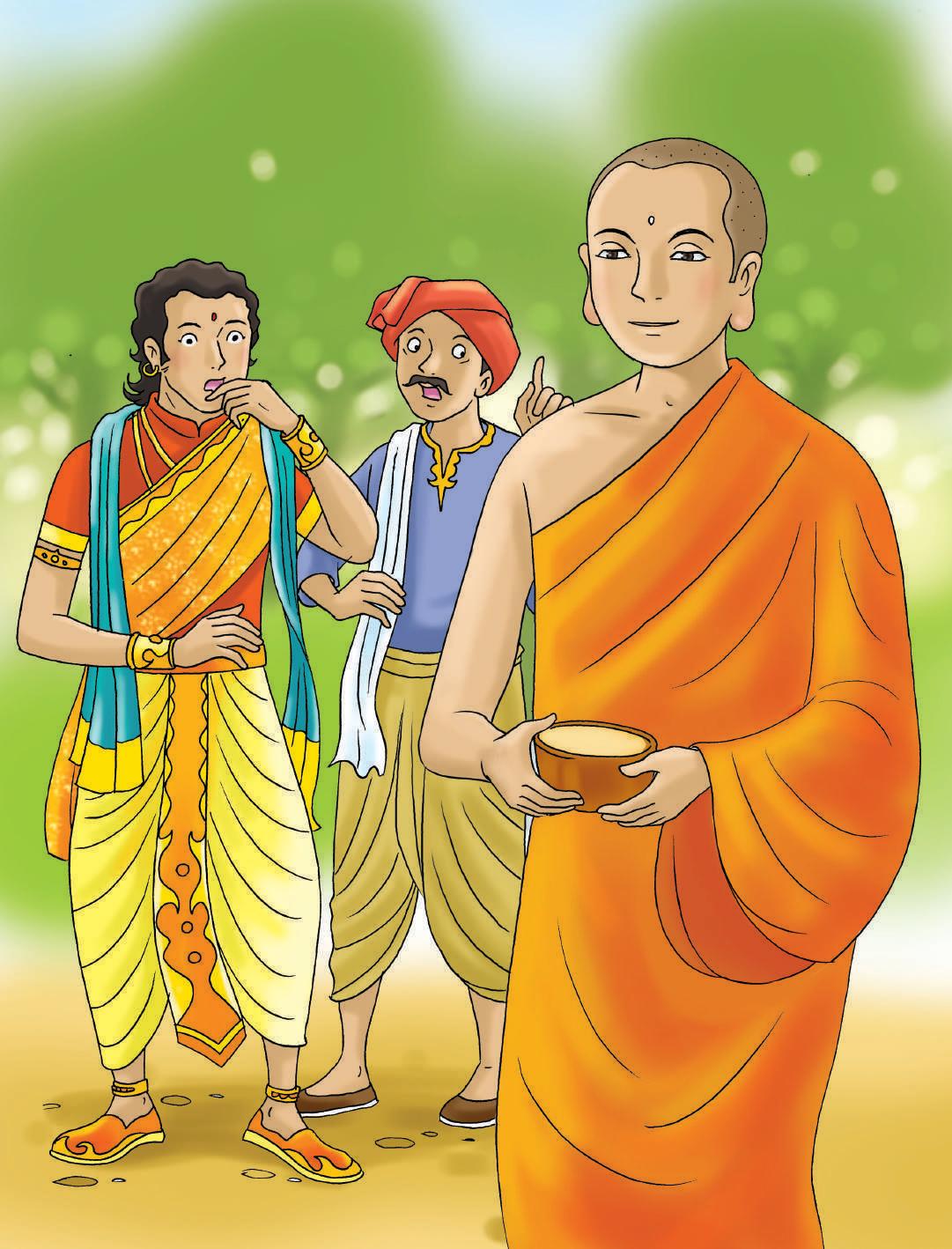
The prince, deeply troubled by what he had witnessed during these outings, was struck by the monk’s serenity. He then felt a strong desire to be like him and understood that there might be a path to liberating oneself from life’s suffering.
From that day forward, the prince’s perspective on life shifted profoundly: Though I may be a prince born into privilege, I too will grow old, fall ill and die, just like everyone else. So, he decided to give up the worldy life and find an end to life’s sufferings.
Disillusioned with his luxurious life, Prince Siddhartha’s heart turned steadily towards renunciation and the pursuit of enlightenment.
What did the prince witness on his third trip? How did he feel?
How did the prince react to the fact that death is unavoidable? Why?
Why did the man in a yellow robe become a monk? Why was he so calm and peaceful?
What gave the prince a new perspective on life?
How can we live meaningful lives despite the inevitability of ageing, illness and death? Why?
The Buddha, known as the Father of Great Compassion, said, “Loving-Kindness brings happiness, and compassion alleviates suffering.”
Dear students: Studying Buddhism is to learn good conduct and to apply it to your family, teachers, friends, and strangers whom you share karmic affinity with.
(Please record your good deeds or diligent efforts this week.)
Signature: Signature:
— Shui Chan (Water Repentance), Annotated Edition, Lower Scroll (Adapted)
Prince Siddhartha's Renunciation
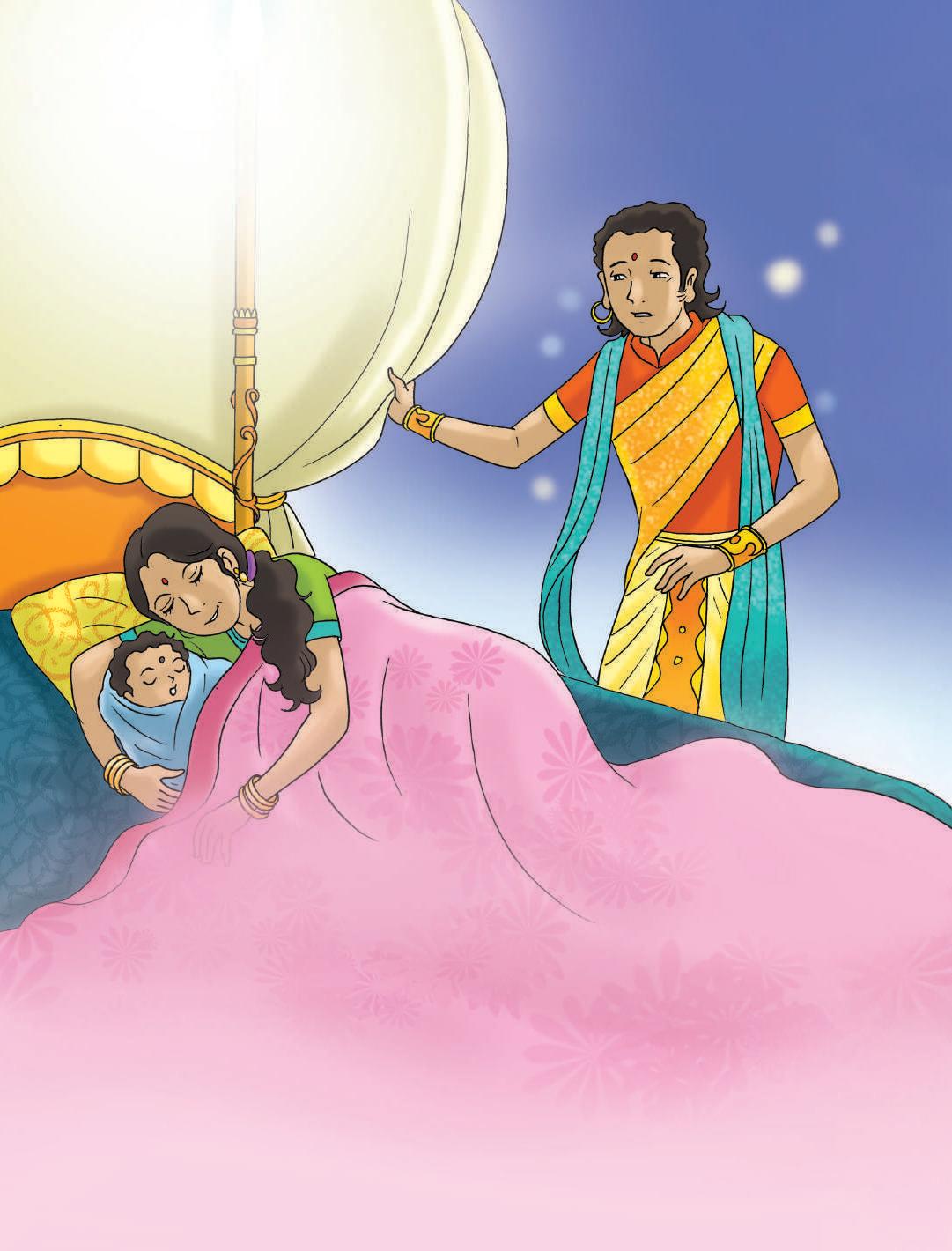
While the prince was deeply disturbed by the sufferings of life and the need for a solution, he was informed that his wife, Yashodhara, had given birth to a healthy son. The birth of his child posed an obstacle to his plan to renounce worldly life and become a monk. The prince named the child “Rahula”, which means “bond” in the language of his kingdom. Even so, he was still determined to leave home.
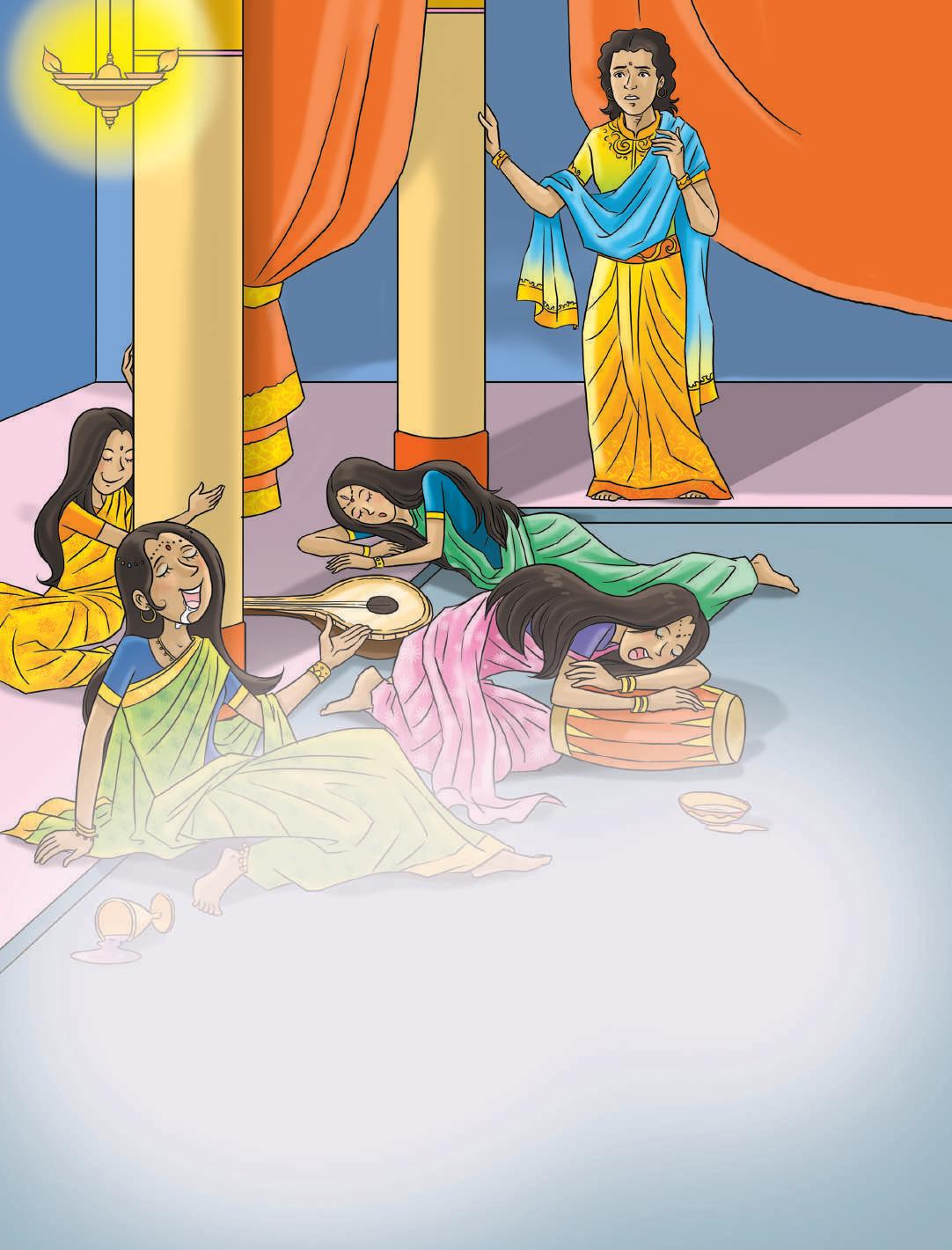
King Shuddhodana held a grand celebration to mark Rahula’s birth. That night, Siddhartha awoke to a startling sight: the performers, exhausted from the celebrations, lay dishevelled. Some had saliva dripping from their mouths; others ground their teeth or talked in their sleep, their clothes in disarray. Witnessing this, Siddhartha realised the fleeting nature of youth and beauty, which further strengthened his decision to renounce worldly life.
On a full-moon night, the prince, accompanied by his charioteer, rode a white horse and left the palace. He declared to his charioteer, “I shall not return to this city until I have seen the further shore of life and death!” When they reached a great river, the prince demonstrated his resolve to renounce the world by shaving off his hair and removing his luxurious garments. He then instructed the charioteer to return the horse and his fine garments to the palace.
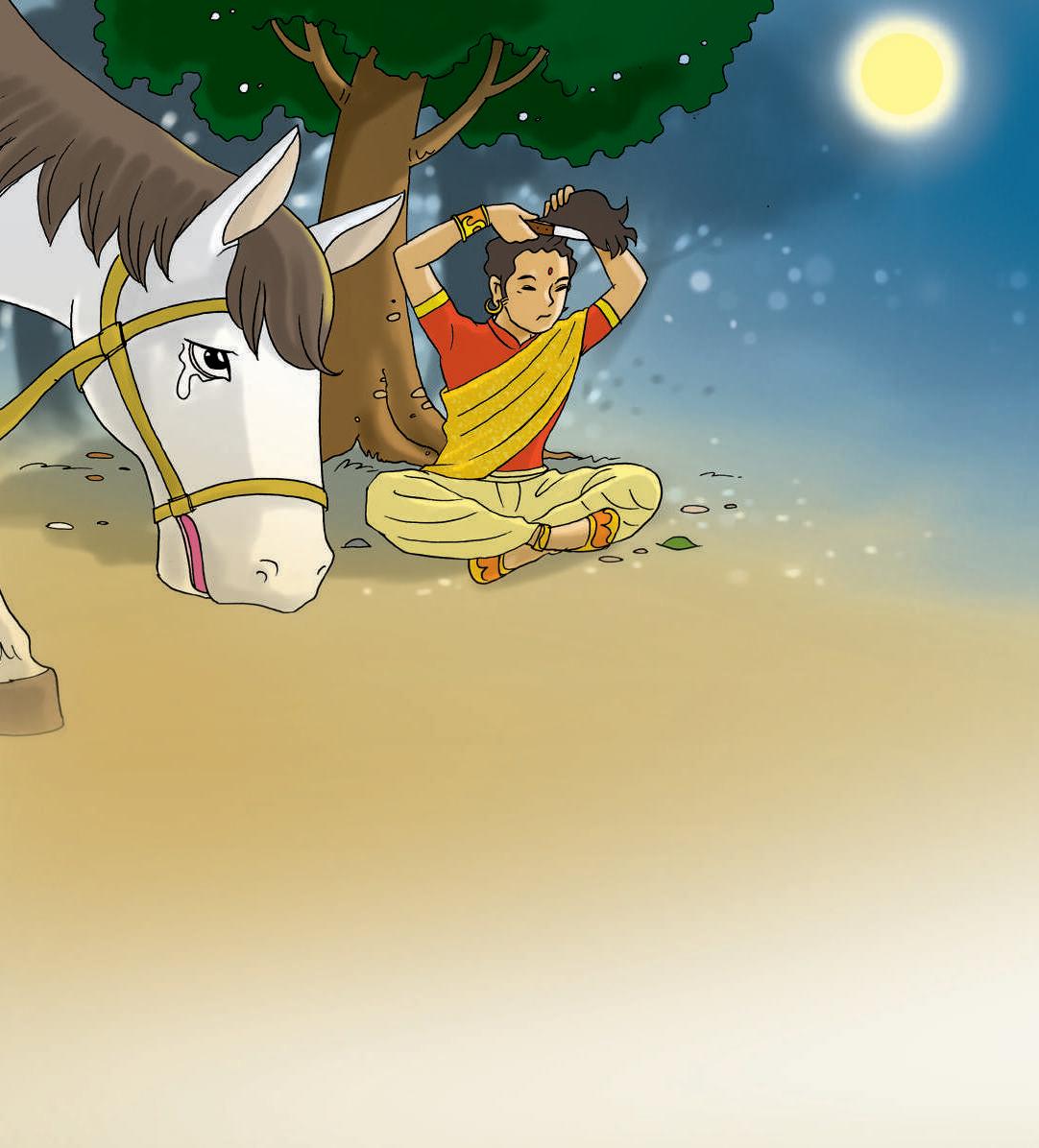
At that moment, a hunter appeared in the distance. The prince exchanged his garments for the hunter's tattered robe. From then on, the prince lived the life of an ascetic. He was twenty-nine years old.
Upon hearing of the prince's renunciation, King Shuddhodana immediately dispatched two ministers in search for him. After a long search, they finally located Siddhartha and implored him to return to the palace. Resolute in his path, he refused. The king then appointed five ministers to accompany the prince as his attendants. Together, Siddhartha and his attendants set off towards the city of Rajagriha in the kingdom of Magadha.
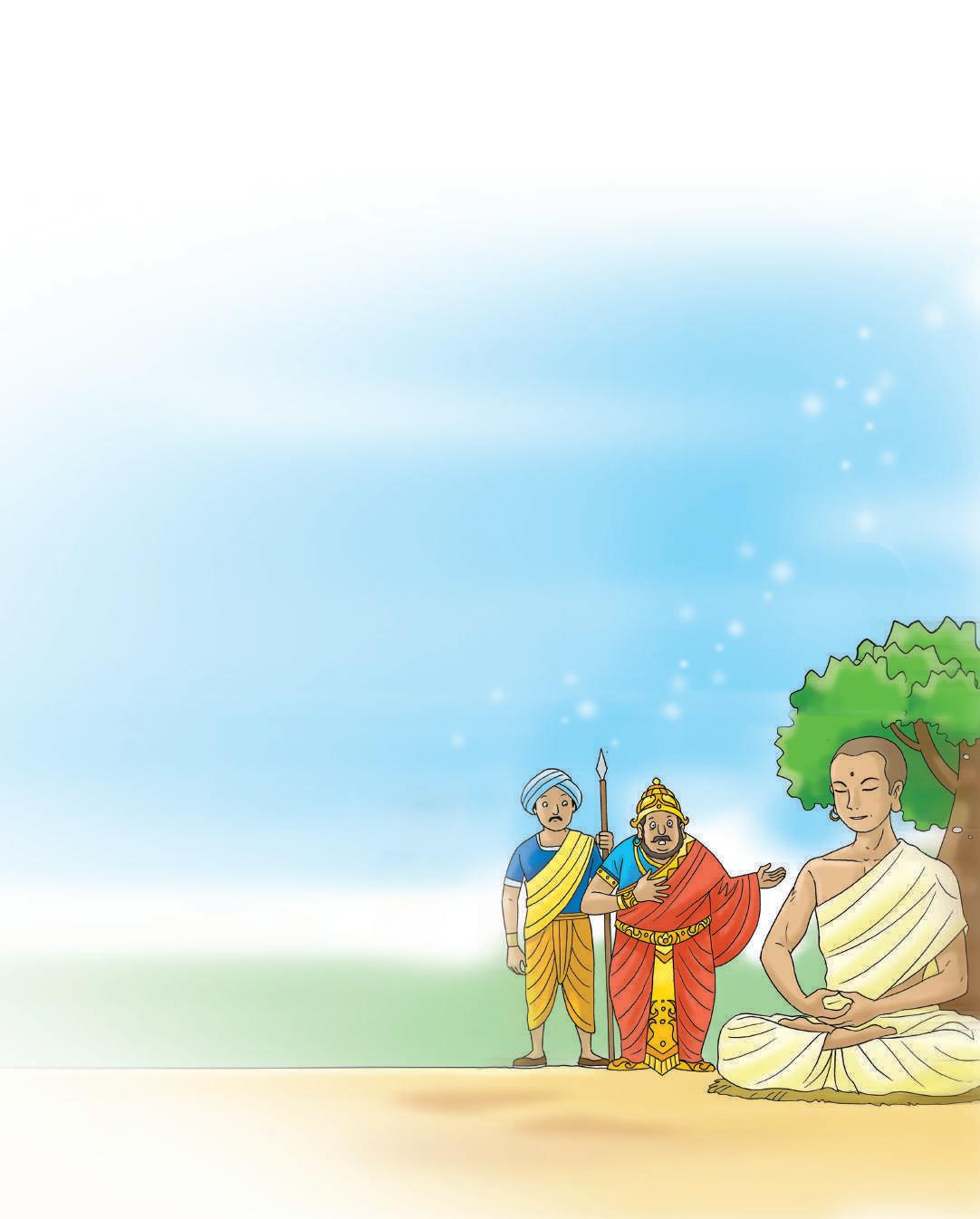
After renouncing worldly life, the prince became known as the ascetic “Gautama”. One morning, while begging for alms in Rajagriha, the local king, Bimbisara, noticed Gautama's gentle and majestic appearance from his window. Struck by his presence, the king invited him for an audience.
By the time the king’s invitation reached him, Gautama was already atop the mountain. King Bimbisara hurried to meet him and, upon finding him, bowed and said, “You have the build of a warrior, one fit to lead a first-rate army. Stay in my kingdom and I will share half of it with you.”
Gautama replied, “It is precisely because I do not wish to pursue fame and fortune that I left my palace to seek the truth. May your kingdom enjoy peace and prosperity and may you govern the people with wisdom and righteousness.” Touched by his words, the king said,“ I hope you find the truth soon and return to teach us.” Gautama promised he would do so.
How did Rahula's birth affect the prince? What does his name signify? How did the prince show his determination to become a monk? What did King Bimbisara offer to Gautama? How would you have responded if you were him?
What was Gautama’s reply to King Bimbisara? What can you learn from it? Why?
How do you feel about the prince leaving the palace, his family and a comfortable life to seek the truth?
By practising sympathetic joy (mudita), a person overcomes non-bliss.
Dear students: Studying Buddhism is to learn good conduct and to apply it to your family, teachers, friends, and strangers whom you share karmic affinity with.
(Please record your good deeds or diligent efforts this week.)
I did all of these I did some of these I need to work harder
Signature: Signature:
— Mahaparinirvana Sutra, Chapter Twenty-One: On Pure Actions
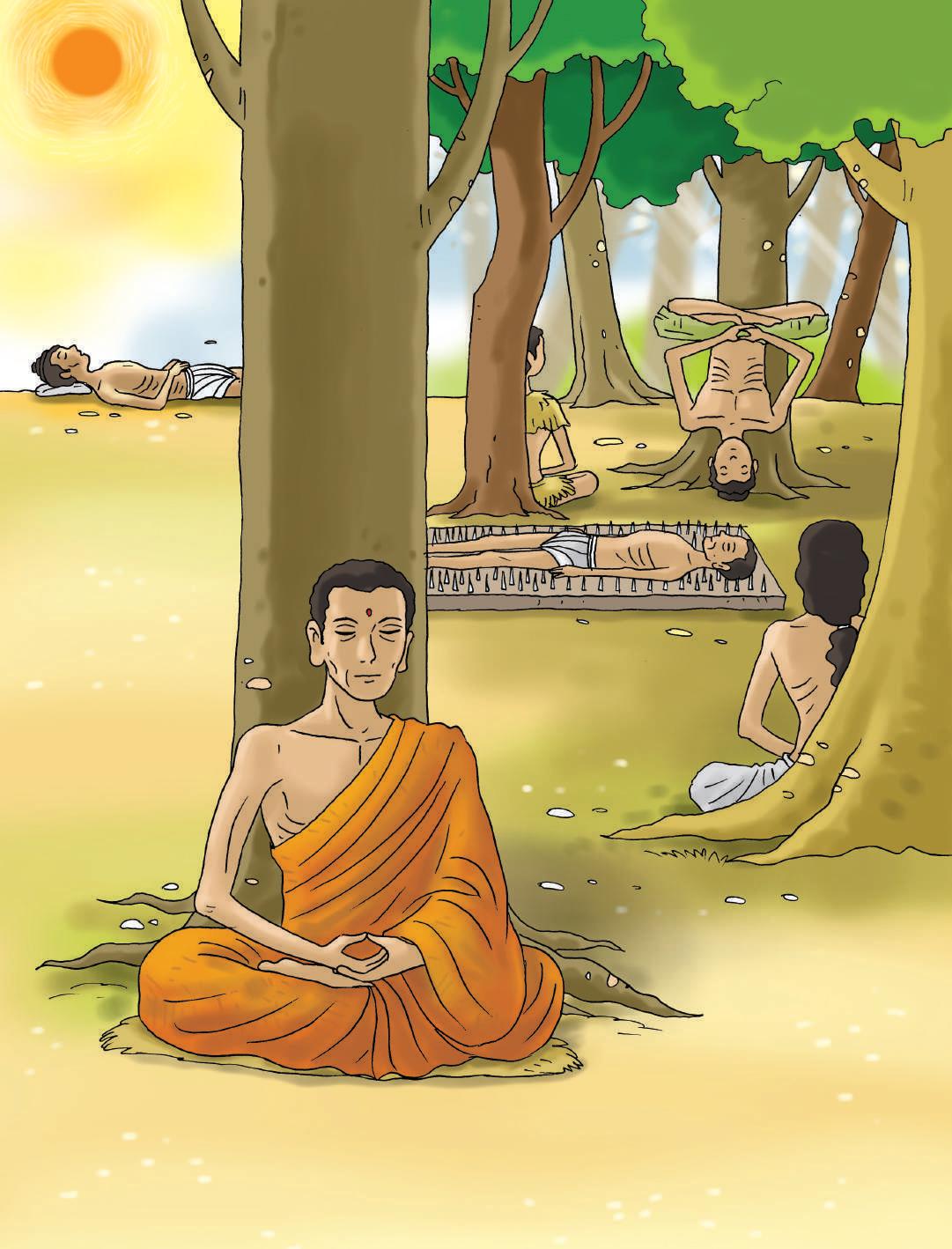
The Quest for Truth : Six Years of Asceticism
One day, Gautama and his five attendants arrived at Uruvilva, southwest of Rajagriha. There, he saw many ascetics practising extreme austerities: some wore clothes made of grass and tree bark while standing upside down; while others lay naked under the scorching sun, some even slept on beds of nails. Gautama decided to practise asceticism there to seek an end to all suffering.
For six years, he endured various harsh practices that inflicted pain on his body. He survived on wild fruits or on as little as a single grain of hemp or wheat. As a result, he became so emaciated that on one occasion, while bathing in a river, he fainted and nearly drowned.
That experience made Gautama reflect deeply, “For six years I have endured great suffering, yet I have found no peace and no way to liberation. Could this path be mistaken?”
At that moment, a childhood memory surfaced in his mind of when he was sitting quietly in meditation under the jambu tree, experiencing a sense of tranquillity and serenity.
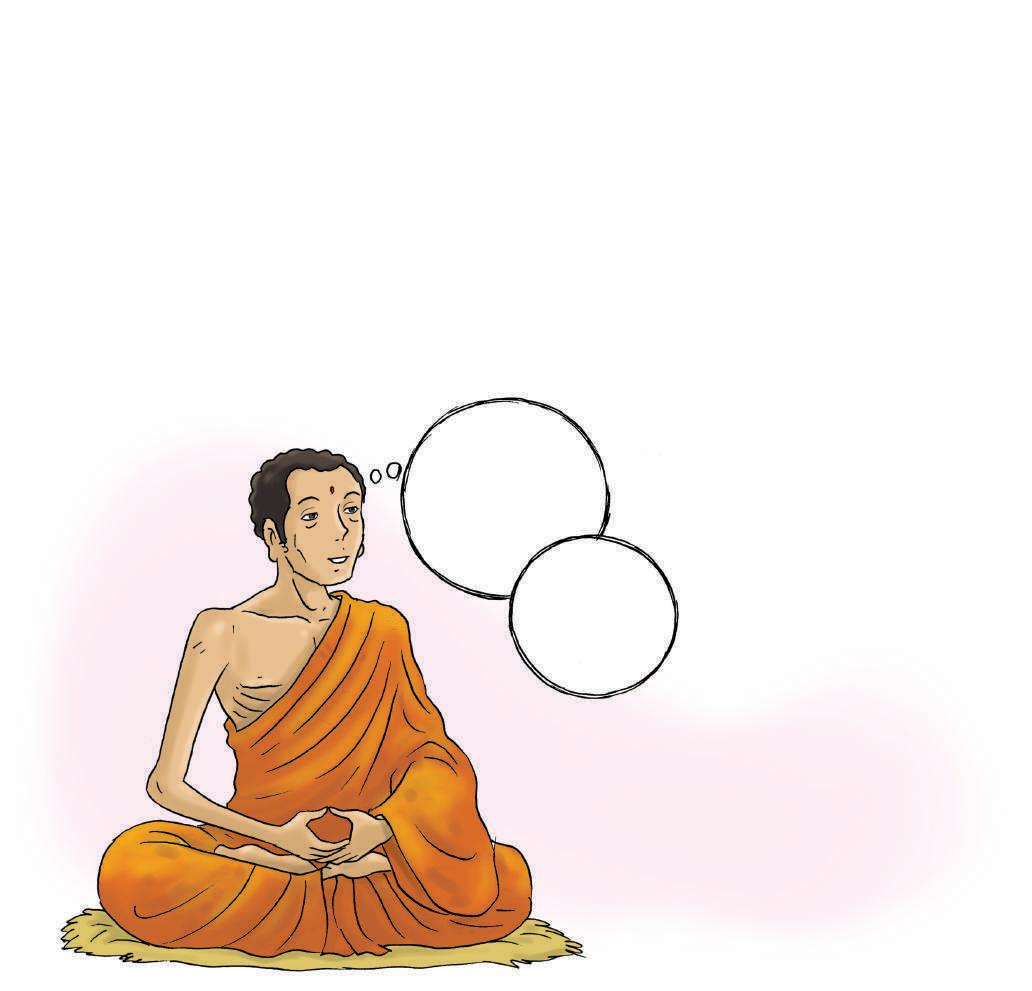
He decided to practise meditation. Through this practice, he regained confidence and gradually realised that neither a life of indulgence nor extreme asceticism could lead to liberation. After a period of self-reflection, he discovered the “Middle Path”. He concluded that only by following the Middle Path and practising meditation could he attain liberation.
The Middle Path... Middle Path...
From then on, he decided to give up asceticism. Around this time, a shepherdess named Sujata happened to pass by and offered a bowl of milk porridge to the gaunt Gautama. Seeing him accept it, his five companions frowned. “Gautama has faltered. He has returned to a life of ease. Let’s abandon him!”
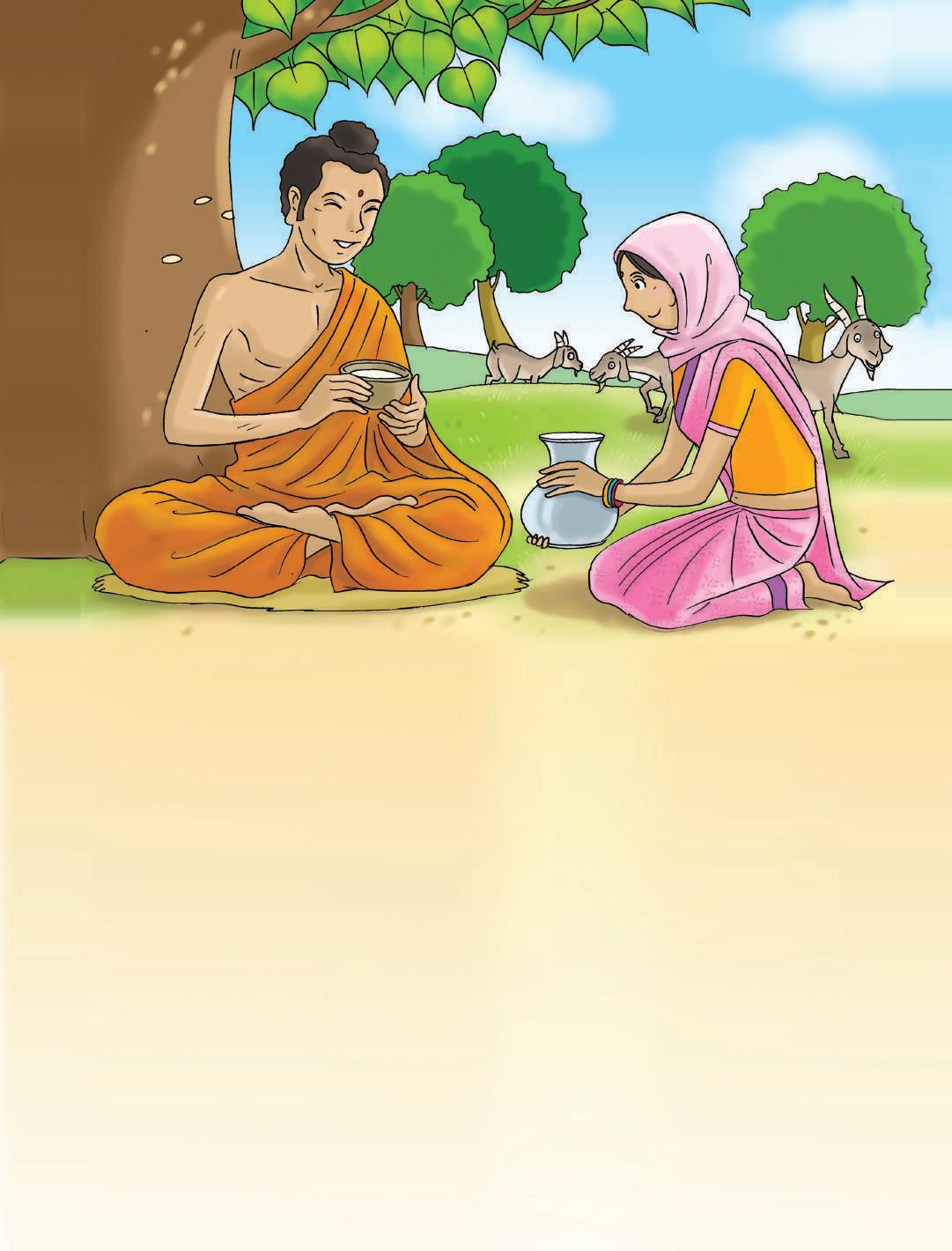
Strengthened by the bowl of milk porridge, Gautama meditated beneath a large tree (later known as the “Bodhi tree”).
A grass cutter named Svastika brought him a handful of tender grass to use as a cushion.
To show his determination to pursue the truth, Gautama made a vow: “I will not leave this seat until I have attained the truth!”
Comparison of two extremes in Gautama’s life before enlightenment:
Life of a Prince: Extreme Grandeur
Resided in three palaces, surrounded by luxury and comfort.
Enjoyed an abundance of food, clothing and enjoyment.
Lived in good health and strength, with all needs attended to.
Overwhelmed by temptations, unable to see the truth about ageing, illness and death.
Life of an Ascetic: Extreme Suffering
Lived in an austere environment in Uruvilva, on beds of thorns.
Survived on one single grain of hemp or wheat, completely renouncing sensory pleasures.
Endured physical pain and torture.
Suffered constant pain and unable to concentrate on realising the truth.
What methods did the ascetics use to practise?
How did Gautama discover that asceticism could not lead to enlightenment? What method did Gautama discover after his reflection?
What vow did Gautama make under the Bodhi tree, and what does it signify?
From a Buddhist perspective, can we enjoy life? How could the idea of the “Middle Path” fit into your own life? Can you give an example, like how you approach studying, eating or other daily activities?
By practising equanimity, a person can eradicate greed and anger from sentient forms. Student Journal
Dear students: Studying Buddhism is to learn good conduct and to apply it to your family, teachers, friends, and strangers whom you share karmic affinity with.
(Please record your good deeds or diligent efforts this week.)
I did all of these I did some of these I need to work harder
Mahaparinirvana Sutra, Chapter Twenty-One: On Pure Actions (Adapted)
The Quest for Truth : Temptation of Mara
Gautama sat on the soft grass beneath the Bodhi tree and made a vow: “I will never leave this cushion until I realise the truth!”
This earth-shattering vow shook the ground, even reaching the demon palace and awakening Mara. Terrified, Mara exclaimed, “Oh no, Gautama is about to become a Buddha! My dominion will be destroyed! I cannot let him achieve true enlightenment!”
Mara immediately gathered his army. They brought their weapons and marched fiercely to the Bodhi tree. However, their arrows could not hurt Gautama. Frustrated, Mara summoned three witches to seduce him, but their efforts were futile.
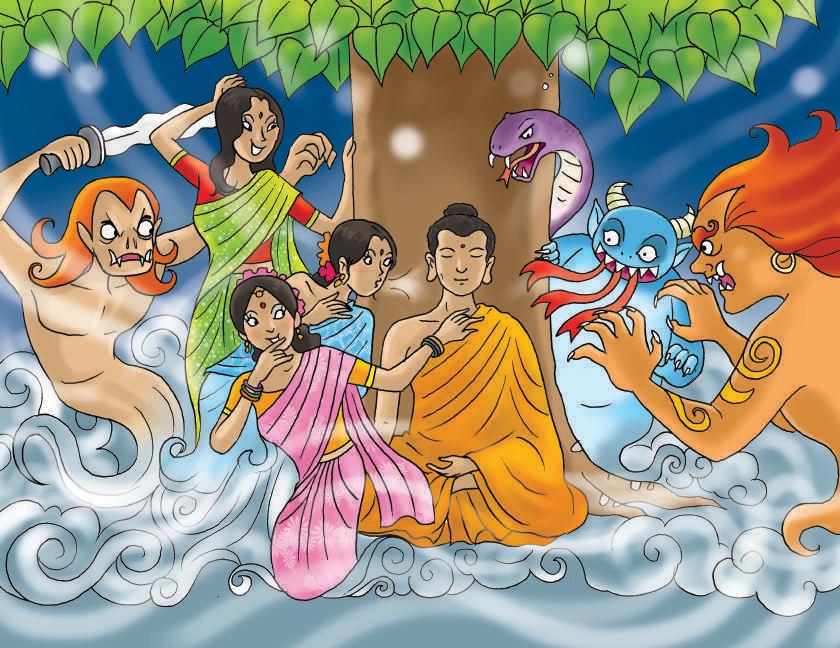
Gautama’s heart remained unmoved. Finally, Mara taunted, “You are so thin, you will surely die! Why not enjoy your life instead? The road to seeking the truth is very long! You will never succeed!”
Gautama replied, “I know very well why you are here. Although my body weakens, my mind remains steadfast. No temptation can deter me. I will use my wisdom to find a way to end suffering!”
Defeated, Mara admitted, “For years I have tried every means to sway you, yet you remain indifferent to them all. I am vanquished!”
With Mara’s retreat, Gautama became even more resolute and serene. That night, he entered deep into meditation and recalled his past lives — where he had been born, what names he had, and what deeds he had performed. He realised that all sentient beings in the cycle of life and death are sometimes parents and children, sometimes teachers and students. They are all interconnected through the web of Cause and Effect. He even understood that “life” and “death” are fundamentally one and the same, with no
need to cling to either. At that moment, his heart became like a polished mirror, reflecting the true nature of all things as they truly are.
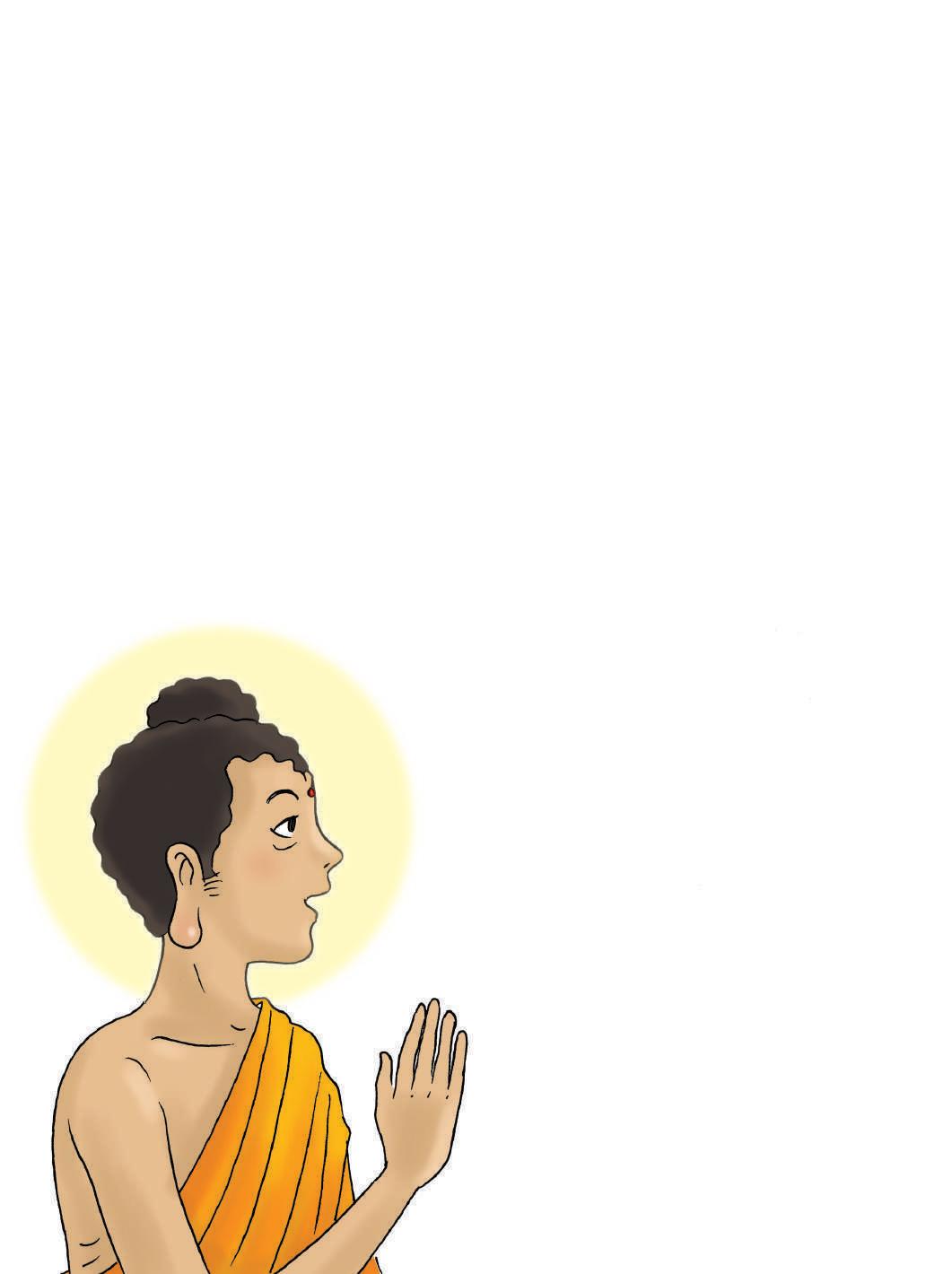
Group Discussion
Why did Gautama's vow shake the ground? Why was Mara afraid of Gautama's enlightenment? How did he try to stop him? What was the outcome?
What did Gautama say to Mara?
What insights did Gautama gain about his past during his meditation?
Words of Wisdom
If a person is not filial, when his life ends and his body decays, he will fall into the great Avici Hell.
Student Journal
Dear students: Studying Buddhism is to learn good conduct and to apply it to your family, teachers, friends, and strangers whom you share karmic affinity with.
(Please record your good deeds or diligent efforts this week.)
Signature: Signature:
I did all of these I did some of these I need to work harder
— Filial Piety Sutra
Realising the Truth : Bodh Gaya 9
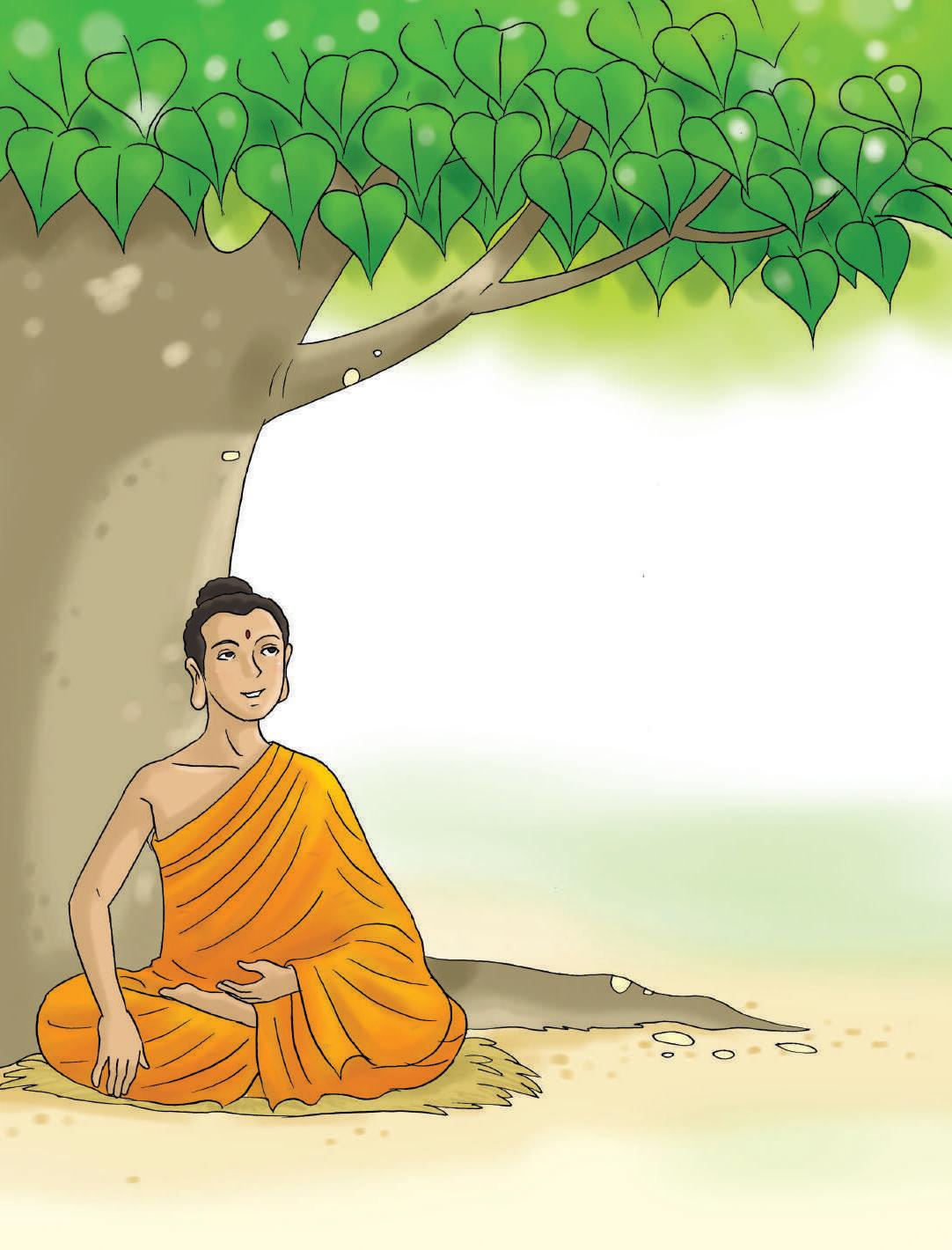
Upon Mara’s departure, the surroundings became deeply quiet, allowing Gautama to enter a deeper state of meditation. At that moment, he experienced unparalleled peace and purity. At midnight, during his meditation, he saw the karmic realities of existence: evildoers being born into states of suffering, and the virtuous into states of happiness.
Before dawn, Gautama fully comprehended the truth of “Cause and Effect”. He realised that “desire” and “ignorance” are the root causes of suffering. Once ignorance is eliminated, and desire extinguished, sentient beings are free from suffering. These insights liberated him from desire and ignorance; he attained supreme wisdom and became a Buddha. It was a full moon day in May, he was thirty-five years old.
For seven days after his enlightenment, the Buddha remained in a meditative state under the Bodhi tree in Bodh Gaya. The Buddha gazed at the Bodhi tree, reflecting how the tree had provided him with shelter from the sun and rain, and felt immense gratitude. He realised that every being in the world has its own strengths, and they all aspire to live harmoniously and help one another.
(2) Kind People
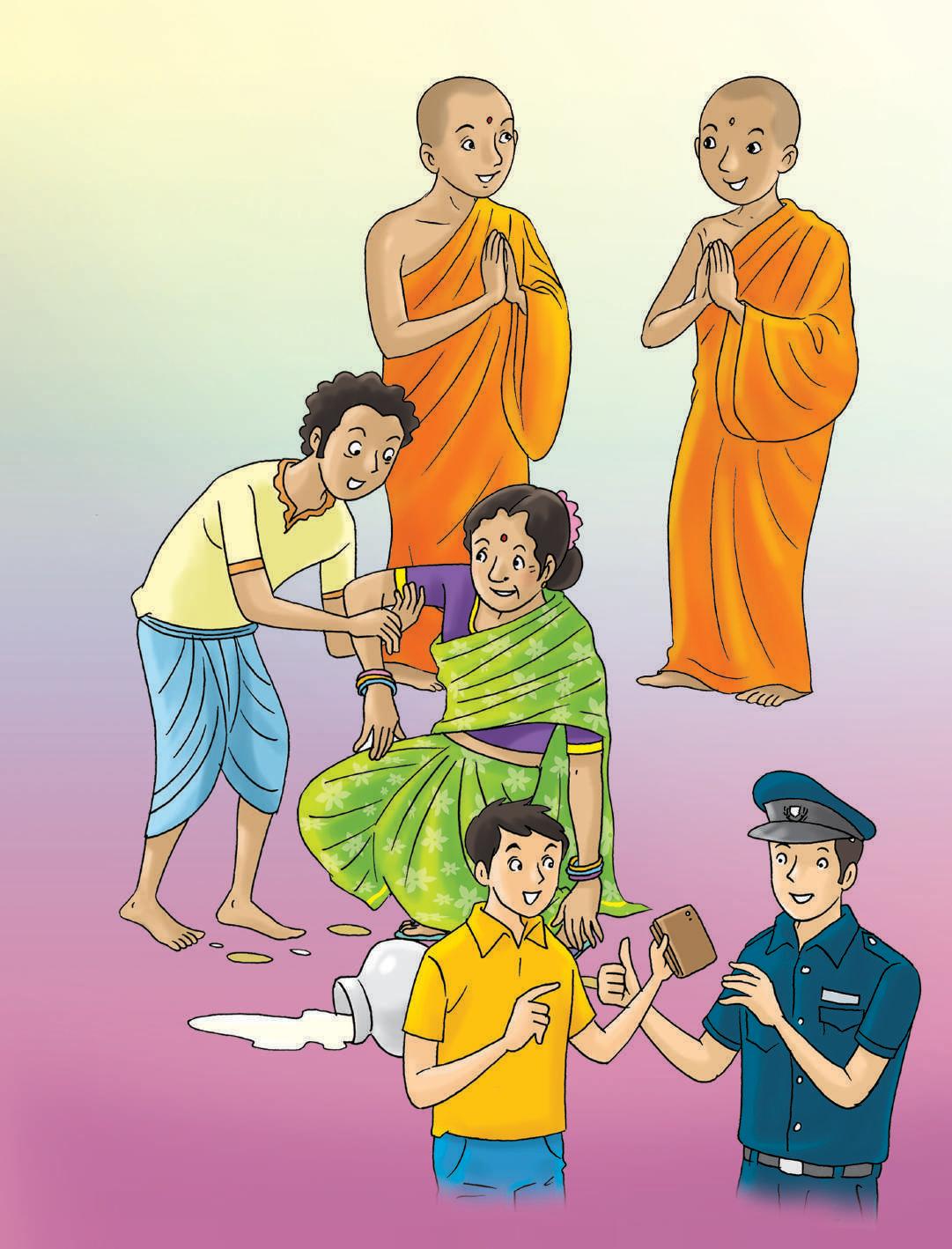
(3) A Person who Controls his Desires
(1) Monastics
One day, a proud Brahmin approached him and asked, “How can I gain the respect of others?” The Buddha replied, “True respect comes not from one’s class or status, but from reducing desires, avoiding harmful actions, practising humility and wisdom, and leading a life of purity.”
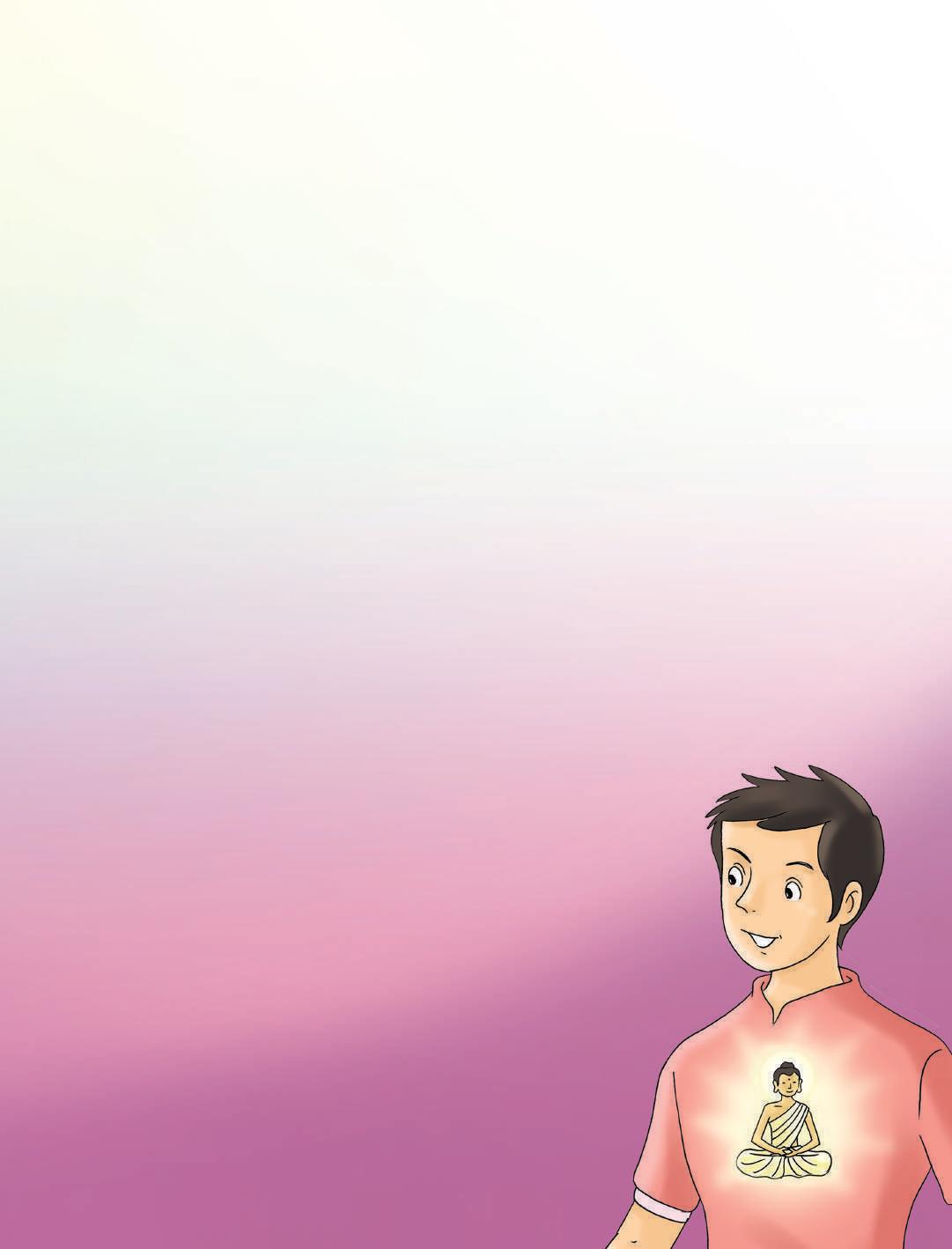
Later, another young man silently paid his respects to the Buddha. Understanding the young man’s unspoken question about who lives the happiest life, the Buddha explained: “The happiest individuals are of four kinds. First, monks who understand the truth and live contently. Second, kind-hearted people who avoid harming others and experience no inner conflict. Third, those who control their desires and attachments.
However, the happiness of people who can overcome their pride is unmatched by anyone.”
The Buddha knew that the truth was not easily understood and difficult to express in words. However, he believed that people of wisdom would eventually understand and practise the Dharma. Thus, the Buddha decided to teach the Dharma in different ways, guiding all beings towards liberation from the suffering of birth, ageing, sickness, and death.
Group Discussion
How did the prince show his determination to become a monk? What are the root causes of suffering? How can we get eliminate them? Please give an example.
How did the Buddha feel when he looked at the Bodhi tree? Do you agree? Why?
How can one truly gain respect from others? Why?
Who does the Buddha consider the happiest? What kind of person do you aspire to be? Why? How can you achieve it?
Filial piety should encompass five aspects: not only providing parents with food, clothing, shelter, and daily necessities but also respecting them, adhering to their teachings, and informing them of one’s actions.
Student Journal
Dear students: Studying Buddhism is to learn good conduct and to apply it to your family, teachers, friends, and strangers whom you share karmic affinity with.
(Please record your good deeds or diligent efforts this week.)
— Singalovada Sutta (Adapted)
Origins of Life 10
All things in this world arise through the principle of “causes and conditions”, without exception. This unchanging law is what the Buddha referred to as “Dependent Origination”.
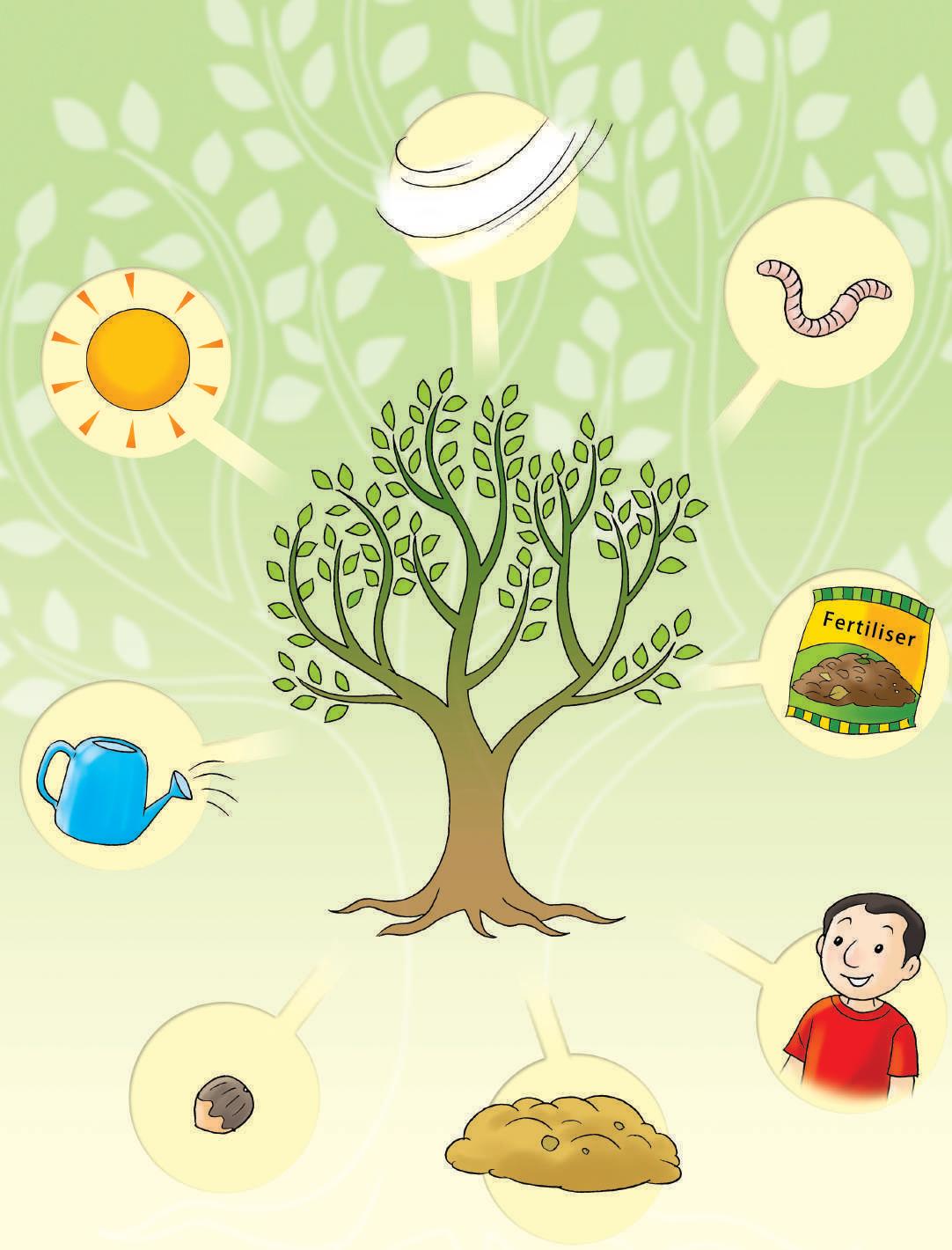
The interconnections within the web of Dependent Origination are boundless. For instance, the trees in a garden cannot survive on their own; they rely on soil, water, sunlight, and other factors to thrive.
Similarly, seeds rely on trees to grow and bear fruit for their reproduction, while moisture in the air relies on the atmosphere, the sun and temperature cycles to form.
(1) Familial Gratitude

Human existence is no different. Beyond being born to parents, our survival relies on countless contributions from others. Consider a bowl of rice we eat for survival: it depends on seeds, soil, moisture, sunlight, farmers, workers, businessmen, and many others to reach our table. Likewise, we depend
on others for our own survival. This is the principle of Dependent Origination.
Each bowl of rice that reaches our table deserves our gratitude. In daily life, we should cultivate a bodhisattva spirit of serving all beings readily.
(2) Gratitude to the Triple Gem

(3) Gratitude to the Nation
On a broader scale, our country provides us with stability, ensuring its citizens to live a safe and secure life, with constant access to food, water and electricity. As responsible citizens we should be grateful to our country.
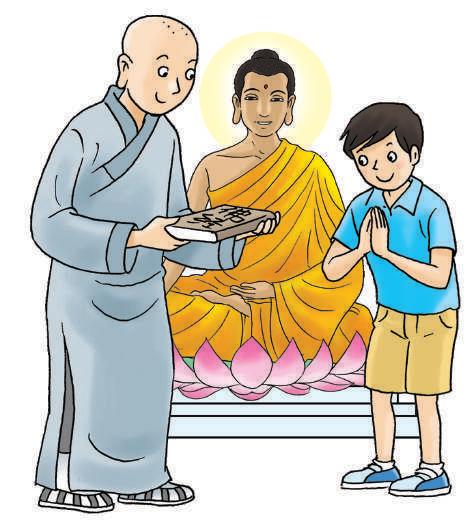
On an even grander scale, the Buddha, with his boundless compassion and fearless determination, spreads the truth and liberates all beings through his precious teachings. The Sangha, following the Buddha’s example, continues to benefit all sentient beings by sharing the Dharma and guiding others towards true inner happiness. We should, therefore, hold deep gratitude for the Triple Gem (the Buddha, the Dharma and the Sangha).
Understanding the principle of Dependent Origination encourages us to repay the fourfold kindness (to our parents, Triple Gem, country, and all sentient beings) and alleviate the suffering of the three lower realms in Buddhist practice. By practising gratitude, tolerance and cooperation, we create harmony within families, societies and nations.

(4) Gratitude for All Sentient Beings
Group Discussion
What is Dependent Origination? Please give an example. What is Cause and Effect? Please give an example. What is the “fourfold kindness”?
Can we truly survive without our parents, country or sentient beings? Why? Please give an example.
What should we do to achieve world peace?
Words of Wisdom
Support for one's parents, assistance to one's wife and children, consistency in one's work: This is the highest protection.
— Mangala Sutta
Student Journal
Dear students: Studying Buddhism is to learn good conduct and to apply it to your family, teachers, friends, and strangers whom you share karmic affinity with.
(Please record your good deeds or diligent efforts this week.)
1 2
Signature: Signature:
I did all of these I did some of these I need to work harder
The Law of Cause and Effect : Karma and Its Results
• Physical Karma
• Mental Karma
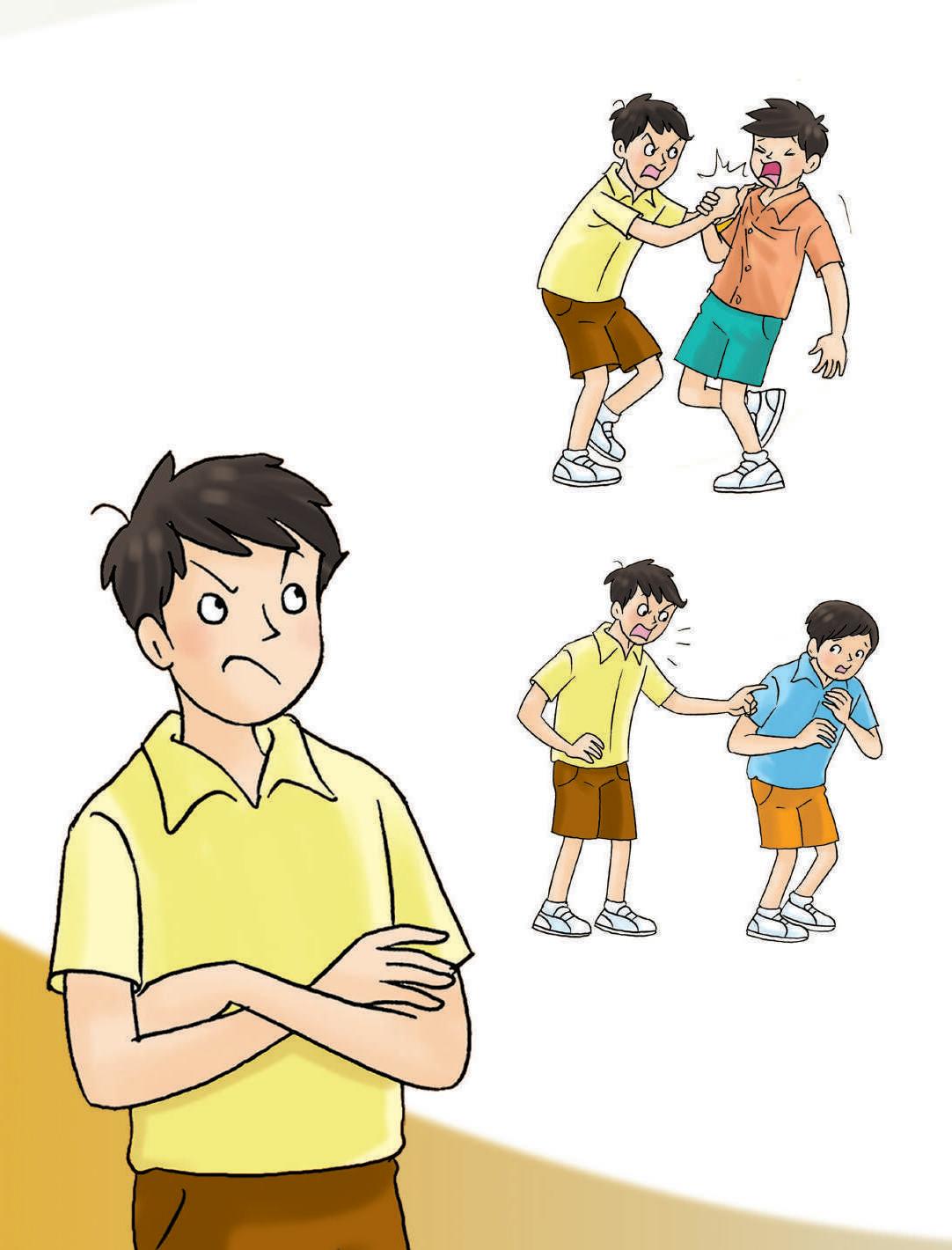
• Verbal Karma
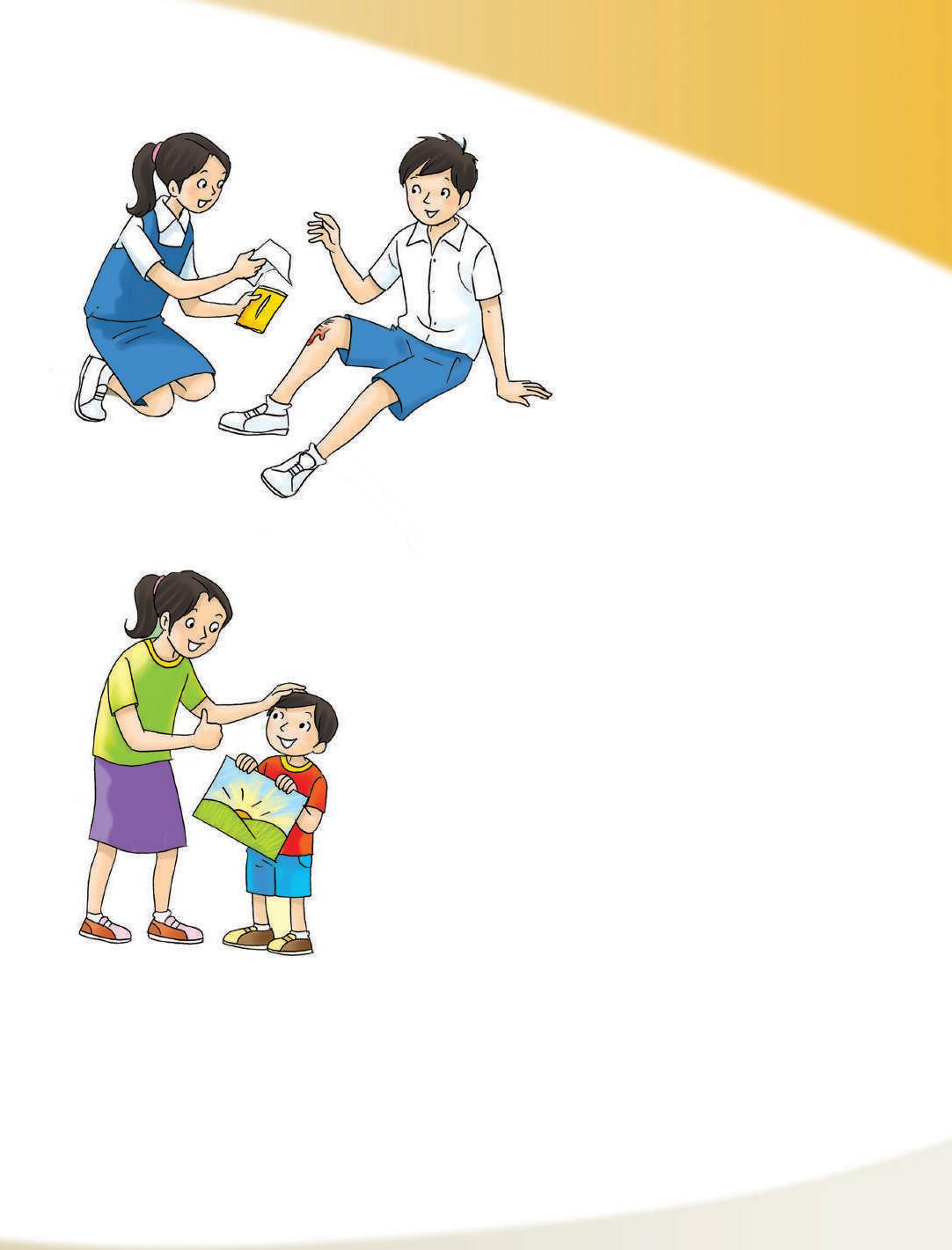
(1) Bad Karma
(2) Good Karma
Have you ever wondered: why are some people healthy and strong, while others face disabilities? Why do some live in disaster and poverty, while others enjoy luxury and comfort? With such vast differences, who ultimately decides our fate? Is it predestined?
The Buddha told his disciples, “Happiness or suffering is determined by one’s past actions or karma. Everyone’s unique karma shapes their current life. Good deeds yield positive outcomes, while harmful actions bring about suffering.”

The law of Cause and Effect, which is inseparable from karma, is a fundamental truth the Buddha realised upon enlightenment. “Karma” refers to actions expressed through body, speech or thought, while their outcomes are called “karmic retribution”.
(3) Neutral Karma
For example, helping a friend in need, or even a kind word generates good karma, while saying something hurtful creates bad karma.
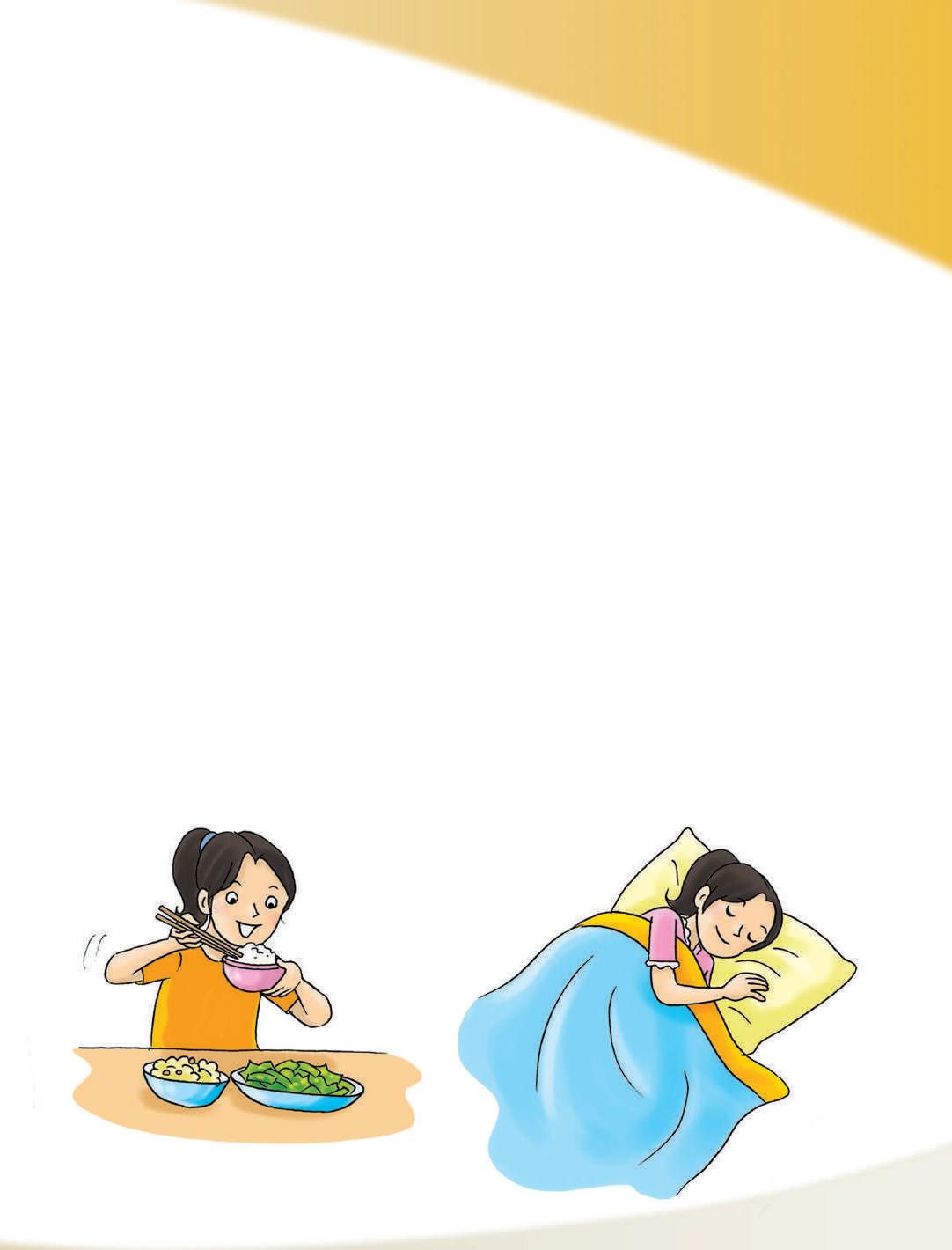
“Karma” can be divided into three types: good karma, bad karma and neutral karma. “Good karma” refers to actions that bring benefit and happiness to oneself and others. “Bad karma”, on the other hand, refers to actions that cause pain or harm to oneself or others. “Neutral karma” is neither good nor bad and does not lead to any karmic results, like walking, eating or sleeping.
The Buddha taught that cultivating good deeds and avoiding harmful actions are essential for leading a happy life. He specifically highlighted the different types of bad karma to avoid:
1. Physical Karma: Harming living beings, stealing and sexual misconduct.
2. Verbal Karma: Lying, slander, harsh words, and idle talk.
3. Mental Karma: Greed, anger and wrong views.
Karma manifests in two forms: “Immediate Karma” and “Future Karma”. The different deeds a person has done may bring results experienced in this lifetime or future lifetimes. So, the actions we take today can determine our future.
What is the law of “Cause and Effect”? Please give an example. If Prince Ashiwa killed his father for the throne, and was later killed by his son for the same reason, is this “Immediate Karma”? Why? If someone speaks ill of you, how would you respond? Why? Who determines our future? Why? How can we change it?
The evildoer grieves here and hereafter; he grieves in both worlds. He laments and is afflicted, recollecting his own impure deeds.
Dear students: Studying Buddhism is to learn good conduct and to apply it to your family, teachers, friends, and strangers whom you share karmic affinity with.
(Please record your good deeds or diligent efforts this week.)
The First Turning of the Dharma Wheel : The First Five Disciples 12
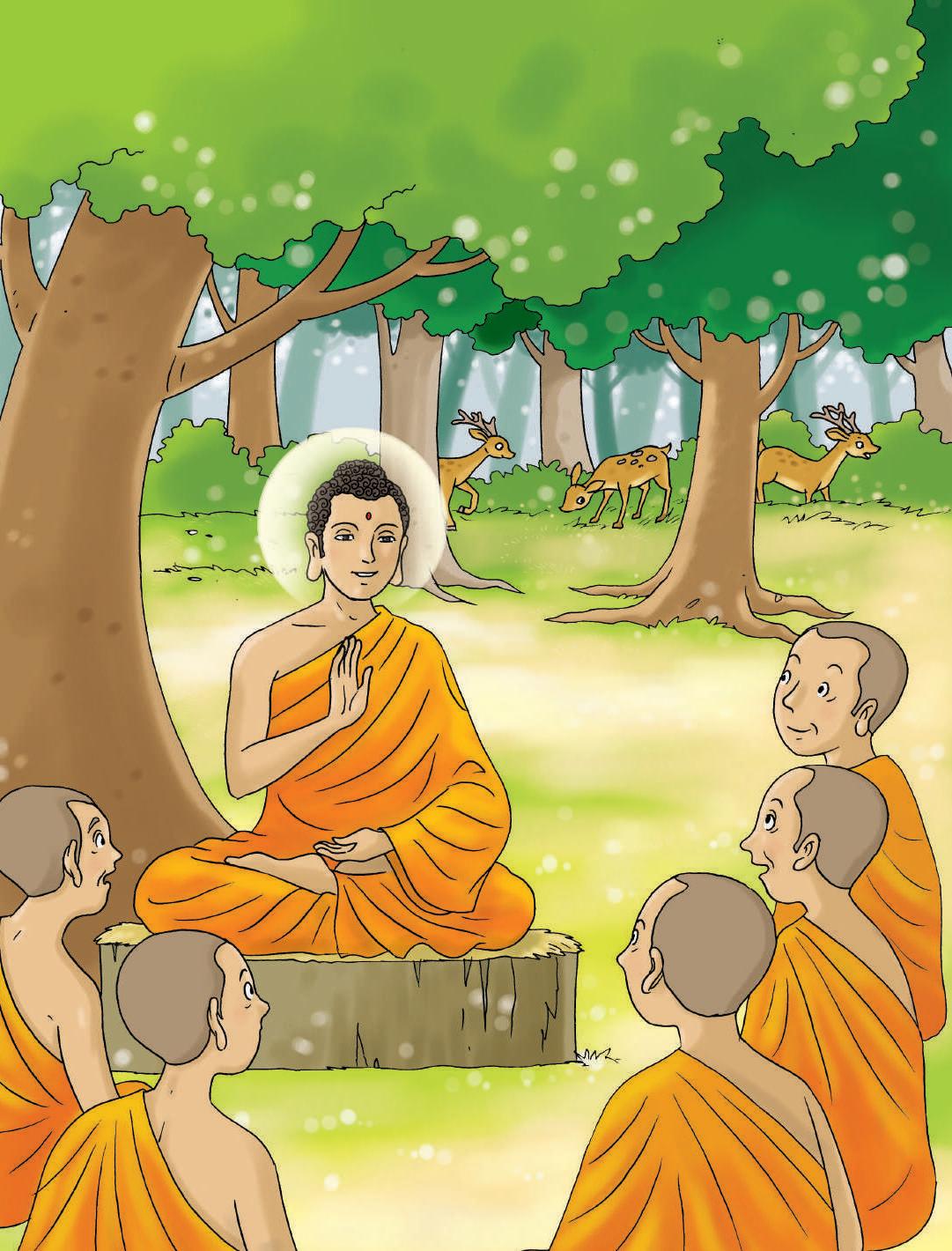
The Buddha, filled with compassion for all beings, decided to share his teachings. He first sought out the five ascetics who had once followed him. Along the way, the Buddha met a young seeker. Struck by the Buddha's dignified appearance, the young seeker knelt and asked, “You look so dignified, and your skin is radiant and glowing. Who did you follow to become a monk? Who is your teacher? Please tell me!”
The Buddha, in all his benevolence, replied, “I have learnt from many teachers and gained various kinds of knowledge, but no one taught me how to realise the truth. After years of searching and enduring many challenges, I am finally awakened. Now, I am free from attachments and biases. I have gained true wisdom and freedom, so I am also my own teacher.” The seeker listened to the Buddha's words, praised him repeatedly, and took his leave.
After many days of walking, the Buddha finally arrived at the Deer Park. When the five ascetics saw him coming towards them, they decided to ignore him, assuming he had given up the path to enlightenment when he accepted Sujata’s offering of food. Unaware of his awakening, they dismissed him.
However, as the Buddha approached them, they sensed a profound change in him. His majestic presence greatly impressed them, and they could not help but to show respect. One ascetic came forward and willingly carried his bowl and outer robe, another prepared a seat, the third brought a basin of water for his feet, a fourth brought a footstool, while the fifth presented him with a towel.
The Buddha then expounded the Four Noble Truths and the Noble Eightfold Path to the five ascetics, encouraging them to practise monkhood in this way. Among them, Kaundinya was the first to understand the Buddha's teachings and became the first to be ordained. Filled with faith in the teachings, the others also sought ordination, becoming known as the “Five Bhikkhus”. This marked the beginning of the monastic community, and this sermon was termed the “First Turning of the Dharma Wheel”, symbolising the first time the Buddha shared his teachings.
Group Discussion
Did the Buddha think that his teachers’ teachings were enough? Why? What did the Buddha ultimately overcome after years of searching that enabled him to realise the truth?
Why did the five ascetics initially ignore the Buddha? What made them change their minds?
What teachings did the Buddha share with the five ascetics?
What distinguished Kaundinya from the other disciples of the Buddha?
How did the establishment of the Sangha begin?
Here, he rejoices, he rejoices hereafter. In both worlds, the merit-maker rejoices. He rejoices, is jubilant, seeing the purity of his deeds.
— Dhammapada, Chapter 1 (Pairs), Verse 16
Student Journal
Dear students: Studying Buddhism is to learn good conduct and to apply it to your family, teachers, friends, and strangers whom you share karmic affinity with.
(Please record your good deeds or diligent efforts this week.)
I did all of these I did some of these I need to work harder
Signature: Signature:
13 The Four Noble Truths : (I) Suffering
• Physical Suffering
When the Buddha first taught the Five Bhikkhus at the Deer Park, he introduced the Four Noble Truths — the Truth of Suffering, the Cause of Suffering, the End of Suffering, and the Path Leading to the End of Suffering. Suffering refers to the feeling of uneasiness or discomfort. There are two types, physical suffering and mental suffering, which arise as the result within the law of Cause and Effect.
The Truth of Suffering: The Suffering of the Body and Mind
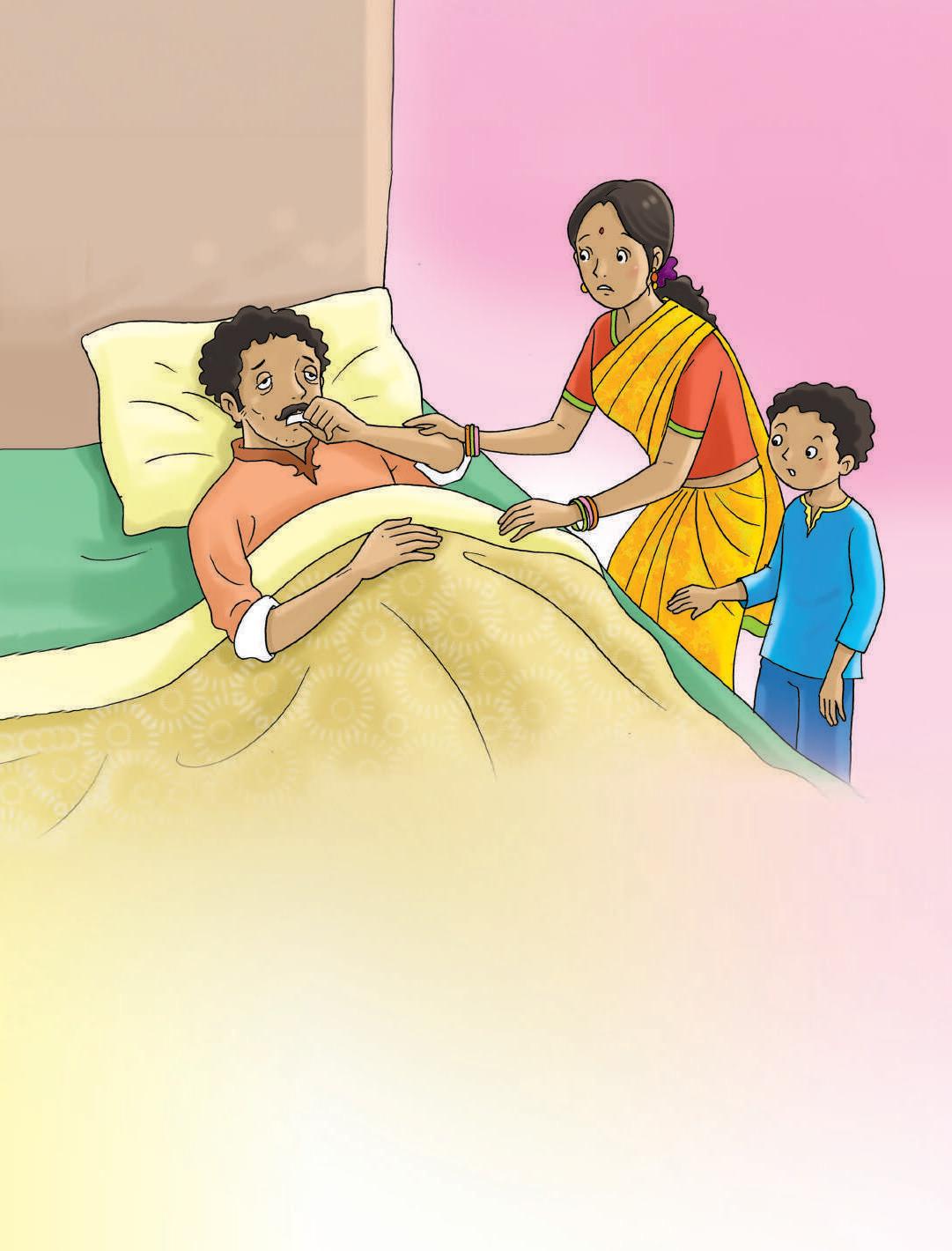
Everybody gets sick or injured at some point, which is why we feel suffering both physically and mentally, and, in the worst cases, death. When someone dies, their family will certainly suffer emotional pain as they grieve.
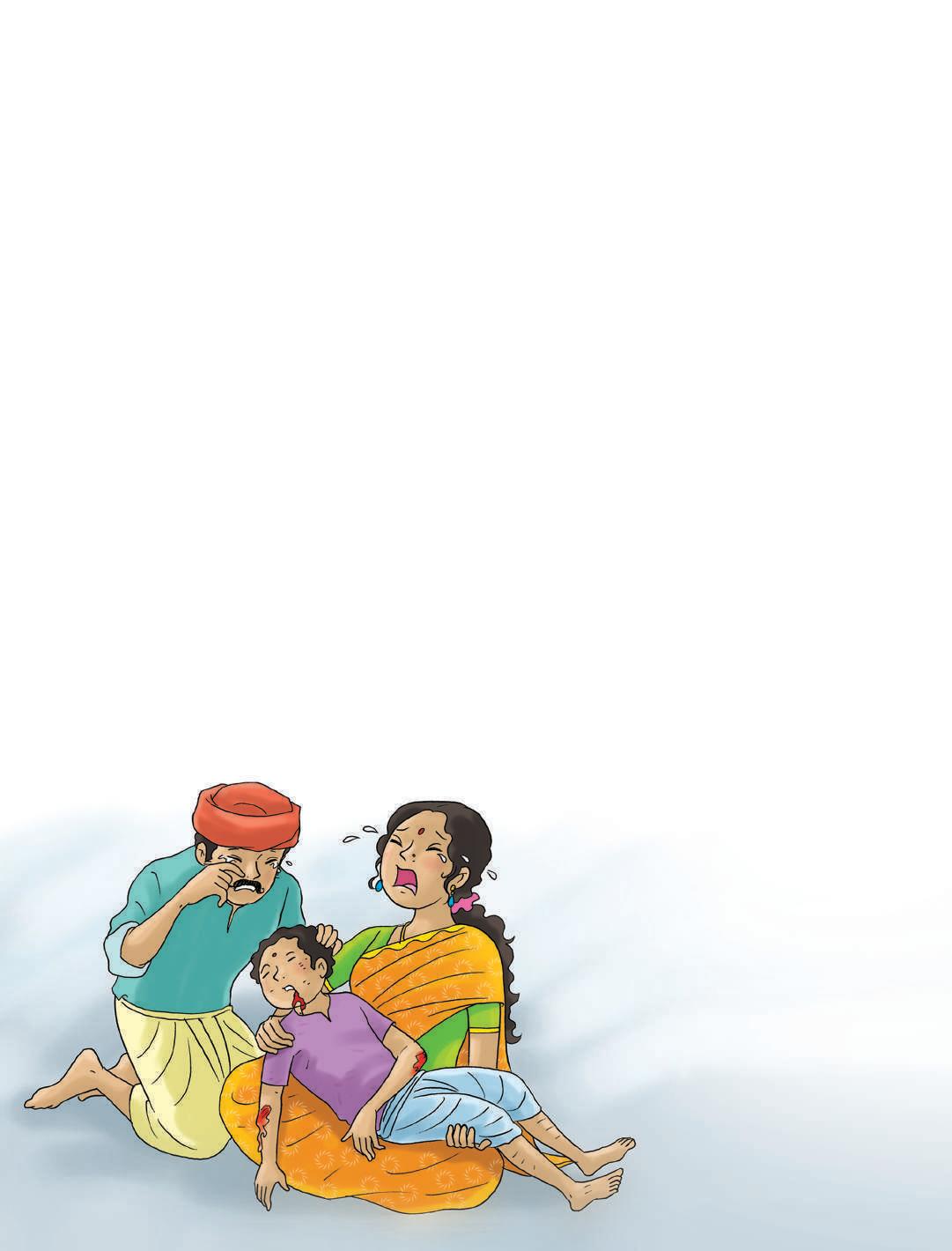
Once, there was a woman who loved her only son dearly. When he died, she was so overwhelmed with grief that she lost her mind. She carried her son's body everywhere, begging for help to bring him back to life, but no one could help her.
When she sought the Buddha’s assistance, he looked at the child, then looked at the poor woman, feeling deep sympathy for her pain, he advised, “I can help revive your child, but you have to bring me some mustard seeds.” The woman was overjoyed to hear this. The Buddha continued, “However, you can only ask for these mustard seeds from a household who has never experienced death; only then will it be possible to save your child.”
The lady heard the Buddha and started looking immediately. She searched far and wide for days but to no avail. Eventually, the grieving woman understood that every family and everyone would face death at some point and could never escape it. Thus, she finally accepted her loss and became a disciple of the Buddha, learning the ways to overcome suffering.
Other than bearing with physical suffering, everyone must also endure mental suffering. You suffer when you are separated from loved ones, meet an enemy, unable to be with your crush, or unable to achieve a desired goal. For example, young people who want to attend an all-night dance party or buy an expensive phone may feel
distressed by their parents’ disapproval. Many people work hard to pursue wealth, fame and status, and if they do not achieve these goals, they may feel unhappy or lose confidence in life. Suffering often stems from desire; without desire, there is no pain.
Ageing is another form of suffering as the bodies experience pain and start to weaken. Over time, our physical function and mental sharpness will deteriorate.
Life is filled with suffering. Our physical pains — birth, ageing, sickness, and death — are all inescapable, and everyone must face them. The Buddha taught, “Although life is filled with suffering, they are not permanent. Through working hard to practise the Dharma and understanding the pains and impermanence of life, we can embrace life with joy.”
What are the Four Noble Truths? What does “suffering” mean and how many types are there? Please give examples. Why did the Buddha ask the grieving woman to find mustard seeds? How did the Buddha explain that life’s pain and suffering can be relieved?
What did the Buddha tell us about overcoming suffering?
How should we respond when we cannot achieve our desires?
Words of Wisdom — Dhammapada, Chapter 5 (The Fool), Verse 66 Fools, their wisdom weak, are their own enemies. As they go through life doing evil that bears bitter fruit.
Student Journal
Dear students: Studying Buddhism is to learn good conduct and to apply it to your family, teachers, friends, and strangers whom you share karmic affinity with.
(Please record your good deeds or diligent efforts this week.)
I did all of these I did some of these I need to work harder
Signature: Signature:
The Four Noble Truths : (II) The Cause of Suffering
In the previous lesson, we explored the First Noble Truth. Now, we will delve into the Second Noble Truth: The Cause of Suffering.
The root of suffering is often attributed to the accumulation of troubles brought about by The Three Poisons — Greed, Hatred and Ignorance.

• The Cause of Suffering
The Cause of Suffering
For example, a person who neglects oral hygiene, avoids brushing their teeth, and frequently consumes sweets is most likely to develop cavities and toothaches. These poor habits lead to pain and discomfort, making them a “Cause of Suffering”.

• The Result of Suffering
Similarly, consider Xiao Ming, who felt envious when he saw his classmate with the latest smartphone. Consumed by greed, he secretly took the phone and hid it in his pocket. This caused his classmate great distress. When the teacher discovered the theft, he asked the class, “Who would want their belongings stolen?” Xiao Ming felt deeply ashamed hearing this. That night, he could not sleep, overwhelmed by guilt and unease.
The next day, Xiao Ming mustered the courage to return the phone to his classmate, apologise, and prepare for any punishment from his teacher. To his surprise, the teacher praised him for his honesty and bravery in admitting his mistake.
Overcoming Desire and Ignorance
When a person harbours desires, greed naturally arises. If those desires are unfulfilled, it leads to suffering. Even when desires are fulfilled, the happiness they bring is often short-lived, quickly replaced by the fear of losing what has been gained, which creates yet another form of suffering. To overcome suffering, one must first address its root cause: desire.
Eliminating desire requires removing ignorance, which is the lack of understanding of the true nature of reality. Ignorance blinds us to the idea that desires are insatiable, leading us to chase them endlessly. When our desires are obstructed, anger and hatred can arise. These in turn lead to quarrels, fighting, killing, and other destructive actions. Only by diligently learning the Dharma can we awaken wisdom.
By cultivating wisdom, we can overcome ignorance, gain clarity and develop the right mindset. With this understanding, the cause of suffering can be eliminated, thereby preventing suffering from arising altogether.

• Desire - Material Greed
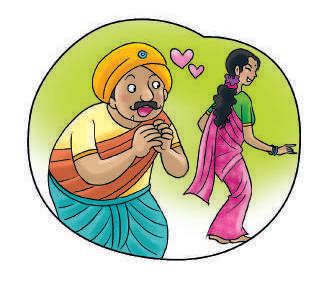
• Desire - Sexual Lust
What is the “Cause of Suffering”?
Share an example of a bitter experience you have had in life. What was the cause of that suffering? What is “ignorance”? How does it affect us? Please provide an example. What must we first remove to eliminate suffering? Why? What desires do you think you should eliminate? Why?
An evil deed is better left undone, for such a deed torment one afterwards. But a good deed is better done, doing which one repents not later.
— Dhammapada, Chapter 22 (The State of Woe), verse 314
Dear students: Studying Buddhism is to learn good conduct and to apply it to your family, teachers, friends, and strangers whom you share karmic affinity with.
record your good deeds or diligent efforts this week.)
Signature: Signature:
The Four Noble Truths : (III)
The
End of Suffering
In the previous lesson, we learnt about suffering. Now, we will learn about the Third Noble Truth: The End of Suffering.
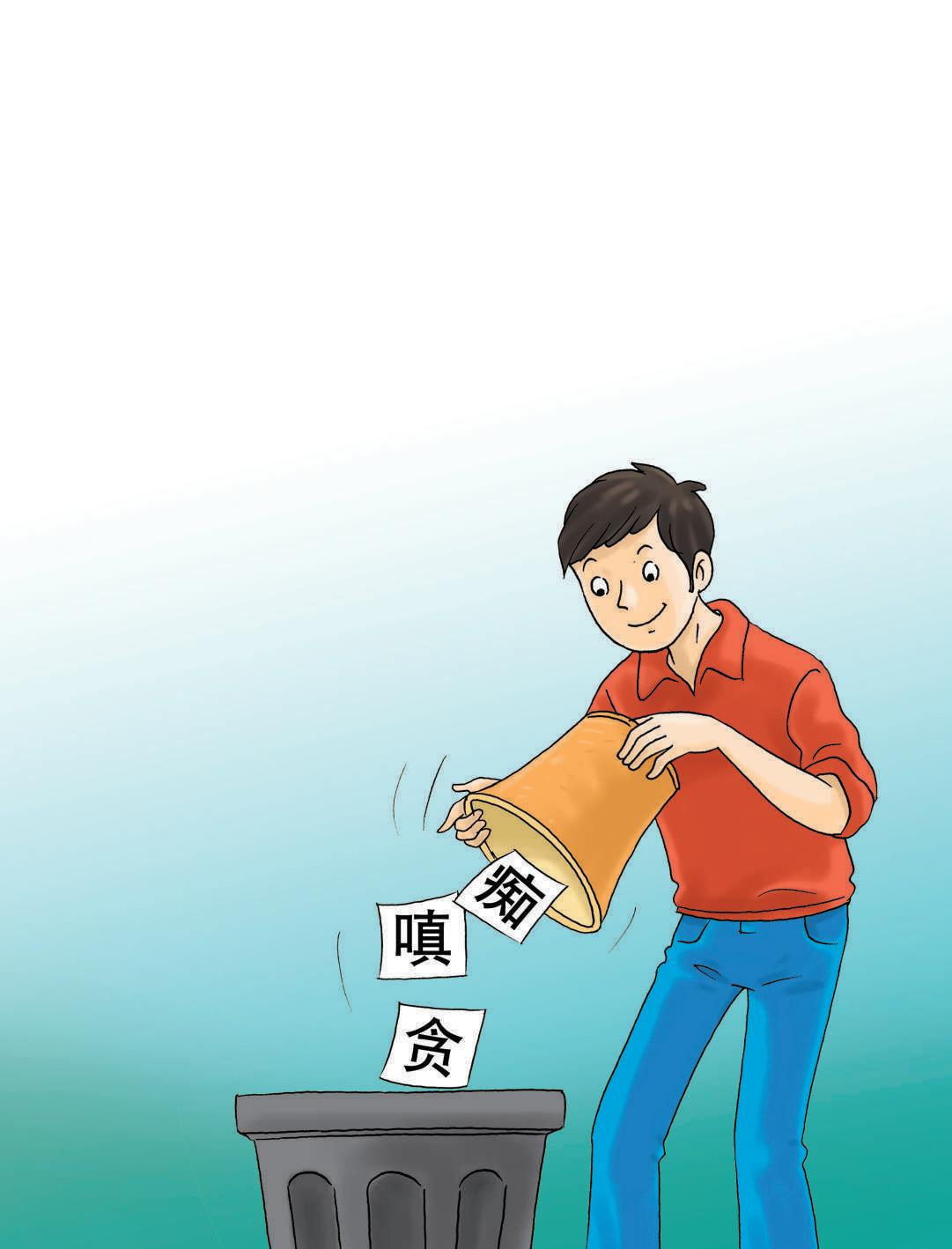
The “end” refers to the extinguishing of suffering. To achieve this, we must eliminate greed, hatred and ignorance from our hearts.
Ignorance
Hatred
Greed

There is an old story of a turtle and a fish. The fish, having lived in the water all his life, knows nothing beyond the ocean. One day, a turtle returned from land and told the fish, “Little fish, did you know that all the animals on land walk on four legs?”
The fish reflected on the turtle's words based on its own life experience and replied, “Is there really such a thing as land? Don’t all the animals swim in the water? How could they walk on legs? I don’t believe it!”
This story mirrors our own lives. Born into the world filled with desires and ignorance, we remain unaware of the world of clarity and happiness. To discover it, we must have confidence in the Buddha’s teachings.
The Buddha is like a wise and experienced physician. He tells us that suffering can be alleviated and invites us to try his methods. Just as someone might tell you that a mango is sweet, you must taste it yourself to truly know its sweetness.
The ultimate goal of the Buddha is to free us from suffering, which is something that can be realised in our current lives. Beyond that, lies supreme happiness. As the Buddha said, “Good health is the greatest benefit, contentment is the greatest wealth; a trustworthy friend is the best relative, and nirvana, after the end of suffering, is the greatest joy!”

What is “the End of Suffering”?
Why did the little fish doubt the turtle’s words? Do you believe in the Buddha's teachings? Why?
What causes suffering and how can we overcome it? Please give an example. What are the benefits of eliminating desire and ignorance? Please give an example.
According to the Buddha, what is the greatest wealth? What is the greatest happiness?
Of all the fragrances — sandal, tagara, blue lotus, and jasmine — the fragrance of virtue is the sweetest.
— Dhammapada, Chapter 4 (Flowers), verse 55
Dear students: Studying Buddhism is to learn good conduct and to apply it to your family, teachers, friends, and strangers whom you share karmic affinity with.
(Please record your good deeds or diligent efforts this week.)
I did all of these I did some of these I need to work harder
The Four Noble Truths : (IV) The Path Leading to the End of Suffering
The Cause of Su ering
Su ering

The End of Su ering
The Path Leading to the End of Su ering
In the previous chapter, we learnt about the end of suffering. Now, we will learn about the final Noble Truth: The Path Leading to the End of Suffering. This refers to the Noble Eightfold Path, which is the method taught to end suffering.
Before the Buddha’s ordination, he lived a life of great wealth and luxury but found it unfulfilling and could not understand the true meaning of life. Seeking answers, he left the palace and adopted the life of an ascetic. However, he found that extreme asceticism was not the way to be enlightened; it nearly cost him his life.
A life of indulgence weakens the spirit, while extreme asceticism harms the body and damages health. From this understanding, the Buddha taught the Middle Path, a balanced way
of living that avoids these extremes. The Middle Path helps us develop a balanced mind and body to live a happy life.
By following the Middle Path, the Buddha eventually attained enlightenment and freedom. He realised that greed, anger and ignorance are the root causes of all suffering. To help others overcome suffering, he taught the Noble Eightfold Path, which guides thoughts, speech and actions towards the right direction.
The steps of this Noble Eightfold Path are:
(1) Right Understanding
Understanding the Law of Cause and Effect and the Four Noble Truths.
(2) Right Thought
Letting go of thoughts driven by greed and anger.
(3) Right Speech
Avoid lies, slander, harsh words, and idle talk.
(4) Right Action
Avoiding harm to living beings, refraining from theft and upholding moral conduct.
(5) Right Livelihood
Choosing an occupation that does not harm oneself and others.
(6) Right Effort
Striving earnestly in the right direction, which means avoiding evil and doing good.
(7) Right Mindfulness
Being consistently aware and attentive to one’s own thoughts, words and actions.
(8) Right Concentration
Training the mind to remain steady and calm to realise the true nature of existence.
Right Speech, Right Action and Right Livelihood guide us in building harmonious relationships with others, while the other aspects promote personal growth. Practising the Noble Eightfold Path allows us to cultivate the right attitude towards life, refine our character, and improve our overall quality of life.
What is the Middle Path? How did the Buddha discover it? Why did neither “extreme happiness” nor “extreme suffering” help the Buddha to realise the truth? Which areas in your life could you improve? Please give examples.
According to the Buddha, how should we “eliminate suffering”? Please give examples.
What are the benefits of practising the Noble Eightfold Path? Please give examples.
Avoiding, abstaining from evil; refraining from intoxicants, being heedful of the qualities of the mind: This is the highest protection.
— Mangala Sutta
Dear students: Studying Buddhism is to learn good conduct and to apply it to your family, teachers, friends, and strangers whom you share karmic affinity with.
(Please record your good deeds or diligent efforts this week.)
I did all of these I did some of these I need to work harder
17
The Expansion of the Sangha : Yasha and His
Father
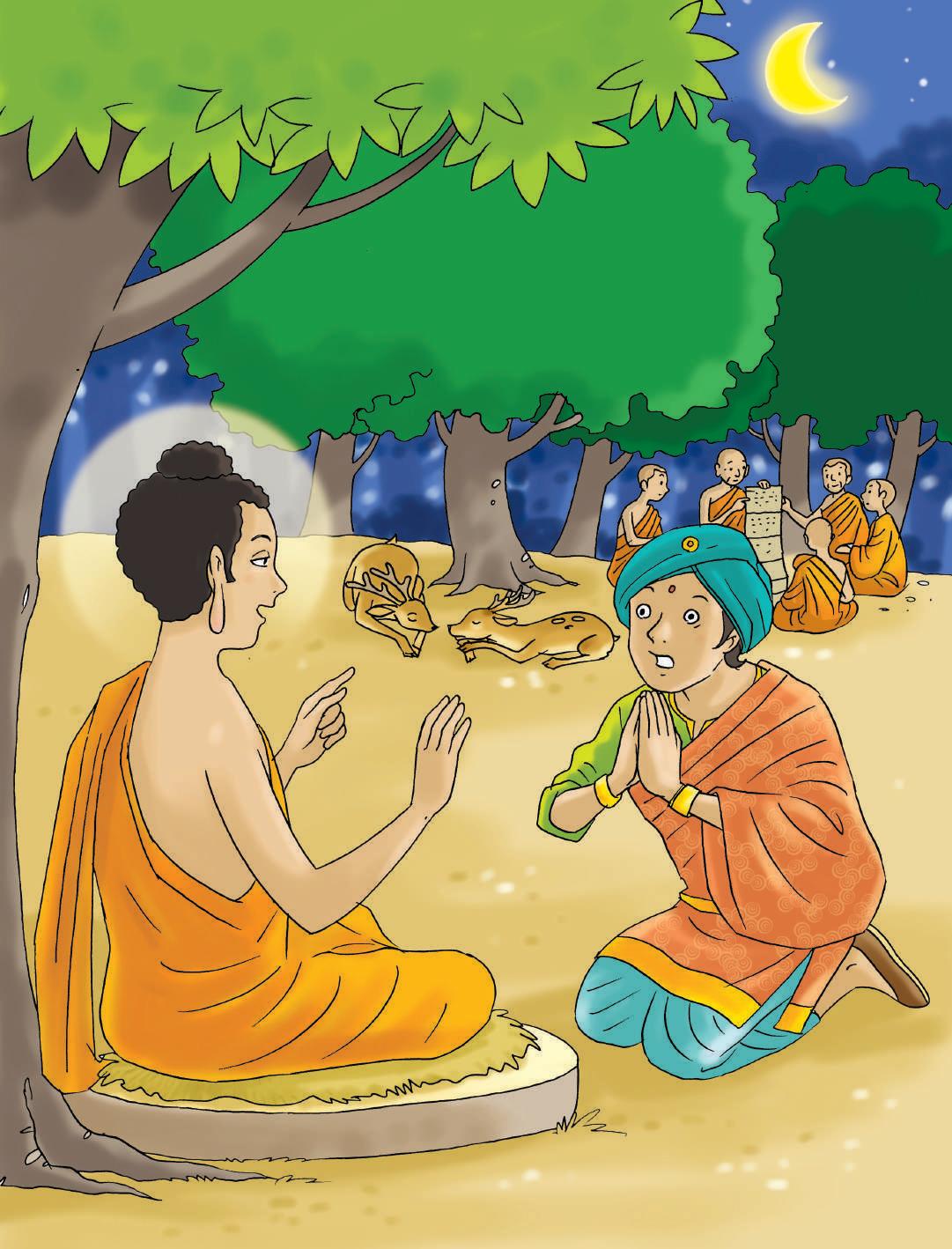
Once, there was a merchant’s son named Yasha who had always lived a happy life. One night, he woke up from a dream, and by the dim light of an oil lamp, he saw how unsightly the dancers appeared as they slept, lying around like corpses. The more he stared, the more frightened he became, so he ran out of his house and headed towards the Deer Park.
“So scary! So scary!” He cried as he ran. When he reached the Buddha, he was still trembling in fear. Seeing this, the Buddha calmly said, “Yasha, don’t be afraid! Sit down, let’s have a chat!”
The Buddha taught Yasha the Four Noble Truths, which brought him a sense of calm. He understood that life is full of suffering and that desires or luxuries will eventually fade. Thus, Yasha decided to ordain and follow the Buddha.
Worried upon hearing that his son had become a monk, Yasha’s father searched for him everywhere. When he arrived at Deer Park and met the Buddha, the Buddha taught him the Dharma. After listening to the teachings, Yasha's father decided to take refuge in the Triple Gem (the Buddha, the Dharma and the Sangha) and became the Buddha’s first lay disciple.
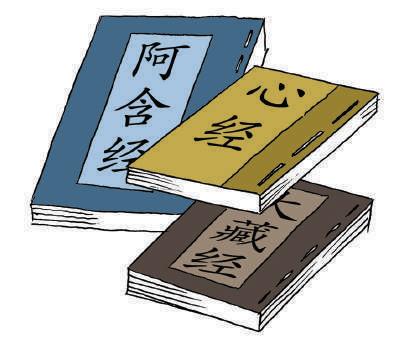
Heart Sutra
The Tripitaka
Agama Sutras
Word of Yasha’s ordination spread to his fifty-four friends who came to see the Buddha. They were all deeply touched by the teachings and decided to ordain as well. As a result, the number of monks in the Sangha grew to sixty. When they had all become arhats, the Buddha decided it was time for them to go out and spread his teaching, helping people find happiness and peace. The Buddha then left Deer Park and set out towards Uruvilva.
Why did Yasha scream in fear? What is your biggest fear? How can we rely on the Dharma to help us face the people, circumstances and objects we fear?
Do you think that beautiful or good things are forever unchanging?
What do "renunciation" and the "Three Refuge" mean?
Why are they important?
Do you agree that “desires and pleasures are not lasting”? Why?
Please give an example.
Who was the first lay disciple of the Buddha? What is a lay disciple?
— Yogacarabhumi-sastra (Adapted) Precepts enhance concentration, concentration enhances wisdom, and through wisdom, one attains liberation.
Dear students: Studying Buddhism is to learn good conduct and to apply it to your family, teachers, friends, and strangers whom you share karmic affinity with.
(Please record your good deeds or diligent efforts this week.)
I did all of these I did some of these I need to work harder
The Expansion of the Sangha : The Kashyapa Brothers 18
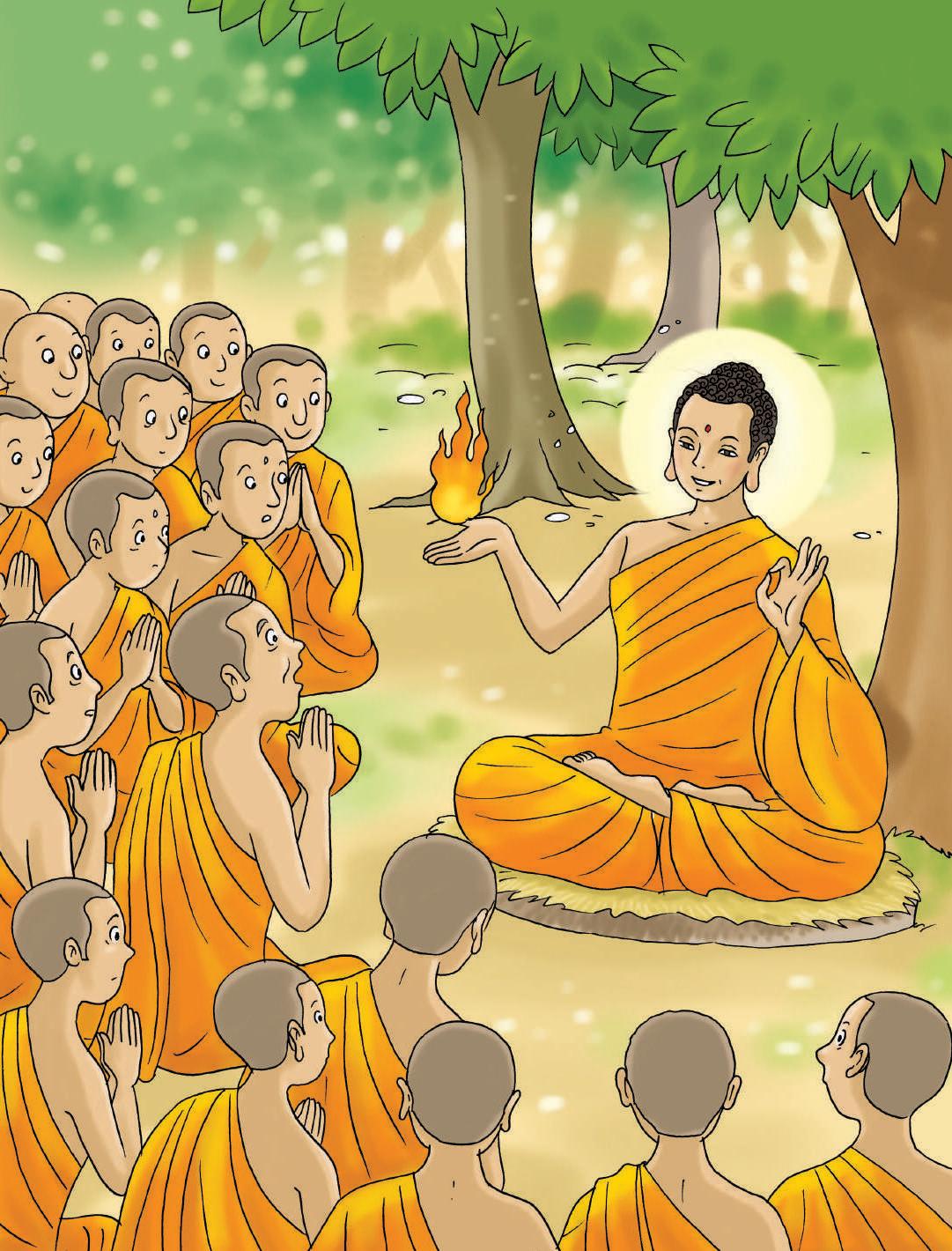
Within Uruvilva, there were three Kashyapa Brothers known for their magical powers. They guided their disciples to practise the “Fire-Worship Path”, as they believed it to be the best spiritual practice.
When the Buddha arrived in Uruvilva, he went to see Kashyapa and asked if he could stay the night. Having heard of the Buddha's great reputation, Kashyapa wanted to test his powers. He pointed to a stone chamber and said, “You can stay there. However, at night, a poisonous dragon will appear. If you're fearful, perhaps it is better not to go in.”
The Buddha did not mind and agreed to stay in that stone chamber for the night. The next day, the Buddha calmly walked out unscathed. Kashyapa was surprised, but he tried not to show it.
The Buddha said, “You wanted to test my powers. Though you’ve accepted me in your heart, you’re not willing to show it, and that is pride. How can someone with a proud heart realise the truth?” Hearing the Buddha's words, Kashyapa was taken aback. At that moment, Kashyapa realised the futility of fire-worship and immediately knelt before the Buddha, asking to be ordained. The Buddha did not agree right away but instructed Kashyapa to seek the approval of his disciples first. In the end, all five hundred of his disciples decided to follow the Buddha. The Kashyapa brothers and their followers discarded their fire-worshipping tools and took refuge in the Buddha.
The Buddha then used “fire” as a metaphor, saying, “We must be careful of the three toxic flames: greed, hatred and ignorance. They cause suffering for our bodies and minds. Only by eliminating these can we find the truth, attain liberation and experience true happiness!”
Group Discussion
What were the Kashyapa brothers known for? What was their method of practice?
How did Kashyapa test the Buddha? Why did he do this? Why did Kashyapa convert to Buddhism? What are the “three poisons”? How do they affect us? Please give an example.
Do you have the “three poisons” that you want to eliminate? Do all people have them? Please give an example.
Let the discerning man guard the mind, so difficult to detect and extremely subtle, seizing whatever it desires. A guarded mind brings happiness.
— Dhammapada, Chapter 3 (The Mind), verse 36
Student Journal
Dear students: Studying Buddhism is to learn good conduct and to apply it to your family, teachers, friends, and strangers whom you share karmic affinity with.
(Please record your good deeds or diligent efforts this week.)
I did all of these I did some of these I need to work harder
Signature: Signature:
19 The Buddha in the Kingdom of Magadha (I)
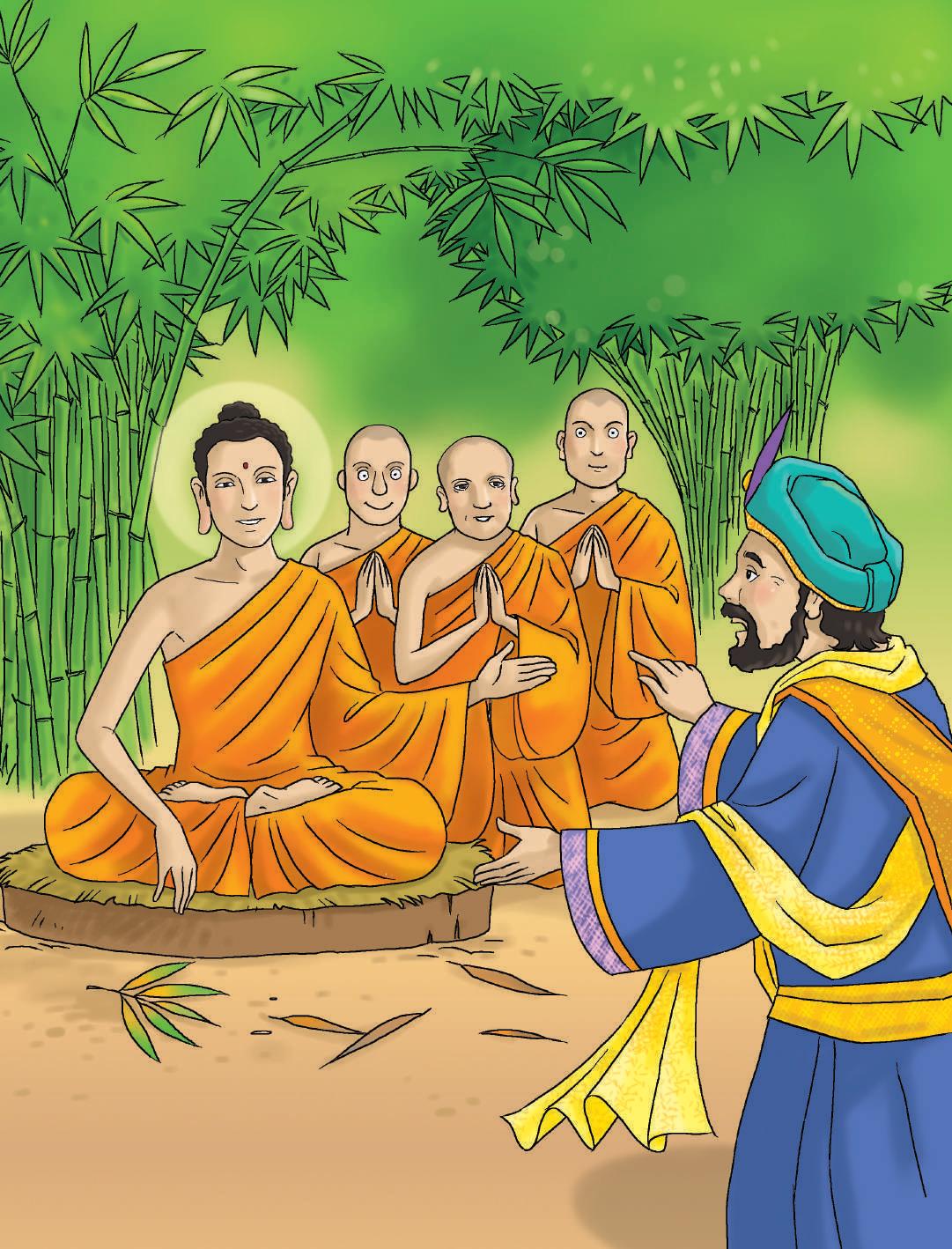
From Uruvilva, the Buddha proceeded to Rajagriha. By the time he arrived, he was already known as the Arhat, the Fully Enlightened One, and the Great Teacher. When King Bimbisara heard of the Buddha’s return, he was overjoyed. He reminisced about that time many years ago, when he had offered Prince Siddhartha half of his kingdom, and was politely declined. Now that the Buddha had attained enlightenment, the king eagerly gathered his queen, ministers and officials to pay their respects.
Many people visited the Buddha’s dwelling and was surprised to see the Kashyapa brothers and all his disciples. King Bimbisara wondered, “Why are the Kashyapa brothers with the Buddha? Who is the teacher now?” Curious, the King asked, “O Blessed One! Kashyapa of Uruvilva is widely respected for his virtue and spiritual practice. What caused him to become your disciple and give up his fire-worship rituals?”
The Buddha looked at Kashyapa, signalling him to respond. Kashyapa replied, “In the past, I believed that fire-worship could lead me to the heavens and enjoy the pleasures of the senses. However, this did not help me overcome the troubles of greed, anger and ignorance, nor did it free me from the fear of birth, ageing, sickness, and death. It was only after hearing the Buddha’s teachings that I realised the futility of fire-worship. Now, my heart is completely at peace.”
The Buddha then gave a sermon on generosity, morality, the dangers of clinging to sensory pleasures, and the advantage of renouncing them. He also talked about suffering, its cause and the way to end it. After they had listened and understood the Buddha’s teachings, all those present asked to be accepted as his lay followers.
King Bimbisara said. “When I was young, I had the ambition to be a king. Now, I have realised that ambition. I also wished the Buddha would visit my kingdom, so that I could have the opportunity
to honour him and hear his teachings. Now that all these wishes have been fulfilled, I shall go to the Buddha, the Dharma and the Sangha for refuge.”
On the second day, King Bimbisara asked the Buddha to remain in his kingdom for a long time. The king knew he had to provide a quiet place where the Buddha and his disciples could meditate and spread the Dharma. So he found and offered a forest away from the city. This place thus become the first Buddhist Monastery — the Bamboo Grove.
Why was King Bimbisara surprised to see the Kashyapa brothers’ devotion to the Buddha?
How did Kashyapa of Uruvilva explain his decision to follow the Buddha? Why should we be generous? Please give an example. What are the downsides of “excessive pleasure”? Please give an example. What is the name of the first Buddhist monastery? How did it contribute to the spread of Buddhism?
A mind that, when touched by the ways of the world, is unshaken, sorrowless, dustless, secure: This is the highest protection.
— Mangala Sutta
Dear students: Studying Buddhism is to learn good conduct and to apply it to your family, teachers, friends, and strangers whom you share karmic affinity with.
(Please record your good deeds or diligent efforts this week.)
I did all of these I did some of these I need to work harder
Signature:
20 The Buddha in the Kingdom of Magadha (II)
Sariputra and Maudgalyayana were favoured disciples of a respected religious leader in Rajagriha. They possessed intelligence and knowledge that few in the world had, yet their spiritual practice had not led them to liberation from life’s suffering. Disillusioned, they decided to part ways and search for the truth seperately. Before separating, they made a pact: whichever of them discovered the truth first would inform the other.
One morning, Sariputra saw Ashvajit walking in the distance. Impressed by his solemn appearance, he approached him and
respectfully asked, “Venerable sir, on whose account have you renounced your worldly life? Who is your teacher? Whose teachings do you profess?”
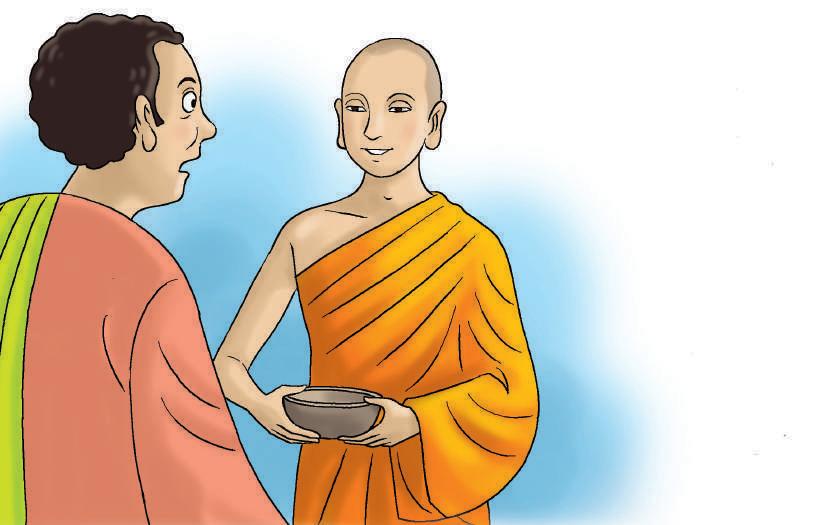
Ashvajit replied humbly, “My teacher is the Buddha, who possesses complete and profound wisdom. However, I am but a novice in his path, so my understanding is still limited. He taught that all things that arise must also pass away. Since suffering is inevitable in life, there must be a path to its end.”
These words struck Sariputra like a radiant sun of wisdom, illuminating his understanding of non-self. Inspired, he immediately sought out Maudgalyayana and relayed Ashvajit’s message. Together, they resolved to meet the Buddha and become his disciples.
The next day, Sariputra and Maudgalyayana walked together towards the Bamboo Grove. Seeing them approach from afar, the Buddha told his disciples, “These two will become my foremost disciples.” His words proved prophetic: Sariputra was later honoured as “foremost in wisdom”, and Maudgalyayana as “foremost in meditation”. On many occasions, the Buddha entrusted them to teach the Dharma on his behalf.
Around this time, a wealthy man who possessed gold, estates, livestock, fields, and many servants, found his life meaningless despite his riches. Resolving to seek a higher purpose in life, he decided to give up his family life and become an ascetic known as Maha Kashyapa.
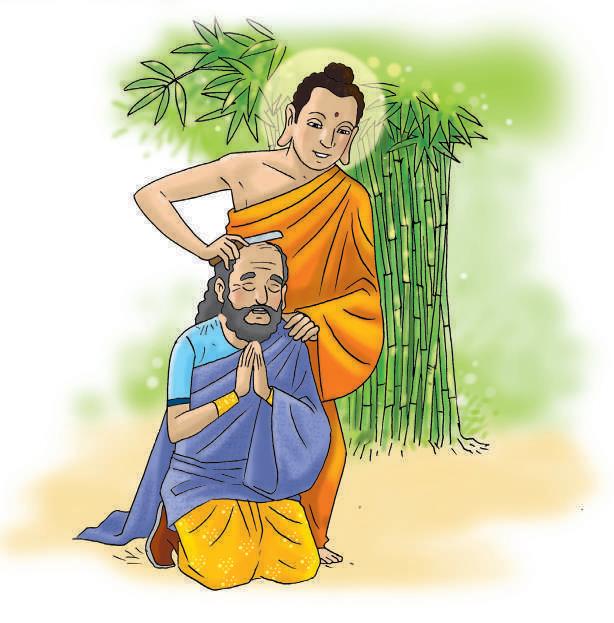
One day, Maha Kashyapa saw the Buddha meditating peacefully under a tree. On seeing the Buddha’s majestic presence, he realised that he was indeed the Enlightened One. At once, he prostrated himself at the feet of the Buddha saying “O Honoured One, please accept me as your disciple!"
The Buddha replied, “In this world, only someone who has attained true enlightenment can accept you as a disciple. Come with me!” The Buddha stood up and led Maha Kashyapa to the Bamboo Grove Monastery. Maha Kashyapa, with tears of reverence streaming down his face, followed closely behind.
As they walked, the Buddha turned to him and said, “I knew this is the day you attain liberation. Good! There is much for you to do in helping to spread the Dharma in the future.”
The Buddha then ordained Maha Kashyapa, saying, “Discipline yourself with the precepts and be mindful of your thoughts, words and actions.” Maha Kashyapa diligently practised the Buddha’s teachings, attaining arhatship within just eight days. Renowned for his austere way of life, he was recognised as “foremost in ascetic practice” among the Buddha’s ten great disciples.
What enabled Ashvajit to attract Sariputra?
What did Ashvajit say that convinced Sariputra to follow the Buddha? According to the Buddha, “all things that arise must also pass away”. Give a real-life example to illustrate this.
What did the Buddha say after ordaining Maha Kashyapa?
How do our thoughts, words and actions impact others? Give examples to illustrate this.
After taking refuge, one should practise the four teachings: “associate with virtuous friends, listen to the true Dharma, reflect on it correctly, and act in accordance with the Dharma.” Only through these practices can one realise the ultimate meaning of taking refuge.
Student Journal
Dear students: Studying Buddhism is to learn good conduct and to apply it to your family, teachers, friends, and strangers whom you share karmic affinity with.

I did all of these I did some of these I need to work harder
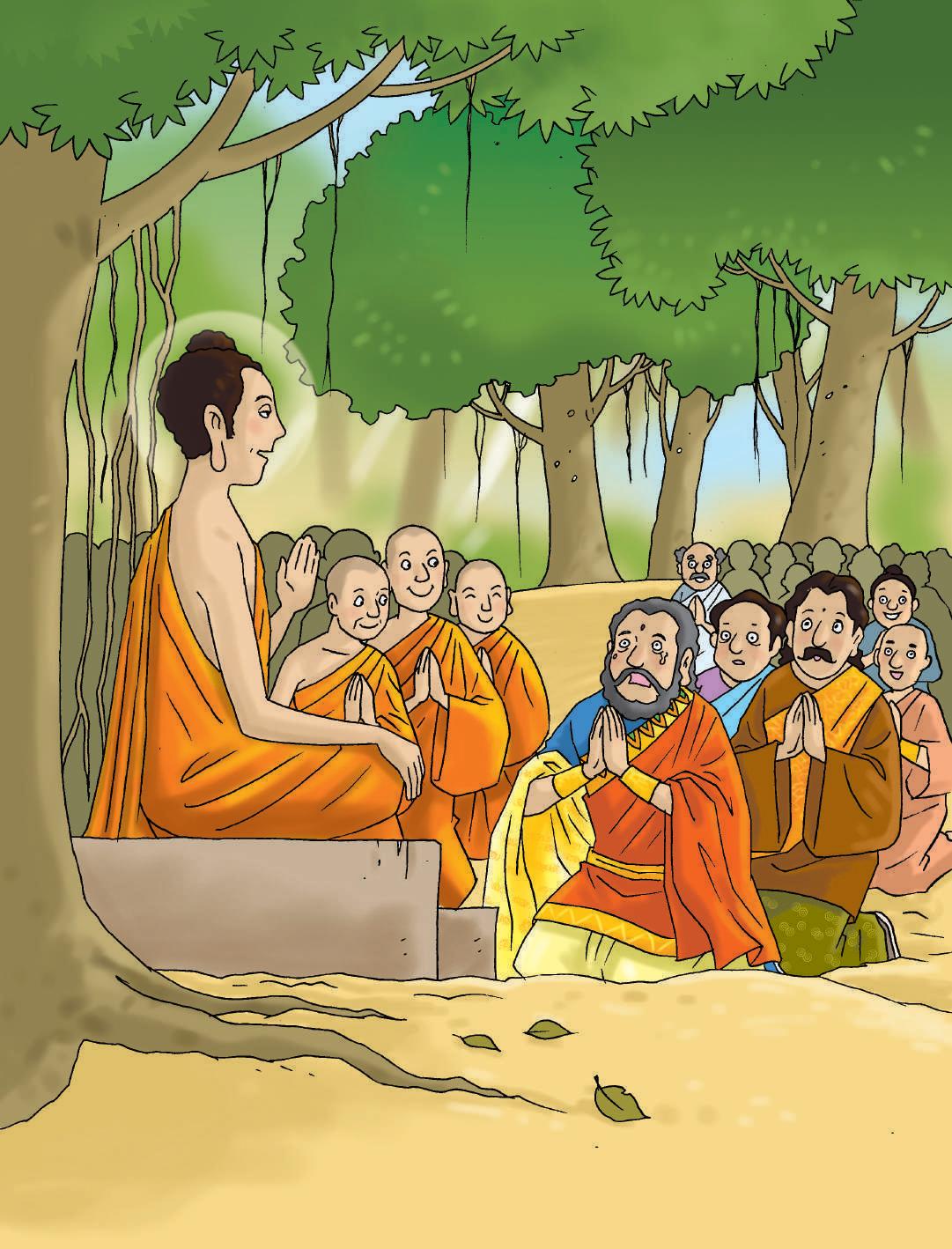
King Shuddhodana, on hearing of the Buddha’s presence in Rajagriha, sent his charioteer and Udayin, Prince Siddhartha’s childhood playmate, to invite him back to Kapilavastu to spread the Dharma. Upon reaching the Bamboo Grove, Udayin and his companion listened to the Buddha's teachings and eventually joined the monastic community. But Udayin still had a mission to complete, so he informed the Buddha of King Shuddhodana’s wishes. The Buddha agreed to return, but he stayed with his disciples in the Banyan Grove in Kapilavastu.
Upon the Buddha’s arrival, King Shuddhodana immediately set out with his subjects to meet the Buddha. Along the way, he saw a group of shaven monks receiving alms from the townsfolk. Realising that they were the Buddha’s disciples, the king, struck by memories of Prince Siddhartha’s renunciation, lamented, “If my son had not left home, he would have been a triumphant and righteous king. I am so ashamed!”
King Shuddhodana gave up on meeting the Buddha and returned to the palace. When Udayin learned of this, he described
the Buddha’s noble virtues to the king in detail. Deeply moved, King Shuddhodana ordered all of his people in Kapilavastu to accompany him to meet the Buddha at the Banyan Grove.
During their meeting, the king, curious about his son’s ability to endure the hardships of monastic life, asked, “When you were young, you wore beautiful woollen slippers and walked on soft carpets. Now, you walk barefoot on scorching earth; does it not hurt?” The Buddha replied, “Having transcended desires, I feel no pain.”
King Shuddhodana continued, “When you were in the palace, you bathed in cool, sandalwood-scented water. How do you bathe and refresh yourself when you are weary?” The Buddha replied, “The Dharma is like a treasure pool filled with fragrant perfume; I bathe in it daily — how could I ever grow weary?”
The king asked further, “In the past, you wore the finest clothes, but now you wear simple and rough robes. How do you bear it?” The Buddha answered, “The quality of clothing or food
depends on the mind. If your mind is at peace, all things are sufficient.”
King Shuddhodana persisted, “You once slept on soft beds, now you sleep on the grass. Does your body not feel sore?” The Buddha responded, “A serene mind is a bed of great comfort, wherever one rests.”
King Shuddhodana finally asked, “As a member of the royal family, must you rely on alms for sustenance?” The Buddha answered, “The royalty has its way of life, and monastics have theirs. As a monastic, I must live according to the monastic path.”
The Buddha then taught the Shakyans the truth of life’s impermanence and suffering, “When a person does good deeds and refrains from evil, they will receive blessings in this life or the next.” Upon hearing this, everyone developed great faith in the Dharma. Soon after, the Buddha’s wife, Yashodhara, along with his aunt and caregiver, Prajapati, and many others from the palace, requested to become the Buddha’s disciples.
Why did King Shuddhodana feel ashamed? What are your thoughts about his “shame”?
How did the Buddha respond to the question about “walking barefoot on scorching earth?” What do you think of his response?
How did the Buddha address the question about “wearing simple, rough robes?” What do you think of his response?
What is the significance of monastic life?
Why did the Shakyans have great faith in Buddhism?
Do not associate with evil companions; do not seek the fellowship of the vile. Associate with the good friends; seek the followship of noble men.
— Dhammapada, Chapter 6 (The Wise Man), verse 78
Dear students: Studying Buddhism is to learn good conduct and to apply it to your family, teachers, friends, and strangers whom you share karmic affinity with. I did all of these I did some of these I
(Please
Ordination of the Shakyans (I)
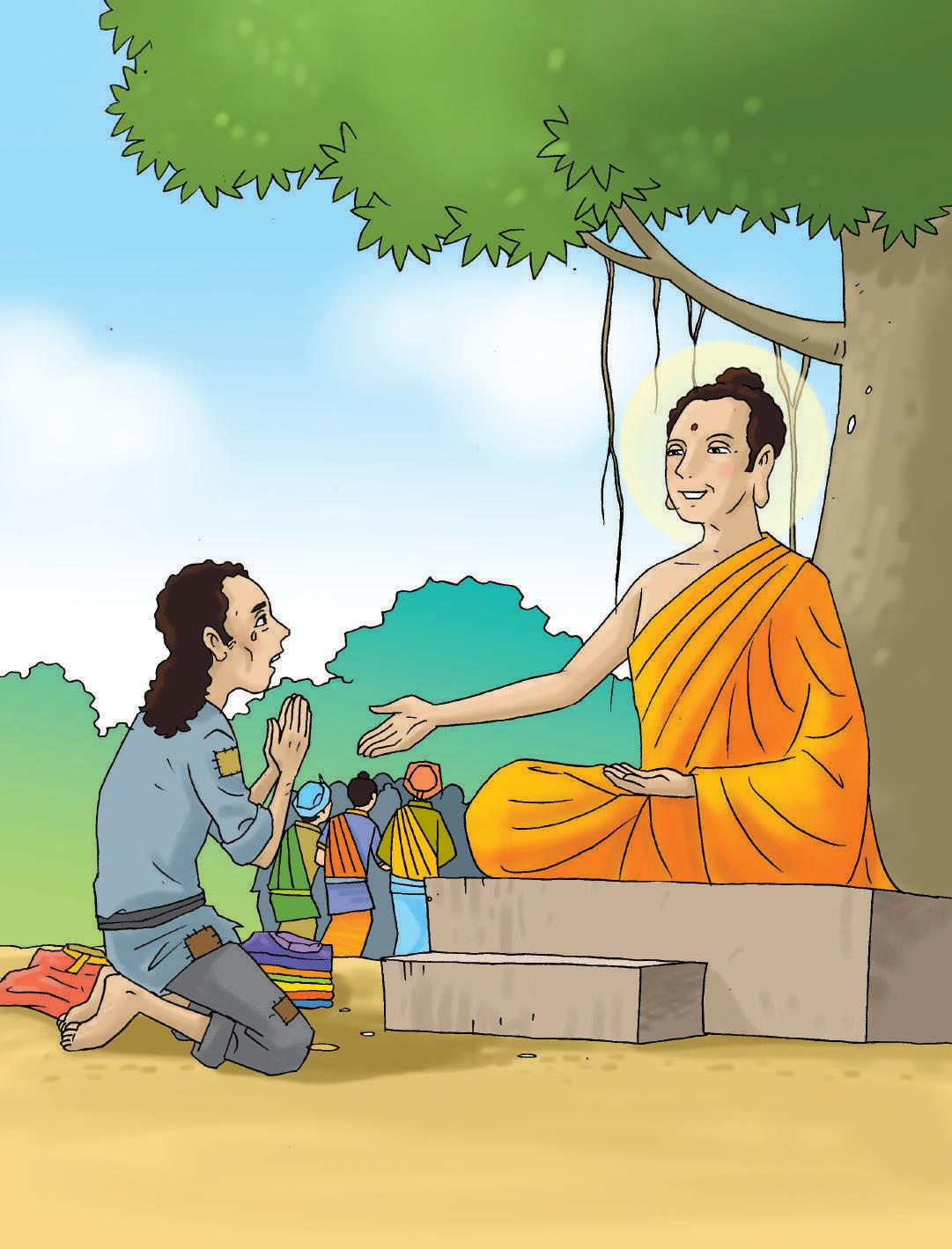
The Shakyans held a deep admiration for the Buddha, and King Shuddhodana was especially proud of the Buddha's achievements. One day, the king said to his people, “Had Prince Siddhartha not become a monk, he might have been a king among kings. Now that he has renounced worldly life and attained enlightenment, more Shakyans should become his disciples.”
Many people agreed with the king’s words, prompting King Shuddhodana to issue an order: “Each household must bring one young man to become a disciple of the Buddha. However, if a family has only one son, he is exempt.” After this decree, Ananda and Devadatta led five hundred young men of Shakyan nobility to the Banyan Grove to prepare for ordination.
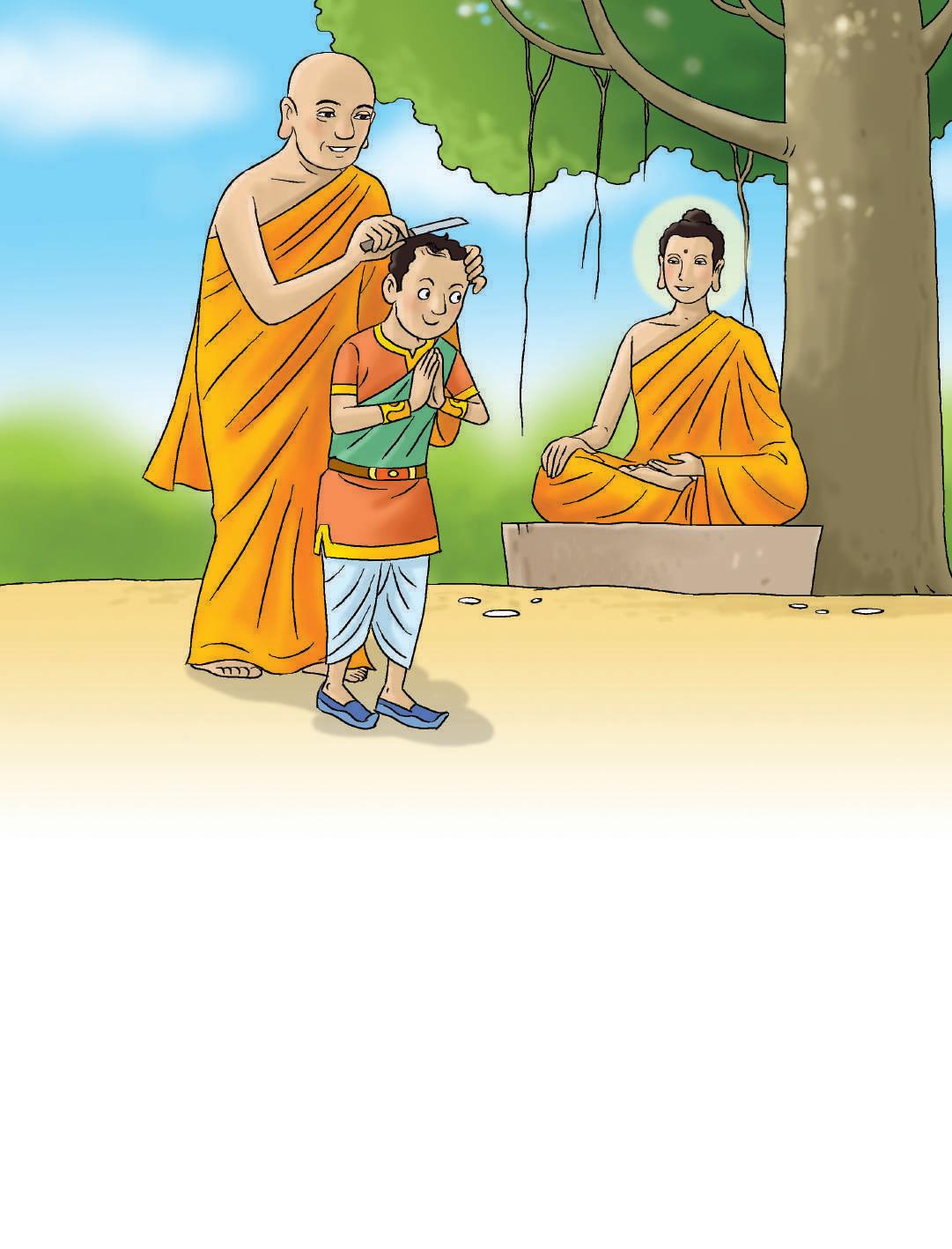
Among them was a low-born palace barber named Upali, who followed them closely. When they arrived at the Banyan Grove, the young princes changed into monastic robes, discarded their clothes and ornaments, and offered them to Upali.
Upali gladly accepted the clothes and ornaments, but deep down, he also wished to be ordained. He feared that his low status might prevent him from being accepted. While the princes were bidding farewell to their families, he quietly approached the Buddha and asked if he too, could be a monk. The Buddha immediately agreed, saying, “You have great potential for goodness; I know that in the future, you will certainly help spread the true Dharma.”
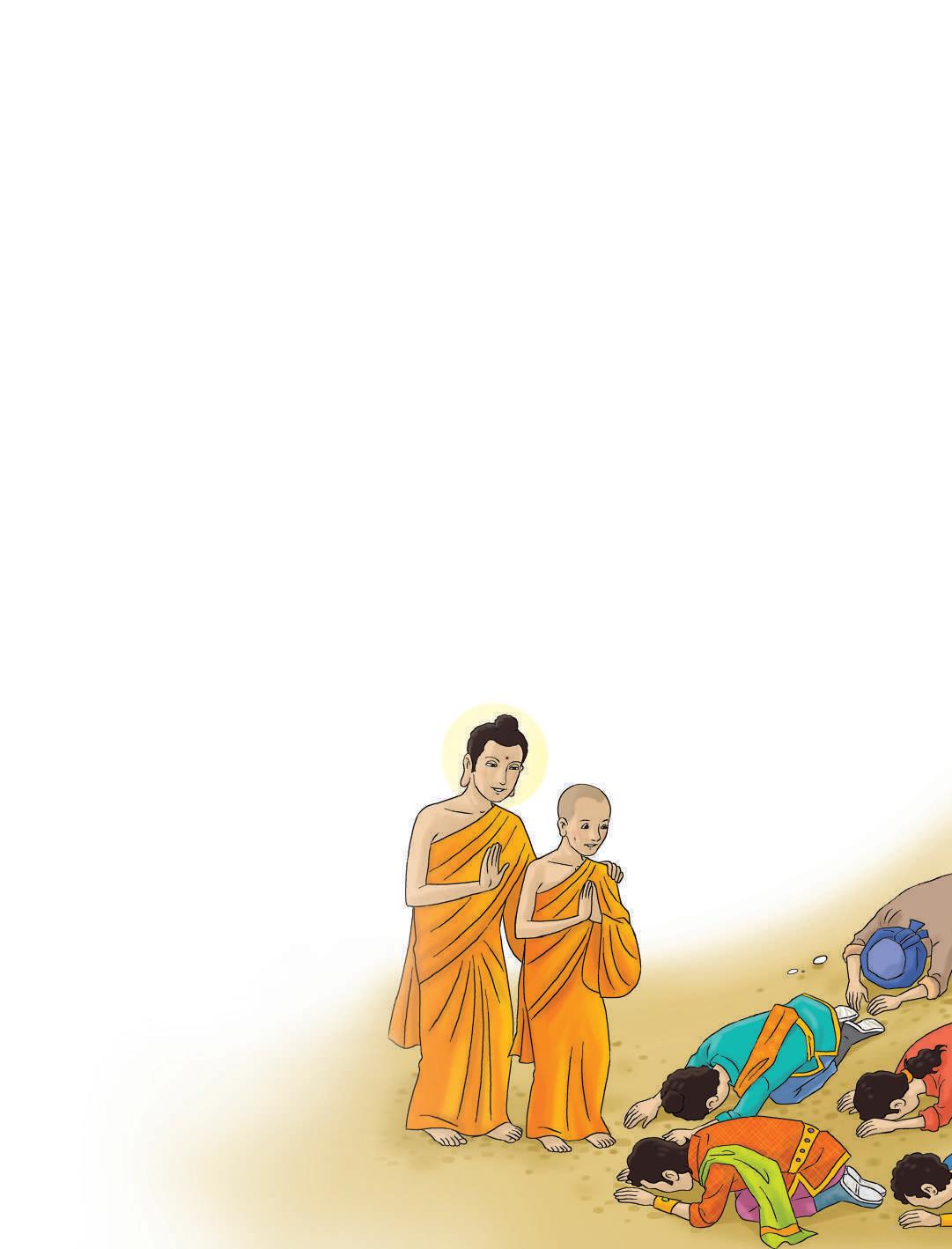
The Buddha then said, “The nobles will be coming to request ordination. I will first have them practise letting go of their royal identity for seven days. This way, they will meet you with humility and respect.”
After seven days of practice, the Buddha led the princes to meet Upali. At that moment, no one knew how to greet Upali. The Buddha professed, “To be a monk, one must first calm their inner pride. Since Upali was ordained before you, you should naturally show him respect.” The five hundred princes followed the Buddha’s guidance and approached Upali one by one to pay their respects.
In doing so, the Buddha demonstrated that within the monastic community, there is equality between nobility and those of lower status; the social class system does not exist within the Sangha.
After Upali was ordained, he diligently upheld the precepts and later become known as being “foremost in keeping the precepts”. Ananda, who came from a royal background, had an excellent memory and was present whenever the Buddha taught. He could recite the Buddha’s words perfectly, earning the title of “foremost in hearing”. But Devadatta, though initially diligent, later betrayed the Buddha in his desire to control the monastic community.
Why did five hundred young Shakyan nobles follow the Buddha to be ordained?
Why did the Buddha ask the nobles to practise for seven days before becoming monks? What are your thoughts?
How did the nobles feel when they met Upali? Why do you think they felt that way?
What did the Buddha say when the nobles met Upali? Do you agree with his approach?
What does “equality” mean? Please give some examples from life.
The good renounce (attachment to) everything. The virtuous do not prattle with a yearning for pleasures. The wise show no elation or depression when touched by happiness or sorrow.
— Dhammapada, Chapter 6 (The Wise Man), verse 83
Student Journal
Dear students: Learning Buddhism is to learn good conduct and to apply it to your family, teachers, friends, and strangers with whom you share karmic affinity. I
Ordination of the Shakyans (II)
From a young age, Rahula did not know who his father was as King Suddhodana forbade anyone from telling him. However, his mother, Yasodhara, decided it was time to reveal the truth. One day, as Yasodhara saw the Buddha walking down the street, she said to Rahula, “Do you see that monk? He is your father. Go to him, my son! Tell him who you are and ask for your inheritance.”
The innocent Rahula quickly ran to the Buddha and said, “I am your son, my Lord. I know that you possess the greatest treasures. Father, give me my inheritance!” The Buddha simply smiled compassionately and kept walking.
When they arrived at the Banyan Grove, the Buddha spoke to Rahula, “You are right to claim your inheritance, Rahula. I shall give you the seven treasures which I received at the foot of the Bodhi tree. These are the seven virtues: Faith, Purity, Humility, Self-control, Receptivity to Advice, Impartiality, and Wisdom.” The Buddha then turned to Sariputra and said, “Ordain Rahula.”
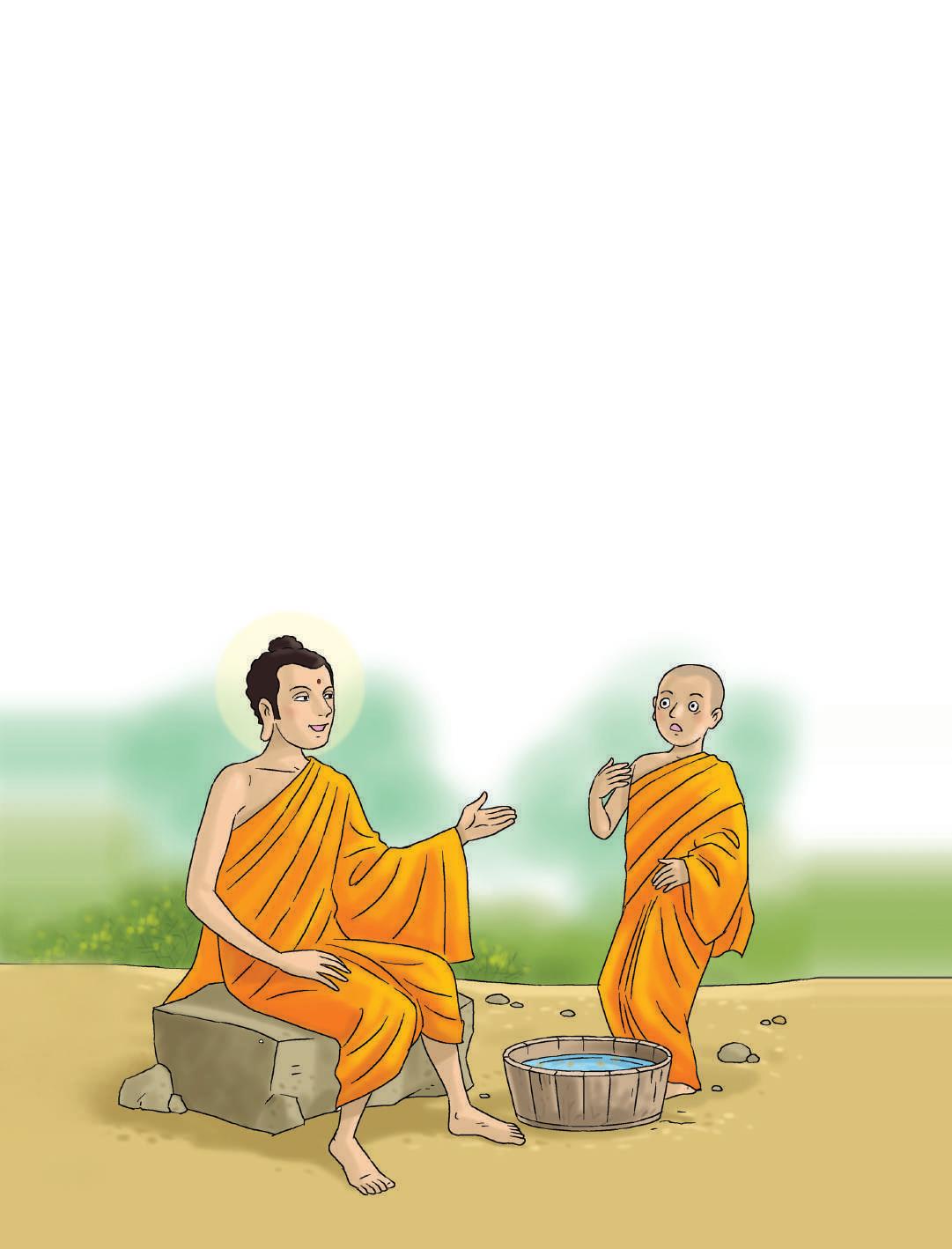
As the youngest novice in the monastic community, Rahula often told lies for fun. The Buddha decided to teach him the importance of truthfulness. One day, Rahula brought a basin of water for the Buddha to wash his feet. After washing, the Buddha pointed to the water and asked, “Can you drink this water?” Rahula replied, “This water is dirty; it can't be drunk.” The Buddha then said, “A person who is not ashamed of continuously telling lies is as useless as this dirty water.”
Rahula lowered his head and quietly poured out the water from the basin. The Buddha then asked, “Can this basin be used to hold food?” Rahula replied, “No, it can’t, it’s dirty.” The Buddha said, “A person who loves to lie is like this dirty basin — they cannot accept the truth.”
The Buddha then gently kicked the basin aside. Rahula looked frightened, and the Buddha asked, “Are you afraid the basin will break?” Rahula replied, “No, the basin is just a common vessel; it doesn’t matter if it breaks.”
The Buddha said, “A person who loves to lie is like this basin; no one will cherish it.” He continued, “Before doing anything, speaking, or even having a thought, you must ask yourself whether it might hurt others or yourself. You need to pay attention to your thoughts, words and actions, constantly examining and reflecting on them to become a person of virtue.” After hearing the Buddha's teachings, Rahula decided to change his bad habits and strive to be a virtuous monk.
Group Discussion
What are the “seven treasures” that Buddha mentioned? Why are they valuable?
Which of the seven treasures do you think you have obtained? Please give examples.
Why are dishonest people considered useless and unable to accept the truth?
The Buddha said to think twice before doing or speaking. Do you agree with this statement?
Have you ever been hurt by something someone did or said? How did you deal with it?
If parents do not have pure faith in the Buddha, Dharma and Sangha, children should gently encourage, praise and comfort them to cultivate pure faith. If parents do not observe the precepts, children should encourage them to do so. If they do not know the teachings of the Buddha, children should encourage them to listen to the Dharma. If they do not enjoy giving, children should encourage them to practise generosity. If they lack wisdom, children should motivate them to cultivate wisdom. Only in this way can children truly repay the kindness of one’s parents.
— Itivrttakasutra (Vol. 4) (Adapted)
Student Journal
Dear students: Studying Buddhism is to learn good conduct and to apply it to your family, teachers, friends, and strangers whom you share karmic affinity with. I
(Please record your good deeds or diligent efforts this week.)
Signature: Signature:
Conduct 24
The Noble Eightfold Path : (I)
Good
The steps of the Noble Eightfold Path are divided into the three pillars: Good Conduct, Mental Development and Wisdom.
The rules of Good Conduct are based on the understanding that all living beings wish for happiness and dislike suffering. Therefore, one should follow these rules for their own happiness and the happiness of others. In other words, they should practise the following aspects of the Noble Eightfold Path:
(1) Right Speech (2) Right Action (3) Right Livelihood
(1) Right Speech
Language can bring joy or cause pain, so it must be used carefully. The Buddha advised his disciples to consider five factors when speaking:
(1) Do I speak at the proper time and place?
(2) Do I speak the truth?
(3) Do I speak gently?
(4) Are my words beneficial to others?
(5) Do I speak sincerely?
The Buddha also set the standards for Right Speech as follows:
(1) Avoid telling lies
(2) Avoid slander
(3) Avoid harsh speech
(4) Avoid idle talk

Hello
Within the Sangha, there was a monk named Mida. Every time he went out for alms, he only received coarse food. He was very dissatisfied and complained to a Venerable elder, saying, “I am always sent to the poorest areas. This is unjust. I will not accept it.”
Mida began to spread unfavourable rumours about the elder, slandering him as a selfish person. As the news spread, the elders in the monastic community avoided Mida and grew to dislike him.
One day, the Buddha addressed the monks, saying, “A person who enjoys creating rumours and stirring up strife is not welcomed by others. Just like Mida when he arrived in Rajagriha, the elders there sent him to Shravasti, and the elders in Shravasti sent him back to Rajagriha. No one was willing to accept him. In the end, he reaped what he sowed.”
(2) Right Action
Right Action refers to appropriate behaviour. If a person does not act morally, they will not only be unable to live a peaceful life themselves but will also disrupt social order.
Right Action includes:
1) No killing — Do not kill the lives of sentient beings.
2) No stealing — Do not steal, or take what is not rightfully yours.
3) No sexual misconduct — Maintaining a proper marital relationship and being faithful to your spouse. This is a fundamental condition for building a happy family.
(3) Right Livelihood
Right Livelihood refers to pursuing an appropriate profession. Any job that harms others’ lives and safety should be avoided, such as slaughter, human trafficking, weapon sales, and dealing in alcohol, drugs or poison, as these are considered improper professions.
Right Speech, Right Action and Right Livelihood are standards of morality for everyone. In short, having good conduct as part of the Noble Eightfold Path not only aids one's personal ethical development but also helps to maintain harmony within society.

What are the benefits of upholding good conduct? Which three parts of the Noble Eightfold Path are they a part of?
According to the Buddha, what five factors should we consider when speaking? Why?
What is Right Speech? Which aspects have you achieved?
What is Right Action? How does it affect us?
What is Right Livelihood? How does it affect us?
Respect, humility, contentment, gratitude, hearing the Dharma on timely occasions: This is the highest protection.
— Mangala Sutta
Dear students: Studying Buddhism is to learn good conduct and to apply it to your family, teachers, friends, and strangers whom you share karmic affinity with.
(Please record your good deeds or diligent efforts this week.)
Signature: Signature:
The Noble Eightfold Path : (II) Mental Development
The Buddha believed that the mind of all beings is like a restless monkey, it must be constantly tamed to achieve focused concentration, enabling one to complete tasks effectively. This discipline of focusing the mind is what having concentration entails. Buddha said, “All actions depend on one's thoughts. If someone speaks or acts with evil intentions, suffering will inevitably follow. If they speak or act with pure intentions, however, happiness will naturally come.” The Buddha guides us along the correct path, through the practice of concentration. This encompasses the
following aspects of the Noble Eightfold Path: (1) Right Effort, (2) Right Mindfulness and (3) Right Concentration.

(1) Right Effort
Right Effort refers to diligently correcting bad habits, working hard and staying committed to Buddhist practice. For example:
1) Avoiding thoughts of wanting what belongs to others and actively preventing negative thoughts from arising.
2) Recognising thoughts of greed or desire for pleasure, reflecting on the consequences and finding ways to let them go.
3) Making an effort to cultivate positive thoughts.
4) Striving to maintain these positive thoughts.
(2) Right Mindfulness
Right Mindfulness is the awareness of one’s deeds, words and thoughts. This awareness allows positive thoughts to flourish while preventing negative ones.
Once, an acrobat and his apprentice were performing together. As the two climbed a pole, the acrobat said to his apprentice, “Protect me and I will protect you. This way, we will perform safely and earn our living.”
However, the apprentice replied, “No, that won’t do. We must each protect ourselves. By being self-protected and self-guarded, we will perform safely and earn our living.”
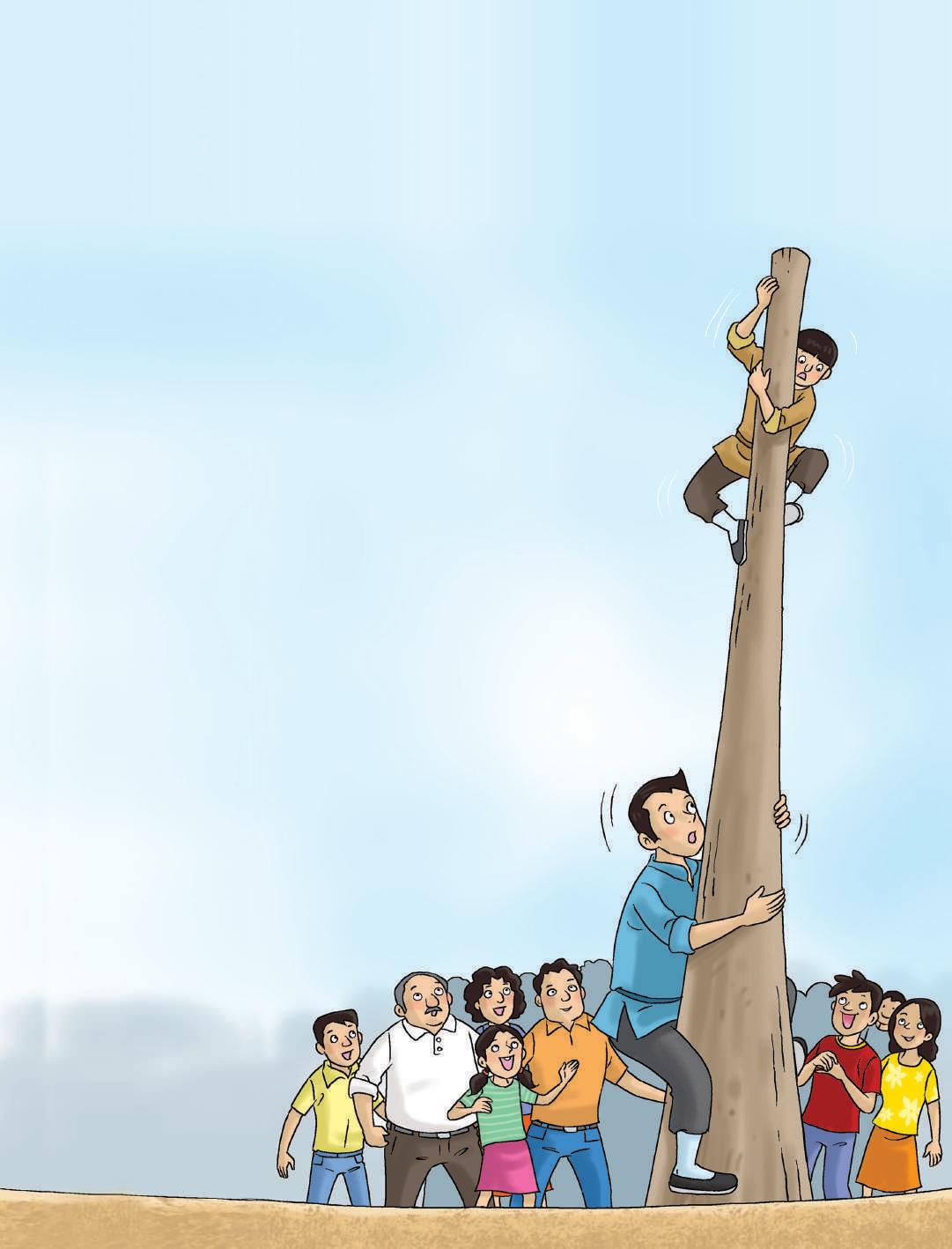
This story tells us that if you stay focused and mindful of your own thoughts, words and
actions, you can avoid hurting others while achieving your goals.
(3) Right Concentration
Right Concentration involves focusing on something without distraction. Through dedicated practice, one can attain inner peace, gain wisdom and discover truth. However, it is essential to be guided by a qualified meditation teacher.
By cultivating concentration, one can overcome negative impulses, resist temptations and remain vigilant of their thoughts, words and actions. In doing so, one progresses steadily along the Noble Eightfold Path, ultimately reaching the goal of realising the truth.
Group Discussion
According to the Buddha, what does all behaviour depend on? Please give an example.
What did the Buddha compare the mind of all beings to? Share your experience.
According to the Buddha, how can one treat a scattered mind?
Why did the acrobat’s apprentice stress the importance of self-protection? Do you agree? Why?
Have you ever experienced negative consequences from your emotions? Please give an example.
Words of Wisdom
There are four types of gratitude in this world and beyond: first, the gratitude to parents; second, the gratitude to all sentient beings; third, the gratitude to the king; and fourth, the gratitude to the Triple Gem (Buddha, Dharma and Sangha). All sentient beings equally bear this gratitude.
Dear students: Studying Buddhism is to learn good conduct and to apply it to your family, teachers, friends, and strangers whom you share karmic affinity with.
Signature: Signature:
— The Mahayana Sutra of Previous Lives and Contemplation of the Mind-Ground, Chapter 2: Repaying Debts of Gratitude (Adapted)
The Noble Eightfold Path : (III) Wisdom 26
The pinnacle of the Noble Eightfold Path is Wisdom which paves the way to enlightenment. Wisdom rests on the foundations of Good Conduct and Mental Development. Its practice encompasses two aspects: (1) Right Understanding and (2) Right Thought. Right Understanding dispels ignorance regarding the true nature of things, while Right Thought guides our actions, speech and thinking.
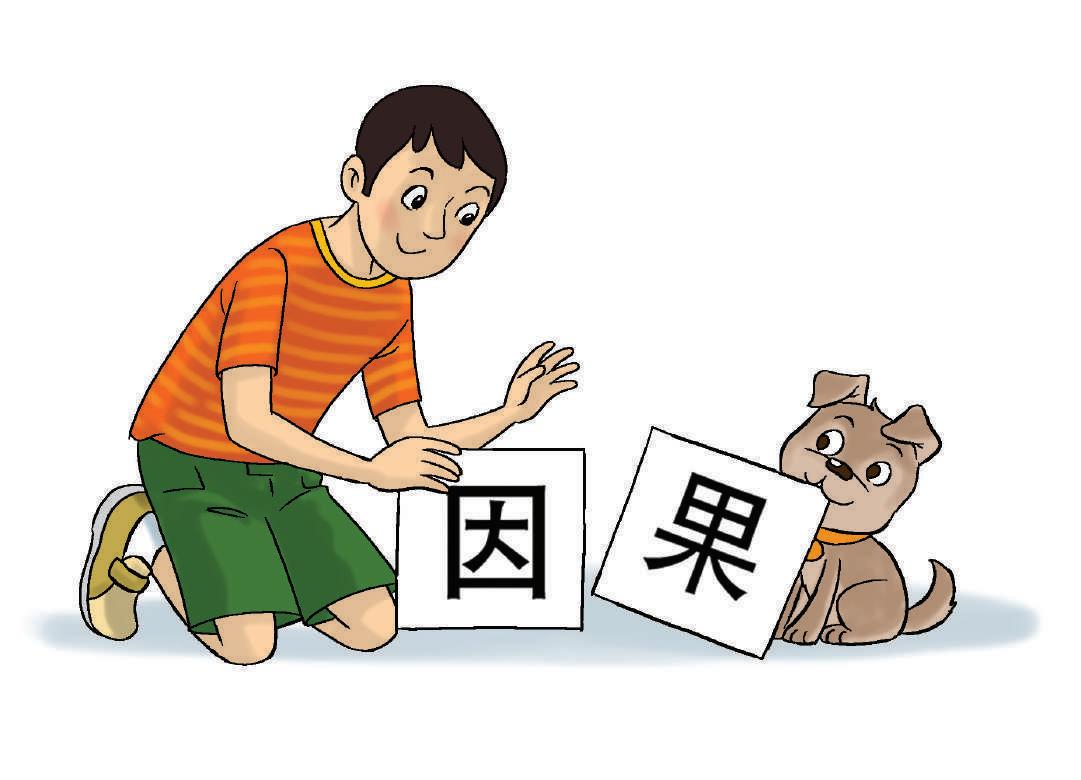
(1) Right Understanding
Right Understanding entails a clear perception of truth. For example:
(1) Understanding the law of Cause and Effect: This principle is akin to “reaping what you sow”, which is a fundamental truth of the universe.
(2) Understanding the Four Noble Truths:
(a) Life is full of suffering.
(b) Desire and ignorance are the causes of suffering.
(c) Nirvana is the end of suffering.
(d) Following the Noble Eightfold Path will lead to the end of suffering. An enquiring and analytical mindset is important in attaining Right Understanding. The Buddha professes verifying truth through personal experience rather than relying on hearsay, tradition or authority. Just as a wise person would test whether glittering metal is truly gold, we must examine the teachings by applying them in our own lives.
(2) Right Thought
Right Thought refers to having the correct thoughts and intentions. These can influence our speech and actions, for better or worse.
Once, the Buddha and Ananda were collecting alms in the city and saw a group of children playing amongst themselves. They were building houses with sand. One child, moved by inspiration, innocently offered the Buddha “rice” made of sand.
The Buddha graciously accepted the child's offering. Ananda, puzzled, asked, “Why did you accept the sand offered by that child?”
The Buddha replied, “In Buddhism, the intention behind an offering matters more than its appearance. Never underestimate a child’s heartfelt giving!”
Ananda inquired, “What merit does this child gain from offering sand with a joyful heart?” The Buddha explained, “One hundred years after my nirvana, this child will become a king, and the other children will become his ministers.”
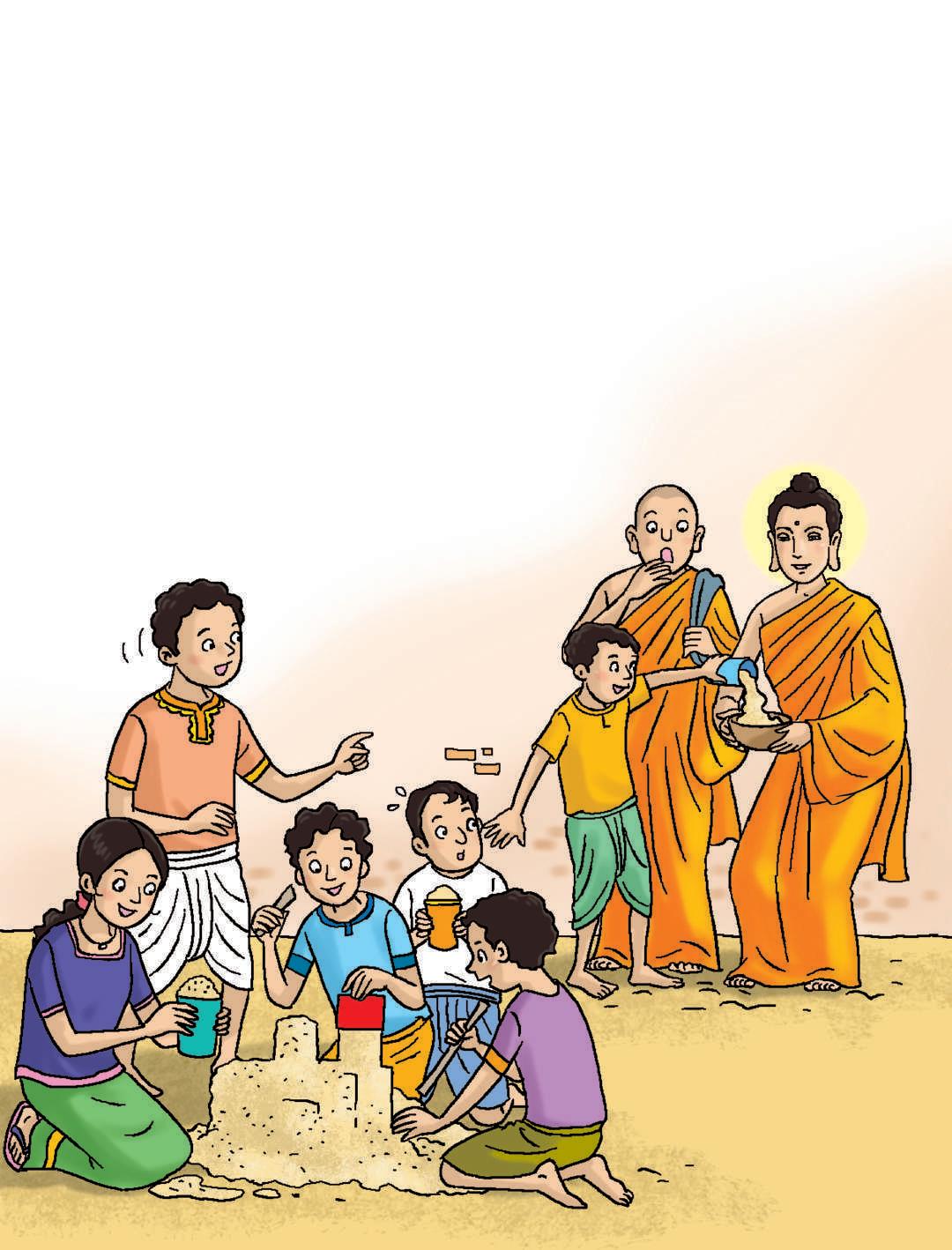
Desire is insatiable; it constantly seeks more. When greed takes hold, it leads to possessiveness, which can drive individuals to steal, rob or deceive. Similarly, hatred can lead to harmful behaviours, such as causing harm, slandering or cursing others. Therefore, cultivating right thoughts enables one to restrain from greed and hatred while nurturing compassion.
Therefore, we must practise diligently. Like climbing a mountain, we keep moving toward the peak so we do not lose our way. This is why practice begins with Right Understanding and Right Thought.
The three pillars of the Noble Eightfold Path
What is the foundation of Wisdom? What are the two aspects of the practice?
Right Understanding entails a clear perception of truth, but what is the truth?
What attitude is crucial for practising Right Understanding? Why? Why was the child’s sand offering so meritorious to the Buddha? Do you have desires? How can it be managed wisely?
Those who are ever vigilant, who discipline themselves day and night, and are ever intent upon nirvana — their defilements fade away.
— Dhammapada, Chapter 17 (The Angry), verse 226
Dear students: Studying Buddhism is to learn good conduct and to apply it to your family, teachers, friends, and strangers whom you share karmic affinity with.
(Please record your good deeds or diligent efforts this week.)
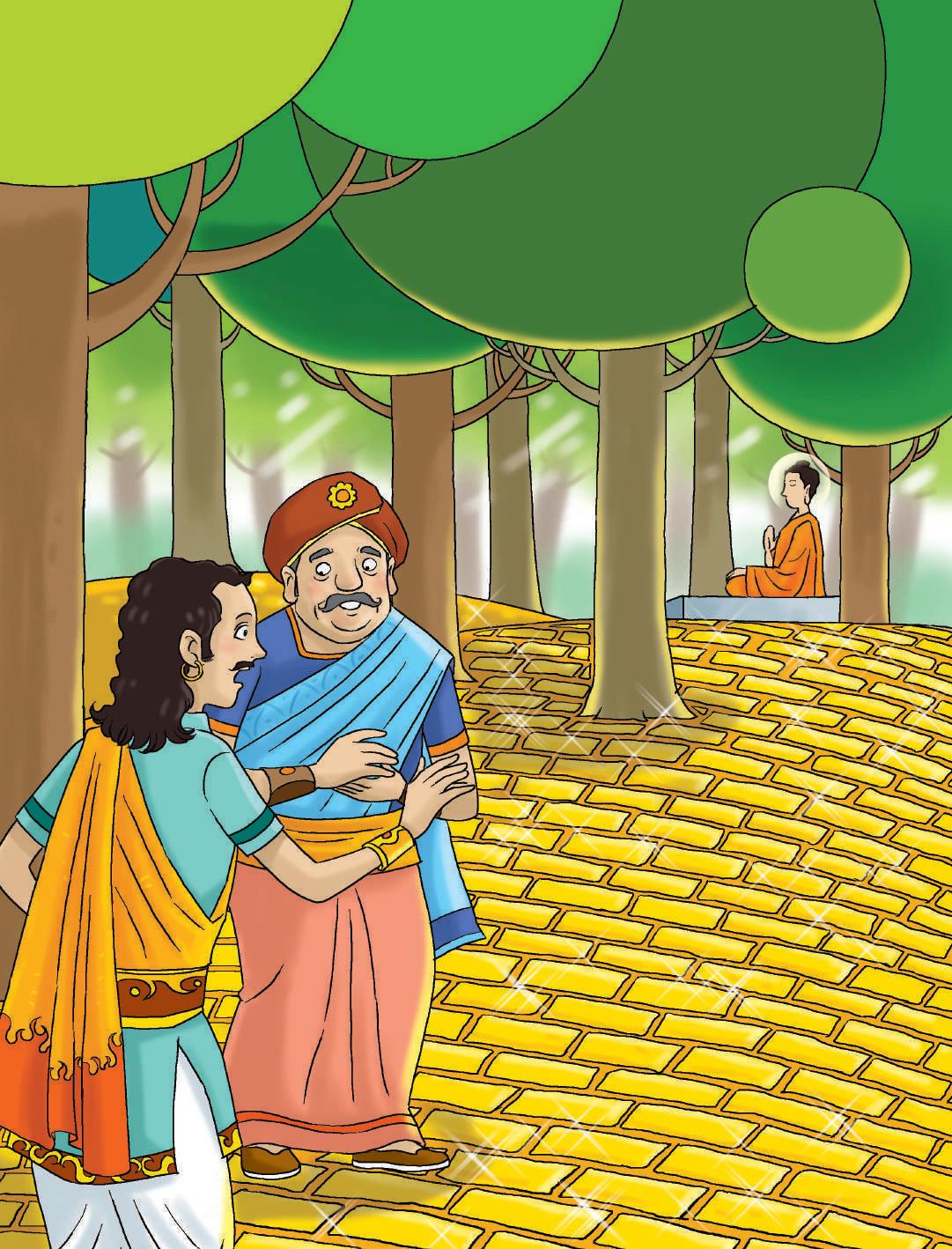
The Jetavana Monastery 27
In Shravasti, the capital of the Koshala Kingdom, lived a very wealthy merchant named Sudatta. He is renowned for his generosity in providing food and shelter to the orphans, the elderly and the poor. Hence, he was popularly known as Anathapindika, which means “one who is charitable to the needy”.
One day, Sudatta heard about the Buddha from his brotherin-law and eagerly wanted to meet him. However, his brotherin-law was too busy to accompany him. Late one night, Sudatta ventured out alone to look for the Buddha.
When he reached the park, Sudatta was astonished to hear the Buddha call out to him, “Come, Sudatta.” Surprised that the Buddha addressed him by name, he immediately prostrated himself, saying, “May the Buddha live at ease.”
The Buddha responded, “I do live at ease. I am no longer bound by desire, free from attachment and suffering, I dwell in deep peace.”
The Buddha continued, “Your willingness to help the poor and give generously is truly admirable. However, this brings blessings only within the human and heavenly realms; it is not the path to liberation. There is a higher form of giving — the gift of the Dharma and the gift of fearlessness. These are the true paths to enlightenment and liberation!”
After hearing the Buddha’s words, Sudatta took refuge in the Triple Gem and became a lay disciple. He invited the Buddha for a meal and requested him to visit Shravasti. The Buddha accepted this invitation.
Back in Shravasti, Sudatta began searching for a suitable place for the Buddha to stay. He came across a grove owned by Prince Jeta, which seemed ideal for establishing a monastery. When Sudatta offered to purchase the grove, Prince Jeta refused. Persisting, Sudatta asked the prince to name his price. To discourage him, the prince set an exorbitant condition, “If you can cover the entire grove with gold tiles, I will sell it to you.”
Unfazed, Sudatta immediately instructed his men to bring the gold pieces and lay them across the grove. Before long, the ground, save for the spaces occupied by the trees, was completely covered in gold. Struck by Sudatta’s determination, Prince Jeta relented. When he learnt that the grove was for the Buddha, he said, “I will sell the grove to you, the land is yours, but the trees are mine. The trees are my offering to the Buddha.” Later, the grove became known as Jetavana.
During his stay there, the Buddha delivered many sermons. One of the most well known was the “Sermon on Blessings”, in which he defined the essence of blessings. The Buddha emphasised that the highest blessings are conditions to achieve happiness in both the present and future. In his sermon, he professed, “Do not associate yourself with the ignorant; seek the company of the wise. Honour those who are most deserving of respect, for such actions constitute the greatest blessing.”
Why was Sudatta called “Anathapindika”?
Why did the Buddha describe himself as “living in deep peace”?
What is the “higher form of giving”? What is its significance?
What does the Buddha consider to be the greatest blessing? What do you think? Why?
Words of Wisdom
What do you think is the greatest blessing in life? Please give an example. Ever grows the glory of him who is energetic, mindful and pure in conduct, discerning and self-controlled, righteous and heedful.
— Dhammapada, Chapter 2 (Heedfulness), verse 24
Dear students: Studying Buddhism is to learn good conduct and to apply it to your family, teachers, friends, and strangers whom you share karmic affinity with.
Signature: Signature:
Eminent Female Followers of the Buddha (I)
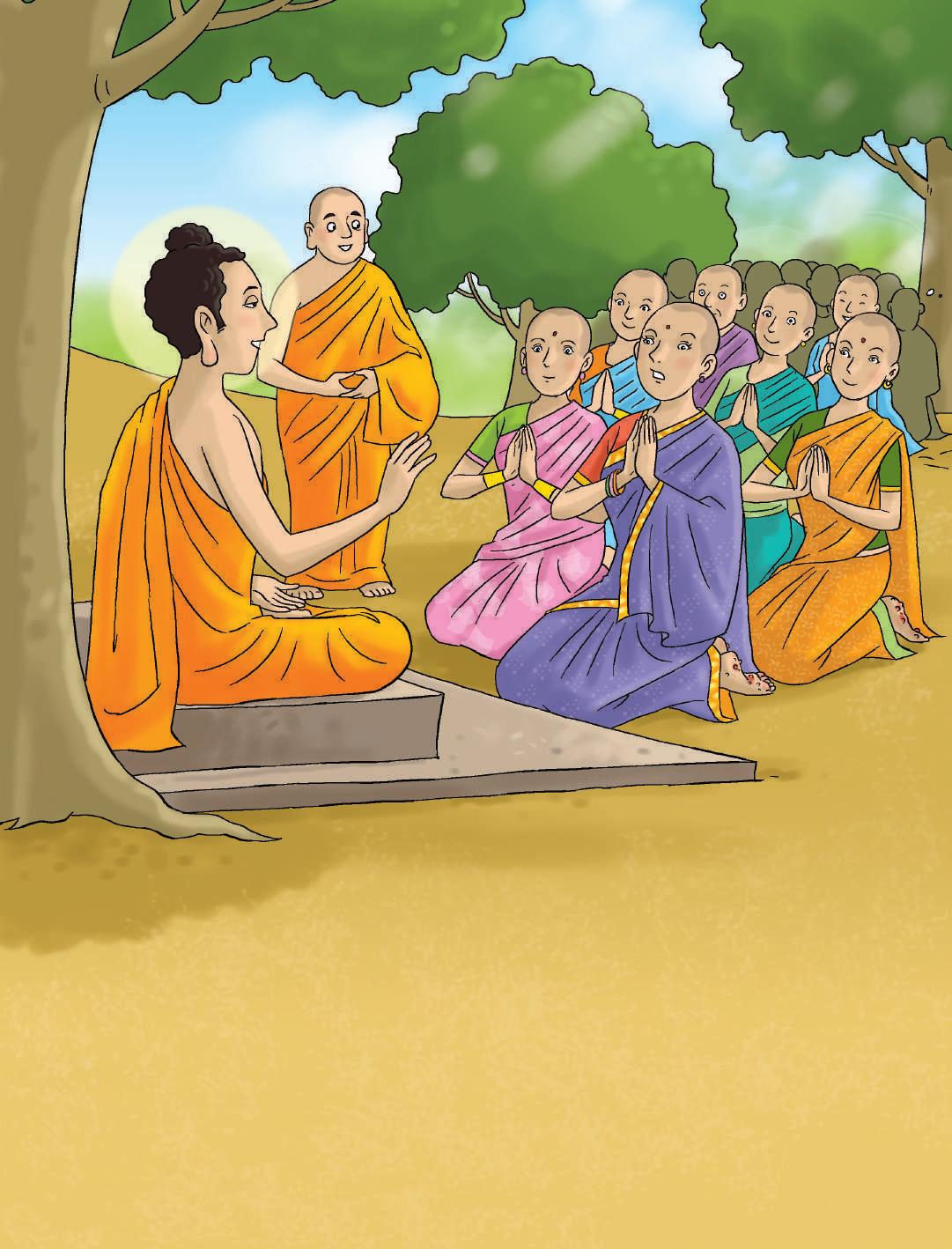
Prajapati — The First Nun
One day, the Buddha’s aunt, Prajapati, approached him to seek ordination, but her request was rejected. Undeterred, she cut her hair, donned a saffron robe, and, with Yasodhara and a group of Shakyan women, set out on a journey to reach the Buddha’s monastery.
Their feet were blistered, and their faces showed weariness by the time they arrived. Ananda, seeing their determination to be ordained, asked the Buddha, “Can women who choose to become nuns also find enlightenment?”
The Buddha affirmed, “Yes, they can indeed attain enlightenment.” Though initially reluctant, the Buddha eventually consented after Ananda's appeals. This historic moment marked the establishment of the first Bhikkhuni Sangha.
The Wise and Renowned Bhikkhuni — Kshema
Kshema, the beautiful queen to King Bimbisara, was deeply drawn to beauty and elegance. One day, she was captivated by a poem about the Bamboo Grove and decided to witness its splendour firsthand. While admiring the scenery, she caught sight of an exceptionally beautiful maiden standing beside the Buddha, gracefully fanning him. Kshema observed that the maiden’s beauty surpassed her own, and she moved closer for a better view.
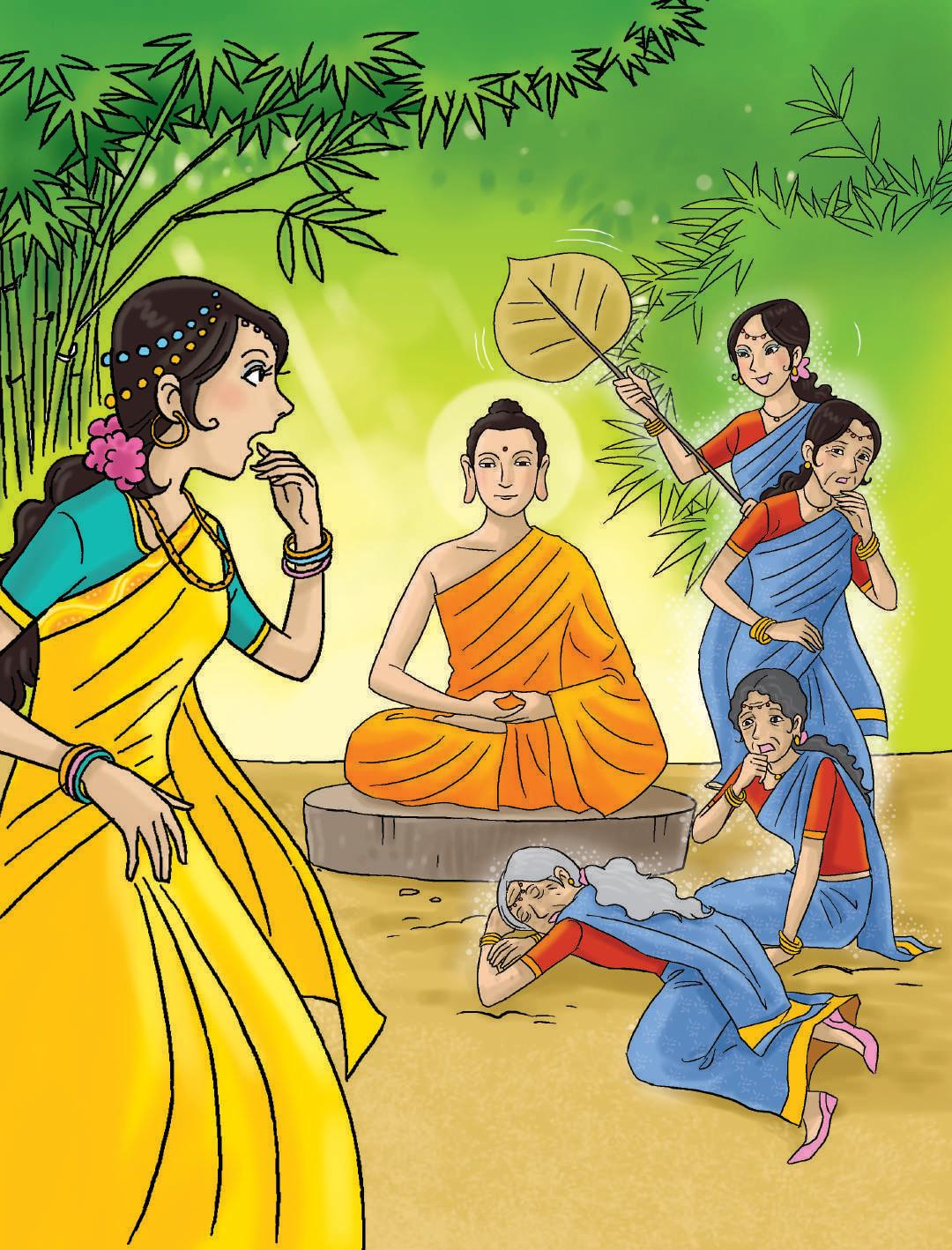
At that moment, something unusual happened. Before her eyes, the maiden’s teeth began to decay, her lustrous black hair turned grey, and her supple skin wrinkled. The once beautiful maiden aged rapidly, growing frail and weak until she finally collapsed and died.
Startled, Kshema realised that the beautiful maiden was merely a vision created by the Buddha’s supernatural powers. The Buddha then spoke to her, “Beauty is impermanent. Those trapped by their desires are like spiders entangled in their own webs. But those who are freed from desires no longer take delight in the fleeting pleasure of the senses.”
In that instant, Kshema realised the true nature of life and attained arhatship. She later joined the order of nuns and became an outstanding bhikkhuni. Renowned for her wisdom, she often assisted the Buddha in guiding other nuns.
How did Prajapati express her determination to become a nun? Why did the Buddha eventually allow the ordination of women?
Why did the Buddha use a vision of beauty to guide Kshema?
What do you think is the difference between “wants” and “needs”? Please give an example.
Does indulging in our desires lead to true happiness? What impact does it have on us?
Words of Wisdom
“He abused me, he struck me, he overpowered me, he robbed me.” Those who harbour such thoughts do not still their hatred.
— Dhammapada, Chapter 1 (The Pairs), verse 3
Dear students: Studying Buddhism is to learn good conduct and to apply it to your family, teachers, friends, and strangers whom you share karmic affinity with.
Signature: Signature:
Eminent Female Followers of the Buddha (II)
Bhikkhuni Known for Her Spiritual Powers — Utpalavarna
Born to a banker in Shravasti, Utpalavarna’s name means “the colour of lotus” in her language, reflecting the beauty of her skin. After three failed marriages, she became disillusioned with life and became a courtesan in Rajagriha.
One day, while she was out with a group of young men, Maudgalyayana passed by. On her own accord, Utpalavarna tried to seduce the monk, but he remained unmoved. In a stern tone, Maudgalyayana said, “Your ignorance fuels a desire that will soon sink you beyond rescue.”

Moved by these words and feeling ashamed, Utpalavarna honoured him and expressed her wish to become a nun. Despite her past as a courtesan, she was accepted into the order of nuns. Later, the Buddha declared her conduct to be exemplary and equal to that of Kshema.
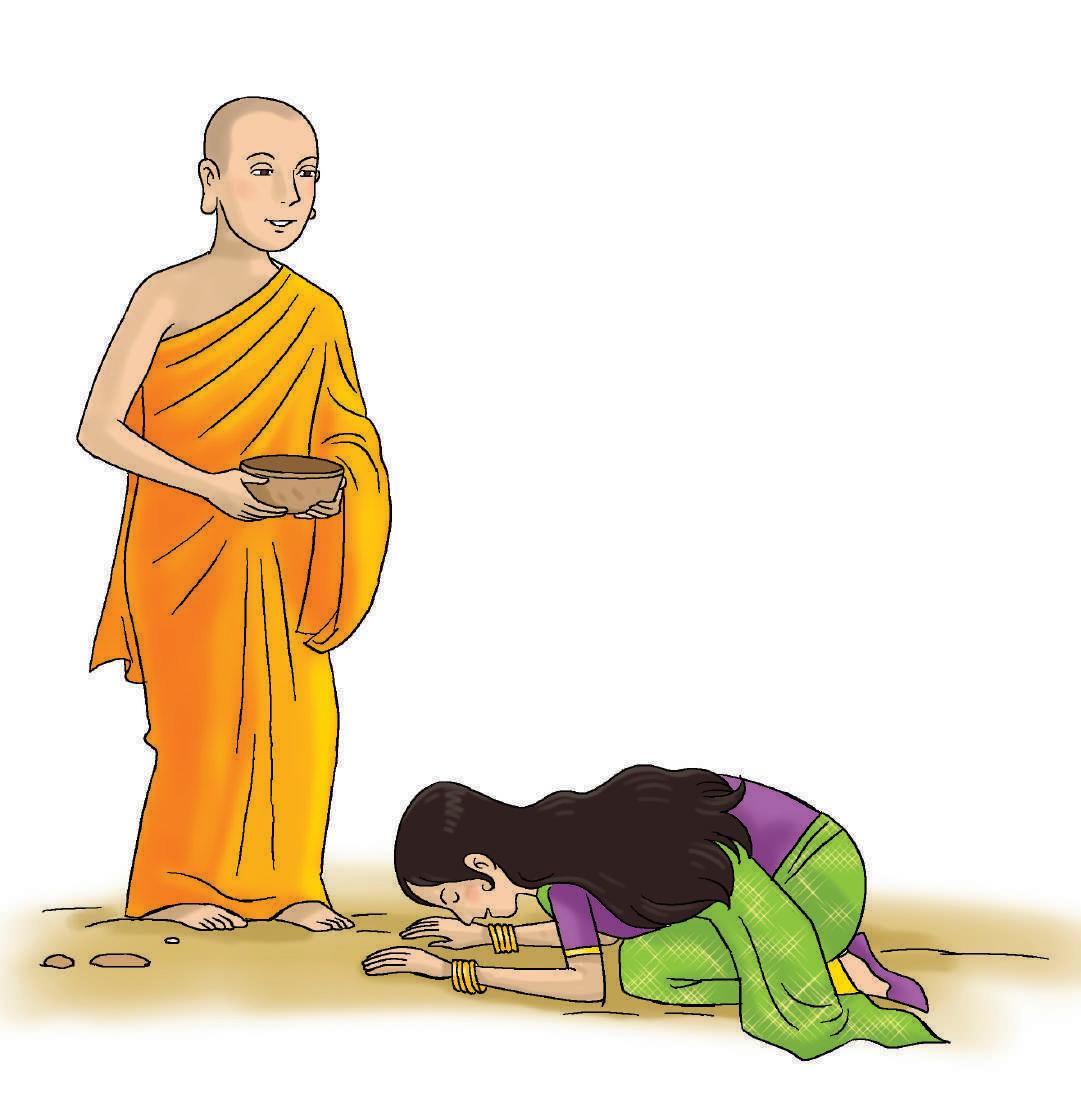
The Devoted Vishakha
When Vishakha was seven years old, her grandfather took her to listen to the Buddha’s sermons, so she was a follower at a very young age. Eventually, she married the son of a wealthy man in Shravasti. Her father-in-law, a staunch believer of another religion, did not respect the Buddha’s disciples. Nevertheless, through patience and effort, Vishakha succeeded in converting him and the whole family to Buddhism.
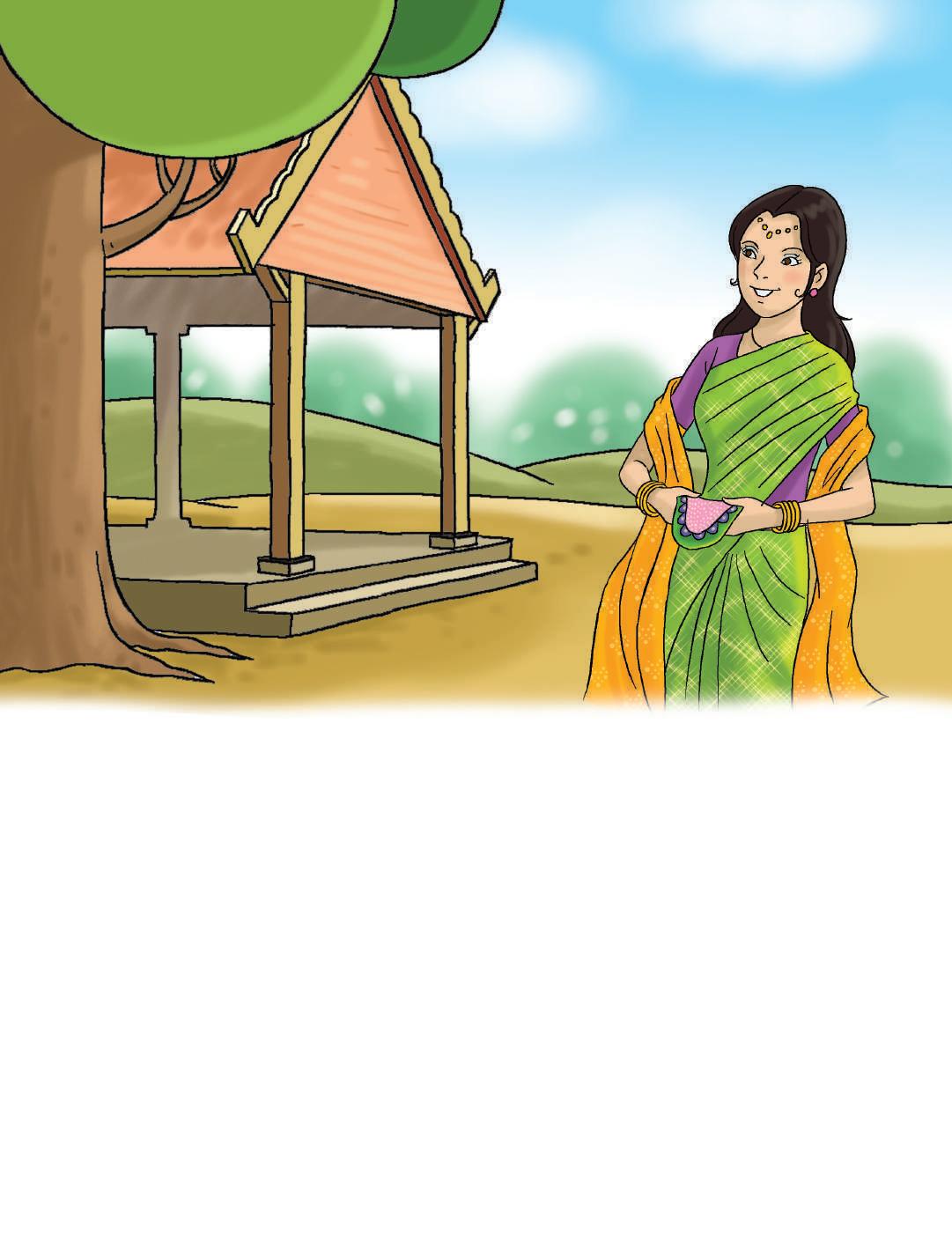
In addition to supporting the monastic community, Vishakha would visit the monastery every morning and evening to serve the Sangha and listen to the Buddha's teachings. One day, before paying her respects to the Buddha, she removed her valuable headpiece as a sign of reverence and handed it to a servant for safekeeping. When she returned home, she realised she had forgotten to retrieve the headpiece.
The Buddha instructed Ananda to keep the headpiece and return it to her. Upon learning that it was with Ananda, she decided not to take it back but to sell it for the benefit of the Sangha. The Buddha advised her to use the proceeds from the sale to build a monastery in the eastern part of Shravasti, which she did. Thus, the Pubbarama Monastery was established, which was an important location for spreading the Dharma.
In a sermon, the Buddha mentioned, “Happy is the woman who is a capable worker, courteous in her ways, manages her servants well, and guards her husband’s wealth. Happy is she in the next life who is firm in faith, virtue, generosity, and wisdom.”
Why did Utpalavarna feel ashamed of herself? What decision did she make in the end?
What was the significance of the Buddha's acceptance of Utpalavarna's ordination?
What do the descriptions on pages 152 and 153 reveal about Vishakha? What virtues should a woman possess to live a happy life in this life? What virtues should a woman possess to be happy in the next life?
“He abused me, he struck me, he overpowered me, he robbed me.” Those who do not harbour such thoughts still their hatred.
— Dhammapada, Chapter 1 (The Pairs), verse 4
Dear students: Studying Buddhism is to learn good conduct and to apply it to your family, teachers, friends, and strangers whom you share karmic affinity with.
Signature: Signature:
Karma 30
Karma — The Law of Cause and Effect
Karma is the natural law of Cause and Effect, every action will have its corresponding result. If one performs wholesome actions, happiness will follow. On the other hand, if one performs unwholesome actions, suffering will result.
Karma manifests from our actions, speech and thoughts. These include what we do, say and think. We need to take responsibility for our actions and accept their consequences.
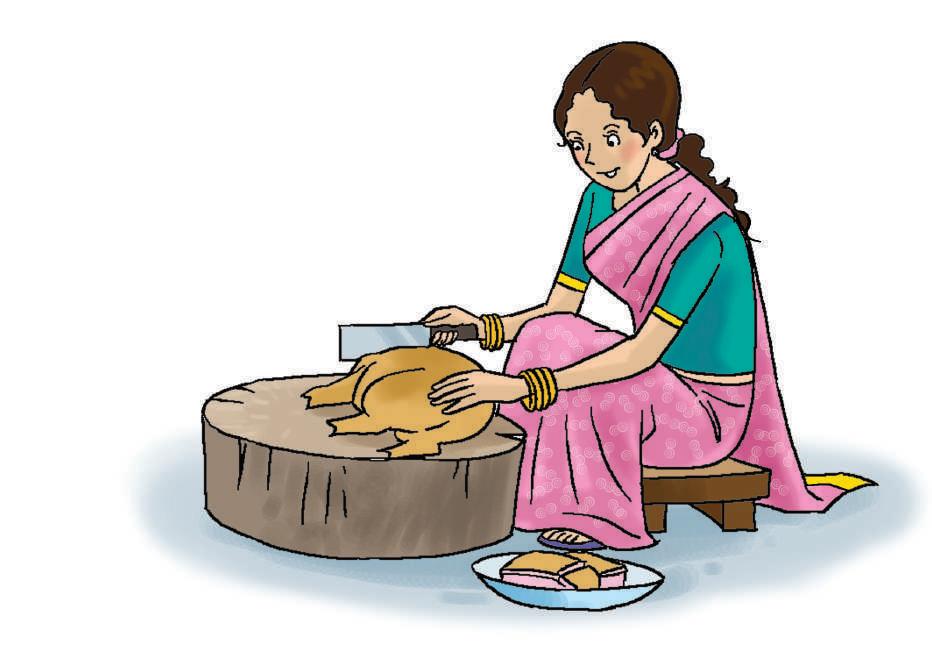
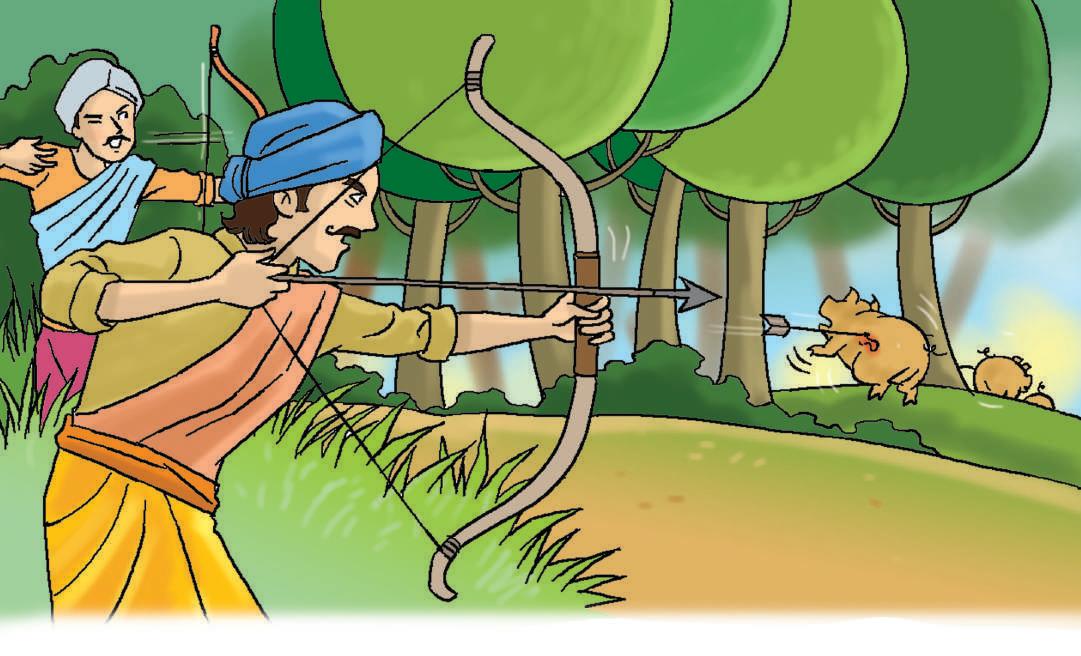
Once, in the mountains, 122 men, women and children lived by hunting and eating meat. They worshipped spirits and knew nothing about the Triple Gem: the Buddha, the Dharma and the Sangha.
Seeing that the time was right for their awakening, the Buddha sat beneath a tree nearby. At that time, the men were out hunting, leaving only the women at home. When the women saw the Buddha, they found his radiance illuminating the entire area, turning trees and rocks golden.
The women quickly bowed to him, believing he was a deity. The Buddha spoke to them about the negative karma of killing and the blessings of protecting life. The women responded, “Although we kill and eat meat, we still wish for you to accept our offering.”
With great compassion, the Buddha replied, “There are many things that can sustain life. People can eat grains instead of harming animals for food. Only through compassion and refraining from killing can you attain lasting peace and blessings.”
When the hunters returned and saw their wives listening to the Buddha, they grew angry and wanted to harm him. The women stopped them, saying, “Do not be reckless! He is a divine being!” Hearing this, they immediately repented before the Buddha.
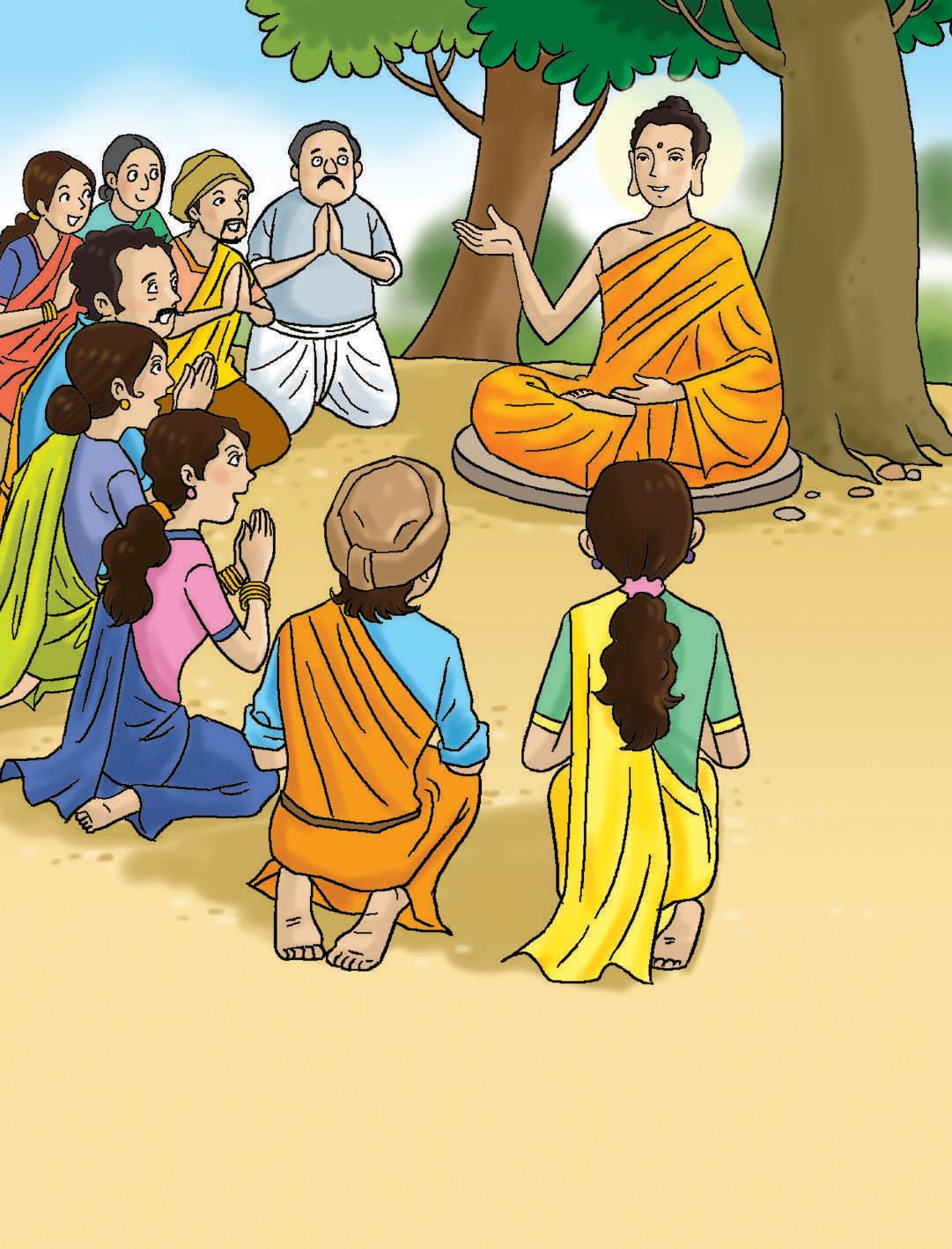
The Buddha again spoke about the blessings of not taking lives and the suffering that comes from killing. The men knelt before the Buddha, asking, “We have lived by hunting all our lives, accumulating negative karma as great as these mountains. Is there any way to cleanse our karma?”
“You must cultivate compassion!” answered the Buddha. “Care for and help all beings, and blessings will always follow. You will be able to sleep peacefully without nightmares, and you will gain protection, from poison and war.” Everyone present rejoiced in faith and from that moment, they upheld the Five Precepts. Actions
Cycle of Karma
Bad Karma
Good Karma
Who determines a person’s “fate”? Where does it come from? Which bad karma is related to our physical actions? Which bad karma is related to our speech? Which bad karma is related to our thoughts? Is there any way to change or reduce past bad karma?
Patience, compliance, seeing contemplatives, discussing the Dharma on timely occasions: This is the highest protection.
— Mangala Sutta
Dear students: Studying Buddhism is to learn good conduct and to apply it to your family, teachers, friends, and strangers whom you share karmic affinity with.
Parent’s comments
Teacher’s comments
Signature: Signature:
31 The Six Paths of Reincarnation
People often ask, “What happens to us after death?” According to Buddhism, rebirth takes place at the end of life. Buddhists regard rebirth as a fact, believing that all sentient beings have lived many past lives, exist in the present, and will continue to live countless lives in the future.
Examples of Rebirth
Many people do not believe in “reincarnation”. However, on the night of the Buddha’s enlightenment, he clearly saw the circumstances of his past lives through meditation. He observed how sentient beings, due to their karma, undergo the cycle of birth and death in the six realms.
Furthermore, some practitioners of meditation can recall events from their past lives when they enter higher states of meditation. In fact, modern researchers have conducted investigations and studies on people who have experienced this.
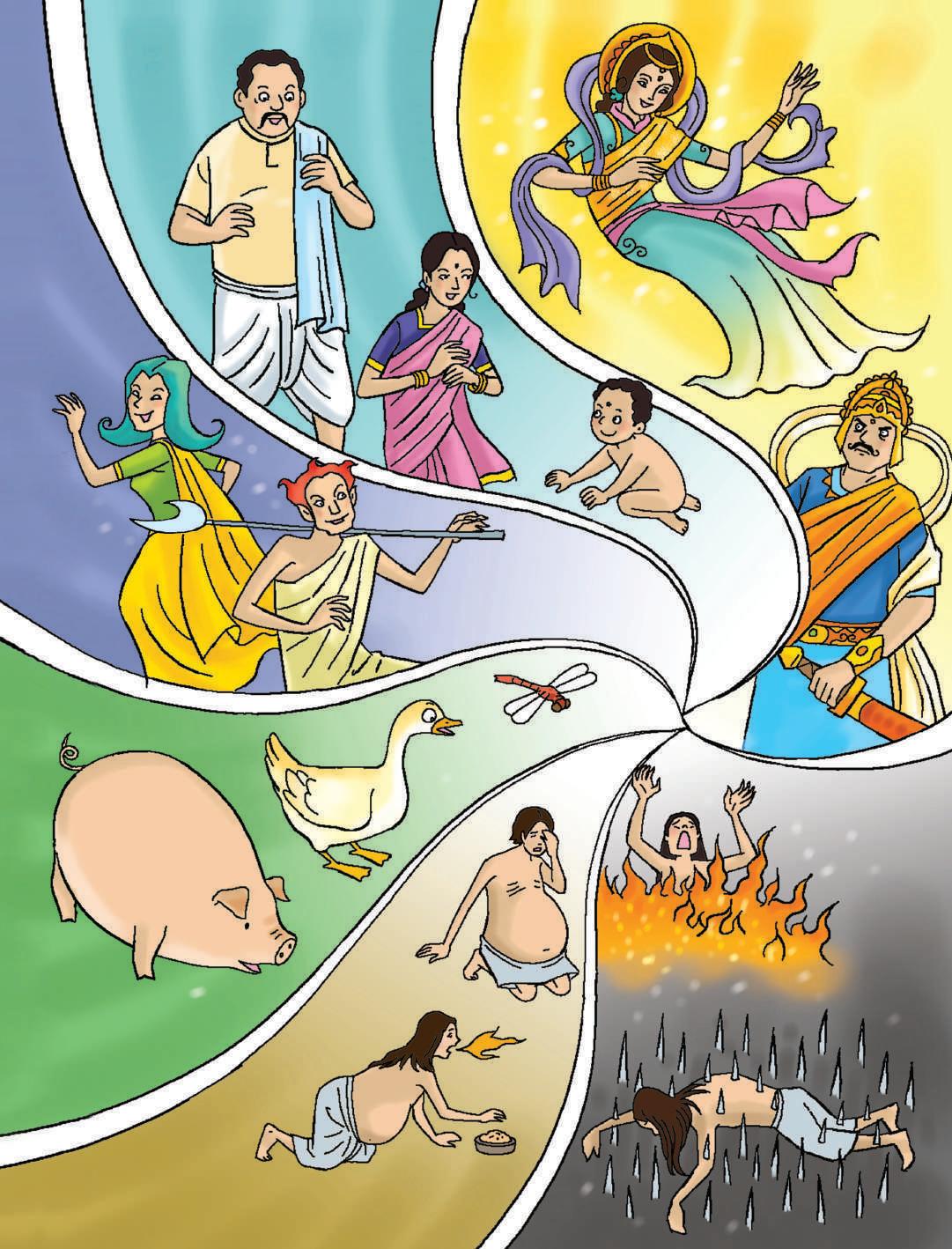
Realm of Asuras Realm of Humans
Realm of Animals
Realm of Hungry Ghosts
Realm of Hell
Realm of Heaven
The Six Realms
The Buddha said that the cycle of birth, death and rebirth is an unending process of change. At the moment of death, life ends and the mind is separated from the body. The craving for life causes the mind to seek a new existence, and the karma accumulated previously determines the place of one’s rebirth.
After death, sentient beings will cycle through the six realms. These realms are:
(1) The Three Good Realms: the Realm of Heaven, the Realm of Humans, and the Realm of Asuras.
(2) The Three Evil Realms: the Realm of Animals, the Realm of Hungry Ghosts, and the Realm of Hell.
As long as we uphold the Five Precepts, we can accumulate the merits necessary to be reborn in the Realm of Humans or Heaven. Life in the human realm is a mix of suffering and joy, but it offers the opportunity to hear the Dharma. By practising the Noble Eightfold Path and using wisdom to see the true nature of things, one may attain the supreme happiness of nirvana.
The Cycle of Life and Death
Understanding the relationship between karma and reincarnation helps us see life with more clarity. This understanding gives us the confidence to face adversity and continue doing good. The wholesome actions we perform in this life will bring positive results in this life or the next.
The Five Merits of Upholding Precepts
According to the Buddha, if a person upholds the Five Precepts of not killing, not stealing, not engaging in sexual misconduct, not lying and not consuming alcohol, they will gain the following five merits:
(1) They can often get what they hope for.
(2) Their treasures and properties stay safe and grow.
(3) People will respect and love them, regardless of where they are.
(4) People speak well of them and praise them.
(5) When their life ends, they will be reborn in the heavenly realms.
The Six Realms of Rebirth
What did the Buddha see clearly on the night of his enlightenment?
What are the six realms? What determines where one is reborn?
How can one be reborn in the human realm? How can one be free from reincarnation?
What impact does understanding karma and reincarnation have on our lives?
What do you think is the most valuable thing in life? Why?
— Dhammapada, Chapter 23 (The Elephant), verse 354
Dear students: Studying Buddhism is to learn good conduct and to apply it to your family, teachers, friends, and strangers whom you share karmic affinity with. Signature:
32 The Buddha's Wisdom and Compassion
The Buddha taught his followers to discern what was useful and what was not, encouraging them to think for themselves. Through his compassion, he also advised us to care for and help one another. This allowed many to be free of suffering and regain the confidence to face life's challenges.
The Buddha’s Practical Approach
Although the Buddha lived about 2,500 years ago, his approach to life’s challenges was similar to that of modern science. He used the following parable to illustrate the importance of focusing on what is essential: “Suppose someone was struck by a poisoned arrow and his friends found a doctor to remove it. If this man were to say, ‘I will not accept treatment until I know who shot me! I will not have it taken out until I know what kind of bow was used and the material of the arrowhead.’ That person would die before all these questions could be answered.”
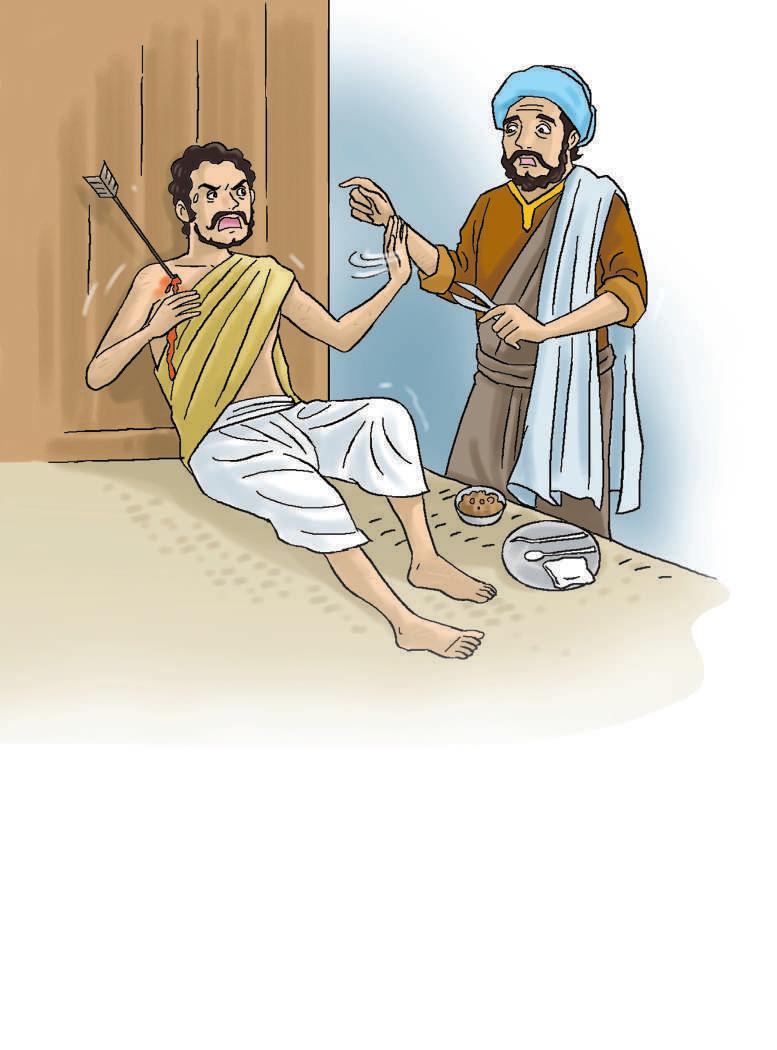
Similarly, those who say they will not practise the Dharma until they have answers to life's metaphysical questions, such as whether the universe is eternal or infinite, will pass away before these questions are answered.
The Importance of Independent Thinking
Once, a villager asked the Buddha, “Teachers often visit our village, promoting their own teachings and criticising the teachings of others. This leaves us feeling confused and unsure about who is truly speaking the truth.”
To address this dilemma, the Buddha answered, “You are right to be sceptical, but you should also think independently and make your own judgements. Do not be swayed by appearances or blindly accept unverified claims.”
The Buddha did not want his teachings to be accepted out of respect alone. For example, the Buddha taught: “Greed and anger are the causes of suffering, leading to sleeplessness, loss of appetite, and even disputes that result in pain.” However, the Buddha encouraged them to accept these teachings only after validating them through their own experiences.
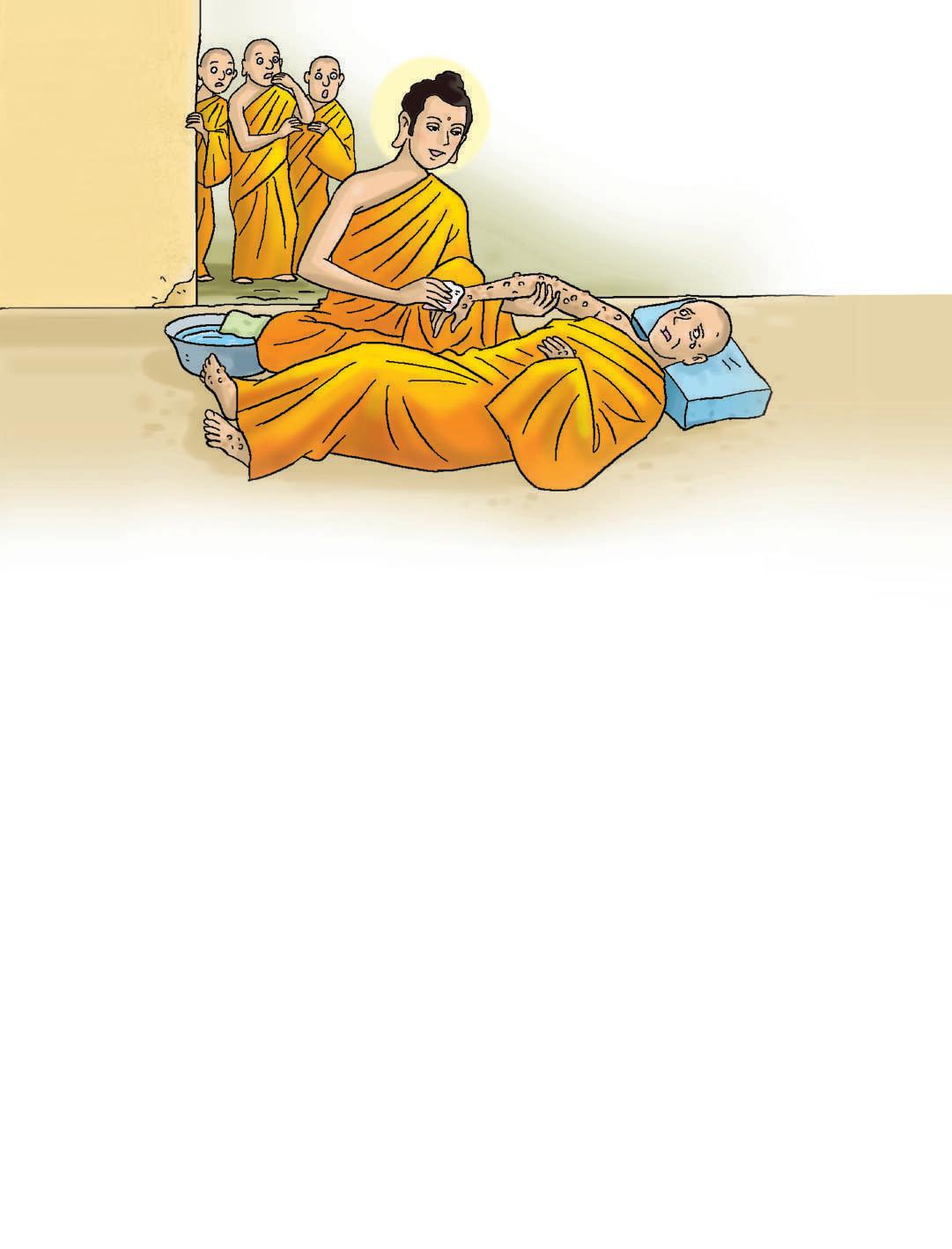
Care for the Sick
There was a time when a young monk named Tissa fell ill. Small boils broke out on his body, and his fellow monks left him alone. In response, the Buddha gathered other bhikkhus to take care of Tissa. He also personally boiled water to clean Tissa’s open sores and even ensured his clothes were washed. The Buddha's actions alleviated both Tissa’s physical and mental suffering and set a good example for his disciples. The Buddha advised, “Among the Eight Fields of Merit, providing care for the sick is foremost.” Treating the sick not only generates merit but also serves as a form of practice. Why is it a practice? Because it cultivates compassion and eliminates feelings of anger.
What two attitudes did the Buddha use to address problems? What insights do they offer?
What do you think of the story of the poison arrow? Why do you think so? Have you ever experienced suffering? How did you overcome it? Please share an example.
Why did the Buddha say, “Treating the sick is both a means of generating merit and a form of practice”?
Have you ever comforted and helped your friends who are suffering? How did it make you feel? Why?
Words of Wisdom
Giving, living in rectitude, assistance to one's relatives, deeds that are blameless: This is the highest protection.
— Mangala Sutta
Dear students: Studying Buddhism is to learn good conduct and to apply it to your family, teachers, friends, and strangers whom you share karmic affinity with.
Signature: Signature:
33 Three Universal Characteristics
The Buddha taught three fundamental truths of existence:
(1) Impermanence
(2) Non-self
(3) The Perfect Tranquillity of Nirvana
Known as the “Three Universal Characteristics”, these truths remain unchanged over time.
(1) Impermanence
“Impermanence” refers to the inevitability of change. The Buddha explained, “All things will come to pass. When there is an arising, there will also be a falling. Nothing is eternal or unchanging.” For instance, the body undergoes the cycle of birth, ageing, illness, and death, while mountains, rivers and the earth experience cycles of creation, stability, decay, and dissolution. Impermanence is the very nature of all phenomena and reflects the universal truth.
Suffering arises from impermanence, as all things eventually decay and pass away. The cycle of birth and death is hard to accept, so it is difficult to find peace. As a result, life is filled with suffering.
However, understanding that suffering is an inherent part of existence enables one to face reality with courage. When confronted with ageing, illness and death, one will not feel disheartened. Instead, like Prince Siddhartha, one can develop the determination to seek a path to liberation.
(2) Non-self
People often believe that the self is permanent and unchanging, and that the body and mind must represent a fixed “me”. However, the Buddha taught that no such real, permanent or independent self exists. Our body and mind arise from causes and conditions and are therefore subject to change.
When we identify our body and mind as “me”, we start to perceive differences between “me”, “you” and “them”. This sense of separation fosters selfish thinking, making it more challenging to approach people, situations and circumstances with fairness and impartiality.
If we understand that “me” is just a label for our body and mind, we can approach life with greater balance. We will no longer feel overwhelmed by problems, and may cultivate greater generosity and kindness towards others.
(3) The Perfect Tranquillity of Nirvana
Nirvana is a state of perfect peace, free from worry and pain. It is the final goal for those who walk the Buddha’s path. Just like all things are marked by impermanence and non-self, nirvana is marked by “neither arising nor ceasing”. It goes beyond suffering and is a deep peace that cannot be fully explained in words, but it can be realised by practising the Noble Eightfold Path with care. Any teaching that possesses these three characteristics can be considered as the true Dharma.
What universal truths did the Buddha teach? What are these truths collectively called? What is impermanence? Please give examples in your life. What would happen if impermanence did not exist? Please give examples. How does believing in a fixed "self" affect our attitudes towards people? Beyond impermanence, what other truths apply universally?
The Buddha taught that when speaking, one should speak at the right time, speak truthfully, speak gently, speak kindly, and speak in a way that is beneficial to others.
— Right Speech Sutra (Adapted)
Dear students: Learning Buddhism is to learn good conduct and to apply it to your family, teachers, friends, and strangers with whom you share karmic affinity.
Signature: Signature:
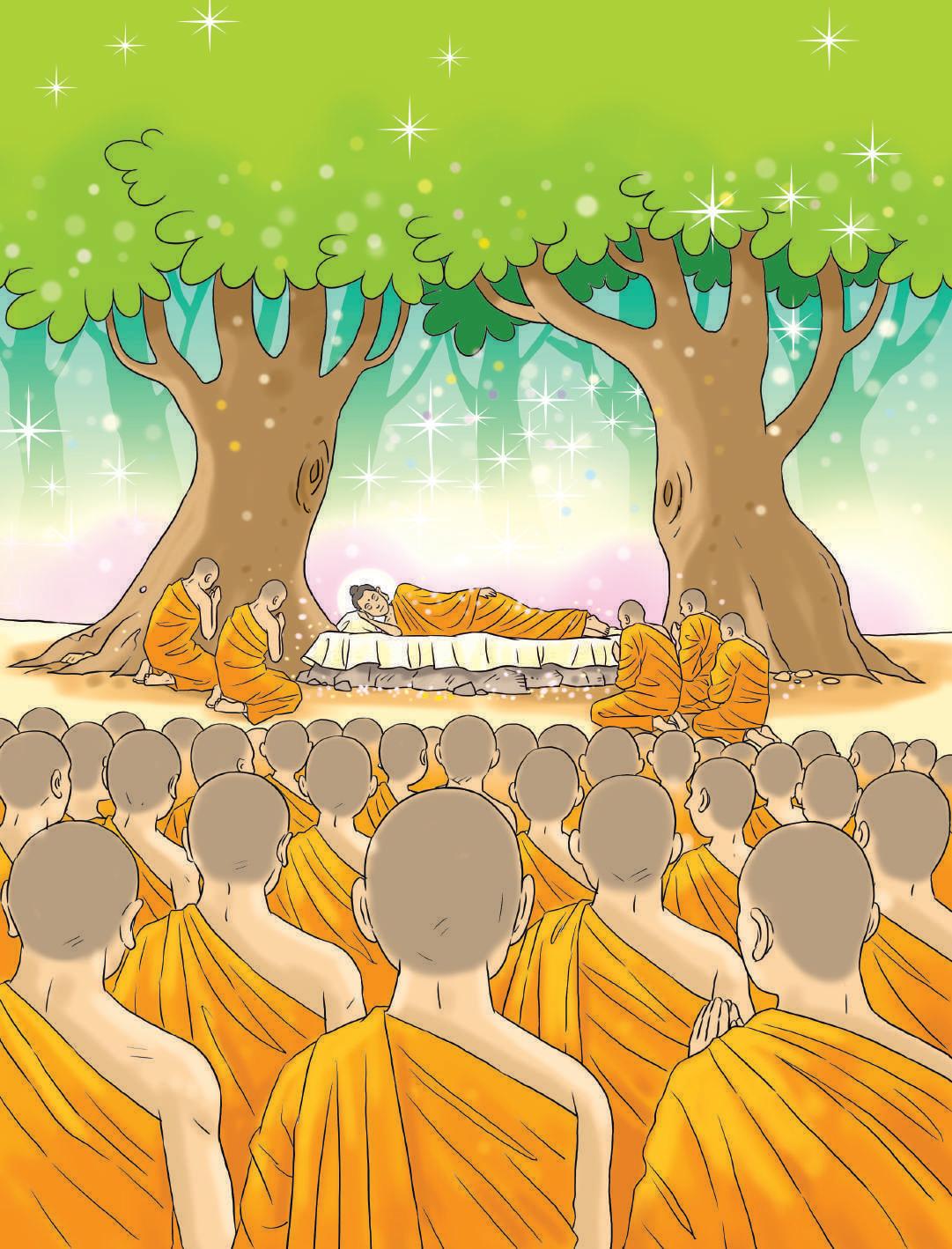
The Last Days of the Buddha
Though the Buddha was holy, he too, was subject to ageing, illness and death like the rest of us.
By the age of 80, the Buddha’s strength gradually declined, but he continued to tirelessly share the Dharma to all beings. One day, after crossing the Ganges River to Vaishali, he fell severely ill. When his condition improved slightly, he said to Ananda, “Ananda, be a lamp unto yourself. Look to no one else for light. He who is his own lamp after I have left the world, will show that he has understood the meaning of my words.” These words underscored the importance of personal effort in understanding the Dharma.
Soon after, the Buddha decided to prepare his disciples for his passing. He instructed Ananda to assemble all his disciples in the vicinity of Vaishali. Addressing them, he declared, “The time of my final nirvana is near. Three months from now, I will depart. Be earnest, be mindful and of pure virtue. Those who diligently follow the teachings shall end rebirth and suffering.”
The Last Offering
From Vaishali, the Buddha continued his journey to Pava. There, a devoted blacksmith called Chunda offered him a meal. After this, the Buddha became seriously ill.
Concerned that Chunda might be criticised for causing his illness, the Buddha explained, “The offerings made just before enlightenment and the one just before final nirvana are the best, and most special. Chunda has gained merit through this deed and should not be blamed.”
He added, “Offering increases one’s merit, self-control frees one from anger and virtue prevents evil. One who eliminates greed, anger and delusion lives in peace.”
The Double Sala Trees
After leaving Pava, the order set out for the Sala Grove at Kushinagar, where Ananda had prepared a resting place for the Buddha. In between two sala trees, the Buddha laid on his right side, facing north.
Although it was not the flowering season, the two Sala trees suddenly bloomed, showering blossoms on the Buddha. Witnessing this, he remarked, “This is not the best way to honour me. True homage lies in following the Dharma and living virtuously.”
The Last Disciple
When news of the Buddha’s imminent passing reached the people of Kushinagar, they gathered in groups to pay their last respects. An ascetic named Subhadra approached Ananda and pleaded for permission to see the Buddha. Ananda refused, not wanting the Buddha to be disturbed in his weakened state.
Persistently, Subhadra repeated his request three times, but without success. The Buddha, overhearing their conversation, instructed Ananda to allow Subhadra in, recognising his sincerity in seeking the truth. Subhadra asked the Buddha whether all ascetics and priests could be enlightened. The Buddha replied, “Wherever the Noble Eightfold Path is taught, enlightenment is found.”
On hearing this, Subhadra requested to be admitted into the Sangha. He was the last disciple to be ordained by the Buddha.
The Buddha’s Final Teaching
Before entering final nirvana, the Buddha said to Ananda, “Some may think that when I am no longer with you, you will have no teacher. But that is not so, Ananda. The teachings and discipline will be your guide when I am gone.”
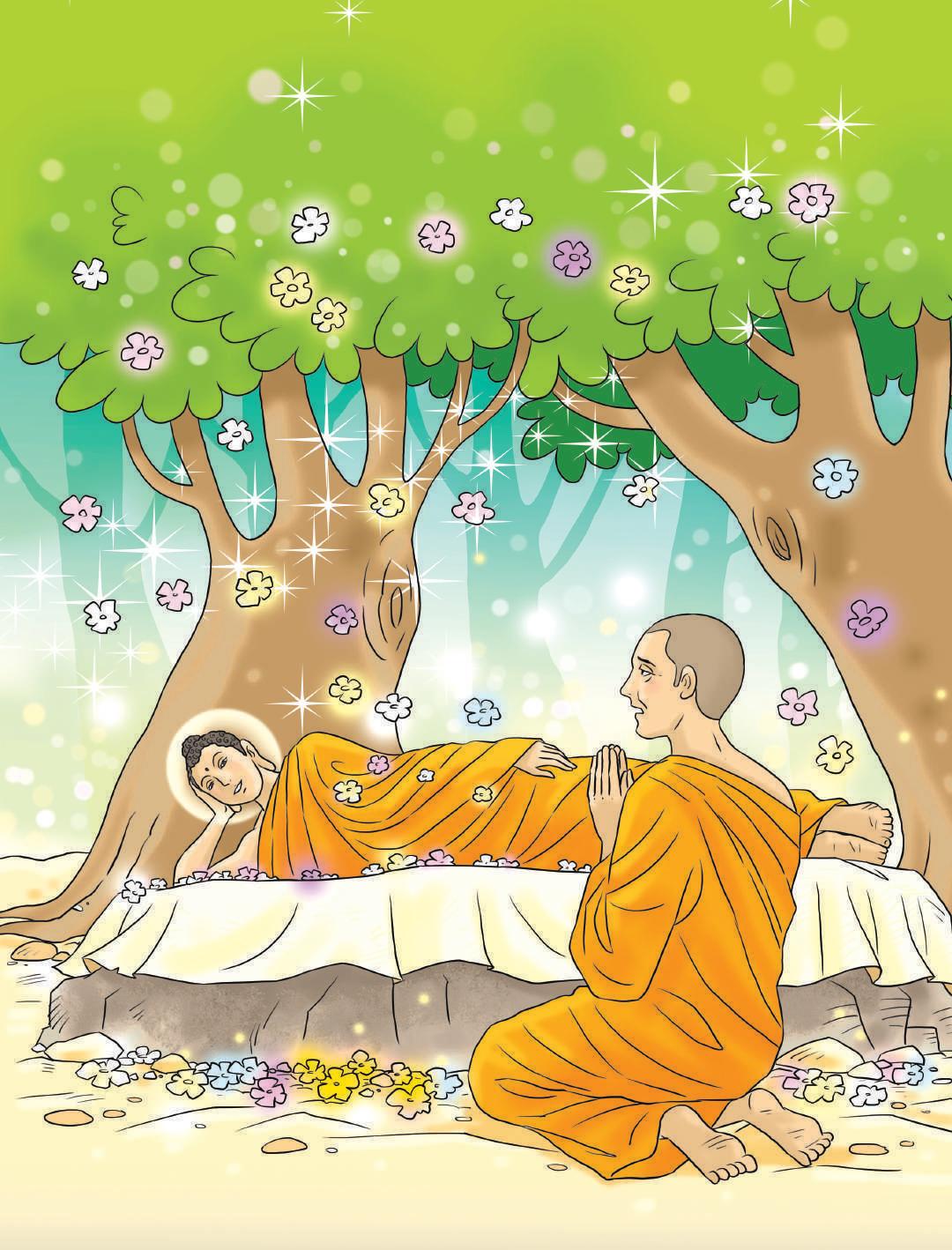
The Buddha then addressed his disciples, “If any among you still harbour doubts concerning the Buddha, the Dharma or the Sangha, you may speak now, so that no regret will arise later.”
Though the Buddha repeated thrice, his disciples remained silent. Finally, Ananda spoke, “I am confident that no one here has doubts about the Buddha, the Dharma or the Sangha!” The Buddha responded, “Ananda, you speak with faith. I know with certainty that none among us harbours any doubt.”
With his final words, the Buddha said, “My dear disciples, subject to change are all things; strive on with diligence.” Then the Buddha entered his final nirvana.
What does “being your own lamp” mean? What can we do to achieve inner peace?
According to the Buddha, what is the best way to honour him? How should we practise to realise the truth?
After the Buddha’s passing, who will guide his disciples?
words: This is the highest protection.
— Mangala Sutta
Dear students: Studying Buddhism is to learn good conduct and to apply it to your family, teachers, friends, and strangers whom you share karmic affinity with.
Signature: Signature:

Glossary
1 Alms 托钵 tuō bō
2 Ananda 阿难 ā nàn
3 Anathapindika 给孤独长者 jǐ gū dú zhǎng zhě
4 Arhat
5 Ascetic
6 Ashvajit
阿罗汉 ā luó hàn
苦行僧 kǔ xíng sēng
阿说示 ā shuō shì
7 Asita 阿私陀 ā sī tuó
8 Asura 阿修罗 ā xiū luó
9 Awakened / Enlightened One 觉者 jué zhě
10 Bamboo Grove 竹林精舍 zhú lín jīng shè
11 Banyan / Nigrodha Grove 榕树林 róng shù lín
12 Bhikkhu / Monk 比丘 bǐ qiū
13 Bodh Gaya
14 Bodhi Tree
15 Bodhisattva
菩提伽耶 pú tí jiā yē
菩提树 pú tí shù
菩萨 pú sà
16 Brahmin 婆罗门 pó luó mén
17 Buddha 佛陀 fó tuó
18 Cause and Condition 因缘 yīn yuán
19 Cause and Efect 因果 yīn guǒ
20 Chunda 纯陀 chún tuó
21 Deer Park / Sarnath 鹿野苑 lù yě yuàn
22 Devadatta
提婆达多 tí pó dá duō
23 Dharma Wheel 法轮 fǎ lún
24 Fields of Merit
福田 fú tián
25 Four Noble Truths 四圣谛 sì shèng dì
26 Gautama
乔达摩 qiáo dá mó
27 Generosity / Dana 布施 bù shī
28 Good Conduct (Noble Eightfold Path) 戒学 jiè xué
29 Heavenly Beings 天人 tiān rén
30 Impermanence
31 Jambu / Jombu Tree
32 Jetavana
33 Kapilavastu
无常 wú cháng
阎浮树 yán fú shù
树给孤独园 qí shù jǐ gū dú yuán
迦毗罗卫国 jiā pí luó wèi guó
34 Karma 业 yè
35 Kashyapa
迦叶 jiā shè
36 King Bimbisara 频婆沙罗王 pín pó shā luó wáng
37 King Shuddhodana 净饭王 jìng fàn wáng
38 Kshema 计摩 jì mó
39 Kushinagar
拘尸那城 jū shī nà chéng
40 Law of Karma 因果定律 yīn guǒ dìng lǜ
41 Lay Disciple 在家弟子 zài jiā dì zǐ
42 Lumbini Park 蓝毗尼园 lán pí ní yuán
43 Magadha 摩竭陀国 mó jié tuó guó
44 Maha Kashyapa 大迦叶 dà jiā shè
45 Mara 魔罗 mó luó
46 Maudgalyayana 目犍连 mù jiān lián
47 Meditation Teacher 禅师 chán shī
48 Mental Development (Noble Eightfold Path) 定学 dìng xué
49 Merits
福报 fú bào
50 Middle Path 中道 zhōng dào
51 Monastic 出家人 chū jiā rén
52 Mustard Seed 芥子 jiè zǐ
53 Neutral Actions 无记业 wú jì yè
54 Nirvana 涅槃 niè pán
55 Non-self 无我 wú wǒ
56 Noble Eightfold Path 八正道 bā zhèng dào
· Right Understanding 正见 zhèng jiàn
· Right Thought 正思维 zhèng sī wéi
· Right
Speech
正语 zhèng yǔ
· Right Action
· Right Livelihood
· Right Efort
· Right Mindfulness
57 Pava
58 Prajapati
59 Prince Jeta
60 Pubbarama
61 Queen Maya
62 Rahula
63 Rajagriha
64 Rebirth in Six Realms
65 Renounce
66 Repentance
67 Sala Tree
正业 zhèng yè
正命 zhèng mìng
正精进 zhèng jīng jìn
正念 zhèng niàn
波婆 bō pó
波阇波提 bō shé bō tí
陀太子 qí tuó tài zǐ
东园精舍 dōng yuán jīng shè
摩耶夫人 mó yē fū rén
罗睺罗 luó hóu luó
王舍城 wáng shě chéng
六道轮回 liù dào lún huí
出家 chū jiā
忏悔 chàn huǐ
娑罗树 suō luó shù
68 Sangha 僧伽 sēng qié
69 Sangha Community / Monastic Order 僧团 sēng tuán
70 Sentient Beings 众生 zhòng shēng
71 Shakyans
72 Sariputra
73 Shravasti
74 Siddhartha
释迦族 shì jiā zú
舍利弗 shě lì fú
舍卫国 shě wèi guó
悉达多 xī dá duō
75 Sitting Meditation 静坐 jìng zuò
76 Subhadra
77 Sudatta
78 Sujata
须拔陀 xū bá tuó
须达多 xū dá duō
苏佳达 sū jiā dá
79 The Perfect Tranquillity of Nirvana 涅槃寂静 niè pán jì jìng
80 Three Lower Realms 三恶道 sān è dào
·Realm of Hell 地狱道 dì yù dào
Realm of Hungry Ghosts 饿鬼道 è guǐ dào
Realm of Animals 畜生道 chù shēng dào
81 Three Poisons 三毒 sān dú ·Greed 贪 tān
·Hatred 嗔 chēn ·Ignorance / Delusion 痴 chī
82 Three Refuge 三皈依 sān guī yī
83 Three Universal Characteristics 三法印 sān fǎ yìn
84 Three Upper Realms 三善道 sān shàn dào ·Realm of Heaven 天道 tiān dào ·Realm of Humans 人道 rén dào ·Realm of Asuras 阿修罗道 ā xiū luó dào
85 Tissa 帝须 dì xū
86 Triple Gem 三宝 sān bǎo ·Buddha 佛 fó
·Dharma 法 fǎ
·Sangha 僧 sēng
87 Udayin
优陀夷 yōu tuó yí
88 Unwholesome Actions 恶业 è yè
89 Upali
90 Uruvilva
优波离 yōu bō lí
苦行林 kǔ xíng lín
91 Uruvilva Kashyapa 优楼频螺迦叶 yōu lóu pín luó jiā shè
92 Utpalarvarna 莲华色 lián huá sè
93 Vaishali
毗舍离 pí shě lí
94 Vishakha 毗释珂 pí shì kē
95 Wholesome / Virtuous Actions 善业 shàn yè
96 Wisdom (Noble Eightfold Path) 慧学 huì xué
97 Yasha
98 Yashodhara
耶舍 yē shě
耶输陀罗 yē shū tuó luó
DONATION METHODS
佛说:一切布施中,法布施为最
The Gift of the Dharma Excels All Other Gifts.
— Buddha
如果您想和大家分享无上布施(法施)的喜悦,您可赞助印刷结缘书籍与 免费佛教刊物。
Let us honour the Buddha and share his teachings with others by supportng the producton cost of Dharma books and materials for free distributon.
无现金支付 CASHLESS
您可通过以下网站完成捐赠:
To make an online donaton, please visit: kmspks.org/make-a-donaton
(*请在 “Printng of Dharma Materials” 栏目注明捐款数额)
(*Please select “Printng of Dharma Materials” and type in the donaton amount.)
如何捐款
HOW TO DONATE
支票 CHEQUE
若您想要以支票方式捐款
印刷,只需将划线支票发予:
Please cross your cheque payable to “Kong Meng San Phor Kark See Monastery” and send it to:
Kong Meng San Phor Kark See Monastery Awaken Publishing 88 Bright Hill Road, Singapore 574117
*请在支票后方注明捐款姓名与 联系资料。
*Please include your name and contact details behind the cheque.
现金支付 CASH
可到访本寺的寺务处 现款捐献 。
Please visit our Front Ofce to make cash donatons.
营业时间
Opening Hours: 9am — 4.30pm
完成捐款后,我们将会 签发正式收据。
You will be issued a receipt for the donaton.
如有任何疑问,请拨电 (65) 6849 5342 或电邮至 publicaton@kmspks.org 了解更多。
If you have any enquiries, please call (65) 6849 5342 or e-mail publicaton@kmspks.org. 您的善款将有助于佛法的弘扬与传播,感谢您与我们共赴这趟难忘的旅程。
愿佛法的人生伴随您,三宝的愿力加持您。祝法喜充满,一切圆满。
Every donaton counts towards the propagaton of Dharma and we want to thank you for sharing this journey with us. May the blessings of the Triple Gem always be with you and your loved ones.
* 通过提交此捐款表格,您同意光明山普觉禅寺可以根据 2012年个人资料保护法令以及本寺的隐私政策 (可在 kmspks.org/privacy 获取)收集、使用、或披露您的个人资料以用于处理捐款与维系捐赠关系及沟通目的。
* By submitng this donaton form, you agree that Kong Meng San Phor Kark See Monastery may collect, use and disclose your personal data for the purposes of processing donatons and performing donor relatons actvites and communicaton in accordance with the Personal Data Protecton Act 2012 and the monastery’s privacy policy available at kmspks.org/privacy
Awaken Publishing designs, writes, publishes, and distributes free books on Buddhism.
As part of Kong Meng San Phor Kark See Monastery, we aim to help readers gain insights into their life’s journey through our Dharma book titles, children’s series, and our bilingual magazine, Awaken.
普觉出版社 负责设计、撰写、并出版免费佛教刊物。
我们希望通过光明山普觉禅寺的佛法书籍、儿童系列 读物以及《普觉》杂志,帮助读者拓展对生命的认识, 并从中了解人生旅程的意义。

kmspks.org/awakenonline
Scan to view the vast catalogue of our published titles and the latest issue of Awaken magazine. 欢迎扫描 QR 码查看更多有关我们的出版读物, 以及最新一期的《普觉》杂志。
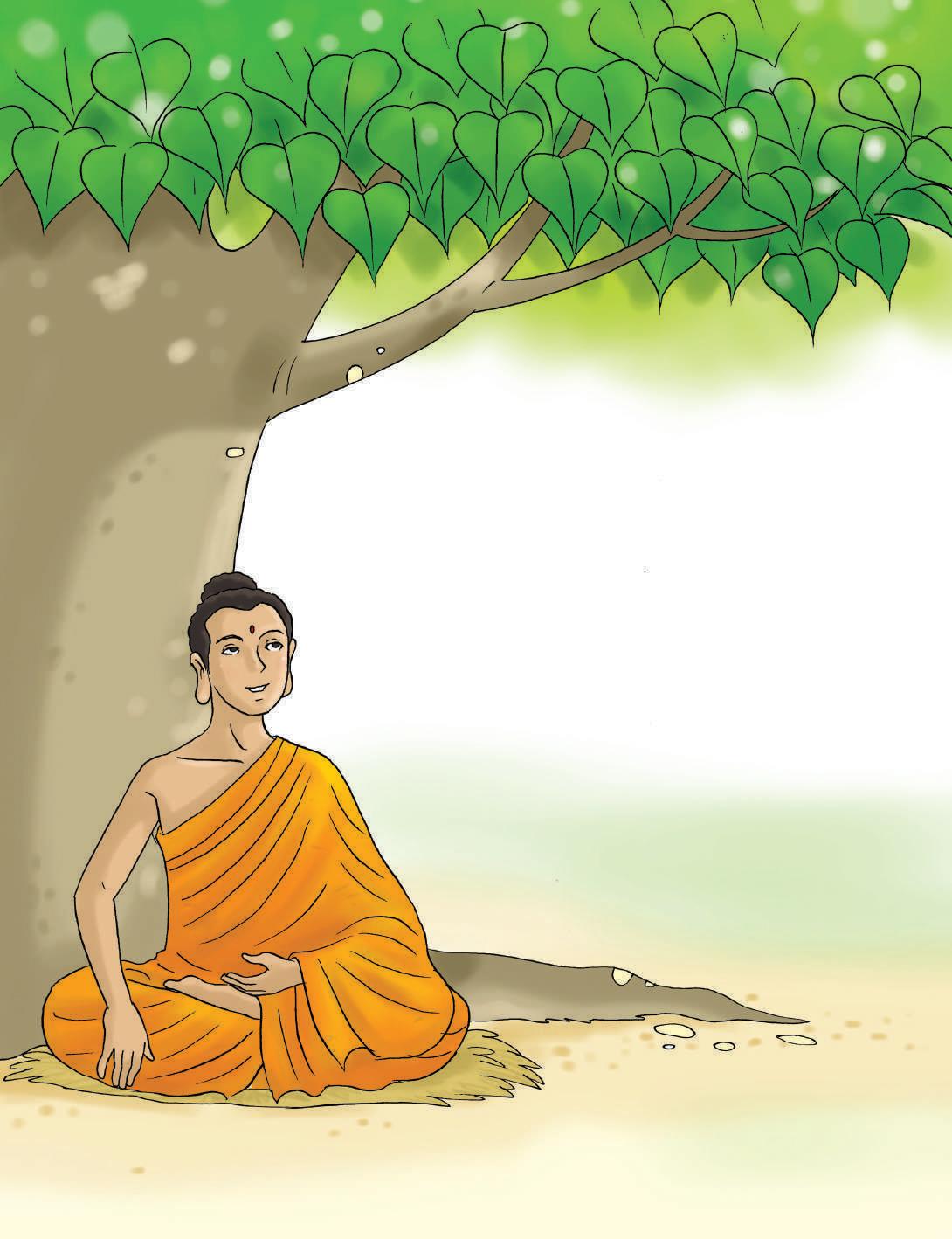
“How wondrous! All sentient beings have the tathagata’s wisdom and virtue, but they fail to realise them because of their delusions and attachments.”
— Avatamsaka Sutra
“Chronicles of the Buddha” is the English translation of the original 《佛陀传记》. This volume follows the extraordinary journey of Shakyamuni Buddha from his miraculous birth and princely youth to his renunciation of worldly life, and his awakening beneath the Bodhi tree.
Blending vivid storytelling with clear, approachable language and striking illustrations, the book brings to life not only the Buddha’s path but also the timeless wisdom of his teachings. Perfect for readers of all ages, it offers both an inspiring biography and an inviting doorway into the heart of Buddhism.