AUSTIN BUTLER WEARS




GranTurismo Trofeo fuel consumption in l/100 km: combined 10.1 – 10.0; CO2 emissions in g/km: combined 229 – 226; CO2 class: G












WATCHMAKING ONCE AGAIN FINDS BRITISH SHORES
The Limited Edition Bremont Longitude is a groundbreaking timepiece that not only looks back at our country’s legacy but also forward to an exciting future of British watchmaking. The watch’s case back incorporates brass from the original “Flamsteed Line,” in Greenwich, the very spot where the first Astronomer Royal made his celestial observations in pursuit of an aid to navigation.
It has long been the goal of Bremont to bring watch manufacturing back to Britain. The Longitude represents a milestone in that journey, a homecoming of sorts, and proof that, to get where you’re going, you need to know where you came from.


First Thoughts
The economic landscape of early 2026 reflects a maturing phase in the AI era. After the intense wave of generative and agentic AI adoption over the past two years, marked by widespread corporate experimentation, workflow augmentation, and significant automation of routine tasks, many organisations have realised meaningful efficiency gains. Routine administrative, analytical, and content-generation work has become increasingly commoditised, shifting competitive differentiation towards elements that remain distinctly human.
High-quality AI output is now widely accessible and inexpensive, functioning much like a utility. Legal summaries, financial models, marketing copy, and data analysis no longer provide a meaningful edge when every organisation can produce them at scale. The real advantage lies in the non-automatable core: nuanced judgement, ethical reasoning, empathy in high-stakes contexts, intuitive reading of complex human and market dynamics, and the ability to interrogate AI outputs when they fail to capture subtle realities.
Recent industry surveys, including McKinsey’s 2025 State of AI report, indicate that while 88 percent of organisations now use AI in at least one function, only a minority have scaled it enterprise-wide to deliver measurable EBIT impact, typically below 5 percent for most adopters. High performers, however, are extracting greater value through workflow redesign and disciplined implementation. At the same time, agentic systems are advancing rapidly. Gartner projects that 40 percent of enterprise applications will incorporate task-specific AI agents by the end of 2026, up from under 5 percent in 2025. Despite this momentum, scaling remains uneven, with many firms still operating in pilot or partial deployment phases.
In this environment, attention is shifting to what AI augments rather than replaces: the human capacity for doubt, interpretation, and value-aligned decisionmaking. The “data-driven CEO” model, which prioritised dashboards and algorithmic signals, has faced real-world tests. In 2025, quantitative hedge funds experienced several periods of underperformance, often described as “rolling thunder” rather than a single systemic shock. Summer drawdowns were linked to crowded trades and factor reversals, while October saw sharp losses for some prominent players. Renaissance Technologies’ public funds, for example, declined by approximately 14 to 15 percent that month, reflecting momentum unwinds and regime shifts driven by geopolitical and policy narratives.
These episodes highlighted the limits of purely systematic models in environments shaped by nonlinear and non-stationary forces. Markets influenced by shifting sentiment, policy intervention, or social dynamics often fall outside the predictive scope of historical data. Discretionary or hybrid approaches, combining quantitative models with human judgement, tended to navigate these dislocations with greater resilience.
This has accelerated interest in the “intuitive executive”: leaders who treat AI as a powerful research and execution tool but retain final authority
in ambiguous or high-consequence scenarios. They emphasise questioning model assumptions, understanding downstream human impacts, and making conviction-based decisions when data signals are incomplete or misleading. There is also renewed appreciation for disciplines such as philosophy, history, and psychology within executive ranks. As technical execution becomes increasingly standardised, differentiation shifts towards interpretation, context, and judgement.
The labour market is evolving accordingly. Coding and basic data skills are increasingly handled by machines, elevating demand for interrogative capabilities: crafting precise prompts, critically evaluating outputs, and managing edge cases where AI systems struggle. Tacit knowledge, including market intuition, crisis communication, and stakeholder navigation, remains difficult to codify and is best developed through experience and mentorship.
This has fuelled renewed interest in apprenticeshipstyle models, where junior professionals learn by observing and participating in real-time decisionmaking alongside experienced leaders. Some organisations are formalising this through internal “guilds” or structured on-the-job pathways designed to accelerate knowledge transfer and preserve institutional insight.
At the same time, the proliferation of synthetic content has reshaped the economics of trust. Deepfakes, AIgenerated reviews, and automated communications have eroded the signal-to-noise ratio across digital channels. In this environment, trust has become a scarce and valuable asset. Organisations that can credibly signal human provenance, whether through design, oversight, or authorship, are increasingly able to command a premium in certain segments, from advisory services to high-end consumer goods.
This “provenance premium” reflects growing fatigue with outputs that are technically flawless but lack authenticity. As content becomes indistinguishable in quality, the origin and intent behind it gain importance. Human involvement, accountability, and authenticity become differentiating factors in their own right.
In investment circles, similar dynamics are evident. Some quantitative strategies now incorporate human overlays, particularly during periods of market stress or structural change, to mitigate model drift and capture context beyond the data. While not universal, these hybrid approaches are gaining traction as funds adapt to increasingly narrative-driven volatility.
Ultimately, artificial intelligence has not diminished human value; it has clarified it. Machines excel at scale, speed, and pattern recognition across vast datasets. Humans retain primacy in defining purpose, exercising judgement, navigating ethical complexity, and recognising when models fail to capture the broader picture. As 2026 unfolds, the organisations and leaders most likely to succeed will be those that combine these strengths effectively, using AI to enhance capability while relying on human insight to deliver meaningful and resilient outcomes.
Correspondence
As the dust settles on the 56th annual gathering of the World Economic Forum (WEF) in Davos, it is time for a candid assessment of what this summit achieves for the global population. While the theme of "rebuilding trust" dominated the headlines this January, the reality remains that the WEF continues to function as a closed-circuit television for the global elite—a curated space where corporate interests are prioritised over the urgent needs of ordinary citizens.
The spectacle of private jets descending upon the Swiss Alps to discuss carbon footprints is an irony that is no longer lost on the public. This disconnect is more than just symbolic; it is structural. By design, the WEF elevates a "stakeholder capitalism" that frequently grants multinational corporations and billionaire philanthropists more influence over global policy than the democratically elected representatives of sovereign nations. For the average worker struggling with the cost of living or the erosion of public services, the pronouncements from Davos feel less like a roadmap for the future and more like a press release from a boardroom to which they are not invited.
To move from being a symbol of global inequality to a driver of genuine progress, the WEF must undergo a radical shift in its approach:
• Democratic Integration: The forum should formalise the inclusion of labour unions, grassroots activists, and representatives from the Global South, moving them from the "fringe" events to the main plenary sessions.
• Transparency and Accountability: Commitments made by corporate partners at Davos should be subject to independent, public auditing to ensure that "purpose-driven" rhetoric translates into measurable social and environmental impact.
• Decentralised Dialogue: To bridge the gap with ordinary citizens, the WEF should replace its exclusive alpine isolation with a rotating global venue, hosting public town halls in cities directly impacted by the economic policies discussed at the summit.
If the WEF is to survive as a relevant institution, it must stop talking about the world and start listening to it. Until it moves beyond the interests of the 1 percent, it will remain a gathering that reinforces, rather than repairs, the fractures in our global society.
AISHA OKAFOR (Lagos, Nigeria)
The Winter issue’s letter from Abeiku Tetteh serves as a poignant, if now uncomfortable, time capsule. Tetteh’s compliments regarding Prince Andrew’s adoption of the "Mountbatten-Windsor" double-barrelled name - and the subsequent "hope" he felt it signalled - read today with a heavy sense of irony. Unfortunately, the optimism Tetteh expressed has not merely faded; it has effectively withered on the vine. Tetteh’s original framing requires a stark update. The appropriate labelling today would likely be:
1. "Persona Non Grata": In the context of official state business and public representation, this is perhaps the most accurate, if clinical, descriptor.
2. "The Extinguished Branch": A term that acknowledges his retreat from the working core of the Royal Family.


Tetteh’s letter reminds us that in the world of the monarchy, names and titles are only as strong as the character of those who carry them.
GEORGES BRUSSON (Lyon, France)
“The ongoing post-mortems of the Epstein legacy and its associated fallout continue to provide a fascinating, if grim, masterclass in the art of the "loyalist." While much has been written about the former Duke of York’s catastrophic fall from grace, one cannot help but marvel at the sheer, unwavering tenacity of those still standing in his corner.
Indeed, should I ever have the misfortune of "falling foul" of such a global scandal, I can only pray that my own supporters are of the formidable calibre of the fragrant Lady Victoria Hervey. To possess a champion who remains so utterly steadfast - seemingly untroubled by the prevailing winds of public opinion or the weight of institutional distancing - is surely the ultimate insurance policy against social extinction.
DAVID BLAIR (Chester, UK)
I read with a mixture of amusement and mild exhaustion the reader’s letter in your Winter issue which denounced beauty pageants as "degrading spectacles." While the critic’s moral compass is clearly pointed due North, I can’t help but feel they have missed the sequined forest for the trees.
“
Perhaps it’s time to, dare I say it, lighten up?
To characterise a group of consenting adults walking across a stage in evening wear as a grave social ill feels like a bit of a stretch in a world currently grappling with actual crises. For the participants, these events are often about scholarships, confidence-building, and - let’s be honest - the simple joy of being told they look rather smashing. For the audience, it’s a bit of kitsch, a dash of glamour, and a nostalgic throwback to a simpler era of television.
It is all, in the grand scheme of things, a bit of harmless fun that hurts absolutely no one. If a bit of hairspray and a heartfelt plea for "world peace" is the worst thing currently happening on our screens, I’d say we’re doing remarkably well.
Let’s leave the heavy lifting of social deconstruction for something a bit more consequential than a rhinestone tiara.
JAMIE CHAMBERS (London, UK)
“
I read with mounting indignation the reports of the proposed $250 million "super-merger" intended to funnel capital from SpaceX into xAI. While the synergies of artificial intelligence and aerospace are often touted by the "techno-optimists," this looks less like strategic alignment and more like a sophisticated drain on the very resources meant to put boots on the red dust of Mars.
For years, we have been sold the vision of humanity as a multi-planetary species. SpaceX’s primary mission - and the reason many of us have cheered its every launch - was to provide the transport architecture for the colonisation of Mars. To see that capital now being diverted to bankroll an AI venture feels like a betrayal of the highest order. It suggests that the immediate, vanitydriven race for "Artificial General Intelligence" is being prioritised over the physical frontier of space exploration.
Every dollar siphoned away from the Starship development programme is a delay in our arrival at the Jezero Crater. As someone who has watched every test flight with a packed suitcase and a hopeful heart, I find this fiscal pivot deeply discouraging.
I, for one, can hardly wait to go. I would much rather be a pioneer on a dusty, distant planet than a passive observer of an increasingly bloated digital consciousness here on Earth. Let us keep the funding focused on the rockets, not just the algorithms.
SAMUEL MOORE (Montreal, Canada)
Editorial Team
IBM Thought Leadership
Sarah Worthington
George Kingsley
Tony Lennox
STORIES
Transparency Makes the Invisible Hand Visible Again, And Inclusive
Brendan Filipovski
John Marinus
Ellen Langford
Helen Lynn Stone
Naomi Snelling
Columnists
Otaviano Canuto
Lord Waverley
Production Director
Jackie Chapman
Distribution Manager
William Adam
Subscriptions
Maggie Arts
Commercial Director
John Mann
Director, Operations
Marten Mark
Publisher Anthony Michael
by Paolo Sironi

Paolo is the global research leader in Banking and Financial Markets at IBM, Institute of Business Value. IBV is the thought leadership centre of IBM.


Cover Story
Capital Finance International
Meridien House
69 - 71 Clarendon Road
Watford WD17 1DS
United Kingdom
T: +44 203 137 3679
F: +44 203 137 5872
E: info@cfi.co
W: www.cfi.co


> UNCDF: Derisking Digital MSME Lending in Ghana Building Investable Markets Through Technology
At sunrise in Makola Market in Accra, traders are already buying and selling goods. Many run small businesses, yet remain without access to the credit that could help them grow and scale their operations.
In Ghana, micro, small, and medium-sized enterprises (MSMEs) account for more than 90 percent of all businesses. Yet nearly 70 percent do not survive beyond their first five years. This is not for lack of effort or enterprise, but due to financial constraints, stringent lending criteria, and limited access to appropriate financial services.
The digitalisation of financial services is expanding access to bank accounts and facilitating digital payments across the country. However, access to an account is not the same as access to capital. Most MSMEs continue to operate without the financial records that lenders rely on to assess creditworthiness. There are no formal ledgers, no credit histories, and no reliable data trails that a loan officer can use to evaluate risk.
As a result, financial institutions often apply high interest rates, adopt cautious lending practices, or avoid MSME lending altogether. The outcome is a persistent financing gap that continues to limit the growth and sustainability of early-stage enterprises across Ghana.
At the United Nations Capital Development Fund (UNCDF), there is recognition that breaking this cycle requires new approaches to credit risk assessment, alongside stronger partnerships between financial institutions and fintech companies capable of transforming digital business data into reliable inputs for lending decisions.
MERGING TECHNOLOGY WITH LOCAL LENDING PRESENCE
In response, UNCDF, with funding from the United Nations Joint SDG Fund, launched the Joint Programme on Leveraging Digital Ecosystems for Increased MSME Productivity in 2024. The programme supports financial institutions and fintech companies in digitising MSME lending and expanding access to finance for underserved enterprises in Ghana.
Co-implemented with the United Nations Conference on Trade and Development (UNCTAD) and the United Nations Development Programme (UNDP), the programme will run until 2027.


Over four years, UNCDF is providing $600,000 in investment grants and technical assistance to five financial institutions and fintech companies: Adehyeman Savings and Loans Ltd, Fido, MoMo,
Opportunity Ghana, and Solis Finance. The objective is to test whether digital lending models, using online data, can enable financial institutions to lend to MSMEs more efficiently and at scale.
A small business owner in Darkuman registering on Adehyeman’s platform powered by Oze's technology, with support from a loan officer.
Photo:MioYuki,UNCDF


Through catalytic concessional capital and technical support, UNCDF expects these five institutions to mobilise $14.2m in additional market finance from both private and public sources, targeting a leverage ratio of 4:1.
One example is Adehyeman, a financial institution serving informal-sector clients, which has partnered with Oze, a fintech startup specialising in digital lending systems, to test and refine a new lending model under real market conditions.
Through this collaboration, Adehyeman is digitising loan creation and credit assessment using Oze’s Lending Management System. The platform replaces manual, paper-based workflows with a structured digital process and incorporates non-traditional data, including MSMEs’ mobile money transaction patterns, to assess credit risk. Loan officers then review and apply these assessments as part of their decision-making process.
Adehyeman contributes deep local market knowledge, trusted MSME relationships, and the regulatory mandate to lend. Oze provides the digital infrastructure that enables licensed financial institutions to digitise loan applications and assess credit risk, while continuing to originate and deliver credit through established, regulated channels.
SEQUENCING DIGITISATION FOR MARKET ADOPTION
Making digitisation effective in practice requires careful sequencing. Adehyeman and Oze have adopted a phased implementation approach, reflecting the realities of community-based lending models that depend on trust, digital literacy, and close client relationships.
Early user research, supported by UNCDF, informed two key design decisions. First, although the initial plan envisaged deploying Oze’s full business management application, it became clear that many users were not yet ready to adopt a multi-functional digital tool. The
partners therefore introduced a simplified digital loan application, enabling gradual adoption while aligning with existing business practices.
Second, while the original scope included both individual and group lending, early testing showed that group lending is more complex to digitise. It relies heavily on social relationships, trust mechanisms, and informal coordination among borrowers. The partners therefore prioritised individual lending, allowing them to test the technology, learn from live operations, and build confidence before extending digital tools to more complex group-based products.
WHEN DIGITAL TOOLS COMPLEMENT HUMAN JUDGMENT
The partnership has now progressed from design to live testing. Under a two-year rollout plan from 2026 to 2027, Adehyeman plans to provide GHS 30m (approximately $2.3m) in loans to around 1,500 MSMEs through Oze’s digital lending platform.
By combining trusted local relationships with digital credit assessment, the model enables lending at a scale that was previously unattainable, expanding access to formal finance for small businesses that have long operated beyond the reach of traditional systems.
Early outcomes suggest that digital tools are most effective when they complement, rather than replace, human judgment. Local knowledge and trusted relationships remain central to lending decisions, while technology reduces administrative burdens and improves consistency.
By reducing early-stage risk and supporting coordination during live testing, UNCDF’s catalytic role has enabled partners to move from concept to proof of viability. The result is a digital lending model that shows strong potential to be both replicable and scalable across informal MSME markets, while preserving the relationshipbased foundations that underpin community lending systems. i
ABOUT UNCDF
United Nations Capital Development Fund (UNCDF) mobilises and catalyses an increase in capital flows for impactful investments in high-risk markets, especially in Least Developed Countries, Small Island Developing States and countries in special situations. By crowding in capital through the deployment of risk-absorbing financial instruments, mechanisms and structuring advisory, UNCDF contributes to job creation and sustained economic growth in more than 70 countries.
In partnership with UN entities and development partners, UNCDF operates with speed and agility to deliver scalable, blended finance solutions to drive systemic change and pave the way for commercial finance and scale up by development finance institutions and multilateral development banks.
UNCDF personel reviewing a digital loan product with a small business owner in Darkuman (center), actively gathering feedback on his user experience. PhotoMioYuki,UNCDF
A regular group meeting where the loan officer conducts the weekly loan repayment collection. PhotoKelvinColman&KwabenaOpoku
> Paolo Sironi: Navigating Instant, Programmable Finance in the Tokenised Economy
Tokenisation represents a fundamental market shift, rapidly reshaping how value moves, assets are owned, and financial institutions create and capture performance. At its core, tokenisation converts ownership rights in financial, monetary, or physical assets into digital tokens on distributed ledgers, enabling near-instant, borderless transfers at a fraction of traditional costs.
Beyond payments and lending, it delivers greater transparency and lower-cost access to investment opportunities, much as digital platforms transformed retail banking. The integration of tokenised money, deposits, and real-world assets—from real estate and art to commodities—is opening new revenue streams in digital custody, advisory services, and compliance. Its impact extends beyond banking: corporations can tokenise assets to streamline collateral management and raise capital against tokenised collateral, bridging cash-flow gaps without paperwork or forced asset sales.
According to the IBM Institute for Business Value (IBM IBV) report 2026GlobalOutlook—Banking in the Tokenised Economy, five key factors are driving this transformation:
• Regulation is advancing quickly, with frameworks such as the US GENIUS Act and central bank initiatives including China’s e-CNY and the Digital Euro.
• Blockchain technology has matured into a reliable, low-cost, and increasingly energyefficient infrastructure for global value transfer.
• Real-world asset tokenisation is fuelling demand-led growth in stablecoins, creating a self-reinforcing cycle.
• Pilots have evolved into live use cases across custody, settlement, and agentic AI.
• Fragmentation remains the primary obstacle, though international efforts to align definitions, taxation, and ownership rules are gaining traction.
MOMENTUM AND MARKET REALITIES
The tokenised economy is gaining tangible traction. While real-world assets are being tokenised at pace, stablecoins and central bank digital currencies (CBDCs) have already entered practical use, each following a distinct trajectory.
Stablecoins function as an emerging form of private money, closely tied to the efficient exchange of digital assets. Their adoption is
"The core value proposition of tokenisation is efficiency: reducing silos, lowering transaction costs, and enabling fractional ownership through distributed ledgers and smart contracts."
voluntary and strategic, driven by institutions seeking innovation and new revenue streams aligned with their risk appetite. By contrast, CBDCs are shaped by central bank policy, aimed at strengthening payment sovereignty and advancing financial inclusion. Their adoption often requires institutions to integrate into new infrastructures regardless of immediate commercial return.
Stablecoin transactions now account for roughly 7 percent of total cryptocurrency market capitalisation, with 97 percent pegged to the US dollar. USDT and USDC dominate, representing around 90 percent of activity, largely concentrated in Asia-Pacific and North America. Relative to GDP, the Middle East and Africa stand out as high-growth regions.
Among 500 global executives surveyed, 26 percent now view tokenisation as central to their strategy. Yet only 9 percent of financial institutions are currently operational or ready to launch initiatives in 2026.
THE PROMISE—AND THE TRADE-OFFS—OF EFFICIENCY
The core value proposition of tokenisation is efficiency: reducing silos, lowering transaction costs, and enabling fractional ownership through distributed ledgers and smart contracts. Nearly three-quarters (71 percent) of executives identify enhanced market efficiency and new forms of coordination as its most significant impact.
However, efficiency introduces trade-offs. While 55 percent expect tokenised systems to coexist with traditional infrastructure, concerns remain around revenue cannibalisation and margin compression. Only 18 percent fear full disintermediation, but 32 percent anticipate meaningful deposit migration toward yieldbearing stablecoins.
Talent constraints add further complexity. Around 71 percent of executives report skills gaps, with 14 percent describing them as severely limiting.
ELEVATING CUSTODY AND AGENTIC AI
Custody is rapidly evolving from a support function into a strategic platform. Some 61 percent of executives plan major investments in custody solutions. Modern custody extends beyond asset safekeeping to include secure management of cryptographic keys, programmable smart contracts, and continuous settlement capabilities, alongside protection against cyber threats.
This shift builds client trust, creates revenue opportunities through on-chain collateral services, and strengthens competitive positioning against crypto-native firms.
Agentic AI is also set to scale alongside tokenisation. Around 57 percent of executives believe tokenised settlement rails will significantly enhance autonomous workflows. At the same time, hybrid cloud infrastructure is becoming essential, with 77 percent citing investment in modern computing platforms as critical for handling increased data volumes.
THREE PLAUSIBLE SCENARIOS FOR 2030
The IBM IBV study outlines three potential futures for the tokenised economy:
• CBDCs dominate retail payments
One-third of executives consider it highly likely that CBDCs will replace traditional card networks. This would increase government oversight of monetary flows and enable more efficient public disbursements, particularly in emerging markets. For banks, however, it poses a direct threat to revenue from payments, deposits, and customer relationships.
• Stablecoins disrupt wholesale payments
Around 16 percent of executives believe stablecoins could fully replace legacy wholesale rails. These privately issued, asset-backed currencies offer programmability and efficiency for cross-border transactions. Banks may respond by issuing tokenised deposits and providing custody and interoperability services, though competition from corporate-issued stablecoins remains a significant risk.
• Tokenised securities reshape capital markets
Some 18 percent of executives expect tokenised securities to overtake traditional market infrastructure. Blockchain could manage issuance, trading, and settlement in near
Paolo is the global research leader in Banking and Financial Markets at IBM, Institute of Business Value. IBV is the thought leadership centre of IBM. by Paolo Sironi

"Institutions that act decisively in 2026 and 2027— investing in hybrid cloud infrastructure, governance frameworks, talent, and new value streams—will be best positioned to capture emerging opportunities."
real time, with automated compliance and broader access through fractional ownership. However, risks include margin compression for intermediaries and growing exposure to cyber threats, including those linked to quantum computing.
WHAT BANKS MUST DO
Across all scenarios, success depends on building token-ready core systems, forging strong ecosystem partnerships, and developing robust custody capabilities. Institutions that act decisively in 2026 and 2027—investing in hybrid cloud infrastructure, governance frameworks, talent, and new value streams— will be best positioned to capture emerging opportunities.
Digital assets, stablecoins, and CBDCs are likely to become standard components of the financial
system by 2030. Institutions that delay risk being overtaken by fintech competitors and corporate players shifting capital toward tokennative platforms.
The tokenised economy is no longer theoretical. The question for financial institutions is not whether to participate, but how quickly they can adapt and lead. i
Readthefullreport:ibm.biz/2026-gobfm
ABOUT THE AUTHOR
Paolo Sironi is the global research leader in banking at IBM, the Institute for Business Value, and he is author of business literature. His latest Banks and Fintech on Platform Economies has been Amazon bestseller in banking books worldwide.

Author: Paolo Sironi
Otaviano Canuto:
The Multiple Frontlines of the US–China Technological Rivalry
The United States continues to lead in most foundational advanced technologies, while China has established dominance in practical implementation at scale. As Beijing reduces its reliance on external technological frontiers and secures key positions across critical supply chains, the global South is increasingly becoming a frontline in this intensifying technological rivalry.
CLIMBING THE LADDER
China remains one of the most successful examples of a country ascending the global income ladder during the era of globalisation. This transformation was not accidental. It combined access to foreign technology with sustained domestic investment in local capabilities, allowing Chinese firms to move steadily up global value chains.
By 2019, when the first Trump administration imposed restrictions on Huawei, ZTE, and their affiliates, it became clear that a prolonged technological confrontation was underway. The implicit message was unmistakable: China could continue its ascent, but increasingly on its own terms and without unfettered access to Western technological ecosystems.
Since then, China has accelerated efforts to build indigenous capabilities across strategic sectors, including semiconductors, clean energy, and critical mineral processing. While US export controls have slowed China’s progress at the frontier, they have not halted it. In some cases, they have reinforced domestic innovation efforts and accelerated substitution strategies.
At the same time, mutual dependencies remain. The United States continues to rely on China for refined rare earths and critical minerals, while China still seeks access to advanced semiconductor technologies. This interdependence has periodically tempered escalation, but it has not altered the underlying trajectory of competition.
TECHNOLOGY AS STRATEGIC CORE
Technology is no longer simply a driver of productivity. It has become the central axis of geopolitical competition, shaping military capability, economic influence, data governance, and global standards.
The rivalry now unfolds across multiple dimensions: innovation, application,
"American leadership remains evident in semiconductor design, advanced manufacturing equipment, cloud computing, and cuttingedge AI models."
infrastructure deployment, and technological self-sufficiency. While the United States retains an edge in frontier innovation, China has gained ground through scale, coordination, and rapid deployment.
American leadership remains evident in semiconductor design, advanced manufacturing equipment, cloud computing, and cutting-edge AI models. This advantage is reinforced by deep capital markets and a network of leading research institutions that continue to attract global talent.
However, domestic constraints are increasingly visible. Labour shortages in advanced manufacturing, high infrastructure costs, regulatory complexity, and grid fragmentation all slow deployment.
China, by contrast, has excelled in execution. Its capacity to scale technologies rapidly is evident in manufacturing automation, AI deployment in physical systems, and large-scale infrastructure build-out. The country’s strength lies not only in innovation, but in the ability to embed technology into everyday economic activity.
SEMICONDUCTORS AND ARTIFICIAL INTELLIGENCE
Semiconductors and AI remain the primary battlegrounds. The global semiconductor ecosystem is not a single supply chain but a complex network spanning multiple regions. Critical bottlenecks persist in areas such as advanced lithography and high-end fabrication.
The United States and its allies maintain an advantage in these high-value segments. China continues to face technical constraints in replicating cutting-edge manufacturing capabilities. However, its progress in lower-value segments, including assembly and packaging, has been substantial.
In artificial intelligence, the competition is evolving. Leadership is no longer determined

ReadtheonlineversionthatincludesgraphsatCFI.co
solely by model sophistication, but by adoption and integration. China’s strategy of promoting low-cost and open models has enabled rapid deployment across industries, even where hardware constraints persist. By contrast, US firms have largely retained proprietary control over their most advanced systems.
THE APPLICATION LAYER
As AI moves beyond software into the physical world, the competitive focus is shifting. The question is no longer which country produces the most advanced models, but which can embed them most effectively into real-world systems.
China’s advantage in industrial robotics, electric vehicles, drones, and consumer electronics illustrates this shift. These sectors form interconnected ecosystems, where advances in one domain reinforce progress in others. The result is a self-reinforcing cycle of innovation, deployment, and scale.
The United States retains strengths in foundational research and software, but China’s integrated approach to industrial ecosystems is proving highly effective in translating innovation into economic output.
CLEAN ENERGY AND INDUSTRIAL SCALE
In clean energy, the balance tilts decisively towards China. While the United States remains strong in early-stage innovation, including carbon capture and advanced geothermal technologies, China dominates the large-scale deployment of solar, batteries, and electric vehicles.
This advantage is the result of sustained investment, industrial policy, and domestic demand. Chinese firms now play a central role across the clean energy value chain, from production to export.
Attempts to rebalance this position through tariffs and industrial policy have had limited impact. The United States continues to depend on supply chains in which Chinese firms remain deeply embedded, particularly through manufacturing bases in Southeast Asia.
CRITICAL MINERALS AND SUPPLY CHAINS
Control over critical minerals and rare earth elements represents another strategic frontier. China dominates refining and processing, giving it leverage over industries ranging from defence to clean energy.

Although raw material extraction is geographically dispersed, China has secured a commanding position in processing capacity. Through overseas investments and supply agreements, it has built an extensive global network to feed its domestic industries.
For the United States, this represents a structural vulnerability. Efforts to diversify supply chains and strengthen domestic capabilities are underway, but progress is gradual. Rare earths are likely to remain a persistent source of geopolitical friction.
ENERGY, INFRASTRUCTURE, AND AI SCALE
The expansion of artificial intelligence is placing unprecedented demands on energy systems. Data centres require vast amounts of electricity, and demand is expected to rise sharply over the coming decade.
China’s coordinated investment in power generation, particularly in renewables and nuclear energy, provides a structural advantage. By contrast, the fragmented nature of the US energy grid and slower infrastructure development could constrain expansion.
Energy availability is becoming a decisive factor in technological competition. In the AI era, computing power is inseparable from energy capacity.
DIVERGING POLICY MODELS
The United States and China are pursuing distinct approaches to industrial policy. The US model is hybrid, combining market incentives
with targeted interventions such as the CHIPS Act and strategic subsidies. Innovation remains largely private-sector driven, with government policy focused on de-risking investment.
China’s model is more coordinated. Long-term planning, state-backed investment funds, and directed industrial strategies allow for rapid mobilisation of resources. While this can lead to inefficiencies and overcapacity, it has proven effective in scaling strategic industries.
THE GLOBAL SOUTH AS A BATTLEGROUND
The rivalry extends beyond the two powers. Emerging markets are becoming arenas of competition, particularly in digital infrastructure and energy.
China has actively pursued the digitalisation of developing economies, offering integrated solutions that combine infrastructure, services, and data systems. This approach positions it to shape digital ecosystems across large parts of the world.
At the same time, regions such as the Middle East are emerging as critical nodes, combining energy resources with growing demand for data infrastructure. Both Washington and Beijing are competing for influence in these markets.
For countries in the global South, this creates both opportunity and risk. Strategic positioning in energy, infrastructure, and supply chains could attract investment, but may also entangle them in broader geopolitical competition.
A DUAL PATH FORWARD
The technological rivalry between the United States and China is defined by two distinct models. The United States continues to lead in frontier innovation and proprietary ecosystems. China, meanwhile, has focused on integration, scale, and global dissemination.
The outcome will not be determined by a single breakthrough, but by the ability to align innovation, infrastructure, and execution. As the competition intensifies, the frontlines will continue to expand beyond laboratories and into supply chains, energy systems, and emerging markets.
The contest is no longer about who invents the future, but who builds and deploys it at scale. i
ABOUT THE AUTHOR
Otaviano Canuto, based in Washington, D.C., is a former vice president and a former executive director at the World Bank, a former executive director at the International Monetary Fund, and a former vice president at the Inter-American Development Bank. He is also a former deputy minister for international affairs at Brazil’s Ministry of Finance and a former professor of economics at the University of São Paulo and the University of Campinas, Brazil. Currently, he is a senior fellow at the Policy Center for the New South, a professorial lecturer of international affairs at the Elliott School of International Affairs - George Washington University, a nonresident senior fellow at Brookings Institution, a professor affiliate at UM6P, and principal at Center for Macroeconomics and Development.

Mohamed A El-Erian:
How to Future-Proof the Global Economy
An uncomfortable reality is becoming increasingly difficult to ignore. The global economy is in a period of “more frequent and violent shocks,” as Nobel laureate Michael Spence puts it. Instead of facing isolated and temporary disruptions, we are confronting a structural shift toward unsettling volatility, deepening fragmentation, and a wider dispersion of outcomes for countries, companies, and households. The old world is
gone, and virtually everyone risks losing out in the new one. The question is by how much and what to do about it.
The Iran war, which spread across the Middle East, exemplifies this new reality. Even though the local, regional, and global damage has been going from bad to worse, introducing a durable circuit breaker has proved difficult. As such, the economic damage is evolving and deepening,

with early effects on energy prices and interest rates fueling broader inflation and raising the risk of lower growth and financial instability.
This phenomenon is not new. A circuit breaker has proven equally elusive for the Ukraine war, and we have seen the same dynamics in narrower economic and finance spheres, from the weaponisation of tariffs and investment sanctions to supply-chain fragmentation. It is

tempting to treat each of these as standalone episodes—and many policymakers and investors are doing just that. This is a mistake.
Rather than constituting isolated events, the current instability is the predictable result of the loss of three previously dominant narratives with no unifying ones to replace them. The first is globalisation. Gone are the days when ever-deeper economic integration
was seen to act as a stabilising force. The promise that interdependency would reduce the risk of conflict has been replaced by the weaponisation of trade and finance, and the exploitation of chokepoints. Because the world failed to address globalisation’s adverse distributional effects early on, the essential trifecta of respected global standards, effective multilateral institutions, and the rule of law is now being dismantled in favor of unilateralism, fragmentation, and impunity.
The second narrative anchor is the Washington Consensus. The belief that liberalisation, deregulation, fiscal responsibility, and centralbank independence hold the key to prosperity at the country level has been dying a slow death in recent years. Ironically, the United States has led the way in upending this approach domestically, despite having spent three decades championing it for the rest of the world.
Then there is AI, which is poised to change the assumptions that have long underpinned business models and labor markets. While AI has immense transformative potential as a general-purpose technology—not least for productivity—new frameworks are badly needed to guide adoption. Otherwise, the disruptions risk outpacing societies’ ability to adapt.
The loss of these three anchors has given rise to a culture of distrust, zero-sum thinking, and short-sighted decision-making, which destroys the old without ready replacements on hand. As suspicion displaces engagement, the quest for expensive self-reliance displaces pooled insurance, and durable coordination becomes impossible. The global orchestra is playing from different sheet music, with no conductor in sight. The result is as disruptive as it is cacophonous.
Disorderly fragmentation will lead to lower growth, higher inflation, and greater inequality. But all is not lost: the trajectory of this new world can still be shifted in a more positive direction, if we have the courage and wisdom to abandon outdated mindsets and build a new five-part consensus.
First, it is time to move past the “globalisation versus protectionism” binary. Governments should instead consider what former British Prime Minister Gordon Brown calls “managed globalisation lite”—a pragmatic approach to friendshoring and de-risking that secures critical supply chains and chokepoints, without descending into counter-productive trade wars and other beggar-thy-neighbor policies.
Second, sustainable and inclusive growth must return to the top of national agendas. This does not mean throwing money at the demand side of the economy through yet more fiscal and monetary stimulus. Nor does it mean stealing
growth from other economies—or from the future. Rather, it means focusing on productivity gains, infrastructure improvements, and secular transitions in energy and beyond.
Third, the most vulnerable households need support. As it stands, too many countries’ safety nets lack effectiveness or inadvertently push vulnerable groups to become wards of the state— undermining labor-force participation in the process—rather than providing the protections and opportunities necessary to deliver security and empowerment.
Fourth, the trajectory of AI cannot be left to the invisible hand of the market. Policies governing this transformative innovation must tilt the scales toward labor enhancement over displacement (augmentation over automation). This means using tax systems to adjust incentives, and pursuing early-win investments in social sectors like health and education, where AI can bridge service-delivery gaps. It also means providing guidance to companies that encourage projob and pro-productivity restructuring and reinvention, not just immediate cost savings through labor displacement. And it means retooling public-private partnerships to ensure that the workforce remains agile and adequately skilled, and offering transition support for the most vulnerable segments of the population.
Finally, to safeguard international institutions, they must be reformed. The United Nations, the International Monetary Fund, and the World Bank remain constrained by outdated structures and governance systems. Without a more representative and responsive multilateral system, outcomes that were once unthinkable will become increasingly likely, jeopardising our future well-being.
The problems we face today will not fix themselves. Without vision and concerted effort, our human, financial, and institutional resilience will continue to erode, leaving us increasingly vulnerable to frequent and violent shocks. We must stop yearning for the world of yesterday, and instead adapt to the world of today and create the anchors and momentum we will need to thrive in the world of tomorrow. i
ABOUT THE AUTHOR
Mohamed A El-Erian, a former president of Queens’ College at the University of Cambridge, is Practice Professor at the Wharton School at the University of Pennsylvania, where he is also Senior Global Fellow at the Lauder Institute. He is Chief Economic Adviser at Allianz, Chair of Gramercy Funds, the author of The Only Game in Town: Central Banks, Instability, and Avoiding theNextCollapse (Random House, 2016) and a co-author (with Gordon Brown, Michael Spence, and Reid Lidow) of Permacrisis: A Plan to Fix a Fractured World (Simon & Schuster, 2023).

Joseph E Stiglitz:
Trump’s Tragedy of Errors
It is true, as Alexander Pope once said, that to err is human. But while everyone is fallible, some humans are more prone to error than others. That is a justification for democracy—for subjecting decisions that affect large numbers of people to deliberative processes that include checks and balances. The history of authoritarian and absolutist
political rule is rife with figures whose mistakes proved calamitous not just for themselves but for the societies they ruled.
No decision is more important than waging war against another country. Yet the United States has done exactly that without even a nod to its own system of checks and balances and

reasoned deliberation. Like the kings of old, America’s mendacious, impulsive president, Donald Trump, remains unchecked by the legislature and surrounded by sycophants who will tell him only what he wants to hear. The disastrous result is now clear: America is once again embroiled in a Middle East war that has already cost thousands of lives—mostly

"No decision is more important than waging war against another country."
civilians—and in which it has almost certainly committed multiple war crimes.
No one knows how long the war with Iran will last, how many more war crimes will be committed, or how many more innocents will be killed. But Americans are apparently so inured to Trump’s violations of human rights and the rule of law and so overwhelmed by the constant flood of breaking news that they have barely mustered any protest. Even at our universities, usually hubs of protest and dissent, fear reigns. As under all repressive regimes, the threat of economic consequences or worse—losing one’s visa or facing expulsion from the country or a criminal investigation—is achieving its intended effect.
As an economist, I am frequently asked what Trump’s war of choice against Iran will mean for the US and global economies. The short answer is that the longer it lasts, the greater the damage will be. But even if the war ends quickly, the effects will linger. After all, critical supply chains have already been disrupted, and oil and gas production facilities destroyed. Most estimates suggest that repairs will take years.
Moreover, it is not just oil and gas supplies that have been endangered. Unlike the oil embargoes of the 1970s, the fertilizer production on which global food systems depend has been jeopardised as well. This crisis also comes fast on the heels of other major global economic disruptions—from the COVID-19 pandemic and Russia’s invasion of Ukraine to Trump’s global tariff war and destruction of the rules-based system of international trade—all of which have contributed to rising inflation and a widening affordability crisis.
Before Trump returned to the White House, inflation was on a downward trend, though still well above central bankers’ beloved 2% target. But the tariffs markedly slowed this trend, and inflation has taken off globally once again. With many countries, including America, already facing an affordability crisis that US policies have made worse, the risk now is that central bankers everywhere will either raise interest rates or at least slow the pace at which they were lowering them.
That, in turn, will exacerbate the affordability crisis—because buying a house or paying down a credit card will become more difficult—and slow a US economy already shaken by the trauma of Trump’s erratic trade, immigration, and fiscal policies. Were it not for the unbridled spending on AI data centers—supporting some one-third of US growth—the US economy would be truly anemic. And with Trump’s regressive tax cuts for billionaires and corporations now in force, the
US has less fiscal space to buffer the disruptions he has caused and those that AI may bring— from job dislocations to the collapse of the tech bubble.
Trump’s claim that the US will benefit as a net oil exporter is nonsense. Yes, Exxon will benefit, but US consumers pay prices that are set globally— and that have risen substantially. Under such conditions, the US obviously should impose a windfall-profits tax. But that will not happen under an administration so thoroughly captured by the fossil-fuel industry.
America’s erstwhile allies in Europe are also being battered by the Trump-induced increase in energy prices and supply shortages. If European policymakers tie electricity prices to gas prices (as they did early in the Ukraine war), they could make matters even worse. But if Europe adopts a strategy to restore its sovereignty by reducing its dependencies on US technology and defense, it could strengthen its position now and over the long term.
Regardless of how long the war and the current stagflationary conditions last, the long-run consequences of this episode will be profound. One hopes the world will recognise that the “variability” of sun and wind power is far more manageable than continued dependence on fossil fuels, which are subject to the whims of erratic authoritarian figures like Trump and Russian President Vladimir Putin. If Trump’s war accelerates the green transition globally, it will have a significant silver lining.
In any case, yet another nail has been added to the coffin of the peaceful, borderless world that our forebearers sought to build after World War II. Under Trump, the country that laid the foundations of that world is now dismantling it. Between the new cold war with China and the apparent lack of resilience in global supply chains, there is little cause for optimism. And with democracy in the US in such a weakened state, the human errors and their consequences are piling up fast. i
ABOUT THE AUTHOR
Joseph E Stiglitz, a Nobel laureate in economics and University Professor at Columbia University, is a former chief economist of the World Bank (1997-2000), former chair of the US President’s Council of Economic Advisers, former co-chair of the High-Level Commission on Carbon Prices, and lead author of the 1995 IPCC Climate Assessment. He is Co-Chair of the Independent Commission for the Reform of International Corporate Taxation and the author, most recently, of The Road to Freedom: Economics and the Good Society (W. W. Norton & Company, Allen Lane, 2024).
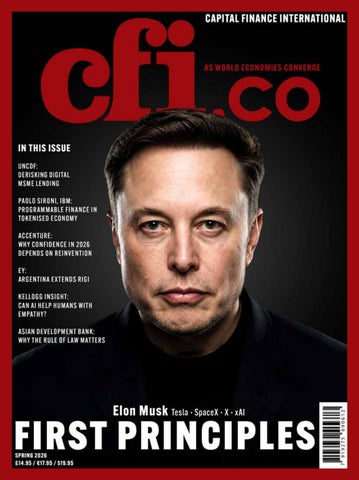
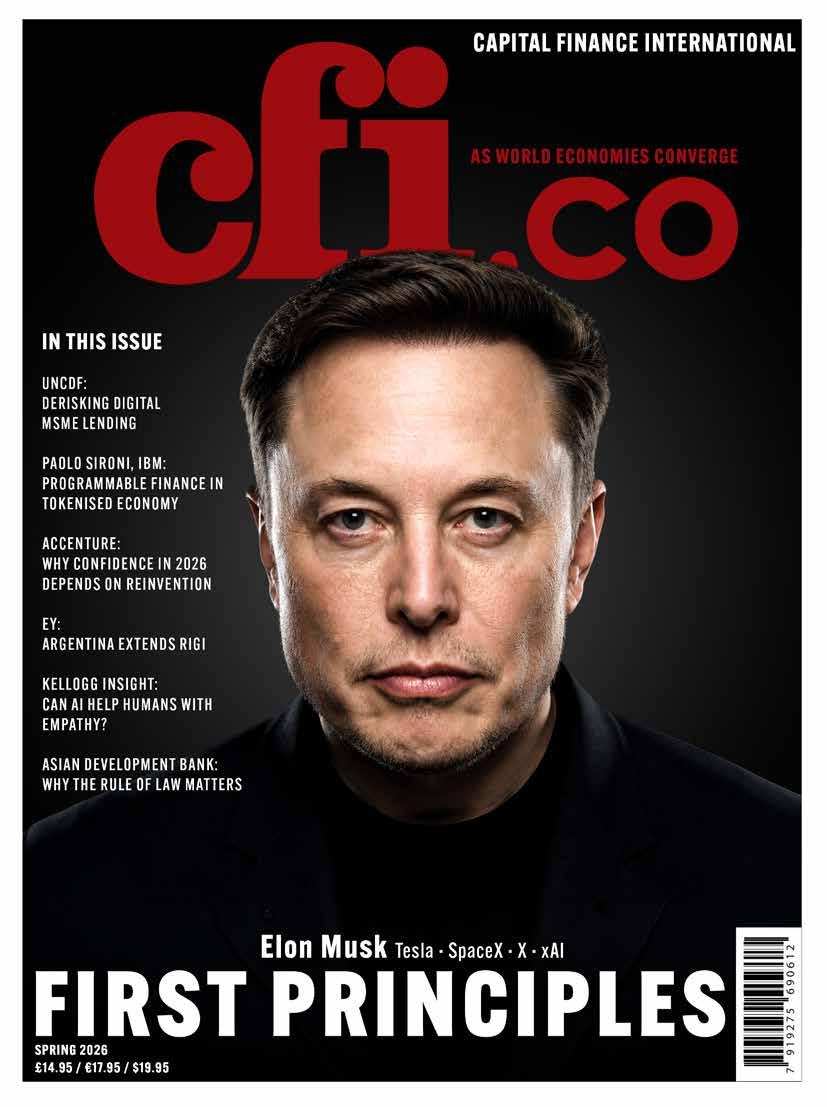
FIRST PRINCIPLES BEYOND ENGINEERING ELON MUSK:
Why 2026 may be the moment to prioritise first-principles thinking.
Recent advances in AI are rapidly compressing the timeline between technical possibility and system-level change. What once appeared to be a long-horizon transition now looks increasingly likely to unfold within the tenure of today’s decision-makers. This does not make 2026 the year in which every outcome arrives, but it may prove to be the year in which the old timetable ceases to look credible. The delivery of change into real institutions is accelerating. In CFI.co’s view, that makes this a critical moment to prioritise first-principles thinking.
Elon Musk did not invent first-principles reasoning, but he helped make it commercially legible. The deeper lesson from his most visible successes is not one of hero worship. It is that when teams stop treating inherited constraints as permanent and instead rebuild a problem from physics, cost curves, incentives, and execution realities, entire industries can shift and timelines can compress.
CFI.co’s contention is that this discipline deserves wider application well beyond launch systems, electric vehicles, and advanced manufacturing. Public policy, sovereign finance, trade settlement, labour markets, enterprise architecture, construction, and water systems are still frequently debated within frameworks designed for an earlier era. Incremental reform remains important. However, there are moments when incrementalism begins to resemble intellectual underinvestment rather than prudence.
This article is therefore framed as a set of thought experiments. They are not turnkey policy prescriptions, nor deterministic forecasts. Their purpose is simpler and, in some ways, more demanding: to ask whether critical systems still reflect today’s physical, technological, and economic realities, or whether they are being preserved largely because of institutional inertia and a bias towards the familiar.
Why 2026 matters is straightforward. AI is not the sole driver of change in every sector, but it is compressing the interval between invention, adoption, and institutional consequence. That compression is exposing which assumptions remain valid and which are simply habits with legal status.
SEVEN THOUGHT EXPERIMENTS WORTH EXPANDING
1. Global energy grids and power distribution First-principles question: If the earth receives vast renewable energy flows every day, should the strategic challenge still be framed primarily as fuel extraction, or increasingly as system orchestration?
The reality of the renewable cost curve is difficult to ignore, yet many policymakers still treat fuel extraction as the default. Renewable generation costs have fallen sharply, AI is raising the stakes for reliable electricity supply, and grid connection delays have become a visible constraint. The International Energy Agency’s 2025 Energy and AI report makes the point directly: there is no AI without energy. At the same time, PJM’s 2025 interconnection reforms highlight how central the queue problem has become in major power markets.
A first-principles lens suggests the value in energy is shifting. If generation costs fall faster than the costs of connection, storage, balancing, and transmission, then the enabling layer becomes the strategic core. Advanced inverters, storage systems, power electronics, demand response, software, and transmission infrastructure begin to matter more than legacy commodity logic implies.
The counterargument is valid. Cheap generation does not eliminate permitting constraints, local opposition, mineral dependencies, or resilience risks. The answer is not to defend the twentiethcentury model, but to recognise that the bottleneck has moved. In 2026, the question is less whether power can be generated and more whether institutions can integrate and govern it efficiently.
2. Sovereign debt and national financing
First-principles question: Why do variable-output economies continue to rely predominantly on instruments that assume stable and predictable repayment paths?
In 2026, this is no longer theoretical. Volatility has returned as a defining condition. Growth paths are uneven, refinancing conditions shift quickly, and AI introduces further uncertainty across labour markets, productivity, and tax bases. The mismatch between volatile national income and rigid sovereign liabilities is becoming harder to ignore.
State-contingent instruments such as GDPlinked bonds have long been discussed, with precedents in Argentina and Greece. These examples demonstrate both the potential and the complexity. A more adaptive debt structure could distribute shocks more effectively across time rather than forcing them directly into fiscal policy and social stability.
Markets, however, remain cautious. Concerns around transparency, liquidity, and political credibility persist. This reinforces the idea that the issue is one of design rather than ideology. Fixedcoupon debt will not disappear, but 2026 is an appropriate moment to question whether a more shock-prone world can continue to rely almost entirely on rigid structures.
3. International trade settlement and liquidity
First-principles question: If value can be represented and transferred digitally, how much friction in cross-border settlement remains necessary, and how much is historical residue?
Regulated digital settlement has moved beyond theoretical discussion. Work by the Federal Reserve, developments in stablecoins, and BISled initiatives such as Project Agora indicate that tokenised deposits and programmable settlement are now part of mainstream financial design.
This does not eliminate the role of banks, regulators, or legal intermediaries. It does suggest that settlement delays, reconciliation costs, and FX friction can be redesigned rather than simply accepted. The key investment question is not whether finance will be disrupted, but which infrastructure becomes indispensable when speed, compliance, transparency, and programmability must coexist.
The opportunity is likely to sit in the enabling layer: compliance systems, treasury automation, liquidity management, and regulated digital rails that address real operational challenges.
4. Human capital mobility and labour allocation
First-principles question: What if global productivity could be increased by reducing matching friction between skills and demand rather than treating labour markets as geographically fixed?

Demographic divergence is intensifying. Ageing economies face labour shortages, while younger economies expand their workforce. At the same time, AI is reshaping how work is structured and delivered.
A first-principles approach begins with skills and demand, then evaluates which frictions are necessary. Credential recognition, taxation, language barriers, and regulatory constraints all play a role, but many could be reduced through better systems. Remote work, digital credentials, and improved verification tools could make labour markets significantly more fluid.
This is not only a social issue but a productivity one. It is also an infrastructure opportunity, spanning payroll systems, verification platforms, reskilling tools, and education systems aligned with global demand.
5. Built environment, modularity, and circularity
First-principles question: Why does construction still accept low productivity and high uncertainty when many assets are repeatable engineered systems?
Multiple pressures are converging. Housing shortages, labour constraints, decarbonisation, and capital discipline are pushing the industry toward new approaches. Modular construction is becoming increasingly viable in certain segments.
The relevant question is not whether all buildings should be modular, but where industrialised production already makes sense. Schools, housing, healthcare facilities, and logistics assets are clear candidates.
Challenges remain. Modular delivery depends on scale, stable pipelines, regulatory alignment, and efficient logistics. Investors must focus on repeatability and throughput rather than concept. Ignoring these distinctions risks misallocating capital.
6. Compute, governance, and data architecture
First-principles question: If latency, governance, and domain expertise matter, why do organisations still assume centralisation is always optimal?
AI has elevated data architecture from a technical concern to a strategic one. Regulatory frameworks such as the EU Data Act and AI Act are reinforcing this shift. At the same time, many organisations are deploying AI without robust data governance.
Centralisation can simplify certain functions, but it can also create inefficiencies and risks.
Distributed, well-governed data systems may better reflect operational realities. The cost of poor data architecture is rising as AI amplifies underlying weaknesses.
7. Global water security and management
First-principles question: Is water scarcity primarily a supply problem, or increasingly a question of management, allocation, and treatment?
Climate change is altering water availability, while demand continues to grow. A first-principles approach focuses on system efficiency. Leakage reduction, pricing, reuse, treatment, and targeted supply expansion form a more resilient strategy.
For investors, water is emerging as a core infrastructure theme. For policymakers, it requires portfolio thinking rather than reliance on singular solutions.
BEYOND THE SEVEN
These examples are illustrative. The same reasoning applies across healthcare, agriculture, taxation, and monetary systems. As AI reshapes production and labour, many institutional assumptions will require reassessment.
CFI.co’s editorial view is that the key question is no longer whether systems can be incrementally improved, but whether their foundational assumptions remain valid.
A DISCIPLINED URGENCY
CFI.co is not advocating wholesale institutional redesign. Nor does first-principles thinking guarantee effective policy. Applied poorly, it can lead to abstraction disconnected from reality. Applied well, it exposes false constraints, sharpens capital allocation, and improves system design.
What makes 2026 distinct is not hype but compression. As capability, cost, and deployment accelerate, the gap between innovation and impact is narrowing. Institutions that fail to reassess their assumptions risk being overtaken by events rather than shaping them.
The lesson is not about individuals. It is about method. When constraints are treated as variables rather than constants, the range of possible outcomes expands. In an era defined by rapid change, that shift is no longer optional. i
First-Principles Thinking: Method, Not Magic
First-principles thinking is not a Musk invention. It is a disciplined approach to reasoning that begins with fundamental constraints— physics, engineering realities, economics, and observable evidence—rather than inherited industry assumptions. Its value lies in separating what must be true from what has merely been treated as true. At SpaceX, the starting question was not, “How do we make rockets cheaper?” but, “Does physics allow a rocket stage to return, survive re-entry, and be flown again while still delivering economically meaningful payload?”
Once that possibility was established, the problem shifted to engineering, manufacturing, and cost. The outcome was not incremental improvement, but a fundamental redefinition of launch economics.
Tesla applied similar logic in a different domain. Rather than accepting that electric vehicles had to remain niche or compromised, the company treated battery performance, software integration, manufacturing design, and user experience as variables that could be improved in parallel. The objective was not to optimise within inherited constraints, but to redesign the product around what physics and economics actually permitted.
These cases are instructive, but they are also exceptional. First-principles thinking is a powerful diagnostic tool, yet it is not sufficient on its own. It requires high risk tolerance, access to patient capital, deep technical capability, and a willingness to endure extended periods of visible failure. It also demands the ability to navigate non-technical constraints such as regulation, supply chains, talent availability, and market psychology. Most attempts fail. The successes of SpaceX and Tesla demonstrate what becomes possible when the method is paired with these rarer conditions, not that the method itself guarantees success.
For other organisations, the practical lesson is therefore modest but important. Firstprinciples reasoning can reveal where pricing, design, and strategy rest on inertia rather than necessity. Applied with discipline and a realistic understanding of constraints, it offers a route to genuine competitive advantage—not necessarily through moonshots, but through clearer thinking about which limits are real and which are conventional.
As AI continues to compress the timeline between technical possibility and institutional change in 2026, applying this distinction beyond engineering is no longer just an intellectual exercise. It is increasingly a macroeconomic necessity. i
Why 2026 matters: AI is not the sole cause of change in every sector, but it is compressing the interval between invention, adoption, and institutional consequence. That compression is exposing which assumptions still work and which ones are simply habits with legal status.
Spring 2026 Special
The Shadow Ministers of the Grid
As artificial intelligence shifts from the cloud to the physical world, a new generation of private equity leaders has emerged as the architects of essential infrastructure. We profile six New Industrialists who are building the hard assets that power, connect, secure and sustain the 2026 economy.
For much of the past two decades, global economic power was defined by software: lines of code, user engagement and platform scale. By the spring of 2026, that narrative has decisively shifted. The explosive growth of generative AI has exposed a fundamental constraint: advanced intelligence depends on vast physical foundations, including reliable power, secure connectivity, resilient supply chains and skilled human expertise. The bottleneck is no longer innovation or capital, but the ability to deliver gigawatts of energy, low-latency networks and operational stability at scale.
This transition marks the rise of the New Industrialists. While venture capital once pursued the near-limitless scalability of digital products, these leaders have focused on what is finite yet indispensable: subsea cables, renewable energy arrays, data centre campuses, maritime terminals, wireless towers and social infrastructure. In an environment shaped by fiscal constraints, regulatory delays and political gridlock, private capital has stepped forward to finance and operate the backbone of modern economies.
The scale of this shift is considerable. Hyperscalers and industrial players are committing hundreds of billions to data centres and supporting infrastructure, with power demand driven by AI and digitalisation set to rise sharply throughout the decade. Private equity and infrastructure funds are mobilising capital at unprecedented levels, negotiating land access, securing supply
chains and partnering with sovereign entities to deliver solutions that public utilities and state programmes often struggle to execute at comparable speed.
This evolution is also reshaping private equity itself. The traditional playbook of leveraged buyouts, cost optimisation and rapid exits is giving way to long-term infrastructure strategies, often spanning decades. These approaches require deep operational expertise, geopolitical awareness and careful stakeholder management. The individuals profiled here are as focused on permitting timelines and community impact as they are on financial modelling.
There is also a clear social dimension. As private firms increasingly deliver essential services, from energy and connectivity to healthcare and water systems, the boundary between enterprise and public responsibility becomes less distinct. Reputation, reliability and demonstrable community benefit are now critical assets. In 2026, the “social licence to operate” carries as much weight as financial return. Owning infrastructure that keeps economies functioning brings obligations that extend beyond yield.
Our Spring 2026 Power List highlights six firms and their leaders who exemplify this new reality:
• Adebayo Ogunlesi of BlackRock-GIP, architect of AI’s physical foundation through large-scale infrastructure partnerships and dedicated energy solutions.
• Connor Teskey of Brookfield, the decarbonisation leader delivering gigawatts

of renewable power to hyperscalers through landmark corporate agreements.
• Per Franzén of EQT, focused on safeguarding essential infrastructure through digital sovereignty, energy independence and resilient European assets.
• Raj Agrawal of KKR, shaping the sovereign supply chain by securing connectivity, advancing the energy transition and strengthening logistics networks.
• Michael Dorrell of Stonepeak, specialising in the last mile, with ownership of ports, terminals and edge infrastructure where digital systems meet physical delivery.
• Alain Rauscher of Antin Infrastructure Partners, investing in the social backbone through human-centred services, from naval repair to specialised healthcare.
These profiles reveal more than individual achievements. Together, they illustrate a broader reallocation of capital towards the physical systems that underpin digital intelligence. The transactions involved, whether renewable energy platforms, terminal joint ventures or industrial asset acquisitions, reflect a strategic commitment to tangible infrastructure in an increasingly volatile environment.
As the digital economy matures, its continued expansion will depend on physical assets: steel, concrete, skilled labour and long-term strategic planning. The New Industrialists are not simply investors; they are builders of the platforms on which future growth depends. In 2026, those who control the grid are increasingly shaping the trajectory of the global economy. i

> THE ARCHITECT OF AI’S PHYSICAL FOUNDATION
Adebayo Ogunlesi
Adebayo Ogunlesi has evolved from infrastructure financier into a central figure in the artificial intelligence economy, as BlackRock’s acquisition of Global Infrastructure Partners places him at the forefront of building the data centres and energy systems that generative AI now requires.
By the spring of 2026, the notion of a weightless digital future has largely faded. For years, Silicon Valley advanced the idea that artificial intelligence could scale indefinitely through software innovation and venture capital alone. Yet the intense energy demands of generative AI placed significant strain on Western electricity grids last winter, revealing a more grounded reality: the digital economy depends on deeply physical infrastructure. At the centre of this shift stands Adebayo Ogunlesi.
As Chairman and Chief Executive Officer of Global Infrastructure Partners, now integrated into BlackRock following its $12.5bn acquisition in October 2024, Ogunlesi oversees one of the most significant pools of infrastructure capital globally. His career has been defined by a focus on core assets such as ports, pipelines, airports and energy systems that underpin global commerce. The BlackRock transaction has brought that expertise into direct alignment with the accelerating demands of artificial intelligence.
Central to Ogunlesi’s growing influence is the AI Infrastructure Partnership, previously known as the Global AI Infrastructure Investment Partnership. Launched in September 2024 by BlackRock, GIP, Microsoft and Abu Dhabibacked MGX, the consortium expanded in 2025 to include NVIDIA and xAI. Its ambition is considerable: to unlock $30bn in private equity capital and mobilise up to $100bn when debt financing is included, targeting data centres and the energy infrastructure required to sustain AI growth.
The partnership has already moved into execution. Among its most significant transactions is the planned acquisition of Aligned Data Centres, with an enterprise value of approximately $40bn, expected to complete in the first half of 2026. Ogunlesi plays a central role in shaping these initiatives, combining operational discipline with large-scale capital deployment to address what he identifies as the defining constraint of the AI era. While software can scale rapidly, the physical systems that support it require years of planning, permitting and construction.
His approach places emphasis on resilience and independence from overstretched public utilities. Hyperscalers are increasingly

Photo:Pool/GettyImages
seeking dedicated energy solutions to avoid grid congestion and regulatory delays. Industry trends point towards self-sufficient configurations, including microgrids that integrate renewable energy, battery storage and emerging technologies such as small modular reactors. While these models continue to evolve, they reflect a broader shift towards infrastructure that is both scalable and reliable, capable of supporting uninterrupted AI operations.
This is as much a geopolitical challenge as it is a financial one. By enabling hyperscalers to deploy next-generation models without risking energy shortages or public backlash, Ogunlesi and his partners are addressing gaps that governments, constrained by fiscal pressures and regulatory complexity, often struggle to fill. Infrastructure has become a strategic asset in the global technology race.
Within BlackRock, Ogunlesi is recognised for combining analytical precision with transactional discipline. A former clerk to US Supreme Court Justice Thurgood Marshall, he brings a structured, measured approach to decision-making. His language is rooted in resilience, predictability and yield, rather than the disruption-focused rhetoric often associated
with technology. To him, a data centre is not an abstract digital construct but a sophisticated industrial asset, managed with the same rigour as a port or energy terminal.
This perspective has gained increasing traction in 2026. Following periods of volatility in technology equities, investors are showing greater interest in infrastructure as a more stable entry point into the AI economy. BlackRock’s own research indicates a growing preference for exposure to energy and physical assets over direct investment in technology companies. The underlying logic is straightforward. Regardless of which firms dominate the development of advanced AI, all will depend on the same foundational infrastructure: land, power and connectivity.
Ogunlesi’s leadership also reflects a continued emphasis on human judgement. Despite overseeing capital flows shaped by increasingly sophisticated models, he maintains that critical decisions cannot be fully automated. Infrastructure investment requires engagement with local communities, assessment of political dynamics and interpretation of regulatory environments. While algorithms can project returns, they cannot anticipate shifts in public sentiment or policy that may affect long-term viability.
This focus reinforces a broader principle: infrastructure operates within a social framework. Ownership of energy systems, transport hubs or digital facilities creates enduring relationships with communities and governments. Ogunlesi has consistently emphasised the importance of aligning investment strategies with social outcomes, including job creation, energy security and long-term resilience.
As 2026 progresses, the model emerging from BlackRock and GIP is likely to shape industry standards. The combination of large-scale capital and specialised operational expertise has created a platform capable of addressing the structural demands of the AI economy. It reflects a broader convergence between finance, infrastructure and technology.
Adebayo Ogunlesi’s trajectory, from legal training to investment banking and now infrastructure leadership, underscores the evolving nature of economic power. In an era where intelligence is increasingly digitised, the ability to build and sustain the physical systems that support it has become critical. His role is not defined by software innovation, but by the foundations that make such innovation possible.
Connor Teskey >
THE DECARBONISER-IN-CHIEF
Connor Teskey has propelled Brookfield Asset Management into the vanguard of the energy transition, turning the pursuit of net zero into a large-scale commercial opportunity by delivering renewable power at the scale required to meet surging demand from artificial intelligence and digital infrastructure.
The energy narrative has moved beyond the early idealism associated with ESG investing. The global economy now faces a more immediate challenge: meeting the rapidly expanding electricity needs of data centres, AI systems and reshored industrial activity. This requires vast, reliable and increasingly decentralised sources of clean power. Connor Teskey, Chief Executive Officer of Brookfield Asset Management and head of its Renewable Power & Transition business, has emerged as a central figure in making this transition both feasible and commercially compelling.
Having assumed the CEO role in February 2026, following a planned succession from Bruce Flatt, who remains chairman, Teskey has accelerated Brookfield’s evolution from a traditional asset manager into a global leader in scalable energy solutions. His strategy is grounded in operational discipline and vertical integration, allowing Brookfield to control key components of the value chain, from generation and storage to transmission, across multiple geographies.
A defining feature of Teskey’s impact is the landmark framework agreement with Microsoft, signed in 2024 and now advancing at pace. The agreement commits Brookfield to deliver more than 10.5 gigawatts of new renewable energy capacity between 2026 and 2030, primarily across the United States and Europe, with potential expansion into Asia-Pacific, India and Latin America. Widely regarded as the largest corporate power purchase agreement to date, it provides Microsoft with a pathway to match its electricity consumption with zero-carbon sources by 2030.
Execution is already visible. Among recent developments is a 20-year hydroelectric supply agreement within the PJM grid, announced in late 2025, demonstrating Brookfield’s ability to deliver complex, long-duration contracts at scale. The broader portfolio spans wind, solar and other carbon-free technologies, reflecting a diversified approach to meeting corporate energy demand.
Teskey’s model is distinguished by its ability to manage complexity across regions and asset classes. Brookfield develops and operates projects globally, from solar installations in India to battery storage systems in Australia and

transmission networks in Brazil. This integrated platform enables the firm to offer comprehensive decarbonisation solutions, providing clients with reliable, clean energy rather than isolated assets.
This depth of execution highlights the continued importance of human expertise in a data-driven sector. Teskey’s teams navigate regulatory frameworks, engage with local stakeholders and manage large-scale construction and operational processes. Permitting in the European Union, community engagement in the Americas and workforce development across emerging markets all require judgement and experience that cannot be fully automated.
Within Brookfield, Teskey has reinforced a focus on what the firm describes as “operational alpha”. Value creation is driven not simply by acquisition, but by the continuous improvement and optimisation of assets over time. This approach is particularly relevant in the decarbonisation of industrial sectors such as steel, cement and shipping, where Brookfield is deploying capital and operational expertise to support the transition to lower-emission processes.
The firm’s Catalytic Transition Fund reflects this ambition. With a target of up to $5bn, and backed by commitments from institutional partners including ALTÉRRA and the International Finance Corporation, the fund focuses on scalable energy
technologies, business transformation and sustainable infrastructure in emerging markets. It represents a structured effort to extend decarbonisation beyond developed economies.
Teskey’s influence is also evident in the labour market. Brookfield’s projects require a growing pool of skilled professionals, including engineers, technicians and project managers. The firm has invested in training programmes and partnerships to develop this workforce, recognising that human capital is a critical constraint in scaling energy infrastructure.
As 2026 progresses, Brookfield’s strategy positions renewable energy as the foundation of a rapidly expanding power system, complemented by storage, grid upgrades and, where appropriate, nuclear capacity. The firm views this convergence of energy demand and technological change as one of the defining investment opportunities of the decade.
Connor Teskey’s leadership reflects a combination of strategic clarity and operational focus. He has moved capital allocation firmly into the physical domain of energy systems, ensuring that the growth of artificial intelligence and digital infrastructure is supported by reliable and sustainable power. Within the emerging group of New Industrialists, he represents a model of how financial capital can be deployed to reshape essential infrastructure at scale.
Photo:PiranhaPhotography/Brookfield
THE GUARDIAN OF THE ESSENTIAL GRID
Per Franzén
Per Franzén, Chief Executive Officer of EQT AB, is steering the Swedish private equity firm towards investments that strengthen Europe’s digital autonomy, energy independence and operational resilience, positioning private capital as a key partner in safeguarding critical infrastructure amid rising geopolitical and technological uncertainty.
National security is increasingly defined not only by defence capabilities, but by the integrity of digital systems, energy networks and supply chains that sustain economic and social stability. Since assuming the role of CEO and Managing Partner in May 2025, succeeding Christian Sinding, Franzén has emerged as a central figure in this evolving landscape. A longstanding EQT veteran with nearly two decades at the firm, he previously led Private Capital operations across Europe and North America and has since overseen a period marked by strong execution, including record realisations in 2025 and a renewed focus on capital deployment, particularly in the United States.
At the core of EQT’s strategy is its Infrastructure franchise, where Franzén plays an active role as a member of the Infrastructure Partners Investment Committee. The platform is central to addressing Europe’s dual priorities of digital sovereignty and energy security. EQT Infrastructure VI, which reached a final close of €21.5bn in March 2025, exceeding its €20bn target, focuses on essential services characterised by stable demand, predictable cash flows and resilient operating models. Investment themes span digital infrastructure, energy generation and distribution, decarbonisation, electrification, resource efficiency, circularity and social infrastructure.
Deployments reflect this breadth. Investments such as Seven Seas Water and Eagle Railcar Services highlight the firm’s focus on long-term infrastructure assets across environmental, transportation and industrial sectors. These assets are selected not only for financial return, but for their role in maintaining continuity in critical systems.
Franzén’s leadership aligns with a broader shift towards assets that are both economically and strategically vital. EQT has a track record in digital and cybersecurity-related investments, including the 2023 acquisition of South Korea’s SK Shieldus, its first infrastructure deal in the country. While early 2026 has not seen headline acquisitions in areas such as quantum-secure networks, the firm’s continued emphasis on protected digital infrastructure supports investments designed to enhance resilience against cyber threats and systemic disruption.

Beyond digital infrastructure, EQT has expanded its focus on resource security through circular economy initiatives. The EQT Foundation’s Science Grants programme, launched in January 2026, provides nondilutive funding of between €25,000 and €100,000 for deep technology innovations that reduce reliance on critical raw materials. Areas of focus include rare-earth-free technologies, alternative materials for energy systems and advanced recycling solutions. These efforts reflect a growing recognition that supply chains for essential materials are themselves a strategic concern, particularly in the context of Europe’s energy transition.
Franzén’s leadership style is often described as disciplined and transparent, reflecting a Nordic approach to governance. His emphasis on what might be termed “ESG 2.0” integrates sustainability with operational resilience, carbon intensity and the ability of assets to withstand extreme events or external shocks. In this framework, robustness is not an adjunct to investment strategy but a core principle.
As artificial intelligence becomes more embedded in monitoring and operational processes, Franzén has also highlighted the continuing importance of human judgement. EQT’s internal programmes incorporate stress-testing and scenario analysis designed to identify vulnerabilities that may not be
captured by historical data. These exercises encourage analysts to anticipate emerging risks, combining technical insight with intuition and ethical awareness.
The firm’s portfolio reflects this focus on foundational stability. Investments span highspeed rail infrastructure in France, wastewater treatment in the United Kingdom, battery storage in the Nordics and a broader range of transport, energy and social assets. Under Franzén’s leadership, EQT positions private capital as a complementary force to public investment, capable of delivering critical infrastructure with greater speed and flexibility.
Franzén’s strategy underscores that the role of private equity in the current cycle extends beyond growth. It encompasses the protection and reinforcement of systems that underpin societal continuity. By directing capital towards assets that ensure reliability and resilience, EQT contributes to a framework within which innovation can proceed with greater confidence.
In an increasingly complex European environment, Per Franzén’s approach reflects a balance between commercial discipline and strategic foresight. His focus on essential infrastructure places him among a new generation of leaders shaping not only economic outcomes, but the stability of the systems on which they depend.
THE ARCHITECT OF THE SOVEREIGN SUPPLY CHAIN
Raj Agrawal
Raj Agrawal, Global Head of Real Assets at KKR, is leading the firm’s expansion into resilient infrastructure, integrating energy, real estate and digital systems to secure critical supply chains, connectivity and power in an increasingly fragmented global economy.
The era defined by just-in-time efficiency has given way to one shaped by resilience and strategic certainty. Geopolitical tensions, trade realignment and the physical demands of artificial intelligence and industrial reshoring have elevated infrastructure from a cost centre to a core pillar of economic security. Raj Agrawal, who joined KKR in 2006 and was appointed Global Head of Real Assets in January 2025, sits at the centre of this transition. He oversees a combined platform spanning infrastructure, real estate and energy, with assets under management estimated between $157bn and $171bn.
Agrawal’s mandate reflects a clear shift in priorities. His focus is on downside protection, operational value creation and the development of assets that underpin both economic performance and national resilience. Rather than treating infrastructure as a passive yield play, KKR is positioning it as a strategic lever in an increasingly complex global system.
A central element of Agrawal’s strategy is the convergence of digital and industrial infrastructure. Private capital, in this context, offers both the scale and execution capability often difficult to achieve through publicsector frameworks alone. KKR’s infrastructure investments are concentrated in OECD markets and the Asia-Pacific, with a focus on energy transition, digital connectivity and operational enhancement.
One of the most notable recent transactions is KKR’s strategic partnership with Australia’s HMC Capital, announced in February 2026. The firm has committed up to A$603m, approximately $417m, to HMC’s Energy Transition Platform. The investment supports 652 megawatts of operational assets and a development pipeline of 5.7 gigawatts, primarily in battery storage and wind generation. The platform is designed to strengthen grid reliability and support Australia’s decarbonisation efforts at a time of rising demand from industry, consumers and AIrelated infrastructure.
The transaction, expected to complete in mid2026 subject to approvals, illustrates KKR’s approach to scaling flexible energy systems that can respond to both cyclical demand and structural change. It also reflects a broader strategy of deploying capital into assets that

enhance energy security while supporting the transition to lower-carbon systems.
In parallel, KKR has expanded its footprint in digital infrastructure, particularly in Southeast Asia. In February 2026, a KKR-led consortium alongside Singtel announced the acquisition of the remaining stake in ST Telemedia Global Data Centres, implying an enterprise value of S$13.8bn, or approximately $10.9bn. The deal, expected to close in the first half of the year, builds on earlier investments in the region, including subsea cable provider OMS Group.
These investments extend KKR’s presence across data centres, terrestrial fibre and subsea networks, forming a comprehensive platform for secure and scalable connectivity. As global data flows become increasingly central to
economic and strategic activity, control over such infrastructure is gaining importance.
Despite this expansion, Agrawal has maintained a measured stance on the pace of AI-related investment. He has cautioned against excessive capital inflows into data centre assets, noting that disciplined deployment remains essential. His approach combines macroeconomic analysis with geopolitical awareness, drawing on KKR’s global research capabilities to identify opportunities at the intersection of capital, geography and long-term structural trends.
Human judgement plays a central role in this process. While data and models inform investment decisions, Agrawal emphasises the importance of interpreting local conditions, regulatory shifts and geopolitical developments. KKR has expanded its advisory capabilities in areas such as policy analysis and operational risk, complementing quantitative tools with specialist expertise.
This perspective extends to asset management. Agrawal has prioritised long-term ownership strategies over traditional private equity models focused on rapid turnaround. Investments are managed with a focus on resilience, including workforce development, technical upgrades and cybersecurity enhancements. The objective is to build assets that remain robust under a range of economic and geopolitical scenarios.
KKR’s real assets platform is increasingly positioned as a partner to governments and corporations seeking long-term capital for critical infrastructure. This includes support for projects such as semiconductor manufacturing clusters, renewable energy integration and large-scale logistics networks. By combining infrastructure stability with the scale of real estate, the firm is able to offer integrated solutions tailored to the needs of hyperscalers and industrial clients.
As 2026 progresses, Agrawal’s strategy reflects a broader transition towards what might be described as a resilience-driven economic model. Infrastructure is no longer viewed solely through the lens of efficiency, but as a means of safeguarding supply chains, energy systems and digital networks.
In this context, Raj Agrawal’s role extends beyond portfolio construction. His approach is shaping how private capital contributes to economic stability in an increasingly uncertain environment. By focusing on the physical systems that underpin modern economies, he represents a new generation of investors redefining the relationship between capital, infrastructure and strategic security.
THE MASTER OF THE LAST MILE
Michael Dorrell
Michael Dorrell, Chairman, CEO and Co-Founder of Stonepeak, has built the firm into a leader in essential physical infrastructure, focusing on the critical interfaces where digital and industrial systems converge. From ports and terminals to wireless towers and edge data centres, Stonepeak operates at the points where connectivity and logistics must function without interruption in an AI-driven economy.
The physical constraints of the digital economy are now increasingly visible. While computing power and algorithms continue to advance rapidly, the movement of data, goods and energy remains dependent on tangible assets. Ports handle global trade flows, towers carry wireless signals, and terminals connect supply chains across regions. Dorrell, who co-founded Stonepeak in 2011, has positioned the firm to invest in these “un-bypassable” assets. With approximately $84bn in assets under management as of late 2025, Stonepeak focuses on infrastructure that delivers predictable cash flows and resilience amid economic volatility.
Dorrell’s strategy is anchored in what is often described as a “toll-bridge” model. The firm invests in assets that facilitate essential flows, whether of data or goods, and generate revenue through their use. This approach has attracted long-term institutional capital, including pension funds and sovereign investors, seeking stable and transparent returns in contrast to more speculative segments of the market.
A defining recent transaction is the creation of UNITED PORTS LLC, a joint venture announced in January 2026 with French shipping group CMA CGM. Stonepeak committed $2.4bn for a 25 percent minority stake in the US-based entity, which includes 10 major container terminals operated by CMA CGM. These assets span key global gateways, including facilities in Los Angeles and New York, as well as ports in Brazil, Spain, India, Taiwan and Vietnam. CMA CGM retains majority ownership and operational control, while the partnership enables further expansion and investment. Stonepeak also holds the option to deploy an additional $3.6bn into future projects.
The transaction, expected to close in the second half of 2026 subject to regulatory approvals, strengthens Stonepeak’s role in global supply chains that are being reshaped by reshoring, e-commerce growth and industrial realignment. It also reflects a broader trend of private capital moving into logistics infrastructure as a strategic asset class.
Dorrell’s approach extends beyond ownership to operational enhancement. Stonepeak

invests in upgrading traditional infrastructure with digital tools that improve efficiency and throughput. In port operations, this includes systems for logistics optimisation and realtime data tracking. However, the firm does not pursue automation as an end in itself. Instead, it emphasises the integration of technology with human expertise, recognising that complex, variable environments such as maritime logistics still require experienced oversight.
Beyond ports, Stonepeak has established a significant presence in digital infrastructure, particularly at the network edge. The firm invests across data centres, fibre networks, residential broadband and wireless towers that support low-latency applications. These assets
are increasingly critical as artificial intelligence moves closer to real-world deployment, requiring faster response times and proximity to end users.
This positioning reflects a structural shift in the digital economy. As applications become more distributed, the importance of localised infrastructure grows. Edge computing, 5G networks and decentralised data processing all depend on physical assets that connect users to core systems. Stonepeak’s portfolio is aligned with this transition, providing the infrastructure that enables these capabilities.
Dorrell’s leadership style is notably pragmatic. He promotes a hands-on approach, with teams that combine financial expertise with operational and engineering knowledge. These “operator-investors” engage directly with assets, conducting detailed assessments that go beyond financial models. Identifying inefficiencies or risks often requires on-site observation and practical understanding of how infrastructure performs under real conditions.
This emphasis highlights the continuing importance of human judgement. While technology enables scale and efficiency, it is people who manage uncertainty. In ports and telecommunications networks, unexpected events such as weather disruptions, regulatory changes or operational failures require rapid, informed decision-making that cannot be fully automated.
Stonepeak’s focus on tangible assets has also resonated with investors in an environment where valuations in certain technology sectors have been volatile. Infrastructure offers a more grounded proposition, with assets that are essential, visible and linked to long-term demand trends. From transport terminals to wireless connectivity, these investments form the final link between digital ambition and physical execution.
As 2026 progresses, Michael Dorrell’s strategy underscores the importance of this “last mile”. The success of the digital economy ultimately depends on the reliability of the infrastructure that supports it. By concentrating on these critical junctions, Stonepeak is positioned not only to capture value, but to enable the broader system to function effectively.
In this context, Dorrell’s role extends beyond asset management. He represents a broader shift in private capital towards infrastructure that is both economically essential and operationally complex. The future may be defined by data and algorithms, but it will continue to rely on physical systems that deliver them.
THE STEWARD OF THE SOCIAL BACKBONE
Alain Rauscher
Alain Rauscher, Co-Founder, Chairman and Chief Executive Officer of Antin Infrastructure Partners, has expanded the firm’s mandate to include social and human-centric assets, investing in essential services and skilled labour ecosystems that sustain resilience in an increasingly AI-driven economy.
As markets confront a growing scarcity of specialised human expertise amid rapid technological change, Alain Rauscher has focused on what might be termed “human infrastructure”. As leader of Antin Infrastructure Partners, which manages more than €33bn in assets, he has consistently targeted complex, operationally intensive sectors often overlooked by traditional infrastructure investors. His strategy aligns with the growing recognition that certain capabilities, particularly those dependent on skilled labour and judgement, remain difficult to automate.
Antin invests across energy and environment, digital infrastructure, transport and social sectors in Europe and North America, applying a valueadd approach to develop businesses over the long term. Central to Rauscher’s leadership is a concept of “operational intimacy”, characterised by close engagement with management teams and frontline staff. This approach enables the firm to identify risks and opportunities that are not always visible through remote analysis or financial modelling alone.
A defining transaction in early 2026 is Antin’s agreement, announced in February, to acquire Vigor Marine Group from an affiliate of Lone Star Funds. Vigor operates in maintenance, repair, overhaul and marine fabrication services for naval, defence and commercial maritime clients in the United States. The company manages facilities in Seattle, Portland, Vancouver (Washington), San Diego and Norfolk, with six drydocks and 29 berths. It employs approximately 2,700 people and generated close to $1bn in revenue in 2024.
The acquisition, the seventh investment from Antin’s €11.8bn Flagship Fund V, reflects a strategic focus on strengthening infrastructure resilience. Antin intends to work closely with Vigor’s management team to expand capacity, modernise facilities and support workforce development through enhanced training programmes. The transaction, subject to regulatory approval, is expected to complete in 2026 and responds to increasing demand for maritime capability amid supply chain pressures and renewed focus on domestic industrial capacity.
This investment illustrates Rauscher’s broader view of infrastructure as a platform for expertise rather than simply a financial asset. By supporting

apprenticeship schemes and technical training, Antin aims to develop portfolio companies into centres of operational excellence. In sectors such as ship repair and fabrication, where conditions are variable and complex, human judgement remains central to performance.
Antin’s focus on social infrastructure extends beyond industrial assets. The firm has invested in regional healthcare networks and specialised medical facilities that provide complex, nonroutine care, including surgical services, geriatric treatment and mental health support. These assets combine stable, long-term cash flows with a high degree of human involvement. While artificial intelligence may enhance diagnostics and administrative efficiency, core services continue to depend on professional expertise, empathy and ethical decision-making.
Rauscher’s approach is often described as pragmatic and grounded. He places emphasis on integrating the social dimension of ESG into investment decisions, recognising that longterm value depends on maintaining trust with stakeholders, including communities and publicsector partners. This perspective has enabled Antin to build durable relationships in sectors where accountability and service quality are closely scrutinised.
In this context, the concept of a “social licence to operate” is particularly relevant. Infrastructure assets that provide essential services, whether in healthcare, energy or transport, must demonstrate reliability and public benefit. Antin’s investment model seeks to align financial returns with these broader responsibilities, reinforcing the stability of its portfolio.
Rauscher’s strategy reflects a broader evolution in infrastructure investing. The focus is no longer limited to physical systems, but extends to the people and capabilities required to operate them effectively. As artificial intelligence continues to reshape industries, the importance of skilled labour and institutional knowledge is becoming more apparent.
From shipyards on the US west coast to healthcare networks across Europe, Antin’s investments highlight the enduring role of human expertise. In an era defined by automation and digital transformation, Alain Rauscher’s approach underscores a central principle: infrastructure is ultimately sustained by people. By prioritising both capability and continuity, he represents a model of investment that balances technological progress with social resilience.
The Architect-Kings and the Asset-Strippers: A Century of Corporate Soul-Searching >
From the paternalistic factory gates of the 1920s to the leveraged buyouts of the 1980s, the British industrial landscape was shaped by two competing philosophies. In revisiting the titans who built enduring enterprises and the financiers who later dismantled them, the origins of today’s fixation on shareholder value become clear, alongside the fading ideal of the “company for life”.
In the early autumn of 1924, a visitor to the Morris Motors works at Cowley would have encountered a scene of disciplined industry. William Morris, later Lord Nuffield, did not view his factory simply as a site of production for the “Bullnose” Oxford. He regarded it as a moral enterprise. For Morris, and for the generation of “Architect-Kings” who dominated the first half of the twentieth century, the firm was an extension of the self. It was a legacy built in steel, stone and the loyalty of a workforce often supported from cradle to grave.
Sixty years later, in the boardrooms of the 1980s, the atmosphere had shifted markedly. At Hanson Trust, Lord Hanson and his partner Gordon White approached business with a different logic. Theirs was a world of balance sheets, acquisitions and the mechanics of corporate restructuring. To Hanson, a company was not a legacy to be preserved, but a collection of assets to be optimised, reshaped or sold.
The tension between these two archetypes defines much of twentieth-century British business. It marks a transition from a “build and hold” philosophy to an era defined by acquisition and divestment. In this shift, the firm ceased to be a singular enterprise and became, instead, a portfolio of assets.
THE ERA OF THE BUILDER
The ambition of the Architect-Kings was expansive. These were individuals, overwhelmingly male, who saw industrial progress as an ongoing responsibility rather than a completed achievement. Industrialists such as the Cadbury family at Bournville and the Lever brothers at Port Sunlight created what might now be termed integrated ecosystems. Housing, education and healthcare were provided alongside employment, fostering loyalty and stability within the workforce.
This paternalism was not solely philanthropic. It served to maintain industrial harmony and
productivity. Yet it was also grounded in a genuine sense of stewardship. Lord Nuffield, despite his reputation for frugality, donated sums equivalent to hundreds of millions of pounds in today’s terms. He established colleges, funded medical research and created enduring charitable institutions. For the Architect-Kings, profit enabled growth, but the firm itself remained the ultimate objective.
Decision-making within these organisations was inherently long-term. Investments were assessed over years rather than quarters. Shareholders, often closely tied to the founders, played a secondary role to the continuity of the enterprise. Reputation, craftsmanship and institutional knowledge were treated as core assets. Divesting a division was considered a last resort, a signal of failure rather than strategic intent.
THE GREAT THINNING
The post-war period introduced new pressures. Britain’s industrial base began to show signs of strain, burdened by ageing infrastructure and increasingly complex labour relations. As the founding generation receded, professional managers inherited large, often unwieldy conglomerates.
By the 1960s and 1970s, many of these firms had become overextended. Diversification diluted strategic focus, and returns on capital frequently fell below 5 percent in real terms. The phenomenon of “diworsification” became evident, as companies accumulated disparate businesses without clear coherence. Bureaucracy expanded, and performance lagged. The conditions were set for a new approach to corporate management.
THE RISE OF THE RAIDER
James Hanson and Gordon White exemplified this shift. If the Architect-Kings had built industrial empires, the new generation of financiers sought to rationalise them. Their method centred on identifying undervalued conglomerates and unlocking value through restructuring.
The process was systematic. Following an acquisition, underperforming divisions were sold, corporate overheads reduced and capital redeployed. Non-essential assets were divested, and operational efficiency was prioritised. The approach was disciplined and, at times, uncompromising.

Proponents argued that this model improved economic efficiency. By reallocating capital away from underperforming assets, they claimed to enhance overall productivity. From this perspective, maintaining unprofitable operations for reasons of tradition or sentiment was economically unjustifiable.
This period marked the ascendancy of shareholder value as the dominant corporate objective. Financial performance became the primary measure of success, with emphasis placed on returns, margins and dividends. The centre of gravity shifted from engineering to finance.
THE HUMAN AND INDUSTRIAL COST
The transition carried significant social implications. The Architect-Kings had built not only companies but communities. As firms were restructured, the implicit social contract between employer and employee weakened. Decisions driven by financial logic often overlooked local and human considerations.

While efficiency improved and profitability increased in many cases, investment in research, development and workforce training sometimes declined. The restructuring of major industrial groups coincided with a broader contraction in British manufacturing. As financial services expanded, industrial regions faced economic dislocation.
Critics argue that this era contributed to a hollowing out of the industrial base. The earlier model, for all its limitations, had embedded businesses within their communities. The newer approach was more mobile, with capital moving rapidly between opportunities, often with limited attachment to place.
A MODERN SYNTHESIS?
The legacy of this historical tension remains visible. Founder-led technology firms today often display elements of the Architect-King model, with strong central vision and long-term ambition. At the same time, private equity continues to apply principles developed during
the era of corporate restructuring, seeking to enhance value through operational change.
In recent years, the concept of stakeholder capitalism has gained prominence. This approach attempts to balance financial returns with broader social and environmental considerations. It reflects a partial return to earlier ideas of corporate responsibility, reframed in contemporary terms.
Nevertheless, the pressures of modern capital markets remain significant. Investors demand consistent returns, and the pace of competition limits the scope for long-term, patient strategies. The tension between immediate performance and enduring value persists.
THE SHADOW OF THE TITAN
The history of twentieth-century industrial leadership illustrates an evolving definition of value. For figures such as Lord Nuffield, value encompassed durability, loyalty and social contribution. For later financiers, it was
expressed through realised gains and financial returns.
While a return to the paternalistic structures of the past is neither feasible nor desirable, the experience of British industry raises important questions. Efficiency alone does not guarantee resilience. Nor does short-term optimisation necessarily support long-term growth.
A balanced system requires both discipline and vision. Financial rigour can prevent inefficiency, but sustained success depends on the ability to build institutions that endure. The central lesson is that while assets can be restructured, the underlying foundations of a business, its people, reputation and purpose, are not easily replaced.
As the challenges of the twenty-first century unfold, this historical perspective remains instructive. The most valuable enterprises are not defined solely by their balance sheets, but by their capacity to create lasting economic and social value. i
The King, the Bubble, and the Birth of the Modern Shareholder
In the mid-1840s, Britain was gripped by a speculative fever that reshaped both its geography and its financial culture. At the centre of this “Railway Mania” stood George Hudson, a man who rose from a York drapery business to control a substantial portion of the nation’s rail network, and who, in the process, helped define the modern corporate practice of the dividend.
The Victorian era is often associated with discipline and restraint, yet the spring of 1845 revealed a very different mood. The British middle classes, drawn by the promise of rapid returns, poured capital into railway ventures at an unprecedented scale. At its peak, proposed investment in new rail lines approached £600m, a sum exceeding the country’s annual national income at the time.
At the centre of this expansion stood George Hudson, widely known as the “Railway King”. He embodied the emerging industrial archetype of the nineteenth century: part entrepreneur, part political operator, and wholly shaped by the rise of the joint-stock company. Before Hudson, business ownership was largely private and familial. After him, it became increasingly public, defined by shares, dividends and the expectations of a growing class of investors.
THE ARCHITECT OF THE MANIA Hudson’s ascent was rapid. With an inherited fortune and a successful drapery business in York, he expanded into railways with remarkable speed. His strength did not lie in engineering innovation, but in financial structuring and investor persuasion.
In the 1830s, joint-stock companies were still relatively unfamiliar to the broader public. Hudson recognised an opportunity. At a time when government bonds yielded around 3 percent, he offered investors returns of 10 percent. For a growing middle class seeking income and mobility, the proposition was compelling.
His strategy centred on consolidation. By acquiring and merging smaller railway lines, he helped create more integrated networks, including the Midland Railway, linking industrial regions in the North to London. By the mid-1840s, he controlled over 1,000 miles of track and held considerable influence in both financial and political circles.
THE INVENTION OF THE CREATIVE DIVIDEND Hudson’s model depended on maintaining
investor confidence through consistent dividend payments. When operating profits fell short of expectations, he did not reduce payouts. Instead, he relied on incoming capital from new investors to sustain distributions to existing shareholders.
He also employed accounting practices that enhanced the appearance of profitability. Routine maintenance costs, which should have been treated as expenses, were recorded as capital investments. This inflated reported earnings and supported the continuation of high dividends.
For many investors, the visible expansion of railway infrastructure, stations, locomotives and track, reinforced confidence in the system. As long as returns were delivered, scrutiny of underlying financial practices remained limited. The joint-stock framework, formalised in 1844, provided additional distance between ownership and liability, further enabling this model.
THE GREAT CRASH OF 1849
Like all speculative cycles, Railway Mania eventually reached its limits. Rising interest rates and the impracticality of many proposed lines exposed structural weaknesses. By 1847, confidence had begun to falter. By 1849, the market had collapsed.
Share prices fell sharply, often by 50 percent or more, prompting closer examination of company accounts. Investigations into the York, Newcastle and Berwick Railway revealed significant irregularities, including the misallocation of funds and the payment of dividends from capital rather than earnings.
Hudson’s reputation deteriorated rapidly. Once celebrated as a leading industrialist, he became associated with financial misconduct. He eventually left Britain to avoid creditors, spending his later years abroad in reduced circumstances.
THE LEGACY OF THE SPECULATOR
Despite the financial losses and reputational damage, the legacy of the railway boom is more complex than the collapse itself. The infrastructure built during this period proved durable and transformative. Britain emerged with one of the most extensive and advanced rail networks in the world, much of it constructed during the height of speculative investment.
In contrast to later periods of financial restructuring, the nineteenth-century boom

resulted in tangible assets that continued to generate economic value. The speculative environment accelerated infrastructure development in a way that more cautious investment might not have achieved.
At the same time, the crisis prompted significant advances in corporate governance. The excesses of the 1840s led to greater emphasis on transparency, auditing standards and financial disclosure. Over time, this contributed to the development of modern regulatory frameworks and the refinement of limited liability principles.
THE HUMAN ELEMENT
The railway era also marked a shift in the nature of ownership. Prior to the 1840s, industrialists typically maintained direct control over physical

operations. With the expansion of joint-stock companies, ownership became increasingly abstract.
Investors could participate in industrial growth without direct involvement in production. This broadened access to capital markets, but also created distance between shareholders and the enterprises they owned. Financial returns became the primary focus, often disconnected from the operational realities of labour and safety.
This separation between capital and enterprise remains a defining feature of modern corporations. Its origins can be traced to the rapid financialisation of industry during the railway boom.
THE ENDURING PATTERN
Looking at the corporate landscape of 2026, elements of this period remain recognisable. The emphasis on growth, the influence of charismatic leadership and the willingness of investors to support ambitious projections all echo earlier cycles.
The nineteenth-century industrialist operated at the intersection of innovation and speculation. The regulatory environment was still evolving, and the potential for outsized returns often overshadowed concerns about sustainability or governance.
George Hudson’s career illustrates both the possibilities and the risks inherent in such an environment. While his personal legacy is
contested, the systems he helped shape continue to influence modern finance.
The railway age demonstrated that large-scale infrastructure projects depend not only on engineering and materials, but also on investor confidence. Capital is mobilised through expectation as much as through tangible assets. The balance between ambition and discipline remains central to economic development.
In that sense, the world shaped during the railway boom persists. Modern financial markets, investment behaviour and corporate structures all reflect lessons drawn from this formative period. The story of George Hudson is therefore not simply historical, but foundational to understanding how contemporary economies function. i
The Master of the Clock: Richard Arkwright and the Invention of the Factory
Before the 1770s, “industry” described a personal quality rather than a place of work. By the turn of the nineteenth century, that understanding had been transformed. Richard Arkwright did not simply refine textile machinery; he helped establish the factory as the defining unit of industrial production, reshaping both the landscape and the structure of working life.
On a Derbyshire hillside in 1771, the quiet of the countryside was interrupted by a steady mechanical rhythm. It was the sound of the water wheel at Cromford Mill. While others were still experimenting with steam, Arkwright had succeeded in building the first commercially viable water-powered cotton mill. In doing so, he achieved more than the mechanisation of spinning. He severed the longstanding link between daylight and labour, replacing it with a system governed by time, machinery and discipline.
Arkwright exemplified the eighteenth-century “improver”. Born into modest circumstances in Preston, the youngest of thirteen children, he began his working life as a barber and wig-maker. Without formal scientific training, he possessed a practical understanding of production and, crucially, a recognition that consistency could be more valuable than individual ingenuity.
THE END OF THE COTTAGE INDUSTRY
Before the mid-eighteenth century, Britain’s textile industry operated largely through a decentralised “putting-out” system. Spinners and weavers worked from their homes, often combining textile production with agricultural labour. Output was irregular and dependent on individual habits. Practices such as “Saint Monday”, when workers would take time off at the start of the week, disrupted supply chains and limited productivity.
Arkwright’s water frame, patented in 1769, altered this structure fundamentally. Unlike earlier machines, such as James Hargreaves’ spinning jenny, which could be used domestically, Arkwright’s invention required substantial power and space. It demanded fixed infrastructure, access to water and significant capital investment.
By relocating labour to the machine, rather than adapting machines to domestic settings, Arkwright laid the foundation for the factory system. To maximise returns on his considerable
investment, machinery needed to operate continuously. He introduced shift work, dividing production into extended working periods that allowed operations to run around the clock. For the first time, the working day was defined by the clock rather than by natural rhythms.
THE DISCIPLINE OF PRODUCTION
Arkwright’s innovation extended beyond engineering. He understood that productivity depended as much on labour organisation as on machinery. The principal challenge was not mechanical efficiency, but the adaptation of a workforce accustomed to flexible routines.
At Cromford, he established what would later be described as a company town. Housing, local services and amenities were provided, but they were accompanied by strict behavioural expectations. Systems of fines and oversight were introduced to enforce punctuality and discipline. Workers were expected to align their movements with the pace of the machinery.
Much of the workforce consisted of women and children, whose dexterity suited the demands of textile production and who were more readily integrated into regimented routines. By 1780, Arkwright employed around 300 workers at Cromford, and within a decade his wider operations extended to more than 1,000 employees. This represented a scale of labour organisation previously unseen in British industry.
COMPETITION AND CONTROL
Arkwright’s success was matched by an assertive approach to intellectual property. Throughout the 1780s, he engaged in extensive legal disputes to defend his patents, seeking to secure control over mechanical spinning processes. His claims were broad, encompassing elements of machinery design that others contested.
In 1785, a landmark legal decision invalidated key aspects of his patents, with evidence suggesting that some innovations had been developed by other craftsmen, including John Kay and Thomas Highs. Despite this setback, Arkwright retained his competitive position. By that stage, his operational scale, supply chains and workforce discipline provided advantages that competitors struggled to match.
INDUSTRIAL POWER AND SOCIAL CHANGE
Arkwright’s mills were not only centres of production but also symbols of industrial authority. Cromford Mill, with its fortified design

and limited ground-level access, reflected concerns about industrial espionage and worker unrest. The emergence of mechanised production provoked resistance from artisans who feared displacement, foreshadowing later labour movements.
In 1786, Arkwright was knighted by George III, signalling the growing legitimacy of industrial wealth within British society. He later began construction of Willersley Castle, overlooking his mills, a visible expression of his rise from modest origins to industrial prominence.
This transformation had broader social consequences. Industrialisation drew populations away from rural areas into emerging towns and cities. While it enabled Britain to become a leading manufacturing power, it also contributed to the formation of an urban working

class living in often challenging conditions. The industrial system that Arkwright helped establish brought both economic expansion and new social pressures.
THE LEGACY OF THE FACTORY SYSTEM
When Arkwright died in 1792, he left a substantial fortune, estimated at over £500,000. More significantly, he left a model of industrial organisation that would shape the next two centuries.
His factories embodied principles that would later define modern management. Continuous production, attention to process efficiency and the benefits of scale were all central to his approach. He refined factory layouts to minimise wasted movement and maximise output, anticipating later developments in industrial engineering.
Perhaps his most enduring contribution was the redefinition of labour. Before industrialisation, production was centred on individuals exercising skills within flexible environments. Under the factory system, workers became part of a coordinated process, performing specialised tasks within a structured hierarchy. Employment became standardised, with defined roles and schedules.
THE ENDURING LESSON
Arkwright’s achievement illustrates that industrial revolutions are as much about organisation as they are about invention. Machinery alone does not transform economies; it is the systems built around it that determine long-term impact.
In the present day, as artificial intelligence reshapes knowledge-based work, parallels with
the eighteenth century are evident. Just as mechanisation altered manual labour, digital technologies are redefining cognitive tasks. The concerns expressed by eighteenth-century artisans find echoes in contemporary debates about automation.
The experience of Arkwright’s era suggests that technological change is only part of the equation. The more profound transformation lies in how work is structured, managed and integrated into broader economic systems. Arkwright’s legacy is not confined to textile production. It resides in the enduring framework of the modern workplace, where time, discipline and process continue to define productivity.
In that sense, the clock he helped establish continues to govern industrial and postindustrial economies alike. i
Richard Arkwright's mill in Cromford, Derbyshire, by Joseph Wright of Derby, around 1795

The Brussels Gamble: Can Europe Regulate its Way to AI Leadership? >
As the EU AI Act moves from principle to practice, Europe is testing whether a rights-first regulatory model can deliver both trust and competitiveness. With phased enforcement, targeted subsidies and a recalibrated compliance timeline, the bloc is seeking to balance innovation with accountability in an increasingly fragmented global AI landscape.
In the glass-fronted corridors of the Berlaymont in Brussels, the prevailing mood is one of cautious optimism. It is February 2026, and the European Union’s most ambitious legislative undertaking since the General Data Protection Regulation—the Artificial Intelligence Act—has moved beyond theory. No longer confined to policy debate, it is now an operational framework, evolving in response to industry feedback and implementation realities.
Since early 2025, so-called “unacceptable” AI practices—including social scoring and manipulative subliminal techniques—have been prohibited across the Single Market. From August 2025, providers of large-scale General-Purpose AI models have operated under enhanced transparency and systemic risk management requirements. The next major milestone arrives in August 2026, when further provisions take effect. However, following the introduction of the Digital Omnibus package in late 2025, enforcement deadlines for many high-risk systems have been extended to December 2027, providing businesses and regulators with additional time to adapt.
For the European Commission, the rationale remains consistent: artificial intelligence is too consequential to be governed by the “move fast and break things” ethos associated with Silicon Valley, or by the centralised, state-led surveillance model seen in China. For Europe’s corporate sector, the question is more complex—whether it is possible to remain globally competitive while embedding a regulatory architecture that places citizens’ rights at its core.

THE ARCHITECTURE OF RISK
At the heart of the EU’s framework lies a simple but far-reaching premise: not all AI applications carry equal risk. Rather than regulating the technology itself, the legislation focuses on its use. This riskbased approach has already influenced global regulatory discourse, even as its implementation continues to evolve.
At the lowest tier are Minimal Risk systems, which include everyday applications such as spam filters and AI-enhanced entertainment platforms. These are largely left unregulated. The next category, Limited Risk, encompasses systems such as chatbots and synthetic media, where transparency obligations apply—users must be informed when they are interacting with AI.
The regulatory burden increases significantly within the High-Risk category. This includes applications used in critical infrastructure, education, recruitment and law enforcement. Where AI influences decisions related to employment, creditworthiness or access to education, it must meet stringent requirements for data governance, documentation and human oversight. The delayed enforcement timeline for these systems reflects the practical challenges of compliance.
At the top of the hierarchy are Unacceptable Risks—applications that are prohibited outright. These include systems that exploit vulnerable populations, biometric categorisation based on sensitive characteristics, and forms of predictive policing that rely on behavioural profiling. These exclusions reflect the EU’s broader commitment to fundamental rights and ethical boundaries.
IMPLEMENTATION MEETS REALITY
As 2026 progresses, the distance between legislative ambition and operational reality is narrowing, aided by a series of pragmatic adjustments. Feedback from European technology firms points to ongoing compliance challenges, but also to a growing capacity to adapt within the evolving framework.
Initial estimates suggested that between 5 percent and 15 percent of AI systems would fall into the highrisk category. In practice, broader interpretations of the Act’s provisions have expanded this scope, capturing a larger share of applications. Compliance costs for high-risk systems are estimated to exceed €300,000—an amount that can place considerable strain on early-stage ventures. The extension introduced through the Digital Omnibus package has therefore provided critical breathing space.
At the same time, Brussels has sought to reinforce the innovation ecosystem. The Digital Omnibus reforms include measures to simplify compliance for SMEs and startups, expand access to regulatory sandboxes, and extend support to small mid-cap firms. Within these sandboxes, companies can test new technologies under supervisory conditions without the immediate threat of fines, which can reach €35 million.
A senior EU official summarises the ambition succinctly: the objective is not to suppress
innovation, but to ensure that European AI products are synonymous with safety, reliability and ethical integrity. The analogy frequently invoked is that of the automotive sector—Europe aims to build the “Volvo of AI”: not necessarily the fastest, but the most trusted.
COMPETING MODELS IN A FRAGMENTED WORLD
The EU’s regulatory strategy must be understood within a broader geopolitical context, shaped by divergent approaches among the world’s leading technological powers.
In the United States, the policy direction has shifted towards deregulation. Following a period of safety-focused frameworks, a December 2025 executive order moved to pre-empt state-level restrictions in favour of a more unified, innovationdriven agenda. Nonetheless, individual states continue to pursue their own legislative initiatives, resulting in a fragmented regulatory landscape.
China, by contrast, continues to prioritise rapid technological advancement within a tightly controlled framework. Artificial intelligence is deployed in support of economic development and social governance, with recent updates to cybersecurity legislation reinforcing state oversight of data and algorithms.
Against this backdrop, the European Union is pursuing a third path. By leveraging the so-called “Brussels Effect”, it seeks to extend its regulatory influence beyond its borders, encouraging global firms to align with EU standards in order to access its market. While this approach has proven effective in areas such as data protection, its application to AI remains uncertain.
By 2026, questions are beginning to emerge. Some non-European AI providers have restricted access to advanced features within the EU, citing regulatory complexity. This has fuelled concerns that Europe risks becoming a “digital desert”—a market defined by high standards of protection but limited access to frontier technologies. At the same time, targeted subsidies and collaborative initiatives are helping domestic firms to narrow the gap, and early indications suggest that elements of the EU framework are gaining traction internationally.
ENFORCEMENT AND INCENTIVES
The enforcement mechanisms underpinning the AI Act are substantial. From August 2026, the European AI Office—working in coordination with national regulators—will have the authority to impose fines of up to €35 million or 7 percent of global annual turnover, whichever is higher.
Beyond financial penalties, the power to mandate the withdrawal of non-compliant systems represents a significant operational risk. In sectors where AI is deeply embedded, even short-term disruptions can have material consequences.
However, enforcement is only one side of the equation. The EU’s broader strategy includes significant investment in technological capacity.
Through its “AI Continent” action plan, the bloc has committed over €200bn to the development of high-performance computing infrastructure, including a network of “AI Factories”. By early 2026, more than 19 such facilities were operational, providing European startups with access to advanced computational resources.
This dual approach—combining regulatory discipline with financial support—reflects an attempt to balance risk mitigation with industrial competitiveness.
REDEFINING LIABILITY
An important development in the evolving regulatory landscape has been the recalibration of liability rules. The proposed AI Liability Directive, initially intended to simplify legal claims related to AI-induced harm, was withdrawn following industry consultation. Concerns centred on the risk of excessive regulatory layering.
In its place, the EU has opted to incorporate AI into the revised Product Liability Directive, which will take effect after December 2026. Under this framework, AI systems are treated as products, with manufacturers subject to strict liability for harm caused by AI-enabled devices, including medical technologies and autonomous systems.
This alignment with established product liability principles introduces greater legal clarity and predictability. However, it leaves unresolved questions around fault-based liability for harms arising from non-product AI applications, an area likely to evolve in subsequent legislative cycles.
A DEFINING MOMENT FOR EUROPE
As the next phase of implementation approaches, Europe’s AI strategy reflects a form of principled pragmatism. The bloc has succeeded in defining a set of ethical boundaries for one of the most transformative technologies of the 21st century, shaping global debates around transparency, bias and accountability.
Yet the risks remain evident. If compliance requirements are perceived as overly burdensome, the EU could find itself at a competitive disadvantage, with innovation gravitating towards more permissive jurisdictions. Conversely, if its model proves both workable and scalable, Europe may succeed in establishing a durable global standard.
For now, the signals are mixed but encouraging. Regulatory sandboxes are gaining traction, investment in AI infrastructure is accelerating, and the phased implementation timeline is allowing businesses to adjust. In boardrooms across London, Paris and Berlin, the conversation is shifting—from compliance as a constraint to compliance as strategy.
The Brussels gamble is therefore still in play. Its outcome will determine not only Europe’s position in the global AI hierarchy, but also the extent to which values-driven regulation can shape the future of technological innovation. i
Tomáš Spurný:
Steering MONETA Money Bank’s Transformation with Discipline and Scale
As Chairman of the Management Board and Chief Executive Officer of MONETA Money Bank, Tomáš Spurný has overseen a decade of disciplined growth, strategic expansion, and digital transformation, positioning the institution as a leading force in Czech retail and SME banking.
MONETA Money Bank has established itself as one of the Czech Republic’s leading independent financial institutions, combining scale with a focused strategic approach to retail and small and medium-sized enterprise banking. Since its initial public offering in 2016, the bank has steadily expanded its footprint, now serving more than 15% of the national population. Central to this evolution has been the leadership of Tomáš Spurný, whose experience across Central and Eastern Europe has shaped MONETA’s trajectory into a modern, profitable, and digitally capable institution.
Spurný assumed leadership of MONETA in October 2015, bringing with him a career defined by senior roles across major banking markets in the region. A graduate of New York University and Columbia Business School, he began his professional journey at McKinsey & Company before progressing through a series of high-profile executive positions. His leadership credentials include serving as Chief Executive Officer of CIB Bank in Hungary and VÚB Bank in Slovakia, as well as leading Banca Comercială Română in Romania, part of the Erste Group. He has also held the role of Chief Financial Officer at Komerční banka and gained broader strategic experience within PPF Group and CCS.
This breadth of experience has informed a leadership style grounded in discipline, operational clarity, and strategic consistency. At MONETA, Spurný has focused on building a resilient, customer-oriented banking model capable of delivering sustainable growth across market cycles. His mandate encompasses both the strategic direction of the bank and its day-today management, with repeated reappointments through to 2027 reflecting continued confidence from shareholders and regulatory authorities.
Under his stewardship, MONETA has undergone a significant transformation. The bank’s cumulative net profit since its IPO has reached CZK 45.5bn, while return on equity has consistently exceeded 17.5%, underscoring a strong balance between growth and profitability. Total assets have expanded from CZK 149bn at the time of listing to CZK 505bn, while client

deposits have risen to CZK 440bn. These figures reflect not only expansion in scale, but also the strengthening of MONETA’s core banking franchise.
A defining feature of this growth has been the expansion and engagement of the client base. The bank now serves approximately 1.6 million clients, with an equivalent number actively using its digital banking platforms. This alignment between customer growth and digital adoption highlights the effectiveness of MONETA’s multichannel strategy, which combines physical presence with technological capability. Alongside its network of 123 branches and more than 1,900 ATMs, the bank has invested heavily in digital services, supported by its own call centre and a range of partnerships, including collaborations with car dealerships, a building society, and leasing providers.
Strategic acquisitions have also played a role in strengthening MONETA’s market position. The acquisition of mortgage bank Wüstenrot in
2020 marked a significant step in enhancing its retail offering, particularly in the housing finance segment. This move not only broadened the bank’s product range but also reinforced its competitiveness in a key area of the Czech banking market.
MONETA’s financial strategy has been notable for its commitment to shareholder returns. Between 2016 and 2025, the bank distributed 93% of its cumulative profit in dividends, positioning it among the most consistent dividend-paying stocks in the Czech market. This approach reflects a disciplined capital allocation framework, balancing reinvestment in growth initiatives with the delivery of tangible returns to investors.
Beyond financial performance, MONETA has also sought to strengthen its broader societal contribution. The establishment of the MONETA Clementia Foundation in 2021, initiated under Spurný’s leadership, represents a structured approach to corporate social responsibility. Since its inception, the foundation has supported projects with funding exceeding CZK 101m, reinforcing the bank’s commitment to social impact alongside its commercial objectives.
The strength of MONETA’s leadership extends beyond the chief executive. The Management Board comprises a team of experienced executives, including Carl Normann Vökt as Vice-Chairman and Chief Risk Officer, Klára Starková as Chief Operating Officer, Jan Friček as Chief Financial Officer, Jan Novotný as Chief Commercial Banking Officer, and Andrew John Geber as Chief Retail Banking Officer. This collective expertise supports the bank’s ability to execute its strategy with consistency and precision.
Looking ahead, MONETA’s position reflects a combination of scale, operational discipline, and strategic clarity. Under Tomáš Spurný’s leadership, the bank has demonstrated that sustained growth in a competitive market requires more than expansion alone. It demands a careful balance between innovation and stability, digital transformation and customer proximity, and profitability and long-term value creation.” i
CEO: Tomáš Spurný
MONETA Money Bank: Scaling with Discipline in a Competitive Czech Market
Since its 2016 IPO, MONETA Money Bank has pursued a disciplined strategy of digital transformation, SME expansion, and operational efficiency—building a resilient, scalable model designed to compete with larger European peers while maintaining strong profitability and customer focus.
Over the past decade, MONETA Money Bank has redefined what an independent, mid-sized financial institution can achieve in a competitive and highly regulated European banking environment. Since its listing on the Prague Stock Exchange in 2016, the bank has established itself as one of the Czech Republic’s most efficient and commercially resilient lenders, with a clearly defined focus on retail banking and small and medium-sized enterprises.
This evolution has not been driven by opportunistic expansion or short-term positioning. Instead, MONETA has adopted a long-term strategy centred on building a larger, more efficient, and structurally resilient institution—one capable of competing with banks several times its size while maintaining a strong emphasis on trust, transparency, and customer-centricity. The rationale behind this approach reflects a broader structural shift within the banking sector. Increasing regulatory requirements, ESG expectations, and reporting obligations are steadily raising the fixed cost base of financial institutions. In such an environment, scale is no longer optional; it is increasingly a prerequisite for sustainability.
MONETA’s response has been to pursue disciplined growth that preserves capital efficiency and profitability while enhancing operational resilience. The bank’s medium-term ambition is to at least double its size, primarily through organic expansion. Crucially, this growth is not pursued for its own sake. It is designed to ensure that the bank remains competitive in a market where cost pressures and technological expectations continue to intensify.
At the centre of this strategy is a clear focus on scalability. MONETA is systematically strengthening its operating model, deepening client relationships, and investing in digital infrastructure to enable growth without proportionate increases in cost or complexity. This approach is underpinned by a defined digital vision, framed internally around a “North Star” concept, with the Smart Banka mobile
"Digital infrastructure plays a key enabling role in this segment,
allowing
the bank to scale its SME operations without compromising efficiency or risk discipline."
application serving as a cornerstone of customer engagement.
Smart Banka is positioned not simply as a transactional interface, but as a daily financial companion. The ambition is to create a platform through which clients can understand their financial position, make informed decisions, and access relevant products seamlessly. This reflects a broader shift in banking from productcentric models to ecosystem-based engagement, where digital platforms become the primary point of interaction between institutions and their customers.
The bank is therefore investing in transforming Smart Banka into a fully integrated and intuitive digital ecosystem. The objective is to simplify customer journeys, reduce friction, and enable growth through digital sales and self-service capabilities. This transition is also reshaping the role of physical infrastructure. While MONETA continues to operate more than 120 branches, their function is evolving from transactional service points to advisory hubs focused on more complex financial needs.
The bank’s growth strategy is structured around three interlinked pillars. The first is digitalled organic client acquisition. MONETA has demonstrated a consistent ability to attract between 75,000 and 90,000 new clients annually through organic channels. Digital distribution is central to this process, enabling transparent pricing, efficient onboarding, and scalable access to products. This model allows the bank to expand its customer base while maintaining tight control over acquisition costs, a critical factor in sustaining profitability.

The second pillar is targeted expansion in the SME segment. Small and medium-sized enterprises represent a structurally attractive yet operationally demanding market, often underserved by larger institutions due to complexity and cost considerations. MONETA has positioned itself to address this gap through tailored, data-driven solutions that combine secured and unsecured lending. The results have been notable, with the SME portfolio growing at an annual rate exceeding 26%, and the loan book surpassing CZK 20bn.
Digital infrastructure plays a key enabling role in this segment, allowing the bank to scale its SME operations without compromising efficiency or risk discipline. By leveraging data analytics and streamlined processes, MONETA is able to deliver solutions that are both responsive to client needs and commercially sustainable.

The third pillar is operational efficiency and scalability. MONETA places significant emphasis on ensuring that growth is supported by a robust and efficient operating model. Continuous investment in digital infrastructure, combined with disciplined cost management and strong risk governance, enables the bank to expand without a corresponding increase in complexity or overhead. In this context, digitalisation is not treated as a standalone initiative, but as a structural driver of long-term profitability and shareholder value.
Taken together, these pillars define a growth model that is both ambitious and controlled. MONETA is not seeking to replicate the universal banking strategies of larger multinational institutions. Instead, it is building a focused, agile organisation capable of outperforming competitors through structural advantages in
engagement.
This strategic clarity is particularly relevant in the Czech banking market, which is characterised by rising costs, regulatory pressure, and ongoing technological disruption. In such an environment, stagnation is not a viable option. For MONETA, scaling the business is therefore not only an opportunity, but a necessity for longterm resilience.
Importantly, this expansion is anchored in financial discipline. The bank continues to prioritise capital efficiency and sustainable profitability, ensuring that growth does not come at the expense of returns. This balance has become a defining feature of MONETA’s positioning, enabling it to deliver consistent performance while investing in future capabilities.
Under the leadership of Tomáš Spurný, MONETA has evolved from a retail-focused lender into a data-driven, digitally oriented financial institution with a clearly articulated strategic identity. While the Czech banking sector remains dominated by larger international groups, MONETA’s trajectory demonstrates that competitiveness does not depend solely on scale. Focus, efficiency, and technological leverage can provide an equally powerful foundation for success.
In a broader European context, MONETA’s transformation reflects a shift in the banking industry’s centre of gravity. The future is likely to favour institutions that combine digital sophistication with operational discipline and strategic coherence. In this respect, MONETA Money Bank offers a compelling example of how a mid-sized institution can adapt, scale, and compete effectively in an increasingly complex financial landscape. i
digital capability, operational simplicity, and customer
Czech Republic: Prague Castle with St Vitus Cathedral over Lesser Town (Malá Strana)
The Gilded Sanctuary: Inside the Last Bastion of the British Gentleman >
From the smoky coffee houses of St James’s to the modern, inclusive hubs of the twenty-first century, the London club has evolved from a symbol of exclusivity into a dynamic institution shaped by tradition, adaptation, and enduring social appeal.
To walk down Pall Mall is to navigate a canyon of Portland stone and quiet prestige. To the casual observer, the heavy mahogany doors and tall curtained windows of St James’s suggest a world frozen in time. This is the heart of London’s Clubland, a geographical and social ecosystem that has, for more than three centuries, served as the private living room of the British establishment. Yet behind the hushed libraries and the scent of polished wood and leather, these institutions have undergone a transformation as profound as the city surrounding them.
THE CAFFEINE-FUELLED GENESIS
The story of the gentlemen’s club begins not with silk waistcoats and vintage port, but with the lively, democratic energy of the seventeenthcentury coffee house. Following the Restoration in 1660, London experienced a social awakening. Coffee houses such as White’s and Brooks’s were initially far from exclusive; they were vibrant, egalitarian spaces where, for the price of a penny, any man could enter to debate politics, trade, and the news of the day.
By the late seventeenth century, however, the upper classes began to seek greater privacy. The so-called “penny universities” became too crowded and unpredictable for aristocratic tastes. By the mid-eighteenth century, many of these establishments had evolved into private members’ clubs. White’s, founded in 1693, became a bastion of Tory politics, while Brooks’s, established in 1764, aligned itself with the Whigs. This political divide shaped the early identity of Clubland.
THE GOLDEN AGE OF THE NINETEENTH CENTURY
The nineteenth century marked the true zenith of the club. As the British Empire expanded, so too did the demand for spaces where its administrators, officers, and intellectuals could gather. Following the Napoleonic Wars, returning officers sought the camaraderie of the mess hall within the capital, leading to the emergence of service clubs such as the United Service Club and the Athenaeum.
Founded in 1824, the Athenaeum represented a shift in purpose. It was not merely a social space
for soldiers or politicians, but a sanctuary for thinkers, scientists, and writers. Its membership included figures such as Charles Darwin and Charles Dickens, and its library became one of the finest in Europe. Architecturally, this period defined Clubland’s grandeur, with designers such as Decimus Burton and Charles Barry creating buildings that echoed aristocratic residences— palaces in all but name.
THE ART OF THE BLACKBALL
Exclusivity was enforced through a now-legendary system of admission: the ballot. Candidates required nomination and support from existing members. During voting, white balls signified approval, while a single black ball could result in rejection. To be “blackballed” was more than a denial of entry; it was a public social rebuke.
This process cultivated homogeneity. Clubs were designed as refuges—places where members could retreat from public life. Silence became a defining feature. In libraries such as those at the Reform Club or the Travellers Club, the only sounds permitted were the turning of pages or the soft crackle of a fire.
MID-CENTURY DECLINE
The twentieth century brought disruption. Two World Wars depleted membership and altered the social fabric of Britain. The post-war era’s push toward equality rendered the concept of exclusive, male-only spaces increasingly outdated. By the 1950s and 1960s, many clubs faced financial strain, burdened by the cost of maintaining vast historic properties.
The 1970s and 1980s proved particularly challenging. The image of the clubman became a caricature—anachronistic and detached. Mergers became a survival strategy, as institutions consolidated resources to remain viable. For many observers, the club appeared destined for quiet extinction.
THE MODERN RENAISSANCE
The revival of the club did not originate in St James’s but in Soho. In 1995, Nick Jones founded Soho House, redefining the model for a new generation. Instead of privileging pedigree and tradition, Soho House embraced creativity, youth, and cultural capital. Formal dress codes were abandoned in favour of a more relaxed aesthetic aligned with the media and creative industries.
The success of Soho House, along with venues such as the Groucho Club and 5 Hertford Street,

demonstrated that the desire for curated private spaces remained strong. What had changed was the nature of belonging. Membership was no longer solely about status; it was about identity.
THE QUESTION OF INCLUSION
One of the most significant shifts has been the admission of women. For centuries, these institutions were exclusively male domains. Women, if admitted at all, were restricted to certain rooms or occasions. Resistance to change was strong; the Carlton Club, for example, delayed granting full membership to Margaret Thatcher until long after her premiership.
By the late twentieth century, change became unavoidable. The Reform Club admitted women in 1998, and many others followed. Even long-standing holdouts have begun to evolve. This shift has been driven not only by social progress but by economic necessity. Expanding

membership criteria has ensured both relevance and sustainability.
LIFE INSIDE THE MODERN CLUB
Today’s clubs balance tradition with modernity. A single space may host a morning of remote work, an afternoon lecture, and an evening social gathering. Dining, once criticised for its conservatism, has evolved significantly, with many clubs now offering high-quality, contemporary cuisine.
Certain traditions endure. The communal “club table” remains a fixture, allowing members to dine among peers and fostering spontaneous interaction. This blend of continuity and adaptation defines the modern experience.
THE ARCHITECTURE OF BELONGING
The physical environment remains central to the club’s appeal. In contrast to transient
co-working spaces, club interiors offer permanence and character. Grand staircases, oil portraits, and expansive rooms create a sense of continuity that resonates in a rapidly changing world.
Modernisation has not been ignored. Many clubs now feature gyms, spas, and advanced facilities, transforming them into comprehensive lifestyle destinations. Accommodation has also become a key offering, providing members with a private base in central London.
WHY THE CLUB ENDURES
In 2026, the London club is not a relic but a resilient institution. In an age defined by digital connectivity and public exposure, it offers something increasingly rare: privacy. It is a space where conversation remains discreet and relationships are built away from the glare of constant visibility.
The enduring appeal lies in a fundamental human desire—for both community and distinction. Membership offers access to a curated network, whether defined by profession, culture, or shared interests.
The modern private members’ club has survived by embracing change while preserving its core identity. It has shed its rigidity without losing its sense of ceremony. It has opened its doors without abandoning its atmosphere of quiet exclusivity.
As long as there are individuals who value thoughtful conversation, refined surroundings, and a sense of belonging, the doors of Pall Mall and St James’s will continue to open. The club is no longer simply a vestige of the past; it is an evolving feature of London’s social and cultural future. In an age defined by speed and visibility, its greatest luxury may be the quiet preservation of time, discretion, and human connection. i
London: Home House
> The Discerning Allocator Beyond the Bullion: The New Architecture of Alternative Alpha
As traditional correlations tighten and the “AI premium” matures, a new generation of private assets—from highvoltage infrastructure to increasingly “liquid” fine wines—is reshaping the sophisticated portfolio.
The mahogany-lined offices of Mayfair and the glass-fronted towers of the City are echoing a common conclusion: the traditional “sixty-forty” portfolio has not disappeared, but it has evolved into something far more complex. In 2026, the term “alternative” no longer sits at the margins of an investment strategy. It forms the foundation.
As the AI-driven equity rallies of 2024 and 2025 transition into a more disciplined phase, highnet-worth investors are recalibrating. The focus is shifting from growth at any price to precision, resilience, and durability. Across private credit, infrastructure, and even collectibles, the defining characteristics of the current landscape are scarcity, sovereignty, and specialised infrastructure.
INFRASTRUCTURE: FROM SUPPORT SYSTEM TO CORE ALLOCATION
If 2025 was defined by the rise of artificial intelligence, 2026 is increasingly defined by the infrastructure that powers it. The most compelling opportunities are no longer purely digital, but physical.
Investors are moving away from public technology equities, where valuations remain elevated, towards private infrastructure assets tied to energy and compute capacity. Data centres, in particular, have emerged as a focal point. As global demand for AI processing intensifies, access to reliable power has become a critical constraint.
Private capital is now flowing into hyperscale facilities supported by dedicated energy solutions, including battery storage and next-generation power systems. These assets offer a hybrid profile: the stable, inflation-linked characteristics of utilities combined with structural growth driven by digital demand.
PRIVATE CREDIT: THE INSTITUTIONALISED ALTERNATIVE
The continued retrenchment of traditional banks has reinforced private credit’s position as a core asset class. Now exceeding $1.5tn globally, it has evolved into a credible alternative to public fixed income.
Senior-secured direct lending remains particularly attractive. With interest rates stabilised above historical lows, these instruments offer yields that exceed high-yield bonds by 200 to 300 basis points. More importantly, they provide downside protection through covenant structures that are largely absent in public markets.
In a persistently uneven economic environment, this level of control is highly valued. Investors are prioritising capital preservation alongside yield, reinforcing private credit’s role as a defensive allocation.
FINE WINE: FROM PASSION ASSET TO STRUCTURED ALLOCATION
The transformation of fine wine into a datadriven asset class is one of the more notable developments of recent years. Once viewed as a discretionary holding, it is now increasingly treated as a structured investment.
Following a market correction in 2024, pricing across key regions such as Champagne and Tuscany has stabilised and begun to recover. However, performance is now more closely linked to global liquidity conditions than purely luxury demand.
The fundamental investment case remains compelling. Unlike traditional commodities, wine benefits from a natural attrition dynamic. Each bottle consumed permanently reduces supply, creating a built-in scarcity mechanism. Institutional platforms are increasingly leveraging this characteristic, positioning wine as a real asset with currency-hedging properties.
PRIVATE EQUITY: THE SHIFT TO SPECIALISATION
Within private equity, the centre of gravity is shifting away from generalist mega-funds towards specialist mid-market strategies. While large transactions continue to dominate headlines, the most consistent sources of alpha are emerging in sector-focused funds.
European enterprise software and healthcare are particularly active areas. Despite hosting
over 35,000 software companies, the European mid-market remains relatively undercapitalised. Specialist managers with local expertise are capitalising on this fragmentation, consolidating businesses and applying operational improvements, often enhanced by AI-driven efficiencies.
This shift reflects a broader trend. In a more competitive environment, differentiation increasingly depends on domain knowledge rather than scale alone.
ART: A SELECTIVE STORE OF VALUE
The art market has also undergone a period of recalibration. The speculative enthusiasm surrounding digital art and NFTs has largely dissipated, replaced by a renewed focus on established, high-quality works.
Activity is concentrated in the $500,000 to $5m range, where liquidity and demand remain strong. At the very top end, transaction volumes have softened, reflecting greater caution among ultrahigh-net-worth buyers.
For investors, art continues to serve as a tangible store of value and a diversification tool, particularly in portfolios heavily exposed to technology equities.
THE NEW MANDATE
As 2026 progresses, the mandate for sophisticated investors is increasingly defined by a willingness to embrace illiquidity. The liquidity premium—long discussed in theory—is now materially attractive in practice.
From the steady cash flows of infrastructure assets to the gradual appreciation of alternative real assets, the most compelling opportunities lie outside public markets. Access, expertise, and patience are once again decisive advantages.
In this environment, the architecture of portfolios is being rebuilt. Alternatives are no longer a supplement; they are the structure itself.
> The Power of Presence: Why the Right Brand Ambassador is Your Ultimate Competitive Advantage
In an era of fragmenting attention and eroding consumer trust, the strategic alignment between a brand and a face has never been more critical. Choosing the right ambassador is no longer a marketing luxury; it is a fundamental pillar of modern brand equity.
The concept of the brand ambassador is as old as commerce itself. From the moment the first blacksmith built a reputation through the patronage of a local lord, the power of association has shaped human desire. Yet in today’s landscape—where consumers are exposed to thousands of messages daily—the role of the ambassador has evolved from simple endorsement into something far more powerful: cultural resonance.
For a prestigious business, a brand ambassador is not merely a face on a billboard. They are a living expression of the company’s values, a bridge between the corporate entity and the audience’s collective imagination. When executed with precision, this partnership can elevate a product from commodity to lifestyle essential, offering a shortcut to trust that traditional advertising cannot replicate.
THE STRATEGIC LOGIC OF THE HUMAN FACE
Why does a brand need a human representative? The answer lies in the psychology of social proof. People are inherently influenced by trusted figures—leaders, experts, and aspirational peers—when making decisions. In a crowded marketplace, a well-chosen ambassador acts as a signal of credibility, guiding consumer attention and confidence.
The benefits are multifaceted:
• Humanisation of the Brand: Corporations are often perceived as distant or impersonal. An ambassador introduces relatability, giving the brand a recognisable identity.
• Targeted Reach: A celebrity or industry figure brings an established audience, enabling direct communication with a defined demographic.
• Brand Narrative Expansion: Ambassadors provide context, illustrating how a product fits into an aspirational lifestyle rather than simply listing features.
• Crisis Insulation: In periods of uncertainty, a trusted ambassador can reinforce stability and act as a public vote of confidence.
THE ART OF SELECTION: FINDING THE PERFECT MATCH
Choosing a brand ambassador is one of the most consequential decisions a marketing team can make. It is, in many ways, a longterm partnership—and a misalignment can be costly both financially and reputationally. The process requires a balance of data, intuition, and disciplined alignment with brand identity.
1. Authenticity Over Fame
The most common error is prioritising reach over relevance. Consumers are increasingly adept at recognising inauthentic endorsements. The ideal ambassador should already align with the product or embody a lifestyle consistent with it. When the fit is natural, credibility follows.
2. Shared Values and Ethics
In an era of heightened scrutiny, an ambassador’s personal conduct is inseparable from the brand. Rigorous due diligence is essential. Misalignment—particularly on issues such as sustainability or ethics—can quickly erode trust.
3. Long-Term Potential
Ambassadorship should not be treated as a shortterm campaign. The most effective partnerships are built over time, allowing the association to deepen and evolve. Enduring relevance matters more than fleeting popularity.
4. Audience Synergy
Popularity alone is insufficient. The ambassador’s audience must align with the brand’s target market. Demographics, geography, and purchasing power all play a role in determining strategic fit.
THE HALL OF FAME: AMBASSADORS WHO REDEFINED THE GAME
The most successful partnerships transcend endorsement and become cultural benchmarks.
George Clooney and Nespresso
Often regarded as the gold standard, Clooney’s association with Nespresso elevated the brand

from functional appliance to symbol of refined lifestyle. His understated humour and charm ensured the brand felt aspirational without becoming inaccessible.
Roger Federer and Rolex
Rolex’s partnership with Federer exemplifies perfect alignment. His precision, consistency, and elegance mirror the brand’s core values. The result is a seamless association that feels authentic and enduring.
Charlize Theron and Dior
Theron’s long-standing role as the face of J’adore Dior has created a powerful visual identity. Her consistency has transformed the partnership into a global shorthand for luxury and femininity.
Michael Jordan and Nike
The Air Jordan line redefined the concept of ambassadorship. It evolved beyond endorsement into a standalone brand, demonstrating how an individual can become inseparable from a company’s identity.

THE ECONOMICS OF THE ENDORSEMENT
Top-tier ambassadors command significant investment, often reaching tens of millions of pounds. However, the return on investment extends beyond immediate sales.
The “halo effect” is particularly valuable. Positive perception of the ambassador enhances brand reputation across multiple dimensions— from consumer trust to investor confidence and talent attraction.
Additionally, ambassadors generate a continuous stream of high-quality content. In a digital ecosystem driven by engagement, this provides a sustained competitive advantage.
NAVIGATING THE RISKS
Despite its potential, ambassador strategy carries inherent risks. The most notable is the “Vampire Effect,” where the individual overshadows the product. If consumers remember the celebrity but not the brand, the strategy fails.
Over-exposure presents another challenge. Ambassadors associated with multiple brands dilute their credibility, weakening the impact of each endorsement.
A stark illustration of risk is the Adidas partnership with Ye (formerly Kanye West). Once a highly successful collaboration generating over €1.5 billion annually, the relationship collapsed in 2022 following the ambassador’s controversial statements. The consequences were immediate: significant financial losses, unsold inventory, and reputational damage. This episode underscores the importance of continuous due diligence and strong alignment on values.
THE FUTURE: THE RISE OF THE SPECIALIST
Looking ahead, the nature of ambassadorship is evolving. The era of the generalist celebrity is giving way to the specialist expert.
Luxury skincare brands increasingly partner with dermatologists. Fintech firms align with economists or industry authorities. This reflects a
shift in consumer priorities, where credibility and expertise are valued alongside aspiration.
The future lies in combining authority with influence.
A brand ambassador remains one of the most powerful tools for creating emotional connection in a digital world. They provide credibility, personality, and narrative depth that a brand alone cannot achieve.
Success, however, depends entirely on disciplined selection and alignment. It requires a deep understanding of the brand’s identity and a cleareyed evaluation of the individual representing it.
When the right brand meets the right person, the result is more than a commercial arrangement. It becomes a cultural alliance—one capable of shaping consumer behaviour for years to come.
In the high-stakes world of prestige business, an ambassador is not merely a spokesperson. They are the custodian of the brand’s identity. i

R Trading.com: Building A Unified Investing and Trading Ecosystem
etail investors increasingly expect one coherent experience across longterm investing and short-term trading. Trading.com is positioning itself for that shift, combining intuitive platform design with transparent pricing, consistent execution, and a roadmap that extends beyond shares into a broader multi-asset offering.
In consumer finance, fragmentation has long been treated as normal. Many retail clients have historically maintained one account for long-term investing, another for leveraged products, and a third for charting, research, or education. The result is complexity that sits with the customer: multiple logins, duplicated KYC processes, and an inconsistent view of risk and performance.
Trading.com is built around a different premise. Rather than asking users to assemble their own toolkit, the platform aims to bring investing and trading into a single, integrated environment. The strategy reflects a wider industry trend — the convergence of brokerage, trading, and digital wealth tools — but it also raises the execution bar. A unified proposition only works if the user experience is coherent, the pricing is competitive, and the platform performs reliably under stress.
EXPERIENCE AS STRATEGY
Trading.com treats usability as a core operating principle rather than a finishing touch. The platform is designed to reduce friction for first-time investors while remaining responsive for experienced users running more complex strategies. That dual focus matters, because retail participation is no longer defined by a single archetype. New entrants want clarity and confidence, while established participants want speed, consistency, and tools that do not compromise decision-making through clutter.
The company’s emphasis on a clean, modern interface is therefore more than aesthetic. In practice, thoughtful design reduces the behavioural cost of investing: it makes portfolio navigation more intuitive, shortens the learning curve, and supports more consistent decisionmaking.
PRICING THAT PROTECTS RETURNS
In competitive retail markets, pricing is frequently the difference between a platform that attracts accounts and one that retains them. Trading.com’s proposition rests on commissionfree investing for portfolio building and tight spreads for leveraged products, supported by robust execution conditions.

Commission-free models have become commonplace, but not all “free” experiences are equal once spreads, execution quality, and ancillary charges are considered. Similarly, tight spreads are only meaningful if they remain credible when volatility rises and liquidity thins. Trading.com’s framing is that pricing should support client outcomes by reducing avoidable costs — particularly for frequent participants — rather than acting as a friction that steadily erodes performance.
RELIABILITY AS A PRODUCT FEATURE
For digital brokers and multi-asset platforms, operational stability is not merely an IT concern. It is part of the product itself. Clients notice execution quality most when markets move quickly, and they remember instability long after the moment has passed.
Trading.com differentiates its operating discipline by emphasising predictable performance during volatile periods, with clear pricing, consistent conditions, and steady execution. In practical terms, that requires architecture designed for resilience, ensuring clients can engage with markets confidently when risk is highest and sentiment is most fragile.
EXPANDING THE INVESTMENT ACCOUNT
Trading.com’s recent launch of an Investment Account in Europe is a step towards a broader wealth proposition. The goal is straightforward: allow clients to access global shares within the same environment they already use for trading,
rather than forcing them to maintain separate accounts across providers.
For clients, the advantage is not only convenience. A unified experience reduces the gaps that often appear when portfolios are spread across platforms — inconsistent reporting, disjointed funding, and limited visibility across positions and risk. The company has also introduced onboarding incentives for validated accounts, alongside deposit-related offers intended to support early engagement. Referral functionality, which allows clients to invite others and earn credit towards investment activity, forms part of that wider approach to acquisition and retention.
That coherence also has a trust dividend. Retail markets are becoming more demanding on disclosures, suitability and operational conduct, particularly as new entrants bring more firsttime investors into public markets. A single environment can simplify risk communication and encourage more consistent habits, provided the platform maintains clear product separation and avoids blurring the line between investing and higher-risk trading. In a world of headlinedriven volatility, clarity is not merely a customerservice virtue; it is an element of responsible market access.
A BROADER MULTI-ASSET ROADMAP
The immediate expansion priority is geographical. Trading.com is preparing to introduce its investment product to the United Kingdom, extending the integrated account model to another major retail market. Product breadth is the second horizon. The platform is expanding into ETFs, bonds, and additional asset classes, reinforcing its ambition to become a complete destination for both trading activity and longterm portfolio allocation.
This roadmap reflects an important commercial insight. Retail clients do not only want access; they want simplicity. They are more likely to remain engaged when their investing and trading lives sit within one coherent framework — with consistent navigation, pricing logic, and a stable execution environment. The discipline will be maintaining clarity while broadening capability, ensuring that convenience does not become clutter.
For Trading.com, the proposition is clear: one platform that integrates investing and trading, supported by intuitive design, transparent economics, and a resilience-first operating model. In a market where fragmentation has been normalised, the company is betting that coherence will be the new differentiator. i
> The Alchemist vs the Architect: Deciphering the Legacies of Marco Pierre White & Gordon Ramsay
In the high-stakes theatre of British gastronomy, two figures loom large. One walked away from the stove at the height of his powers; the other built a global empire that continues to expand. As the industry reflects on their influence, the question remains: who truly reshaped the culinary world?
In the early 1990s, the kitchen of Harvey’s in Wandsworth was among the most intense environments in London. At its centre stood Marco Pierre White, driven by a singular ambition to reach the summit of French haute cuisine. Among those learning under his command was a young Gordon Ramsay.
Their story is more than one of mentor and apprentice. It charts the transformation of the chef from artisan to global brand. While their paths began in the same kitchen, they diverged into two distinct philosophies: one rooted in artistic purity, the other in scalable excellence.
CREATIVE EXPRESSION: ARTISTRY VS CONSISTENCY
Marco Pierre White embodied the notion of the chef as artist. His cooking was instinctive, expressive, and deeply personal. In 1995, he became the first British chef to earn three Michelin stars, achieving the feat at the age of 33. His dishes, defined by precision and restraint, reflected a philosophy that elevated simplicity to an art form.
His presence in the kitchen was integral. When Marco cooked, the experience carried a distinct identity that could not easily be replicated.
Gordon Ramsay represents a different model. His early work at Restaurant Gordon Ramsay established him as a chef of exceptional discipline and technical mastery. Building on the foundations of his mentor, he introduced a systematised approach that prioritised consistency and replicability.
Where Marco’s creativity was instinctive, Ramsay’s has been methodical. His achievement lies in creating a framework through which excellence can be delivered across multiple locations without diluting quality.
BUSINESS COMPARISON
"Measured by commercial scale, the divergence becomes clear. Gordon Ramsay has built a global enterprise that extends far beyond the kitchen."
• Marco’s approach: instinctive, intense, and finite
• Ramsay’s approach: structured, scalable, and enduring
FROM KITCHEN TO CORPORATION
Measured by commercial scale, the divergence becomes clear. Gordon Ramsay has built a global enterprise that extends far beyond the kitchen.
His strategy combines media visibility with operational expansion. Television platforms such as Hell’s Kitchen and Kitchen Nightmares have reinforced his brand, driving demand across a portfolio of restaurants spanning multiple continents. This integrated model ensures consistent visibility and sustained footfall.
Ramsay’s business has demonstrated resilience through diversification, recognising that while a chef’s time is finite, a brand can operate indefinitely. His organisation has evolved into a multinational operation with significant revenues and global reach.
Marco Pierre White chose a more restrained path. In 1999, he stepped away from the kitchen and returned his Michelin stars, prioritising personal autonomy over continued expansion. His subsequent ventures have centred on licensing and brand partnerships.
While commercially successful, this model reflects a different philosophy. Rather than building a large-scale operational structure, Marco has focused on monetising his reputation while maintaining a lower-profile lifestyle.
Feature Marco Pierre White Gordon Ramsay
Highest Michelin Rating 3 Stars (first Briton) 3 Stars (held for 20+ years)
Core Business Strategy Brand licensing & endorsements Global operations & media production
Media Approach Selective, understated High-profile, global presence
Longevity at the Stove Short, intense career Long-term, transitioned to oversight
The New High-Water Mark: Ramsay’s 22 Bishopsgate Expansion
While debate around his status as a “TV chef” persisted for years, Gordon Ramsay spent 2024 and early 2025 delivering one of the most ambitious expansions of his career. The centrepiece is a multi-level culinary hub at 22 Bishopsgate, London’s second-tallest skyscraper.
This is not a conventional restaurant launch. It is a vertically integrated dining ecosystem designed to capture multiple tiers of the City’s premium market. Spanning Levels 58 to 60, it represents the highest concentration of fine dining in the Square Mile.
THE THREE PILLARS OF THE TOWER
• Lucky Cat by Gordon Ramsay (Level 60): Positioned at the summit, this Asian-inspired concept combines panoramic views with a high-energy, late-night offering. It is designed to compete directly with established rooftop destinations such as Duck & Waffle and SUSHISAMBA, and stands as the highest restaurant in the City.
• Restaurant Gordon Ramsay (Level 59): A strategic extension of his Chelsea flagship, this second iteration of his three-Michelinstar concept delivers the same refined French technique that defined his early career. It is aimed at a high-net-worth, corporate clientele based within the building.
• Gordon Ramsay Academy (Level 58): Completing the ecosystem, the academy provides a training and experiential layer. From corporate events to professional instruction, it reinforces the scalability of the Ramsay system while cultivating future talent.
STRATEGIC SIGNIFICANCE
By securing a presence at 22 Bishopsgate, Ramsay has established a symbolic and commercial foothold at the pinnacle of London’s financial district. The development reflects a broader strategy: combining brand, experience, and education within a single, high-density location.
While Marco Pierre White’s influence remains embedded in culinary culture, Ramsay’s expansion represents a tangible expression of operational scale. At 22 Bishopsgate, the architect has translated reputation into infrastructure, reinforcing his position at the forefront of modern British dining. i

CULTURAL INFLUENCE: ICON VS INSTITUTION
Marco Pierre White fundamentally changed perceptions of the chef’s role. Through his persona and work, he elevated the profession into the public consciousness. His book White Heat remains one of the most influential culinary publications of the modern era, inspiring a generation of chefs.
Gordon Ramsay, by contrast, reshaped the industry’s public interface. Through television and media, he brought professional kitchens into mainstream culture. His influence extended beyond gastronomy, raising awareness of standards, discipline, and the realities of the profession.
DEFINING SUCCESS
The outcome depends on the criteria applied.
In terms of culinary artistry, Marco Pierre White retains a singular position. His achievements redefined British fine dining and established a new benchmark for excellence. His decision to step away preserved the intensity of his legacy.
From a commercial perspective, Gordon Ramsay stands apart. He demonstrated that culinary excellence can coexist with large-scale business operations. His sustained success at the highest level, combined with global expansion, has set a template for the modern chef-entrepreneur.
THE VERDICT
The comparison ultimately reflects two interpretations of success.
Marco Pierre White represents the pursuit of craft in its purest form. His influence lies in redefining the identity of the chef.
Gordon Ramsay represents the evolution of that identity into a global enterprise. His impact lies in building a scalable, enduring model.
Both legacies are essential to understanding the modern culinary landscape. One established the vision; the other operationalised it. i
The Enigma in the English Garden: What Marco is Doing Now
While his former protégé builds vertically integrated dining empires in the City, Marco Pierre White has adopted a more selective and curated approach to his post-kitchen career. Removed from the intensity of daily service, he now positions himself as a custodian of culinary tradition, shaping influence rather than scale.
THE 2026 HORIZON: PARTNERSHIPS AND PRODUCT
• A 20-Year Voyage: 2026 marks two decades of Marco’s partnership with P&O Cruises. As the enduring face of the “Food Heroes” programme, he continues to headline curated sailings aboard Britannia, blending hospitality with personal brand storytelling.
• Kitchen Craftsmanship: Expanding his
commercial footprint, Marco has launched the ‘White Heat Collection’ in collaboration with Beka. Marketed as “kitchen jewellery,” the range reflects his emphasis on durability, craftsmanship, and professional-grade design.
GLOBAL PRESENCE AND STRATEGIC SHIFTS
• Australian Residency: Building on previous success, Marco returns to Australia through 2025 and into 2026 for a series of exclusive culinary residencies and masterclasses, reinforcing his appeal in premium experiential dining markets.
• The Plant-Based Pivot: In a notable evolution, Marco has aligned with Redefine Meat, a company pioneering 3D-printed plant-based alternatives. By incorporating these products into his UK steakhouse portfolio, he signals
a pragmatic openness to innovation within a traditionally conservative segment.
THE FRANCHISE MODEL
Despite selective closures in early 2026, the Black and White Hospitality group remains the central pillar of his business activity. With more than 50 franchised locations, Marco operates as a high-level creative director, overseeing menus and standards while delegating execution.
Marco Pierre White’s current chapter is defined less by expansion and more by curation. Where others scale, he refines. His legacy continues not through volume, but through influence, selectively applied across partnerships, products, and platforms. i
Marco Pierre White (right) teaching young Gordon Ramsay
> The Safety of the System: Why the Restaurant Franchise is Hospitality’s 2026 Safe Haven
In an era of volatile supply chains and discerning diners, the lone wolf restaurateur is an endangered species. As 2026 unfolds, we examine why the franchise model has transformed from a corporate “cookie-cutter” cliché into a structured defence against industry instability.
The British high street in 2026 is a battlefield of high expectations and razor-thin margins. While the post-pandemic “revenge dining” boom has long since faded into a more sober, valueconscious reality, the hospitality sector remains one of the UK’s most vibrant—yet treacherous— arenas. For the independent operator, the risks are manifold: fluctuating energy costs, a precarious labour market, and a consumer base that prioritises consistency above all else.
Enter the franchise. Once dismissed by culinary purists as the “death of soul,” the model has reemerged as a high-spec operational framework. From the global reach of the Gordon Ramsay brand to the neighbourhood strength of Gail’s Bakery, the evidence suggests that in 2026, scale provides stability.
THE DE-RISKING OF THE DINNER PLATE
The core appeal of franchising lies in the reduction of operational uncertainty. An independent restaurant must construct its own systems from scratch: supply chains, marketing strategies, training protocols, and cost controls. In a highinflation environment, these foundations are often fragile.
Franchising offers a pre-built ecosystem. The advantage extends beyond brand recognition to procurement leverage. Multi-site operators can secure favourable supplier agreements and stabilise input costs. In 2026, where key ingredients and utilities remain volatile, this purchasing power can determine whether a business remains viable.
THE SURVIVAL STATISTICS
While the failure rate for independent restaurants within three years remains close to 60 percent, franchise outlets continue to outperform. Recent data from 2025 and early 2026 indicates
survival rates approximately 12 percent higher than standalone operators. This resilience is largely attributed to centralised oversight, operational benchmarking, and access to realtime performance data.
THE RISE OF THE MULTI-BRAND PORTFOLIO
A defining trend of 2026 is the professionalisation of the franchisee. The sector has moved beyond single-unit ownership toward portfolio strategies.
Operators are increasingly diversifying across formats and customer segments. A single investor may operate a Wingstop for evening trade, a Gail’s Bakery for morning footfall, and a Gordon Ramsay Street concept for premium casual dining. This approach balances revenue streams across different day-parts and consumer behaviours.
“In 2026, capital is allocated across categories, not concepts. Diversification within hospitality mirrors portfolio theory in finance, reducing exposure to any single demand cycle.”
THE FINANCIAL REALITY: WHAT IT COSTS TO PLAY
Entry into franchising now requires greater capital and operational sophistication. Brands are selective, prioritising partners who can execute consistently at scale.
Is the “Soul” Sacrificed for Safety?
The enduring critique of franchising centres on creativity. Yet in 2026, the model has evolved. Many franchisors now allow measured localisation, enabling operators to adapt offerings to regional preferences while maintaining brand standards.
Market behaviour suggests that consistency often outweighs originality. In an environment shaped by online reviews and instant feedback, reliability has become a critical competitive advantage. Consumers increasingly favour brands that consistently meet expectations over those that deliver occasional brilliance but lack dependability. As a result, a predictable experience, executed well, is more valuable than sporadic excellence.
The 2026 “A-List”: Top Franchise Opportunities
For investors and operators looking to enter the sector in 2026, several brands have emerged as the “blue chips” of the hospitality landscape, combining strong unit economics with scalable concepts.
1. The Ramsay “Street” Suite
Gordon Ramsay’s expansion into casual dining represents a highly effective brand extension. Concepts such as Street Pizza and Street Burger are built for high-volume, operational simplicity. The transition from fine dining to the high street has broadened the brand’s reach, offering franchisees immediate recognition and consistent customer demand.
2. Gail’s Bakery: The Neighbourhood Anchor Gail’s continues to define the premium casual bakery segment. With a target of 300 locations and strong revenue growth reported in 2025, the brand has demonstrated resilience across both urban and commuter markets. Its emphasis on quality and community positioning creates a loyal customer base, making it an attractive long-term franchise model.
3. Wingstop: A Digital-First Growth Story
Operated in the UK by Lemon Pepper Holdings, Wingstop has successfully repositioned the fast-food category through branding and digital integration. Its strong presence across social platforms and focus on delivery-first operations have driven rapid expansion. Backed by significant recent investment, the brand remains one of the fastest-growing in the sector.
4. Marugame Udon: Efficiency at Scale
Marugame Udon exemplifies the evolution of quick service dining. Its open-kitchen, cafeteriastyle format delivers both speed and transparency, aligning with demand for fresh, affordable meals. For franchisees, the model offers operational efficiency, with a favourable labour-to-output ratio supporting strong margins. i
THE VERDICT: A NECESSARY EVOLUTION
If measured by durability and financial performance, the franchise model has established itself as a dominant force in mid-2020s hospitality.
Risk has not disappeared; it has been redistributed. Franchisors absorb the burden of brand development and innovation, while franchisees focus on execution and local performance. For operators entering the market, this structure provides a level of support and predictability that independent ventures rarely achieve.
In 2026, the most effective hospitality strategies recognise a simple truth: success lies not only in the quality of the product, but in the strength of the system behind it. i

The Indestructible Giants: Why There’s Still Life in the ‘Old Dogs’
In the hyper-competitive 2026 landscape, the “Golden Oldies” of fast food— McDonald’s, KFC, and Burger King—are proving that age is an asset, not a liability. Far from being legacy brands in decline, these titans are outperforming the mid-market by leveraging scale, data, and operational precision.
McDonald’s: The Data-Driven Juggernaut
As of February 2026, McDonald’s UK & Ireland has reported record-breaking figures, with likefor-like sales up 8.5 percent in the final quarter of 2025. Its advantage extends far beyond the menu. With more than 175 million loyalty users globally, the business has shifted from mass marketing to highly personalised engagement.
AI-driven demand forecasting, particularly in drive-thru operations, and features such as “Ready on Arrival” have significantly reduced service times. The result is a level of consistency and throughput that independent operators struggle to replicate at scale.
KFC: The £1.5 Billion Flight
KFC is midway through a £1.5 billion investment programme designed to expand and modernise its footprint. The “500 in 10” strategy, targeting 500 additional sites by 2035, prioritises drivethru formats and compact urban delivery hubs.
The brand has also capitalised on shifting consumer habits. Late-night trading has become a major growth driver, with a reported 44 percent increase in late-night sales in late 2025. This positions KFC to capture demand within the expanding 24-hour economy.
Burger King: The Premium-Casual Bridge
Burger King UK has adopted a differentiated positioning strategy, leaning into a premium offering. The 2025 introduction of the Wagyu burger accounted for approximately 15 percent of annual sales.
With plans to open 30 new locations annually from 2026, the brand is focusing on high-footfall
retail park environments, where longer dwell times support higher spend per visit.
THE 2026 ADVANTAGE
The strength of these operators lies in their ability to absorb structural and sustained cost pressures. Rising labour expenses are offset through automation, including self-service kiosks and mobile ordering.
This model redeploys staff to customer-facing roles while maintaining efficiency. Scale also supports procurement and pricing resilience, reinforcing margins in a volatile environment.
In a market defined by constant change, familiarity remains a powerful asset. The consistency of a Big Mac or a Zinger Tower Burger offers reassurance to consumers navigating rising prices and shifting expectations. These brands are not merely surviving; they continue to define the structural backbone of the 2026 hospitality economy. i
The David Strategy: How the Independent Survives the Goliaths of 2026

In a landscape dominated by the industrial efficiency of franchises and the deep pockets of global empires, the independent restaurateur remains the industry’s most agile operator. Yet agility alone does not pay the rent. Here is the 2026 blueprint for small-scale operators to survive and compete.
The statistics are sobering. By February 2026, rising labour costs, increasingly complex supply chains, and market saturation have made launching an independent restaurant a high-risk venture. However, decline is not inevitable.
While global chains win on volume and branded groups win on scale, independents retain advantages in flexibility, identity, and local relevance. Success depends on playing a different game altogether.
1. The Power of the Micro-Niche
The era of the generalist bistro has ended. High-performing independents now focus on a tightly defined offering. Whether a 12-seat pasta counter or a single-product bakery, clarity drives demand.
This approach reduces waste, simplifies operations, and strengthens brand identity. It also improves digital discoverability, where specificity outperforms general appeal.
2. Community as Capital Franchises rely on transactions; independents rely on relationships. The strongest operators position themselves as “third spaces” within their communities.
Hosting events, collaborating locally, and creating repeat engagement builds loyalty that extends beyond price sensitivity. In downturns, these relationships translate into resilience.
3. Operational Discipline
Independents cannot match corporate supply chains, but they can operate with greater precision.
Dynamic menus aligned with market pricing, alongside multi-skilled teams, allow for leaner operations. Flexibility becomes a structural advantage rather than a constraint.
4. The Chef as Brand
In 2026, visibility is essential. Independent
operators must function as both chefs and communicators.
Authentic, behind-the-scenes content builds trust and engagement. Unlike large brands, independents can leverage personality as a differentiator, turning the founder into the focal point of the experience.
5. Experience Over Uniformity
Large chains optimise for consistency. Independents can optimise for atmosphere.
Distinct interiors, tactile details, and a sense of place create emotional differentiation. In an increasingly standardised market, character becomes a commercial asset.
THE VERDICT FOR 2026
Independent success is no longer about competing on scale. It is about precision, identity, and connection.
Where large operators rely on systems, independents must build around authenticity. In doing so, they occupy a space that scale cannot easily replicate. This positioning allows them to compete on meaning, loyalty, and differentiation. i
Trusted Execution and Human Care in Volatile Markets

When markets come under pressure from geopolitical shocks, policy surprises or abrupt liquidity shifts, two capabilities determine whether investors remain resilient: robust execution and informed human judgment. XM’s nominations for Best Gold Broker and Best Customer Service underscore that dual responsibility. A broker is not merely an access point to price feeds, but an operational steward whose systems and people help sustain confidence across the trading ecosystem.
A LEGACY OF CONSISTENCY
For more than 15 years, XM has focused on delivering a stable and efficient trading environment. Its operational model centres on high-speed execution and a policy of no rejections and no re-quotes. With over 11.7 billion trades executed and more than 15 million clients served globally, XM positions execution reliability and consistency as the foundation of client trust. In volatile conditions, the ability to open and close positions without restriction is not simply a feature; it is a structural safeguard.
FLEXIBILITY TO SUPPORT STRATEGY
XM supplements its core trading infrastructure with year-round promotional incentives, including deposit and no-deposit bonuses (subject to jurisdictional limitations). With over $5.6 billion reportedly awarded, these initiatives aim to provide traders with additional flexibility in
managing exposure and navigating reversals. While incentives alone do not determine outcomes, capital flexibility can play a role in supporting disciplined strategy execution.
PEOPLE AT THE CORE
Technology is central to modern trading, but it is not sufficient on its own. When markets move rapidly, traders often require clarification, explanation and reassurance. XM’s multilingual customer support infrastructure is designed to provide timely and accurate assistance, reinforcing the principle that service quality is integral to market integrity. In private brokerage, responsiveness is not merely a service metric; it is a confidence metric.
EDUCATION AS MARKET STEWARDSHIP
Access to instruments without understanding creates asymmetry. XM addresses this through structured education, including webinars, seminars and transparent communication regarding leverage and risk. Well-informed participants contribute to more sustainable trading environments, aligning individual objectives with prudent risk management.
COMPLIANCE AS OPERATIONAL DISCIPLINE
Multi-jurisdictional compliance remains central to client protection. XM treats regulatory engagement not as a cost centre, but as an operational discipline underpinning trust. Through transparent reporting, adherence to local
frameworks and structured safeguards, the firm operates within regulated environments designed to protect client interests.
INTEGRITY
AS COMPETITIVE DIFFERENTIATION
In a competitive brokerage landscape, speed and cost efficiency are expected. Differentiation increasingly rests on demonstrable reliability, fairness and sustained client outcomes. A market structure that rewards these qualities strengthens trust across regulators, institutions and retail participants alike.
POSITIONED FOR THE NEXT CYCLE
Despite earning more than 60 global awards, XM’s strategic emphasis remains on consistency rather than recognition. Continued investment in infrastructure, personnel and education reflects an acknowledgement that volatility cycles are inevitable. Combining technical precision with human support remains the operational imperative in preserving accessibility and fairness in global markets. i
Disclaimer: Promotions and bonuses are not available for accounts registered under XM’s EU-based entity. The XM Group operates globally under various entities; products, services and features may vary by jurisdiction. Please refer to the XM website for further details.
Risk Warning: Trading services involve significant risk and may result in the loss of invested capital. Terms and conditions apply.
White Gold and Cold Cash: The Industrialisation of the Global Arena
The Milano Cortina Winter Games have concluded, but the underlying economic contest is only beginning. From private equity to streaming platforms, sport has evolved into a multitrillion-dollar asset class, with structural implications far beyond the field of play.
The Olympic flame has been extinguished in northern Italy, and the athletes have returned home. For investors, operators, and sponsors, however, the real analysis has only just begun.
The Milano Cortina 2026 Winter Games have reinforced a broader shift. Sport is no longer simply an event-driven industry. It is a diversified, data-intensive global system with expanding commercial reach.
While attention focused on athletic achievements, financial markets were assessing performance metrics. The region recorded a 60 percent increase in international visitors and an 80 percent rise in card spending during the Games. These figures point to a deeper transformation in how sporting events generate economic value.
The global sports market, currently valued at approximately $2.3tn, is projected to approach $8.8tn by mid-century. Understanding this trajectory requires looking beyond competition and into capital flows, media rights, and technological integration.
A NEW MODEL FOR HOSTING
Milano Cortina has challenged the traditional economics of Olympic hosting. Rather than concentrating investment in a single city, the organisers adopted a distributed model across multiple locations. This approach reduced the risk of underutilised infrastructure.
The estimated economic impact exceeds $6bn, with a significant portion linked to long-term asset conversion. The Olympic Village in Milan, for example, is set to become a major student housing development. This reflects a shift towards legacy-driven planning rather than shortterm visibility.
The demographic profile of visitors also highlights the globalisation of demand. Significant increases in arrivals from the United States, China, and Brazil underline the importance of
"Private equity has become a defining force in the sports industry. Firms such as Arctos, RedBird Capital, and Sixth Street are expanding their presence across leagues, teams, and infrastructure."
international audiences. For corporate partners, the Games increasingly function as integrated commercial platforms rather than standalone sponsorship opportunities.
THE RISE OF INSTITUTIONAL CAPITAL
Private equity has become a defining force in the sports industry. Firms such as Arctos, RedBird Capital, and Sixth Street are expanding their presence across leagues, teams, and infrastructure.
In 2024, sports-related deals reached $31.6bn, reflecting growing institutional interest. The appeal is rooted in two core characteristics: scarcity and loyalty.
Elite sports assets are limited in number, while fan engagement remains highly durable. This combination produces stable and predictable revenue streams. As a result, capital is flowing into multi-use stadium developments and long-term commercial ecosystems designed to generate year-round income.
MEDIA FRAGMENTATION AND RE-AGGREGATION
The media landscape continues to undergo rapid change. Traditional broadcasting remains important, but streaming platforms are driving audience growth, particularly among younger demographics.

During the Winter Games, digital viewership significantly outperformed linear growth. This shift supports the transition toward direct-toconsumer models, where leagues retain control over content, data, and monetisation.
However, fragmentation presents challenges. Consumers are increasingly required to subscribe to multiple platforms to access content. This dynamic is likely to trigger a phase of re-aggregation, led by large technology firms seeking to consolidate access and capture user engagement.
TECHNOLOGY AS CORE INFRASTRUCTURE
Technology has become central to both performance and commercial strategy. The sports technology market is expected to reach $39bn in 2026, driven by analytics, artificial intelligence, and fan interaction tools.

At Milano Cortina, AI systems optimised ticket pricing in real time, responding to demand and external variables, while athlete performance was tracked through advanced biometric monitoring. These tools are now embedded in operational decision-making, shaping both commercial strategy and performance management.
The integration of data with media is also reshaping fan engagement. Real-time analytics and interactive features are increasingly linked to betting platforms, creating new revenue streams and extending audience participation.
EXPANDING MARKET SEGMENTS
Growth is not limited to traditional formats. Emerging sports such as padel and pickleball are attracting investment due to their scalability and community-driven models.
At the same time, women’s sport has reached a commercial inflection point. Rising valuations in leagues such as the WNBA and NWSL reflect increased brand engagement and audience expansion. These segments are proving both commercially viable and strategically important.
THE EVOLVING ROLE OF THE ATHLETE
Athletes are becoming economic actors in their own right. Beyond salaries and endorsements, many are taking equity positions and influencing strategic decisions within organisations.
This shift is altering traditional compensation structures and governance models. Athletes now operate as both talent and stakeholders, contributing to the broader commercial ecosystem.
THE STRATEGIC BALANCE
As the industry expands, it faces a central tension. Increased investment and commercialisation are driving growth, but they also risk reducing accessibility.
Rising costs for media access and live events may limit audience reach over time. The next phase of development will require balancing financial returns with long-term fan engagement.
Milano Cortina has demonstrated that sport is no longer defined solely by competition. It is an interconnected system of capital, technology, and global demand. Its continued success will depend on aligning commercial ambition with the enduring emotional value that underpins the industry. i
The High Street’s Last Stand: Can Town Centres Survive the Age of the Out-of-Town Giant?
The rise of fringe-based hypermarkets once appeared to signal the decline of the traditional British high street. Yet a shift towards experiential retail and community-led urban design is reshaping that narrative.
For decades, the story of the British town centre has been one of gradual erosion. From the mid-1990s, large out-of-town supermarkets expanded rapidly, offering scale, convenience, and pricing power that traditional high streets could not match. With ample parking, broad product ranges, and integrated services, these retail hubs became the default destination for weekly shopping.
The impact on town centres was significant. Independent retailers struggled to compete, and many closed. Department stores, once anchor tenants that sustained footfall, disappeared. In their place emerged a hollowed-out retail landscape, often characterised by low-margin outlets and vacant units.
However, the notion that town centres have irreversibly declined overlooks a structural shift now underway. Rather than disappearing, high streets are adapting to new consumer priorities.
THE RISE AND LIMITS OF SCALE
The dominance of out-of-town retail was driven by changing lifestyles. Increased car ownership enabled consumers to consolidate shopping into a single trip. Supermarkets responded by expanding their offerings, incorporating clothing, electronics, and financial services.
For a time, this model proved highly effective. A significant share of local spending migrated to these large-format stores. Yet the model has inherent limits. Convenience alone is no longer sufficient to sustain growth.
Consumer expectations are evolving. While price remains a primary consideration for many, a growing segment of shoppers values experience, authenticity, and social interaction—factors that large retail parks struggle to replicate.
THE IMPACT OF DIGITAL COMMERCE
E-commerce has further reshaped the landscape. Online platforms have absorbed demand for commoditised goods, placing pressure on both supermarkets and high streets.
"Consumers now differentiate more clearly between transactional purchases and experiential ones. Routine goods are increasingly bought online or in bulk from large retailers."
In this environment, the middle ground has weakened.
Consumers now differentiate more clearly between transactional purchases and experiential ones. Routine goods are increasingly bought online or in bulk from large retailers. More distinctive purchases, however, are driving renewed interest in town centres.
THE SHIFT TO EXPERIENCE
Successful town centres are those that have moved away from direct competition on price and scale. Instead, they are redefining their role.
Food and hospitality have emerged as new anchors. Independent cafés, restaurants, and food markets are drawing footfall and encouraging longer visits. The service economy is also expanding, with businesses such as salons, fitness studios, and healthcare providers offering services that cannot be replicated digitally or at scale.
Residential conversion is another key trend. Repurposing underused retail space into housing is increasing local population density, creating a built-in customer base and supporting daily economic activity.

This transformation reflects a broader shift towards “place-making,” where the focus is on creating environments that encourage social interaction and community engagement. It prioritises experience over pure transaction.
THE RETURN OF LOCALISM
The pandemic accelerated this shift. Remote and hybrid working patterns increased time spent in local areas, reinforcing demand for neighbourhood amenities. Many consumers rediscovered the value of proximity and convenience at a community level.

This behavioural change has persisted. Flexible working continues to support local spending, while younger consumers show a stronger preference for independent and ethically positioned businesses.
COMPETITIVE PRESSURES REMAIN
Despite these positive trends, challenges remain. Large supermarket chains have adapted by introducing smaller, urban-focused formats, bringing their pricing advantage into town centres. This creates new competition for independent retailers.
Structural issues also persist. Business rates and parking policies continue to disadvantage high street locations relative to out-of-town sites. Without reform, these factors will constrain further recovery.
TOWARDS A HYBRID MODEL
The future of retail is likely to be hybrid. Largeformat supermarkets will retain a role in meeting demand for affordability and convenience. At the same time, town centres are repositioning themselves as destinations for experience, service, and community.
This evolution represents a shift from volumedriven retail to value-driven engagement. High streets are no longer defined solely by transactions, but by their ability to foster connection and identity. In this model, success is measured as much by dwell time and experience as by sales volume.
Ultimately, the resilience of the town centre lies in what it uniquely offers. While scale and efficiency favour the out-of-town model, the high street provides something less tangible but equally important: a sense of place. i
The Man Who Sold the Eiffel Tower: A Masterclass in Audacious Arrogance
In the high-stakes world of international commerce, “disruption” is often framed as a modern phenomenon. Yet, a century ago, a smooth-talking Bohemian immigrant named Victor Lustig executed one of the most audacious schemes in financial history. He did not merely disrupt a market—he attempted to liquidate a national landmark. Lustig is the man who “sold” the Eiffel Tower—not once, but twice—and his story remains a compelling case study in the psychology of the long con and the enduring allure of exclusivity.
THE ARCHITECT OF THE IMPOSSIBLE
By 1925, Victor Lustig was already a seasoned operator on the transatlantic confidence circuit. Known to authorities under nearly 50 aliases and armed with disarming charisma, he arrived in Paris at a moment of civic ambivalence. The Eiffel Tower, originally intended as a temporary structure for the 1889 World’s Fair, had become a costly burden. Maintenance expenses were rising, and public sentiment was divided.
Reading a small newspaper article about the escalating cost of repainting the 7,000-tonne iron structure, Lustig identified his opportunity. Where others saw infrastructure expenditure, he saw an asset ripe for fictional liquidation.
THE SETUP:
CREDIBILITY AND SCARCITY
Lustig’s approach was methodical. He commissioned official-looking stationery bearing the seal of the Ministère des Postes et des Télégraphes and invited six prominent scrap metal dealers to a confidential meeting at the Hôtel de Crillon.
The setting was deliberate. Lustig understood that credibility is often conveyed through environment as much as authority. Presenting himself as a senior government official, he informed the group that the state had quietly decided to dismantle the Eiffel Tower and sell it for scrap—an operation to be conducted discreetly to avoid public backlash.
By framing the deal as both exclusive and urgent, Lustig bypassed the standard due diligence processes that experienced businessmen would normally apply. Scarcity and secrecy did the heavy lifting.
IDENTIFYING THE MARK
Among the invited dealers, Lustig focused on André Poisson—a businessman eager to elevate his status within Parisian society. Poisson was
"Faced with the embarrassment of having attempted to bribe a government official for control of a national monument, Poisson chose silence over disclosure."
ambitious but lacked the established credentials of his peers.
Rather than reinforcing his official authority, Lustig pivoted. He confided that his government position was underpaid and hinted at the expectation of a private inducement to secure the contract. This move was pivotal. By appearing corrupt, Lustig became believable. Poisson was not being deceived—he believed he was participating in a familiar, if illicit, transactional dynamic.
THE FINANCIALS: THE COST OF IRONY
The Eiffel Tower contained approximately 7,300 tonnes of iron, representing considerable salvage value at prevailing market prices. Convinced of the deal’s legitimacy, Poisson agreed to pay a substantial “security deposit” along with a personal bribe.
While historical estimates vary, the total sum is believed to have been around 70,000 francs— equivalent to well over £1m in today’s terms. Lustig’s return on investment was effectively infinite, his only expenses being forged documents and temporary accommodation.
THE CLEAN GETAWAY
Once payment was secured, Lustig left Paris for Vienna, anticipating exposure. None came. Faced with the embarrassment of having attempted to bribe a government official for control of a national monument, Poisson chose silence over disclosure. The reputational cost outweighed the financial loss.
THE SECOND ATTEMPT
Emboldened by success, Lustig returned to Paris months later to repeat the scheme. He followed the same script, targeting a new group

of dealers. This time, however, suspicion arose, and the authorities were alerted. Lustig fled to the United States, where his career of deception continued until his eventual arrest for large-scale counterfeiting.
LESSONS FOR THE MODERN EXECUTIVE
The “Lustig Gambit” offers enduring insights: Beware of secrecy: Deals that discourage scrutiny

or external validation carry disproportionate risk. Ego is a vulnerability: Lustig exploited ambition as effectively as greed. Many frauds hinge on a desire for status or accelerated success. Silence enables repetition: Victims who avoid disclosure inadvertently allow fraud to persist.
THE FINAL AUDIT
died in 1947. His legacy, however, endures as a reminder of the human element in financial systems.
The Eiffel Tower remains one of the world’s most valuable cultural assets. To Lustig, it was simply an opportunity—7,000 tonnes of iron waiting to be monetised through persuasion alone. In that reframing lies the essence of the con:
not changing the asset itself, but altering the perception of its value.
In an era defined by digital fraud, synthetic media, and complex financial engineering, the lesson remains: the greatest vulnerability in any system is not structural, but psychological. Lustig showed that confidence and narrative control can make even improbable transactions appear plausible. i
Victor Lustig’s story ended in Alcatraz, where he
> The Suit That Built a Century: The Rise and Fall of Montague Burton’s Empire
From a five-pound loan to the “demobilisation suit,” Sir Montague Burton revolutionised the British high street through a unique blend of industrial scale and paternalistic care. As the brand’s presence fades from city centres, its story remains a defining chapter in the evolution of modern retail.
In the pantheon of British retail, few names once carried the weight of Burton. For much of the twentieth century, a Burton suit was more than a garment; it was a rite of passage, a uniform for the aspiring working man, and a symbol of a nation finding its sartorial identity. At its peak, the company was the largest multiple tailor in the world, a vertically integrated enterprise that clothed one-fifth of Britain’s male population. Yet the Burton story extends far beyond tailoring. It is a narrative shaped by immigration, welfare capitalism, and the eventual collision between industrial tradition and the accelerating pace of modern fashion.
THE ARCHITECT OF ASPIRATION
The story begins in the Kovno Governorate of the Russian Empire. Meshe Osinsky, born in 1885, arrived in Britain as a teenager with little more than ambition and commercial instinct. Settling in Chesterfield, he borrowed five pounds from a relative to open his first shop. By 1909, he had adopted the name Montague Burton and embarked on a journey that would reshape the British wardrobe.
Burton’s insight was the democratisation of the suit. Before his intervention, tailored clothing was largely reserved for the elite, produced on Savile Row or by costly local craftsmen. The working man relied on ill-fitting, mass-produced garments that reinforced social hierarchy. Burton applied industrial principles to tailoring, offering made-tomeasure suits at prices accessible to the broader population.
By 1921, the company had established its headquarters at Hudson Road in Leeds. This vast factory became the operational heart of the business, employing more than 10,000 people. It functioned as a fully integrated system, where raw materials entered at one end and finished garments emerged at the other—an industrial model applied to craftsmanship at unprecedented scale.
THE TAILOR OF TASTE AND WELFARE CAPITALISM
Knighted in 1931 for his contributions to
industrial relations, Sir Montague believed that “good clothes develop a man’s self-respect.” This philosophy extended to his workforce. He became a pioneer of welfare capitalism, arguing that a well-supported workforce was both more productive and more loyal.
The Hudson Road complex reflected this ethos. Employees had access to sun terraces, extensive dining facilities, dental care, and even recreational activities such as choirs. While paternalistic by modern standards, this approach fostered strong loyalty and enhanced the company’s reputation for integrity.
The Burton brand itself was carefully curated. Shops were designed as architectural landmarks, often occupying prominent corner sites with Art Deco styling and polished granite façades. The slogan “Tailor of Taste” became synonymous with quality and aspiration. Many locations even incorporated billiard halls, subtly encouraging foot traffic that often translated into sales.
THE FULL MONTY: CLIMAX OF AN EMPIRE
The Second World War cemented Burton’s position within the national fabric. The company produced approximately a quarter of all British military uniforms. Yet its most enduring cultural association emerged in the post-war period.
Returning servicemen were issued “demobilisation suits” to ease their transition into civilian life, many supplied by Burton. The phrase “the Full Monty,” commonly understood to mean the complete set, is widely believed to derive from this offering. Whether apocryphal or not, the association reflects the brand’s ubiquity in midcentury Britain.
By 1952, the year of Sir Montague’s death, Burton operated more than 600 stores. It was the dominant force on the high street, a position that appeared secure.
THE FRAYING SEAMS
The decline of Burton was gradual rather than abrupt. The stability that had underpinned its success became a liability in a rapidly changing cultural environment. Following Sir Montague’s death, the company struggled to adapt to the social and stylistic shifts of the 1960s.
The suit, once a symbol of aspiration, began to lose relevance. Youth culture embraced more casual and expressive styles, leaving Burton’s traditional offering increasingly out of step.

Attempts to diversify, including acquisitions in womenswear, provided some relief but failed to revitalise the core business.
By the 1970s and 1980s, the retail landscape had evolved. New competitors emphasised speed, affordability, and trend responsiveness. Burton’s vertically integrated model, once a strength, became increasingly costly and inflexible. Manufacturing in Leeds could not compete with lower-cost production emerging in Asia.
THE ARCADIA ERA AND THE FINAL CUT
In the 1990s, Burton became part of the Arcadia Group under Sir Philip Green. Within this portfolio structure, it lost much of its distinct identity, becoming one brand among many. While it retained a presence on the high street, the original ethos and industrial coherence had faded.
The final blow came with the rise of e-commerce. Online-first retailers reshaped consumer behaviour, eroding the viability of traditional retail footprints. Arcadia’s financial structure compounded these pressures. Its collapse in 2020 marked the end of Burton as a physical retail force.
The brand name was subsequently acquired by Boohoo, transitioning into a digital-only presence. The once-dominant store network—those grand architectural statements—disappeared from the high street.
A LEGACY IN STONE
Today, traces of Montague Burton’s empire remain embedded in the British urban landscape. Above modern retail façades, one can still find engraved stonework bearing the Burton name or remnants of its distinctive design language.

Burton’s legacy extends beyond commerce. It represents a model of industrial ambition rooted in dignity—where quality could be delivered at scale, and where workers were treated as stakeholders rather than expendable inputs.
In an era defined by fast fashion and fragmented labour markets, the story of the “Tailor of Taste” offers a compelling counterpoint. It recalls a time when the high street carried a sense of purpose, and when a suit signified not just style, but aspiration and identity.
The empire may have faded, and the factories in Leeds may have fallen silent, but for generations of men who first saw themselves reflected in a Burton mirror, the name remains synonymous with a golden age of British retail. i
From Industrial Powerhouse to Urban Village: The Transformation of Hudson Road
Once a 27-acre industrial citadel complete with its own fire brigade and police force, Leeds’ Hudson Road estate has undergone a remarkable transformation. Where sewing machines once defined the rhythm of daily life, modern apartments and green spaces now shape a new urban community.
The scale of the Hudson Road complex demanded an infrastructure that bordered on the civic. At its height, the site functioned as a selfcontained municipality. Managing a workforce of thousands required a private fire brigade, dedicated policing, and comprehensive medical facilities. This was not an exercise in corporate excess, but a practical response to operating what was once the largest clothing factory in the world.
As Britain’s textile industry declined and manufacturing shifted overseas, the future of such a vast and specialised site became a pressing question for Leeds. The challenge was not simply one of redevelopment, but of reimagining an industrial landscape whose physical and historical footprint dominated the area.
The regeneration of Hudson Road has unfolded over several decades, gaining momentum following the final withdrawal of large-scale manufacturing activity. The site’s dense Victorian and Art Deco architecture, combined with its considerable scale, made wholesale demolition both impractical and undesirable. Instead, planners and developers adopted a strategy of adaptive reuse, preserving key structural elements while redefining the site’s purpose.
A decisive turning point came in the early 2020s, when redevelopment efforts shifted toward highdensity residential use to address Leeds’ growing housing demand. Today, a substantial portion of the former factory grounds has been converted into a residential quarter. Developments such as Burton Park now occupy spaces once filled with production lines, integrating green areas into what was previously a rigid industrial grid.
Approximately 70 percent of the estate has been repurposed for residential living, while the remainder accommodates light industrial units and distribution centres. These reflect the evolving nature of urban economies—less dependent on traditional manufacturing and increasingly
shaped by logistics and service-oriented activity. Despite these changes, the architectural legacy of Hudson Road has not been erased. Key façades and administrative buildings remain protected under heritage regulations. Many have been converted into loft-style apartments, attracting residents drawn to the combination of industrial character and modern living. High ceilings, exposed brickwork, and expansive layouts preserve a tangible connection to the site’s past.
While the private fire brigade and on-site policing are now historical footnotes, the physical imprint of Sir Montague Burton’s vision remains visible. The regeneration of Hudson Road stands as a compelling example of successful urban renewal—demonstrating how even the most specialised industrial environments can be integrated into a contemporary, service-driven city.
In transforming from industrial powerhouse to urban village, Hudson Road reflects a broader economic shift: from production to habitation, from manufacturing to mixed-use vitality. It is not merely a redevelopment story, but a redefinition of place. i
The Precision Pulse: How Swiss Rail Reliability Became the Gold Standard for Economic Stability
In a country where geography presents constant challenges, Switzerland has engineered a railway network that operates with remarkable precision. Its performance demonstrates that punctuality is not merely a cultural trait, but a foundation for economic competitiveness in a modern, interconnected economy.
To understand the structure of the Swiss economy, one might look beyond financial centres and research hubs to something more understated: the station clock. With its distinctive red second hand pausing briefly at the top of each minute to ensure synchronisation across the network, the Swiss railway clock represents more than timekeeping. It symbolises a commitment to coordination and reliability. The rail system functions as a national backbone, ensuring that the movement of people, goods and services proceeds with minimal disruption.
While many countries contend with ageing infrastructure and inconsistent service, Switzerland has maintained a state-backed, integrated rail model. The result is a network that carries more than 1.2 million passengers daily in a population of approximately 8.9 million. For businesses, this level of dependability functions as an efficiency advantage. Predictable travel reduces lost time, improves logistics and enables more precise planning, supporting higher overall productivity.
THE TAKTFAHRPLAN: A SYSTEM BUILT ON RHYTHM
At the core of the Swiss system is the Taktfahrplan, or clock-face timetable, introduced in 1982 and refined over subsequent decades. Trains arrive and depart at fixed minutes each hour, creating a consistent and predictable rhythm across the network.
This structure enables seamless integration between different modes of transport. Train services align closely with buses, ferries and cable cars, often with transfer times of only a few minutes. The implications for the labour market are significant. Workers can live at considerable distance from their workplace without sacrificing reliability. Regional boundaries become less restrictive, supporting a more flexible and mobile workforce.
By effectively reducing travel friction, the Swiss Federal Railways (SBB) has expanded access to employment opportunities and supported balanced regional development. Economic
"Trains
arrive and depart at fixed minutes each hour, creating a consistent and predictable rhythm across the network."
activity is not concentrated solely in major urban centres, but distributed more evenly across the country.
ENGINEERING THROUGH THE ALPS
Switzerland’s commitment to infrastructure is illustrated by major projects such as the Gotthard Base Tunnel. At 57 kilometres, it is the longest railway tunnel in the world and represents a long-term investment in national and continental connectivity.
Before its construction, rail traffic across the Alps faced steep gradients, limited capacity and weather-related constraints. The base tunnel created a flatter, more efficient route, significantly increasing freight capacity and reducing transit times. Annual freight volumes have effectively doubled, strengthening Switzerland’s position as a key transit corridor within Europe.
The project also supports environmental objectives. By facilitating a shift from road to rail transport, Switzerland has reduced the environmental impact of transalpine freight while generating revenue that can be reinvested into the rail network.
RELIABILITY AND ECONOMIC BEHAVIOUR
The consistency of the Swiss rail system shapes behaviour at both individual and institutional levels. Rail travel is widely used across all segments of society, including business leaders and executives, reflecting a high degree of trust in the system.
This reliability also reduces the need for extensive road infrastructure. Fewer large-scale highway expansions and car-dependent developments are required, preserving land for other uses and lowering long-term public expenditure.
In addition, Swiss rail expertise has become an exportable asset. Engineering services, operational models and scheduling systems developed domestically are applied internationally, reinforcing Switzerland’s reputation for precision and reliability.
SUSTAINABILITY AS STRATEGY
In an environment where decarbonisation is

increasingly central to investment decisions, Switzerland’s rail system offers a structural advantage. The network is almost entirely electrified, with a substantial proportion of power generated from domestic hydroelectric sources.
• Renewable energy: SBB operates its own hydroelectric facilities, ensuring a stable supply of low-carbon energy.
• Modal shift: High levels of rail usage reduce reliance on road transport, lowering overall emissions.
• Energy efficiency: Regenerative braking systems allow trains to feed energy back into the grid, improving efficiency.
For companies seeking to reduce emissions across their operations, this infrastructure provides a practical advantage. Reliable, low-

carbon transport supports both operational efficiency and ESG objectives.
THE DIGITAL EVOLUTION
Switzerland continues to invest in modernisation through initiatives such as “Smart Rail 4.0”. This programme focuses on increasing network capacity through digital optimisation rather than physical expansion.
Advanced signalling systems and automated train control enable closer spacing between trains while maintaining safety. At the same time, predictive maintenance systems use sensors and data analysis to identify potential faults before they cause disruption.
In a tightly coordinated network, even minor delays can have wider effects. Anticipating and
preventing such issues is therefore central to maintaining performance.
INFRASTRUCTURE AND COHESION
Beyond its economic function, the railway network plays a role in national cohesion. Switzerland’s linguistic and cultural diversity presents potential divisions, but the rail system provides consistent connectivity across regions.
Frequent, reliable links enable movement between language areas and economic centres, supporting integration and equal access to opportunities. Infrastructure, in this sense, reinforces both economic and social stability.
THE VALUE OF PRECISION
In many countries, minor delays are accepted as inevitable. In Switzerland, they are treated as
exceptions requiring attention. This standard of performance reflects a broader commitment to quality and accountability.
The Swiss rail system demonstrates that reliability can act as a multiplier across the economy. It reduces inefficiencies, supports labour mobility, lowers environmental impact and strengthens social cohesion. By maintaining a long-term, integrated approach, Switzerland has created infrastructure that delivers consistent value.
As global economies seek to improve efficiency and resilience, the Swiss model offers a clear lesson. Precision, when embedded into systems and institutions, becomes more than a technical achievement. It becomes a defining economic advantage. i
ANNOUNCING AWARDS 2026
SPRING HIGHLIGHTS
Once again CFI.co brings you reports of individuals and organisations that our readers and the judging panel consider worthy of special recognition. We hope you find our short profiles interesting and informative.
All the winners announced below were nominated by CFI.co audiences and
then shortlisted for further consideration by the panel. Our research team gathered additional information to help reach a final decision. In many cases, senior members of nominee management teams provided the judges with a personal view of what sets their companies and institutions apart from the competition.
As world economies converge we are coming across many inspirational individuals and organisations from developing as well as developed markets - and everyone can learn something from them. If you have been particularly impressed by an individual or organisation’s performance please visit our award pages at cfi.co and nominate.
LLOYDS BANKING GROUP: CHAMPION OF INTEGRATED BANKING SERVICES UK 2026

Lloyds Banking Group merits recognition for integrated banking services because it demonstrates disciplined, enterprise-wide execution rather than isolated product excellence. The Group's 2025 full-year results, presented on 29 January 2026, evidence a model that converts integration into resilient earnings capacity and capital strength, enabling total shareholder distributions of c.£3.9bn for the year. Its 2025 annual report, published on 13 February 2026, reinforces strategic clarity: integration is treated as a governance and operating-system choice, aligning customer propositions, risk appetite, and investment prioritisation across brands and
segments. The judging panel notes particularly strong management of trade-offs between growth, remediation, and transformation; the Group absorbed a material motor finance provision while maintaining momentum in balance-sheet and income growth, signalling robust controls and a willingness to address conduct risk transparently. Integration is also visible in technology delivery: generative AI created around £50m of value in 2025, with an expectation of over £100m in 2026, indicating that data, process redesign, and colleague enablement are being industrialised, not trialled. This matters for customers because it reduces

National Bank of Greece earns recognition for governance that strengthens decision quality, risk oversight and strategic execution, rather than merely satisfying formal requirements. In a year of strong performance, the Bank's FY2025 results discipline is matched by board-level renewal: the appointment of Michalis Tsamaz, former Chairman and CEO of OTE Group (2010-2024), enhances transformation and digital leadership, while Oscar Rodriguez-Herrero brings additional international risk and governance expertise, including senior risk roles within Santander and risk committee chair experience at listed financial institutions. This targeted refresh, following Board Members’ resignations, evidences a
thoughtful approach to collective suitability and independence, aligning skills with the Bank's technology, ESG and supervisory agenda. Governance is treated as a capability-building system: the September 2025 annual board strategy meeting was dedicated to structured training, with external specialists briefing directors on the geopolitical developments / macro environment, Al, trade, digital themes and wealth management, improving challenge capacity and reducing key-person dependency. The Bank also updated compliance and governance policies in response to new national legislation, moving beyond minimum requirements and embedding monitoring for sustainable growth
2026
friction across channels and life events, and for shareholders because it builds operating leverage without compromising prudence. Importantly, the Group's approach links simplification, cost discipline, and risk management into a single operating cadence. Overall, Lloyds Banking Group shows that integrated banking is a strategic capability, measured through outcomes, governed through accountability, and sustained through investment discipline. The Capital Finance International (CFI.co) Judging Panel congratulates Lloyds Banking Group on winning the Champion of Integrated Banking Services 2026 Award (UK).
and transformation. Execution credibility is reinforced by operating initiatives, including an IT programme reviewing core banking operations and the establishment of specialised Al units within both IT and compliance, signalling governance over model risk and conduct. Shareholder alignment is evidenced by an over 88% positive voting percentage for all Agenda Items at the 2025 AGM and a hybrid format designed for international institutional participation, with the next AGM scheduled for 30 April 2026. The Capital Finance International (CFl.co) Judging Panel congratulates National Bank of Greece on winning the Best Corporate Governance 2026 Award (Greece).

MONETA Money Bank earns recognition for converting a clearly articulated digital "North Star" into disciplined execution that strengthens customer outcomes while protecting profitability and trust. The judging panel notes a coherent strategy to modernise Smart Banka into an intuitive, consistent platform designed to simplify journeys, raise engagement and scale self-service and digital sales, rather than pursuing feature volume for its own sake. Evidence of delivery is reinforced by the bank's FY 2025 performance: total operating income of CZK 13.9bn, up 7.8 percent year on year, demonstrating that experience-led digital
investment is translating into measurable commercial momentum. Importantly, MONETA frames growth as a structural response to rising regulatory, ESG and reporting fixed costs, and aligns digitalisation with capital efficiency and resilience, signalling mature strategic governance. The approach to acquisition is explicit and quantifiable, targeting 75,00090,000 new clients annually through digitalled onboarding and transparent pricing, while also addressing SMEs that larger banks often serve inefficiently; this focus differentiates the proposition in a crowded market. The panel also values the bank's risk-aware design choices:
Smart Banka is positioned as a secure channel for authentication and transaction confirmation, and the operating model emphasises close cooperation between business, IT, risk and compliance to ensure innovation supports operational stability. Omnichannel integration further strengthens outcomes by combining digital convenience with expert support for complex decisions, reducing abandonment and reinforcing confidence. The Capital Finance International (CFI.co) Judging Panel congratulates MONETA Money Bank on winning the Champion in Digital Banking Experience 2026 Award (CEE).
MONETA MONEY BANK: CHAMPION IN DIGITAL BANKING EXPERIENCE CEE
BEDROCK GROUP: BEST INVESTMENT PORTFOLIO MANAGER UNITED KINGDOM 2026

Bedrock Group earns this distinction for the disciplined way it converts a multi-family office model into repeatable portfolio outcomes, without diluting fiduciary clarity. The firm's investment practice is anchored in a defined governance cadence: strategic and tactical asset-allocation decisions are taken through an Investment Committee that meets at least quarterly, with clear accountability for final selection decisions, supporting timely action in volatile markets while avoiding committee drift. Its proposition is notably differentiated by breadth of implementation tools-thirdparty funds, ETFs, structured products and,
where appropriate, derivatives and currency overlays-used to express conviction, manage downside and control unintended exposures rather than to chase complexity. Evidence of execution quality is reinforced by its ability to originate and complete real-asset transactions in demanding markets including acquisitions across prime locations such as London, New York and Paris, demonstrating operational reach beyond liquid markets and a pragmatic eye for pricing dislocations. The firm's scale-reported externally within a £1bn-£5bn assets-undermanagement band-supports institutional-grade manager research, monitoring and product
review processes, while remaining sufficiently focused to deliver genuinely bespoke mandates across core, focused and client-specific portfolios. Risk management is treated as an investment input, with scenario analysis and liquidity planning informing position sizing and rebalancing discipline. Leadership depth is visible in the investment office's blend of macro, quantitative and risk expertise, strengthening resilience and decision hygiene. The Capital Finance International (CFI.co) Judging Panel congratulates Bedrock Group on winning the Best Investment Portfolio Manager 2026 Award (United Kingdom).
ECCELSA AVIATION: BEST PRIVATE AVIATION TERMINAL OPERATOR EUROPE 2026
Eccelsa Aviation has been selected for this distinction in recognition of its consistently exceptional stewardship of Europe’s leading private aviation terminal, combining operational rigour with a client-centric ethos that elevates the benchmark for premium ground services. The company demonstrates strategic leadership through seamless coordination of flight handling, security, customs and concierge functions, ensuring reliability, discretion and efficiency for a demanding international clientele. Its investment in people, processes and infrastructure translates into punctual turnarounds, meticulous safety oversight and a service culture that anticipates
rather than reacts to client needs. Innovation is evident in the intelligent integration of digital scheduling, real-time communications and data-led decision-making, which enhances transparency while preserving the personal touch expected in private aviation. Eccelsa Aviation’s commitment to sustainability further strengthens its leadership credentials, with responsible energy management, waste reduction and supplier standards embedded into daily operations without compromising service quality. The company also distinguishes itself through strong stakeholder relationships, working collaboratively with airport authorities, regulators and partners to
maintain compliance and operational resilience amid evolving regulatory and geopolitical conditions. Measurable outcomes include high levels of client retention, repeat traffic from global operators and a reputation for flawless execution during complex itineraries and peak periods. Collectively, these qualities reflect an organisation that sets standards rather than follows them, consistently delivering enduring value to clients and the wider aviation ecosystem.
The Capital Finance International (CFI.co) Judging Panel congratulates Eccelsa Aviation on winning the 2026 Best Private Aviation Terminal Operator Award (Europe).
> LATTANZIO GROUP: EXCELLENCE IN CONSULTANCY-LED TRANSFORMATION EUROPE 2025

Lattanzio Group is recognised for translating consultancy insight into transformation, combining strategic rigour with an uncommon capacity to execute at scale across complex public sector environments. Founded with Italian roots yet operating as a global-local organisation, the company has demonstrated disciplined leadership through a multi-year consolidation strategy following several targeted acquisitions, leveraging a KIBSintegrated and distinctive consulting model while preserving cultural coherence and service
quality. The company’s strategic approach in acquisitions, coupled with a clear roadmap to resume selective expansion from 2026, evidences maturity and long-term thinking, ensuring geographic growth enhances capability depth rather than diluting expertise. International ambitions across Central Asia, the Arab League countries, North Africa, and the United States are underpinned by established partnerships and a proven ability to adapt solutions to local contexts, reinforcing credibility in global competition. Importantly,
Lattanzio Group balances independence with openness to corporate transactions and potential listing, securing capital for growth while safeguarding strategic autonomy. This delivers sustained transformation by fueling long-term investment, organisational resilience, and trusted advisory leadership across Europe and beyond. The Capital Finance International (CFI.co) Judging Panel congratulates Lattanzio KIBS on winning the 2025 Excellence in Consultancy-Led Transformation Award (Europe).
TRIODOS BANK: VISIONARY LEADER IN SUSTAINABLE FINANCE EVOLUTION EUROPE 2026
Triodos Bank merits recognition for translating a values-led mission into disciplined strategic choices, even when those choices impose short-term cost and complexity. The judging panel notes a clear willingness to confront legacy issues and strengthen market confidence: the Depository Receipts' direct listing on Euronext Amsterdam on 18 June 2025 improved tradability and transparency, while the settlement offer to eligible DR holders achieved an 80 percent acceptance rate by 30 June 2025, evidencing credible stakeholder engagement and pragmatic risk closure. Leadership is further demonstrated through portfolio focus and operational realism, including the announced strategic repositioning in Spain, evaluation of options in Germany, and decisions to discontinue certain mortgage activities, signalling governance that prioritises resilience and differentiation over footprint for its own sake. Execution quality is
supported by measurable financial and balance-sheet outcomes in the most recent disclosed period: for H1 2025 Triodos Bank reported net profit of €17.0m, CET1 of 18.1 percent, total income of €219.6m, and customer deposits of €14.8bn, alongside an interim cash dividend of €0.60 per DR. Importantly, impact is treated as a managed portfolio rather than a narrative: by 30 June 2025 the bank reported €15.6bn in total loan and investment volume across its five transition themes, and expanded collaboration with the European Investment Fund to enable over €200m in new SME lending. Taken together, these actions show accountable leadership, measured ambition, and sustained delivery under scrutiny. The Capital Finance International (CFI.co) Judging Panel congratulates Triodos Bank on winning the Visionary Leader in Sustainable Finance Evolution 2026 Award (Europe).

TRADING.COM: TOP BROKER FOR COMMISSION-FREE SHARE INVESTING EUROPE 2026
Trading.com is recognised for redefining accessible equity investing through its Investment Account, launched in December 2025, which removes traditional barriers by offering commission-free access to global shares for EEA clients with no upfront deposit and full investor autonomy. The judging panel notes that the proposition succeeds not through marketing claims but through structural transparency, enabling clients to retain 100 percent of profits while avoiding hidden charges that typically erode long-term returns. Trading.com’s platform combines fast execution with an intuitive interface and robust analytical tools, ensuring that simplicity does not come at the expense of sophistication. Innovation is evident in clientcentric incentives, including a €50 welcome bonus that encourages disciplined experimentation, daily interest on uninvested balances, deposit rewards that enhance initial capital efficiency, and a referral programme that aligns growth with advocacy.
Crucially, these features support sustainable participation rather than speculative behaviour, reinforcing the company’s commitment to longterm portfolio building, dividend accumulation, and informed decision-making across market cycles. Regulatory breadth further strengthens confidence, with oversight spanning CySEC, the FCA, NFA, CFTC, and ASIC, demonstrating operational maturity and a consistent compliance culture across major jurisdictions. Trading.com distinguishes itself by aligning zero-commission pricing with education, control, and trust, delivering measurable value to both first-time and experienced investors seeking clarity, fairness, and scale in modern share investing. It prioritises execution quality, resilience, and confidence. The Capital Finance International (CFI.co) Judging Panel congratulates Trading.com on winning the 2026 Top Broker for CommissionFree Share Investing Award (Europe).

Alpha Bank merits recognition for translating strong governance and disciplined execution into family-focused innovation that is both scalable and demonstrably resilient. In FY2025, the Group delivered €2.2bn in total revenues and €943m net profit, while sustaining a fully loaded CET1 ratio of 15.0 percent and an NPE ratio of 3.6 percent, evidencing balance-sheet strength that underwrites long-horizon product investment rather than short-term experimentation. The judging panel places particular weight on how the bank operationalises "family banking" as a coherent ecosystem: myAlpha Vibe provides a dedicated teen experience through an app-based proposition that supports structured pocket-money management and age-appropriate autonomy, reducing friction for parents without diluting accountability for younger users. This is complemented by IQonomy, a multi-audience financial literacy initiative designed to reach students and
vulnerable groups, reinforcing that innovation is being measured not only by feature velocity but by capability-building and inclusion outcomes. Importantly, Alpha Bank's approach shows strategic clarity: it uses open innovation to keep the family proposition current, with FinQuest explicitly prioritising AI-enabled family ecosystem solutions, signalling a governed pipeline from ideation to deployment. Execution quality is further reflected in the bank's ability to grow fee income strongly in 2025, supporting a shift towards lower-capital-intensive revenues that can sustain continuous service enhancement. Risk controls and data stewardship are treated as design constraints, helping ensure digital convenience does not compromise safeguarding, consent, or transparency for minors. The Capital Finance International (CFI.co) Judging Panel congratulates Alpha Bank on winning the Most Innovative Family Banking Services 2026 Award (Greece).

> ALPHA BANK: MOST INNOVATIVE FAMILY BANKING SERVICES GREECE 2026
QNB EGYPT: BEST SME BANK AND BEST RETAIL BANK EGYPT 2026

QNB Egypt merits dual recognition for SME and retail excellence because its performance evidences disciplined strategy, robust governance and delivery at scale in a volatile operating environment. The bank's 2025 results show profitable growth without compromising balance-sheet resilience: consolidated net profit rose 13.62 percent year on year to EGP 30.065bn, supported by net interest income of EGP 49.439bn, indicating effective pricing, funding discipline and risk-adjusted allocation rather than volume-led expansion. Capital strength and credit oversight are equally persuasive; a capital adequacy ratio of 24.3
percent and provision coverage of 107 percent (June 2025) demonstrate prudent buffers and a conservative stance on asset quality, while an NPL ratio of 5.23 percent reflects active portfolio management in a challenging credit cycle. Execution quality is visible in distribution and service reach: 236 branches by mid-2025 provide national accessibility, enabling consistent retail acquisition and SME proximity, while scale supports operational leverage and service standardisation. For SMEs, the bank's participation in the EBRD and Central Bank of Egypt SME National Champions programme signals credible
capability beyond lending, embedding advisory and capacity-building to improve export readiness and competitiveness, which aligns with national development priorities and strengthens client outcomes. For retail, the bank's sustained customer growth and broad payments footprint reinforce inclusion and everyday relevance, while strong earnings momentum provides capacity to invest in digital journeys and service reliability. The Capital Finance International (CFI.co) Judging Panel congratulates QNB Egypt on winning the Best SME Bank and Best Retail Bank 2026 Award (Egypt).
SUSTAINABILITY EXCELLENCE MANAGEMENT CONSULTING LIMITED: LEADER IN SUSTAINABILITY REPORTING & TRANSPARENCY MIDDLE EAST 2025

Sustainability Excellence Management Consulting Limited is recognised as Leader in Sustainability Reporting & Transparency Middle East 2025 for its pivotal role in transforming sustainability disclosure into a strategic driver of performance, competitiveness and societal value across the region. The company has consistently demonstrated leadership by framing transparency as a mechanism for market differentiation, enabling organisations to understand not only what to report, but why it matters for long-term value creation. Its work reflects a deep understanding of the Middle East’s policy landscape, aligning corporate
reporting with national development agendas such as Vision 2030, while reinforcing the business case for sustainability at board and executive levels. Through a distinctive threepronged approach, Sustainability Excellence Management Consulting Limited has supported market leaders in achieving first-mover advantages, convened multi-stakeholder initiatives that have shifted entire sectors towards higher disclosure standards, and developed accessible platforms and tools that have driven mass adoption of ESG reporting. Its collaboration with stock exchanges, government and industry groups has delivered
> C&R GROUP: BEST SHARE REGISTRY SERVICES EAST AFRICA 2026
C&R Group merits recognition for disciplined execution in a subdued capital-markets cycle, demonstrating that service excellence is measured by reliability, control and stakeholder confidence rather than transaction volume. The company's strategic clarity is evident in its deliberate shift from event-led registry work to scalable digital participation infrastructure, widening its addressable market beyond listed issuers to membership-based organisations and thereby reducing cyclicality risk. Judging emphasis falls on governance and assurance: by embedding regulatory literacy into client outcomes, C&R Group strengthens market integrity while protecting issuers from avoidable compliance failures. Its convening role in 2025 governance conferences, delivered with regulators including the Unclaimed Financial Assets Authority and the Office of the Data Protection Commissioner, shows leadership that is practical and preventative,
measurable increases in transparency and comparability, while its data-driven platforms have strengthened performance management and accountability. By combining regional insight, technical rigour and a mission-led ethos, Sustainability Excellence Management Consulting Limited has demonstrably accelerated the maturity and credibility of sustainability reporting in the Middle East. The Capital Finance International (CFI.co) Judging Panel congratulates Sustainability Excellence Management Consulting Limited on winning the 2025 Leader in Sustainability Reporting & Transparency Award (Middle East).
translating complex obligations into operational readiness and audit-quality reporting. The panel also notes mature risk management in data stewardship, with training that links policy, human behaviour and emerging AI-enabled threats, reinforcing resilience where registry providers are systemically exposed. Cross-border execution further differentiates the entry: expansion in Uganda, including onboarding a banking client, indicates replicable processes and credible controls across jurisdictions, supported by consistent service-level discipline. Finally, C&R Group's handling of demanding corporate actions, including a squeeze-out progressing to a 100 percent compulsory takeover, evidences procedural rigour, transparent communications and dependable technology under pressure. The Capital Finance International (CFI.co) Judging Panel congratulates C&R Group on winning the Best Share Registry Services 2026 Award (East Africa).

XM.com’s designation as Best Customer Service Global 2026 recognises a culture built around accountability, responsiveness and consistent client advocacy across its worldwide operations. The company has invested heavily in multilingual support teams, advanced service platforms and continuous training, ensuring clients receive timely, accurate and empathetic assistance throughout their trading journey. Rather than treating service as a cost centre, XM.com positions it as a strategic differentiator, embedding quality metrics and feedback loops into daily decision-making. This disciplined approach delivers measurable
BEST GOLD BROKER 2026
XM.com’s recognition as Best Gold Broker 2026 reflects the firm’s sustained leadership in delivering transparent, resilient and clientcentric access to the global gold markets. XM.com has consistently demonstrated an ability to combine advanced trading infrastructure with disciplined risk management, ensuring competitive pricing, deep liquidity and reliable execution across market cycles. Its approach to gold trading is underpinned by robust liquidity partnerships and sophisticated pricing models that protect clients from undue volatility while preserving opportunity during periods of heightened uncertainty. The company
outcomes, including faster resolution times, consistently high satisfaction scores and strong client retention across diverse markets. XM.com’s service model benefits from clear escalation frameworks and empowered frontline teams, enabling swift problem ownership and effective resolution without unnecessary friction. Leadership oversight ensures standards remain uniform globally, while local expertise allows service delivery to reflect cultural and regulatory nuances. By aligning technology, people and process around client outcomes, XM.com consistently converts service excellence into trust, loyalty and long-term value. Continuous investment
has further differentiated itself through clear, consistent communication and high-quality education, empowering clients to understand gold’s role as both a tactical trading instrument and a strategic store of value. Operational excellence remains central, with strong system resilience, disciplined execution controls and rigorous compliance standards supporting trust at scale. XM.com’s broad international footprint, combined with a deep understanding of evolving investor behaviour, enables it to deliver a consistently high-quality gold trading experience regardless of market conditions. By balancing innovation with prudence, and
MOODY'S RATINGS: BEST CREDIT RATING AGENCY LATAM 2026
Moody's Ratings is recognized for its disciplined analytical approach and strong regional expertise at a time when Latin American issuers are navigating tighter liquidity conditions, higher refinancing risk and greater scrutiny of governance and climate exposure. The judging panel highlighted the firm’s consistent analytical framework across sovereign, sub sovereign, and financial institution ratings, combined with ongoing market engagement designed to support transparency and informed credit assessment for issuers and investors.
This recognition also reflects Moody’s Corporation’s publicly reported financial performance, with full year 2025 revenue of
$7.7 billion, representing 9 percent year on year growth. Moody’s Investors Service (the legal entity operating under the Moody’s Ratings brand) reported revenue of $4.1 billion for the same period, also up 9 percent year on year, reflecting continued demand for independent, high quality credit analysis. In the fourth quarter of 2025, Moody’s Investors Service revenue increased by 17 percent to $946 million, supporting continued investment in analytical resources.
In Latin America, Moody’s Ratings’ analytical work includes public sovereign rating actions, such as the affirmation of Chile’s A2 rating with a stable outlook in 2025, supported by transparent analysis of institutional and
in service analytics and proactive outreach allows the company to anticipate client needs, reduce repeat enquiries and strengthen confidence, particularly during volatile market conditions when reassurance and clarity are most valued. This commitment reinforces the firm’s reputation for reliability and integrity, supporting sustainable growth and ensuring service excellence remains a defining pillar of its global brand promise across cycles, channels and client segments worldwide with consistency and discipline. The Capital Finance International (CFI.co) Judging Panel congratulates XM.com on winning the 2026 Best Customer Service Award (Global).
performance with protection, XM.com continues to set benchmarks in gold brokerage, reinforcing its position as a dependable partner for traders seeking stability, efficiency and long-term confidence. This disciplined proposition ensures gold trading outcomes remain aligned with client objectives, regulatory expectations and shifting macroeconomic realities, even as demand for safe-haven assets intensifies during periods of geopolitical or monetary uncertainty across global financial markets worldwide today consistently universally. The Capital Finance International (CFI.co) Judging Panel congratulates XM.com on winning the 2026 Best Gold Broker Award.
fiscal factors.The panel also values the breadth of sustainable finance assurance delivered in the region, including Second Party Opinions cited for the Government of Costa Rica, the Province of Córdoba and BancoEstado, alongside supplementary opinions supporting regional frameworks, strengthening credibility for labelled instruments. Governance discipline, methodological consistency and measured communication were cited as distinguishing features of Moody's Ratings in a competitive market. The Capital Finance International (CFI.co) Judging Panel congratulates Moody's Ratings on winning the Best Credit Rating Agency 2026 Award (LATAM).
ZONA FRANCA SANTIAGO

BEST ESG INDUSTRIAL FREE ZONE LATAM & CARIBBEAN 2026
Corporación Zona Franca Santiago earns recognition for ESG because it treats sustainability as an operating discipline, not a communications theme, and because delivery is evidenced at scale. The Corporation governs a mature industrial ecosystem through the Victor Espaillat Mera Industrial Park (PIVEM), translating long-term stewardship into measurable socioeconomic outcomes: more than 80 companies and more than 20,000 employees operate across an area exceeding 2,500,000 m2, demonstrating sustained tenant confidence and employment intensity. Its strategic clarity is reinforced by
infrastructure decisions that reduce friction and externalities, including integrated monorail stations within the park perimeter and logistics provisions such as dedicated container parking, signalling a credible approach to mobility, congestion and efficiency. The Panel also notes resilience and institutional accountability: founded in 1974 with 10 companies and 605 jobs, the Corporation has scaled without diluting its stated values of sustainability, excellence and integrity, and it publishes corporate management summaries for 20202024, supporting transparency and continuity of oversight. Social impact is not incidental;
the Corporation's historic support for major health infrastructure in Santiago and repeated recognition as a top employer in the Northern Region indicate a consistent, governed commitment to human capital and community outcomes. Finally, repeated external validation for ESG and free zone performance, including prior CFI.co and FDI Intelligence accolades, strengthens confidence that results are repeatable rather than cyclical. The Capital Finance International (CFI.co) Judging Panel congratulates Corporación Zona Franca Santiago on winning the Best ESG Industrial Free Zone LatAm & Caribbean 2026 Award.
FOREIGN INVESTMENT & BUSINESS COMPETITIVENESS CHAMPION DOMINICAN REPUBLIC 2026
Corporación Zona Franca Santiago merits recognition for converting long-term institutional stewardship into a demonstrably competitive platform for foreign direct investment, with scale, connectivity and execution discipline that reduce investor friction. Its industrial footprint of over 2,500,000 m2, hosting 80 plus companies and supporting 20,500 plus jobs, evidences sustained demand and effective land-use strategy rather than episodic expansion. The proposition is strengthened by practical infrastructure choices that directly address operating constraints: dedicated container parking, an agile installation process, and
integration with Santiago's mobility network through 3 monorail stations at the park perimeter, improving labour access and reliability. Governance maturity is reflected in a balanced approach to competitiveness, pairing investor enablement with community anchoring and social investment, including education and cultural initiatives that reinforce licence to operate and workforce stability. The organisation's strategic clarity aligns with national nearshoring tailwinds: the Dominican free zone regime reported approximately $8.6bn in exports in 2024 and accumulated capital exceeding $7.7bn, underscoring the macro context in which this park differentiates
through readiness and density of services. Importantly, Corporación Zona Franca Santiago demonstrates resilience by maintaining relevance after 5 decades, using measured innovation and stakeholder alignment to keep occupancy and employment outcomes credible. Its ability to coordinate public and private counterparts, manage compliance expectations, and sustain investor confidence adds a further layer of competitive advantage. The Capital Finance International (CFI.co) Judging Panel congratulates Corporación Zona Franca Santiago on winning the Foreign Investment & Business Competitiveness Champion 2026 Award (Dominican Republic).
OUTSTANDING CONTRIBUTION TO THE ECONOMY DOMINICAN REPUBLIC 2026
Corporación Zona Franca Santiago merits recognition for translating long-horizon stewardship into measurable national economic value, while maintaining disciplined governance and delivery through shifting external conditions. Its management of the Victor Espaillat Mera Industrial Park since 1974 evidences strategic clarity: sustained investment in capacity, utilities and investor support has prioritised productivity and resilience over short-term optics. Recent execution is particularly compelling. The addition of 450,000 square feet of industrial floor in 2020, followed by the inauguration of 230,000 square feet of
new productive and business investments in 2022, demonstrates a sequenced expansion model aligned to demand and infrastructure readiness. The 2023 commissioning of an electrical substation with 44MW capacity signals prudent risk management, reducing operational fragility for tenant manufacturers and service exporters. During the pandemic, the Corporation's programme supporting more than 80 park companies combined health, safety and financial measures, evidencing leadership under stress and an ability to protect employment and continuity. Its contribution also extends beyond the perimeter fence: support for the Santiago
Metropolitan Hospital (HOMS) and the PlaZona urban park reflects a governance mindset that treats social infrastructure as an economic enabler. Sector-wide outcomes reinforce the Corporation's catalytic role; by late 2025 the Dominican Republic's free zone sector surpassed 200,134 direct jobs and generated around $7.9bn in exports, with the Corporation's president publicly accountable for progress and targets. The Capital Finance International (CFI.co) Judging Panel congratulates Corporación Zona Franca Santiago on winning the Outstanding Contribution to the Economy Dominican Republic 2026 Award.
MAYBERRY INVESTMENTS LIMITED: CHAMPION OF STRUCTURED INVESTMENT DELIVERY JAMAICA 2026

Mayberry Investments Limited merits recognition for disciplined, repeatable delivery of structured investment solutions in a market where execution risk, liquidity constraints and client suitability considerations can quickly undermine outcomes. The firm’s performance evidences a governance-led approach to structuring, balancing product innovation with operational control and aligning origination, distribution and post-trade processes to reduce friction and enhance client experience. The Judging Panel particularly recognises strategic clarity and resilience: since 2024, management has accelerated its repositioning from a
traditional broker-dealer towards an integrated institutional investment platform spanning wealth management, asset management and investment banking, with digitisation and straight-through processing embedded as core infrastructure. Delivery credibility is reinforced by transaction throughput and sustained market trust; Mayberry has been associated with 22 of Jamaica’s 40-plus IPOs, underscoring consistent structuring capability and stakeholder confidence. Financial results for the first quarter of 2025 demonstrate operational traction, with net operating revenue rising 73 percent to $572.82m and a return to profitability of
$36.71m, compared with a loss of $83.18m in the corresponding period of 2024, evidencing disciplined cost management and revenue conversion. For the nine months ended 30 September 2025, the firm reported assets of $37.85bn and equity of $6.42bn, supporting underwriting capacity and advisory ambition. Technology investment is directly linked to measurable reductions in turnaround times and strengthened risk controls. The Capital Finance International (CFI.co) Judging Panel congratulates Mayberry Investments Limited on winning the 2026 Champion Of Structured Investment Delivery Award (Jamaica).
AES EL SALVADOR: ENERGY EDUCATION CHAMPION CENTRAL AMERICA 2026

AES El Salvador merits recognition for treating energy education as a long-horizon riskmanagement discipline rather than an episodic CSR activity, and for sustaining it through shifting national conditions and technology cycles. The judging panel notes a coherent theory of change: reduce harm, build trust, and improve system efficiency by raising practical literacy among households, schools, municipalities and high-load commercial and industrial users. Delivery is structured and scalable, evidenced by the umbrella "Energía Mágica" programme, active since 2007 and digitised in 2025 to widen access and standardise content quality,
and by AES Energía Rural, which reported more than 95,000 rural participants reached through safety and efficiency talks over 16 years. The approach shows governance maturity: education is linked to measurable operational outcomes (safer behaviour around aerial networks, fewer preventable incidents, and more informed consumption), while also addressing inclusion and workforce capability through the Mujeres Electricistas initiative, which has graduated more than 1,000 women and reflects over USD 750,000 invested over a ten-year period, expanding into adjacent technical modules such as photovoltaics and
> KRUNGTHAI BANK PCL: BEST SOCIAL IMPACT BANK THAILAND 2026

air conditioning. Importantly, the programme design recognises that informed customers improve national demand-shaping outcomes. Strategic credibility is reinforced by capital commitment to modernization, including a stated $236m investment plan for 20242028 and reported $48m deployed in 2025 to strengthen distribution resilienceensuring the educational promise is matched by infrastructure execution. The Capital Finance International (CFI.co) Judging Panel congratulates AES El Salvador on winning the Energy Education Champion 2026 Award (Central America).
Krungthai Bank PCL is recognised for translating Thailand’s development priorities into sustained social value through disciplined strategy, inclusive finance, and technology-led delivery. As a systemically important institution, it has embedded social impact into core banking rather than treating it as an adjunct, aligning governance, risk, and capital allocation with outcomes that broaden access and resilience. The bank’s nationwide digital platforms have lowered barriers for citizens, small enterprises, and public sector partners, enabling efficient disbursement, transparent payments, and data-driven service design that improves reach while safeguarding
trust. Krungthai Bank PCL demonstrates leadership in responsible innovation by scaling solutions that support livelihoods, financial literacy, and environmental stewardship, while maintaining prudential strength and operational reliability. Its partnerships with government agencies and ecosystems accelerate inclusion at pace, ensuring benefits extend to rural communities and vulnerable groups without compromising compliance or security. The judging panel notes the bank’s measurable progress in customer engagement, service continuity, and platform adoption, evidencing impact that is durable and repeatable. Importantly, social
objectives are reinforced by robust execution, talent development, and clear accountability, creating a virtuous cycle between purpose and performance. By consistently delivering tangible outcomes, setting benchmarks for transparency, and leveraging scale for public good, Krungthai Bank PCL exemplifies how a leading bank can catalyse inclusive growth. This recognition reflects consistency, credibility, and commitment across strategy, delivery, and outcomes. The Capital Finance International (CFI.co) Judging Panel congratulates Krungthai Bank PCL on winning the 2026 Best Social Impact Bank Award (Thailand).
India’s economic transformation has been underpinned by market infrastructure capable of operating at unprecedented scale, and National Stock Exchange (NSE) exemplifies this capability through sustained innovation, executional excellence, and systemic impact. Incorporated in 1992 and commenced operations in 1994, it pioneered fully screen-based trading in India and has since evolved into the world’s largest multiasset exchange (based on number of trades), supporting equities, derivatives, bonds, mutual funds, commodities, REITs, InvITs and electricity futures within a single, resilient architecture. Its platform has processed up to 20 billion
HERO
FUTURE ENERGIES:
orders and around 300 million trades at its peak while maintaining response times of about 100 microseconds; with the planned upgrade to nanosecond-level latency shortly, enabling capacity of nearly 100 million transactions per second, NSE will further enhance speed, efficiency, and resilience in trading, reinforcing trust, liquidity, and price discovery. By operating a market with over 250m investor accounts linked to 128m unique individuals and spanning 99.85% of India’s pincodes, NSE enhances transparency, financialisation and inclusion at national scale. Its disciplined deployment of in-house AI and big data strengthens regulatory
oversight, market integrity and operational efficiency without compromising determinism. Through cross-border linkages, international partnerships and continuous product expansion, NSE demonstrates how technology-led market infrastructure can drive market access, financial deepening, and global relevance. Its governance, resilience and scalability set enduring benchmarks for emerging and developed markets alike worldwide today and tomorrow. The Capital Finance International (CFI.co) Judging Panel congratulates NSE (National Stock Exchange) on winning the 2025 Excellence in Multi-Asset Market Infrastructure & Execution Award (Asia).
CHAMPION OF GROWTH-DRIVEN CLEAN-ENERGY INFRASTRUCTURE INDIA 2025

Hero Future Energies earns this distinction for converting clean-energy growth into dependable, economy-shaping infrastructure. In 2025 it commissioned its first green hydrogen project, blending green hydrogen with LPG or natural gas directly at an industrial customer site, demonstrating a practical pathway to decarbonise existing fuel systems rather than waiting for wholesale replacement. It also proved that renewables can be dispatchable by winning an Indian tender for Around-the-Clock renewable power: delivery 24 hours a day, 365 days a year, with minimum 80 percent renewable compliance
in every hourly slot, enabled through an optimised mix of solar, wind and battery storage. This capability elevates renewable power from intermittent supply to firm capacity, accelerating investor and offtaker confidence. The company’s international footprint strengthens the same agenda: projects in fast-growing markets such as Vietnam extend decarbonisation impact, while a UK battery storage scheme under construction embeds it in a mature system where ancillary services—voltage and frequency regulation, peak shifting and capacity support—are valued, sharpening expertise that can be replicated
elsewhere. Crucially, growth is matched with local value creation; its planned investment of more than $2bn in Andhra Pradesh supports jobs through construction and long-term operations, complemented by water-positive initiatives, education and skilling centres that build community resilience and economic independence. It is advancing green molecules, targeting methanol and ammonia derivatives. The Capital Finance International (CFI.co) Judging Panel congratulates Hero Future Energies on winning the 2025 Champion of Growth-Driven Clean-Energy Infrastructure Award (India).
> MALDIVES ISLAMIC BANK: CHAMPION OF INTEGRATED ISLAMIC FINANCIAL STRATEGIES INDIAN OCEAN 2026
Maldives Islamic Bank merits recognition for translating an integrated Islamic finance proposition into measurable national utility within a uniquely dispersed, small-island economy, while maintaining the discipline expected of a listed institution. The Bank's strategy is coherent because it aligns Shari'ah governance, digital execution and community access into a single operating model rather than parallel initiatives, evidenced by the balance between high digital adoption and maintained human reach across atolls. Performance substantiates the strategic clarity: audited financial statements for the year ended 31
December 2025 show total assets of MVR 16.63bn, up from MVR 11.46bn in 2024, with net receivables from financing activities rising to MVR 7.51bn from MVR 5.74bn, indicating scaled intermediation without abandoning prudential transparency under IFRS. The Bank's governance context strengthens the award case: a diversified shareholder base including ICD and the Government of Maldives creates both developmental intent and public-market accountability, and the presence of a dedicated Shari'ah committee and board committee structure supports oversight. Execution quality is demonstrated by operational choices suited
to geography-self-service infrastructure, remote onboarding and verification controls-paired with investment in customer experience as a formal function, signalling maturity in service management rather than growth-at-any-cost. Leadership is self-critical, acknowledging constraints on technology spend and cyber risk while committing to continuous improvement, which the panel views as a hallmark of sustainable strategy. The Capital Finance International (CFI.co) Judging Panel congratulates Maldives Islamic Bank on winning the Champion of Integrated Islamic Financial Strategies 2026 Award (Indian Ocean).
BANK OF AMERICA: GLOBAL LEADER IN FINANCIAL SERVICES EXCELLENCE US 2026
Bank of America merits recognition for translating strategic discipline into demonstrable, system-wide performance while maintaining governance rigour in a complex operating environment. The bank's 2025 results evidence execution quality rather than cyclical fortune: full-year net income of $30.5bn and EPS of $3.81, up 19 percent year on year, reflect balanced contribution across consumer, wealth, corporate and markets franchises, supported by clear capital priorities. Fourth-quarter 2025 performance reinforced that trajectory, with revenue up 7 percent to $28.4bn and net income of $7.6bn,
indicating resilient earnings capacity as funding conditions and client activity evolved. Crucially, management paired growth with balance-sheet stewardship: average deposits of $2.01trn and average loans of $1.17trn demonstrate franchise durability, while a CET1 ratio of 11.4 percent provides credible loss-absorption and strategic optionality. The bank's operating grip is equally persuasive; a 61 percent efficiency ratio in 4Q25, despite investment and inflationary pressures, signals cost governance aligned to long-term competitiveness. Capital return was substantial yet measured, with $8.4bn distributed in 4Q25 through dividends and
repurchases, evidencing confidence without compromising prudence. The submission stands out for coherence between stated priorities and outcomes: consistent operating leverage, stable credit performance, and liquidity strength collectively show an institution that manages risk, invests selectively, and delivers for stakeholders at scale, with transparent reporting that supports accountability and informed oversight across cycles and business lines. The Capital Finance International (CFI.co) Judging Panel congratulates Bank of America on winning the Global Leader in Financial Services Excellence 2026 Award (US).
JPMORGAN CHASE: MOST INNOVATIVE INVESTMENT BANKING SERVICES US 2026
JPMorgan Chase merits recognition for innovation that is demonstrably embedded in strategy, governance and delivery, rather than confined to isolated product features. The firm's 2025 performance provides a credible foundation for sustained investment in clientfacing capability: full-year net income of $57.0bn on revenue of $182.4bn evidences disciplined execution, strong capital generation and the capacity to fund multi-year platform modernisation without compromising resilience. Innovation is judged here by measurable improvements in speed, control and client outcomes across the investment-banking lifecycle, and JPMorgan Chase shows a coherent operating model that links data, analytics and distribution at scale. The firm's approach to digitising institutional value chains is particularly compelling where it reduces friction in origination-to-execution workflows and strengthens risk governance through standardised tooling and controls. In payments,
a core adjacency to investment-banking services, 2025 delivered record revenue of $19.4bn, and the launch of a USD-denominated deposit token on Base enabling near-instant, 24/7 settlement demonstrates practical innovation with identifiable institutional clients, reinforcing the credibility of its broader transaction-banking and capital-markets proposition. The panel also notes the firm's willingness to absorb and transparently disclose one-off impacts, such as the $2.2bn reserve associated with the Apple Card portfolio acquisition, while maintaining strategic momentum. Overall, JPMorgan Chase presents a rare combination of scale, operational rigour and technology-led change that translates into repeatable, well-controlled innovation for clients. The Capital Finance International (CFI.co) Judging Panel congratulates JPMorgan Chase on winning the Most Innovative Investment Banking Services 2026 Award (US).

MUNICIPAL PENSION PLAN: EXCELLENCE IN PUBLIC SECTOR PENSION MANAGEMENT CANADA 2025
Municipal Pension Plan is recognised distinctively for exemplary stewardship of one of Canada’s largest defined benefit pension arrangements, demonstrating how purposeled governance and disciplined innovation can safeguard member security while preparing for long-term systemic change. Serving approximately 470,000 members, the Plan anchors every strategic decision to its legislated mandate of paying pensions reliably, a focus reinforced by its fully funded status, consistent cost-of-living adjustments and continued access to post-retirement health and dental benefits. A defining differentiator is the Plan’s growth for generations strategy, which expands access to secure retirement income for British Columbians, strengthening communities and the broader economy while improving long-term risk pooling. The Judging Panel also recognises the Plan’s leadership in risk-aware responsible investment, notably its net zero commitment, adopted on clear
financial grounds and already achieving a 50percent reduction in portfolio emissions against a 55percent 2030 interim target, alongside $4.4bn allocated to climaterelated opportunities. Governance excellence is sustained through a long-standing joint trustee model, ensuring balanced, expert oversight while enabling decisive action on emerging risks, from cybersecurity to geopolitical instability. Operational efficiency is further enhanced through close collaboration with its investment manager, lowering costs via asset internalisation, protecting net returns for members. This approach underpins confidence, transparency and resilience across cycles, reinforcing trust among members, employers and stakeholders alike nationwide and over time. The Capital Finance International (CFI.co) Judging Panel congratulates Municipal Pension Plan on winning the 2025 Excellence in Public Sector Pension Management Award (Canada).


The Kigali Code:
How Rwanda is Architecting Africa’s AI Laboratory
Rwanda is crafting an agile, ethics-driven AI governance model that positions the country as a continental testing ground for responsible innovation. By aligning regulation, infrastructure and human capital, Kigali is emerging as a gateway for global firms seeking to develop and scale artificial intelligence solutions within an African context.
Rwanda: Kigali

In the heart of East Africa, a nation defined by its rapid digital transformation is attempting a feat of regulatory alchemy. Rwanda is not merely adopting artificial intelligence; it is constructing a bespoke governance framework designed to turn the country into a “living laboratory”. By prioritising sector-specific sandboxes and ethical experimentation over rigid, omnibus legislation, Kigali is positioning itself as a primary gateway for responsible technological acceleration across the continent.
As the global landscape of 2026 becomes increasingly shaped by the “Great Rebalancing”, Rwanda has emerged as a sophisticated counterpoint to the regulatory weight of the West. While the European Union contends with the complexity of the AI Act and the United States navigates a fragmented, stateled approach, Rwanda has moved with the decisive agility more commonly associated with high-growth startups. Its strategy is not to build barriers, but to create conduits—establishing a clear, high-standard regulatory environment that invites global firms to test, scale and validate AI solutions within an African setting.
For the international investment community, Rwanda’s approach offers a compelling lesson in regulatory positioning. In a world rich in capital but constrained by a lack of safe and predictable testing environments, Kigali has recognised that its most valuable asset is not fiscal incentives alone, but a stable, ethical and efficient legal framework.
INNOVATION BY DESIGN
At the core of Rwanda’s AI strategy is the sandbox model. Rather than attempting to pre-empt risk through restrictive regulation, the country’s National AI Policy enables firms to operate within controlled environments under the supervision of the Rwanda Utilities Regulatory Authority. This model allows innovation to proceed in parallel with oversight, creating a structured yet flexible pathway for development.
The approach is particularly evident in the health technology sector. Across 2025 and 2026, Rwanda has become a testing ground for AI-driven diagnostic tools tailored to lowbandwidth, rural environments. The agility of the regulatory framework allows companies to refine their models in real time, incorporating local data while maintaining compliance with Rwanda’s Data Protection and Privacy Law— widely regarded as one of the most robust in Africa.
The result is a self-reinforcing cycle of innovation. Companies gain high-quality proofof-concept opportunities that can be adapted for other emerging markets, while Rwanda benefits from immediate access to advanced technologies aligned with national development priorities. For investors, this creates a more de-risked entry point into Africa’s evolving technology landscape.
ETHICAL ACCELERATION
Rwanda’s model is underpinned by a strong emphasis on governance and accountability. In early 2026, the establishment of a dedicated AI Office under the Ministry of ICT and Innovation signalled a clear commitment to ethical oversight. Rather than acting as a regulatory bottleneck, the office functions as a strategic partner to both domestic startups and multinational enterprises.
Central to its mandate are the Rwanda AI Ethics Guidelines, which require all deployed AI systems to be auditable for bias. In a region historically exposed to externally developed models, Rwanda has taken a firm stance: AI must be context-aware. Systems are required to reflect the linguistic, social and economic realities of the East African Community.
In practical terms, this means that an AI model used for agricultural forecasting must demonstrate an understanding of smallholder farming conditions rather than relying on assumptions derived from industrialised markets. This emphasis on localised intelligence helps ensure that technological value is retained within the country, while supporting the development of a new generation of Rwandan data scientists and engineers.
INFRASTRUCTURE AS POLICY
Kigali has also recognised that regulation alone is insufficient without the necessary technological backbone. A defining feature of Rwanda’s AI strategy is the integration of policy with infrastructure, particularly in the area of compute capacity.
Through a series of public-private partnerships, the government has supported the development of regional data centres offering subsidised computing resources to startups that meet defined ethical standards. This dual provision of regulatory clarity and physical infrastructure represents a deliberate industrial strategy.
By aligning “silicon” with “statutes”, Rwanda is mitigating the risk of digital dependency. Startups are less likely to rely on foreign cloud infrastructure, preserving data sovereignty and preventing the outflow of intellectual capital. For venture investors, this materially lowers barriers to entry, enabling companies in Kigali to access levels of compute capacity comparable to those in more established global technology hubs, but within a regulatory framework tailored to African market dynamics.
A CONTINENTAL GATEWAY
Rwanda’s ambitions extend well beyond its national borders. Kigali is positioning its AI framework as a reference model for the African Continental Free Trade Area. In a region characterised by diverse regulatory environments, the need for harmonisation is increasingly pressing.
By 2026, Rwanda has assumed a leading role in shaping the “Smart Africa” AI blueprint, a cross-
border initiative aimed at aligning regulatory standards across the continent. For multinational firms, this creates a compelling proposition: compliance in Rwanda offers a pathway to broader AfCFTA readiness.
This dynamic effectively amplifies Rwanda’s market significance. A domestic population of approximately 14 million is transformed into a gateway to a continental market of 1.4 billion. Increasingly, Kigali is viewed as a neutral, high-standards hub—facilitating the flow of technology, capital and innovation across a complex and fragmented regional landscape.
INVESTING IN HUMAN CAPITAL
A central pillar of Rwanda’s strategy is its focus on human capital. The government has prioritised what it describes as “human-centric automation”, ensuring that technological advancement is matched by workforce development.
In 2026, the launch of the “AI for Every Citizen” initiative marked a significant step in this direction. The programme integrates AI literacy into the national education system while providing vocational training for workers in sectors most exposed to automation. Rather than resisting the potential for labour displacement, Rwanda is proactively addressing it.
Complementing this effort is the establishment of a reskilling fund, financed through a modest levy on high-revenue AI service providers. This mechanism aims to create a modern social safety net, supporting workforce transition while maintaining social cohesion. The result has been a comparatively high level of public trust in AI— an increasingly scarce asset in more advanced economies.
A LABORATORY FOR THE FUTURE
Rwanda’s approach offers a compelling case study in how smaller economies can exert outsized influence in the age of artificial intelligence. By combining regulatory agility, ethical clarity and infrastructure investment, the country has positioned itself as a focal point for innovation.
For global investors and policymakers, the implications are clear. Competitive advantage in the AI era will not be determined solely by scale, but by the ability to translate complexity into coherent strategy. Rwanda’s model demonstrates how this can be achieved.
The “Kigali Code” is therefore more than a regulatory framework. It is a strategic declaration. Rwanda is asserting that, in the 21st century, intelligence—human and artificial—will be among the most valuable national resources. By opening its borders to collaborative innovation, while maintaining firm ethical guardrails, the country is shaping not only its own technological trajectory, but potentially that of the wider African continent. i
> The Maghreb Meridian:
How North Africa’s High-Speed Ambitions Are Redrawing the Economic Map
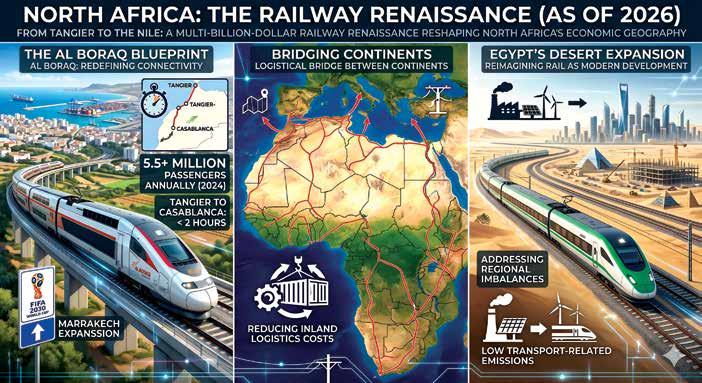
From the Atlantic shores of Tangier to the emerging urban centres of Egypt’s desert expansion, a multi-billiondollar railway renaissance is reshaping North Africa’s economic geography, positioning the region as an increasingly important logistical bridge between continents.
For decades, North Africa’s economic activity was concentrated along its coastlines. Trade moved outward toward Europe and across the Mediterranean, while inland regions remained comparatively disconnected, constrained by the Atlas Mountains and the vast expanse of the Sahara. Transport strategies, both in government and business, focused largely on ports and road networks. As of 2026, however, this model is evolving. Rail infrastructure, once associated with colonial legacy, is being reimagined as a central pillar of modern development.
Across the Maghreb and into the Nile Valley, governments are committing substantial capital to railway expansion. These investments extend
beyond passenger mobility. They reflect a broader strategic objective: reducing inland logistics costs, lowering transport-related emissions and addressing regional imbalances between coastal and interior economies.
MOROCCO: THE AL BORAQ BLUEPRINT
Morocco remains the leading example of this transformation. Since the launch of Al Boraq in 2018, Africa’s first high-speed rail line, the country has moved from demonstration to execution. The initial route, linking Tangier and Casablanca, has had a measurable impact on economic integration.
By 2024, Al Boraq had carried more than 5.5 million passengers annually, with demand continuing to rise into 2026. The reduction in travel time from approximately five hours to just over two has strengthened links between Casablanca, the country’s economic hub, and Tangier, home to the strategically important Tangier-Med port complex. This improved connectivity has effectively created a more
unified labour and business environment, enabling firms to operate across regions with greater efficiency.
The next phase of development is focused on expansion. With Morocco preparing to co-host the 2030 FIFA World Cup, extending the highspeed network southwards toward Marrakech and potentially Agadir has become a national priority. In early 2025, the national railway operator, ONCF, confirmed a major procurement agreement with Alstom for 18 Avelia Horizon trainsets. These high-capacity, double-deck units are designed to accommodate growing passenger volumes and support increased tourism and business travel over the coming decade.
Morocco’s approach illustrates how rail investment can serve both immediate economic needs and longer-term strategic positioning. By strengthening internal connectivity, the country is enhancing its role as a regional logistics hub while improving the efficiency of its domestic market. i
"Morocco’s approach illustrates how rail investment can serve both immediate economic needs and longer-term strategic positioning."
The Invisible Architect: Why the COO Is the Most Underrated Role in the C-Suite
In an era of hyper-scale and AI-driven volatility, the Chief Operating Officer has moved from the engine room to the bridge. This is the rise of the modern operator, the art of the perfect hire, and the executives redefining corporate execution.
For decades, the Chief Operating Officer (COO) has been the quiet force behind corporate success. While the Chief Executive Officer (CEO) captures headlines and articulates vision, the COO ensures that vision survives contact with operational reality. Historically, the role has often been viewed as a stepping stone or a secondary function reserved for those without the “visionary” profile.
That perception is now outdated. The era of cheap capital has ended, replaced by one defined by complexity, geopolitical friction, and AI integration. In this environment, execution is no longer a support function. It is the strategy itself. The COO has evolved from custodian of stability into architect of transformation, managing supply chain disruption, enterprisewide digitisation, and the operationalisation of artificial intelligence.
THE NEW FRONTIER OF OPERATIONS
The traditional COO was tasked with keeping the lights on. Today, the lights are powered by algorithms, data pipelines, and globally distributed systems. In 2026, many analysts describe the role as a hybrid Chief Transformation Officer.
Operational efficiency remains essential, but the scope has broadened. Deloitte research suggests that modern COOs now dedicate significant time to capacity expansion and sustainability initiatives. The boundaries between COO, Chief Information Officer, and Chief Technology Officer are increasingly blurred. Operational leadership now requires fluency in cloud infrastructure, data architecture, and AI deployment.
This shift reflects a deeper structural change. Strategy and execution are no longer sequential phases. They are simultaneous. A company’s ability to respond in real time to tariffs, supply disruptions, or regulatory shifts determines its competitiveness. The COO is responsible for embedding that responsiveness into the organisation.
"The COO has evolved from custodian of stability into architect of transformation, managing supply chain disruption, enterprisewide digitisation, and the operationalisation of artificial intelligence."
THE ART OF THE PERFECT HIRE
Selecting a COO is not about finding a secondary CEO. It is about balance. The most effective partnerships are complementary. If the CEO provides direction, the COO provides control and stability.
Three traits define the modern operator.
First, emotional intelligence. The best COOs operate without ego. They must challenge strategic ideas constructively and maintain alignment at the top. A breakdown in this relationship can destabilise the entire organisation.
Second, scalability. Managing growth from £100m to £10bn requires fundamentally different systems and discipline. A strong COO understands inflection points and builds the operational architecture needed to sustain expansion.
Third, digital fluency. In 2026, operational leadership is inseparable from technology. Gartner projects that by 2027, most operational leaders will be directly accountable for AI-driven outcomes. A modern COO does not treat AI as a technical initiative but as a core business capability.
Notably, most successful hires come from within. In the first half of 2025, 81 percent of new COO appointments were internal. Boards increasingly value institutional knowledge and cultural alignment over external disruption.

THE OPERATORS SETTING THE STANDARD
Several figures exemplify the modern COO.
Gwynne Shotwell at SpaceX represents the archetype. While Elon Musk defines the vision, Shotwell ensures execution across contracts, manufacturing, and operations. Her role illustrates the power of complementary leadership.
At Samsung Electronics, Choi Won-Joon oversees one of the most complex global supply chains. His emphasis on resilience has positioned the company to navigate geopolitical tensions more effectively than many competitors.
Frank A. St. John at Lockheed Martin operates at the intersection of defence strategy and

manufacturing precision. His ability to align long-term programmes with operational delivery highlights the importance of execution at scale.
Corneel Koster, formerly Chief Customer and Operating Officer at Virgin Atlantic, demonstrates the effectiveness of the COO-to-CEO pathway. His leadership during the pandemic combined operational discipline with customer-focused transformation.
THE COO-TO-CEO PIPELINE
The traditional path to the CEO role has shifted. While Chief Financial Officers were once seen as natural successors, operational leaders are now more prominent. Spencer Stuart reports that COOs and Presidents accounted for nearly half of S&P 1500 CEO
appointments in 2025, compared to a much smaller share for CFOs.
The rationale is clear. In an environment defined by disruption, operational expertise outweighs purely financial oversight. COOs possess a comprehensive understanding of organisational dynamics, from supply chains to internal inefficiencies. This “theatre-wide” perspective is increasingly valued at the top.
Internal promotion also reduces transition risk. A COO stepping into the CEO role already understands the culture, the constraints, and the execution gaps.
THE ERA OF THE OPERATOR
The perception of the COO as an underrated
role is rapidly disappearing. The demands of the modern economy have elevated its importance.
The COO connects strategy with execution, linking boardroom ambition to operational delivery. In a landscape shaped by inflation, technological change, and geopolitical uncertainty, the ability to execute consistently is the defining competitive advantage.
For executives with leadership ambitions, the message is direct. Vision alone is not enough. The ability to build systems, manage complexity, and deliver results at scale is what defines modern leadership.
The future belongs to operators.. i
The Ink and Gold: Why the World’s Sharpest Investors Are Looting the Toy Box
While traditional equity markets grapple with volatility and gold approaches its ceiling, a quieter shift is unfolding within the pages of vintage comic books—transforming childhood nostalgia into a sophisticated alternative asset class.
The scent is unmistakable to any seasoned collector: a faint, vanilla-tinged decay of ageing newsprint mixed with the metallic trace of mid-century ink. To the uninitiated, it suggests a forgotten attic. To the world of high-stakes alternative investing, it signals value.
Over the past decade, comic books have moved from the fringes of hobbyist culture into the domain of institutional-grade portfolio consideration. This is no longer about pocket money or schoolyard trades. In specific segments, comic books have delivered returns that rival—or exceed—those of the S&P 500, fine wine, and classic cars.
THE ALCHEMY OF SCARCITY AND SENTIMENT
At its core, the comic book market rests on a compelling supply-demand imbalance. Unlike gold, which can still be mined, or currency, which can be expanded, the supply of “Golden Age” (1938–1956) and “Silver Age” (1956–1970) comics is fixed—and diminishing.
When Action Comics #1 was released in 1938, it was considered disposable. Copies were folded, traded, or recycled, particularly during wartime paper drives. Of the estimated 200,000 printed, fewer than 100 are believed to survive today in any meaningful condition. This phenomenon— where items intended for disposal become scarce by accident—drives extraordinary value.
Demand is equally powerful. The generation that grew up with these characters now sits at peak earning capacity, seeking both emotional and financial assets. When nostalgia converges with capital, traditional pricing limits begin to dissolve.
THE BLUE CHIPS OF THE FOUR-COLOUR MARKET
Within this space, certain titles function as “bluechip” assets, defined by historical significance and rarity, often measured through grading census data from third-party services such as CGC (Certified Guaranty Company).
The Genesis Assets: Action Comics #1 and Detective Comics #27
These represent the foundational pillars of comic
investing—the first appearances of Superman and Batman. A high-grade copy of Action Comics #1 sold for over $6 million in 2024. These are not cyclical assets; they are cultural cornerstones that appreciate as artefacts of origin.
The Silver Age Powerhouses: Amazing Fantasy #15
The debut of Spider-Man in 1962 remains one of the most sought-after investment-grade comics. Spider-Man’s global cultural relevance underpins sustained demand, making even lower-grade copies valuable. For investors, it represents a rare combination of liquidity, cultural permanence, and growth potential.
Key Issue Growth Beyond the Icons
Titles such as Fantastic Four #1, X-Men #1, and Incredible Hulk #1 have seen substantial appreciation, driven by their connection to expanding cinematic universes. Increasingly, attention is shifting to later “Bronze Age” keys like Giant-Size X-Men #1, which offer comparatively lower entry points with strong longterm fundamentals.
THE RISE OF THE “SLAB”
A critical factor in the market’s maturation has been the emergence of standardised grading. Prior to the early 2000s, condition assessments were subjective. The introduction of thirdparty grading—encasing comics in tamperevident “slabs” with numerical scores—brought transparency and credibility.
A difference between grades (for example, 9.0 versus 9.6) can result in exponential value variation. This precision has enabled the creation of indices and reliable pricing frameworks, transforming comics from a collector’s hobby into a credible investment category.
UNDERSTANDING THE RISK PROFILE
Despite strong returns, the market is not without risk. The 1990s serve as a cautionary tale, when artificially inflated “collector editions” led to oversupply and eventual price collapse.
Today, volatility is often driven by the “MCU effect.” Announcements of film or streaming adaptations can cause rapid price spikes

for certain issues, followed by equally sharp corrections. Experienced investors tend to avoid speculative surges, instead focusing on “evergreen” characters with decades of sustained relevance.
PORTFOLIO ROLE AND DIVERSIFICATION
The appeal of comics to family offices and highnet-worth investors lies in their low correlation with traditional markets. The value of a rare comic is influenced more by cultural relevance and physical scarcity than by macroeconomic indicators.

Additionally, comics offer exceptional portability. High-value collections can be stored securely in minimal physical space, a characteristic that enhances their appeal as a discreet wealth store. Typically, such assets represent between 1 and 5 percent of a diversified portfolio.
THE FUTURE OF PHYSICAL ASSETS
As the digital economy expands, the value of physical artefacts is rising in parallel. Younger, technology-driven investors increasingly view graded comics as “physical NFTs”—unique,
authenticated objects with established provenance.
The emergence of fractional ownership platforms is also broadening access. Investors can now acquire partial stakes in high-value books, improving liquidity and sustaining demand at the top end of the market.
THE FINAL APPRAISAL
The comic book market is no longer defined by nostalgia alone. It reflects a deeper economic principle: the enduring value of cultural artefacts combined with extreme scarcity.
The most valuable titles—those that introduced Superman, Batman, or Spider-Man—have transcended their medium. They are no longer simply printed pages, but globally recognised stores of cultural and financial capital.
For investors with a long-term perspective, the strategy is straightforward: prioritise historically significant issues, insist on top-tier grading, and recognise that in a diversified portfolio, value can sometimes be found in the most unexpected places—between ink and paper. i

The Gilded Algorithm: How the UAE is Positioning Itself as the Nervous System of the New Economy
By aligning capital, regulation and infrastructure, the United Arab Emirates is redefining its role in the global AI economy. Through sovereign investment, institutional innovation and a decisive focus on compute and talent, the UAE is positioning itself as a central node in an increasingly multipolar technological landscape.
In the shifting geopolitical landscape of 2026, the United Arab Emirates has moved beyond its ambition to serve as a regional technology hub. It is instead positioning itself as a global orchestrator of artificial intelligence—leveraging sovereign capital, regulatory agility and infrastructure scale to shape the contours of the emerging digital economy.
For much of the past decade, the global technology narrative has been defined by Silicon Valley’s innovation and Brussels’ regulation. By early 2026, however, the UAE has disrupted this duopoly. Through a combination of capital deployment and institutional design, Abu Dhabi and Dubai have transformed themselves into critical nodes in the global AI ecosystem. The strategy is neither reactive nor imitative; it is an attempt to define a distinct model of “responsible acceleration”, one that seeks to attract talent and enterprise by offering a rare convergence of compute capacity, funding and regulatory clarity.

For international investors, the UAE represents a marked departure from traditional regulatory paradigms. Where Europe emphasises risk mitigation and the United States relies on marketled oversight, the Emirates have framed artificial intelligence as a national imperative. The objective is not merely to participate in technological change, but to shape it.
INSTITUTIONALISING INTELLIGENCE
The UAE’s administrative architecture offers one of the clearest signals of intent. While many governments continue to rely on advisory bodies and task forces, the Emirates have embedded artificial intelligence at the highest levels of governance through a dedicated Ministry for Artificial Intelligence. By 2026, this institution has evolved into a central coordinating body, aligning policy across sectors and accelerating implementation.
A defining feature of the UAE approach is its reliance on sector-specific regulation. Rather than adopting a single, overarching framework, policymakers have developed tailored guidelines for different industries, enabling flexibility without sacrificing oversight. Financial centres such as the Dubai International Financial Centre and Abu Dhabi Global Market play a pivotal role, offering structured “innovation sandboxes” that combine legal certainty with rapid experimentation.
This institutional coherence provides a level of predictability that is increasingly attractive to global investors. In contrast to jurisdictions where policy direction can shift with electoral cycles or prolonged negotiation, the UAE presents a long-term regulatory horizon. The signal to the market is unambiguous: the country is structurally aligned with the demands of the AI era.
SOVEREIGN AI AND STRATEGIC AUTONOMY
A defining theme of 2026 is the rise of “sovereign AI”—the notion that control over foundational models is central to both economic resilience and national security. The UAE has emerged as a leading proponent of this concept.
Through the Advanced Technology Research Council and its applied research arm, the Technology Innovation Institute, the Emirates have developed the Falcon and Jais families of AI models. Falcon has achieved global recognition as a high-performance open-source system, while Jais has established itself as a leading platform for Arabic-language processing.
These models are not merely technical achievements; they form part of a broader strategy of digital diplomacy. By making advanced tools accessible to emerging markets, the UAE is positioning itself as a neutral intermediary in the global AI landscape—offering an alternative to both proprietary Western platforms and statecontrolled Chinese systems.
This “open sovereign” approach has important economic implications. It enables the UAE to cultivate an ecosystem of startups, service providers and research institutions that build upon national models. In doing so, it supports a gradual shift away from hydrocarbons towards a more diversified, knowledge-driven economy.
COMPETING FOR TALENT
At the core of the UAE’s strategy lies a recognition that human capital remains the ultimate driver of technological progress. The country has therefore placed significant emphasis on attracting and retaining global talent.
The expansion of the Golden Visa programme into a broader technology-focused initiative reflects this ambition. Beyond residency, the UAE offers a comprehensive environment designed to support founders and researchers, including favourable tax conditions, access to advanced infrastructure and streamlined regulatory processes.
Central to this proposition is compute capacity. In the current technological cycle, access to highperformance computing has become as critical as access to capital. The UAE has responded by securing long-term supply agreements for advanced processors and investing heavily in data centre infrastructure. Increasingly, it is positioning itself as a provider of “compute-asa-service” to global researchers and enterprises.
This strategy has contributed to a notable shift in talent flows. Engineers and scientists, particularly those constrained by cost pressures or regulatory complexity in traditional hubs, are relocating to the Emirates. The result is the emergence of what might be described as “global villages of intelligence”, where international expertise converges with regional capital and policy support.
FINANCIAL INNOVATION AND MARKET INTEGRATION
The UAE’s financial centres are playing an increasingly important role in shaping the intersection between artificial intelligence and global capital markets. In Abu Dhabi Global Market and the Dubai International Financial Centre, regulators have begun to develop frameworks for AI-driven investment strategies, including algorithmic trading and automated portfolio management.
These frameworks are designed to address systemic risk without constraining innovation. By recognising the distinct characteristics of machine learning models, regulators are seeking to provide clarity around governance, transparency and accountability. This has attracted growing interest from institutional investors, including pension funds and family offices, which are exploring the use of AI to enhance returns.
At the same time, the integration of artificial intelligence into sovereign wealth fund strategies has created a powerful feedback mechanism.
Entities such as Mubadala and the Abu Dhabi Investment Authority are not only allocating capital to global technology ventures, but also leveraging these relationships to strengthen domestic capabilities. This interplay between investment and innovation reinforces the UAE’s position within the global technology value chain.
POWERING THE INTELLIGENCE ECONOMY
The rapid expansion of AI infrastructure has brought renewed attention to the relationship between computing and energy. Data centres require vast and reliable power supplies, and many established technology hubs are facing constraints in meeting this demand.
The UAE has sought to turn this challenge into a strategic advantage. By investing in a diversified energy mix that includes nuclear and large-scale solar generation, the country is positioning itself as a provider of low-carbon, high-reliability energy for AI workloads. This capacity is increasingly significant in a global investment environment where environmental considerations are integral to capital allocation decisions.
The ability to offer large-scale compute powered by relatively clean energy sources enhances the UAE’s attractiveness as a destination for both technology firms and institutional investors. It also reinforces the country’s broader narrative of transitioning from a resource-based economy to a knowledge-based one.
A BLUEPRINT FOR A MULTIPOLAR FUTURE
The UAE’s trajectory reflects a broader shift towards a more distributed global technology landscape. Rather than competing directly with established centres such as Silicon Valley, the Emirates are constructing a complementary model—one that emphasises connectivity, neutrality and scale.
For global investors, this evolution has repositioned the UAE from a tactical opportunity to a strategic allocation. The country offers exposure to a rapidly expanding segment of the digital economy, supported by a coherent policy framework and significant financial resources.
More broadly, the UAE’s approach provides a template for how mid-sized economies can exert influence in the age of artificial intelligence. By aligning regulatory design, capital deployment and infrastructure investment, it demonstrates that technological leadership is not solely the preserve of traditional power centres.
The “gilded algorithm” that the UAE is assembling is therefore more than a national strategy. It is an expression of a wider rebalancing in the global economy—one in which new actors are redefining the pathways of innovation and growth. Positioned between East and West, and anchored by a commitment to acceleration rather than caution, the Emirates are shaping a model that could resonate far beyond the region. i
From Automation to Anticipation: Reimagining Public Services in the Age of AI
Xavier
Anglada, Managing Director and UAE Public Sector Lead at Accenture,
outlines how
governments can close the gap between AI adoption and real-world impact.
As governments accelerate the integration of artificial intelligence into public services, a clear contradiction has emerged. Despite widespread adoption, measurable improvements in citizen outcomes remain limited. This disconnect—known as the “Experience Paradox”—is shaping the next phase of transformation.
According to Xavier Anglada of Accenture, the issue lies not in the technology itself, but in how it is applied. Around 70 percent of global agencies have introduced AI, yet only 28 percent report tangible improvements. Many organisations, he argues, are simply automating legacy processes rather than redesigning services from the ground up.
BREAKING THE EXPERIENCE PARADOX
Layering AI onto outdated systems often preserves inefficiencies. Nearly half of citizens still find digital public services frustrating, highlighting a persistent gap between capability and experience.
At the same time, an “Empowerment Gap” has emerged. Technology is advancing faster than workforce readiness, leaving employees underprepared and less confident in using new tools. Without proper upskilling and a focus on human-centred design, AI risks becoming an expensive overlay rather than a transformative force.
“The opportunity lies in designing services around people, not processes,” Anglada notes.
A MIDDLE EAST BLUEPRINT
The UAE and Saudi Arabia offer a contrasting model. Their success is driven by a coordinated, top-down strategy that treats AI as a national priority. Around 90 percent of public servants in these countries are encouraged to use AI, compared to a global average of 62 percent.
This alignment has enabled what Anglada describes as “Trust through Seamlessness.” In the UAE, 85 percent of residents perceive public services as fully seamless, as friction is removed before it arises.
“Trust is built on reliability and ease of use,” he says.
FROM
FORMS TO LIFE EVENTS
The next stage of public sector AI is predictive

service delivery. Rather than requiring citizens to complete forms, governments are beginning to design systems around life events such as births or business registrations. AI can then anticipate needs and deliver services proactively.
Achieving this requires a unified digital core that enables secure data sharing across agencies. Private partners play a key role by providing the infrastructure and expertise needed to integrate systems at scale.
“Our role is to help governments move from reactive services to predictive ones,” Anglada explains.
EMPOWERING THE FRONTLINE
Sustainable transformation depends on people as much as technology. Innovation is most effective when driven by frontline workers rather than imposed centrally.
Governments are increasingly using “innovation sandboxes” to allow staff to experiment with AI tools in controlled environments. This approach encourages rapid learning while maintaining accountability.
“When frontline workers shape the tools, outcomes are more aligned with citizen needs,” Anglada says.
THE CASE FOR TRANSPARENCY
Trust remains a central challenge. Fewer than half of citizens globally trust governments to use AI responsibly.
Public Algorithm Registers are emerging as a solution. These act as “nutrition labels” for AI, explaining how systems operate without exposing sensitive data. By making decision logic more visible, they help bridge the trust gap between institutions and the citizens they serve.
“Transparency is essential,” Anglada argues, though it must be balanced with strong privacy protections.
A NEW MANDATE
The next phase of AI in government will be defined by execution. Moving from automation to anticipation requires integrated systems, skilled workforces, and clear governance.
For Anglada, the objective is clear: governments must redesign services around citizens, not processes.
“The goal is not just to digitise government,” he concludes. “It is to reinvent it around human needs.” i
Managing Director & UAE Public Sector Lead: Xavier Anglada
Galeazzi Sant’Ambrogio Hospital of the Future - Italy


American Heart of Poland
European Cardiovascular Hub




Over 50 + Specialities Handling Complex Care



700+ Patents


Sustainable Development Powering Tomorrow
An exceptional group devoted to the service of humanity
Serving Humanity Najaf - Iraq
Leading Through Perpetual Change: Why Confidence in 2026 Depends on Reinvention, Not Stability
By Omar Boulos Accenture’s CEO in the Middle East
Omar Boulos, CEO for the Middle East and Africa at Accenture, outlines how business leaders are navigating disruption, AI investment, and the widening gap between strategy and execution.
At the World Economic Forum in Davos in January 2026, one theme dominated executive conversations: disruption is no longer cyclical. It is structural. For global business leaders, confidence has not disappeared, but it has been fundamentally redefined.
According to Accenture’s latest Pulse of Change research, 82 percent of C-suite leaders expect a higher level of change in 2026 than in the previous year. Yet this has not dampened optimism. Instead, it has reshaped it. As Omar Boulos, CEO for the Middle East and Africa at Accenture, explains, leaders are no longer waiting for stability to return; they are learning to operate within volatility as the new baseline.
“Confidence today is not about predictability,” Boulos notes. “It is about the ability to perform in a constant state of disruption.”
THE CONFIDENCE PARADOX
This shift is particularly pronounced in the Middle East, where organisations are accelerating transformation at pace. Regional data shows that 82 percent of companies have intensified reinvention efforts over the past year, outpacing many global markets.
However, beneath this confidence lies a more nuanced reality. While 55 percent of global leaders feel prepared for technological disruption, only 44 percent express the same confidence in navigating geopolitical volatility. This gap highlights a growing awareness that resilience must extend beyond digital capability.
READINESS VERSUS REALITY
Despite widespread declarations of readiness, a clear disconnect persists between leadership perception and organisational capability. Accenture’s data reveals a 24-percentage point gap between executive confidence and employee readiness.
This disparity is most evident in talent. While organisations continue to invest heavily in technology, workforce preparedness has lagged. The constraint is no longer the technology itself, but the ability to redesign roles and workflows around it.
“Fewer than one in ten organisations are fundamentally rethinking job design for AI,”

Boulos explains. “That is where the real constraint lies.”
In the Middle East, where ambition is high, only 9 percent of companies are progressing at scale. This suggests that many organisations are equipping themselves with new tools without undertaking the deeper structural reinvention required to unlock value.
AI AS AN ENDURING CAPABILITY
The question of whether AI will remain a priority in a tighter economic environment is increasingly settled. Nearly half of leaders—46 percent—say they would increase AI investment even in a downturn.
AI has moved beyond experimentation. It is now seen as a core driver of growth, with 78 percent of executives identifying it as more important for revenue generation than cost reduction. The implication is clear: organisations must prioritise long-term capability over fragmented pilots.
In the Middle East, where digital transformation spending is projected to reach $72bn in 2026, maintaining investment in the digital core— data and cloud infrastructure—remains critical.
FROM PROOF OF CONCEPT TO PROOF OF VALUE
While investment intent is strong, execution remains uneven. Many organisations are still
trapped in proof-of-concept phases, struggling to scale across the enterprise.
The distinction between leaders and laggards lies in execution. Value creators are moving toward “agentic AI”—systems capable of taking action, not just generating insights— and embedding transformation across entire processes rather than isolated tasks.
In the Middle East, companies adopting this approach are already seeing results, with “reinventors” achieving a measurable premium in revenue growth.
THE TALENT IMPERATIVE
If AI is the engine of transformation, talent is its limiting factor. A significant misalignment exists between leadership assumptions and employee sentiment. While 86 percent of executives believe they are preparing their workforce for AI, only 24 percent of organisations have embedded continuous learning into their operating models.
This creates what Boulos describes as a “resilience illusion.” Without reskilling, transformation risks remaining superficial.
THE STRATEGIC RISK AHEAD
Looking ahead, the most significant risk is imbalance. Organisations investing in AI without aligning organisational design and workforce capability are unlikely to realise full value.
“The mistake is assuming that a technologyheavy roadmap equates to future readiness,” Boulos warns.
A NEW LEADERSHIP MANDATE
Success in 2026 will depend not on avoiding disruption, but on harnessing it. Leaders must match AI investment with investment in people, processes, and organisational design.
In a world where disruption is constant, the winners will be those who build the capability to thrive within it.
Crucially, this requires a shift in mindset from reactive adaptation to proactive reinvention. Organisations that embed agility into their core—across strategy, talent, and technology— will not only withstand volatility, but convert it into a sustained competitive advantage. i
CEO for the Middle East and Africa: Omar Boulos
The War That Re-Priced Intelligence: How Conflict is Reshaping the Global & Middle Eastern AI Trajectory
By Bashar Kilani
The global narrative around artificial intelligence has long rested on a simple premise: intelligence is becoming abundant, scalable, and increasingly inexpensive. From Silicon Valley to Shenzhen, the prevailing assumption has been that AI would diffuse rapidly, constrained primarily by talent, regulation, and enterprise adoption cycles.
The unfolding war in the Middle East has introduced a more complex—and more consequential—reality. It has exposed the physical foundations of AI. Data centres, energy grids, semiconductor supply chains, subsea cables, and logistics corridors are no longer invisible enablers of a digital economy; they are strategic assets embedded in geopolitical risk.
In the Middle East, this shift is not theoretical. It is immediate. The region sits at the intersection of energy flows, trade routes, and great power competition. As a result, the conflict has not only disrupted assumptions about AI economics—it has forced a recalibration of how, where, and by whom the infrastructure of intelligence is built.
The question is no longer whether AI investment in the Gulf will continue, but how it will evolve under pressure.
A SHORT-TERM SLOWDOWN, NOT A STRATEGIC RETREAT
In the near term, the impact is both visible and measurable. Infrastructure commitments— particularly large-scale data centres and compute clusters—are slowing. Not because demand has weakened, but because risk has been repriced.
Insurance premiums for critical infrastructure have risen sharply. Security costs—both physical and cyber—have increased. Supply chains, already strained by global semiconductor dependencies, now face additional layers of uncertainty. Investors are reassessing timelines rather than abandoning ambitions.
Some capacity is likely to shift towards more stable geographies. Parts of Europe and Asia may temporarily absorb workloads that might otherwise have been deployed in higher-risk zones. This is a rational response to volatility, not a signal of structural retreat.
Beneath this short-term caution lies deeper continuity. The fundamental drivers of AI investment in the Middle East remain intact— and, in some respects, have been reinforced.
STRUCTURAL DRIVERS: STRESS-TESTED, NOT INVALIDATED
The Gulf’s AI ambitions have never been speculative. They are anchored in four enduring forces.
First, sovereign capital. Institutions such as Mubadala Investment Company and the Public Investment Fund continue to deploy capital at scale into technology, infrastructure, and strategic partnerships. These are long-term investors, operating with multi-decade horizons and mandates tied to national transformation.
Second, energy abundance. AI is inherently energy-intensive. Training large-scale models and running inference workloads require vast and reliable power. The Gulf possesses one of the world’s most competitive energy cost bases, a structural advantage that remains intact despite global volatility.
Third, the imperative of post-oil diversification. National strategies such as Saudi Vision 2030 and the UAE’s broader digital economy agenda are not optional pathways; they are existential transitions. AI is not a discrete sector within these strategies—it is a foundational layer across them.
Fourth, geopolitical alignment with US technology ecosystems. Despite increasing multipolarity, the Gulf remains closely integrated with American AI platforms, cloud providers, and semiconductor supply chains. This alignment provides access to frontier capabilities, while also embedding the region within broader geopolitical dynamics.
The conflict has stress-tested each of these drivers. None have been invalidated. If anything, their importance has intensified.
FROM EFFICIENCY TO RESILIENCE
Prior to the conflict, much of the region’s AI infrastructure build-out was guided by efficiency: scale, cost optimisation, and speed of deployment.

That paradigm is now shifting.
Resilience is emerging as the new organising principle. Data centres are no longer merely economic assets; they are strategic infrastructure. Their design, location, and redundancy are increasingly assessed through a security lens.
A move towards distributed architectures is likely, replacing highly concentrated mega-sites. Redundancy—across geography, energy sources, and connectivity—will become standard. Investment in physical hardening, cybersecurity, and supply chain diversification will increase.
In effect, the region is transitioning from infrastructure optimised for performance to infrastructure designed for survivability.
This evolution will not diminish ambition. It will increase both complexity and cost.
THE CONCENTRATION OF CAPABILITY
A less discussed consequence of this shift is the concentration of AI capability.
As infrastructure becomes more expensive to build and secure, the number of actors able to operate at scale will narrow. Sovereign wealth funds, state-backed entities, and a small group of global technology firms are likely to dominate.
While this trend is global, it is particularly pronounced in the Middle East due to capital intensity and geopolitical context.
The implication is clear: AI will not be evenly democratised. Access to frontier capabilities will increasingly be mediated by a concentrated group of powerful institutions.
In the Gulf, this aligns with existing economic structures, where large state-linked entities

already play a central role. However, it raises questions around competition, innovation, and the role of the private sector. For startups and mid-sized firms, the path forward is likely to involve building on top of these platforms rather than competing with them.
AI AS STRATEGIC INFRASTRUCTURE—AND TARGET
Perhaps the most profound shift is conceptual.
The conflict has made explicit what was previously implicit: the infrastructure of intelligence is also the infrastructure of power. Data centres, cloud regions, and compute clusters are not neutral assets. They underpin economic activity, military capability, and state resilience. As such, they are legitimate targets in conflict scenarios.
This recognition fundamentally alters the investment calculus.
It introduces a category of risk that cannot be fully mitigated through traditional financial instruments. Instead, it demands a synthesis of economic, technological, and security strategies.
Governments will play a more active role in protecting and governing AI infrastructure. Regulatory frameworks will evolve to reflect its strategic importance. Public–private collaboration will deepen, particularly in cybersecurity, data governance, and crisis preparedness.
THE ACCELERATION OF ADOPTION
While infrastructure development may face shortterm friction, AI adoption is likely to accelerate.
Periods of instability often drive demand for efficiency, resilience, and enhanced decisionmaking. AI provides all three.
Across sectors such as energy, logistics, finance, and defence, demand for predictive analytics,
automation, and intelligent systems is rising. Governments are also accelerating deployment in public services, safety, and national planning.
In this sense, the conflict acts as a catalyst. It compresses adoption timelines even as it complicates infrastructure deployment. This divergence—slower build-out but faster adoption—will define the next phase of the region’s AI trajectory.
A MORE FRAGMENTED GLOBAL LANDSCAPE
The Middle East does not operate in isolation. The conflict is contributing to a broader fragmentation of the global AI landscape.
Supply chains are becoming more regionalised. Technology ecosystems are increasingly shaped by geopolitical alliances. Access to advanced semiconductors and AI models is mediated through export controls and strategic partnerships.
Within this environment, the Gulf’s position is both advantageous and delicate.
Its financial strength and strategic geography make it an attractive partner for global technology players. At the same time, it must navigate competing interests and maintain a careful balance between major powers.
This balancing act will influence not only where AI infrastructure is built, but also which technologies are adopted and how data flows are governed.
INTELLIGENCE, POWER, AND THE NEW ECONOMICS OF AI
The Middle East conflict has achieved what few policy papers could: it has made the economics of AI tangible. Intelligence is no longer a purely digital abstraction. It is built on physical
infrastructure, powered by energy, and shaped by geopolitical realities.
For the Middle East, this is a moment of clarity.
The region’s AI ambitions have always extended beyond technology. They encompass economic transformation, geopolitical positioning, and long-term resilience. The conflict has not altered these objectives—it has sharpened them.
Investment and adoption will continue— selectively, unevenly, but decisively. Timelines may shift. Structures will evolve. Risks will increase.
But the direction is unmistakable.
In the twenty-first century, the infrastructure of intelligence is inseparable from the infrastructure of power. Those who build it—securely, strategically, and at scale—will define the next phase of the global economy. i

Author: Bashar Kilani
The Steel Silk Road: How Etihad Rail Is Redrawing the Economic Map of the Middle East
From the shifting sands of the Liwa Desert to the industrial hubs of Fujairah, the United Arab Emirates is executing a logistics strategy that signals a decisive shift in how the region moves goods, people and capital.
For decades, the UAE’s infrastructure story was defined by roads. Expansive highways, heavy freight traffic and seamless port-to-inland connectivity underpinned rapid economic growth. Yet beneath this established model, a new layer of infrastructure has emerged. The completion of the Etihad Rail freight network marks more than an engineering achievement. It represents the creation of a parallel system of movement, one that is set to reshape trade flows and industrial development across the Gulf.
A STRATEGIC VISION BEYOND TRANSPORT
Etihad Rail forms the backbone of the UAE National Railways Programme, a Dh50bn initiative designed to connect key centres of industry, manufacturing and logistics across the country. While future passenger services will attract public attention, the immediate economic significance lies in freight.
The scale advantage is clear. A single freight train can carry the equivalent load of up to 300 trucks. At a national level, this translates into meaningful efficiency gains. By transferring bulk transport from road to rail, the UAE reduces congestion, lowers infrastructure maintenance costs and improves the reliability of inland logistics.
For businesses, this shift has direct implications. Reduced transport costs, fewer delays and greater predictability enhance supply chain performance. In a region positioning itself as a global trade hub, these efficiencies strengthen competitiveness.
ENGINEERING IN A DEMANDING ENVIRONMENT
Constructing a railway across the Arabian Peninsula presents distinct challenges. Extreme heat, sand movement and environmental exposure require specialised engineering solutions.
Track systems have been designed to withstand significant thermal expansion, while sand mitigation measures, including protective barriers and engineered embankments, ensure operational continuity. Rolling stock is built to perform in temperatures exceeding 50 degrees
Celsius, reflecting the need for resilience in harsh conditions.
This focus on durability underlines the strategic nature of the project. Reliability is essential if rail is to become a core component of national logistics.
SUSTAINABILITY AND EFFICIENCY
Rail transport offers inherent environmental advantages over road haulage. As part of its Net Zero by 2050 strategy, the UAE has positioned Etihad Rail as a key instrument in reducing emissions within the transport sector.
By shifting freight from trucks to trains, the country aims to lower carbon output from road transport by 21 percent by 2050. The reduction in emissions per tonne of cargo is significant, particularly for heavy and bulk goods.
For multinational firms, this creates an additional incentive. Access to lower-carbon logistics supports efforts to reduce Scope 3 emissions, making the UAE an increasingly attractive base for regional distribution.
INTEGRATING THE EMIRATES
The network’s design reflects a broader objective of economic integration. Stretching from Ghuweifat on the Saudi border to Fujairah on the Gulf of Oman, the railway links the country’s principal industrial and logistical nodes.
• The line connects the western border to the eastern seaboard, creating a continuous national corridor.
• Key industrial zones, including Industrial City Abu Dhabi and Dubai Industrial City, are directly served.
• Port connectivity enables a land bridge between the Arabian Gulf and the Indian Ocean, offering an alternative route that bypasses maritime chokepoints.
This connectivity allows each emirate to develop specialised strengths while remaining part of a unified system. Movement of raw materials and finished goods becomes more efficient, supporting industrial diversification.

THE PASSENGER DIMENSION
While freight underpins the network’s economic rationale, passenger services will extend its impact into daily life. Planned high-speed trains, operating at up to 200 kilometres per hour, are expected to reduce travel times significantly.
Journeys between Abu Dhabi and Dubai could take around 50 minutes, while connections to Fujairah may be completed in under two hours. This enhanced mobility has implications for the labour market, enabling greater flexibility in where people live and work.
Improved connectivity supports workforce distribution, reduces commuting pressures and contributes to broader quality-of-life improvements. It aligns with long-term national

objectives to enhance social and economic cohesion.
ATTRACTING INVESTMENT
For investors, the development of a national rail network signals structural maturity. Infrastructure of this scale is often a prerequisite for advanced manufacturing and large-scale industrial activity.
Early indicators suggest growing demand for industrial sites with direct rail access. Logistics hubs and manufacturing facilities are increasingly aligning with the network, reflecting the advantages of integrated transport systems.
By reducing the cost and complexity of moving goods, Etihad Rail strengthens the UAE’s position as a gateway between the Middle East, Africa and
South Asia. The network supports not only trade flows but also broader economic diversification.
TOWARD A REGIONAL NETWORK
The long-term ambition extends beyond national borders. Etihad Rail is a key component of the planned GCC Railway, which aims to link the UAE with Saudi Arabia, Oman, Bahrain, Qatar and Kuwait.
If realised, this network would create a continuous rail corridor across the Gulf. The ability to transport goods seamlessly between ports, industrial zones and markets would enhance regional integration and efficiency.
Such connectivity would position the Gulf as a more cohesive economic bloc, capable of competing more effectively in global trade.
A STRUCTURAL SHIFT
Etihad Rail represents a transition in how the UAE approaches infrastructure. It moves beyond reliance on road transport toward a more balanced, multi-modal system.
The network improves efficiency, supports environmental objectives and enhances connectivity within and beyond national borders. It reflects a broader strategy to build long-term economic resilience through infrastructure investment.
As freight trains move steadily across the desert, they carry more than cargo. They represent a recalibration of the region’s economic model, one that places logistics, integration and sustainability at its core. i

The Sovereign Algorithm: How Brazil is Reconfiguring the AI Social Contract
Brazil is emerging as a defining force in global AI governance, advancing a model rooted in data sovereignty, social accountability and labour protection. As Brasília reshapes the digital social contract, the country is testing whether innovation and regulation can coexist in one of the world’s most dynamic emerging markets.
Brazil: Praça Raul Soares in Belo Horizonte

In 2026, Brazil has positioned itself at the centre of a shifting global debate on artificial intelligence. As the Global South seeks to reduce its dependence on external data models, the country has become a prominent laboratory for AI governance. Its approach—anchored in sovereignty, linguistic identity and social protection—offers an alternative to the dominant frameworks developed in the United States and the European Union.
For much of the past decade, the global regulatory conversation has been defined by a binary tension: the market-driven dynamism of Silicon Valley versus the rights-focused caution of Brussels. Brazil is now advancing a third path. Through Senate Bill 2338 and a broader policy agenda, Brasília is attempting to reconcile innovation with social accountability, while insulating its economy from what policymakers increasingly describe as “algorithmic dependency”.
For investors, the implications extend beyond domestic legislation. Brazil’s experiment represents a test case for capital allocation across emerging markets. If successful, it could demonstrate that high regulatory standards and data sovereignty are compatible with technological growth. If it falters, it may reinforce the structural dependence of emerging markets on global technology platforms. In this context, Brazil is not simply regulating AI—it is redefining how emerging economies engage with it, both economically and politically.
REDEFINING THE DIGITAL SOCIAL CONTRACT
At the centre of Brazil’s strategy lies Senate Bill 2338, a comprehensive legislative proposal that seeks to redefine the relationship between citizens, technology and the state. Drawing inspiration from the European Union’s risk-based model, the bill categorises AI systems according to their potential impact. Applications deemed to pose “excessive risk” are prohibited, while “high-risk” systems are subject to stringent requirements, including impact assessments and human oversight.
Brazil’s approach diverges in its emphasis. Where European regulation has largely centred on privacy, Brazilian policymakers have placed accountability at the forefront. The concept of “AI due process” grants individuals the right to receive an explanation for automated decisions that affect their lives, whether in credit allocation, employment or judicial outcomes.
Reactions within the business community have been mixed. Concerns persist that the new framework could increase operational costs, yet clearer rules also provide a more stable environment than the uncertainty that previously prevailed. For institutional investors, the legislation introduces a degree of governance predictability often lacking in high-
growth markets, reinforcing Brazil’s positioning as a more structured investment destination and reducing long-term regulatory ambiguity.
THE PURSUIT OF SOVEREIGN AI
A defining pillar of Brazil’s strategy is the pursuit of sovereign AI. The underlying premise is that a nation’s capacity to generate and process intelligence should not be wholly dependent on external actors. In response, both public and private sectors have intensified investment in large language models trained on Brazilian Portuguese, domestic legal frameworks and local cultural contexts.
The rationale is both practical and strategic. Many global AI systems are trained predominantly on English-language datasets, embedding assumptions that do not readily translate to Brazilian realities. In sectors such as healthcare, finance and legal services, these discrepancies can create material risks.
By developing domestic models, Brazil is seeking to capture greater value within its own economy. This is not a move towards isolation, but towards greater self-reliance. Ensuring that core AI capabilities are anchored locally supports the development of a national technology ecosystem, reduces dependence on foreign infrastructure, and strengthens long-term digital competitiveness. It also creates opportunities for exporting culturally and linguistically relevant AI solutions to other emerging markets.
LABOUR AND THE ALGORITHMIC ECONOMY
Brazil’s regulatory framework also reflects a deliberate intervention in the relationship between technology and labour. The country has sought to establish protections for workers operating within algorithmically managed platforms.
The legislation introduces requirements for transparency in how digital platforms allocate work, set compensation and evaluate performance. These provisions respond to the rapid expansion of gig economy models, where millions of workers are managed by opaque systems.
The intention is to reduce asymmetry between platforms and workers, creating a more predictable and equitable labour environment. While compliance obligations may raise operational costs, they also reduce legal uncertainty and reputational risk—factors that have historically affected platform-based businesses in Latin America. In this sense, Brazil is attempting to embed social stability into the foundations of its digital economy rather than addressing it retrospectively.
FINTECH UNDER SCRUTINY
The tension between innovation and regulation is particularly visible within Brazil’s fintech sector. The country has become a global leader
in financial inclusion, driven by initiatives such as the Pix instant payment system and the expansion of digital banking.
Artificial intelligence has been central to this transformation, particularly in credit scoring and lending. Under the new framework, these systems are subject to enhanced scrutiny. Providers must conduct bias audits to ensure that algorithms do not disproportionately disadvantage specific demographic groups.
Penalties for non-compliance can reach up to 10 percent of local turnover. While these measures introduce additional complexity, they also encourage higher standards of governance. Early indications suggest a shift towards firms with more transparent and robust technological architectures, as investors favour resilience over rapid but opaque growth. This gradual recalibration may ultimately strengthen confidence in Brazil’s digital financial ecosystem.
A STRATEGIC ROLE IN THE GLOBAL SOUTH
Brazil’s AI strategy carries geopolitical significance. By positioning itself as an advocate of ethical and inclusive AI, the country has strengthened its role as an intermediary between developed and emerging economies.
This positioning has translated into increased investment. Major global firms have expanded their data centre presence in Brazil, recognising both the scale of the domestic market and the likelihood that its regulatory model could influence regional standards. This reinforces Brazil’s status as a key anchor market in Latin America and enhances its diplomatic leverage in global technology governance discussions, particularly within multilateral forums.
A MORE BALANCED DIGITAL FUTURE
Brazil’s experience reflects a broader transition towards a more fragmented and multipolar technology landscape. The era of a single global standard is giving way to one in which regions define their own approaches to governance and innovation.
For investors, Brazil represents a highgovernance emerging market—characterised by regulatory complexity, but also by institutional ambition. While risks remain, the long-term potential is significant.
The “sovereign algorithm” taking shape in Brazil is not an attempt to retreat from global integration. It is an effort to engage on more equal terms. By asserting greater control over data, standards and outcomes, Brazil is positioning itself not just as a consumer of technology, but as an active participant in shaping its future—signalling a broader maturation in how emerging economies approach the age of artificial intelligence, and reinforcing its role in the evolving global digital order. i

THE OTHERS JUST TRAVEL.
> Miguel Lama, CEO of Corporación Zona Franca Santiago: Santiago Business City Building a Leading Investment Hub in the Americas
After more than five decades of industrial leadership, Corporación Zona Franca Santiago is entering a new phase of development. What began as an industrial park has evolved into a manufacturing and logistics platform of regional relevance — and is now expanding to support advanced industries, knowledge-intensive sectors, global services and innovation-led growth.
As supply chains are reconfigured across the Americas, Santiago, Dominican Republic, has strengthened its position as one of the region’s most competitive industrial locations. At the centre of this evolution is the Víctor Espaillat Mera Industrial Park (PIVEM), developed over five decades by Corporación Zona Franca Santiago and continuing to expand as multinational companies seek reliable, efficient operating bases close to end markets.
Today, this export-oriented ecosystem hosts more than 80 multinational companies, including leaders in their respective sectors, generating over 22,000 direct jobs and more than 40,000 indirect jobs. The scale of activity has helped shape one of the Caribbean’s most dynamic industrial environments, supported by a skilled workforce, established supplier networks and long-standing experience in export manufacturing. It is an industrial platform built not only on infrastructure, but on institutional continuity — the ability to operate predictably through cycles, and to provide investors with the confidence that projects can scale.
SANTIAGO BUSINESS CITY: THE NEXT PHASE OF GROWTH
Building on the proven performance of PIVEM, Corporación Zona Franca Santiago is advancing the next stage of its long-term vision through Santiago Business City. Conceived as an integrated business district, the initiative extends the traditional industrial platform into a broader environment where companies can operate, connect and grow within a cohesive economic ecosystem.
"After more
than
five
"What
has been built in Santiago goes far beyond an industrial park; it is a competitive ecosystem emerging as a leading hub for business and investment in the Americas."
At the heart of the project is the development of a modern business centre, complemented by corporate offices, commercial spaces and lifestyle amenities designed to support the daily rhythm of companies and professionals. Anchored in more than five decades of industrial leadership, Santiago Business City represents the natural evolution of a platform already tested at scale — and further positions Santiago as an increasingly attractive destination for global firms seeking a stable base for operations and expansion across the Americas.
POSITIONED FOR A NEW INDUSTRIAL CYCLE
The Dominican Republic offers structural advantages that continue to attract international investment, including legal stability, a secure business environment and the accelerating momentum of nearshoring, friendshoring and brainshoring strategies across the hemisphere. Within this context, the ecosystem developed by Corporación Zona Franca Santiago provides more than industrial space; it offers an operating model designed to strengthen long-term competitiveness.
Beyond the Víctor Espaillat Mera Industrial Park, the wider ecosystem includes specialised
entities supporting companies across critical dimensions of performance. CAPEX focuses on workforce training and professional development. Zonaxol advances clean-energy solutions for park operations and client needs. CEGESTA supports recruitment and talent management. M€DICA provides healthcare services for employees and companies operating within the park, as well as surrounding communities. Together, these institutions reinforce the productivity, talent pipeline and operational reliability that global companies evaluate when allocating capital and building regional footprints.
RECOGNISING A MODEL OF INDUSTRIAL DEVELOPMENT
International recognition for Corporación Zona Franca Santiago reflects more than scale. It signals the maturity of a development model built over decades — one that combines institutional leadership, operational reliability and an enduring commitment to strengthening the productive capacity of the Dominican Republic.
Through continuous expansion of the Víctor Espaillat Mera Industrial Park, the creation of specialised support institutions and the forward-looking ambition represented by Santiago Business City, the organisation has shaped an ecosystem where global companies can establish operations with confidence and deepen investment over time. The result is sustained contribution to economic growth, business competitiveness and responsible industrial development — positioning Santiago as one of the Caribbean’s most respected industrial platforms and an increasingly relevant investment hub in the Americas.
decades of industrial leadership, Corporaciõn
Zona Franca Santiago
is
entering
a
new
phase of development.
What
began as an industrial park has evolved into a thriving manufacturing and logistics platform that is now expanding to further support advanced industries, knowledge-intensive sectors, global serviees and innovation-driven growth."


To know Miguel Lama, President of Corporación Zona Franca Santiago, is to encounter a leader whose career has been defined by economic development and civic purpose. Throughout his professional life, Lama has advanced a view that competitiveness and institutional strength are essential pathways to raising quality of life — for cities, communities and the nation.
This perspective has shaped his leadership of the Víctor Espaillat Mera Industrial Park and its evolution into a broader economic platform for Santiago. For Lama, economic progress is inseparable from civic responsibility and long-term collaboration between institutions. That mindset has taken him into leadership roles across several influential economic and development organisations, both in Santiago and nationally.
Most recently, the President of the Dominican Republic appointed Lama to lead the Free Zones Sectoral Committee within the Meta RD 2036 national strategy — a public–private platform designed to advance transformative actions in sectors considered essential to the future competitiveness of the Dominican economy. The appointment underlines a wider recognition: that the competitiveness built within free-zone ecosystems is increasingly integral to national development strategy, not peripheral to it. i
THE VISION BEHIND SANTIAGO BUSINESS CITY
President: Miguel Lama
EY: Argentina Extends RIGI Stability Anchors the Next Wave of Large-Scale Investment
By Sergio Caveggia
As outlined in prior editions, the Argentine Government enacted the Incentive Regime for Large Investments (Régimen de Incentivo para Grandes Inversiones, RIGI) in July 2024. The regime was designed to attract large-scale investments—defined by a minimum threshold of $200m—by offering tax incentives alongside a more critical proposition: predictability, legal certainty, and long-term stability across tax, customs, and foreign exchange frameworks.
RIGI focuses on strategic sectors such as oil and gas, mining, infrastructure, and technology. Its objectives are clear: to encourage domestic and foreign investment, strengthen sectoral competitiveness, increase exports, generate employment, and establish immediate conditions of stability for long-term capital deployment.
Nearly two years after its inception, RIGI has moved decisively from policy to execution. As of March 30, 2026, 13 projects—representing over $20bn in investment—had been approved, with a further 25 projects under evaluation. These initiatives span eight provinces, including Neuquén, Río Negro, San Juan, Mendoza, Salta, Buenos Aires, Catamarca, and Santa Fe.
Importantly, discussions with both foreign and local investors suggest that the regime’s success is not primarily driven by tax benefits such as reduced rates or accelerated amortisation. Rather, it is the fiscal, customs, and foreign exchange stability guaranteed under Law 27,742 that has proven decisive. This legal certainty enables the development of long-term projects where regulatory predictability outweighs shortterm fiscal incentives.
Unlike previous stability regimes, such as Law 24,196 governing mining investments, RIGI is structured with greater precision and stronger legal safeguards. Its drafting is intended to withstand potential policy reversals from future administrations, a feature that has contributed significantly to investor confidence.
DECREE 105/2026:
EXTENSION AND KEY MODIFICATIONS
On 19 February 2026, the Executive Branch issued Decree 105/2026, introducing clarifications and targeted amendments to the regime.
Most notably, the deadline to apply for RIGI benefits has been extended by one year, from
8 July 2026 to 8 July 2027. This extension responds directly to investor demand, as many projects require additional time for technical and operational feasibility analysis, as well as the preparation of detailed investment plans.
The extension also accommodates substantive regulatory changes, particularly the inclusion of onshore hydrocarbon projects and further clarification of technology-sector eligibility, as well as rules governing expansions of pre-existing projects.
SECTORAL DEFINITIONS:
TECHNOLOGY AND HYDROCARBONS
The decree refines sector definitions in two key areas.
Within the Technology Sector, it clarifies that eligible motorisation technologies include both fully electric and hybrid systems, broadening the scope for innovation-driven investments.
In the oil and gas sector, the regime now explicitly includes the exploitation and production of new onshore hydrocarbon developments. These are defined as projects located in areas that, at the time of the enactment of Law 27,742, had no significant level of development and had not yet received investment in exploitation or production activities at the time of application.
This clarification creates a concrete pathway for incorporating continental hydrocarbon projects into the RIGI framework.
REVISED MINIMUM INVESTMENT THRESHOLDS
The decree also adjusts minimum investment thresholds for specific activities:
• Offshore hydrocarbon exploitation and production: $200m
• New onshore hydrocarbon developments: $600m

The rationale for the latter is to prevent the artificial fragmentation of technically integrated projects, particularly in the oil and gas sector, where operational continuity is essential.
MARKET DISTORTION: A NARROWER PRESUMPTION
A technical but important amendment concerns the presumption of non-distortion of the local

market. The revised wording establishes that only entities that are both producers and exporters of commodities benefit from this presumption.
Previously, the use of “and/or” allowed exporters without production activities to qualify. Under the new formulation, exporters that are not also
producers are excluded, narrowing the scope of this protection.
EXPANSION OF PRE-EXISTING PROJECTS: TECHNOLOGY SECTOR FOCUS
The decree introduces significant clarifications regarding the expansion of pre-existing projects, particularly within the Technology Sector.
To qualify under RIGI, a “New Product” must meet three cumulative conditions:
a) It must incorporate technological or functional innovation, demonstrating at least 50 percent differentiation in its components by economic value compared to existing production. This requirement introduces complexity, as validating both innovation and component valuation will likely require independent technical certification.
b) The minimum investment for the expansion must be at least $250m. While this threshold may appear high for technology-driven products, it reflects a focus on infrastructure-intensive projects such as data centres, energy transition facilities, or advanced manufacturing.
c) The product must have a defined market life cycle of no more than 10 years. Compliance must be supported by a Technical Life Cycle Report prepared by an independent expert, assessing technological and commercial obsolescence factors.
DIVIDENDS AND TAX STABILITY
Decree 105/2026 confirms that dividend withholding rates fall within the regime’s tax stability protections.
Additionally, it extends the reduced 3.5 percent rate to profits distributed by companies operating through dedicated branches, aligning them with distributions made by local holding companies under Decree 749/2024 and the Income Tax Law.
FOREIGN EXCHANGE FLEXIBILITY
The decree also introduces a pragmatic adjustment to foreign exchange rules.
Under the previous framework, export proceeds had to exceed access to foreign currency markets for payments abroad. The revised provision allows funds originating from foreign capital contributions and external financing to be included in this calculation.
This change effectively eases access to foreign exchange markets and supports the execution of investment plans, improving liquidity for largescale projects.
STABILITY AS THE CORE VALUE PROPOSITION
For business leaders evaluating Argentina, the extension and refinement of RIGI send a clear signal of policy continuity and investment openness. While tax incentives remain relevant, the regime’s true value lies in its

Author:
legal architecture, which guarantees long-term stability across key regulatory domains.
The inclusion of onshore hydrocarbons, the expansion of technology definitions, and the clarification of operational rules demonstrate a willingness to adapt the framework to evolving investor needs. At the same time, the regime maintains high entry thresholds, ensuring that only projects of significant scale and impact qualify.
RIGI is not merely a fiscal incentive programme. It is a strategic platform designed to reposition Argentina as a competitive destination for largescale, long-term investment. For investors, the opportunity is substantial, but it requires careful structuring, technical validation, and a disciplined approach to execution.. i
ABOUT THE AUTHOR
Sergio Caveggia is a tax partner leading the Transaction Tax practice in Argentina. He joined EY in 1994 and brings nearly three decades of experience in international taxation and mergers and acquisitions. His expertise spans inbound and outbound investments, buy-side and sellside transactions, and restructuring. He also advises clients within Private Client Services.
Caveggia has worked across industries and participated in numerous due diligence processes over the past 20 years. He is a lecturer at national universities, a speaker at tax seminars, and the author of articles on Argentine tax matters.
He is a Certified Public Accountant from the University of Belgrano and holds a postgraduate certificate from Universidad Católica Argentina.
Sergio Caveggia
The Unfiltered Symphony of a Soul: Why I Swear is the Year’s Most Vital Cinema
Beyond the caricature of the “cursing disorder,” this visceral film deconstructs the daily realities of living with Tourette Syndrome, delivering a powerful study in empathy and technical filmmaking.
THE SOUND AND THE FURY
Cinema has a long, often uncomfortable history of portraying Tourette Syndrome as either a punchline or a device for shock value. From exaggerated outbursts in low-grade comedies to the “quirky” supporting character, the condition is frequently stripped of nuance and reduced to spectacle. I Swear decisively breaks from this pattern. Directed with restraint and precision, and anchored by a performance that feels closer to embodiment than acting, the film offers an immersive entry into the neurological world of its protagonist, Leo.
Rather than beginning with exposition, the film opens with sound. The scratch of a pen, the hum of a refrigerator, the distant bark of a dog— each noise builds into an overwhelming sensory landscape. From the outset, the audience is placed inside Leo’s experience, where the boundary between thought and action is fragile and constantly under strain.
A PERFORMANCE FOR THE AGES
At the centre of the film is a breakout performance that will inevitably attract awards attention. Portraying Tourette Syndrome demands extraordinary control: too much emphasis risks caricature, too little diminishes authenticity. The lead actor navigates this balance with remarkable precision, capturing the “premonitory urge”— the intense internal pressure preceding a tic— with striking clarity.
The physical and emotional toll is depicted with unflinching honesty. Scenes of suppression in public spaces contrast with private moments of release, where the body finally yields to involuntary movement. In one particularly powerful sequence, Leo returns home after a job interview and collapses into a cascade of tics—an intimate and exhausting release that underscores the unseen labour behind outward composure.
DECONSTRUCTING THE STIGMA
One of the film’s most effective choices is its refusal to sanitise vocal tics. Coprolalia— the involuntary use of socially inappropriate language—is presented not for shock, but as a
"The script is particularly sharp in its depiction of well-intentioned but misguided responses."
source of acute social anxiety. The reactions of others—unease, misunderstanding, misplaced authority—reveal how neurological differences are often misinterpreted as behavioural failings.
The script is particularly sharp in its depiction of well-intentioned but misguided responses. Casual reassurances and simplistic advice expose a fundamental gap in understanding. These moments are not exaggerated; they are recognisable, and that recognition is where the film derives much of its impact.
TECHNICAL BRILLIANCE
Technically, I Swear is a study in sensory storytelling. The cinematography frequently isolates Leo through shallow focus, visually reinforcing his internal separation from those around him. The editing is deliberately irregular, mirroring the unpredictability of tics.
The sound design stands out as a defining feature. Layered and carefully modulated, it recreates the internal sensory intensity that can trigger or amplify symptoms. Rather than describing Tourette Syndrome, the film uses cinematic language to approximate its experience—a rare and effective approach.
THE HUMAN CORE
Beyond its technical achievements, the film remains grounded in its human relationships. Leo’s bond with his younger sister provides emotional balance. Their interactions are natural, unforced, and quietly reassuring—offering moments of relief within an otherwise tense narrative.
A secondary thread follows Leo’s ambition to pursue architecture, a profession defined by precision and control. The contrast is deliberate. His determination to design stable structures, despite the instability imposed by his condition, becomes a compelling metaphor for resilience.
A MIRROR TO SOCIETY
The film’s central tension does not lie within the condition itself, but in society’s response

to it. It challenges the viewer to examine their own reactions: why certain behaviours provoke discomfort, and why composure is so often equated with competence.
By its conclusion, I Swear shifts perspective. The focus is no longer on a man defined by Tourette Syndrome, but on a man navigating a world that struggles to accommodate difference. The ending avoids easy resolution, instead offering a moment of self-acceptance that feels both restrained and authentic.
FINAL ASSESSMENT
I Swear is a significant work of contemporary cinema. It informs without instructing, and moves without manipulation. In a landscape crowded with spectacle, it distinguishes itself through honesty and craft.
More than a portrayal of a condition, it is a reflection on perception, empathy, and the complexity of human experience. It does not ask the audience simply to understand—it compels them to engage. i

The Sound and the Fury: The Night the Screen Didn’t Cut Away
The intersection of advocacy and live television is rarely seamless. At the BAFTA Awards on 22 February 2026, it became the centre of a national conversation few had anticipated—least of all the BBC or neurodiversity campaigners.
The incident unfolded during the presentation of the evening’s first award, as Michael B. Jordan and Delroy Lindo—stars of the critically acclaimed film Sinners—took the stage. Amid the applause, a loud and unmistakable racial slur cut through the room.
The source was John Davidson, a Scottish Tourette Syndrome campaigner whose life story inspired the film I Swear. Davidson, who has lived with severe coprolalia for decades, was attending as a guest of honour, with the film based on his experience nominated for six awards. Host Alan Cumming had earlier briefed the audience that Davidson’s vocal tics were involuntary and
not reflective of his beliefs. Nevertheless, the broadcast of the slur to a national audience triggered immediate controversy.
The situation was exacerbated by the BBC’s handling of the tape-delayed broadcast. While most major awards ceremonies employ sufficient delay to filter sensitive audio, the slur remained in the version aired on BBC One and was subsequently available on iPlayer for several hours. Producers later attributed the lapse to a technical oversight, stating that the production team did not register the initial incident in real time, although a later occurrence was successfully edited out.
Public reaction was swift and divided. Advocacy organisations, including Tourettes Action, urged understanding, noting that coprolalia affects a minority—estimated at 10 to 15 percent—of individuals with Tourette Syndrome and is entirely neurological. Others, however, emphasised the
impact of the language itself, arguing that the harm caused by such words cannot be easily separated from their context.
Several high-profile figures voiced concern. Actors including Jamie Foxx and Wendell Pierce highlighted the enduring emotional weight of racial slurs, stressing that their impact remains profound regardless of intent.
Davidson was reportedly distressed by the incident and left the ceremony early. The episode has since prompted broader reflection within British broadcasting, raising complex questions about the balance between inclusion and editorial responsibility.
At its core, the incident underscores a difficult reality: when neurological conditions intersect with live media, the boundaries between intent, impact, and accountability become increasingly difficult to navigate. i
The Alchemical Factory: How Industrial Symbiosis is Rewiring the Global Economy
In the pursuit of Net Zero, the traditional “take-make-waste” model is being dismantled. Industrial symbiosis, the strategic process whereby one company’s waste becomes another’s feedstock, is moving from the margins of environmentalism to the centre of corporate strategy. As resource volatility increases, the ability to convert disposal costs into revenue streams is no longer simply “green”; it is a competitive imperative.
THE END OF THE SILO
For two centuries, industrial development followed a linear path. Resources were extracted, processed into products, and ultimately discarded. This model suited an era of perceived abundance, but in today’s environment of supply chain fragility and carbon constraints, it has become structurally inefficient.
Industrial symbiosis offers a different model. As a branch of industrial ecology, it mirrors natural ecosystems, where waste does not exist. Instead, outputs from one process become inputs for another. Applied to industry, this involves networks of organisations exchanging byproducts, energy, and water to improve overall resource productivity.
The implications are significant. Materials once treated as costly waste streams are increasingly recognised as valuable inputs for neighbouring industries.
THE KALUNDBORG BLUEPRINT
The most established example is Kalundborg, Denmark, where a symbiotic industrial network has been operating since the 1970s. A cluster of energy, pharmaceutical, and industrial firms exchange resources through a system of shared infrastructure.
Steam from the power station is supplied to a pharmaceutical plant and an oil refinery. Cooling water is returned to the power station. Excess heat supports district heating for the local community, while gypsum recovered from emissions is sold for construction materials.
The results are measurable. Participants have achieved substantial cost savings while reducing emissions by hundreds of thousands of tonnes. The system emerged not from regulation, but from economic logic: collaboration proved cheaper than isolation.
"Regulatory pressure is also intensifying. Across the UK and the European Union, landfill taxes, carbon pricing, and Extended Producer Responsibility frameworks are raising the cost of waste disposal."
THE ECONOMIC CASE
Three forces are accelerating the adoption of industrial symbiosis: volatility, regulation, and reclassification of waste.
Commodity price volatility is increasing. Securing local secondary inputs provides resilience against global supply disruptions. A manufacturer sourcing treated wastewater locally, for example, reduces exposure to both pricing and scarcity risks.
Regulatory pressure is also intensifying. Across the UK and the European Union, landfill taxes, carbon pricing, and Extended Producer Responsibility frameworks are raising the cost of waste disposal.
Most importantly, the perception of waste is shifting. Leading firms are reframing byproducts as resources. This reclassification moves materials from the liability column to the asset base.
THE DIGITAL CATALYST
The next phase of industrial symbiosis will be data-driven. One of the main barriers has been

information asymmetry. Companies are often unaware that nearby firms could use their waste streams as inputs.
Digital platforms are now addressing this gap. Using AI and large datasets, they match material outputs with potential users based on composition, volume, and geography. These systems enable the design of Eco-Industrial Parks, where complementary industries are colocated to maximise resource efficiency.
BARRIERS TO SCALE
Despite its promise, industrial symbiosis faces practical constraints.
Trust remains a key issue. Firms must share detailed information about processes and

materials, which can raise concerns around confidentiality.
Logistics also matter. Transporting waste, particularly hazardous materials, can be costly and complex. If logistics outweigh material value, the model breaks down.
Regulatory definitions can be restrictive. In some jurisdictions, waste cannot easily be reclassified as a commercial input. Updating these frameworks remains a priority.
A QUESTION OF SOVEREIGNTY
For many economies, industrial symbiosis is not only about efficiency but also resilience. As demand for critical minerals rises globally and intensifies competition, the ability to recover
materials domestically becomes strategically important.
This is already visible in the battery sector. Closed-loop systems are emerging, where used batteries are processed into “black mass” and refined back into high-purity materials for new production. These ecosystems reduce reliance on imported resources and strengthen supply security.
FROM ACCIDENTAL TO INTENTIONAL
The early examples of industrial symbiosis were largely opportunistic. The next phase will be designed from the outset. Infrastructure, zoning, and investment strategies are increasingly being aligned to enable interconnected industrial systems.
Investors are responding. Resource efficiency is now a key ESG metric, and companies that demonstrate closed-loop operations are viewed as more resilient and lower risk.
In the twentieth century, industrial success was measured by output. In the twenty-first, it will be measured by efficiency and circularity. Firms that fail to valorise their waste will incur rising costs, while those that integrate symbiotic systems will unlock new sources of value.
Industrial symbiosis is not a universal solution, but it is a powerful mechanism for decoupling growth from resource depletion. It shows that the transition to a sustainable economy is not about doing less, but about using what already exists more intelligently. i
The Continental Couplings: Can Rail Integration Unlock Latin America’s Economic Frontier?
Fragmented by geography and long neglected by coordinated policy, the rail networks of South and Central America are now undergoing a period of renewed integration. Governments and investors are turning back to the tracks as a means of lowering logistics costs, strengthening regional trade and reducing reliance on constrained maritime routes such as the Panama Canal.
For much of the past century, Latin American railways were designed with a singular purpose. Built largely with foreign capital in the late nineteenth and early twentieth centuries, they functioned as extractive corridors, carrying commodities from inland regions directly to ports for export. Copper from Chile, beef from Argentina and coffee from Brazil flowed outward, but rarely across borders within the continent itself.
The result was a fragmented system. Neighbouring countries developed incompatible track gauges, making cross-border rail transport inefficient and often impractical. Today, as global supply chains become more regionalised and sustainability considerations intensify, reconnecting these networks has shifted from aspiration to necessity. Projects such as the Bioceanic Corridor and Mexico’s interoceanic rail link point to a broader effort to construct a continental logistics framework.
THE COST OF DISCONNECTION
The economic case for rail integration is rooted in the high cost of existing logistics systems. Across Latin America and the Caribbean, logistics expenses account for between 18 and 35 percent of product value, compared with roughly 8 to 9 percent in OECD economies. This structural disadvantage constrains competitiveness and limits intra-regional trade, which remains around 15 percent of total commerce, far below levels seen in more integrated markets.
A key factor is the heavy reliance on road transport. Moving goods across vast distances, often through mountainous or forested terrain, is both costly and carbon intensive. Rail offers a scalable alternative. A single freight train can replace hundreds of trucks, significantly reducing fuel consumption and operating costs. For sectors such as agriculture and mining, where margins are often tight, improved logistics can be decisive.
THE BIOCEANIC CORRIDOR
Among the most ambitious initiatives is the
Bioceanic Integration Railway Corridor, a project designed to connect Brazil’s Atlantic port of Santos with Peru’s Pacific port of Ilo via Bolivia. The concept is to create a direct transcontinental route, reducing reliance on maritime passages and shortening transit times to Asian markets.
Current shipping routes from Brazil to Asia often involve long detours or delays at the Panama Canal, which has faced capacity constraints in recent years. A functioning rail corridor could reduce transit times by up to 15 days, offering a competitive advantage for exporters.
For Bolivia, the project carries particular significance. As a landlocked country, improved access to global markets would enhance its economic position and diversify its role within the region. The development of inland logistics hubs, or “dry ports”, is central to this strategy, enabling customs processing closer to production centres and reducing administrative delays.
MEXICO’S INTEROCEANIC STRATEGY
In Mexico, a parallel initiative is reshaping trade dynamics at the narrowest point of the country. The Interoceanic Corridor of the Isthmus of Tehuantepec focuses on modernising the rail link between the Pacific port of Salina Cruz and the Gulf port of Coatzacoalcos.
This corridor is positioned as a complementary route to the Panama Canal, particularly for containerised freight. Its broader objective, however, extends beyond transit. The development of industrial zones along the route aims to capture value from nearshoring trends, as manufacturers relocate production closer to North American markets.
By integrating transport infrastructure with industrial development, Mexico is seeking to create a logistics ecosystem rather than a simple transit corridor. If successful, the project could anchor new manufacturing clusters and strengthen regional supply chains.
STANDARDISATION AND INTEROPERABILITY
One of the principal technical challenges facing

gauges. Historically, countries adopted different standards, preventing seamless cross-border operations even where physical connections existed.
Efforts are now under way to address this issue through the adoption of standard gauge for new international projects. In parallel, technologies such as dual-gauge tracks and bogie exchange systems are being implemented to facilitate interoperability.
Standardisation is critical for efficiency. It allows rolling stock to move across borders without the need for time-consuming transfers, reducing costs and improving reliability. Over time, greater alignment of technical standards will be essential for the development of a truly integrated network.
FINANCING THE NETWORK
The scale of required investment has attracted a range of financing sources. Multilateral institutions, including the World Bank and the Inter-American Development Bank, continue to play an important role. At the same time, Chinese capital has become increasingly
Latin American rail integration is the diversity of track

prominent, particularly through infrastructure financing linked to the Belt and Road Initiative.
Projects such as Argentina’s Belgrano Cargas freight line illustrate this trend, combining external funding with domestic priorities. For Latin American governments, access to long-term capital is essential to advancing infrastructure that may not deliver immediate returns but offers substantial long-term benefits.
In parallel, the emergence of green finance has opened new avenues. Rail projects, with their lower emissions profile, are increasingly positioned as climate-aligned investments. This has attracted institutional investors seeking to meet environmental targets while supporting infrastructure development.
SOCIAL AND REGIONAL IMPACT
Beyond economic efficiency, rail integration carries broader social implications. In many regions, the decline of passenger rail services in the late twentieth century contributed to the isolation of interior communities. Renewed investment offers the potential to reconnect these areas.
Projects such as the Tren Maya in Mexico aim to distribute tourism revenue more widely, while improvements to rail systems in countries such as Peru enhance access for remote populations. Greater connectivity supports labour mobility, allowing workers to access employment opportunities without relocating to major urban centres.
The development of secondary cities and commuter corridors can also alleviate pressure on large metropolitan areas, contributing to more balanced urban growth.
DIGITAL INTEGRATION
Modern rail development in Latin America is increasingly accompanied by digital innovation. Advanced control systems, real-time tracking and integrated logistics platforms are being incorporated into new networks.
For businesses, the ability to monitor shipments in real time and manage documentation electronically reduces uncertainty and administrative costs. Digital integration also supports multimodal transport, enabling seamless transitions between rail, road and maritime systems.
The goal is a unified logistics environment in which goods can move efficiently across multiple transport modes under a single framework.
TOWARD A CONNECTED CONTINENT
The integration of Latin America’s rail networks represents a significant shift in regional development strategy. Moving beyond the historic focus on export corridors, countries are seeking to build internal connectivity and strengthen economic resilience.
Challenges remain. Political uncertainty, difficult terrain and the scale of investment required all present obstacles. However, momentum is building, supported by a combination of public policy, private capital and technological advancement.
As new corridors link the Atlantic and Pacific, and as national systems become increasingly interoperable, the foundations of a more integrated regional economy are taking shape. Rail is no longer a legacy system. It is becoming a central component of Latin America’s economic future, offering a pathway to greater efficiency, sustainability and growth. i

The Silicon Vanguard: Can Washington Deregulate Its Way to AI Supremacy?
As the Trump administration’s “America’s AI Action Plan” enters its second year, the United States is doubling down on an innovation-first strategy built on deregulation, infrastructure investment and federal preemption. The approach is accelerating development—but raising critical questions about governance, accountability and longterm competitiveness.
In Washington, D.C., artificial intelligence is no longer framed as an emerging technology but as a central pillar of economic and national security strategy. As of February 2026, the United States is pursuing a decisive path: prioritising speed, scale and market-led innovation in a bid to secure global AI leadership.
This approach stands in contrast to the regulatory trajectories of other major powers. The European Union has embedded rights and risk mitigation at the core of its AI Act, while China continues to align AI development closely with state priorities. The United States, by comparison, has opted for a lighter regulatory framework—one designed to remove friction, accelerate deployment and reinforce its technological edge.
At the centre of this strategy is the belief that innovation velocity will determine geopolitical advantage. The question is whether this approach can sustain long-term leadership without introducing systemic vulnerabilities.
The Innovation-First Doctrine
The cornerstone of U.S. policy is the “America’s AI Action Plan”, launched in July 2025. The framework positions artificial intelligence as a driver of economic growth, labour productivity and global competitiveness. Its core pillars focus on accelerating innovation, expanding infrastructure and strengthening international technological alliances.
Recent initiatives reflect this emphasis. The Department of Labor’s AI literacy framework, introduced in February 2026, aims to prepare the workforce for an increasingly automated economy. At the same time, the Treasury Department has launched public-private collaborations focused on AI cybersecurity within financial systems. These measures seek to ensure that innovation is not only rapid, but also economically embedded.

Crucially, the policy direction marks a departure from earlier approaches. The Biden-era emphasis on mandatory safety testing and bias mitigation has been scaled back in favour of a model that treats AI as a strategic asset. The shift reflects a broader recalibration: from precaution to acceleration.
FEDERAL PREEMPTION AND THE STATE DIVIDE
One of the defining features of the U.S. AI landscape is the absence of a unified federal regulatory framework. In its place, a patchwork of state-level laws has emerged, with jurisdictions such as California, Colorado and Illinois introducing measures on transparency, discrimination and consumer protection.
Colorado’s AI Act, for example, came into effect in June 2026, requiring impact assessments for high-risk systems. Similar initiatives across states have created a complex compliance environment for companies operating nationally.
The federal response has been to assert greater control. Executive Order 14365, issued in December 2025, established mechanisms to challenge state laws deemed inconsistent with national priorities. Central to this effort is the creation of an AI Litigation Task Force within the Department of Justice, tasked with addressing regulatory fragmentation.
The order also links $21bn in remaining Broadband Equity, Access, and Deployment funding to alignment with federal policy, effectively incentivising states to conform. This has triggered legal and political debate, with critics arguing that such measures may infringe on states’ rights, while supporters contend that a unified framework is essential for competitiveness.
The resulting tension underscores a broader structural challenge: how to balance federal coordination with the decentralised nature of U.S. governance.
INFRASTRUCTURE AS STRATEGY
While deregulation is a defining feature of the U.S. approach, it is complemented by a significant industrial policy focused on infrastructure. Artificial intelligence is not only a software challenge, but also a question of compute, energy and physical capacity.
Executive Order 14320, issued in July 2025, grants “national priority” status to data centre development, streamlining permitting processes and accelerating construction timelines. This reflects the growing recognition that access to compute power is a critical determinant of technological leadership.
At the same time, the United States continues to deploy export controls on semiconductor manufacturing equipment, seeking to limit the capabilities of strategic competitors. While
advanced chips remain available to allies, restrictions on production technologies are intended to preserve a competitive edge.
Domestic ambitions are equally significant. Policymakers have set targets to maintain approximately 75 percent of global supercomputing capacity, reinforcing the country’s dominance in high-performance computing. These efforts are supported by private sector investment, which continues to scale rapidly.
The combination of deregulation and infrastructure investment highlights a dual-track strategy: removing barriers to innovation while actively building the physical foundations of the AI economy.
A COMPETITIVE GLOBAL FRAMEWORK
The U.S. approach must be understood within a broader geopolitical contest, where regulation, infrastructure and diplomacy intersect. Three distinct models are emerging:
Regulation: The United States emphasises minimal regulatory burdens and federal coordination, aiming to outpace the EU’s more prescriptive framework.
Compute: A focus on domestic semiconductor leadership and export controls seeks to sustain technological advantage over China. Energy and Infrastructure: Accelerated data centre expansion underpins the scaling of AI capabilities, with the aim of matching or exceeding global competitors.
This competitive positioning is reinforced by international strategy. The United States continues to promote AI exports to allied nations, positioning its technologies as the foundation for “sovereign AI” ecosystems abroad. However, this has raised concerns about dependency, as partner countries increasingly rely on U.S. platforms.
At the same time, the administration has withdrawn from certain multilateral AI ethics initiatives, signalling a shift towards a more security-focused posture.
THE EMERGING SAFETY GAP
The emphasis on deregulation has not been without criticism. A growing number of policymakers and analysts point to the emergence of a “safety gap”—a divergence between the pace of innovation and the development of governance frameworks.
The Department of Commerce’s January 2026 request for information prioritises security risks such as cyber threats and biological misuse. However, it places less emphasis on issues such as algorithmic bias, misinformation and labour displacement.
This imbalance has raised concerns among industry observers. The International AI Safety
Report 2026 highlights gaps in risk mitigation, noting the potential for misuse in areas such as fraud and synthetic media. Similarly, surveys indicate that a significant majority of executives view AI vulnerabilities as a leading cyber risk.
Proponents of the current approach argue that market mechanisms can address these challenges. Emerging AI insurance products and reliance on existing legal frameworks are seen as flexible alternatives to prescriptive regulation. Critics, however, question whether these tools can keep pace with the scale and complexity of technological change.
LIABILITY AND MARKET ADAPTATION
In the absence of a dedicated federal AI liability regime, the United States continues to rely on existing product liability and tort law. Legal disputes related to AI are therefore addressed on a case-by-case basis, creating a dynamic but uncertain landscape.
This has contributed to the growth of AI insurance markets, particularly in financial centres such as New York and London. Companies are increasingly seeking coverage to manage risks associated with algorithmic decision-making, reflecting a shift towards market-based solutions.
While this approach offers flexibility, it also places greater responsibility on courts to interpret evolving technologies. The resulting legal precedents are likely to play a significant role in shaping the future of AI governance in the United States.
BALANCING SPEED AND STABILITY
The U.S. strategy represents a calculated effort to leverage its strengths in innovation, capital and infrastructure. By prioritising deregulation and investment, it aims to maintain a decisive lead in the global AI race.
Yet this approach carries inherent risks. The absence of comprehensive safeguards may expose vulnerabilities, particularly as AI systems become more deeply embedded in economic and social structures. At the same time, ongoing tensions between federal and state authorities introduce an additional layer of complexity.
As 2026 unfolds, the trajectory of U.S. AI policy remains uncertain. Federal preemption efforts are likely to face legal challenges, while states continue to advance their own regulatory agendas. The outcome will shape not only the domestic landscape, but also the global perception of the U.S. model.
The central question is whether the United States can sustain its innovation advantage while addressing the governance gaps that accompany rapid technological change. The answer will determine whether deregulation proves to be a catalyst for enduring leadership—or a source of long-term instability in the world’s most influential technology market. i
> JPMorgan Signals Caution: Tightening Private Credit Amid Software Loan Repricing

JPMorgan Chase’s decision to tighten lending to private credit funds marks a notable inflection point for one of the fastest-growing segments of global finance. As the world’s largest bank by assets reins in exposure, particularly to softwarelinked loans, the move reflects rising concerns around valuation, credit quality, and the disruptive impact of artificial intelligence on key sectors.
The bank has marked down the value of selected loans used as collateral by private credit funds, reducing the borrowing capacity available to those clients. These adjustments are precautionary rather than reactive, driven by forward-looking risk assessments rather than realised losses. The focus has been on software companies, where concerns about AI-driven disruption are prompting a reassessment of long-term revenue stability and competitive positioning.
Private credit has expanded rapidly over the past decade, growing into a market approaching $2 trillion. Non-bank lenders have stepped in to provide financing to companies considered too complex or risky for traditional bank balance sheets. The sector has attracted significant inflows from investors seeking yield in a higher interest rate environment, with direct lending, distressed strategies, and asset-backed finance gaining particular traction.
However, the speed of this expansion has introduced structural vulnerabilities. Unlike public credit markets, private loans lack continuous price discovery. Valuations can remain static even as underlying borrower fundamentals weaken, creating a lag between risk accumulation and market recognition. Recent stress events, including redemption pressures in certain vehicles and renewed scrutiny of underwriting standards, have sharpened focus on these risks.
JPMorgan’s latest actions stem from a detailed review of collateral backing financing arrangements with private credit funds. By lowering the assessed value of these loan portfolios, the bank has effectively reduced the leverage available to borrowers. In some cases,
clients may be required to post additional collateral to maintain existing facilities. While the adjustments are targeted rather than systemic, they signal a shift in risk appetite.
Chief executive Jamie Dimon reinforced this cautious stance during the bank’s leveraged finance conference in February 2026, highlighting a more conservative approach to lending against software-related assets. The emphasis has been on maintaining flexibility to reprice risk in response to evolving market conditions.
The timing is significant. The private credit industry is navigating a more challenging environment, with outflows from retail-focused funds and renewed debate around underwriting discipline during the recent boom years. Comparisons to pre-2007 credit excesses have re-emerged, although most analysts point to structural differences, including stronger covenant frameworks and lower systemic leverage.
Software lending has become a particular focus. The rapid advancement of generative AI has introduced uncertainty around the durability of certain SaaS business models. Investors are increasingly questioning whether recurring revenues, once considered highly predictable, may face compression as new technologies alter competitive dynamics. JPMorgan’s markdowns reflect this evolving risk profile.
The move also underscores the interconnectedness between banks and private credit. Institutions such as JPMorgan provide essential leverage facilities secured against loan portfolios. US banks are estimated to support roughly $300bn of private credit exposure, making them critical enablers of the sector’s growth. Any tightening in this channel has the potential to constrain expansion and trigger selective deleveraging.
For private credit managers, the implications are immediate. Firms reliant on bank financing may encounter higher costs or reduced access to leverage, prompting a reassessment of capital structures and investment pace. Larger, wellcapitalised managers with diversified funding
sources are likely to be more resilient, and may benefit from consolidation dynamics as weaker players retrench.
Despite these pressures, the asset class retains strong underlying appeal. Private credit continues to offer a yield premium over public markets, with senior secured direct lending transactions delivering returns of around 10 percent in recent deals. Advocates argue that disciplined managers, particularly those focused on covenant protection and downside mitigation, remain well positioned in a more selective environment.
Macroeconomic conditions add further complexity. As central banks begin to ease policy, financing conditions may improve for higherquality borrowers. At the same time, inflation persistence and geopolitical fragmentation continue to inject volatility into credit markets, reinforcing the need for rigorous risk assessment.
JPMorgan’s actions may prove indicative of a broader trend. As a bellwether institution, its shift towards caution could prompt other lenders to reassess exposures, particularly in sectors facing technological disruption. Should valuation pressures persist, the private credit market may enter a phase defined by consolidation, tighter standards, and greater differentiation between managers.
For investors, the episode highlights the importance of selectivity. The illiquidity premium that has driven capital into private credit remains attractive, but returns are increasingly contingent on manager quality and portfolio resilience. Institutional investors with access to top-tier platforms may continue to find compelling opportunities, while retail exposure to semi-liquid structures warrants closer scrutiny.
JPMorgan is not retreating from private credit. It is recalibrating its risk framework in line with a maturing market. As the sector evolves from niche to mainstream, such adjustments are likely to become more frequent, reinforcing discipline while preserving the long-term viability of the asset class. i
Schafer Cullen: Why Discipline Still Defines Value Investing >
In an equity market often driven by momentum, narrative and short-term positioning, Schafer Cullen continues to make the case for a more traditional discipline: buy good companies cheaply, insist on dividends, protect the balance sheet, and give time for value to emerge. The firm’s approach is rooted in classic value investing, but its relevance lies in how it applies that philosophy to modern portfolio construction, income generation and risk control.
Value investing is one of the most overused labels in asset management. In crowded markets, almost every manager claims some attachment to “value”, even when the underlying process owes more to relative pricing or cyclical timing than to genuine valuation discipline. Schafer Cullen takes a much narrower view. Its definition of value investing remains anchored in the framework Benjamin Graham recommended at the end of his career: focus on companies that are cheap on price-to-book, price-toearnings and dividend measures, and then hold them for the long term. In Schafer Cullen’s interpretation, this is not nostalgia. It is still a rigorous filter for identifying businesses where valuation, income and staying power align.
That emphasis on dividends is central. At Schafer Cullen, dividends are not treated simply as a source of income; they are viewed as a form of downside protection and a signal of corporate durability. The firm argues that dividend growth is especially important, though yield itself also matters. Its historical reference point is telling: over the past 60 years, there have been 12 recessions, and in each one dividends rose, even where earnings and share prices fell sharply. For the firm, that pattern explains why dividend-paying equities can help stabilise investor outcomes when markets turn hostile. Income is valuable in itself, but it also changes the behavioural and financial profile of an equity strategy by providing part of the return stream independently of market sentiment.
This becomes especially relevant in a concentrated portfolio. Schafer Cullen’s flagship strategies often hold only 30 to 45 names, which means each position must justify its place through a combination of valuation, quality and long-term potential. In that setting, the most important risk controls are not abstract factor models alone, but balance-sheet strength, close analysis of changes in consumer interest, and
careful monitoring of management quality and business evolution. The firm is candid about the reality of concentrated investing: some holdings will periodically fall out of favour and appear to be value traps. Yet one of its core beliefs is that apparent weakness often creates future opportunity. After rigorous reanalysis, some of the most uncomfortable holdings can go on to become the strongest contributors over the following year or two. That does not mean every weak stock deserves patience. The firm acknowledges there are situations where the analysis proves wrong and where even a disciplined value process must accept error.
The difference lies in time horizon. Schafer Cullen does not frame value as a quick meanreversion trade. When initiating a position, it is typically looking for a minimum holding period of three years, allowing time for research catalysts to unfold. In many cases, particularly where stocks remain attractive on a price-toearnings basis, holdings may stay in the portfolio for as long as a decade. The kinds of catalysts the firm regards as most reliable are concrete rather than fashionable: better managers, new products, entry into new markets, or strategic shifts that can drive earnings growth and eventually support multiple expansion. This is a patient form of investing, but not a passive one. It is based on the idea that value is unlocked through business progress, not simply through the market changing its mind.
That patience also shapes how the firm thinks about downside protection. Rather than defining defensiveness through sector labels or low-beta positioning, Schafer Cullen argues that smoothness is best judged over a long enough measurement period. For that reason, it has settled on a five-year horizon as the most meaningful way to evaluate the consistency of an equity-income strategy. In the firm’s view, five years is long enough to smooth performance across recessionary shocks and short enough
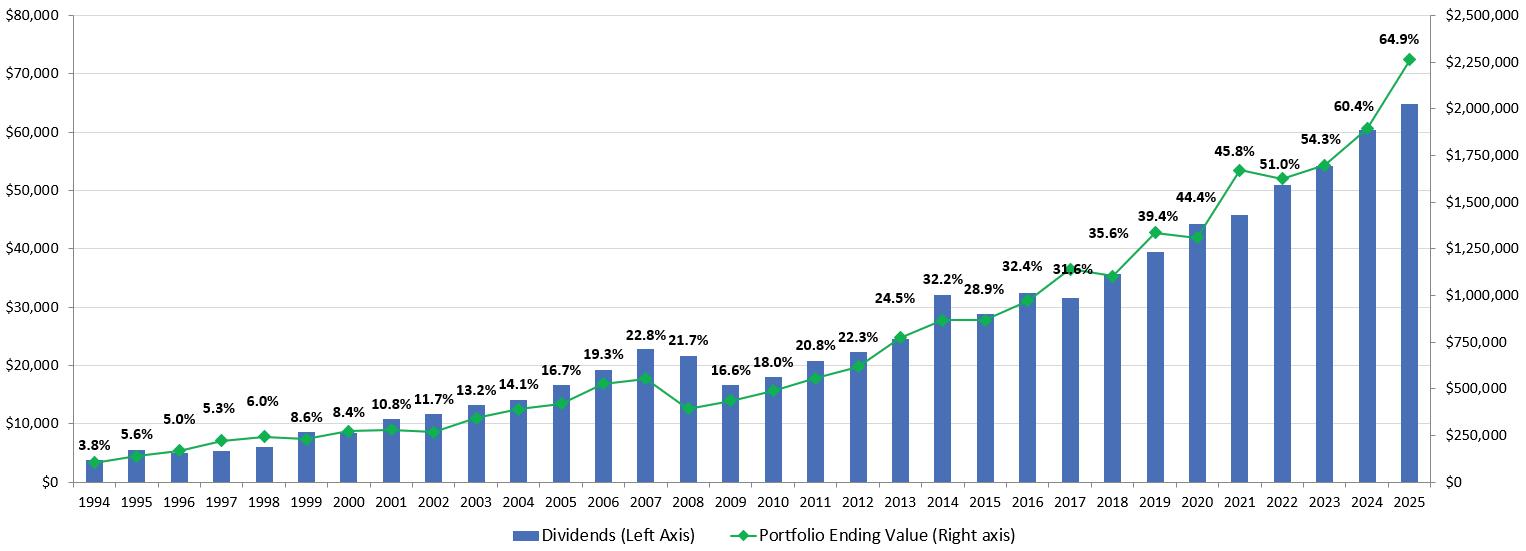
"At Schafer Cullen, dividends are not treated simply as a source of income; they are viewed as a form of downside protection and a signal of corporate durability."
to remain relevant to client outcomes. It is a practical rather than theoretical definition of resilience: not the avoidance of all volatility, but the ability to navigate cycles without permanent damage to compounding.
The same philosophy extends into the firm’s enhanced equity income approach, where covered calls are written on a portion of holdings. Here again, the aim is not to manufacture yield indiscriminately, but to manage the trade-off between current income and future upside. Schafer Cullen says decisions about how much upside to sell, and on which holdings, are driven by both fundamental and technical research. That reflects a broader point about the strategy: options are not treated as a separate overlay detached from stock selection, but as another expression of the underlying research process. The decision to bring this approach into ETF form through the launch of DIVP in
Yield at Cost Since Strategy Inception
Total Composite Returns 12/31/93 –12/31/25
2024 was, according to the firm, a response to client demand. Even so, the move also reflects a wider trend in the market: investors increasingly want transparent, liquid vehicles that combine income with equity exposure while preserving a disciplined framework for security selection.
Schafer Cullen’s value lens has never been confined to the United States. The firm notes that international stocks and ADRs often looked dramatically cheaper than US equities, particularly in earlier decades, and that these opportunities materially supported performance. Its historical examples range from Jaguar, bought as a British spin-off, to high-quality Chinese oil and gas companies and global consumer staples such as Unilever and Diageo, which benefited from growth in emerging markets. Today, the firm caps the international share of some portfolios because it also runs dedicated international and emerging-market
strategies. Still, the logic remains consistent: valuation must be compelling enough to justify the additional layers of currency, governance and liquidity risk.
On research, Schafer Cullen adopts a measured view of AI. The firm sees the technology as a significant advance in data gathering, and its analysts are already using it to improve research efficiency. But it remains cautious about overstating what automation can do for security selection. In the firm’s view, a contrarian instinct is still vital in investing, and that quality is not easily systematised. AI may help gather information faster, but genuine stock-picking still depends on judgement, context and the willingness to lean against consensus when valuations and fundamentals justify it.
This preference for measured judgement also explains the firm’s stance on stewardship.
Schafer Cullen engages with management teams where appropriate, but it does not define itself as an activist investor. Effective engagement, in this model, is less about public campaigns and more about ongoing dialogue, pressure where warranted, and a readiness to exit if the original investment case no longer holds. It is consistent with the broader ethos of the firm: disciplined, research-led, valuationsensitive, and unwilling to confuse noise with genuine value creation.
At a time when equity markets often seem to reward speed over patience and narrative over balance-sheet substance, Schafer Cullen’s approach stands out for its refusal to overcomplicate the essential. Buy cheaply. Demand dividends. Focus on quality. Stay patient. And remember that in investing, as in business, the most durable outcomes are rarely the most fashionable in the moment. i
The Bioforge Prophecy: How Houston’s Enzyme Engineers are Decarbonising the Periodic Table
While the venture capital world remains captivated by the digital abstractions of generative artificial intelligence, a quieter revolution in carbon and enzymes is unfolding in the heart of Texas. Solugen is not merely building a business; it is challenging the chemical industry’s centuries-old reliance on fossil fuels, demonstrating that the future of heavy industry may be biological.
By the time you finish reading this sentence, the global chemical industry will have emitted several thousand tonnes of carbon dioxide. For more than a century, the recipe for everything from household bleach to smartphone plastics has remained remarkably consistent: take a fossil fuel, apply immense heat and pressure, and accept toxic by-products as the cost of production. This thermochemical era built the modern world, but it is now confronting the limits imposed by environmental regulation and resource constraints.
Enter Solugen. Based in Houston—a city historically defined by the steady rhythm of oil extraction—the company operates what it calls a “Bioforge.” The facility resembles a conventional chemical plant but functions more like a living system. By deploying engineered enzymes to convert simple plant sugars into high-value industrial chemicals, Solugen is doing more than “greening” supply chains; it is demonstrating that biology may be the most sophisticated manufacturing platform available.
THE END OF THE SMOKESTACK
To understand Solugen’s significance, one must first recognise the inherent inefficiencies of traditional chemistry. Processes such as HaberBosch require temperatures exceeding 500 degrees Celsius and pressures of extraordinary intensity. These conditions are costly, energyintensive, and inherently hazardous.
Solugen’s founders, Gaurab Chakrabarti and Sean Hunt, identified a radically different approach while studying biological systems. They realised that enzymatic processes—similar to those regulating sugar metabolism in the human body—could be scaled for industrial production at ambient temperatures. The Bioforge eliminates the need for furnaces and flare stacks. Instead, it relies on controlled environments, engineered enzymes, and feedstocks derived from dextrose and other biomass.
"They realised that enzymatic processes— similar to those regulating sugar metabolism in the human body—could be scaled for industrial production at ambient temperatures."
The result is a process that can be carbonnegative. While traditional chemical plants emit carbon dioxide, Solugen’s method incorporates carbon into the final product. In a global market valued at over five trillion dollars, this is not merely an environmental advantage—it is a structural one. As carbon pricing becomes increasingly embedded in regulatory frameworks across Europe and North America, carbonnegative production offers a powerful hedge against future liabilities.
ECONOMICS OVER IDEOLOGY
For decades, “green” chemistry was viewed as a niche pursuit, often associated with higher costs and limited scalability. Solugen has challenged this perception by focusing on unit economics rather than sustainability narratives alone.
Its competitive edge lies not only in environmental performance but in cost efficiency. By eliminating high-heat infrastructure and simplifying synthesis processes, Solugen can produce key molecules—such as glucaric acid, widely used in water treatment and construction—at costs below those of petroleum-based alternatives.
This represents the long-sought “green parity.” When sustainable solutions are also economically superior, adoption becomes inevitable. It shifts

from a question of corporate responsibility to one of financial logic. This dynamic is reflected in Solugen’s funding trajectory, with significant backing from global investors including GIC and Temasek. The company has moved beyond start-up status to become a defining player in Houston’s evolving industrial landscape.
THE SCALE-UP CHALLENGE
The central criticism of bio-manufacturing has always been scale. Producing small quantities in a laboratory is fundamentally different from delivering industrial volumes to global markets.
Solugen’s response has been modularity. Its initial Bioforge facility served as proof of concept, but subsequent expansion has focused on distributed manufacturing. Rather than building a single, capital-intensive refinery, the company develops smaller, high-efficiency plants located close to feedstock sources or end markets.
This approach aligns with the resilience demands of the current business environment. By reducing transport distances, Solugen lowers both

emissions and exposure to supply chain volatility. In an era defined by geopolitical fragmentation, a modular system powered by local biomass rather than imported fossil fuels represents a strategic advantage.
BEYOND THE CORN FIELD
Critics of bio-based production often point to land-use constraints. If the chemical industry were to rely entirely on agricultural feedstocks, would it compete with food production?
Solugen’s long-term strategy suggests a broader feedstock base. The company is exploring inputs such as waste wood, agricultural residues, and even captured carbon dioxide. The objective is a circular system in which industrial waste becomes a resource for chemical production.
This adaptability distinguishes Solugen from earlier biofuel ventures that struggled with commodity economics. By focusing on highvalue chemicals rather than low-margin fuels, the company maintains flexibility and supports ongoing innovation. It is not simply producing
chemicals; it is developing a programmable platform capable of adapting to changing market demands.
THE HUMAN ELEMENT
Solugen’s rise also reflects a shift in the industrial workforce. The engineers behind the Bioforge represent a new hybrid skill set, combining molecular biology, chemical engineering, and data science.
This convergence highlights the “Human Premium.” While artificial intelligence can model biological processes, the industrial application of these systems requires deep, experience-based understanding. Solugen has become a magnet for this talent, fostering a high-skill ecosystem that is redefining modern manufacturing in the United States.
A NEW INDUSTRIAL PARADIGM
Solugen embodies a broader transition from digital innovation to physical transformation. For much of the past decade, innovation has been associated with software and platforms. Yet the
defining challenges of the present—climate change, resource scarcity, and supply chain resilience—are inherently physical.
The company has successfully navigated the “valley of death” that undermines many hardware ventures. It operates a functional production facility, serves a growing customer base, and demonstrates a clear path to profitability. More importantly, it has shown that biology is not confined to pharmaceuticals; it can underpin industrial production at scale.
For corporate leaders, the question is no longer whether bio-manufacturing matters, but how rapidly it can be integrated into existing operations. Solugen has established a viable model. The broader industry must now determine whether it is prepared to follow.
The Bioforge is more than a facility in Houston. It represents a shift towards an industrial future in which prosperity and sustainability are no longer competing objectives. The carbon era is entering its final phase; the enzymatic era is beginning. i
Texas: Houston
The Ghost in the Hiring Machine: Is AI About to Make the Recruiter Extinct?
As artificial intelligence promises to match candidates to roles with unprecedented speed and precision, the traditional recruitment consultant faces a structural shift. Yet in a landscape shaped by automation, bias, and synthetic profiles, human judgment may become more valuable, not less.
In a Mayfair office once defined by constant calls and deal-making, the atmosphere has changed. Where recruiters once relied on networks and persistence, today’s environment is quieter, driven by AIpowered systems capable of screening thousands of CVs in seconds.
The recruitment industry, worth approximately £40bn in the UK alone, is entering a new phase. Generative AI is not simply improving efficiency; it is reshaping the economic foundations of hiring.
The central question is no longer whether AI will transform recruitment, but how much of the traditional model will remain.
THE EFFICIENCY PROPOSITION
At a structural level, AI addresses long-standing inefficiencies in hiring. Automated Applicant Tracking Systems now use natural language processing to evaluate candidates based on semantic alignment rather than simple keyword matching. These systems can assess career trajectories, skills, and contextual relevance at scale.
For employers, the benefits are clear. Time-to-hire is reduced, costs decline, and screening becomes more consistent. For recruitment agencies, however, the implications are more complex. If companies can identify talent internally using AI, the value proposition of external intermediaries is under pressure.
THE DECLINE OF THE TRADITIONAL CV
The curriculum vitae, once the cornerstone of professional identity, is evolving into a highly optimised digital artefact. Candidates increasingly use AI tools to refine and tailor applications, creating a feedback loop in which algorithms generate content that other algorithms evaluate.
This dynamic risks obscuring authenticity. Profiles appear increasingly polished, making
"Despite its advantages, AI introduces new risks. Algorithms are inherently dependent on historical data. If past hiring patterns reflect structural biases, those biases may be reinforced rather than eliminated."
differentiation more difficult. As a result, the recruiter’s role is shifting from sourcing candidates to verifying substance behind the data.
BIAS AND THE
LIMITS OF AUTOMATION
Despite its advantages, AI introduces new risks. Algorithms are inherently dependent on historical data. If past hiring patterns reflect structural biases, those biases may be reinforced rather than eliminated.
Cases of algorithmic discrimination have already emerged, highlighting the need for oversight. In this environment, recruitment firms may evolve into auditing and advisory partners, ensuring fairness and transparency in automated systems.
THE REINVENTION OF THE RECRUITER
The traditional agency model is unlikely to disappear entirely, but it will need to evolve. Low-value, high-volume roles are increasingly automated. The remaining opportunity lies in high-value placements where judgment, context, and interpersonal understanding are critical.
Recruitment is therefore becoming a bifurcated market. At one end, AI-driven systems handle routine hiring. At the other, human expertise becomes a premium service.

In this model, recruiters act less as intermediaries and more as strategic advisors. Their role is to interpret data, assess intangible qualities, and guide both clients and candidates through complex decisions.
THE CANDIDATE EXPERIENCE
Automation has also altered the candidate journey. Processes that rely heavily on algorithms can feel impersonal, with limited feedback and minimal human interaction.

This creates an opportunity for differentiation. Firms that combine technological efficiency with meaningful human engagement are likely to gain a competitive edge. In this context, relationshipbuilding becomes a core asset.
THE RECRUITER OF THE FUTURE
The skill set required in recruitment is changing. Future professionals will need to combine technical literacy with human insight. Data interpretation, cultural understanding,
and long-term career guidance will define the role.
The emphasis is shifting from transactional activity to advisory capability.
ADAPTATION AS IMPERATIVE
The recruitment industry is not disappearing, but it is undergoing structural transformation. AI is removing routine tasks and exposing the underlying value of human judgment.
Firms that rely on volume-driven models will face increasing pressure. Those that embrace a hybrid approach, combining AI capabilities with human expertise, are better positioned to adapt.
The future of recruitment will not be defined by automation alone, but by how effectively organisations integrate technology with human insight. Those that strike this balance will not only improve hiring outcomes, but also build more resilient and adaptive workforces. i
The Mastermind: How Taylor Swift Rewrote the Rules of the Global Economy >
She does not just top the charts; she moves the needle on national GDPs. From the $2bn Eras Tour to the unprecedented reclaiming of her intellectual property, Taylor Swift has built a $1.6bn empire on the radical idea that the artist should be the CEO. In 2026, as she enters her third decade of dominance, the “Swift Model” offers valuable lessons for boardrooms across Britain.
In the summer of 2024, a curious phenomenon caught the attention of central bankers from Singapore to Stockholm. It was not a shift in interest rate policy or a spike in oil prices, but the economic impact of a 34-year-old American artist with a 44-song setlist.
The “Swift Lift”, the surge in local economic activity accompanying each stop of the Eras Tour, became a defining case study in the experience economy. In Toronto alone, Swift’s six-night residency generated an estimated $282m in economic impact, equivalent to hosting a Super Bowl multiple times over the course of a single tour cycle.
To view Swift merely as a high-performing product, however, is to overlook the structural sophistication of the enterprise she has built. As of early 2026, her net worth stands at approximately $1.6bn. Unlike peers who diversified into consumer goods, Swift reached this level largely through music, transforming artistic output into a vertically integrated business model.
This is the story of how a performer became a sovereign economic force.
VERTICAL INTEGRATION AND THE “TAYLOR’S VERSION” STRATEGY
One of the most consequential decisions in the modern music industry came in 2019, when Swift responded to the sale of her master recordings by re-recording her early catalogue. Rather than contest ownership through traditional channels, she effectively rebuilt the asset base.
By releasing “Taylor’s Version” albums, she redirected consumer demand towards assets she fully controlled. The originals, while still technically valuable, became commercially less relevant for licensing and streaming, effectively shifting the centre of economic gravity back into her own portfolio.
The strategy represents a clear example of vertical integration. Swift leveraged brand loyalty to migrate her audience to a product she owned outright. By 2026, her catalogue is estimated to be worth approximately $600m, underscoring the long-term value of intellectual property ownership in the digital economy.
REINVENTING
SCARCITY: THE ERA FRAMEWORK
Where many global brands struggle with longevity, Swift has institutionalised reinvention. Each album cycle is positioned as a distinct “Era”, complete with its own aesthetic, narrative, and audience segmentation.
This approach enables continuous renewal while maintaining brand coherence. Strategic shifts, from country to pop to indie-folk, have allowed Swift to capture multiple demographic cohorts simultaneously.
Her marketing strategy further amplifies engagement. The use of embedded clues and narrative continuity transforms passive listeners into active participants, creating a feedback loop of sustained attention and organic promotion.
SWIFTONOMICS: THE POWER OF THE CORE AUDIENCE
Conventional business theory often favours broad customer acquisition. Swift’s model prioritises depth over breadth. By cultivating a highly engaged core audience, she has created a resilient and self-reinforcing ecosystem.
The Eras Tour exceeded $2bn in ticket sales, becoming the highest-grossing tour in history. Ancillary revenues proved equally significant, with merchandise sales averaging approximately $2m per night. Her 2025 album release achieved record-breaking global sales within 24 hours, driven in part by multiple collectible formats.
This model effectively turns consumers into advocates. Fans do not simply purchase products; they amplify them, defend the brand, and extend its reach across digital platforms.

STRATEGIC PARTNERSHIPS: FROM ENDORSEMENT TO INTEGRATION
The evolution of brand partnerships is another pillar of the Swift Model. Traditional endorsements have given way to integrated collaborations that deliver measurable value.
Her partnership with Capital One illustrates this shift. Beyond brand visibility, the collaboration provided exclusive ticket access, driving customer acquisition and retention. Reports suggest a 22 percent higher retention rate compared to standard campaigns.
Swift’s approach positions her brand as a controlled gateway. Access is selective and aligned with audience benefit, reinforcing both exclusivity and loyalty.
THE 2026 OUTLOOK: A SOVEREIGN BRAND
By 2026, Swift’s business model is studied in leading academic institutions for its adaptability and strategic coherence. She has navigated key structural challenges shaping the modern economy, positioning her as a benchmark for intellectual property strategy and brand-led value creation.

In the face of AI-generated content, her emphasis on authenticity and narrative complexity creates defensible differentiation. Control over masters and distribution reduces exposure to streaming platform economics. Meanwhile, the success of live experiences demonstrates resilience in periods of economic uncertainty.
Swift now operates less as an artist and more as a diversified intellectual property enterprise, with a scale comparable to mid-tier listed companies.
For executives, the implications are clear. Competitive advantage increasingly lies in ownership of narrative, depth of community, and control of intellectual property. In a market defined by attention scarcity, those who build enduring ecosystems around their brands will capture long-term value.
The Swift Model suggests a shift away from transactional relationships towards ecosystem building. In a global marketplace defined by trust and attention, those who master this transition will shape the next phase of economic value creation. i
The ‘Swift Lift’ by the Numbers
While the “Taylor’s Version” model highlights long-term asset control, the immediate economic impact of the Eras Tour delivered a powerful boost to the UK’s post-pandemic hospitality sector. Analysts at Barclays and UK Music have since quantified the phenomenon, coining the term “Swiftonomics” to capture its scale.
THE NATIONAL BALANCE SHEET
• £997m: Estimated total contribution to the UK economy from the 1.2 million fans attending 15 tour dates.
• £848: Average spend per attendee per show, more than 12 times the cost of a typical UK night out (£67) and roughly double the average spend of a UK wedding guest.
• 62 percent surge: Year-on-year increase in international music tourism to the UK in 2024, driven largely by North American fans opting for the European leg.
LONDON: THE GLOBAL CAPITAL
With eight nights at Wembley Stadium, more than any other city, London became the focal point of the tour’s economic impact.
• £300m: Estimated boost to London’s economy, according to the Greater London Authority.
• 150,000+ daily Tube entries: Wembley Park station recorded its highest footfall since the 2012 Olympics, exceeding pre-pandemic levels.
• 94 percent hotel occupancy: August 2024 saw record occupancy rates, with room prices in Wembley and North West London rising by an average of 27 percent.
THE INFLATIONARY ‘GLITCH’
The scale of the tour was sufficient to influence macroeconomic indicators. “Swiftflation” emerged as a talking point within the Bank of England, as services inflation held at 5.7 percent in June 2024, partly driven by temporary increases in accommodation and transport costs during peak tour periods. i
OF ERAS
> Kellogg Insight
Can AI Help Humans with Empathy?
By Andrew Lee. Based on the research of Aakriti Kumar, Matthew Groh, and coauthors. ThisstoryfirstappearedinKelloggInsight
Large language models are surprisingly good at recognising empathic communication—and can teach people how to better connect with others.
One of the main drivers of the current excitement around artificial intelligence is its uncanny ability to act almost human. Unlike the stiff chatbots of the past, recent models can more effectively respond to a user’s emotions with nuance and understanding. The effect is convincing enough that some people attribute complex human abilities such as empathy to these computerised companions.
Companies have already capitalised upon this advance to deploy AI chatbots in sensitive lines of work—such as medical advice, therapy, and life or career coaching—traditionally performed by trained professionals. But is AI just providing statistically determined helpful responses, or can it actually recognise when a reply expresses empathy?
“There’s lots of evidence that computers can say or write a response such that someone feels validated, affirmed, and heard,” says Matthew Groh, assistant professor of management and organisations at the Kellogg School. “What’s less clear is whether it can recognise empathic communication when it sees it.”
In new research, Groh and a team of researchers evaluated how AI measures up to humans in recognising the kind of empathic communication that’s critical for this type of high-stakes work. Specifically, they compared three large language models (LLMs)—Gemini 2.5 Pro, ChatGPT 4o, and Claude3.7 Sonnet—with both experienced and inexperienced people on their ability to judge the nuances of empathy in text-based conversations.
Using several frameworks for measuring empathic communication, the researchers found that LLMs were nearly as good at recognising empathy as experts—and far more reliable than nonexperts.
The team, which includes first author Aakriti Kumar, Nalin Poungpeth, and Bruce Lambert of
“LLMs as a judge are only as reliable as the framework is.”
Matthew Groh
Northwestern, Diyi Yang of Stanford, and Erina Farrell of Penn State, also found that evaluating AI models in this way could potentially teach humans something new about empathy—both how we measure it and how we apply it.
“Studying how experts and AI evaluate empathic communication forces us to be precise about what effective empathic responses look like in practice,” says Kumar, a postdoctoral researcher at Kellogg and the Northwestern Institute on Complex Systems (NICO). “If we can break empathy down into reliable components, we can give humans and AI clearer feedback on how to make others feel heard and understood.”
DO YOU KNOW EMPATHY WHEN YOU SEE IT?
To assess empathic communication, the researchers gathered 200 text conversations between a speaker sharing a personal problem and a second person providing support. Then they asked three LLMs, three experts, and hundreds of crowd workers to annotate those conversations based on four distinct frameworks used in psychology and natural-language-processing research: Empathic Dialogues, Perceived Empathy, EPITOME, and a new framework they developed called the Lend-an-Ear Pilot.
Each framework asks observers to judge a conversation based on characteristics such as “encouraging elaboration” and “demonstrating understanding,” or questions such as “Does the response make an attempt to explore the seeker’s experiences and feelings?”
In total, the researchers collected 3,150 LLM annotations, 3,150 expert annotations, and 2,844 crowd-worker annotations.
“We looked at four different [frameworks], or how four independent groups chose to
assess empathic communication, to evaluate empathic communication across a diversity of perspectives,” Groh says.
Because there was no objective “right” answer to how much empathy a communication contained, the researchers were interested in inter-rater reliability—how much the scores of different observers varied. For highly trained communication experts, you would expect the variation to be low, which is what the team observed. The annotations of amateur judges, conversely, should be all over the map; another prediction they confirmed.
When they compared the judgments of the three AI models to both groups, they were much more like the experts’ assessments than the crowd workers’ assessments. In other words, the LLMs were able to reliably recognise the nuances of empathic communication almost as well as experts—and much more consistently than nonexperts.
“The fact that LLMs can evaluate empathic communication at a level approaching experts suggests promising opportunities to scale training for applications like therapy or customer service, where empathic skills are essential,” Kumar says.
QUALITY IN, QUALITY OUT
But the studies also found that the frameworks themselves mattered. Inter-rater reliability, even for experts alone, varied widely across the four frameworks and for different questions or measures within those frameworks.
The more comprehensive and reliable the framework was, the more reliable the annotations were, both for the LLMs and for the experts, according to Groh.
"The fact that LLMs can evaluate empathic communication at a level approaching experts suggests promising opportunities to scale training for applications like therapy or customer service, where empathic skills are essential."



“The quality of the framework really matters,” Groh says. “When experts agree on what empathic communication looks like, LLMs can too. But when experts are inconsistent, the models struggle as well. LLMs as a judge are only
The findings suggest that what empathic communication entails is still not yet a perfectly settled subject. Through rigorous evaluation and optimisation using both human and AI judges, scientists can create stronger frameworks for identifying empathy in conversations—and help
“By more precisely characterising empathic communication, we can transform what used to be a ‘soft skill’ into a hard skill,” Groh says.
Researchers and people in relevant businesses have not given enough attention to building the right frameworks for soft skills like empathy, according to Groh, and it’s partly because people did not realise they could be evaluated very rigorously at scale. Advancements in AI technology may help shift that kind of thinking.


“LLMs have the potential to teach us about the nuances of empathic communication and help us, as humans, communicate to make others feel
For instance, therapists could lean on LLMs in training to improve their capacity to show empathy and, ultimately, better support their clients. Or customer-service teams could roleplay with LLMs as part of their training, using improved empathic communication frameworks
Improving these skills will be as critical for leaders as it might be for any other group, if not more, because “leaders are in the business of decision-making, and empathy is core to
“As every leader knows, there’s often times when you have to make a decision where not everyone agrees with you,” Groh says. “If you can show people you’re listening—if you respond with empathic communication—you’re more likely to bring others along, even if they disagree with your
Yet while the research shows that LLMs are already nearly expert level in judging empathy, that doesn’t mean they feel it. And that means that your therapist doesn’t need to worry about AI

“Just because AI can give you advice—and sometimes say it better than some people— doesn’t mean the human role disappears,” Groh says. “The human touch is still special.” i

The Hidden Titan: Why the American Rail Network is the Unsung Engine of Global Commerce
While attention often centres on congested highways and crowded airspace, a quieter system underpins the movement of goods across the United States. The country’s freight rail network, largely out of public view, remains one of the most efficient and high-capacity logistics systems in the world.
To a casual observer, particularly from the air, the US rail system can appear dated. Compared with the high-speed passenger networks of Europe or Asia, it lacks the same visual modernity. Yet this comparison overlooks a fundamental distinction. The American system has been optimised not for passenger velocity, but for freight efficiency at scale.
Passenger rail in the United States continues to face structural challenges, but freight rail has evolved into a highly effective industrial platform. It plays a central role in maintaining supply chains, supporting manufacturing and ensuring the consistent availability of goods across a geographically vast economy.
TWO SYSTEMS, ONE NETWORK
Understanding American rail requires recognising the coexistence of two distinct operating models. On one side is Amtrak, the publicly funded passenger service, which operates across long distances and shared infrastructure. On the other are the Class I freight railroads, including Union Pacific, BNSF, CSX and Norfolk Southern.
These privately owned companies control the majority of the approximately 140,000-mile rail network. Unlike highways or air traffic systems, which rely on public funding, freight rail infrastructure is maintained and upgraded through private investment. Annual capital expenditure by these operators is substantial, supporting ongoing improvements in track quality, signalling and rolling stock.
This model reflects a different conception of rail. It is not primarily a public utility, but a core industrial asset, managed with a focus on operational efficiency and long-term returns.
SCALE AND ECONOMIC IMPACT
The defining strength of the US rail system lies in its capacity. Freight rail accounts for roughly 40
percent of long-distance freight movement by tonmile. It carries key commodities, including energy resources, agricultural products and industrial inputs, over distances that often exceed 1,000 miles.
The economics of this scale are significant. A single train can replace several hundred trucks, reducing both transport costs and pressure on road infrastructure. For businesses, this translates into lower input costs and greater supply chain reliability.
Rail therefore acts as a stabilising force within the economy. By enabling the efficient movement of bulk goods, it supports price competitiveness across multiple sectors. Attempting to replicate this capacity solely through road transport would place substantial strain on highways and increase overall logistics costs.
THE INTERMODAL SHIFT
One of the most important developments in recent decades has been the growth of intermodal transport. This system allows shipping containers to move seamlessly between ships, trains and trucks without the need to unload cargo.
At major ports such as Los Angeles, containers arriving from Asia are transferred directly onto double-stack railcars. These trains function as a land bridge, moving goods across the continent to distribution centres in the Midwest and East Coast.
This approach reduces transit times compared with maritime routes that rely on the Panama Canal and enhances supply chain flexibility. Intermodal traffic now represents a significant share of rail revenue, underlining the continued relevance of rail in a globalised economy.
PASSENGER RAIL AND GEOGRAPHY
Passenger rail remains a more complex proposition in the United States. The country’s scale presents inherent challenges. Distances between major

cities often exceed the range where rail can effectively compete with air travel.
Outside the Northeast Corridor, where distances are shorter and population density higher, rail journeys tend to be significantly longer than equivalent flights. As a result, passenger rail has struggled to capture market share in long-distance travel.
However, there are signs of change. Private initiatives such as Brightline in Florida have demonstrated the viability of higher-speed rail in regional corridors. By focusing on routes with strong demand and manageable distances, these projects suggest a more targeted approach to passenger rail development.
ENVIRONMENTAL CONSIDERATIONS
As the United States advances its transition toward lower-carbon transport, freight rail is gaining renewed importance. Rail transport is considerably more fuel-efficient than road haulage, with a single gallon of fuel capable of moving one ton of freight over long distances.

This efficiency translates into lower emissions per unit of cargo. For companies seeking to reduce their environmental footprint, incorporating rail into logistics strategies offers a practical and scalable solution.
In response, major retailers and logistics operators are increasingly integrating rail into their supply chains. Partnerships focused on “green logistics” are becoming more common, reflecting both regulatory pressures and investor expectations.
TECHNOLOGY AND SAFETY
The modern US rail network incorporates advanced technologies to enhance safety and performance. The nationwide implementation of Positive Train Control has introduced automated systems capable of preventing collisions and derailments.
In addition, rail operators are deploying datadriven maintenance systems. Sensors and imaging technologies monitor equipment condition in real time, identifying potential
issues before they lead to operational disruptions.
These innovations contribute to a more reliable network, reducing downtime and supporting consistent freight movement across the country.
A STRATEGIC ASSET
The American rail system occupies a distinctive position within the global transport landscape. While it may not match the speed of passenger systems elsewhere, its ability to move large volumes of freight efficiently is unmatched.
It functions as a critical component of the national economy, enabling industries to operate at scale and supporting the distribution networks that underpin consumer markets. Its privately funded model also distinguishes it from many international counterparts, aligning infrastructure investment with operational needs.
As supply chains continue to evolve and sustainability considerations become more
prominent, the role of freight rail is likely to expand further. It provides both economic and environmental advantages that are difficult to replicate through other modes of transport.
ENDURING RELEVANCE
The perception of American rail as outdated reflects a misunderstanding of its purpose. It is not designed to compete with high-speed passenger systems, but to fulfil a different and equally important function.
By focusing on efficiency, capacity and integration with global trade, the US rail network has remained central to economic activity. It continues to support industries, connect markets and facilitate the movement of goods across a vast and diverse geography.
In this context, the system is not a relic of the past, but a foundational element of the present. Its contribution may be less visible than other forms of infrastructure, but it remains essential to the functioning of the American and global economy. i

Vietnam Leads the Charge:
Pioneering AI Regulation in Southeast Asia
Vietnam’s Artificial Intelligence Law, effective from March 2026, marks a decisive step in aligning innovation with governance. By embedding ethical safeguards within a pro-growth framework, the country is positioning itself as a regional leader in AI while advancing its ambition to become a global technology hub by 2030.
Vietnam: Ho Chi Minh City

Vietnam has identified artificial intelligence as central to its economic transformation. With the enactment of its Law on Artificial Intelligence in December 2025 and its entry into force on 1 March 2026, the country has become the first in Southeast Asia to introduce a comprehensive, standalone regulatory framework for AI. The legislation reflects an effort to manage the risks of rapidly evolving technologies— particularly generative AI—while sustaining momentum in innovation and investment.
This move forms part of a broader national strategy that frames AI as a foundational layer of future growth. Vietnam’s approach aligns with global best practice but retains a distinct emphasis on accessibility, sovereignty and longterm development. It reflects a policy mindset that views regulation not as a constraint, but as an enabler of trust, investment and sustainable scaling in a rapidly evolving digital economy.
FROM STRATEGY TO STATECRAFT
Vietnam’s AI ambitions date back to its 2021 National Strategy on Artificial Intelligence to 2030, which aimed to position the country among the top ASEAN performers and within the global top 50 for AI capability. Updated in 2025, the strategy reframes AI as “core national infrastructure”, comparable to electricity or telecommunications.
The government has backed this ambition with targeted investments in computing infrastructure, data resources and local-language AI models. AI education has been integrated into school curricula, while a national AI computing centre and dedicated funding mechanisms support ecosystem development. By 2024, Vietnam ranked among the top five in ASEAN in AI readiness, reflecting progress in infrastructure and adoption.
This direction is reinforced by policy frameworks emphasising technological independence and open development standards, balancing global integration with domestic capability building. The emphasis on localisation—particularly in language and data—ensures that AI systems are relevant to Vietnam’s economic and social context, rather than imported solutions with limited applicability. Over time, this may also enable Vietnam to export culturally adapted AI solutions to neighbouring markets with similar linguistic and developmental profiles.
A STRUCTURED APPROACH TO RISK
At the centre of Vietnam’s regulatory model is its AI law, which adopts a risk-based framework categorising systems into minimal, limited, high and unacceptable risk. High-risk applications in sectors such as healthcare, education and finance are subject to stringent requirements, including assessments, registration and ongoing monitoring.
A defining feature of the law is its emphasis on human oversight. Generative AI systems
must incorporate safeguards to mitigate risks such as bias and misinformation. Transparency is also central: AI-generated content must be labelled, and users must be informed when interacting with automated systems.
The framework embeds broader principles, including privacy protection, fairness and accountability, alongside requirements such as data minimisation and traceability. Certain uses—such as AI-driven impersonation for fraudulent purposes—are explicitly prohibited.
To support implementation, transition periods of up to 18 months have been introduced for existing systems, providing businesses with time to adapt while maintaining regulatory momentum. This phased rollout reflects a pragmatic understanding of industry readiness and reduces the risk of disruption to existing digital services.
BUSINESS IMPLICATIONS
For businesses, the law presents both constraints and opportunities. Compliance requirements may increase operational costs, particularly for smaller firms. Industry groups have raised concerns about implementation timelines and the administrative burden of certification processes.
However, the introduction of clear regulatory standards also enhances predictability. For investors, governance clarity reduces uncertainty and supports long-term planning. Alignment with international frameworks may also facilitate cross-border operations and strengthen Vietnam’s appeal as a base for regional expansion.
Vietnam’s AI market is projected to grow rapidly through 2030, driven by applications across manufacturing, agriculture and services. Domestic firms are scaling accordingly, supported by government incentives and partnerships with global technology providers. This growth trajectory positions AI as a central pillar of Vietnam’s industrial modernisation strategy and its broader ambitions to move up the global value chain.
BUILDING AN INVESTMENT DESTINATION
Vietnam’s regulatory framework is complemented by policies designed to attract foreign investment. Funding programmes, infrastructure development and a focus on ethical AI strengthen the country’s positioning as a regional hub.
The alignment of governance and growth has begun to draw international attention, with major technology firms expanding their presence in the country. This reflects confidence not only in market potential, but also in the credibility of Vietnam’s regulatory direction. As supply chains continue to diversify across Asia, Vietnam’s structured approach to AI governance adds an additional layer of strategic attractiveness, particularly
for firms seeking stable and scalable digital environments.
CHALLENGES OF IMPLEMENTATION
Despite its ambition, the framework faces practical challenges. Enforcement capacity remains a key concern, requiring investment in regulatory institutions and technical expertise. Public-private collaboration will be essential to ensure effective oversight.
There are also potential tensions around data governance. While the emphasis on sovereignty strengthens national control, overly restrictive policies could complicate cross-border operations. Maintaining balance will be critical.
Workforce development presents another challenge. Although AI education initiatives are expanding, retaining skilled talent remains an ongoing priority in a competitive global market. Addressing this will require continued investment in education, research and career pathways within the domestic technology sector, alongside incentives to retain high-value talent.
A REGIONAL BLUEPRINT
Vietnam’s approach reflects a broader shift towards more structured AI governance in emerging markets. By combining international best practice with local adaptation, the country is positioning itself as a reference point for Southeast Asia.
Its model demonstrates that regulation and innovation need not be mutually exclusive. Instead, when carefully calibrated, they can reinforce one another—supporting both technological advancement and social stability. For neighbouring economies, Vietnam’s experience offers a practical example of how to align ambition with accountability while maintaining competitiveness.
REGULATING FOR GROWTH
Vietnam’s AI strategy reflects an understanding that artificial intelligence is both an economic driver and a governance challenge. Its regulatory framework seeks to manage this duality through a balance of oversight and flexibility.
The success of this approach will depend on execution. Ongoing review, stakeholder engagement and institutional capacity will determine whether the framework can keep pace with technological change. The government has signalled an openness to iterative refinement, which will be critical as AI technologies evolve at speed.
As the law takes effect, Vietnam offers a compelling example of how emerging economies can shape their own digital futures. By aligning ambition with governance, it is positioning itself not only as a participant in the global AI landscape, but as an increasingly influential voice in defining its direction—demonstrating that regulatory leadership can be a catalyst, rather than a constraint, in the age of artificial intelligence. i







The Reno Siege: Rupert Murdoch and the Great Succession Schism
As Rupert Murdoch approaches the twilight of his reign, a $3.3bn settlement in a Nevada courtroom has resolved the question of control over one of the world’s most influential media empires. Yet the attempt to impose “family harmony” has instead exposed the structural and emotional fault lines of dynastic succession, offering a stark lesson in the limits of founder control.
In 2026, Murdoch remains a formidable presence at ninety-five, but the architecture of his empire has been permanently altered. The release of Dynasty: The Murdochs has brought renewed attention to a legal battle that unfolded largely out of public view, culminating in what one court official described as “the most expensive sibling rivalry in history.”
The conflict reached its formal conclusion in September 2025, though its implications are only now being fully absorbed across corporate boardrooms. For decades, the question of succession within the Murdoch empire invited speculation. The eventual outcome was neither consensus nor continuity, but a costly resolution financed through a multi-billion-dollar settlement.
THE LIMITS OF THE “IRREVOCABLE”
At the centre of the dispute stood the Murdoch Family Trust, established in 1999 following Murdoch’s divorce from Anna Torv. Designed as an irrevocable structure, it granted equal voting power to his four eldest children: Prudence, Elisabeth, Lachlan, and James.
Over time, however, the trust became a source of constraint rather than stability. As ideological divisions within the family deepened, particularly over the editorial direction of key assets, the original framework proved increasingly incompatible with Murdoch’s strategic preferences.
In late 2023, Rupert Murdoch, supported by Lachlan, sought to amend the trust to consolidate control. The proposal would have removed voting rights from the other siblings and transferred full authority to Lachlan. The rationale was framed as preserving editorial consistency and protecting asset value, but the courts took a different view.
In December 2024, Probate Commissioner Edmund Gorman Jr rejected the attempt,
"For decades, the question of succession within the Murdoch empire invited speculation. The eventual outcome was neither consensus nor continuity, but a costly resolution financed through a multibillion-dollar settlement."
describing it as a “carefully crafted charade” executed in bad faith. The ruling underscored a fundamental principle: once established, a trust cannot be reshaped to reflect shifting personal priorities.
THE COST OF RESOLUTION
By mid-2025, the dispute had reached an impasse. Internal divisions threatened both governance and valuation, while prolonged uncertainty risked destabilising key assets.
The eventual settlement, announced in September 2025, resolved the deadlock but at significant cost. James, Elisabeth, and Prudence agreed to exit the trust and relinquish their voting rights in exchange for a combined payout of $3.3bn. Each received approximately $1.1bn, effectively monetising their position while severing formal ties to the family’s control structure.
Lachlan Murdoch emerged as the sole controlling figure, with authority secured well into the coming decades. However, the consolidation of power came at the expense of internal cohesion and diversity of perspective within the ownership structure.

The episode highlights the vulnerabilities inherent in dual-class share systems. While such structures can enable long-term strategic focus, they also concentrate decision-making power in ways that can amplify internal conflict.
In the Murdoch case, the trust controlled roughly 41 percent of voting power while holding a significantly smaller economic stake. This imbalance allowed governance outcomes to be determined by family dynamics rather than market mechanisms.
For investors, the lesson is clear. When control structures depend on personal relationships rather than institutional processes, the risk profile becomes less predictable. Succession disputes in such frameworks are not merely personal matters; they are corporate events with material consequences.
IDEOLOGY AND SUCCESSION
A further dimension of the conflict was ideological alignment. Murdoch’s preference for Lachlan was closely tied to a shared editorial
GOVERNANCE UNDER STRAIN

vision, particularly regarding the positioning of Fox News and related assets.
This raises a broader question. Succession based on ideological continuity may preserve shortterm identity, but it can constrain adaptability. In rapidly evolving media and technology environments, long-term resilience depends on flexibility rather than alignment with a founder’s worldview.
The Murdoch case illustrates the tension between legacy preservation and future relevance. In prioritising the former, the structure of succession may have limited the strategic optionality of the business.
THE HUMAN DIMENSION
Beyond governance and capital allocation, the episode reflects a deeper breakdown in family cohesion. The settlement formalised not only a transfer of control but also a separation of interests that appears unlikely to be reversed.
The siblings remain subject to a long-term standstill agreement, preventing further intervention in the business. While financially
compensated, they are effectively removed from the enterprise that defined the family’s identity.
For James Murdoch, the transition has involved a shift toward investment and philanthropic activities. Others have adopted a lower profile, reflecting a broader disengagement from the family’s core media assets.
IMPLICATIONS FOR GLOBAL BUSINESS
As other founder-led empires approach generational transition, the Murdoch case serves as a cautionary precedent. It highlights three critical considerations.
First, legal structures must be treated as binding commitments. Attempts to retroactively alter foundational agreements risk both legal defeat and reputational damage.
Second, succession planning should prioritise institutional resilience over personal preference. A company’s future cannot be anchored solely in a founder’s perspective.
Third, the financial cost of unresolved succession can be substantial. The $3.3bn settlement
represents capital diverted from investment, innovation, and strategic expansion.
A REDEFINED EMPIRE
Rupert Murdoch remains Chairman Emeritus, a role that suggests continuity but masks a fundamental shift in power. Lachlan Murdoch now leads an empire that has been reshaped by conflict as much as by strategy.
The “Reno Siege” has left a lasting imprint. It has clarified control, but it has also exposed the fragility of dynastic governance in a modern corporate context.
As the media landscape continues to evolve, the central question is no longer who inherits the empire, but whether its structure is equipped to adapt beyond its founder’s influence.
The Murdoch succession was ultimately resolved through capital, not consensus. For global business leaders, it stands as a reminder that succession is not merely a legal exercise. It is a test of governance, discipline, and the ability to design for a future that cannot be fully controlled. i
The Loneliest Place on Earth: Why the World’s Giants Go to Die at Point Nemo
Deep in the South Pacific, thousands of miles from the nearest coastline, lies a remote graveyard for decommissioned spacecraft. As the private space race accelerates, these coordinates are becoming a critical endpoint in the global orbital economy.
In the vast expanse of the South Pacific lies a location where a person would be closer to astronauts aboard the International Space Station than to any human on land. This is Point Nemo.
Named after Jules Verne’s fictional Captain Nemo and derived from the Latin for “no one,” it is the oceanic pole of inaccessibility. It sits at the centre of an area spanning over 8.6 million square miles. The nearest landmass is approximately 1,670 miles away in any direction, whether the Pitcairn Islands, Easter Island, or Antarctica.
At first glance, Point Nemo appears irrelevant. In reality, it plays a critical role in aerospace logistics, international regulation, and the rapidly expanding orbital economy. It is one of the most strategically important locations on Earth, despite being entirely uninhabited.
THE SPACECRAFT CEMETERY
Since the dawn of the space age, orbital activity has generated a growing volume of debris. Defunct satellites, spent rocket stages, and other fragments now orbit the planet in increasing density. By 2026, the risk of cascading collisions—commonly referred to as Kessler Syndrome—has become a serious operational concern for both governments and insurers.
The primary mitigation strategy is controlled deorbiting. Point Nemo provides the safest location for this process. Its extreme remoteness minimises the risk to human life and infrastructure.
Since 1971, more than 260 spacecraft have been deliberately directed to this location. Among them are the Soviet Mir space station, numerous Russian cargo vessels, and European Space Agency transfer vehicles.
THE ECONOMICS OF RE-ENTRY
De-orbiting is a highly controlled and technically demanding process. Re-entry generates extreme heat, often exceeding 1,500°C. While lighter
"It is one of the most strategically important locations on Earth, despite being entirely uninhabited."
materials disintegrate, heavier components such as fuel tanks and engine parts can survive and reach the ocean surface.
For private space companies, including SpaceX and Blue Origin, this process is not optional. It is a matter of liability management. A controlled descent into a remote ocean zone eliminates the legal and reputational risks associated with uncontrolled re-entry.
Looking ahead, the most significant operation will be the decommissioning of the International Space Station around 2030–2031. This will require coordinated international effort, specialised propulsion systems, and maritime exclusion zones.
A MARINE DESERT
Environmental concerns are often raised regarding repeated de-orbiting. However, Point Nemo is uniquely suited for this role.
It lies within the South Pacific Gyre, a region with extremely low biological productivity. The lack of nutrient flow limits marine life, making it one of the least active ecosystems in the ocean.
There are no major shipping routes, fishing operations, or economic activities in the area. As a result, the environmental and commercial trade-offs are minimal compared to alternative locations.

THE
EMERGING
STRATEGIC LAYER
Although Point Nemo lies in international waters, its use is governed by a combination of space and maritime frameworks, including the United Nations Office for Outer Space Affairs and marine pollution conventions.
As space activity expands, the site is attracting interest beyond disposal. The seabed contains advanced alloys and rare materials from decades of

spacecraft. While recovery remains technically and economically unfeasible today, future deep-sea extraction technologies could change this calculus.
The concept of “urban mining” may eventually extend into the ocean floor, transforming Point Nemo from a disposal site into a resource reserve. In doing so, it could redefine the economics of space waste, turning sunk assets into recoverable value.
THE VALUE OF ISOLATION
In an increasingly interconnected world, Point Nemo represents something rare: complete isolation. It functions as a safety mechanism for the global space economy.
Every satellite-enabled service—navigation, communications, weather forecasting—depends on the ability to safely retire orbital assets. Point Nemo is the final stage of that lifecycle.
As satellite constellations expand and orbital congestion increases, its importance will only grow. What appears to be nothing is, in fact, essential infrastructure.
In the modern economy, even the most remote point on Earth has a defined role. At Point Nemo, that role is to absorb the physical remnants of technological progress, quietly and without consequence. i
The Pocket Monster in the Boardroom: 30 Years of Pokémon’s Global Hegemony >
Three decades after its monochrome debut on the Game Boy, Pokémon has evolved from a niche Japanese concept into the world’s most valuable media franchise. As it marks its 30th anniversary, the economics behind the brand reveal how nostalgia, scarcity, and intellectual property discipline can generate enduring global dominance.
On 27 February 1996, Game Freak released Pocket Monsters Red and Green for Nintendo’s Game Boy. The premise was simple: capture, train, and trade 151 fictional creatures. Thirty years on, that loop has expanded into a commercial ecosystem that sits at the intersection of culture and capital.
Pokémon is now the highest-grossing media franchise in history, with estimated lifetime revenues exceeding $150bn, surpassing Mickey Mouse, Star Wars, and Marvel. In the fiscal year ending February 2025, The Pokémon Company reported revenue of ¥410.9bn, representing a 38 percent year-on-year increase.
THE FLYWHEEL EFFECT
The strength of Pokémon lies in its “flywheel” model. Operated as a joint venture between Nintendo, Game Freak, and Creatures, the brand ensures that each segment reinforces the others.
Video games remain the primary engine, introducing new characters and generations. However, the majority of value is generated through licensing, merchandise, and the Trading Card Game (TCG). By early 2026, total retail sales had surpassed $103bn. From aviation collaborations to museum partnerships, Pokémon has mastered the commercialisation of fandom.
This multi-channel approach ensures resilience. Even as game sales fluctuate, the broader ecosystem sustains growth. In 2024, trading card sales alone generated approximately $2bn. Meanwhile, Pokémon GO continues to deliver over $500m annually, demonstrating the durability of its hybrid digital-physical model.
CARDBOARD AS CAPITAL
The Trading Card Game has evolved into a recognised alternative asset class. The global trading card market was valued at $8.4bn in
"Two forces underpin this market: engineered scarcity and professional grading."
2025 and is projected to reach $9.2bn by the end of 2026.
Two forces underpin this market: engineered scarcity and professional grading. Services such as PSA and BGS assign condition-based scores, with a “Gem Mint 10” often commanding multiples of a lower grade. This has transformed collectibles into investable assets.
In early 2026, a PSA 10 “Pikachu Illustrator” card sold for $16.492m, reinforcing the asset class’s credibility among high-net-worth investors.
CULTURAL BLUE CHIPS
Certain cards have attained iconic status. The 1st Edition Base Set Charizard is widely regarded as the benchmark collectible, valued not for gameplay utility but for scarcity and cultural significance.
Data from 2026 indicates that vintage cards, particularly those issued before 2003, are increasingly behaving like fine art. Prices for rare items such as “no rarity” Japanese prints or “Crystal” variants regularly exceed $50,000. Even lower-tier vintage cards have seen sharp appreciation, driven in part by institutional-style accumulation strategies.

The Pokémon Company actively manages this ecosystem. Investments in advanced printing capacity and controlled release strategies ensure continued demand, particularly through limited “chase cards” that sustain market momentum.
A GENERATIONAL ASSET
Pokémon’s longevity is rooted in its ability to span generations. The original players of the late 1990s are now high-income adults, often introducing the brand to their children while simultaneously participating in the collector market.

This creates a dual revenue stream: consumer spending on new products alongside discretionary investment in legacy assets. Few franchises have achieved this level of sustained cross-generational engagement.
The company has also adapted to technological shifts. Recent initiatives include augmented reality integrations and blockchain-based authentication to combat counterfeiting. The launch of the Pokémon Trading Card Game Pocket app further extends the ecosystem into high-margin digital markets.
THE ROAD AHEAD
The outlook remains strong. Industry forecasts suggest a compound annual growth rate of 7.9 percent for trading cards through 2030. With new titles expected on Nintendo’s nextgeneration platform, the brand continues to expand its audience.
Pokémon has moved beyond the traditional lifecycle of entertainment products. It is now a permanent cultural and economic fixture, representing a durable form of Japanese soft power.
For business leaders, the lesson is clear: sustained success requires disciplined control of intellectual property, continuous product renewal, and an understanding of the emotional drivers behind consumer behaviour.
As Pokémon enters its fourth decade, its trajectory will be defined by expansion, digitisation, and continued capitalisation on rarity and nostalgia. The franchise has proven that even the simplest concept, executed with precision, can evolve into a global economic force. i


Rethink Woman Rethink Brain Rethink Capital


10 Things Neuroscience Wants Every Woman to Know — and Live By
1 Your brain is unique.
Women’s brains respond di erently to stress, hormones, and medication. Knowing this helps you make informed choices for your wellbeing.
2 Hormones are information.
They shape focus, memory, and emotion. Understanding them means working with your biology, not against it.
3 Sleep is medicine.

Science is rewriting what it means to be a woman. For decades, research focused mostly on men — leaving women underrepresented, misunderstood, and underserved. At the Women’s Brain Foundation, we change that. We turn science into everyday knowledge — so women can make smarter decisions about their health, performance, and life.

— Antonella Santuccione Chadha, founder of the Women’s Brain Foundation
Join the Women’s Brain Foundation Academy
If these truths spark your curiosity, the Women’s Brain Foundation Academy is where they come to life. Here, science meets daily life. We transform research into practical learning for women in business, leadership, and beyond. Learn what science reveals about your brain — how it drives focus, creativity, stress, and performance. Join experts and peers who believe that understanding yourself through science changes everything.
Rest repairs your brain, strengthens resilience, and preserves memory. It’s not indulgence — it’s science.
4 What you eat feeds your brain rst.
Every bite in uences concentration, mood, and energy. Food isn’t fuel — it’s chemistry.
5 Movement changes your brain.
Exercise rewires neural pathways, lifting mood and sharpening focus. It’s neuroscience in motion.
6 Stress leaves a trace.
Chronic stress alters how your brain communicates. Awareness is your rst antidote.
7 Menopause starts in the brain.

It’s not only hormonal — it’s neurological. Knowledge makes this transition power, not pause.
8 Precision medicine is your right.

For years, clinical trials focused on men. It’s time healthcare works with you, not around you.
9 Emotional intelligence is biological intelligence.
Empathy, intuition, and connection are brain-based strengths — not soft skills.
10 Knowledge creates equality.


When women understand their biology, the world changes — in boardrooms, classrooms, and families.

> Paracelsus Recovery: The Rise of Ultra-Private Mental Healthcare

In an era of heightened scrutiny and reputational volatility, demand is growing for discreet, highly personalised mental health support among ultra-high-net-worth individuals. Facilities such as Paracelsus Recovery in Zurich have emerged at the forefront of this niche, offering a level of privacy and individualised care that traditional institutions cannot match.
Recent developments in the United States, including the unsealing of high-profile legal documents in early 2026, have intensified public attention on the psychological impact of reputational exposure. For individuals operating in the global spotlight, the intersection of public scrutiny and private vulnerability has created a distinct category of mental health need, one defined as much by confidentiality as by clinical care.
A MODEL BUILT ON ABSOLUTE DISCRETION
Located on the shores of Lake Zurich, with the Swiss Alps providing both physical and symbolic distance from public life, Paracelsus Recovery operates on a singular principle: total privacy. Its “one client at a time” model eliminates shared spaces and group dynamics, ensuring that each individual receives undivided attention in a controlled, confidential environment.
Clients are accommodated in private, fully serviced residences, supported by a dedicated team that may include therapists, physicians, nutritionists, and lifestyle specialists. Treatment is delivered in a flexible, responsive format, allowing interventions to be adapted in real time.
This approach reflects a broader shift in highend healthcare, where discretion is not an added feature but the central offering.
PERSONALISED MEDICINE MEETS PSYCHOLOGICAL CARE
Founded by Jan Gerber, the clinic specialises in addressing the complex pressures faced by global elites. These range from burnout and addiction to trauma linked to public exposure or prolonged stress.
Treatment programmes integrate multiple disciplines. Biomolecular restoration focuses on analysing and rebalancing neurotransmitters and hormonal systems affected by chronic strain. Psychotherapy, including modalities such as EMDR, is combined with functional medicine and complementary therapies to create a holistic framework.
The objective is not only recovery, but restoration of resilience. In high-pressure environments, the ability to sustain performance often depends on addressing both physiological and psychological factors simultaneously.
REPUTATION, EXPOSURE, AND PSYCHOLOGICAL STRAIN
The evolving media landscape has amplified the emotional cost of public scrutiny. Even peripheral association with high-profile controversies can trigger significant stress responses, including anxiety, reputational fear, and elements resembling complex trauma.
While Paracelsus does not position itself around specific cases or events, its model is particularly suited to individuals navigating such pressures. The emphasis on non-judgmental care, combined with strict confidentiality, allows clients to engage in treatment without the risk of further exposure.
Public advocacy has also played a role in normalising access to this level of care. Sarah Ferguson, the Duchess of York, has spoken openly about her experience at the clinic, describing it as a place grounded in compassion and humanity. Her willingness to share aspects of her journey reflects a gradual shift in attitudes toward mental health among high-profile individuals.
THE ECONOMICS OF PRIVACY
Exclusivity at this level carries a significant cost. Residential programmes typically begin at CHF 95,000 to 120,000 per week, with more specialised interventions priced higher. This positions Paracelsus within a category of healthcare that is less about access and more about precision, discretion, and intensity of service.
Aftercare is an integral component. Ongoing support, whether through in-person assistance or remote engagement, ensures continuity as clients transition back into their professional and social environments.
A NEW CATEGORY OF CARE
Facilities such as Paracelsus Recovery reflect the emergence of a new healthcare category, one designed for individuals whose personal challenges are inseparable from their public roles. In this context, treatment extends beyond clinical intervention to include the management of privacy, identity, and long-term resilience.
As digital transparency continues to expand, the demand for environments that offer true confidentiality is likely to grow. For those operating at the highest levels of business and public life, the ability to step away, recalibrate, and recover in complete privacy is becoming an essential form of capital.
THE LEGACY BEHIND THE NAME
The clinic’s name draws inspiration from Paracelsus, the Renaissance physician and thinker who challenged the medical orthodoxy of his time. Born in Switzerland in the late fifteenth century, Paracelsus rejected the prevailing reliance on classical authorities and advocated for empirical observation and chemical-based treatments.
He is widely credited with advancing early concepts in toxicology and pharmacology, most notably the principle that dosage determines whether a substance heals or harms. His work bridged alchemy and medicine, viewing the human body as a system influenced by both internal and external forces.
Though controversial in his lifetime, his emphasis on personalised treatment and scientific inquiry laid the groundwork for modern medical practice. The adoption of his name reflects a commitment to innovation, individualised care, and a willingness to challenge established approaches in pursuit of more effective outcomes. i
> The Great Unifier: How Indian Railways Built a Nation and Now Powers a Global Titan
From the first steam departure at Bori Bunder to the quiet acceleration of the Vande Bharat, India’s rail network has evolved from an instrument of colonial logistics into a central driver of a $3tn economy.
On 16 April 1853, a fourteen-carriage train pulled by three steam locomotives—Sahib, Sindh and Sultan—departed Bombay for Thane. For the 400 passengers on board, the 34-kilometre journey was a novelty. For the British administration, it served a strategic function, facilitating the movement of goods and troops. In retrospect, it marked the beginning of a system that would play a defining role in India’s economic and social development.
Today, Indian Railways spans more than 68,000 kilometres, making it one of the largest rail networks globally. Far from remaining a legacy system, it has been transformed into a modern logistics platform central to the country’s Gati Shakti infrastructure strategy. In a nation of continental scale, rail continues to shape the movement of people, goods and capital.
A NETWORK THAT FORGED A NATION
The development of Indian Railways is closely linked to the formation of modern India. Before the arrival of rail, the subcontinent was fragmented, with limited physical connectivity between regions. Travel across long distances was slow and unpredictable.
By the turn of the twentieth century, more than 25,000 kilometres of track had been laid. Although initially designed to support exportoriented trade, the network had unintended consequences. It enabled the movement of ideas and people across regions, contributing to the emergence of a shared national identity. Figures such as Mahatma Gandhi used the rail system extensively, recognising its role in connecting diverse communities.
Following independence in 1947, the challenge shifted from expansion to integration. In 1951, the government consolidated 42 separate railway systems into a single national entity. This created one of the largest employers in the country, with a workforce exceeding 1.3 million, and established a unified operational framework for the network.
FREIGHT AS THE ECONOMIC ENGINE
For contemporary observers, the significance of Indian Railways lies less in passenger volumes
than in freight capacity. The system remains one of the few globally to generate an operational surplus, largely through freight revenues that offset passenger subsidies.
Annual freight volumes exceed 1.6 billion tonnes, encompassing coal, steel, agricultural produce and containerised goods. Historically, congestion on shared tracks limited efficiency, as freight and passenger services competed for capacity.
The introduction of Dedicated Freight Corridors has begun to address this constraint. These large-scale infrastructure projects are designed to separate freight traffic from passenger operations, improving speed and reliability.
The Eastern Corridor connects Ludhiana to Dankuni, facilitating the movement of bulk commodities from resource-rich regions to industrial centres. The Western Corridor links the inland container hub at Dadri with Jawaharlal Nehru Port near Mumbai, reducing transit times significantly.
The broader economic impact is substantial. By shifting freight from road to rail, India is working to reduce logistics costs, historically around 14 percent of GDP, toward levels closer to global benchmarks. For a country seeking to expand its manufacturing base, this transition is critical.
ENGINEERING ACROSS TERRAIN
India’s rail network extends across diverse and often challenging landscapes. Expanding connectivity has required large-scale engineering solutions.
The Chenab Bridge in Jammu and Kashmir, rising 359 metres above the river, is the world’s highest railway arch bridge. Designed to withstand extreme weather conditions, it forms part of a strategic effort to ensure year-round connectivity to the region.
Other projects, including the redevelopment of the Pamban Bridge and expansion into the northeastern states, reflect a broader objective of integrating remote areas into the national economy. These investments serve both economic and strategic purposes, reinforcing connectivity across the country.
MODERNISING PASSENGER RAIL
While freight underpins the system’s financial structure, passenger services remain central to its

public role. The Vande Bharat Express represents a shift toward modern, domestically produced rolling stock.
Designed and manufactured in India, these semihigh-speed trains offer improved comfort, reduced travel times and advanced onboard systems. With over 130 units in operation and further expansion planned, they are positioned as a competitive alternative for medium-distance travel.
Modernisation extends beyond trains to stations. Under the Amrit Bharat Station Scheme, more than 1,300 stations are being upgraded with improved facilities, digital systems and integrated transport links. This reflects an effort to reposition stations as hubs of economic activity rather than simple transit points.

SUSTAINABILITY AND ELECTRIFICATION
In the context of global ESG priorities, Indian Railways is making notable progress in sustainability. The network has achieved close to full electrification of its broad-gauge routes, reducing reliance on diesel and lowering emissions.
The stated objective is to achieve net-zero carbon emissions by 2030. Key initiatives include the deployment of solar power across railway land and infrastructure, the widespread installation of bio-toilets and the exploration of hydrogenpowered trains.
These measures align environmental goals with operational efficiency, reinforcing rail’s role as a lower-carbon alternative to road transport.
ECONOMIC MULTIPLIER EFFECTS
Rail investment continues to play a central role in India’s economic planning. Government capital expenditure on rail infrastructure has increased significantly, reflecting its multiplier effect on growth.
Estimates suggest that every rupee invested in rail generates a multiple increase in economic output. Initiatives such as Kisan Rail, which transports perishable agricultural goods, illustrate how improved logistics can directly benefit rural economies by reducing waste and expanding market access.
OOKING AHEAD
Future development is likely to include highspeed rail projects, most notably the MumbaiAhmedabad corridor. While initially subject to
debate over cost and feasibility, such projects are increasingly viewed as opportunities to develop technical expertise and modern construction standards.
As the network evolves, its role continues to expand. It supports industrial growth, enhances connectivity and contributes to environmental objectives. More broadly, it reflects the transformation of India’s infrastructure from a colonial legacy into a platform for modern economic development.
Indian Railways is no longer defined solely by its historical significance. It remains a central institution in the country’s present and future, enabling the movement not only of goods and passengers, but of economic ambition itself. i
Asian Development Bank: Why the Rule of Law Matters for Private Sector Growth in Asia and the Pacific
odern commercial laws, effective dispute resolution, and consistent cross-border rules enable businesses to expand, integrate into global markets, and invest with confidence.
Across Asia and the Pacific, developing economies are increasingly turning to the private sector to drive job creation, innovation, and the transition towards greener and more resilient growth. Yet private sector-led development depends fundamentally on the presence of a clear, predictable, and enforceable rule-of-law environment.
Global evidence consistently shows that countries with stronger rule-of-law frameworks attract higher levels of investment, command lower risk premiums, and achieve more stable long-term growth. Investors closely monitor rule-of-law indicators when allocating capital, while credit rating agencies incorporate these factors directly into their assessments—ultimately influencing the cost of borrowing.
For developing economies in the region, strengthening the rule of law is no longer a “governance extra”; it is a core economic strategy. Both foreign and domestic investors are significantly more likely to enter new markets, expand operations, and integrate into global value chains when they are confident that contracts will be honoured, property rights protected, and disputes resolved impartially and efficiently.
However, in many countries, uncertainty persists. Challenges range from weak contract enforcement and underdeveloped secured lending and collateral frameworks to insolvency and restructuring regimes that lag behind the needs of modern economies. Legal systems often fail to adequately support micro, small, and medium-sized enterprises (MSMEs), which form the backbone of national economies.
MSMEs account for over 95 percent of all businesses in Asia and the Pacific, employ around 60 percent of the workforce, and generate approximately 40 percent of economic output. Despite their importance, many struggle to formalise operations, access finance, and participate in regional and global markets.
Modern legal frameworks can play a transformative role. Company laws should make it faster, simpler, and more cost-effective for small businesses to register and operate. Secured transactions frameworks must evolve beyond reliance on land, enabling movable assets—such as equipment, inventory, and receivables—to be used as collateral. This shift can unlock new financing opportunities for thousands of enterprises.

Insolvency regimes should be streamlined, affordable, and capable of restructuring viable businesses, with cross-border provisions that reflect increasingly interconnected markets. At the same time, the estimated $1 trillion lost annually to unresolved low-value commercial disputes highlights the need to expand online dispute resolution mechanisms, offering businesses faster and more affordable pathways to resolve conflicts and continue growing.
Strengthening the rule of law is therefore not an abstract goal—it is a practical necessity for economic development.
Mobilising private capital is also critical to closing the substantial financing gap for low-carbon and environmentally sustainable development. Beyond foundational commercial laws, countries require modern legal frameworks to participate effectively in emerging environmental markets, particularly carbon markets.
Many economies in Asia and the Pacific still lack clear rules governing carbon-crediting projects, including standards for social and environmental safeguards, as well as robust monitoring and enforcement mechanisms. In numerous jurisdictions, carbon rights and the legal status of verified carbon credits remain undefined. Without clarity, investors face uncertainty, and the development of high-integrity carbon markets is constrained.
To attract private finance for conservation and the sustainable management of natural resources, legal systems must support innovative financing mechanisms such as green banks, forest funds, payments for ecosystem services, and biodiversity credits. Natural capital accounting and naturerelated risk disclosures are equally important,

By
helping to guide investment decisions and strengthen transparency for financial institutions and investors.
Effective dispute resolution is another cornerstone of a strong private sector. Businesses are more willing to invest and expand when they trust that disputes will be resolved fairly, efficiently, and at reasonable cost—and that outcomes will be enforceable.
Across the region, alternative dispute resolution— mechanisms that allow disputes to be settled outside traditional court systems—has become increasingly important. These approaches reduce pressure on overburdened courts while providing specialised commercial expertise. International arbitration continues to grow, although many countries still need stronger legislative frameworks aligned with global standards, alongside enhanced judicial capacity to enforce foreign arbitral awards. With the Singapore Convention on Mediation now in force, there is also a clear opportunity to expand the use of international mediation.
As countries adopt and refine dispute resolution frameworks, avoiding legal fragmentation is essential. Consistent implementation of policies and standards strengthens predictability in crossborder transactions, deepens regional integration, and enhances investor confidence—particularly in an increasingly uncertain global environment.
Strong rule-of-law systems are fundamental to private sector-driven development. They reduce risk, build trust, and improve the overall investment climate. For economies across Asia and the Pacific seeking to attract private investment and support long-term growth, strengthening fair and reliable legal systems offers substantial and measurable returns.
ADB’s Law and Policy Reform Programme supports countries in building the legal foundations required for private sector-led growth. The programme facilitates policy dialogue, legal diagnostics, legislative drafting, and capacity building for policymakers, judges, legal professionals, and the private sector. i
ABOUT THE AUTHORS
Thomas Michael Clark is General Counsel at ADB.
Christina Pak is Assistant General Counsel, Law and Policy Reform, Office of the General Counsel at ADB.
The views expressed are those of the authors and do not necessarilyreflecttheviewsoftheAsianDevelopmentBank, itsmanagement,BoardofDirectors,ormembercountries.
Thomas Michael Clark & Christina Pak
Authors: Thomas Michael Clark & Christina Pak
I La Trobe Financial: The Difference Is Discipline
n an era defined by rapid product proliferation and an ever-expanding universe of investment ideas, one principle continues to separate lasting performance from fleeting opportunity: discipline.
For more than seven decades, Australian asset manager La Trobe Financial has built its investment philosophy around that premise. While newer entrants chase scale, yield or novelty, La Trobe Financial’s approach remains anchored in conservative underwriting, methodical portfolio construction and data-led decisionmaking — all designed to protect capital first and compound it over time. That consistency has been recognised by Capital Finance International (CFI.co), which has named La Trobe Financial Best Investment Management Team in Australia for seven consecutive years.
Nowhere is this discipline more evident than in the firm’s 12 Month Investment Account, a flagship income solution built on first-principles credit selection and transparency. In a market increasingly characterised by complex structures and opaque risk, the proposition is deliberately straightforward. The portfolio is invested in first mortgages, supported by one of the most granular private credit books in the country.
The strategy is diversification by design. Thousands of individual loan exposures are spread across geography, borrower type, asset quality and loan purpose. The objective is explicit: avoid concentration risk, dampen volatility and deliver a steadier income profile through varying market conditions. This is discipline not as a slogan, but as an architecture embedded in portfolio construction, credit assessment and ongoing management.
Such an approach is difficult to replicate quickly. It is the product of cycle-tested judgement, established lending infrastructure and underwriting frameworks refined over decades — including periods of recession, dislocation, interest-rate shock, liquidity stress and regulatory change. In contrast, many newer providers have entered private markets with compelling narratives but limited operational depth, pursuing momentum without the systems and experience required to manage downside risk when conditions tighten.
That difference matters. Investors increasingly seek consistency rather than excitement: repeatable outcomes, transparent reporting and an emphasis on capital preservation. It is also why the 12 Month Investment Account has become a leading offering in the Australian market, positioned as a disciplined alternative to

CIO: Chris Paton
strategies that rely on complexity, leverage or risk expansion to sustain returns.
The next phase of private credit in Australia is likely to reward managers who can scale without relaxing standards — maintaining prudent underwriting, clear risk limits and a conservative approach to portfolio construction even as competition intensifies. As the asset class becomes more widely adopted, the temptation to stretch for yield will rise. La Trobe Financial’s stated position is that durable performance is built not on experimentation, but on the daily practice of doing the fundamentals well — particularly when markets encourage shortcuts.
Chris Paton, Chief Investment Officer at La Trobe Financial, said: “In private credit, discipline is the difference — and the difference we are proud to bring to our investors every day. It is not just a risk tool but an investment philosophy. Over decades we’ve learned that consistent,
repeatable outcomes come from staying true to first principles, especially when markets encourage shortcuts.” i
To learn more about La Trobe Financial’s Australian and global funds, visit latrobefinancial.com.au
Disclaimer – La Trobe Financial
La Trobe Financial Asset Management Limited ACN 007 332 363 Australian Financial Services Licence No. 222213 is the responsible entity of the La Trobe Australian Credit Fund ARSN 088 178 321. It is important that you consider the relevant Product Disclosure Statement (PDS) before deciding whether to invest or continue to invest in the fund. The PDSs and Target Market Determinations are available on their website.
Any advice is general and does not consider your personal circumstances.
Past performance is not a reliable indicator of future performance.
To view their awards please visit the Awards and Ratings page @ latrobefinancial.com.au
Joschka Fischer: Ready or Not, Europe’s Post-American Future Has Arrived

What will Europe be like without a US military and political presence? Europeans had better start preparing themselves for this eventuality, because there is no longer any doubt that US President Donald Trump wants to end the North Atlantic alliance and is well on his way to doing so. The only remaining question is whether he will formally withdraw the United States from NATO, or simply hollow it out through neglect and contempt.
Either way, the alliance’s dissolution has already begun. Arrangements as longstanding and as tested as NATO usually do not collapse in a single day or through a single act. Rather, they erode as trust in their defining commitments—namely, mutual defense—diminishes. That is precisely what has been happening during Trump’s second presidency, especially now that Europeans have refrained from joining his disastrous war of choice in the Middle East. Meanwhile, despite the Republican Party’s supposed dedication to maintaining a strong US defense, no major figure in the party has called Trump out on the irreversible damage he has done.
Throughout the Cold War and the period following it, America’s presence in Europe was the decisive factor in European security and internal stability. The US underwrote the peace and prosperity that allowed for economic integration and, ultimately, the creation of the European Union. But Trump and his MAGA movement could not care less about this history. For scarcely coherent reasons, they harbor deep hostilities toward the EU and are bent on dragging Europe back to the age of self-destructive nationalism.
It is a dangerously misguided objective, given that success would ultimately leave America itself much weaker and more isolated. But such arguments have no purchase on Trump. Following the electoral defeat of his illiberal ally in Hungary, Viktor Orbán, he will be even more inclined to leave Europeans to their own devices.
For the first time in eight decades, Europe will find itself on its own. Europeans will need to decide their own fate and take responsibility for their own security. This might sound like a banal
"Throughout the Cold War and the period following it, America’s presence in Europe was the decisive factor in European security and internal stability. The US underwrote the peace and prosperity that allowed for economic integration and, ultimately, the creation of the European Union."
observation, if not for Europe’s uniquely bloody history. The US withdrawal from the European theater after World War I set the stage for Hitler’s rise and, eventually, World War II. Had the world’s premier military and economic power remained through the interwar years, German revanchism would have been a non-starter.
That was the lesson that the WWII generation drew from the war and applied in its aftermath. US President Harry S Truman maintained a strong US presence in Europe, not only to meet the threat posed by Stalin’s Red Army—which was standing in Berlin, at the center of Europe— but also to alleviate Europeans’ fears of German revanchism. This US decision created the conditions for moving toward “ever-closer union” in Europe. It was America’s presence on the continent that allowed for Germany’s eventual reunification and the eastward enlargement of NATO and the EU. Europe as we know it would never have emerged otherwise.
What, then, does Europe’s post-American future hold? Can it manage its security and maintain
its unity without the US? For Germany, with its own history of hegemonic aspirations on the continent, America’s withdrawal raises difficult questions. Does the current generation of German political leadership exhibit the historical sensitivities needed to assume a new role, in partnership with France and others? The rise of the far-right Alternative für Deutschland shows that nothing can be taken for granted.
On the question of who will lead Europe, there is no alternative to Germany and France. The two strongest European powers must step up to fill the vacuum. No longer can Europeans simply wait for the US to provide the necessary leadership.
One wonders if Americans realise that they are destroying the greatest diplomatic success in their own history, as well as significantly weakening the foundation of American power and prosperity. There is no reason to think that the US can simply dispense with its strategic counterpart and suffer no costs.
Unfortunately, the window for reversing course has closed. The long American protectorate has come to an end under Trump, and it will not return. Europe must now chart its own course. Somehow, the transatlantic relationship—the very idea of the West—will need to be redefined whenever the MAGA fever breaks. But even amid so much uncertainty, one thing remains clear: Europeans and Americans will always be stronger in the new world order together than apart. i
ABOUT THE AUTHOR
Joschka Fischer, Germany’s foreign minister and vice chancellor from 1998 to 2005, was a leader of the German Green Party for almost 20 years.
"Unfortunately, the window for reversing course has closed. The long American protectorate has come to an end under Trump, and it will not return. Europe must now chart its own course."