Strategic Forecasting Methods That Guide Businesses Toward Future Growth

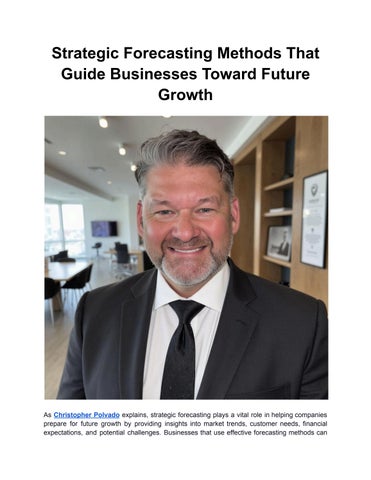
As Christopher Polvado explains, strategic forecasting plays a vital role in helping companies prepare for future growth by providing insights into market trends, customer needs, financial expectations, and potential challenges Businesses that use effective forecasting methods can
make informed decisions, allocate resources wisely, and develop strategies that support long-term success. Rather than relying only on past performance, strategic forecasting helps organizations understand possible future scenarios and adapt to changing conditions
Companies use various strategic forecasting methods to identify opportunities and reduce uncertainty One common approach is trend analysis, which examines historical data to recognize patterns that may influence future outcomes. By studying sales performance, customer behavior, and industry movements, businesses can create realistic growth plans and adjust their strategies before challenges arise
Scenario planning is another valuable forecasting method that allows companies to prepare for different possible futures Organizations can develop multiple scenarios based on economic changes, market shifts, or new technologies. This approach helps leaders understand potential risks and create flexible strategies that remain effective even when conditions change
Financial forecasting also supports strategic growth by helping companies estimate revenue, expenses, and investment needs Accurate financial projections allow businesses to manage budgets, improve cash flow planning, and make confident decisions about expansion. When combined with operational insights, financial forecasting creates a stronger foundation for sustainable development
Data-driven forecasting has become increasingly important in modern business environments Advanced analytics tools help companies evaluate large amounts of information and discover valuable insights. By using data from customer interactions, market research, and performance reports, businesses can improve accuracy and respond quickly to emerging opportunities
Successful strategic forecasting also requires continuous evaluation and adjustment Future conditions can change rapidly, so companies must regularly review their forecasts and update their plans. A flexible forecasting process allows leaders to stay prepared and maintain a competitive advantage
Strategic forecasting methods help companies move beyond uncertainty and build a clearer path toward growth By combining trend analysis, scenario planning, financial projections, and data-based insights, organizations can make smarter decisions and strengthen their ability to succeed in evolving markets. Businesses that prioritize strategic forecasting are better positioned to achieve lasting growth and adapt to future opportunities