
Smart Fire Protection Technologies Today by Devin Doyle

Page 1


Devin Doyle notes that fire protection has moved far beyond the basic smoke alarms, sprinkler heads, and handheld extinguishers that once defined building safety Today, cutting-edge fire protection technologies combine intelligent detection, automated response, advanced materials, and real-time data to create safer spaces before flames can spread In homes, offices, factories, hospitals, schools, and high-rise buildings, these new systems are designed to recognize danger earlier and react with impressive speed The goal is not only to put out fires but also to prevent loss, protect lives, preserve property, and reduce panic during emergencies As cities grow taller, industries become more complex, and electrical systems become more demanding, modern fire safety must be smarter, faster, and more adaptable than ever before

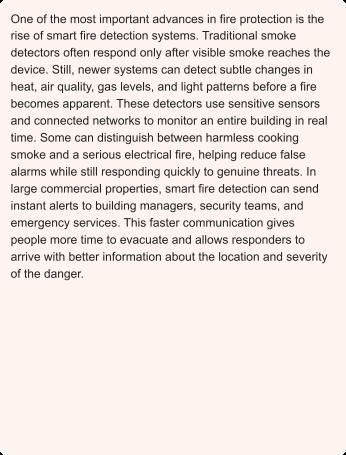
Smart Detection and AI Risk Assessment

Precise Suppression and Fire-Resistant Materials

Modern fire suppression technology has also become more precise and environmentally responsible. Water sprinklers remain important, but many spaces now require specialized solutions that protect sensitive equipment and valuable assets. Clean agent systems are commonly used in server rooms, control centers, museums, and laboratories because they can suppress fire without leaving damaging residue. Water mist systems are another innovative option, using tiny droplets to cool flames, reduce oxygen near the fire, and limit water damage. Foam-based systems continue to improve for industrial settings where flammable liquids are present. In commercial kitchens, advanced suppression systems can quickly target grease fires while shutting down fuel or power sources. These technologies show how fire protection is becoming more customized, matching the type of risk with the safest and most effective response.

Connected Emergency Systems

Remote Monitoring and the Future of Fire Safety

The future of cutting-edge fire protection technologies will likely become even more connected, predictive, and sustainable As buildings generate more data, fire safety systems will be able to understand risk with greater accuracy and respond with greater precision Battery energy storage, electric vehicles, solar installations, and smart appliances will continue to create new safety challenges, making advanced detection and suppression even more important At the same time, businesses and property owners will look for systems that protect people while reducing environmental impact and long-term costs Fire protection is no longer just a hidden requirement inside a building plan. It is a vital part of modern design, public safety, and responsible property management. With smarter sensors, cleaner suppression, stronger materials, and faster communication, today’s fire protection technologies are helping create safer environments where people can live, work, and gather with greater confidence

Turn static files into dynamic content formats.

Create a flipbook
Smart Fire Protection Technologies Today by Devin Doyle by Devin Doyle - Issuu