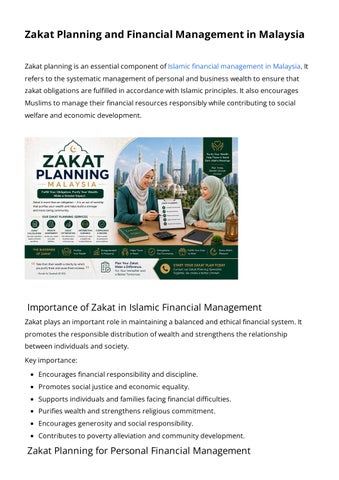
Zakat Planning and Financial Management in Malaysia Zakat planning is an essential component of Islamic financial management in Malaysia. It refers to the systematic management of personal and business wealth to ensure that zakat obligations are fulfilled in accordance with Islamic principles. It also encourages Muslims to manage their financial resources responsibly while contributing to social welfare and economic development.
Importance of Zakat in Islamic Financial Management Zakat plays an important role in maintaining a balanced and ethical financial system. It promotes the responsible distribution of wealth and strengthens the relationship between individuals and society. Key importance: Encourages financial responsibility and discipline. Promotes social justice and economic equality. Supports individuals and families facing financial difficulties. Purifies wealth and strengthens religious commitment. Encourages generosity and social responsibility. Contributes to poverty alleviation and community development.
Zakat Planning for Personal Financial Management
Personal zakat planning involves organising financial resources to ensure that religious obligations are incorporated into everyday financial activities. Important aspects include: Income management: Understanding different sources of income and identifying relevant zakat obligations. Savings management: Maintaining proper records of savings and financial deposits. Investment management: Considering zakat responsibilities when making investment decisions. Financial budgeting: Including zakat commitments in personal financial planning. Financial record-keeping: Maintaining organised records of income, savings and assets. Religious compliance: Ensuring that financial activities follow Islamic principles.
Zakat Management for Businesses in Malaysia Business zakat is an important aspect of Islamic business financial management. Muslimowned businesses need to consider their zakat responsibilities as part of their financial administration and corporate obligations. Key areas of business zakat management include: Maintaining accurate accounting and financial records. Identifying eligible business assets and financial resources. Integrating zakat management into business financial planning. Improving financial transparency and accountability. Ensuring compliance with state zakat authority requirements. Promoting ethical business practices and social responsibility.
Zakat Collection and Distribution in Malaysia Zakat administration in Malaysia is managed through state Islamic Religious Councils and their respective zakat institutions. These institutions are responsible for collecting zakat contributions and distributing them to eligible recipients according to Islamic principles. The eight categories of zakat recipients (asnaf) are: 1. Fakir – Extremely poor individuals. 2. Miskin – Poor individuals. 3. Amil – Zakat administrators. 4. Muallaf – Individuals whose hearts are to be reconciled.
5. Riqab – Individuals seeking emancipation. 6. Gharimin – Individuals facing qualifying debt burdens. 7. Fisabilillah – Those serving recognised causes in the way of Allah. 8. Ibnu Sabil – Travellers facing difficulties during their journey.
Role of Zakat Institutions in Malaysia Zakat institutions play an important role in strengthening Islamic financial management and improving community welfare. Their main responsibilities include: Collecting zakat from eligible Muslim individuals and businesses. Managing zakat funds effectively and transparently. Distributing financial assistance to eligible asnaf. Providing educational and financial support programmes. Supporting entrepreneurship and economic empowerment. Increasing public awareness of zakat obligations. Improving digital zakat payment and administrative services.
Challenges in Zakat Planning and Financial Management Despite the development of zakat institutions in Malaysia, several challenges affect effective zakat management.
Lack of Public Awareness Some individuals have limited understanding of their zakat responsibilities, particularly concerning modern income sources and financial investments.
Complexity of Modern Financial Assets The growth of investment products, digital financial services and diverse income sources creates challenges in identifying zakatable wealth.
Differences in State Zakat Administration Different states may apply varying administrative procedures, guidelines and approaches to zakat management.
Financial Management Issues Poor financial documentation and inadequate record-keeping may affect the accuracy of zakat assessments.
Transparency and Public Confidence Maintaining public trust requires effective fund management, transparent reporting and proper distribution of zakat assistance.
Strategies to Improve Zakat Planning in Malaysia Several strategies can strengthen zakat planning and improve the effectiveness of zakat administration. Enhancing financial education: Increasing public knowledge of zakat obligations and Islamic financial management. Promoting digital services: Improving online zakat platforms and digital payment facilities. Strengthening institutional governance: Improving accountability and transparency in zakat administration. Encouraging regular zakat contributions: Promoting consistent zakat planning among individuals and businesses. Improving financial reporting: Encouraging proper documentation and organised financial records. Strengthening public engagement: Conducting awareness campaigns and educational programmes. Supporting economic empowerment: Using zakat assistance to encourage sustainable livelihoods among eligible recipients.
Relationship Between Zakat and Sustainable Economic Development Zakat contributes to sustainable economic development by supporting wealth redistribution and improving the financial conditions of disadvantaged communities. Its contributions include: Reducing poverty and income inequality. Supporting education and skills development. Encouraging entrepreneurship among eligible recipients. Improving access to essential needs and social services. Strengthening community economic participation. Promoting inclusive and ethical economic development.
Conclusion Zakat planning and financial management are essential elements of the Islamic financial system in Malaysia. Effective zakat management encourages Muslims to fulfil their religious responsibilities while managing their personal and business finances responsibly.
Furthermore, zakat institutions contribute to social welfare through systematic collection and distribution of funds to eligible recipients. Strengthening public awareness, digitalisation, transparency and institutional governance can further improve zakat management and support sustainable socioeconomic development in Malaysia.
Contact Us: Location: Elmina Green Three, 40160 Shah Alam Mail: saidah@solusiringgit.com Phone: +6017-6939757 Website: https://solusiringgit.com/