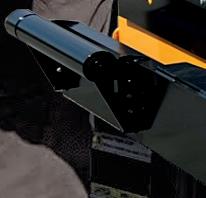
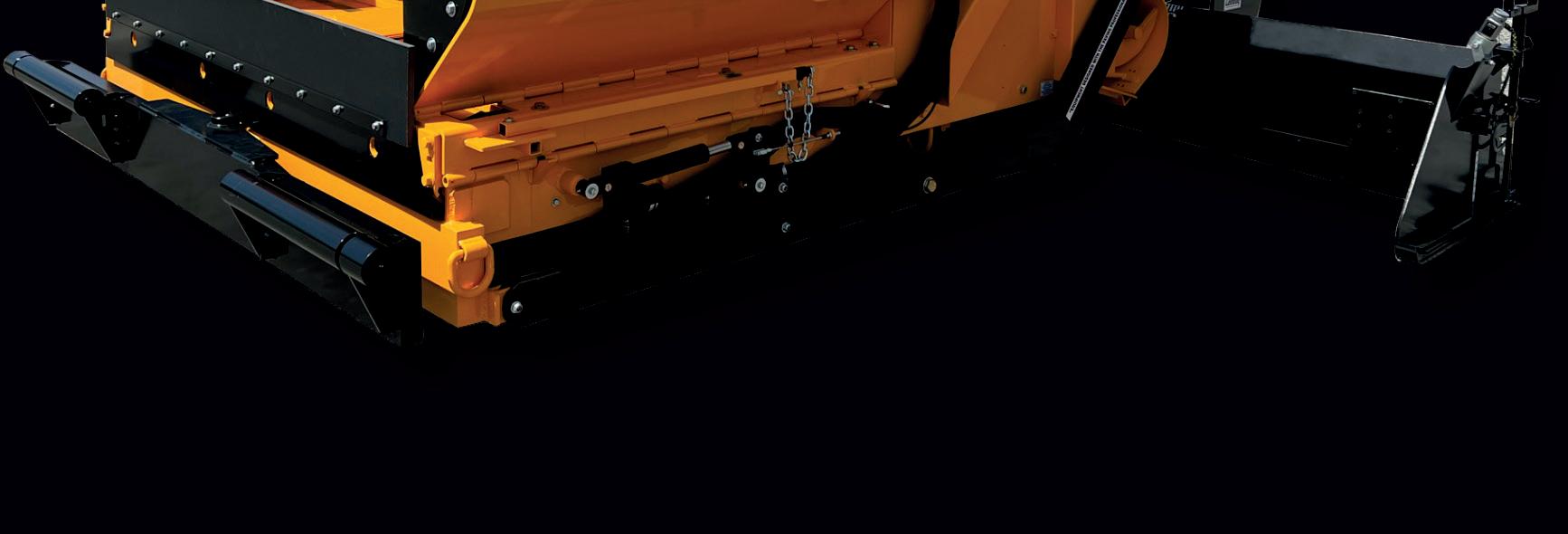
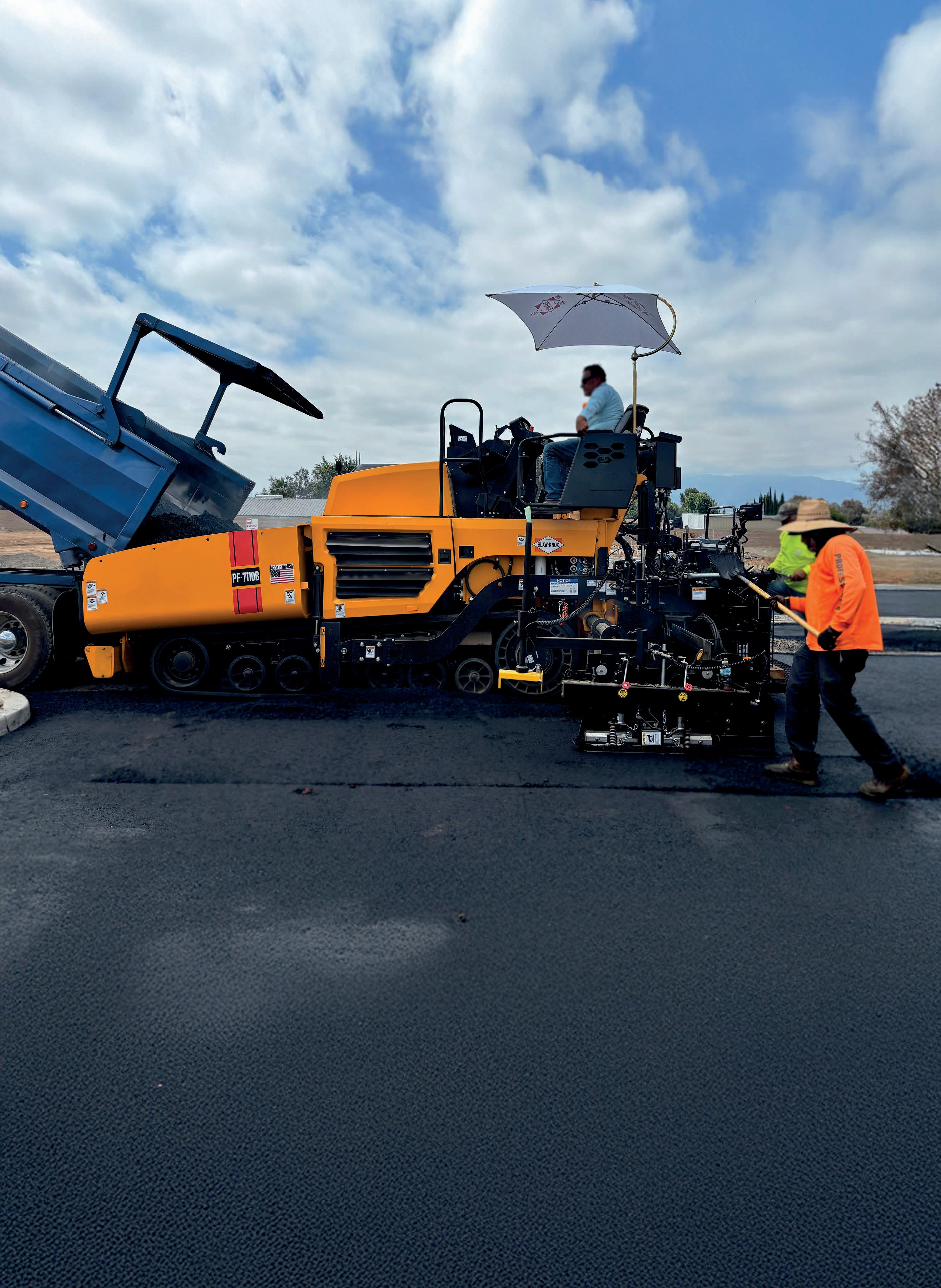
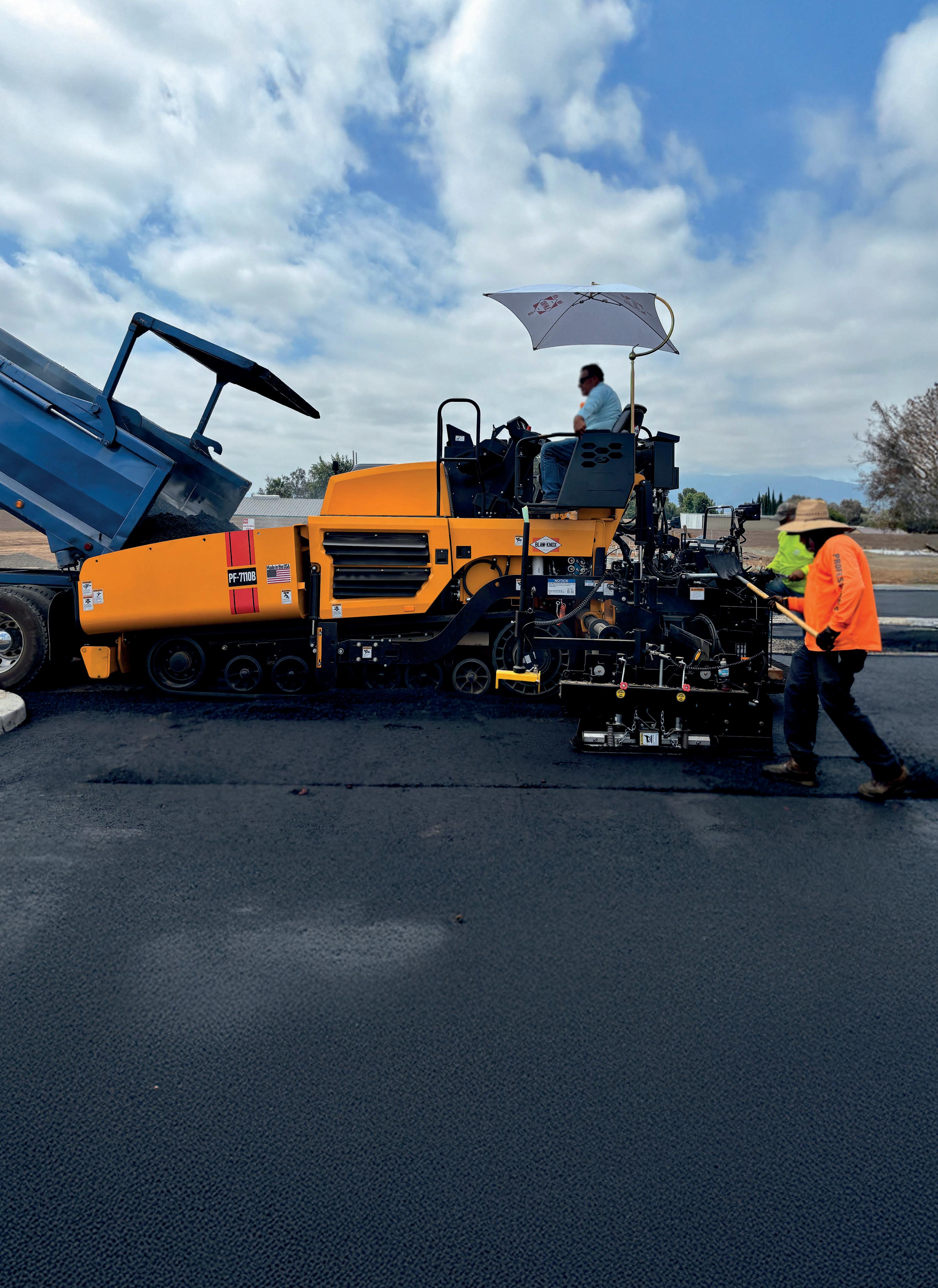
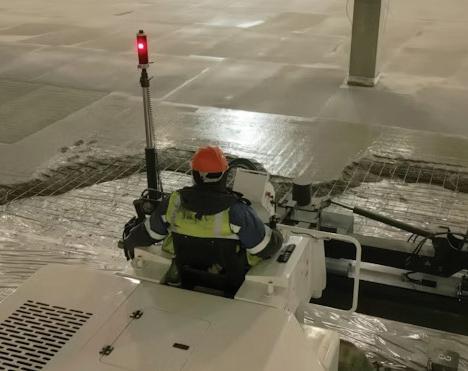
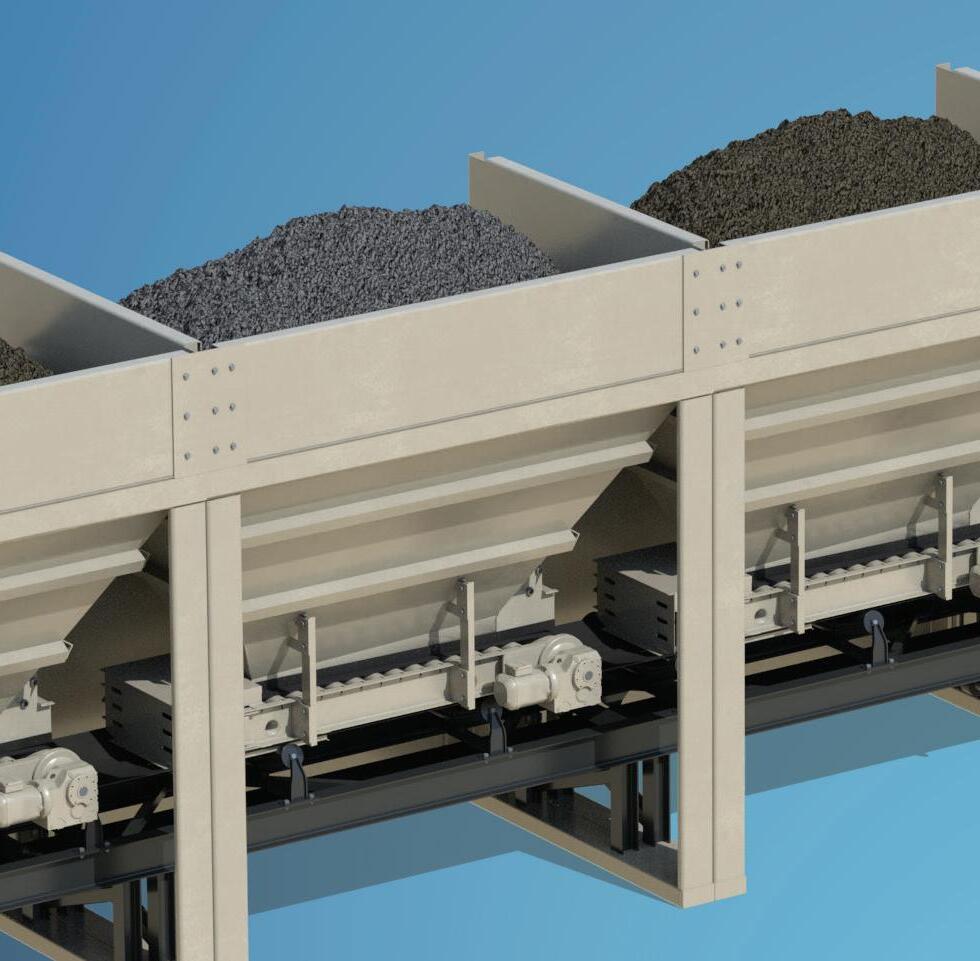
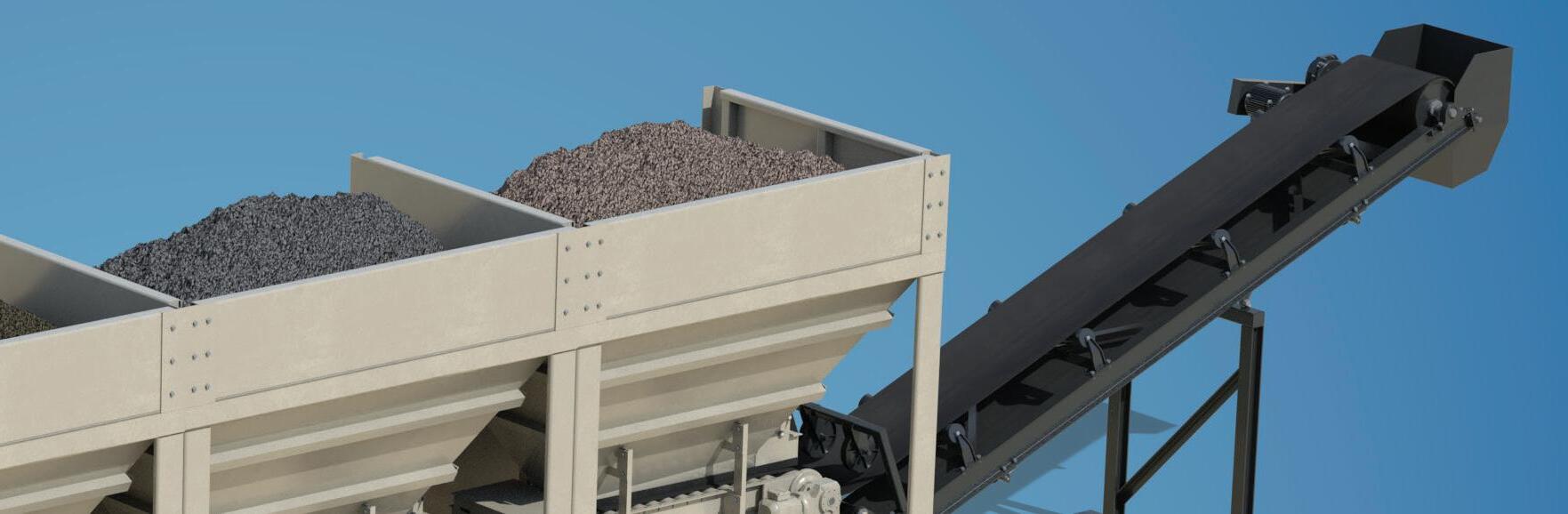
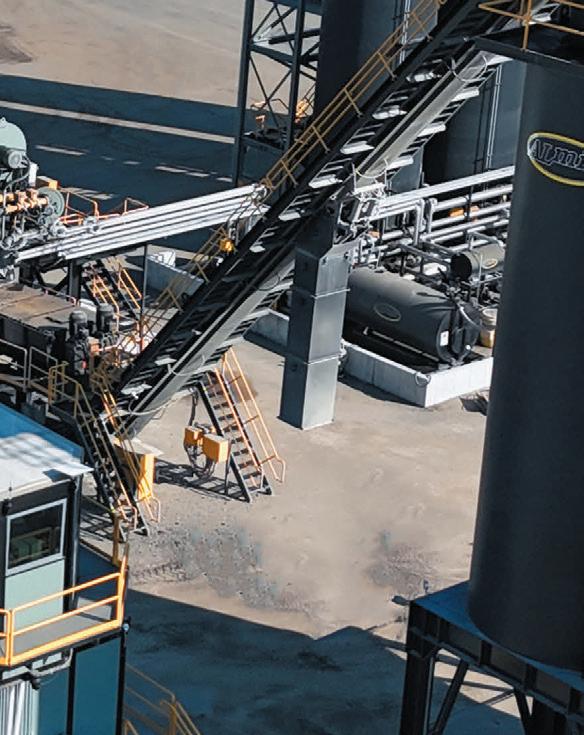
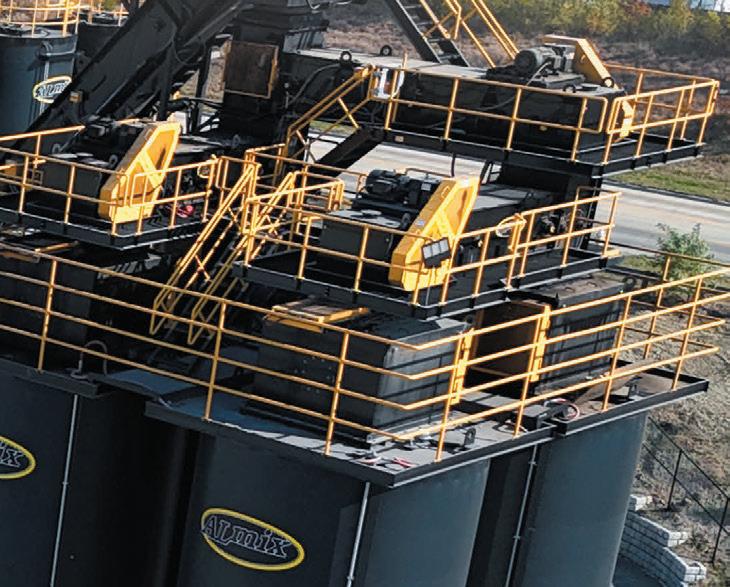
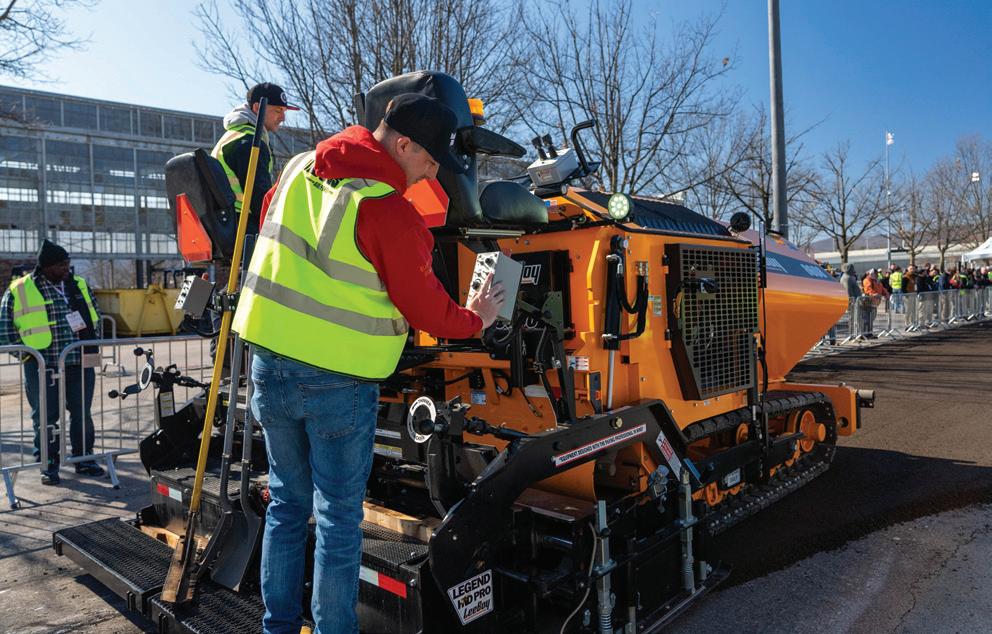
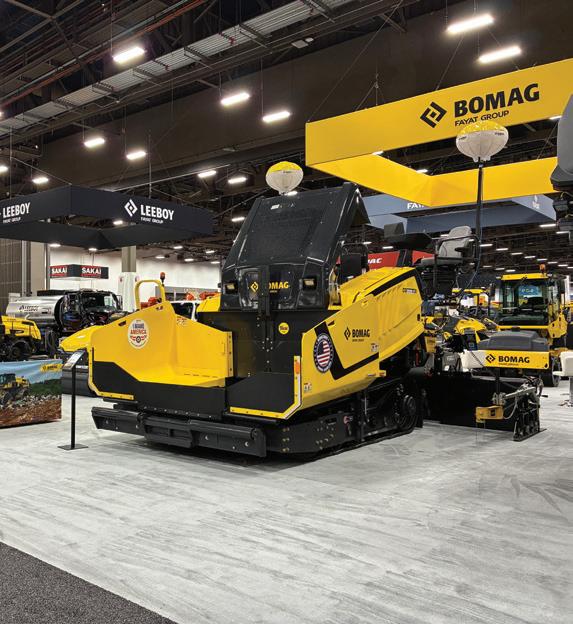
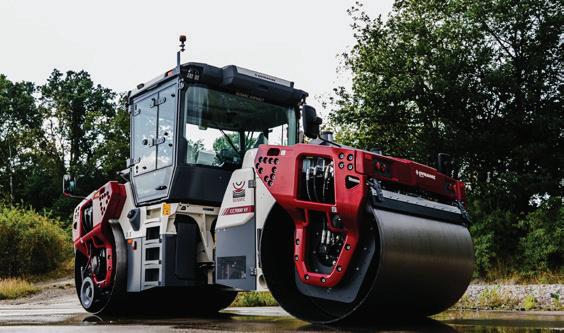
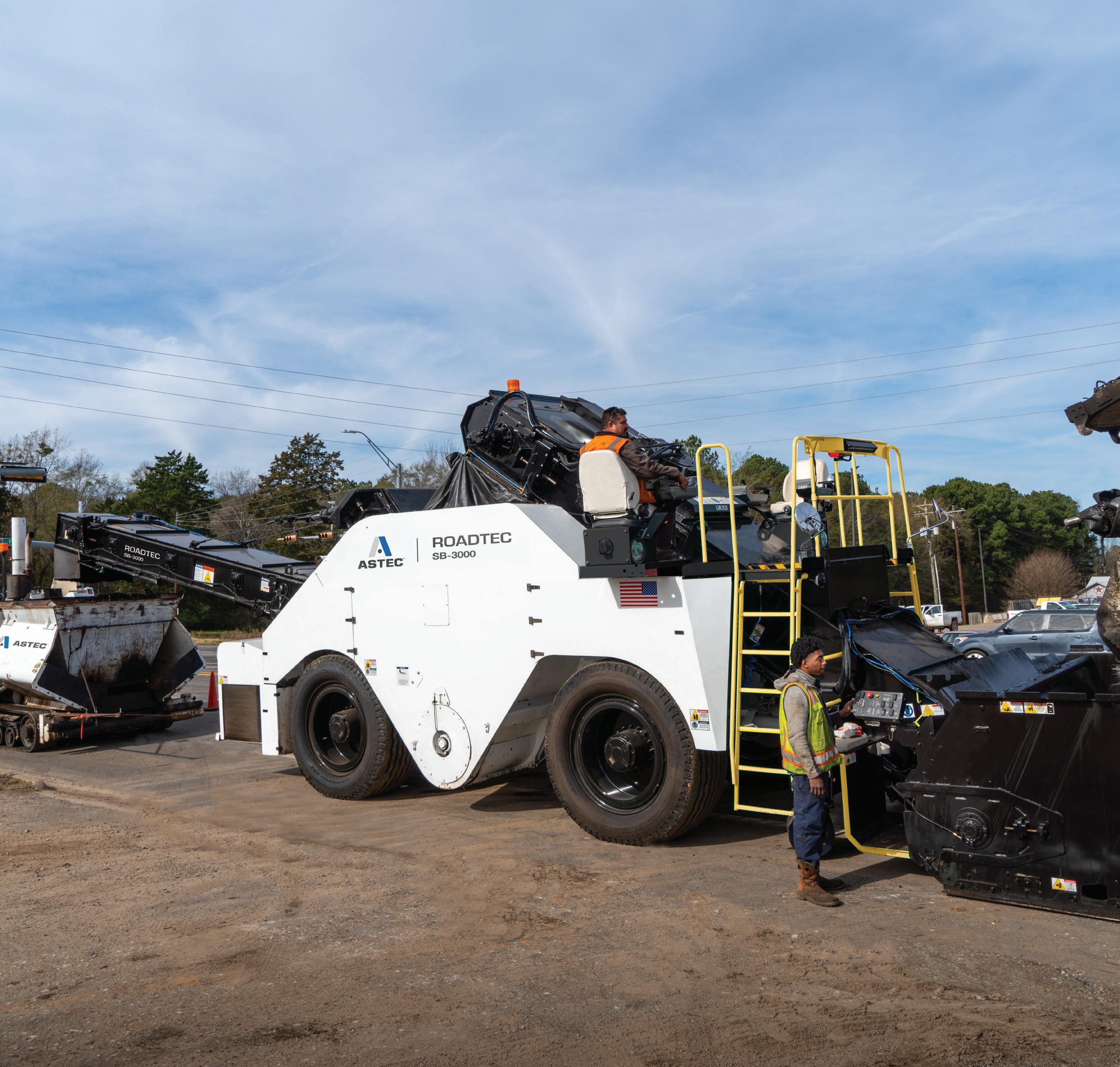
LeeBoy 8520C—where heavy-duty 125 HP performance meets seamless precision. With wide variable paving widths up to 15' and the HD PRO Screed available with paving widths up to 15' 6", this is high-powered reliability built for pro-grade results.
Features & Benefits:
Optional Legend HD PRO Screed
Heavy-duty, wide conveyor system
Operator-friendly controls
Digitalization, Trade, And The Future Of Road Building
The president of FAYAT Group sat down with Asphalt Contractor to talk technology adoption, the economics of sustainability, tariff pressure, and what makes a wine truly great. | 10
FACE OF THE INDUSTRY
JOBSITE INNOVATIONS
16 What The Iran War Means For Asphalt Contractors This Paving Season
The largest oil supply disruption in recorded history is developing right as the U.S. paving season kicks into gear. History says binder prices follow crude.
20 Top 30 Asphalt and Road Building Products of 2026
New, improved, and legacy products for the asphalt and road building industry professional in-mind.
PRESERVATION & SUSTAINABILITY
28 Road to Insolvency: The Highway Trust Fund Crisis
The money is set to run out in 2028. How will the industry move forward?
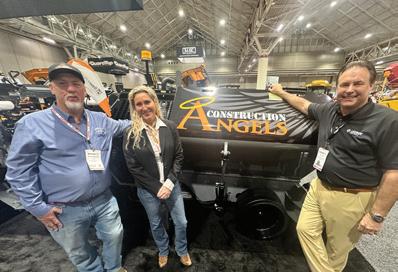
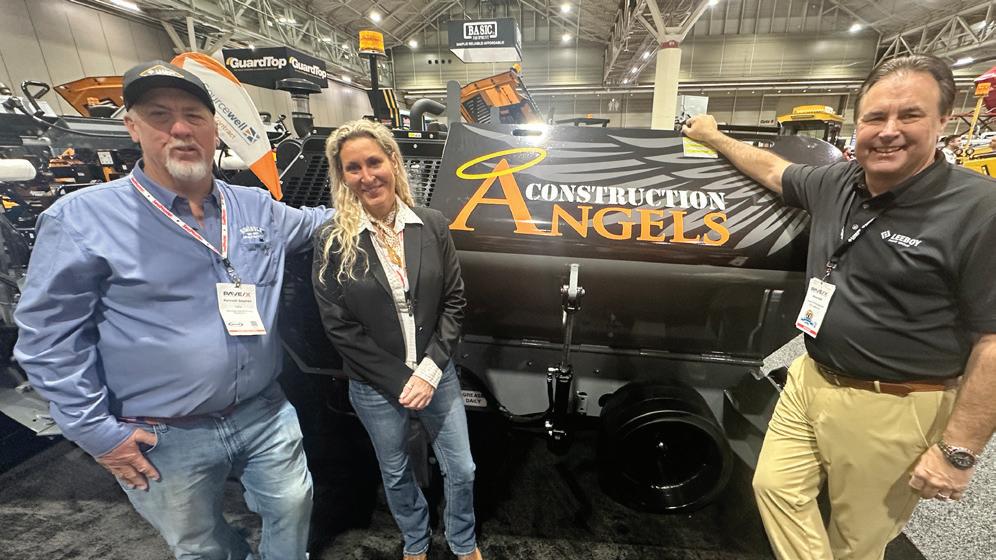
30 Kristi Ronyak And The Mission Behind Construction Angels
The charity supports families who have been impacted by the loss of a loved one from work zone accidents.
31 Milling In The Dark: Lights, Cameras, Action?
Between work zone safety, speed cameras, and what the industry still needs from lawmakers -- night highway milling is some of the most dangerous work in construction.
Published and copyrighted 2026 by IRONMARKETS. All rights reserved. No part of this publication may be reproduced or transmitted in any form or by any means, electronic or mechanical, including photocopy, recording or any information storage or retrieval system, without written permission from the publisher. Asphalt Contractor (ISSN 1055-9205, USPS 0020-688): is published ten times per year: January, February/March, April, May, June/July, August, September, October, November, December by IRONMARKETS, 201 N. Main St. Ste 350, Fort Atkinson, Wisconsin 53538. Periodicals postage paid at Fort Atkinson, Wisconsin and additional entry offices.
POSTMASTER: Please send change of address to ASPHALT CONTRACTOR, 201 N. Main St. Ste. 350, Fort Atkinson, WI 53538. Printed in the U.S.A.
SUBSCRIPTION POLICY: Individual subscriptions are available without charge only in the USA. The Publisher reserves the right to reject nonqualifying subscribers. One-year subscription to nonqualifying individuals: U.S. $45.00, Canada & Mexico $65.00, and $95.00
DIGITAL CONNECTION
[VIDEO] CAT Demos Next Gen Articulated Trucks
CAT Market Specialist Scott Thomas offers an overview of the new features and capabilities of the 725, 730, 730 EJ and 735 dump trucks.
Watch the video at: https://asph.link/5yq48eve
Industry Report Finds AI Adoption Accelerating Across Commercial Construction
A new ServiceTitan report shows rising AI adoption among contractors, alongside cost pressures, labor challenges and increased focus on profitability.
Read more at: https://asph.link/ kdod5lsu
Jobsite Security Incidents Continue to Pressure Construction Schedules and Costs in 2026
New survey data shows construction leaders continue to face theft, vandalism and jobsite disruptions that affect inventory, equipment, project timelines and profitability.
Read more at: https://asph. link/e3luxq4l
The Volatile Materials of Concrete Tariffs
7 questions with Chris Fisher of Ducker Carlisle on how concrete contractors may be affected by tariffs.
ConTech Trends Shape Productivity, Risk Management in 2026
Contractors in 2026 focus on AI-driven visual data, jobsite technology investments, supply chain visibility and digital workflows to improve productivity and reduce risk.
Read more at: https://asph. link/5st9bx4u Signup for the Roadbuilding
Read more at: https://asph.link/ u6b5ibu1
NEW IntelliPac ™ Moisture System
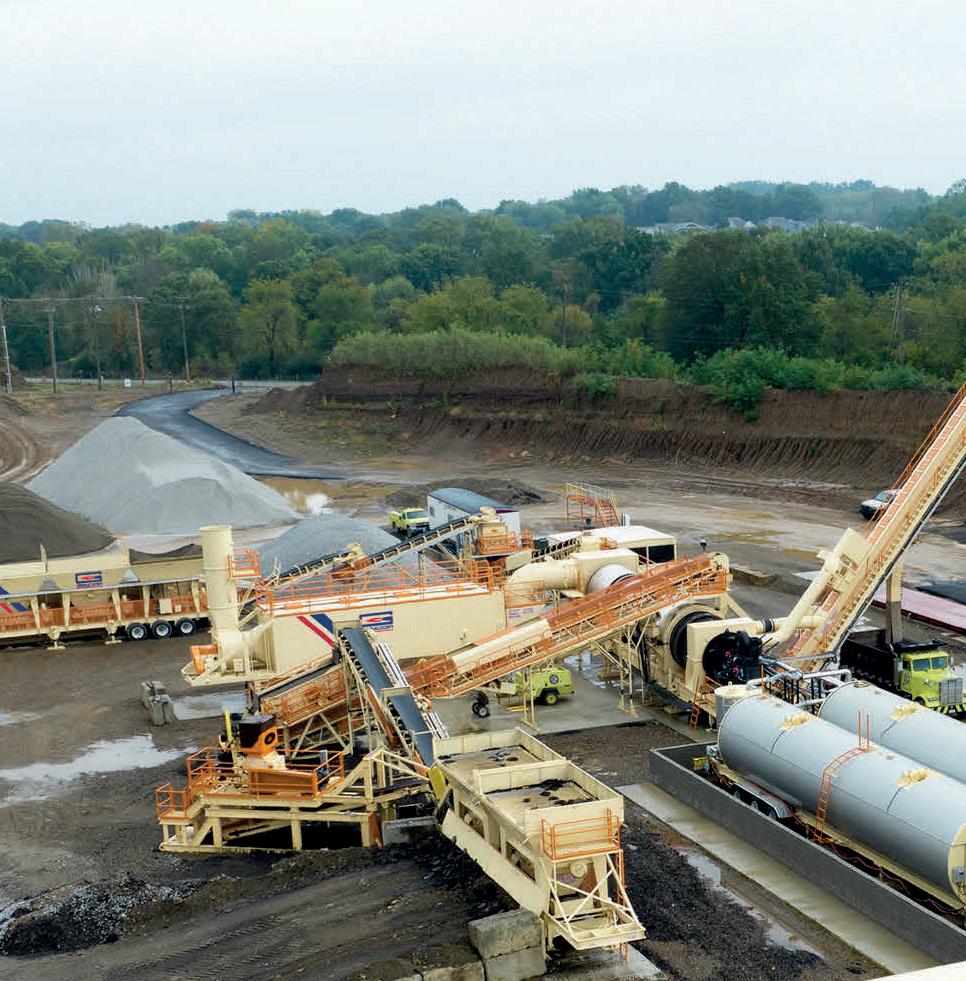
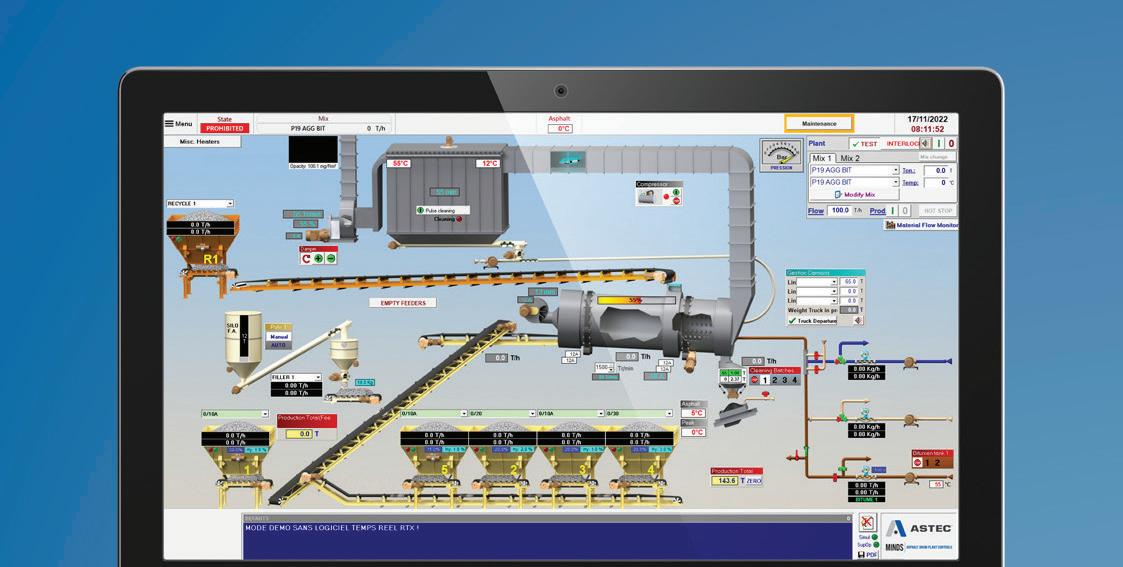
Astec paves the way for sustainable, innovative asphalt plants. The new IntelliPac Moisture System is a revolutionary solution that integrates seamlessly with Astec control systems. This provides unparalleled, real-time visibility into virgin aggregate moisture content. IntelliPac empowers operators to optimize mix design, minimize energy consumption, and reduce environmental impact. With Astec, you get superior asphalt production – better for the environment, better for your business.
BUILT TO CONNECT
Brandon Noel, Editor-in-Chief
bNoel@iron.markets
234-600-8983
Our Fully Precendented Times
One of the most important issues we’ve published since I became editor.
Issues of the magazine come together in all sorts of ways. Plans are made a whole year in advance as I try to project into the future, what topics and ideas will be of interest. Of course, as contractors, you all know what happens to the best laid plans.
The threads that make up the May issue started revealing themselves during the month of December 2025, as I was wrapping up my 2026 State of the Industry report, as well as making my plans for CONEXPO. I didn’t, however, plan on covering a full range of fiscal, geopolitical, economic, and technological stories all converging simultaneously around a single print magazine issue.
The center piece this month revolves around an in-person conversation I had with one of the most powerful and influential figures in the global asphalt and road building industry. Our conversation probed his perspectives on where the industry is, as well as where it is headed, what contractors can do to thrive in a time of much uncertainty and market fluctuation.
As it turned out, that conversation couldn’t have been more timely.
The Eno Center for Transportation (ECT) released their in-depth analysis and report of the long, drawn out insolvency facing the Highway Trust Fund (HTF). We spoke with the authors about how the impending battle over infrastructure funding is shaping up.
Additionally, the current war between Iran and the United States (at time of print) is poised to complicate matters with the largest recorded disruption to the international oil supply chain. Events have eerily mirrored those of four years ago when the Russia
invasion of Ukraine began. Now is the time that every contractor signing contracts for late-summer and early-fall delivery should be including clauses to protect themselves from sharp escalations in per ton asphalt prices.
It would benefit all to act with caution, protecting themselves and their business as much as possible, rather than hoping for a quick resolution. Even if the war ends between the moment I’m writing this and the time you read it, the disruption will be felt at the gate in some capacity.
Not to be overlooked, we have our annual Top 30 Products for the asphalt and road building industry!
Every year we take a look at what’s new in the realm of products, equipment, technology, and services. This being a CONEXPO year means that there was much more new than we could include, and that’s the case with all our stories this month.
With that in mind, every time you see a QR code embedded at the end of an article, make sure you use your phone to scan it to access extended content, additional data, research, sources, and analysis that we simply didn’t have enough space for.
The asphalt industry is at an inflection point, and we’re here to try and help make sense of it as we go. See you on the road!
Published and copyrighted 2026 by IRONMARKETS. All rights reserved. No part of this publication may be reproduced or transmitted in any form or by any means, electronic or mechanical, including photocopy, recording, or any information storage or retrieval system, without written permission from the publisher.
@ASPHALTCONTRACTOR
@ASPHALTCONTRACTOR
@ASPHALT-CONTRACTOR-MAGAZINE
SCAN TO READ MORE
By Brandon Noel, Editor-In-Chief
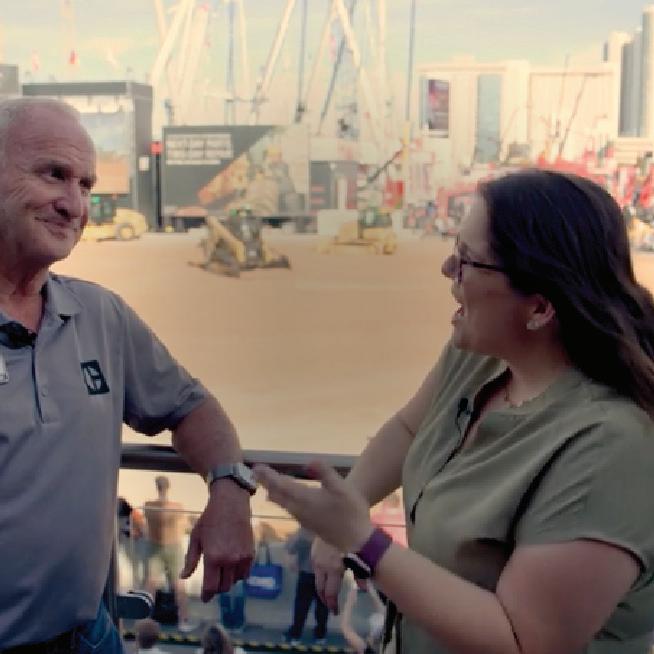
Global Asphalt: Jean-Claude Fayat On Digitalization, Trade, And The FUTURE OF ROAD BUILDING
Technology adoption, the economics of sustainability, tariff pressure, and what makes a wine truly great.
You don’t often get face time with one the most influential people, not only in the asphalt industry, but in international construction as a whole. So when the opportunity comes, you take it. As I walked the FAYAT Group’s massive booth footprint at CONEXPO-CON/AGG 2026, the scale of what Jean-Claude Fayat has built sunk in. BOMAG. Dynapac. Mecalac. Marini. Ermont. LeeBoy. ADM. The Bordeaux-born president of FAYAT Group oversees a privately held empire that generates €5.9 billion in annual revenue across 170 countries, and he has spent the last two years
doubling down on North America with a speed that has the industry paying close attention.
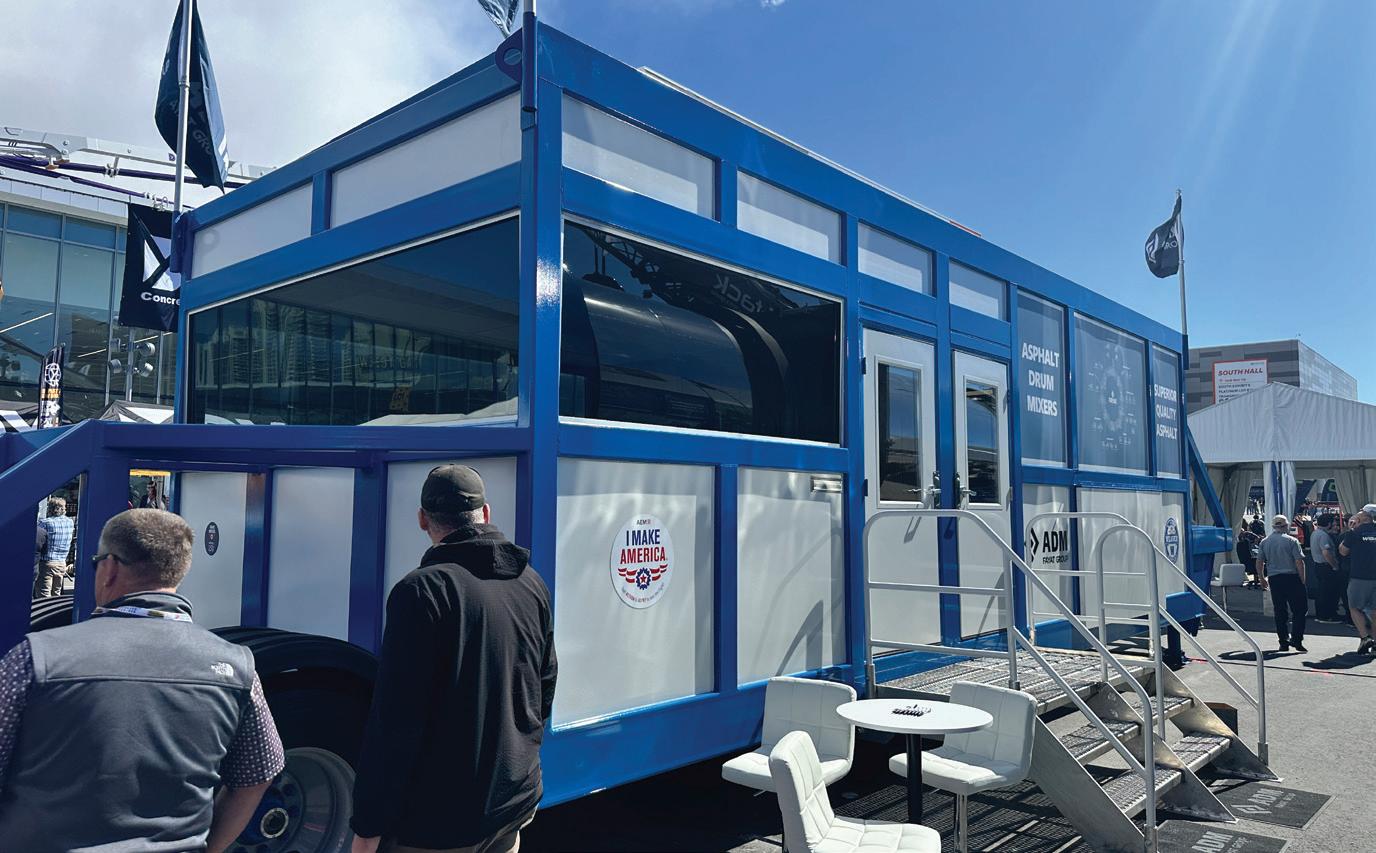
FAYAT Group completed its acquisition of LeeBoy in September 2025 for approximately $290 million. Months before that, the group took a controlling interest in Asphalt Drum Mixers (ADM). Those moves followed a $13.7 million investment in a new 100,000-square-foot parts distribution center in Ridgeway, South Carolina. All of that indicates that the North American market is an essential part of its strategy.
Fayat sat down with Asphalt Contractor on the show floor, and what followed was a candid, wide-ranging conversation about what’s keeping the industry from fully embracing new technologies, why he believes sustainability’s timeline is being bent but not broken by politics, how
contractors can survive a challenging cost environment, and why the era of single-country global dominance could be over.
TECHNOLOGY TRANSITION: ADOPTION VS. RESISTANCE
The road construction equipment market sits at a crossroads. The global machine control system sector alone is projected to reach $8.93 billion by 2030 — driven by GPS-integrated 3D machine guidance, telematics, and fleet connectivity that operators can access through an in-cab interface. But these aren’t the only types of emerging technologies in roadbuilding.
You could compare the current heavy equipment market to the similar transitional era the power-tool market was in decades ago, as it moved away from pneumatics and hardwires, to battery operated dominance. While it
was met with similar skepticism, no one thinks twice about battery powered tools today.
AC: With your global experience, what do you think is going to be the biggest change for this market over the next decade?
FAYAT: The digitalization of the equipment, for sure. That’s the biggest one. Yes, that’s the biggest one for the next years. After, I don’t know. But for the next years, yes.
AC: Are there more challenges you foresee?
FAYAT: We face, of course, technological challenges. But I would say the main challenge is to be able to understand what will be the next steps, because you have the fully autonomous machine — fully autonomous — and between that and nothing, you have all different steps. And how it will happen, this is not so clear. Because what the market requires for the moment — you have many open things, but nothing very clear. That’s a challenge for me. Technically, it’s a challenge because we have to find technical solutions for that. But it’s not the most complex challenge we face. The most complex challenge for us is to understand what will be the requirement of the market in the next year.
To Mr. Fayat’s point, researchers at the multidisciplinary Digital Publishing Institute (MDPI) tracking autonomous earthwork machinery noted that academic publications on the topic rose 30-fold between 2015 and 2024, a sign of serious industry investment. But investment in R&D and investment in market-ready solutions are not the same. The question manufacturers, contractors, and DOTs are all wrestling with is: where exactly are we on the autonomy spectrum right now?
The problem is not engineering, rather, it’s the sequencing. Manufacturers can build technology ahead of market demand, but they cannot force adoption. The spectrum between a manually operated machine and a fully autonomous one contains dozens of discrete capability levels, many of which are familiar terms now: collision avoidance, intelligent compaction, automated screed control,
remote operation, semi-autonomous guidance. Contractors, unions, DOTs, and equipment operators each have different opinions about which steps make sense right now. Building the entire staircase before you know which steps will be used is an expensive bet.
AC: It’s always a surprise to see resistance to these sorts of technologies. Where do you believe that hesitation comes from?
FAYAT: You have resistance from the drivers. It’s true. But here it’s also the age. If you take a driver who is 25 years old, yeah, he will be happy to see tablets inside the machine, things like that. If you take a driver who is 65 or 70 years old, he is more in trouble to use this type of tool. So you will have a resistance. But I think it’s true also in daily life. I would say that’s true.
What I am sure is that everything that we will bring on a machine to help the driver — and that you need, of course, in a fully autonomous machine — will be sold, because at the end, it’s more and more difficult to find skilled operators. So all what we can bring on a machine to help the operator will be welcome. I am sure that, starting with the safety, particularly on the compaction — big compaction machines, they are dangerous machines. So all the safety things to detect obstacles that we can bring on the machine will be welcome, because I think that nobody wants to injure somebody else.
This answer cuts to something important. The resistance we are talking about is not simply a problem to be overcome, it is a variable that can be anticipated and planned for. His argument is essentially that the operator shortage will do what persuasion cannot: force the market toward machine assisted technology. Their job is to be ahead of that outcome, positioned to fill that future demand.
The generational comment is also supported by the data. The
average age of the U.S. equipment operator is rising, and the pipeline of younger workers entering the trades has not kept pace with retirements. In that demographic context, technology that reduces the skill threshold required to operate a machine is not a threat to existing skilled workers, but it, instead, acts as a bridge to their eventual exit from the workforce.
STRATEGIC OPPORTUNITIES: GROWTH AND INVESTMENT
The FAYAT Group’s North American strategy has accelerated faster in the past eighteen months. FAYAT now holds three of the major asphalt paver brands operating in the U.S. market — BOMAG, Dynapac, and LeeBoy — and a complete asphalt mixing plant portfolio with domestic production. That portfolio raises an obvious question about where the innovation priority sits,
Brandon Noel
Brandon Noel
and what previous customers loyal to these brands can expect going forward.
AC: Across all the FAYAT brands where do you see the biggest room for innovation? Who has the most room to grow?
FAYAT: For all the product lines, we have to make innovations. So, I don’t see somewhere special where we need more innovation. The reason why we did these acquisitions — I don’t know if I told that during our last meeting three years ago, but it’s that we want to balance our activities between Europe and the U.S. Our strategy was really to expand our presence in the U.S. through organic growth and through external growth. So, this is the reason why we made these acquisitions, which are fully complementary with what we have today. Inside the group, we are a big producer of mixing plants in Europe and Asia, but we were not present in the U.S. So it makes sense.
For LeeBoy, it’s also complementary. We didn’t have commercial pavers in the group. We produce maintenance equipment with Secmair, and we sell it in Europe and the Middle East — but not in North America, which is a bit of a different market. But I see possibilities to exchange technology between the brands. And of course, LeeBoy brings us a very strong production presence in the U.S. because they are very integrated. With a lot of assembly, but not real production — which is now existing inside LeeBoy. So, it should accelerate our knowledge here and help us go faster. Because this is also our intention: not all product lines, because that would be too complex, but the most
important for us should be produced in the U.S. And we would like to accelerate that.
The balance between Europe and the U.S. is the strategic heart of his comments. FAYAT isn’t investing in North America for its own sake, so much as it’s hedging against geographic concentration. A group that produces primarily in Europe that sells globally is vulnerable to currency swings, shipping disruptions, and the kind of political volatility that has fundamentally reshaped global trade expectations. This is consistent with what we’ve seen in recent years. The LeeBoy factory in Lincolnton presented a distribution advantage, the foundation of a genuine American manufacturing capability that FAYAT did not previously possess.
whether political headwinds in America change that calculation, or will they stay the current course, anticipating another reversal in the near future?
AC: Is there more room for growth in the commercial side of the market, or the heavy highway, road building, and infrastructure side?
FAYAT: Today, I think that the market is reasonably good on both sides. So the responsibility for growth exists on both sides, it seems.
The U.S. paving market divides broadly into two segments: commercial paving and heavy highway and infrastructure work. FAYAT now straddles both segmentsm, but the question of which side of the industry is healthier could have real implications for future moves. Without question, that health depends largely on the following months as congress looks to pass a new surface transportation reauthorization bill before September 2026. However, other policy factors have already had their impacts felt.
The political headwinds against environmental regulation in the U.S. have created genuine uncertainty about sustainability investment timelines. Executive orders paused certain EPA rulemakings, and the appetite for green fleet transitions among state and municipal governments cooled in some regions. At the same time, the construction manufacturing industry, including FAYAT’s own brands, have committed significant capital to electric equipment and architecture. The question is
NEW NORMAL: GLOBAL PARADIGM, LOCAL REACH
AC: Sustainability was a widely used word in our industry, but the political direction in America has changed. Where does it fit into the business plan for the FAYAT family of brands?
FAYAT: I consider this an evolution that will happen. Maybe it’s going slower than we could imagine, but it will come. Because I think we can say what we want — an environmental problem exists in the world today. There is no discussion about that, at least from a scientific point of view. What the solutions are, you can have some discussions. But I’m quite sure this is the direction of history. So, yes, it’s still important. But it’s true that here, it’s very difficult. All companies, including ourselves, have invested a lot putting electrical engines on machines. And today, the sales are still low. They are still low because the return on investment is not good.
At some moment, yes, to grow with a new technology, you will grow for two reasons: because there is an economic interest — otherwise we’re in a capitalist world, so it will never work — and secondly, because it brings something positive for the people, for the operator, for those who care about the environmental situation. It brings something positive. But if it doesn’t get feedback on the financial side, then, of course, it cannot grow. And our problem in the U.S. and Europe — because it’s the same — is that we’re missing the supplier network for that. In China, it exists because it was a policy of that country for 15 years. So, you find a network that is efficient. Both in North America and Europe, it doesn’t exist for the moment.
The supply chain point is particularly important and often underreported in U.S. sustainability conversations. China’s electric construction equipment sector developed the way it did because government policy created a market first, which then attracted suppliers, and then
Adam Rahn
LEADING THE WAY
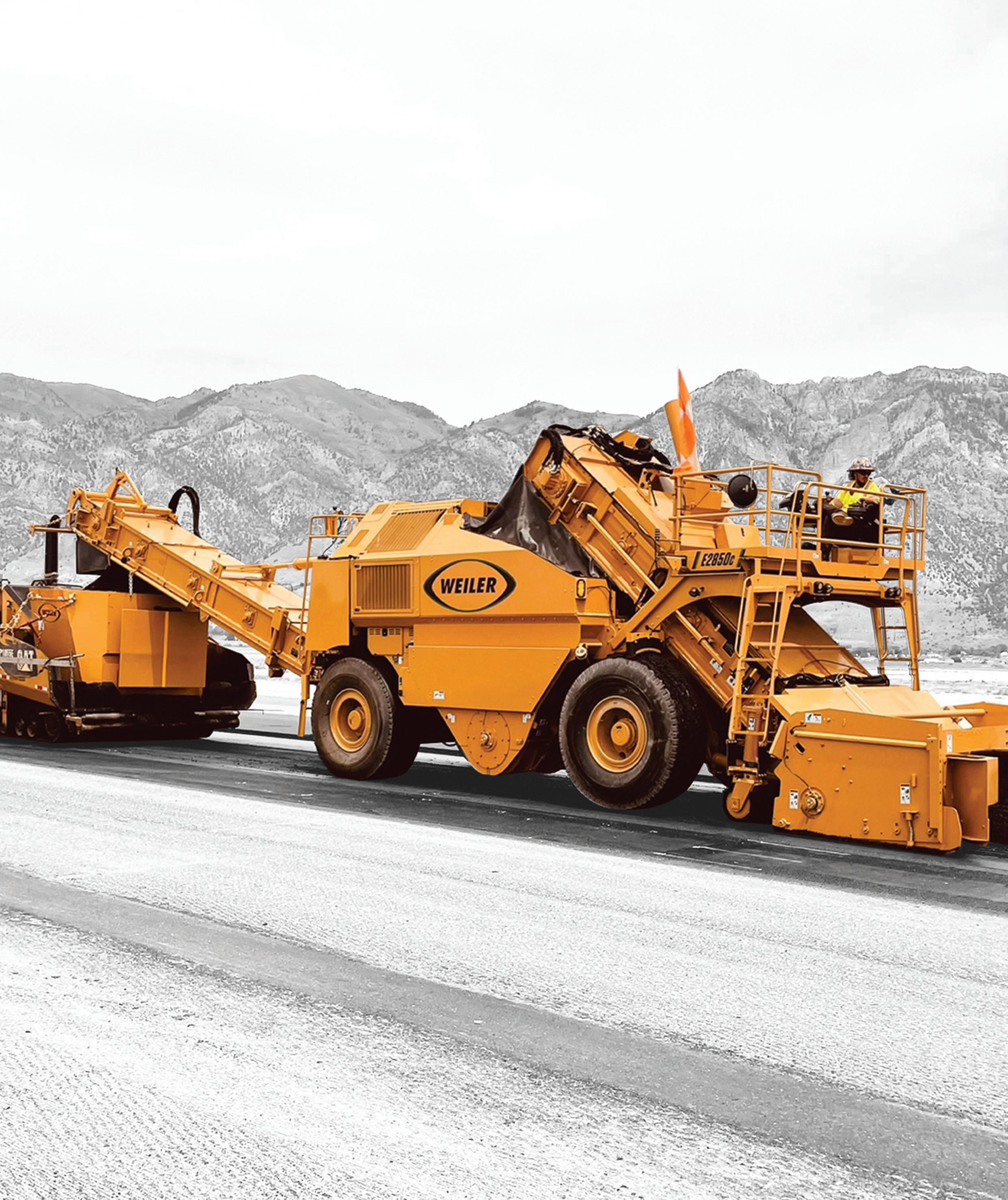
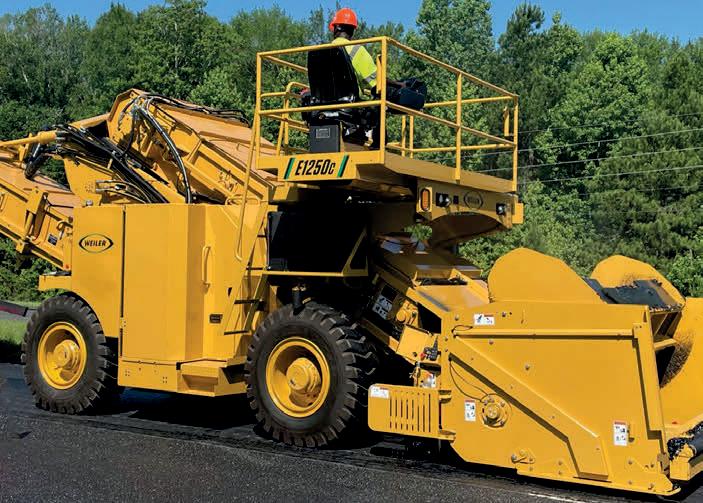
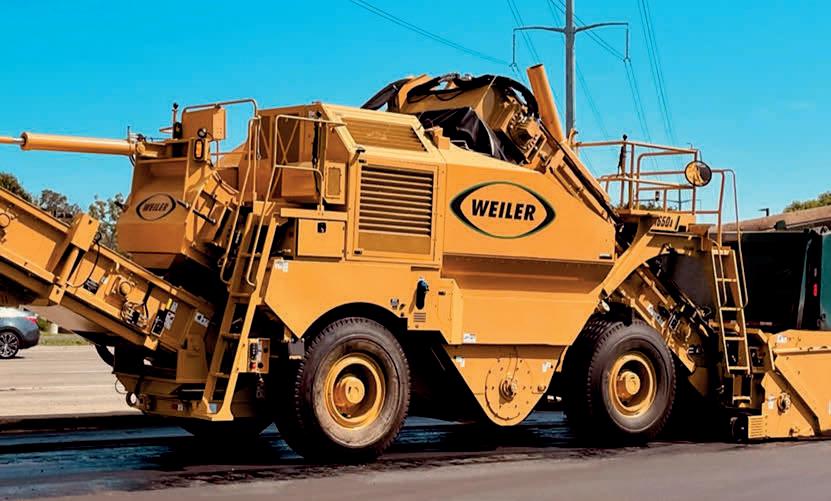
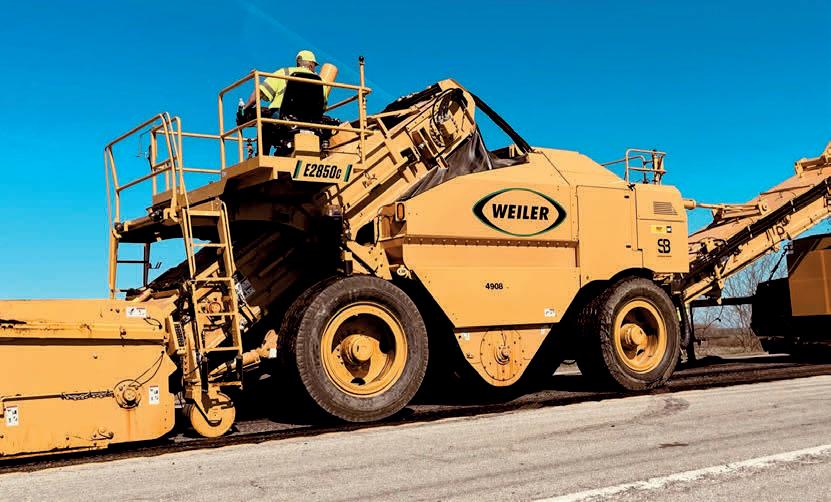
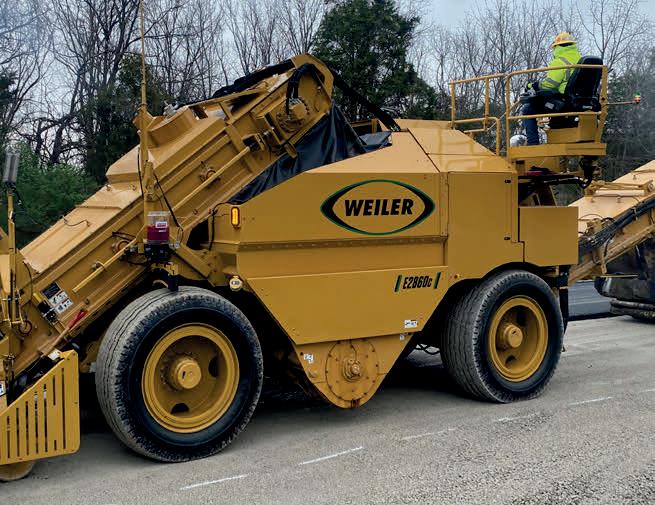
Weiler Material Transfer Vehicles lead the way with proven innovations to provide the lowest cost per ton of operation.
Innovative and reliable operator friendly features such as paver hopper management system with distance to paver, storage hopper management and auto chain tensioning.
Clam shell doors and full width drop down floors provide unmatched access for cleanout and maintenance.
Variable speed elevator and conveyors meet production requirements while minimizing wear.
The multiple, incremental improvements to the 4th generation of chains, sprockets and augers are retrofittable to all machines and provide increased wear life.
drove down costs. The U.S. and Europe lack that policy-driven ecosystem. In North America, charging infrastructure for heavy equipment is still largely project-specific and custom-built. Battery supply chains for large-format construction machines are thinner than those for passenger vehicles.
Until that infrastructure matures, the economics Fayat described are unlikely to shift dramatically. The good news is battery costs have declined significantly over the past decade, and as more manufacturers scale electric product lines, component prices will continue to fall. It is also worth noting that sustainability in paving is not exclusively an electrification story, because efforts are being made across a broad variety of fronts.
In recent years, the cost environment facing asphalt contractors has been shaped by overlapping pressures: inflation in materials and fuel, supply chain disruptions, labor cost increases, and the compounding effect of import tariffs that have raised prices on equipment and components. The AGC documented significant increases in construction input costs since 2021. Equipment manufacturers, including FAYAT’s brands, have passed portions of those cost increases on to buyers, while contractors have faced bid environments where clients have not always been able to absorb corresponding price increases.
AC: Contractors are facing real challenges in terms of affordability. Do you see a possible return to normalization in the near future?
FAYAT: I don’t think that the prices will go down. I don’t think so. It’s true that probably the tariffs are helping to create inflation. To which level, I also don’t know. But at minimum, it’s not going in the direction of decreasing prices. It’s not going the right way for that. But for me, the most important transformation on our market, what we want to do: more and more, you see three areas in the world.
I’m speaking about important economic areas: North America, Europe, and Asia. As a global player, if you want to be everywhere, you need factories in all three of these areas. Can you be in one place? No.
If you want to sell equipment being only a European player, you will be in trouble. But it’s the same if you are only a U.S. player and you want to sell in Europe — it will not be easy. So I think that today, a global player needs factories in all three areas to try to balance a little, so not producing everything everywhere — that would be stupid — but the main products, yes, you need to produce locally.
AC: Of those three blocs — Asia, Europe, and North America — which do you see as the healthiest for the road building and heavy construction market right now?
FAYAT: Probably the two most healthy parts are Europe and the U.S. That’s why, by definition, we are represented in Europe — it’s where we were born. But we want to balance with the U.S., which is the other part, which is stable. We know that Asia is less stable, starting with China, where things can change quickly. India is still a developing country, so it’s difficult to forecast as well what it will be in a few years — a lot of fast growth. We have to give interest to that. But it’s still difficult to see stability. The U.S. and Europe, with all our struggles — at the end, we are stable markets. Stable populations. More or less, we have the same education base.
Mr. Fayat’s conclusion reflects a conviction that has been validated by recent events. The geopolitical volatility he alludes to, including conflicts whose effects reach even heavy construction supply chains, reinforces why the era of a fully international vision built around one or two global production hubs is, in his words, finished.
FINAL TEST: GOOD VS. SOMETHING MORE
Fayat grew up in Libourne, near SaintEmilion, a wine town in the Gironde, and the FAYAT Group has sponsored the Grand Prix de Bordeaux. He knows wine the way he knows machines: as someone who’s spent decades considering what makes them work. So, the last question of our interview was the hardest one.
AC: For you, what separates a good vintage of wine from a truly magnificent one?
FAYAT: That’s not an easy question [laughs]. You know, wine is a consumable product. It’s something very personal. And for me, I will not make a definition of what is a perfect wine. I can tell you what is not a good wine. But what is a perfect wine — a perfect wine for you will not be, maybe, a perfect wine for me. For me, a perfect wine is that when somebody has an emotion in tasting it. It’s like a painting. What is a nice painting? I don’t know. If you buy a painting, it’s not because you invest — for me, it’s a mistake if you do it like that. It’s because at one moment, you have an emotion in front of what you see.
For wine it’s the same. You will buy a bottle because when you taste it, you have an emotion. You are happy. And you are happy to share it with friends. Because also — wine — I never drink a wine alone. It’s something you share. And so at one moment, you have an emotion that you want to share with friends. For me, this is the best wine. It’s not chemistry. You could see it as chemistry, which is partially true, but it’s more than that.
There was something telling about the way the most technically rigorous answer in the entire conversation came in response to the least technical of question. His definition of excellence is not reducible to a specification sheet. Rather, it lives in the instinct that the thing you are evaluating moves you.
Such a framework does not likely appear in any acquisition model, but, perhaps, it should.
FAYAT Group
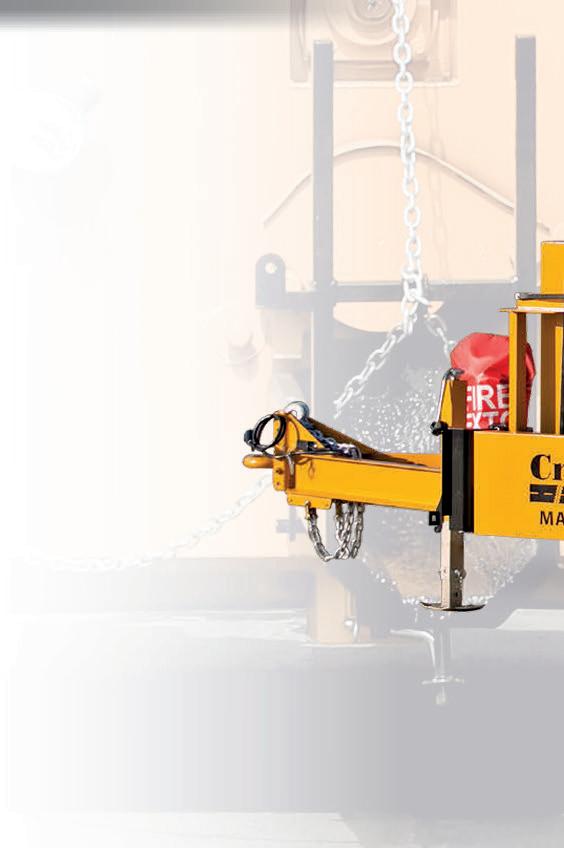
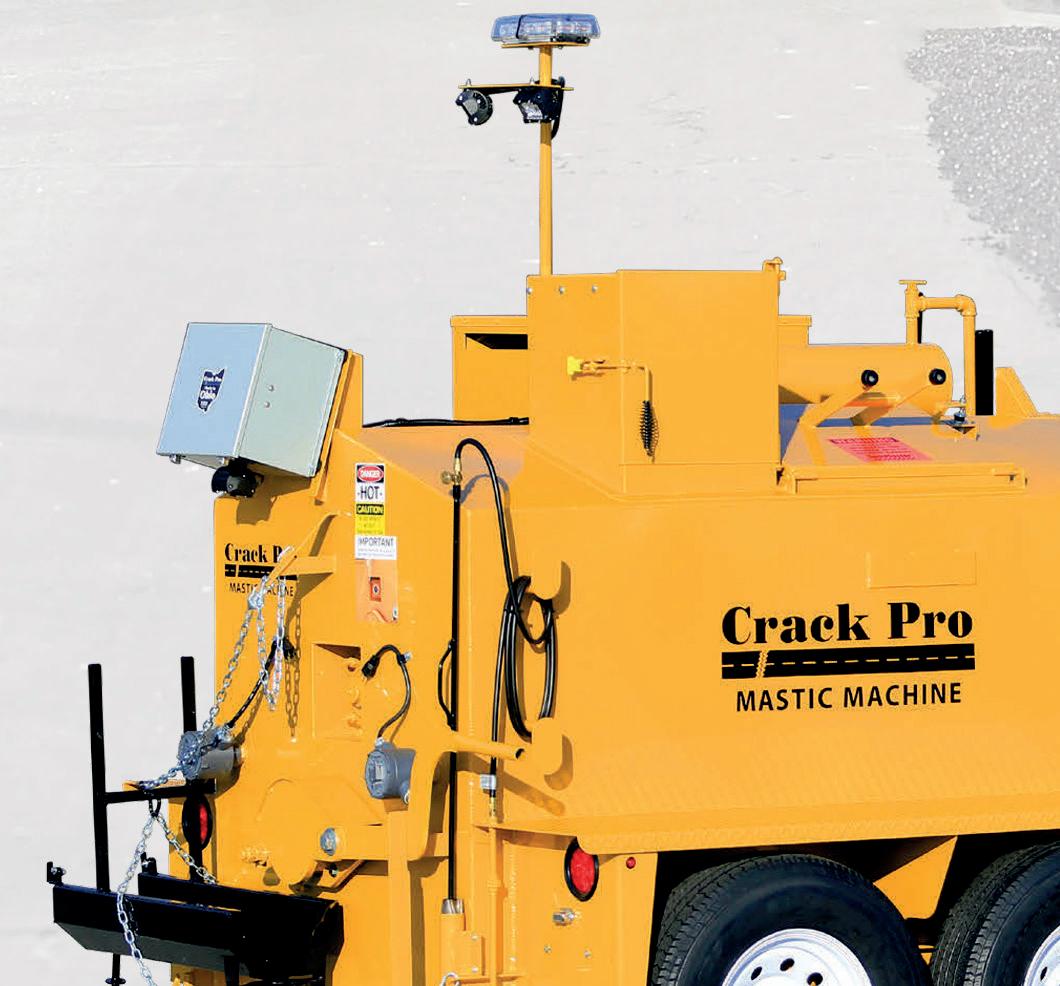
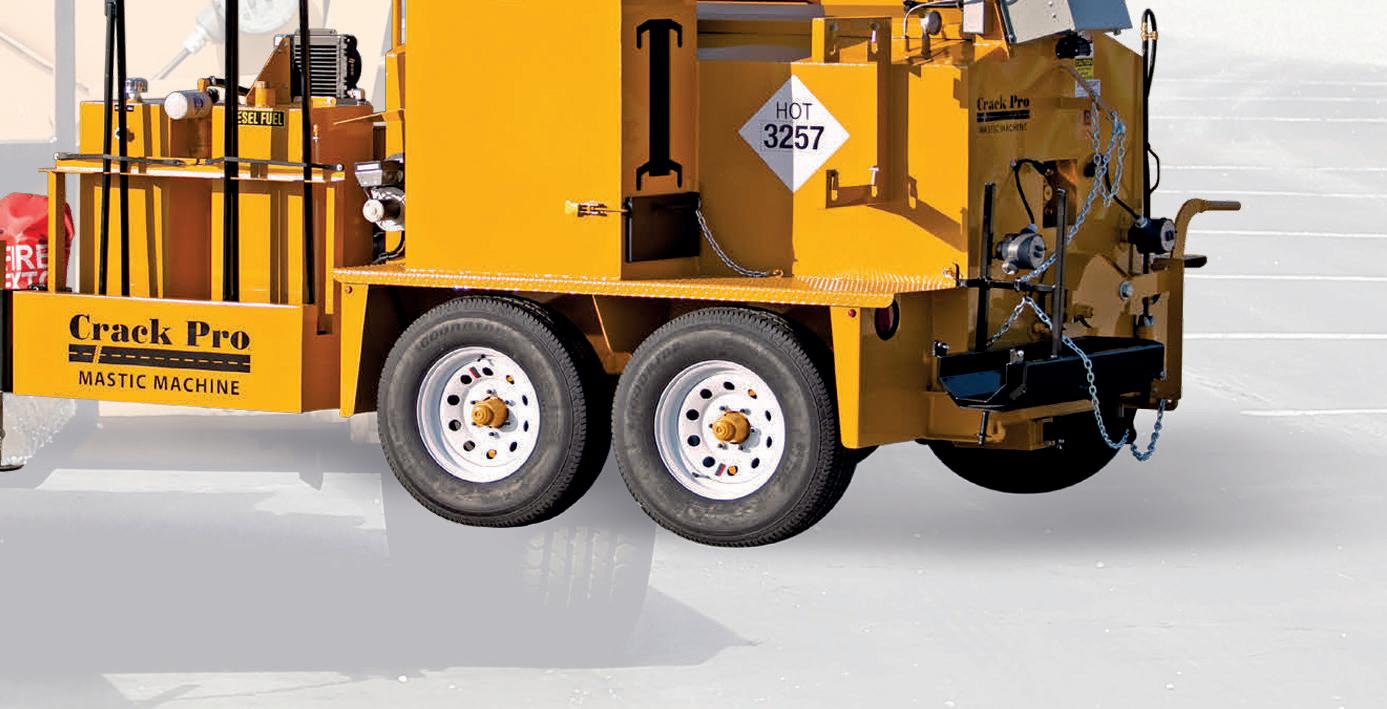
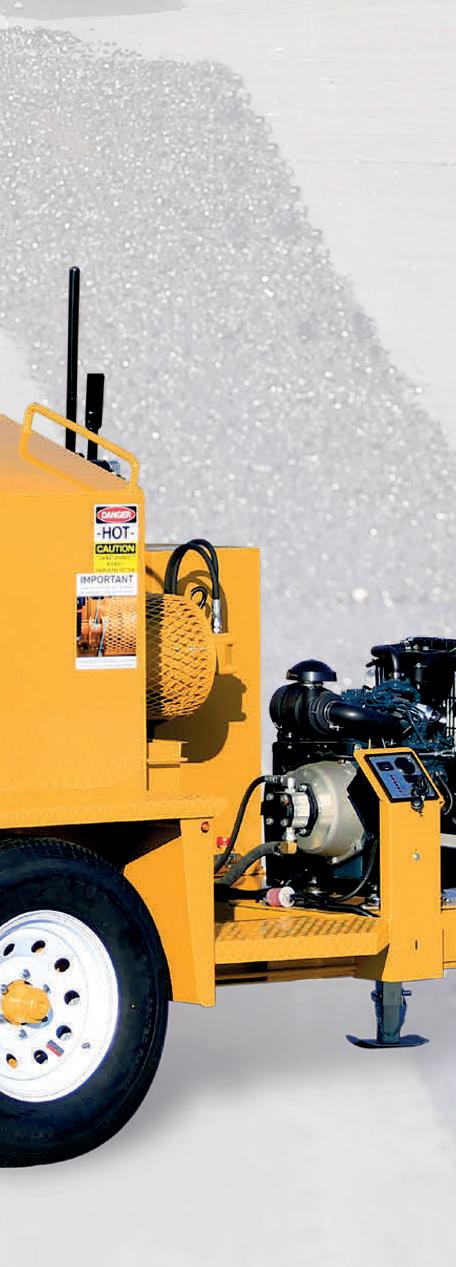
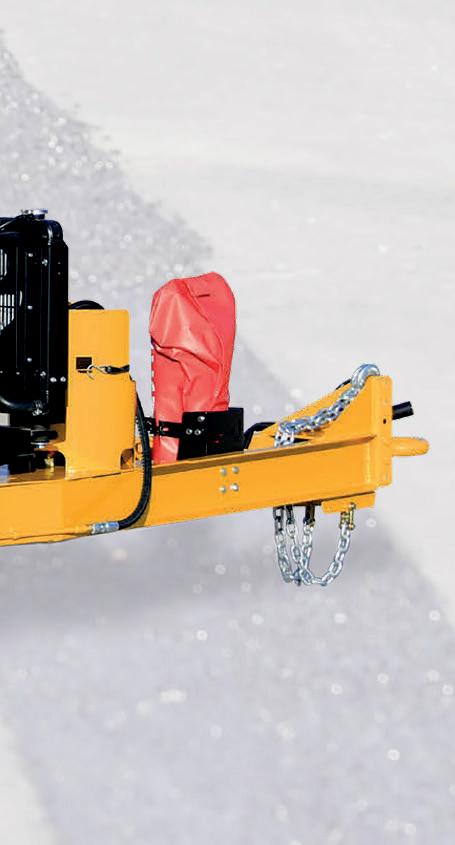
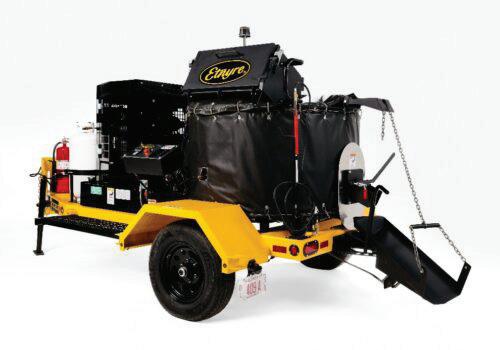
MASTIC MACHINE
• All diesel power (both burner and engine) for maximu efficiency and performance. FEATURES:
• Industry’s fastest heat u time - less than 2.5 hour from cold start.
• Advanced plow-poin agitation for faster heat-u and material discharge.
• Heated discharge chut for uninterupted materia applicaton.
Noel,
Oil Shock: What The Iran War Means For This Paving Season
The largest oil supply disruption in recorded history is developing right as the U.S. paving season kicks into gear. History says binder prices follow crude.
It’s safe to say that the beginning of asphalt’s busy season will be anything but a clean start. This isn’t the first time that asphalt contractors, producers and pavers alike, have faced a summer of inflated tonnage prices due to global market disruption of oil. However, signs indicate that it is already much more dire.
On February 28 the United States and Israel began it’s campaign against Iran, and, in response, Tehran closed the Strait of Hormuz. Crucially, that narrow waterway sees roughly twenty percent of the entire world’s daily oil supply pass through it. Since then, the International Energy Agency (IEA) called the resulting disruption as the largest in the history of the global oil market.
Brent crude, which hovered around $60 before the conflict began, is now holding fairly steady above $100 per barrel, but has already seen spikes of $120+ during the past month. One bright spot, for now, is that crude futures for September delivery are stabilizing between $75-$80 as of the writing of this article. Whether or not that optimistic outlook holds true is another matter.
WHAT THE DATA SHOWS RIGHT NOW
To get the most reliable and publicly available data on domestic liquid asphalt pricing comes from state DOT pricing indexes, which survey regional supplier prices on a monthly basis. The Kansas DOT Asphalt Adjustment Price Index and the Georgia DOT asphalt Cement Price Index both published March 2026 figures, but, so far, neither reflects the war’s disruption.
The reason for that lag is because state DOT indexes survey prior-month transactions and post the results several weeks after that survey is taken. During times where the prices are moving rapidly, the indexes have historically
trailed the actual market by anywhere from thirty up to ninety days. For those contractors who operate in the spot-market, those purchasing binder without long-term supplier agreements (or DOT escalation clause protections) feel the shock well before the index moves. But the index always catches up.
As of March 2026, the Kansas PG 64-22 index stands at $496 per short ton. The Georgia index stands at $559 per short ton. And both of those figures reflect the pre-war marketplace.
LOOKING AT THE 2022 PLAYBOOK FOR ANSWERS
The best available comparison to our current situation to predict what might be about to happen is the RussiaUkraine war, which began eerily near to the same time as the current conflict: February 24, 2022. That conflict removed approximately ten percent of global oil supply from the market, primarily through sanctions rather than physical unavailability, i.e. production capacity reduction or stockpile losses. A month later, Brent crude jumped up to $139 per barrel in March 2022, similar to our current environment now.
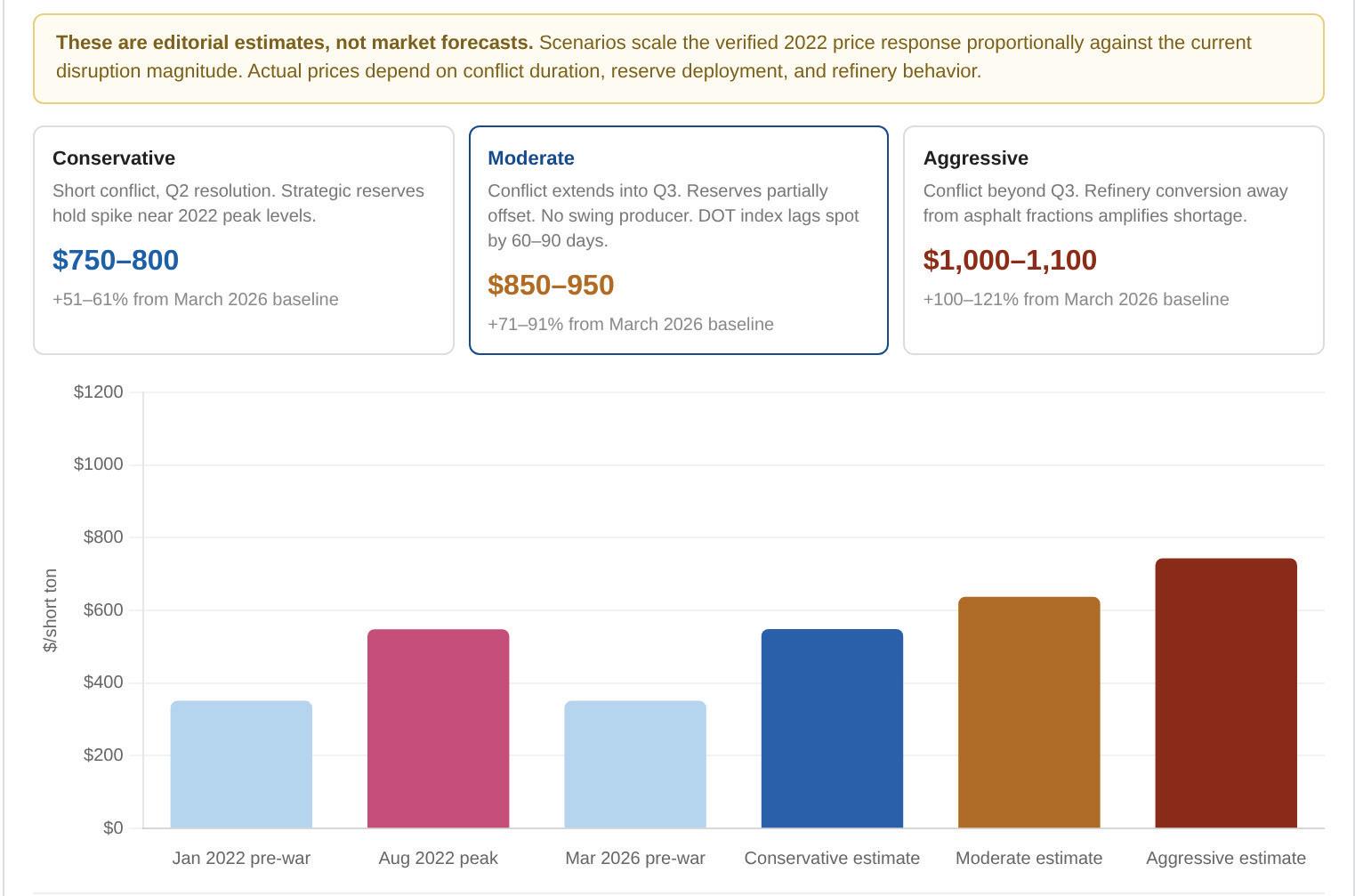
Thanks to the excellent record keeping by the Kansas DOT index, we can see a clear story of what happened next for asphalt contractors. In January 2022, the index showed $496 per short ton, but by August, in the dead-heat of summer, it had ballooned to it’s peak of $774 per short ton. That was a 56.1% increase over eight months. Many contractors will likely recall that it stayed fairly high (above $600 per ton) for most of the entirety of 2023 before gradually coming down.
That fifty-six percent increase was relative to the ten percent in supply disruption. The 2026 disruption is already twice the size by every available
KJ Visuals
measure. Even more concerning, there are currently no apparent, viable offramps to the violence, nor any seemingly on the horizon.
A LARGER SHOCK
One critical, structural difference between the 2022 situation and the 2026 scenario, is not just the percentage of supply lost, but the absence of anything positioned to replace it.
During the start of the RussiaUkraine war, the global oil market rerouted supply, drew down reserves, and leaned on spare capacity which was held primarily by Saudi Arabia and the United Arab Emirates (UAE). That mechanism absorbed a crucial portion of the market shock. Binder prices still rose, but there was that cushion.
Now, in 2026, the Strait of Hormuz closure blocks those partnerships our of the global market place, along with everyone else. The consulting firm Rapidan Energy (via CNBC) described the situation bluntly:
market that operates independently of crude price movement.
NOTHING IS CERTAIN
Any meaningful projection of where binder prices might go this season requires transparency about what we do know, and what we don’t. The following scenarios scale the verified 2022 price movements proportionally against the current magnitude of disruption.
These are editorial estimates, not market forecasts, and actual prices will depend heavily on the duration of the Iran-U.S. conflict, reserve deployments, domestic production response, and refinery behavior.
early fall, are effectively bidding into an uncertain material cost environment. This means that any escalation clause protections, wherever available, have some real value for contractors.
Recycled asphalt pavement (RAP) may also become a more compelling financial argument if and/or when virgin binder prices start rising. Currently, only twenty-three states permit RAP content above twenty-five percent in surface mixes. Contractors in states with more flexible RAP specs might have the slightest bit of wiggle-room there to take advantage of when possible.
AdobeStock
“The conflict has not only taken offline a historically high share of global supply, it has simultaneously disrupted the primary holders of spare capacity. The result is a market with no meaningful cushion. There is no swing producer positioned to step in.”
A second dynamic that further compounds the supply problem that may directly impact the asphalt industry is what happens after crude spikes. The refineries convert their production units away from heavy residual fractions, which is where asphalt binder comes from, toward higher-margin light fuels like gasoline and diesel.
Marathon petroleum executed this precise maneuver at its Martinez, California facility in 2022. That cut asphalt output by forty percent after upgrading for light crude processing. This type of refinery behavior could happen again, especially as your average American feels the acute pain at the pump. The result will squeeze the binder supply
SCENARIO ESTIMATES
For context: September crude futures currently trading around $80 per barrel suggests that markets anticipate a relatively short disruption. If that timeline holds, the conservative scenario becomes the most likely result, and the financial impact for contractors would more closely resemble 2022. However, even that, as a best case scenario, brings to mind painful memories. If the conflict extends beyond Q2, the math will quickly change, and significantly.
WHAT CONTRACTORS SHOULD WATCH FOR
The March 2026 DOT indexes represent the last clean pre-war data point. April indexes, due in approximately four-to-six weeks, will be the first to signal how the reported disruptions are transmitting into the supplier pricing. Contractors bidding work that will be completed later this summer or
One final data point of note comes from the Bureau of Labor statistics (BLS) and the compiled producer price index (PPI). During the Russia-Ukraine disruption, asphalt at the refinery gate jumped 43.5 percent in 2022. By the time that shock reverberated down the supply chain and reached paving contractors as processed mix, the PPI for paving mixtures registered a 16.7 percent increase for the same year.
The supply chain absorbed roughly two-thirds of the raw price movement before it hit the jobsite. However, that buffer held the way it did in 2022 because it was a largely sanctionsdriven market event, as noted earlier.
The BLS PPI data for asphalt paving cement was most recently updated in January 2026 at an index value of 326.6, which was a significant leap from the December 2025 figure 269.5. What that means practically is that the refinery-gate price for asphalt is likely moving harder and faster right now than any DOT index or processed-mix PPI will show for several months.
Contractors bidding work today are pricing into a market where the full force of the shock has not yet transmitted downstream. The April indexes will likely signal what kind of summer awaits us.
BigBlues/
MIX STARTS WITH ADM
SPECIAL REPORT |
By Brandon Noel, Editor-in-Chief
Asphalt Contractor Reveals Winners of 2026 Top 30 Editor’s Choice Award
The top new, improved, and legacy products for the asphalt and road building industry professional in-mind.
Asphalt Contractor’s 2026 Top 30 Editor’s Choice award highlights the Top 30 innovations and technologies available to help asphalt contractors and producers work more efficiently, safely, sustainably, and profitably. Each year we carefully review submissions from the public, as well as the launch of novel pieces of equipment within the industry, in order to bring a diverse list of quality products.
CM Labs Single Drum Roller Simulator Curriculum
Designed to equip new operators with essential skills, the realistic simulator curriculum integrates with CM Labs’ Intellia Workforce Training System and joins a full equipment catalog — including simulation cirriculum products for motor graders, dozers and excavators — for a complete training solution for operators of all levels. Key features include:
• Advanced lessons and how vibration settings affect operations.
• Trainers gain access to data-driven insights that are impossible to measure in live environments.
• The training curriculum orients new operators to the fundamentals of articulated machinery, helping them master the complexities of roller operation in a risk-free environment.
Scan
Cemen Tech CS2 Volumetric Mixer
Next-generation hydraulics and optimized valving accelerate mix cycles for maximum efficiency. Redesigned water tank lowers the center of gravity for smoother handling and better performance. Reduced heat means less wear, longer life, and fewer service interruptions. Fully enclosed admixture compartments safeguard vital components for lasting durability.
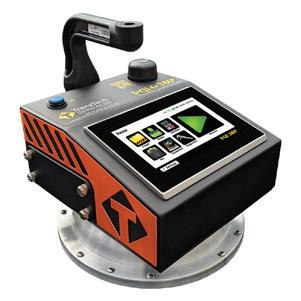
Fully equipped with a touch screen and a user friendly graphical user interface. The PQI 380+ uses IOS, Android application for data transfer and cloud storage, instantly send measurement data.
• Asphalt density readings in 3 seconds
• 800 x 480 LCD with projected capacitive touchscreen with antiscratch surface
• Streamlined Workflow for Field Operators - reduced time spent on data entry
• Connect to a broader ecosystem, seamlessly linking measurements to OnStation
• Data management screen and the ability to disable data logging
• Rugged, lightweight, aluminum shell with handle extension attachment
• Fast, reliable, accurate and repeatable readings in real time
Leica Geosystems
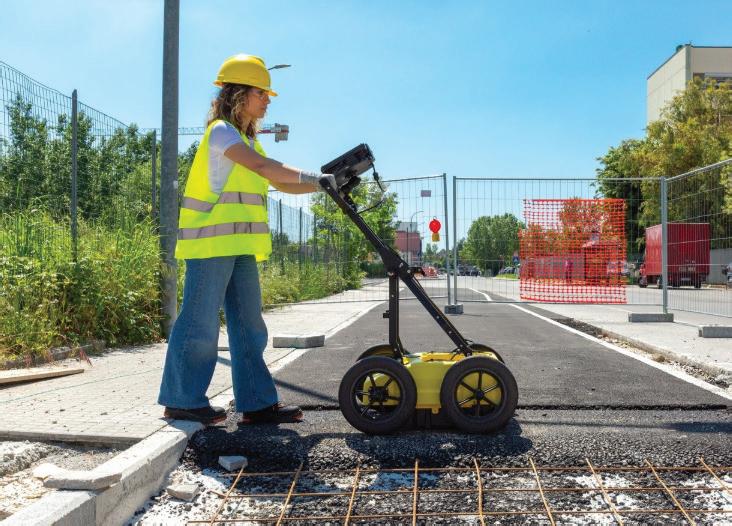
DS4000
Capable of detecting underground assets up to 60% deeper than traditional methods. The DS4000 integrates Equalised Scrambling Technology (EsT), developed by IDS GeoRadar, which enhances the visibility of both shallow and deeply buried utilities. It also increases the chances of detecting smaller or more elusive items like fiber optic cables, which are often missed by older systems.
As utility detection becomes more essential in urban development, tools like the DS4000 highlight the industry’s shift toward greater precision and safety when working below ground.
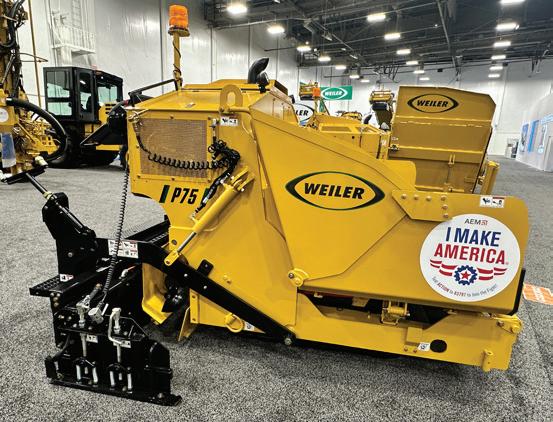
Weiler P75 Paver
The P75 is Weiler’s newest gravity-fed paver, designed for contractors who want to efficiently knock out multiple driveways and similar commercial jobs. It offers a rubber track option and a walking floor in the front, adapted from Weiler’s larger material transfer vehicles, which allows asphalt to be continuously moved to the rear without stopping to dump the hopper.
Specification:
• Weight 12,600 lb
• Length 9’ 9” 2.97 m
• Width 98” 2.48 m
• Height 70” 1.78 m
• Screed Weight 2,100 lb
• Main Plate Width 13”
• Extension Plate Width 7”
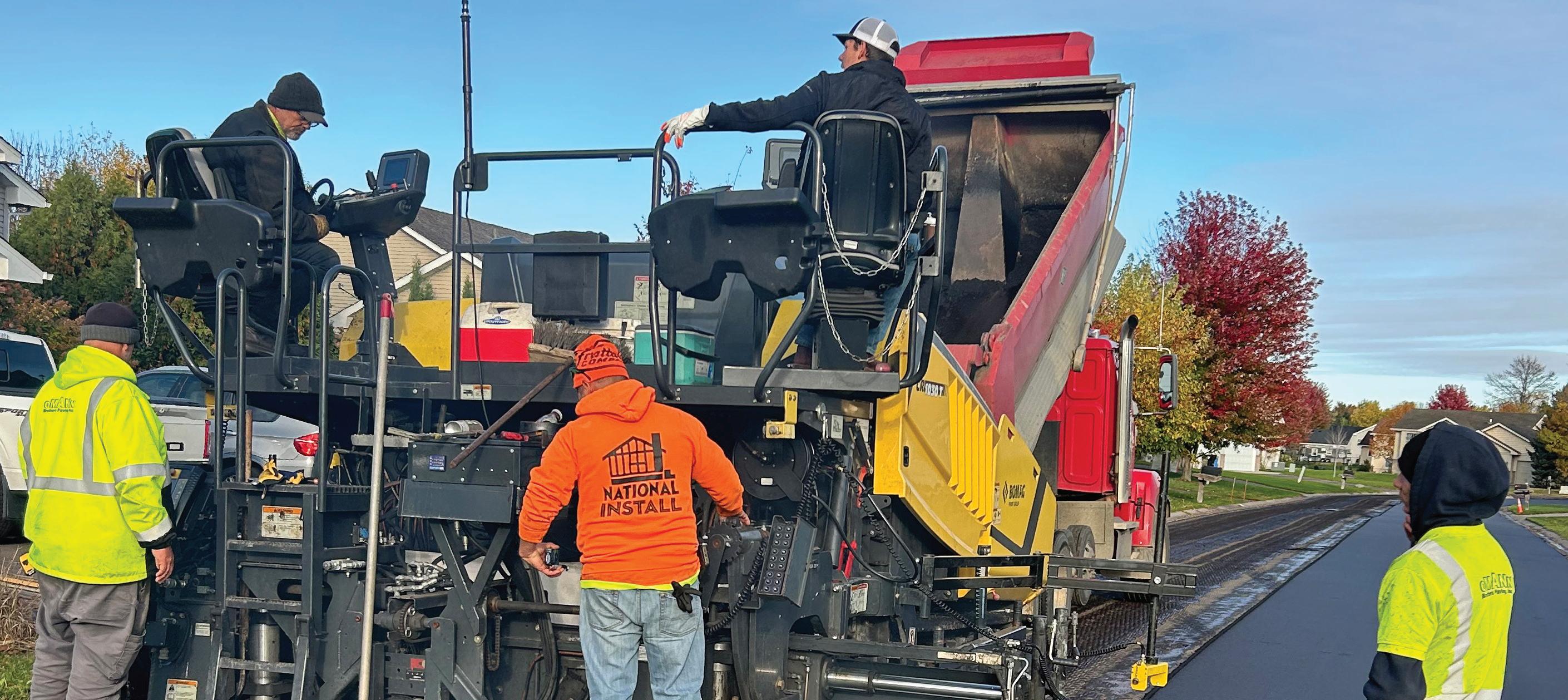
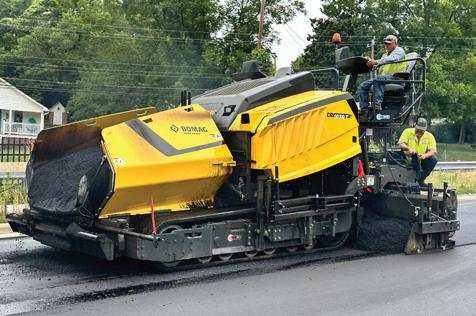
BOMAG CR 1030 T-2
The CR 1030 T-2 brings versatility to the highway paving class. It’s high maneuverability and updated features make it the ideal machine from surface street projects all the way up to your largest highway and airport jobs.
• The ergonomically designed operator console groups similar functions together for easy, intuitive use by both new and experienced operators.
• Dual, swing-out operator stations feature BOMAG SIDEVIEW innovation so the seat and console both swivel outward at four different angles for unobstructed views.
• Independent auger conveyor control regulates the flow of material to the new outboard auger system, ensuring efficient use of material and a clean paving pass.
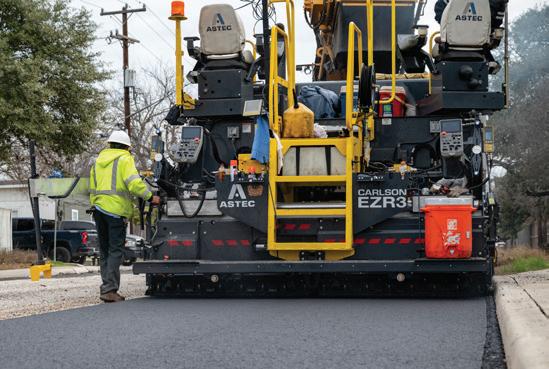
Astec EZR3 Screed
With its advanced features and user-focused design, it sets a new benchmark for efficiency and quality.
Key Features:
• Balanced Design: Enhances tractor balance while boosting durability.
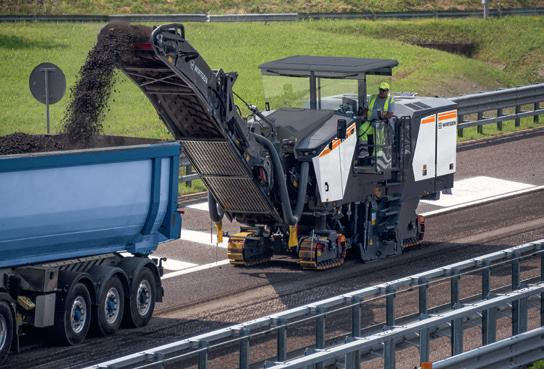
Designed for high-output work on freeways, highways, airports and other major infrastructure projects. Equipped with the MILL ASSIST control system, the machine automatically balances performance and cost, offering strategies that prioritize efficiency, output or milling quality. A John Deere engine, rated at 580 kW, powers the machine and is paired with a dual-shift transmission that provides a wide range of drum speeds.
For jobsite flexibility, the W 210 XF allows fast drum changes through the Multiple Cutting System, supporting milling widths of 2.0, 2.2 or 2.5 meters. The quick-change system lets crews switch drum assemblies in under an hour, adapting to the jobsite needs.
Part of the Bobcat Pro loader lineup, it delivers the most powerful performance available, engineered to meet the realities of today’s demanding jobsites.
KEY FEATURES:
• Redesigned electrical system
• Four drive modes with enhanced control software
• Industry-leading 12’ lift height | 115 HP engine
• Integrated Jobsite Companion and voice-assisted operation
• Refreshed cab with new 8-inch touch display | High-back heated air-ride seat
• Interior updates with new decals, knobs, seatbelt, storage and phone holder
• Weight optimization with updated lift arm and follower link
SPECIAL REPORT
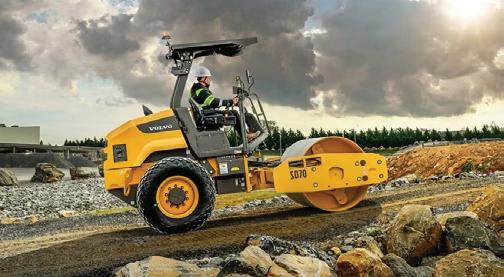
Volvo CE SD70
A soil compactor designed to deliver premium performance at a value price. A new 66” roller in the 7-ton class for Volvo, the SD70 delivers the same outstanding drum performance as the SD75, combined with a streamlined design optimized with cost efficiency in mind.
• Simple, intuitive operation: Operator controls are laid out so a new operator can learn the basics in under a minute, reducing training time.
• Versatile drum configurations: Available with a smooth drum, dedicated padfoot drum, or clamp-on shell that converts a smooth drum into a padfoot-style drum.
• Excellent visibility: “Wide open” sightlines from the operator’s seat, with a clear view of the entire drum surface and the tires, improving control and safety.
• Parts compatibility with SD 75: Parts commonality across Volvo’s soil compaction range: The heavy-duty components like the drum, engine, axle and motors are the same as other models, making it easier for fleets with Volvo SD45 and SD75 rollers to add the SD70 without duplicating accessories and parts needed.
Crafco Super Shot Sealant Melter
First introduced in 1996, Crafco’s Super Shot crack sealing melters help you make the most of your budget with three sizes and a variety of configurations to meet your unique challenges. Designed for ease of use, safety, and efficiency.
• Intuitive design: Gauges, switches, and engine controls housed in control box
• Streamlined startup and shutdown, and user-friendly controls for simple operation
• Digital engine controller automatically regulates engine speed, reducing fuel consumption and wear
• On-demand pump system only runs when needed, further reducing engine load
• High-torque 6:1 gear ratio makes efficient use of hydraulic power to drive material agitator
OneCrew Paving Platform
For too long, serious operators have been handed tools designed for general contractors or service businesses. OneCrew was and is built to change that.
• Bid more. Win more. Protect margin. Estimating built around real production conditions with custom templates, cost libraries, and margin controls to stay dialed in all season long.
• OneCrew connects your CRM, estimating, scheduling, work orders, and invoicing in one platform and serves as the central operating hub for how your office, field crews, subcontractors, and customers all stay aligned.
• Real-time job costing gives you a live view of where each job stands against budget. Catch margin leaks while you can still act, not after invoices go out.
• Works with the tools you use. Native integrations with HubSpot, QuickBooks Online, and TruTec (more coming soon) keep your existing operations intact.
Trimble Roadworks Real-Time Asphalt Compaction
The Trimble Roadworks paving control platform for asphalt compactors now integrates with Geophysical Survey Systems Inc’s (GSSI) highly accurate and rugged ground penetrating radar sensor, PaveScan RS, providing asphalt compaction metrics with every pass. The integration of high-speed ground penetrating radar with Trimble
Roadworks gives asphalt paving contractors a solution for mapping the dielectric profile — or percentage of air voids — throughout the asphalt compaction process rather than by testing core samples after the completion of a project. GSSI’s GPR technology is known for its accuracy.
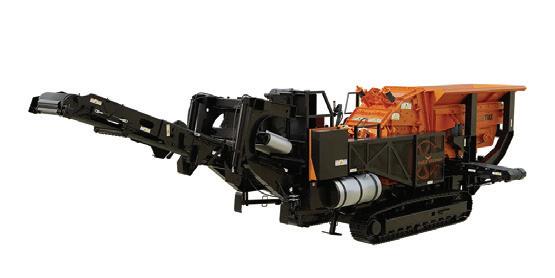
Eagle Crusher TalonTrax Plant
Eagle Crusher's TalonTrax mobile crushing plant features the new TalonMax impactor that remains as capable as the legendary UltraMax impactors, but with a newly designed open-style rotor, reducing overall weight, thus making moving the plant easier without sacrificing capabilities or overall performance. Features:
• Grizzly bypass chute and cross conveyor with flop gate.
• Dual-motor, under-crusher pan feeder with industry-leading discharge clearance in excess of 23”.
• Equipped with dual power option.
• Discharge conveyor height of 11’ 1’ for feeding directly onto stockpiling conveyor, screening plant, or trucks.
• TM-15’s reduced weight and proven three-bar design handles aggregates, recycled asphalt, and concrete with
rebar and other contaminants.
SPECIAL REPORT
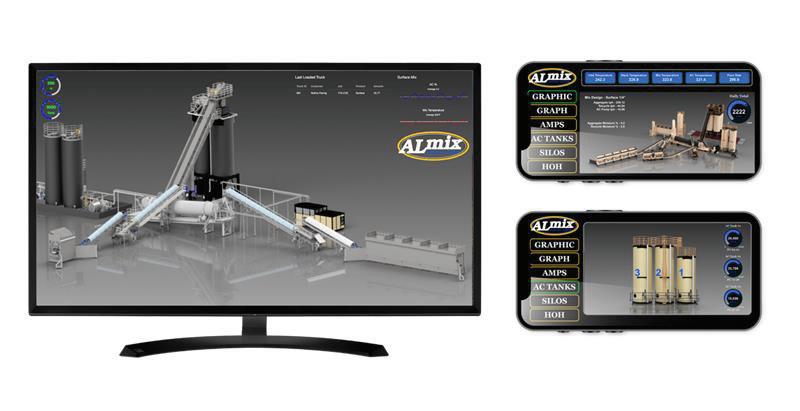
ALmix Insignia Vision
Insignia Vision is designed to deliver a continuous infusion of data directly into the heart of your headquarters.
• Continuous Data Flow: View current TPH, daily totals, and real-time loadout progress from any device.
• Precision Diagnostics: Monitor the “vitals” of your machinery. Drill down into motor amperages and metrics to identify maintenance needs.
• Multi-Plant Visibility: Manage multiple sites through a single dashboard, so every plant in your fleet is operating at peak efficiency
Bergkamp Journeyman Plant
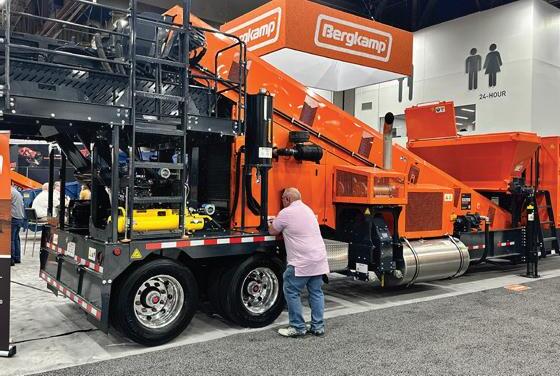
The Bergkamp Journeyman Mobile Mix Plant is designed to extend the reach of agencies and contractors by producing ambient mix asphalt at or near the paving site. All components of the Journeyman are mounted on a trailer that doesn’t require any special permitting to haul per DOT (USA/North America) regulations. The pugmill blends all input streams including virgin aggregate or Reclaimed Asphalt Pavement (RAP) with water, asphalt binder, and other materials into your precise ambient mix. Our EMCADS (Electronic Mix Control And Diagnostics System) Pro control system regulates usage ratios automatically. Ongoing monitoring helps ensure a consistent mix from start to finish and saves all data for reference later.
Sonetics APEX V2 Headset
The V2 wireless hands-free communication system gives you the power to have a clear, natural conversation with your team in real-time while simultaneously protecting your hearing and allowing you to stay aware of your surroundings. V2 allows you to have a natural conversation with others on your team while keeping your hands free. It provides up to a 1,600 foot range so you can stay connected even when team members are not in your line of sight. Shouting and repeating the same thing over and over isn’t necessary. Every Sonetics headset features Listen-through, which gives you control of the environmental sound without removing your protection. The headsets have a programmable volume level, limiting all sounds to 85dB.
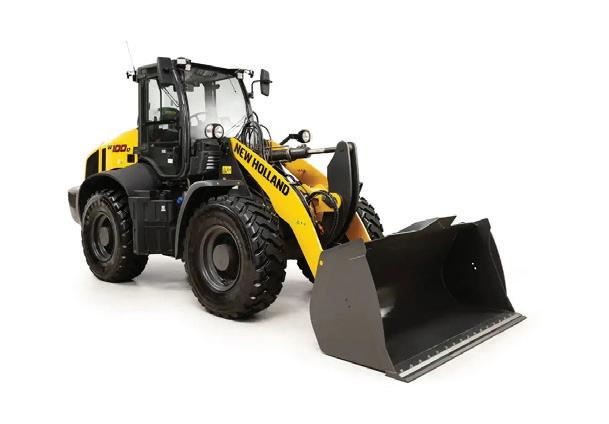
New Holland W100D Compact Wheel Loader
The W100D loader delivers big power, high performance, and outstanding stability. Dependable engine and hydraulic power and an array of attachments give you all the tools to efficiently scrape, grade, and haul to the finish line. New Holland’s Z-Bar linkage is a rugged, simple design ideal for high-production load-and-carry applications, like moving and loading aggregates. Model W100D provides a maximum of 15,806 lbf (7170 kgF) in breakout force and yields 3.4 in (86 mm) of digging depth. Plus, lofty lifting capacities of 14,826 lb (6725 kg) at full height, 14,334 lbs (6502 kg) at maximum reach, and 15,333 lbs (6955 kg) on ground. Exceptional maneuverability and a tighter turning radius are essential on equipment operating on small jobsites and in constricted spaces. With this in mind, the W100D was designed to compactly conquer due to its reduced machine length of 251.6 in (6390 mm), machine width of 70.9 in (1800 mm) and operating height measuring up to 194.3 in (4934 mm).
Command Alkon Launches Online "Command Community"
Command Alkon launched Command Community, an online platform designed to give customers easier access to support resources and self-service tools.
The platform allows users to submit, view and manage support cases, track order history and check delivery status through carrier websites. It also provides a Knowledge Base with articles, FAQs and troubleshooting guides to help customers resolve issues independently.
New features include chat support, personalized list views for cases and orders and the ability to add comments within cases to streamline communication with support agents.
Command Alkon said the platform is intended to improve convenience and accessibility by offering 24/7 availability for key support needs across the heavy building materials industry.
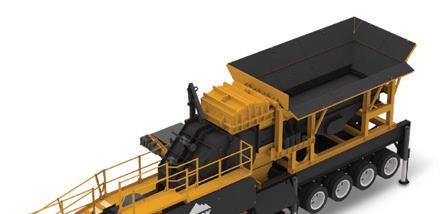
WI-800 Portable Impact Crusher
• Full Length Catwalks: Provides safe service access to the chamber, drive motor, feeder and hydraulic components.
• Run-On Jacklegs: Eliminates the need for cribbing and provide a stable platform for operation.
• Removable Hopper: For transport as a single piece lift minimizing setup and disassembly times.
• Oversized 10-Groove Sheaves: Provides efficient transfer of torque to crusher and limits belt slippage.
• Hopper: 20' Fully Wear Plate Lined
• Feeder: 60” x 20' Deister Vibrating Grizzly Feeder
• Drive Motor: 500HP Toshiba Electric Drive
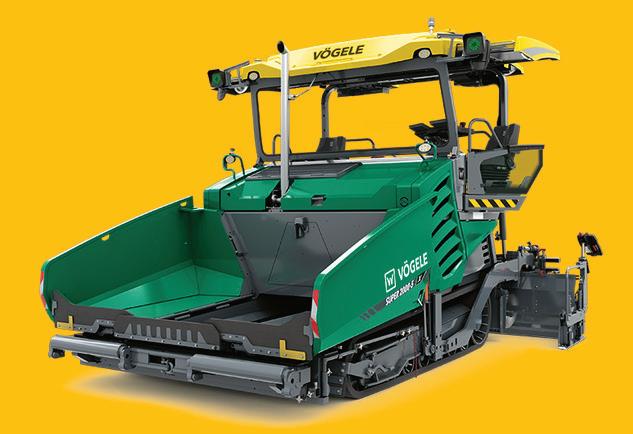
Vögele
Super 2000-5 X
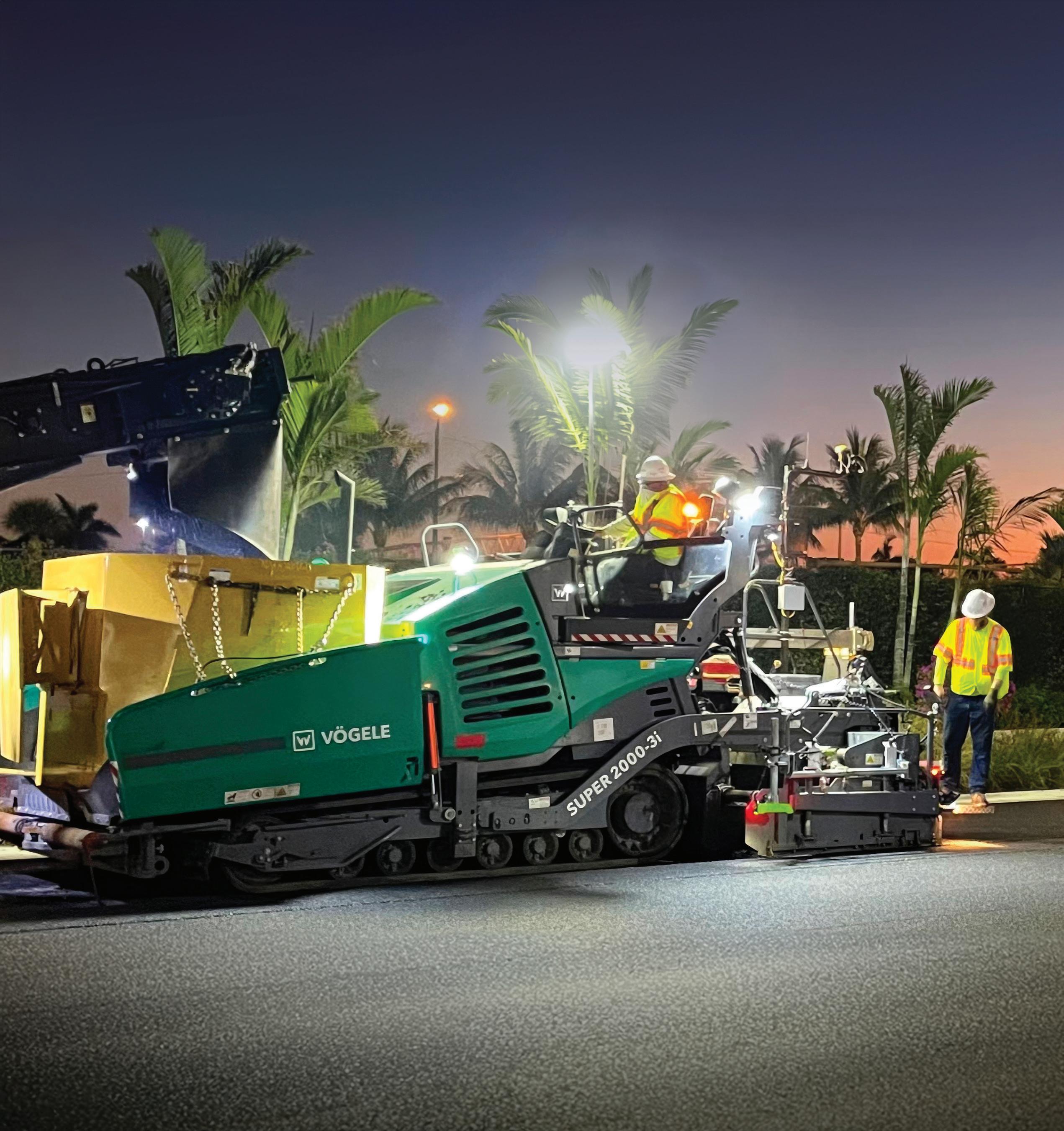
The tracked paver SUPER 2000-5 X features the user-friendly ErgoPlus 5 operating concept, an economical drive, useful Dash 5 features such as light and convenience packages, Paver Access Control (PAC), and smart automation solutions. With its rubber track undercarriage designed for high paving speeds and optimized material flow, the paver is ideal for highway construction and major road building projects in North America. From automatic grade and slope control to automated steering and digital jobsite documentation: With innovative solutions, VÖGELE reduces the operator’s workload, increases safety, and makes paving with Dash 5 pavers even more efficient. With them, VÖGELE raises asphalt paving to the next level.
• Nominal output: 250 hp
• Basic width: 10 ft
• Paving width, max: 32 ft. 10 in.
• Maximum laydown rate: 1,540 t/hr
ROCK-SOLID COVERAGE, NO MATTER WHAT.
From material production to road paving, count on us.
Those who work in construction material production and transportation construction are at the core of what keeps America moving. The companies that are building our infrastructure deserve insurance coverage that’s built for your unique needs. Since 1917, BITCO has provided customized insurance programs across the country, dedicated to protecting you and delivering confidence day-in and day-out.
Get the service you deserve. Visit BITCO.com to find a specialist agent near you.
SPECIAL REPORT
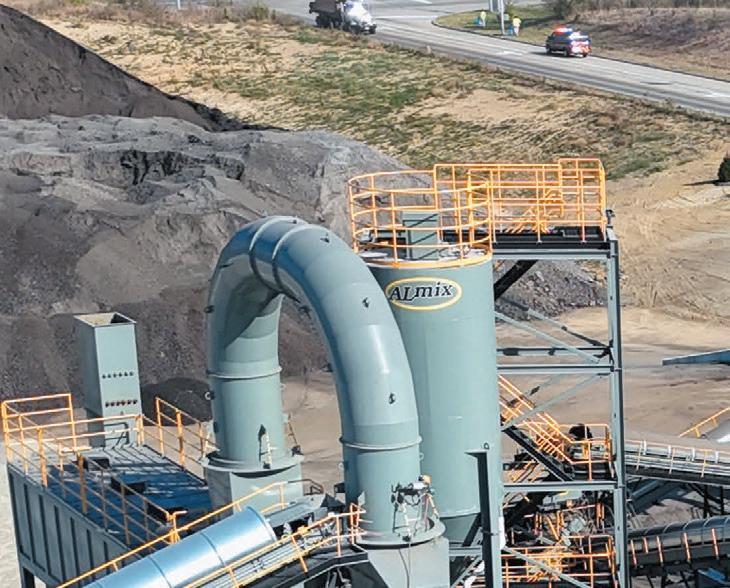
ADM New EX 300 Asphalt Plant
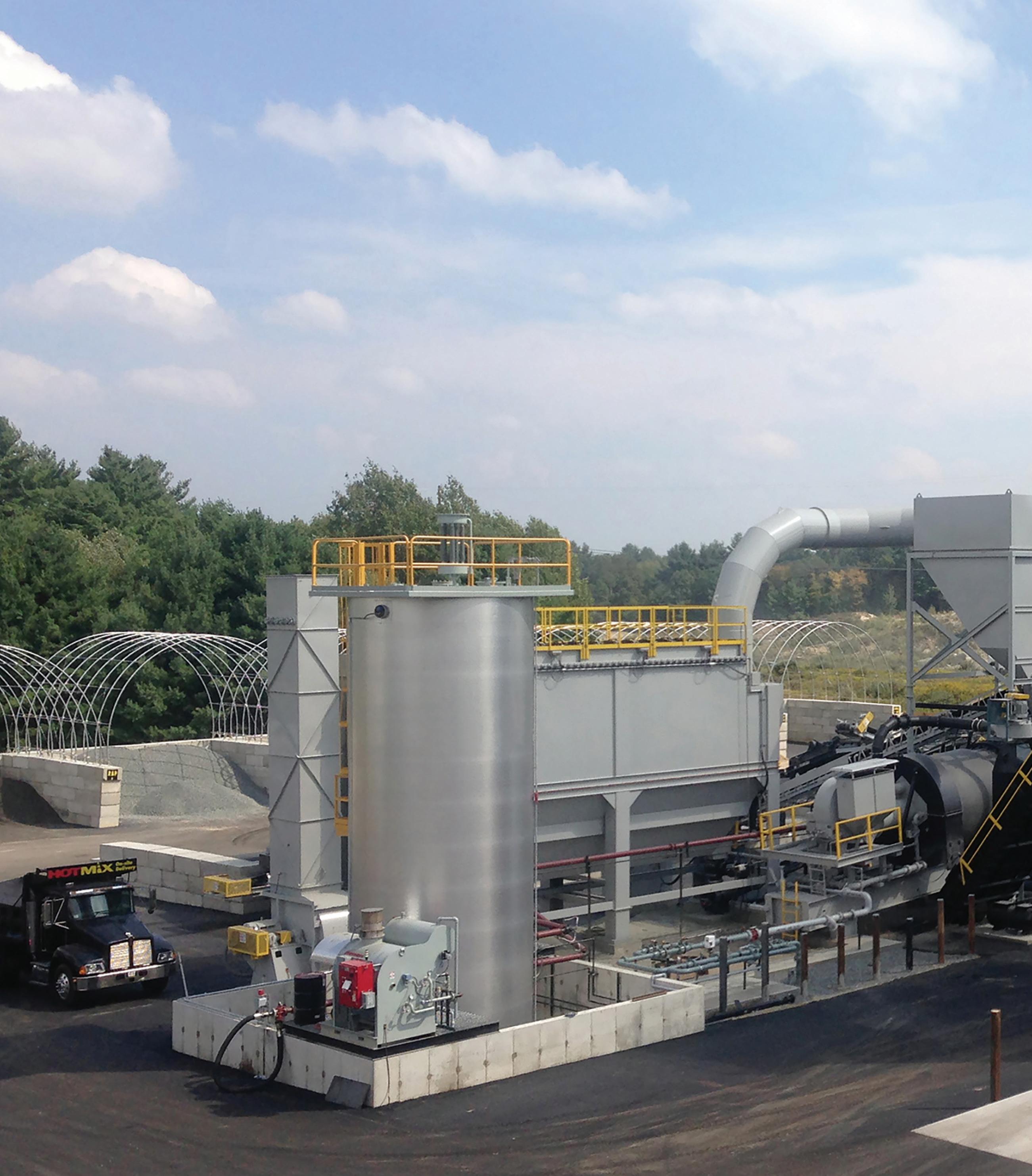
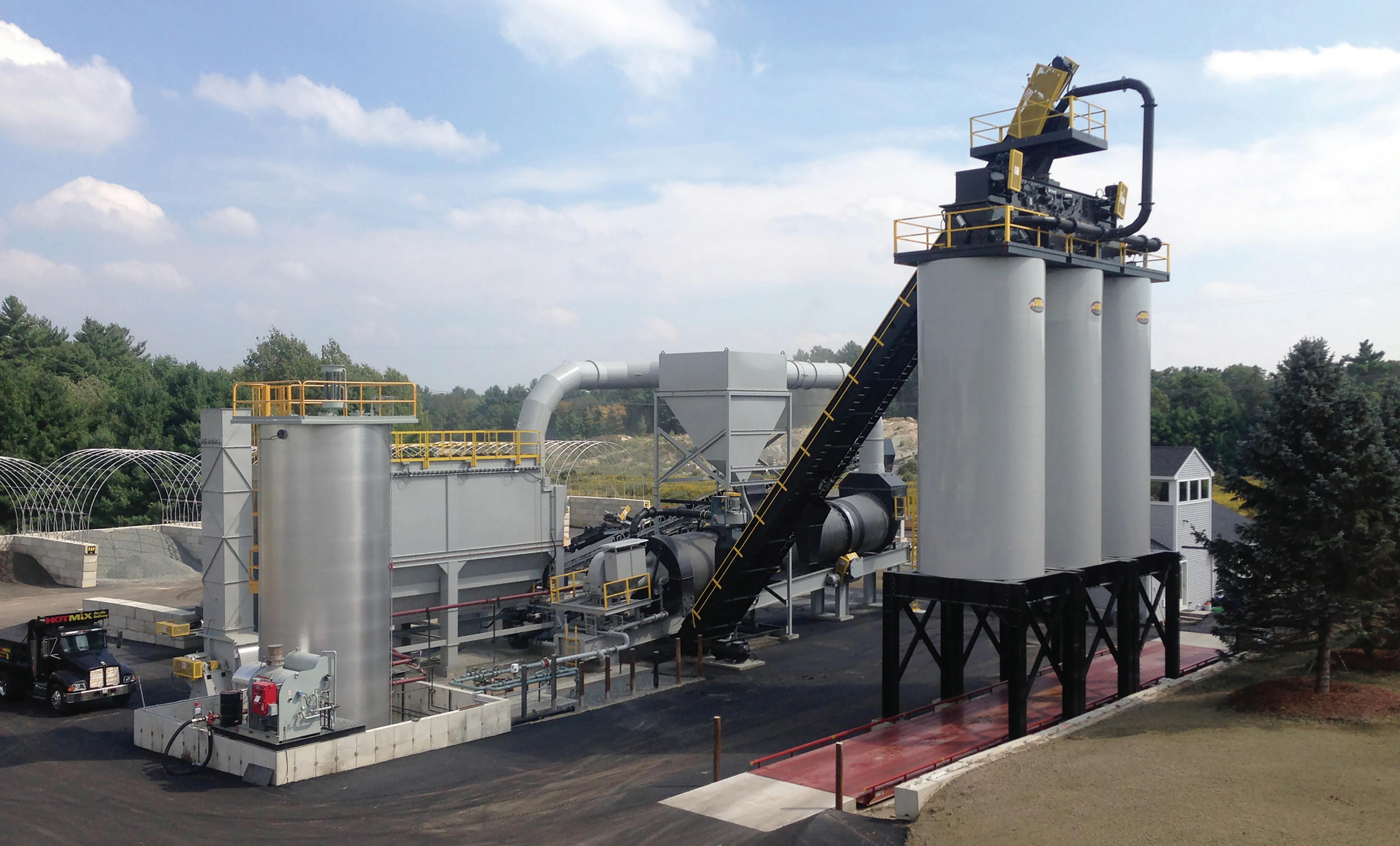
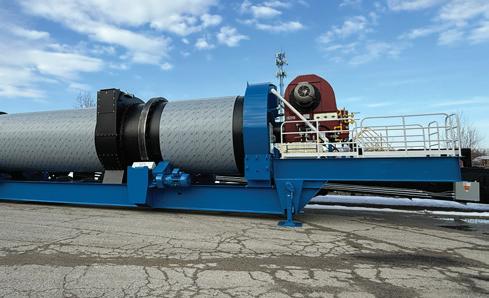
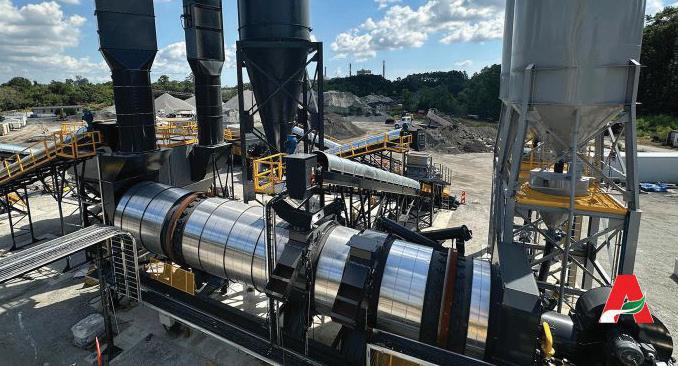
The EX 300 was designed to fill a niche in the ADM + FAYAT GROUP line of EX Series hot-mix plants and one that is in high demand. With existing EX plant capacities of 120, 170, 225, 325, and 425 TPH, the new EX 300 has a capacity of 300 TPH. Like all EX Series plants, the EX 300 can handle up to 50% RAP. Unique features:
• Single drum diameter
• High efficiency CBS total air burner with variable drive frequency (VFD)
• Trunnion drive with VFD, no V belts
• Drum insulation with stainless steel cover
• Flights designed for easier maintenance
• Available as portable, relocatable, or stationary
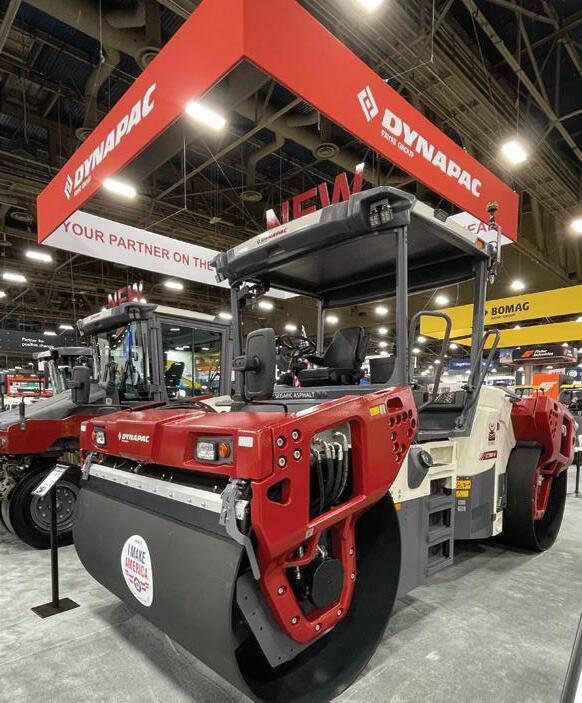
Dynapac CC7000 VI With SEISMIC
The heaviest asphalt roller in the market, with an operating weight exceeding 32K lbs., sets a new bar for power, performance, and durability. Built for the most demanding largescale applications. Equipped with Dynapac’s patented Seismic Asphalt technology, the roller automatically adjusts vibration frequency in real time based on material stiffness—ensuring optimal compaction, reduced energy consumption, and lower operating costs while operator comfort is enhanced from less shaking and less noise.
Ammann Alpine Series Asphalt Plants
Developed to reinforce Ammann’s commitment to continuous mix technology while addressing clear gaps in the market. Known primarily for batch plants, Ammann recognized that existing continuous designs were undersized for many producers. The Alpine delivers high-capacity performance, features a domestic factory, local partnerships, and a dedicated U.S.-based team, ensuring customers receive a solution tailored to their production needs and supported by a strong regional presence.
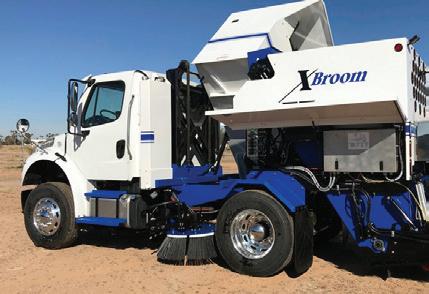
X-Broom Street Sweeper
More sweeping, less downtime & easy operating equate to larger profit margins.
HOPPER
• TYPE -HIGH LIFT / RIGHT SIDE DUMP
• CAPACITY -6 YARD / 5 YARD USABLE
• DUMP HEIGHT -Varialble up to 150” MAX
• LIFT CAPACITY -15,000 LBS
• LIFT TYPE -2-STAGE VERTICAL LIFT MAST
GUTTER BROOMS
• TYPE -Standard: 4-5 segment wire fill. Optional: Poly fill
• TILT -hydraulic cylinders controlled in cab | DIAMETER -46”
• DRIVE -Direct drive - variable speed control via touchscreen
• WIDTH -Inifinitely adjustable up to 140"
NiteVu Remote Monitoring System
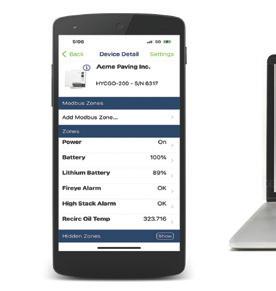
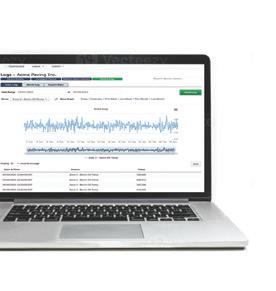
Gencor’s cloud-based NiteVu system is a powerful tool for facility managers that allows monitoring of heater and asphalt tank functions, including critical conditions, remotely from any smartphone or internet device.
NiteVu stores all sensor readings in the cloud, which provides unlimited information storage. Multiple devices can be managed using intuitive webbased management tools with an unlimited number of user profiles. Programmable alarm levels alert the user if limits are exceeded. Enhanced data logging capabilities allows users to print, graph, or export accurate historical records. It can also produce event reports as well as generate an audit trail of all users. NiteVu uses a cellular connection so internet access is not required which is especially usefeul for remote locations.
HCSS HeavyBid On The Web
HeavyBid revolutionizes the bidding process for civil and infrastructure contractors, enabling faster, more accurate, and more profitable bids. By standardizing estimating and moving teams beyond spreadsheets, HeavyBid enables teams to capture more opportunities, price with confidence, and build a scalable foundation for growth. With automated calculations, pre-built libraries, and historical bid data, HeavyBid reduces errors, improves margin visibility, and accelerates workflows for all stakeholders from business development to accounting and project managers.
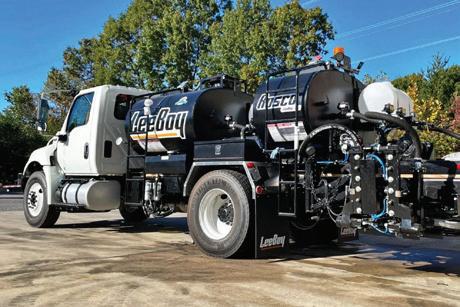
LeeBoy PR900 Dual-Tank Distributor Truck
The PR900 is a dual-tank maintenance distributor that offers versatility and precision with its independent front and rear tanks. Operators benefit from an advanced in-cab controller that gives them the ability to adjust material application rates and make adjustments to spray widths.
FRONT TANK
• 600 Gallon
• Front spray bar
REAR TANK
• 300 Gallon
• Rear spray bar
Etnyre Mastic Kettle
When crack sealing won’t hold and full resurfacing isn’t practical, asphalt mastic offers a durable repair solution. Mastic is commonly used for wider cracks, joints, utility cuts, and localized surface repairs where strength and longevity matter. However, working with mastic places higher demands on heating, mixing, and operator control than standard sealants.
Etnyre Mastic Kettles are designed for contractors and maintenance crews adding mastic services or replacing outdated equipment. Each kettle is engineered to deliver consistent material handling,
VSS Macropaver CR
Designed with patented technology, the Macropaver-CR excels in applying all slurry and polymermodified micro surfacing materials with remarkable ease. The Macropaver-CR features a patented ground drive system that uses a variable displacement hydrostatic pump to drive two bent axis motors, enabling the machine to reach speeds of up to 25 mph in both forward and reverse directions.
The loading conveyor, with a capacity of 12,400 lbs./min, features a 20” cleated belt that is fully enclosed with return idlers and lift cylinders for quick access cleanout hatch (Patent Pending). This design ensures efficient material handling and minimal downtime.
The patented hydraulic system includes three variable displacement pressure-compensated pumps dedicated to the paving and loading circuits, a variable displacement hydrostatic pump for the closed-loop ground drive circuit, and a gear pump for the steering and cooling circuit.
By Brandon Noel, Editor-In-Chief
ROAD TO INSOLVENCY: The Highway Trust Fund Crisis
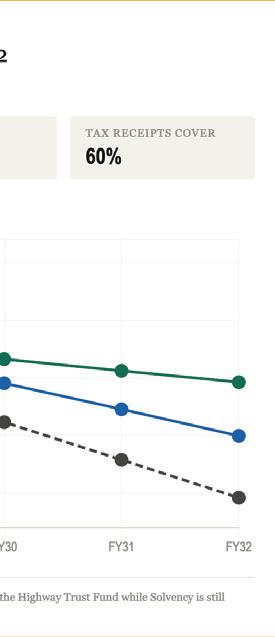
The federal Highway Trust Fund covers just sixty cents of every dollar it spends.
The federal government has been writing itself IOUs to fund America’s highways for nearly two decades. The bill comes due in 2028. That’s the year the Congressional Budget Office (CBO) projects the Highway Trust Fund’s (HTF) highway account goes negative. It is the point at which dedicated tax revenues will no longer cover what Congress has authorized to spend. For asphalt contractors whose project pipelines run directly through the federal-aid highway system, this needs to be on your radar. It is a business problem, and the window to solve it is closing faster than most people in the industry want to admit.
“There is sort of this recognition that the right idea, probably, is to just increase the gas and diesel taxes,” said Rebecca Higgins, Vice President of Policy at the Eno Center for Transportation (ECT), and co-author of a March 2026 report, The Last Exit: Fixing the Highway Trust Fund while Solvency is still Solvable, maps the options Congress faces on top of this reauthorization cycle. “But there would have needed to be a mass of people willing to all stand up at the same time and say, yes, we’re going to do this. And there is not a willingness to all jump together.”
That political reluctance is one of the core problems and has been for a long time.
HOW WE GOT HERE
The HTF has operated on a structural deficit since 2008, absorbing more than
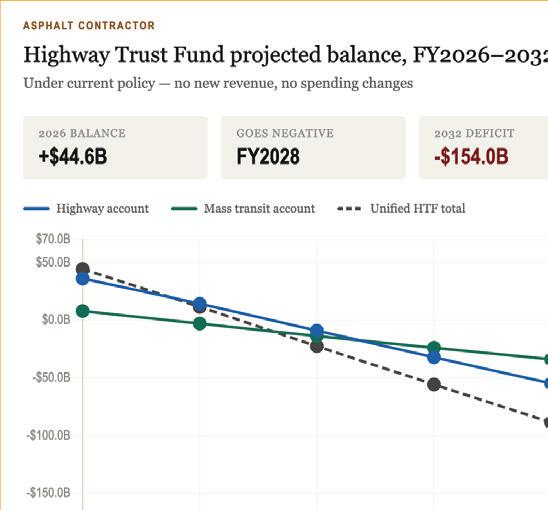
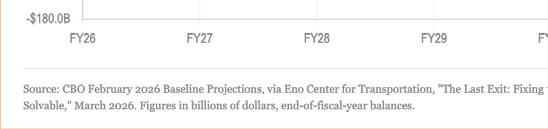
$275 billion in General Fund transfers to cover the gap between what the 18.4cent federal gas tax generates and what highway and transit programs actually spend. The ECT report calculates that in 2026, tax receipts cover just sixty percent of HTF spending. Without intervention, the unified fund goes negative $22 billion by FY2028 and reaches a $154 billion deficit by 2032 [see figure on p. 29].
The gas tax hasn’t changed since 1993. According to a parallel analysis by Consumer Reports, the purchasing power of that tax has eroded by eighty-one percent in that time driven primarily by a seventy-seven percent increase in highway construction costs. Fuel efficiency gains and EV adoption are both factors in how we got here, but they only account for minor portions of the shortfall.
“EV adopts is mostly going to be the big variable in what things look like in the future, the next ten years, but in terms of how we got to this year, EVs have not really been a significant factor,” said Jeff Davis, Senior Fellow and Editor of Eno Transportation Weekly.
The deeper structural problem is that the gas tax’s elegance as a collection mechanism is also its fatal flaw as a long-term funding strategy. Davis explained that the IRS currently processes roughly 1,300 points of taxation to collect approximately $35 billion a year in fuel revenue. Switching that system to a VMT fee would push the collection points north of two hundred million.
“No matter what eventually we wind up taxing,” Davis said, “we will miss the gas tax when it’s gone.”
That administrative reality is why alternatives to the gas tax, however logical in theory, face such steep implementation hurdles. Any replacement has to raise comparable revenue at a comparable administrative cost.
WHY THIS IS DIFFERENT
Congress punted on HTF solvency nine times since 2008, each time opting for a General Fund transfer rather than a structural fix. This isn’t a single administration’s or even a single political party’s fault, there is plenty of blame to go around. The Eno Center report argues
F Armstrong Photo_AdobeStock
this reauthorization cycle is the last realistic window to act before the problem becomes genuinely unmanageable.
If Congress kicks the can again, the next reauthorization cycle would expire in the mid-2030s and land directly on top of projected Social Security trust fund insolvency in 2032 and Medicare Part A insolvency in 2036. At that point, Congress would face simultaneous demands to rescue multiple major trust funds, and the political bandwidth to give highway and transit programs another bailout simply may not exist. Both Fitch and Moody’s have already downgraded U.S. credit adding external fiscal pressure that wasn’t present in prior cycles.
WHAT WILL WE DO? WHAT WILL IT COST?
The ECT report presents Congress with three structural possibilities and one extended delay.
The cut-back on spending scenario is the most politically straightforward and the most damaging for contractors. Achieving HTF solvency through spending reductions alone would require an immediate forty-eight percent cut to both highway and transit obligation limits. This would mean a first-year reduction of $30.1 billion to highway programs. The Associated General Contractors of America (AGC) called that prospect bluntly unworkable.
“A nearly fifty percent reduction in federal highway investment would immediately translate into fewer projects, halted or delayed procurements, and significant uncertainty for contractors and state transportation officials,” said Brian Turmail, AGC Vice President of Association and Industry Image. “For our members, that kind of unpredictability makes it harder to plan their workforce and make long-term investments.”
The increased revenue path is the one option the data favors. The Eno Center calculates that an immediate tencent-per-gallon motor fuel tax increase starting October 1, 2026, phased up to 17.8 cents per gallon by 2036, would generate roughly $300 billion in additional revenue over ten years and close the solvency gap. Boom. Done.
Each additional penny of gas tax yields approximately $2 billion per year to the fund.
AGC has long supported the user-pay principle, but has not endorsed a specific mechanism.
“Reliable funding allows contractors to plan ahead, invest in equipment and workforce, and deliver projects more efficiently,” Turmail said. “Our priority is ensuring that whatever approach is taken provides consistent, dependable funding without adding unnecessary complexity.”
New vehicle registration fees and VMT charges are also on the table. The ECT estimates a flat $120 annual federal registration fee on all vehicles would fill the shortfall, capturing EV and hybrid drivers who currently contribute little to the HTF. A VMT fee of 2.4 cents per mile would replace all current revenues. However, it comes with significant administrative and political hurdles.
Then there is devolution — shifting funding authority to states — which is the wildcard. Some states have actually been more willing to raise fuel taxes than Congress. State fuel tax receipts grew seventy-four percent between 2000 and the present, while federal receipts grew just nine percent. But devolution doesn’t erase the $130 billion in outstanding federal HTF obligations already on the books, and AGC sees the risk clearly.
“The federal-aid highway program plays an important role in providing consistent funding and a coordinated national approach to infrastructure investment,” Turmail said. “Moving entirely away from that structure would introduce additional uncertainty.”
WHAT TO WATCH
Davis and Higgins offered a counterintuitive piece of reassurance on the immediate outlook. Because contract authority spends out slowly, with the money let today often authorized oneto-three years ago, and much of the work currently in procurement already legally obligated. That will not disappear even if the fund runs dry.
“The contracts might be funding
CBO February 2026 Baseline Projections, via Eno Center for Transportation, “The Last Exit: Fixing the Highway Trust Fund while Solvency is still Solvable,” March 2026. Figures in billions of dollars, end-of-fiscal-year balances.
what was obligated last year, and it’s just going to be spent this year,” Higgins said. “The federal government has made an obligation to reimburse that money, so that money won’t go away.”
Davis added a wrinkle that most contractors don’t know: when the trust fund hits zero, the government remains legally obligated to keep signing new contracts. The pain doesn’t come from project cancellations, it comes from delayed reimbursements to states.
“The degree to which a trust fund zero-balance crisis hits contractors depends on how good the state is in its cash management,” he said. Some states have months of redundancy built in. Others would feel it quickly.
For contractors making capital investment decisions right now the practical guidance is to watch September’s reauthorization outcome closely, track how Congress handles the transit account crisis in 2027 as a leading indicator, and understand that active procurement almost certainly draws on already-obligated funding that is legally protected regardless of what happens to the trust fund balance.
The bigger question is which pathway Congress chooses to restore solvency, and whether it has the political will to choose one at all, and how will that choice shape federal highway investment for the next decade.
By Brandon Noel, Editor-In-Chief
Kristi Ronyak And The Mission Behind Construction Angels
The charity supports families who have been impacted by the loss of a loved one from work zone accidents.
Kristi Ronyak did not set out to run a nonprofit. She set out to pave asphalt. Ronyak is thirdgeneration. Her grandfather started a plant in Burton, Ohio, in 1939. Two brothers, a set of twins, built it into two plants and a paving company. While the business stayed in the hands of family, Ronyak ended up in Florida doing marketing for a concrete cutting company, walking job sites, and, also, watching cars fly past workers at full speed. At the time, she didn’t think much of it. It was a normal part of the job.
Then came World of Asphalt 2009. Ronyak recalled an encounter with a woman walking the show floor collecting donations for a construction worker’s family. Ronyak immediately made a donation. She assumed the cause had a name, an organization behind it. But to her surprise, it did not.
“I [went] to eight different construction associations, and nobody’s raising money for our own industry,” Ronyak recalled. She pulled the numbers when she got home. Every day construction workers die on the jobsite in the United
States, and since the pandemic, that average has varied between 2-3 workers per day. This news sent her into action, and she started Construction Angels.
Fifteen years later, the West Palm Beach-based nonprofit provides immediate financial assistance to the families of construction workers killed on the job. The process is intentionally fast. A three-to-five minute form on the organization’s website triggers outreach.
“The sooner we can get that form, the sooner we can provide immediate financial assistance,” Ronyak said.
That speed can make all the difference for loved-ones, because the aftermath of a worksite fatality is chaos. OSHA shuts down the job, insurance companies get involved, and multiple legal teams mobilize. A crew that functioned like a family suddenly grieves like one. In that window, a worker’s actual family, whether a spouse or partner, children, dependents, can fall through the cracks. Ronyak built Construction Angels to specifically close that gap.
AT THE FOREFRONT
Road construction workers represent a disproportionate share of the families Ronyak serves. Two of the most fatal incidents the organization has responded to both involved workers struck by vehicles in active work zones. Six workers died on I-695 in 2023 when speeding vehicles broke through concrete barricades and into a crew. Six more died in Nashville in 2024, patch workers on a night shift, when a vessel struck the Francis Scott Key Bridge while they worked. These cases Ronyak cited in our brief conversation as ones that vividly stuck out to her, but they are merely anecdotal examples of a widespread epidemic.
“The majority of the fatalities that we’ve helped out the families are from people hitting our workers on the roads,” she said.
The organization does not compete with association programs like NAPA Cares or the AGC’s similar program. Those programs serve their members well, but importantly, Construction Angels has no membership and, thus, serves everyone. Ronyak frames it as complementary: a family who qualifies for a NAPA scholarship can still apply for a Construction Angels scholarship. Every dollar helps those families who’ve lost something irreplaceable.
Despite fifteen years of operation an awareness gap persist. Ronyak has even called supporters who attended her golf tournaments, people who donated, only to learn they had suffered a fatality and never submitted a form. This is why awareness is so vital, because help can only reach those who need it, if Construction Angels knows there is a need in the first place.
Without intending to, companies can drop the ball. They think about lawyers and shutdowns and the people they lost, and that isn’t a criticism, just a fact of how their responses normally prioritize what the business has to do in the wake of such a tragedy.
Ronyak sees Construction Angels building an infrastructure to fix that. She recently hired additional staff to manage a growing event calendar that routinely schedules simultaneous fundraisers in different states. She credited construction associations as some of the best partners in raising awareness.
The message is simple. If someone does not come home from your job site, Construction Angels wants to hear from you. Go to constructionangels.org. Fill out the form, and help those in need.
By Brandon Noel, Editor-In-Chief |
MILLING IN THE DARK: Lights, Cameras, Action?
Night highway milling is some of the most dangerous work in construction.
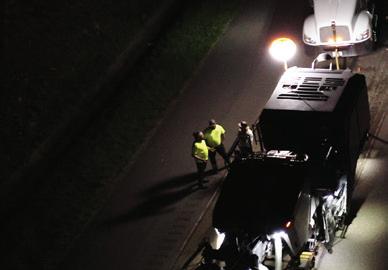
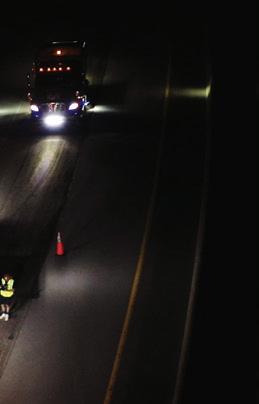
It was after dark on Highway 11, about an hour outside of Knoxville, Tennessee. The mountains pressed in close on both sides of the road, and the air, which spent the late afternoon cooking us alive, finally showed us a little mercy as the sun set. Traffic still moved just a few feet away, headlights cutting through the dark, and drivers who don’t register that there were people out here.
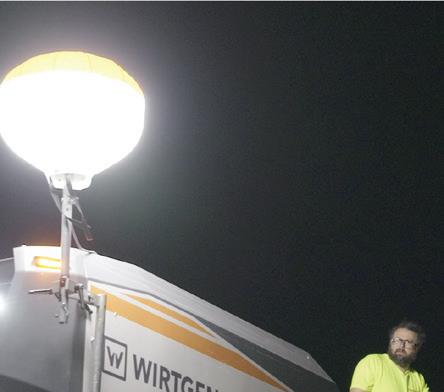
Then the lights came up, one big balloon light throwing a broad circle of white across the asphalt, and then our mill kicked forward.
I will be honest with you. That night I felt something that most people reading this already know: this job is not for everyone. Road workers accept a level of risk that most professions never have to face, but somebody has to do it.
That night the somebody was twenty-four year-old, owner/operator of Greyrock Milling, Griffen Hopkins.
THE BACKSTORY
Hopkins grew up in the paving business. His father operated a paving company for nearly thirty years, a successful operation that always kept a milling machine around for its own work. When Hopkins started talking about launching a dedicated milling company, his father’s first reaction was hesitation.
“He’s like, I just don’t know if it’s a great idea,” Hopkins told me. “Maybe it could, maybe not, because it’s a big investment to mill.”
He wasn’t wrong. Greyrock entered the market five years ago with a fleet that now represents more than $5
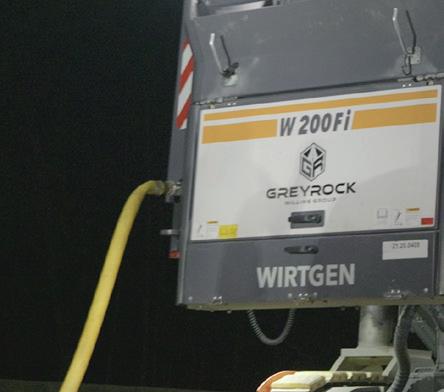
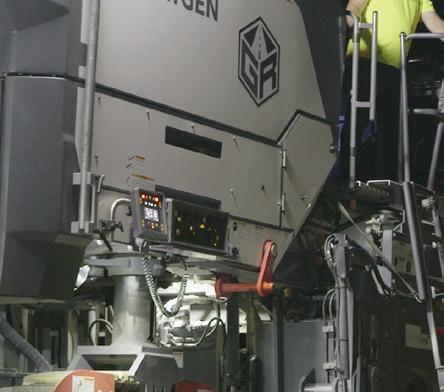
million in equipment investment. That includes a 2017 Wirtgen W 200Fi, a 2023 W 210i, and the newest addition: a W 220 XFi with a 12-foot drum. Hopkins selected the 220 over the larger 250 specifically because of transportation weight limits, since the behemoth comes in just over 100,000 pounds, while the dual-speed transmission and John Deere powertrain give it more than enough muscle for the hard mix common in East Tennessee.
In a cutthroat subcontracting market where smaller operators struggle to get a foot in the door with general contractors, Hopkins told me that he went door-todoor across Kentucky and Tennessee looking for who would talk to him. He was only nineteen when he started. Unsurprisingly, he got a lot of cold shoulders, but he kept going anyway.
“Being young, when I first started out, it was really bad,” he said. “People just kind of not respecting you, not really listening to you.”
Five years in, with a growing fleet, and a crew that has seen only three
employees turn over in that span, the proof is self-evident.
WORK ZONE REALITIES
The project on Highway 11, the night I visited, was straightforward by milling standards: roughly 600 tons of deep patching, cutting an inch and a quarter to shave off previous state patch work and deliver a clean, smooth surface for the paving crew to follow behind. The road itself was in decent shape. The thing consuming my thoughts ahead of getting out there wasn’t the scope of the project, it was watching the steady oncoming traffic pouring over the hillside, bearing right down on us. Car after car, semis and pickups, all just a few dozen inches away from us. Hopkins tried to assuage the obvious anxiety I was feeling.
“It’s not bad at all,” Hopkins said before we started. “It’s fun, man, when they start pulling the lane closures and getting everything going.”
Then, almost in the same breath, he added, “I mean, it is dangerous. You’re
Photos by Adam Rahn
out here with cars going seventy miles an hour down beside you. You just gotta be serious.”
He shared a story that, on a previous job, a drunk driver smashed through the construction zone and came within feet of his conveyor before slamming into the back of a dump truck. The car crumpled. Somehow, she walked away, and no one was injured, but that luck isn’t always the case.
“There are a lot of people that get hurt out here, and it’s not an uncommon thing to hear of a death,” Hopkins said.
Data from the Bureau of Labor Statistics shows an average of fifty-four people are killed per year after being struck by vehicles in work zones. However, that figure only captures part of the picture. In 2023, more than 898 fatalities and 40,170 injuries occurred in U.S. work zones, and the danger does not appear to be decreasing.
According to the 2025 Work Zone Awareness Survey conducted by the Associated General Contractors of America (AGC) and HCSS, sixty percent of highway contractors reported at least one work zone crash involving a moving vehicle in the past year.
That survey also found that nearly half of respondents believe there is a greater risk now for work zone crashes compared to a before.
THE POLITICS OF PROTECTION
Here is where the numbers get frustrating for people who do this work every day. The industry identified what it wants: better enforcement, stronger laws, and technology that backs both up. Respondents to the AGC/HCSS survey ranked greater police presence (80%), stricter enforcement of existing laws (70%), and stricter laws against cell phone use and distracted driving as the top deterrents they believe would reduce crashes. Automated speed cameras and highway camera systems ranked close behind, supported by roughly half of respondents.
Additionally, the case for cameras has been building for years. Washington State launched a work zone speed camera program in early 2025, authorized by legislation that took effect in 2023, with the goal of reducing speeding. Other states have experimented with similar solutions to varying degrees and levels of success.
A bill proposing speed cameras in work zones failed to advance in the most recent session of the Texas Legislature, with concerns about privacy and use of speed camera data cited as factors. Meanwhile, in 2024, nearly 28,000 traffic crashes occurred in work zones in Texas, resulting in 215 deaths and 825 serious injuries.
The AGC is now pushing federal decision-makers to adopt three specific reforms: create a dedicated funding stream for work zone safety countermeasures, require every state’s driver education curriculum and licensing exam to cover work zone awareness, and authorize and encourage the use of automated speed enforcement cameras.
ISLANDS OF LIGHT
Back on Highway 11, Hopkins pointed up at their balloon lights, the Quasar 360 produced by Portable Lighting Solutions (PLS), and said something I’ve kept coming back to.
“The crew can see what they’re doing, doing work, yeah, but the safety factor of it — it’s the guy on the ground, the cars can see him.”
That 360-degree illumination is the difference between a ground crew member being visible to a driver and nothing more than a shadow in the dark. Greyrock has run a lot of different lighting setups over the years. The ones they use now have logged 1,000+ hours of working time across two summers and, to me, it still looked new.
When I was on the machine that night, getting coached on how to zero out the drum, how to manage the truck loading, how to look thirty feet ahead instead of just at my guideline, I understood viscerally the responsibility of this job. My first thought was how the
ground crew was not secondary support for me. They were the lifeline. An operator working without that would be flying half-blind.
“The ground crew is almost more important than the guy up on the machine,” Hopkins said. “You’ve got to have a strong support team on the ground that knows what they’re doing.”
WHAT THE ROAD ASKS
A few hours after sunset, while we were waiting for an empty truck, the Greyrock crew took the time to refill the water and check the drum. Sure enough, there was a broken tooth. I crawled underneath to replace it, while Griffen showed me how. As traffic whizzed by, kicking up dust around us, I couldn’t help but think about worst case scenarios.
Statistically, this kind of work is one of the most deadly in the nation. Every clock-in is a calculated risk. Work zone accidents happen constantly, people speeding, distracted, sometimes impaired, sometimes all three at once.
The camera debate, the enforcement debate, the legislation debate all trace back to a simple fact. The workers of this industry do not have a say in who drives past their lane closures at seventy miles per hour. They control their equipment, their crew, their lighting, their lane setup, and their discipline. Everything beyond the edge of the closure is out of their hands.
The road workers fixing the infrastructure we drive on every day are doing it with the hope that drivers extend them the basic courtesy of slowing down and paying attention.
5 Ways to Partner With Your Dealer to Reduce Downtime
Teamwork that pays off for everyone.
Tight margins and demanding schedules mean contractors need every machine ready when the next project starts. One strategy that contractors can employ this upcoming season is to align with equipment and technology experts who have strong connections with original equipment manufacturers (OEM). With close alignment on goals for the year, an equipment dealer can assist in reducing fleet downtime and increasing overall productivity.
➊ CONNECT MACHINES TO FLEET MANAGEMENT SOFTWARE (FMS)
Not every machine in your fleet may be automatically connected to an FMS. Your dealer can help connect non-OEM machines and aggregate data from multiple sources using APIs.
When a fleet manager sets up their machine monitoring system that integrates their mixed fleet, they can track strategic data sets, like fuel usage, or set up machine health alerts for issues like low coolant.
Collaborate with your dealer to turn machine data into actionable insights. From utilization metrics like fuel consumption and operating hours to productivity data such as production modes and technology usage, your dealer can help you benchmark your fleet’s performance and identify areas for improvement. This ensures you’re running a right-sized fleet and getting the most out of every machine. Ask for training on relevant mobile apps so you can manage your fleet from anywhere.
➋ LEVERAGE MACHINE MONITORING SYSTEMS FOR SMARTER DECISIONS
Unexpected downtime can derail a project when fleet managers need to schedule heavy equipment repairs. With machine monitoring, potential issues can be flagged before they become major problems, saving time and money. For example, RDO Equipment Co.’s Machine Health Monitoring Team recently identified a John Deere 850L dozer throwing low coolant pressure codes. After alerting the machine owner and their preferred service shop, a technician replaced the damaged coolant reservoir and discovered additional issues, all before catastrophic failure occurred.
➌ OPTIMIZE YOUR FMS DASHBOARD AND ONLINE PARTS ORDERING ACCOUNT
Your dealer can help you set up and optimize your FMS, no matter the software option. The operations center will have utilization reports that can help to benchmark each machine’s average production hours for specific tasks like dirt work. When a fleet manager and operators work together to understand this information in real-time, they can create reports and schedule dates in advance when they think they’ll need replacement parts or required service. Some dealers offer an online parts ordering account where fleet managers can set up regular parts delivery and automate record keeping for parts model numbers and costs.
➍ MAXIMIZE UPTIME WITH PLANNED MAINTENANCE PROGRAMS
Even scheduled downtime can delay project when fleet managers need to heavy equipment repairs. That’s why some fleet managers opt for pre-paid or pay-as-you-go planned maintenance programs. Options like pre-paid
maintenance (locking in pricing) or pay as you go give flexibility while ensuring critical services are completed. Schedule downtime during off-peak periods to avoid costly delays.
➎ PLAN FOR THE PIVOT, WATCH ECONOMIC DRIVERS
The dealer you partner with shouldn’t just be a service provider; it should be a strategic partner. Use their expertise to plan fleet replacements, monitor lease hours and stay informed about new technology that can boost productivity. There are many key economic drivers that will affect the industry this year — including interest rates, housing starts and continued government funding of some infrastructure projects — and the future remains opaque. However, a fleet manager can prepare to pivot when conditions change through regular conversation with their trusted dealer. In addition to scheduling regular checkins with your dealer, consider adding these sources to a calendar reminder to reference on a weekly basis.
• Follow housing starts shared by the National Association of Home Builders
• Follow building material prices like steel on your preferred market tracking website.
WHY IT MATTERS THIS YEAR
Contractors face tight margins and demanding schedules. Partnering with your dealer for heavy equipment repair services, machine monitoring systems and data-driven decisions helps reduce downtime, control costs and keep projects on track.
by Larry Herman, Jr is the telematics support manager at RDO Equipment Co.
A 2-IN-1 MACHINE
Walk Behind Roller
The roller combines two applications in a single machine.
• High amplitude for gravel and soil, low amplitude for asphalt and bituminous materials;
• 15° steering angle enables effortless movement in all directions.
ARW Walk Behind Roller
SHUTTLE BUGGY ® SB-3000
Roadtec Shuttle Buggy ® SB-3000
Astec revolutionized the paving industry with the introduction of the Shuttle Buggy, and now the SB-3000 sets a new standard in material transfer vehicles. Effortless maintenance, unmatched performance, and four steering modes for ultimate agility keep paving seamless. Experience groundbreaking innovation with the patented Ground Crew Control Station for the ultimate user experience and protection. The SB-3000 isn’t a machine, it’s a revolution in material transfer, built on Astec’s legacy of industry firsts.