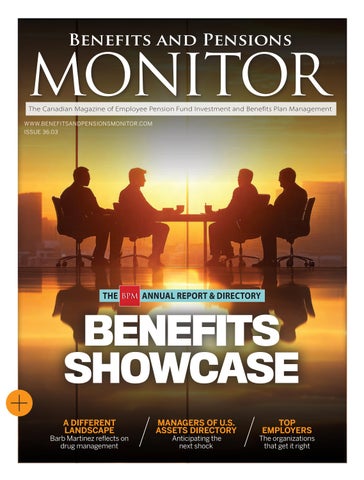

BENEFITS SHOWCASE
MANAGERS OF U.S. ASSETS DIRECTORY
Anticipating

TOP EMPLOYERS
The organizations that get it right

Get tailored coverage, specialized resources and, above all, support you can count on.
desjardins.com/group-insurance

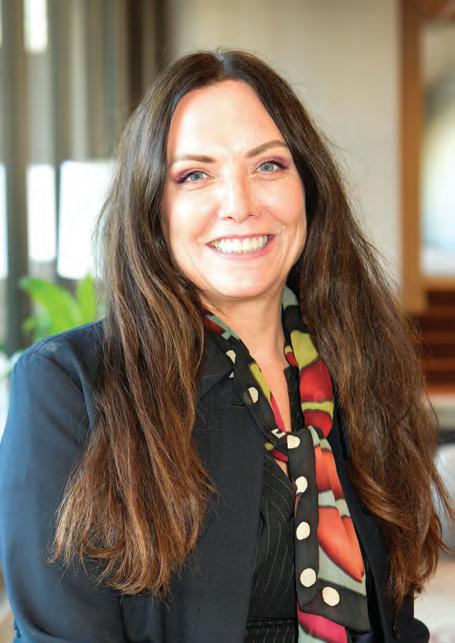




It’s time for a workplace reset

One of my fondest memories of work comes from my part-time job days in Eastern Ontario working at Cineplex and Ottawa-based Escape Manor, where every summer we would do a company retreat of some sort. Some of us would go to the Calypso waterpark in Limoges; others would do a weekend getaway at Wilderness Tours, riding the Ottawa river rapids and camping in cabins. Just for the sake of having fun, getting to know each other outside work, and building up a stronger team.
If organizations have a yearly retreat their employees can look forward to, this could be a great retention strategy. It could also act as a company’s value proposition. I’ve seen several organizations offer early Fridays throughout the summer or monthly paid lunches – even the simple act of a manager taking their employee out for lunch can go a long way. Offering a workplace pension or retirement plan will also encourage an employee to stay long-term. This not only builds a fruitful relationship between the employee and the organization but also strengthens the foundation of an impactful workplace culture and increases employee engagement.
Having a strong work culture in place also helps to align the value on investment ... and improved health outcomes
Nowadays, it seems we’re stuck in a workplace grind of signing on or going to the office, working the designated hours, and striking up camaraderie through virtual meetings. While the pandemic is partly to blame here, with remote and virtual work, there hardly seem to be any team building exercises, workplace getaways, or any sort of workplace cultural retreat that would do wonders for attraction and retention, let alone workplace well-being.
According to recent Deloitte research, seven out of 10 workers say if their organization increased its commitment to human sustainability, it would not only improve their overall experience at work and boost their engagement and job satisfaction but would also lead to greater productivity and performance, increased desire to stay with their company longterm, and enhanced trust in their company’s leadership.
But what makes an effective workplace culture? According to benefits experts, workplace culture needs to start at the top (more on this on p. 46). This means any C-suite executive or manager in the workplace should decide what the company values are and actually implement those values and initiatives. They also need to lead by example and know their employees.
If you don’t know your employees, you don’t know your culture. That can be problematic, particularly if turnover is high and you’re seeing new faces in the office every other month or year. Having a strong work culture in place also helps to align the value on investment, which leads to stronger return on investment, increased engagement and workplace performance, and improved health outcomes.
It’s time for a workplace reset − one that encourages leaders and managers to respond and act, ensuring their employees’ well-being is looked after regularly. Workplace culture isn’t something to take lightly. It’s an ethos, and one that that demands regular attention.
Josh Welsh, senior journalist
EDITORIAL
Managing Editor
James Burton
Senior Editor
David Kitai
Senior Journalist
Josh Welsh
Senior Sponsored Content Writer
Manal Ali
Lead Production Editor
Roslyn Meredith
Production Editors
Christina Jelinek, Tara Tovell, Karen Atienza
ART & PRODUCTION
Vice President, Production
Monica Lalisan
Creative Director
Marla Morelos
Designers
Joenel Salvador, Aira Olgado
Production Coordinator
Kat Guzman, Loiza Razon
Customer Success Coordinator
Gail Baes
SALES & MARKETING
Vice President, Global Sales (Wealth) Abhiram Prabhu
Publisher Michael Hughes
CORPORATE
President
Tim Duce
Chief Human Resources Officer
Julia Bookallil
Chief Revenue Officer
Dane Taylor
Chief Information Officer
Terry Szames
COO
George Walmsley
CEO Mike Shipley
EDITORIAL ADVISORY BOARD
Celine Chiovitti, OMERS
Katie McNulty, CAAT Pension Plan
Greg Hurst, Greg Hurst & Associates
Jim Helik, James Helik Consulting
Tim Clarke, tc Health Consulting
Gavin Mosley, Mosley Group Benefits
Joyce Hum, Neuberger Berman
Anthony Spagnolo, Baillie Gifford
Editorial advisory board members meet informally and are consulted when appropriate to their areas of expertise, interest, or jurisdiction. The members bear no responsibility for the contents of the magazine.
EDITORIAL INQUIRIES james.burton@keymedia.com
SUBSCRIPTION INQUIRIES tel: 416 644 8740 • fax: 416 203 8940 subscriptions@keymedia.com
ADVERTISING INQUIRIES
Michael Hughes
michael.hughes@keymedia.com
KM Business Information Canada Ltd. 317 Adelaide Street West, Suite 910, Toronto, ON M5V 1P9 tel: +1 416 644 8740 www.keymedia.com Canada • USA • UK• Australia • New Zealand • Philippines
Benefits & Pensions Monitor is part of an international family of B2B publications, websites, and events for the finance and insurance industries.
WEALTH PROFESSIONAL james.burton@keymedia.com T +1 416 644 8740



s:

Specialty drugs keep taking more plan dollars each year, even though they remain a tiny, slowly growing share of claimants.
Specialty drugs (≥$10,000/year) –share of total eligible amounts
Specialty drugs – share of claimants
Four in 10 Canadians say their salary makes them feel undervalued by their employer. Today, only 1 in 10 overweight or obese people use GLP-1s Weight-loss drugs may ultimately reach just
SWITCHING JOBS FOR HIGHER PAY
Pay frustration is widespread, with many Canadians ready to job-hop for raises, especially younger workers facing stubborn cost-of-living pressures today.
Nearly one in three working Canadians say they will look for a new job in the next 12 months if they do not get a pay increase.
If they were paid more, 63 percent said they would be more motivated to work harder.
A single adult needs nearly $85,000 a year to get by and put a little aside into savings or an emergency fund.
35 percent of Canadians say they cannot stretch their paycheque to their next paycheque, relying on credit cards, overdrafts, and bridging loans.

How early support shapes recovery
Disability claims start with a human moment that matters
ASK JEN ROBERTSON what is changing in disability claims, and she will not start with technology. She will start with the first interaction. In her view, a disability claim is a human moment that can set the trajectory for engagement, recovery, and duration, especially in the first 30 days.
That call, in her telling, is doing more work than the industry has historically given it credit for. “How a claim is handled in the first 30 days will strongly influence the claimant’s engagement, their recovery momentum, and, of course, the duration of the claim,” says Robertson, AVP disability claims at Co-operators, who has spent close to three decades in insurance. In an industry that still measures itself largely by adjudication speed, that early window is increasingly where cost, outcome, and trust are actually decided.
Complexity is no longer the exception
The types of claims arriving on case managers’ desks look different than they did a decade ago, and the difference is not subtle. Mental health claims are rising, psychosocial factors are extending durations, regulatory and reputational scrutiny is sharper, and claims teams themselves are stretched thin.
Robertson’s framing of the shift is direct. “Complexity isn’t the exception − it’s the baseline,” she says. That single sentence has uncomfortable implications for any operating model designed around the idea that complex files are outliers to be routed around a standardized core.
It also changes what good performance looks like. The carriers that could pull ahead, Robertson argues, are not the ones that automate the fastest but the ones that build decision quality into their operating model. “What separates strong organizations now is whether they are scaling a process or scaling elevated decision quality,” she says. “Those are two very different things.”
Why mental health is testing disability models
Mental health is where the limitations of the legacy disability model become hardest to ignore. These claims do not behave like the physical files the industry built its operating models around, and treating them as if they do tends to produce worse outcomes for everyone involved.

the same diagnosis can have really different functional impacts,” she says, depending on their role, their support systems, and how they are engaging in treatment.
Some carriers, like Co-operators, are building people-first capability into operating models by investing in clinical literacy, early risk identification, and stronger firstphase interactions − so files don’t disengage and drift.
“Psychological safety affects engagement of mental health claimants,” Robertson says.
The hidden cost of transactional claims handling
Where Robertson is most pointed is on the cost of getting the early experience wrong. Carriers that lean too hard on automation and standardization could end up paying
“If a disability claim becomes overly transactional, we’ll see unintended consequences” Jen Robertson, Co-operators
“Mental health claims are different,” Robertson says. “They’re less linear.” Recovery rarely moves in a straight line. Workplace dynamics, access to timely care, fear of relapse, and a claimant’s continued engagement with treatment all sit inside the file in ways a checklist struggles to capture.
The result is that two people with what looks like the same claim can have very different experiences. “Two people with
for it in duration, she argues, adding, “If a disability claim becomes overly transactional, we’ll see unintended consequences.”
The economics, in her view, are unforgiving. “A disengaged claimant is rarely a short-term duration claimant,” Robertson says. “When people are feeling misunderstood, we’re going to see outcomes worsen rather than improve,” and the file can derail entirely.
Her preferred shift in measurement is small in language and large in implication. It’s “moving away from ‘how fast did we process this claim?’ toward ‘how well was the first phase of the claim managed?’” she says.
What ‘people first’ means in practice
“People first” has become a broad phrase in financial services. In disability, the approach is most credible when it is structured, clinically grounded, and defensible − when decisions are anchored to diagnosis, function, and treatment; expectations are set early; and communication preserves dignity, especially in emotionally complex claims. Done well, it improves outcomes through decision quality and consistency, not by lowering standards.
It means building clinical literacy that goes beyond the diagnostic label and actively working to prevent what Robertson calls “drift,” where files continue to be paid without a credible recovery pathway forward.
“People first is not about softer adjudication,” she says, but rather “more proactive adjudication that will stay anchored in recovery.”
A shared accountability ecosystem
If complexity is the new baseline, engagement is the variable that moves the numbers.
“When a claimant feels respected and understood, they’re more likely to share important information, participate in treatment, and collaborate on a sustainable return-to-work plan,” says Robertson.
The inverse is just as measurable. “If the claimant is experiencing an overly transactional feeling, or they’re disengaged,” she says, “it shows up as a longer duration,” often with repeated delays and higher escalation risk.
The leverage point, particularly when carriers have to deliver unfavourable decisions, is the pairing of clarity with humanity.
Sponsored by


“People first is not about softer adjudication, [but rather] more proactive adjudication that will stay anchored in recovery”
Jen Robertson, Co-operators
The downside of underinvesting is operationally visible. “When claims teams are overwhelmed, what we see is that decisions become very reactive, and that risk of drift really rises,” Robertson says.
Disability outcomes, Robertson is quick to point out, are not the property of any single actor. Advisors shape plan design and expectations. Employers and HR shape early accommodations and workplace engagement. Carriers shape decision quality and consistency. Vendors shape treatment trajectory.
What plan sponsors are asking for in that ecosystem has shifted. “Strong claims adjudication is table stakes,” Robertson says. Sponsors are now “looking for a partner who can improve outcomes and provide
guidance to both their employee and also to the employer.”
Redefining what winning looks like
When asked how success in disability case management will be measured a year or two from now, Robertson does not hesitate. The metrics, she believes, are about to change. Duration will still matter, but the industry is moving toward new measures that predict durable outcomes: engagement, decision consistency, and sustainable return-to-work. Optimizing only for speed can create recurrence or premature outcomes that are not sustained. The next phase will reward carriers who measure the quality of the journey − not just the speed of closure.
THE NEW REALITIES SHAPING CANADA’S DRUG PLANS
‘It’s a whole different landscape,’ says Canada Life’s Barb
Martinez
BARBARA MARTINEZ has spent 25 years watching Canada’s drug benefits landscape reinvent itself. The national practice leader of drug solutions at Canada Life began her career at a time when a Health Canada approval was often sufficient for a drug to be covered by workplace plans.
“The drug legally required a prescription, it was used to treat an illness or injury, it had a drug identification number. That was often enough for it to be added to plans. And that made sense,” Martinez says. “In those days, there were fewer drugs on the market, options were more limited, costs were far lower than they are today. It’s a whole different landscape nowadays − with new medications arriving faster, prices are higher while therapies are often targeted to specific conditions or patient populations.”
Now, Martinez suggests the industry has moved toward an evidence-based model, drawing on clinical expertise and health economists to evaluate how drugs perform not just in trials but in real-world use, including who benefits the most and what the long-term impact on plan spending looks like. The aim is to ensure that covered medications deliver meaningful health value while keeping plans affordable.
“It’s just not affordable to cover everything approved by Health Canada any longer,” she says.
Cost is the most obvious pressure point facing most plan sponsors. Twenty-five
years ago, most medications were relatively inexpensive. Today, plans can face therapies priced at $100,000 or $500,000 a year, notes Martinez. Those rising costs have since forced plans to change how they add coverage. Prior authorization, step therapy, and clinical oversight are now standard, all aimed at ensuring that high-cost drugs reach the members who need them most while keeping plans sustainable.
Generics have also taken on a much larger role over time.
That shift is about to become even more important following Health Canada’s recent approval of two generic Ozempic drugs, with more on the way. While Martinez acknowledges that the generics should bring meaningful cost relief, she cautions it will take time for plan sponsors to see the impact. Notably, manufacturers still need to distribute the new generics, while provinces need to complete their own assessments before pharmacists can begin substituting them for the higher-cost brand versions.
“By making sure we’re paying for those lower-cost alternatives once they become available, it frees up money to then pay for those higher-cost drugs”
“More than 70 percent of all the prescriptions that we pay for are for generic drugs, as opposed to brand drugs,” Martinez notes, adding that that shift helps free up dollars to allow plan sponsors to cover the expensive therapies certain members need.
“By making sure we’re paying for those lower-cost alternatives once they become available, it frees up money to then pay for those higher-cost drugs that certain members are going to need to be healthy and productive. We also know that people are accepting generics far better today than they may have 20 years ago,” she explains.
The price of the generic has landed at 35 percent of the brand cost, bringing the annual expense for a patient down from $5,000 to roughly $2,000.
Martinez also acknowledges that the old habit of sorting drugs into broad lifestyle categories has outlived its usefulness. Historically, plans often took a blunt includeor-exclude approach to areas such as fertility, obesity, and smoking cessation.
Now, those conditions are better understood as issues that can materially affect health outcomes, which means coverage decisions need to be based on clinical value rather than
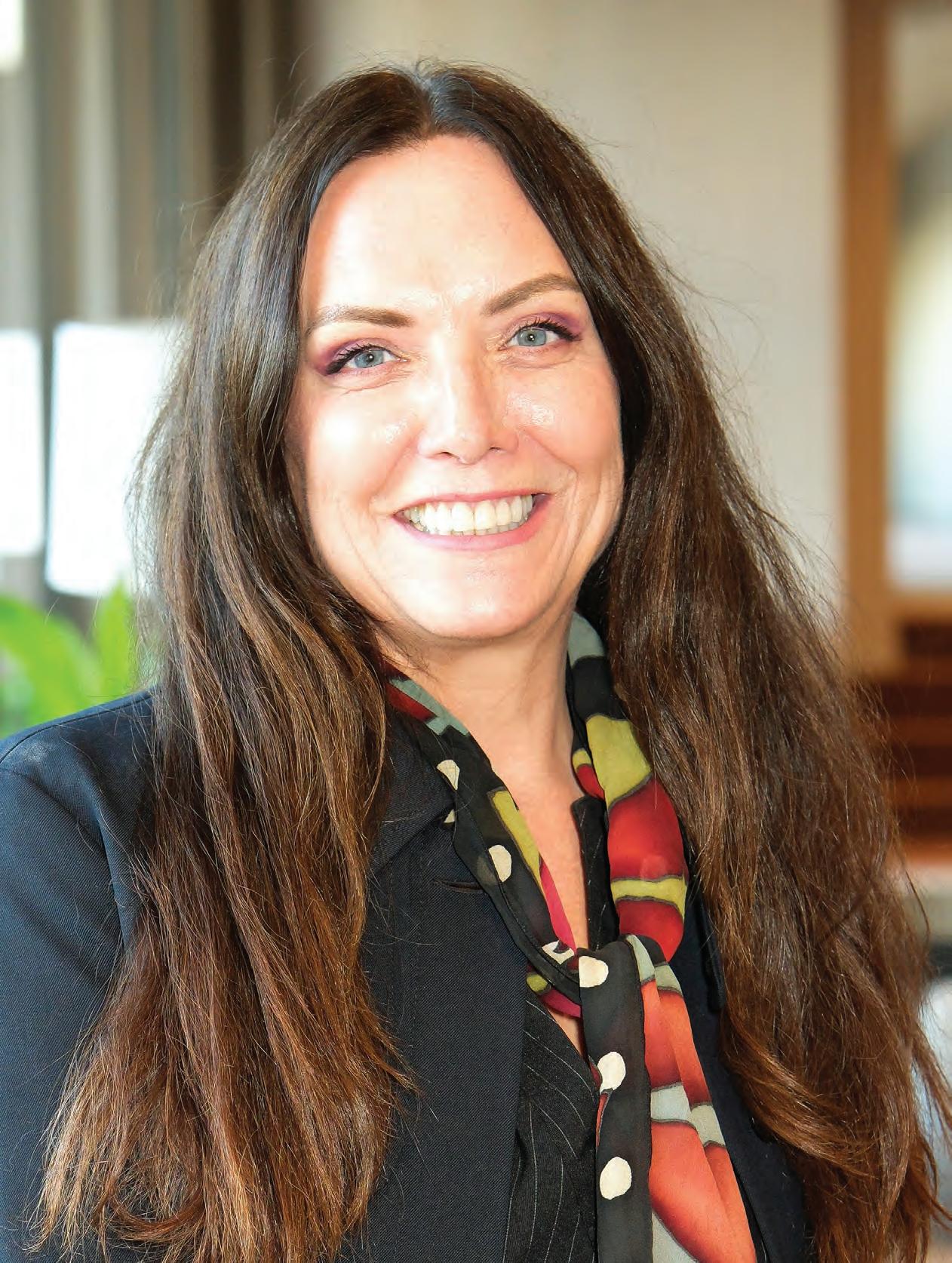
PROFILE
Name: Barbara Aroon Martinez
Title: National practice leader, Drug Solutions
Company: Canada Life
Years in the industry: 13 years pharma industry, 10 years benefits consulting, 14 years group insurance
Most recent watch: HGTV is on in the background most days. I watch every cooking show
Career highlight: Working with amazing people who supported me along the way – you know who you are
Biggest life lesson: Learning to get back up when I get knocked down
What makes you wake up in the morning? Coffee − can’t live without it
Proudest achievement: I hope I have been a voice of critical thinking in our industry with respect to drug plans.
INDUSTRY ICON
outdated labels, she explains. Additionally, modern drugs treat multiple conditions, which makes these types of labels impractical.
For example, Martinez points to Wegovy because it’s approved for chronic weight management, fatty liver disease, and potentially sleep apnea. Categorizing a drug as “lifestyle”
Instead, Canada Life is moving toward an optional layer of coverage that can be added to plans, with higher reimbursement for certain drugs and lower reimbursement for treatments that may otherwise be more
“We’ve applied pharmacoeconomic analyses, and other methods, to appropriately balance plan costs and members’ need for access to effective treatments”
difficult for plans to sustain from a cost perspective.
instead consider how to provide access to treatments that make medical sense while keeping costs sustainable.
“The way we can do that in drug plan design today is to put drugs into categories not based on disease but based on plan impact. For example, one of the problems we’ve tried to solve over time are these very, very high-cost drugs that small numbers of patients take. So, we’ve applied pharmacoeconomic analyses, and other methods, to appropriately balance plan costs and members’ need for access to effective treatments.”
Moreover, Martinez highlights a newer pressure on drug plans. While insurers have spent years building tools to manage very high-cost drugs used by small numbers of

plan members, a growing challenge now comes from medium-cost drugs used by larger populations.
Those treatments may be far less expensive on an individual basis, Martinez notes, but their widespread use can still put a serious strain on plan budgets. She believes plan sponsors need a different framework − for example, one that balances access with affordability and recognizes that mediumcost, high-volume drugs are becoming a major sustainability issue for plans.
When asked what recent developments have had the greatest impact on plan sustainability, Martinez says that evidence-based stewardship has been the most effective strategy for keeping drug plans both competitive and financially viable.
She explains that the process now involves health economists, pharmacists, doctors − and even lawyers − all working to ensure that coverage decisions are grounded in clinical evidence and compliant with regulation, and that they support long-term benefits for members.
From Canada Life’s perspective, the goal is to deliver plan designs that reflect those priorities while still allowing plan sponsors to meet their individual needs and the needs of their members, rather than applying a single formula across the board.
“Everybody wants to manage spending and deliver access, but the way you do that is going to be different for different clients depending on their philosophy and their objectives for the drug plan,” Martinez says, acknowledging that

some employers prioritize competitive benefits to attract talent, while others are focused on cost containment.
Looking ahead, Martinez says technology will play a growing role in how members interact with their drug plans. Canada Life’s digital tools already allow members to check drug eligibility, coinsurance levels, prior authorization requirements, and generic alternatives in real time. The tools also help by flagging when a drug that’s not covered is under review and providing an expected decision date.
“These are tools that members can use right in the doctor’s office so that they can know what their coverage is right at the time of prescribing,” she says, adding that demand for that level of transparency is only increasing.
BENEFITS
Managing diabetes leads to ‘predictable moments of risk’
CPBI Forum panellists outline how to rethink diabetes sick-day management
DIABETES IS now the number two driver of private drug spend in Canada, just behind inflammatory conditions, according to a recent drug-trends report by Express Scripts Canada.
The mental load of managing a 24/7 condition notably makes it difficult for employees to act at the moments when action matters most, particularly as sick days tend to be treated as one-off events. Moreover, the sharpest growth of diabetes claims – a 6 percent jump in claimants in 2025 – came from adults aged 18 to 44, the core of the workforce.
While speaking at the 2026 CPBI annual forum in Quebec City, panellists converged on the premise that most diabetes-related workplace disruption is preventable, but only if employers, insurers, and clinicians shift from reacting to crises to building early intervention into its foundation.
“When diabetes starts earlier, people live with it longer, it means more years for complications and workplace impact. The challenge with diabetes is that it often gets more complex over time. But if we have early intervention, we can help slow that progression. When diabetes is managed early, there’s a better chance for fewer complications, slower progression, helping contribute to a more stable, productive workforce. That’s why it’s important to act early,” said Gina Kawak, director of pharmacy benefits at Manulife.
Without intervention, what begins as a single diagnosis can “become multi-system,” she added, pointing to high blood pressure, high cholesterol, nerve pain, and rising paramedical claims. Kawak argued these are often predictable inflection points.
Predictable moments of risk Illness – whether minor or severe – can quickly destabilize diabetes. Reduced
appetite, dehydration, or infection can disrupt glucose levels and increase the risk of emergency-department visits or hospitalization.
“A lot of people see these as isolated events, but they’re actually predictable moments of risk,” Kawak said, pointing to Manulife’s wellness data that reveals a broader productivity challenge: absence accounts for just 3 percent of lost time, but reduced productivity accounts for 19 percent – adding up to 46 lost working days per employee per year.
“We need to rethink sick-day management as a preventive strategy because consequences of poor preparation go far beyond the person’s control alone,” said Dr. Marie-Philippe Morin, a specialist in general internal medicine and

glycemic control will reduce the complications, care utilization, and also workplace disruption,” Dr. Morin added, noting how the clinical evidence for early glycemic control is unambiguous, as every 1 percent reduction in HbA1c translates to a 35–40 percent drop in microvascular complications and a 15–20 percent reduction in macrovascular risk, including heart attack, citing a Diabetes Care study from 2019.
Other than GLP-1 receptor agonists, sensor-based glucose monitoring, such as Abbott’s FreeStyle Libre Flash Glucose Monitoring Systems, can deliver HbA1c reductions comparable to adding a medication and drives behavioural change through real-time feedback. Dr. Morin also acknowledged automated insulin pumps, which can achieve tighter control for type 1 patients
“The most important role for plans is ensuring the right technology and the right multidisciplinary supports to improve outcomes long term for people living with diabetes”
Dr. Marie-Philippe Morin, Quebec Heart and Lung Institute
bariatric medicine at the Quebec Heart and Lung Institute and researcher in obesity and cardiometabolic factors, pointing to diabetic ketoacidosis (DKA) as a case in point. DKA can develop rapidly during routine illnesses like gastro or influenza, as stress hormones spike insulin requirements and glucose climbs and ketones accumulate. But left untreated, it can be fatal.
“Early intervention in diabetes is really critical because we have strong evidence that good
without increasing hypoglycemia.
Still, she cautioned that coverage for realtime glucose monitoring remains restricted to patients already on insulin – a gap that undermines early intervention.
Christine Than, a drug-benefit consultant and Canada pharmacy leader at Willis Towers Watson (WTW), emphasized that workplace disruption is often the clearest signal. Uncontrolled diabetes doesn’t just affect health – it impacts performance in real time.
Sponsored by
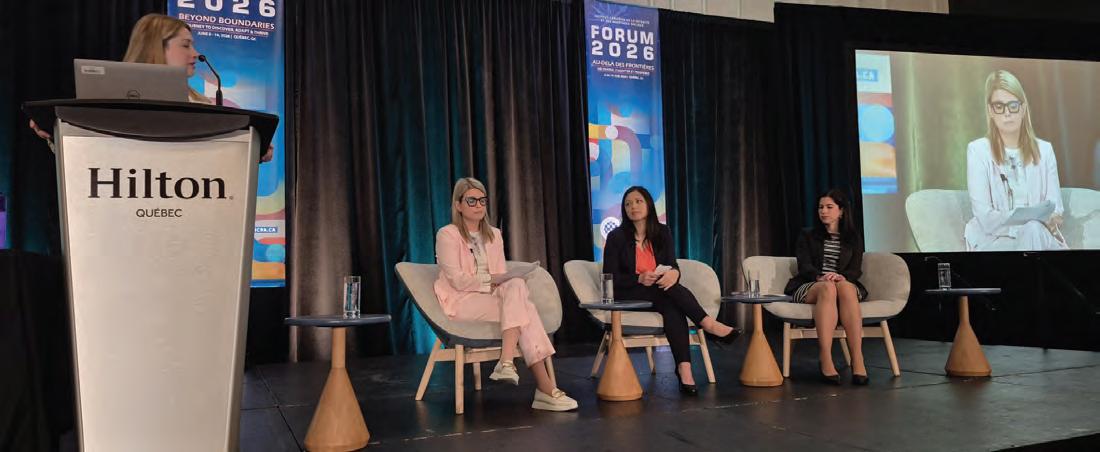
Employees with poorly managed diabetes are more likely to make errors, and those errors carry real consequences depending on their role. Than argued early disease control reduces not just complications but also the downstream absenteeism that follows.
When
should employers intervene?
Still, while early intervention is the best medicine, when does it make sense to intervene, and how should employers know when to make that call?
Than emphasized it comes down to knowing who your employees are. After all, the people closest to employees – their managers and colleagues – are the ones most likely to notice when something is wrong, like fatigue, repeated errors, or frequent lateness. But she also acknowledged how benefits teams and consultants never see those signals.
“Managers already face pressures and demands from the employees. They’re the ones who should be on the lookout for symptoms: patients – employees – who come in late or who are fatigued. That’s why you need eyes on the ground,” she said.
Intervention is not straightforward
Diabetes management sits at the intersection of workplace oversight and personal privacy. Disclosure must remain voluntary, and organizations that fail to build trust risk reinforcing stigma around chronic conditions.
“While sharing personal experiences can be valuable, it’s important to respect boundaries so individuals aren’t put in situations that could reinforce stigma or bias,” said Emilie Vigneault-Simard, specialized nurse practitioner in adult care at Infirmière praticienne spécialisée en soins aux adultes (IPSSA).
Effective benefits design
Kawak reinforced that effective sick-day management needs to connect the supports, such as access to dietitians, health coaches, virtual healthcare, mental health support, and EAP services, into a measurable strategy. Pairing health coaching with sensor-based glucose monitoring data –and measuring outcomes against disability claims, absenteeism, and productivity – can provide the evidence plan sponsors need to justify investment.
According to Manulife’s own data, early dietitian engagement cuts the likelihood of progressing to second-line therapy by 40 percent and lowers cardiovascular risk, with a $400 per employee reduction in combined drug and paramedical spend over two years.
Ultimately, the panel underscored a fundamental shift: effective diabetes management in the workplace must move from reaction to anticipation. This means equipping employees with education on managing illness, enabling earlier detection through sensor-based glucose monitoring, and ensuring timely access to care before a short illness turns into a major health event.
“The most important role insurers and plan advisors can play is ensuring that patients have timely access to the right medication, the right technology, and the right multidisciplinary supports to improve outcomes long term for people living with diabetes,” said Dr. Morin.
The opportunity is clear: by treating predictable risks as preventable events, employers and insurers can reshape outcomes – not just for costs, but for the workforce itself.

PREVENTION IS A BENEFIT, NOT A BONUS
Why
vaccine
coverage must become core plan design
IMMUNIZATION IS one of the most powerful health investments available. The World Health Organization estimates vaccines prevent 3.5 to 5 million deaths each year, making them a foundation of population health and economic stability. Despite this, Canada’s private drug
plans continue to send a contradictory message: prevention is optional. Mapol’s Private Drug Plan Leadership: Vaccine Coverage Report Card 2025 shows that only 71 percent of plan members have coverage for recommended adult vaccines − leaving nearly one in three without access.
More than 1.5 million vaccine claims were declined in 2023 simply because vaccines were not covered. When prevention is treated as discretionary or capped at inadequate levels, it reinforces the misconception that vaccines are “nice to have” rather than essential care.
“Vaccination consistently prevents the most costly consequences of illness: hospitalizations, extended absences, chronic complications, and avoidable disability claims”
This approach is out of step with today’s workforce. Employers are supporting aging employees, individuals with chronic conditions, and those more vulnerable to infection − yet vaccines, among the most effective preventive tools in medicine, remain inconsistently covered. As Normandin Beaudry highlights, it is difficult to justify reimbursing preventive drugs like statins while excluding vaccines that prevent severe, costly illness.
Some plans also impose unnecessary administrative barriers, such as requiring prescriptions for vaccines already classified as Schedule II (pharmacist‑controlled, non‑prescription). These barriers delay access, create inequities across provinces, and do not reflect modern pharmacy practice.
The cost of waiting for illness
Shingles can lead to weeks of acute pain and months of post‑herpetic neuralgia (PHN). The recombinant zoster vaccine demonstrates over 70 percent effectiveness against shingles and over 80 percent against PHN. Long‑term follow‑up shows protection can last beyond a decade. For employers, shingles is a predictable and preventable cause of prolonged absence.
Pneumococcal disease is a leading cause of severe respiratory infec tion, especially in older adults and those with health risks. Newer pneu mococcal conjugate vaccines significantly reduce community‑acquired pneumonia and invasive pneumococcal disease, preventing hospitaliza tions and long recoveries. In practical terms, pneumonia often results in weeks of lost productivity − much of it avoidable.
Human papillomavirus (HPV) is an important cause of cervical and oropharyngeal cancers. Canadian guidance clearly positions HPV vaccina tion as cancer prevention. Large Swedish registry studies show a dramatic reduction in invasive cervical cancer among vaccinated individuals, partic ularly when vaccination occurs earlier. Some countries have set national elimination goals − including Australia, which aims to eliminate cervical cancer by 2040, and England, which targets 2035. Early vaccination
Delivering the Best in Health
Your employees’ health needs continuously evolve. At Sun Life, we get that.
We don’t just partner on health solutions –we champion your employees’ well-being as the foundation of everything we do. By providing health strategy resources, inclusive health solutions and innovative insights, we deliver the Best in Health for your team.
Together, we’ll help you build a healthy workplace strategy to support a healthy, productive, and engaged workforce.
Visit sunlife.ca/healthstrategy to find resources you can use today.


provides the strongest protection, but adult catch‑up remains critical.
Lyme disease: the turning point we can anticipate – or wait to regret
After many years with no preventive option, a viable Lyme disease vaccine is finally approaching approval. Without moderniza tion of benefit design, many Canadians risk being excluded from this innovation the moment it becomes available.
Lyme disease, caused by Borrelia burg dorferi and transmitted by blacklegged ticks, often goes unnoticed at exposure. Early symptoms may include a spreading rash or a flu‑like illness, while later stages can involve facial palsy, severe joint inflammation, cardiac involvement, and neurologic compli cations. Early treatment improves outcomes, but uncertainty following a possible tick bite can cause significant worry for families and outdoor workers.
The leading vaccine candidate, VLA15, is in Phase 3 trials in North America and Europe, with regulatory submissions
expected in 2026. Scientific assessments frame VLA15 as a critical tool against a rising vector‑borne threat that personal protective measures cannot contain. For outdoor and mobile workers − including forestry, land scaping, construction, recreation, agricul ture, and delivery − a vaccine could prevent chronic fatigue, recurrent joint disease, and prolonged follow‑up care.
We have seen this scenario before: preventive tools exist, but benefit structures leave people without access. It is essential not to repeat that pattern.
A modern approach to prevention
Rather than treating vaccines as optional extras, benefit plans can strengthen preven tion by integrating routine adult immuniza tion into core coverage. This means aligning benefits with clinical recommendations, ensuring annual maximums are sufficient for full vaccine series, and removing admin istrative steps that slow access. Plans can also support prevention by communicating coverage clearly, including dependents in
vaccine strategy, and embedding immuniza tion reviews into workplace health initiatives.
The economic argument is clear Vaccination consistently prevents the most costly consequences of illness: hospitaliza tions, extended absences, chronic compli cations, and avoidable disability claims. Prevention is not a perk − it is sound, evidence‑based plan management. When vaccines are treated as essential care, the message is unmistakable: employees’ health deserves protection before it breaks.

drug development, product management and reimbursement, business development, and government relations. With his expertise, he plays a key role in drug management strategies for group insurance clients. He is also a member of the Ordre des pharmaciens du Québec (Quebec Order of Pharmacists).
Frédéric Leblanc has served as strategic leader, drug programs at iA Financial Group since 2019. Frédéric has over 20 years’ experience in the pharmaceutical sector. He has worked in


PRACTISING WHAT THEY PREACH
THERE IS a particular accountability that comes with working in this industry. When your organization’s purpose is helping employers take better care of their people, your own employees are watching. They know what good looks like. They know what the research says. They know when the culture matches the pitch and when it doesn’t.
The 10 organizations named among Canada’s best companies to work for in the benefits, pensions, and institutional investment space for 2026 passed that test, not according to their leadership but according to the people who show up every day to do the work.
Benefits and Pensions Monitor identified the best companies to work for in this space through its fourth annual Top Employers survey. Organizations were first invited to participate by completing an employer form detailing their offerings and practices. Employees from nominated companies then evaluated their workplace anonymously across five dimensions: benefits, compensation, culture, employee development, and
commitment to diversity and inclusion.
To qualify, each organization had to reach a minimum response threshold based on its size. Those achieving a 75 percent or greater average satisfaction rating were named Top Employers for 2026.
This year, 10 organizations earned that distinction.
“Firms in our space face a unique credibility test,” says Terri Botosan, HUB International Canada’s president of employee benefits, retirement, and life. “We’re in the business of telling employers how to take care of their people, so our own employees hold us to a higher standard. The firms that are winning the talent game in benefits and pensions right now are the ones where employees feel trusted, invested in, and like their work has meaning beyond the day to day.”
They range from organizations with fewer than 25 employees to those with more than 1,000, spanning pension administration, group benefits, asset management, and specialty insurance.
METHODOLOGY
To find and recognize the best employers in the benefits and pensions industry, Benefits and Pensions Monitor first invited organizations to participate by filling out an employer form, which asked companies to explain their various offerings and practices. Next, employees from nominated companies were asked to fill out an anonymous form evaluating their workplace on a number of metrics including benefits, compensation, culture, employee development, and commitment to diversity and inclusion.
To be considered, each organization had to reach a minimum number of employee responses based on its overall size. Organizations that achieved a 75 percent or greater average satisfaction rating from employees were named Top Employers for 2026 in the fourth annual report.
Their workforce skews experienced: nearly half of survey respondents have been with their organization for five years or more, and three quarters are aged 30–59, the core of any organization’s institutional knowledge. Across every size and structure, one finding holds: when employees feel genuinely supported, the numbers show it.
THE 2026 COHORT AT A GLANCE

among the top four preferences in those years, making them the unmovable foundation of any competitive total rewards package.
Around them, the shifts are telling. Vision coverage has climbed from 4.55 in 2024 to 4.72 in 2026, the steepest upward move in the top 10, while life insurance and disability benefits recovered strongly in 2026 after dipping in 2025, pointing to growing employee focus on income protection.
Flexible work options, meanwhile, have slipped from a joint-second ranking in 2024 to sixth in 2026. They have not become less important so much as less remarkable. Flexibility is now an expectation, not a differentiator.
Numbers tell the story
The scores bear that out. Vacation leave, medical and dental coverage, and retirement plan ranked as the three highest-rated benefit categories across the cohort, with average scores of 4.89, 4.85, and 4.83, respectively, on a five-point scale.
Flexible work options scored 4.60, reflecting a sector that has largely normalized hybrid and remote arrangements. The lowestscoring categories, including paternity leave, sabbaticals, and loyalty programs, point to the next frontier of benefits design for employers looking to push beyond the baseline.
What the scores cannot capture, but what the employee comments make unmistakably clear, is the texture of these workplaces. Across hundreds of open-ended responses, the same themes recur:
• leaders who are accessible and human
• recognition tha t is both formal and spontaneous
• f lexibility that is trusted rather than policed
• a sense that the organization sees the whole person rather than just the employee
In a sector defined by its commitment
to other people’s financial security, the top employers of 2026 have made that commitment personal.
What Canadian employees value most in 2026: three years of benefits data reveal a clear shift
Three years of data reveal a workforce recalibrating around security. Vacation leave, medical and dental coverage, retirement plan, and flexible work options have been
Development programs have edged down similarly, from 4.31 in 2024 to 4.19 in 2026. When economic pressure builds, employees prioritize health and financial security first. For employers, the data delivers a simple message that the basics must be exceptional before anything else registers.
Accepted, not chosen: why hybrid work may be a temporary compromise Hybrid work is the dominant arrangement at this year’s top employers, with 63 percent currently working in a hybrid model. But when employees are asked what they would actually prefer, that number drops to 44 percent, a 19.6-point gap that is the largest in the dataset.
Source: Benefits and Pensions Monitor, Top Employers Survey 2024, 2025, 2026. Employees rated each factor on a scale of 1 to 5, irrespective of whether their employer offers it.
the genuine investment these organizations make in their people.
But BPM’s data introduces an important qualification: 45 percent of employees say they would consider changing jobs if a role offered working arrangements that better suited their preferences. That is nearly half the workforce at organizations that have already cleared a high satisfaction threshold.
The implication is significant. Retention is not simply a function of how happy employees are today, but of whether the daily reality of how and where they work matches what they actually want. Working arrangements have become a departure trigger, not just an attraction factor, and employers who treat flexibility as a solved problem may be underestimating the risk sitting quietly in their own satisfied workforce.
Compensation is not a once-a-year conversation anymore
Compensation is the primary driver of attraction in Canada’s labour market, and the salary review data suggests that top employers may have an emerging gap to close. Sixty-three percent of employees currently receive a salary review once a year, the clear industry norm.
for their workplace culture, signalling that the appetite for more frequent compensation conversations is not a dissatisfaction problem but an expectation problem.
Annual reviews were designed for a more stable economic environment. In a period of persistent inflation and rising living costs, employees are recalibrating what regular looks like. For employers, the cost of addressing this is far lower than the cost of losing talent to organizations that already have.
The stakes of getting it right: Canada’s benefits, pensions, and institutional investment space in 2026
The cost of getting workplace benefits wrong has never been higher. According to an Express Employment Professionals/ Harris Poll survey, the average cost of employee turnover in Canada has climbed to $30,680 per person, up from $29,234 just a year ago, and more than one in four Canadian hiring managers expect departures to accelerate in 2026.
The preference shift flows in two directions: toward full remote, which jumps from 19 percent current to 28 percent preferred, and toward complete employee choice, which nearly triples from seven percent to 20 percent.
Taken together, the data suggests that hybrid, while widely accepted is not widely chosen. Employees at even the best employers in this sector want more autonomy over where they work than most organizations are currently providing. For employers who consider a hybrid policy a settled question, these numbers are a prompt to reopen it.
Why even happy employees will leave for better flexibility
At first glance, the retention picture at Canada’s top employers looks strong. Eightyfive percent of employees are not actively looking for a new role, a figure that reflects
But among employees who expressed a preference, 55 percent said they would like that frequency increased. That is a majority of engaged, satisfied employees at organizations that have already earned recognition
Among larger organizations with 100 or more employees, that figure rises to 37 percent. When 46 percent of hiring managers point to enhanced benefits and perks as their single most effective recruiting tool, according to Robert Half’s 2026 research, organizations are no longer competing on total rewards. They are being judged by them.
Willingness to leave for better working arrangements
CANADA’S RETIREMENT COVERAGE AND PRODUCTIVITY GAP
Yet Canada’s broader retirement security picture reveals a structural gap that the best employers are being asked to help close.
A February 2026 IG Wealth Management annual retirement study found less than half of non-retired Canadians, just 48 percent, have any employer-sponsored pension plan, whether defined benefit or defined contribution.
Three decades after large employers began phasing out DB plans, the burden of retirement planning has shifted almost entirely to individuals, most of whom are ill-equipped to carry it. Only 11 percent of non-retirees know how much annual income they will need in retirement. More than half report negative feelings about their financial futures. The organizations recognized in this report are doing something meaningful about that.
Retirement benefits are a performance lever, not just a perk
According to HOOPP’s 2025 Canadian Employer Pension Survey, 88 percent of employers offering a DB pension say it has directly helped them recruit and retain talent.
More striking: 57 percent of employers who invested in retirement benefits in the past year reported better-than-normal employee productivity, compared with just 12 percent of those who made no employee investment at all. Eighty-two percent of employers agree that offering retirement
benefits improves employee mental health and reduces burnout.
On the benefits side, the demands are expanding
Prescription drug costs in private plans rose 14.1 percent between 2022 and 2023, the most recently published private-plan figure, and the pressure shows no sign of easing, with public drug spending rising a further 9.3 percent in 2024. Long-term-disability claims are rising and the workforce itself is aging. More than 5.4 million Canadians over 55 are now active workers, representing 21 percent of the total workforce and double the share in 2000, bringing higher per-capita health costs and succession challenges in their wake.
(Sources: PMPRB, February 2025; CIHI, March 2026; HUB International, 2026)
Mental health has become a defining pressure point, particularly for younger employees
Among workers aged 18–30, the number consulting a mental health professional doubled between 2017 and 2025, with antidepressant use rising at 2.5 times the rate seen in other age groups, driven by high living costs, precarious early-career prospects, and financial stress that has become structural rather than episodic.
Beneva’s Connecting the Dots health report, published May 4, 2026, also revealed that for mid-career employees aged 31–50 who are carrying mortgages, childcare costs, and aging-parent responsibilities, shortterm disability claims tied to mental health have risen eight percent since 2019.
“Mental health support is still the headline, but the conversation has matured,” says Botosan. “Employees aren’t just asking whether an EAP exists – they’re asking whether it works. Virtual therapy access, realistic session limits and coverage for a broader range of practitioners are the differentiators.”
Fertility support is the next coverage gap employers will be forced to confront
Manulife data shows fertility medication claims rose 21 percent over the past five years among its plan members. Yet, fewer than one percent of employers with Manulife plans cover IVF treatments, even as 75 percent of women say they want benefits that address
MENTAL HEALTH CLAIMS ACROSS THE WORKFORCE LIFE CYCLE
Source: IG Wealth Management Annual Retirement Study, February 2026; HOOPP Canadian Employer Pension Survey, November 2025
Source: Beneva Connecting the Dots Health Report, May 2026
reproductive and women’s health needs across their full careers, including menopause, an issue 68 percent of employed adults now say deserves explicit workplace acknowledgement.
The pattern extends beyond reproductive health. One-third of the Canadian workforce is now balancing paid work and caregiving responsibilities for children, aging parents, and family members with complex needs, and the productivity toll is measurable.
“Caregiver-friendly employers have a real recruitment and retention advantage in today’s competitive talent market,” Christa Haanstra, national lead of the Working Caregiver Initiative at the Canadian Centre for Caregiving Excellence, said in a May 2026 Benefits Canada article. Leading employers are responding, building lifecycle flexibility that includes career re-entry programs, hybrid schedules, and emergency childcare reimbursements into their benefits architecture.
Botosan sees the same demographic segmentation playing out across the industry. “We’re seeing strong demand for financial wellness programs, particularly among younger employees who are dealing with housing affordability and student debt,” she says.
“Younger workers tend to prioritize flexibility in how benefits are structured and accessed, and increasingly whether they include things like fertility support or gender-affirming care. Mid-career employees are focused heavily on mental health and dependent care. And for employees closer to retirement, the ask is clear guidance – ‘Am I going to be okay?’ That’s where pension adequacy, drawdown planning, and financial counselling become critical.”
Benefits need to match the person Employers still designing benefits around peak productivity years are designing for a workforce that no longer exists. Underpinning all of it is a benefits equity imperative that the most forward-thinking organizations are only beginning to address.
“Employees from diverse backgrounds
are increasingly asking whether their plan reflects their needs,” Botosan says. “There’s also a growing focus on whether the experience of accessing benefits is equitable – are there language barriers, is the navigation process harder for some employees than others?”
The most thoughtful employer responses, she argues, go beyond adding a checkbox benefit. “They’re asking employees what’s missing, and then building those gaps into their plan design and renewal conversations.” For employers in a sector that holds itself to a higher standard of care, that is not a diversity initiative. It is a baseline obligation.
The retention calculus has shifted. Worklife balance has overtaken pay as the primary reason Canadian workers stay in their roles, cited by 46 percent of Canadian talent, ahead of compensation at 23 percent, according to Randstad’s Workmonitor 2026. Nearly half say they would not accept a new position without flexibility in work location or hours.
The organizations named in this report have met a high bar of 75 percent or greater employee satisfaction threshold across compensation, culture, benefits, development, and inclusion.
The firms that pull ahead, Botosan argues, are those that have moved past performative wellness and built cultures where leaders
WHAT ARE THE BIGGEST DRAWS?
model the behaviour they ask of their people, normalizing conversations about mental health at the leadership level, being transparent about workload and burnout risk, and genuinely supporting flexibility rather than just permitting it.
“In the benefits and pension space, specifically, there’s also an interesting dynamic: our industry is asking clients to take care of their people, so there’s an accountability there to walk the talk internally.”
In an environment where the gap between employer confidence and employee optimism has rarely been wider, where 95 percent of Canadian employers expect growth this year and only 51 percent of workers share that outlook, closing that gap starts with how organizations treat the people they employ.
BPM’s Top Employers 2026
Equiton
Founded in 2015, Equiton is a vertically integrated private real estate investment and asset management firm with strategies spanning the risk-return spectrum. The firm partners with institutional investors through flexible structures, including joint ventures, club deals, separately managed accounts, and closed- and open-ended funds. In addition to bespoke real estate partnerships, the company’s platform extends to a suite
Source:

“It’s not even the offerings, it’s about how we show up”
Tania Angemi, Equiton
of professionally managed funds designed to give individual and advisor-supported investors access to assets spanning rental apartments, income-producing commercial properties, real estate debt, and residential development. With a leadership team averaging more than 20 years of industry experience, Equiton’s platform combines investment management, development, construction, and property management capabilities, enabling disciplined execution from acquisition through asset optimization.
For Equiton, scoring about 80 percent for three consecutive years is not the result of a single standout program or a trend-driven culture initiative. It reflects a long-standing philosophy that has shaped the organization’s approach to employees, leadership, and workplace culture from the beginning.
“We’ve always operated in a very flexible environment,” says Helen Hurlbut, co-founder, president and CFO, and the executive who also leads the company’s people and culture function. Her dual mandate gives her a uniquely broad perspective of what has evolved over time and what has remained constant.
“We understood long before hybrid work became mainstream that employees have full lives outside the office,” says Hurlbut. “Whether it’s caring for a sick child, waiting for contractors at home, or managing unexpected personal responsibilities, people need flexibility. We’ve always operated with that understanding.”
When the broader push toward formalized hybrid arrangements arrived, Equiton was not scrambling to catch up. The company codified what was already in prac-
tice, establishing two flexible remote days a month.
Tania Angemi, vice president of people and culture, who joined Equiton just over a year ago, points to the transparency and accountability that underpin the company’s approach to remote and hybrid work.
“It’s not really about the policies, it’s the culture behind them and how we show up,” she says. “We have defined expectations, manager alignment, and that trust and accountability is there. We’ve got managers who are equipped to manage staff who are not always in the office.”
The result, she notes, is perhaps counterintuitive. Many employees choose to come in, valuing the real-time dialogue and decision-making that in-person collaboration enables.
The same intentionality applies to employee development. Despite its tenure, Equiton has formulated a growing set of employee development programs comparable to firms several times its size. It has built out mentorship and mentor circle programs, made LinkedIn Learning a structured part of individual growth plans, and recently completed a skills and training needs assessment across all departments to identify common gaps and build from them.
In 2025, employees completed 9,149 training hours of LI Learning, plus in-classroom training, up from 4,334 in 2024, the year it launched LI Learning.
The company has also launched a talent management framework, mapping existing capabilities against future needs and building development pathways accordingly.
“We’re trying to be more intentional,” says Angemi. “Not just what a company requires, but what are those individual pieces that each department needs.”
Hurlbut frames the commitment in broader terms. “We want to make sure everybody’s got an opportunity to have a voice,” she says. “Whether it’s technical learning or the human side – stress, what people are dealing with at home – we can’t ignore that.”
Lunch-and-learns on mental health, which are held virtually so no one is excluded, sit alongside product education sessions and leadership development programming. The
goal, as Hurlbut describes it, is to prevent silos from taking hold and to dismantle them quickly.
“Silos are not productive. We’re transparent about who we are, what we want to achieve and where we’re headed.”
Fidelity Canada
Fidelity Investments Canada is one of the country’s most recognized investment management firms, serving more than 2.2 million Canadian investors with approximately $380 billion in AUM. Its product range spans mutual funds, ETFs, managed portfolios, and sustainable investment solutions, with dedicated offerings for individual investors, financial advisors, and institutional clients. The firm is a subsidiary of Fidelity Investments, one of the world’s largest privately held financial services companies.
That Fidelity Canada has employees who rank their retirement plan as their single greatest source of workplace satisfaction, at a firm whose business is helping Canadians secure their financial futures, is not incidental. It speaks to an organizational culture that, according to Diana Godfrey, senior vice president, HR and corporate affairs, is built on consistency between what the firm offers its clients and what it extends to its own people.
With an overall employee satisfaction rating of 83 percent, and with diversity and inclusion and a safe work environment rounding out the top three, the results reflect a workplace that employees experience as genuinely aligned with its stated values.
For Godfrey, that rating is the cumulative result of getting the daily experience right.
“We aim to build a culture of care, clarity, and opportunity,” she says, “where leaders listen and learn from employee feedback, where teams collaborate and celebrate one another, and where employees feel they have the flexibility and support they need to do their best work. Day to day, it feels valuable, inclusive, and focused on growth – and that’s what drives satisfaction.”
Flexible and stable
Underpinning that daily experience is a

“Hybrid is where you work; great flexibility is how work gets done”
Diana Godfrey, Fidelity Canada
long-term investment in people that Godfrey describes as sustained rather than sporadic. At Fidelity Canada, that means clear career paths, continuous learning, and genuine mobility across roles – supported by coaching and strong leaders.
“It also means investing in well-being, inclusion, and recognition, so people feel valued today while building the skills to grow tomorrow,” Godfrey says.
The approach reflects an understanding that retention is not secured in a single benefits package or annual review cycle but accumulated through consistent signals that the organization is paying attention.
On flexibility, Godfrey draws a distinction that cuts to the heart of what separates top employers from those simply ticking a hybrid box.
The framing is telling: flexibility, at its best, is not a concession to employee demand but a design choice with measurable upside. That shift in framing – from policy to lived experience – runs through Godfrey’s read on what employees now expect from employers more broadly.
“The bar has moved from policies to lived experience, and employees are looking for employers to meet them where they are in their career and life journeys.”
At Fidelity Canada, meeting employees where they are has translated into a satisfaction rating that places it firmly among the best workplaces in the industry.
Ontario Teachers Insurance Plan
Founded to serve Ontario’s education community, the Ontario Teachers Insurance Plan (OTIP) is a member-focused insur-
ance provider offering group benefits, auto, home, life, travel, and retiree health coverage to education workers across the province. Governed by trustees representing major education organizations, OTIP operates on the principle that the people who educate Ontario’s students deserve tailored, accessible protection, and extends that same care-first philosophy to its own workforce.
That internal alignment between stated values and daily practice – and what makes OTIP one of the best companies to work for in Canada’s benefits and pensions sector –sits at the heart of an 85 percent employee satisfaction rating, one that, according to Lisa Marko, executive vice president of employee experience, tracks closely with OTIP’s own internal engagement data.
Employees who took part in the BPM survey gave their highest marks to diversity and inclusion, health-care benefits, and a safe work environment, the last of which Marko recognizes as increasingly meaningful in a post-pandemic workforce still processing the residual weight of that period.
“The burnout is real,” she says. “I can’t help but think that had some influence on what we’re seeing today and how people are feeling, even three or four years past COVID.”
Culture of care
The concept that Marko returns to most consistently is what she calls a culture of care, a phrase that emerged not from leadership but from employees themselves, when OTIP undertook a formal review of its employee value proposition.
“What came through resoundingly clearly was caring about our members, caring about our teammates,” she says. “That culture of care came glaringly through in the feedback. It was obviously our number one pillar.”

What makes that finding credible, she argues, is that it is backed by behaviour. OTIP has built what Marko describes as systematic listening strategies, mechanisms designed not just to collect employee feedback but to act on it visibly and consistently.
One concrete example she offers was when employees told Marko shortly after she joined that they wanted more opportunity to give back to their communities. OTIP introduced a paid volunteer program and made it flexible by design.
In addition to corporate partnerships with organizations such as Nutrition for Learning, employees are free to direct their volunteer time toward whatever matters to them personally, whether that is their child’s school or a local sports team.
“We try to embed that flexibility,” she says. “It’s their choice.”
Alberta Teachers’ Retirement Fund
Established in 1939, the Alberta Teachers’ Retirement Fund (ATRF) is a provincial corporation that serves as trustee, administrator, and custodian of the Teachers’ Pension Plan and the Independent School Teachers’ Pension Plan for Alberta’s education community. With more than 80,000 plan members, ATRF manages a defined benefit pension plan jointly sponsored by the Government of Alberta and the Alberta Teachers’ Association, with a mandate to invest assets prudently and maintain full funding over the long term.
That sense of purpose does not stop at the member-facing side of the organization. For CEO Rod Matheson, it is the defining feature of life inside ATRF – and a key reason it ranks among the best companies to work for in Canada’s pensions and institutional investment space
“Consistency builds trust. Our employees feel a strong sense of belonging and that we will genuinely support them”
Lisa Marko, OTIP

“I am consistently surprised by the amount of passion that the staff here show for our purpose. It just impresses me every day when I walk into the office”
Rod Matheson, Alberta Teachers’ Retirement Fund
– and the most compelling explanation for an 89 percent employee satisfaction rating in this year’s survey, a figure that closely mirrors the 87 percent employee engagement score recorded in the organization’s own internal survey.
Shared sense of mission
Employees gave their highest marks to healthcare benefits, the retirement plan, and team-building and social activities, a combination that reflects both the strength of ATRF’s total rewards offering and a workplace culture that invests visibly in connection.
“There is a real sense of purpose at ATRF,” Matheson says. “We are an organization that truly understands and is motivated by what we do and who we do it for, serving the teachers in the province of Alberta. Every day, we come into work and we know why we’re coming to work.”
What strikes him most, he adds, is not just the purpose itself but the passion it generates.
That shared sense of mission is reinforced through deliberate practices designed to keep the organization connected across teams and functions. Lunch-and-learns, town halls, smallgroup coffees with the CEO, and interdepartmental information sessions are all part of a continuous learning culture that Matheson sees as doing double duty, building knowledge and building community at the same time.
“If you’re on the pension administration side, you’re learning about what’s happening on the investment side, or what’s happening with IT,” he says. “It enriches their time at ATRF and enriches their wanting to come to work.”
Beyond the benefits: what employees really want
Four years into BPM’ s Top Employers report, the picture is coming into focus. The best companies to work for in the benefits, pensions, and institutional investment space are not necessarily those with the most generous benefits budgets or the most elaborate wellness programs. They are the ones that have figured out something simpler and harder to replicate: consistency. Consistent listening. Consistent follow-through. Consistent signals that the people doing the work are seen, valued, and invested in over the long term.
The 2026 data adds texture to that finding. Employees in this sector are not asking for the extraordinary. They want their health covered, their retirement secured, their time respected, and their contributions acknowledged. They want flexibility that is real rather than performative, compensation conversations that happen more than once a year, and leaders who model the culture they ask their people to live. When those things are present, satisfaction follows. When they are absent, even the most competitive benefits package will not hold talent for long.
The 10 organizations recognized here as among Canada’s best companies to work for in the benefits, pensions, and institutional investment sector have cleared a high bar. But the most valuable thing this report offers is not a list of winners. It is a mirror that reflects, with precision and candor, what employees in this sector actually need from the people who employ them. For the organizations on this list, that is validation. For everyone else, it is a roadmap.

Phone: 416 307 5200 Email: hroperations@fidelity.ca

fidelity.ca
Phone: 1 800 267 6847
otip.com

Phone: 1 800 661 9582 Email: info@atrf.com
atrf.com
Phone: 905 889 6200
info@inbenefits.ca
inbenefits.ca




Partners with a purpose
Consultants define their role with benefits carriers

CONSULTANTS AND benefits providers like to call each other “partners,” but the reality of that relationship is far less tidy. It’s political, cost pressured, and often defined by who carries the blame when things go wrong.
Across retirement and group benefits, consultants are trying to hold the line between provider economics and employer expectations. Yet, what keeps them awake at night is much more basic: whether providers pick up the phone, whether a claim gets paid, or whether a renewal feels fair.
On the group retirement side, June Smyth, senior actuary, practice leader, pension and retirement at Baynes & White, emphasizes how consultants are really “the middleman” for their client.
“We’re really an advisor to our client,” she says. “We’re trying to encourage our clients to follow the CAP guidelines and use good governance when it comes to retirement committees
and oversight of their pension or retirement plan. We find the providers provide great service and they do the tasks they need to do, and the client often doesn’t really understand what they’re supposed to be doing. It’s a bit of strategy, but it’s a lot of relationship building.”
While a retirement plan can technically operate without a consultant, consultants often play an important oversight role because providers may focus only on core administrative requirements and can miss broader governance needs, Smyth explains.
Where providers tend to work through a defined checklist, like producing reports and ensuring a pension committee meets at least annually, consultants take a wider role, Smyth suggests. They make sure regulatory filings are completed, annual member education obligations are carried out, and governance structures are properly established around the retirement plan.
She also suggests consultants add value by following up more persistently than providers often do. If a provider offers education and the client does not respond, the issue can stall. A consultant is more likely to keep pushing, find an alternative such as a recorded session, and help ensure the information still reaches plan members.
Gerrit Marais, benefits consultant at PBI Actuarial, also frames the consultant as a practical intermediary who assists when service problems arise. Because consultants tend to know the client well, they can help diagnose issues through tools like member surveys and identify where things are breaking down. Perhaps more importantly, however, they can use their network within the carrier to bypass standard channels and reach the right person faster.
It’s that access, he says, one that’s built on trust and familiarity on both sides, where consultants add their most tangible value when things go wrong.
“These relationships work best when consultants and providers collaborate on the long-term sustainability of the plans and not just annual renewals and checking the numbers,” he says, adding that trust and transparency “are critical.”
“Both sides need to have some level of governance and accountability in place, knowing that you can trust somebody as we’re dealing with confidential information,” says Marais.
Meanwhile, Daniel Drolet, senior partner, group benefits at Normandin Beaudry, stresses
TOP 6 TRENDS DRIVING GROUP BENEFITS IN 2026
Cost control: The top priority, driving action on governance, automation, and cost visibility, is cost control, despite plan complexity and data gaps.
AI: Organizations are increasingly adopting AI to personalize communications, analyze benefits data, and enhance engagement, while navigating data security, integration, and cost challenges.
Optimizing resources: Resource and process challenges are fuelling a desire for greater efficiency, optimization, and automation.
Employee engagement: Clearer communication, better education, and improved benefits positioning are seen as key to boosting employee understanding and engagement.
M&A: Late involvement and information gaps hinder benefits teams from efficiently integrating M&A activities.
Compliance: Retirement-plan and pay-equity regulations are the top global compliance challenges for organizations.
that sound consulting has to be grounded in evidence. Notably, plan design recommendations should be built on employee demographics, utilization patterns, and market data rather than instinct.
For example, if a client prioritizes an area like women’s health, his team examines what’s currently in place, what gaps exist, and what the market offers before making a recommendation.
“We just make sure it’s based on evidence and data, what’s available in the market, and what’s going to be effective and useful for them
and their employees. So there’s still some data and science behind what we do,” says Drolet. Moreover, he believes consultants need to stay ahead of emerging trends. After all, information about new drugs, shifting employer priorities, and evolving benefit models now travels fast and crosses borders. Moreover, what surfaces in Europe or the US can quickly become relevant in Canada, and consultants who aren’t tracking those developments risk falling behind their clients’ expectations.
He also argues that the reasoning behind a recommendation matters as much as the

“These relationships work best when consultants and providers collaborate on the long-term sustainability of the plans and not just annual renewals and checking the numbers”
Gerrit Marais, PBI Actuarial
recommendation itself. Clients and carriers need to understand why a particular change is being proposed − not just what it is.
“The ‘why’ is important,” he says. “Why do we recommend that? Why do we do that with the client and with the carrier and the employees? Why are we putting that in place? There’s a reason it’s important.”
Sally Hagan, managing director of group benefits and retirement at NFP, sees the consultant’s role as a two-way conduit between carriers and plan sponsors. While carriers often want to know what sets them apart from competitors, she underscores how simplicity ultimately matters more than price.
“I come back to the ease of doing business. Make it easy for clients and advisors to do business with you. That doesn’t always mean come with the lowest cost. It means make my life easy to do business,” she says, highlighting that smooth enrollment processes
Source: MBWL International/Normandin Beaudry Global Benefits forecast
and clean administration carry more weight than a quote.
As for consultants, she frames them as a feedback channel that helps carriers better understand and respond to employer needs. Consultants sit close enough to employers to understand their real challenges − whether that’s rising mental health needs, pressure around GLP-1 drug costs, or broader uncertainty about where to allocate benefits
spending. That intelligence helps carriers make smarter decisions about product development and what they bring to market.
Massimo Nini, senior vice president of consulting, underwriting, and actuarial services at AGA Benefit Solutions, evaluates carriers by looking well beyond the initial quote. His starting point is understanding how a provider thinks about risk and underwriting over the long term, because aggressive pricing at implementation often masks what happens three or four years later.
He also probes areas that sit outside the financial discussion entirely. He wants to

handle the operational mechanics − processing claims, interacting with employees, administering the plan. The consultant’s job sits at a different level.
“I really think the consultant is the strategic driver of the relationship and of the benefit program with the customer,” she says.
That strategic role means understanding what the client is trying to achieve, identifying possible solutions − sometimes before a carrier is even involved − and then sourcing and presenting the most relevant options. Carriers may or may not participate in those early-stage conversations depending on the client rela-
“I really think the consultant is the strategic driver of the relationship and of the benefit program with the customer”
Alecia Henderson, NFP
understand a carrier’s community involvement and corporate values, and how those align with the client’s own mission, since many employers care about who they’re partnering with on a philosophical level.
On the product side, he pays close attention to how carriers handle infrequent, high-stakes claims, like critical illness, accidental death, and emergency travel. While the numbers may look clean on those lines, when a claim does hit, the member experience has to be strong.
“There’s a lot of carriers that are not fully equipped to manage those infrequent claims adequately, and that leads to plan members and plan sponsors that are frustrated,” he says.
Yet, Alecia Henderson, senior vice president of benefit services at NFP, underscores that there’s a line between what carriers do and what consultants are responsible for. Carriers
tionship, but the consultant is the one shaping the direction.
Still, Hagan emphasizes that the relationship can’t be one-directional, as she says carriers need to push feedback to consultants about where they can improve as partners. She frames the dynamic as mutually dependent − consultants have little to offer without strong carrier platforms behind them, and carriers need consultants to interpret what employers actually want.
Respect and honest feedback, in both directions, are what keep the partnership functional, she says.
“A good relationship is just productive, communicative, and really caring about the clients and their employees so they can plan for and have a healthy retirement. That’s why we’re all in the business,” says Smyth.
CONSULTANTS
AGA BENEFIT SOLUTIONS
Contact: Alexandre Timothy, Vice President, Business Development
Address: 3500 De Maisonneuve Blvd West, Westmount, QC, H3Z 3C1
PH: 514-471-0568
Fax: 514-935-1147
Email: alexandre.timothy@aga.ca
Web: aga.ca
Offices: Toronto, Montreal, Quebec City, Calgary, Vancouver
Staff: 300+
Services: Group Benefit Plans; Administration Outsourcing; DC Pension Plans; Trust plans –Capital accumulation plans consulting; Investment Consulting; Asset Allocation; Manager Search; Portfolio Modelling; Policy Development; Performance Measurement; Education & Communication; Disability Management; Drug Cost Management; Claims Management; Employee Assistance Program; Return to Work; Employee Assistance; Healthcare Spending Account Administration; Claims Payment; Call Centre; Administrative Support; Premium Billing & Collection; Benefits Administration; DC Pension;

Portfolio Style Analysis; Fund Reporting; Investment Manager Selection

Delivering Outstanding Service for Over 30 Years
BAYNES & WHITE INC.
Contact: Pam Martin, Vice President/Senior Consultant, Group Benefits; June Smyth, Senior Actuary, Practice Leader, Pension/Retirement Address: 20 Eglinton Avenue West, Ste. 1006, Toronto, ON, M4R 1K8
PH: 416-863-9159
Fax: 416-863-9158
Email: info@bayneswhite.com
Web: bayneswhite.com
Staff: 10
Services: Group Benefit Plans; Actuarial Services; DB Pension Plans; Administration Outsourcing; DC Pension Plans; Investment Consulting; Risk Management; Manager Search; Policy Development; Performance Measurement; Education & Communication; Transition Management; Disability Management; Drug Cost Management; Claims Management; Employee Assistance Program; Return to Work; Eligibility Verification; DB Pension Plan Administration; Healthcare Spending Account Administration; Administrative Support; Premium Billing & Collection; DB Pension software and technology


HUB INTERNATIONAL
Contact: R yan Kuruliak, SVP & Practice Leader, Investment Consulting
Address: 130 King Street West, Ste. 1100, Toronto, ON, M5X 1E4
PH: 416-619-8468
Fax: 416-597-2313
Email: r yan.kuruliak@hubinternational.com
Web: hubinternational.com/en-CA/products/ investment-consulting
Offices: Toronto
Staff: 2 5
Services: G roup Benefit Plans; DB Pension Plans; DC Pension Plans; Pension Governance; Investment Consulting; Administration/ Actuarial Evaluation & Search; Executive Retirement Plans; Performance Reporting; Investment Consulting; Asset Allocation; Risk Management; Manager Search; Portfolio Modelling; Policy Development; Performance Measurement; Attribution Analysis; Education & Communication; Transition Management; Foundation Governance; OCIO Search; Retirement Planning Workshops/Seminars; Administration Review & Search; Investment Compliance; Performance Reporting; Recordkeeping and Third-Party Administration search; Investment Management; Fund Valuation;

DC Pension; Portfolio Style Analysis; Fund Reporting; Investment Manager Selection; DB Pension; Performance Reporting

PH: 403-228-9024
Fax: 833-345-0404
Email: ma rk@lmcgroup.ca
Web: lmcgroup.ca
Offices: Ca lgary, Toronto, Winnipeg Staff: 17

PBI ACTUARIAL CONSULTANTS LTD.
Contact: Riley St. Jacques, Partner, Senior Consultant
Address: 1188 West Georgia Street, Ste. 1910, Vancouver, BC, V6E 4A2
PH: 604-687-8056
MCATEER EMPLOYEE BENEFIT PLAN SERVICES LIMITED
Contact: Susan Bird, President
Address: 45 McIntosh Drive, Markham, ON, L3R 8C7
PH: 9 05-946-8655
Fax: 905-946-2535
Email: sbird@mcateer.ca Web: mcateer.ca
Offices: Markham, Edmonton Staff: 80
Services: Group Benefit Plans; Actuarial Services; DB Pension Plans; Administration Outsourcing; DC Pension Plans; Investment Consulting; Asset Allocation; Compliance Investment; Risk Management; Manager Search; Portfolio Modelling; Policy Development; Performance Measurement; Attribution Analysis; Education & Communication; Disability Management; Drug Cost Management; Claims Management; Return to Work; Claims Adjudication; Employee Assistance; Eligibility Verification; DB Pension Plan Administration; Healthcare Spending Account Administration; Claims Payment; Claims Advocacy; Group RRSP Administration; Administrative Support; Premium Billing & Collection; DC Pension Plan Administration; Benefits Administration; DC Pension; Health Claims Adjudication; DB Pension

LMC GROUP INC.
Contact: Mark A. Lesniewski, President & CEO
Address: 2700, 255 5th Ave. SW, Calgary, AB, T2P 3G6
Services: G roup Benefit Plans; Actuarial Services; DB Pension Plans; DC Pension Plans; Retirement Compensation Arrangements (RCA); Insurance Valuations; DB Pension Plan Administration; DC Pension Plan Administration; Retirement Compensation Arrangement trust returns; DC Pension and DB Pension technology
NORMANDIN BEAUDRY
Contact: Ér ic Montminy, President
Address: 630 René-Lévesque Blvd. West, 30th Floor, Montreal, QC, H3B 1S6
PH: 514-285-1122
Fax: 514-285-1199
Email: e montminy@normandin-beaudry.ca
Web: normandin-beaudry.ca
Offices: M ontreal, Quebec City, Toronto
Staff: N early 400
Services: G roup Benefit Plans; Actuarial Services; DB Pension Plans; Administration Outsourcing; DC Pension Plans; Compensation; Talent and Culture; Health and Benefits; Sustainability and People Analytics; Investment Consulting; Asset Allocation; Compliance Investment; Risk Management; Manager Search; Portfolio Modelling; Performance Measurement; Attribution Analysis; Education & Communication; Transition Management; Disability Management; Drug Cost Management; Claims Management; Employee Assistance; Eligibility Verification; DB Pension Plan Administration; Administrative Support; Benefits Administration; Investment Management; DC Pension; Portfolio Style Analysis; Fund Reporting; Client Server Technology; Investment Manager Selection; DB Pension; Actuarial Valuation; Compensation Survey; Benchmark Analysis; Pension Administration
Email: info@pbiactuarial.ca
Web: pbiactuarial.ca
Offices: Vancouver, Montreal, Burlington
Services: Group Benefit Plans; Actuarial Services; DB Pension Plans; Administration Outsourcing; DC Pension Plans; Investment Consulting; Asset Allocation; Compliance Investment; Risk Management; Manager Search; Portfolio Modelling; Policy Development; Performance Measurement; Education & Communication; Investment Consulting record-keeping; DB Pension Plan Administration; Call Centre; Administrative Support; Member portal technology

PENAD
Contact: M atthew Price, CEO
Address: 194 Weber Street E, Kitchener, ON, N2H 1E4
PH: 519-743-9000
Fax: 519-743-8346
Email: i nformation@penad.ca
Web: penad.com
Offices: K itchener
Staff: 3 0
Services: D B Pension Plans; Administration Outsourcing; DC Pension Plans; Software Solutions; Manager Search; Claims Management; Claims and Disability Software; DB Pension Plan Administration; DC Pension Plan Administration; Benefits Administration; DC Pension; Health Claims Adjudication; Client Server Technology; DB Pension; Case and Work Management
GROUP PROVIDERS DIRECTORY

PEOPLE CORPORATION
Contact: Cindy Hay, Senior Vice President, Group Solutions
Address: 2255 Sheppard Ave. East, Ste. 202, Atria 1, Toronto, ON, M2J 5C2
PH: 437-246-8479
Email: cindy.hay@peoplecorporation.com
Web: peoplecorporation.com
Offices: Canada-wide
Staff: 2,700+
Services: Group Benefit Plans; Actuarial Services; DB Pension Plans; Administration Outsourcing; DC Pension Plans; Investment Consulting; Asset Allocation; Compliance Investment; Risk Management; Manager Search; Portfolio Modelling; Policy Development; Performance Measurement; Attribution Analysis; Education & Communication; Disability Management; Drug Cost Management; Claims Management; Employee Assistance Program; Return to Work; Claims Adjudication; Employee Assistance; Eligibility Verification; DB Pension Plan Administration; Healthcare Spending Account Administration; Claims Payment; Call Centre; Claims Advocacy; Group RRSP Administration; Administrative Support; Premium Billing & Collection; DC Pension Plan Administration; Property and Casualty

SECLON
Contact: Matthew Price, CEO
Address: 194 Weber Street East, Kitchener, ON, N2H 1E4
PH: 519-743-9000
Fax: 519-743-8346
Email: information@penad.ca
Web: seclon.com
Staff: 30
Services: DB Pension Plans; Administration Outsourcing; DC Pension Plans; Technology; Manager Search; Eligibility Verification;
DB Pension Plan Administration; Group RRSP Administration; Administrative Support; DC Pension Plan Administration; Benefits Administration; DC Pension; Health Claims Adjudication; Client Server Technology; DB Pension; Case and Work Management
GROUP BENEFITS (INSURANCE)

ALBERTA BLUE CROSS
Contact: Stephanie Carlson, Senior Vice President, Group
Address: 10009-108 Street NW, Edmonton, Alberta, T5J 3C5
PH: 587-735-7277
Fax: 403-266-5644
Email: stcarlso@ab.bluecross.ca
Web: ab.bluecross.ca
Products/Services: Prescription Drugs; Dental; Extended Health Benefits; Employee Assistance; Second Opinion; Travel Coverage; Virtual Care; Vision; Health Spending Accounts; Wellness Spending Accounts; Critical Illness Benefits; Life and Disability Insurance
Net premiums (as of Jan. 31, 2026, based on OSFI): Group Life, $90.2M; Group Health, $205.8M; ASO Premiums, $1,526.7M
Benefits; Communication Material; Drugs & Dental Cards; Rehabilitation Services; Health & Wellness Programs; Income Insurance; Early Intervention Programs; Direct Deposit; In-house Medical Expertise; Telemedicine; Pharmacogenomics; Travel Benefits; Health Spending Accounts; Transition Services; Organizational Health Consulting; Employee and Employer Assistance Programs; Insurance for Plan Members Working Abroad; Insurance for Temporary Residents; Mobile Applications
Net premiums (as of Jan. 31, 2026, based on OSFI): Group Life, $268M; Group Health, $3,764M; ASO Premiums, $182M

DESJARDINS INSURANCE
Contact: Amy Ferguson, Vice President, Business Development, Group Benefits
Address: 95 St. Clair Ave. West, Toronto, ON, M4V 1N7
PH: 416-347-5991
Email: amy.ferguson@dfs.ca
Web: desjardinslifeinsurance.com
BENEVA
Contact: Sunil Hirjee, Vice President, Sales & Partner
Experience
Address: 7150 Derrycrest Drive, Mississauga, ON, L5W 0E5
PH: 416-580-7004
Email: sunil.hirjee@beneva.ca
Web: beneva.ca
Products/Services: Dental; Drug; Extended Health; LTD & STD; Life Insurance; AD&D; Flexible Benefits Plan; Critical Illness Insurance; Coordination of
Products/Services: Life Insurance; AD&D; Extended Healthcare Insurance (Prescription Drugs, Vision Care, Travel Insurance & Assistance, Virtual Healthcare, Dental Care); Health Spending Account; Wellness Account; Healthy Weight Initiative; Gender Affirmation Coverage; Insurance for Expatriate Employees; Insurance for Temporary Residents; Drug Cards & Drug Management Programs (including specialty drug support, prior authorization, tiered dynamic formulary, preferred provider, medical cannabis option); Biosimilar strategy; Family Focus (fertility, surrogacy, adoption support); Short-Term Disability; LongTerm Disability; Disability Management Advice; Critical Illness Insurance; Second Medical Opinion; Health & Wellness solutions (Helix/Health is Cool 360 platform, Employee and Employer Assistance Programs with dCBT, Health Assistance Service, Health PACT, Sleep Disorder Solutions); Pharmacogenetics; HR Outsourcing; secure administrator and member sites; Omni mobile app; EDI; Flexible Benefits; Self-insured Benefits (ASO, BASO, Cost Plus)
Net premiums (as of Jan. 31, 2026, based on OSFI): Group Life, $304M; Group Health, $3,557M; ASO Premiums, $541M

EQUITABLE
Contact: Marc Avaria, Executive Vice President, Group Insurance
Address: 1 Westmount Rd. N., Box 1603 Stn. Waterloo, Waterloo, ON, N2J 4C7
PH: 519-904-8011
Email: mavaria@equitable.ca Web: equitable.ca
Products/Services: Life, accident and critical illness insurance; extended health care; dental care; pharmaceutical benefits; vision care; disability management solutions; Equitable EZBenefits® and myFlex Benefits® for small business; Equitable ExtraBenefits™ voluntary benefits; health care spending and taxable spending accounts; fertility benefits coverage; gender affirmation coverage; personal health and dental coverage for terminating plan members; emergency medical travel assistance; provincial plan replacement coverage for inpats; pharmacogenomic testing coverage; Equitable HealthConnector® services including EFAP, virtual healthcare, second medical opinion, cancer support, online mental health assistance and nutrition support
Net premiums (as of Jan. 31, 2026, based on OSFI): Group Life, $52M; Group Health, $453M; ASO Premiums, $201M

MEDAVIE BLUE CROSS
Contact: David Adams, Executive Vice President, Insurance Business
Address: 644 Main Street, Moncton, NB, E1C 8L3
PH: 506-867-4720
Fax: 506-867-4651
Email: groupbenefits@medavie.bluecross.ca
Web: medaviebc.ca
Products/Services: Health, dental, travel, life and disability benefits for group clients; comprehensive suite of digital health services; integrated health, disability, and in-house pharmacy benefit management; digital health, mental health, women’s health, chronic disease management, health coaching, optional benefits, health spending accounts; mobile app, member site, Connected Care, provider ePay, feedback-driven Total Experience program
Net premiums (as of Jan. 31, 2026, based on OSFI): Group Life, $579.7M; Group Health, $1,001M; ASO Premiums, $44.1M (life), $51M (health)

NFP, AN AON COMPANY
Contact: Sally Hagan, Managing Director, Group Benefits & Retirement
Address: 100 King Street West, Suite 5140, Toronto, ON, M5X 1E1
PH: 647-556-5343
Email: sally.hagan@nfp.ca Web: nfp.ca
Products/Services: Group Benefits Consulting; Group Retirement Consulting; Actuarial Services

SASKATCHEWAN BLUE CROSS
Contact: Kelly Sanheim, Senior Vice President, Chief Financial & Risk Officer
Address: 516 2nd Avenue North, Saskatoon, SK, S7K 2C5
PH: 306-244-1192
Fax: 306-652-5751
Email: ksanheim@sk.bluecross.ca
Web: sk.bluecross.ca
Products/Services: Health; Dental; Drugs; Travel; Drug Card; EFAP & Virtual Care; Medical Second Opinion; Health Spending Account; Personal
Wellness Account; Vision Care; ASO; Life Insurance; AD&D; LTD; Critical Illness; Protection Plus; Cost Plus Net premiums (as of Jan. 31, 2026, based on OSFI): Group Life, $31M; Group Health, $60M; ASO Premiums, $52M

SUN
LIFE CANADA
Contact: Sophie Ouellet, Vice-President, Business Development, Group Benefits
Address: 1155 Metcalfe St., Montreal, QC, H3B 2V9
PH: 514-866-3967
Email: sophie.oullet@sunlife.com
Web: sunlife.ca
Products/Services: Extended Health Care & Dental; Pharmaceutical Benefits; Travel Benefits; Vision; Drug Intervention Programs; Pay-direct & Deferred Drug Plans; Health Spending Accounts & Personal Spending Accounts; International Benefits; Voluntary Benefits (Mandatory & Optional Critical Illness, Optional Life & AD&D); Transition Services (Life, Critical Illness & Health & Dental for terminating members); Organizational Health Consulting; Mental Health Solutions; Virtual Care; Absence & Disability Management Services; Employee Assistance Programs; Total Benefits (integrated benefits and retirement services) Net premiums (as of Dec. 31, 2025, based on OSFI): Group Life, $836M; Group Health, $7,005M; ASO Premiums, $5,556M

SUTTON SPECIAL RISK
Contact: Marie-Claude Zardo, Assistant Vice President, Underwriting
Address: 400 – 33 Yonge Street, Toronto, ON, M5E 1G4
PH: 416-366-2223
Email: inquiries@suttonspecialrisk.com
Web: suttonspecialrisk.com
Products/Services: Group AD&D/Personal Accident; Critical Illness; Life; Disability; Expatriate Benefits; Out of Country/Inpatriate Medical & Dental; Global Business Travel; Occupational AD&D; Kidnap, Ransom & Extortion; War Risk & Terrorism; Professional Sports; Contingency

CO-OPERATORS LIFE INSURANCE COMPANY
Contact: Joan Ganas, VP Group Benefits
Operations
Address: 1900 Albert Street, Regina, SK, S4P 4K8 PH: 306-347-6760
Email: joan_ganas@cooperators.ca
Web: cooperators.ca
Products/Services: Life; Dependent Life; AD&D; Short Term Disability; Long Term Disability; Extended Health Care; Vision Care; Dental Care; Critical Illness; Optional Life, AD&D and CI; Employee Assistance Program; Manager Assistance Program; Second Opinion Consult; Virtual Health Care; Health Care Spending Account; Personal Spending Account; Flexible Spending Account; Early Intervention Services; Rehabilitation Services; Wellness Now; CareNow; Web/Mobile Services; Drug Formulary Management; Medication Management; Gender Affirmation; Family Building; Indigenous Benefits; Online Enrolment; Digital Disability Claims Submission; CPP Advocate; Biosimilar Drug Strategy
Net premiums (as of Jan. 31, 2026, based on OSFI): Group Life, $42M; Group Health, $296M; ASO Premiums, $125M

THE WAWANESA LIFE INSURANCE COMPANY
Contact: Scott Knight, VP, Sales & Distribution | Individual & Group Insurance
Address: 236 Carlton Street, Winnipeg, MB, R3C 1P5
PH: 9 05-399-1462
Email: s cottknight@wawanesa.com
Web: wawanesa.com
Products/Services: Employee Life; Dependent Life; Surgical Risk Insurance; Optional Life; Accidental Death and Dismemberment; Short-term Disability; Long-term Disability; Hybrid Disability; Accident and Serious Illness Disability; Critical Illness; Extended Health; Drug Optimization; Vision; Emergency Out of Country; Dental; Health Care Spending Account; Personal Spending Account; Cost Plus; Business Assistance Program; Employee Assistance Program; Telemedicine; Expert Medical Services; Optional Critical Illness; Optional Accidental Death and Dismemberment
Net premiums (as of Jan. 31, 2026, based o n OSFI): Group Life, $24.57M; Group Health, $117.82M; ASO Premiums, $33.84M
GROUP RETIREMENT

DESJARDINS INSURANCE – RETIREMENT
SAVINGS
Contact: Amy Ferguson, Vice President, Business Development, Retirement Savings
Address: 95 St. Clair Ave. West, Toronto, ON, M4V 1N7
PH: 416-347-5991
Email: amy.ferguson@dfs.ca
Web: desjardinslifeinsurance.com
COMMON WEALTH
Contact: M att Iannuzzi, Senior Manager, Partnerships
Address: 214 King Street West, Suite 314, Toronto, ON, M5H 3S6
PH: 855-683-2030
Email: m iannuzzi@commonwealthretirement. com
Web: commonwealthretirement.com
Products/Services: C anada’s fastest-growing group retirement provider; award-winning full-stack technology platform offering Group RRSP, Group TFSA, DPSP, RRIF, LIRA/LIFF, DCPP, flexible matching; institutional investments from BlackRock, RBC Global Asset Management and Mackenzie Investments; annuity options from Blumont Annuity; personalized retirement planning projecting income including government benefits; automatic investing; mobile app; online education; access to retirement specialists and CFP professionals; customizable enrolment; advisor support and onboarding; focus on small and mid-sized employers as well as larger plans
Net premiums (as of Jan. 31, 2026, based on OSFI): Group Pension Premiums & Deposits, $5,303M; Group Pension Assets, $37,050M Products/Services: Plan Member Education; Financial Planning; In-Plan Advice & Guidance; Plan Management Services; Transfer-in Investment Solutions; DC Plans; Group RRSPs; DPSPs; FHSA; Non-Registered Plans; Simplified Pension Plans; Individual Pension Plans; Defined Benefit Plans; Investment-only Plans; Single Premium Annuities; TFSA; VRSP; RPPs; Variable Benefits; Supplemental Executive Retirement Plan; Delegated DC; Financial Wellness Centre; Retirement Simulator; online advice; virtual and onsite education; contribution limit monitoring; online contribution management; customer service centre; secure sponsor and member sites; dashboards; EDE and eligibility management
INVESTING
MANAGERS OF U.S. ASSETS ANNUAL REPORT
Building portfolios for the next shock
What decades of US crises taught asset managers
EVERY MARKET crisis carries its own DNA. The dot-com bust was a valuation reckoning. The 2008 global financial crisis was a liquidity and leverage catastrophe. The COVID shock of 2020 tested the speed of markets, while the 2022 rate shock reminded investors that the old rules about stock−bond diversification could break down without warning.
For investment firms and institutional investors who manage US assets, the question isn’t whether the next crisis will arrive but whether the lessons from the last several stuck.
Michael Greenberg, head of Americas, portfolio management at Franklin Templeton Investment Solutions, argues that the consistent theme across each market cycle is that the next shock probably won’t look like the last one.
“You really need to be constantly reevaluating markets, looking forward and not necessarily managing to the most recent crisis because it’s like that old adage: lightning doesn’t generally strike twice in the same place,” he says, adding that having that broader shelf of capabilities puts multi-asset portfolio builders in a stronger position to handle whatever comes next.
“It’s probably not going to be the same as the previous shock. But having these extra tools is going to be really important,” he says.
Rui Cardoso, managing director, head of global equities at Beutel Goodman, has lived through enough cycles to know that each one follows a familiar arc but never an identical script. At Beutel Goodman, the focus is less on what drives the rally and more on what survives the reversal.
“Cycles rhyme, but it’s extremely rare that they repeat. They’re all somewhat unique,” says Cardoso. “To us, it’s not what matters on the upside of the cycle − it’s what holds up on the downside of a cycle.”

that the deeper problem was that valuations had already become stretched after the momentum-driven market of 2021. The macro backdrop gave investors a reason to pull back, but the sharper lesson was that once sentiment shifts, the market can move quickly back to pricing fundamentals properly.
Cardoso acknowledges the temptation to draw parallels between today’s market and the dot-com era. While the euphoria feels familiar, he says “every cycle is a little bit different. You can’t get caught up on, ‘‘This is
“When there is euphoria in the markets, that’s when emotions really kick in and that’s when the biggest mistakes can happen”
Rui Cardoso, Beutel Goodman
He sees the 2008−09 crisis as unusual because it wasn’t preceded by the kind of broad valuation excess that often signals trouble. Instead, leverage was the hidden fault line, particularly in financials, and that single issue was enough to upend the market, he explains.
He points to a similar lesson from 2022. While inflation and rising rates were widely blamed for the selloff, his view is
what happened during this cycle so it should happen now.’”
What matters more, he argues, is returning to first principles: what a business is actually worth based on fundamentals, whether the balance sheet carries undue risk, and whether the returns justify the price being paid. Investors also need humility − the future can turn out better or worse than expected, and baking in too much optimism
LARGEST REAL DECLINES IN U.S. STOCK MARKET

“Stick to your knitting … especially when the strategy has served you well as an investor for 10, 15, 20 years”
Mathieu Sirois, Van Berkom Global Asset Management
on growth means taking on risks that may not be fully understood.
For him, the trouble starts when growth expectations get stretched, and even a small deviation, whether it’s slower revenue or thinner margins, can trigger a sharp repricing.
“You can go through long stretches where valuations don’t matter [and] balance sheets are ignored or tend not to really be a focus,” Cardoso says. “But all these factors over the long term do matter. And when they do come back into focus, the dynamics can change
very quickly. When there is euphoria in the markets, that’s when emotions really kick in and that’s when the biggest mistakes can happen. So our approach is rules based, rules based, rules based.”
Meanwhile, Mathieu Sirois, partner, president, and senior portfolio manager at Van Berkom Global Asset Management, argues that while markets are often swept up by whatever theme is in favour at the time, that kind of leadership rarely lasts unless it is backed by real operating strength.
Sirois acknowledges that the great financial crisis was the defining lesson for his career because it exposed how vulnerable even strong businesses can be when they carry too much debt. For him, the firms that hold up best in severe downturns are those with durable cash flows, liquid balance sheets, limited leverage, and business models that can fund their own growth.
Companies may have high margins, solid returns, and capable management, but if the balance sheet is stretched, that strength can evaporate fast when markets seize up.
“For us, it’s been incredibly telling of the importance of remaining invested in companies that don’t have balance sheet risk − that have enough buffer financially … in terms of cash flows, in terms of leverage ratio, debt, EBITDA metrics, to absorb any kind of unforeseen shock,” he says.
While momentum can dominate for a while, he adds, the market eventually sorts the winners from the losers.
“History always seems to repeat itself, which is that the long-term determinant of stock price performance remains the company-specific fundamentals,” he says. “If the actual fundamentals of the companies propelled higher are not supported by strong fundamentals, you see these stocks coming back down oftentimes in a pretty harsh way.”
Greenberg sees 2022 as a useful reminder that inflation risk had been
Source: Morningstar
INVESTING
largely absent from investors’ thinking for years, leaving many market participants underprepared for how quickly it could return. While he doesn’t think the current market is heading into a full 1970s-style inflation regime, he cautions that inflation is likely to stay somewhat higher and more volatile than investors have grown used to.
He also argues that 2022 exposed a lesson many investors had forgotten: stock− bond correlations aren’t fixed. While bonds can still provide ballast, that relationship can break down for stretches, especially when inflation is the main shock.
Essentially, that means portfolios need to be built not just for a standard growth
slowdown or recession, but also for periods of weaker growth combined with stickier inflation, he says, noting that requires exposure to three types of assets: ones that participate when growth is strong, ones that protect during a recession, and a third set that can hold up in inflationary or mildly stagflationary conditions, such as certain private assets, commodities, and select equity exposures.
But Sirois sees real danger in today’s narrow market, noting that a handful of pockets have been outperforming on sentiment and momentum rather than underlying strength, and investors piled into those areas face serious downside when the tide turns.
His team’s approach is to spread exposure across high-quality subsectors − mixing domestic US names with globally exposed ones, companies that benefit from higher rates alongside those that thrive when rates fall.
“We never want to be exposed to one big macro data that could bring a lot of our portfolio stocks down just because it’s going in the wrong direction,” he says.
To that end, he believes the best managers are the ones who remain disciplined and faithful to the style, philosophy, and process that have served them over many years, rather than drifting with whatever kind of market is in favour.
Whether conditions are narrow, themedriven, risk-on, or risk-off, he underscored success ultimately depends on “sticking” to a proven approach.
“Stick to your knitting, stick to your strength, stick to your style, to your approach, to your philosophy, and to your process, especially when the strategy has served you well as an investor for 10, 15, 20 years,” Sirois says. “The manager should never deviate from its own recipe.”
MANAGERS OF U.S. ASSETS DIRECTORY

BEUTEL, GOODMAN & COMPANY LTD.
Contact: Kimberley Woolverton, Managing Director, Head of Institutional
Address: 2000–20 Eglinton Ave. West, Toronto, ON, M4R 1K8
PH: 416-545-5367
Fax: 416-485-1799
Email: kwoolverton@beutelgoodman.com
Web: beutelgoodman.com
Managed US assets since: 1985
US asset clients : 10
US equities: Large Cap Value, $3,285M
Total US assets: $3,285M
Other assets managed: Canadian Equity, Canadian Small Cap, International Equity, Global Equity, Fixed Income

BURGUNDY ASSET MANAGEMENT
Contact: Mike Sandrasagra, VP, Global Head of Consultant Relations
Address: 181 Bay Street, Ste. 4510, Toronto, ON, M5J 2T3
PH: 416-869-8980
Fax: 416-869-1700
Email: msandrasagra@burgundyasset.com
Web: burgundyasset.com
Managed US assets since: 1996
US asset clients: 34
US equities: Large Cap Value, $179.5M; Small Cap Value, $1,580.1M
Total US assets: $1,759.6M
Other assets managed: Asian Equities (All Cap and Large Cap), Japanese Equities (All Cap and Large Cap), Canadian Equities (Small Cap, All Cap, Large Cap), EAFE Equities, Chinese Equities, Emerging Markets Equities, European Equities (All Cap and Large Cap), Global Equities (ex-Canada and including), US Equities (Small/Mid Cap, Mid Cap), Fixed Income (Universe, High Yield, Money Market)

CAPITAL GROUP CANADA
Contact: Mike Tuira, Vice-President, Institutional
Address: Brookfield Place, 181 Bay St., Ste. 3100, Toronto, ON, M5J 2T3
PH: 647-553-1054
Email: mike.tuira@capgroup.com
Web: capitalgroup.com/ca
Managed US assets since: 1931
Other assets managed: Global Equity, Canadian Equity, International Equity, Emerging Markets, Multi-Asset, Multi-Sector Fixed Income, Global Fixed Income, Emerging Markets Debt, other Fixed Income

FIERA CAPITAL CORPORATION
Contact: Sarah Aves, Head of Institutional Clients
Address: 1981 McGill College Avenue, Ste. 1500, Montreal, QC, H3A 0H5
PH: 514-954-3300
Fax: 514-954-9692
Email: saves@fieracapital.com
Web: fieracapital.com
Managed US assets since: 2009
US asset clients: 18
US equities: Core, $6.98M; Large Cap Growth, $789.43M; Mid Cap Growth, $5.87M
US bonds: Real Estate, $4.85M; Cash, $251.71M
Total US assets: $1,058.83M
CIBC ASSET MANAGEMENT INC.
Contact: Carlo DiLalla, Managing Director and Head, Institutional Asset Management Address: 161 Bay Street, 22nd Floor, Toronto, ON, M5J 2S1
PH: 365-996-2865
Email: carlo.dilalla@cibc.com
Web: cibc.com/en/asset-management.html
Managed US assets since: 1998
US asset clients: 9
US equities: Large Cap Value, $264.05M; Passive, $205.63M
Total US assets: $469.68M
Passive products: S&P 500, Russell 3000 Value
Other assets managed: Money Market, Canadian Fixed Income, Liability Driven Investments (LDI), Private Debt, Canadian Equity, EAFE Equity, Currency Overlay, Asset Mix Overlay, Global Tactical Asset Allocation, Balanced, Multi-Asset Absolute Return Strategy, Asian Equities, Commodities, Global Equity Growth
Other assets managed: Canadian Large Cap and Small Cap Equity, US Large Cap, SMID Cap, Mid Cap and Small Cap Equity, Large Cap Global and International Equity, Emerging and Frontier Markets, Canadian Active Universe, Canadian Credit Oriented, Money Market, Liability-Driven Investment, US Fixed Income, Liquid Alternatives, Private Debt, Private Equity, Real Estate, Agriculture, Infrastructure, Timberland

FRANKLIN TEMPLETON
Contact: Dennis Tew, Head of Sales, Canada
Address: 200 King St. W, Ste. 1400, Toronto, ON, M5H 3T4
PH: 416-957-6023
Email: dennis.tew@franklintempleton.ca
Web: franklintempleton.ca
Managed US assets since: 1947
US asset clients: 7
US equities: Large Cap Value, $956M; All Cap Value, $11M; Core, $211M; Large Cap Growth, $80M; Small Cap Growth, $149M
US bonds: Active, $65M
Total US assets: $1,472M
Other assets managed: Balanced Mandates,
Canadian Equity, Canadian Fixed Income, Emerging Market Equity, Emerging Market Debt, Global Fixed Income, Global Equity, Global Real Estate, Hedge Funds, International Equity, Retirement Target Date/Risk Portfolios, ETFs, Infrastructure, Private Debt, Private Equity, Custom/Direct Indexing & Local Asset Management
MAWER INVESTMENT MANAGEMENT LTD.
Contact: Neeraj Jain, Institutional Portfolio Manager
Address: 79 Wellington Street West, TD South Tower, Ste. 3410, Box 276, Toronto, ON, M5K 1J5
PH: 416-865-3929
Fax: 888-999-6657
Email: njain@mawer.com
Web: mawer.com
Managed US assets since: 1992
US asset clients: 26
US equities: Core, $1,012.1M
Total US assets: $1,012.1M
Other assets managed: Global Equity, International Equity, US Equity, Global Small Cap Equity, US Mid Cap Equity, Emerging Markets Equity, EAFE Large Cap Equity, Canadian Mid-Large Cap Equity, Canadian Small Cap Equity,
Private Equity (for Canadian investors), Canadian Bonds, Global Credit, Canadian Money Market

TD GLOBAL INVESTMENT SOLUTIONS
Contact: Mark Cestnik, Managing Director
Address: 161 Bay St., Toronto, ON, M5J 2T2
PH: 416-274-1742
Email: mark.cestnik@tdam.com
Web: tdgis.com
Managed US assets since: 1994
US asset clients: 93
US equities: Core, $1,175.96M; Passive, $17,108.73M
US bonds: Other, $7,690.06M (Derivative Equity and Currency Overlay)
Total US assets: $18,284.69M
Passive products: TD Emerald US Market Index Fund, TD Emerald Pooled US Fund, TD Emerald Hedged US Market Index Pooled Fund Trust, TD Emerald Hedged US Equity Pooled Fund Trust II Other assets managed: Canadian & US Money Market, Canadian Bonds, High Yield Bonds, US Bonds, Global Bonds, Canadian Equities, International Equities – EAFE and China, Global Equities, Emerging Market Equities, and alternative investments such as Private Debt, Mortgages, Real Estate, and Infrastructure

VAN BERKOM GLOBAL ASSET MANAGEMENT
Contact: Andy Kong, Head of Global Business Development
Address: 600 de Maisonneuve Blvd West, Ste. 2510, Montreal, QC, H3A 3J2
PH: 514-991-5754
Fax: 514-985-2430
Email: akong@vanberkomglobal.com
Web: vanberkomglobal.com
Managed US assets since: 2000 (US Small Cap); 2017 (US Small-Mid Cap)
US asset clients: 11
US equities: Core, $1,943M
Total US assets: $1,943M
Other assets managed: Canadian Small Cap Equities, Global and International Small Cap Equities

Join our Lunch & Learn series designed to educate the pensions and benefits community on the latest trends, strategies, and regulatory changes shaping the industry.
Our Lunch & Learn series brings together leading voices in pensions and benefits to unpack the issues that matter most to today’s industry professionals. From evolving legislation and risk management to plan design, communications, and member engagement, each session delivers clear, digestible insights you can put to work immediately.
Stay current on emerging trends in pensions and benefits Hear directly from industry experts and thought leaders
Be a Sponsor for the upcoming session in our Pensions & Benefits Lunch & Learn series.

Get practical takeaways you can apply the same day
Learn and network— without leaving your desk
Contact: michael.hughes@keymedia.com

Benefits and Pension Monitor ’s Special Reports deliver an expert-curated resource for benefits, and pension professionals seeking best-in-class partners and trusted solution providers.
These reports provide an opportunity to recognize the organizations and individuals advancing the industry through leadership, innovation, and measurable impact.
For 2026, Benefits and Pension Monitor will publish a robust portfolio of Special Reports exploring the issues shaping the future of workplace health, total rewards, retirement readiness, and pension strategy—focused on what matters most to the Canadian market.
• Elite Women
• Top Consultants
• Top Employers
• Rising Stars
• Hot List
• 5-Star Technology
If you would like further details on how to be involved, please get in touch via email at sophia.egho@keymedia.com.
When equal isn’t equitable
Rethinking gender in employee benefits
MOST
ORGANIZATIONS
adjust their employee benefits regularly to manage cost pressures, maintain competitiveness against peer benchmarks, or introduce incremental flexibility, yet these changes often occur without a deeper examination of the underlying health realities within their own workforce.
Beneath routine renewals and marketdriven enhancements, insurance carrier data continues to reveal meaningful and persistent gender differences in utilization, disability incidence, and chronic disease patterns. When these differences are left unexamined, the risk is not merely theoretical. It manifests in longer disability durations, higher pharmaceutical spends, preventable absenteeism and disability, stalled mid-career retention, and avoidable turnover of experienced talent.
In an ever-evolving industry that continues to be male-dominated, it is incumbent upon all benefits consultants to learn, gain insight, comprehend data, and implement best practices for Canadian employers. In an environment where workforce resilience and cost control are strategic priorities, inaction carries measurable financial and operational consequences.
As an example, women in Canada are more likely than men to meet the criteria for mood and anxiety disorders, particularly at younger ages. Consistent with this, women are also more likely to access treatment. IQVIA’s Canadian dispensing data shows that in 2023 approximately 22.1 percent of women were dispensed antidepressants, compared with 11.1 percent of men, a gap that has
remained consistent over a five-year period across provinces.
Clinical evidence further notes that depression prevalence in women is influenced by hormonal transitions during pregnancy, postpartum periods, perimenopause, and menopause. These life-stage shifts frequently coincide with peak career and caregiving demands, intensifying both psychological and physiological strain.
Beyond mental health, these transitions illuminate a broader structural issue. Women’s health risk is frequently addressed reactively rather than preventively. Pelvic floor dysfunction, for instance, is commonly treated after childbirth, despite growing clinical recognition that proactive pelvic floor assessment and strengthening prior to delivery can reduce long-term complications.
Similarly, perimenopause can begin years before menopause itself, yet workplace health strategies rarely account for its documented effects on sleep, cognition, mood, and musculoskeletal function. When benefit design focuses exclusively on acute intervention, it overlooks opportunities to mitigate predictable downstream risk.
Prescribing practices also merit careful examination. Some reports suggest that women presenting in primary care with fatigue, sleep disturbance, or stress may be more likely to receive antidepressant prescriptions.
In certain cases, underlying contributors such as thyroid dysfunction, iron deficiency, chronic sleep disruption, trauma exposure, or perimenopausal transition may not be fully

explored. Elevated prescribing rates do not necessarily signal overdiagnosis, but they do raise important questions about whether plan design inadvertently favours pharmacological intervention over multidisciplinary care, particularly when psychotherapy access is financially constrained.
The more consequential question is how plan sponsors respond.
A starting point involves disciplined analysis of data. Plan sponsors should work with their consulting partner to scrutinize claims and identify disability trends by gender and age bands, examining prescription drug trends, psychotherapy utilization, and musculoskeletal claims. Retention and absence patterns among mid-career employees should be evaluated alongside health data. Without this level of granularity, benefit adjustments remain incremental rather than strategic.
Within women’s health, coverage frequently remains episodic rather than longitudinal. Fertility benefits may exist without integrated maternal mental health support. Psychotherapy maximums may fall below the

“Gender-neutral plan structures do not automatically produce equitable outcomes. Equal coverage does not guarantee equal access, nor does it ensure proportional risk mitigation”
required amounts. Paramedical practitioners may exclude marriage and family therapists or social workers. Pelvic floor physiotherapy is often capped, hindering full effectiveness. Perimenopause support is rarely formalized, despite its intersection with cognitive performance, sleep stability, and musculoskeletal health. Expanding on these allows for preventive risk management rather than discretionary enhancement.
Plan design mechanics further influence outcomes, particularly in mental health coverage where continuity of care is often overlooked. This issue carries gendered implications. Women, who are more likely
to seek mental health support and access outpatient services, may begin treatment through an employee and family assistance program (EFAP) only to encounter a structural interruption once the limited session allotment ends.
At that point, they must locate a new provider under the extended health plan, repeat their clinical history, and navigate wait lists during a period of vulnerability. For indi viduals, that disruption can stall progress and increase relapse risk.
Within this broader design framework, health and wellness spending accounts can add targeted flexibility without inflating
insured premiums. When intentionally structured and clearly communicated, they can support services. However, flexible accounts should complement, not compensate for, gaps in core mental health coverage. Sustainable outcomes depend on coherent design, seamless transitions, and reduced friction across the entire care pathway.
Consultants who subscribe to best practices and continuous education will be able to comprehend and articulate data driven by insurance carriers in an ever-evolving industry. Coordinated reviews allow plan sponsors to identify and address escalating mental health claims, medication adherence challenges, and return-to-work gaps earlier. Integration reduces the fragmentation that prolongs claims.
Gender-neutral plan structures do not automatically produce equitable outcomes. Equal coverage does not guarantee equal access, nor does it ensure proportional risk mitigation. The financial implications of ignoring gender-differentiated health patterns are increasingly evident in national data and insurer reporting.
Plan sponsors who, in conjunction with their consultants, analyze their experience rigorously, align benefits with predictable life-stage risks, and invest in preventive strategies position themselves to improve health outcomes while strengthening longterm workforce sustainability. The differentiator lies not in acknowledging gender differences but in responding to them with structural intention.


is a principal with People Corporation. Over the past 11 years, Jamal has co-instructed a course with Jeffrey Stinchcombe called Best Practices of Employee Benefits. He’s also a member of the advisory council for one of Canada’s leading insurance carriers.
Taylor Valée, VP of client management and large client strategy at People Corporation, leads benefits strategy for Canada’s largest employers and teaches in leading industry certificate programs.
PENSIONS
The stability dividend
Why defined benefit pensions matter more than ever

IN A world where almost nothing feels predictable anymore, what do people actually count on?
Every morning, we wake up to headlines that would have been unimaginable a decade ago: geopolitical conflict, persistent inflation, housing unaffordability, and market volatility. For many people, this uncertainty shows up in higher grocery bills, rent increases, mortgage renewals, or constant anxiety about the future. In this world, the value of a defined benefit (DB) pension has quietly but profoundly increased.
When OMERS last surveyed members about the social value of their DB pension in 2021, we heard about lifestyle – travel, hobbies, and a comfortable standard of living. By 2025, that story had fundamen-
tally changed. Now, it’s about having something solid to hold on to when everything else feels uncertain.
Recent research released by OMERS paints a clear picture: DB pensions have become stability systems, protecting health, community connection, and confidence in the future. In today’s environment, that “stability dividend” ma y be their most important feature.
The planning advantage: confidence before retirement
According to Pollara Strategic Insights’ Retire Ready survey, released by OMERS last year, Ontario retirees with a pension plan were much more likely to be better prepared for retirement (85 percent)
than those who don’t have a pension plan (66 percent).
Among non-re tired Ontarians, 39 percent say they have already planned for retirement. People with a pension plan are among those more likely to be prepared across the four quadrants of financial health, social connections, and physical and mental health.
Having a pension plan also adds a layer of security: among non-retired Ontarians with a pension plan, 48 percent say they are more likely to consider retiring earlier − between ages 55 to 64 − than those who don’t have a pension plan (27 percent).
That early planning and confidence translates into real outcomes. Retirees who say they made a solid retirement plan
are much more likely than those who never made a plan to rate their current mental health (96 percent vs. 77 percent) and physical health (84 percent vs. 61 percent) as good.
Structure determines security
Research from CANCEA into OMERS social value reflects a marked difference in financial security. When asked whether they are meeting their retirement income needs, nearly two-thirds of DB members – 65 percent – responded positively, compared with only 29 percent of Ontarians without a pension plan. This gap is also reflected in financial resilience: OMERS retirees are two-and-a-half times more likely to be prepared for a sudden $10,000 expense compared to the general population (74 percent vs. 34 percent).
Just as important, not all pension structures deliver the same outcomes: only 45 percent of defined contribution (DC) retirees report that they are meeting their income needs. The nearly 20-point gap between DB and DC retirees underscores a critical truth: the structure determines secu-
33 percent among those without pensions. OMERS retirees also report significantly higher life satisfaction – nearly two-and-a half times that of the general population.
In practical terms, this means the ability to stay in one’s home, help a grandchild with tuition, or absorb an unexpected expense without panic.
In addition, when people feel secure, they also show up for others.
Active DB members in the CANCEA social value study are more than twice as likely to donate at least $100 annually to charity as those without pensions (61 percent versus 29 percent). The pattern holds in retirement, with more than 75 percent of DB retirees donating at that level compared with 64 percent of those without pensions and 42 percent of DC retirees.
The economic ripple effect
The stability dividend also has macro-economic consequences.
Research into OMERS economic contribution shows that in Ontario alone, OMERS supported over $15 billion in provincial
“The value proposition of DB pensions has moved from lifestyle enhancement to solvency protection”
rity, not merely the existence of a plan.
Our research describes this as the “anxiety of agency.” DC members, who must manage their own market and longevity risk during a period of extreme volatility, carry that risk in their heads and hearts.
By contrast, DB pensions act as a shock absorber, and their impact is felt far beyond finances.
CANCEA found that OMERS retirees are nearly one-and-a-half times more likely to report excellent or very good mental and physical health. When we measured stress, 53 percent report low stress, compared with
GDP in 2025 – an 11 percent increase since 2023 – and more than 135,200 jobs across the province. Our activities benefited 832,100 Ontarians, equivalent to one in 11 households. And every $10 in pension benefits generated $16.60 in GDP, quietly underwriting economic resilience across communities.
What changed between 2021 and 2025?
The shift in our findings is not because DB pensions changed. It’s because the world did.
The cost-of-living crisis has eroded Ontarians’ emotional and financial buffers. The gig economy, non-linear career paths,
and remote work have reshaped how people connect to employers and to benefits. People are living longer, often with complex health needs, while saving less because day-to-day costs are consuming more of their income.
In this environment, the value proposition of DB pensions has moved from lifestyle enhancement to solvency protection – from “nice to have” to “one of the few things I can count on.”
The path forward: education and responsibility
Pension leaders face a choice about how we talk about the value we deliver.
We can focus narrowly on table stakes –investment returns and funding ratios – or we can embrace a broader understanding of what DB pensions actually do.
The Pollara research shows that 75 percent of non-retired and 52 percent of retired Ontarians are likely to attend a session on retirement preparation if experts provide education and training. As DB stewards, we are uniquely positioned to deliver that holistic education.
We also have a responsibility to use our platforms to make retirement security part of the broader public conversation. If we don’t, that conversation will unfold without us – and may be shaped by voices who underestimate or misunderstand the role of DB pensions in a resilient society.
DB pensions are social infrastructure. Like roads, schools, and hospitals, they provide foundational stability that enables individual and community resilience.
As economic uncertainty persists, the question is no longer whether we can afford to maintain DB pensions. The real question is whether we can afford not to.

Celine Chiovitti is the chief pension officer at OMERS. Chiovitti is a certified employee benefits specialist (CEBS), fellowship status, and a member of the OMERS Executive Leadership Team and OMERS Transaction Approval Committee.
PENSIONS
Changing member behaviour outcomes
If
financial wellness isn’t changing behaviour, the problem may be your engagement strategy
WORKPLACE FINANCIAL wellness
programs are producing more content than ever: webinars, articles, calculators, and educational campaigns. But far fewer retirement programs can say, with confidence, that these efforts are changing member behaviour.
That distinction matters. Under the updated CAPSA Guidelines, sponsors are expected not only to provide education but also to support informed decision-making and improve member outcomes. Yet many plans still measure participation in financial wellness programs rather than whether members are taking meaningful action.
Recent industry discussions have highlighted a growing shift in how financial wellness is being approached. Women don’t just experience financial stress differently. We need to consider whether financial wellness needs to be reframed around confidence, autonomy, and plan design – not just more information.
For Capital Accumulation Plan (CAP) sponsors, that distinction is important because retirement outcomes in Defined Contribution (DC) and CAP structures depend heavily on member action. Members must enroll, contribute adequately, remain invested, revisit decisions after life events, and engage with the plan over time. But education alone is not engagement. And in a CAP, engagement matters only if it changes behaviour.
Information is not engagement
Most financial wellness strategies are built on a simple assumption: if members understand more, they will behave differently. Experience, however, suggests otherwise.

Many members already know they should be saving more, increasing contributions, or reviewing their retirement strategy. The problem is often not awareness. It is that the path from intention to action is unclear, poorly timed, overly complex, or disconnected from members’ immediate financial realities.
Financial confidence and autonomy are shaped not only by what members know but also by how retirement programs and workplaces are designed around realworld decisions. A member may fully understand the importance of saving and still fail to increase contributions if the process is cumbersome, if the communication arrives at the wrong moment, or if the message feels disconnected from their current financial pressures.
In that sense, financial wellness is partly an education issue – and partly a design issue.
Why this matters for women in CAPs
The broader conversation around women’s financial wellness is increasingly shifting away from deficit framing and toward empowerment. For sponsors, the practical takeaway is not to stereotype members or assume a single experience. It is to recognize that caregiving responsibilities, career interruptions, health events, earnings patterns, and confidence levels all shape how members engage with retirement programs.
A generic financial wellness strategy can easily miss those realities.
Some members need help getting started rather than optimizing. Others need support
restarting contributions after a leave or disruption. Many are balancing long-term retirement savings against immediate financial strain. Some need plan features explained in plain language. Others need help making one specific decision rather than absorbing broad retirement theory.
If financial wellness programs are built primarily around generalized education, they may never feel relevant enough to drive action.
A more useful governance question
Instead of asking whether financial wellness resources exist, retirement committees should ask a more practical question: Is the current engagement strategy producing meaningful member action?
That shifts the discussion away from content volume and toward decision quality. A focused governance review does not require a full redesign. But it should examine whether the plan experience consistently supports confidence, reduces friction, and helps members act when decisions matter most.
1. Segmentation: Are we communicating as if all members are the same?
Too many financial wellness strategies still treat members as though they share the same priorities, confidence levels, and financial circumstances.
In reality, engagement needs differ significantly across career stages and life events. New joiners, members early in their savings journeys, employees returning from leave, mid-career workers managing competing financial obligations, and members approaching retirement all require different forms of support.
Segmentation does not require hyper-personalization. But treating all members identically almost guarantees declining relevance and weaker engagement.
2. Behavioural friction: How hard is it to take the right action?
Small obstacles can have outsized effects in CAPs. A member who postpones a contribution change or delays enrolment may remain inactive for years.
Sponsors should examine whether common actions are unnecessarily difficult. Can members easily enroll, restart contributions after a leave, update beneficiaries, locate plain-language explanations, or access support without navigating multiple systems?
If not, the plan may be relying too heavily on member motivation and not enough on effective design.
3. Defaults and plan design: Are we expecting too much from members?
Well-designed CAPs do not assume every
“The objective is not to eliminate choice. It is to make reasonable decisions easier”
member will be highly engaged or financially sophisticated. That is precisely why defaults matter.
Industry discussions have also reinforced an important point: plan design can either support confidence or undermine it. Contribution structures should encourage momentum, investment choices should avoid unnecessary paralysis, and communications should consistently connect plan features to real decisions members face.
The objective is not to eliminate choice. It is to make reasonable decisions easier.
What sponsors should do next Sponsors do not need more dashboards showing webinar attendance or content consumption. They need clearer evidence of whether members are engaging with the plan in meaningful ways.
That means measuring actions rather than exposure:
• Are members increasing contribution rates?
• Are they logging in and completing
key tasks?
• Are they revisiting decisions after major life events?
• Where are members abandoning or delaying action?
Sponsors should also examine whether certain workforce groups consistently disengage without targeted support. Identifying friction points around enrolment, contribution changes, return-to-work transitions, and beneficiary updates often reveals where plan experience is breaking down.
The objective is not to create endless personalization or additional layers of complexity. It is to remove avoidable barriers that prevent members from acting on decisions they already understand are important.
What to avoid
Two common pitfalls deserve attention. If the underlying issue is poor timing, unnecessary complexity, or weak plan integration, adding more content may simply create more noise. Second, do not let segmentation create unnecessary complexity. The goal is not a separate financial wellness strategy for every demographic group. It is to improve relevance where member needs are predictably different. Effective engagement strategies balance personalization with practicality.
The bottom line
The industry has spent years measuring participation rates, webinar attendance, and content distribution. But retirement outcomes are shaped by behaviour, not exposure to information.
For CAP sponsors, the more important question is no longer whether education is available. It is whether members are acting on it.
Because if financial wellness is not changing behaviour, it is not working.

Andrea Schmelcher CFA, is a senior consultant in TELUS Health’s DC practice, supporting capital accumulation plans on plan design, the fund lineup, member education, investment governance, and program oversight.
Embedding wellness into workplace culture
Building culture is ‘about spending time’ with employees
EMBEDDING WELLNESS into workplace culture is a point that cuts against the instinct of many plan sponsors, who tend to set their values once at the beginning or at sporadic times and then move on.
But Valerie Fernandez argues that culture needs to respond to who and what is in the workplace right now.
“When we talk about culture within an organization, we need to look at who composes the workforce of that organization today,” says Fernandez, senior advisor in workplace health for Beneva. “Who those leaders are today, who those employees are today, and what are their needs and their values and their expectations towards that organization and how does that organization respond to that? I feel that if we look at the culture as something that is stagnant and that it shouldn’t evolve − it is what it is and has always been this way − we’re going to lose the value of it. I feel that culture should evolve over time.”
Yafa Sakkejha also agrees that culture starts − and often ends − with whoever is at the top. After 30 years in the benefits industry, she’s walked into workplaces across the spectrum and she underscores that leadership character matters more than any policy or program.
“It’s not about what they do. It’s about who they are as people,” says Sakkejha, CEO at Beneplan.
Building culture “isn’t about spending money, it’s about spending time,” she says, adding that employers should be willing to look inward, check their egos, and surround themselves with people who will challenge them. Without that, she believes no amount of investment will fix what is already broken.
Moreover, Fernandez believes too many organizations let their culture exist purely as a sign that sits in the office − a set of values employees walk past but never feel in practice. The gap between stated mission and lived experience is where engagement falls apart.
“I don’t feel that they transpose that theory into management practices or how they live it on a day-to-day basis. And that’s where I feel that there’s a disconnect,” she says, emphasizing that employees today want to understand what their work means and how it connects to their own values. According to Fernandez, organizations that fail to do this risk culture becoming a decoration rather than something their people carry into their workday.
“Organizations today should question themselves in terms of what is our culture, how does that transpose into a day-to-day basis for an employee and even for our managers and for higher management? And does that align with the values that we want to communicate and the culture that we want to communicate? Every organiza-
tion needs to question themselves and act on that and see if that aligns for them and if that aligns for the individuals that are within the organization today,” she adds.
Still, the core challenge for plan sponsors is that employee needs are rarely uniform. After all, they vary across generations, regions, roles, and even different workplaces within the same organization, which makes communication around benefits and support services difficult.
Fernandez underscores how employers need to open real channels for feedback and listen closely to what employees are saying about their needs, interests, and concerns, even if that process feels uncomfortable or hard to control.
While most organizations aren’t short on offering programs like telemedicine, EAPs, health initiatives, and training, employees still don’t know where to turn when they need help. The problem is navigation. Whether the guide is a person, a digital tool, or a manager, someone has to help employees match the right service to the right moment. She is clear that managers carry a specific burden here.
“When that employee comes to you with a difficult time and a conversation that he’s willing to have with you, you need to be able to turn to those support measures and offer the right service at the right time,” she says. “But if you don’t even know what
those services are or understand what’s your leverage − like, what’s your leeway − that’s going to be difficult for you as a manager to have that position and to take that role. And you’re going to feel uncomfortable with that conversation because you’re not going to know what are your tools that you have in your toolbox.”
Sakkejha underscores that employers need to define workplace culture clearly, involve employees in shaping it, and then repeat those values so often that they become part of everyday decision-making. She describes going through that process at her own firm by working with a leadership coach, writing down a business manifesto, and asking employees across the company what leadership qualities they admired. From that, the company built a set of core values that could guide both hiring and management.
The clearest window into a company’s culture is not its drug claims or paramedical usage but its disability claims history, Sakkejha notes.
“That’s the place where we hear the most anecdotally about ... when a disability claim is submitted, if the employer calls us, saying, ‘You better not pay this claim because this person’s lying.’ That is evidence and that’s a signal to us of what kind of company that is. Whereas there’s other companies that just don’t do that. They just submit the claim,” she says.
According to Sakkejha, disability claims often reflect deeper, compounding pressures − unpaid caregiving, financial strain, family stress − that accumulate until someone breaks down.
Employers with a long-term view understand this and respond with patience and generosity rather than suspicion. Sakkejha points to disability management approaches that focus on helping people from day one,

addressing undiagnosed conditions and reintegrating employees back into the workforce, which can cut average leave durations from months to weeks.
“You’ve got to treat people on disability with the most care and generosity,” she says.
Fernandez suggests that gathering employee input in a structured way helps organizations prioritize more effectively and shape support around the realities of their workforce rather than assumptions. She also sees a broader role for insurers, consultants, and other benefits partners, arguing that they need to listen just as carefully to plan sponsors and help build more flexible solutions.
When it comes to benefits dollars, Sakkejha uses a renovation analogy, drawing a sharp line between what she calls “ugly money” and “pretty money.”
Ugly money is the furnace: disability benefits, life insurance, critical illness
coverage. Nobody sees it, but it keeps the house running.
Pretty money − massage, vision, paramedical − is more like the decor: the perks employees ask for and appreciate but that, while important, pale in comparison to when someone cannot work and needs income replaced.
She argues brokers should push employers to fund the parts of the plan that pay people the most when they are at their most vulnerable, rather than defaulting to the benefits that feel good on the surface.
Budgets are finite, and in her view, the real measure of a company’s culture is not the perks it offers when things are going well.
“Don’t forget about the times when people need you the most because that’s when the workplace culture is going to come through,” she says. “People will remember how the company treated them when they got their ass handed to them.”
Greenberg’s favourite race was in Les Sablesd’Olonne, France – because “it’s a beautiful area and had great food!”

1st
1st and 3rd
(gold
SPORTING A PATH TO PORTFOLIO MANAGEMENT
From junior champion to Franklin Templeton executive, Michael Greenberg keeps racing
MICHAEL GREENBERG’s path to endurance sports started with a familiar Canadian rite of passage – realizing the NHL dream was dead. So, he decided to shift his focus toward competing in triathlons instead.
By 19, Greenberg had won the Canadian national junior championship. He competed on his university swim and cross-country teams, raced at the World University Games for triathlon, and then took what was supposed to be a gap year before the professional working world. It turned into three years racing semi-professionally in France and Australia.
“It was clear I wasn’t going to be good enough to go to the Olympics or make a true living competing,” says Greenberg, SVP, portfolio manager, and head of Americas portfolio management for Franklin Templeton Investment Solutions. Eventually, he came back home to Canada, did his CFA, and got on with his professional career.
But the sport never left. Over 30 years, Greenberg has drifted between cycling, marathon training, and triathlon. He qualified for Boston but was never able to make the trip. More recently, with his kids getting older and weekends opening up, he’s returned to Ironman-distance racing. A couple of years ago he qualified for the Hawaii Ironman but went in injured and couldn’t complete the run. He re-qualified last year and will race again this fall.
“The goal is to actually finish the race and end up at the bar with a pizza and beer. But we’ll see. I might end up in the medical tent,” he says, jokingly.
Greenberg draws a parallel to his day job, noting how he gives the coach his availability constraints and they build the plan.
“It’s much like a portfolio, where a client might give us constraints around portfolio management, and then we put the pieces together,” he says, noting the seasonal structure, the diversification across swimming, biking, running, speed work, and long, slow efforts – it all maps neatly onto how he thinks about investing.
“For me it’s a way to balance what is a stressful, demanding job with something that grounds me and gets me out of my own head and gets me out in nature. So, it’s a great complement, I think, to my professional career.”


1994
Named National Junior Triathlon Champion
North American finisher, triathlon at 1998 World University Games, Germany
team member
Our popular roundtables offer an opportunity for a panel of industry experts to share their thoughts on specific topics, trends, and areas of current interest. This Q&A format allows you to showcase your expertise within the market and bring your brand and thought leadership front and centre!
Promotion includes:
• Interactive digital page including hosted video with roundtable content alongside a written article to accompany the footage
• Fully moderated lunch event with theme/topic
• Audience-based retargeting via BPM Website, LinkedIn, and BPM Daily Newsletter
• Full post-campaign performance reporting
Contact michael.hughes@keymedia.com for more details
Trusted. Independent. Essential.
For 35 years, Benefits and Pensions Monitor has helped Canada’s Pensions and Benefits professionals navigate change with clear analysis, expert insight, and industry‑leading content.

Celebrate our 35th anniversary with us—and stay connected to the ideas shaping the future of Pensions and Benefits.
We are deeply grateful for your continued support.