























www.insurancebusinessmag.com/uk
EDITORIAL
Global Managing Editor Paul Lucas
Associate Editor – Insurance
Bryony Garlick
North America Editor – Insurance
Gia Snape
Writers
Chris Sweeney, Emily Douglas, Mallory Hendry, Branislav Urosevic, Joshua Recamara, Kenneth Araullo, Roxanne Libatique, Daniel Wood
Copy Editors
Christina Jelinek, Tara Tovell, Karen Atienza
ART & PRODUCTION
VP Production Monica Lalisan
Creative Director Marla Morelos
Designers Noel Avendano, Juan Ramos, Aira Olgado
Production Coordinator K at Guzman
Fulfilment Coordinators Cole Dizon, Raniella Alonzo, Meg Almendral
SALES & MARKETING
Head of Insurance – Sales & Marketing Cathy Masek
Commerical Director, UK Gemma Powell
Business Development Director, North America Chad Beck
Special Reports Team Lead – Sales Sophia Egho
CORPORATE
Chief Executive Officer Mike Shipley
Chief Operating Officer George Walmsley
President Tim Duce
Chief Information Officer Terry Szames
Chief Human Resources Officer - People and Culture Julia Bookallil
Editorial Inquiries paul.lucas@keymedia.com
Subscription Inquiries subscriptions@keymedia.com
Advertising Inquiries gemma. powell@keymedia.com
KM Business Information UK, Inc. London Tower 42 25 Old Broad Street London, UK EC3N 1HN tel: +44 20 3868 3406 keymedia.com
USA, Australia, Canada, UK, NZ and Asia
Insurance Business UK is part of an international family of B2B publications, websites, and events for the insurance industry
Insurance Business America cathy.masek@keymedia.com T +1 720 316 0151
Insurance Business Canada chad.beck@keymedia.com T +1 720 649 5799
Insurance Business APAC sophie.knight@keymedia.com T +61 2 8437 4733
If there is a single thread running through the UK broking market in 2026, it is this: resilience is no longer a concept − it is a daily operational requirement.
That message sits at the heart of the British Insurance Brokers’ Association’s (BIBA) 2026 Manifesto, which places “economic resilience” front and centre for brokers, customers and the wider economy.
Since the turn of the year, brokers have been navigating a convergence of pressures. Regulation remains a dominant concern, with ongoing calls to simplify FCA requirements and reduce the “frictional cost” that can limit brokers’ ability to serve clients effectively. The push for a new Financial Services Bill in 2026 reflects a broader industry desire for a more proportionate, growth-aligned regulatory framework.
At the same time, the risk landscape continues to evolve at pace. Cyber remains a critical protection gap − with standalone cyber uptake still strikingly low − while climate-related exposures, particularly flood risk, are placing renewed focus on long-term insurance availability and resilience planning.
Overlaying this is the challenge − and opportunity − of technological transformation. Artificial intelligence is rapidly moving from theory to practice, with BIBA committing to broker training initiatives to ensure firms can adopt AI confidently while managing associated risks.
Collaboration between industry and regulators has already delivered more streamlined processes
Yet, amid these challenges, there are clear signs of progress. Collaboration between industry and regulators has already delivered more streamlined processes in areas such as reporting and fair value assessments, demonstrating that change is possible when priorities align. Meanwhile, initiatives like improved signposting and expanded access to specialist advice are helping more customers find appropriate cover, particularly for complex risks.
What emerges is a sector not standing still but actively reshaping itself − balancing regulatory demands, emerging risks and innovation, all while maintaining its core advisory role.
As the industry gathers at the BIBA Conference 2026, the message is a confident one. Brokers are not just responding to change; they are helping to define the UK’s economic resilience.
And in a world of growing uncertainty, that role has never been more essential − or more valuable.
The team at Insurance Business
CONNECT WITH US
Got a story or suggestion, or just want to find out some more information?
x.com/InsuranceBizUK
facebook.com/InsuranceBusinessUK


















Most desirable insurance companies to work for in the UK are proactive, not reactive, when it comes to recognising employees’ needs.

CEO of BIBA, Graeme Trudgill, has been influencing UK broking for over 25 years











Increasing expectations: move faster, automate more, and stand up to scrutiny
16 PRA priorities
Regulator forcing insurers to question ability to anticipate, absorb and recover from risks
22 Risk culture
Risk frameworks essential but behavioural response necessary for resilience
48 Angry juries
UK brokers should understand the psychology behind US nuclear verdicts


Coverage more sophisticated as insurers aim to close gap between exposure and protection







39 5-Star Cyber 2026
The best cyber insurance companies understand clarity and completeness are the defining characteristics of best policies









Speed, scrutiny and the rise of AI – what does the future hold for the claims landscape?

IN 2026, UK claims operations are being pushed to move faster and automate more, while also being made to demonstrate outcomes that are fair, consistent and defensible under Consumer Duty expectations, complaints scrutiny and an increasing use of AI. It’s created a landscape that’s both innovative and complex, where changing client expectations have led to a surge in speed and e ciency, with processes underpinned by a heavy reliance on technology.
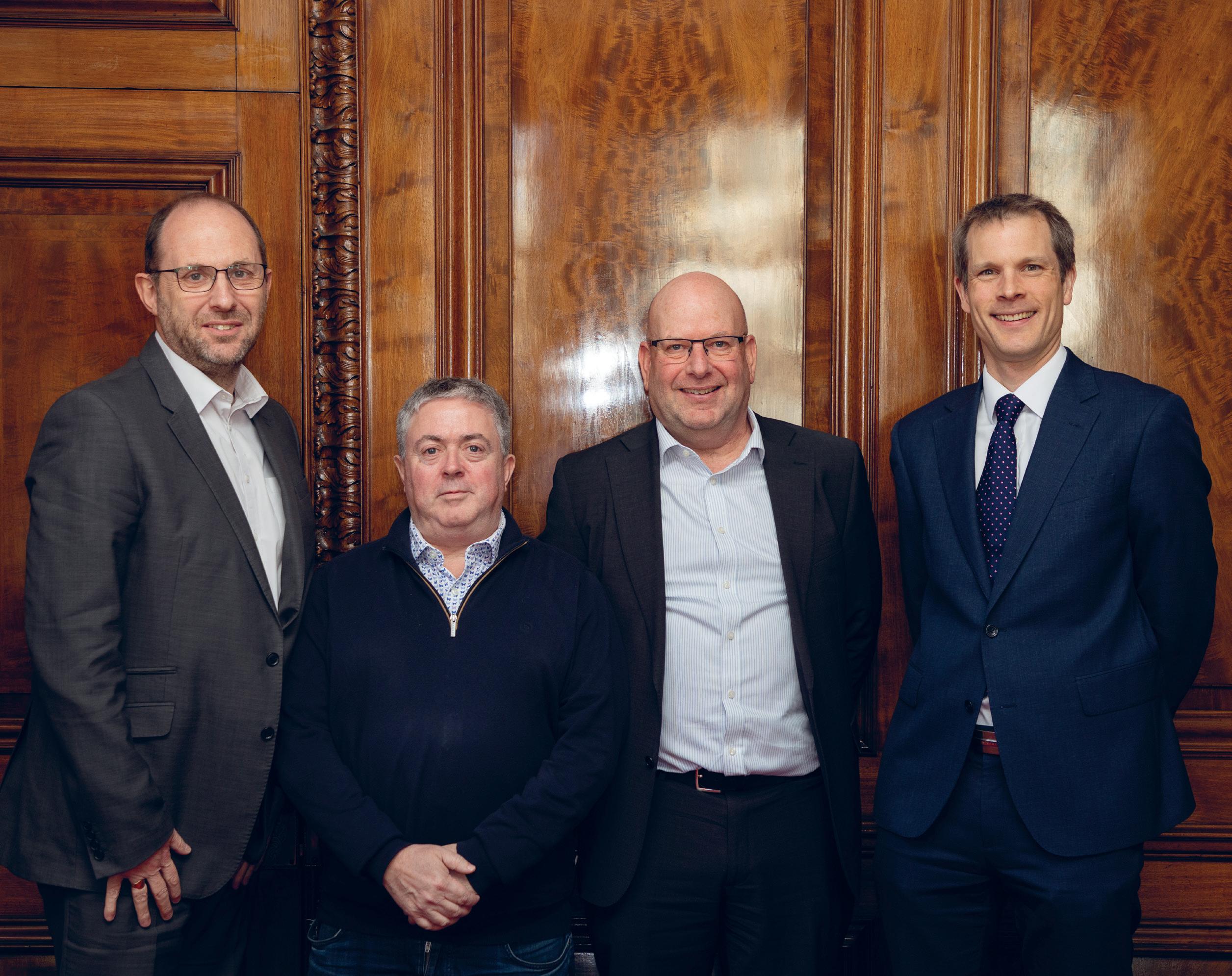
In a recent roundtable hosted by Insurance Business , four industry leaders came together to debate and discuss the issues brokers and insurers are dealing with nowadays and where exactly they think the market will head as we move further into 2026. Leading the discussion was a question that’s top of mind for all industry leaders –
how exactly is a fair and reasonable outcome from a claim determined? Does it hinge on speed, on payout or on constant communication? Neil Grimes, claims director at Clear Insurance Management, believes it all rests on one aspect – whether the client is happy at the end of the process.
“From all the years of doing claims, [I’ve seen that] a good claim is a settled claim. From a broker perspective and for our clients, it needs to be fair, reasonable [and] clear that there’s not going to be any complaints as a result of it – that there’s trust built between us, the clients and the insurer, because renewal is important for us [too] – you retain the client because of a good claims service.
“There’s been a lot of change over the last couple of years, where it’s not just about the
speed of a claim anymore or how quickly you get paid – it’s about whether you’ve got a happy client at the end.”
And Phil Daly, claims director UK retail at Gallagher, agreed with Grimes, adding that there are three core areas that should be top of mind for brokers – and that they all must work in tandem to ensure a good outcome.
“Firstly, there’s the speed of confirmation of coverage – that puts any doubt out of the client’s mind that there could be any kind of ambiguity or difference over what is or isn’t covered. The second piece is around how easy the claims process is for them. How many times are they having to undertake activities themselves as opposed to the insurer driving the claim to resolution? And, thirdly, it’s the fairness of the settlement – claimants getting what they
need quickly and fairly by way of the settlement amounts they receive.”
Looking at things from an external perspective, Matt Cox, chief claims officer at Allianz UK, told IB that, just as with anything in claims, there needs to be a balance.
“I think of it as a triangle. [There’s] the customer experience – confirming that coverage is super important, but you’ve got the other points in the triangle, which are the effective management of indemnity and the efficiency of the process. From our perspective it must be a simple and efficient process. We’ve done work to take out the number of touches between our claims handlers, the brokers and the customer, because that matters, from both an operational perspective and [for them].
“And it must be effective. We look to confirm that coverage quickly [while] also settling it quickly because there’s an element where the faster you can settle the claims, the better you can control the costs. This is all part of the effective and fair management of indemnity. And that doesn’t mean that we’re reducing the entitlement of the person who’s making the

claim, but [we’re] making sure that what they’re claiming for is covered and that it’s being settled at the best possible cost.”
From another insurer’s standpoint, Martin Turner, chief claims officer for UK & Lloyd’s at AXA XL, wholly agrees with his peer in the market here too – adding that at AXA XL they have their own metrics and turnaround times to manage performance. However, he also told IB that external insights are just as valuable as internal ones.
“[It’s about looking at] broker and client feedback [to see] how well we did,” he explained. “Was it within their expectations? We may think we were quick, but were we really quick? Did we pay the right amount? What was the reaction? And you don’t always get that feedback – sometimes it’s quite subjective; [however], it’s very important in-house to use qualitative and quantitative [information] to either improve [the process] or feed it back to other stakeholders and underwriters.”
Within the panel, the issue of how best to
improve the overall claims process, and whose responsibility that was, inevitably reared its head. The answer? A blend of communication, realistic timescales and understanding the changing expectations of customers on both sides. As Cox told IB, the key to success here lies in partnership.
“We’ve found it quite successful to sit down with brokers in their offices to see what it looks like [from their perspective]. And from that we had 10 requests through last year to make changes to how we process things – which we wouldn’t have seen unless we’d been looking at it through the eyes of the broker. There needs to be that partnership, [and] it needs to work two ways.”
Grimes went further here, adding that the biggest barrier to success is a breakdown in communication, something that has the propensity to both ruin the process and erode client trust.
technical excellence and service consistency across the UK claims operation.
Cox brings more than 23 years of experience across life insurance, general insurance and investment management, offering strong cross-industry expertise. He joined Allianz in 2021 as chief internal audit officer, where he strengthened controls, governance and operational resilience across the UK business while working closely with global teams.
Prior to Allianz, Cox was a partner at Deloitte LLP, leading risk, control and governance services for major insurers and financial institutions. His combination of technical expertise, collaborative leadership and commitment to high-performing teams has made him a respected and influential leader within Allianz UK.
“The client doesn’t mind being told it’s going to take two weeks if it is going to be two weeks – but being told it’ll be done by Friday and it’s not, [that’s a problem]. This means we must manage that with the clients – we’re at the sharp end in that regard, which can be very tricky. [However], over the last couple of years some of the insurers have introduced claims advisory and forum groups where directors and heads of claims from the broker world sit. [Here], we share ideas –the good, the bad and the ugly – [looking at] what’s going on in the market. It has definitely changed the dynamic between the insurer and broker world from a positive perspective, which can only be good outcome for the clients or policyholders.”
Turner reinforced the importance of transparent and honest timelines. He agreed with Grimes that setting expectations there is a must and, if there is a potential delay, communicating that to all the other parties involved is essential.
“It’s all about communication – and also being face to face as well,” he told IB. “A lot of [processes] coming into the industry are


“We’ve found it quite successful to sit down with brokers in their offices to see what it looks like [from their perspective]. From that we had 10 requests through last year to make changes to how we process things”
Matt Cox, Allianz UK
now much more electronic, [but I really] encourage my teams to pick up the phone. Talk to me – don’t just email – because things get lost in [translation. It’s important] that we continue to meet brokers and clients face
to face and discuss the claim, talk about the strategy and timelines.”
Aside from the communication aspect, one of the best ways to improve the claims process from both a broker and an insurer
perspective comes back to visibility and accountability. Daly likens the claims service to a shop window – a glimpse into the products and services the broker has recommended and sold.
“I think we lose sight of that sometimes,” he told IB. “We’re in the middle of what that claims journey should look like. We deal with it every day. You have clients that could be submitting a claim for the first time – what are their expectations around the service? They’re coming in with a view that’s probably from outside of insurance. [Therefore] they’ll see it based on the business and the day-to-day interaction they have. That will set their threshold as to what they expect from the insurance company.
“Here, setting clear expectations early to guide them through the process is pivotal

from both sides. That helps to educate, inform and steer them through the journey. From there, it’s about delivering against that expectation.”
There’s also the challenge of meeting changing customer expectations and behaviours too. With the advent of AI and

innovative technology, people expect processes to be more streamlined, claims to be seamless and payouts to be quick. And it all comes back to setting reasonable expectations at the start.
“Sometimes settling a claim is not going to be as instant as, for example, buying
NEIL GRIMES Claims Director, Clear Insurance Management Ltd.
Neil Grimes is claims director at Clear Insurance Management Ltd. and has dedicated his entire 36-year career to the insurance claims sector, with experience spanning all areas of the industry. He leads a national team of more than 50 claims professionals, delivering outstanding, award-winning service to clients across a wide range of sectors.
something online,” Cox told IB . “But we’re so used to that in society – being able to do things instantly – that I think sometimes the complexity of dealing with a claim is not appreciated. We, as insurers, must help educate customers at the point of sale. And, when it does get to the point of claim, we collectively need to reinforce that –because both insurers and brokers will be facing the same demands from the customers. They want to be kept up to date continuously. They want things done quicker. They want to feel more involved than perhaps people did in the past.”
Setting aside customer expectations and transparency of service, for the claims process to run successfully, parties must





ensure all required elements are captured in the file for when any key decisions are made. Because this doesn’t just have the propensity to impact the customer – it also impacts managers and even complaints handlers down the line too. Daly told IB that what’s captured in the file depends very much on the type of claim that’s being made.
“There are what I would call the material damage first-party claims, where assessing what’s going to be claimed for, what the actual loss is can be easier than a liability claim – where you have third parties and the complexity is completely different.
“Again, we have challenges at the moment in the industry where there are policy conditions that say notifications must happen within a certain period. And, at that point in time, not all the information is available. The client will not have that priority to be assimilating all the information in one go at the outset because they’re still trying to deal with the loss associated with the event that’s taken place.
“And, sometimes, we trip ourselves up as an industry – we’re then perceived as trying to get a reason not to pay a claim because a policy condition may not have been met around notification. I think, collectively, we need to look at the policy intent around the coverage and what is reasonable from a policyholder to have at day one versus the information available further down the track.”
It also goes back to the client as a priority here too. As Daly told IB , when a client suffers a loss and subsequently makes a

PHIL DALY
Claims

“The client doesn’t mind being told it’s going to take two weeks if it is going to be two weeks – but being told it’ll be done by Friday and it’s not, [that’s a problem]”
Neil Grimes, Clear Insurance Management Ltd.
claim, their main focus is on what that will mean both personally and for the business –and everyone needs to be better at supporting them in that moment.
“That’s where we can sometimes lose focus,” he added. “Around information gathering versus immediacy of support. That, from my perspective, is one of the balances that we need to be a little bit better at as an industry.”
Having that support from the off is what really matters most to clients – coupled with a clear and transparent communication strategy. As Grimes told IB, something like an interim payment early on makes a world of difference to a client.
“That support from an insurer early on, even if you haven’t got all of the documents on file yet but you believe 90% is going to be indemnified, is [important]. In this soft market, reservation of rights is bandied around a lot – we see a lot of that on the broker side, which can hold up an indemnity decision for quite a long time. And in that
Director, UK Retail, Gallagher
Phil Daly is claims director for UK Retail at Gallagher and brings over 35 years of experience in the insurance industry. His career spans operational, transformation and claims roles, with experience working for both insurers and brokers across regional and London markets.
period the client isn’t sleeping, their mental health is suffering. We’re the buffer in between that with the insurer –but [sometimes] that gets missed.”
Grimes believes that proper record-taking makes a difference here. Because if a broker has all the evidence for decision-making on file from the off, it demonstrates that the client has been properly looked after. It may be more pressure, but it’s worth it to ensure everything has been done correctly.
“It may mean more admin, but the evidence side is so key,” added Grimes. “We need to look at how we can work better together when we’re reporting a claim. Sometimes the volume of questions being asked for us to fill in are not relevant at that stage, but insurers still expect you to fill it in. There’s got to be a better way of doing this in 2026, because we haven’t got the time and the clients get annoyed – and that can be challenging at times.”
Turner’s advice here about what to include revolves around setting out a clear rationale for decisions and actions taken. As he told IB, whatever is, or is not, in the claims file dictates whether another claims handler can pick it up where necessary – meaning if the rationale or information is missing from the claim file, the process is potentially delayed.
“There should be a rationale as to the current stage of the claim, the strategy going forward, if there’s a payment on account and details as to why that was paid – [as well as] coverage around the reserving aspects for internal payment. Poor file management is one of my bugbears as it can hamper and

delay the claims process. Therefore, I ensure that everyone goes through extensive claim management file training. “
This is where the power of technology really comes in. With customers expecting best-in-class service in a speedy time frame, innovative tech can be leveraged to help make processes more efficient for everyone involved. As Cox told IB, there are platforms out there that can funnel all the separate claims documents into one digital database –allowing for increased speed of service.
“There’s probably no insurance claim that can’t be made better by acting quickly,” he told IB. “Be that anything from an escape of water to capturing evidence around a casualty claim. There are certain things we need to be notified of [sooner] rather than later. There are other [elements] which can come later, perhaps because it’s important for our reserving actuaries, and that’s fine. Or it
might be because it helps us understand how the claim might then develop – if there’s further damage identified, for instance – but [we need to have that] very first quick notification of the things that really matter to allow us, as the collective experts, to get in there and [prevent] it from getting worse, or to capture the evidence, or to stabilise the situation. [All of which mean we’re] able to give the customer the reassurance that they’re covered for whatever’s happened.”
Again, it all comes back to that supporting element for customers – a client-centric approach that puts individuals at ease from the start. As Grimes told IB, the insurance world is often criticised by industry outsiders who wrongly believe firms are just about making money and getting out of payments. However, as Grimes pointed out, in 2024, 98.07% of claims that were reported and settled by insurers were paid out.
“That’s 98% of satisfied, happy customers,” he added. “As an industry I don’t think we shout about how good we are at what we do, which is looking after people.”
All these claims, the processes in place and the efficiency with which both brokers and insurers move simply wouldn’t be possible without one core component – AI. The growth of AI in insurance has been exponential, with data from Dun & Bradstreet showing that 37% of UK insurance firms identify internal AI adoption as a leading priority this year.
But where exactly should AI be used and, more importantly, what can it never be leveraged to replicate? For Daly, he sees the obvious benefits in streamlining processes and speeding up notifications, as well as

sourcing data for policyholders. However, he also urges caution and to remember that AI isn’t a panacea for all the industry’s ailments.
“I think we need to take care of our journey with AI,” he told IB. “To ensure it isn’t the final decision-making point around claims, because you have policy wording and you have policy intent, and they are not always aligned. Therefore, you have to utilise your own knowledge and experience to understand where the two fit. AI will give you a black and white viewpoint that can help guide that thought process, but it shouldn’t be the final decision point.”
It’s that balance between AI and human oversight that’s really the differentiator of success with the technology. As Grimes went on to explain, firms need to question when they use AI – and whether the outcome was materially improved by that.
“AI definitely has a place,” he told IB . “It can be used for triage and the initial parts of the claims process. I think where AI falls down is in the sensitivity, empathy element. AI is a machine; it’s not a human being, meaning, for example, in order for AI to make a decision on liability it had to learn from historical claims. From a triage perspective, if that data is correct, then it

Martin Turner is chief claims officer for UK & Lloyd’s at AXA XL, where he leads the strategic direction, performance and delivery of claims services across the UK and Lloyd’s platforms.

“I think we need to take care of our journey with AI. To ensure it isn’t the final decision-making point around claims, because you have policy wording and you have policy intent, and they are not always aligned”
Martin Turner, UK & Lloyd’s, AXA XL
definitely has a big place assisting with decisions, because with the volume of claims coming through, AI helps us out. [However], AI can’t be used at the expense of customer [experience].”
At Allianz, Cox revealed that they have certain drivers for use of AI in claims – the first of which is facilitation.
“It’s to augment our claims handlers to do that triage, to provide them with real-time, next-best-action suggestions to check coverage to allow them to do a better, more complete, more consistent job faster. I think we’ll continue to see those use cases growing out. There are areas where we’re using it as
part of an automated and self-serve claim journey too.
“Most insurers started on this for the windscreen claims but are now moving from single-vehicle to multi-vehicle use, because some customers, for ease and convenience, this is just how they want to interact with their insurance company. Some will always want to be on the phone; others will always want to go through their broker. [At Allianz], we need to be able to serve all our different customers. But more and more people do want that self-serve, electronic process – and that’s where AI sits.”
Another area Allianz uses AI is in fraud detection – something the tool has become very good at. Here, Cox called AI an “absolute must” because of the tool’s ability to scan for suspicious activity en masse.
Based in London, Turner oversees a broad leadership portfolio including Specialty, Property & Casualty, Financial Lines & Motor, Claims Operations and Claims Regulation & Customer Oversight, supported by a senior leadership team.
Under his leadership, AXA XL’s UK claims function has received strong external recognition, including the Gracechurch Claims Service Quality Marque, reflecting a consistent commitment to delivering high-quality claims outcomes.
With over 35 years of experience in claims, Turner has built his career within organizations that have since evolved into AXA XL. He has held his current role since 2020.
“Without the technology and the capabilities that we’re developing through AI, we wouldn’t be able to identify these things,” added Cox. “For us, it’s almost like an AI arms race. We work on that principle of having a human in the loop – the claims handler will always be responsible for the claim, but they might be assisted by using AI. Some claims are great for AI; however, it doesn’t do empathy very well. [As such], you’ll always get the need to speak to a customer for certain types of claims.”
At AXA XL, Turner told IB that they already have several internal AI tools, including a secure ChatGPT and Copilot as
well as an internal AI Hub, which provides guidance and support to all colleagues on how they can utilise and adopt AI in their roles. With AI, Turner says the adoption rates vary massively, which some individuals using it a lot and others not at all.
“Our ambition is to create a clear, accessible path for all colleagues to explore and implement AI in a safe, relevant and practical manner,” he told IB. “In claims, we’ve purchased an automated tool which [handles] claims below a certain threshold.

might change. So, while some of those simpler processes that people do now might well be automated or replaced by AI, it means that they need to be more skilled to be able to deal with the things that fall out of that automatic process.
“It’s about making the workforce fit for the future and taking away that fear –that’s a real challenge that we’re all facing and something we’re having to invest a lot of time in, in terms of training, learning and development.”
“It’s all about communication – and also being face to face as well. A lot of [processes] ... are now much more electronic, [but I really] encourage my teams to pick up the phone”
Martin Turner, UK & Lloyd’s, AXA XL
Once coverage has been agreed, it then goes through an automated tool all the way without any further touches from a human unless there’s a red flag. [However], this is quite new – and I wouldn’t say the volume is there, but you can see the build-up to where we’ll be in five or 10 years’ time.”
Part of the adoption issue with AI is employee pushback. For some individuals, AI signifies job cuts and restructuring, leading to outright fear and mistrust – which is causing a disconnect in the workplace. According to research from Acas and YouGov, 26% of workers are worried that artificial intelligence will lead to job losses, 17% are worried AI would make errors and 15% are concerned over a lack of regulation.
“There’s a fear in most workplaces around AI,” added Cox. “Part of the answer [here] is about equipping people to be able to use AI confidently in their jobs and recognising that the job they’re doing
Setting aside the rise and rise of AI, there’s yet another challenge on the horizon for brokers out there – managing third parties’ performance. And, given how much of the customer experience now sits with suppliers in 2026, firms will have to look how they can best make these businesses part of good claims outcomes, something that’s often easier said than done.
As Daly told IB , clients don’t always see the difference between a broker, an insurer and a supplier – meaning all elements of the process need to be perfected to ensure a good outcome.
“From a client perspective, the thirdparty supplier is the insurer. Whether they are an independent company or not, it’s who the insured associates with. And, similarly, the difference between a broker and an insurer through the claims journey, often from a client perspective, doesn’t
really matter. From their standpoint, you are there as a broker or as an insurer to help them with their claim and to get them through the journey. They just want to get the claim settled. In that regard, any party that’s dealing with the claim has got to be considered an extension of either the broker or the insurer or both. And, therefore, the relationship you have with them is pivotal for that journey.”
Grimes agreed, going further in adding that there’s a question of ownership as well.
“There’s the number of times you contact the insurer too,” he told IB. “In the broker world, we’ve all made our own relationships, for example, [with] the supply chains, adjuster panels and the repair networks. If there is a problem, we can, a lot of the time, bypass some of the process and go direct, which can be a quicker way of getting resolution for the client. Because, as I said, if there’s a lot of moving parts in a claim, there’s going to be [lots] of different suppliers and networks involved. For property claims, the adjusters will take control [usually], but sometimes that isn’t the case. Insurers will generally have SLAs in place with their panels, but at times don’t take them to task over delays. [It’s about] setting the expectations [for the] client. [If] they said they’ll be able to do an inspection in your house next Thursday, and then there’s no sign of them on the day, we’re the ones having to pick up the pieces with the clients.”
Despite initial challenges, Grimes concedes that the process has improved over the past year, adding that insurers and brokers are increasingly working together to create better outcomes for the client – which is the ultimate end goal for both parties.
Looking to the future of claims, from both the brokers’ and the insurers’ perspective, the next few years will be transformative – especially when it comes to perfecting processes. One of
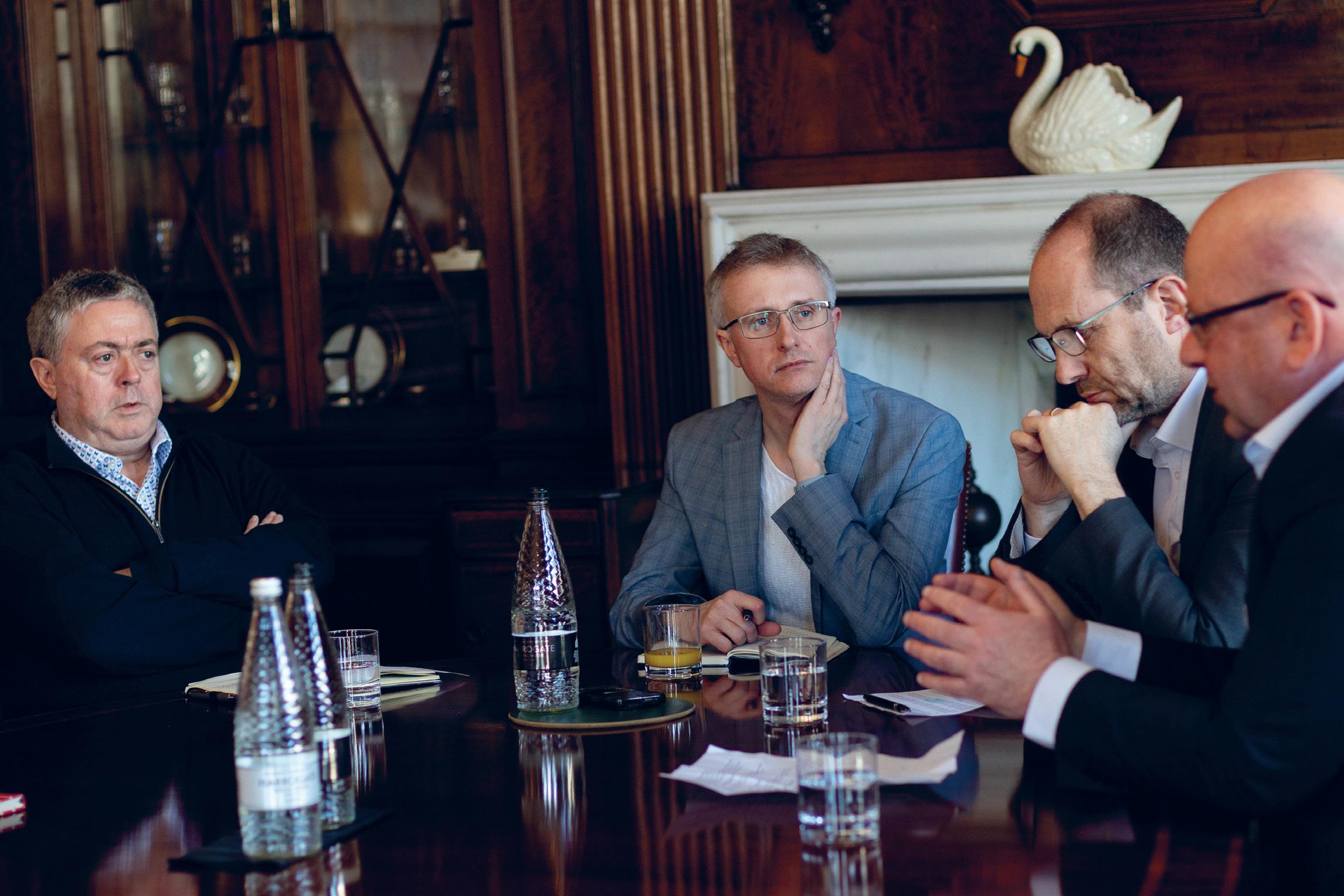

“We need to be able to serve all our different customers. But more and more people do want that self-serve, electronic process – and that’s where AI sits”
Matt Cox, Allianz UK
the areas that’s of particular interest to the panel was the effectiveness of a closed-loop process for converting complaint themes into internal changes such as changes in scripts, decision frameworks and training. Turner told IB that it’s all about looking at these instances as lessons learned – particularly with their internal complaints team and claims handlers.
“[It’s about] understanding that complaint if it wasn’t upheld, or indeed if it was upheld, why were there faults involved,” he told IB. “As well as lessons learned, [we have to] make sure that it doesn’t happen again and that we’re all trained to understand processes and procedures and particularly if there’s a change in the compliance or regulation.”
For Cox, his background prior to his role in claims means that it’s all about root cause analysis.
“Everything I’ve done through my professional career is about taking something that’s gone wrong and [turning] it into a learning opportunity,” he told IB. “I’m very clear with the claims team that we do proper root cause analysis, which involves quite a multidisciplinary team. From that, I think a common lesson we learn is that there’s a misalignment around the understanding of what’s been covered and what happens if they need to make a claim; for example, typical repair timeframes. Therefore, we work closely with our sales and services teams to make sure that we equip customers with a fuller understanding at the point of sale.”
Grimes agreed with his fellow panellists, explaining that root cause analysis is key as

well as looking at what allowed the mistake to happen rather than focusing on who generated the complaint.
“As with all complaints, there are three [main] areas that it could be,” he told IB. “Is it the liability decision to settle that caused the complaint? Was that the failure? Were there some misinterpretations, miscommunication or delays? Or was it from the customer side where the responsibilities or complexities weren’t properly [explained] or understood? [Everything] fits into one of those three areas. But the root cause is the whole thing – what can you learn from it? Don’t use it to criticise your own sta .”
Finally, for Daly, he took a different approach here, telling IB that for him it’s more about educating the business on what is going to deliver the best benefit for the client.
“Where can we, in the broker claims team, add value versus where the benefit for the client is if the insurer is in the driving seat? The

“There’s been a lot of change over the last couple of years, where it’s not just about the speed of a claim anymore or how quickly you get paid – it’s about whether you’ve got a happy client at the end”
Neil Grimes, Clear Insurance Management
example I give is around motor. We know in the industry that if you get a motor claim into an insurer quickly, then you have a much better chance of controlling the cost, particularly where you’ve got third parties involved.
“Getting those claims first coming into a broker can potentially add delay, which can impact conversion potential and claims cost. It’s about taking the business on the journey to fully understand that type of claim and where
the dynamics of the market have changed over the last few years. It’s a journey but it’s one that, with the help of the insurers to give the evidence to support the long-term benefits to the client, closes the loop and takes the claims process to the forefront of the business.
“Ultimately it means that they understand how things evolve and how claims can benefit the client – and that’s a tangible benefit for everyone.”





Showcase your expertise across the areas brokers value most:

Claims handling & resolution excellence
Client service & communication

Technical proficiency & specialist knowledge

Digital experience & operational efficiency
The survey will open on 13 July






Regulator challenges assumptions on resilience, from underwriting discipline to operational readiness and governance
’s latest priorities carry a sharper tone than in previous years. Against a softer market and growing uncertainty, the regulator is forcing insurers to confront a harder question: how resilient are they, really?
For Jessica Wills of PKF Littlejohn the message is less about new risks and more about confidence being tested.
“The introductory paragraphs do paint quite a negative picture,” she says. “It talks about being prepared for bad times, soft markets, downside scenarios, even solvent exit.”
That tone signals a clear shift away from growth assumptions and towards stress preparedness.
A shift to downside thinking
At the centre of that shift is underwriting discipline. In a softening market, resilience rests less on capital strength alone and more on whether fundamentals hold under pressure.
“There’s a clear focus on disciplined pricing and bottom-line underwriting performance,” Wills says. “Understanding where your exposure lies, and having strong data to support that, is critical in current conditions.”
The regulator’s concern extends well beyond underwriting. Operational resilience, cyber exposure and third-party dependencies all feature prominently.
“Cyber risk isn’t going away,” she says. “But there’s also increasing attention on thirdparty risk, not just delegated authority but operational suppliers as well.”
In the London market, delegated authority remains a pressure point. The growth of MGA models has also increased the need for consistent oversight.
“There’s a lot of delegated arrangements in the market, so it’s highly relevant,” Wills says. “But strong oversight isn’t a new message. The market has done a lot of work here; this feels more like a reminder to stay focused.”
Where the gap begins to show more clearly is in areas like solvent exit planning.. “There’s a requirement to have solvent exit analysis ready by June,” Wills says, adding that “from what we’re seeing, that work is still very much underway.”
The issue is not simply completion but credibility. “They need to think about how they’ll get assurance over it, whether internal or external,” she says. “There is definitely time pressure.”
That same gap between planning and execution is set to come under pressure in the PRA’s upcoming “DyGIST2026” exercise.
As Wills says, it is “not just about headline capital ratios” but “the operational practicalities
– who’s involved, how you manage day-to-day business alongside a live crisis scenario.”
That distinction is already visible across the market. Cyber resilience is now firmly embedded at board level and, as Wills notes, “always on board agendas” with “genuine concern” rather than a tick-box approach.
Operational resilience is less settled. While firms have met regulatory milestones, embedding those frameworks into live decision-making remains uneven. “Firms have done a lot to meet the requirements,” she says, “but embedding it into decision-making is still evolving.”
A similar pattern is emerging with artificial intelligence. Adoption is accelerating, but governance is not always keeping pace. In some firms, Wills says, AI is already being used in “quite sophisticated ways”; in others, it remains more tactical.
In both cases, oversight can lag. “The governance and controls can be an afterthought,” she says, with “a lack of awareness at board level about where AI is actually being used.”
The PRA’s 2026 priorities do not point to a single weakness. Instead, they highlight a broader concern − that resilience is being assumed in some areas rather than consistently tested.
After 25 years at BIBA, Trudgill is driving regulatory reform and redefining the broker’s role
FEW FIGURES have been as closely involved in shaping UK insurance broking as Graeme Trudgill. Over a 25-year career at the British Insurance Brokers’ Association (BIBA), he has moved from policy specialist to CEO, helping to position brokers at the centre of some of the industry’s most important regulatory and political debates.
His appointment to CEO reflects more than tenure. It signals the influence he has built over decades – translating broker concerns into policy outcomes and ensuring the sector is heard at the highest levels of government. At a time of regulatory reform, technological disruption and shifting customer behaviour, that experience has become increasingly valuable.
Policy roots
Trudgill’s leadership style is rooted in the discipline of political policy work, where clarity and timing are critical.
“In policy, you really listen and you make every word count, because sometimes you only
have one chance to make your point,” he says, adding that you might have “30 seconds – a lift moment – to land something important.”
That precision has defined his approach to government engagement. Rather than positioning BIBA in opposition, he has focused on alignment, shaping arguments that reflect
It is also reflective of a wider approach built on collaboration. Throughout his career, Trudgill has worked closely with insurers, consumer bodies and international organisations to strengthen the industry’s collective voice and ensure its concerns carry weight. As he puts it, “My approach is one of
“We are a trade association, and it’s my job to help members trade”
political priorities, particularly around economic growth and competitiveness.
That strategy has underpinned one of the association’s most significant recent wins: securing a competitiveness and growth objective within the Financial Conduct Authority. Long championed by BIBA, the change marked a shift in regulatory thinking, recognising the need to balance consumer protection with a more supportive environment for firms operating in the UK.
allyship: who can we work with on this? Because more voices are better than just the lone voice.”
While policy remains central to Trudgill’s role, the move to CEO has expanded his responsibilities significantly. He now leads an organisation at the heart of a sector, while also carrying direct responsibility for BIBA’s people, performance and long-term direction.


“I feel the responsibility for a sector that writes £150 billion in gross written premium, that employs 132,000 people,” he says.
His leadership is shaped by close engagement with BIBA’s membership, drawing on insight from committees and advisory boards made up of brokers across the UK. That structure provides a constant flow of market intelligence, ensuring that BIBA’s policy positions and strategic priorities remain grounded in the realities facing firms on the ground.
It also underpins BIBA’s flagship conference, now the largest insurance broking conference globally and a key platform for debate across the industry, bringing together brokers, insurers, regulators and policymakers to address the issues shaping the market.
At the core of Trudgill’s agenda is a clear principle: “We are a trade association, and it’s my job to help members trade,” he says. That role is becoming more complex as technology reshapes how customers access insurance, with the rise of AI-driven and voice-led purchasing risking reduced access to professional advice and potentially weakening the role of intermediaries.
For Trudgill, this reinforces the need to clearly articulate the value of brokers as advisers and advocates for clients, particularly as risks become more complex and products more specialised.
Alongside this, regulatory reform remains a priority. BIBA has been working closely with the FCA on simplifying insurance rules, with a focus on reducing unnecessary cost and complexity while maintaining consumer protection. The aim is not to reduce consumer protection but to create a more proportionate and efficient system that enables firms to operate
effectively while continuing to deliver good outcomes for customers. “We don’t want fewer people to be protected, we just want a slicker, more streamlined system of regulation,” he says.
That focus on proportionality is expected to continue, with BIBA pushing for further reforms through a proposed Financial Services Bill designed to address authorisation processes, regulatory timelines and barriers to growth.
Cyber risk has emerged as one of the most pressing challenges facing the sector, with a significant gap between exposure and insurance uptake among small businesses. “There’s a huge protection gap,” he says, with BIBA responding through plans to improve
Introducing signposting, helping 1.7 million people access insurance
Influencing the Insurance Act through House of Lords evidence
Leading work with government and the FCA on proportionate regulation and simplifying insurance rules
Driving electronic motor certificates, saving £8m and 100,000 trees annually
“I see [myself] as being a caretaker, and I want it to be in even better shape when I pass it on to the next generation”
access to specialist expertise and strengthen links with government to raise awareness of cyber risk and the role of insurance in managing it.
At the same time, broader priorities remain in focus, from attracting new talent into the industry to ensuring brokers can adapt to technological change and maintain access to capacity in evolving market conditions. Initiatives aimed at bringing younger people into the profession are seen as critical to sustaining the sector’s longterm strength.
Despite his long tenure and growing influence, Trudgill frames his role in terms of stewardship rather than personal legacy. “I see it as being a caretaker, and I want it to be
in even better shape when I pass it on to the next generation,” he says.
Success, he suggests, will be measured not only in visible reforms, but in the less visible work of shaping and, at times, preventing change. “We’re a little bit like the Knights Templar. We do things that are not in the public domain a lot of the time,” he says.
Ultimately, his approach returns to a consistent theme, bringing the right voices together to drive outcomes for the sector. As the industry navigates a period of structural change, that ability to align brokers, regulators and government may prove to be his defining contribution and one that shapes the sector long after his tenure.



We understand that working with insurers can be frustrating. It’s why we’ve made a pledge to listen, learn and make things better.
Join us at BIBA 2026 and we’ll keep the conversation going. And keep making changes to help you be your best. Now we’re talking

Let’s talk at stand E58 Scan to book an appointment.

MOST RISK frameworks are built on an assumption that rarely holds in practice: consistency. They assume that once risk appetite, controls and governance are defined, they will be interpreted and applied uniformly across the organisation. In reality, they are not. Frameworks remain essential for consistency and oversight, but they are not sufficient on their own.
“Risk culture is often talked about but not always clearly defined. In practice, it’s not what organisations say about risk – it’s how people actually behave and make decisions, particularly under pressure,” says Dr. Martha Phillips, enterprise risk director at AXA UK.
That gap between design and execution is where risk culture sits.
Multiple cultures
Organisations typically operate with multiple, overlapping cultures rather than a single, unified one. Drawing on doctoral research conducted within UK insurers, Phillips found that “organisations don’t have a single risk culture; they actually have multiple, and a minimum of four” with different parts of the business operating under distinct norms. None is inherently better, but problems emerge when one dominates or when interaction between them weakens.
“Resilience depends on how effectively those groups interact, particularly during stress events,” she says.
Where frameworks fall short
This variation helps explain why even
mature risk frameworks can struggle to deliver in practice. “That’s also why formal risk frameworks sometimes fail to deliver real resilience, because they tend to assume consistency of cultural response,” Phillips says. Frameworks standardise language, controls and reporting, but not interpretation. “So you can have a really well-designed framework on paper, but it can be quite fragile in practice

“It’s about what leaders prioritise, reward and tolerate, because that ultimately determines how risk is handled in practice”
Martha Phillips, AXA UK
if people don’t escalate issues, collaborate effectively or feel able to challenge. Frameworks can give a false sense of resilience if behaviour doesn’t follow.”
These dynamics are reshaping the role of the risk function, shifting it away from
retrospective assurance and towards forward-looking decision support.
Regulatory focus on operational resilience has reinforced this shift by requiring firms to identify and prioritise what matters most. “The operational resilience regulations work really well here, because they’ve forced us to prioritise what is most important in terms of delivering for our customers and protecting business value,” she says.
Leadership plays a central role in how this shift is realised in practice. “It’s about what leaders prioritise, reward and tolerate, because that ultimately determines how risk is handled in practice,” she says.
Research shows that leaders influence multiple cultures across the organisation rather than creating a single, unified one. The challenge is maintaining balance between them.
From a cultural perspective, resilience is defined by how effectively an organisation responds when it occurs.
That response depends on both awareness and coordination. “From a cultural perspective, a genuinely resilient organisation is one where people are openminded and able to accurately pick up on what I call weak signals,” she says.
Resilience is less a product of framework design than of everyday behaviour. The question is not whether risks are defined but whether people are prepared to recognise them, and act.

































IN THE current market, the best insurance companies to work for in the UK are those that are thinking several moves ahead of their people, not reacting when it’s already too late.
That’s the clear message from Gary Nation, group business development director at specialist recruiter NRG, who spends his days speaking to UK insurance talent about what really makes a top employer in 2026.
“For candidates, company reputation still matters hugely,” he says. “If they’ve heard of the company and it has a good reputation, it makes it easier for us to sell the role.”
But brand alone is no longer enough. Ambitious professionals want to feel they’re “not just necessarily a number” in a business that’s “small enough to care but big enough to cope” and, ideally, one that’s on a growth journey they can grow with as well.
Stability and flexibility are now hygiene factors. With many CEOs “just trying to ride through 2026 and then work on the growth for 2027,” financial resilience is under close scrutiny. Hybrid working has gone from novelty to non-negotiable. Since the COVID-19 pandemic, Nation says, it has been “the biggest change for any sector, especially insurance,” and top employers are now far more comfortable o ering real flexibility rather than token policies.
The strongest performers are also leveraging benefits. External investment is enabling richer packages that go beyond
salary to long-term value: share options, LTIPs and genuinely meaningful bonus schemes. These give employers powerful retention tools and employees “the opportunity to earn a great nice little pension or nest egg in the future”. Guaranteed commission and even “golden handshakes” are emerging as differentiators for producers who are stuck behind restrictive covenants.
Yet, many insurers are still losing the war for talent for a simple, avoidable reason: they recognise value too late. Nation sees a recurring pattern where employers only match market pay when a competitor has already made an o er. By then, trust has frayed. “They should be recognising that before it gets to this stage,” he warns. Finally, diversity, equity and inclusion is now a frontline test of employer quality. The organisations that stand out treat DEI as “a core business priority, not just a tick-box exercise,” backing it up with blind recruitment, diverse panels, transparent pay reporting and structured mentoring for underrepresented groups.
In a cooler market, the best UK insurance employers aren’t easing o ; they’re using this moment to sharpen their reputation, their rewards and their culture.
Insurance Business UK invited organisations to participate by filling out an employer form, and employees from the nominated companies completed an anonymous form. The winners were crowned Top Insurance Employers 2026.

“Culture remains a standing agenda item at board level, with bi-annual reporting on cultural health and progress against High Performance Culture objectives. This governance ensures accountability at every level and keeps the colleague experience firmly in focus”
Luke Stevenson, Liberty Specialty Group




For much of the past five years, the UK insurance market has told a familiar story about talent: hybrid working, wellbeing and culture were the headline attractions. But a closer reading of the Top Insurance Employers’ benefits data from 2021 to 2026 shows the narrative evolving. Flexibility still matters significantly, but in 2026, the real contest for top performers is being fought on financial ground.
Across 2021–26, the scores show three clear tiers of benefits in the UK insurance market:
• Top tier (around 4.4–4.7): bonus/ incentive programs, retirement plans and flexible work options
• Solid core tier (roughly 3.9–4.3): medical and life cover, paid leave, recognition schemes, performance reviews, wellness, long-term care and team building
• Emerging/purpose-led tier (mid-3s): DEI, green programs, volunteering, sabbaticals and community support
1. Financial security is king, but satisfaction is softening.
Bonus/incentive programs and retirement plans stay at the top of the table in every year, but each dips slightly from 2025 to 2026 (bonuses -0.03, pensions -0.08). This result suggests UK insurance employees still see these benefits as critical but feel a little less satisfied with what they’re getting.
2. Flexible working has gone from differentiator to hygiene factor.
Flexible work options remain very highly rated (around 4.5 across the period) but ease back slightly between 2024 and 2026. This finding suggests hybrid is still valued but no longer a novelty that boosts satisfaction every year.
3. Core protection and leave benefits are steady, not standout.
Medical
generous
Employee team building and social activities
coverage
Family-friendly














To find and recognise the best employers in the insurance industry, Insurance Business UK first invited organisations to participate by filling out an employer form, which asked companies to explain their various o erings and practices. Next, employees from nominated companies were asked to fill out an anonymous form evaluating their workplace on a number of metrics, including benefits, compensation, culture, employee development and commitment to diversity and inclusion.
To be considered, each organisation had to reach a minimum number of employee responses based on overall size. Organisations that achieved an 80% or greater average satisfaction rating from employees were named Top Insurance Employers for 2026.
paid leave and wellness programs all sit in the low-to-mid-4s and are remarkably stable from 2021 to 2026 (changes mostly within ±0.1). This pattern suggests:
• Most UK insurers now o er competitive “core” packages in line with the broader financial services market.
• These benefits are no longer doing much to di erentiate employers – they are expected.
Financial benefits: high scores, gentle slide
Bonuses and pensions are consistently the most valued o erings, yet they edge downwards from 2025 to 2026: bonus programs fall by 0.03, retirement plans by 0.08. Flexible work options also dip slightly, despite remaining one of the most highly rated factors. Those are small shifts, but they are telling. They reveal a workforce that still prizes financial security and flexibility above all else but is slightly less satisfied with what’s on the table. That makes sense in the current macro environment. The UK’s cost-of-living squeeze,
higher mortgage costs and ongoing tax changes have pushed insurance professionals to scrutinise total reward more closely. Base salary alone is no longer enough; employees are asking if bonus schemes truly reward performance, whether pension contributions will genuinely support retirement and how resilient those packages are if trading conditions worsen.
At the same time, insurers are facing significant pressures of their own. Capital requirements, elevated reinsurance costs and a more volatile claims environment have tightened margins. Boards have to protect profitability while still competing for scarce underwriting, broking and data science talent. The easiest lever is often to hold benefits broadly steady rather than upgrade them year after year, which is exactly what the scores reflect.
The result is a delicate paradox: financial benefits remain king, but expectations are rising faster than employers’ room for manoeuvre.
Hybrid working: from USP to “must have”
The data also tracks the life cycle of hybrid work as an employee value proposition. In the immediate post-pandemic period, flexible arrangements shot up the priority list. By 2024, flexible work options were among the highest-rated benefits on the table.
But from that point on, the line flattens and then nudges down. The message is clear: flexibility is now baked into the operating model of most UK insurance organisations. For many roles, particularly in broking, claims and central functions, two or three days a week at home is standard. Employees still value it enormously, but they no longer see it as a di erentiator. It’s an expectation.
For employers, that raises the bar. What matters now is less “Do you o er hybrid?” and more “How does hybrid actually work?” in terms of workload, collaboration, training and career progression. In a people business like insurance, where relationships and tacit knowledge matter so much, the firms that will stand out in the next phase
are those that blend flexibility with deliberate investment in mentoring, team cohesion and client engagement.
Core protection: strong but commoditised
Medical coverage, life insurance, generous paid leave, performance reviews and wellness programs all sit solidly in the low-to-mid-4s across the five-year period, with only modest variation. That stability suggests most UK insurance employers have reached a competitive equilibrium on traditional benefits.
In practice, this means two things. First, insurers have largely delivered on the basics: staff expect decent health and risk cover and, by and large, they get it. Second, these benefits are no longer doing the heavy lifting when it comes to attraction and retention. It is di cult for a carrier or broker to distinguish itself simply by o ering another fraction of cover or an extra day o when the market standard is already strong.
These conditions are pushing more sophisticated employers to look at how these core benefits can be packaged and communicated as part of a broader financial wellbeing story – for example, integrating medical, income protection and retirement planning so that employees see a joined-up safety net rather than a list of disconnected policies.
DEI, ESG and community: important, but still mid-tier
The lower part of the table tracks the rise – and recent plateau – of purpose-driven benefits.
From 2021 to 2024, scores for diversity and inclusion initiatives, green and sustainable business programs, company support for charities, volunteering time and even sabbaticals all climb steadily. That improvement reflects the UK market’s concerted push on culture and ESG, under pressure from regulators, investors and employees alike.
By 2026, though, many of these measures level o or tick slightly down. The most plausible explanation is not that DEI and sustainability have fallen out of favour, but that they have moved from high-profile change
projects into the business-as-usual background. Employees notice when these areas are ignored; they are less likely to award everhigher scores simply for maintenance.
The scores also show that, when forced to prioritise, insurance professionals still rank pay, pensions, healthcare and flexibility above more altruistic perks. Purpose matters – particularly for younger and underrepresented talent – but in a sector that trades on risk and return, fi nancial fairness and security remain the first tests of a “good” employer.


Liberty Specialty Markets: putting people first


In a fiercely competitive specialty market, Liberty Specialty Markets (LSM) is leaning hard into one simple idea: if you look after your people, they’ll look after your clients. The result is a benefits and culture package that feels more like a long-term partnership than a paycheque.
Standout benefits: from extra holiday to fully paid health cover
LSM starts with time – and plenty of it. Annual leave begins at 25 days and increases by one day a year up to a maximum of 30, giving long-tenured sta a clear signal that loyalty is rewarded.
Wellbeing is treated as a serious investment. Employees receive a company-paid health screening every two years and access to a dedicated wellbeing fund worth £660 per full-time employee, alongside financial education, a mental health app and an employee assistance program.
On healthcare, LSM goes further than many peers by paying 100% of the medical and dental premium for employees and
Fantastic flexibility for working parents, approachable executive team, attractive range of benefits, great DEI initiatives, including working with the Thomas Pocklington Trust to get people with visual impairments experience in the workplace
Great company culture, very peopleoriented, work-life balance, attention to people, benefits, management support, interesting work, international mindset, diversity and charity involvement, having values and a purpose at Group level and a clear sense of direction
The culture is amazing and Liberty is particularly strong at recognising good work. It promotes internally as much as possible, which shows loyalty to the workforce
their immediate families. That’s a significant differentiator in a UK insurance market where benefit costs have been rising sharply.
The support extends into everyday life with:
• employer-funded emergency childcare and eldercare
• retail discounts
• specialist apps such as Peppy, which offers fertility, menopause, early parenthood and men’s health support
• ability of sta to add voluntary bene-
fits, ranging from green cars and cycle schemes to critical illness cover and workplace ISAs
Reward isn’t just about pay. All permanent staff are eligible for the company bonus plan, with metrics balancing individual and organisational performance. Day-to-day recognition is reinforced through Shine, a peer-nomination platform where colleagues award “Shine Points” redeemable for vouchers and gifts – a simple way to celebrate wins in real time.
The firm’s High-Performance Culture (HPC) is fundamentally anchored in an Integrated Business Unit (IBU) model. Within this structure, colleagues from underwriting, claims, operations, actuarial, and portfolio management come together as one cohesive team. By design, the IBU model breaks down silos and fosters a deeply collaborative environment where diverse expertise is leveraged to drive stronger, more sustainable business outcomes.
As part of the IBU, no single individual or function is viewed as superior to another. Instead, each perspective is valued equally, and success is defined by a collective ability to make informed decisions, share accountability, and challenge one another constructively.





“Our managers are encouraged to maintain real connection, creating space for honest, day-to-day conversations”
Vicki Cowell, Sedgwick International
LSM is also working to change who sees insurance as a viable career. The company has introduced a minimum shortlist requirement for female talent on all middle management roles, helping to hardwire gender balance into succession pipelines. It also partners with the Thomas Pocklington Trust to actively recruit candidates with disabilities, bringing more lived experience into the organisation.
Internally, a dedicated women’s development program, Springboard, is designed to “develop people and transform lives,” taking a holistic, women-created approach to progression.
Beyond gender, LSM has built out seven “Inclusion Matters” networks covering gender, health and wellbeing, cultural awareness, pride, family and caring, disability and veterans. These networks run year-round events and create communities across o ces. The company has also seen organically formed support groups emerge for menopause, carers, returners and new parents, giving colleagues safe spaces for candid conversations.
On social mobility, Liberty partners with organisations, such as The Brokerage and the Lord Mayor’s Appeal, to open the market to young people who might never have considered insurance. Sta volunteer at events including “We Can Be,” bootcamps and masterclasses, as well as mentoring and work experience programs.
Career development: structured learning for specialists and leaders
For a sector where expertise is everything, LSM’s learning o ering is notably comprehensive. All employees receive LinkedIn Learning licences, with curated learning pathways focused on core skills such as communication, time management and change leadership.
“We use a range of listening channels to understand how colleagues feel about the workplace, including our regular employee experience survey, the Lloyd’s Culture Survey, and targeted listening sessions,” says Luke Stevenson, head of HR – UK, MENA
and Europe. “Leaders also hold regular check-ins, including growth conversations to gather deeper qualitative insights on employee perspectives.”
There is a mentoring platform open to everyone, as well as coaching for leaders, and a full annual training schedule aligned to the firm’s talent priorities. Underwriters benefit from a dedicated Underwriting Learning Centre, while professional qualifications are actively supported and high-potential sta can access bespoke development programs.
In 2025, Liberty launched its Sponsorship & Development Program following in-depth conversations with ethnic minority colleagues about their career experiences. The six-month pilot combines leadership development, personalised coaching and structured sponsorship. With seven participants and seven senior leader sponsors, early feedback has been highly positive. Following the full evaluation in May, the firm plans to expand the program in late 2026 to strengthen equitable access to development and build a more diverse future leadership pipeline.
CSR and hybrid working: living the values
Liberty’s corporate social responsibility agenda is anchored in a clear goal: “Improving Lives and Communities,” built around themes such as advancing security, furthering opportunity, improving health and wellbeing, and building strong communities. The program blends volunteering, donations and fundraising, with a focus on charities that deliver long-term, sustainable impact.
On working patterns, LSM’s “Best of Both” initiative aims to balance performance and flexibility by combining the benefits of remote and o ce work. There are no rigid mandated office days; instead, teams agree on what works best within values-led principles such as “be open,” “act responsibly” and “put people first”. In practice, many teams have settled around two to three days a week in the o ce, giving staff meaningful flexibility without
losing the collaboration that specialty business relies on.
For UK insurance professionals weighing their next move, this combination of rich benefits, proactive inclusion, serious development and grown-up flexibility makes LSM stand out as an employer that is clearly playing the long game with its people.
Sedgwick: adjusting careers on growth, not grind first

The firm takes a deliberate route to standing out: hardwiring learning, recognition and inclusion into the day-to-day experience of its UK colleagues.
“Our culture focuses on every colleague feeling seen. We focus on developing skills, o ering clear career pathways, and encouraging internal progression,” says Vicki Cowell|, head of CR.
Rather than treating development or DEI as side projects, the firm has built an ecosystem – from Sedgwick University to colleague resource groups and a global recognition platform – that makes career progression and belonging feel tangible, not theoretical.
Sedgwick University: a full-scale learning ecosystem
The anchor is Sedgwick University, the company’s dedicated training platform. It brings together “our comprehensive training and development o erings and forms the foundation of our culture of learning and growth”.
Colleagues get access to thousands of online courses, audiobooks, e-books, reports and skills benchmarks, plus leadership development tracks and even AI tools to practise di cult conversations in a safe space.
That learning culture is reinforced through an annual Growth Week, a company-wide festival of keynotes, skills sessions and tech-focused workshops. The most recent edition zeroed in on “leadership, skills and technology,” with UK-specific sessions on psychological
The business is strong in offering varied benefits and promoting them through initiatives like lunch-andlearn sessions, which help employees understand what’s available and how to make the most of them
I am afforded autonomy and opportunities to carry out my role as I see best fit
The flexible working arrangements are fantastic and mean you do not have to put in formal flexible working requests to simply flex your day
safety, GenAI and leadership empowerment attracting more than 200 local colleagues.
Beyond the flagship week, Sedgwick o ers over 800 unique courses aimed at both technical and personal skills, backed by a Leadership Academy and “leadership circles” where frontline leaders swap real-world experiences in small groups.
The commitment runs deep into professional accreditation. The firm fully sponsors membership of recognised institutes and exam fees, and has relaunched CILA study groups, with 98 colleagues currently taking part.
Early career talent is brought through structured apprenticeship and graduate schemes, rotational placements and exam support – part of a “multi-tiered approach” designed to develop people from trainees to experts in major and complex loss handling.
A company-wide career framework shows colleagues exactly “where they are currently levelled and how they can progress internally,” contributing to 160 UK promotions in the last year and a 3.6% reduction in turnover. On average, 250 colleagues secure internal promotion opportunities, showcasing the facility to build long-term careers.
My team especially has a very open and honest work culture –management is very involved throughout the day to day
I can see the changes are coming for the better, which is really positive, and technology and IT are improving significantly. You have the trust and empowerment to get on with your job without being micromanaged
There is flexible working in a good working environment with nice people
In a sector where many firms still rely on informal sponsorship, that level of structure and transparency is a clear di erentiator.
CRGs and DEI: belonging with real infrastructure
Sedgwick’s inclusion agenda is built around a growing network of colleague resource groups (CRGs) – “global colleague-led business groups that raise awareness of DEI, foster engagement and build a sense of belonging”.
The program began with a Women’s CRG and has expanded to early careers, Black, Latinx, LGBTQ+, veteran and military, and
disability and neurodiversity communities across 2023 and 2024. These groups don’t just run awareness days – they drive mentoring initiatives, coffee catch-ups, thought leadership sessions and sponsored events that colleagues can plug into throughout the year.
CRGs also shape the firm’s corporate giving, selecting causes and campaigns that align with their principles and providing development opportunities for members who step into leadership roles.
On the training side, Sedgwick has made two global DEI courses mandatory for all
colleagues – a core overview and unconscious bias module – and complements these in the UK with an “Equality for All” course, vulnerable customer training and neurodiversity awareness for colleagues and leaders. A global DEI council and advisory board, linked into a UK ESG board, keeps the strategy moving.
For an industry still working to broaden its talent pool, that infrastructure sends a strong message about who Sedgwick wants at the table – and how it plans to keep them there.
Team members are encouraged to use an annual volunteering day to support causes that matter to them, and for the past seven years, the firm’s UK charity partnership has been with Alzheimer’s Society. Through fundraising events, office activities and colleague-led initiatives, our teams have collectively raised awareness and support for the charity, strengthening both community impact and colleague connection.
Recognition, incentives and the “Flexible First” mindset
On reward, Sedgwick combines structured incentives with everyday appreciation. Eligible colleagues are in either a productivity-based scheme for fee producers or a Structured Incentive Performance Productivity plan that links payouts to personal and business performance, introduced to create “more transparent opportunities”.
Recognition runs through Props, the firm’s global rewards platform. Colleagues and leaders can give “instant recognition” to anyone living Sedgwick’s values, earning points to redeem on merchandise or retail vouchers. Service anniversaries trigger extra points and milestone cash awards at 10-year intervals.
This sits alongside quarterly “values in action” awards and a year-end celebration for winners, plus a recruitment bounty scheme that rewards existing colleagues for bringing in new talent.
Culture is reinforced through a “Flexible First” network in the o ces, championed by colleagues and focused on helping teams stay connected, collaborate and volunteer together. Managers are encouraged to run
team building and social activities, often tied to ESG initiatives, and everyone gets one paid volunteering day a year.
“Our ‘Flexible First’ approach combines office connection with the flexibility of balancing colleagues’ personal demands. These changes have helped colleagues feel valued, supported, and able to balance performance with wellbeing by making work more sustainable and rewarding,” says Cowell.
Psychological safety is another recurring theme, with awareness sessions aimed at creating an environment where colleagues “feel respected, valued and heard” and are comfortable speaking up.
From onboarding to industry awards Sedgwick’s approach begins on day one. New starters follow a tailored induction path via Workday, complete mandatory regulatory training and join virtual co ee mornings with senior leaders. Onboarding pulse surveys at day one, week one, month one, 90 days and year one feed continuous improvements.
The model is getting noticed. Development programs have picked up a Gold Award for Excellence in Professional Development – Service Provider at the 2024 Insurance Times Awards and a Best Employer title at the 2024 British Claims Awards. More than 300 colleagues are enrolled in development programs this year alone.
For UK insurance professionals, particularly in loss adjusting and claims, the message is clear: Sedgwick isn’t just o ering a job. It is o ering a structured, supported career – with the learning infrastructure, inclusive networks and recognition culture to back that promise up.
UK: flexibility, inclusion and long-term reward


DUAL UK stands out for making serious long-term investments in people, backed






“We place strong emphasis on ongoing, informal feedback. Line managers play a key role through regular team conversations, while senior leaders engage directly with colleagues at networking events and ensure they are visible and accessible to colleagues across the business”
Rebecca
Bramley, DUAL UK
by tangible benefits and a strong inclusion agenda rather than slogans.
“We are constantly striving to maintain a workplace where expertise is celebrated, learning is encouraged, and colleagues are supported to grow with confidence,” says head of HR, Rebecca Bramley.
financial
DUAL’s retirement offering goes beyond the statutory minimum. Employees are auto enrolled with a 3% contribution that the company doubles to 6%; those who choose to pay 5% receive a 10% employer contribution. That’s a powerful signal in an environment where many insurance professionals are re-evaluating their longterm financial security.
Support doesn’t stop at the payslip. DUAL o ers retirement planning coaching through its outplacement provider, helping colleagues think practically about life after work and how to make the most of the generous scheme.
Loyalty is rewarded in a similarly concrete way. Every fi ve years, colleagues can access a package of shares, experience vouchers, extra annual leave or – at the 10-year mark – a fully paid one-month sabbatical, with the value increasing at each subsequent milestone. This is backed by the groupwide Howden Awards and a new DUAL UK specific awards program to spotlight outstanding people.
Parental support is a genuine standout. DUAL UK o ers 26 weeks of maternity leave on full pay, plus four weeks of paternity leave on full pay before statutory pay kicks in. This is coupled with BetterUp coaching for parents returning from maternity and paternity leave, recognising the transition back to work as a career moment that deserves structured support rather than improvisation.
Parental policies are explicitly flagged as one of the company’s top programs, blending financial backing with coaching so
new parents don’t feel they have to choose between progression and family life.
Health, wellbeing and modern flexibility
On wellbeing, DUAL o ers a broad suite: private healthcare, fitness benefits, an employee assistance program, a cycle-towork scheme, the Thrive mental health app and digital GP services.
Volunteering is also baked in. Colleagues receive two days’ paid leave each year to support local communities, with an enhanced “group giving” initiative where the company matches contributions.
Flexibility is handled in a grown-up way. Rather than hardcoding strict o ce rules, managers are “empowered to determine their own ways of working” with their teams and clients while using agreed anchor days to maintain in-person connection.
A credible inclusion story – from the Lloyd’s market outward
DUAL’s inclusion credentials are not window dressing. The business is a founding member of the Lloyd’s Inclusive Futures Coalition and a sponsor of the Dive In Festival, signalling a commitment to systemic change across the market.
Internally, job descriptions use genderneutral language, head-office facilities include gender-neutral toilets, and the firm partners with The Prince’s Trust on a “Get Into Insurance” program to attract young people from less traditional backgrounds.
A network of RESPECT employee resource groups underpins the culture, covering health and wellbeing, parents at work, LGBTQ+ and allies, multiculturalism, disability, women’s health, gender balance and behaviours. These groups are more than internal clubs: one member recently reached the finals of the Women in Insurance Awards (Contribution to Inclusion) for her work with the Parents at Work ERG, underlining the external impact of the program.
The firm is also piloting the Howden Pioneer Program, an early-career route
designed to bring school leavers, graduates and “second jobbers” from di erent industries into DUAL, broadening the pipeline for specialist underwriting and support roles.
DUAL also holds annual group-wide people surveys and, in addition, ran a pulse survey last year to give colleagues a timely, anonymous way to share honest feedback as the business feels the need to adapt and listen more regularly. The pulse survey enabled a real-time snapshot of engagement, wellbeing and sentiment, and to identify areas where things were working well, as well as where further focus or improvement was needed.
For technical business-like underwriting, DUAL’s investment in skills is another key differentiator. Colleagues can access mentoring, Workday Learning, management essentials workshops and LinkedIn Learning, along with global mobility options across the wider Howden Group. A new Mentorloop pilot is enhancing the mentoring program by making matching and tracking more structured.
Professional study is actively supported: financial backing is available for membership, exams, course fees and study materials for institutes such as the CII, ACCA and CIPD, plus up to eight fully paid study days and an extra half day to sit exams.
For ambitious UK insurance professionals, that combination of robust pensions, family-friendly policies, modern flexibility and serious inclusion work makes DUAL UK stand out.
AI adoption is currently being rolled out across the business, with the aim of improving e ciency and productivity. One of the key challenges is demystifying the technology and building confidence in how it can be used day to day. To support this, one early-career underwriter has been given the freedom and encouragement to experiment with AI and share his learnings with the wider business.
plan
programs Corporate/employees
programs (e.g., health screenings, fitness centre, etc.)
Sabbaticals
Generous paid leave allowance Diversity and inclusion programs and initiatives Performance reviews
Employee recognition programs
Flexible work options
Family-friendly benefits (parental leave, childcare benefits, etc.)
Employee team building and social activities
Company support for community/ charitable organisations
for volunteering in the community Company involvement in any
Bramley adds, “This demonstrates that when a colleague shows curiosity or initiative, we actively support where possible and embrace the wider benefits that a fresh perspective can bring”.
Employees from across the UK insurance industry anonymously shared their preferences on benefits with IBUK on the Top Insurance Employers 2026. Below, the results are analysed by age and tenure.
Health and protection benefits climb steadily with age. Medical, dental, vision, long-term care, life and disability coverage all show clear upward trends from the 18–29 group into the 40s and 50s, with the 60+ cohort typically giving the highest or close to highest scores. This suggests older insurance sta place increasing value on risk transfer and health security as responsibilities and health needs grow.
Retirement plans matter more the closer people get to retirement .
Ratings for retirement plans rise sharply from the 20s into the 50–59 band (the peak), before easing back slightly at 60+. The data implies that saving for retirement becomes progressively more important through midcareer, especially for employees in their 40s and 50s who are most focused on adequacy of pension provision.

Gary Nation Group Business Development Director, NRG
Bonuses and incentives peak mid-career, then lose relative importance.
Scores are highest for the 30–49 cohort and start to drop in the 50s and 60s. Younger and mid-career professionals are more driven by variable reward and earnings growth, while older sta appear to weight stability and core benefits more heavily.
Younger staff value “experience” benefits more than older employees do.
Sabbaticals, generous paid leave, team building and social activities all score highest with the 18–29 group and decline with age. Early career employees are more attracted to time-rich and social perks, whereas older groups appear more focused on financial and health-related o erings.
Family-friendly benefits resonate most with 30–49-year-olds.
Ratings for parental leave and childcarerelated support are clearly strongest in the 30–39 and 40–49 brackets, aligning with typical life-stage pressures around young families. The 18–29 and 60+ groups place noticeably less emphasis here.
Recognition and performance management are especially valued earlier in the career journey. Employee recognition programs and performance reviews are rated highest by 18–29year-olds and gradually decline into later age bands. Younger professionals appear more reliant on structured feedback and visible recognition to validate progress and build their careers.
Flexible working is universally important but particularly strong in mid to late career. Scores are high across all ages, with peaks in the 40–49 and 60+ cohorts. Mid-career and older employees, who often juggle senior responsibilities with caring duties or pre-
retirement lifestyle choices, seem to derive particular value from flexibility.
DEI, green programs and volunteering skew younger, but have a secondary bump in the 50s. Diversity and inclusion initiatives, sustainability programs and volunteering time o all have their highest or near highest ratings among 18–29-year-olds, dip through the 30s–40s, then often tick back up for the 50–59 group. Early career sta are highly values-driven; later career colleagues may also look for purpose and “giving back”, while mid-career employees are more focused on pay, family and flexibility.
Wellness and corporate wellness programs are consistently appreciated, with younger employees showing a marginally stronger prefence. Wellness schemes (screenings, fitness, etc.) start strongly with younger workers and remain relatively stable across age bands, indicating broad appeal. The marginally higher scores among under30s suggest they are particularly responsive to visible, lifestyle-oriented wellbeing offers.
Community/charity support is mid-tier but rises again with age. Company support for charitable organisations and community involvement sits in the middle of the pack for all ages, but tends to be rated a little higher by the youngest and the 50–59 cohort, hinting that both early career and pre-retirement employees are more engaged with employers’ wider social impact than those in the most pressurised mid-career years.
New joiners (<1 year) are generally positive about most benefits, but scores often dip in the 1–3-year window (e.g., medical, long-term care, team building, charity and volunteering), suggesting a “post-honeymoon” period where expectations meet reality.
Core financial security benefits strengthen with tenure.
Retirement plans, medical cover and disability benefits all rise from early tenure groups to peak in the 5–10 or 10+ year cohorts, indicating that longerserving staff place growing value on pensions and protection as they commit to the organisation.
Bonuses and incentives are most prized by mid-tenure talent.
Ratings for bonus/incentive programs climb from new joiners to a high point at 3–5 years, then ease back slightly for 5–10 and 10+ years, implying that mid-career employees are most reward sensitive and later-career sta shift their focus towards stability and benefits.
Flexible working is valued across the board but peaks around 3–5 years.
Scores are high in every tenure band, with the strongest ratings from the 3–5 and 5–10-year groups, showing that hybrid/flex options are central to retaining experienced sta , not just attracting new hires.
Family-friendly benefits are especially important for midcareer employees.
Ratings rise from <1 to 3–5 years, then fall noticeably at 5–10 years before recovering in the 10+ group, consistent with caring pressures being most acute in the midtenure, mid-career phase.
Recognition and performance management dip in the middle, then recover.
Employee recognition programs and performance reviews are rated highly by new joiners, fall back in the 1–3 and 3–5-year groups, and improve again for the 10+ year group, hinting that midtenure staff may feel under-recognised compared with both new hires and longstanding colleagues.
“Experience” benefits lose appeal with time in seat. Sabbaticals, generous paid leave, teambuilding, charity support and volunteering days are typically strongest for <1 or 3–5-year staff and weaker for the 5–10 and 10+ cohorts, suggesting that longer-tenure employees are more focused on core pay and security than on experiential or discretionary perks.













DEI and sustainability resonate most with newer colleagues. Diversity and inclusion programs and green/ sustainable initiatives score highest among employees with under one year’s service, dip through the middle tenures, and tick up again slightly at 10+ years – pointing to stronger values-driven expectations from recent hires, and a slight re-engagement among long-serving sta .



Liberty Specialty Markets
Phone: 020 3758 0000
Website: libertyspecialtymarkets.com/gb-en
Email: enquiries@dualgroup.com
Website: dualinsurance.com
Sedgwick


As cyber cover improves, brokers face a growing challenge to structure, explain and align protection with real-world risk

CYBER INSURANCE is improving, but so is the threat landscape. As risks become more interconnected and difficult to define, the gap between exposure and protection remains difficult to close, particularly among SMEs.
The challenge is no longer accessing cyber cover but ensuring it is understood, structured and aligned to practical loss.
As cyber risk becomes more closely tied to operational and financial exposure, the consequences of misunderstanding cover are becoming more significant.
The evolving risk
Cyber insurance is evolving, with broader coverage, more sophisticated wordings and policies that increasingly respond to the
impact of an incident rather than the method of attack itself.
“The market is broadly moving in the right direction. Coverage is far more sophisticated than it was even three years ago,” says Nathan Hankin, head of UK retail cyber and tech E&O at Aon.
Insurers have expanded definitions, strengthened business interruption triggers
and introduced extensions that better reflect how organisations operate in practice. As a result, policies are becoming more closely aligned with practical exposures, although the challenge increasingly lies in how they are applied.
Ethan Godlieb, associate partner of cyber, tech and fintech at Consilium, says the product has matured significantly, with a clear shift towards covering business impact, including interruption, response costs and liability.
The nature of cyber risk is also shifting. Rather than sitting within a single line of business, it now extends across operations, governance and financial exposure, requiring

In practice, many clients still expect cyber policies to respond to any digital incident, when in reality coverage is shaped by triggers, definitions and program structure.
Hankin pointed to structural challenges in underwriting, including incomplete submissions, weak controls and misaligned business interruption triggers, particularly where cloud providers or supply chain dependencies are involved.
“Real-world outages rarely align neatly with policy definitions,” he says.
Another issue lies in quantification. While many organisations recognise cyber as a critical risk, far fewer are able to clearly define the financial impact of a major incident, which
“The insurance policy is the final output, not the starting point in modern cyber broking” Nathan Hankin, Aon
a more integrated approach to both risk management and insurance placement.
“Cyber risk no longer sits neatly in one box,” Godlieb says. “It cuts across people, process and technology.”
This shift is changing how cyber insurance needs to be positioned, moving it away from a standalone purchase and towards a broader risk and resilience strategy that reflects how businesses actually operate.
Despite improvements in coverage, placements can still fall down in practice, and the issue is rarely the claim itself. More often, it lies in how expectations are set at the outset, particularly where clients misunderstand how policies respond to different types of incident.
“It’s designing programs where the evolving risks and the claims outcomes are anticipated rather than discovered,” says Godlieb.
can result in limits that do not fully reflect exposure, highlighting a disconnect that persists across parts of the market.
For Daniel Winn, development broker at Jensten, pricing and engagement remain key barriers, particularly among SMEs, where uptake continues to lag behind risk.
“Our main non-buyers are SME clients, and it is just getting them over the line,” he says, adding that a broader capability gap among brokers, particularly those without specialist cyber expertise, can make it more difficult to communicate risk effectively.
“There is a fear of the unknown. They do not necessarily know the cyber language or how to explain it to clients,” he says.
As the product evolves, so too does the role of the broker. Cyber broking is no longer a purely transactional exercise but one that increasingly requires interpretation and translation across multiple disciplines.
50% of UK businesses identified a cyber breach or attack in the past 12 months (UK Government Cyber Security Breaches Survey 2024)
Phishing remains the most common attack type, accounting for the majority of incidents (UK Government)
SMEs are the most frequent targets due to lower security maturity (UK Government)
Ransomware and AI-enabled attacks are increasing in frequency and sophistication (NCSC)
Brokers are now expected to operate between technical, financial and operational risk, bridging the gap between IT teams, senior leadership and insurers, and ensuring that cyber exposure is understood in a broader business context.
“The modern cyber risk adviser is to act as both a risk adviser and a security translator,” Godlieb says.
In practice, the difference between a wellstructured cyber program and a poorly aligned one is no longer marginal. It can determine whether a loss is absorbed or transferred.
This shift reflects a wider evolution in the market, where insurers and insurtechs are positioning themselves as partners, combining insurance with monitoring, advisory and incident response services.
For Hankin, the policy itself is now only one part of a much broader advisory role that spans quantification, control guidance, stakeholder education and scenario planning.


“Cyber risk no longer sits neatly in one box. It cuts across people, process and technology” Ethan Godlieb, Consilium
“The insurance policy is the final output, not the starting point,” he says.
Winn echoes that view, emphasising the importance of clarity and confidence in how cyber is explained to clients, particularly as many brokers continue to build their understanding of the space.
“It is about understanding what the policy does and being able to explain it clearly. A lot of brokers are overcomplicating it for themselves,” he says.
At its core, cyber insurance remains a form of risk transfer, but the level of
understanding required to deliver it effectively has increased significantly as both the product and the risk have developed.
A persistent challenge remains the gap between perceived and actual risk, particularly among smaller businesses, where awareness and uptake are still developing.
“There’s a huge protection gap,” Godlieb says.
Winn agrees, noting that many organisations continue to believe they are too
Low SME uptake despite high exposure
Misalignment between policy triggers and real-world losses
Limited understanding of financial impact
Ongoing misconceptions around cost and value
Shortage of specialist cyber broking expertise
small to be targeted, despite evidence that smaller firms are often more vulnerable to attack.
“They are not too small to get attacked, they are just not big enough to make the news,” he says.
Misconceptions around cost and complexity continue to influence decisionmaking, even as the market becomes more accessible and placement processes more streamlined. At the same time, expectations of cover do not always fully align with reality, particularly in areas such as business interruption, supply chain exposure and regulatory costs.
The opportunity and responsibility are clear: the brokers who succeed will not be those who place cover fastest but those who structure it most effectively, aligning cyber across multiple lines and articulating risk in financial terms.
“Cyber broking, to wrap it into a sentence, is becoming a capability rather than simply a product specialism,” Godlieb says.
As cyber risk continues to evolve, closing the disconnect between exposure and protection will depend on how effectively brokers can turn complexity into clarity and ensure clients are equipped to respond.




























































































THE NEED for cyber insurance is beyond doubt, and the UK picture shows both a major growth opportunity and a worrying protection gap.
The government’s Cyber Security Breaches Survey 2025 showed that while 45% of UK businesses have some form of insurance, only 7% hold a standalone cyber policy. Concerningly, micro-businesses
with fewer than 10 employees showed 34% coverage, up from 12% in 2021.
This is critical when many SMEs still consider themselves “too small” to be a target, even as national level attacks hit record highs. The UK logged 204 nationally significant incidents in the year to August 2025, a 129% increase on the previous year.
According to the University of Kent’s Jason Nurse, “Given the complexity of the cyber risk landscape, clarity and completeness are the two defining characteristics of an industry-leading cyber insurance policy today.”
• Clarity: explaining precisely what is and is not covered, in non-technical language,







and positioning cyber insurance as one component of a broader risk management strategy rather than a silver bullet
• Completeness: ensuring coverage is genuinely fit for purpose, aligned to the policyholder’s sector, data profile and dependency on digital infrastructure, not a generic bolt-on with narrow triggers and exclusions
The most pressing gap in the UK remains the SME market, where estimates suggest that between a third to half of organisations lack appropriate cyber insurance. Figures also show that only 62% hold standalone cyber policies.
“The biggest challenge is most of them don’t have a clear idea of their current cyber posture,” says Raj Rajarajan, professor of security engineering at the University of London. “Hence, they struggle to respond to many of the questions asked by the cyber insurance policies. So, the preference is a policy that will cover them against any cyber-attack without much scrutiny on their existing controls in place.”
The result is a delicate paradox: financial benefits remain king, but expectations are rising faster than employers’ room for manoeuvre.
In this context, the best cyber insurance companies in the UK are those that combine broad, comprehensible cover with pragmatic underwriting for SMEs, helping to close the UK’s widening cyber protection gap.
This report identifies the insurers who merit 5-Star Cyber 2026 status, as Insurance Business UK tapped into its broker and reader community to gather insights and votes for what they believe are the strongest o erings in the market.
The 2026 broker survey shows a decisive shift away from price and underwriting
‘mystique’ towards education, clarity of cover and claims performance.
In each of the three previous years, survey respondents were asked: “How important are the following attributes when placing a cyber policy?” − where 1 = not important and 5 = most important.
The largest positive shift is in educating the broker about the policy (+0.80), alongside gains in clarity of first-party coverage (+0.30) and slightly higher importance for breach response and claims handling. This suggests brokers are under pressure to explain cyber products better to SMEs and mid-market clients who often lack technical literacy. As cyber incidents and claims experience accumulate, brokers know they’ll be judged on whether clients truly understood what was covered – making education, clear wording and reliable claims performance more critical than ever.
Clarity of third-party coverage falls slightly (−0.20), though it remains relatively important. One interpretation is that brokers now prioritise first-party loss (business interruption, data restoration, incident costs) and process-related issues (claims, education) as the most immediate pain points. Third-party exposures still matter but may feel less top-of-mind than getting the basics of incident response and indemnification right.
Underwriting expertise (−0.30) and access to risk mitigation partners (−0.30) both drop. Brokers may see these as increasingly “hygiene” factors. As markets soften and products converge, what di erentiates one insurer from another is less the underwriter’s perceived technical wizardry and more the policy’s features, such as whether it is














understandable, pays promptly and helps clients through a breach.
Pricing shows the largest negative shift (−0.80), and flexibility/customisation also falls slightly (−0.20). That points to a maturing market: after several years of hard market conditions and high premiums, brokers may have accepted that “cheap” cyber is often false economy. They appear more focused on quality of cover, claims and broker support than on headline price or highly bespoke structures that can add complexity and friction for SMEs.
The 5-Star Cyber 2026 insurers are those that most closely align with this new broker hierarchy of needs.
At its core, a strong policy responds e ectively to the most common cyber events – ransomware, data breaches, business interruption and regulatory investigations – with clear first- and third-party coverage, transparent limits and exclusions, and straightforward claims processes. However,
To identify the best cyber insurers for 2026, Insurance Business UK tapped into its extensive broker and reader community. The IBUK research team gathered insights through multiple survey channels across its nationwide audience, inviting brokers to vote on the cyber insurers they believe deliver the strongest value in today’s market. Participants were asked which policy features mattered most in cyber insurance, and how the insurers they worked with perform against those priorities. The insurers with the highest overall support and strongest scores – including product quality, claims handling, underwriting expertise and broker relationships –were named this year’s winners.
the best cyber insurance companies in the UK are increasingly distinguished by the way they help organisations understand, prevent and recover from incidents.
One key development is the use of automation and external intelligence to assess an organisation’s cyber posture. Instead of relying on long, highly technical questionnaires that many UK SMEs struggle to complete accurately, some insurers are deploying tools to build a more objective picture of networks, data storage and vulnerabilities. This reduces friction at the underwriting stage and enables more pragmatic access to cover for firms that may not have mature internal security reporting or dedicated CISOs.
“Automation and open-source intelligence will be the secret sauce to make this scale up quickly,” says Rajarajan.
Another hallmark of a good policy is robust pre- and post-incident support. Leading insurers now see themselves not only as risk transfer partners, but also as part of the insured’s cyber resilience ecosystem.
Nurse, who is public engagement lead at the Institute of Cyber Security for Society, explains, “While some insurers have o ered this for several years, it is still not standard across the market. This kind of support clearly demonstrates added value and can play a meaningful role in improving an organisation’s security posture.”
Pre-incident services may include access to security assessments, training or threat intelligence; post-incident, the policy should provide rapid, coordinated access to forensic experts, legal counsel, PR and crisis communications support and specialist incident responders.
Claims handling itself is a critical di erentiator. Top-tier insurers are expected to manage cyber claims fairly, consistently and transparently, applying policy terms in a predictable way across their book rather than treating each case as an ad hoc negotiation. For policyholders, this is the ultimate test of whether cyber insurance works. A strong UK cyber policy will also help navigate
mandatory notifications to regulators, such as the ICO, and coordinate communications with customers and stakeholders, guiding the insured through the legal, technical and reputational dimensions of an incident rather than simply funding the costs.
Taken together, these elements – smarter underwriting, embedded security expertise, comprehensive incident support, and fair, professional claims management – define what “good” looks like in the UK cyber insurance market today.
• XDR targets large and multinational companies with a focus on network security, privacy and data protection.
• BCAP is an award-winning solution for industrial and trade businesses, explicitly bridging “physical and nonphysical risks” and o ering the largest amount of cyber capacity available on a primary basis.
• XDR Pro Tech caters to technology firms with combined tech E&O and cyber cover, and First50 is designed to ease placement for major institutional clients. This product architecture helps clients get cover that reflects their operational reality rather than a generic one-size-fits-all wording.


Recognised as one of IBUK’s 2026 winners, Brit Insurance exemplifies current broker priorities of clarity, education and comprehensive breach response. The firm stood out to respondents due to competitive pricing, underwriters’ good technical knowledge and impressive service levels.
On coverage, Brit o ers a broad standard grant, including privacy and security liability, regulatory claims, breach response, PCI, cyber extortion, business income loss, data restoration, reputational harm and multimedia liability. This breadth means clients do not have to stitch together multiple policies for different aspects of cyber risk, reducing gaps and disputes at claim time.
What is particularly market-leading is the way Brit segments its products by client type, which satisfies the market’s two key demands of clarity and completeness.
• CPR is tailored for small and mediumsized businesses, with flexible protection and built-in incident response and notification services.
Brit is also notable for its ecosystem around the policy. The Cyber Knowledge Hub and regular insight pieces – for example, on SMEs, OSINT, deepfakes and OT – give clients and brokers ongoing education on emerging threats.
The multi-stage Datasafe service is another di erentiator: it serves as a portal and knowledge centre with over 500 compliance and risk management resources, as well as a “cyber fitness check”; provides access to a virtual CISO, planning tools and sta training; and, post-incident, o ers a 24/7 hotline, a breach notification app and a specialist claims team with experience in resolving thousands of breaches.
Finally, Brit’s dedicated broker portal for quoting and binding CPR shortens the route to cover, which is particularly valuable for time-pressed UK brokers serving SME clients.

Travelers has sharpened its cyber proposition to be crowned another of IBUK’s 2026 winners due to a blend of broader
cover, proactive risk services and postincident wellbeing support, positioning itself as a partner rather than a pure indemnity provider.
At policy level, Travelers has upgraded its five-star cyber form with a series of tangible enhancements. Crime insuring clauses now operate on an “any one claim” basis, restoring sub-limits for cyber crime losses such as fraudulent funds transfer, subject to the overall policy limit. Coverage has been widened to capture bodily injury arising from cyber incidents and first-party property damage where operational technology, machinery or infrastructure is impacted by an attack – a clear nod to converging physical and digital risks.
The firm also goes further on recovery, with explicit protection for post-breach security improvement costs, including:
• expert consultations
• risk assessments
• gap analyses
• upgraded hardware/software
• sta training
Reputation is also in focus, with the limit for reputational harm increased to match the overall policy limit, plus reimbursement for goodwill coupons to help insureds preserve customer trust after privacy breaches. Operationally, Travelers has introduced a 48-hour excess waiver on initial forensic and legal costs, streamlined fraud prevention requirements, clarified invoice-fraud definitions and added interim payments for business interruption, alongside extended reporting periods and DBI system failure cover.
On the services side, Travelers Cyber policies bundle in robust risk management support. Policyholders get access to eRiskHub, external perimeter scanning, continuous dark web monitoring and personalised alerts, with case studies suggesting threats can be patched significantly faster. This is backed by expert cyber consultations, MFA implementation support, awareness training,
“Issues with third-party suppliers of IT network (non-hacking)”
“Assertive
coverage for AI. Better/broader solutions for crime cover (insider threat, higher limits)”
“AI and emerging tech risks – use of generative AI, deepfakes, automated phishing, more sophisticated attacks powered by algorithms, etc. On the flipside, AI also helps with risk assessment and underwriting. These new threat vectors are creating demand for new policy language, new coverage”
incident response templates, and structured onboarding and post-incident calls for larger limits and revenues.
Perhaps most distinctive is Travelers’ recognition of the human toll of cyber events. A confidential, post-claim service via HelloSelf o ers video or phone sessions with clinical specialists, underscoring a holistic focus on technical resilience, financial protection and mental health.
Test of quality – more than writing a cheque
The claims experience is the ultimate test of whether cyber insurance delivers on its promise. The best cyber insurance companies in the UK are expected to handle claims fairly and robustly, assessing them consistently, transparently and strictly in line with the policy terms rather than taking an arbitrary or overly defensive stance.
“Risk
management”
“This does not mean paying out on every claim, but rather ensuring that claims are assessed consistently, transparently, and in line with the policy terms across all customers,” says Nurse.
In practice, top cyber insurers distinguish themselves by the way they support clients throughout the incident. Rajarajan highlights that leading insurers “help the organisation with the messaging in the unlikely event of a cyber-attack to their customers/stakeholders” and take on the burden of liaising with the ICO and other relevant government agencies. The strongest players have specialist teams and pre-agreed panels of legal, forensic and communications experts ready to step in.
Rajarajan adds, “They don’t scare you but help you to navigate the complex recovery process from a cyberattack.” This blend of
emotional intelligence, technical expertise and regulatory fluency is increasingly what separates genuinely top-tier cyber carriers from the rest of the market.
Both experts emphasise that cyber insurance in the UK has not yet reached the level of maturity associated with flood or fire cover.
Nurse points to the lack of long-term, stable data and the inherently dynamic nature of cyber risk, where criminals rapidly adapt their tactics and can generate systemic exposures that are hard to model.
Rajarajan underlines that adoption “is still very slow”, particularly among SMEs, and suggests that many smaller organisations will only treat cyber insurance as essential when it is functionally mandatory for trading, in the same way that motor or home insurance is.










































As global lifestyles replace fixed residences, insurers are shifting from insuring property to understanding how clients live
PRIVATE CLIENT insurance has long been defined by property and possessions. Homes, jewellery and collections have traditionally anchored underwriting decisions. But as wealthy clients become more globally mobile, that model is being tested, forcing insurers to rethink not just where risk sits, but how it is defined.
For Tara Parchment, head of private clients at Brit Global Specialty, the shift is less about new risks emerging than existing ones becoming more fluid. “The overriding dynamic within private client insurance is that we have always focused on the client,” she says. “What is their lifestyle, what do they need protecting and how can we create an insurance product that actually protects them?”
From assets to lifestyles
That client-centric approach remains unchanged, but the context around it has evolved. Where once a primary residence anchored a risk profile, many high-networth individuals now divide their time across multiple locations, often spanning several countries.
“It isn’t just having holiday homes all over the world,” Parchment says. “Actually, they
are living in various parts of the world, and often not just in two countries. It might be three or four or five different locations.”
That shift challenges traditional assumptions about residency and exposure.

“If somebody is able to go online and see very clearly what you have, and also have visibility on your home, that’s a real concern”
Tara Parchment, Brit Global Specialty
Properties that would once have been considered primary homes may now sit unoccupied for extended periods, while valuables move between locations as clients travel.
The result is a less predictable risk landscape. “It is less binary than that now,” she says. “It is much more fluid.”
That fluidity translates into a more continuous assessment of how properties are used. Occupancy, long a key underwriting factor, is no longer a simple distinction between lived-in and empty homes.
“If they’re spending a lot of time away from that home, then how we underwrite that home has to look different,” Parchment explains. “If it’s going to be unoccupied for up to three months at a time, then what are the security measures that they have?”
As clients move between homes, so too do their most valuable possessions. Jewellery, art and other high-value collections are no longer confined to one secure location, requiring insurers to consider protection standards across multiple jurisdictions.
“Now we have to have those conversations about all of their homes,” she says, noting that the same collection may travel between London, Europe and the US.
Insurers and brokers are not just underwriting risk but helping clients understand how their lifestyles shape their exposure.

As mobility increases, so too does the scope of risk. Travel patterns, time spent in different legal environments and the movement of assets all introduce new considerations.
“We have people that are spending more time in potentially more litigious environments,” Parchment says. “At one time, we would largely have known where our clients and their belongings are. Now that’s much less likely.”
That uncertainty makes visibility a central challenge. Without a clear picture of where clients and their assets are at any given time, underwriting becomes more dependent on behaviour rather than static information.
Social media has added another layer. Publicly sharing locations, routines and highvalue possessions can increase exposure, both in terms of theft and personal safety.
“It’s unfortunately the reality,” she notes. “If somebody is able to go online and see very
clearly what you have, and also have visibility on your home, that is a real concern.”
The risks are not purely financial. Theft is becoming more targeted, with criminals using publicly available information to identify specific individuals and assets. “We know those individuals, as awful as it sounds, are going to be targeted. We see that over and over,” Parchment says.
In more organised incidents, the intent is highly specific, with offenders less likely to walk away without what they came for.
Against that backdrop, the role of the broker becomes more critical. As clients move across jurisdictions, access to local expertise and appropriate cover becomes essential.
“I have always believed that the insurance requirements of high-net-worth individuals are best served by expert advice,” Parchment says.
In some cases, that may mean placing risks locally rather than relying on a single global policy. The objective is not just coverage but ensuring that protection reflects how clients actually live.
What emerges is a model of private client insurance that is less anchored to place and more attuned to movement. Risk is no longer defined by a single address but by patterns of behaviour, travel and lifestyle.
“It becomes much less focused around the one address that you might have on the insurance schedule,” Parchment says. “It is where they are spending time and how we can help protect them wherever they might be in the world.”
As global mobility continues to reshape how wealth is lived, private client insurance is being pushed to evolve alongside it. The question is no longer just what is being insured but whether insurers truly understand the lives behind it.
Defence lawyers warn litigation funding and jury psychology are accelerating social inflation across US casualty risks
FOR UK brokers placing US liability risks or supporting multinational clients, “nuclear verdicts” are emerging as a growing exposure.
Jury awards reaching tens or even hundreds of millions of dollars have surged across the United States in recent years, contributing to mounting social inflation and forcing insurers, including those writing US risks through the London market, to reassess pricing and underwriting appetite.
According to Bob Tyson, founding partner, and Ashley Fetyko, partner, head of growth & client engagement, at Tyson & Mendes, plaintiffs’ lawyers have fundamentally changed how they present cases to juries by relying on behavioural psychology to drive larger awards.
“Whether trying a case in front of a judge or a jury, the biggest obstacle is anger,” Tyson says.
Litigation funding fuels claim severity
One of the key drivers behind the trend is the rapid growth of third-party-litigation funding.
“Third-party-litigation funding is a tremendous issue,” Fetyko says. “It has become really significant within the United States, and I suspect it is growing globally as well.”
Under these arrangements, funders cover plaintiffs’ legal costs in exchange for a portion of any settlement or verdict.
“Claims that typically would have been filtered out, because a plaintiff’s lawyer
might not take on a case when there is no legal merit or no value associated with the case, are now supported,” she explains.
“In the long run, costs are driven up,” she says. “That, in turn, funds and fuels nuclear verdicts, which are disproportionate and unjust outcomes.”

“Historically, the number one emotion plaintiffs went for was sympathy. Now the emotion they are going for is anger”
Bob Tyson, Tyson & Mendes
The psychology behind nuclear verdicts
“Historically, the number one emotion plaintiffs went for was sympathy,” Tyson says. “Now the emotion they are going for is anger.”
Rather than focusing primarily on the plaintiff’s injuries, Tyson says lawyers increasingly frame cases around the conduct
of the defendant in ways designed to provoke juror outrage.
That shift has also changed how damages are discussed at trial, with lawyers anchoring jurors to increasingly large figures.
The largest awards typically emerge in personal injury litigation rather than purely financial disputes. “Nuclear verdicts only happen when there is a possibility of non-economic damages – pain and suffering,” Tyson notes.
Several sectors have proven particularly vulnerable, including transportation, employment disputes, medical malpractice and sexual abuse litigation. The trucking industry in particular has been hit hard by large verdicts. The geography of nuclear verdicts is also expanding. .
For insurers outside the United States, the biggest challenge may be recognising how quickly the litigation landscape has evolved.
“Before you go to trial, you need to figure out what is going to get a jury angry about your case,” Tyson says. “If you cannot figure that out, you are going to be at serious risk.”
For insurers and brokers managing US exposures, that means evaluating not just the legal merits of a claim but also how it may be perceived by a jury.






As a specialty insurer invested in your success, we guide you from one peak to a higher summit. Whether you’re building binder programmes or placing complex risks, our deep expertise and commitment to your growth span the UK, Europe, U.S., and beyond. One partnership, unlimited potential.