ART OF INDIA
A wanderINDIA drawing and colouring book

Suhita Shirodkar and Suhag Shirodkar

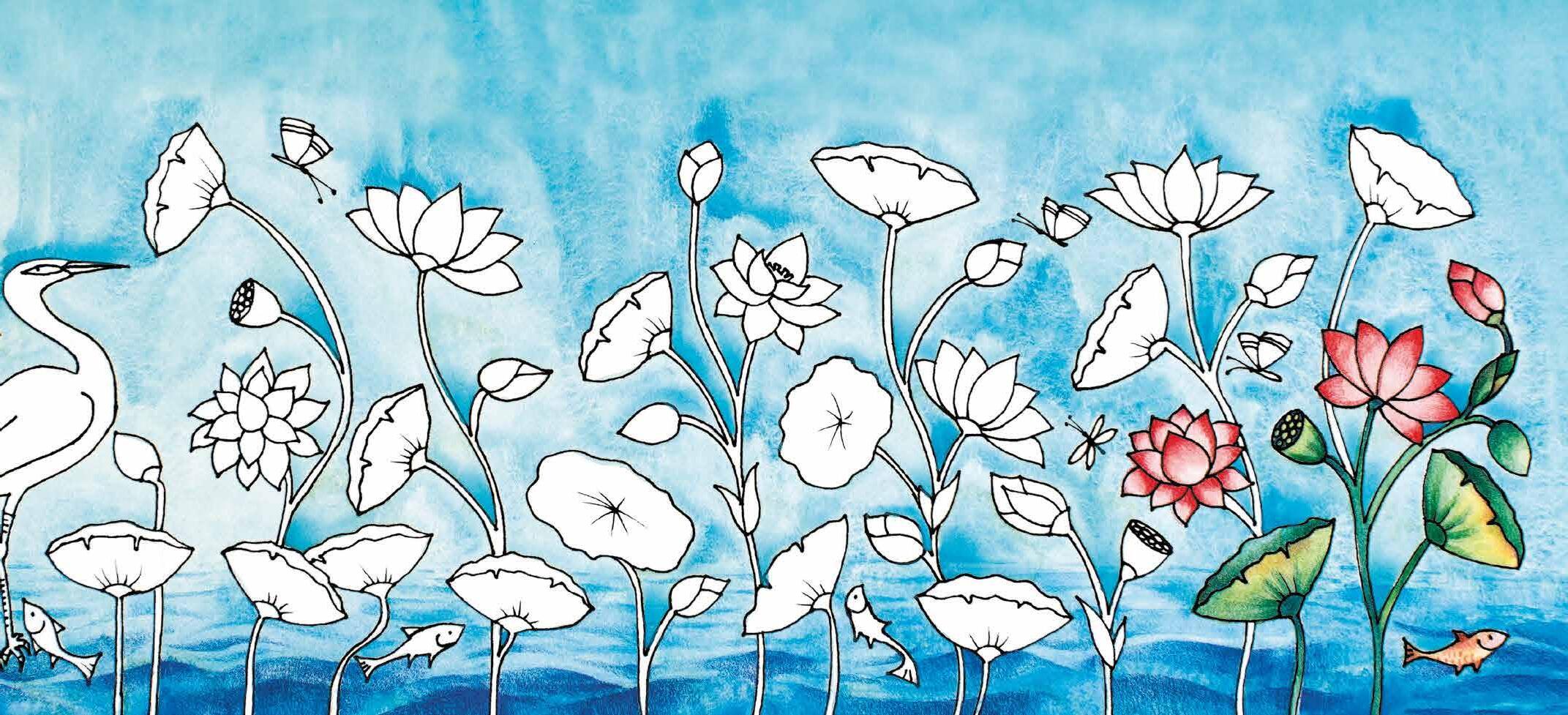
Thisdelightfulcolouringbookintroducesyoung readers(andtheir olderrelativesaswell!)tothe artofIndia—foundeverywherefrommonuments andtextiles,tosidewalks,vehicles,movies,and objectsofeverydayuse.
With34attractiveillustrations,thisvolume introducesreadersandyoungartiststoabroad spectrumofIndianart,beginningwiththe sealsofthevanishedIndusvalleycivilisation rightuptoexuberantmoviepostersoftoday.
Thebookalsotakesthereaderthrough patternsofembroidery,folkart,performing art,murals,matchboxes,mehendiandmore!
Thisenchantingactivitybookprovidesample inspirationforacuriousyoungmind.
Suhita Shirodkar and Suhag Shirodkar
First published in India in 2017 by Mapin Publishing
Simultaneously published in the United States of America in 2017 by Grantha Corporation
E: mapin@mapinpub.com
Distributors
North America
Antique Collectors’ Club
T: +1 800 252 5231 • F: +413 529 0862
E: sales@antiquecc.com www.accdistribution.com/us
United Kingdom and Europe
Gazelle Book Services Ltd.
T: +44 1524 528500 • F: +44 1524 528510
E: sales@gazellebooks.co.uk www.gazellebookservices.co.uk
If you like to colour and draw, this book is for you! It showcases the art of India and inspires you to create your own. You will find art everywhere in India—not only at famous sites like the Taj Mahal or Ajanta but also on vehicles, sidewalks, clothes—everywhere!
We would love to see how you use this book. Send photos of your finished work to wanderindia@gmail.com.
Thailand, Laos, Cambodia and Myanmar
Paragon Asia Co. Ltd
T: +66 2877 7755 • F: +66 2468 9636
E: info@paragonasia.com
Malaysia
Areca Books
T: +604 2610307
E: arecabooks@gmail.com
Rest of the World
Mapin Publishing Pvt. Ltd
706 Kaivanna, Panchvati, Ellisbridge, Ahmedabad 380006 INDIA
T: +91 79 40 228 228 • F: +91 79 40 228 201
E: mapin@mapinpub.com www.mapinpub.com
Text and images © Suhita Shirodkar and Suhag Shirodkar
All rights reserved under international copyright conventions. No part of this book may be reproduced or transmitted in any form or by any means, electronic or mechanical, including photocopy, recording or any other information storage and retrieval system, without prior permission in writing from the publisher.
The information in this book is distributed on an ‘as is’ basis, without warranty. The authors shall have no liability to any person or entity with respect to any loss or damage caused or alleged to be caused directly or indirectly by the contents of this book.
ISBN: 978-93-85360-20-6 (Mapin)
ISBN: 978-1-935677-77-2 (Grantha)
Design: Suhita Shirodkar and Suhag Shirodkar
Production: Gopal Limbad and Rakesh Manger / Mapin Design Studio
Printed in India by Gopsons Papers Ltd
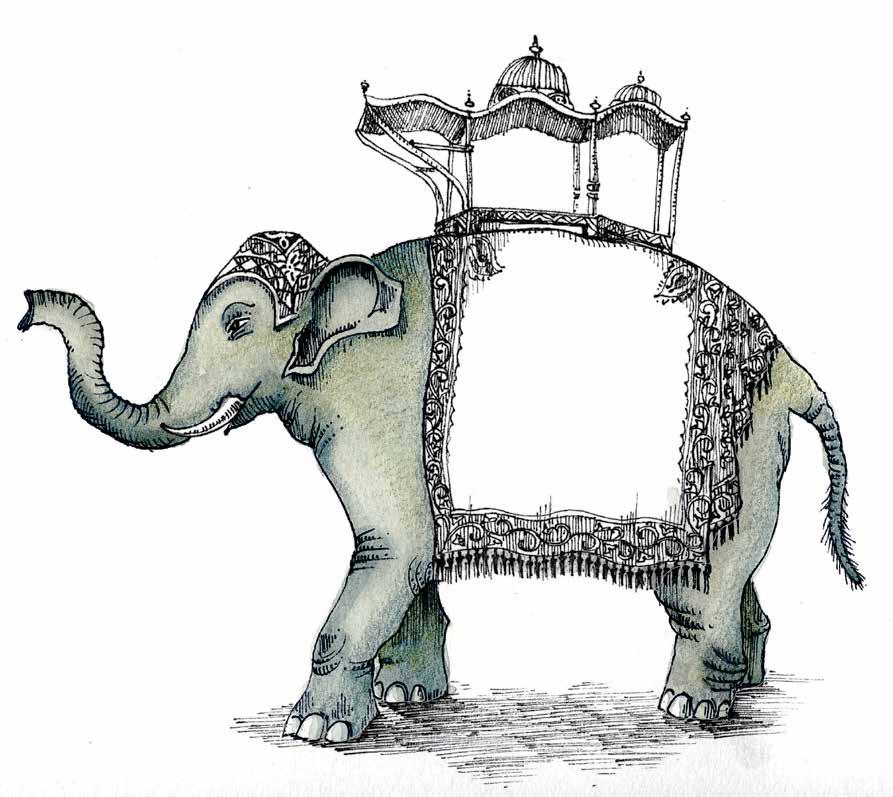
Adorn the elephant and seat yourself in the howdah!
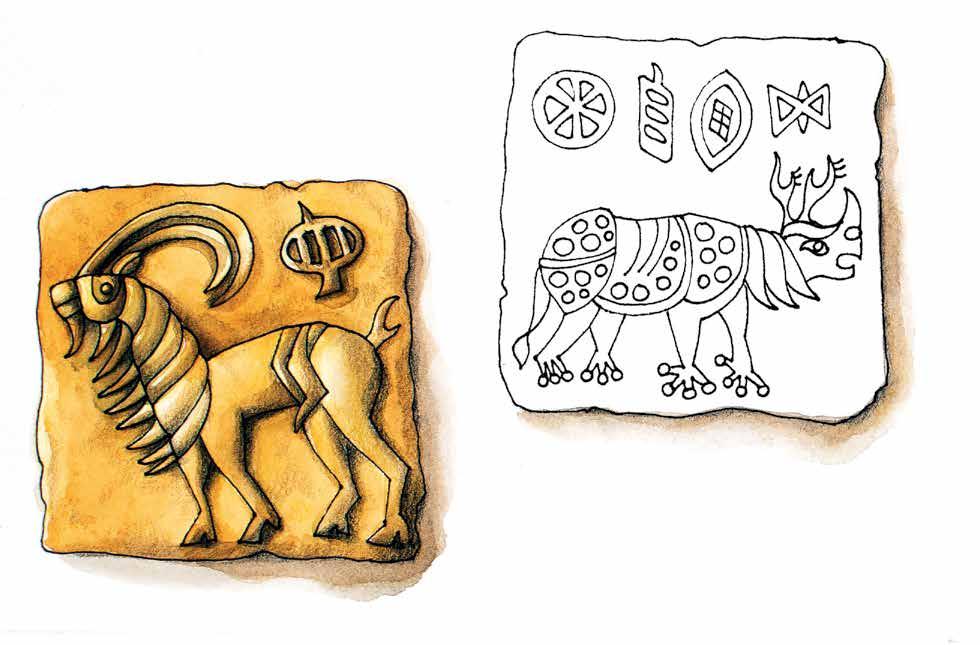
Five thousand years ago, a great civilization flourished along the Indus River. They traded with distant lands including Iran, Central Asia and Mesopotamia.
Thousands of carved seals have been excavated at Indus sites. They are small, about an inch square, and made of soapstone or clay. Each has a picture and some writing, which has not yet been deciphered. The seals were probably pressed into clay to make shipping labels for merchandise.
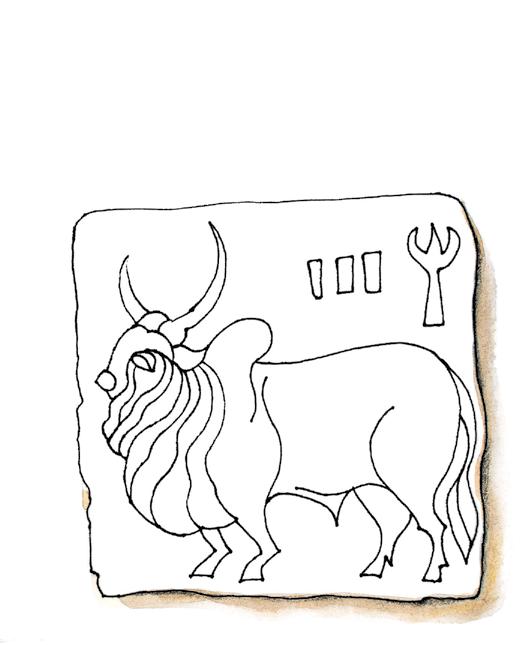
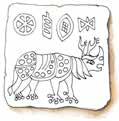
Design your own seals.
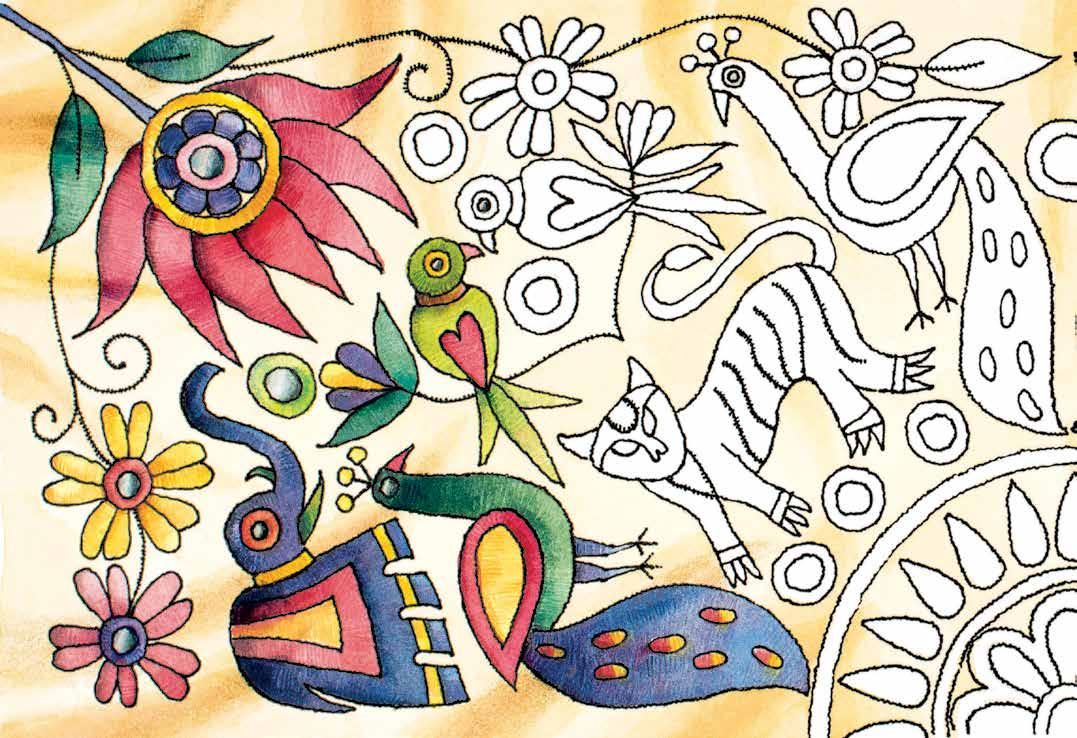
The Rabari are nomads. They herd sheep, cattle and camels across the arid regions of Kutch and Rajasthan. Rabari women decorate clothes, money pouches and their animals’ blankets and harnesses with fine chain stitch patterns. Sometimes they sew tiny mirrors into the embroidery.
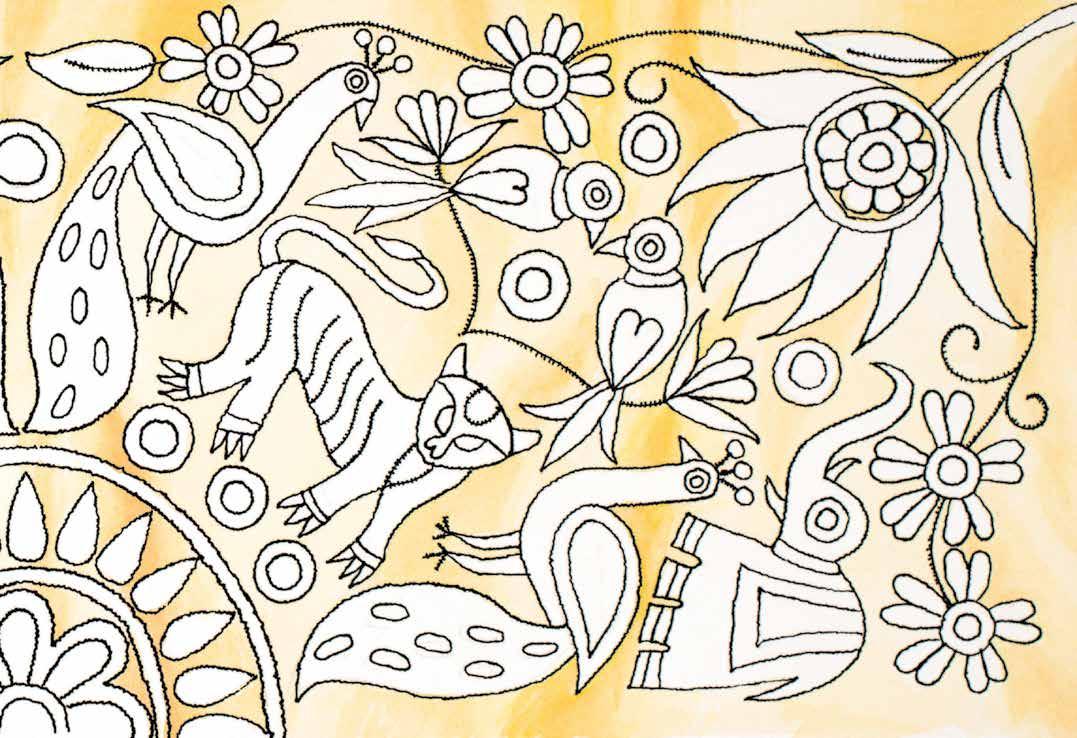
A nomadic lifestyle is not easy in the modern world. Many Rabari are settling down and adapting their embroidery to urban tastes. India has a panoply of embroidery traditions, from the vivid Rabari and Banjara to the subtle Kasuti of Karnataka and Chikan shadow work of Lucknow.
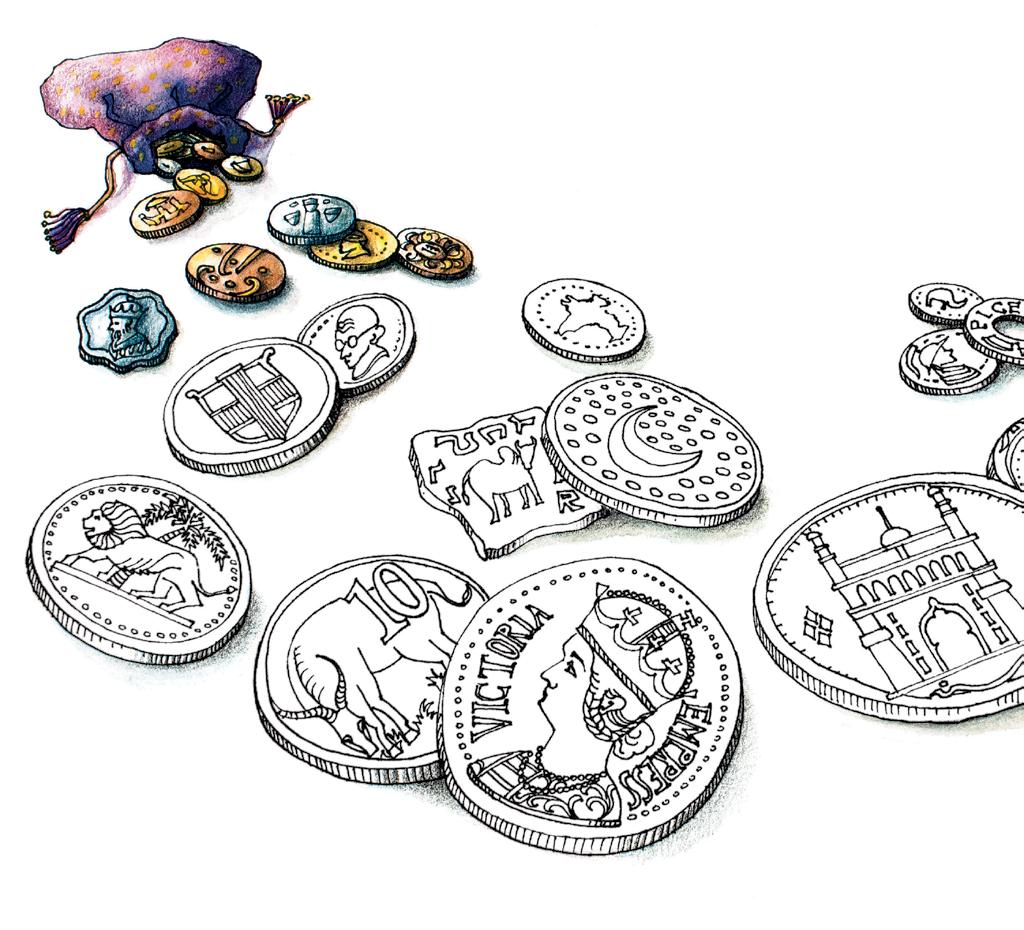
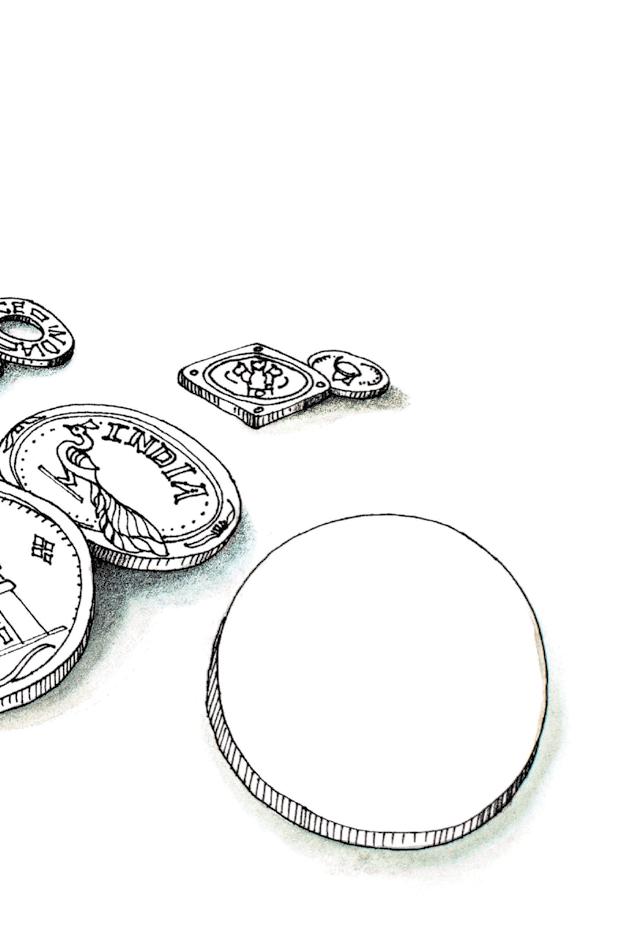
Coins have been issued in India since the 6th century BCE. The earliest coins were pieces of silver punch-marked with motifs of the sun, trees or animals.
Around the 2nd century BCE the Sakas, originally from Central Asia, began issuing dynastic coins with portraits of kings.
Ancient Greece and Rome traded extensively with India. Greek and Roman coins have been found at archaeological digs in southern India.
Modern Indian coins are punched out of stainless steel or an alloy of nickel and copper. Visit the Reserve Bank of India’s monetary museum at rbi.org.in/currency/museum/.
Coins can be tokens of trade, bearers of social messages and conveyors of personal ambitions. The medieval king Alauddin Khilji stamped his coins with the grand title Sikandar al-Thani (the second Alexander). What will your coin say, for you and about you?
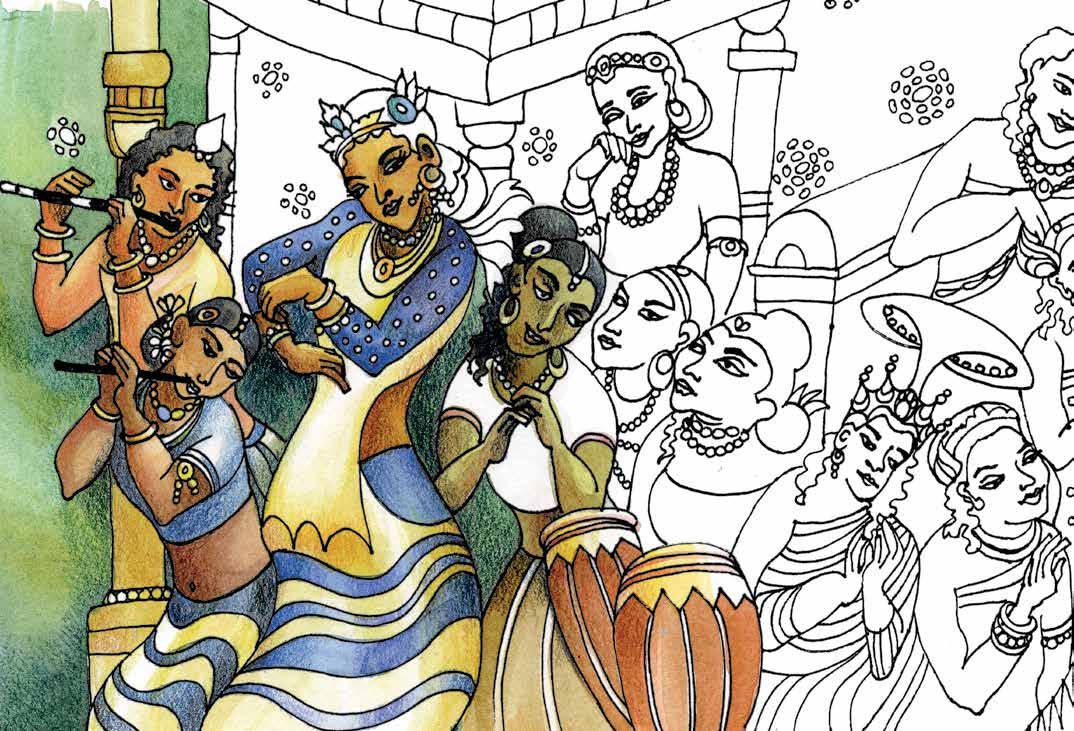
Starting in the second century BCE, and over 800 years, thirty Buddhist prayer halls and monastery chambers were carved into a horseshoe-shaped cliffside, high above the Wagora River in the jungles of western India. The caves were painted from floor to ceiling with lavish murals of the Buddha, his life as a young prince and episodes from the Jataka Tales.
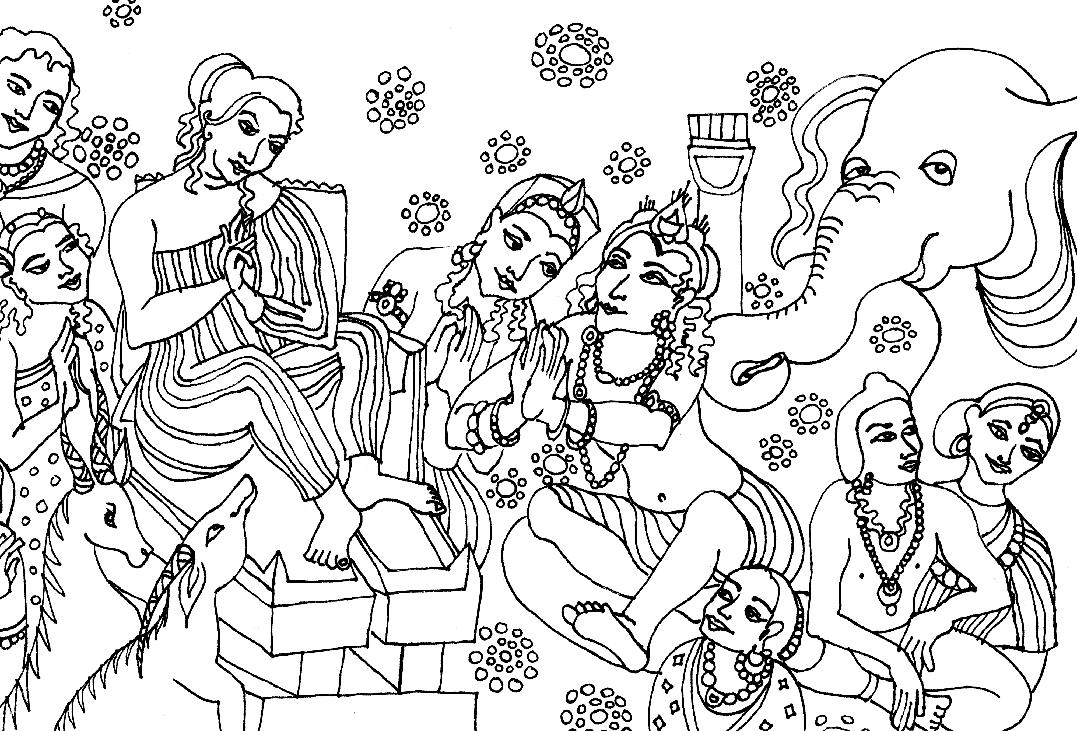
Eventually the site was abandoned, and ‘lost’ for a thousand years. In 1819, a British cavalry officer chanced upon these extraordinary caves while he was out on a hunt. The Ajanta Caves, as they are known today, are a UNESCO World Heritage Site.
Trucks are gaudily painted with peacocks, lotus blooms and stirring slogans like Ma tera ashirwad (Bless me, mother) or Mera Bharat sabse mahaan (My India is the greatest).
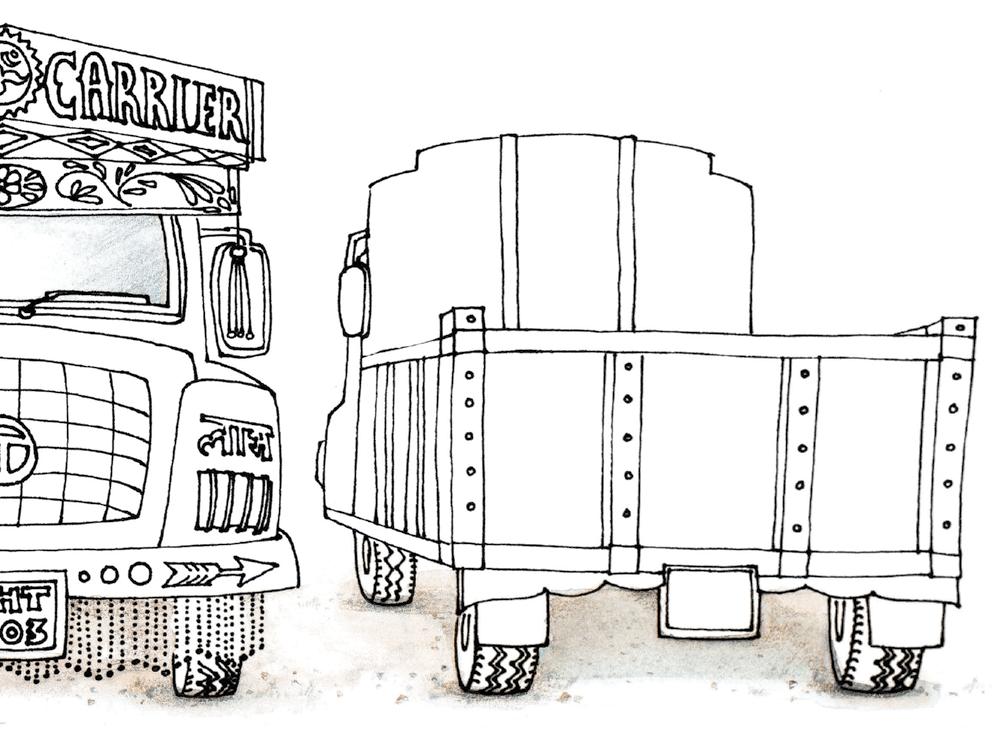
Time to paint your truck! What symbols and slogans will it sport on the Indian highways?
PAINTED HANDS
Henna, from the tropical plant Lawsonia inermis, is used as a tattoo pigment in South Asia, North Africa and Arabia.
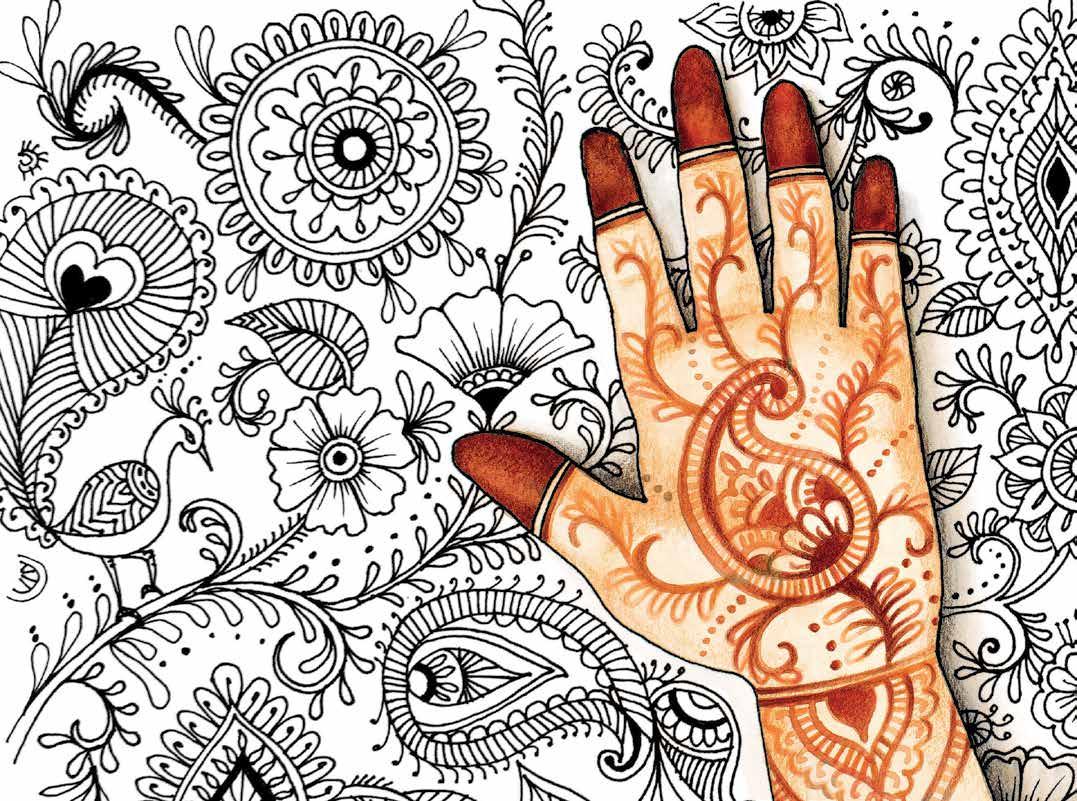
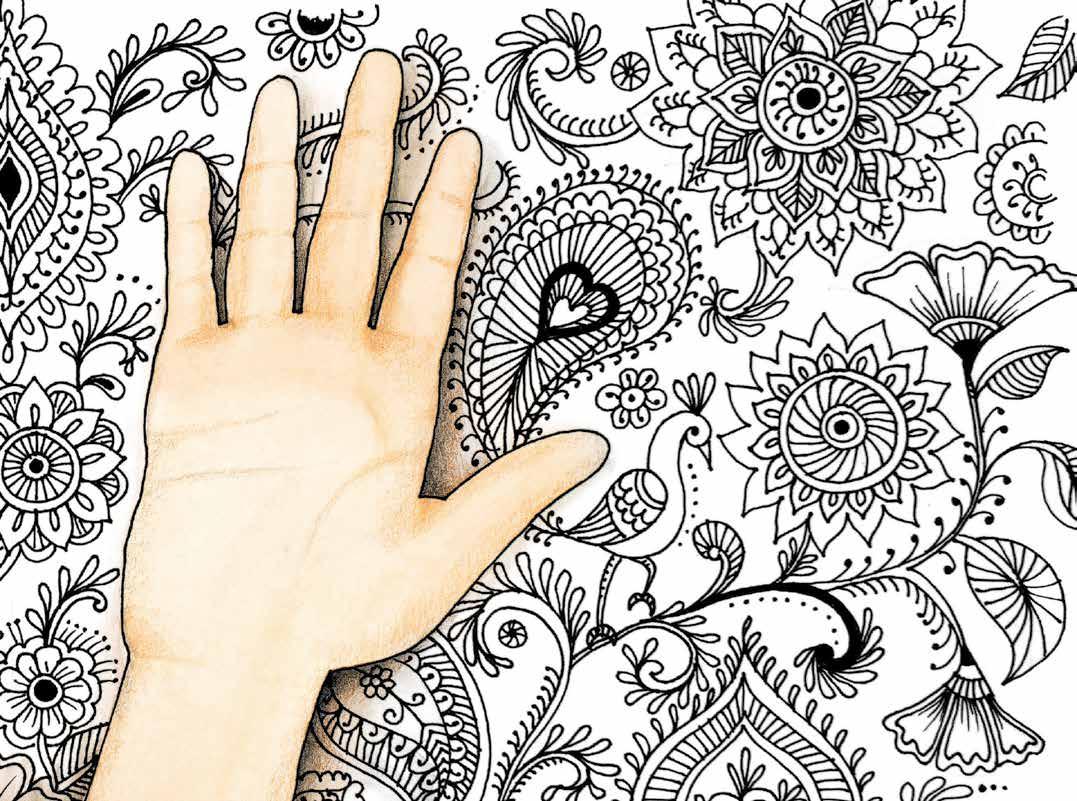
Indian brides have their hands, and sometimes their arms and feet, decorated with henna. Paisleys, peacocks and flowering vines are popular motifs.
Writer and ceramic artist Suhag Shirodkar lives in Goa and helps manage her family’s mango orchard in the Konkan. She is also the author of Captured in Miniature (Mapin), which introduces children to Mughal history through paintings of the time.
Illustrator Suhita Shirodkar grew up in Mumbai. She enjoys sketching in urban settings and blogs at sketchaway.wordpress.com.
A wanderINDIA drawing and colouring book
Suhita Shirodkar and Suhag Shirodkar
36 pages, 34 illustrations
10.5 x 9.5” (241 x 267 mm), pb
ISBN: 978-93-85360-20-6
₹295 | $11.95 | £9.50
2017 • World rights
T his book has been a family project. Suhita Shirodkar drew the panels. Her sister Suhag wrote the text and did the layout. Suhag’s husband, Anand Bariya, recreated the Atgah Khan tomb pattern. Their daughters, Mohini and Mallika, provided crucial early input which established direction and tone. The idea for this book occurred while ambling through the Alhambra in Spain. It was executed in fits and starts in California, Goa and Bangalore. For perceptive editing, thanks to Simone St. Anne.
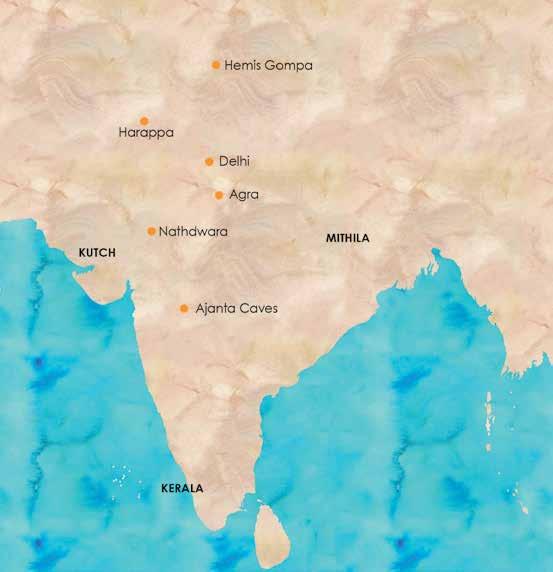
GIMP, Inkscape and Adobe InDesign were used to make this book. Fonts are Century Gothic and the much-maligned Bradley Hand ITC. The map is based upon Survey of India maps with the permission of the Surveyor General of India.
(Map © 2017 Mapin Publishing. Responsibility for the correctness of internal details shown on the main map rests with the publisher.)