The King Who Would Be Man is an intimate and evocative chronicle of Maharaja Gajsingh II of MarwarJodhpur—a sovereign born to grandeur, yet shaped by contemporary changes with traditional responsibilities. It narrates a parallel story of a man escalating from within history to a place in posterity, as well as de-escalating into democratic, contemporary times to be one among his people.
Set against the sweeping changes of post-colonial India, this is the story of a royal figure who does not cling to power, but channels his heritage into relevance and purpose. With grace and wisdom, he reconciles the solemnity of tradition with the demands of democracy, becoming not just a keeper of palaces and customs, but a king of conscience—a man of his time, and for his people.
With 233 illustrations.
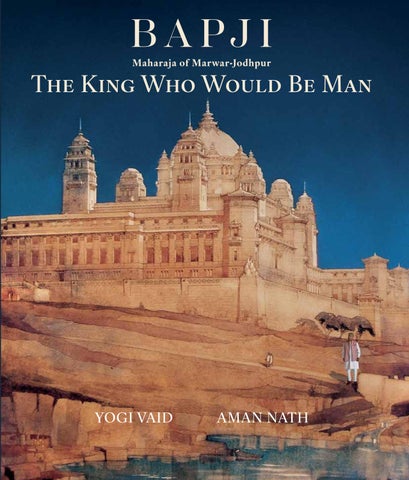
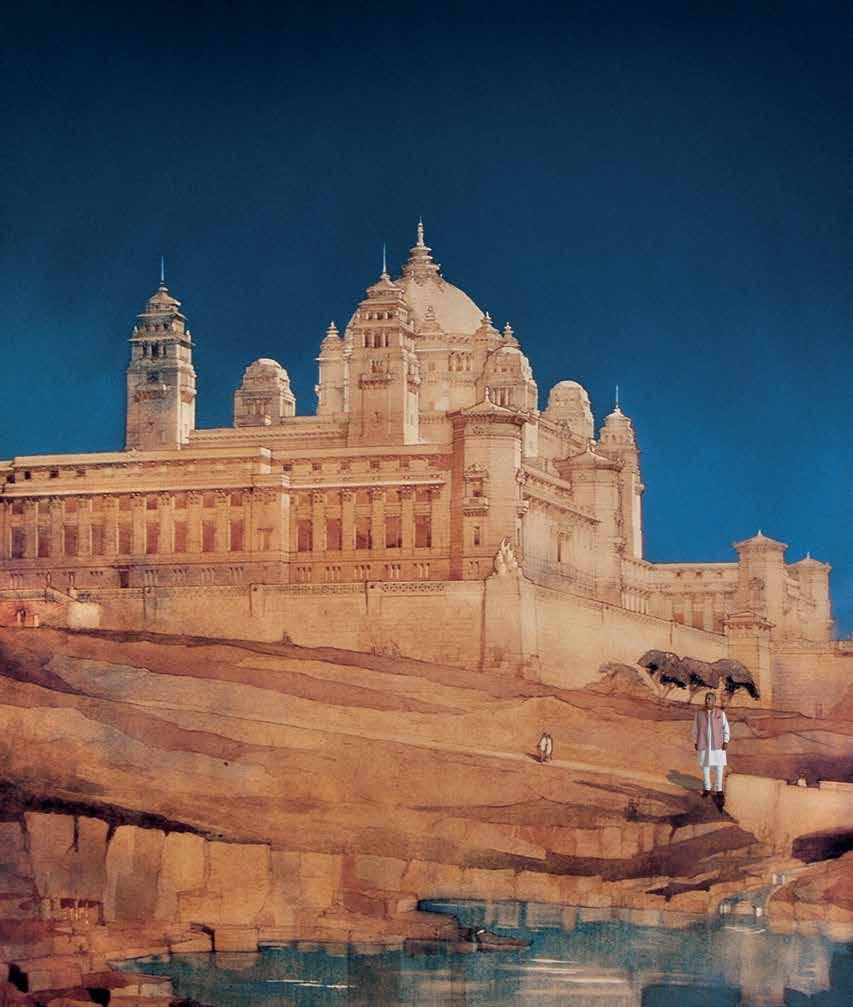
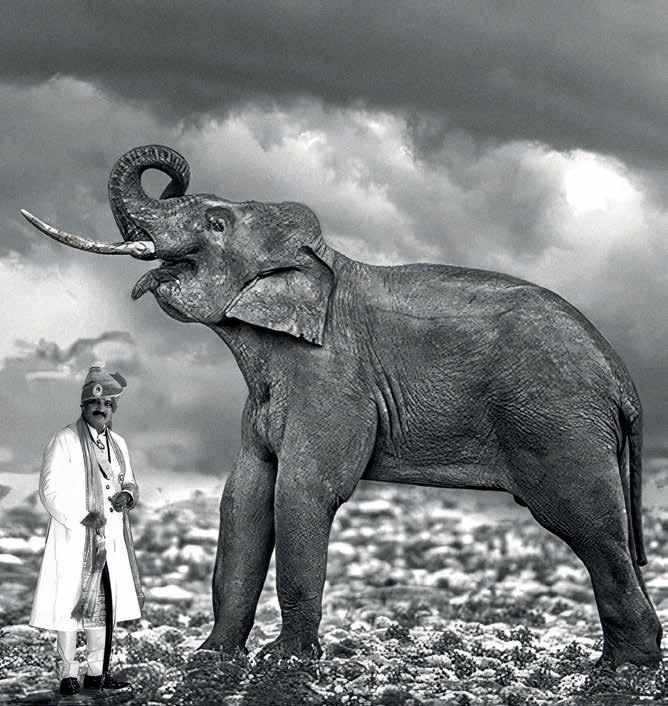
COVER In 1928, a year before Jodhpur’s Chittar Palace (later Umaid Bhawan) saw the laying of its foundations, the painter TA Lodge had created an artist’s impression. Superimposed on the painting is a photograph of the current Maharaja Gajsingh II, who stands modestly at the foot of his grandfather’s vision.
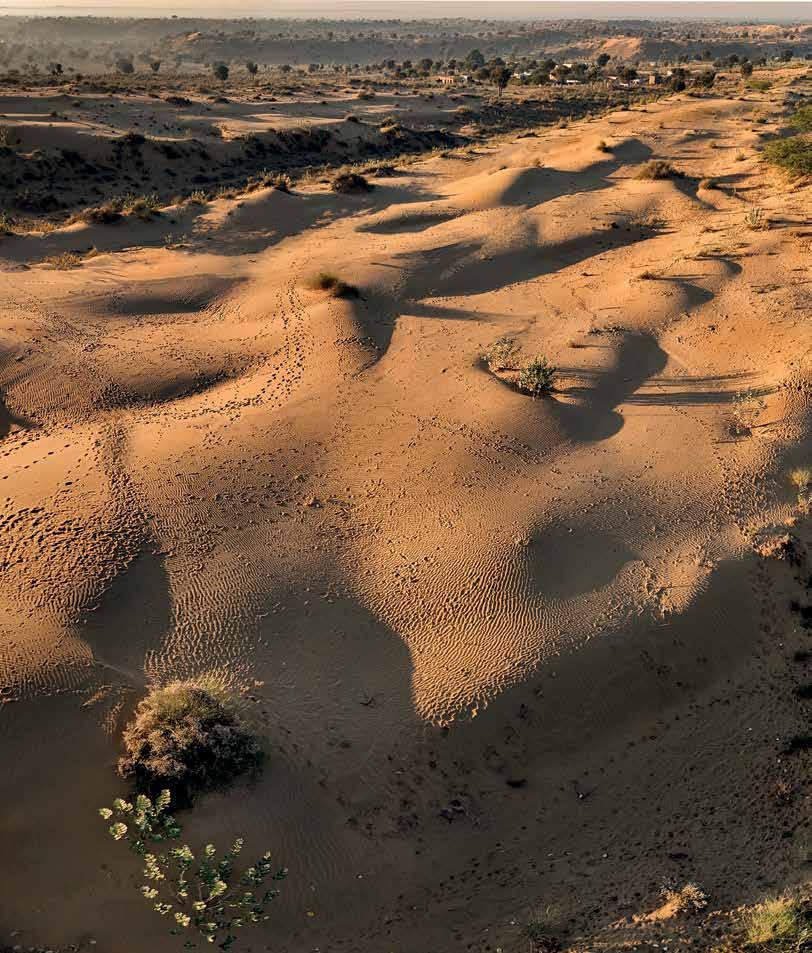
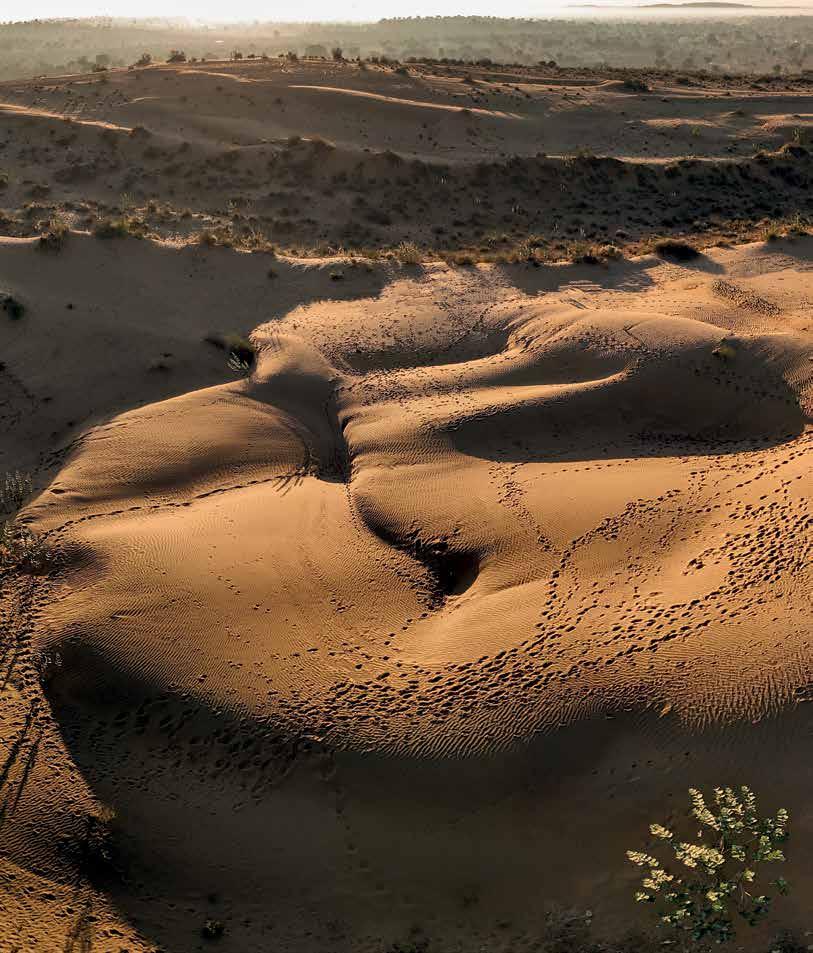
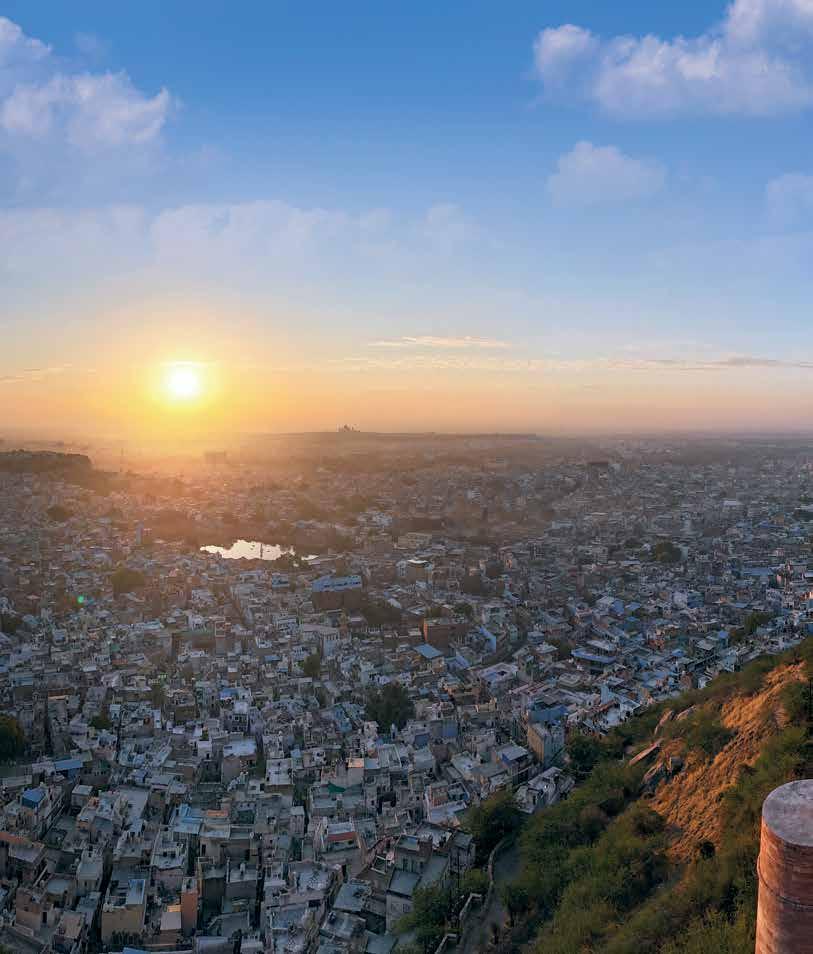
FRONT ENDPAGES Approximately forty percent of the Thar Desert falls within the former Jodhpur State, which included Umarkot, now in Pakistan. While migratory sand dunes have always threatened to bury human habitations in the vast open countryside of Marwar, the Rathores invoked their resilience to bloom and leave their footprints on the sands of time.
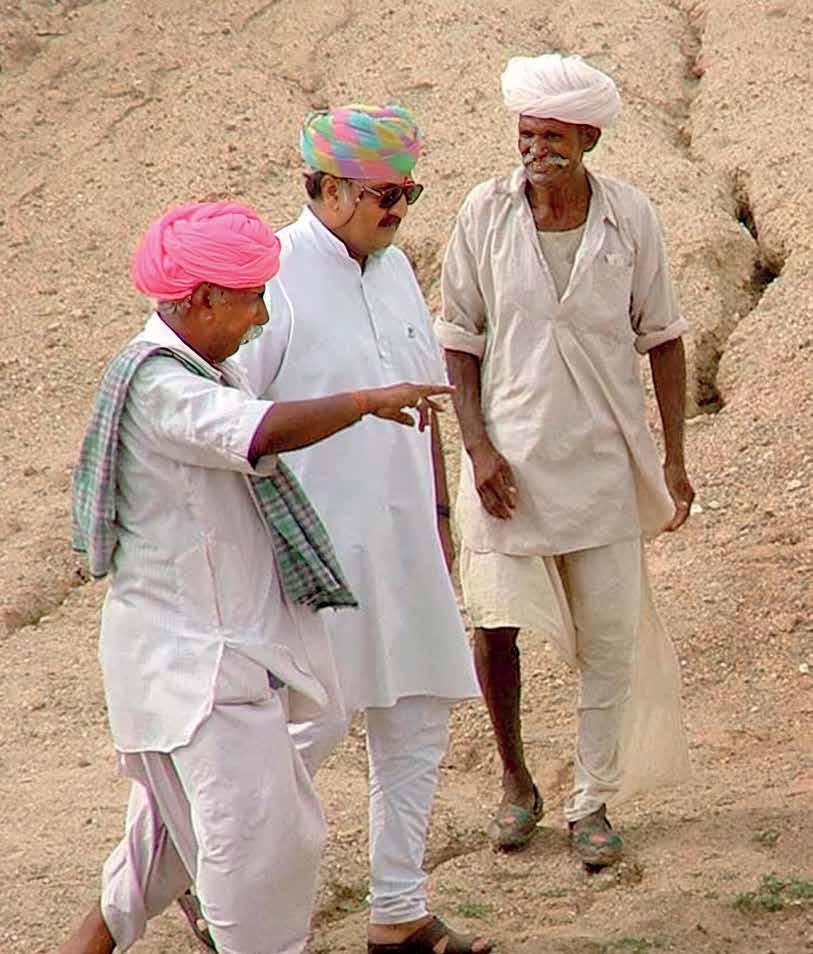
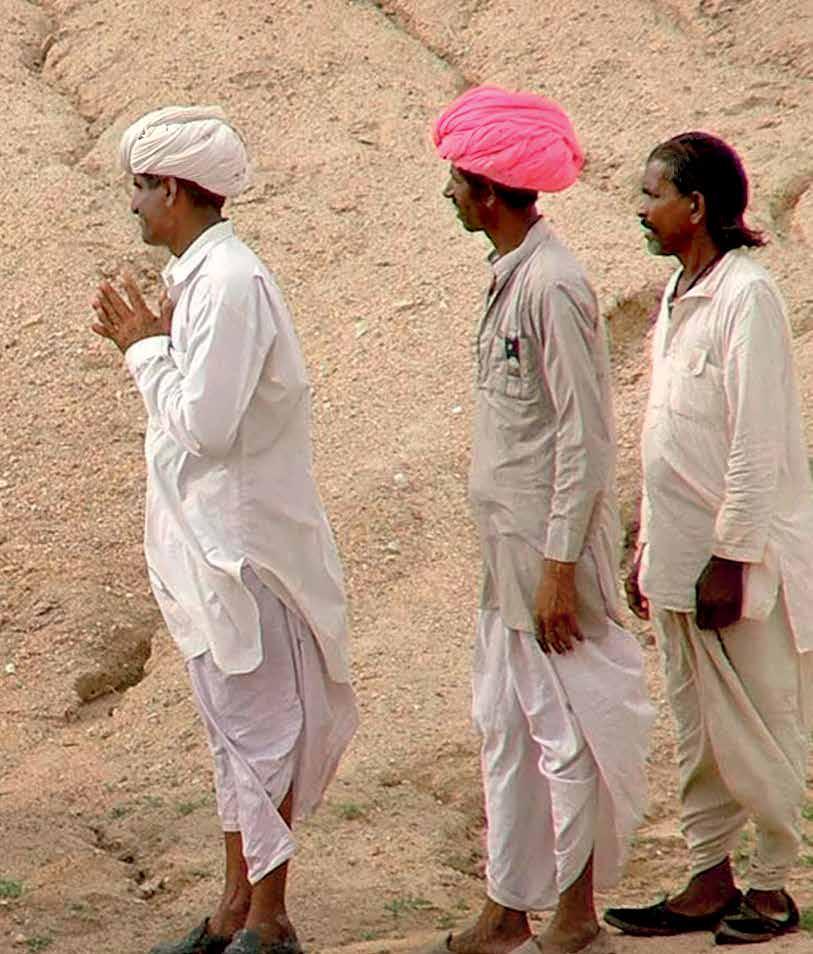
BACK ENDPAGES As part of the Jal Bhagirathi Foundation, Bapji discusses the details of the water project with the villagers.
This book is dedicated to the progenies of all those associated with the making of it, to remind them that legacy is not what you inherit, but that which you leave behind—hopefully having added your life's work to that of your ancestors.
BAPJI
Maharaja of Marwar-Jodhpur
The King Who Would Be Man
YOGI VAID AMAN NATH
Contemporary Photography – Amit Pasricha
"The institution defined the boy. The young man embodied it. The wise, old king has transcended it."
–
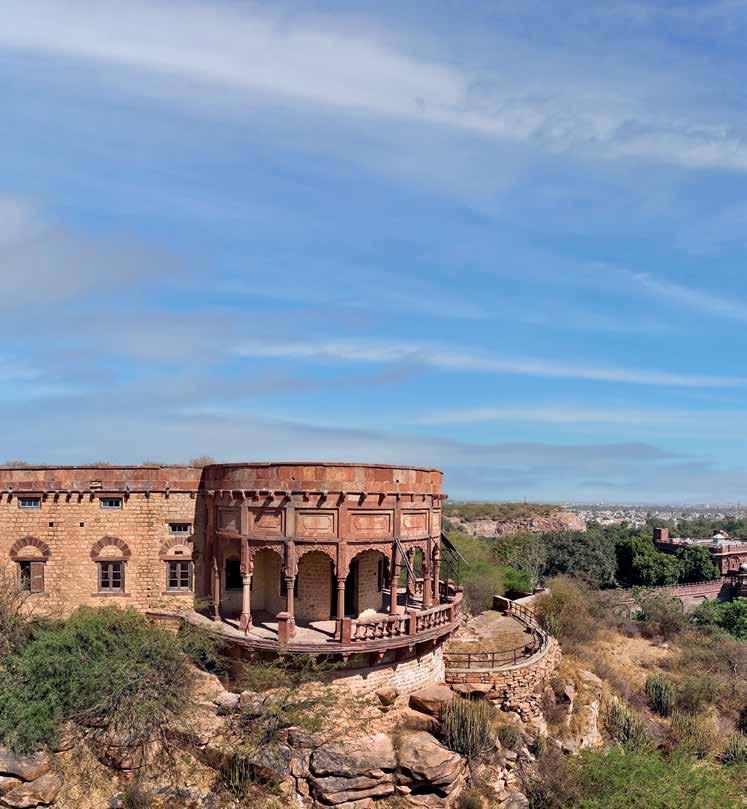
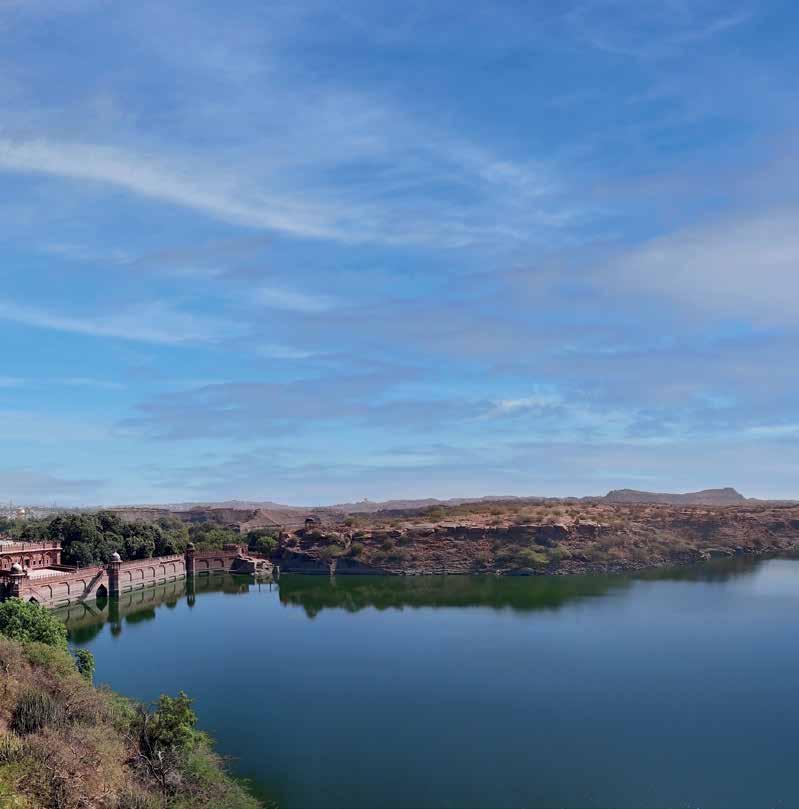
BELOW The man-made, eleventhcentury Bal Samand Lake, with a seventeenth-century palace was built by Maharaja Jaswant Singh I atop the hill. This was refurbished by Maharaja Hanwant Singh for his personal use. The garden palace below this was revitalised by Bapji into a pleasurable heritage resort.
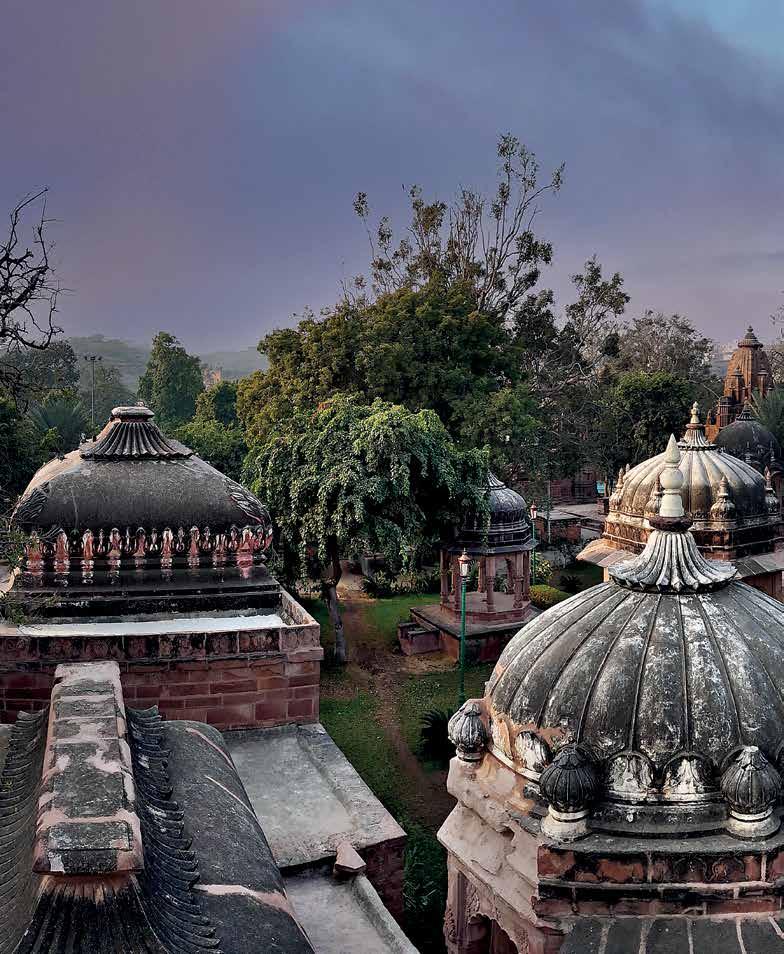
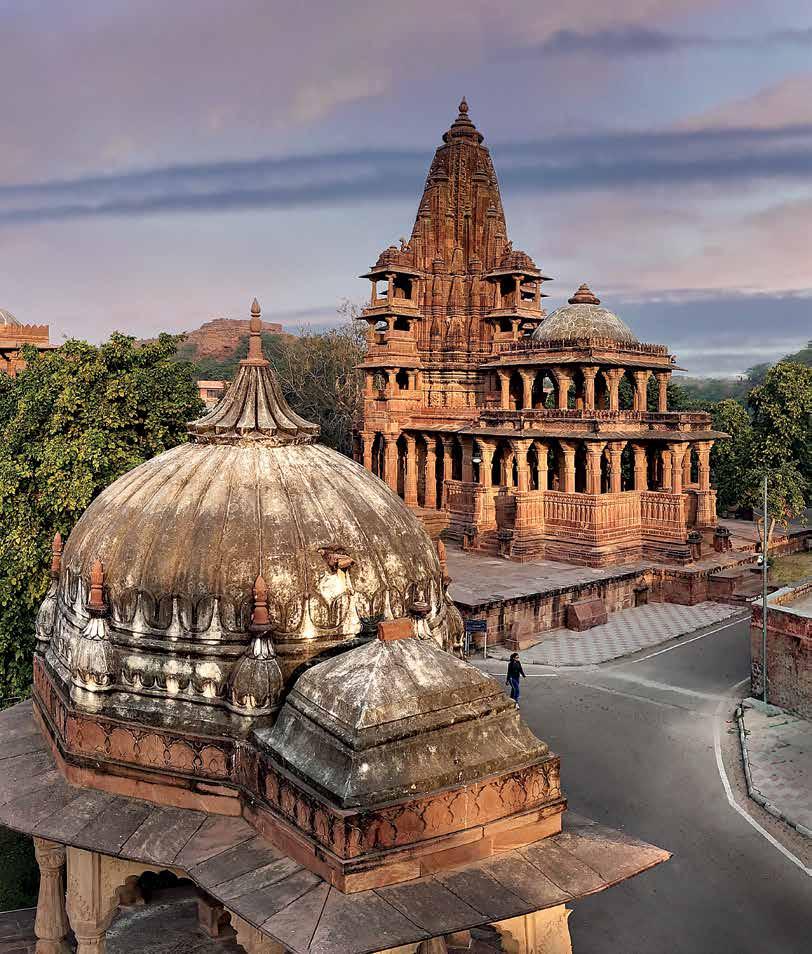
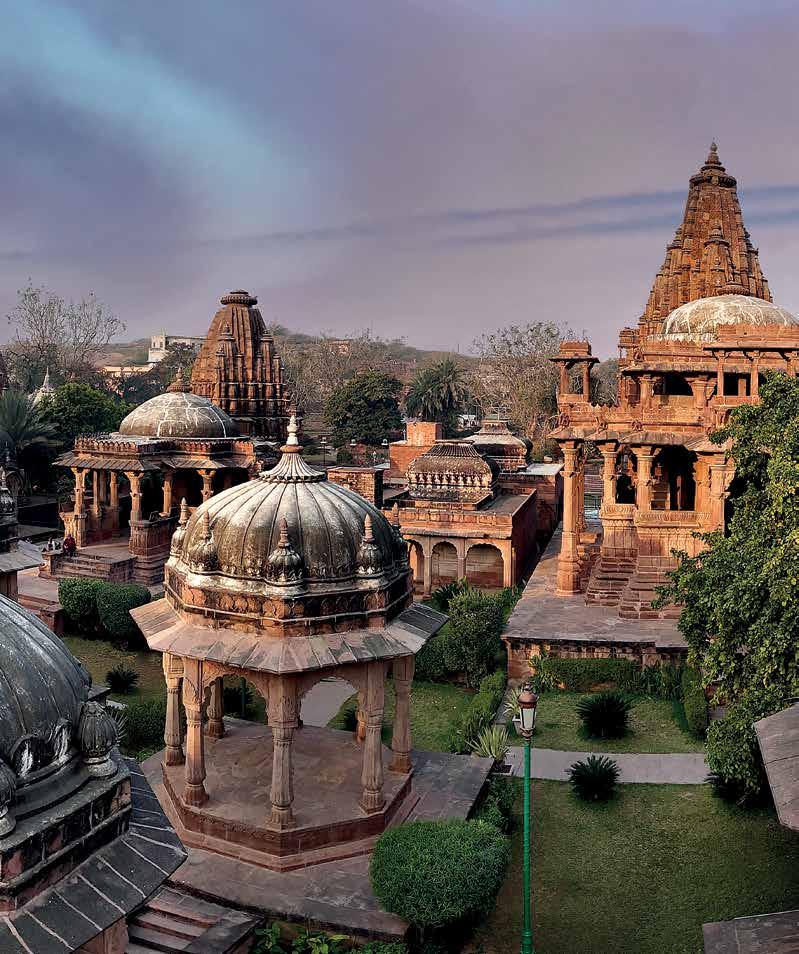
PAGES 7-9 The fourteenthfifteenth-century capital of Mandore houses gardens, temples and cenotaphs of the Rathore rulers who later shifted their capital to Jodhpur.
Rao Raja Mahendra Singh Great-grandson of SirPratap Singh (FormerCEO of the Mehrangarh
Museum Trust)
This is the story of a man who walked cross-current in the waters of his desert land, Marwar, which got its name from maru, the land of death. The Rashtrakuta dynasty had made its home here in the thirteenth century CE to transform it along with their fortunes.
When Rudyard Kipling wrote, The Man Who Would Be King, in 1888, it was the aspirational tale of every common man wanting to escalate in hierarchy to become king.
But, this real-life story of a royal child holding his rank, dignity and status, while also de-escalating under democracy to be with his simple folk, maintaining the same alluring humility that the people of Marwar typify in peacetime, is a most enduring story spanning the twentieth and twentyfirst centuries, torn with social upheaval, change and mindless violence.
CONTENTS
Foreword 10
Authors' Notes 12-13
A Fateful Day 14
Royal Chronicles 24
Ancestral Influences 30
Resilient Rathornis 56
Bapji's English Summer 72
Inheriting White Elephants 84
Communion & Continuum 98
Elephant Of A Man 112
Maharani Of Mettle 130
Riding With The Reins 138
Over-riding Fate 142
Culture Of War And Peace 156
The Ever-Elusive Elixir 166
Supporting Stalwarts 170
Jodhpur Album 176
Postscript 178
Acknowledgments 180
Bibliography 180
Notes 181
Glossary 181
Index 183
Photo Credits 185
Foreword
In the summer of 2012, Bill Gates and his family visited Jodhpur on a private trip and naturally, I asked the distinguished guests over to a leisurely sundowner in the residential wing of Umaid Bhawan Palace. We talked about the world and its wealth, entrepreneurship, custodianship, legacy and more. Interested in the 347-room palace, his father, William Henry Gates Sr, pulled aside and pored over the eye-catching book (Jodhpur’s Umaid Bhawan: The Maharaja of Palaces) which Aman Nath had put together for us in 2008. While Bill and I spoke of all the problems that our world is burdened with, the senior Mr Gates read on, gripped with the story of thirty-nine generations, and mainly my grandfather, the revered Maharaja Umaid Singh, who turned the adversaries of a dire famine into the world’s largest Art Deco palace.
Suddenly, Bill Gates woke up to the realisation that he had to be in Paris to sign a very important contract. He was unaware that the Jodhpur airport, controlled by the Indian Air Force (IAF), had a cut-off time limit, after which no flights could take off. We were well past that hour, but my guest was ready to fund the heavens because that take off was most crucial for his work. As a backup, kerosene lamps were used to light the runway for post-sunset emergencies. The IAF kindly complied with our guest’s exigency by lining up gooseneck flares for the Bombardier Jet to take off at 7:00 p.m.
When I narrated this episode to Aman, especially Bill Sr’s keen interest in his book, his reaction was: “If that ‘Palace book’ represented your public persona, then there was surely a need for more private exposure of the human scale to your existence that needed the view of insiders.”
So, a chance encounter with a book can create its own impulsion!
This book is a result of that ‘chance encounter’ and the spark led to the making of this tome, in which Yogi Vaid and Aman pushed my boundaries and theirs, to produce what will make for an engaging inflection of my life.
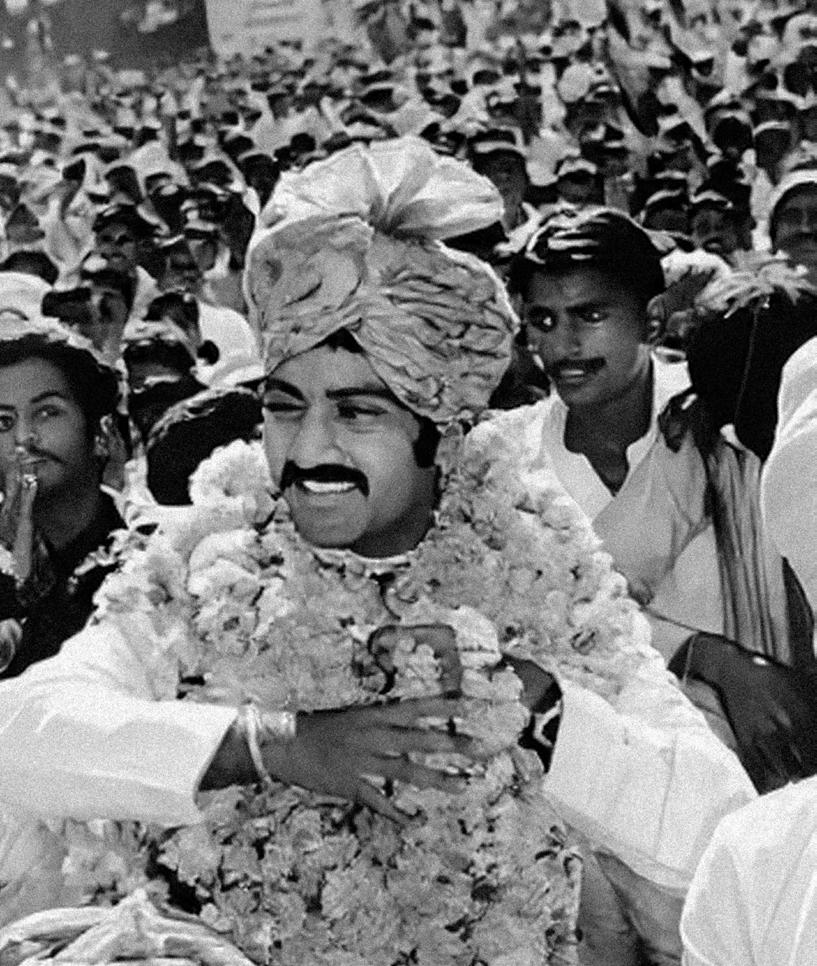
I have known Aman since 1972, from our discotheque days at the Tabela, Hotel Oberoi Intercontinental, New Delhi. This was soon after I had returned from my studies in the UK to a rousing reception in Jodhpur [left] . Aman has known Yogi since 1958, from their kindergarten days at Modern School, New Delhi. This makes a bond of 120 years of friendships, trust and fondness among our trinity. The result is in your hands to enjoy.
Of Blood and Sand
The thundering heartbeat of hooves, The curdling, booming war cries, Shattered the peace of Pir Panjal, As the marauding hordes rode by.
The slumbering gods invoked, unspared Har Har Mahadev, Jai Bhavani Bole So Nihal, Jai Mahakali Amongst others, vociferously aired.
Blue blood and red then fought as one, From dawn to dusk dyed crimson, For crown, for land, for sacred soil, Their bones the price, their blood the toil.
From North to Northwest, they spread, From cold climes to dusty dread, The Marwar migration spawned the land, With protective runes around their hand.
From the thirsty sands rose the Rathore, Pride and valour filling their pore, Nagnechiya, Chamunda, blessed, ensured, They prosper, flourish and soar.
The 800-year continuum of the Rathore, Bore sagas, fables and lofty lore, Admired still for their bedrock core, And blessed to flourish evermore.
— Yogi Vaid
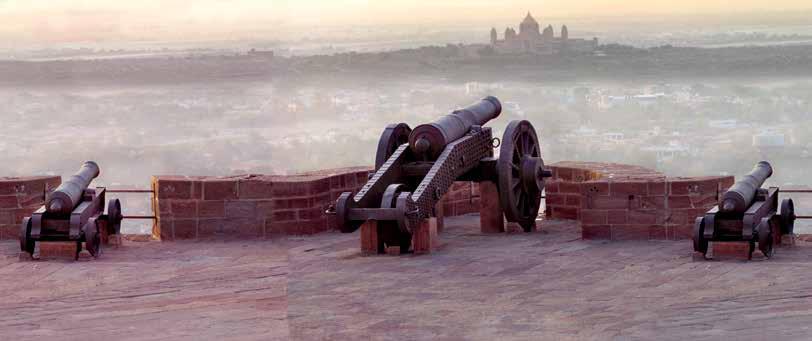
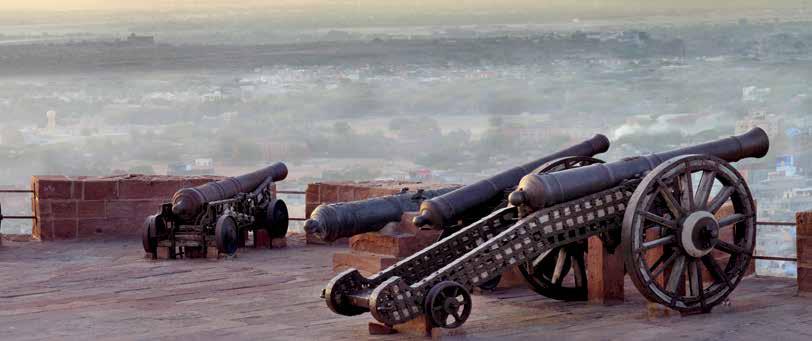
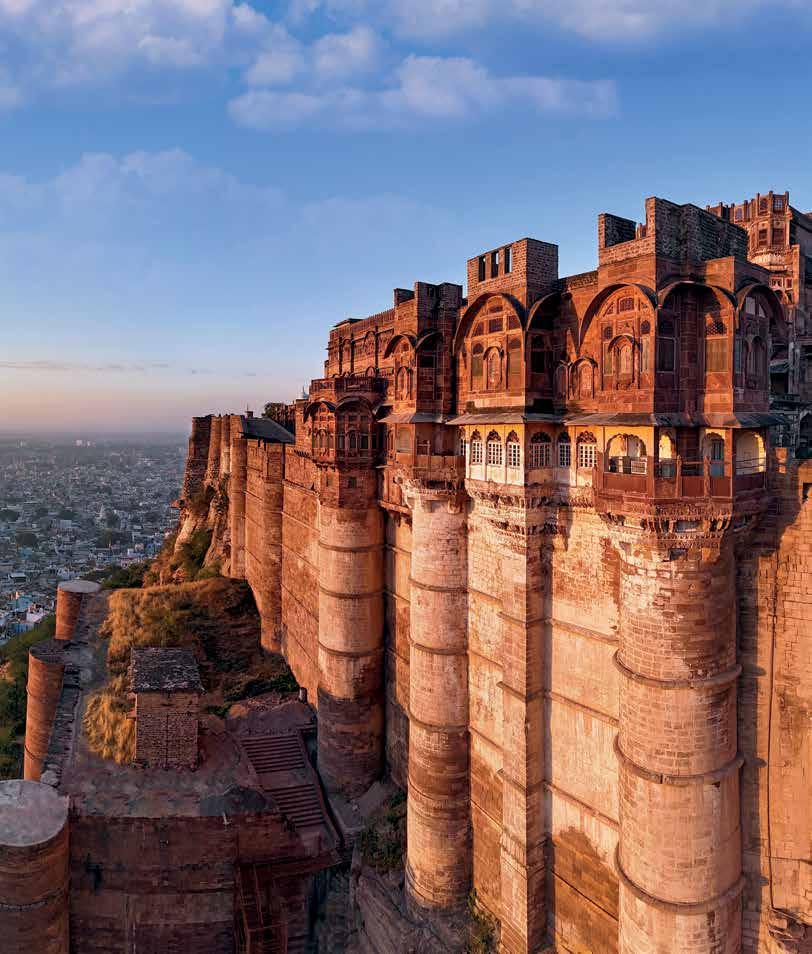
Silent cannons mark time from the ramparts of Mehrangarh as the Umaid Bhawan Palace rises like a mirage on the horizon, marking another landmark on the sands of time.
Rising in Descent
As the eighteenth and nineteenth centuries of competitive maritime activity and colonisation turned into combat—whirlpooling all the nations into two debilitating World Wars in the twentieth century— India had no choice but to fire on behalf of the British.
Some Indian rulers took on the Empire at the zenith of its power— Alwar, Indore, Baroda—and were exiled on flimsy pretexts or replaced, and their subjects suffered the lack of ‘development’. Jodhpur chose otherwise. Maharaja Pratap Singh of Idar, Regent of Jodhpur, despite being seventy-three years of age, insisted on leading the Jodhpur Lancers at Flanders and later to victory in the legendary Battle of Haifa, then in Palestine, against the Ottoman Empire.
Capturing the international mood of the early twentieth century, the scriptwriters of David Lean’s classic film, Lawrence of Arabia, on the life of TE Lawrence (1888–1935), wrote a profound dialogue between King Faisal of Arabia and the British General Allenby: “We drive bargains—old men’s work. Young men make wars, and the virtues of war are the virtues of young men: courage and hope for the future. Then old men make the peace and the vices of peace are the vices of old men: mistrust and caution. It must be so.”
But by the mid-twentieth century, when Maharaja Gajsingh II (Bapji) was born, the World Wars were over. However, their effects lingered on. While Bapji may have been cast in the old, feudal mode, he was intuitively quick to break that mould. He consciously declassified himself to fit the new, challenging circumstances.From an isolated, ‘divine’ maharaja to an honourable Indian citizen. Despite the tide being against him, he had to learn to swim cross-current, wilfully
de-escalate tensions and find a new raison d’être for royal heritage to survive as also to be showcased in its glory.
As India rose from centuries of enslavement, the politicians had taken to populism and deep-rooted social insecurities rekindled to create class wars at home. Yet, Bapji had to arrive at a new equilibrium between feudalism and democracy. He had to make insidious war while learning to practice the virtues of peace. Transforming the white elephants he had inherited into stotting gazelles with bounding leaps to escape the predators— greedy politicians, a hungry media and a counter-productive administration—was task enough. His new enterprises had to begin with courage and hope for a future where he seemed to be throwing dice in the dark.
As a young man, Bapji had to play with a mature hand. Now, much older, he is bringing youth and rejuvenation to what many had thought had become irrelevant and passé. He has circled Marwar with a halo of development. In both phases, he was at truce with the ‘times’, and thereby ‘time’ too was with him.
Looking back through the mist of half a century, that phase can hardly be remembered, but by those who fought it day by day. Today, what lies before our eyes is another layer of history. Time warps have been ironed out single-handedly by one man and his core team, burying some of the past, while raising new structures on the old foundations, which will remain relevant for the future to admire.
Aman Nath
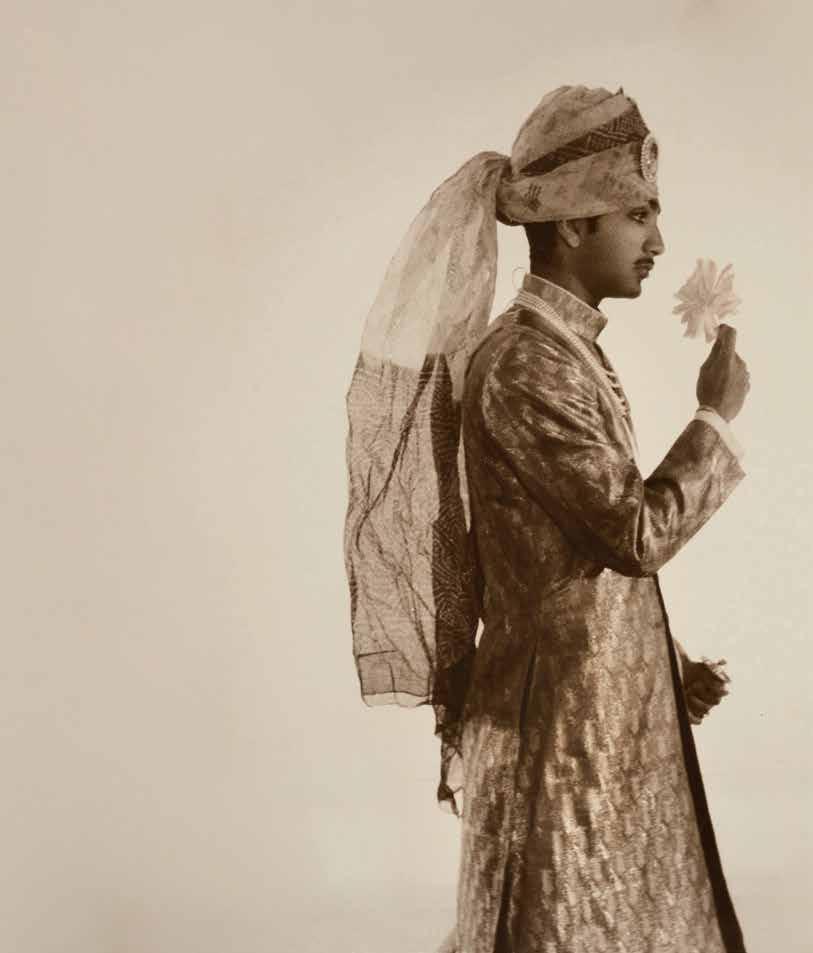
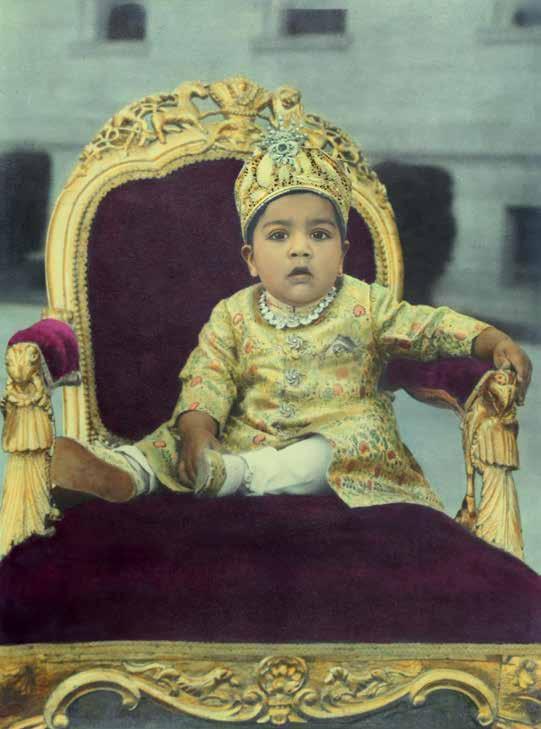
RIGHT To be born with a golden spoon in the mouth would seem an understatement for the enthroned and bejewelled Rathore scion at the raw age of four.
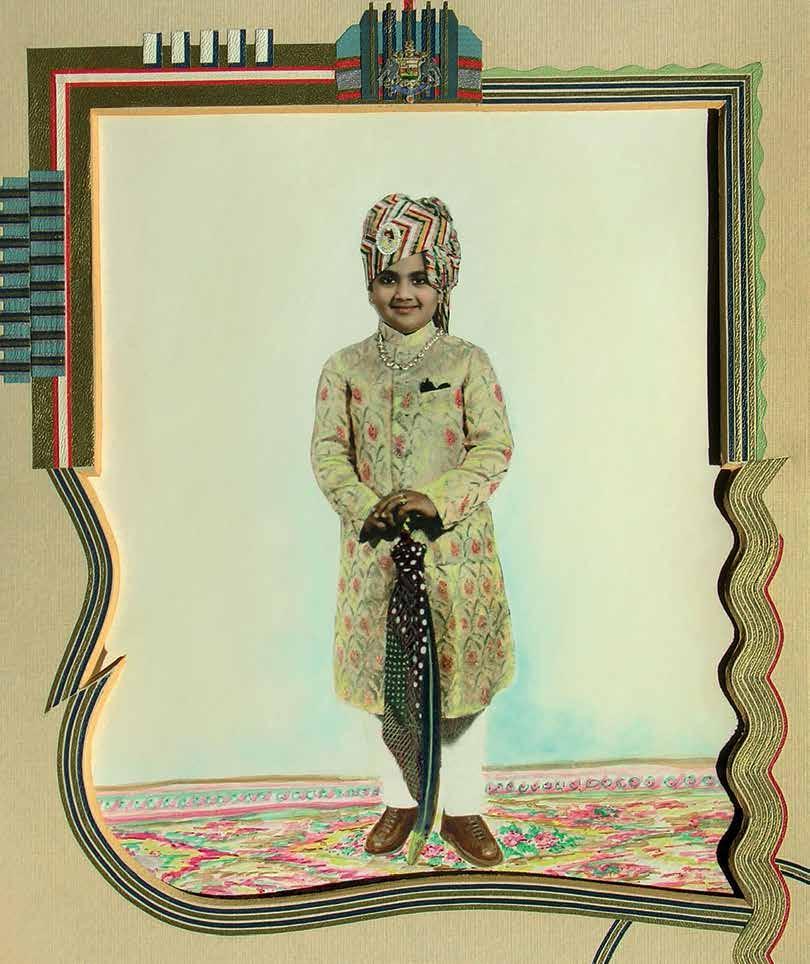
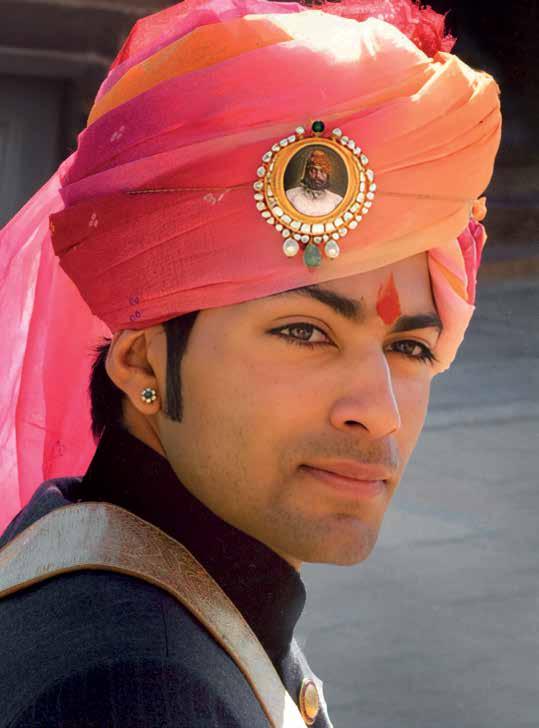
FACING PAGE Bedecked in a brocade achkan and a pachranga safa adorned with a medallionbrooch with the portrait of his great-great-grandfather Maharaja Jaswant Singh II, Bapji poses confidently with the curved talwar (sword).
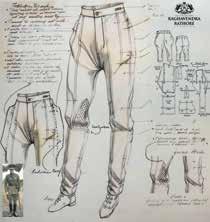
How the Jodhpurs evolved
Then, sometime in the late 1800s, somewhere between the wind-swept dunes of Marwar and the hush of a London tailor’s backroom, this garment was reshaped by accident.
As decades passed, soldiers, polo players and even American pilots stationed in Jodhpur wore Jodhpurs. Most were oblivious to the quiet pride of a city that these trousers interpreted: the legacy of a desert kingdom carried with these trousers.
Seeing the high-end potential of wearing the Jodhpurs with a bandhgala coat, Bapji’s cousin, designer Raghavendra Rathore, seized the moment and chiselled the garment, removing redundant fabric from the hips and making a smart fashion statement for men (right).
Still etched in history, the Jodhpur breeches represent a timeless export-import-export from Marwar becoming an ideal ambassador of classic Indian design.
Legionnaires wore breeches known as braccae in ancient Rome, showing that the idea of knee-length trousers has always held sway when practicality met elegance. The journey of their progeny—the Jodhpurs—from horseback to high fashion is a remarkable one. It encompasses the Braies worn underneath medieval robes, the Pumphose of sixteenth-century Germany and lastly, the cosmopolitan wardrobes of today.
By the early nineteenth century, breeches found their way back into global fashion as a form of sportswear. They featured a loose cut that extended just below the knee with drawstrings to tighten so it did not slip down. Paired with stockings or tall boots, it became a favourite for riding, golfing and a life of leisure in the colonies.
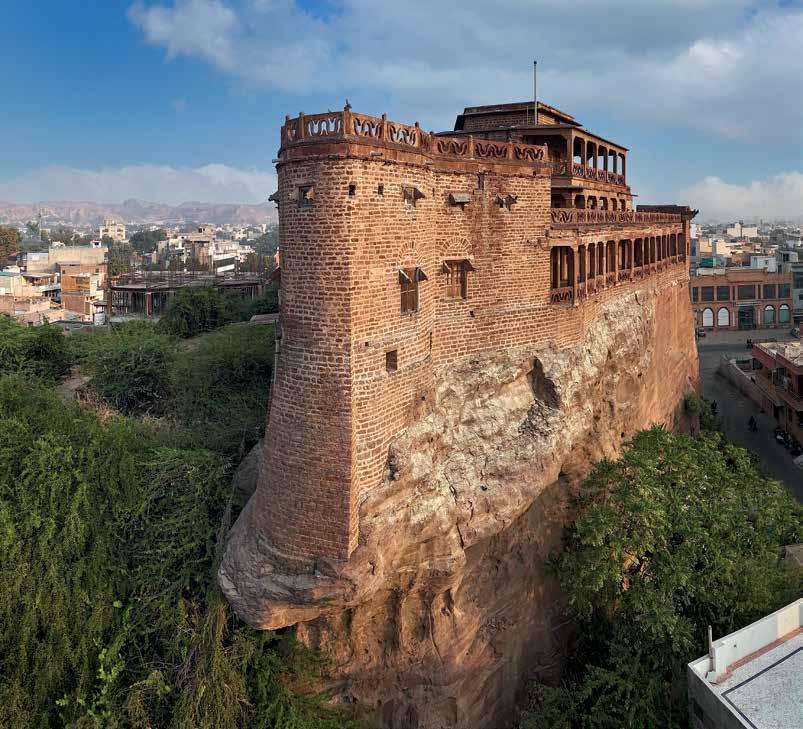
FACING PAGE In 1887, when the Jodhpur contingent led by Sir P attended the Golden Jubilee celebrations of Queen Victoria, it was the first time that they saw the sea and did their maiden voyage on a ship. On his return, Sir P commissioned the making of a ship on sheer rock.
A Faux Pas becomes Fashion
Sir P represented Jodhpur at Queen Victoria’s Golden Jubilee celebrations in England in June 1887. His luggage had drowned with his ship en route so his wardrobe was ordered post-haste with a Saville Row tailor. Sir P’s instructions to the tailor resulted in trousers that were tight below the knee (like the Indian churidar) and flared above.
Designed for comfort of movement and close contact with the horse while riding, this unique attire was seen as an equestrian fashion statement and soon became the rage with the elite aristocracy, becoming famous as ‘Jodhpurs’.
At the formal jubilee function, as the guests walked up to Queen Victoria offering her gifts, Sir P, having lost all of his belongings, was empty handed. As he stood in front of her, he took off his sarpech (aigrette) saying, “I offer you my head should you ever need it.” At the formal ball that evening, the Queen walked up to Sir P and showing him the sarpech pinned to her blouse said, “I have worn your head on my heart!”
Education
In 1886, Sir Pratap established the department of education, emphasising on scientific and technical knowledge. The entire schooling system was upgraded. In 1893, the Jaswant College was established and upgraded to a degree college in 1896. His greatest initiative, the Rajput High School, was inaugurated in Chopasni, Jodhpur, by the Viceroy, Lord Hardinge in 1914.
In the centenary year of his passing in 2022, the Mehrangarh Museum Trust dedicated a calendar to him with a foreword by Bapji:
“The legendary Sir Pratap Singh of Jodhpur was a multitalented, multi-faceted man of many parts. His invaluable contribution to the development of Marwar-Jodhpur will never be forgotten. Soldier, Statesman, Sportsman, Sir Pratap led Marwar into the twentieth century and single-handedly put Jodhpur on the world map.”
Ship House
In 1887, when the Jodhpur contingent, led by Sir P, went for the Golden Jubilee celebrations of Queen Victoria, it was the first time that they saw the sea and did their maiden voyage on a ship. On his return, Sir P commissioned the making of a ship from sheer rock. The first Indian royal to make several overseas visits both during war and peace, Sir P sought to recreate his sea voyages at home. He built a three-storeyed ‘ship-house’, designed by JJ Ovarin and supervised by Holme, on a hillock near Nagaur Gate in Jodhpur, complete with halls, cabins, galleys and other nautical details, along with stables below and two large polo grounds to the south. Now 126 years old and owned by Bapji, the heritage structure is slated to become a museum of photographs and artefacts, with a view to attract tourists and thus sustain itself.
From the sketchbook of Raghavendra Rathore
Bapji's English Summer
Constant use had not worn ragged the fabric of their friendship.
— Dorothy Parker
he hot 'Loo' of the great Thar Desert would soon turn to the cold mistral winds of England for the eight-year-old Gajsingh, who was dislodged from the cushy confines of a pampered palace life to an alien environment of a usual English home. In hindsight, this was perhaps the wisest and certainly the boldest decision which his mother Krishna Kumari took to protect him from palace intrigues and shenanigans, to keep him grounded and away from the hukum culture (subservience),
It was her brother Meghraj ji Bava who encouraged her to send Bapji away, as he was already at Oxford and made arrangements with the Scott Family to board and lodge the young Bapji. After a few initial hiccups, Bapji soon adapted quite well and attended Cothill House, a prep school in Oxfordshire, and then went on to Eton College and later Christ Church College, Oxford University, where he obtained a degree in Philosophy, Politics and Economics. His sojourn in England was made less unfamiliar
To keep Bapji in touch with his roots, his culture and traditions, Krishna Kumari ensured that he visited India every year for his (land of Marwar) would come in good stead in his later years.
Bapji reminisces, “At the age of eight, I started my schooling in England at Cothill House, and did my high school from Eton College. I remember everything being black, the buildings covered in soot, the taxis black, men in dark suits and black bowler hats, the smog and the early winter darkness, waving goodbye to my mother on the Cothill House school train leaving from Paddington Station. My time at Oxford was the highlight of my time in the UK. Much had changed, it was the swinging 1960s when there was a revolution of ‘flower power’ in colour and fashion and above all in music with the Beatles and the Rolling Stones and much more. From 1967–1970, Oxford was a vibrant and stimulating experience, which even more than academics
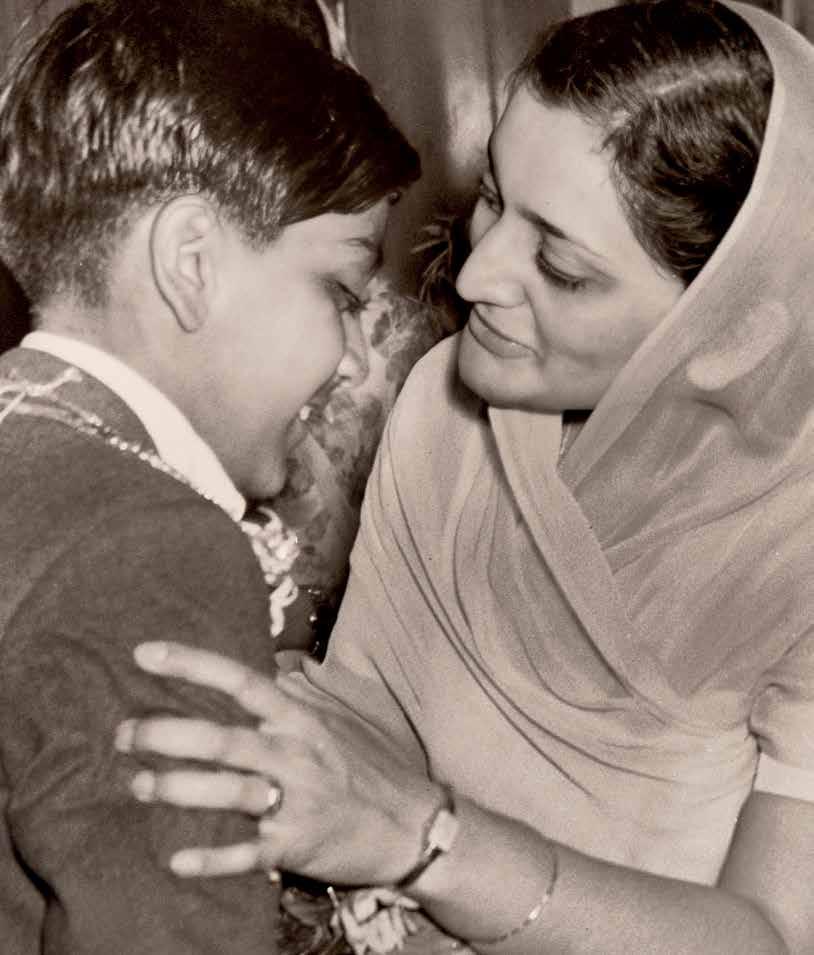
Bapji puts on a brave smile at the emotional send-off by his mother, Krishna Kumari. At the age of eight, he travelled across the proverbial 'seven seas' to England.
Playing the Maharaja!
Bapji's penthouse suite had a French Baccarat cut-glass fountain which had fallen into disrepair. With the help of Jean-Louis Dumas Hermès, it was made to work in the 1980s. He also brought fine leather artisans to share their craft with local regars (leather craftsmen). Having become the ubiquitous face of the Maharajas of India, Bapji is obliged, at times, to play that role, which he does sportingly.
PAGES 122-123, CLOCKWISE
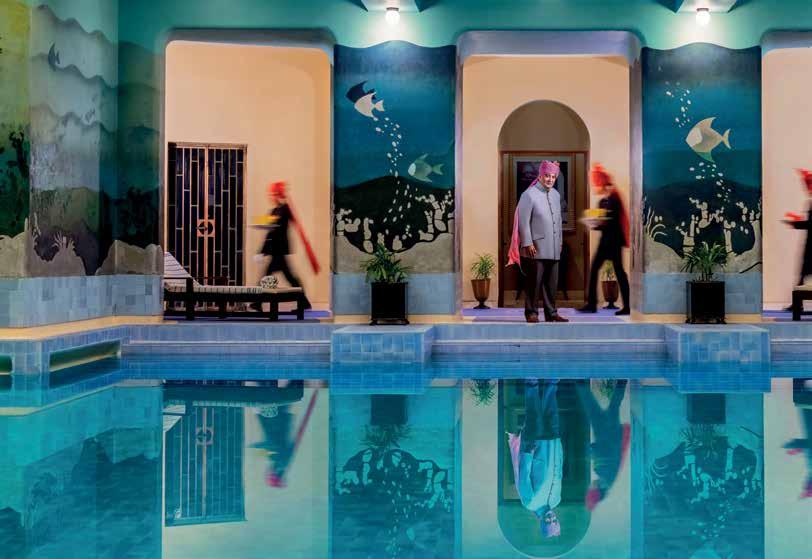
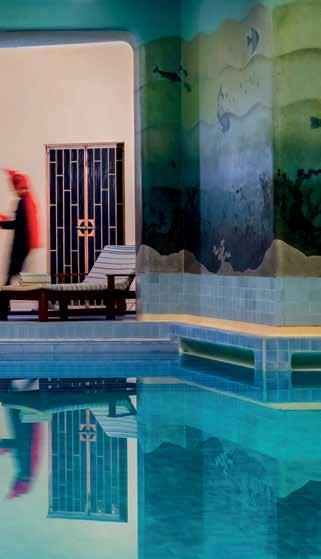
The cool, underground pool was made for the privacy of the maharanis, royal ladies of the court and their friends. It was painted with horoscope signs in the Art Deco style which was in vogue. Today, it serves as a backdrop, where Bapji arrives for a cool summer meal served by the elegant retainers of Taj Hotels.
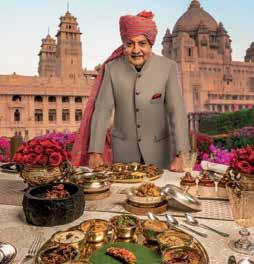
Bapji poses before a sumptuous thali of delicacies of the desert food of Marwar, for the renowned photographer Bandeep Singh for the cover of India Today magazine. But there is little of this that Bapji will actully consume. His favourite light lunch is gin and bananas!
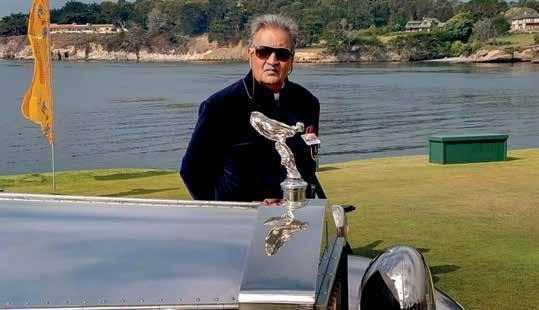
Bapji's favourite Rolls Royce, Phantom II, at Pebble Beach, USA. It won the Lord Montagu prize for best Britishmanufactured car.
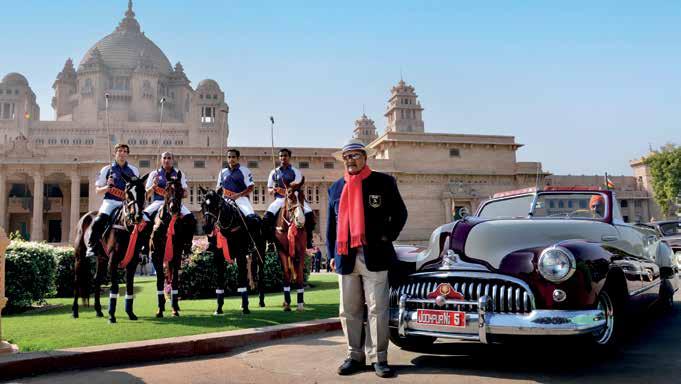
Bapji stands in front of Umaid Bhawan with his medieval and modern ‘horsepower’. His dozen vintage cars are now displayed in the garden museum of the palace.
Maharani Of Mettle
After my marriage, when Bapji presented me to his mother and sisters, he said, 'All that I am today, I owe to them.'
— Hemlata Rajye
Maharani Hemlata Rajye's long jump to Jodhpur is a rather chequered history, which should have begun in Poonch in Kashmir, but instead began in Dehradun, Uttarakhand. Fast forward today: Nagana or Nagnechiya Temple in Barmer is a smooth 50-kilometre drive from Jodhpur. The deity, a divine form of Shakti, is the kuladevi (family goddess) of the Rathore clan, brought around 1300 CE from Kannauj in Uttar Pradesh by Rao Dhuhad, the grandson of Rao Sheoji, the founder of the Rathore dynasty. The Rathore rulers have had great reverence for their kuladevi, which has translated into a huge following not only among their own clan, but also amongst other faiths and castes as well. This was evident from the thronging, but disciplined crowds on the auspicious day of Baisakhi (a spring festival) when its mandapa for a havan (fire rites), was being consecrated.
When we arrived in the blazing summer heat of the Marwar plains to participate in the havan adjacent to the white marble Nagana Temple built collectively by the reverent people of the region, our car stopped short of the hills. Colourful village folk forked into two red carpeted files—one for the ladies and the other for the men. The marble of the temple complex that touched the soles of our feet was cold, even as the sun beat down upon it. Iqbal ji, who had donated the marble from the Makrana mines, explained how some rare lots which are mined have more porosity, which in turn keeps the marble cool. Up a wide flight, we saw a marble mandapa resounding with Vedic chants as several rings of priests from all over Marwar had joined in for the ceremony. Surrounded by smoke and a heady fragrance of samagri, the food of the gods, offered respectfully after each chant, the maharaja and maharani sat composed, obediently performing the rituals.
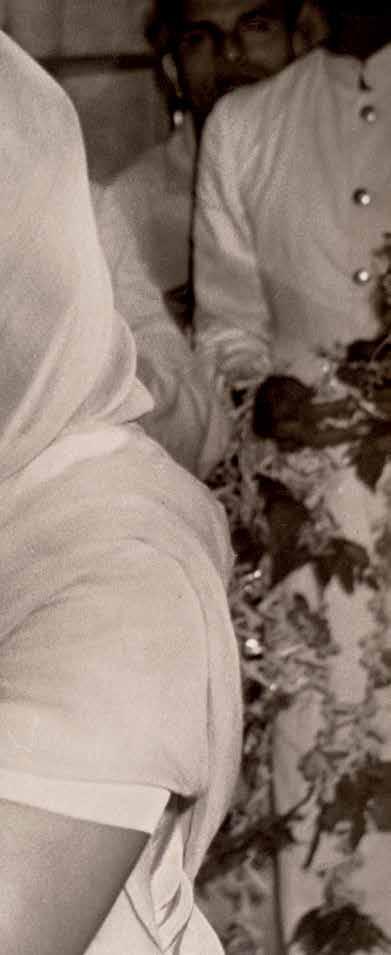
Sitting demurely, her head covered with a shaded magenta-orange odhni (scarf) was Maharani Sahiba Hemlata Rajye. When the fire rites ended, she rose with her husband who exited this human labyrinth with folded hands, while she bent low to touch the
OVERLEAF Six flights of steps made from a porous variety of Makrana marble, which remains cool under the blazing sun, lead to the Nagnechiya Temple. The pavilion on the left is used for sacred fire rites to bring peace and prosperity to the people and the planet.
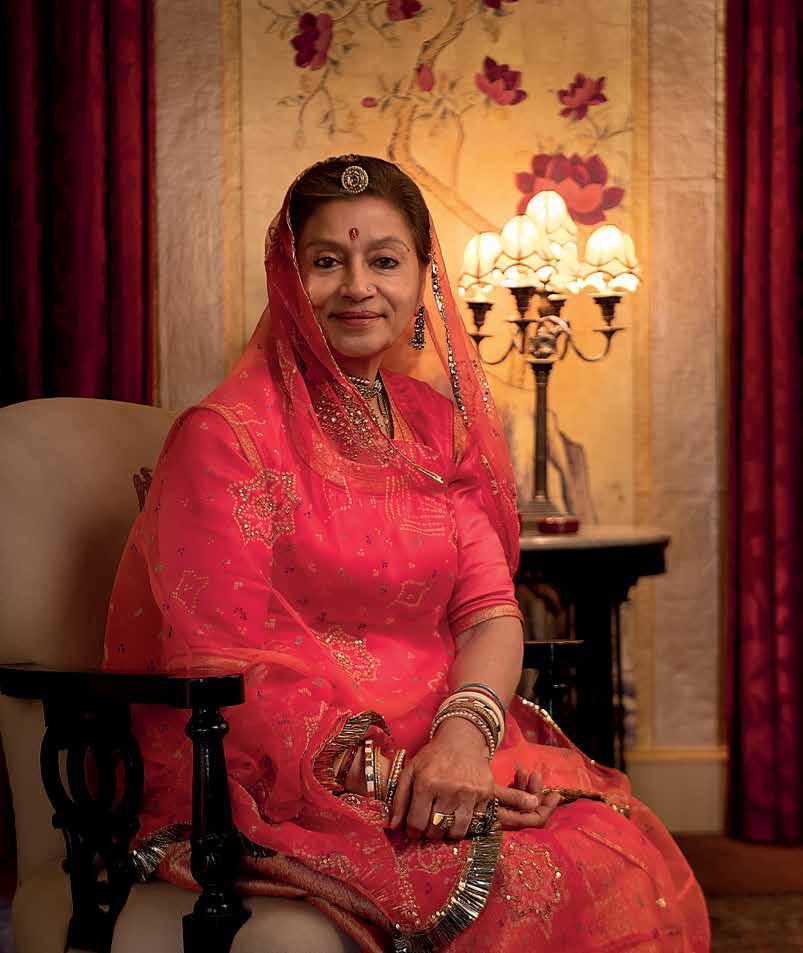
FACING PAGE Maharani Hemlata Rajye sits elegantly for a formal portrait.
Strike Three: The sport of modern polo in India was made popular by Sir Pratap Singh of Jodhpur, the younger brother of Maharaja Jaswant Singh II. The Jodhpur polo team, led first by him, dominated the sport from the 1880s through to the 1920s, when he himself witnessed Jodhpur beat Patiala in what is regarded as the ‘greatest match’. Maharaja Gajsingh II encouraged his son and heir Shivraj Singh to pursue the sport. Shivraj, born on 30 September 1975, did his schooling at Mayo College, Ajmer, then went on to Eton College in England for his graduation and played polo for the college team. A Master’s degree in Business Administration at Brookes Oxford University, England, followed. After working first with Schroeders Bank in Geneva and then London, he worked at Jardine Matheson in Hong Kong before returning home and immersing himself in running the family’s hotel business at Jodhpur as well as training the Jodhpur polo team.
Of Premonitions and Such
Premonitions can be potent. Maharani Krishna Kumari had a foreboding on the night of 26 January 1952. She recalls getting up early the next morning with a sense of trepidation heightened by the deathly silence in the palace. She noticed her sisters-in-law, Violet and Paglu, sitting like statues in a corner of her room. Out of habit, she first walked to the large window to see if the Jodhpur flag had been hoisted on Umaid Bhawan. Not so, she noticed. She turned to her sisters-in-law who had silently crept up behind her at the window, their eyes brimming with tears. Instinctively, she asked if Maharaja Hanwant Singh had returned from his trip the night before. Unable to carry the charade any further, both of them broke down, telling her that the maharaja had perished when his plane crashed and that his body had been brought to the palace the previous night.
Krishna Kumari went ashen as she slumped and froze. Time stood still for her. Futile attempts were made to make her cry, to pierce her emotional numbness. She broke down only when Rajdadisa Badan Kanwar hugged her, lamenting the loss of her son.
Fast forward to 2003. Her grandson and heir apparent, Shivraj Singh, an avid polo player, had a mishap while playing
polo, so the doctors and family advised him to avoid playing the game for some time. The brashness of youth brushed aside these pleas. Krishna Kumari realised Shivraj was upset at being stopped from playing and believed that she, too, supported the family's decision—prompting him to stop visiting her. When she called for him, he spoke with deep emotion, expressing his unwavering faith that the goddess Ma Chamunda would protect him. She then encouraged Shivraj to go and play, assuring him that she too would pray to Ma Chamunda for his protection and long life.
On 18 February 2005, during the Birla Cup polo match at the Rambagh Polo Grounds in Jaipur, just as Shivraj was taking a backhand shot in front of the goal, an opposing team’s horse collided broad side with his, knocking his horse down violently. A deathly silence followed as Shivraj lay colourless and rigid on the ground while his parents, who were in Jodhpur, were oblivious of this scene. He suffered severe head injuries and lay comatose. He was twenty-nine, almost the same age as his grandfather Hanwant Singh when he died in the plane crash.
Was the saying, “Once an accident, twice a coincidence, third time a pattern”, proving to be true or did Baba Chiriyanath ji’s curse continue to haunt the Royal House of Jodhpur? The prophecy was trying to eke out its last malignancy, but the goodwill of the Ranbanka Rathores stood in the way to stall it. Curses and blessings, myths both good and bad, gather moss as time rolls on, but an active volition with destiny can also help bend the burden of such beliefs.
It is said that life’s darkest moments often reveal our inner light. It was so after Shivraj’s unfortunate fall. Though almost all hope was lost in getting Shivraj back from the brink, both Hemlata and Bapji left no stone unturned in reviving their son to give him a second life. It was a combination of prompt medical treatment in India and overseas, orisons to their deity, fervent prayers from well-wishers, and most of all, never giving up on their deep faith.
Second Knock from Heaven
Tucked away in the foothills of the Himalayas, is a small town in the Pithoragarh district of Uttarakhand, called Askot (also called Askote), famous for its Musk Deer Sanctuary. In the local dialect, the town was initially called Assi-kot or eighty forts.
Located at a height of 3629 feet, covering an area of 1036 square kilometres and at the Gauri Ganga-Kali River divide, Askot is blessed with magnificent beauty, awesome waterfalls and places of pilgrimage.
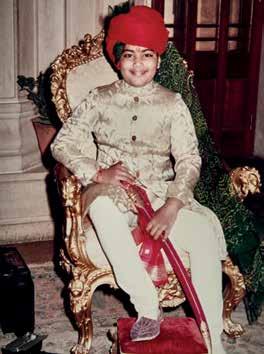
Holding the ceremonial sword, young Shivraj sits confidently on the ornate royal seat.
Shivraj in formal attire at a ceremonial function fundraiser. His sarpech is adorned by a portrait of his ancestor Maharaja Jaswant Singh II.
JODHPUR ALBUM
CLOCKWISE FROM TOP LEFT
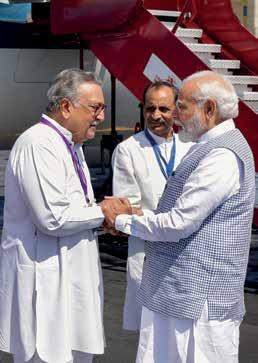
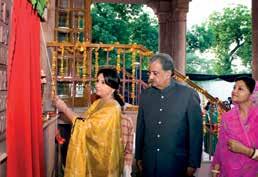
1. Bapji receives Prime Minister Narendra Modi.
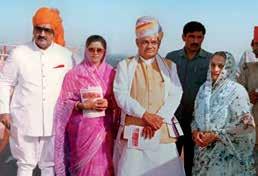
2. Krishna Kumari, Bapji and Hemlata with Prime Minister Vajpayee.
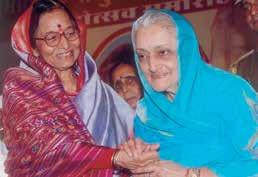
3. Krishna Kumari with Pratibha Patil, Governor of Rajasthan, later President of India.
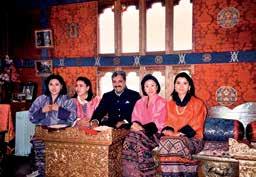
4. Bapji with the four Queen sisters of Bhutan.
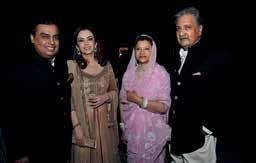
5. The Jodhpur Royals with Mukesh and Nita Ambani.
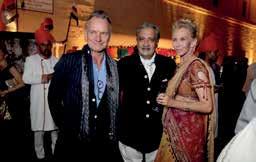
6. Sting and Trudie Styler with Bapji.
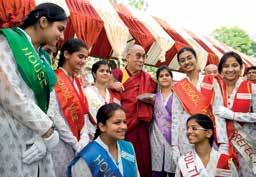
7. The Dalai Lama brings smiles to the students of Krishna Kumari Girls' Higher Secondary School, Jodhpur.
JODHPUR ALBUM ALBUM
1.
2.
3.
4.
5.
6.
7.
8.
CLOCKWISE FROM TOP LEFT
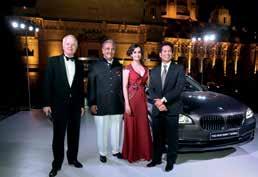
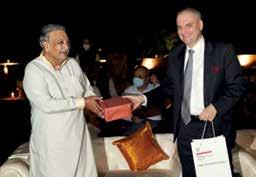
Bapji with the chairman of BMW, Dia Mirza and Sachin Tendulkar.
Sharmila Tagore, the Khalida Begum of Pataudi, lays the foundation stone of the girls' hostel as the Jodhpur Royals look on.
Bapji with the Polish Ambassador at the event commemorating the restoration of the Norblin murals.
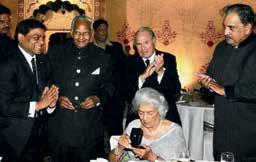
Maharaja Bhawani Singh of Jaipur, HH The Aga Khan, Bapji with Rajmata Gayatri Devi of Jaipur.
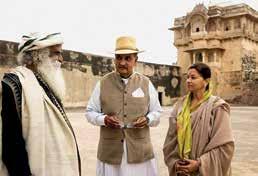
Sadguru with the Jodhpur Royals at Nagaur Fort.
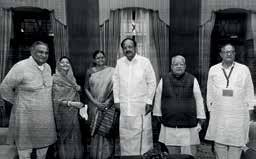
Bapji and Hemlata with Venkaiah Naidu, Vice President of India along with the Governor of Rajasthan.
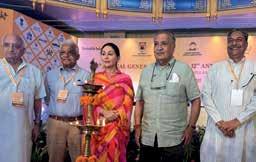
Bapji with Diya Kumari, Deputy Chief Minister of Rajasthan, at the Indian Heritage Hotels Association meeting.
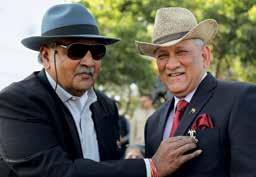
Bapji with General Bipin Rawat, former Chief of Army Staff.
NOTES
A FATEFUL DAY
1. The East India Company was a group of London merchants who petitioned Queen Elizabeth I to grant them a royal charter to trade. Though they had their own army, huge influence and power, the directions came from England.
ROYAL CHRONICLES
1. Gajsingh II was his official name, but the infant was called ‘Bapji’, or father, in the local Marwari dialect.
ANCESTRAL INFLUENCES
1. Section 144 of the Code of Criminal Procedure is a preventive measure that empowers a magistrate to issue orders in urgent situations to prevent potential disturbances or dangers to public life and property. It essentially prohibits gatherings of people, restricts movement and imposes other necessary restrictions to maintain public order.
RESILIENT RATHORNIS
1. Uva was made President of the State Council which was then published in the official gazette. She conducted state business from behind the purdah.
INHERITING WHITE ELEPHANTS
1. The original quote is “The child is father of the man” from the poem, ‘My Heart Leaps Up’ by William Wordsworth.
ELEPHANT OF A MAN
1. Under Article 291, of the Constitution of India, 1950, the rulers surrendered their sovereignty and as a quid pro quo, they were granted handsome privy purses and other privileges. This was abolished by Prime Minister Indira Gandhi through the 26th Amendment to the Constitution of India in 1971.
2. Bhagirath was a legendary king from ancient Indian texts who is believed to have brought the sacred River Ganges (Ganga) down to Earth.
THE EVER-ELUSIVE ELIXIR
1. Rajendra Singh or the ‘Waterman of India’ is a water conservationist and environmentalist from Alwar, Rajasthan. He won the Magsaysay Award in 2001. His NGO, Tarun Bharat Sangh (TBS), has helped build 8,600 johads, or reservoirs, and other water conservation structures.
SUPPORTING STALWARTS
1. Bat droppings, also known as guano, are primarily used as a natural fertiliser in agriculture.
GLOSSARY
aapnayat: belonging, owning up
acharya: priest
achkan: knee-length coat, buttoned in the front
apsara: celestial nymph
aarti: Hindu religious ceremony, usually with a devotional song, wherein a lamp with a lit wick is waved in a circular motion before a deity
arthi: bier
asura: demon
ayurvridhi yagya: ritualistic prayer for longevity
Baisakhi: Spring festival
band-baaja: a celebratory procession with an Arab band
bandhgala: jacket or coat with a high, closed collar and button-down front
bandwala look: dressed as a musician playing at a wedding
baraat: celebratory wedding procession that escorts the groom, who is traditionally on horseback, to the site of the wedding
bawdi: stepwell
bera: well
bhaipa: royal brotherhood
bhua: aunt, specifically father’s sister
chanwar: fly whisk
chhatra: parasol
chhatrra chhaya: protective umbrella
chhatri: literally umbrella, canopied cenotaph,
chinkara: Indian gazelle
churidar: Indian trousers gathered/tightened below the knee
dadisa: grandmother
dadosa: grandfather
devar-jeths: younger and older brothers-in-law
devi/Devi: goddess
divan: prime minister
dhani: hamlet
dharna: protest
dhuni: worship at a sacred cleft in the ground
gaddi: throne
gaj: elephant
gulab jamuns: Indian sweets
guano: bat droppings
guruansha: part of the guru’s spiritual influence
hakumat: district
havan: fire rites
hukum: literally ‘your order’, used as ‘yes my lord’.
ilaqa: state
jagir: revenue collecting district
jhalars: square-shaped stepwells
johads: small earthen dams
jyotish: traditional Indian system of astrology, translating to ‘science of light’
kakosa: uncle
karmabhoomi: field of action, used as a synonym for ‘land of birth’
kiraniya: ceremonial staff
kula: clan
kuladevi: family goddess
kund: reservoir
kurab: honour, respect
laddu: round Indian sweet
lehenga: gathered skirt
Ma: mother, or goddess
Ma Hukum: respectful way of addressing great grandmother
Maharani Sahiba: respectful way of addressing or alluding to the maharani
mai-baap: literally mother and father, benevolent parents; used to denote the ‘mother-father’ relationship with the ruler
majisa: widowed queen
mamosa: uncle, specifically mother’s brother
manava: descendants of Manu, the ‘original man’ in Hinduism
mandir: temple
maru: desert
manushya: literally ‘of Manu’, man
marusthal: land of death
Marwar ri dharti: ‘land of Marwar’
matri shakti: feminine power
moksha: liberation from the cycle of life and death
morchhal: ceremonial staff
murid: student
murshid: teacher
nazar: harmful influence of an envious look; offering from a nobleman to his king
odhni: scarf
pachranga: five-coloured
padyatra: walk or journey by foot
palarpani: purest form of natural water
palki: palanquin
pancha bhuta: five elements in Hinduism
panja: palm, palm-shaped
phera: ceremonial walk around the fire in a wedding ceremony
pir: wise old man in Islam and Sufism
pista ka halwa: Indian sweet with pistachios
privy purses: compensatory payment made to the rulers of the erstwhile princely states to integrate with India in 1947, thereby ending their ruling rights
pujari: priest
raga: melody
raj gaddi: throne
rajdadisa: grandmother
Rajmata: queen mother
Ranbanka: Rajasthani word that translates into ‘crazy for battle’. An honour bestowed upon the courageous Rathore Rajput fighting clan of Marwar-Jodhpur
ranbhoomi: battleground
ranisar: waterbody
risala: cavalry
safa: turban
samadhi: a shrine commemorating the deceased
samagri: sacred fire offerings, food of the gods
samskriti: refinement, primarily of a natural intelligence and capacity to its fullest growing potential
sanskars: values inherited from ancestors
sant: saint
sardar: Sikh man
sarpech: aigrette/traditional turban ornament
shafa khana: dispensary
shakha: branch
seva: service
tapasya: meditation
tazeem: honour, respect or veneration
tehsil: administrative area
Thakur: member of the Kshatriya caste traditionally associated as warriors and nobility
thamba: ceremonial staff
thikana: large estate granted to a Rajput nobleman to administer on behalf of a larger princely state
tonga: hand-pulled cart
trishul: trident
Ustad: master, expert, or teacher
vanprastha: literally ‘retiring to the forest’, which according to Hindu philosophy is the third stage in a person’s life
vansha: lineage
wad: fence
Yuvraj: title of eldest son of a maharaja, signifying his status as heir apparent
Zamindari Bank: financial institution wielding immense control over the flow of capital, over borrowers and depositors
An elephant celebrating the Terai monsoon. Photograph by Rajesh Bedi, simulated by Naveen Sharma with Bapji, Maharaja Gajsingh II.
First published in India in 2026 by Mapin Publishing Pvt. Ltd
706 Kaivanna, Panchvati, Ellisbridge Ahmedabad 380006 INDIA
All rights reserved under international copyright conventions. No part of this book may be reproduced or transmitted in any form or by any means, electronic or mechanical, including photocopy, recording or any other information storage and retrieval system, without prior permission in writing from the publisher.
The moral rights of Yogi Vaid and Aman Nath as authors of this work are asserted.
ISBN: 978-93-94501-28-7
Creative Director: Aman Nath
Copyediting: Shernaz Tyebjee
Proofreading: Moumita Mukherjee / Mapin
Editorial Computer artworks: Naveen Sharma Printed in India
HERITAGE, CULTURE
Bapji
The King Who Would be Man
Yogi Vaid and Aman Nath
186 pages with four gatefolds, 233 illustrations 11 x 13″ (279.5 x 330 mm), HC
ISBN: 978-93-94501-28-7
₹4500 | $75 | £55
Spring 2026 • World rights
Yogi Vaid
Born in a progressive Arya Samaj family, Yogi Vaid is an alumnus of Modern School, Shri Ram College of Commerce and the Faculty of Management Studies, all in New Delhi. He then went on to work in his family’s seventy-year-old business that exports equestrian goods, and continues doing so today.Sensitive and introspective, Yogi finds inspiration in conversations, inanimate things and dreams, often penning these into spontaneous poetry or prose.The writer in him naturally transitioned into and found expression in A Remarkable Friendship, a book he wrote for Aman Nath, his friend of sixty-eight years.For this he extended an invitation to Bapji who also wrote for that book, progressing almost organically into this tome.
Aman Nath
Delhi-born Aman Nath did his Master’s degree in History at St Stephen’s College, Delhi. After working in advertising, he revitalized over thirty heritage buildings. He sees the continuity of ‘time’ in restored properties, now run as the Neemrana Hotels, which he founded in 1986. He has authored some twenty diverse books, including the award-winning Jaipur – The Last Destination (1995); Dome over India for India’s Presidents; Horizons: The Tata–India Century (2004); The Monumental India Book (2007 & 2011), among others.
A relentless optimist and an inveterate traveller, walking 400 km to Mt. Kailash and taking a trip to sub-Antarctica in an icebreaker, Aman finds his serendipity in the discovery of new people. For his contribution to the heritage tourism movement in India, he has received numerous accolades including Lifetime Achievement Awards from the Government of India and Condé Nast Traveller, an Aga Khan Award nomination for Neemrana, and was made the Chevalier of the Légion d’honneur by the French President.
With a multifaceted career in advertising, writing, architectural restoration, and as a hotelier, he is considered to be the first to recognise the immense tourism potential in restoring unlisted ruins of India.
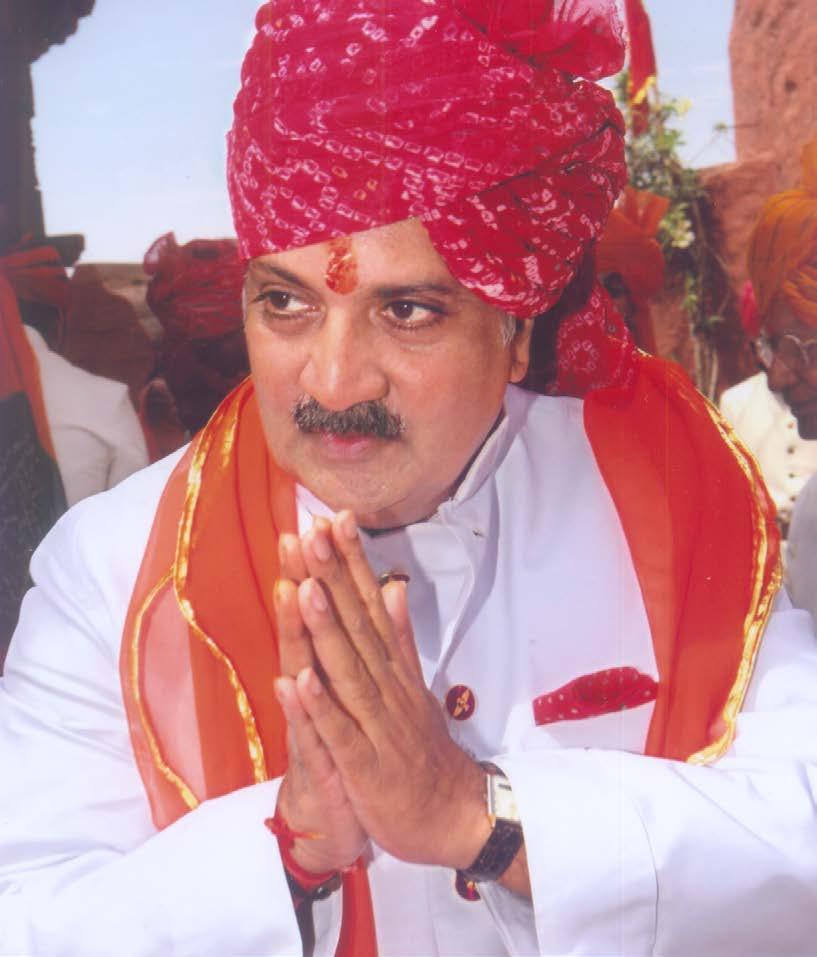
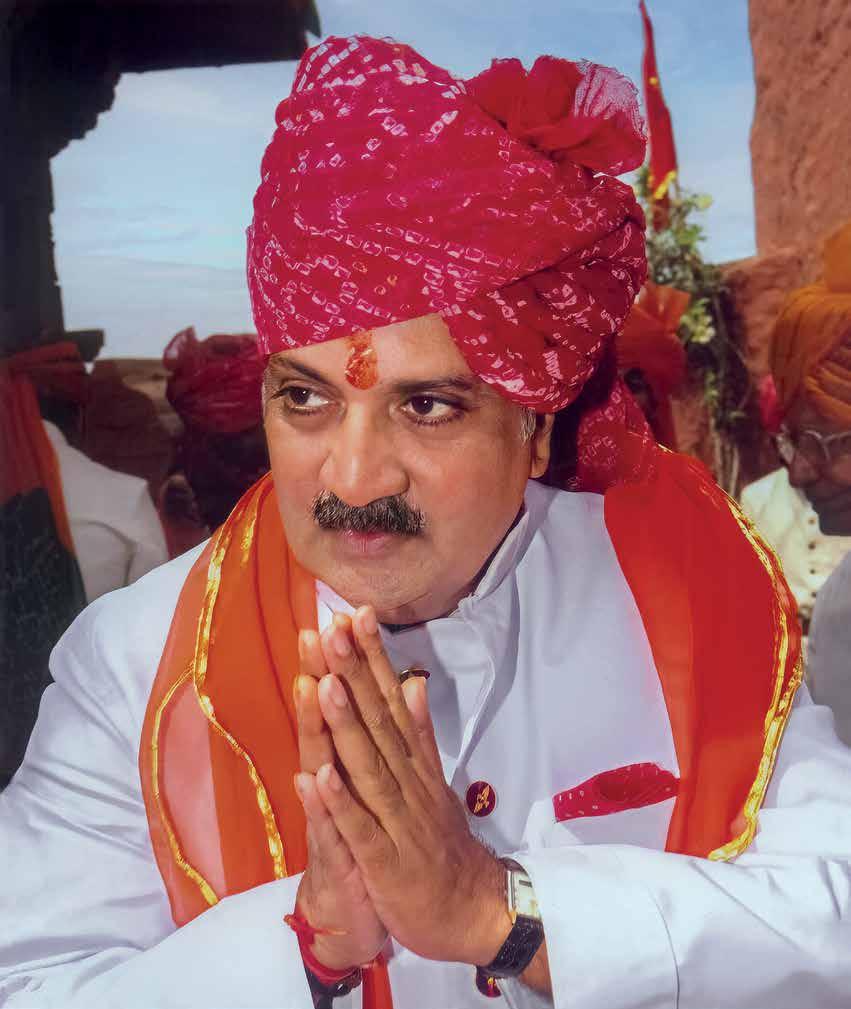
Back cover : With folded hands, Bapji acknowledges the love and affection of his people. In Hinduism it is believed that if a life is tempered with restraint, and kingship with humility, even God walks the earth not as a ruler – but as a servant of truth.