Tyeb Mehta
Tyeb Mehta
Tyeb Mehta
Tyeb Mehta
Bearing Weight with the lightness of being
Published on the occasion of the exhibition
Tyeb Mehta: Bearing Weight (with the lightness of being)
Curated by Roobina Karode
Presented by the Kiran Nadar Museum of Art in collaboration with the Tyeb Mehta Foundation a nd Sa ff ronart Foundation 4 February–27 July 2026


First published in 2026 by Kiran Nadar Museum of Art 145, DLF South Court Mall, Saket New Delhi 110017, India
T: +91 11 4916 0000
www knma org and
Mapin Publishing Pvt. Ltd.
706 Kaivanna, Panchvati, Ellisbridge Ahmedabad 380006, India
T: +91 79 4022 8228
E: mapin@mapinpub com www mapinpub com
© 2026 Kiran Nadar Museum of Art
Prefaces and essays © their respective authors
Gieve Patel ’s essay © Avaan Patel Artworks © Tyeb Mehta Foundation, except those listed
All other original text © Kiran Nadar Museum of Art
Photographs © their respective photographers
All rights reserved No part of this publication may be reproduced, stored in a retrieval system, or transmitted in any form or by any means, electronic, mechanical, photocopying, recording, or otherwise, without prior written permission from the publishers and the respective copyright holders
Moral rights of authors are asserted
KNMA ISBN: 978-81-98382-14-6
Mapin ISBN: 978-93-94501-19-5
Editors
Roobina Karode and Srinivas Aditya Mopidevi
Project Editors
Parth P. Mehrotra, Ranjana Dave and Agastaya Thapa Designer
Sreya Saraswatula
Editorial Assistants
Aditi Ghildiyal and Pratishtha Chugh
Copy Editors
Shreya Chakravertty and Priyanka Sarkar
Translator
Priyanka Sarkar
Proofreaders
Padmini Smetacek and Priyanka Sarkar
Photography
Jeetin Sharma and Ashish Dhir
Production
Mapin Design Studio
Printed and bound in India
Acknowledgements
The Kiran Nadar Museum of Art gratefully acknowledges the lenders to the exhibition:
Chhatrapati Shivaji Maharaj Vastu Sangrahalaya; Jehangir Nicholson Art Foundation; Tata Institute of Fundamental Research; Tyeb Mehta Foundation; Sa ff ronart Foundation; National Gallery of Modern Art; Alkazi Collection of Art; Bernhard Steinruecke; Nitin Bhayana; Vadehra family; TAPI collection; Darashaw and Company; Khorshed Bharucha; ACG Worldwide; Dabriwala family; Sonia Ballaney; and other private collectors.
The Museum extends its sincere thanks to the Tyeb Mehta Foundation—Trustees Sakina Mehta, Yusuf Mehta, Himani Mehta Dehlvi, Vaseem Ahmed Dehlvi, and the late Fatima Mehta—and Jesal Thacker for their support.
The Museum also acknowledges the support of the Sa ff ronart Foundation and its representatives, Minal Vazirani, Dinesh Vazirani, and Punya Nagpal.
The curators and editors have drawn gratefully on the scholarship of Nancy Adajania, the late Ebrahim Alkazi, the late Dilip Chitre, Yashodhara Dalmia, the late Ramchandra Gandhi, Ranjit Hoskote, Geeta Kapur, Prabodh Parikh, Roshan Shahani, and Nikki Ty-Tomkins Seth.
Captions
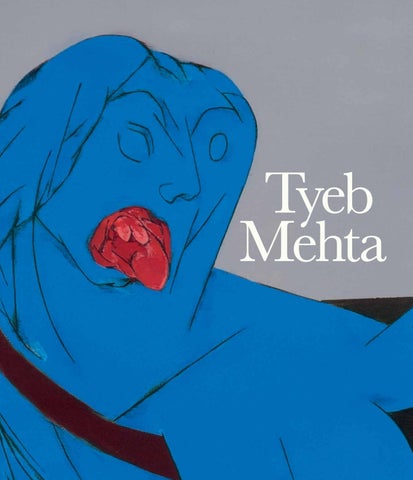
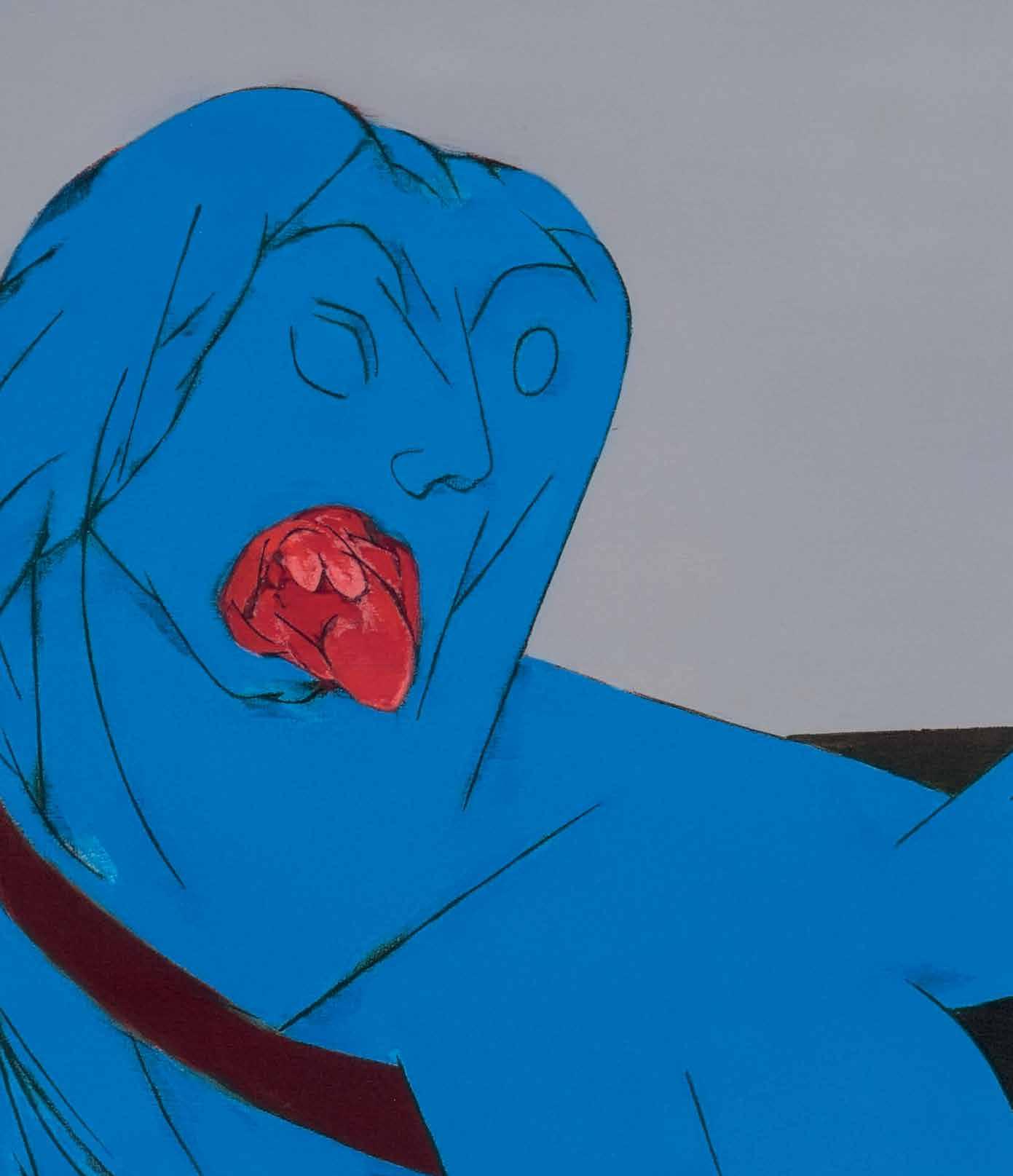
Cover spread: Kali–II (detail)
Oil on canvas, 1989
Collection: Kiran Nadar Museum of Art
© Tyeb Mehta Foundation
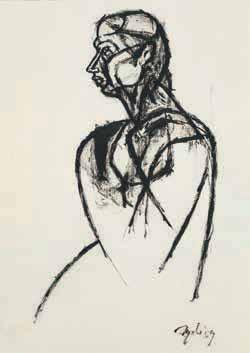
Page 5: Sakina
Chinese ink on paper, 1959
Collection: Family of the artist
© Tyeb Mehta Foundation
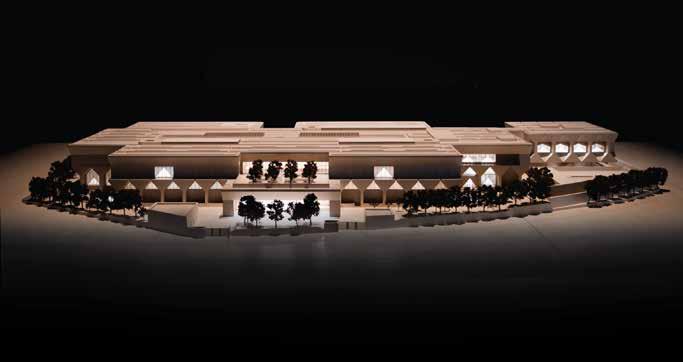
Page 240: Architectural model by Adjaye Associates for the Kiran Nadar Museum of Art at the 18th Biennale Architettura, Venice 2023
Photographer: Timothy Casten
© Kiran Nadar Museum of Art
Kiran Nadar would like to dedicate this publication to Sakina Mehta, the artist’s life partner and companion.
Contents
Forewords
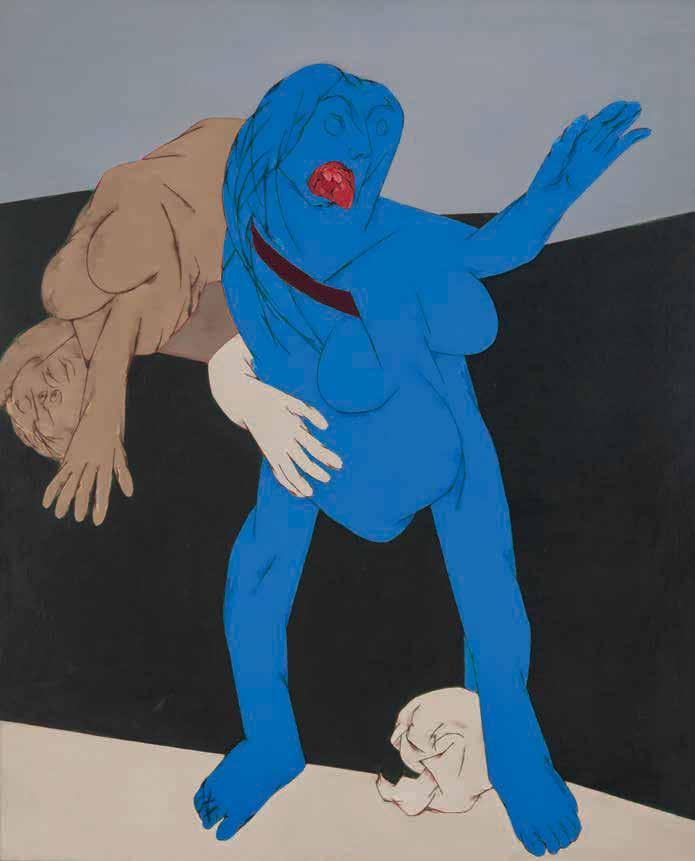
Kali–II, oil on canvas, 1989. Collection: Kiran Nadar Museum of Art
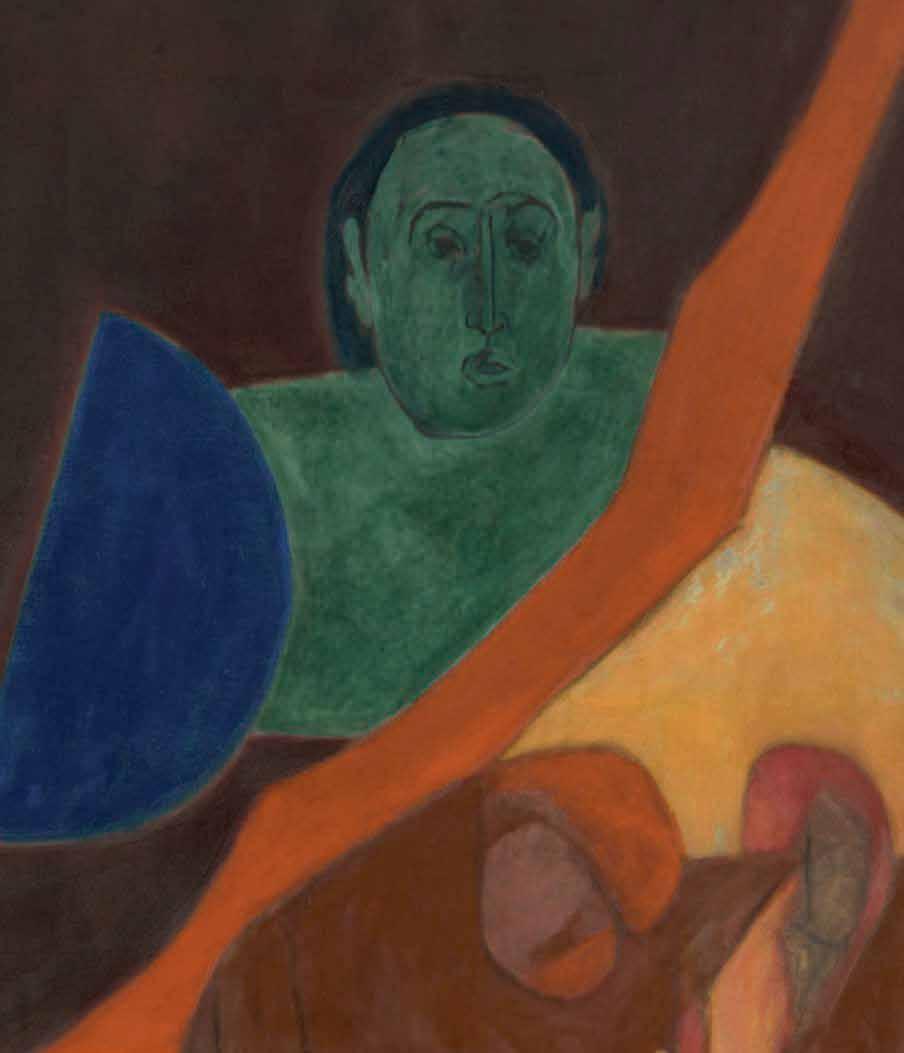
The Tyeb Mehta Foundation is delighted to collaborate with the Kiran Nadar Museum of Art and the Sa ff ronart Foundation to present this exhibition, which brings together significant works from Tyeb Mehta’s remarkable artistic journey. We are grateful for this opportunity to celebrate the life and work of one of the most influential and internationally recognized figures in modern Indian art.
Mehta occupies a singular place in the history of Indian art. At a time when Indian modernism was defining its identity, he forged a visual language that was unmistakably his own—radical in its economy, powerful in its emotional intensity, and universal in its resonance. Through decades of relentless inquiry, he used painting to confront some of the most profound questions of human existence: violence, su ffering, vulnerability, endurance and transcendence.
The evolution of Mehta’s pictorial language was neither linear nor predetermined. Stripping away narrative detail and descriptive excess, he arrived at a distilled visual vocabulary of line, colour, mass and tension. His paintings achieve an extraordinary balance between formal rigour and emotional depth, transforming personal and collective trauma into images with enduring power.
Deeply a ffected by the violence and upheaval he witnessed during his lifetime, Mehta’s work transcends specific events, speaking instead to universal themes of conflict, fragility, resilience and hope. Through his work, he expanded the possibilities of modern painting in India and contributed significantly to its global recognition.
This exhibition offers an opportunity to engage with the breadth of Mehta’s achievement and to reflect on the enduring relevance of an artistic vision that continues to challenge, move and inspire audiences around the world.
Yusuf Mehta Trustee
Tyeb Mehta Foundation
The Sa ff ronart Foundation, a non-profit arts organization, aims to provoke and facilitate critical thinking with initiatives at the intersection of art, culture and social change. It has supported public initiatives across education, disaster relief and aid for marginalized communities. The foundation is guided by the belief that artistic legacies remain vital when they are continually revisited, reexamined and shared with new audiences.
It is in this spirit that its engagement with Tyeb Mehta’s work took shape. Mehta remains one of India’s most significant modern artists, known for a visual language defined by restraint, intensity and formal precision, distilling complex human experience into images that continue to resonate across generations. His centenary offered an occasion not only for celebration, but for renewed engagement with the ideas and methods that underpin his practice.
In 2025, the Sa ff ronart Foundation partnered with the Tyeb Mehta Foundation for a year-long celebration of the artist’s centenary. The programme brought together exhibitions, conversations, publications and educational initiatives, developed in collaboration with the Kiran Nadar Museum of Art. These celebrations included public discussions, keynote lectures and the release of a limitededition portfolio, offering new perspectives while expanding access to Mehta’s work for scholarship and engagement.
This collaboration began in March 2025 with ‘Demystifying Tyeb’, a panel discussion. At ART MUMBAI 2025, a prelude to the retrospective of the artist’s work, Bearing Weight (with the lightness of being), was presented by the Sa ff ronart Foundation, the Tyeb Mehta Foundation and the Kiran Nadar Museum of Art. The centenary programme continued with an eponymous exhibition at the Kiran Nadar Museum of Art in New Delhi, the announcement of scholarships for students at the Sir J.J. School of Art, and the release of a limited-edition portfolio of thirteen prints. Together, these initiatives culminate in the present publication, extending a conversation around an artist whose work remains as exacting and resonant today as ever.
Dinesh and Minal Vazirani
Co-founders
Sa ff ronart Foundation
Curatorial Note Roobina Karode
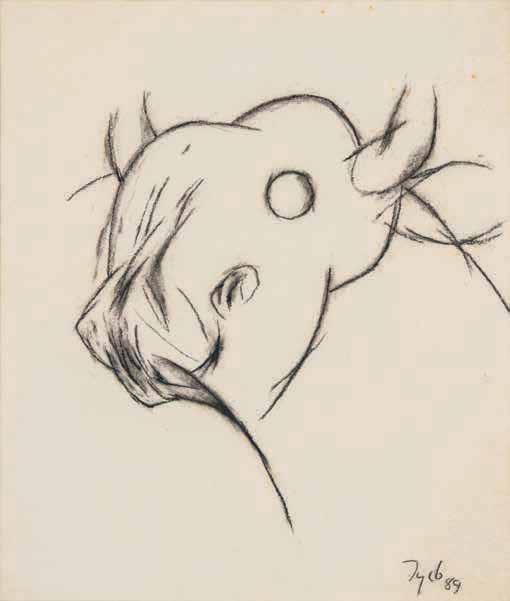
Bull, crayon on paper, 1989. Collection: Family of the artist
How can Tyeb Mehta help us speak to what is happening in the world today? What challenges did he overcome to create his artistic oeuvre?
The making of this exhibition has been a quiet introspection into the breadth and depth of Tyeb Mehta’s artistic legacy at a time of global unrest. Foregrounding humanist concerns in a modernist vein, Mehta embodied a distilled approach towards the painted image and the world around him. What new pathways open up when we return to his lifelong inquiry into humanity?
Mehta was exposed to film- and image-making early on, given his family’s involvement in running cinema houses. An initial interest in art direction in film took an unexpected turn in 1947, when he discovered the creative potential of painting as an expressive medium. As part of the first postcolonial generation of artists, with M.F. Husain, S.H. Raza, Krishen Khanna and the other members of the Progressive Artists’ Group, Mehta was immersed in seeking a foundational language that would reflect on art and its possibilities in a newly independent India.
Mehta witnessed and was impacted by the upheavals of his time: forced migration, Partition, and the daily asymmetries and abrasions of life in a fractured country. His paintings evolved to carry this weight with a lightness of being and deliberate restraint. His pictorial aesthetic transitioned from visibly frenzied brushwork, the application of thick layers of impasto, to a flat, restrained use of colour and form, producing sharp, angular frames and disorienting geometries. His peculiar configurations of the pictorial space placed his figures on a fragmented, destabilized ground, echoing a partitioned land. Never securely rooted, his protagonists precariously teetered over the edge. This loss of a stable ground made him invent a visual device in the form of a diagonal, which Mehta used to divide and conjoin symbolic fragments within a compositional field. His sinuous lines later appear more measured, coalescing into composite, condensed images.
In the presence of Mehta’s work, visitors encounter intense portrayals of anguished faces with gaping mouths, tautly held hand gestures (mudras) and mutilated body parts that evince violence, pain and endurance, but also a necessary resilience. His recurrent protagonists—bulls, rickshawpullers, birds and dhak-playing drummers—are compelling in their affective charge, as are his mythical and literary figures, such as Mahisasura, Kali and the Trojan women.
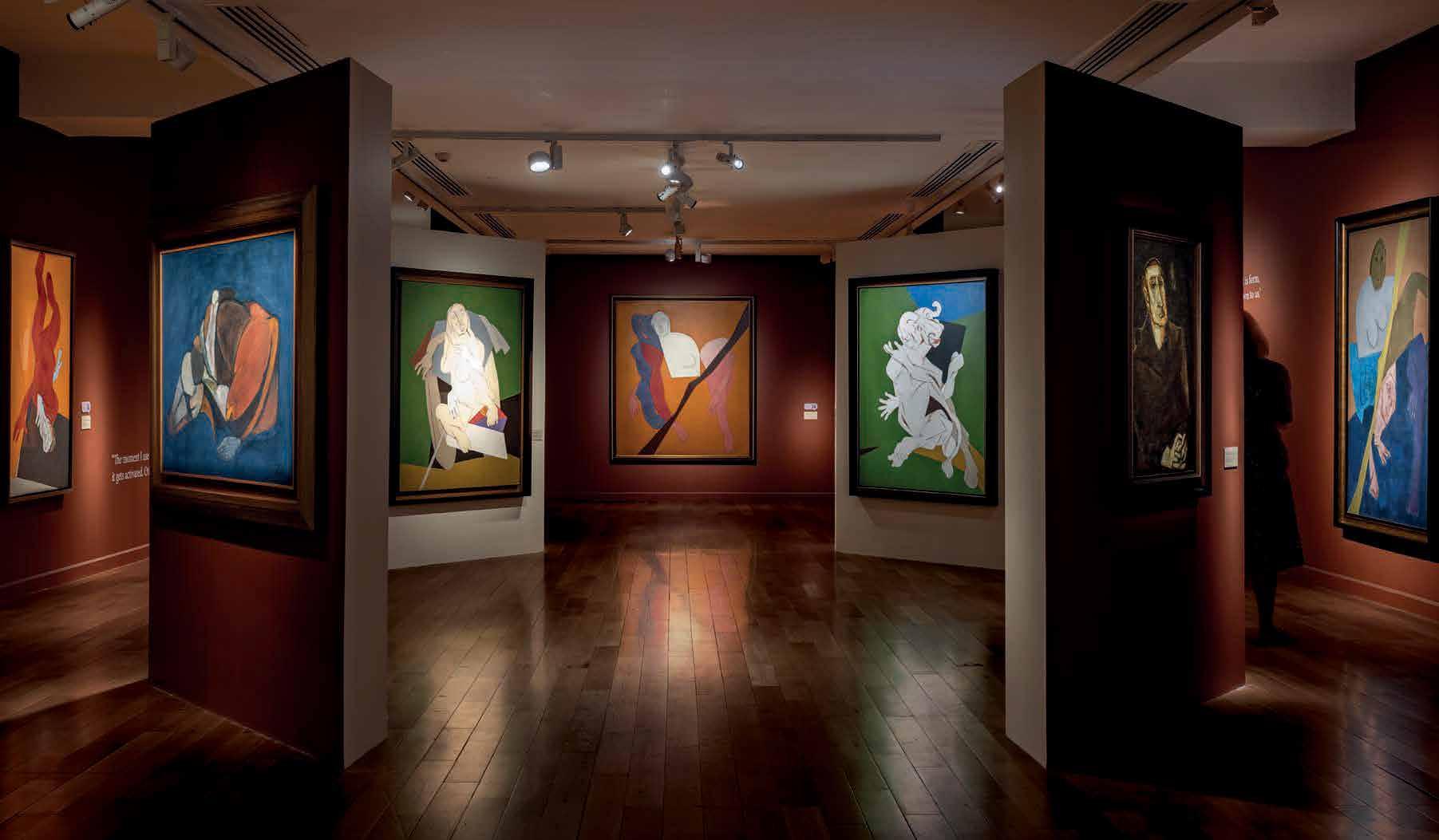
This retrospective brings together the largest-ever collection of Mehta’s works in an exhibition space, spanning decades of rarely displayed drawings, paintings, sculptures, photographs, archival material and the critically acclaimed experimental film Koodal (1970). To reintroduce Mehta in the frame of his expansive practice, the curatorial design of this exhibition drew on keywords emerging from it—terms like precarity, tactility, duality and gravity became responsive containers for works he created at very different points in his career. They also relay the conceptual ethos of recurring motifs in Mehta’s work: the trussed bull, the falling figure and Kali.
Across his practice, Mehta’s visual vocabulary embraced duality, to reflect on the paradoxical nature of reality. Exuding existential anxiety and bodily vulnerability, his quintessential figures remain trapped between mass and line, action and inaction, conjunction and disjuncture, hope and despair, life and death.
Curatorially, this undertaking has been a process of delving into the intricacies of Tyeb Mehta’s art and life, beyond the existing narratives around his practice. In his centennial year, this retrospective is a humble tribute to Mehta, and his practice of nearly six decades, which continues to be profoundly relevant to the unsettling realities of our time.
Tyeb Mehta: Bearing Weight (with the lightness of being) reveals the exchanges between art and life, and their intricate, continuous entanglement.
The Embodied Image
Roobina Karode
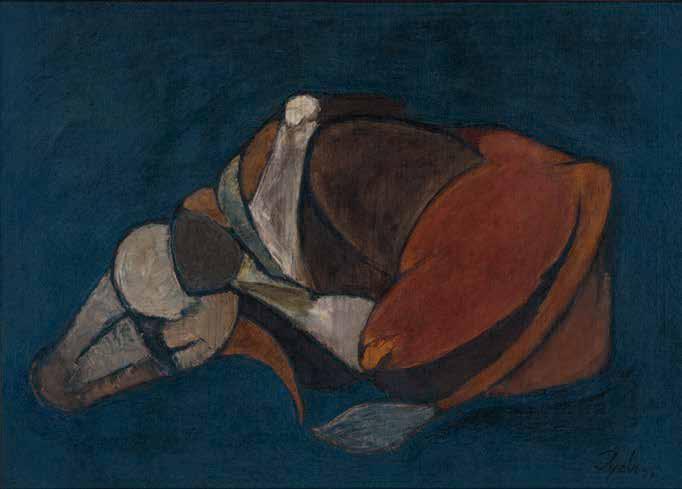
Preceding page: Fig. 1. Bull (detail), ink on paper, 1955. Collection: Vadehra family
Above: Fig. 2. Trussed Bull, oil on canvas, 1956. Private collection
Overleaf: Fig. 3. Kali–II (detail), oil on canvas, 1989. Collection: Kiran Nadar Museum of Art
One could begin with Tyeb Mehta’s Trussed Bull, painted in 1956, compressed and contorted, articulated in a patchwork of different colours—an image that embodies the artist’s primary obsession with the body and figuration. It speaks to the contradictory forces that would animate Mehta’s work over a lifetime. Viewers are drawn to the singular figure of the bundledup bull against the dark undifferentiated ground, its posture highlighting the precariousness of existence. Over six decades of artistic practice, as a recurring image in Mehta’s drawings, paintings and his few sculptures, the bull came to be a symbol of power and suffering, and, ultimately, sacrifice. Making frequent visits to the Bandra abattoir in Bombay, Mehta reflected on the figure of the bull—inherently powerful, but also vulnerable, subdued, tied up and primed for slaughter. He saw it as being emblematic of humanity at large, but also of India as a nation; the country possessed a vitality it was unable to channel effectively, even after Independence. Mehta’s first major retrospective at the Kiran Nadar Museum of Art (KNMA) opens with his drawing of a bull’s head. In this first encounter, one is transfixed by the bull’s eye, alert, attentive, aware of everything happening around it. It could well be a self-portrait of Mehta.
A retrospective exhibition is an expressive medium that attempts a creative and meaningful reconstruction of an artist’s practice across decades. A rare gathering of 120 works under one roof, Bearing Weight (with the lightness of being) allows for sustained curatorial consideration of the radical departures and continuities in Mehta’s oeuvre, strung together by keywords that highlight his artistic preoccupations—precarity, tactility, duality, gravity, mythology, tenacity, community and intensity.
Mehta was twenty-two when the Partition happened. Back in 1947, India’s celebration of freedom was shadowed by mourning. The division of British India into the new nationstates of India and Pakistan affected people
on both sides of the border. It took a toll on relationships, splintering homes, lives and families forever. A young Mehta had already lived through British colonial rule, the fight for India’s Independence, and the mayhem and brutality that followed. The trauma of this time never left him; he once saw a man being stoned to death below his window. It was a memory that haunted him relentlessly—and was refreshed by every new instance of communal conflict in Mumbai. Mehta was simultaneously driven to empathy and rage by the constant violence. What he witnessed on the streets, from his window and in the city at large, triggered an urgent rethinking of the role art could play in times of uncertainty and crisis.
What does it mean to be an artist? How does it help one make sense of the world? Mehta belonged to the first postcolonial generation of artists in the decades following Independence— painters who confronted the question of what modernism might mean in the Indian context, and how they could make it their own. In Bombay, the Progressive Artists’ Group, formed in 1947, marked not only a moment of political independence, but also of cultural emancipation. Imagining the identity of a newborn nation was a crucial task. Amid the circumstantial flux of a nation in rapid transition, the artists and associates of the Group sought to arrive at a foundational language that would reflect the changing times and dichotomies they were grappling with.
Mehta came from a family that ran cinema halls and was rooted in the Indian cinema milieu. Early on, Mehta was enamoured of the moving image and was keen to work in art direction in the film world. He enrolled at the Sir J.J. School of Art with exactly that intention, but life took an unexpected turn: he realized he was drawn to the medium of painting, which offered him greater creative potential. Introspective by nature, Mehta, a devoted family man, also spent a great deal of time by himself. The singleness of being a painter appealed to him. It suited his temperament, how his artmaking was solely his responsibility.
Early examples of the body and figuration in Mehta’s artmaking appear in tortured, isolated images—studies of human heads and portraits painted in agitated brushstrokes, in a heavily textured impasto. The deep-set, fear-filled eyes of his figures expressed an unspoken trauma. Often inserting the pinks of raw flesh and the visceral reds of blood into his earthy dark palette, Mehta plied paint with a palette knife or a thick brush, applying constructive strokes, much like Paul Cézanne, to articulate his pictorial image. With rugged mark-making and an instinctive tactility, the impression of a painted figure in Mehta’s work remained intact even without an outline to contain it. But as soon as one was convinced of a figural presence, the contours seemed to dissolve again.
Mehta was obsessed with the rephrasing of anatomy and flesh in unexpected ways. For instance, in The Face (1961), a pregnant woman reclines awkwardly beside a man with an unnerving presence. The bed and pillow are mere suggestions to the viewer’s eye, while the woman’s body, devoid of its usual contours, is marked by layers of messy brushwork. For Mehta, oil paint translated into flesh under intense psychological pressure. He amplified bodies without a definite anatomy, faces with gaping mouths and dilated eyes, carrying the terror of what they had witnessed. Stripped bare of skin, in Decomposition (1962), the head is painted as a mass of battered flesh, its dislocated eyes partly hidden beneath its disintegrating form. Mehta spent five years in London, where, among other post-war artists, he was exposed to the screaming bodies of Francis Bacon. He also worked in a hospital morgue—spending time among dead bodies, observing dissections, comprehending flesh, bone and the slow decomposition of the body form.
In Mehta’s practice, the body became a primary locus of attention, where personal memory and collective trauma converged. He constantly addressed its materiality and inherent mortality through intense explorations, distorting anatomies and dislodging familiar features.
Shock as a primary experience remained at the core of Mehta’s early figuration, filled with horror and fear. He was, in fact, attracted to subjects that could carry the weight of his content.
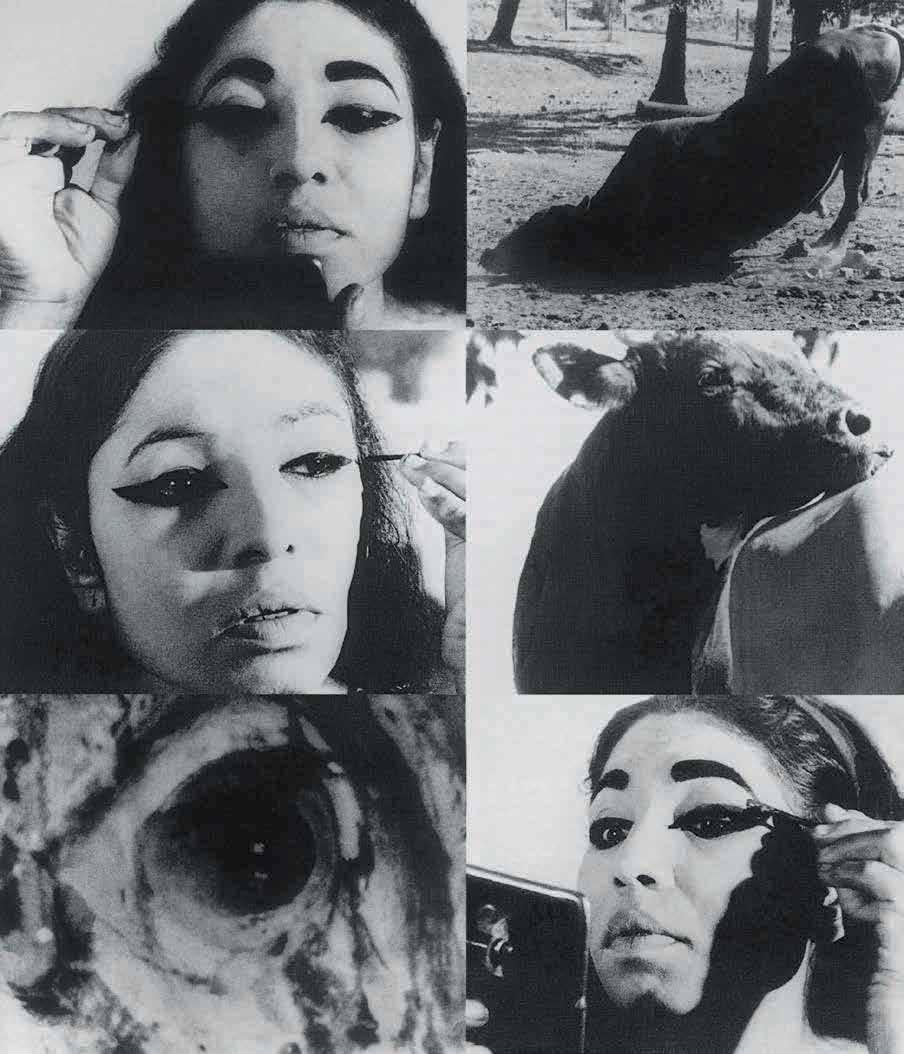
Mehta’s only film, Koodal (1970), is a profound manifestation of his compulsive engagement with the bull. His choice of a composite frame in the manner of montage defied the usual linearity of film sequence and plot, juxtaposing disparate moments, details, and moods, mapping the intersections of life and death, strength and fragility, the body’s natural limits and pulsating rhythms. Scenes from the film amplified the brutal hooks awaiting carcasses to be hung, the bull’s journey to the slaughterhouse, scenes in a South Indian temple, urban life, street theatre—all to a soundtrack of Carnatic music. Despite creating a masterpiece in cinematic experimentation, Mehta never returned to making films. And yet, in his paintings, one can locate his craft of film editing and of cinematic techniques: cropping, foreshortening and the creation of dramatic shadowy effects.
In search of a personal language in painting, Mehta gradually liberated himself from the need for mimetic representation, stripping the image of descriptive details, leaving it fragmented, yet palpable, as evidenced in the bruised surface of Gray Figure (1961). Attempting to speak solely through the expressivity of paint, Mehta was sparse with facial features and precise anatomical renderings. The brush became a means of transferring restless energies onto the surface in the absence of a complete story. Mehta moved between the partial presence of a sensual contour and the stark incisive line, intuiting what to eliminate: at times an eye deleted, an arm gone missing, a face appearing without an outline, a partial foot made visible. The painted image was made intensely expressive precisely by what was taken away.
How long can the body bear the burden of endless struggle? How do you shed fear to embrace vulnerability? How do you hold on to dignity as you fight for your survival? And in
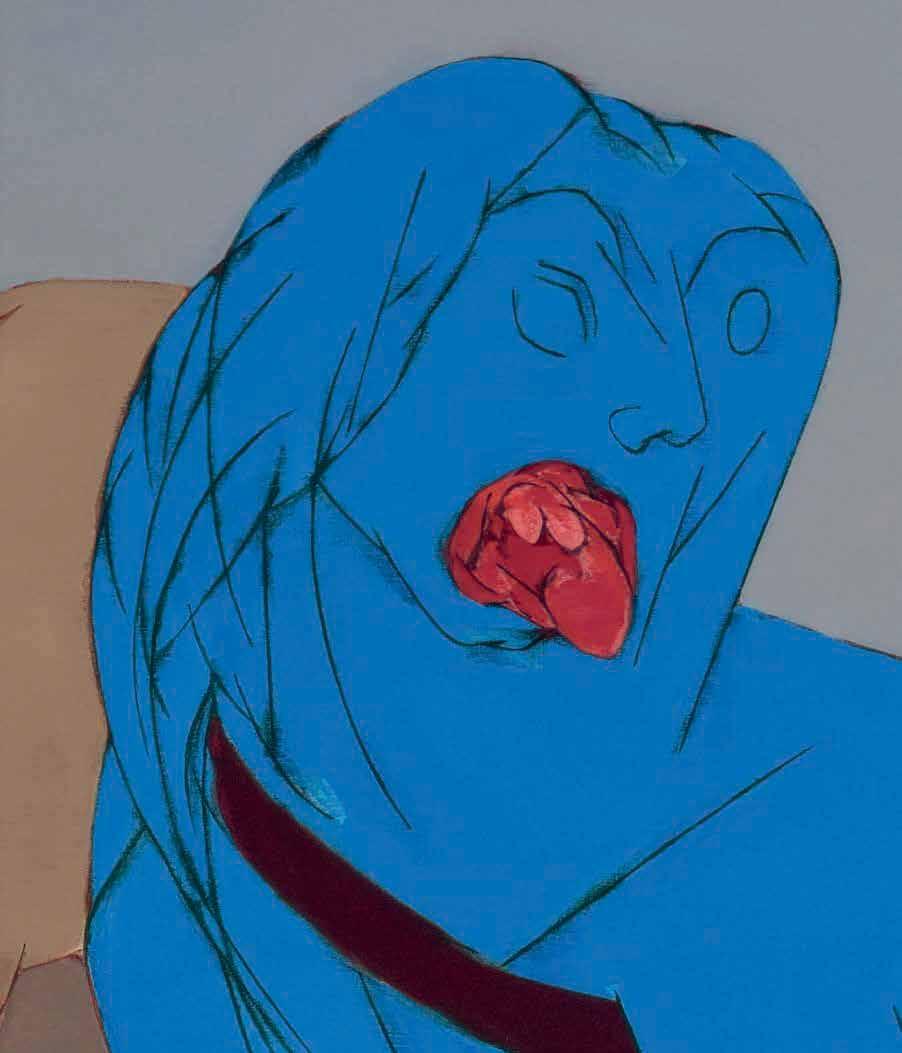
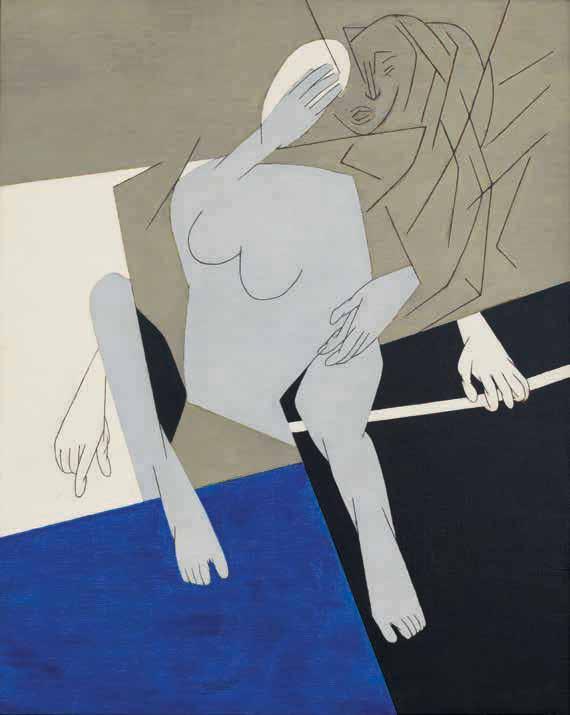
Above: Fig. 25. Untitled, oil on canvas, 1979. Collection: Deepika and Alok Shah, TAPI collection
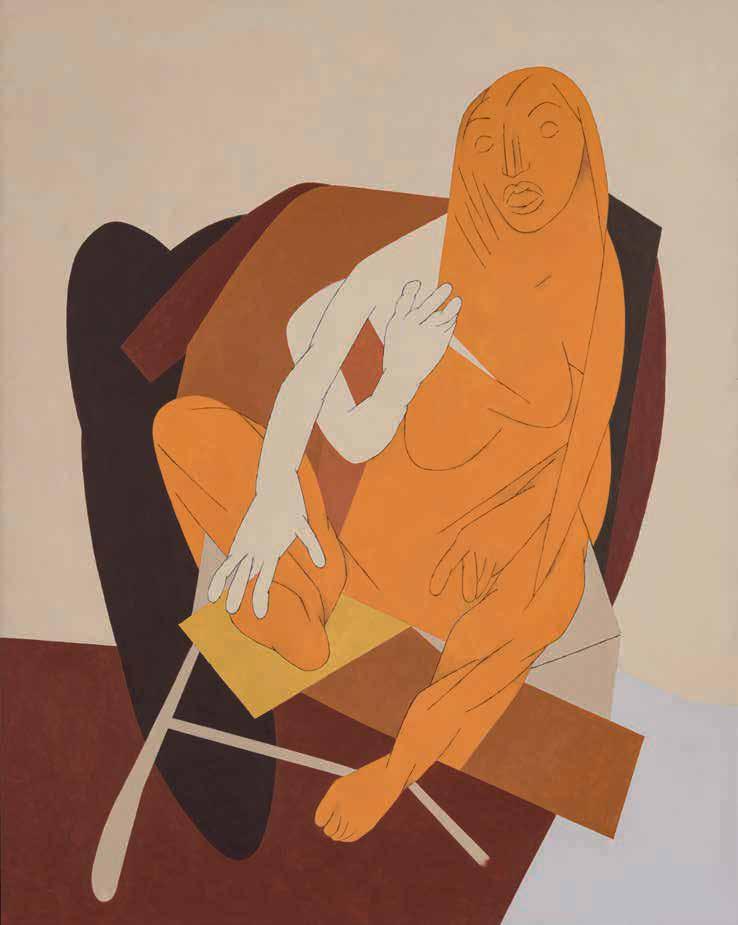
Opposite: Fig. 26. Woman on Rickshaw, acrylic on canvas, 2002. Collection: Jehangir Nicholson Art Foundation
To Pick Up a Brush
Gieve Patel
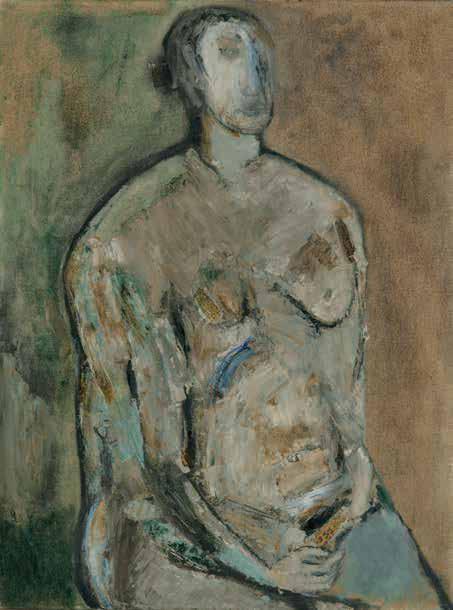
Fig. 27. Figure, oil on board, 1961. Collection: Kiran Nadar Museum of Art
The beginning of any worthwhile activity coincides with an accurate perception of the problems involved. The birth and growth of contemporary painting in India is closely linked with habitual discussions among its painters of such problems. These discussions, sometimes rowdy and loquacious, happen in an atmosphere of guarded fraternity. It is an uneasy, nebulous, warring connection that nevertheless binds painters from centres as far apart as Calcutta and Bombay, Delhi and Baroda.
I do not wish to overstate the case, but in some way modern Indian painting is becoming an activity shared by a sizeable number of viewers in the country. It will never obtain the audience that cinema can and does, and the quality of viewing is very far yet from the knowledge and participation people bring to a classical music concert. But you cannot long keep down the fascination for the image in this country. I was once sunning a painting on the street, to get the monsoon humidity out of it. A little girl passing by stopped, looked at it a while, took a tiny coin from her handkerchief, tossed it before the painting and went her way. It was a votive offering, though the subject of the painting was secular. Undoubtedly, there was some mistaken reading here, but I was pleased. This young girl would perhaps never visit an art gallery; even so her action was symptomatic of the massive approval the country gives to the painted image. Contemporary artists, though, have not had such approval come easily their way. But the process is on, slow and sure, and is likely in the long run to affect the work they do.
Well, if I may pick two words—problems and discussion—I have an idea how I may structure this essay. I shall be able to isolate four or five problems that have worried and have helped. Each problem is a heavy stone dropped into the pool that is the national painting scene. As ripples move outward, they are touched at different points on their circumference by painter after painter.
As for discussion, many statements I have heard expressed in the course of conversations between painters come to mind. I shall repeat these statements for the potential they carry of illuminating the problems.
Tyeb Mehta: ‘To pick up a brush, to make a stroke on the canvas—I consider these acts of courage in this country.’
The statement appears to deny the optimism of what I’ve said earlier. But Mehta is today in his late fifties. The remark was made to me in conversation almost twenty years ago. He may not hold this view any more, so I would not normally have quoted him were it not that it has been retained in my memory, and I have a sense of its truth. Mehta’s statement implies: ‘We do not have a free and easy right to paint.’ Why should a painter in a society that is not overtly oppressive to the artist feel this way?
Post-Independence India had no role for the urban, contemporary artist, the man who would fabricate and comment upon the present, and who would not necessarily continue with folk and classical forms. The world would certainly have been chilly for him, with the unexpressed, ubiquitous question: ‘What is your work for? Who is it for?’ It has taken the artist two or three decades to reply simply: ‘It is for you. And me.’ And specific third-world tragedies gave a special edge to the chill. In universal deprivation, may one allow oneself the luxury ‘to pick up a brush’?
And, I believe, in varying degrees, the question runs as an undercurrent in the work of each and every modern Indian painter. An ardent, hopeful movement towards people, and a worried shrinking away—these are leitmotifs of the scene. Which is why the human figure was never abandoned as subject matter for painting. There is no such thing here as ‘the return of figuration’; figuration never left. By an act of choice, and against fashionable international modes, the Indian painter continued to address himself to the object of his loss. Not the rebellious enfant terrible saying: ‘If you do not want me, I do not want you.’ But a persistent coming back, sometimes in anger, sometimes with love. Perhaps the guilt helped. Because today for many Indian painters the human figure is an unquestioned subject matter, and is approached with the same familiarity and rightness with which one will approach a lover’s body. We have won for ourselves one privilege: We may pick up a brush. And we may attempt to talk about Man.
In Focus
Drawing Life
Line, Form and Force in Tyeb Mehta’s Practice
Aditi Ghildiyal
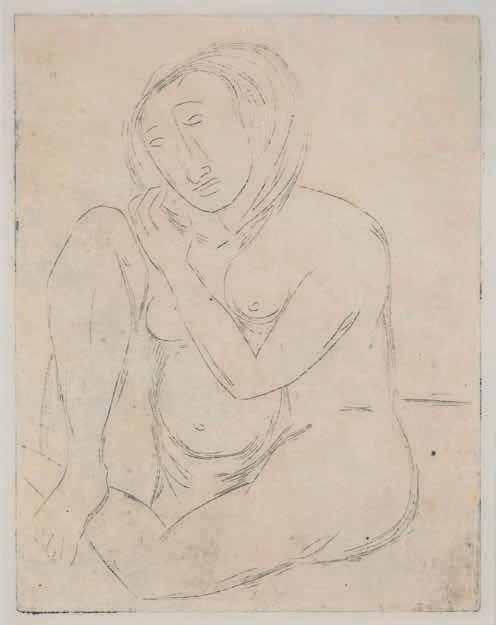
Fig. 30. Untitled, etching on paper, 1961. Collection: Family of the artist
For Tyeb Mehta, the line was never merely a formal device. It carried philosophical and emotional weight, embodying memory, myth, pain and redemption, with an intensity that was both provocative and contemplative. It is through his drawings that we trace the paradox at the heart of his practice: that the instability we perceive on his canvases was carefully engineered.
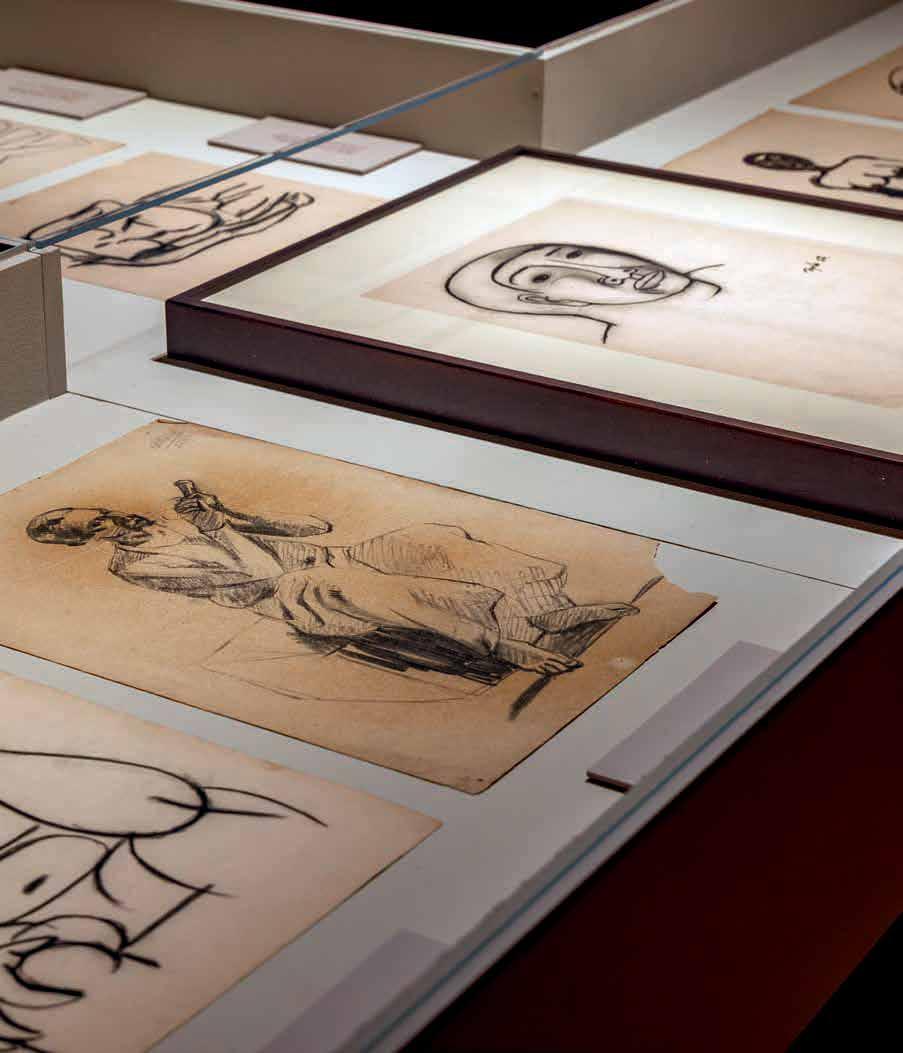
Mehta’s drawings have piqued visitors to the retrospective Tyeb Mehta: Bearing Weight (with the lightness of being). Largely unseen for decades, they facilitate fresh curatorial perspectives on his visual language. We seldom see an artist’s preliminary exercises or the evolutionary charting of a creative practice. Such materials are often misplaced or lost after an artist’s death. Our access to the Tyeb Mehta Foundation’s archive, which has been preserved and catalogued with great care, allowed us to work backwards to the origins of tropes and motifs that recurred through his career.
Mehta’s early drawings reveal an artist deeply invested in form and demonstrate the experiments he undertook to break and contort this form from within, long before these concerns found their fullest expression in his paintings. His association with members of the Progressive Artists’ Group further propelled him towards developing a distinctly modernist language, rooted not in imitation but in the continual reinvention of the human figure.
One of the first works we encounter in the exhibition is a drawing of the trussed bull, Bull (1955), which depicts the animal splayed on its side, constrained within thick, rope-like lines, etched deeply into its flesh. Frozen in dreadful anticipation, the bull essays vulnerability and a presentiment of the inevitable. Mehta’s portraits of men and beasts are rendered with sculptural solidity, and confined to brutal geometric planes.
Once the diagonal entered his work in the late 1960s, it splintered his canvas into two dynamic fields, facilitating tension and instability in the image. The drawing Reclining Figure with Diagonal showcases these negotiations with space and form. A strong diagonal bisects the composition, slicing through the figure and fracturing it into angular planes. The economy of the drawing is striking—executed with swift graphite lines, there is little attempt to model volume. Several exploratory lines remain visible. Formal studies of fragmentation and geometric construction, with the body navigating these planes, are already present here in a nascent form.
As Mehta’s practice develops, the rigidity of his drawings begins to dissolve. Bold contours and sculptural mass give way to softer, lighter, more atmospheric marks. The figures become less concrete and more ephemeral. We also start seeing them wedged within a matrix of grids and diagonally radiating perspective lines. Every inch of every perspective is mapped and opened up to multiple possibilities of manipulation. Intuition is secondary; strategy and calculation steady Mehta’s hand.
Such observations reveal an artist who thought cinematically, assembling meaning through successive cuts and shifting viewpoints. Mehta’s brief stint in the film industry, when he worked as an assistant film editor at the Famous Cine Laboratory, sharpened his understanding of framing, sequencing, perspective and movement. His trajectory also reflects the experimental climate of post-Independence Bombay, where artists, filmmakers, writers, and theatre practitioners were searching for a new visual language that could express the realities of a rapidly transforming nation.
Precarity
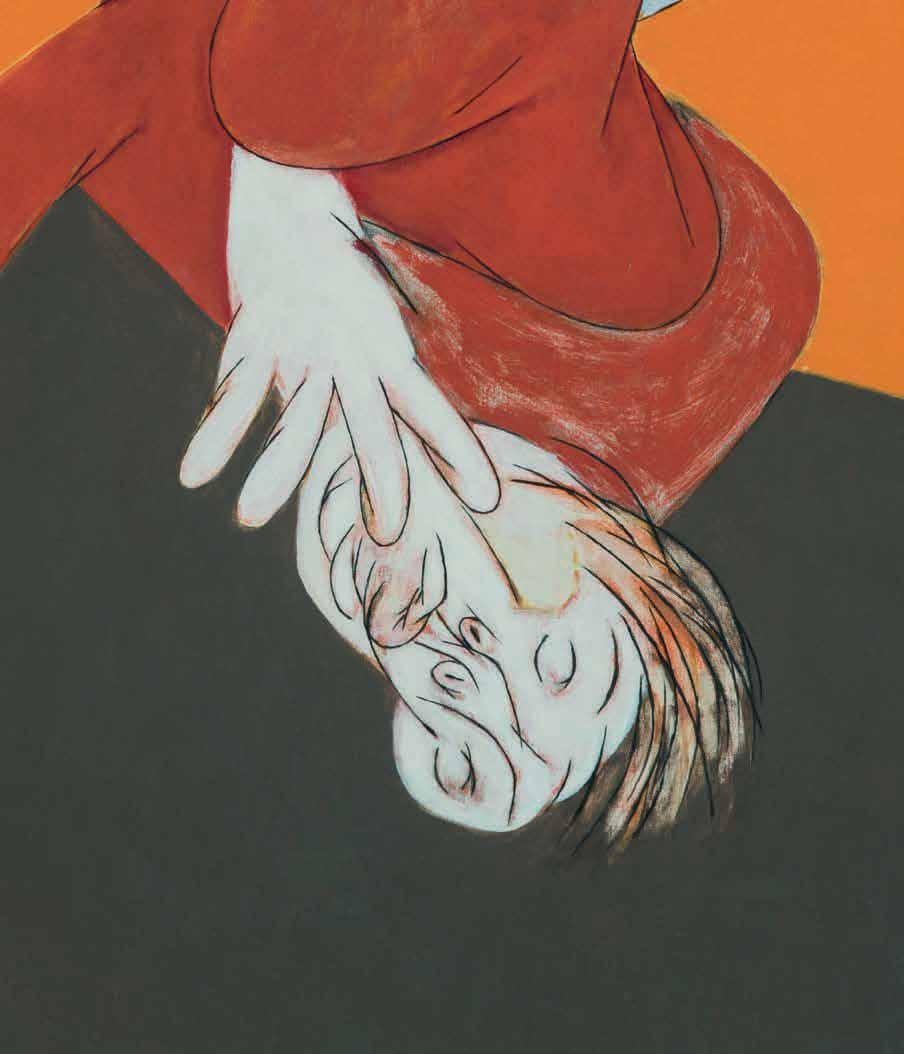
Opposite: Plate 2. Falling Figure (detail), acrylic on canvas, 1993. Collection: Bernhard Steinruecke
Tyeb Mehta’s artistic practice reflects on the tension between the visible and the invisible in our everyday realities. He lived through Partition, and his work casts an enduring lens on the precariousness of human existence. Mehta uses the diagonal to imagine and foreground multidimensional visions of the world. Through the trussed bull, a key motif in his work, he gestures to the unchecked vitality of the animal, even as its body is bound, restrained and marked for slaughter. The Mahisasura paintings similarly capture the shape-shifting demon, his body writhing in anguish, suspended in the moments between fragmentation and death. The falling figure and the falling bird recur in Mehta’s imagery, speaking to humanity’s moral descent and the tragic irony of birds falling from the sky when they are destined to fly. In his 1994 work
Untitled (Woman on Rickshaw), he lays bare class divisions, invoking the rickshaw-puller whose livelihood depends on being reduced to a beast of burden. This section offers a comprehensive view of Mehta’s artistic preoccupations, highlighting the unpredictability and resilience of the human condition.
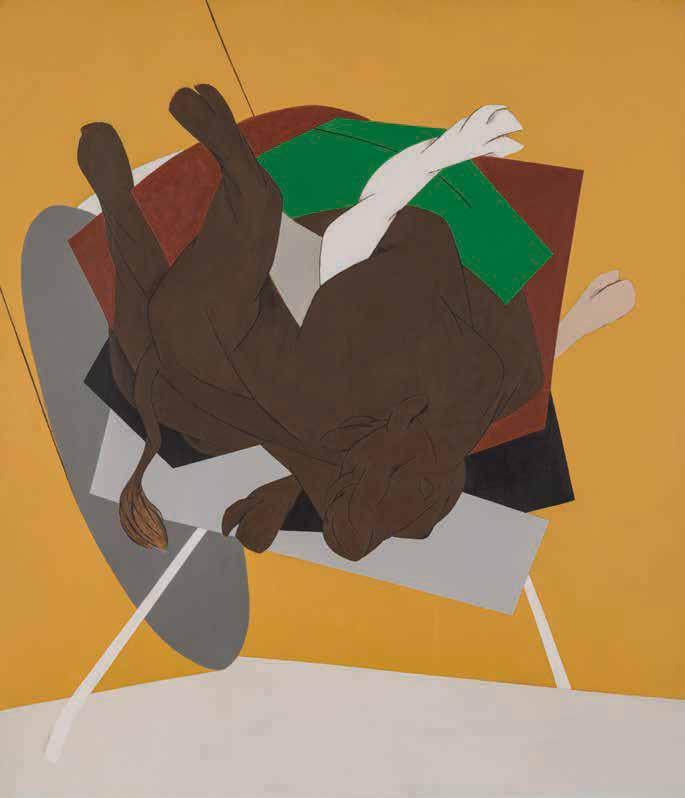
Above: Plate 3. Bull on Rickshaw, acrylic on canvas, 1999. Collection: Kiran Nadar Museum of Art
Overleaf: Plate 4. Detail of Plate 3
Tactility
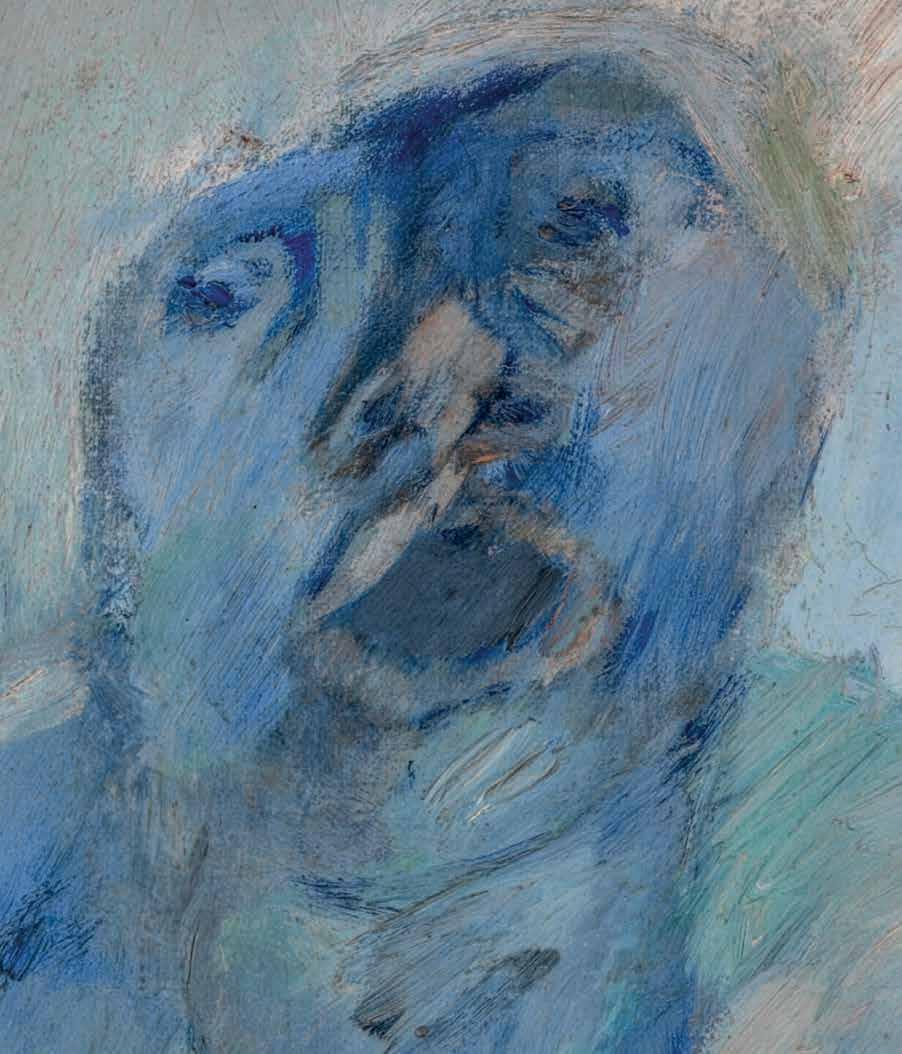
Opposite: Plate 21. Blue Head (detail), oil on canvas, 1965. Collection: Jehangir Nicholson Art Foundation
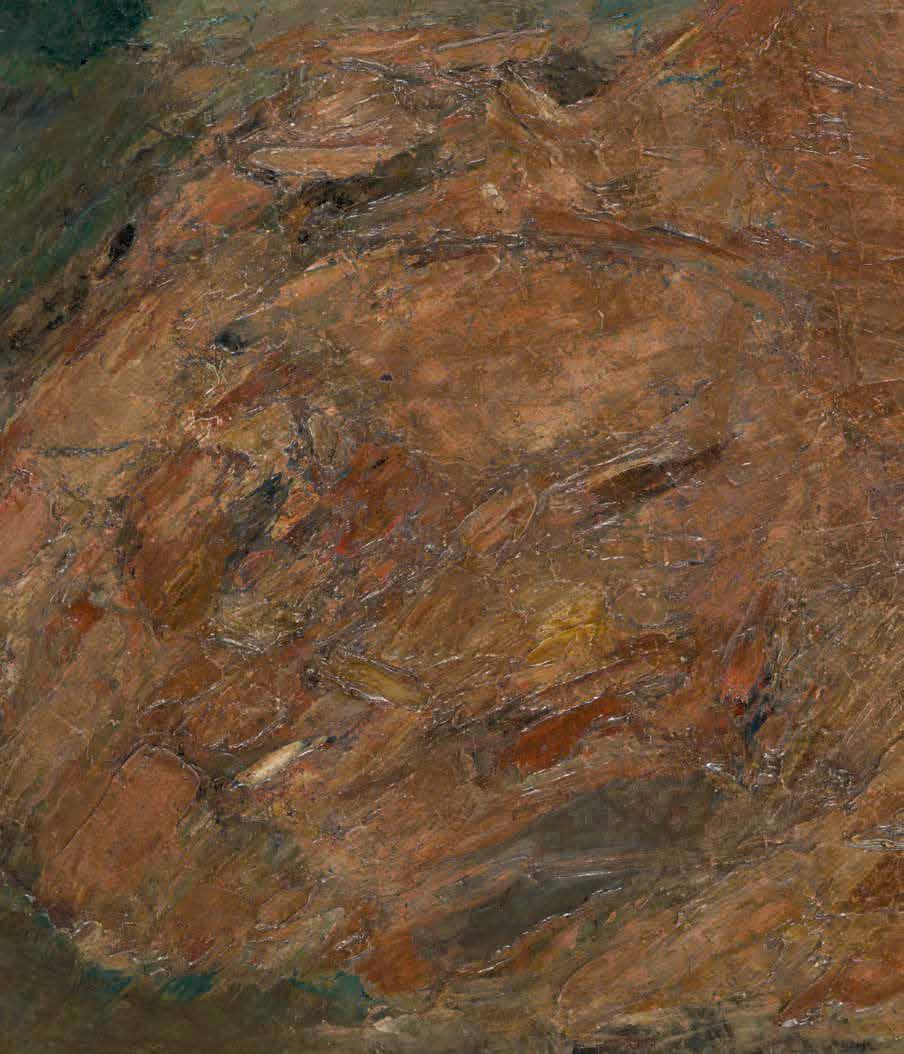
This section of the exhibition brings together works by Tyeb Mehta from the 1940s to the 1960s, exploring his deep engagement with the tactility of the human body across drawing and painting. In his early drawings, following years of formal art education, Mehta played with anatomy, scale and form to forge a new visual language for the body. His spatial inquiry took on a visceral dimension in paintings from the late 1950s and 1960s onwards, where thick impasto layers approximate the texture of human flesh and skin.
This phase coincided with Mehta’s time in London, where he worked part-time in a morgue while immersing himself in European painting traditions. Works like The Face and Decomposition exemplify this period, using viscous layers of paint to recall the materiality of the body.
Opposite: Plate 22. Decomposition (detail), oil on canvas, 1962. Collection: Family of the artist
Intensity
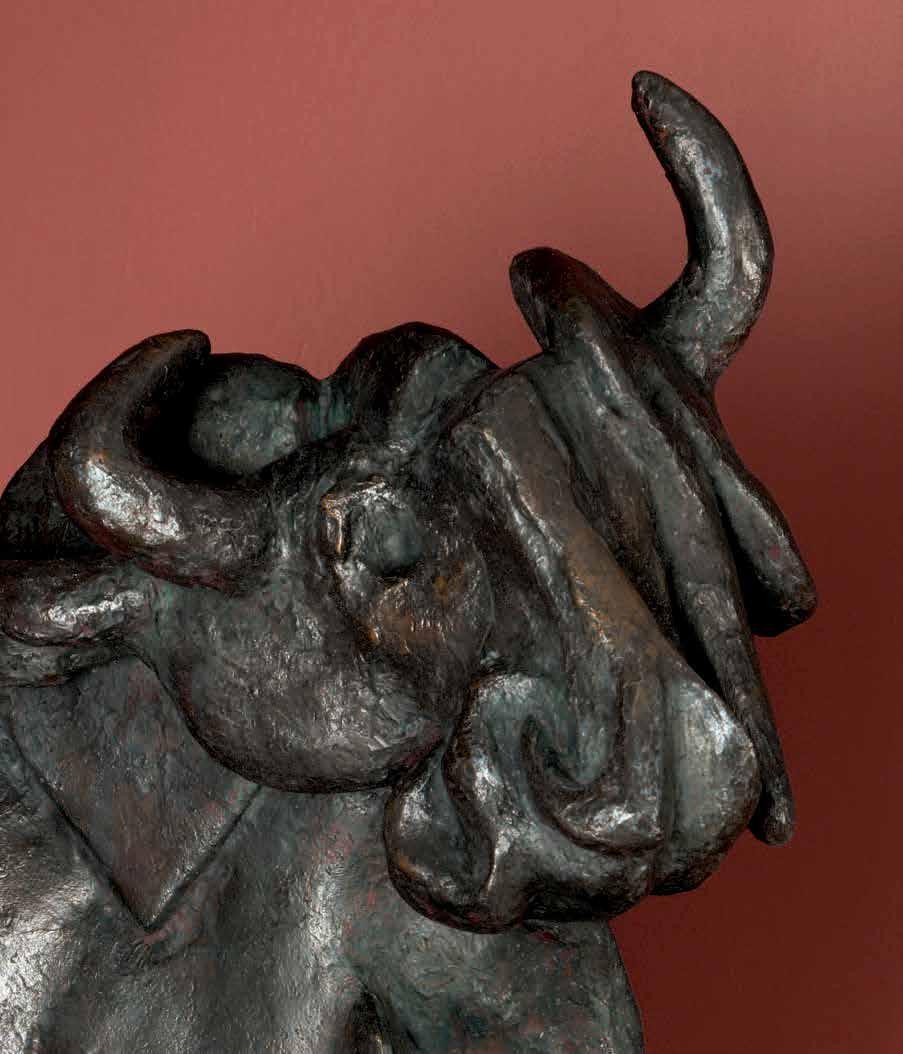
Opposite: Plate 39. Bull Torso, bronze, 1985. Collection: Kiran Nadar Museum of Art
For Tyeb Mehta, the bull was a ‘compulsive image’ —a defining motif in his oeuvre from the 1950s until the end of his life. In his formative years, Mehta spent hours at the Bandra abattoir in Bombay, repeatedly sketching bulls destined for slaughter. He was fascinated by their muscular power and sheer physical mass. In his practice, the bull became emblematic of human su ffering and vulnerability. Over decades, the portrayal of the bull evolved across mediums, spanning drawing studies, paintings, sculptures and a film. Mehta’s drawings and sculptures go from being highly anatomical representations to minimalist metaphorical forms that harness the raw essence of the subject. This section presents bull and horse drawings, paintings and sculptures from the 1950s through the 1990s, tracing the development of the artist’s signature visual vocabulary. The display incorporates the original pedestal design and configuration from Mehta’s debut solo exhibition at the Jehangir Art Gallery in 1959.
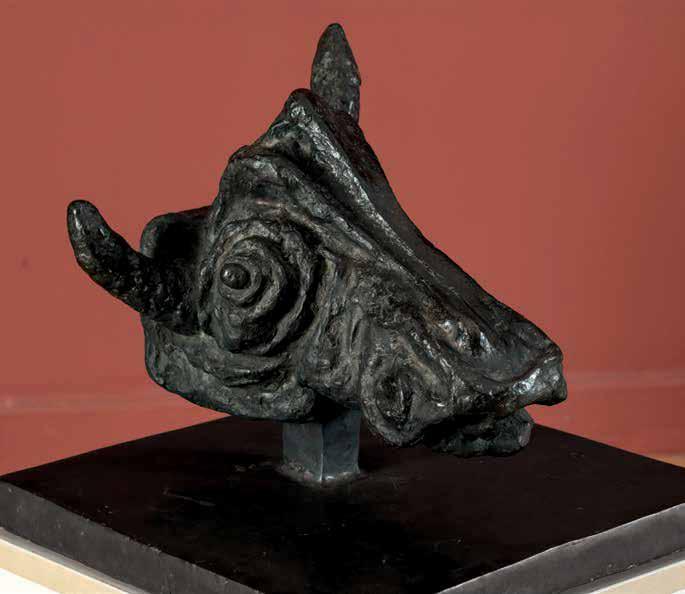
Plate 40. Bull, bronze, c. 1950. Private collection
Tenacity
Opposite: Plate 51. Koodal, film still, 1970. Courtesy: Films Division, National Film Development Corporation
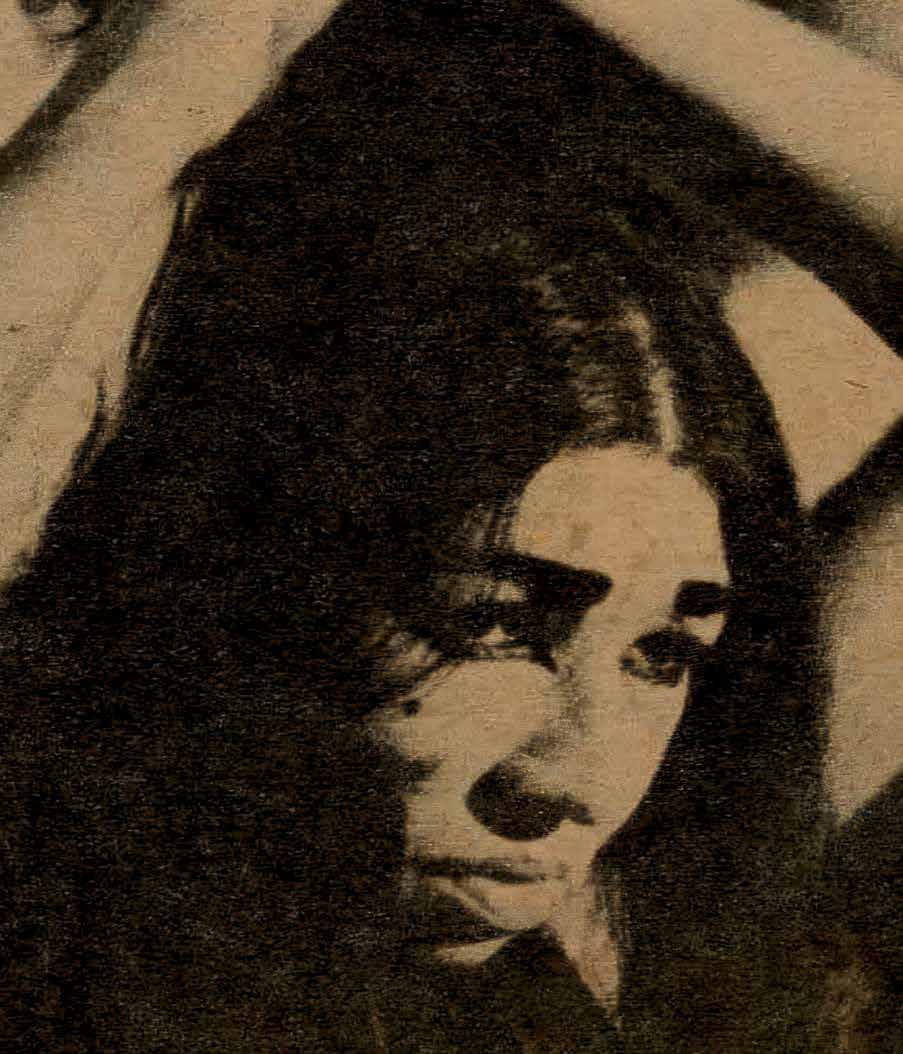
This section extends the themes explored in Intensity, particularly Tyeb Mehta’s persistent engagement with the image of the bull, fused here with the narrative potential of cinema. It features his critically acclaimed experimental film Koodal (1970), made with the support of the Films Division of India. His only cinematic work, Koodal examines everyday moments of life and death, and their uncanny intersections, through a non-linear montage grounded in the artist’s perspective. Accompanied by a soundtrack of Carnatic music, the film navigates varied urban landscapes, including temples, roads and abattoirs. Throughout the film, the bull is a central motif, both as an ordinary animal and in divine form as Nandi, the vehicle of the Hindu deity Shiva. In this presentation, the film is screened alongside Mehta’s diary notes, archival stills, original scripts and reviews.
Opposite: Plate 52. Koodal, film stills, 1970. Courtesy: Films Division, National Film Development Corporation
Exhibition Views
About KNMA
The Kiran Nadar Museum of Art (KNMA) is India’s pioneering private museum for modern and contemporary art, located in New Delhi and oriented to South Asia and the rest of the world. Established in 2010 by collector and philanthropist Kiran Nadar, the museum is now broadening its scope to include classical, folk and tribal, and premodern art, with works ranging from the third century CE to the twenty-first century. KNMA’s growing collection—currently at over 16,000 works—is a catalyst for critical engagement with art. Through research-driven exhibitions, publications, residencies and public programmes, it actively engages with diverse audiences, expanding the global understanding of South Asian art.
KNMA is entering a new phase with the development of a landmark building in New Delhi, imagined as the largest integrated cultural centre in India, helping realize the institution’s vision of operating at the highest international standards while remaining rooted in the region.
ART
Tyeb Mehta
Tyeb Mehta
Bearing Weight with the lightness of being
Curated by Roobina Karode
240 pages, 180 images
9 x 10.5” (229 x 267 mm), HC PLC
ISBN: 978-93-94501-19-5
₹4000
2026 • World rights
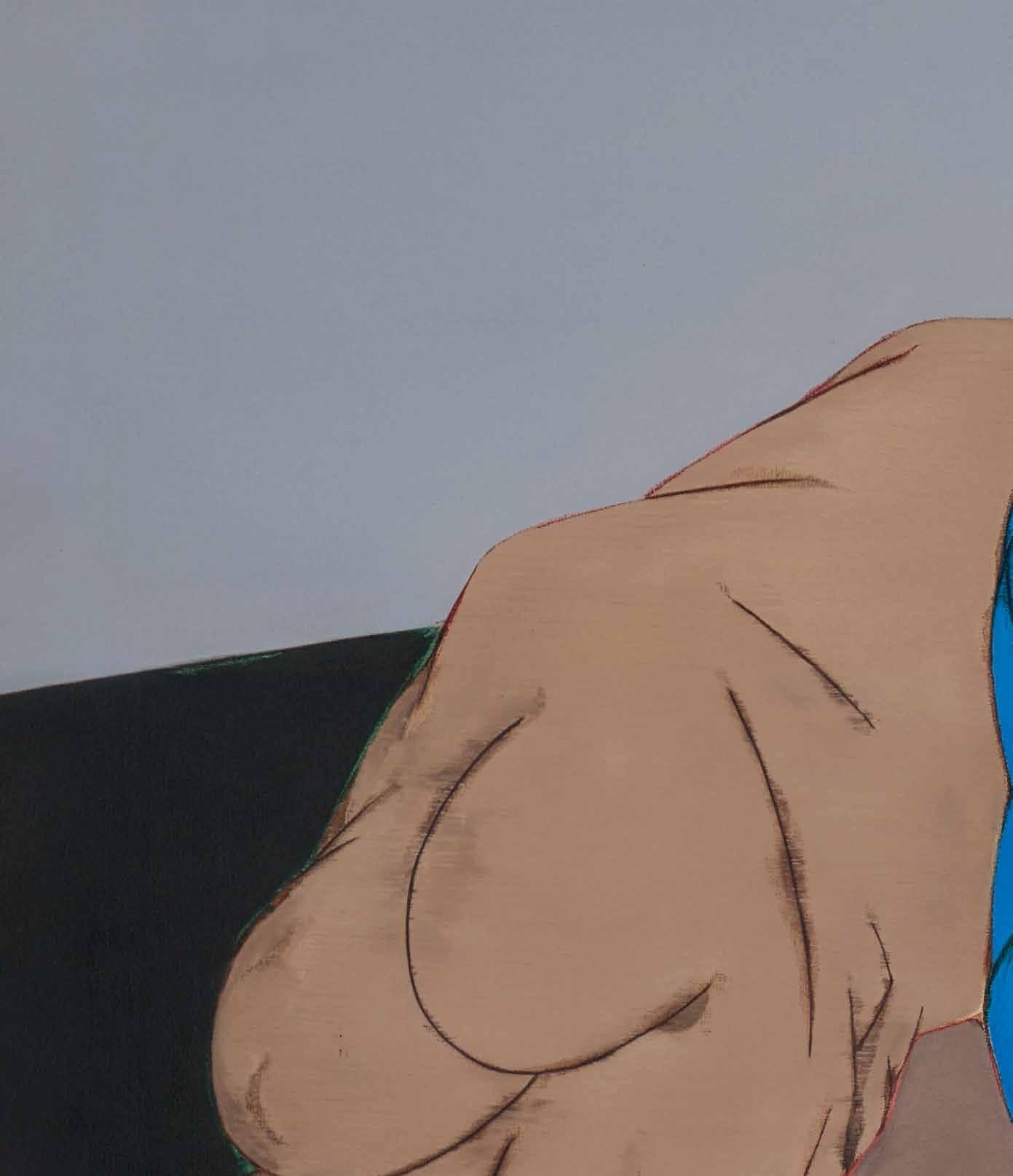
TYEB MEHTA is the first comprehensive book devoted to the artist’s practice in over two decades, and among the most complete accounts of his work ever assembled. One of the defining painters of India’s first postcolonial generation, Mehta spent more than half a century distilling the upheavals he witnessed— Partition, displacement and the daily asymmetries of life in a new nation—into a visual language of extraordinary economy. Through recurring motifs—the bull, the falling figure, the falling bird, the diagonal, and his radical reimagining of Kali and Mahisasura—he forged a body of work at once deeply personal and profoundly universal.
Growing out of a landmark retrospective at the Kiran Nadar Museum of Art, this volume traces Mehta’s iconography across every medium he worked in— painting, drawing, sculpture and his rarely seen 1970 film Koodal. With a rich suite of essays, this book ranges from expansive assessments of Mehta’s practice to focused studies of individual works and mediums. TYEB MEHTA charts the arc of an artist who transformed the fractures of the twentieth century into enduring form
‘[The]
greatest figurative painter in our time, better than anyone else—and that includes myself ’ M.F. Husain