












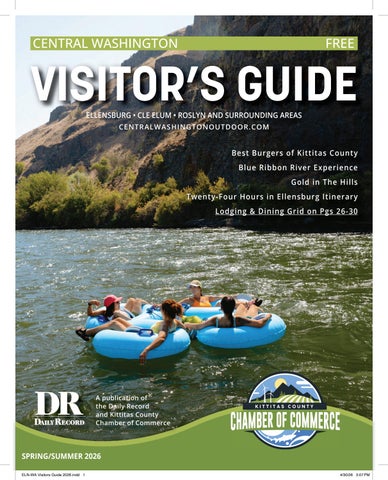
Twenty-Four Hours in Ellensburg Itinerary
Lodging & Dining Grid on Pgs 26-30



Twenty-Four Hours in Ellensburg Itinerary
Lodging & Dining Grid on Pgs 26-30
Where longer days, open skies, and sun-filled landscapes invite you to stay a little longer and explore a little deeper. Spring and summer are when our region truly comes alive, offering endless opportunities to experience the best of Washington’s outdoors and small-town charm.
Adventure starts here. Wander wildflower-lined trails, paddle or float the Yakima River, cast a line in renowned fishing waters, or take in sweeping views from scenic ridgelines. With easy access to both relaxing and high-energy experiences, Kittitas County is the kind of place where one day turns into several.
Each of our communities offers something unique to discover. In Ellensburg, enjoy a vibrant downtown and the energy of a Washington State Certified Creative District. In Cle Elum and South Cle Elum, find gateway access to outdoor recreation, rich history, and mountain-town hospitality. In Roslyn, experience a nationally recognized historic district full of character and charm. In Kittitas, enjoy a welcoming small-town atmosphere rooted in agriculture and tradition. Together, these communities create a connected experience that invites you to explore throughout the county.
Spring and Summer also bring our agricultural heritage to the forefront. Fresh produce, local markets, and agritourism experiences offer authentic ways to engage with the land and the people who care for it—adding flavor and meaning to every visit.
Plan a midweek escape, extend your stay, and take the time to uncover places you didn’t expect. Here, you’ll find more than a stop along the way—you’ll find a destination worth returning to.
While you’re here, take time to love local experiences, roam beyond the expected, and support the businesses that make Kittitas County truly one of a kind.
And when you’re ready for local tips, maps, and insider recommendations, stop by the Kittitas County Chamber Visitor Center—we’re here to help you make the most of your visit.
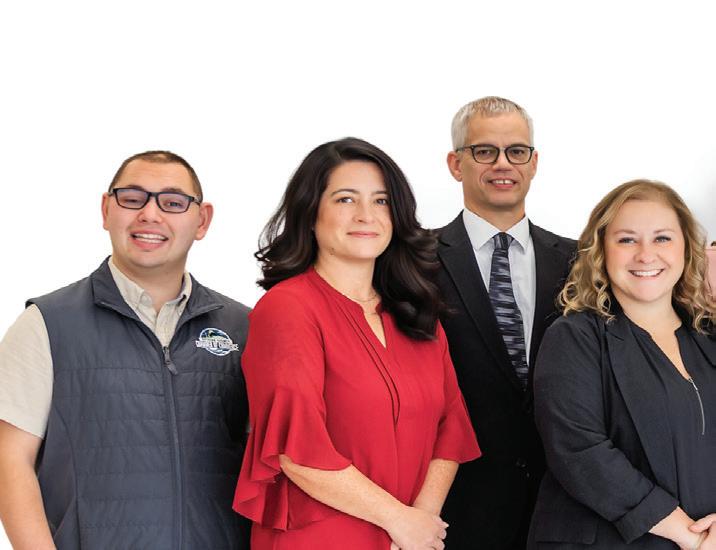
Amy McGuffin, Chamber President/CEO







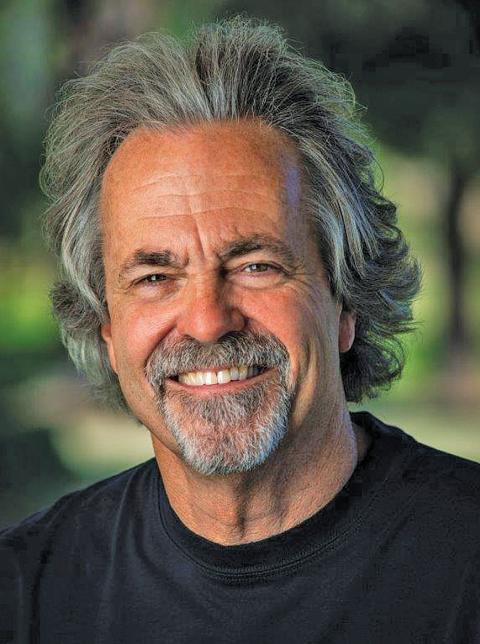


“My first priority is client satisfaction delivered through hard work, professionalism and market knowledge with a little humor thrown in to make your experience enjoyable.”
• Over 20 years experience in our local real estate market
• Known for no pressure, high integrity ser vice
• Cer tified Negotiation Exper t (CNE)
• Over 100 five star reviews with Zillow
• Highest level of client satisfaction, referr als and repeat customers
“Jon is an outstanding realtor He listens carefully to his clients, respects their time and is ver y knowledgeable about all the pr oper ties and land in upper Kittitas County He knows their histor y and is open and for thr ight about possible issues, including weather patter ns, climate, water, possible development etc. I would highly recommend him.”
“Jon helped us negotiate a ver y difficult land purchase. He succeeded where other s had failed and we are now happily expanding our ranch. He has the per fect balance of knowledge, exper tise and fr iendly appr oach; while standing fir m when needed. We will ask him to represent us again!”
“Jon Newton was wonder ful to work with I would definitely use Jon again as our agent. We could tell that Jon was ver y knowledgeable and ver y well exper ienced at what he does. We really appreciate him for making our exper ience a pleasure.”
Jon is an amazing Realtor and working with him was great. He really commits to his work, always ready to dig deep to answer any questions I had, leaving me feeling totally confident in his hands. He’s always on time, sticks to his word, and tr uly puts his clients fir st. What I really appreciated was Jon’s knowledge of the area, its community, and its histor y - it’s clear he knows his stuff After my exper ience with him, I wouldn’t even think about going with another Realtor Highly recommend!





BY STAFF OF KITTITAS COUNTY CHAMBER
There’s something about a great burger after a day spent exploring Kittitas County – it just hits differently. Maybe it’s the fresh mountain air, the miles logged on nearby trails, or the small-town charm that makes every bite feel like it’s earned. Whatever it is, this corner of Central Washington delivers when it comes to unforgettable burgers. From classic roadside stops to historic watering holes, here are a few must-visit spots to add to your list!
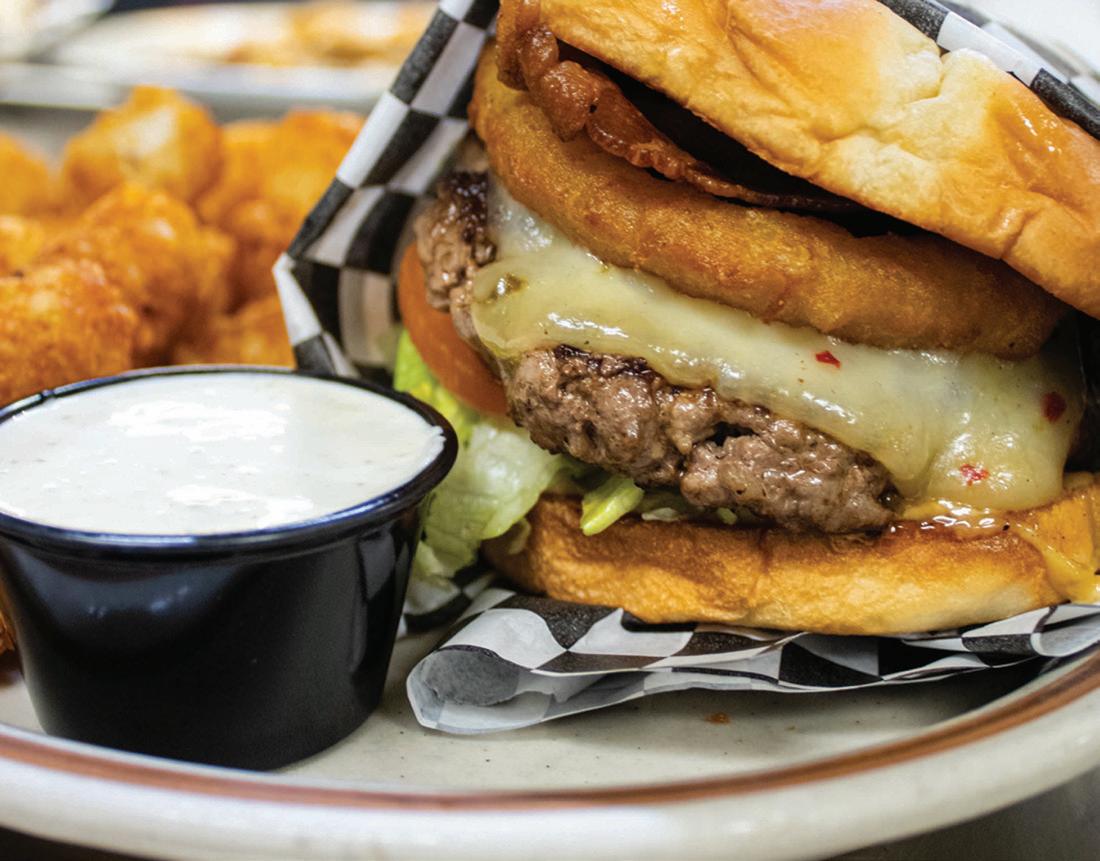
Start in Cle Elum at The Sunset Cafe, a local favorite that feels like stepping into a true homestyle kitchen. Known for its welcoming atmosphere and commitment to locally sourced ingredients, this is the kind of place where comfort food is done right. Their standout? The Snakebite Ranch Burger—bold, flavorful, with a layer of onion rings inside and sweet BBQ sauce – stacked in all the right ways. It’s the kind of burger that satisfies after a long day outside and keeps people coming back for more.
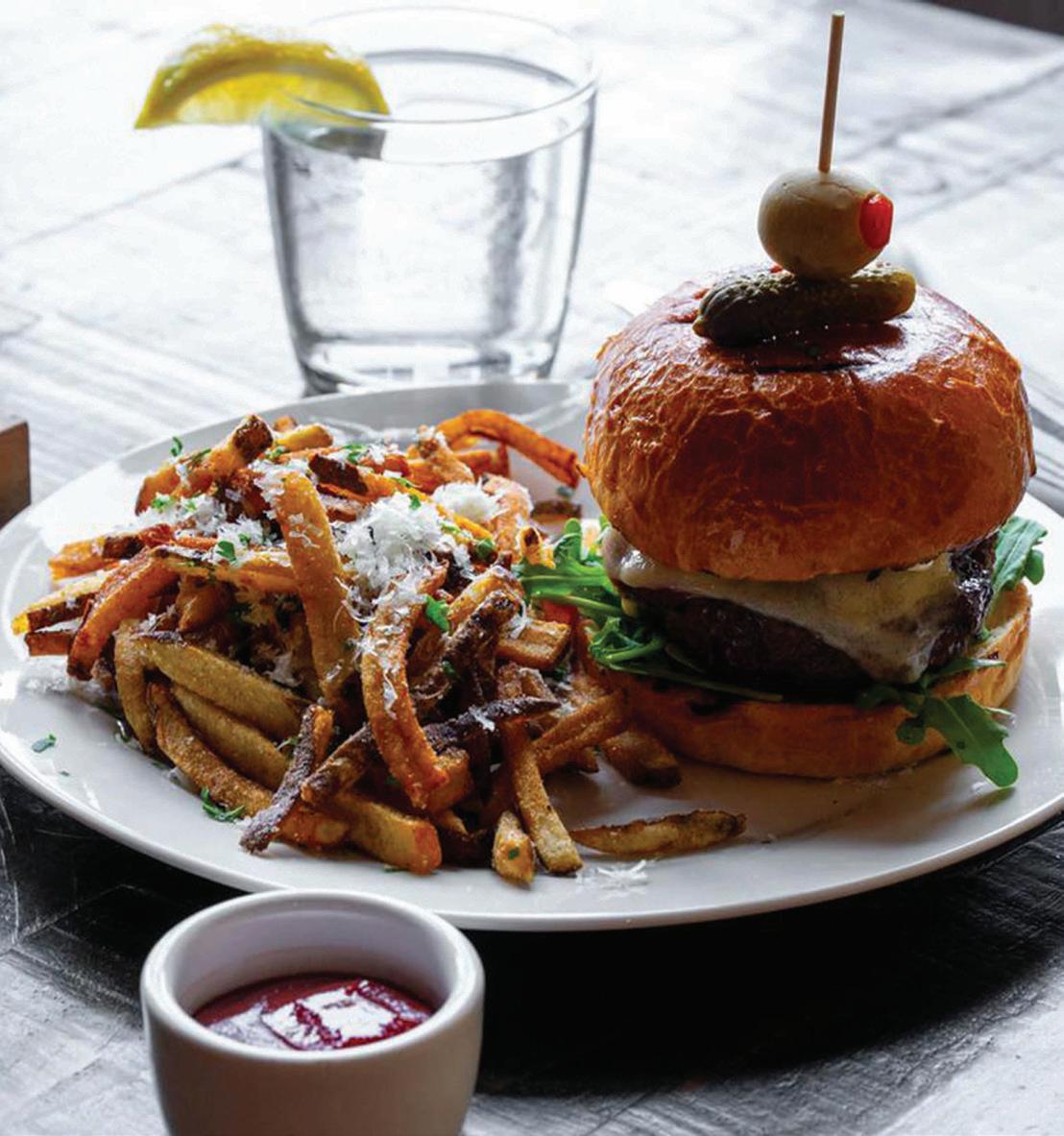
Also in Cle Elum, The Orchard offers a completely different take—refined, elevated, and distinctly Pacific Northwest. Crafted in a true scratch kitchen, their burgers feature made-to-order patties, thoughtfully layered with house-made sauces and served on a soft brioche bun. It’s a more polished experience where every element is intentional and every bite feels indulgent. If you’re looking for one of the most elegant burgers in Kittitas County, this is it.
For those venturing into the mountains, a stop at Mountain High Hamburgers is practically a rite of passage. This tiny, character-filled spot—decorated with old skis and full of mountain-town charm—is the perfect post-hike or post-ski reward. The burgers are simple and satisfying, and the shakes are just as memorable: thick, creamy, and exactly what you want after a day in the elements.
In Ellensburg, The Tav brings a lively, laid-back energy to the burger scene. Known for its strong tap list and casual atmosphere, it’s a go-to gathering place where locals unwind. The Hungry Mother Burger lives up to its name—a true monster of a meal that delivers big flavor and even bigger satisfaction. Pair it with a local brew, and you’ve got a classic Ellensburg experience.



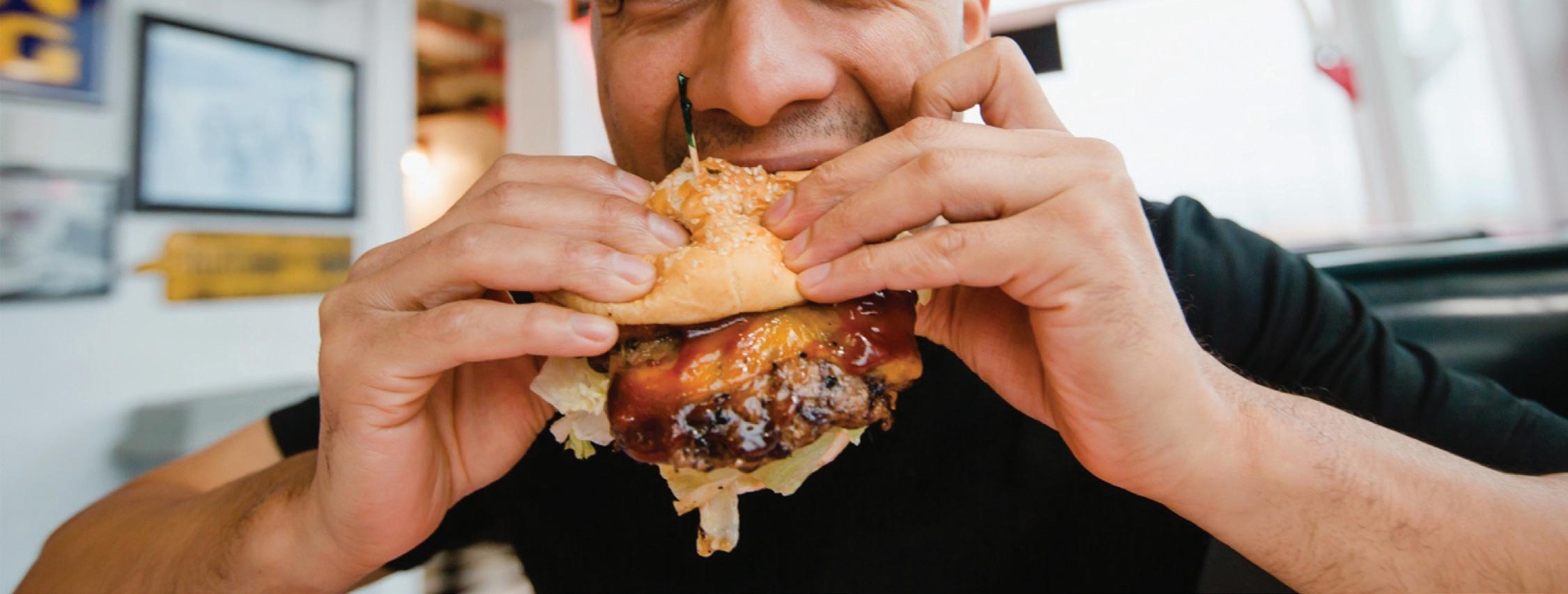
Head east along the Columbia River and you’ll find The Ranch, where the farm-to-table philosophy is front and center. Sourcing beef from Royal Family Farms just across the river, this spot serves up smash-style burgers that are crispy on the edges and juicy in the middle. Every bite reflects the quality of the ingredients and the pride behind them, making it a standout stop for both travelers and locals. You can also grab a steak or two from their fridge to take home or throw on the grill at camp!
Finally, no burger tour of Kittitas County would be complete without The Brick Saloon. As the oldest continuously operating bar in Washington State, it’s as iconic as it gets. Inside, history lines the walls, but the food is top tier as well. Their burgers are famously massive, served with crispy shoestring fries that round out the experience.
From Cle Elum to Vantage, Easton to Ellensburg and Roslyn, these burger spots showcase the heart of Kittitas County—local flavor, rich history, and a deep connection to the land. Whether you’re fueling up or winding down, one thing is certain: some of the best burgers in Washington are waiting right here.



BY BRIAN KELLY
At the end of a long gravel road just north of Vantage, visitors can step back in time.
Waaaaaaaaaaaay back in time.
At Ginkgo Petrified Forest State Park, people can see and touch pieces of the past — remnants of an ancient forest from more than 15 million years ago.
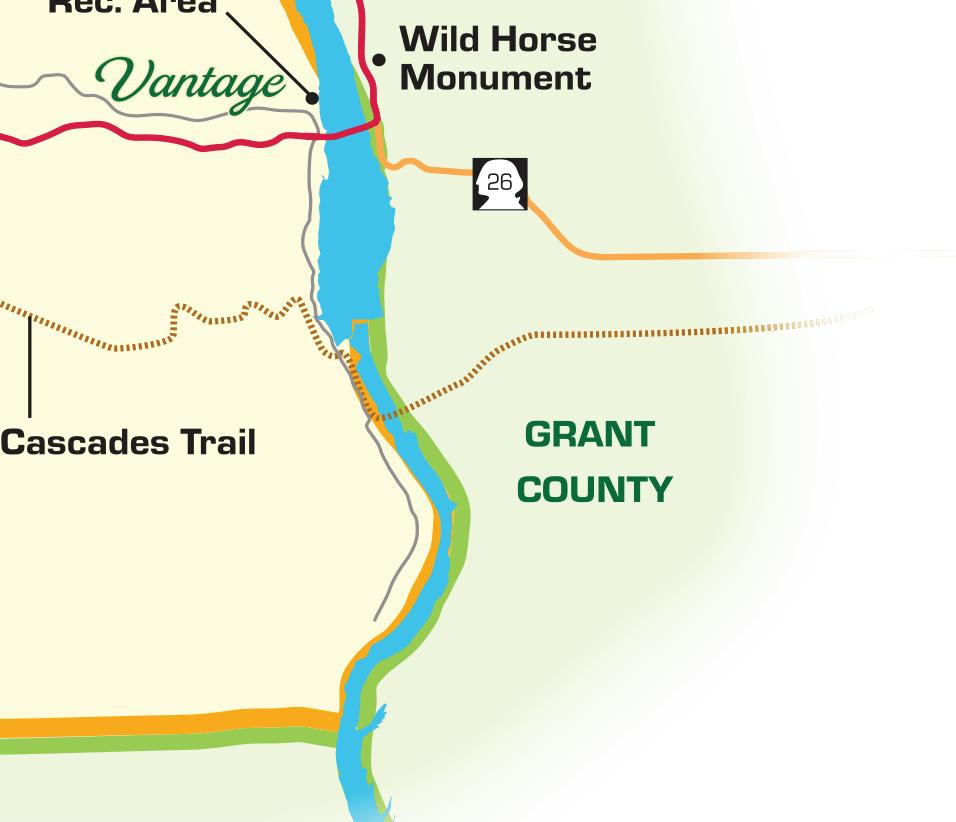
The park, and the adjacent Wanapum Recreation Area, span 7,124 acres next to the Columbia River.
Ginkgo Petrified Forest State Park itself is a National Natural Landmark, established in 1965, and sits on a perch over the Columbia River. The park is home to one of the most diverse collections of petrified wood in North America — the number of species is estimated at more than 40 — including sycamore, walnut, elm and rare examples of ginkgo (Ginkgo biloba).
The geologic importance of the site was discovered in the early 1930s by Professor George Beck, a science and music teacher at the Washington State Normal School (now Central Washington University) 30 miles away in Ellensburg.
Beck had been conducting a study of petrified wood in the area, and was surveying a dry waterbed with four students in Ryegrass Coulee in November 1932 when the group found a piece of petrified wood sticking out of the slope of a small landslide.
The fossil was 2-feet wide, and a sample that was taken back for a look under a microscope revealed they had found the first complete log specimen of a fossilized ginkgo that had ever been recorded.
Beck began to press the State Parks Committee to have the land protected, and a land exchange with the Smithson Sheep Company — which had owned much of the acreage since 1889 — was finished in 1935.
(now Ellensburg. the students of ginkgo Smithson acreage

Work had already started to clear trails by the time the park was created in 1935. The trailside museum was built in 1936 by the Civilian Conservation Corps after a CCC camp had been set up the previous October. The crew also built a caretaker’s house, then constructed the Trees of Stone Trail that passed by roughly two dozen examples of petrified wood still in place where the fossils had been found.
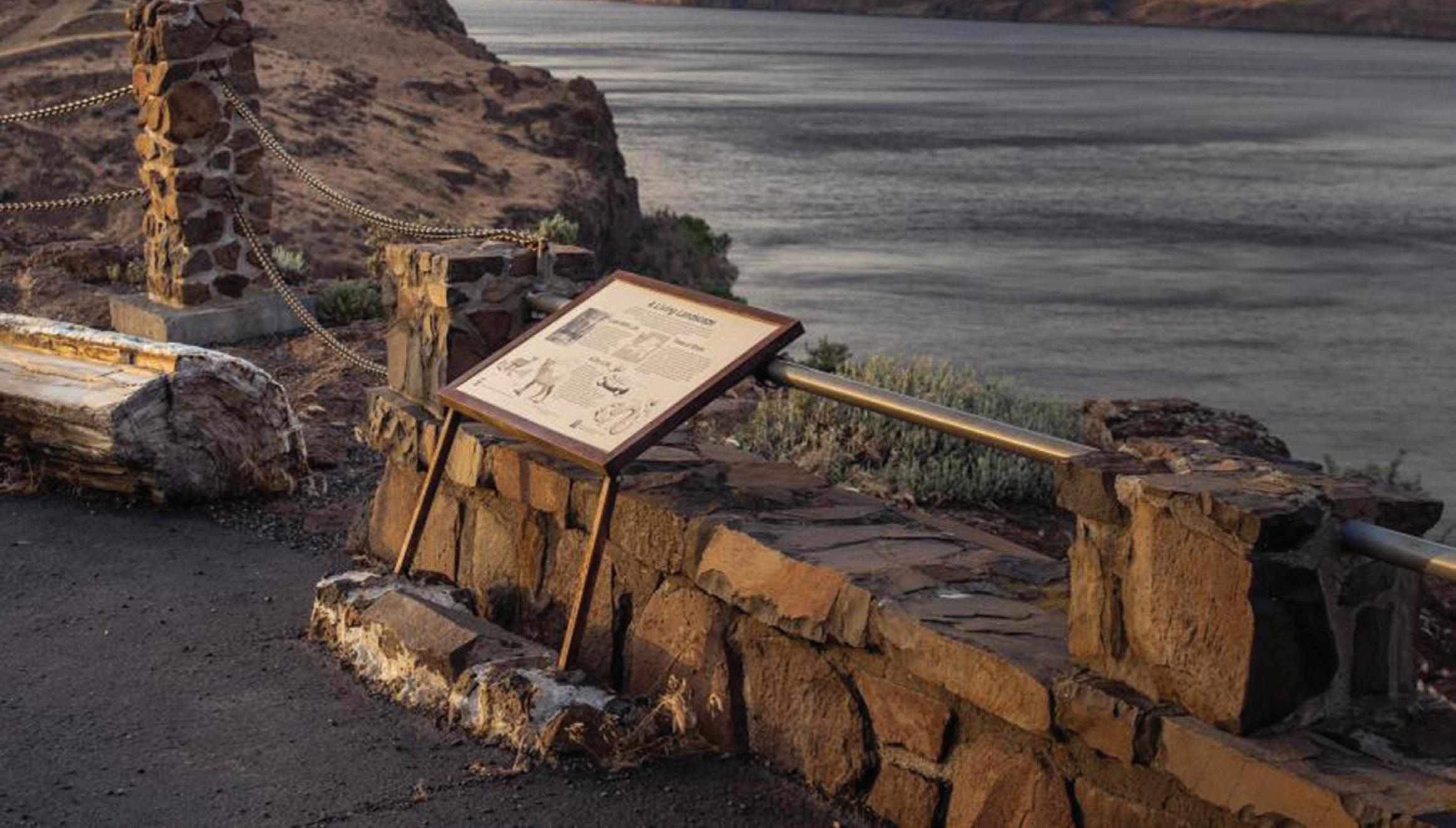
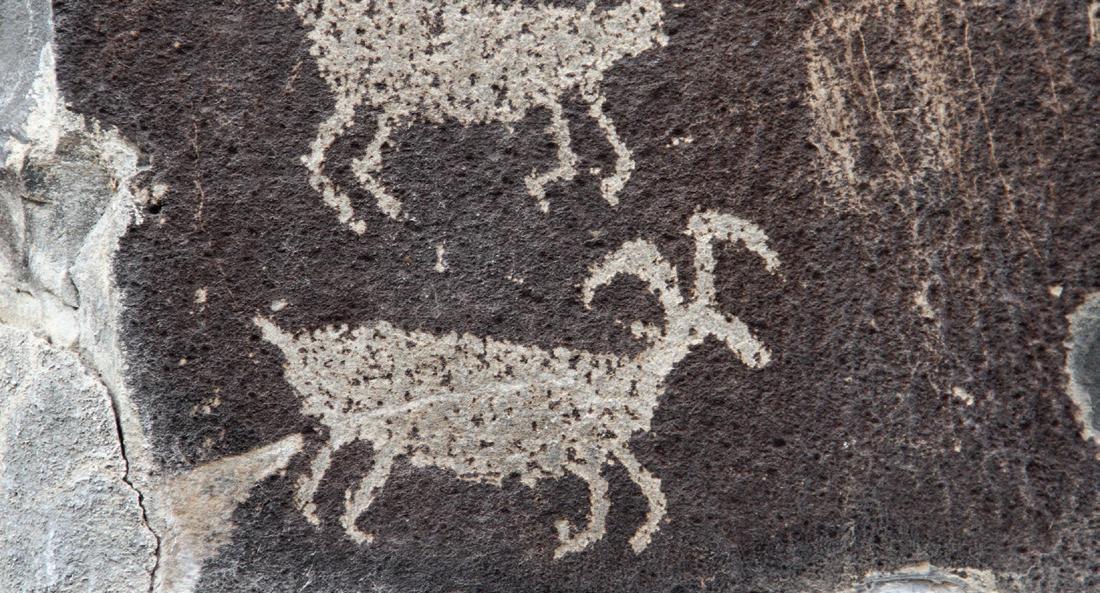
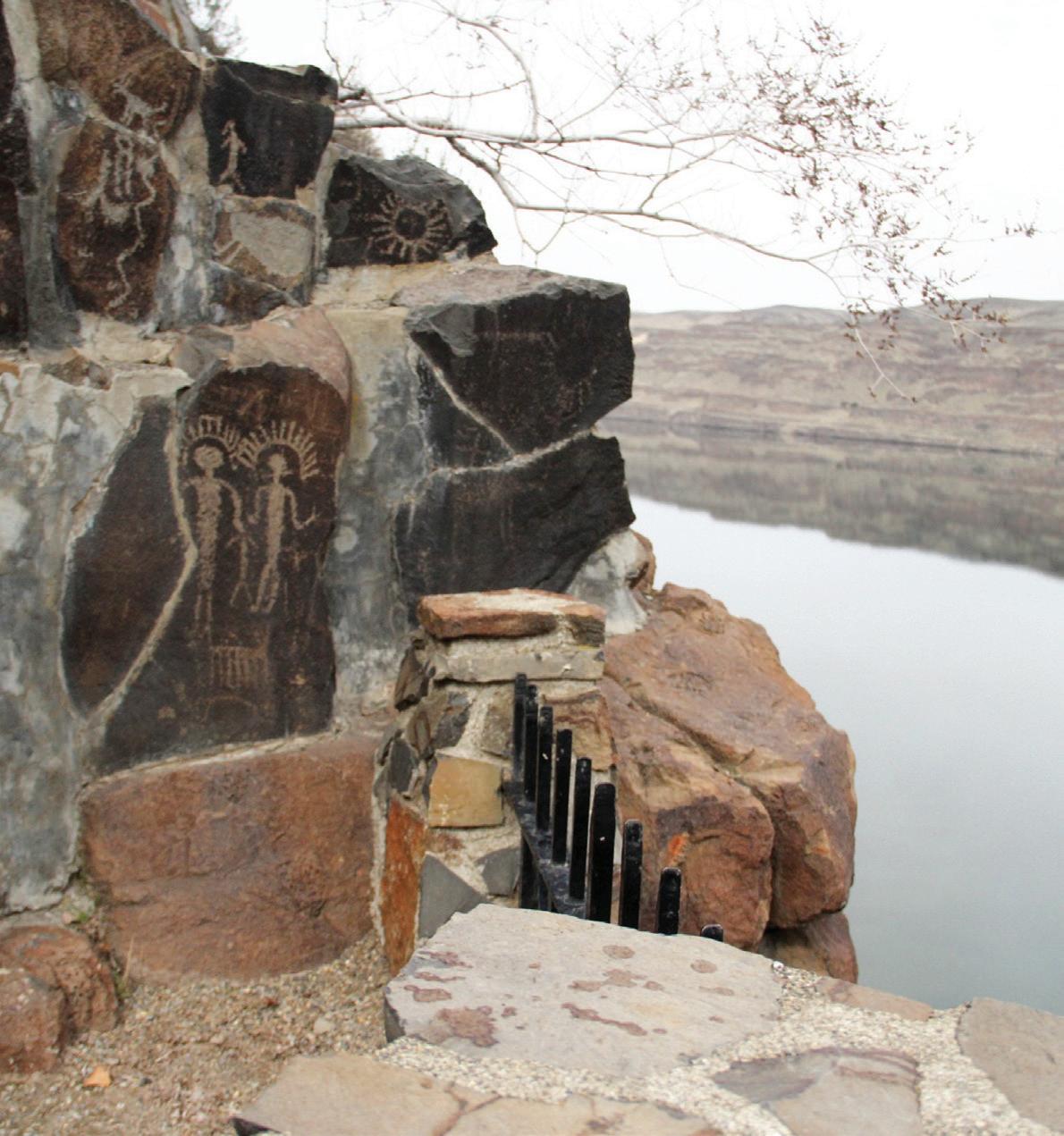
Another trail was built to go past rock images that had been carved into the bluffs along the Columbia River by Indigenous peoples.
(Pieces of the basalt columns that contained the images were cut out of the cliffs in the late 1950s before construction started on the 185-foot high Wanapum Dam five miles downstream in 1963. The reservoir created by the dam, Wanapum Lake, threatened to submerge the images under water. Almost 100 of the images were relocated to the Ginkgo Museum by late 1959.)
The Ginkgo Petrified Forest Interpretive Center has displays of petrified wood samples, as well as exhibits showcasing the geology of the region as well as a gift shop.
Hiking trails through the park can be found two miles northwest of the center. The Trees of Stone Interpretive Trail is a short stretch — about 1.25 miles — that weaves through the petrified forest where trees can be found where they’ve sat for millions of years.
More of the prehistoric petrified trees can be found along a 3-mile hiking trail through the Ginkgo area, as well as “erratics,” large rocks that were once embedded in ancient floating icebergs but rafted to their final resting places by Ice Age floodwaters thousands of years ago.
The petrified wood found in Ginkgo Petrified Forest State Park dates back to the Miocene Epoch, when the area around Vantage was a dense forest and the Cascade mountain range had not yet pushed high enough to create a rain shadow.
A series of massive volcanic eruptions about 17.5 million years ago covered the Columbia River Plateau with lava — and some of the eruptions were so big the molten lava flowed until it hit the Pacific Ocean, 300 miles away. Scientific studies have estimated the lava covered about 64,000 square miles, an area almost as big as Wisconsin.


Volcanic eruptions continued across 10 million years, sometimes burying forests, swamps and lakes.
Trees that were buried by the flows of basalt lava were sealed in place, and silica that was dissolved from volcanic ash seeped into the plant cells of the logs and took their exact form, creating fossilized wood.
Professor Beck, in his field notes from his studies in the 1930s, noted the great varieties of tree fossils found around Vantage might have come from trees from different habitats in the region that fell into rivers and were carried to a large lake. The logs became waterlogged as they drifted around the lake, and were buried when a lava flow swept through. In more recent times, scientists have suggested the logs came from a volcanic lahar — a massive mudflow that carried trees from higher elevations into the marshy lowlands to create a floating raft on the lake before they were later covered with lava.
More than 300 individual lava flows covered parts of the Columbia Basin, and the one that covered the ancient Vantage Lake is called the Ginkgo flow.
Ginkgo Petrified Forest State Park is at 630 Gingo Ave., north of Vantage. (There is also an access road from the park to the adjacent Rocky Coulee Recreation Center.)
The interpretive center is open from 10 a.m. to 4 p.m. Friday to Sunday only from April 1 to May 15 and Sept. 16 to Oct. 31. It is open daily from 10 a.m. to 5 p.m. May 16 through Sept. 15.
The center has a picnic area, restrooms and outdoor
exhibits, and boasts a scenic viewing area high above the Columbia River.
According to Washington State Parks, the area is also a bird-watcher’s paradise — with more bird species reported at the park than any other place in Kittitas County.
Wanapum State Park Campground, on the shore of Wanapum Lake, has 50 full-hookup campsites that can be reserved in advance, plus two hiker/biker campsites. Restrooms and showers are available, and there is a double-lane boat launch for river access, as well as a picnic area at the beach.
The campground is at 4511 Huntzinger Road, south of I-90. Check-in time for camping is 2:30 p.m. (checkout time is 1 p.m.). Tents are strongly discouraged, due to high winds. Park officials also note the camping facilities fill up early on the weekends, especially during the concert season at The George Amphitheatre.
The park and the day use-areas — boat launch, picnic areas and trails — are open from 6:30 a.m. to dusk April 1 through Sept. 30, and 8 a.m. to dusk Oct. 1 through March 31.
A Discover Pass is required for day visits (annual passes are $45; a one-day pass is $10).
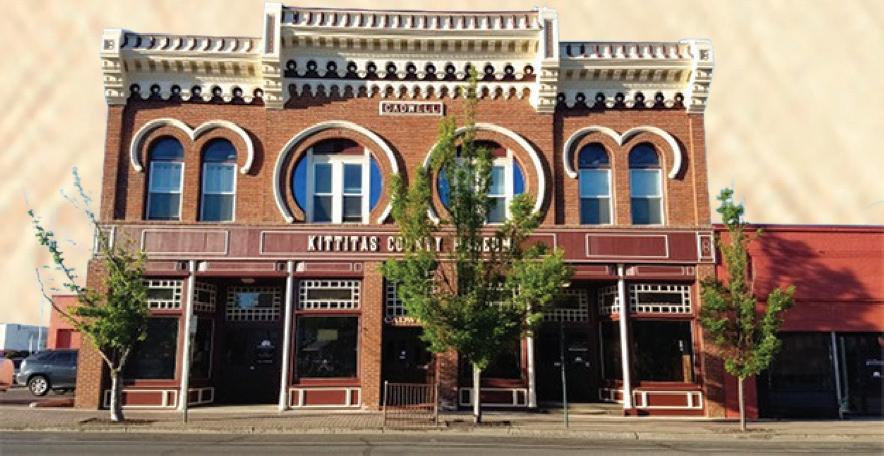
Discover the amazing past of Kittitas County
Displays and interesting artifacts on local farming, Native Americans, pioneers, technology, military service and business all within Ellensburg’s historic Cadwell Building. Monday-Saturday 10am-4pm
Donate Today!
As a private 501(c)3 charitable nonprofit organization, our museum relies on financial donations from individuals and organizations to help support the care, preservation, and display of our artifacts. Donations also enable us to provide quality programming, events, and educational offerings for visitors from around the world. Your support is greatly appreciated, especially in this time of uncertainty, and helps to make a difference









In Kittitas County, the Yakima River is more than a scenic backdropit’s a defining experience.
BY STAFF OF KITTITAS COUNTY CHAMBER
Connecting multiple towns throughout the county and designated as a Blue Ribbon river, this stretch of water is recognized for its exceptional quality, thriving habitat, and world-class trout fishing. But for visitors, that designation means something more tangible: a river that invites you in to experience it. Whether you’re casting a line, floating downstream, or simply taking in the view, the Yakima River ties our county together.
Flowing from the Cascade Mountains near Easton and winding through the Yakima River Canyon, the Yakima is one of the longest contiguous Blue Ribbon trout fisheries in the Pacific Northwest. The section between Easton and Roza Dam is especially renowned, drawing anglers from across the country for its consistent production of wild rainbow and cutthroat trout.
What makes this river so special isn’t just the fishing, it’s also the ecosystem that supports it.
Cold, clean water flows steadily from the Cascades. Seasonal insect hatches create a rich food source for trout. Cottonwood-lined banks and protected habitat provide shelter for wildlife. Together, these elements create a balanced and thriving river system that supports not only fish, but an entire landscape of life.
Spend a little time along the Yakima River and you’ll quickly notice it: Bald eagles circle overhead, elk move through the canyon, birds echo along the shoreline.
For anglers, this is where the Yakima River shines. Fly fishing here is considered some of the best in the state, with opportunities year-round. Whether you’re wading into a quiet stretch or floating through the canyon with a guide, the experience is as much about the setting as it is the catch.
As Zach from Yakima River Fly Co. puts it, “It’s always changing. The flows, the hatches, the braided channels
— the variety is endless. With nearly 80 miles of floatable water, no two sections feel the same… it’s a completely different river from top to bottom.”
Local outfitters and fly shops — including Red’s Fly Shop — make the river accessible to both seasoned anglers and beginners alike.
And you don’t have to be an expert to enjoy it.
“This river is one of the best classrooms you could ask for,” Zach says. “With such a healthy population of fish, it’s an ideal place to learn, build confidence, and get instant feedback from hungry trout.”
But you don’t have to fish to experience the Yakima River.
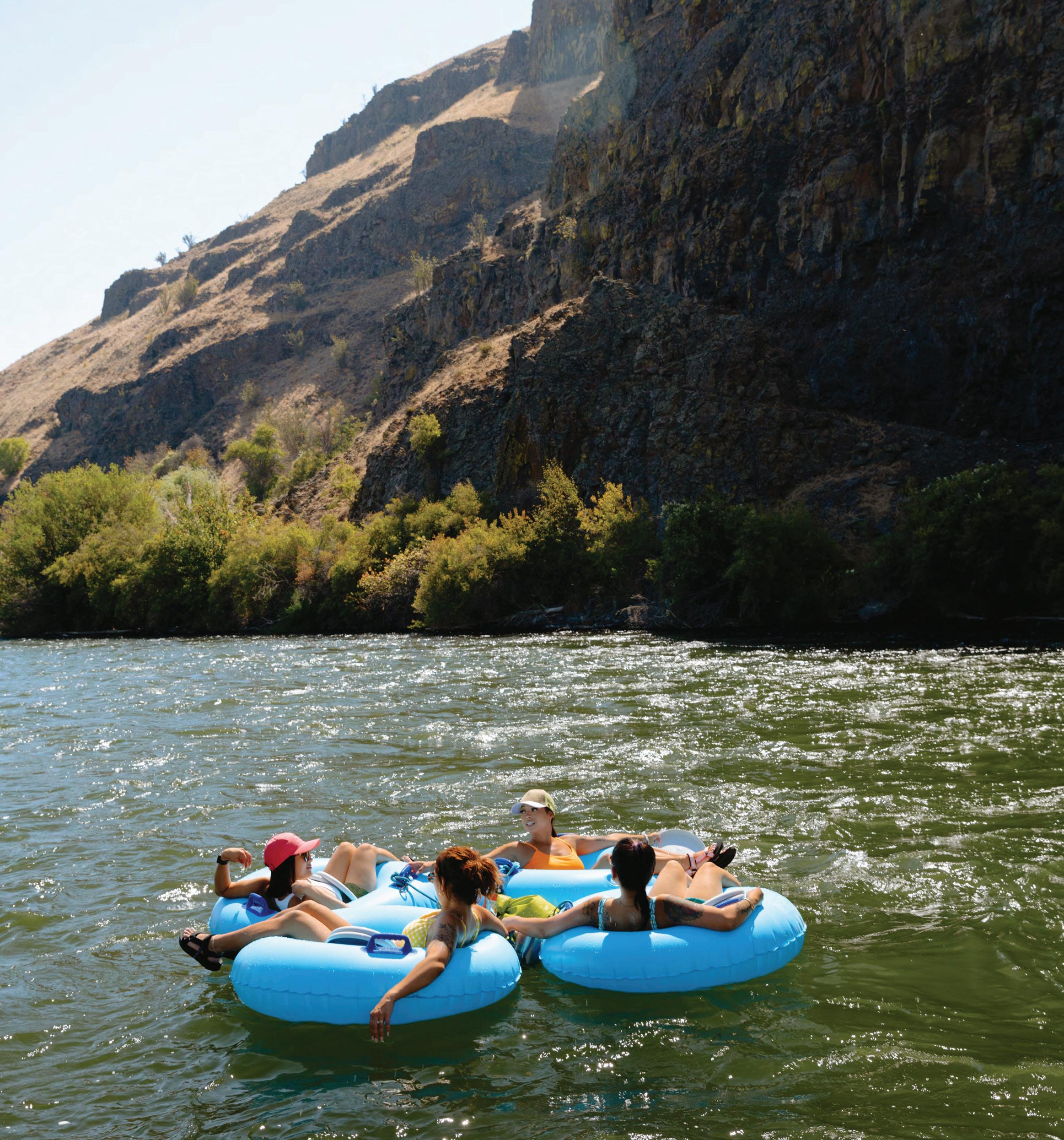
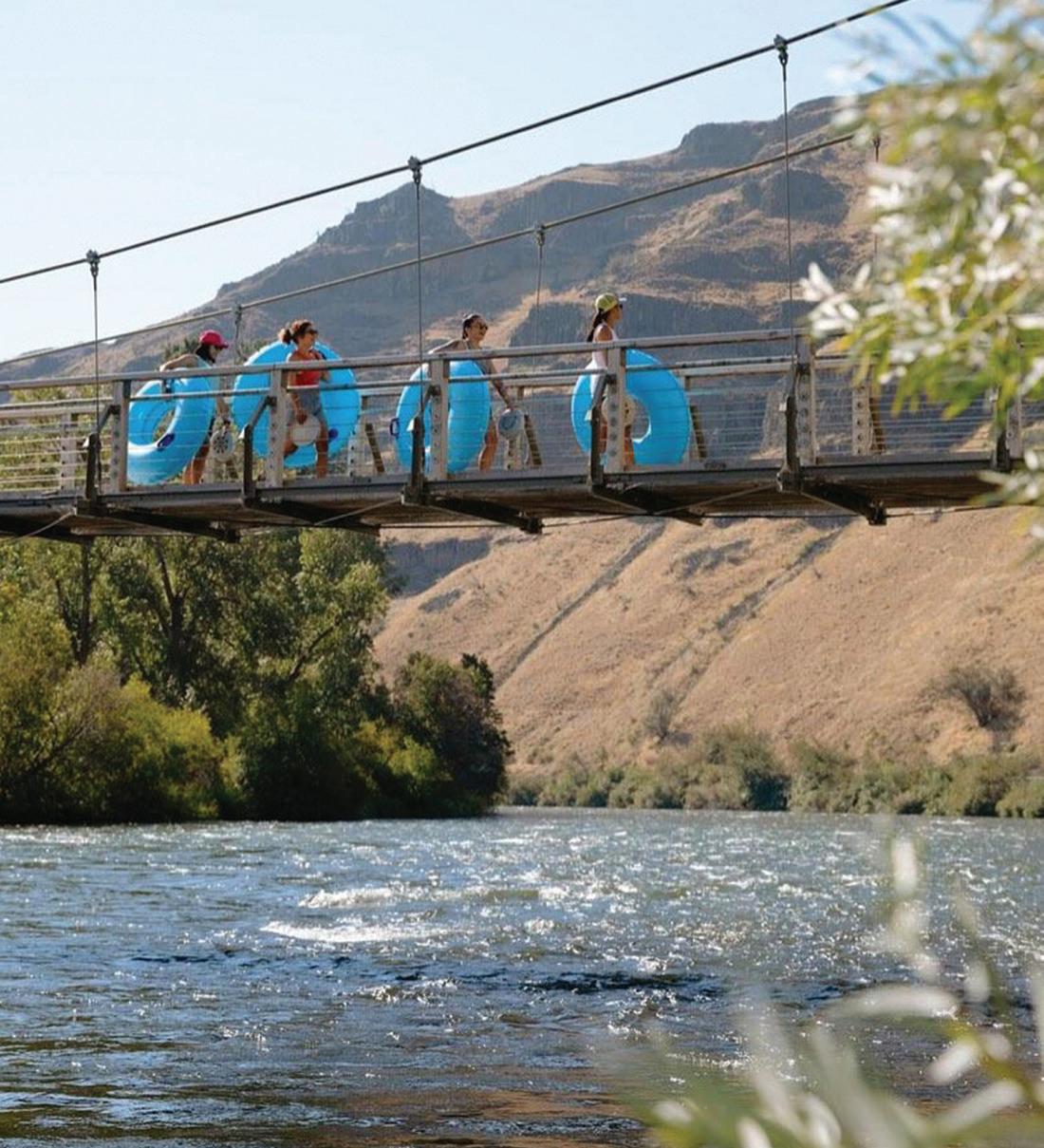
In warmer months, floating the river becomes a favorite way to take it all in. Drifting through the Yakima Canyon offers a front-row seat to basalt cliffs, winding bends, and wide-open skies. Whether you’re in a raft, kayak, or inner tube, it’s a slower pace - one that allows you to fully absorb

What keeps you coming back to this river year after year?
“It’s always changing. The flows, the hatches, the braided channels, the styles of fishing — the variety is endless. It helps that it’s Washington’s only blue ribbon trout fishery, but what keeps me coming back is watching it evolve. Since I first fished it as a kid, I’ve seen both the size and quantity of fish improve year after year. With nearly 80 miles of floatable water, no two sections feel the same. From its headwaters through steep, timbered country to the broad basalt canyons and into the sagebrush-steppe of the lower valley, it’s a completely different river from top to bottom.”
What’s different about seeing the river from the water versus from the road?
“You get to see the nuance of the river you’d never pick up from the road. I love watching the hatches build throughout the day and seeing the trout and birds respond in real time. From the water, the river reveals itself: reading current seams, transitions, and holding water that all connect into a bigger system that looks flat from above.”
Do you have to be an experienced angler to enjoy the Yakima River?
“Not at all! I love teaching beginners, and this river is one of the best classrooms you could ask for. With such a healthy population of fish, it’s an ideal place to learn, build confidence, and get instant feedback from hungry trout. I’ve had kids as young as 6 years old stick fish within the first half hour of a float, and oftentimes it’s the newer anglers who end up hooking the biggest one of the day.”



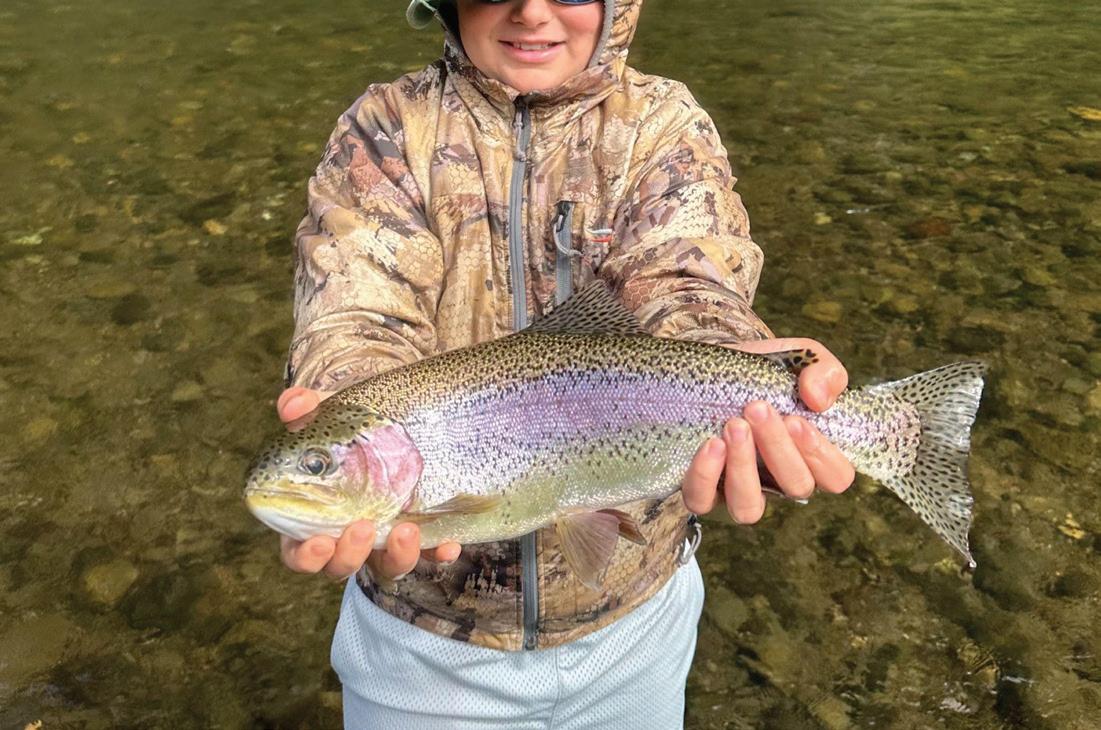









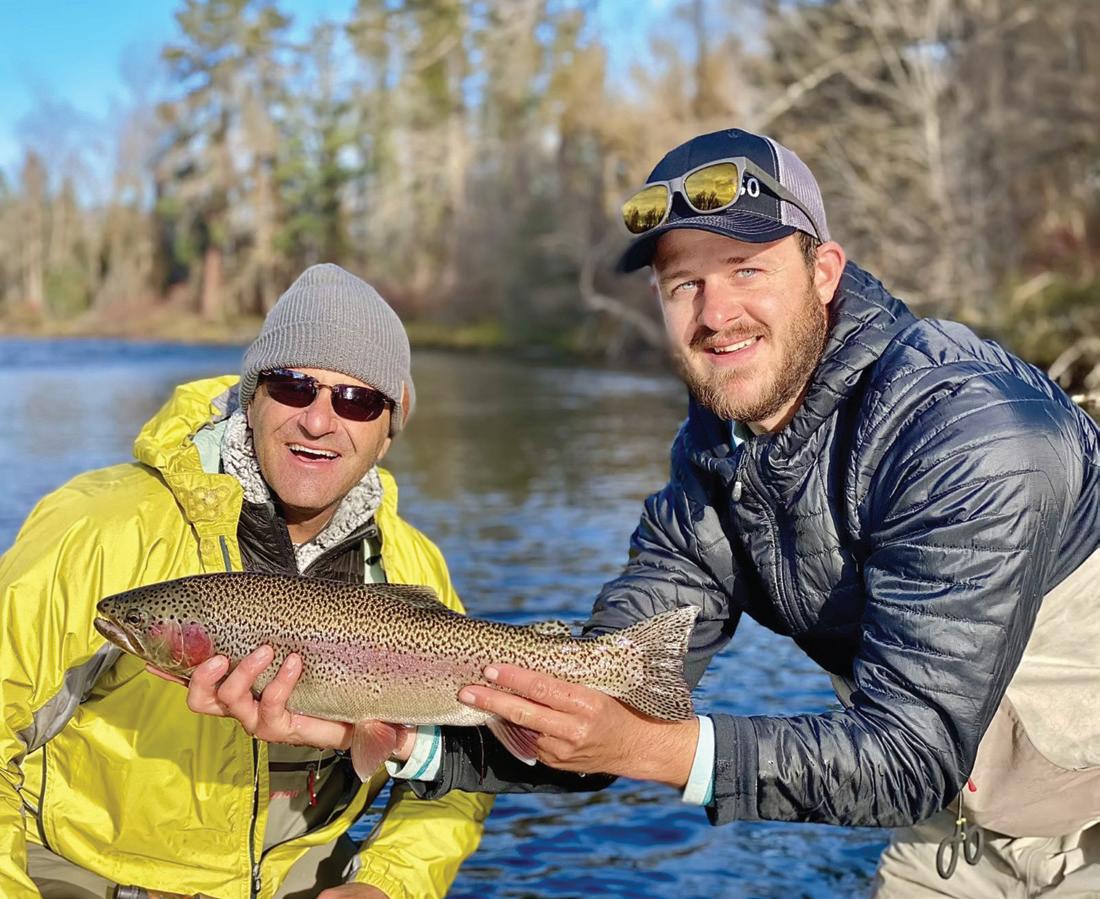
and a client with a healthy rainbow trout on a nice spring day. the landscape and watch for wildlife.
And from the water, the perspective shifts entirely.
“You get to see the nuance of the river you’d never pick up from the road,” Zach explains. “From the water, the river reveals itself — the seams, transitions, and movement that all connect into a bigger system.”
For those looking for a more guided experience, outfitters like Red’s Fly Shop also offer scenic float trips and boatbased excursions, combining local knowledge with access to some of the river’s most beautiful stretches.
No matter how you choose to spend time here, one thing becomes clear: this is a place shaped by both recreation and respect.
The Yakima River is central to the region’s outdoor culture, but it’s also deeply tied to conservation efforts that protect its long-term health. Local organizations, guides, and community members play an active role in preserving water quality, habitat, and fish populations — ensuring future generations can experience it the same way.
For visitors, that means being mindful.


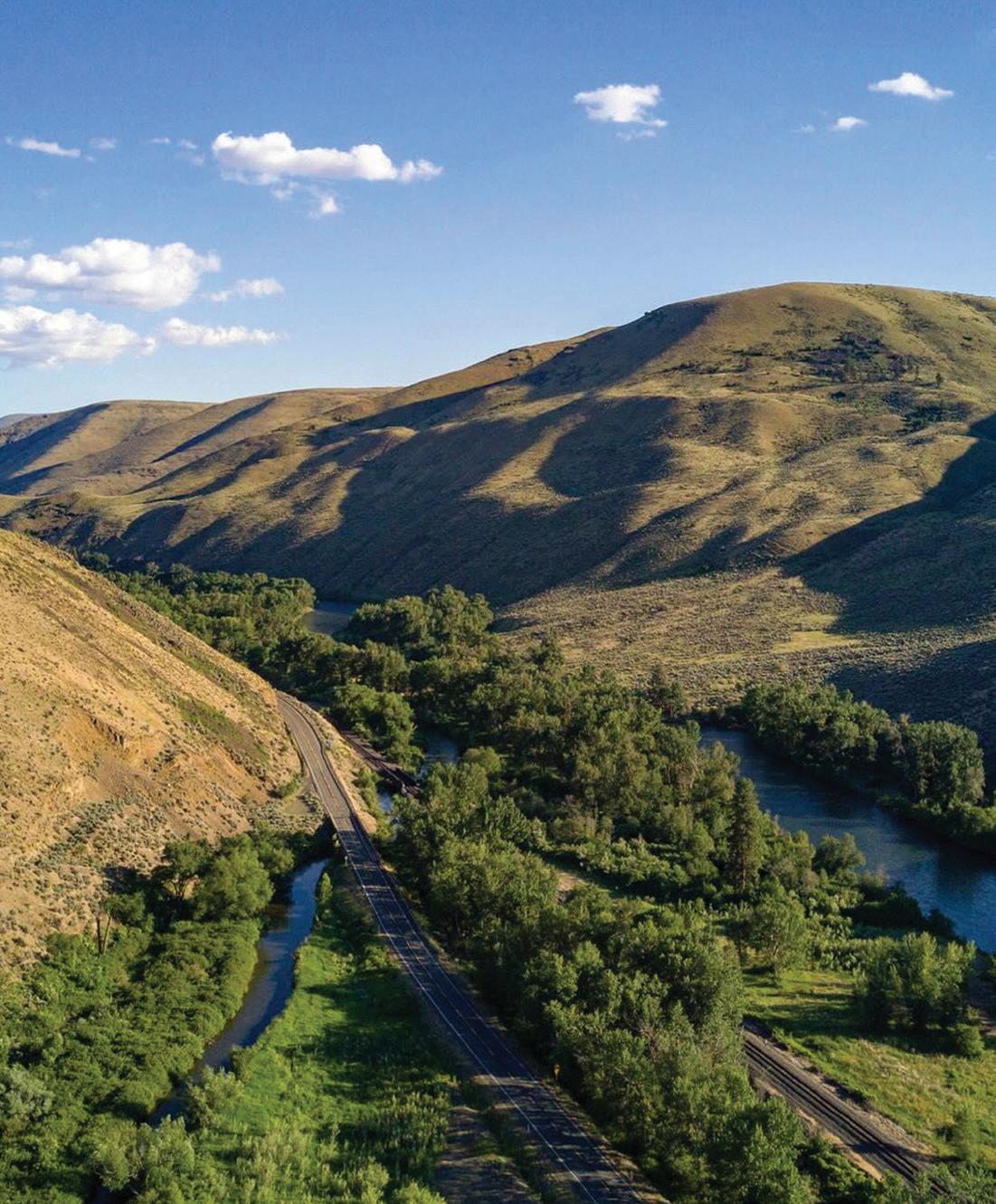
Pack out what you bring in. Respect wildlife. Follow seasonal guidelines and river safety practices. Whether you’re fishing, floating, or simply stopping at a scenic pullout, responsible recreation helps protect what makes this river so special.
Because a Blue Ribbon designation isn’t just about recognition, it’s also about responsibility.
In Kittitas County, the Yakima River offers a place to cast a line at sunrise, float through the canyon on a warm summer afternoon, and watch eagles soar overhead.
And whether you come for the fishing, the floating, or simply the view — the Yakima River delivers an experience that’s as memorable as it is iconic.


Why Kittitas County is emerging as a destination for wellness
BY GAYLE PICKEN
Wellness is more than just a focus on physical health and fitness--it’s an intentional and holistic pursuit to restore balance and harmony in all aspects of our mental, physical and spiritual wellbeing.
With more people feeling stressed and exhausted from our modern-day lifestyle, the interest in wellness activities and practices has grown exponentially. It’s easy to see why with benefits like reduced stress, boosted energy levels, better social connections and increased quality of life.
Kittitas County is a natural place for wellness. The abundant forests, rivers, lakes, and wide-open spaces provide a place to relax, slow down, and experience deep transformation.
And with a growing community of wellness practitioners-including women’s health experts, sound bath practitioners, intuitive mediums, herbalists, ayurvedic practitioners, acupuncturists, and energy healers-- Kittitas County is becoming known as a top destination for people exploring their wellness journey.
“I believe people are seeking new ways to improve their physical and mental wellbeing,” said forest therapy guide Dawn Ambrose, “and with over 70% of the county being public lands, people have all sorts of opportunities to nurture the sense of peace we all desire.”
Through her business Woodland Findings, Dawn offers Forest Bathing experiences, also known as Shinrin Yoku, at various locations throughout the county, including Roslyn, Cle Elum, Suncadia, the Teanaway, and at her art studio near Ellensburg.
Other wellness practitioners agree.
“People are craving nature and a connection to Mother Earth” said Amy Vetter, owner of Wild Rose Yoga in Cle Elum. Her studio offers a variety of yoga, breath, meditation and fitness classes. Amy has seen a trend in conscious awareness around spirituality and the earth.
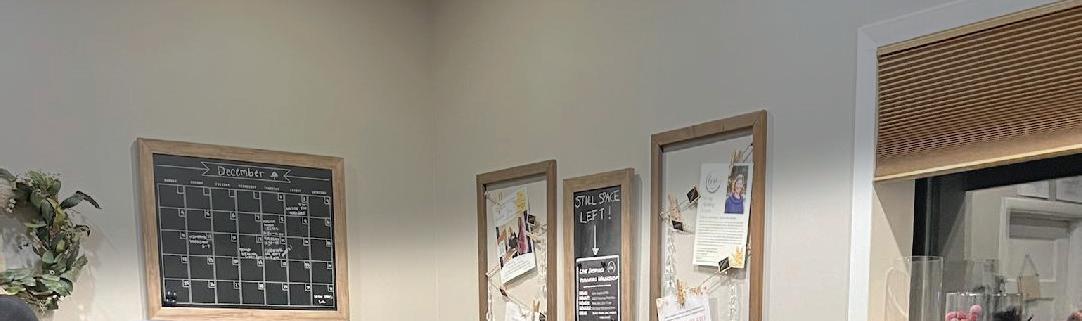

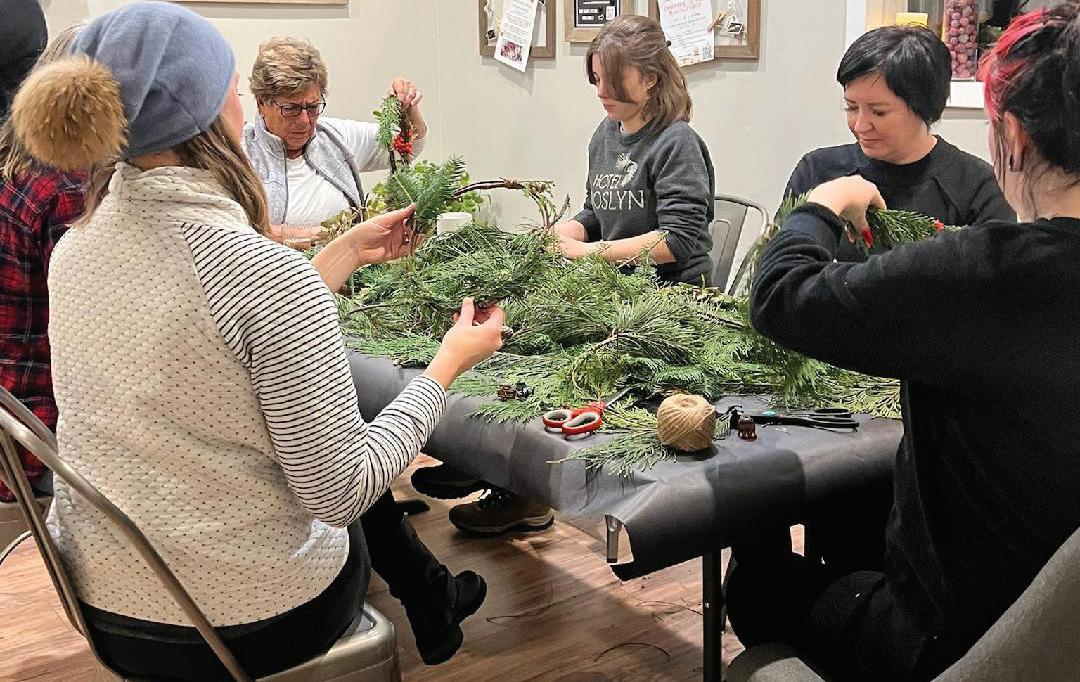
A group class at Cle Elum Wellness Center.
“The mountains and the energy of the land that we live in is really powerful,” added Amy, “and people are drawn to the energy.”
Kristi Miller of DreamWeaver Oracle says that being surrounded by nature creates the perfect environment for introspection, healing and intuitive work. “Many people come here to step away from the noise of daily life and that creates a natural opening for deeper clarity and breakthroughs.”
Kristi’s business specializes in helping people gain clarity through a combination of intuitive dreamwork and astrology. She shares an office space in Cle Elum with two other wellness practitioners: Laurie Lind of Soul Thread Sanctuary, who offers quantum healing hypnosis (QHHT) past life regression sessions, and Jill Gerber, licensed mental health therapist, who offers Intuitive Psychology and Psychotherapy with specialties in chemical dependency, trauma and grief.
“With a growing number of people prioritizing self-care and self-awareness, it’s become much more normalized for people to seek help for mental health support,” added Jill.
Wellness centers and collectives have been popping up throughout Kittitas County. In Ellensburg, Anew Wellness boutique gift shop features artisan candles, handmade soaps a variety meditation, events.
Another Relaxation tarot massage, classes.
Many experiences Nic about “I see couples addition provides weekends, vacation A For Drum


soaps and handcrafted skincare items. The shop also hosts a variety of classes such as candle-making, breathwork, meditation, vision boards, art shows and other special events.
Another Ellensburg highlight, Divine Wellness and Relaxation, features a metaphysical store with crystals, tarot cards, and jewelry, plus professional services like massage, energy healing, intuitive readings and movement classes.
Many practitioners in the area provide custom wellness experiences for groups and private retreats.
Nic Armitstead of Simple Indulgence Wellness says about 25% of her massage clients are from out of town. “I see folks adding a massage after a long day of golf or couples looking for a break on a weekend getaway.” In addition to her studio at the Roslyn Red House, Nic provides on-site massage services for groups hosting girls’ weekends, bridal showers, and corporate retreats at their vacation rentals or homes.
For travelers craving connection and community, several
annual wellness events provide the perfect opportunity to engage. The annual Mountain Wellness Adventure in Roslyn & Cle Elum is a three-day event that happens every Spring and offers a fun way to meet local practitioners and try out their services. A highlight of the event is the community wellness fair with a full-day line up of speakers and vendors.
“The wellness fair weekend is my favorite time of year in our little mountain town,” says Jenn Nielsen, owner of Cle Elum Wellness Center, “It’s a time when individuals interested in health and wellness collaborate for an amazing event. We get to showcase the wide range of practitioners in our area and share their diverse talents with the community.”
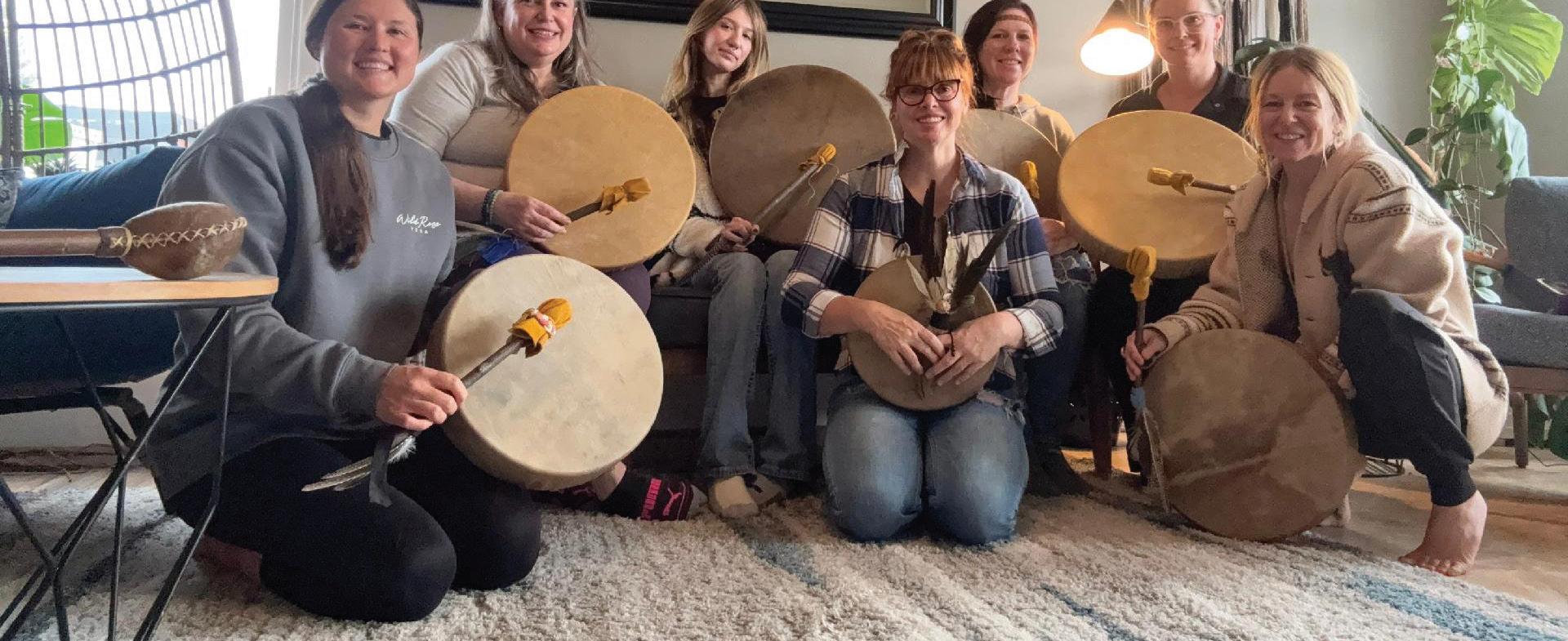
In the Fall, Ellensburg is home to the Wellensburg Healing Arts Festival where visitors can tour the many wellness businesses located in the walkable downtown area and experience events such as sound journeys, drum circles, readings, inspirational speaker series and more.
For more information about these and other wellness businesses in the area, follow the Kittitas County Chamber of Commerce website and social media.











g y o u r v i s i t m e m o r a b l e
F o r 2 0 2 6 , w e ’ v e m a d e i t e v e n e a s i e r t o e x p l o r e . I n s t e a d o f a s t a t i c l i s t , s i m p l y s c a n t h e Q R c o d e i n t h i s g u i d e t o
a c c e s s o u r l i v e d i g i t a l d i r e c t o r y u p d a t e d y e a r - r o u n d s o y o u a l w a y s h a v e t h e m o s t c u r r e n t r e c o m m e n d a t i o n s
a t y o u r f i n g e r t i p s W h e t h e r y o u ’ r e l o o k i n g f o r a g r e a t p l a c e t o e a t , u n i q u e s h o p p i n g , l o c a l e x p e r t i s e , o r h i d d e n
g e m s o f f t h e b e a t e n p a t h , t h i s d i r e c t o r y i s d e s i g n e d t o e n h a n c e y o u r e x p e r i e n c e e v e r y s t e











“From the Cascades to the Columbia” is its often used unofficial motto, and for good reason.
BY ANNA ROSE
Few places in Washington state capture such a dramatic sweep of landscape within a single set of boundary lines. In Kittitas County, alpine peaks give way to high desert. Where else can a morning on the slopes turn into a balmy afternoon floating the river canyon? This kind of contrast is more than geography, it is identity.
Kittitas County is home to the communities of Ellensburg; Kittitas; Cle Elum and South Cle Elum; Thorp; Easton; Ronald; Vantage; Liberty; and Snoqualmie Pass, each with their own distinct personality, history, and culture.
But what truly sets Kittitas County apart, though, is how its worlds overlap. Here, you see agriculture coexisting with academia; history shaping the future; deep heritage lived out in rodeo arenas and working ranches. Resilience is woven into daily life here, visible in both the land and the people who continue to shape it.
The first inhabitants of the valley were the Kittitas (also known as Kittitas) and Pshwánapam bands. Although distinct from the Yakama Tribe, early settlers and the federal government grouped the Kittitas with the larger Yakama Tribe. As white Americans and European immigrants began to stake homesteads in the 1800s, the Kittitas band was encouraged by the Bureau of Indian Affairs to move away from the valley and to the Yakama reservation (about 50 miles to the south).
However, the Yakama Tribe does not recognize the Kittitas as one of the 14 bands that make up the Yakama Nation.
The only Kittitas to refuse relocation was the Aronica family. Ida Nason Aronica, its matriarch, was born in the late 1800s.
Of Snoqualmie and Wenatchee descent, she married into the Kittitas band and made it her purpose in life to preserve a culture facing extinction.
To this day, the Aronica family resides in Kittitas County and works to preserve its heritage and culture.
The Kittitas County Historical Museum in particular facilitates this work and collaborates with local Indigenous craftspersons to provide hands-on learning opportunities such as beadwork and basket weaving, as well as museum displays and platforms for oral storytelling.
By the late 1860s, cattle ranchers had established land claims across the region, making cattle the area’s foremost industry. As the “Cattle Kingdom” reached its peak in the final quarter of the nineteenth century and the West grew more settled, a distinct western culture began to take shape — drawing from cattle roundup traditions, Mexican fiestas, Wild West shows, and powwows. Out of this culture, the rodeo was born.
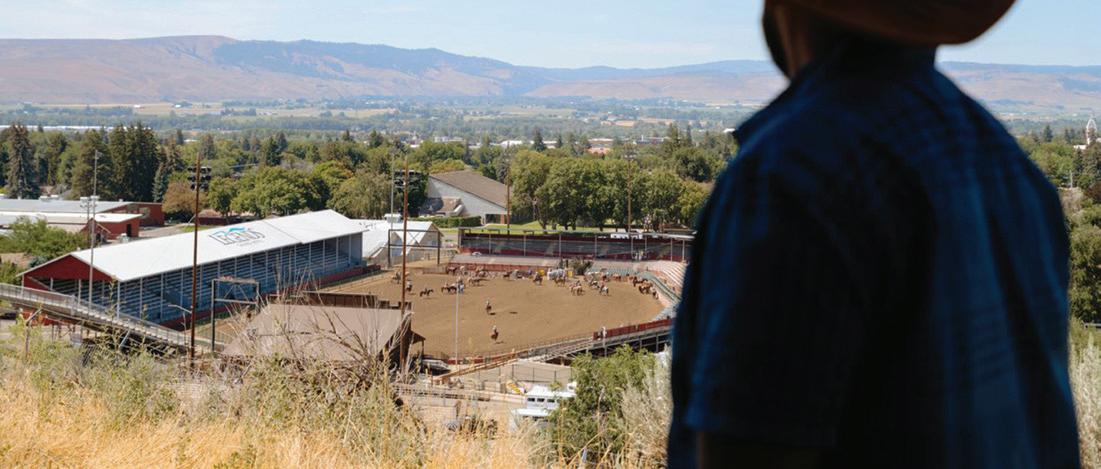
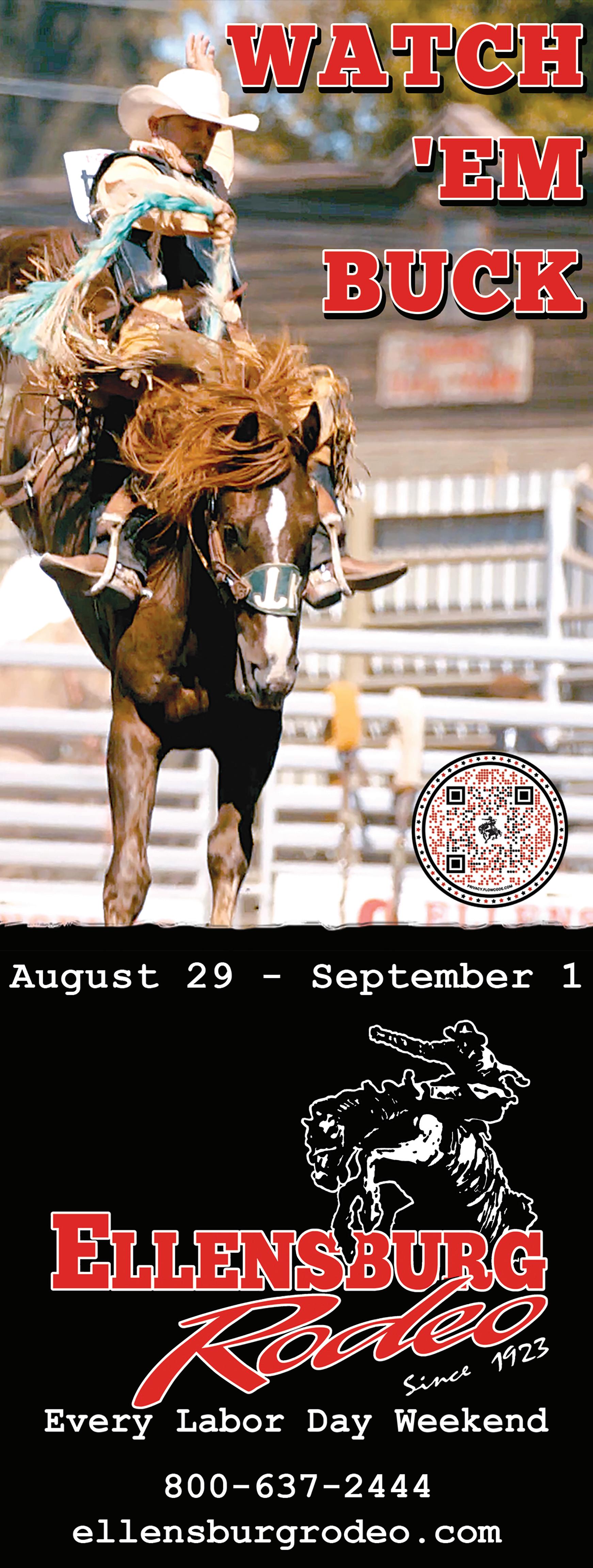
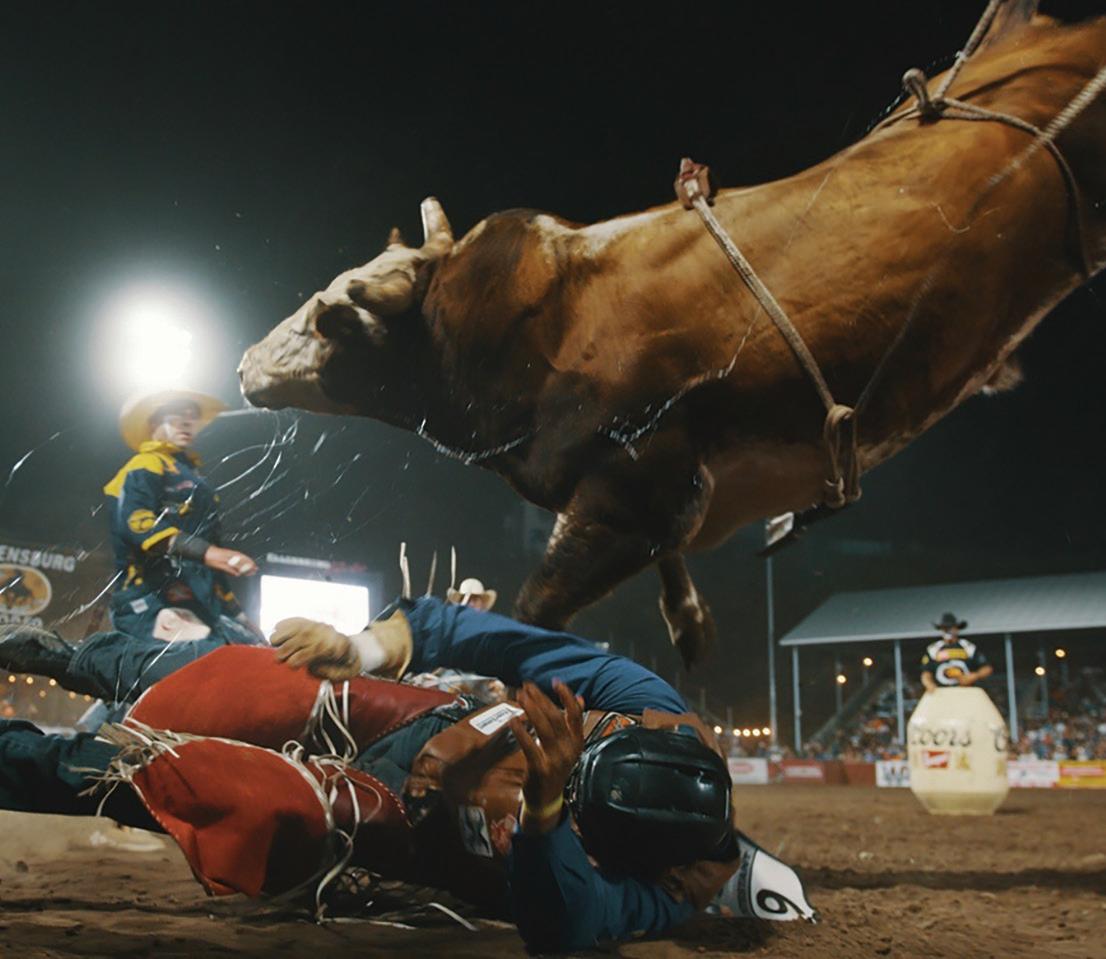
In 1923, ranchers, farmers, Indigenous peoples and local visionaries came together to found the Ellensburg Rodeo. According to the Ellensburg Rodeo Hall of Fame, they were driven “not only by a desire to celebrate a vanishing frontier way of life, but also by a desire to promote their community and generate commerce.” More than a century later, that vision endures. The Ellensburg Rodeo is now recognized as one of the top 20 professional rodeos in the United States, offering a purse that exceeds $700,000 and drawing elite competitors from across the country, including barrel racer Brittany Pozzi Tonozzi and bull riding champ Stetson Dell Wright.


Ellensburg was almost the capital of Washington state. It was a finalist alongside Olympia and North Yakima (now Yakima) in 1889-1890, but a devastating fire and a final vote in 1890 gave the win to Olympia by nearly 73%. A prospective governor’s mansion went up on Craig’s Hill at the corner of Third Avenue and Chestnut Street. In 1930 it was remodeled as an apartment house and given a fantasy castle theme complete with battlements.
Held every Labor Day weekend, the rodeo is supported by a network of dedicated organizations — including the Top Hands, Ellensburg Rodeo Posse, and Rodeo Royalty — that work alongside the Ellensburg Rodeo Board to bring the event to life each year. Its history and traditions are



preserved by the Ellensburg Rodeo Hall of Fame Association, a nonprofit affiliate located next door to the Clymer Museum and Gallery in downtown Ellensburg. There, an extensive collection of art, artifacts, and Western history honors the rodeo’s founding, its All-Around Champions, women in rodeo,


programs. Its four colleges — Arts and Humanities; Business; Education and Professional Studies; and the Sciences — serve approximately 8,000 students across its main Ellensburg campus and six satellite locations in Des Moines,




Indigenous peoples, trick riders, clowns, ropers, specialty acts and even the animals that achieved national fame.
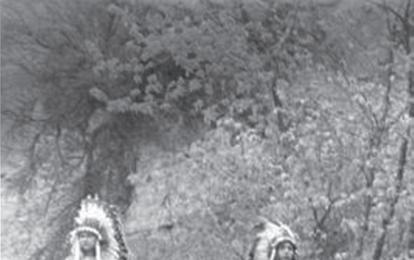
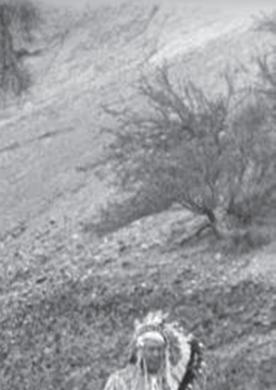
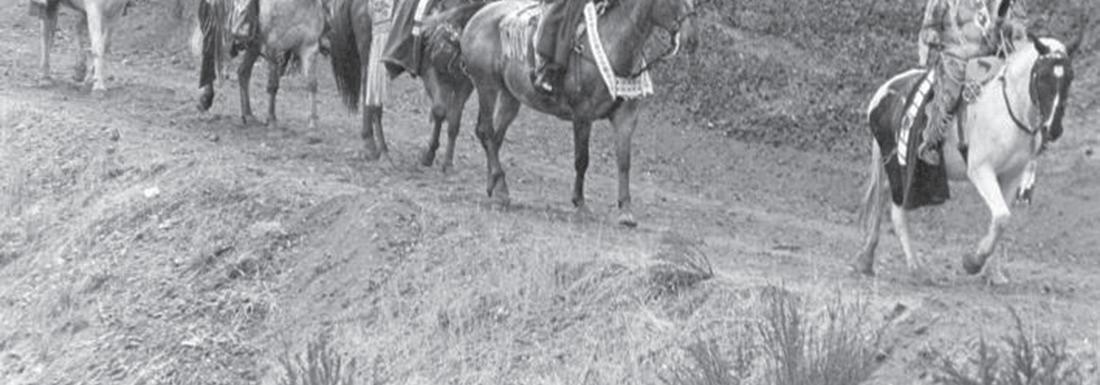
To mark the start of the rodeo, members of the Yakama Nation ride down Craig’s Hill and into the rodeo arena on horseback, dressed in traditional regalia to symbolize the way the tribe came into the Kittitas Valley for countless years before settlers arrived. The tribe also opens each night of the rodeo with a traditional dance in the center of the arena. Spectators are often invited to join in the dance.
Competition events include bareback riding; tie-down roping; steer wrestling; saddle bronc riding; team roping; barrel racing; bull riding; breakaway roping; and steer roping. The weekend also features Xtreme Bulls, a separate Wrangler-sponsored PRCA touring event held in conjunction with the rodeo.
Founded in 1891 as the Washington State Normal School — an inscription still visible on the iconic Barge Hall — Central Washington University was built to train elementary and junior high teachers. Its original student body of roughly 50 pupils, ranging in age from 15 to 50, could hardly have foreshadowed what the institution would become.
Despite early 20th-century challenges like the Great Depression, the school still grew steadily, earning accreditation as a College of Education before being rechristened Central Washington State College in 1961 and, finally, Central Washington University in 1974.
Today, CWU offers 135 majors, 32 master’s degree programs, and a range of minors and certificates, including the only professional pilot program in the Pacific Northwest and one of the region’s most respected teacher education
Moses Lake, Pierce County, Wenatchee and Yakima.
CWU is also home to some truly one-of-a-kind programs. Its Primate Behavior and Ecology program offers the only baccalaureate degree in primatology in the world, the only master’s degree in primatology in the United States, and the only Captive Primate Care Certificate in the country. Situated in the heart of the nation’s hop country, it also runs a handson craft brewing program.
More recently, CWU has drawn national attention for its commitment to sustainable energy. Its GeoEco Plant (the first of its kind in Washington state) taps into the Ellensburg Aquifer to provide geothermal heating and cooling for the new North Academic Complex and up to three additional campus buildings, marking a significant step in the university’s goal of becoming a net-zero carbon campus by 2050.

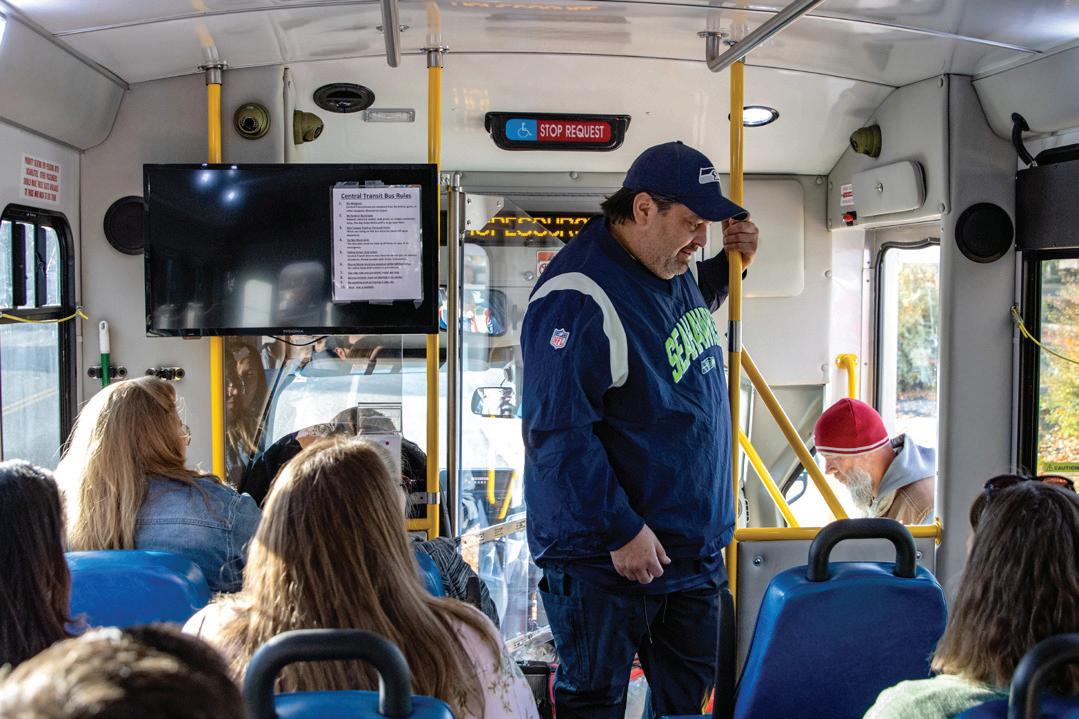
Ellensburg Central Transit helps riders get where they need to go - to appointments, errands, or just out to enjoy the town.
Safe, reliable, and friendly transportation is just a ride away.
Discover your next trip with us!





BY KEITH AXTHELM

Gold prospecting and mining has been active in Kittitas County for well over 150 years. New people start learning to pan and prospect every year. With the current prices of gold, silver, and precious metals being the highest in history, it is a perfect time for everyone to “Go for the Gold”.
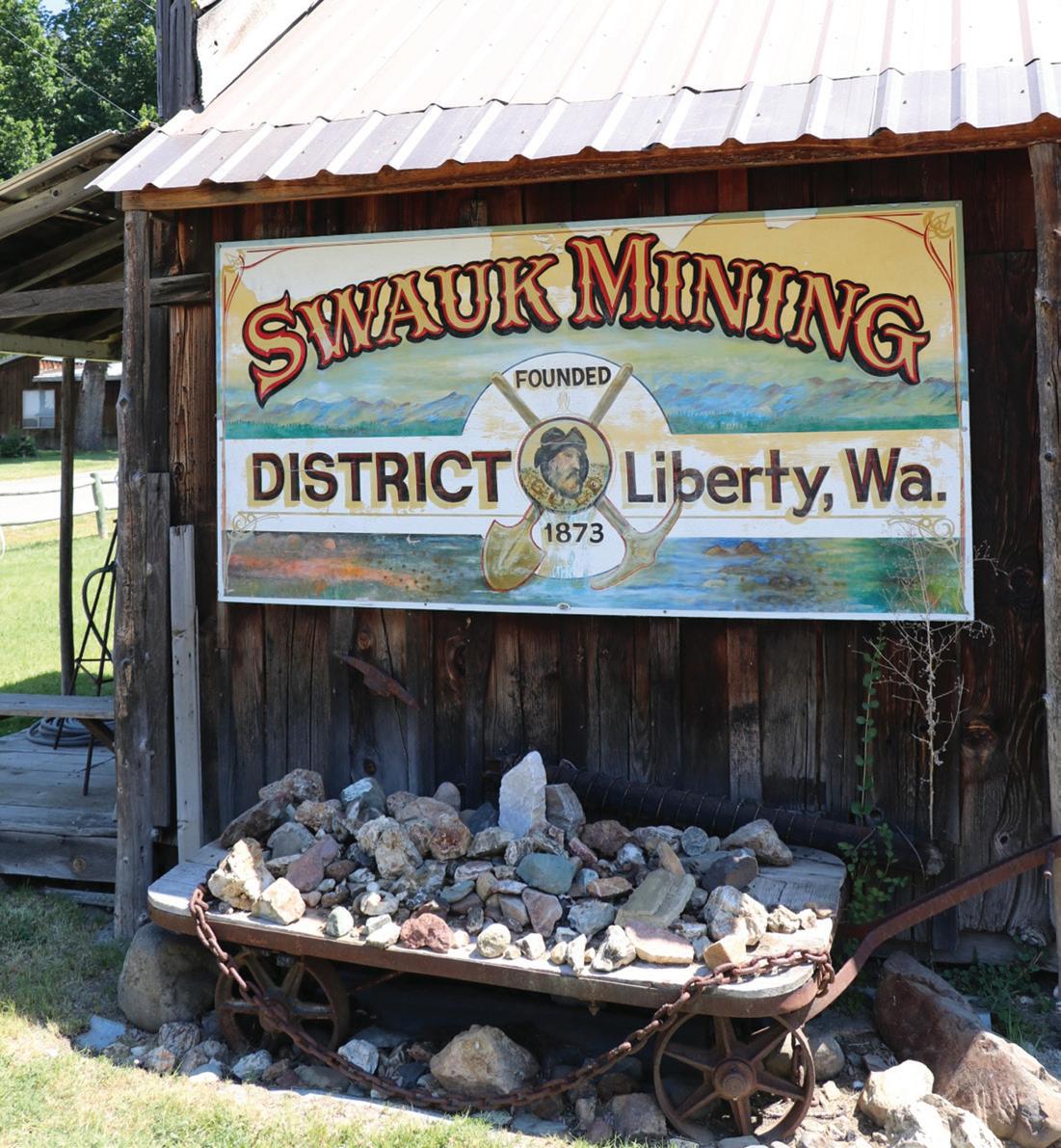
The Swauk Mining District is the watershed for the Swauk Creek from the peaks of Blewett Pass to the Yakima River. While there is no official documentation of when gold was found in the area, 1868 seems to be the commonly accepted The Swauk Mining District was formed in 1873 and is one of the oldest Districts in the Washington Territory. Liberty has produced an impressive array of gold over the years, including rare crystalline and wire formations—formed by a combination of erosion and the physical pounding the gold experiences from stones in creeks and rivers. Alongside these unique finds, the area is also known for being able to find quite sizable nuggets in Washington State.
The basic tools of the trade are considered a pick and shovel. These are used to dig and pry out the gold bearing material. Old miners used a rocker box or metal pan and water to separate the heavy metals from the lighter sand and stone. Gold is 19.3 times heavier than water and is nearly twice as heavy as lead. Underground miner’s used chisels, hammers, candles, carbide lamps, muck bags, ore carts, and pack mules.
Larger operations in the area used hydraulic cannons, flumes and ditches, wooden sluice boxes, highline cables, arrastras, ((circular stone mills where heavy rocks were dragged to crush gold-bearing ore) stamp mills, steam power equipment, mechanical shovels, trommels, and the 3 floating dredges that succumbed to the hard bedrock of the Swauk Creek.
If you’ve never tried gold panning, it’s easier than you might think. Start with a basic pan (many folks like an 18-inch green plastic one with riffles on one side) and a small shovel. Scoop up some gravel from above the waterline, then submerge your pan and break up the material with your hands so everything is wet and






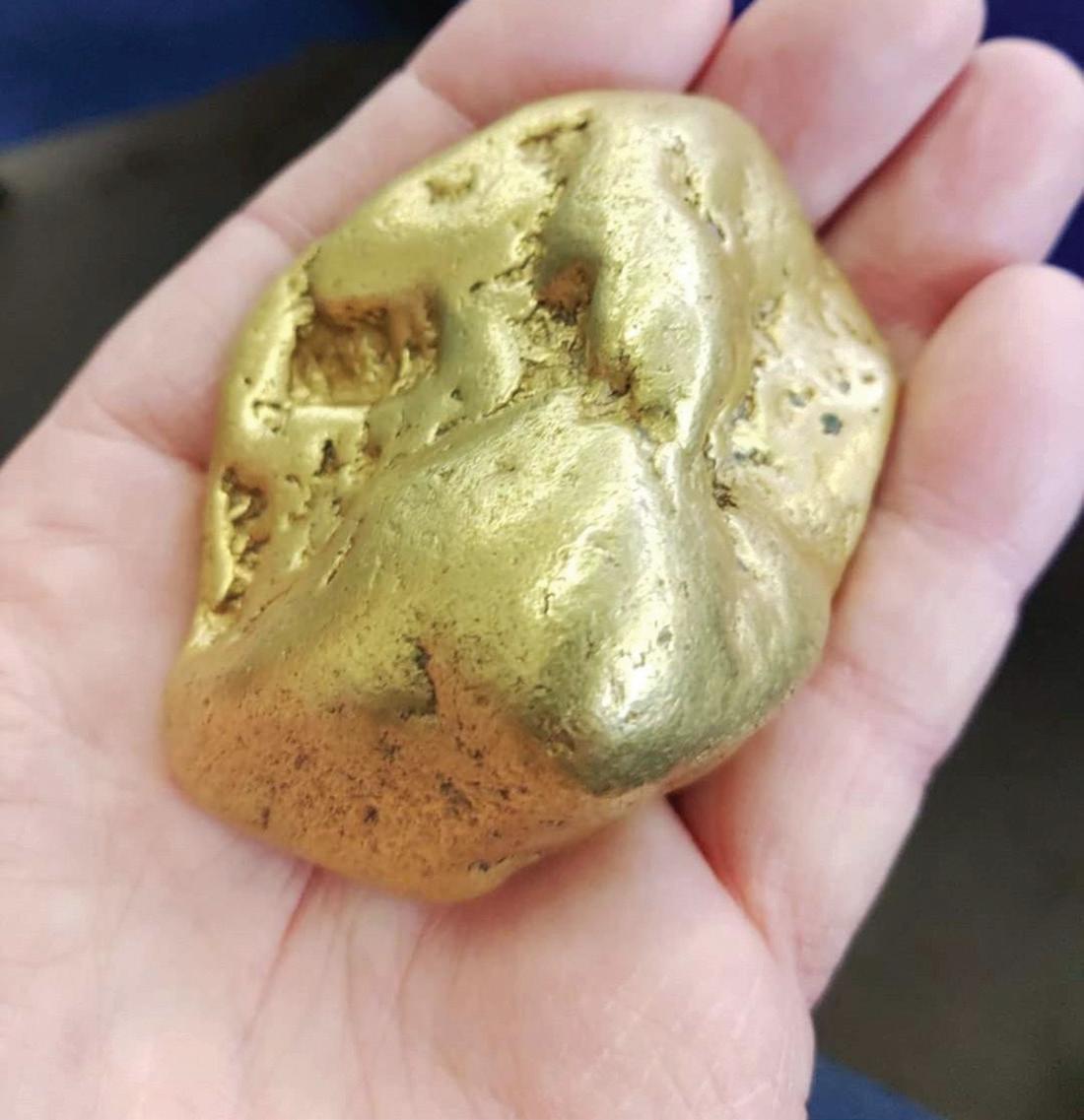
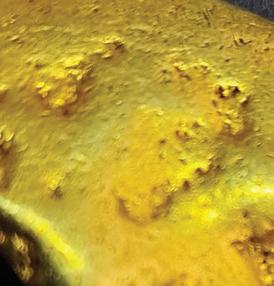
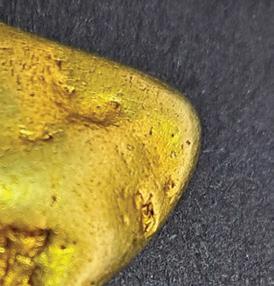
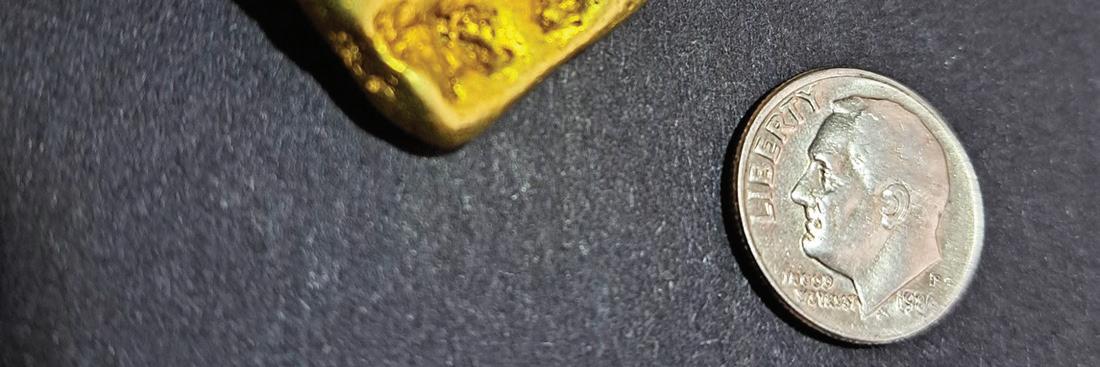
Recently found nugget in Liberty, Wa.
loose. Gently shake the pan side to side, keeping one edge slightly lower, and slowly dip the front edge into the water to let lighter materials wash out. What you’re doing is letting the heavier stuff—like gold—settle to the bottom and catch in the riffles. Keep repeating the motion until you’re left with just a small amount of heavy sand. From there, carefully wash away the remaining lighter material, and you might just spot a few flecks of gold.
If you want to practice before heading out, try using small lead weights or buckshot in a tub—it’s a simple way to get the feel for how gold behaves in the pan.
Metals, gems, and items found in the Swauk Mining District are gold, silver, platinum, palladium, osmium, iridium, Geodes, crystals, and agates. Old mining and civilization relics, and artifacts can occasionally be found in this area. When these precious and delicate items are found the Forest Service, Bureau of Land Management,

Blue agate is one of the rarest gemstones in the world, found only around the edges of this district. It’s a form of chalcedony quartz, known
for its rich blue color and impressive hardness—making it both beautiful and tough to come by. Some speculate that we have the geology for diamonds in the District but so far are undiscovered.
Prospectors and miners also remove lead, mercury, bullet casings, fishhooks, aluminum, old steel, rusty metal, and garbage from the streams and the areas that they are working.
Other methods of finding gold are metal detecting at mine sites, parks, beaches, and public areas. By using larger sluices, bigger trommels, powered high bankers, or suction dredges in creeks so that larger volumes of material can be sorted out. Shaker tables are used to finish separation of weighted materials. In dry desert areas, equipment used are dry washers, vibrating screens, battery vacuums, or blowers to separate the heavy and light materials. Certain rules, permits, and time of the year access is required for most of this equipment.
An open area to go panning in the Swauk Mining District is in Swauk Creek along highway 97. During the historical preservation of the town of Liberty,
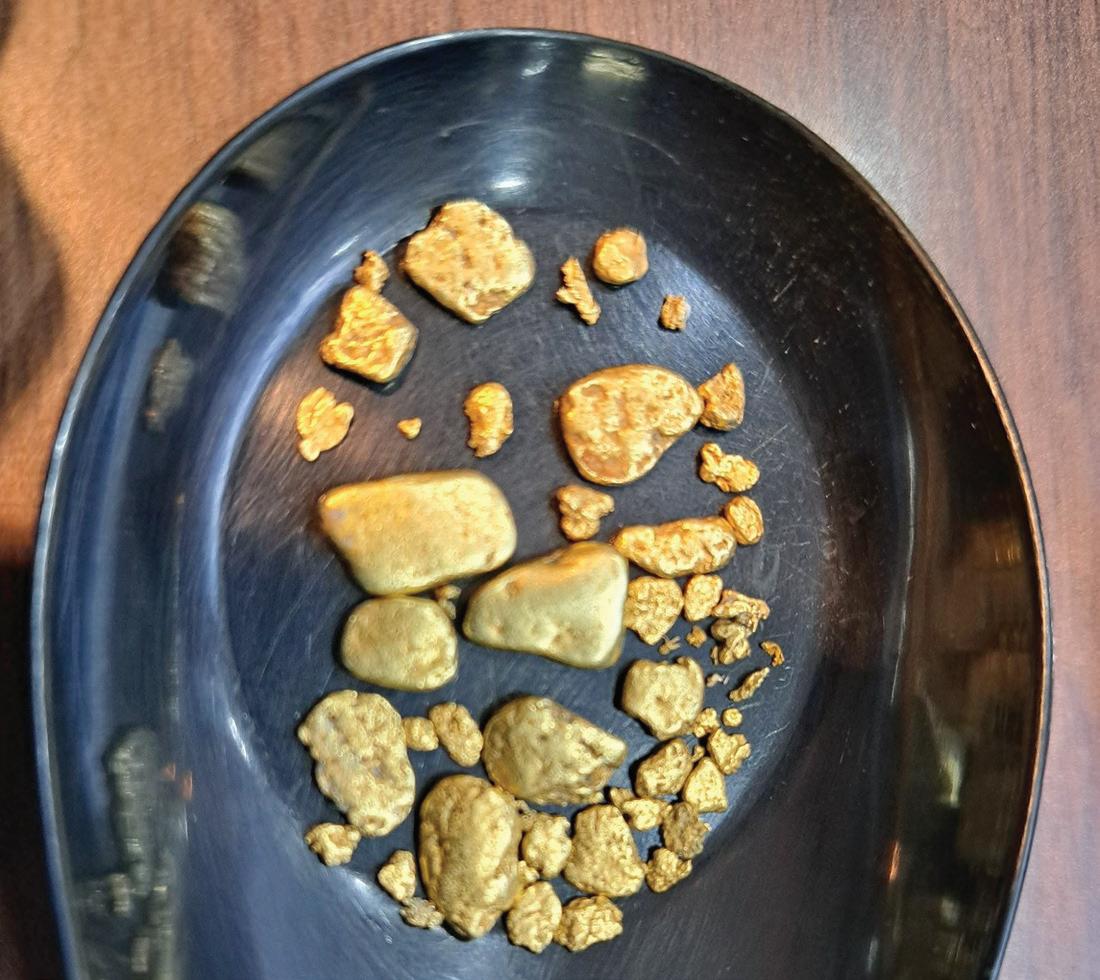




the corridor of two hundred (200) feet from the centerline was considered public domain for small scale prospecting for the public. Keep in mind, you cannot be on private land or a marked claim in those areas.
Always make sure you are not trespassing on private property to go panning. Do not disturb or remove anything from private property, or a patented, or unpatented mining claim. Doing so is considered a federal offense. The Washington Department of Fish and Wildlife (WDFW) publishes the Rules for Mineral Prospecting and Placer Mining. This is called the Gold and Fish pamphlet. https://wdfw.wa.gov/licenses/ environmental/hpa/types/prospecting Before any type of mineral prospecting, you should familiarize yourself with your pamphlet.
Liberty is a Living Ghost Town and the Oldest Continuous Mining Town in the state of Washington. They are celebrating their Liberty and 250 years of the USA on July 4th. The Celebration will include the annual parade at 11:00, venders, food, and music.
The Pacific NW Miner’s Rally and Gun Show is August 8-9 at the Kittitas Valley Event Center in Ellensburg. Children 12 and under will get free paydirt, learn to pan, and take gold home. There will be Prospecting clubs, speakers, equipment venders, gold, silver, Ellensburg Blues, gems, and minerals. Also high value specimens, gun sales and appraisals, food trucks, and a beer garden. Check out SwaukMiningDistrict.org for details.
Swauk Mining District, Po Box 101, Ellensburg, WA 98926, office @swaukminingdistrict.org
Keith is the Treasurer of the Swauk Mining District and Chairman of the Pacific NW Miner’s Rallies.




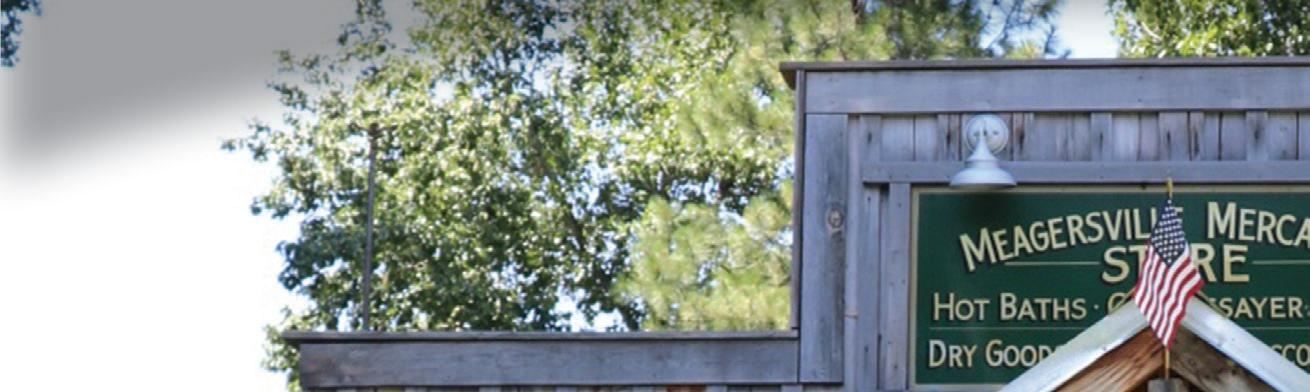
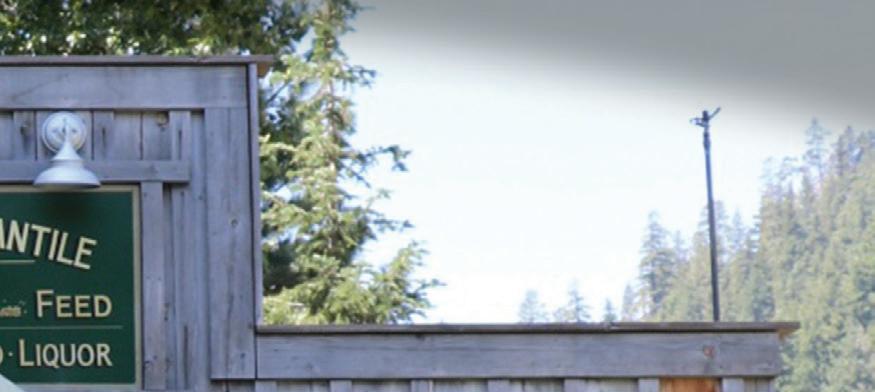

Liberty, Washington isn’t just a ghost town - it’s a living one.
BY STAFF OF KITTITAS COUNTY CHAMBER
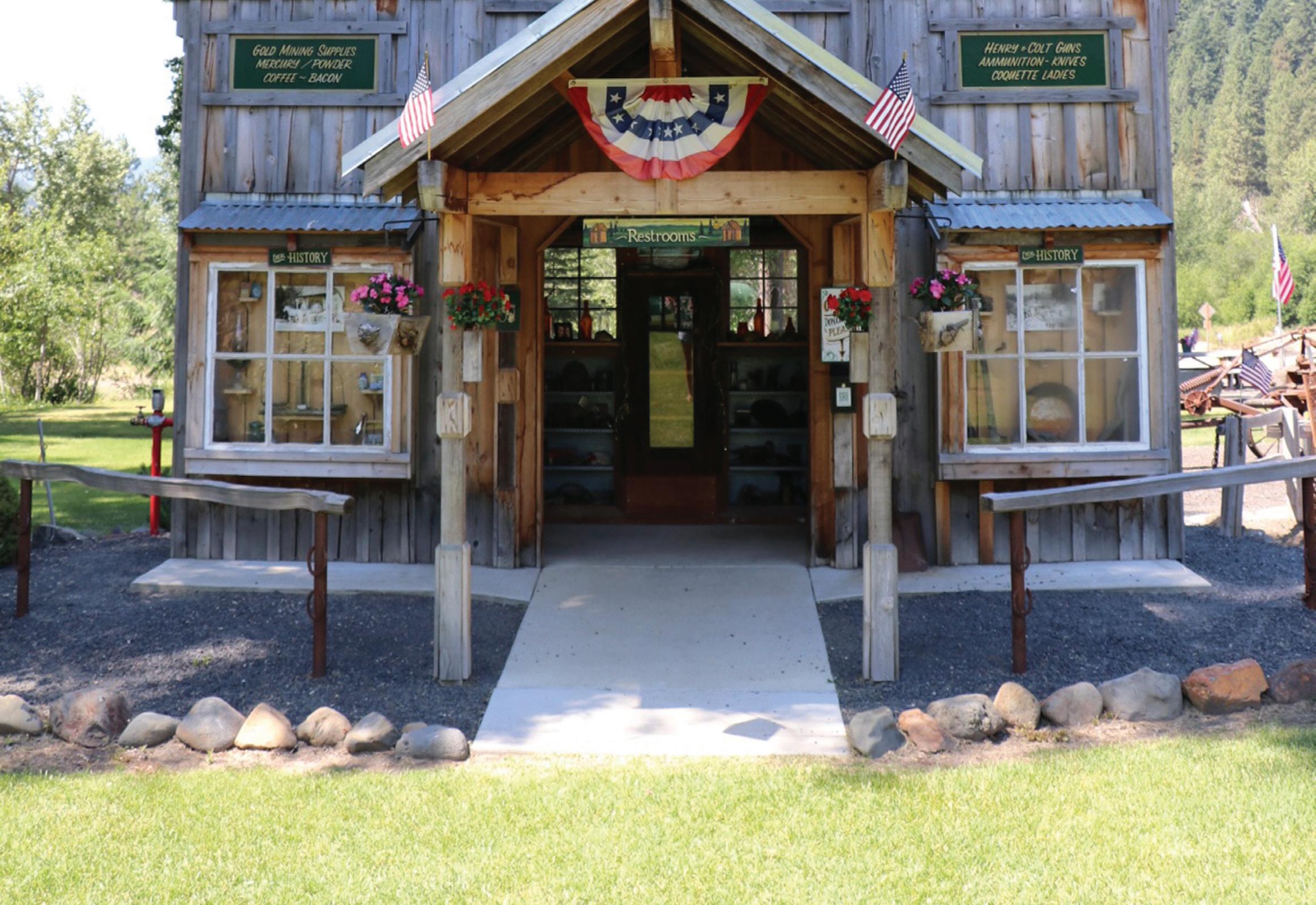
Weathered log buildings line a quiet mountain road. Pine-scented air drifts through the valley. The stillness feels preserved, almost suspended in time. But unlike many abandoned mining towns across the West, Liberty never fully disappeared. A small number of residents still call it home, making it one of Washington’s last authentic links to the Old West.
Liberty’s story begins in 1873, when gold was discovered along Swauk Creek. Prospectors flooded into the rugged
mountains north of Ellensburg, staking claims and building what would soon become a thriving mining camp. Originally named Meaghersville, the town later adopted the more hopeful name “Liberty” - a fitting tribute to opportunity and the promise of striking it rich.
At its peak in the late 1800s, Liberty bustled with activity. Miners panned and sluiced the creeks while businesses rose to serve the growing population. Hotels, saloons, a butcher shop, and general stores lined the streets. Supplies arrived by wagon over steep mountain passes. Winters were long and unforgiving, but the draw of gold



outweighed the hardship for many.
What set Liberty apart was the gold itself.
The Swauk Creek area became known for rare crystalline gold - intricate, branching formations prized by collectors. Unlike the smooth nuggets often associated with gold mining, crystalline gold forms in delicate, angular patterns that resemble frozen lightning. Specimens from Liberty remain highly sought after by rockhounds and mineral enthusiasts around the world. You can read up on it at the informational historic park right in the center of town!
As gold production declined in the early 20th century, many mining towns vanished. Liberty didn’t. Some residents stayed, buildings endured, and the town gradually shifted to a quiet mountain community. Instead of becoming a preserved relic behind ropes and signage,




Liberty evolved into something rarer - a place where history and daily life quietly coexist.
Walking through town today feels less like visiting a museum and more like stepping into a living chapter of Washington’s past. And that’s why we love it.
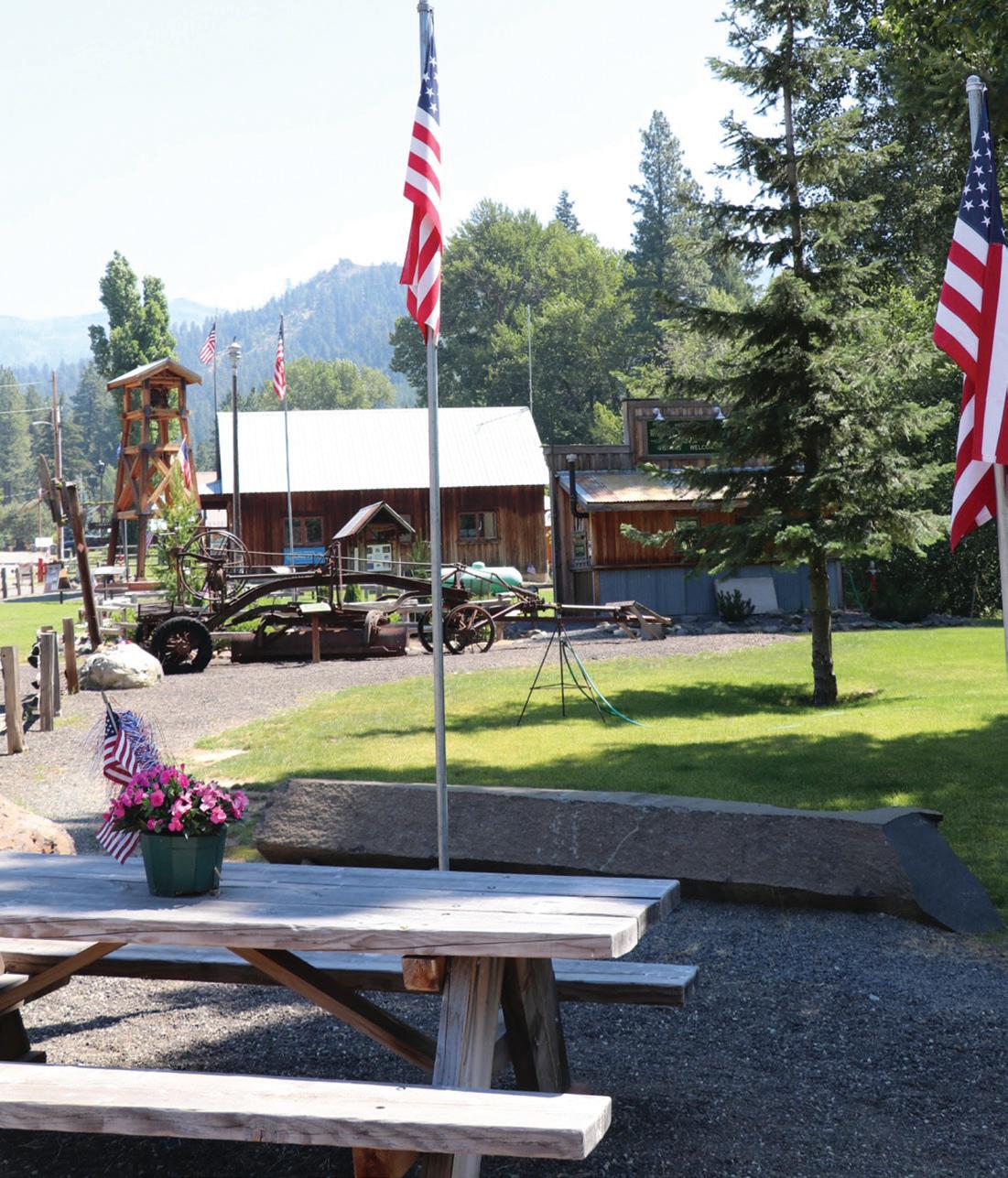
Original 1800s log cabins still stand. The old buildings remain as reminders of a once-thriving frontier settlement. Hand-painted signs and weathered wood reflect decades of mountain weather. You can even see the Liberty Bell that’s perched in the center of town.
In a fast-moving world, this small mountain town invites you to slow down. To notice the creak of old wood in the breeze. To consider the determination it took to build a life here nearly 150 years ago. Liberty stands as a reminder of the boom-and-bust cycles that shaped the American West
— and The caretakers becoming For Cle detour.Respect leave depends walking When consider Liberty Raven rugged the atmosphere





— and of the resilience required to endure them.
The handful of people who live here today serve as quiet caretakers of that legacy. Their presence keeps Liberty from becoming static. It remains a place, not just a memory.
For travelers exploring Blewett Pass or driving between Cle Elum and Leavenworth, Liberty makes a meaningful detour.Respect private property. Take photographs, but leave artifacts where you find them. Liberty’s preservation depends on thoughtful visitors who understand they are walking through living history.
When you’re ready to transition back to the present day, consider rounding out your visit with a stop nearby. The Liberty Cafe is an iconic stop and ode to the town. Or The Raven and the Rooster offers a warm contrast to Liberty’s rugged simplicity. Whether you dine before heading up the pass or after wandering the old streets, the welcoming atmosphere and thoughtfully prepared dishes provide a
Location: Near Blewett Pass, about 20 minutes north of Ellensburg.
Best Time to Visit: Late spring through fall, with vibrant color in autumn.
What You’ll See:
• Original 1800s log buildings
• Historic structures
• Remnants of the gold mining era
• Scenic Cascade Mountain views
Know Before You Go:
• Liberty is a living town with private residences — please be respectful.
• No major visitor services on site.
• Wear sturdy shoes; terrain can be uneven.
• Leave historic items where you find them.
Make a Day of It: Pair your visit with a scenic drive over Blewett Pass and a meal at The Raven and the Rooster or Liberty Cafe
modern reflection of the region’s character — grounded, genuine, and distinctly local! The brisket grilled cheese is a local must-have!
Liberty may be small, but its story carries weight.
It speaks to ambition, perseverance, and the restless search for opportunity. It reminds us that Washington’s history wasn’t built only in cities or along rail lines, but also in remote mountain valleys where people chased possibilities with pickaxes and grit.
Today, Liberty stands quietly — weathered, proud, and still alive.
And that makes it worth the journey.
Best Western Plus Lincoln Inn and Suites
Comfort Inn
Days Inn
Econo Lodge
Hampton Inn
Holiday Inn Express
Hotel Windrow
Icon Inn
Ellensburg 211 W Umptanum Rd.
Ellensburg 1722 Canyon Rd.
Ellensburg 901 Berry Rd.
Ellensburg 1390 N Dolarway Rd.
509-925-4244 / 866-925-4288
509-925-7037 / 877-424-6423
509-933-1500
509-271-4723 / 877-424-6423
Ellensburg 2705 Triple L Loop 509-933-1600 / 800-HAMPTON
Ellensburg 1620 Canyon Rd. 509-962-9400 / 800-HOLIDAY
Ellensburg 502 N Main St. 509-962-8000
Ellensburg 1720 Canyon Rd. 509-541-3113
Lodge at Canyon River Ranch Ellensburg 14700 State Route 821 509-933-2100
Rainbow Motel
Red Lion Hotel
TownePlace Suites
Aster Inn and Antiques
Ellensburg 1025 W. University Way 509-933-7100
Ellensburg 1709 S Opportunity St.
Cle Elum 521 E. 1st St.
509-933-5000
509-674-2551
Best Western Plus Snowcap Lodge Cle Elum 809 W Davis St. 509-674-0200 / 866-SNOWCAP
Baker Creek Campground From Ellensburg, head north on Hwy 97; campground is south of NF-192 US-97, Ellensburg, WA (near NF-192 junction)
Beverly Campground From Cle Elum, travel north on North Fork Teanaway Rd (FS 9737) for ~25 miles. ADDRESS: NF-9737, Cle Elum, WA
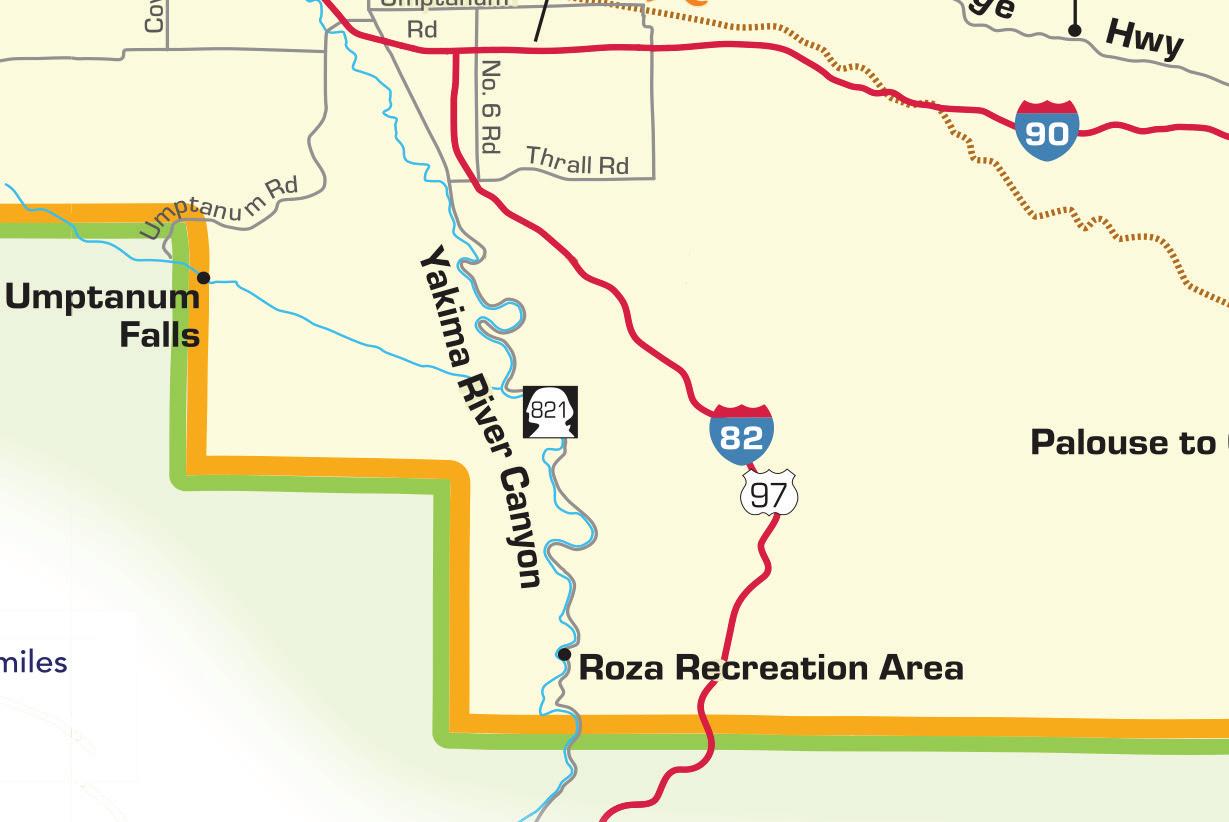
Big Pines Recreation Site Drive south from Ellensburg on SR 821; located at milepost 9.5 ADDRESS: WA-821, Ellensburg, WA 98926
Cle Elum River Campground From Cle Elum, take Hwy 903 (Salmon La Sac Rd) north ~15 miles
NUMBER OF CAMPSITES
14 tent/picnic
ACCOMMODATIONS
61 Sites Boat Launch
“14 trailer/tent Fishing, Boating, Hiking, to Lake Cle Elum. ADDRESS: Salmon La Sac Rd, Ronald, WA 98940
Eagle Valley Campground Located along Hwy 97 between Ellensburg and Cle Elum; easy highway
Reservable group site Horseback riding, capacity/100” Mountain bike
100 RV/Campsites Featuring a TV, pool table, access ADDRESS: 3901 US-97, Cle Elum, WA 98922. PHONE: 509-674-7762 shuffleboard, ping pong, puzzles, board games and more,here is also a RV dump station
High Country Outfitters & Camp Wahoo Take I-90 Exit 78; follow Golf Course Rd, then turn onto Nelson Siding Rd. ADDRESS: 5561 Nelson Siding Rd, Cle Elum, WA 98922. PHONE: 509-674-9554
Icewater Camp From Ellensburg, take Reecer Creek Rd north; continue onto FS Road 3300 for 20+ miles. ADDRESS: NF-3300, Ellensburg, WA
Kachess Campground Take I-90 Exit 62; follow Kachess Lake Rd ~5.5 miles to campground
14 Sites
124 single site(s), 24 double 2 boat launches, picnic area ACRESS: Kachess Lake Rd, Easton, WA 98925 site(s), 1 group site for up to 50 persons
Ken Wilcox Campground From Blewett Pass summit on Hwy 97, take FS 9716 south 4 miles, 19 trailer/tent sites Stock water only. campground/ then FS 9712 ~4 miles. ADDRESS: NF-9712, Cle Elum, WA horsecamp
Lake Easton State Park Take I-90 Exit 70; follow signs to park entrance
90 standard (tent) campsites, Dump station, restrooms, ADDRESS: 150 Lake Easton State Park Rd, Easton, WA 98925 two hiker/biker sites and showers, water, parking 45 full-utility RV sites
Lmumа Creek Recreation Site Travel south from Ellensburg on SR 821 to milepost 12 7 tent/small camper sites ADDRESS: WA-821, Ellensburg, WA 98926. PHONE:(509) 665-2100
Manastash Camp
From Ellensburg, take Manastash Rd west; continue onto FS 31 for 14 trailer/tent no water or hookups 9 miles, then FS 3104. ADDRESS: NF-3104, Ellensburg, WA
Mineral Springs Campground From Ellensburg, head north on Hwy 97; campground is along highway 8 single family/1 group site 50 person capacity US-97, Ellensburg, WA capacity/50
Owhi Campground
From Cle Elum, take Hwy 903 north 16 miles; turn left on FS 46 (Cooper River Rd), 22 tent-only sites go 5.5 miles, then right on FS 4616. ADDRESS: Cooper River Rd, Cle Elum, WA 98922
Red Mountain Campground From Cle Elum, take Hwy 903 north ~16 miles; campground is on left past 10 single campsites No potable water Cle Elum Lake. ADDRESS: Salmon La Sac Rd, Ronald, WA 98940
Riders Camp Take I-90 Exit 101; follow Thorp Hwy - Cove Rd - Manastash Rd - continue on Dispersed Camping Restroom FS 3100, then Spur 114. ADDRESS: NF-3100, Ellensburg, WA
Roza Recreation Site Drive south on SR 821 from Ellensburg to milepost 7. 6 single campsites ADDRESS: WA-821, Ellensburg, WA 98926
Salmon La Sac Campground From Cle Elum, take Hwy 903 north ~19 miles; stay left at fork to campground 67 sites for both tent Bathroom, Camp Host, ADDRESS: 210 Salmon La Sac Rd, Ronald, WA 98940 and RV camping Potable water
South Fork Meadow
Take I-90 Exit 93; follow Thorp Prairie Rd - East Taneum Rd - across I-90 - FS 33FS 3300. ADDRESS: NF-3300, Ellensburg, WA 3
Swauk Campground From Cle Elum, take Hwy 970/97 east ~26 miles; campground is on the right 19 single campsites, ADDRESS: US-97, Cle Elum, WA 2 double campsites
Tamarack Springs From Cle Elum, head south on FS Road 3120 for ~25 miles 11 primitive campsites No amenities ADDRESS: NF-3120, Cle Elum, WA
Taneum Creek Campground Take I-90 Exit 93; follow Thorp Prairie Rd - East Taneum Rd - FS Road 33 ~6 miles 11 Potable Water, bathroom ADDRESS: NF-33, Thorp, WA
Taneum Junction Campground Take I-90 Exit 93; follow FS Road 33 ~9.5 miles; turn left at end of pavement 15 vehicle and 75 person No Potable Water ADDRESS: NF-33, Thorp, WA capacity
Umtanum Recreation Site Travel south on SR 821 to milepost 17 along Yakima River Canyon
7 single campsites Undeveloped boat access ADDRESS: WA-821, Ellensburg, WA 98926
Wanapum State Park Take I-90 east to Vantage; follow WA-243 to park entrance 50 Full RV Hookups ADDRESS: 24800 WA-243, Vantage, WA 98950
Country Cafe 105 W. 3rd Ave.
Crazy Wok 1713 S. Canyon Rd.
D&M Coffee
Daily Bread & Mercantile
204 S. Water St
325 N. Pearl St.
1709 S. Canyon Rd. #2
306 S. Main St. #2
Dairy Queen 1601 N. Currier St.
Dirk’s Pizza
El Caporal II
1101 E. University Way
408 N. Main St.
201 W. University Way
El Loco Food Truck 204 S. Main St.
Ellensburg Pasta Co.
Fidelina’s Taqueria
Fiesta En Jalisco
First and Last Chance Tavern
Frontier Tavern
600 N. Main St.
119 W. 5th Ave., Unit 103
1315 S. Canyon Rd.
1202 E. University Way
111 W. 4th Ave.
Gard Vintners Tasting Room 311 N. Pearl St.
Genesis Churros
Golden Dragon
Good Mood Food
Happy’s Market
Grassroots Grill
Hayday Bake & Brew
700 E. University Way
1302 S. Ruby St.
704 N. Wenas St.
207 W. University Way
1504 Hwy. 97
W. 3rd Ave.
IHOP 2704 Triple L Loop
Iron Horse Brewery 1621 Vantage Hwy.
509-933-3600
509-968-5022
509-933-2888
509-962-6333
509-962-9333
509-925-5313
509-925-2253
509-925-5542
509-925-5442
509-925-7070
509-962-5228
509-899-6520
509-933-3330
509-962-2347
509-933-4422
509-962-5999
509-925-9229
509-925-1095
509-859-0038
509-925-2272
509-537-8983
509-925-3500 x
509-925-4662
509-201-1088
509-834-7838
Island Fusion 702 E. University Way 360-919-4044
Jack in the Box
W. University Way
Jimmy John’s 1307 S. Canyon Rd.
Julep
Koeletty’s Koffee
509-320-4395
509-933-4400
Nodding Donkey
Oyama Sushi & Steakhouse
Palace Cafe
Papa Murphy’s Take-N-Bake
Pita Pit
Pizza Hut
Pop Pot & Bowl
Red Horse Diner
Rock & Reef Brewing
Smokey’s
1514 W. University Way
506 S. Main St., Suite 1
323 N. Main St.
205 W. Tacoma Ave.
111 W. 3rd Ave.
730 E. University Way
213 W. 4th Ave., Unit 104
1518 W. University Way
416 N. Main St.
417 N. Pearl St.
Starbucks 1614 Canyon Rd.
201 S. Water St.
400 N. Ruby St.
2708 Triple L Loop Rd.; 908 E. 10th Ave.
Subway 1512 Hwy. 97
Sugar Thai Cuisine
1301 Canyon Rd.
1005 E. University Way
306 N. Pine St.
Swiftfire Pizza Co. 1621 Vantage Hwy.
Taco Bell 1406 Canyon Rd.
Taco Del Mar 1615 Canyon Rd.
Taco Chalito 2
601 W. University Way
Teriyaki Wok 1210 S. Canyon Rd.
The Horseshoe Tavern 106 W. 3rd Ave.
The Huntsman Tavern
307 N. Pearl St.
The Mule 119 E. 4th Ave.
The Early Bird 412 N. Main St.
The Night Owl 412 N. Main St.
The Pearl Bar & Grill
The Porch
The Red Pickle
402 N. Pearl St.
608 N. Main St.
301 N. Pine St.
The Tav 117 W. 4th Ave.
Udderly Espresso
608 E. Mountain View Ave.; 423 N. Main St.
Utopia Frozen Yogurt & Coffee House 706 E. University Way
Vinman’s Bakery 700 E. University Way #2
Wendy’s 1510 S. Canyon Rd.
509-925-1957
509-933-3389
509-925-2327
509-962-9282
509-201-1844
509-925-7888
509-201-1441
509-925-1956
503-881-1148
509-201-1339
509-903-9512
509-962-0500
509-925-2700
509-925-7877
509-925-5310
509-962-2383
509-925-4422
509-933-4224
509-929-8543
509-925-4052
509-962-3009
509-968-6498
509-933-7030
509-925-4044
509-925-4868
509-968-5558
509-968-5288
509-968-5288
509-201-1042
509-925-4488
509-367-0003
509-925-3939
509-201-1650
509-933-1400
509-933-1850
509-955-3759
509 Bake House 207 E. 1st St.
Beau’s Pizza & Pasta
Cle Elum Bakery
Cle Elum
Coal House Caffe
Coal Mountain Caboose
Cottage Cafe
El Caporal Restaurant
G.H. Pasta & Pizza
Keg Cellar Tavern
Lums Coffee Shop
Mama Vallone’s
Mule & Elk
Pioneer Coffee Roasting Co.
509-656-4313
509-674-9798
509-674-2233
509-674-2385
509-649-6475
509-903-0399
509-674-2922
509-674-4284
509-260-4225
509-260-4225
509-857-2030
Ploy Thai Bistro 807 W. Davis St. 509-674-6873
Orchard Restaurant
Senor Bones
E. 1st St.
509-852-2900
N. Oakes Ave. 509-674-2966
Starbucks 903 Douglas Munro Blvd.
Stella’s
316 W. 1st St., Suite 1/2
Subway 207 W. 1st St.
Teelak Thai Kitchen 321 E. 1st St.
The Source Plates & Pours 3600 Suncadia Trail
509-852-7206
509-656-6095 x
509-674-3777
509-674-6854
The Raven & Rooster 27510 Hwy US-97 509-857-2100
Stovehouse
The Wild Flora Bakery
Twin Pines Drive-In
S. Oakes Ave., Suite 150 509-519-4567
Carek’s Meat Market
Corks 104 E. Pennsylvania Ave. 104 E. Pennsylvania Ave.
Marko’s
Roslyn Brewing Company 208 W. Pennsylvania Ave. 509-649-2232





One county, 5 landscapes: From mountain valleys to desert cliffs, this is the long way worth taking.
BY STAFF OF KITTITAS COUNTY CHAMBER
There’s a certain kind of weekend that begins with coffee in hand and nowhere urgent to be. In Kittitas County, the best adventures aren’t rushed — they unfold gradually, one scenic stretch at a time.
Start in the western hills, where the air feels cooler and pine-scented, and the road bends gently into the Teanaway Valley.
Your first stop is iconically local: The Teanaway Country Store. It sits along the roadside like it’s always been there (because it has). Step inside for a cold drink, or load up on snacks before the day properly begins. Shelves are lined with mountain-town gifts, stickers, and locally loved goods. Continuing out past the Teanaway Country Store will bring you to some of the regions most iconic hikes and riverside spots. Not to mention Mt. Stuart staring at you down the pavement as you drive the winding roads.
The Teanaway is known for its wide-open spaces, cozy river spots and epic hikes.
From there, head toward Blewett Pass — and for something you don’t expect to see in Central Washington: a herd of bison grazing against a backdrop of distant peaks. They are elusive so seeing them isn’t guaranteed - but when you do, the sight feels almost cinematic. Massive, slow-moving, and completely at home. Pull over safely, give them space, and take a few quiet minutes to watch. It’s not every day you spot an icon of the American West framed by Cascade foothills. Just before the climb, look for one of the county’s most beloved roadside stops: First Creek Treasures and Gifts — better known simply as “the Rock Shop.”
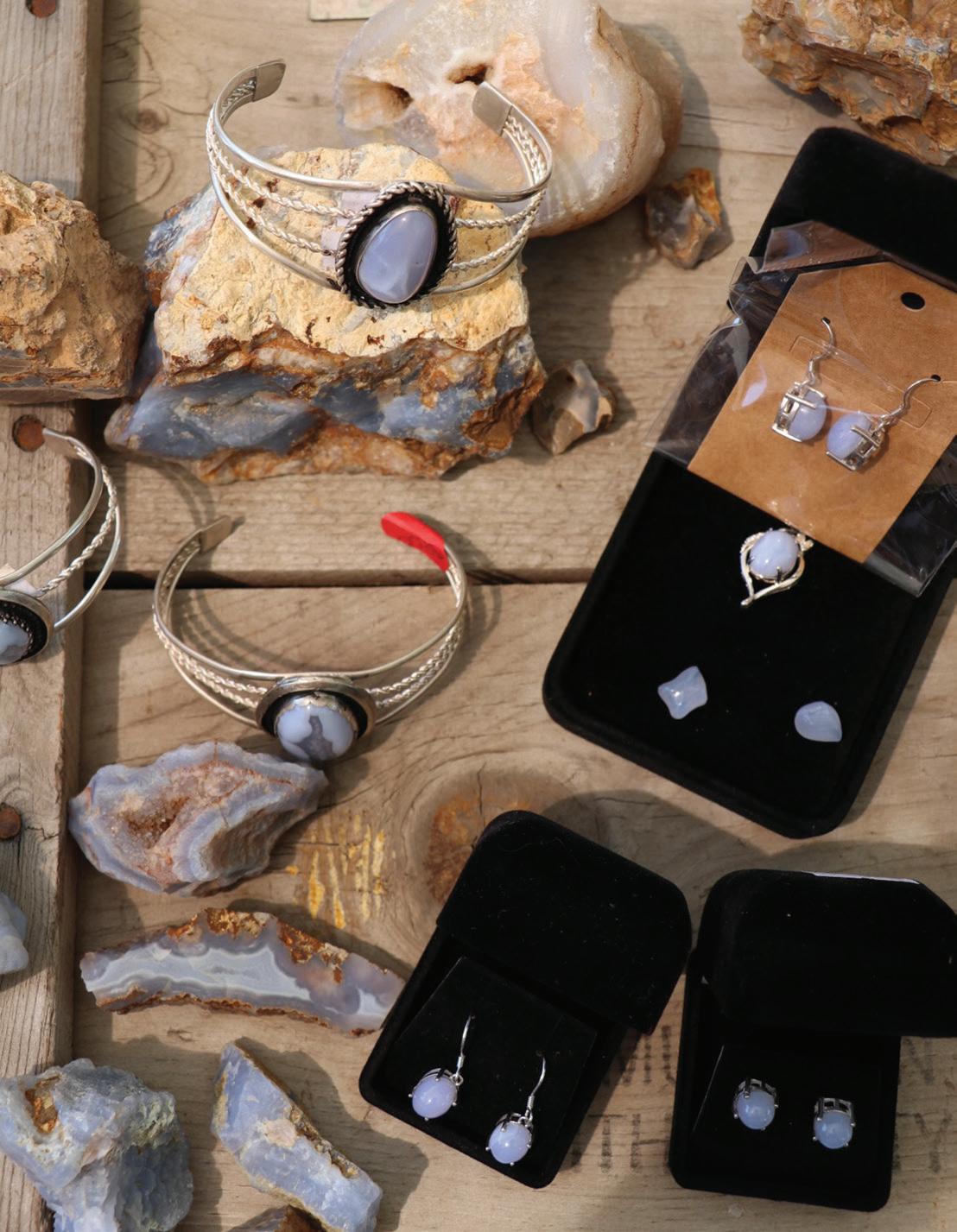
Weathered wood siding and hand-painted signs hint at what’s inside. Take the turn at the sign and you’re greeted with glass cases of the iconic Ellensburg BlueEllensburg Blue Agate is one of the rarest gemstones in North America and a geological treasure deeply tied to
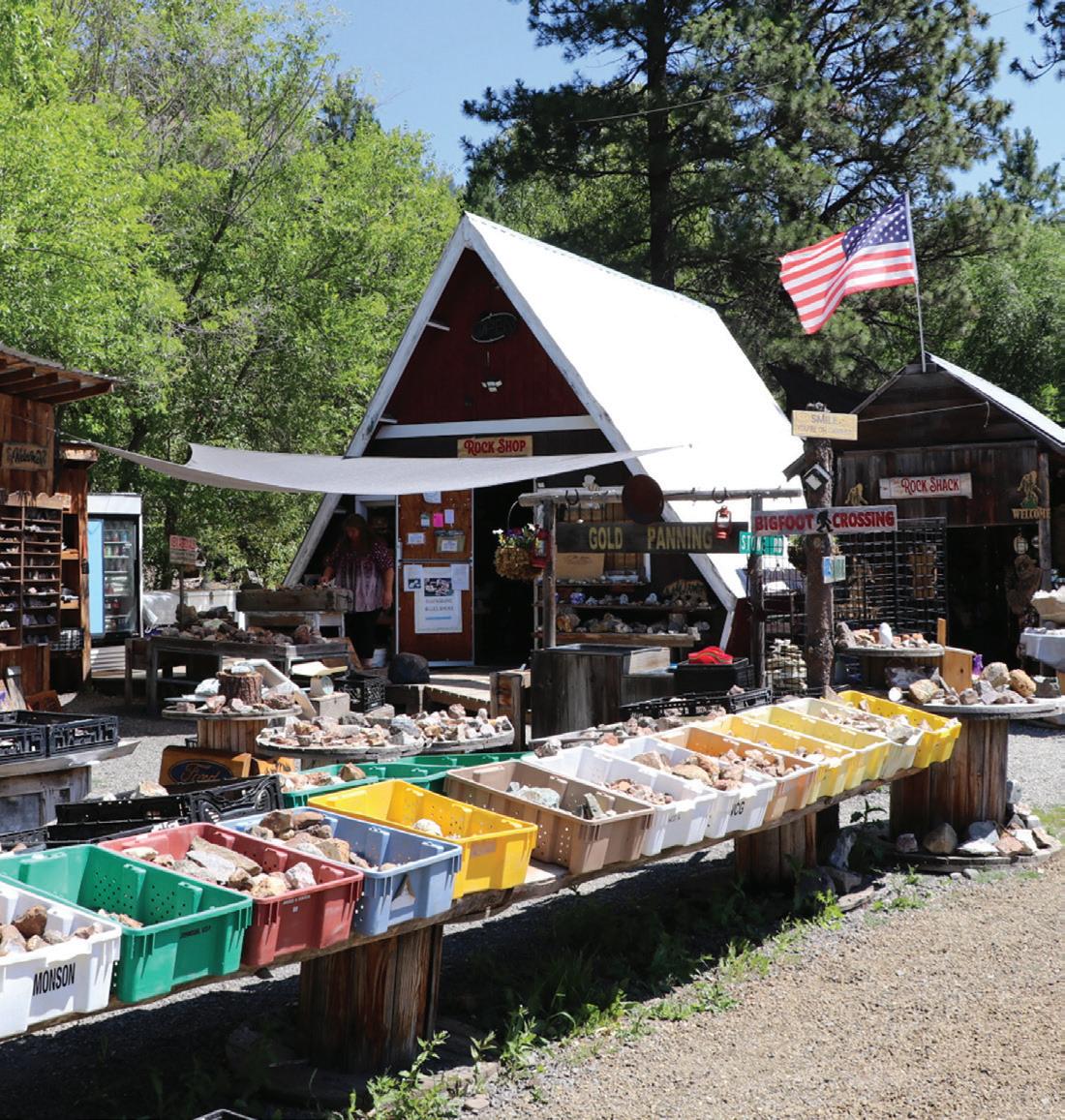
Kittitas County’s history. Discovered in the late 1800s near the Teanaway area outside Ellensburg, these distinctive agates are prized for their rich blue to lavender hues and exceptional translucence. You’ll also find fossils, and geodes split open to reveal sparkling interiors. It’s nostalgic in the best way and a reminder of childhood road trips and pockets filled with small treasures. Even if you leave with nothing more than a polished stone, it feels like you’ve discovered something.
By late morning, begin your gradual shift east. The dense forest thins. The hills soften. The valley opens.
Cruise Highway 10 through the sweeping basalt walls of Yakima River Canyon. This stretch of road hugs the Yakima River, where fly fishers cast into slow-moving water and rafters drift lazily downstream in summer months. Golden grasses ripple along the canyon floor, and hawks circle overhead on thermals rising from the cliffs.
Pull into one of the lookout points to witness the winding turns of the river. The Yakima River in Kittitas County



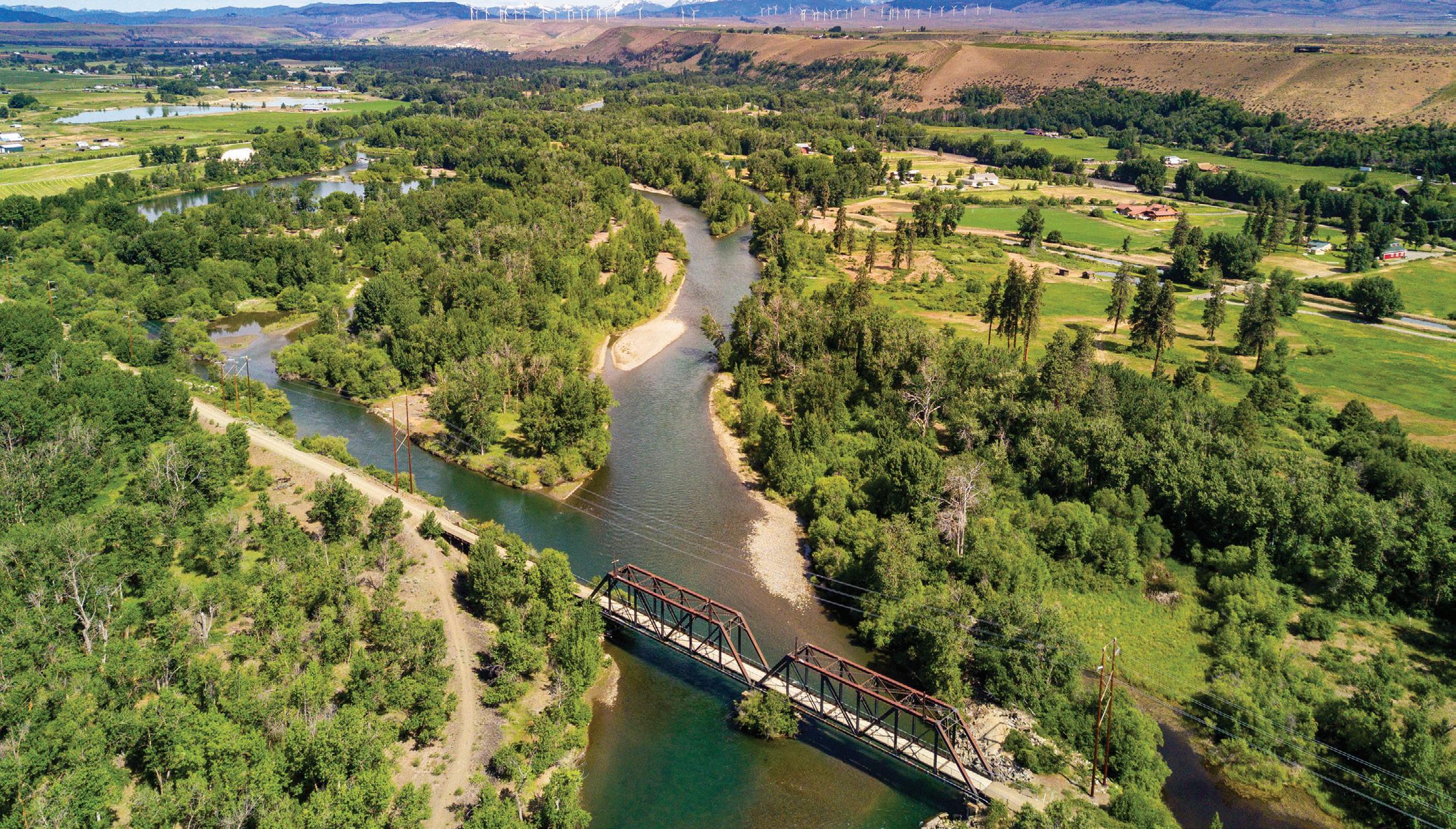
is widely recognized as a Blue Ribbon trout stream, a designation used for rivers that offer exceptional water quality, strong fish populations, and outstanding angling opportunities. Flowing from the Cascade Mountains and winding through the dramatic Yakima River Canyon, this stretch of river supports healthy populations of wild rainbow and cutthroat trout and is famous for its seasonal insect hatches that attract fly fishers from across the country.
As midday arrives, continue east on the canyon road (HWY10) towards Thorp. Standing proudly against open fields is the historic Thorp Mill, a white wooden structure dating back to the 19th century. Once a working mill serving the agricultural heart of the county, it now offers seasonal tours that bring early settler history to life.
On select Saturdays, the experience deepens next door at Punch Projects. Inside the historic setting, contemporary art installations create a striking contrast — rural heritage meeting modern creative expression. The blend feels intentional and distinctly Central Washington: rooted, but evolving. And on Saturdays in the summer there’s always a band playing - so hang out for a drink!
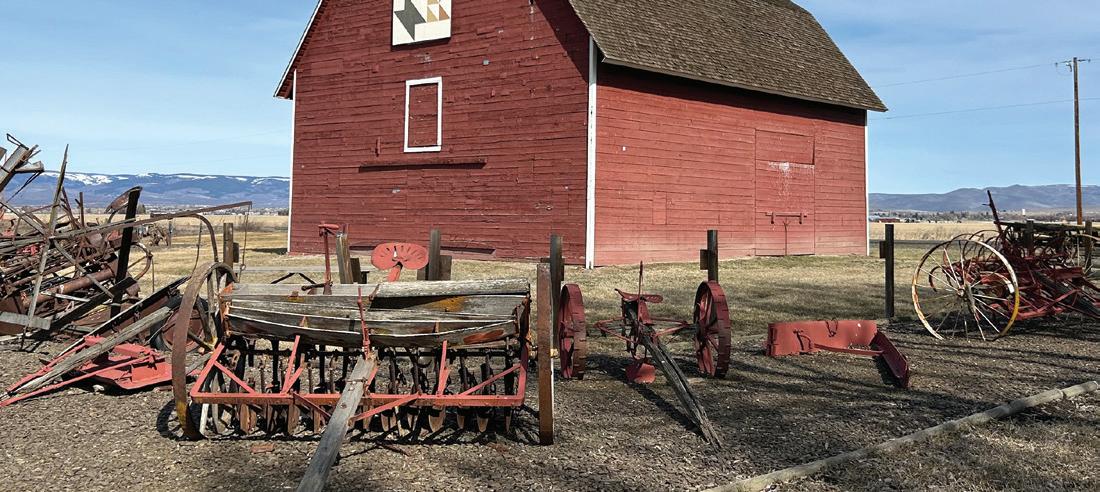
Continue east and you’ll pass through Ellensburg to open farmland toward Kittitas. Here, the rhythm changes again. Make time for Olmstead Place State Park, a preserved homestead that offers a quiet glimpse into pioneer life. Weathered barns, antique farm equipment, and historic buildings sit beneath wide skies. In spring and summer, gardens bloom beside the original farmhouse. It’s peaceful and unpolished.

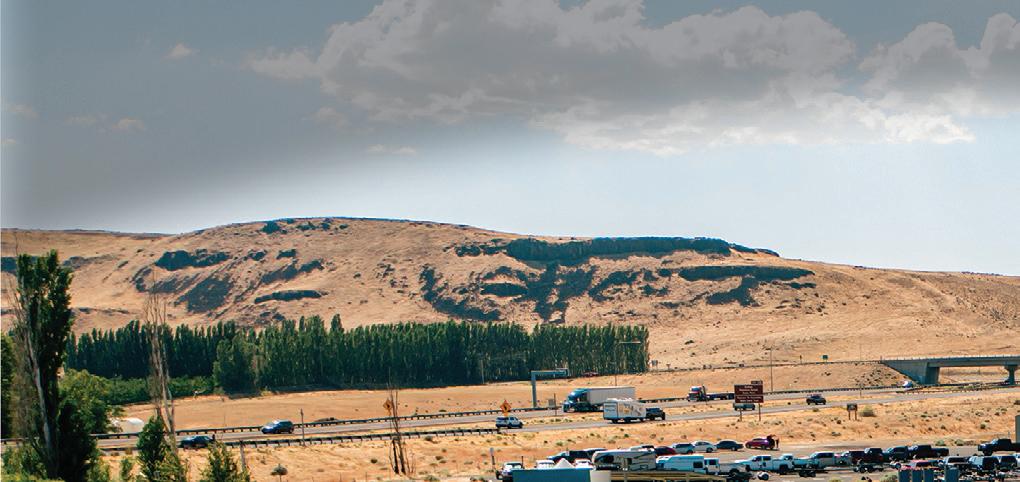
By late afternoon, the landscape begins its most dramatic transformation. Green fields give way to sagebrush and sweeping desert views as you approach Vantage.
Perched above the Columbia River is Ginkgo Petrified Forest State Park — a fitting finale to a day spent tracing the county’s layers of history. Here, ancient trees that lived more than 15 million years ago have turned to stone, their intricate rings preserved in mineral form. Short interpretive trails wind across the hillside, revealing petrified logs scattered among desert wildflowers and basalt rock. Below, the Columbia River stretches wide and blue, catching the evening light. The air feels warmer. And if

you’re hungry, stop by The Ranch - a farm to table burger joint that brings locally grown meats straight to the table for one of the best burgers in the county.
Stand there for a moment and consider what this drive has covered in a single day: mountain valley, canyon river, historic mill town, pioneer homestead, and ancient petrified forest.
That’s the magic of Kittitas County.
It isn’t one destination. It’s a progression — a slow unfurling of landscape and story as you move from west to east. Forest to farmland. River to desert. Past to present.
The best way to experience it?
Take the long way. Stop when something catches your eye. And let the day stretch out in front of you like the road itself.
• Listed on the National Register of Historic Places
• Self-guided tours available year round
• Located only one mile off I-90 on the scenic Thorp Highway
•Washington State’s oldest gristmill
• Open for guided tours June through Labor Day, check our website for open days and times.
11640 N Thorp Highway, PO Box 7, Thorp, WA 98946 www.thorp.org Email us at: info@thorp.org Find us on Facebook and Instagram


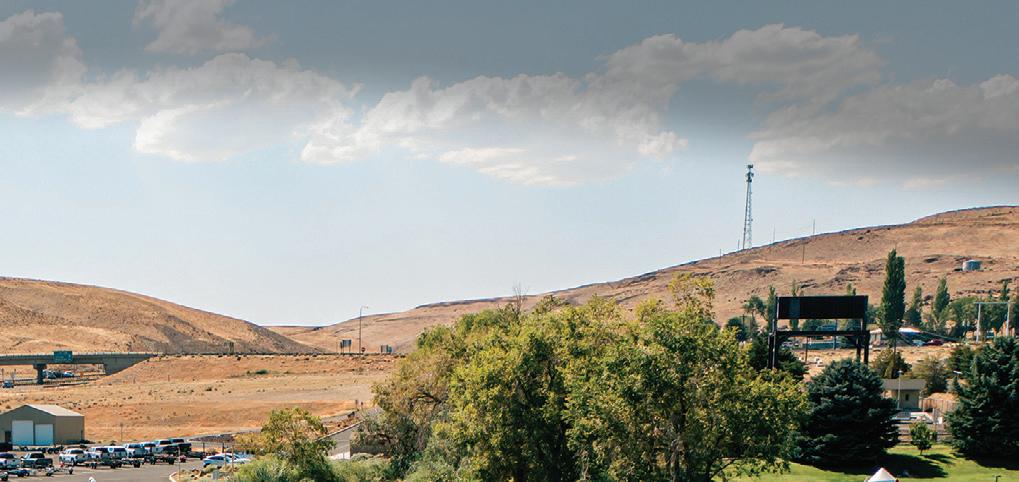
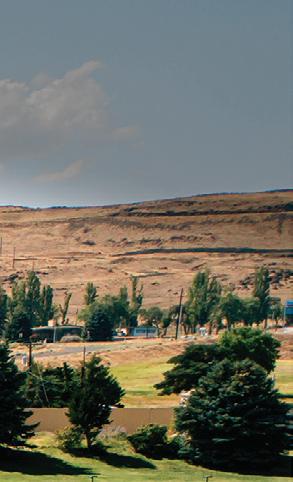

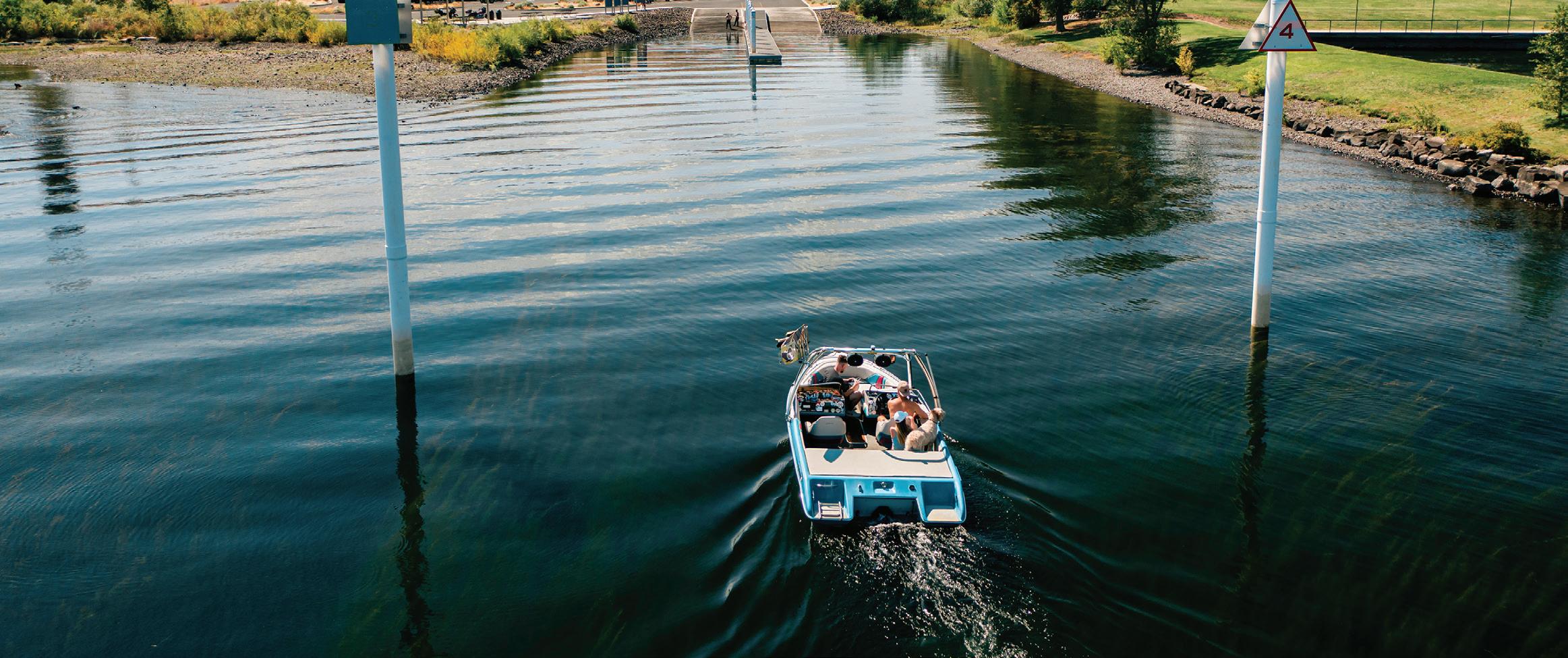
This weekend drive traces Kittitas County from the forested foothills of the Cascades to the desert cliffs above the Columbia River — revealing how dramatically the landscape shifts in just a few hours.
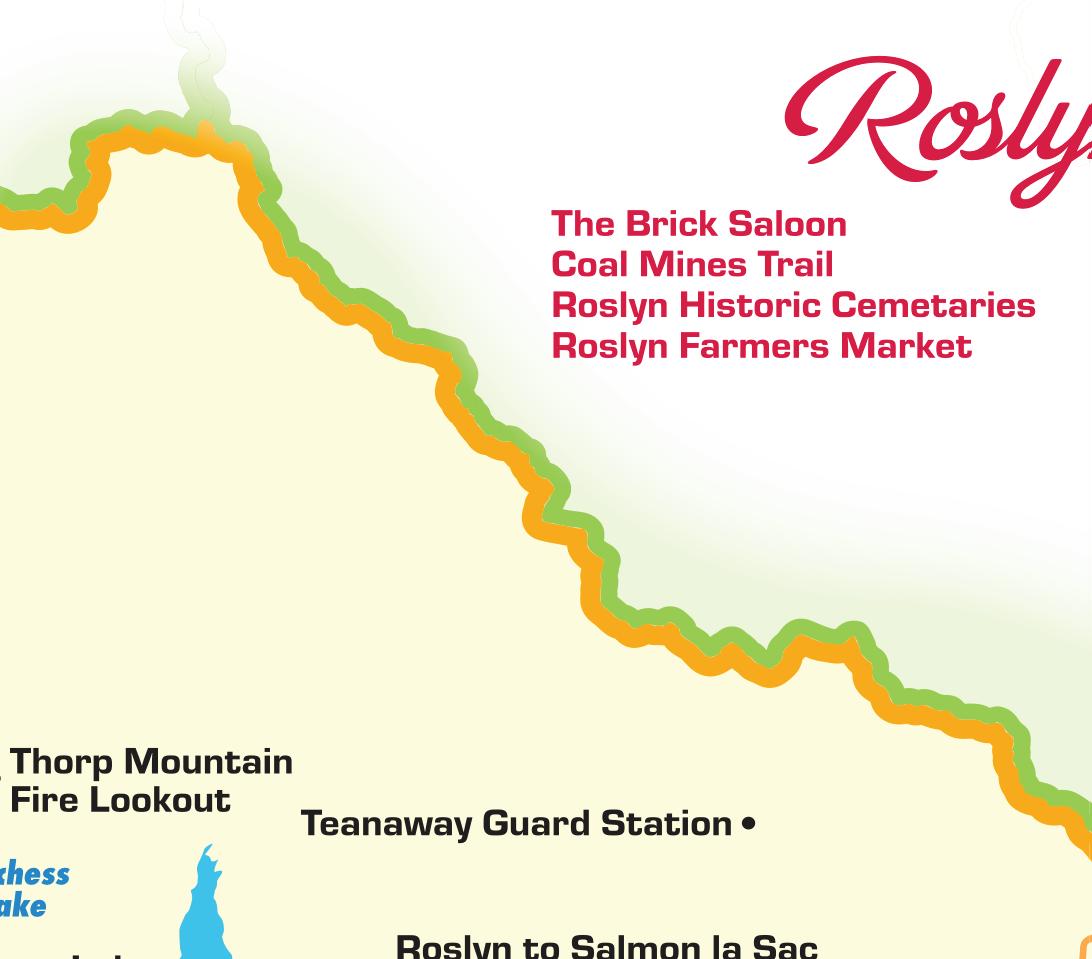
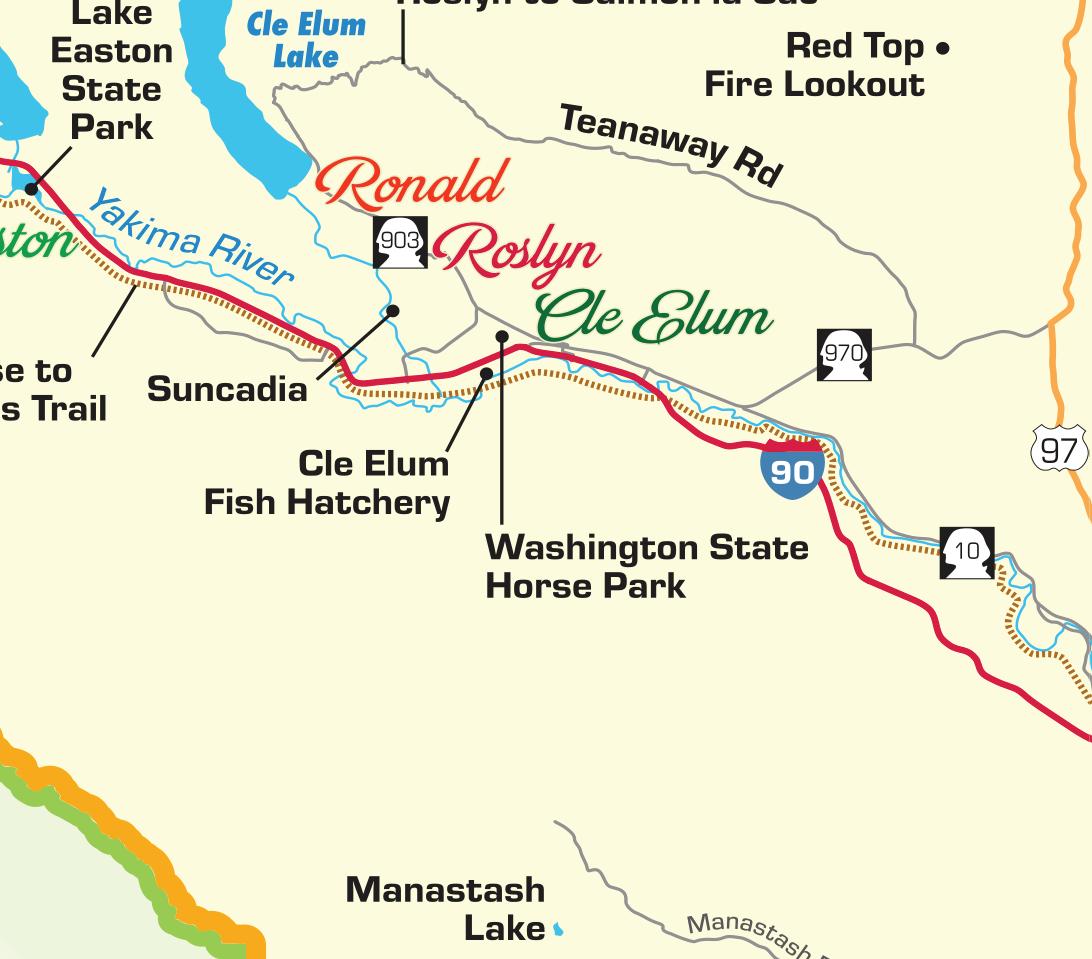
• Teanaway Country Store – Coffee, snacks, and mountaintown charm
• Buffalo spotting in open pastureland
• First Creek Treasures and Gifts – A nostalgic roadside rock shop near Blewett Pass
Follow the River | Yakima Canyon
• Scenic cruise along Yakima River Canyon - highway 10
• Scenic pullouts, picnic spots, and wildlife viewing
Mid-County | Thorp & Kittitas
• Thorp Mill – Historic flour mill tours
• Punch Projects – Contemporary art in a rural setting (Saturdays)
• Olmstead Place State Park – Preserved pioneer homestead
• Ginkgo Petrified Forest State Park
• Ancient petrified wood trails
• Sweeping views above the Columbia River
• The Ranch Restaurant by Royal Family Farming






BY KATIE TEACHOUT
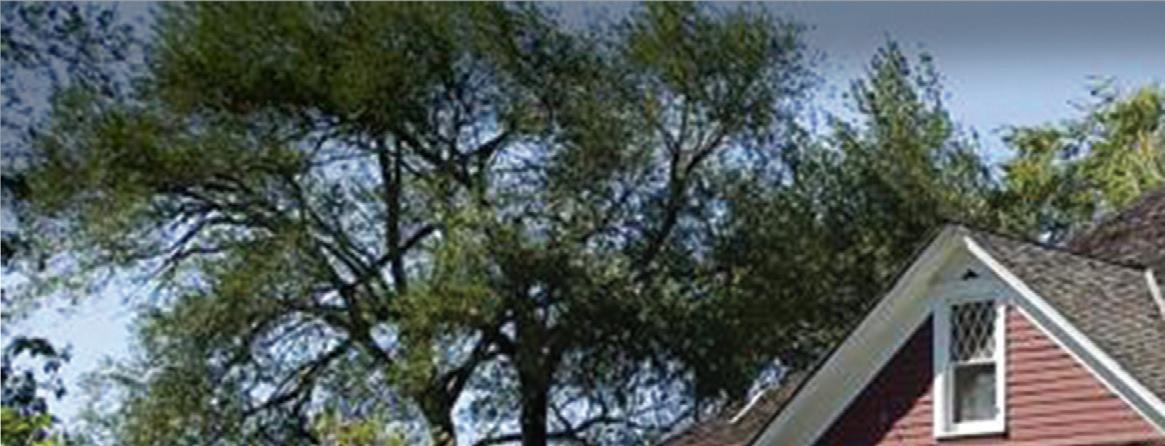
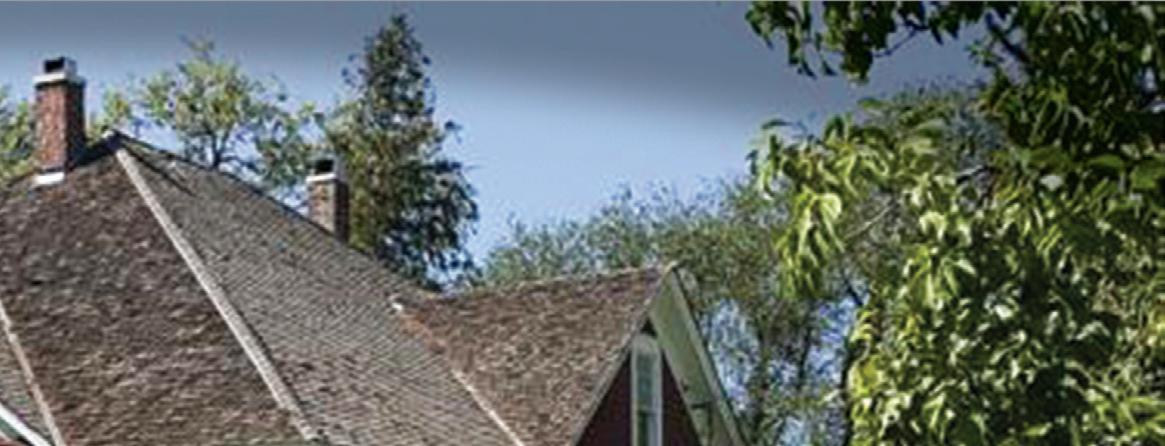
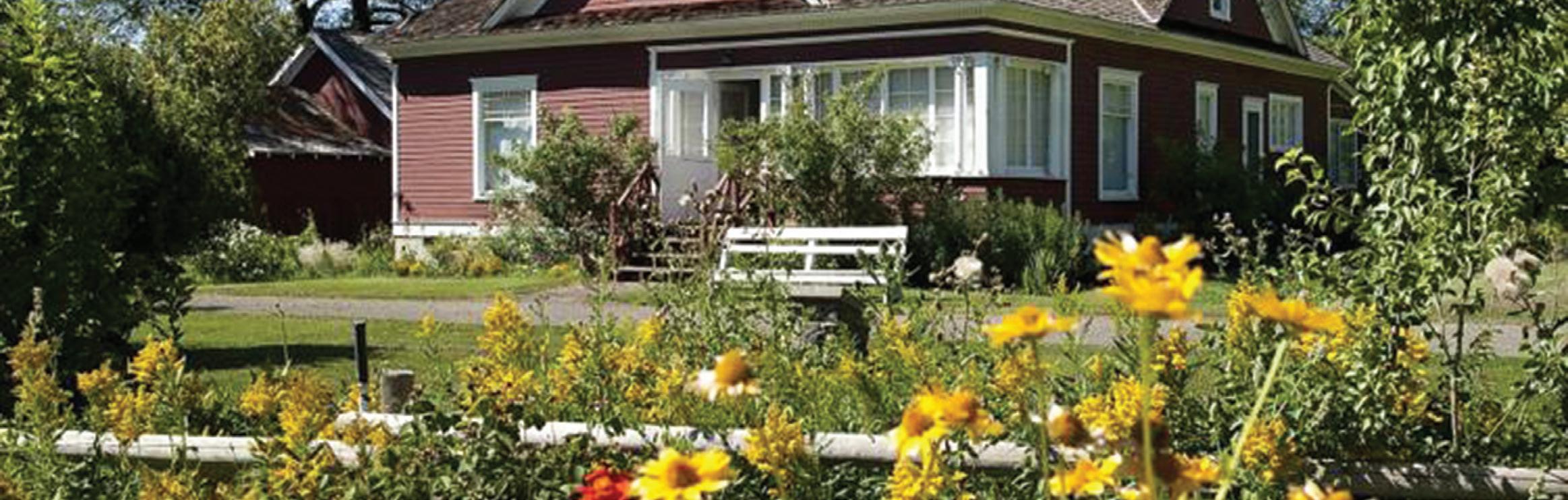
The Olmstead Place Historical State Park is a great place for outdoor activities including picnicking, dog walking, fishing, wildlife viewing, cross country skiing and snowshoeing, or just admiring gorgeous gardens.
The Altapes Creek Interpretive Trail, a half-mile-long trail that follows Coleman Creek between the buildings and barns that make up the former family homestead, is another feature that makes the state park worthy of visits from tourists and locals alike.
The Olmstead Place park is a wonderful place to step back in time, to the early pioneer days of Kittitas County, by touring the living farm museum that includes the original cabin, vintage farming equipment and heritage gardens.
Originally established in 1875 by Samuel and Sarah Olmstead, some of the first homesteaders in Kittitas Valley, the site still contains the first log cabin the Olmsteads lived in, as well as a more modern home they built in 1908 which eventually featured running water and electricity.
Guided tours, including the interiors of the buildings, can be scheduled year-round by calling the park at 509-9251943.
The homestead was deeded to the Washington State Parks and Recreation Commission in 1968 by the Olmstead’s granddaughters Leta May Smith and Clareta Olmstead Smith, who were raised there, in recognition of their grandparents’ visions of a historical farm that would preserve and keep alive this time in our state’s history.
Sam and Sarah Olmstead traveled west from Illinois and crossed the Cascade Mountains by horseback with their three young children Clara, Phil and Jack, to arrive in the Kittitas Valley in 1875.
After filing for a homestead through the Homestead Act of 1862, Sam Olmstead built a cabin and started raising beef cattle. But due to complications from a liver disability he sustained in the Civil War, Olmstead died in 1882.


Sons Phil and Jack helped their mother Sarah with the ranch, continuing to raise beef cattle along with wheat, oats and hay.
Sam and Sarah’s daughter Clara grew up and taught school before marrying local farmer George W. Smith. Their daughters were Leta May, Clareta and Ruby.
A Spanish influenza epidemic claimed several victims in the valley in 1892, and when Clara and daughter Ruby died, George Smith put Leta May and Clareta in the care of their grandmother Sarah.
The girls grew up on their grandparents’ homestead, eventually becoming owners of the ranch.
In 1892, Sarah Olmstead and her sons switched from beef to dairy cows, suppling butter by train to Seattle and other markets.
In its boom in the early 1900s, the Olmstead farm had a milk house, dairy barn, wagon shed, granary and new tool shed.
In 1907 Sarah’s son Jack Olmstead died from typhoid fever. Sarah died in 1918, at age 76, leaving the ranch in the care of her only remaining child, Phil.
Phil Olmstead was one of the founders of the Kittitas Valley Pioneer Association. He and his nieces were very interested in learning about and preserving history. In 1937 they opened the original Olmstead cabin to the public, and it soon became a popular local attraction.

In 1938 Phil Olmstead died of a heart attack, leaving his nieces in full ownership of the ranch. They both left teaching careers to run the farm.
Neither woman ever married. Leta May died in 1974, and Clareta died in 1981 at age 91.
All of the farm buildings, including the original cabin and house, are still on the property. Many of the household items and farm equipment is still in place, taking the visitor back to a quieter time.
The estate also contains the Seaton Cabin Schoolhouse, moved to the park in 1980 from its original location. It’s the same school the Olmstead children rode to on horseback when it was built in a meadow several miles from the Olmstead place in the 1870s.
A book written by Clareta Olmstead Smith called “The Trail Leads West” and published in 1946 tells of OlmsteadSmith’s families’ pioneer days.
A picture frame hanging on a wall inside the 1908 house includes several society membership certificates that further illustrate Clareta Olmstead Smith’s interest in preserving history.
Memberships include The National Society Colonial Dames XVII Century, the National Society of Daughters of Founders and Patriots of America, Society of the Descendants of the Founders of Hartford in the State of Connecticut, Seattle Chapter No. 1 of The State Association of The Daughters of the Pioneers of Washington, the National Society of the Daughters of the American Revolution, and the National Society of the Daughters of the Colonial Wars.
Olmstead-Smith is named as a descendent of Richard Olmstead in the Daughters of the American Revolution membership, and he is noted as rendering material aid during the Colonial Wars in America between 1607 and 1775.
Also carefully preserved in a picture frame and hanging on a wall in the main house is Homestead Certificate No. 178 by the General Land Office of the United States, declaring property boundaries of Sarah F. Olmstead and signed by Grover Cleveland.
Shelves flowing with books ranging from a vintage hardback “Winnie the Pooh” to thick ancestral Bibles holding family records still sit in the homestead, as if the last person living there would soon be turning another page.
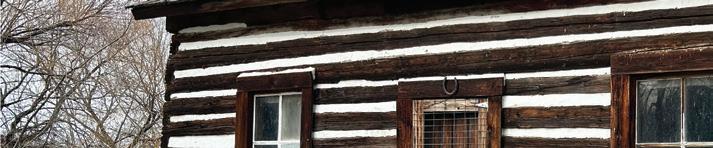
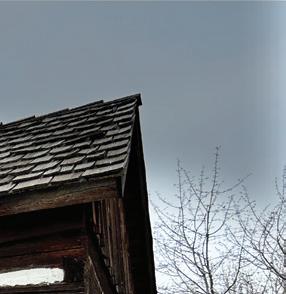
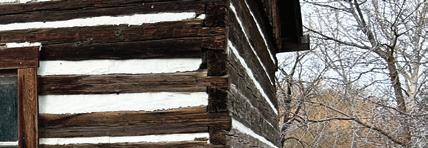

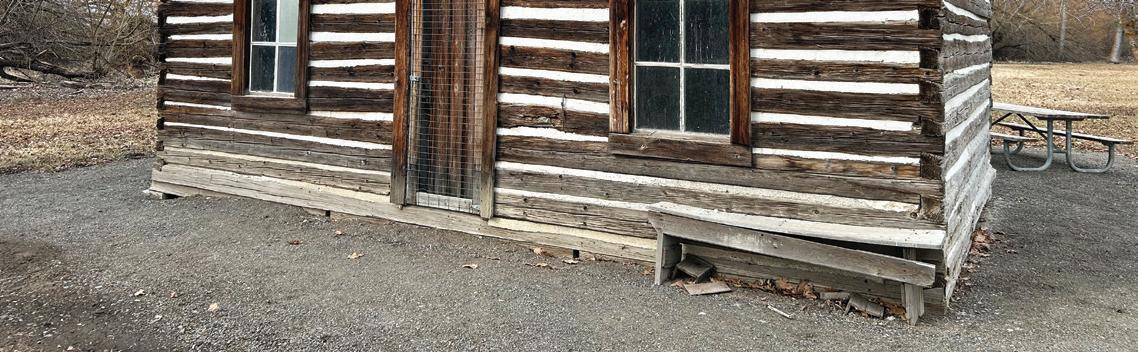
The Seaton Cabin Schoolhouse, built in 1870 and originally located several miles away, is the schoolhouse the Olmstead children used to ride to on horseback. It was moved to the Olmstead Place Historical State Park in 1980.
The Olmstead Place Historical State Park was added to the National Register of Historic Places in 1971. A plaque outside the cabin states that under the provisions of the National Historic Preservation Act of 1966, the property possesses exceptional value in commemorating, or illustrating American history.
Helping to keep the origins alive with heirloom gardens on the grounds are the Olmstead-Smith Historical Gardeners, a group of volunteers with roots dating back over 30 years, dedicated to the maintenance and authenticity of all the flowers and vegetables grown on the estate.
“Orange Crown Imperial Fritillaria and some of the daffodils are original to the garden, having been planted by the Smith sisters,” said Dorothy Stanley, an original member of the volunteer gardeners group. “The Gardeners have added more varieties of pre-1960 daffodils,



snowdrops, and blue scilla bulbs.”
Stanley said the blue scilla bulbs are from the historic Ramsey House in Ellensburg’s First Railroad Historic District, a house built in 1906 at 215 East Ninth St.
Fellow gardener Vicki Sannuto said no pre-1960s plants were ever added to the homestead’s gardens by the volunteers, who use only heirloom varietals.
When the group first formed, they did extensive archival research, reading journals and gathering information on activities of seasonal and daily life at the homestead to ensure they were selecting plants that would likely have been used by the Smith sisters.
Their hard work over the years paid off in many ways, including being presented the Washington State Parks and Recreation Commission’s Volunteer Group of the Year Award in 2018.
The original volunteer group that numbered anywhere from 30 to three members over the years now has about half a dozen members.
Current volunteers, along with Stanley and Sannuto include Janet Vaughan, Donna Umland, Annette Williams, Anna Williams, Bonnie Carr, Gloria Wright and Terry Carkner.
“Our group is small and aging,” Sannuto said. “New volunteers would be welcome.”
The gardeners work at the homestead from April to October, including a weekly Wednesday Weeding from 9 a.m. to noon.
Volunteers receive a free parking pass while working at the homestead, but must first be approved through the Washington State Parks and Recreation Commission. Applications can be found at www.parks.state.wa.us or by reaching out to the Washington State Parks employee assigned to Olmstead Place State Park, Olmstead.Place@ parks.wa.gov
For more information on the Olmstead-Smith gardeners, email Osgardners@outlook.com.
Located just four miles east of Ellensburg, this 217-acre day-use park is open year-round, from dawn to dusk.
Park hours from April 1 to Sept. 30 are 6:30 a.m. to dusk, and from Oct. 1 to March 31 the park opens at 8 a.m.
A Washington State Parks Discover Pass is required for day visits to the park.







BY STAFF OF KITTITAS COUNTY CHAMBER
If you only have a day in Ellensburg, you’ll quickly realize it’s not about rushing from stop to stop—it’s about how easily everything unfolds.
Walkable streets, welcoming storefronts, and a mix of outdoor adventure and downtown charm make it simple to experience a lot without feeling busy.
From your first cup of coffee to your final evening stroll, here’s how to spend 24 hours in Ellensburg.
MORNING: START LIKE A LOCAL
Ease into your day at D&M Coffee, a longtime downtown staple where locals gather for their morning routine. Whether you’re grabbing a latte, breakfast sandwich, or something sweet, it’s the kind of place that sets the tone for a relaxed day ahead.
From here, take a moment to wander downtown. Ellensburg’s historic core is compact and easy to navigate, with brick buildings, colorful storefronts, and plenty of places worth stepping into.
LATE MORNING: GET OUTSIDE
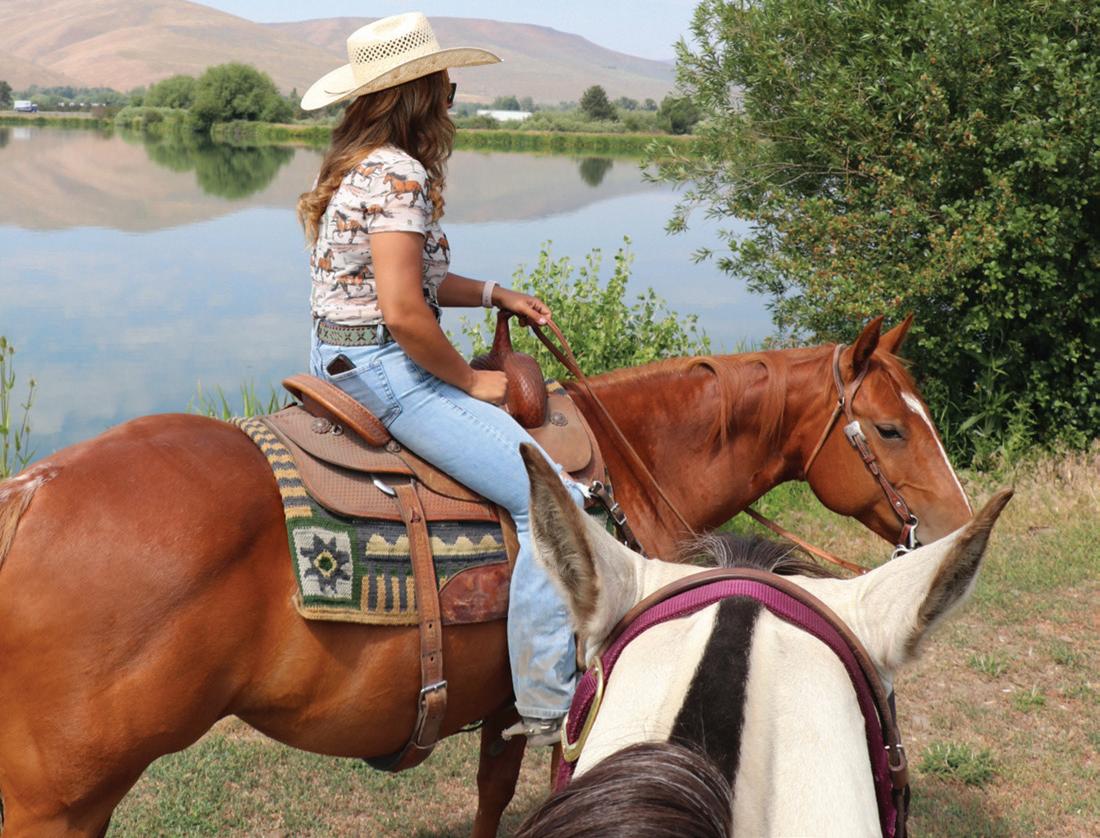
No trip to Ellensburg is complete without experiencing the landscape that surrounds it. Head just outside of town for a ride with Kinship Trail Rides, where you can explore the Kittitas Valley on horseback.



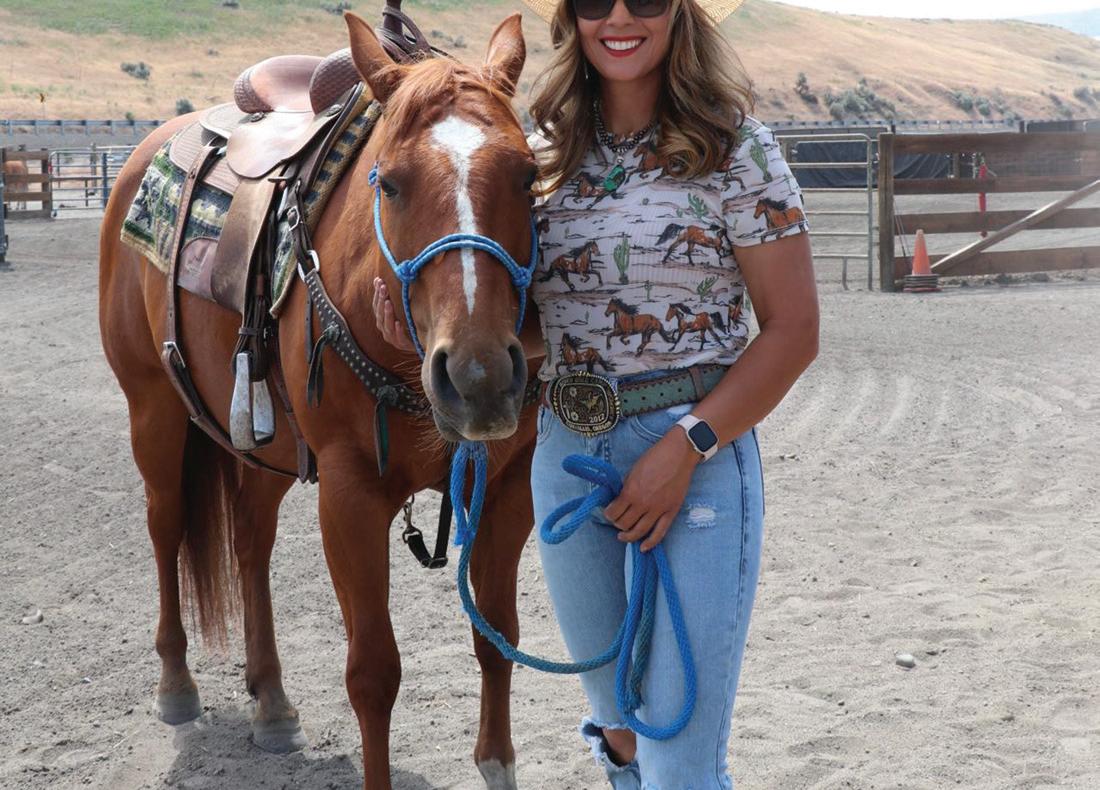


With wide-open views, rolling terrain, and a slower pace, it’s a chance to connect with the land in a way that feels both grounding and memorable. Whether it’s your first time riding or you’ve been on horseback before, this is one of the most unique ways to experience Central Washington.
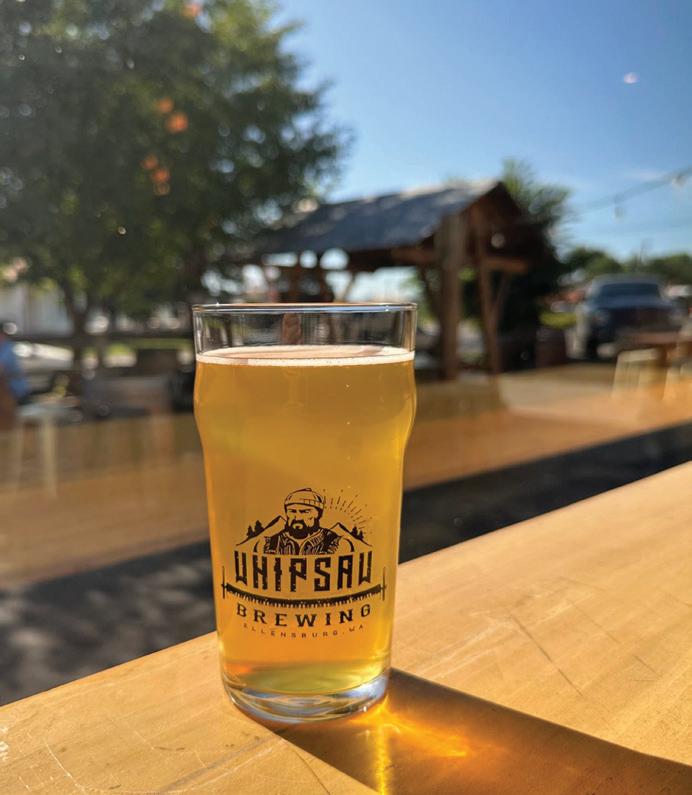
After your ride, head back into town for lunch at Whipsaw Brewing. Known for its creative craft beers and rotating food trucks out front, it’s a great place to unwind and refuel.
Grab a seat, try a flight, and enjoy a laid-back atmosphere that perfectly matches the rhythm of the day.
Spend your afternoon exploring Ellensburg’s vibrant art and shopping scene. Within just a few blocks, you’ll find colorful boutiques and pieces of art.
Step into spaces like Claim Clothing, Flirt and Evolve for a little shopping. These small town stops are worth the walk through and you can always find something special for the season.
Continue your stroll with a visit to Pearl Street Books, one of Ellensburg’s beloved independent bookstores. With thoughtfully curated shelves and a cozy atmosphere, it’s the perfect place to pick up a new read or a meaningful souvenir.
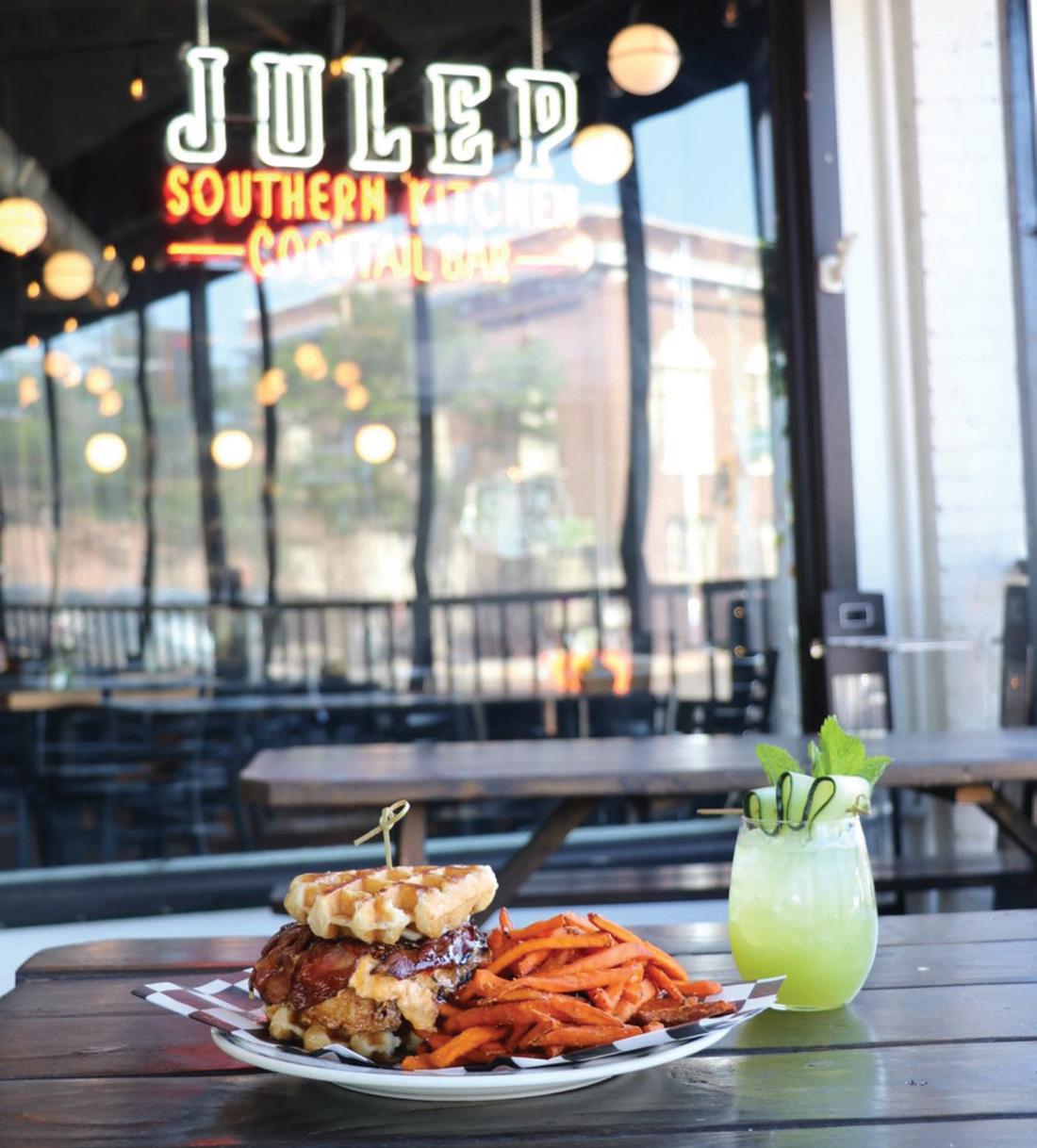
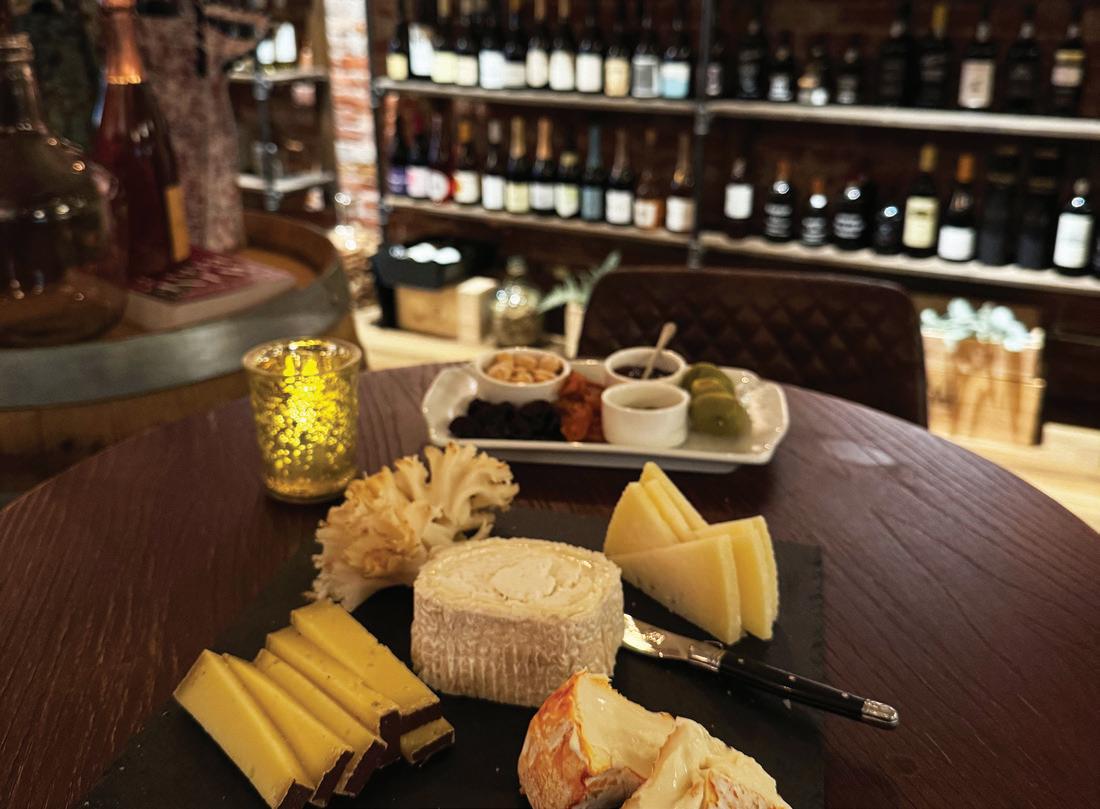
As the day winds down, ease into the evening with small plates at Bonn Somm Wine Bar for a wine and cheese pairing. With its intimate setting and European-inspired feel, it’s an ideal place to relax and enjoy a quieter moment. For dinner, make your way to Julep, a Southern-inspired kitchen and cocktail bar that delivers both flavor and atmosphere. It’s the perfect way to close out the day with something memorable.
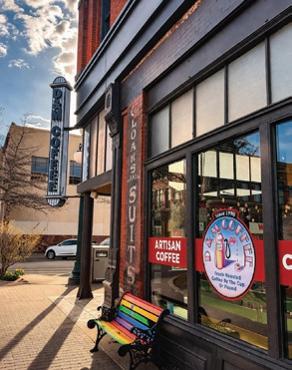
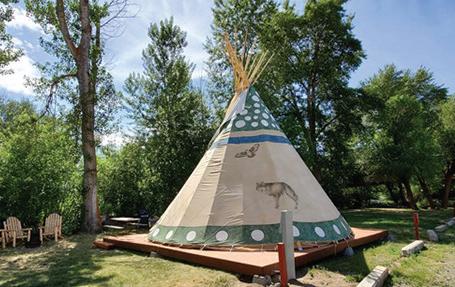
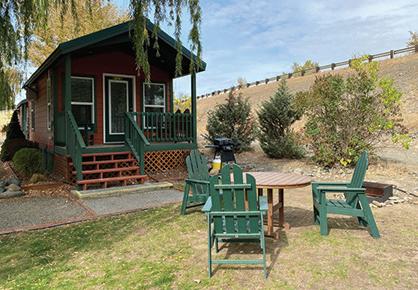
Wrap up your 24 hours with a stay at Hotel Windrow, a beautifully restored downtown hotel that puts you steps away from everything you’ve experienced throughout the day.





way people. starts visit into more—another walk, another stay It’s welcoming. well

it’s easy to settle in and reflect on a full day—without ever needing to get back in the car.
Ellensburg has a way of surprising people. What starts as a quick visit often turns into something more—another walk, another stop, another reason to stay a little longer.
It’s walkable. It’s welcoming. And it’s well worth the trip.






Long before Ellensburg became the beloved Central Washington gem it is today, it was quite literally a love letter
BY ANNA ROSE
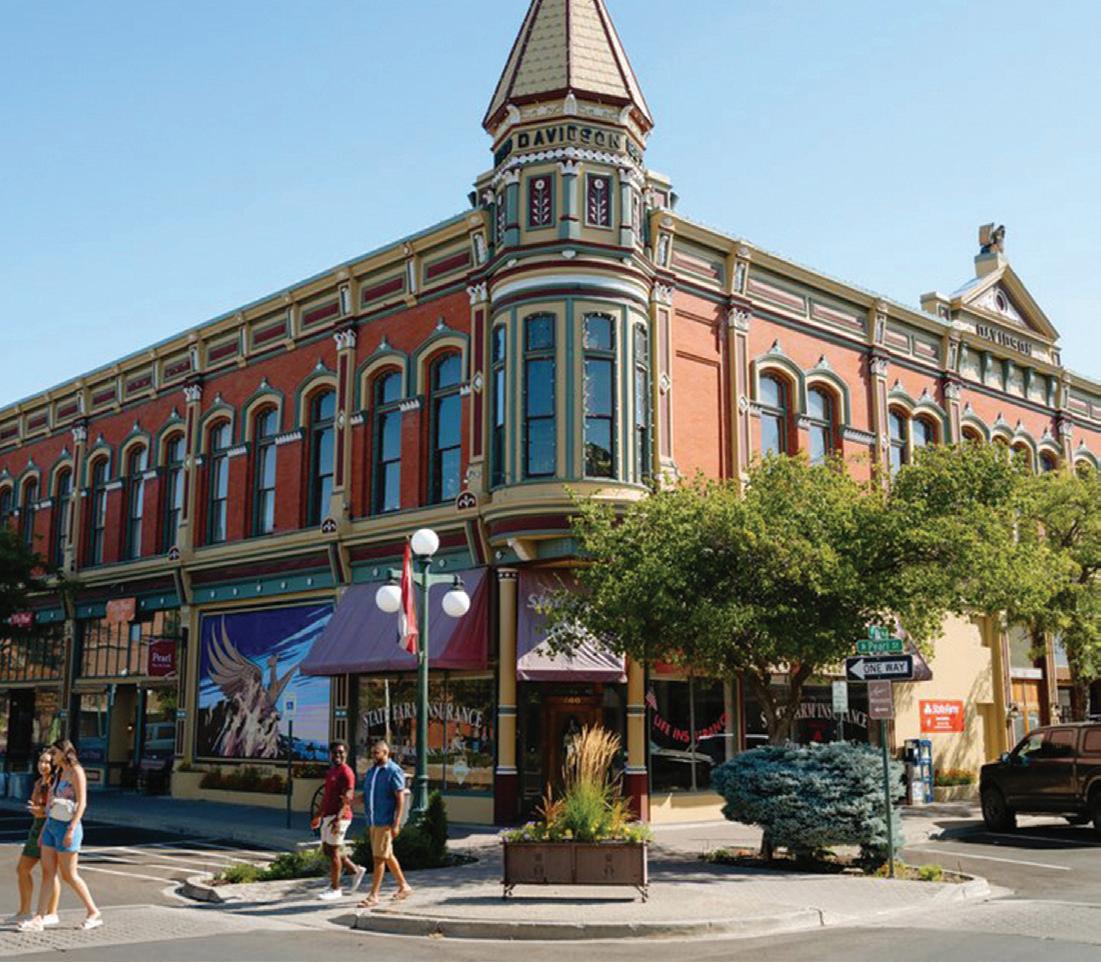
In 1875, pioneer John Shoudy platted the streets of a brand-new town and named it Ellensburgh in honor of his wife, Mary Ellen. A few years later, the U.S. Postal Service tidied up the spelling and dropped the “H” — part of a nationwide effort under the Harrison administration to standardize town names across the country.
Then came the fire of 1889, burning through the young city and reducing most of its wooden buildings to ash. But Ellensburg rebuilt, rising from the ruins in sturdy brick that still lines the downtown streets today. Those same historic facades are now adorned with vivid murals that tell the stories of the people and moments that shaped this place.
Ready to step back in time? Lace up your walking shoes for a charming historic stroll.
Scattered throughout downtown, larger-than-life murals transform building walls into open-air history books. The Ellensburg Mural Society, organized by the Ellensburg Downtown Association, is actively preserving existing artwork while funding new additions through donations and fundraising.
One mural worth seeking out is “Ross The Hub” on the Kleinberg Building, a piece with deep roots in the community. The Kleinberg family first established a pool hall and cigar bar called The Hub in 1890. In 1908, the Ross family acquired the building and converted it into a men’s department store: Ross The Hub Clothiers. The current mural is believed to have been painted between 1939 and 1943, with updates through 1946 as business partnerships evolved. It advertises the brands of the era — Stetson hats, Levi’s jeans, Justin and Nocona boots — and stands as a vivid snapshot of mid-century Main



Street life. Ross The Hub Clothiers anchored downtown from 1908 until 1960, and the mural is slated for full restoration by December 2026.
For more than a century, The Palace has been a cornerstone of downtown Ellensburg’s dining scene. S.C. Smith first opened its doors in 1892 at 312 North Main Street, just beside the Fitterer Building. Five years in, he passed the reins to William B. Price for a mere $325 — a man celebrated, as the Palace’s own records note, for keeping an excellent table and knowing the restaurant trade inside and out.
The early 1900s brought new ownership in the form of Thomas Massouras, who relocated the restaurant to the corner of Third Avenue and Main Street, a shrewd move given the foot traffic flowing from the nearby railroad depot. As rail travel waned through the 1940s, Massouras handed the business off to Ted Wicks, who steered The Palace through World War II before temporarily closing on March 27, 1947.
Two current transferring ran Bugni later,
7 P.M. THE HOUSED
Perched the Washington. and veterans a pivotal Ellensburg state’s constructing governor’s Chestnut overlook brick,
36 by cost
When asked whether governor’s he it was a future would there, was question But meant came grinding capital a halt. year, voters Olympia. the

current home in the Pearson Building, eventually transferring ownership to Marshal L. Remelin. Remelin ran the restaurant solo until 1966, when Ted and Agnes
Bugni of the Teanaway Valley took over. Generations later, The Palace remains in Bugni family hands.
Perched above downtown, Craig’s Hill carries one of the most compelling “what if” stories in all of Central Washington. Its name traces back to brothers Brittain and Samuel Craig — experienced masons and Civil War veterans who arrived in Ellensburg with big ambitions at a pivotal moment in the city’s history.
Ellensburg was a finalist in the bid for Washington state’s capital city. By April 1889, the Craigs were constructing what they boldly called a prospective governor’s mansion at the corner of Third Avenue and Chestnut Street, on a hill they were certain would soon overlook the capital of their brand-new state. Built of brick, the structure stood three stories high, measured 36 by 32 feet, and cost $6,000 to build. When a passerby asked Brittain Craig whether it was the governor’s mansion, he reportedly said it was — whether a future governor would actually live there, he added, was another question entirely.
But it was not meant to be. First came the fire, grinding the city’s capital campaign to a halt. The following year, Washington voters chose Olympia. In 1893, the governor-less
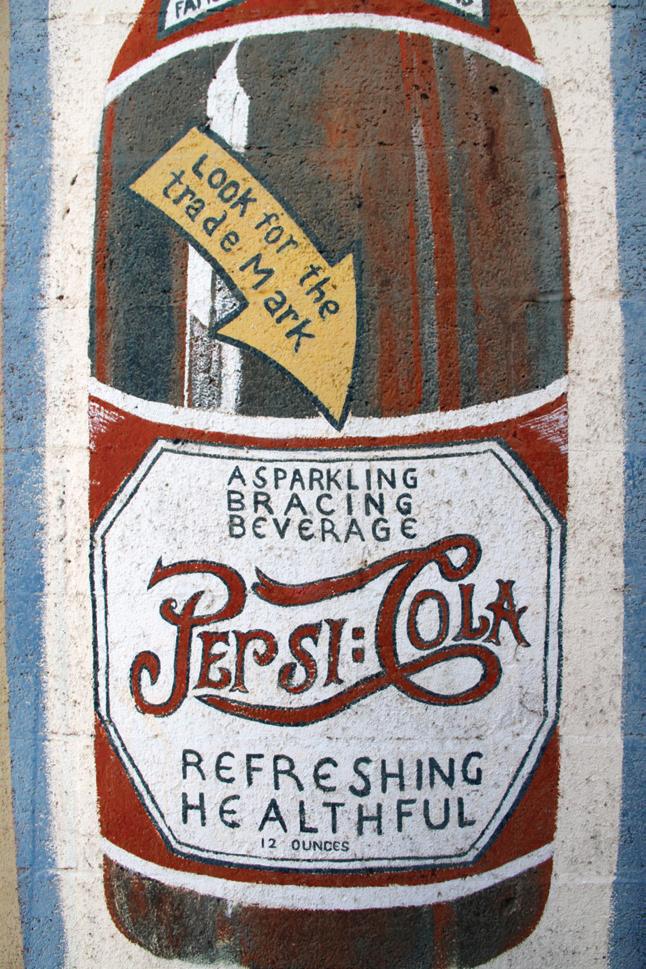
mansion sold at a sheriff’s sale for $4,300 — leaving the Craig brothers with a profit of just $80.
The building sat vacant and neglected for decades until 1930, when Ralph and Jessie Wiseman purchased it and gave it a whimsical makeover: a fantasy castle theme complete with a crenellated roofline and battlements. The name Craig’s Castle has stuck ever since.

The Craigs also built Vista House, the American Legion hall on the hill, to honor veterans, a fitting legacy for brothers who had all served in the Civil War.
Today, Reed Park crowns the hilltop and has served as a city park since 1933, offering sweeping panoramic views of Ellensburg and the Kittitas Valley beyond. Drive up, find a good spot and watch the sun sink behind the Cascades.
Bonus tip: Craig’s Hill is also excellent for stargazing. But bring a jacket — those high desert temperature drops are no joke.



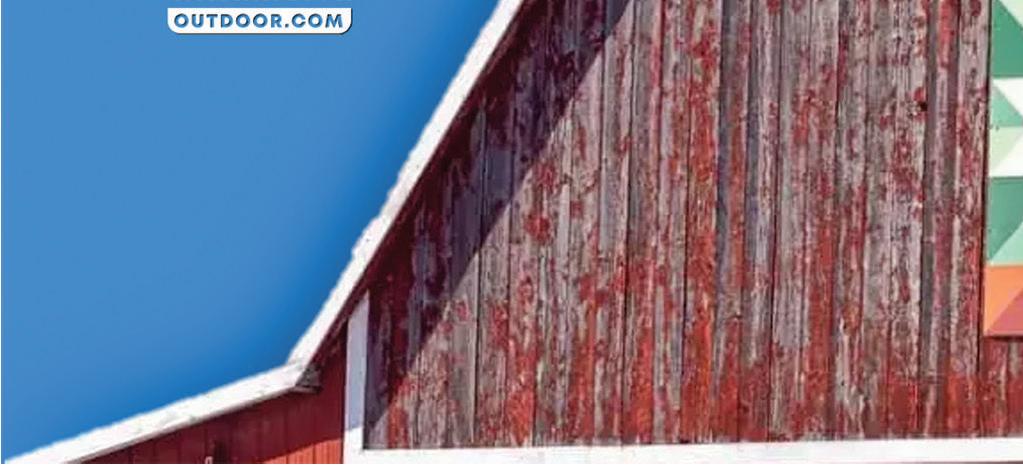
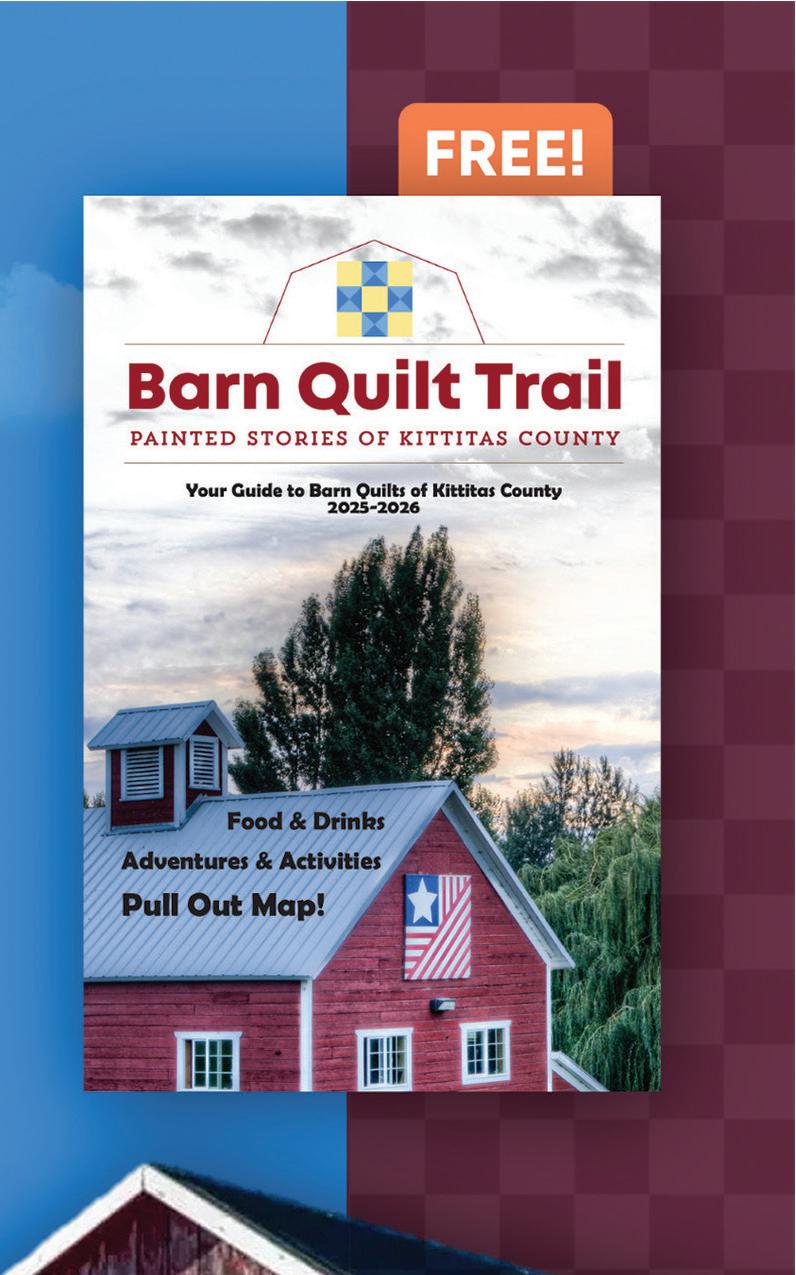
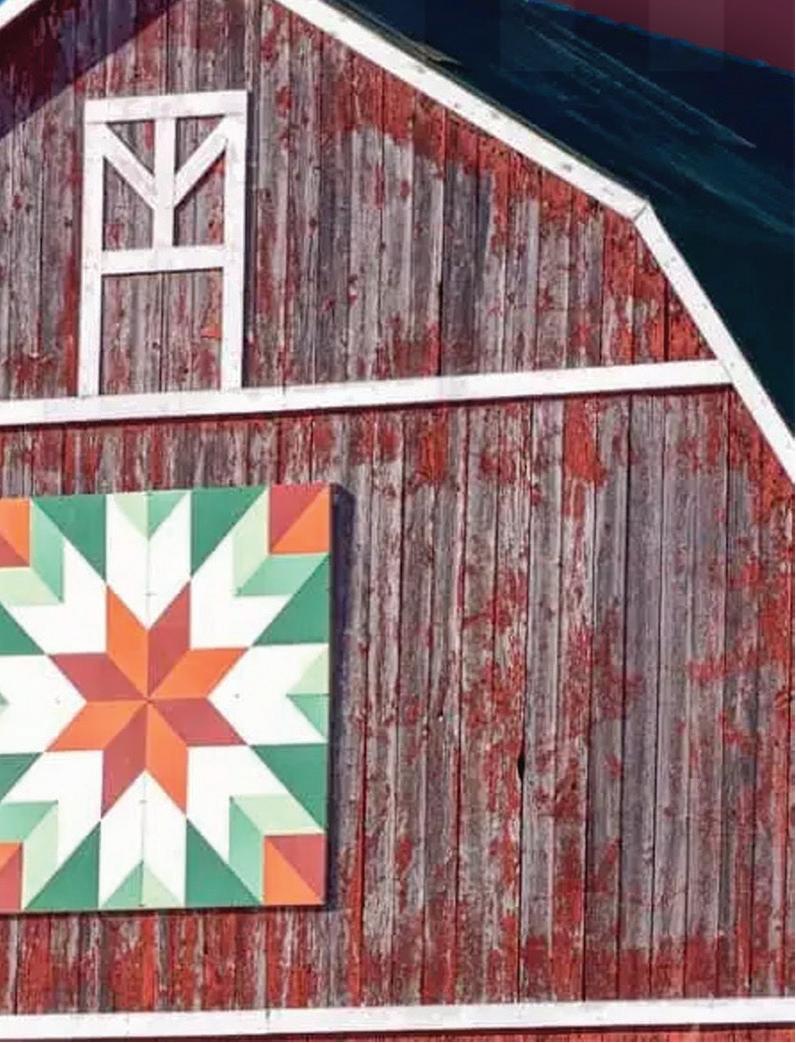
BY NICOLE KLAUSS
Kittitas County is known for its outdoor recreation opportunities like fishing, hiking and a lesser known gem — Washington state’s first barn quilt trail.
In April 2012 a group of community-minded friends met together in Ellensburg, Washington to discuss the feasibility of a Barn Quilt Trail in the agriculturally rich, Kittitas County.
An enthusiastic response came from everyone that we had introduced the project to. The group’s expertise included business administration, project management, sales and marketing, writing, barn architecture and history, quilting and digital photography. Tasks were assigned according to time and experience and the Kittitas County Barn Quilt Trail was underway!
The Kittitas County Barn Quilt Trail features more than 100 painted quilt squares up on barns from Roslyn to Ellensburg. This is a great way to enjoy a day drive and a scavenger hunt activity in this scenic location. How many barn quilts can you find? The trail is self-guided, so you can map out your own journey. Soak in the beauty of Kittitas County!
Kittitas County is the first county in the state to have a barn quilt tour. The barn quilts honor Kittitas County’s agricultural industry. The designs vary, and sometimes the property owner chooses a specific pattern to acknowledge a loved one or the property’s history. The quilts are either 4-by-4 or 8-by-8 feet depending on the barn size and proximity to the road. For locations to be considered for barn quilts, they have to be on a well-traveled (usually paved) road, so they can be easily viewed from the roadway. This means you should be able to drive by the barns slowly, or view them from the side of the road without having to get up close to the property or other people. Some of these barn quilts are also located at or near local businesses that you can support.
Printable maps are available to download in PDF format at the bottom of each map page. You will also find a digital map that you can view on phone or tablet that will provide driving directions via Google Map on each page as well. We hope you enjoy your time traveling the Barn Quilt Trail.
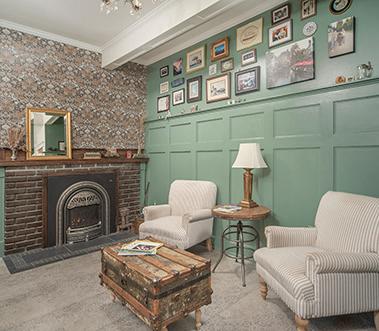
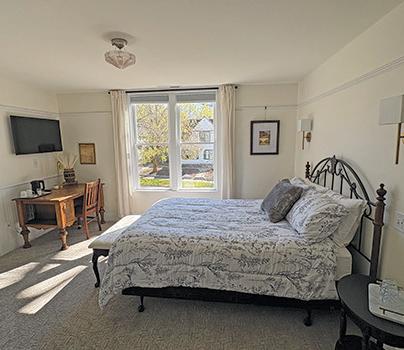
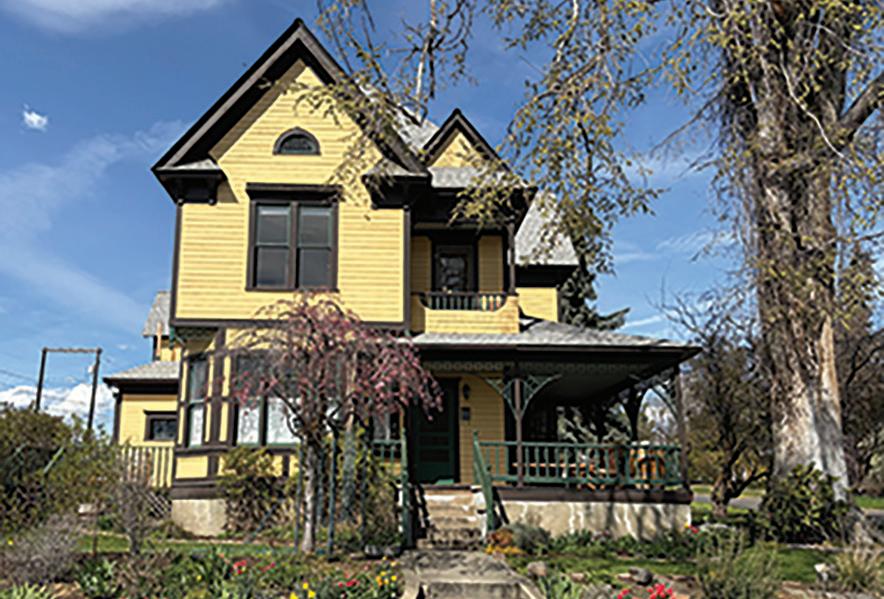



The Roslyn Cemeteries are 26 separate cemeteries with nearly 5,000 graves that make up one complex. Although there are other historical cemeteries known to exist throughout the world, there is not an exact count of similar styles to this one, said Kittitas County Historical Museum director Sadie Thayer.
BY ANNA ROSE




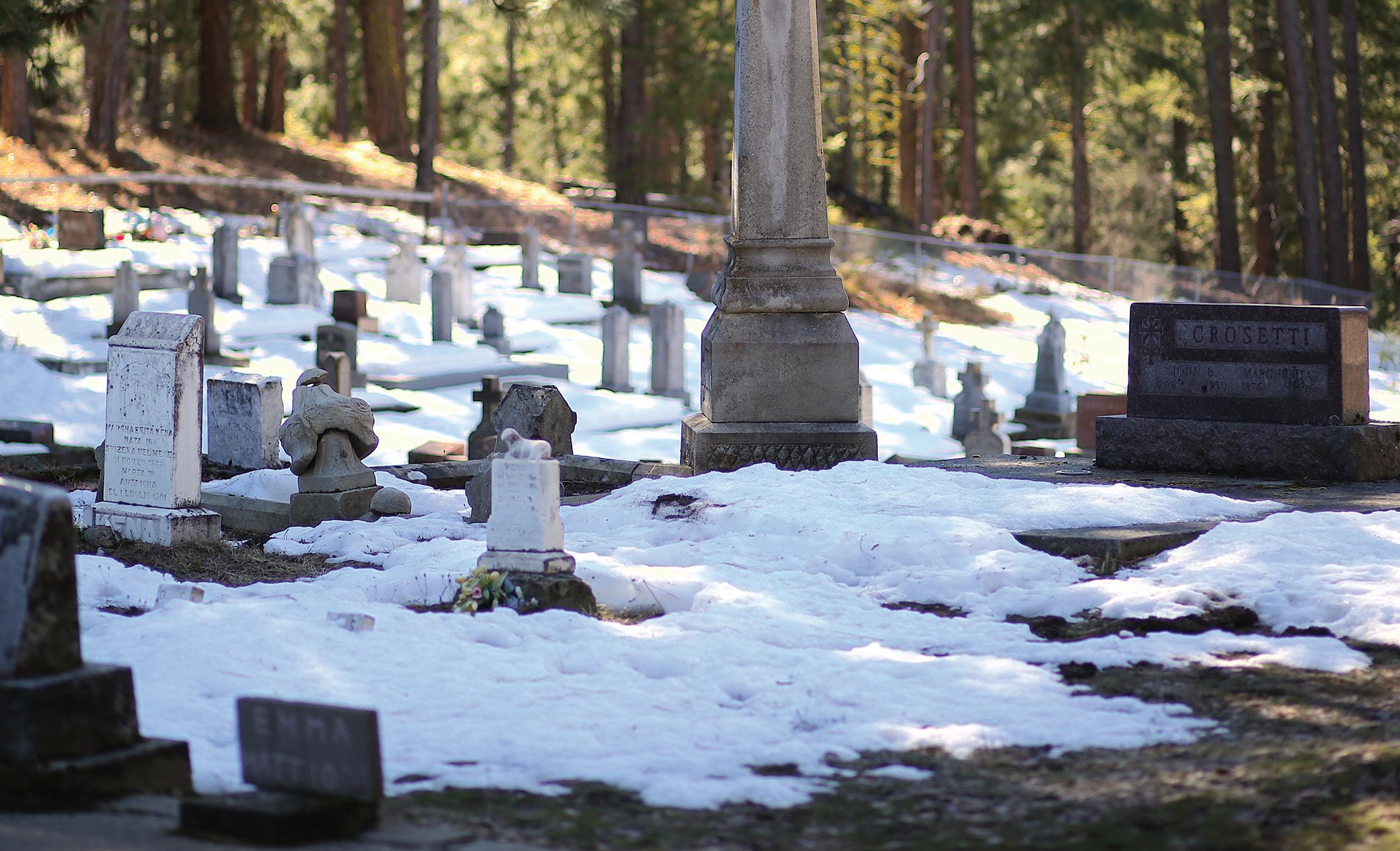
Cemetery, the Eagles Cemetery, the Druids Cemetery, the Saint Barbara’s Croatian Cemetery, among others.
the Cemetery.
The first cemetery, the Old Roslyn City Cemetery, was founded in the initial years of the community by the Northern Pacific Coal Company. Many of those laid to rest were miners who died due to unsafe working conditions, and it was these conditions that led to the workers striking and seeking better, and safer, conditions and shorter work days, Thayer said.
“As Roslyn continued to grow, fraternal, ethnic, religious, and civil orders chose to have their own cemeteries as well,” Thayer said.
These include the IOOF (Independent Order of Oddfellows) Cemetery, the Masonic Cemetery, the Polish
According to Thayer, some of the cemeteries range from a single grave to sections where there are still active burials occurring, to areas planned for eventual expansion.
Many laid to rest are of historical significance not only to Roslyn, but the Pacific Northwest.
Family members of the 300 Black miners who came into Roslyn as strikebreakers in August 1888 are buried in the Mount Olivet Cemetery.
On May 10, 1892, an explosion killed 45 miners in the Northern Pacific Coal Company’s No. 1 mine at Roslyn, which, according to Thayer, is the worst coal mine disaster in Washington state history.
Those who died were buried in the Old City Cemetery,
Another the of Pythias Cemetery, Business on Aug. resulting the There visiting themselves, It is discouraged to the Do clean the Thayer the photos not





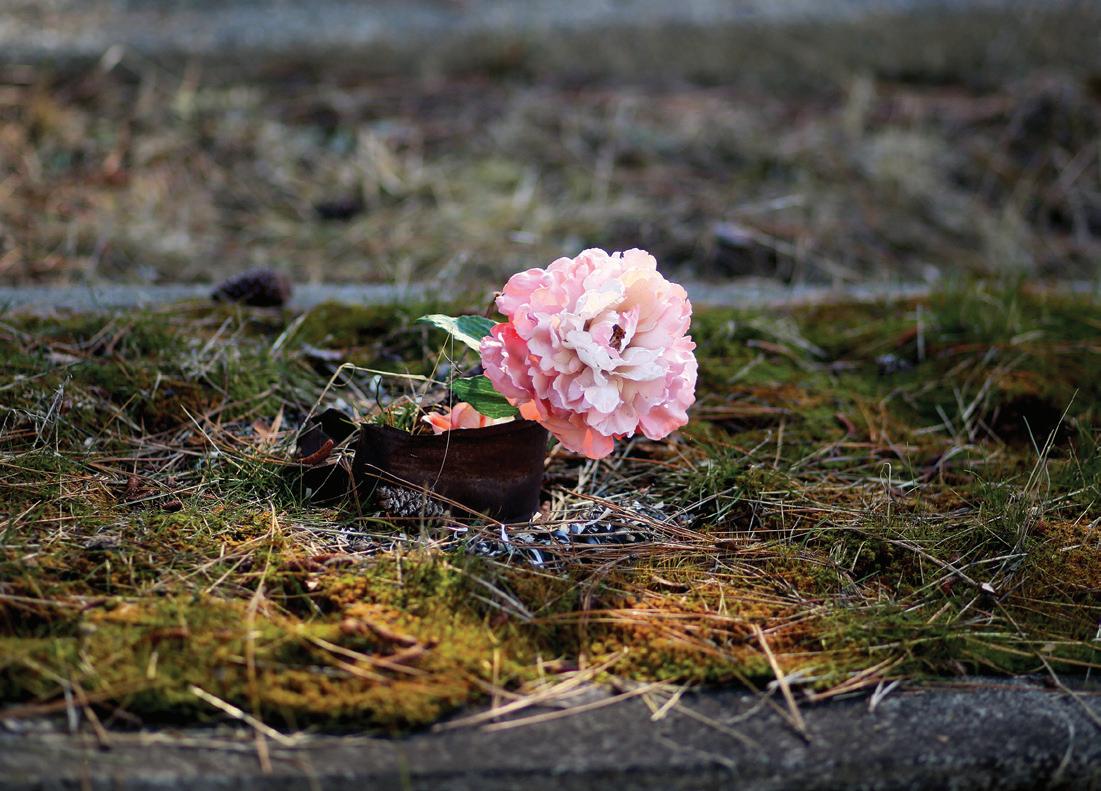
the Old Knights of Pythias Cemetery and the Mount Olivet Cemetery.
Another mine explosion on Oc. 3, 1909 claimed 10 lives in the No. 4 Mine. They were laid to reset in the Old Knights of Pythias Cemetery, Cacciatori D’Africa Cemetery, Old City Cemetery, and the Masonic Cemetery.
Business owner and moonshiner Bert Pellegrini died on Aug. 18, 1928. His 250-gallon still exploded, and the resulting fire destroyed the town of Ronald. He is buried in the Eagles Cemetery.
There are several important things to keep in mind when visiting the cemeteries: Try to not walk over the graves themselves, but rather in between the headstones.
It is discouraged to play loud music in cars; run or play in the cemetery; speak loudly or use offensive language.
Do not litter and pack all trash out; keep pets leashed and clean up after them; stay on roadways and do not drive on the grass; and try not to stay in the cemetery after dark.
Thayer also recommends not speaking to strangers in the cemetery, as others may wish to be alone; to not take photos of other individuals or funerals in progress; and to not touch monuments or headstones.


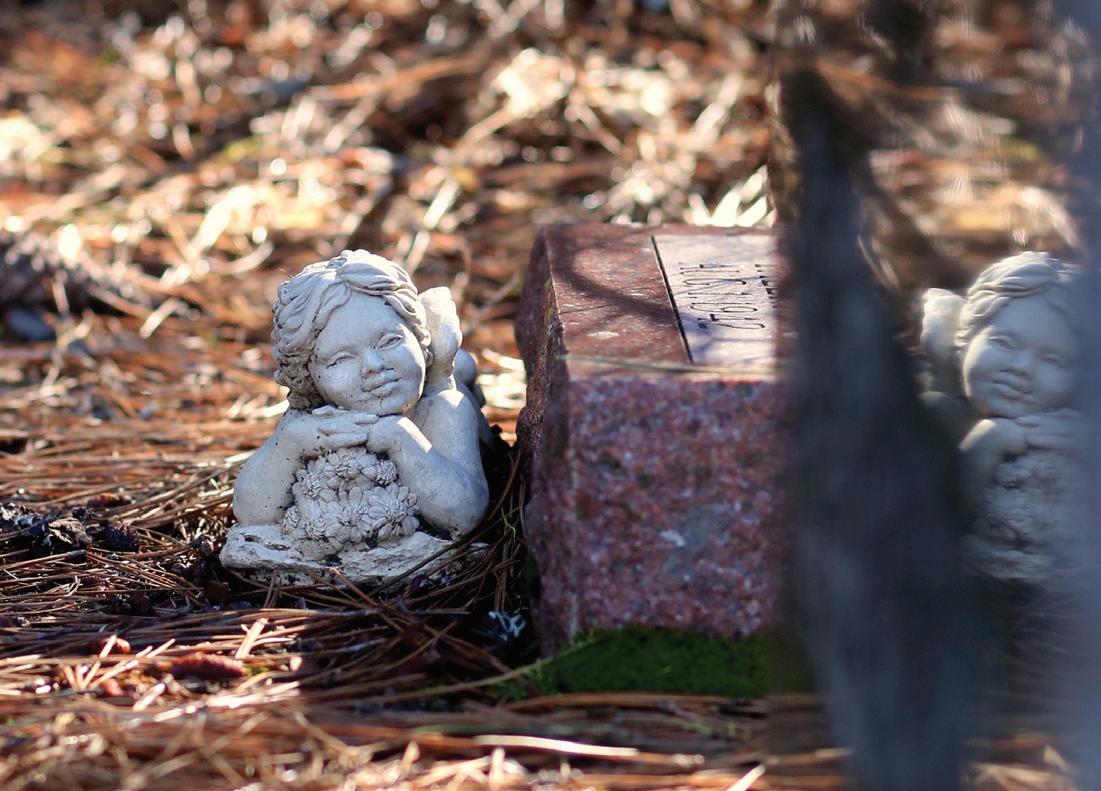
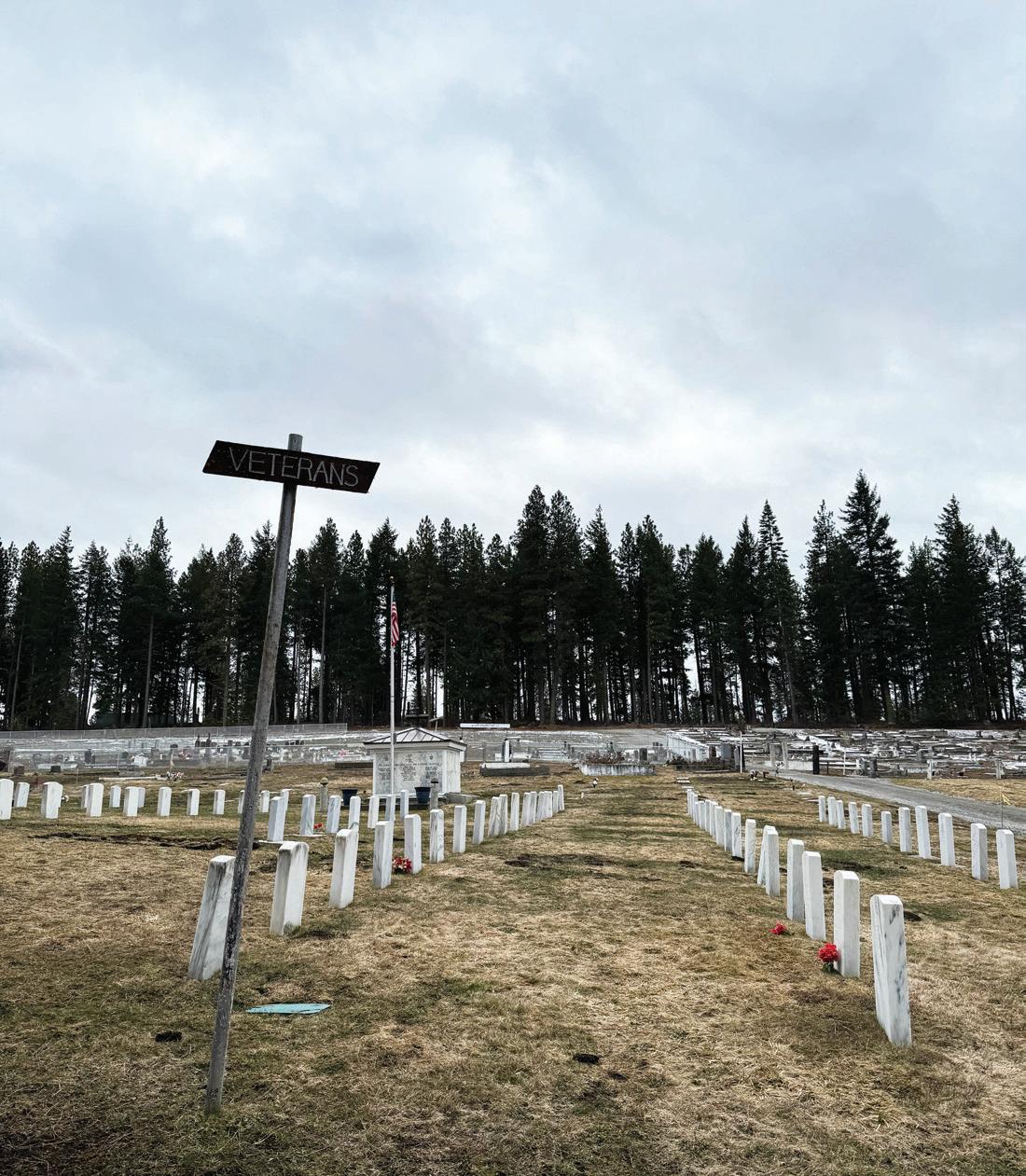


BY LESLIE KELLY

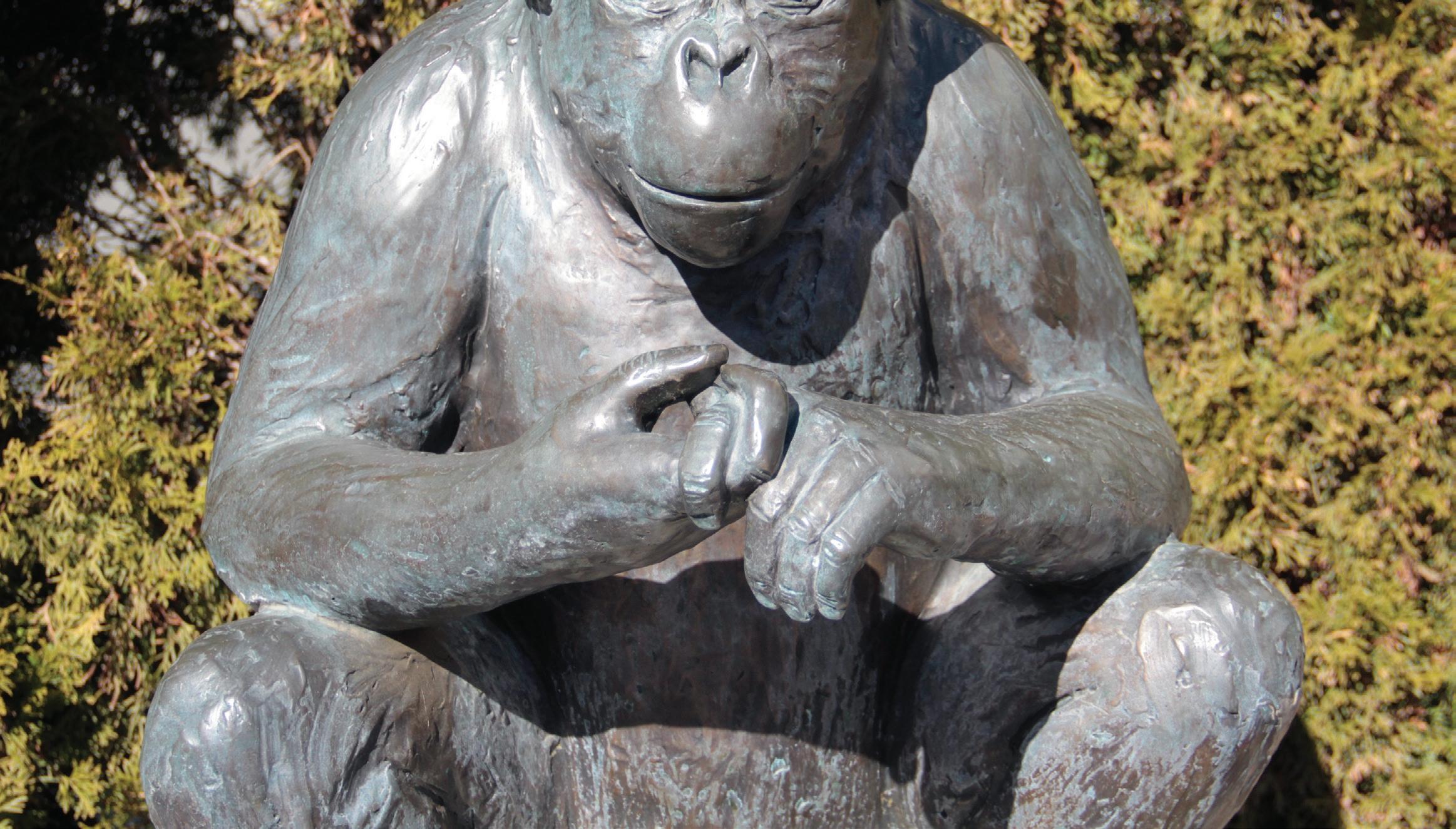
Some may be taken off guard by the giant bronze statue of a chimpanzee that sits in Friendship Park, in downtown Ellensburg. But ask a local and they’ll tell you about its interesting and meaningful past.
The statue is of Washoe the chimpanzee, who was a resident of Ellensburg from 1980 until she passed away in 2007. She was part of the Chimpanzee and Human Communications Institute (CHCI) at Central Washington University.
She became known around the world as the first chimpanzee to learn a human language and pass it on to another primate.
Washoe was born in West Africa in 1965 and captured by the Air Force for research on behalf of the U.S. space program. She was named after Washoe County, Nevada, where she was raised by University of Nevada-Reno scientists Allen and Beatrix Gardner from 1967-72.
The Gardners treated Washoe as if she were their own child, communicating with her only in ASL and helping her
learn approximately 250 signs. She learned such things as using silverware and eating as a child would.
According to Friends of Washoe board member and CWU Senior Lecturer Dr. Mary Lee Jensvold, the Gardners and their graduate students used a procedure called “crossfostering,” where one species is raised as another.
“Washoe and, later, other chimpanzees Tatu, Dar and Moja were also raised like human children” and eventually joined her at CHCI, Jensvold said.
When Washoe was 5 years old, she was moved to the University of Oklahoma’s Institute of Primate Studies under the care of Roger and Deborah Fouts. Roger was one of the Gardners’ graduate students in the 1970s and began serving as a CWU psychology professor in 1980.
While with Washoe, the Gardners and their students communicated only in ASL, rather than using vocal


communication, on the assumption that this would create a less confusing learning environment for the chimpanzee. Some described this technique as replicating the environment in which human children acquire language, Jensvold said.
The Friends of Washoe website chronicles how Washoe’s accomplishments over the course of three decades had profound effects on changing scientific thought, influencing a wide variety of academic disciplines. Her development also has helped humans better understand their responsibilities to our fellow animals.
The organization, (CHCI) founded in 1981, states that “we served the mission of Central Washington University. The sense of compassion and service we fostered prepared students for ‘responsible citizenship.’
“The skills and critical inquiry we taught helped our students live enlightened, productive lives,” the website says. “CHCI also played an active role in supporting diversity within the sciences by encouraging women and other minorities to enter science.”
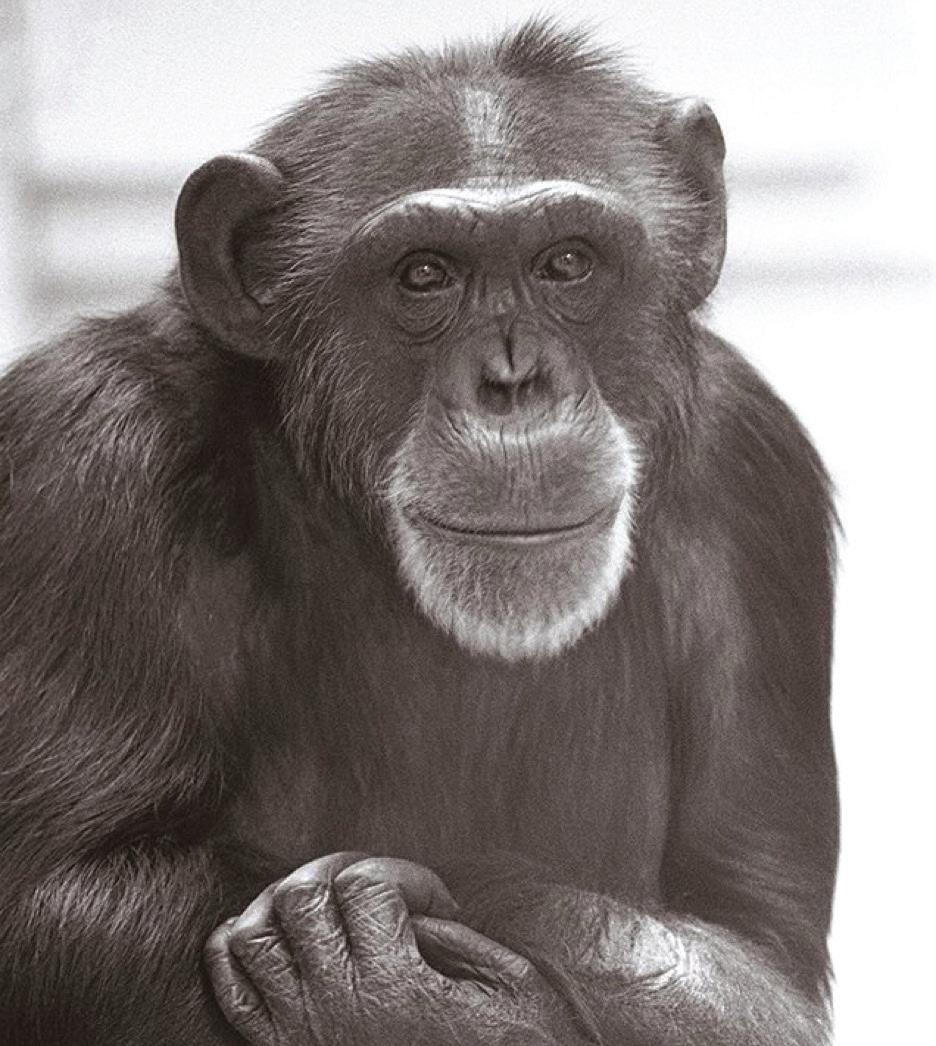

The institute served as a resource for students, faculty, and visiting scientists by promoting quality, humane research on the communication and behavior of chimpanzees, as well as research that furthered both the care of captive chimpanzees and conservation efforts to save them from extinction.
After Washoe’s death, her family members were under the care of the Fauna Foundation, a chimpanzee sanctuary in Quebec, Canada, in collaboration with the nonprofit organization Friends of Washoe.
Central University still has a bachelor’s and master’s program in primate behavior. Jensvold advises master’s level students. Jensvold said her graduate students still use the data archive on the Ellensburg campus for their research.
“While the chimpanzees have left, the research continues,” she said. “Graduate students continue to come to CWU’s Primate Behavior MS program to learn about the sign language project with chimpanzees and the lessons of ethical, humble, and humane research.”
When the chimps were in Ellensburg, the researchers offered “Chimposiums,” where the public could come on Saturday and a Sunday to learn about the chimpanzees and have a guided observation tour. More than 5,000 people partook annually. Originally the chimps were housed indoors but eventually a building was built for them that allowed them outdoor access.
“Every chimpanzee has a personality of their own, their own likes and dislikes,” she said. “They show emotions just as humans do.”
In fact, they are closely related to humans and share 98.6 percent of genetic material. “Cognitively and emotionally, they are much like humans,” she said.
“It was an amazing project,” Jensvold said. “It was pretty special for Ellensburg.”
The statue was created by Georgia Gerber a well-known bronze artist who lives on Whidbey Island. Washoe is signing “friend” in the statue. The park in downtown Ellensburg, where the statue sits, was dedicated in September 2012 in memory of Washoe, the first chimpanzee to communicate with American Sign Language.




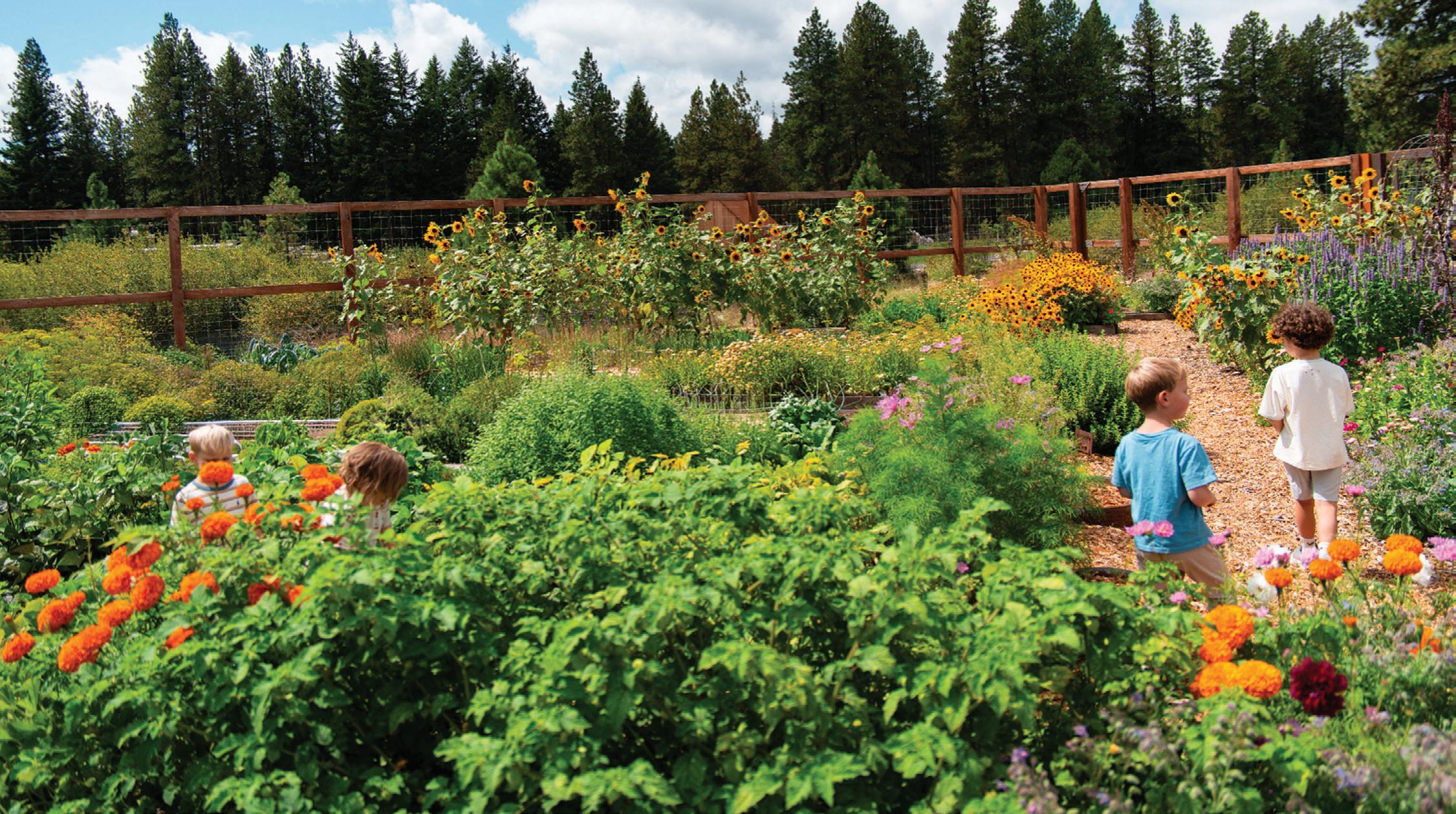
Tucked into Nelson Farm, the Hay Creek Garden is one of those places that feels especially magical this time of year, part inspiration, part fresh-air reset, part reminder that good things are growing.
BY STAFF OF SUNCADIA
As the snow begins to melt and spring planting season comes into view, it feels like the perfect time to turn our attention to the garden and the care that goes into it. Before the first seedlings take root and the season begins to bloom, get to know the person behind the gardening magic at Hay Creek Garden.
Regan has been part of Hay Creek Garden for the past nine years, first as an intern, then as head gardener and supervisor. Her path to gardening wasn’t a straight line, which makes her story even better.
“I earned my degree in filmmaking and started out editing videos… It didn’t take long for me to realize I needed something more dynamic, something that connected me to the outdoors and involved movement.”
After discovering edible gardening, she enrolled in an urban agriculture program, left her editing career behind, and eventually found her way to Suncadia.
“For the past nine years, I’ve been running Hay Creek Garden, and it’s truly my dream job.”
What keeps her passionate is the connection the garden
creates, both with guests and across the resort.
“The most rewarding part is inspiring guests and showing them what’s possible when growing your own food. Watching kids pull carrots from the soil and eat them, sometimes for the first time, is pure joy.”
“Collaborating with chefs to help shape their menus using fresh garden produce is always a highlight.”
This spring, the garden team is planning thoughtful additions, including new fruit trees, expanded asparagus, more berries along the fence line, and early blooms like ranunculus to brighten the season and support pollinators.
And what makes tending the garden at Suncadia so special, in Regan’s words, is the people behind it.
“Over the past few years, Suncadia has built an incredible team of passionate, forward-thinking individuals. What’s truly special is that this team doesn’t just dream big when it comes to the garden, they make those dreams a reality.”
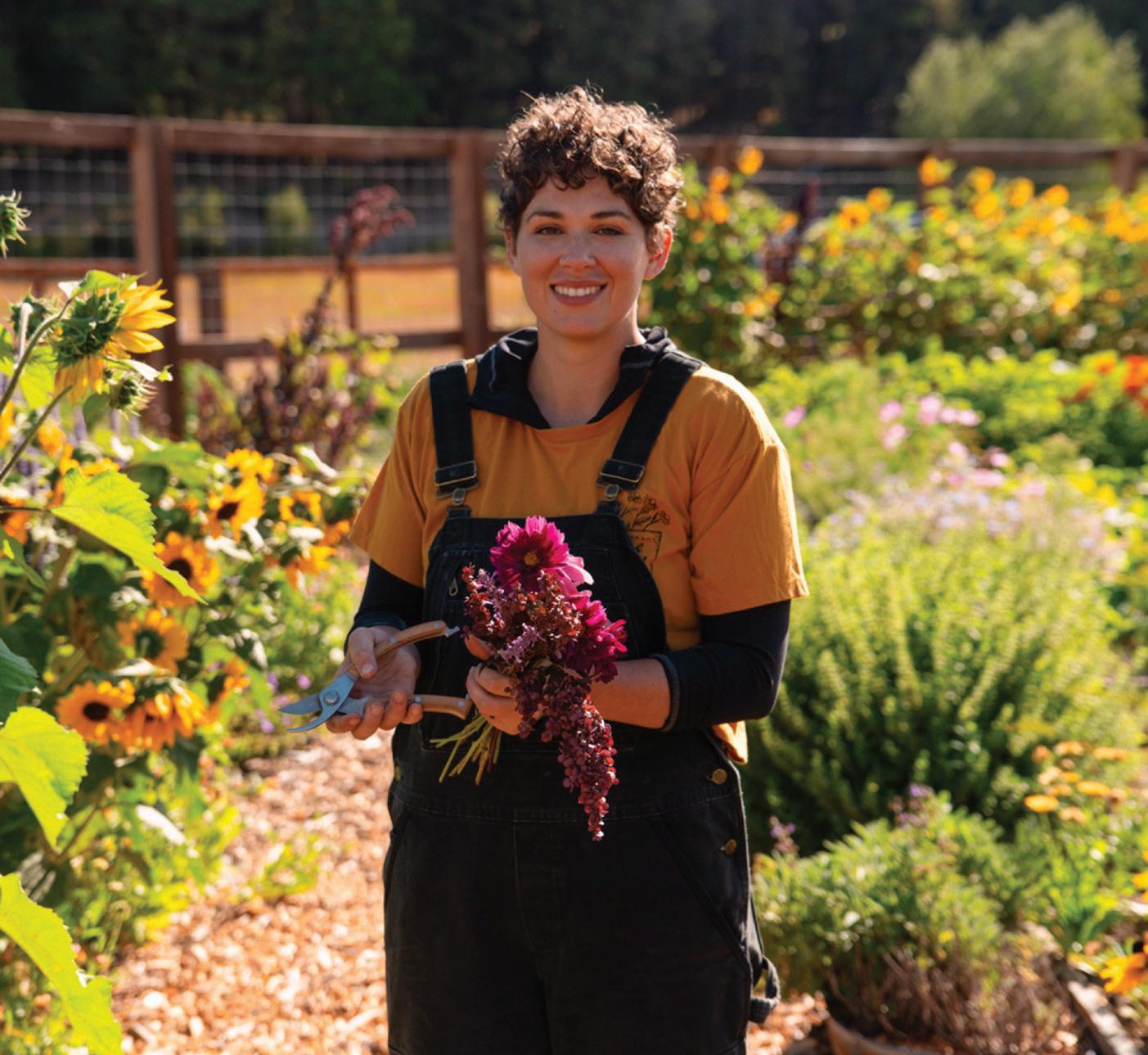





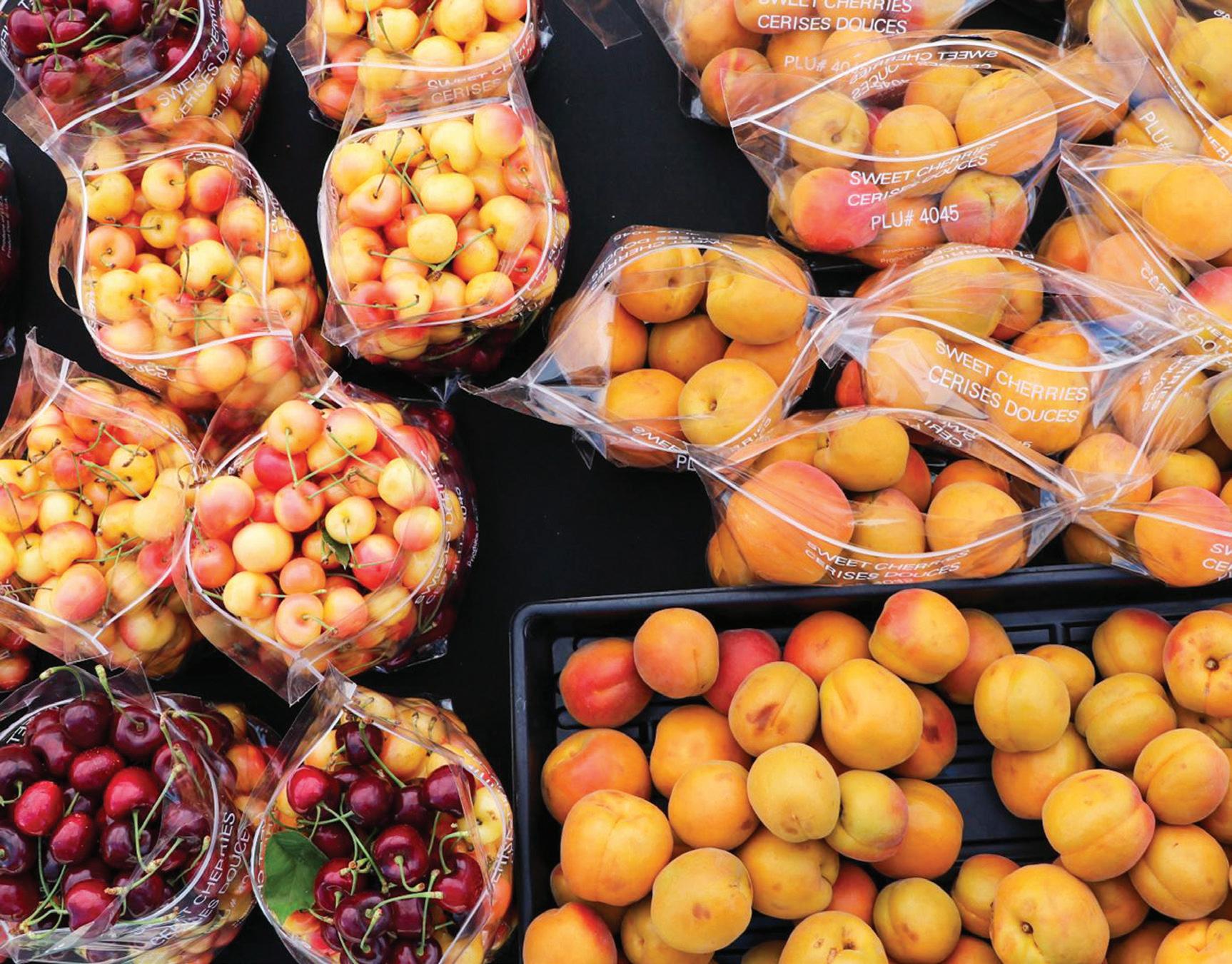

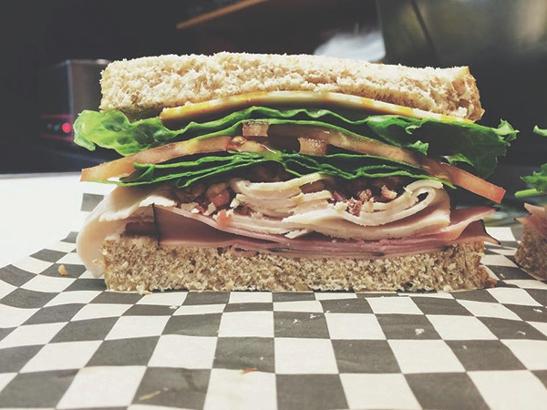
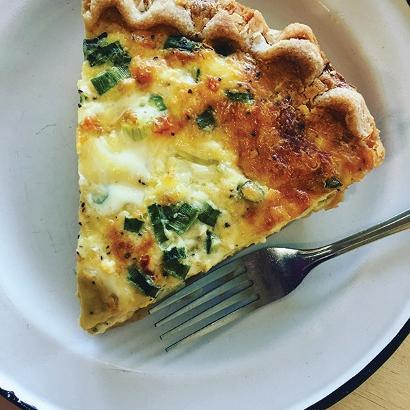






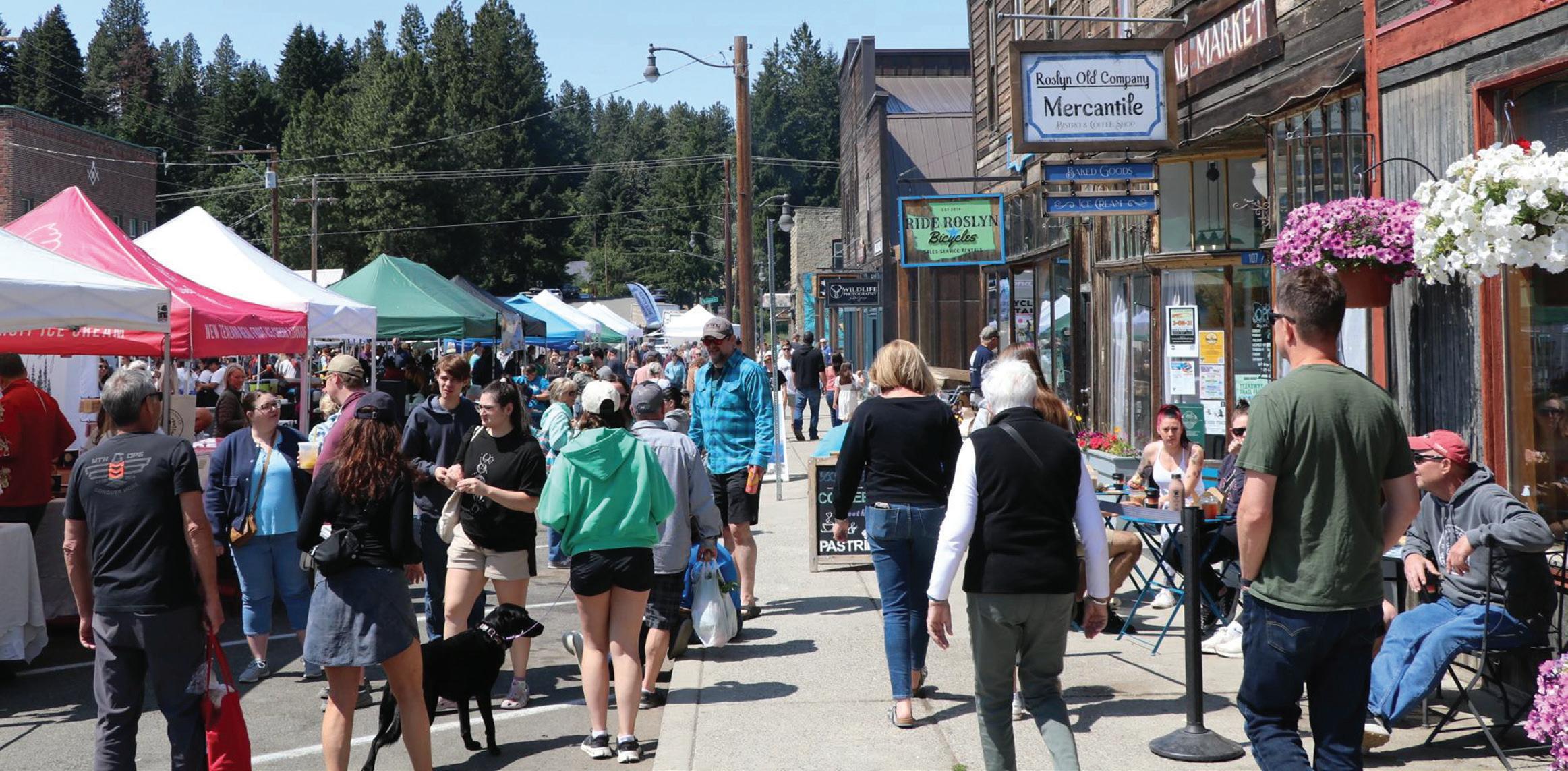
BY HILARY JENSEN
With its sprawling farmlands, sun filled growing season and deep agricultural roots, it’s no surprise that the Kittitas Valley is home to two bustling Farmer’s Markets, found in Ellensburg and Roslyn.
The Ellensburg Farmer’s Market, established in 1990, is a Saturday ritual for many. Running May through October, the hustle and bustle of the market fills two historic downtown blocks, at 4th and Pine. Set against the backdrop of downtown shops, cafes and restaurants, the market is the place to see and be seen. With street performers setting the tone, the streets come to life with bakers, woodworkers, crafters, local chefs, ranchers, wineries, cideries and of course, farmers.
Bambi and Eric Miller, owners of Parke Creek Farm, are two of those farmers, who have been a part of the Ellensburg Market since 2008. Which, Bambi says, “Feel
like a lifetime ago.” The Millers go by many titles, including farmers, stewards of the land, shepherds and spinners. They tend a small flock of fine wool sheep, raise Berkshire pigs and lamb, run free-range chickens, grow sweet corn, countless other market vegetables and cut flowers. And, you can find an abundance of the season in their corner booth every Saturday, where you’ll also find them eager to talk about their farm and organic practices. If you can’t make it to the market, you’ll also find a well-stocked farmstand, at the farm, on Parke Creek Road.
The Roslyn Farmer’s Market, which nearly came to an end a few years after its inception, was reinvented by local families, in 2011. With the community’s support, a team of minions (the name they’ve given their high school-aged market helpers) and a tremendous, handson Board of Directors, they’ve brought local farmers, specialty food producers, artisan/crafters, food preparers and entertainers together, for the community and tourists



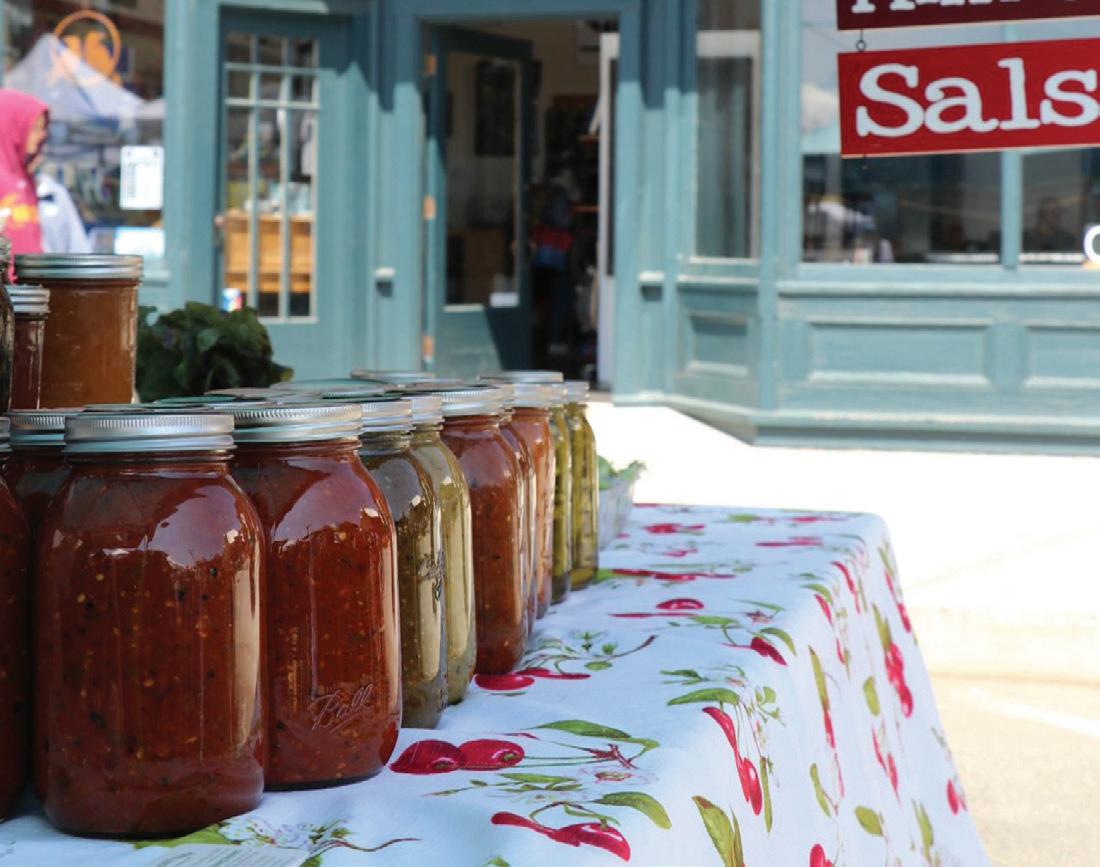
alike. Sunday mornings are a buzz of activity on historic Pennsylvania Ave., mid-June to mid-September, as vendors from all over WA set-up their wares, prepare local eats and display their fresh produce.
Home to The Brick, since 1889, and the Roslyn Theater, once the town’s mortuary and funeral home dating back to 1903, Roslyn is steeped in history. Stroll the wide downtown streets, lined by high, snow-ready sidewalks, and you’ll find reminders of its coal mining roots at every turn. From preserved facades and historic buildings to small museums and nearby mining trails. If the town feels familiar, you’re not imagining it. Roslyn famously doubled as Cicely, Alaska, in the television series Northern Exposure from 1990 to 1995.
While you won’t find moose wandering the streets on a market morning, you will find live music at the Roslyn Yard and the Santana family grilling up their family favorites. From street tacos and quesadillas to quesabirrias and Mexican hamburgers, Santana’s Grill will make sure you don’t leave the market hungry. And, if something sweet is what you’re looking for, you’ll find Ahtanum Berry Patch, the Roslyn Pie Lady, Ciara’s Sweets and many more.


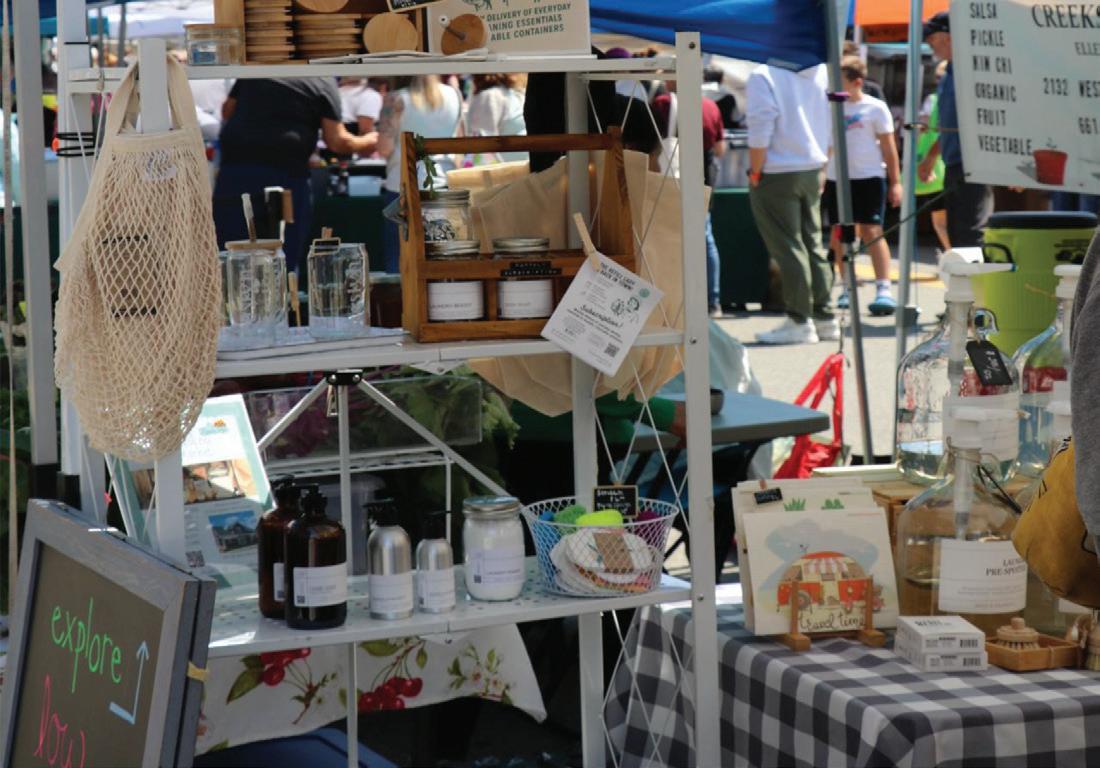



BY SADIE THAYER
In October 1912, a headline in the Ellensburg Daily Record declared: “Valuable Bed of Agate Found Here.” The article told of J. N. O. Thomson returned to town with a 50-pound sack of blue agates gathered from the Dry Creek foothills—just northwest of Ellensburg. To readers at the time, it confirmed something both surprising and quietly familiar: the land they knew held something rare.
Long before that headline, the stones had already been noticed. Austin Mires, Ellensburg’s first mayor, recorded finding bright blue agates in March 1905 within the basalt beds of the Kittitas Valley. Drawn to their color, he sent them to Seattle jewelers to be set into rings, beginning a tradition of transforming local discovery into wearable stories.
By the early 1910s, J. N. O. Thomson—who was also a local jeweler—played a key role in bringing wider attention to these stones. Guided by local Native Americans to known agate locations, he collected, cut, and polished the agates, sharing them with both residents and visitors. His work helped translate a natural curiosity into something tangible—stones shaped, set, and worn.
The 1912 newspaper account reflects that moment of recognition. It describes not only the discovery of a “vast deposit” of blue agates, but also a shift in understanding. While “old-timers” had long known agates and jasper could be found in the region, they had been seen only occasionally, scattered across hillsides and creek beds. Their beauty was noted, but their value—both material and cultural—had not yet fully taken hold.
That changed as the Ellensburg Blue began to circulate. News coverage spurred interest, and an agate-hunting tradition took root—one that continues to this day. Still, the landscape has evolved. Many of the original agate beds now lie on private land used for agriculture. While some landowners periodically host rock hunts, access depends on permission, reinforcing a shared responsibility for stewardship.
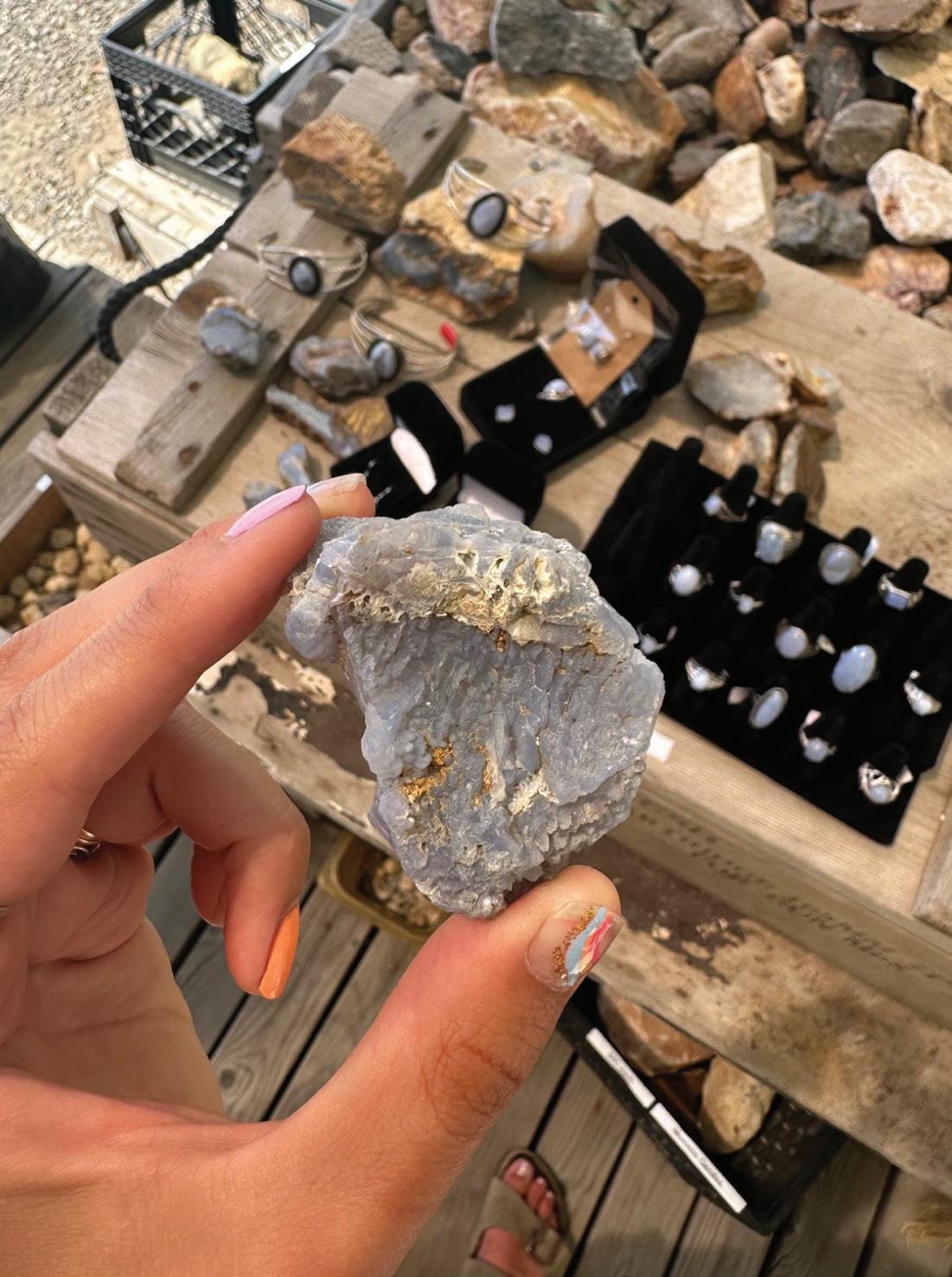
hue. This color is not surface-deep—it is revealed through light. As light passes through the stone, most wavelengths are absorbed, leaving only those within the blue spectrum visible. The result is a shifting, luminous quality that feels both subtle and striking.
Even today, there is a sense of curiosity around how these stones came to rest here. While often associated with Ellensburg, they are understood to have formed elsewhere—within the Teanaway Basalts—before making their way into the Kittitas Valley over time. Carried by an ancient river through the Green Canyon
Notch, shaped At similar formation—within from color further remains conversation. What are are precious

shaped by movement, erosion, and time.
At the same time, larger nodules discovered in
similar areas raise ongoing questions. Their size and formation—within hollow cavities of basalt—differ from the smaller stones more commonly found. Their color suggests a connection, but their origin invites further study. Are they truly Ellensburg Blues? It remains an open question—one that continues to spark conversation.
What is clear is their distinction. Ellensburg Blues are chemically different from other blue agates and are recognized as the only agates classified as a semiprecious gem. Ongoing research continues to explore
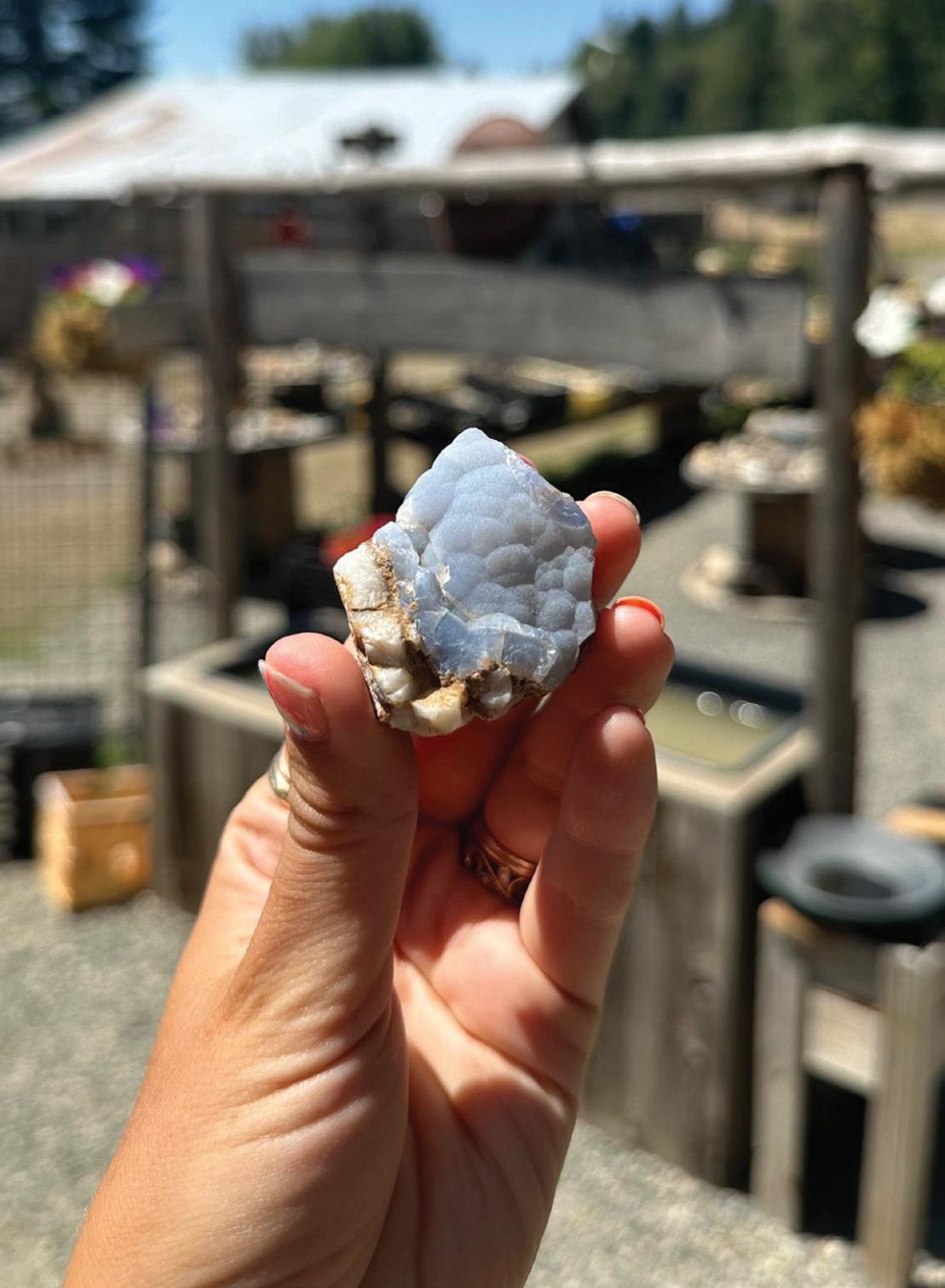


to grow. Recent work by Wesley


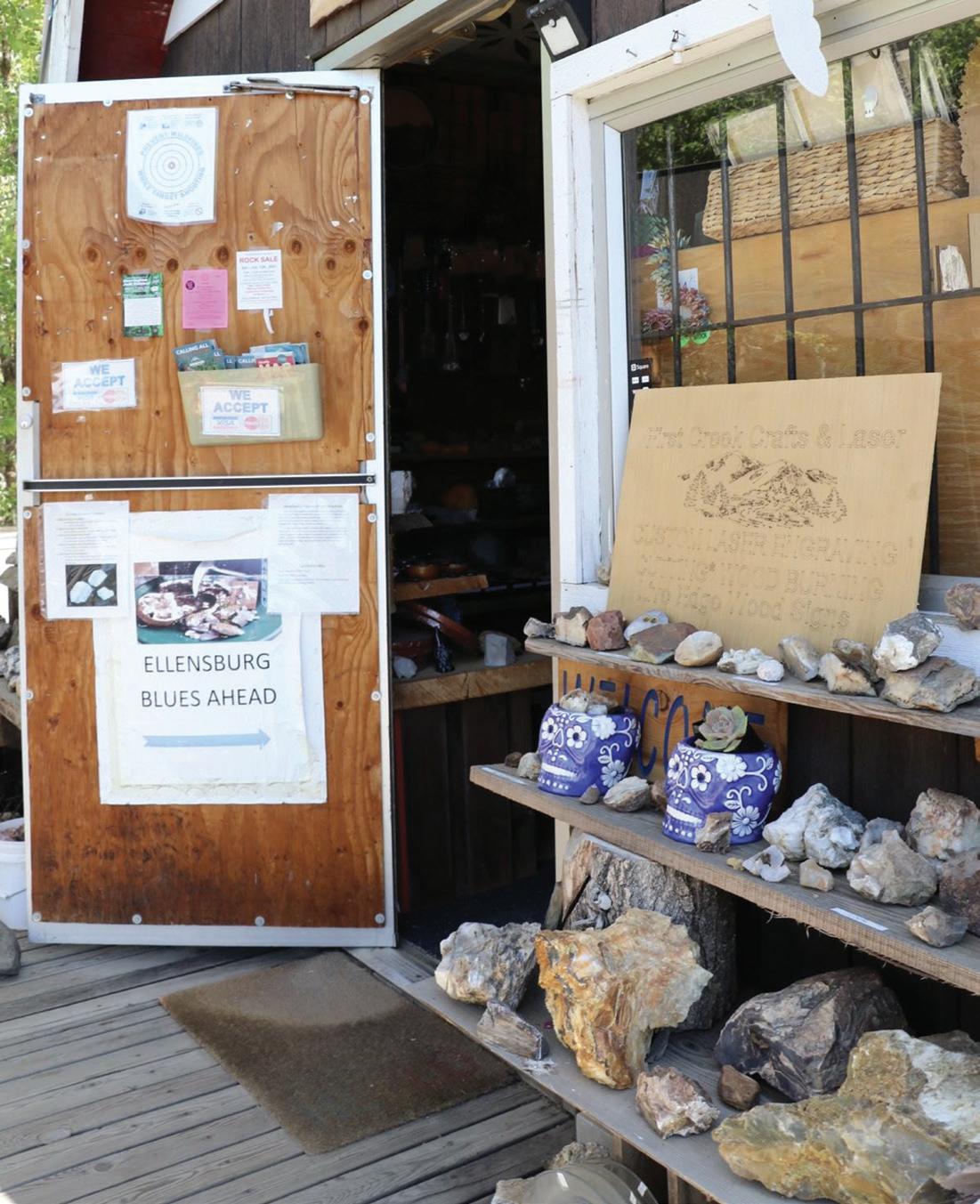
and Carl Carlson, The Beauty Of An Ellensburg Blue Agate From The Carlson Mine, reflects a continued effort to document and share knowledge about Ellensburg Blues, building on earlier work such as the booklet authored by John P. Thomson.
At the Kittitas County Historical Museum, this story continues to unfold through the preservation of these materials and the histories they represent.
Because here in Kittitas County, the Ellensburg Blue is more than a stone. It is a story shaped over time— carried across the landscape and into the hands of those who continue to seek it.







BY ANNA ROSE
Few places in Washington state capture such a dramatic sweep of landscape within a single set of boundary lines. In Kittitas County, alpine peaks give way to high desert. Where else can a morning on the slopes turn into a balmy afternoon floating the river canyon? This kind of contrast is more than geography, it is identity.
The Summit at Snoqualmie may have bid farewell to the last of its snow, but it is already looking ahead to its summer season. And who knew a ski resort would have so much to offer in the warmer months?
Starting in July, weekends on the mountain will be brimming with activity galore. How does food, drinks, disc golf, and live music every Saturday from 3:30 to 5:30 sound?
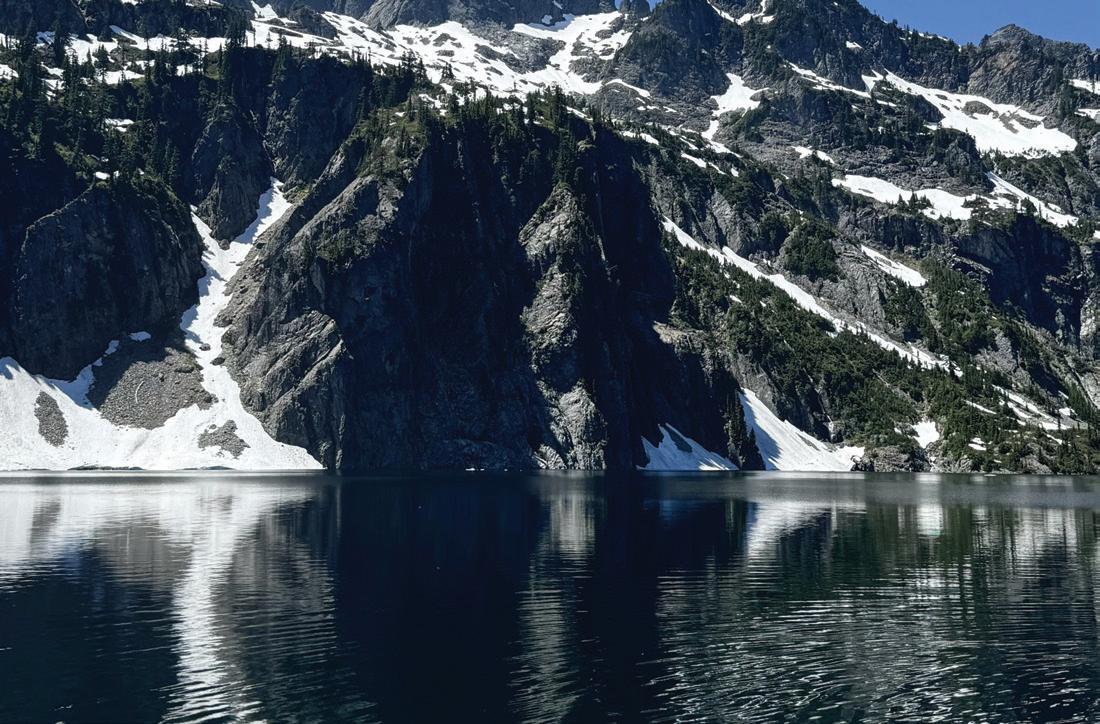



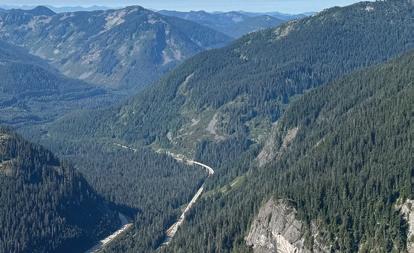
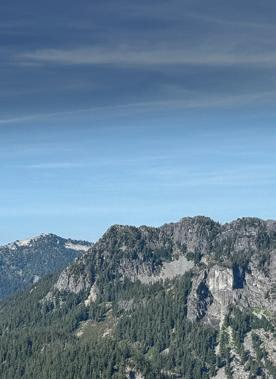

The tentative opening date for the 2026 mountain biking season is June 5. The Bike Park Pass gives riders access to the Summit’s 14-plus trail network via the Silver Fir Express chairlift. The pass includes unlimited laps, four discounted buddy tickets, free scenic rides at Summit West and 15% off at retail shops.
Passes are $309 for adults, $249 for teens ages 13-17 and $169 for children 12 and under. Passes are nonrefundable; partial refunds will not be issued for unexpected closures. The projected closing date is Sept. 27, though season
Distances and difficulty ratings via Washington Trails Association.
Franklin Falls 2 miles, 400 ft. gain | EASY
Lodge Lake 3.75 miles, 950 ft. gain | MODERATE
*Take the Pacific Crest Chair at Summit West to skip approximately 500 ft. of gain.
Source Lake 4.5 miles, 1,000 ft. gain | MODERATE
Mount Catherine 3 miles, 1,330 ft. gain | MODERATE
Denny Creek 6 miles, 1,345 ft. gain | MODERATE
Snow Lake 7.2 miles, 1,800 ft. gain | MODERATEHARD
Granite Mountain 8.6 miles, 3,800 ft. gain | HARD
Kendall Katwalk 12 miles, 2,600 ft. gain | HARD
Check wta.org for current trail conditions.
length, operating dates and hours are subject to change without notice.
Not into mountain biking? Don’t fret – the Summit has something for everyone. Scenic chairlift rides begin July 4 on the Pacific Crest Chair at Summit West, offering sweeping views of the Snoqualmie Pass region. Tickets are valid for unlimited round trips. At the top, riders can take photos, then either ride back down or hike to the lodge.
Tickets are $23 for teens and adults and $17 for youth and seniors. Children 5 and under ride free.
For easy lift access to Thunderbird Disc Golf Course, consider a summer disc golf pass. Organizers say the pass pays for itself after just two uses. It includes unlimited access to the Pacific Crest Chair on Saturdays and Sundays through Sept. 1. Passes are $45 for teens and adults and $30 for youth 12 and under.
Explore wind and solar technology at the Wild Horse Wind Facility
Open 9 a.m. - 5 p.m., April through October Free daily wind turbine tour s at 10 a .m. and 2 p.m.
For info on tours and recreation permits, go to ps e.c o m /wi l d h o r s e. 259 0 5 Va nt age Highway, Elle nsbur g, WA wildhorse@pse.com | 509-964-7815


BY KELLE VANDENBERG
Tucked into the heart of Central Washington, there is a city that tells a story, unfolding one block at a time. History, creativity and community meets here, at the core of the Ellensburg Creative District. This experience isn’t just confined to a gallery or stage; it spills into the streets, inviting visitors to step into something vibrant, authentic, and distinctly Ellensburg.
Begin your journey in the historic downtown, where beautifully preserved brick buildings house working studios, galleries, and locally owned shops. Inside Gallery One, you’ll find rotating exhibits, artist studios, and handson classes that invite both observation and participation. Just a few steps away, the Clymer Museum of Art offers a contemporary take on regional and national art, while the whimsical and ever-evolving Dick and Jane’s Spot transforms a residence into a kaleidoscope of creative expression. Collectively, spaces like this form the cultural backbone of a district where art is both accessible and alive.
But the creative spirit doesn’t stop at gallery doors — it can be found throughout the shops that line the downtown blocks. Wander into locally curated stores where thoughtfully selected pieces reflect a commitment to makers near and far.
For something unexpected, discover boutiques that blend nostalgic charm with colorful character—some long-standing community staples; other newer additions bringing fresh momentum to the mix. Each storefront adds another layer to the district’s identity.
Time your visit right, and you’ll find the area transformed into a stage. On the first Friday of each month, the avenues come alive during the First Friday Art Walk, when businesses and galleries open their doors for an evening of art, music, and connection. On select summer evenings, the Ellensburg Night Market brings a lively, open-air atmosphere to downtown — an inviting chance to stroll and take in local music and makers alike. Seasonal traditions like Winterhop Brewfest or Hoedown in the Downtown bring playful energy and civic spirit, while signature events like the iconic rodeo weekend highlight the region’s rich cultural heritage.
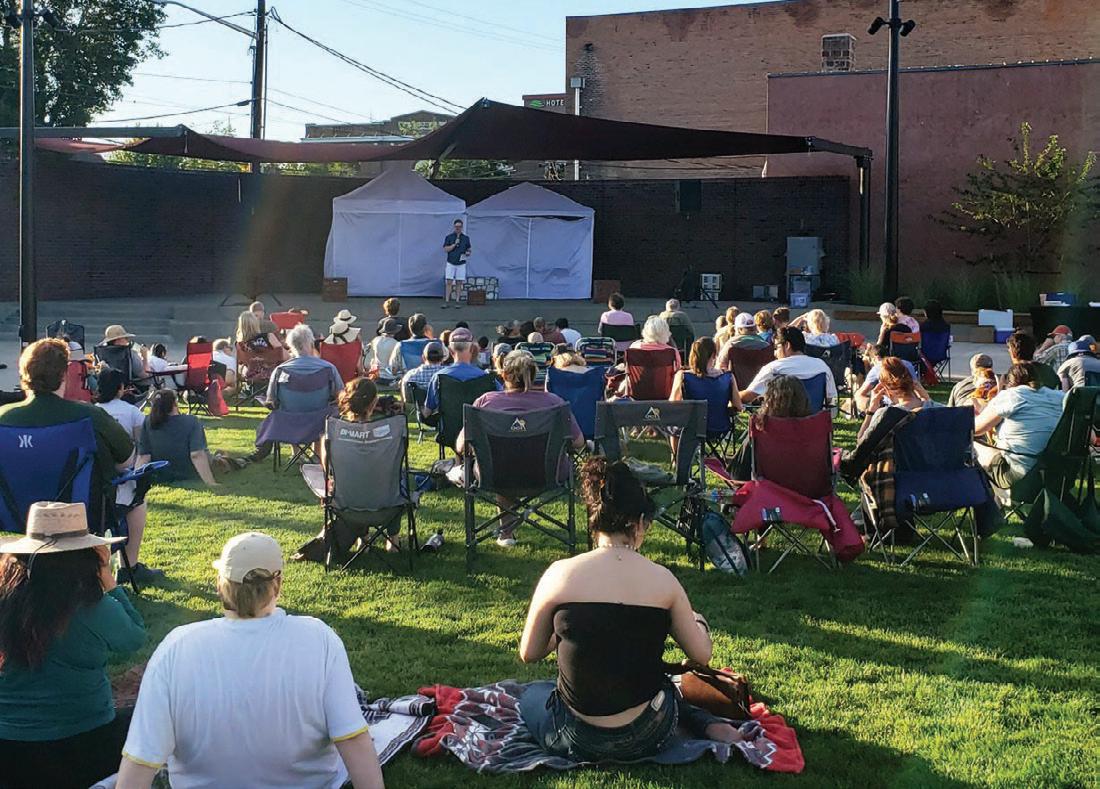

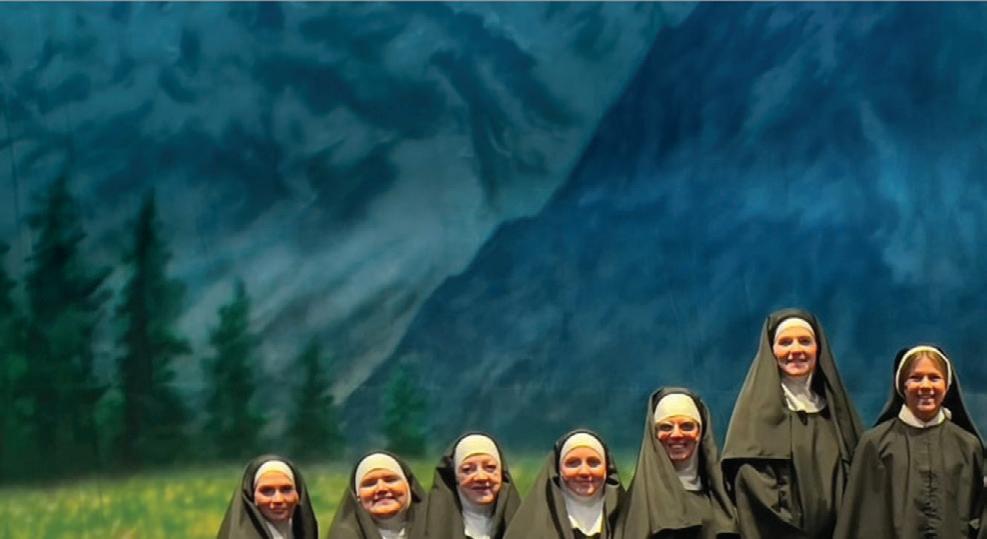
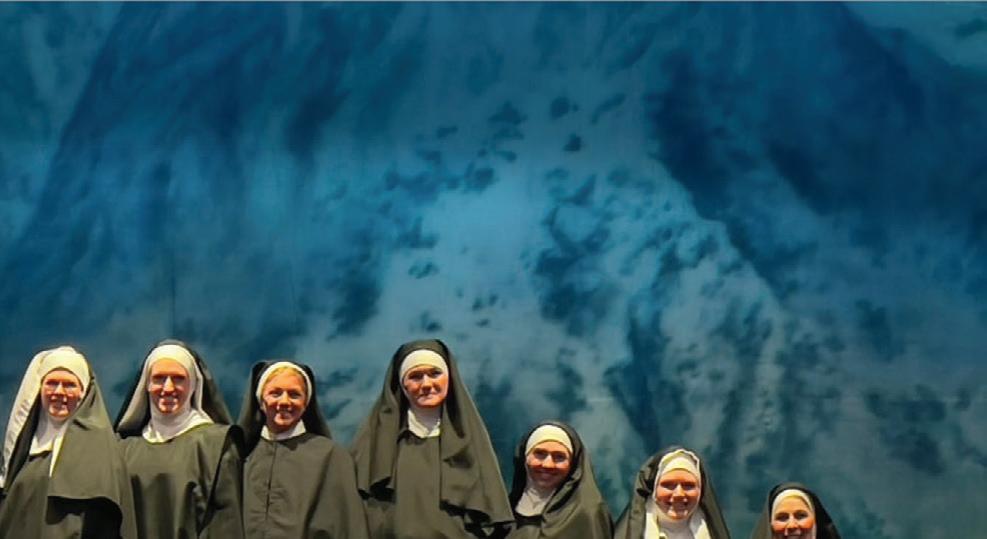


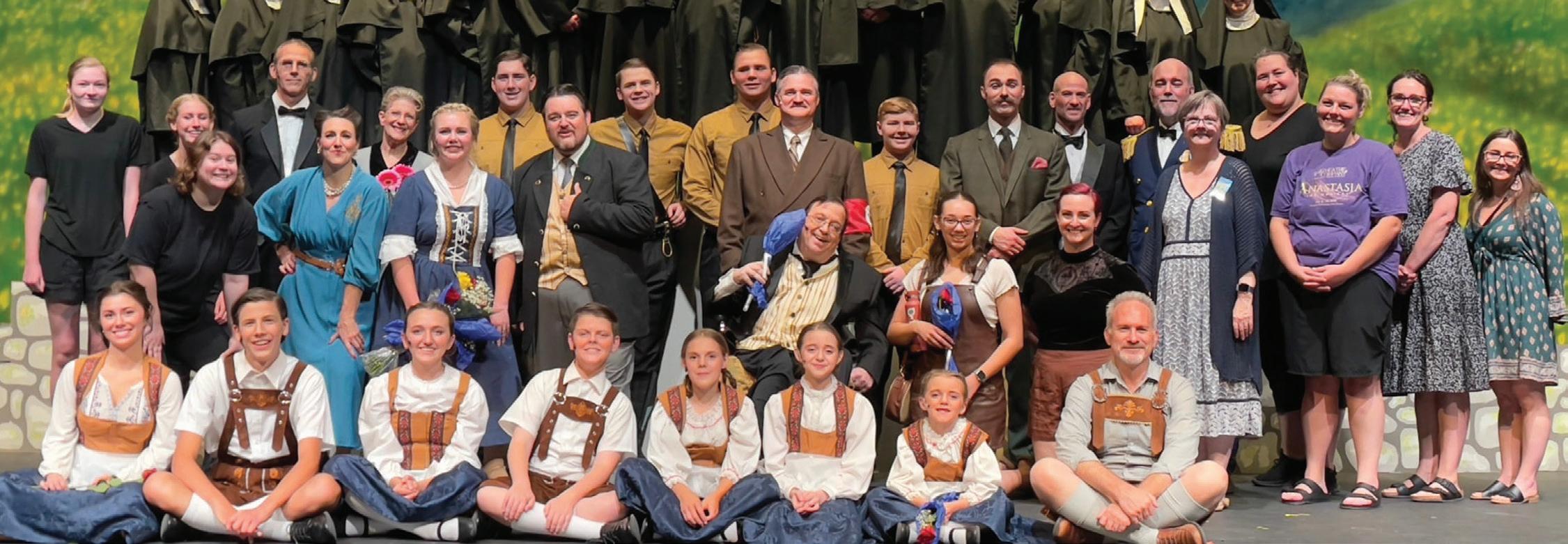
Throughout the year, the rhythm of the district is shaped by these gatherings, moments where visitors become part of the narrative. Spend a Saturday morning at the Ellensburg Farmers Market, where local growers, artisans, and vendors showcase fresh produce and handcrafted goods.
Stay into the evening, and you might stumble upon live music drifting from a patio or a pop-up performance in a nearby park.
What makes the Ellensburg Creative District truly distinctive is its blend of influences. It is the only certified creative district in Washington that connects a historic downtown with a university campus, bringing together longtime residents, students, artists, and entrepreneurs in one shared space. This convergence creates an energy that feels both grounded and forward-looking, where cowboy heritage meets contemporary art, and tradition fuels innovation.
In Ellensburg, creativity is alive. It’s in the conversations with artists, the music echoing down brick alleys, the unexpected treasures found in a small shop, and the shared moments at a festival under the open sky. Come for a day, stay for a weekend, and leave with a story of your own.
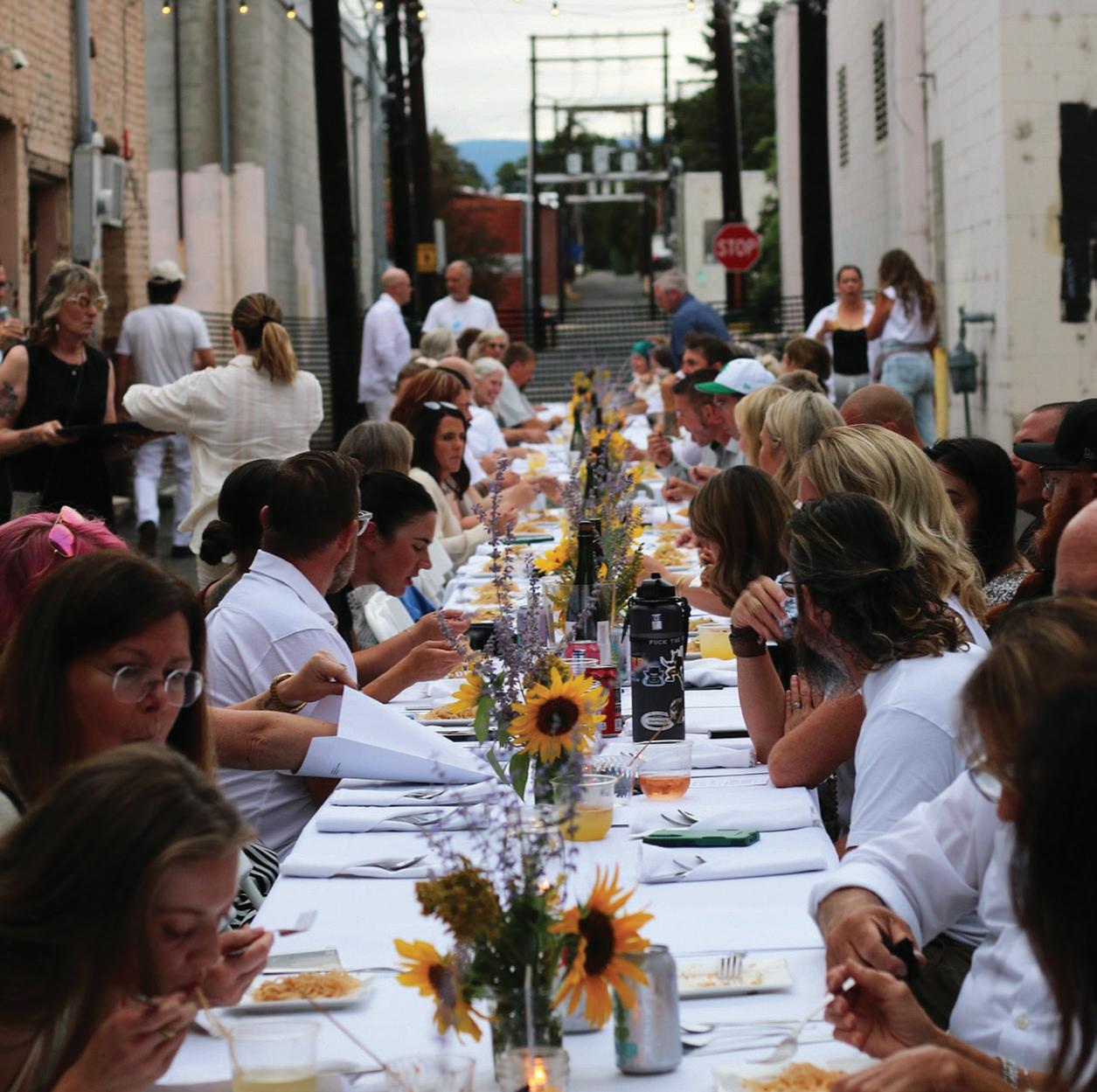

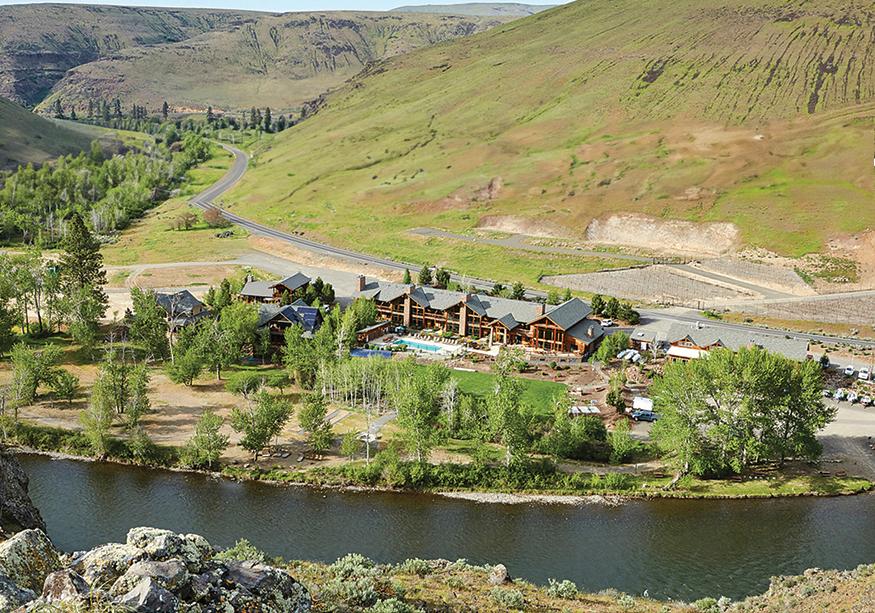
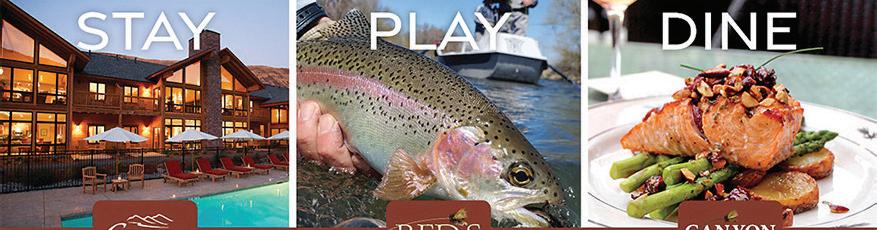
EACH YEAR, THOUSANDS OF VISITORS ENJOY THE SCENIC YAKIMA RIVER CANYON! LESS THAN 2 HOURS FROM SEATTLE, CANYON RIVER RANCH IS THE PREMIER RESORT IN CENTRAL WASHINGTON.
• Guided Fly Fishing
• Raft and Drift Boat Rentals
• Scenic River Cruise
• Wing Shooting and Sporting Clays
• Red’s Fly Fishing University
• Award-winning Dining at Canyon River Grill
• Womens’ Collective Program
• 2 Bedroom Riverside Condos
• Team Building & Private Events

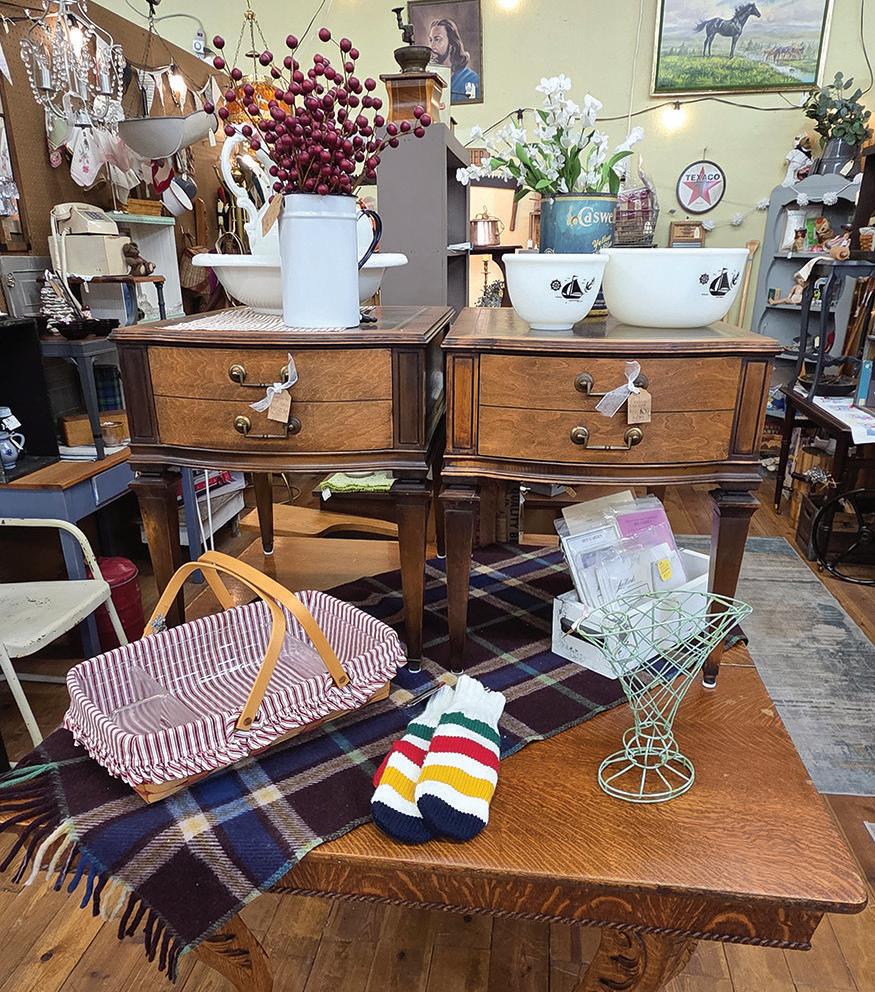


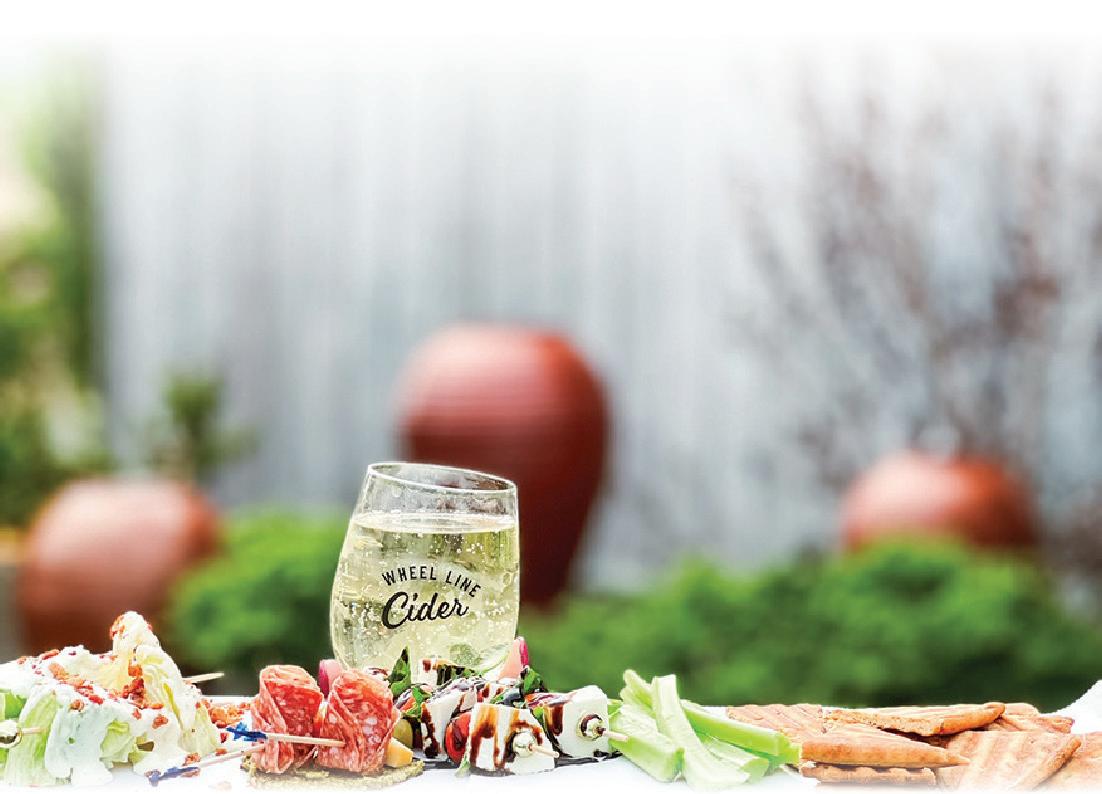








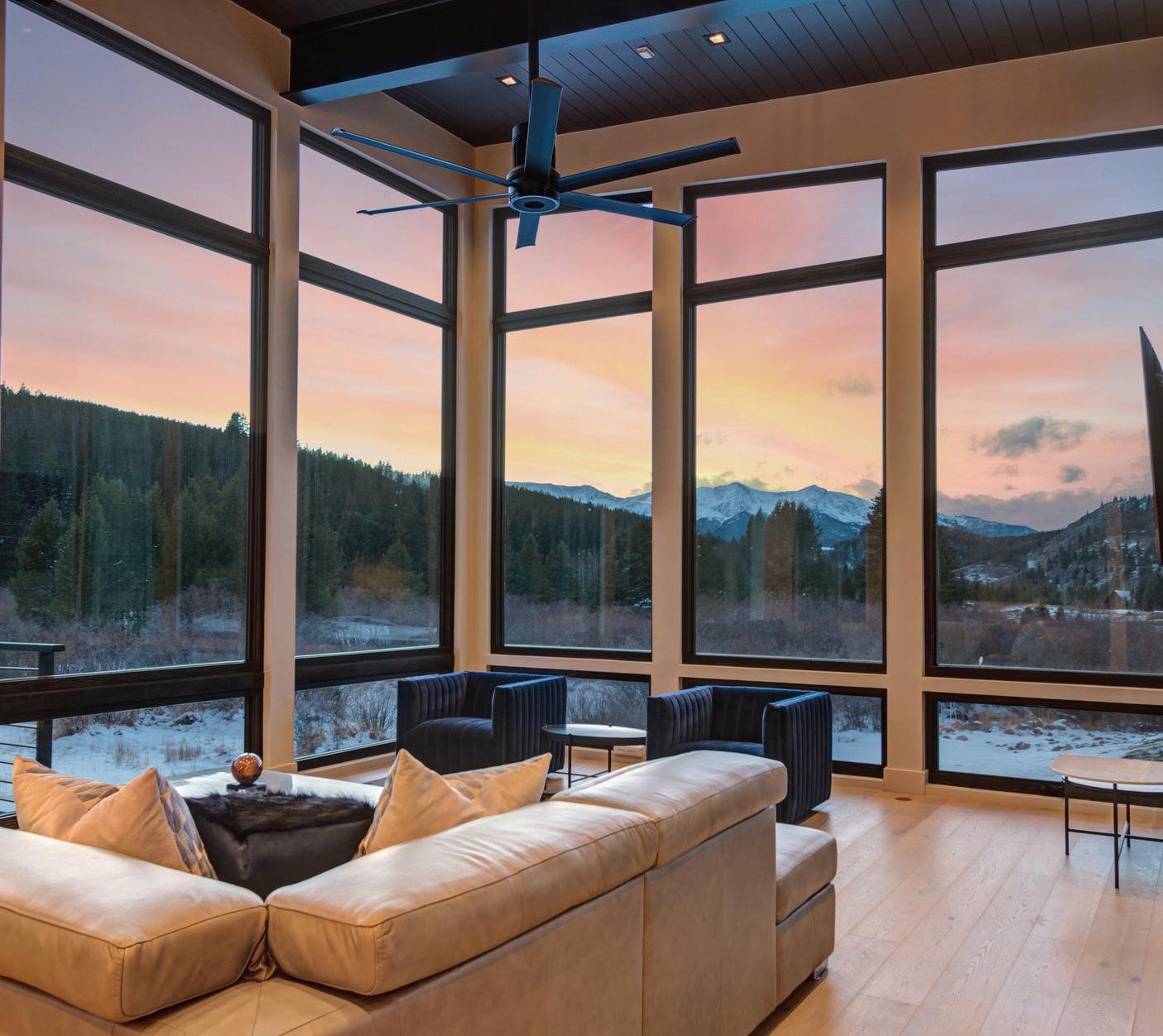






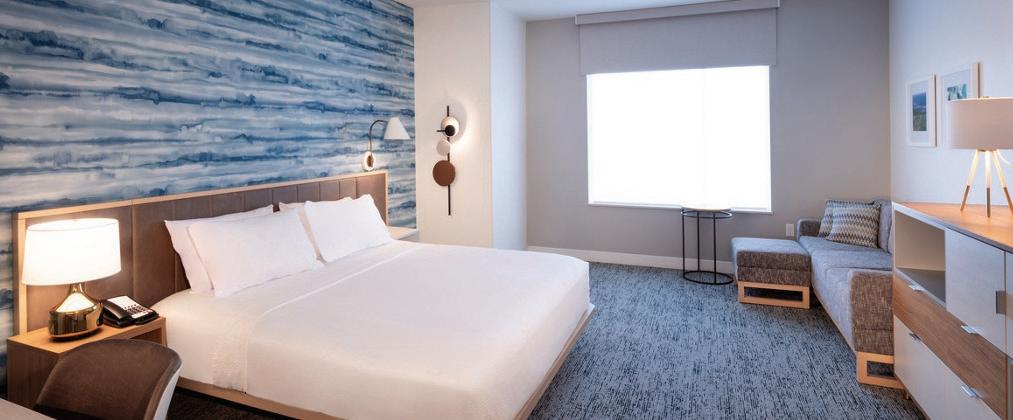

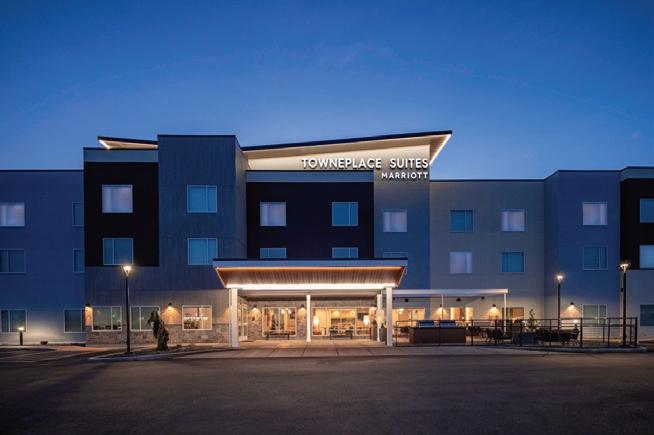
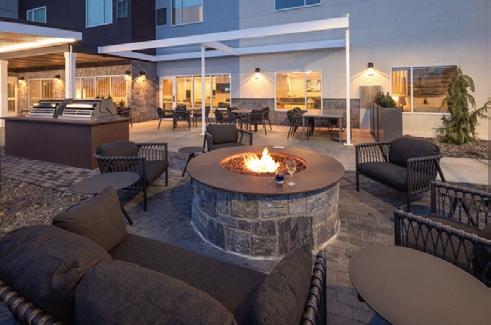



BY BRAD CASE


The planning and vision for Rotary Park first started in the late-1990’s, led by ‘The Central Washington Park Foundation’, a group of local citizens committed to bringing a regional park to Ellensburg that could serve local community members and visitors alike. Their vision was a park for all ages and all seasons. Construction on the park started in late 2002, with the continued vision and purpose of Rotary Park serving as the Kittitas County hub for outdoor recreation. Now spanning 100 acres in size, Rotary Park serves the needs of local youth and adult sports programs, while also serving as a tournament destination, bringing teams to Ellensburg from all over the Pacific Northwest. In 2025, over 425 baseball teams participated across 11 baseball tournaments at Rotary Park. On any given week, you will find school district teams,




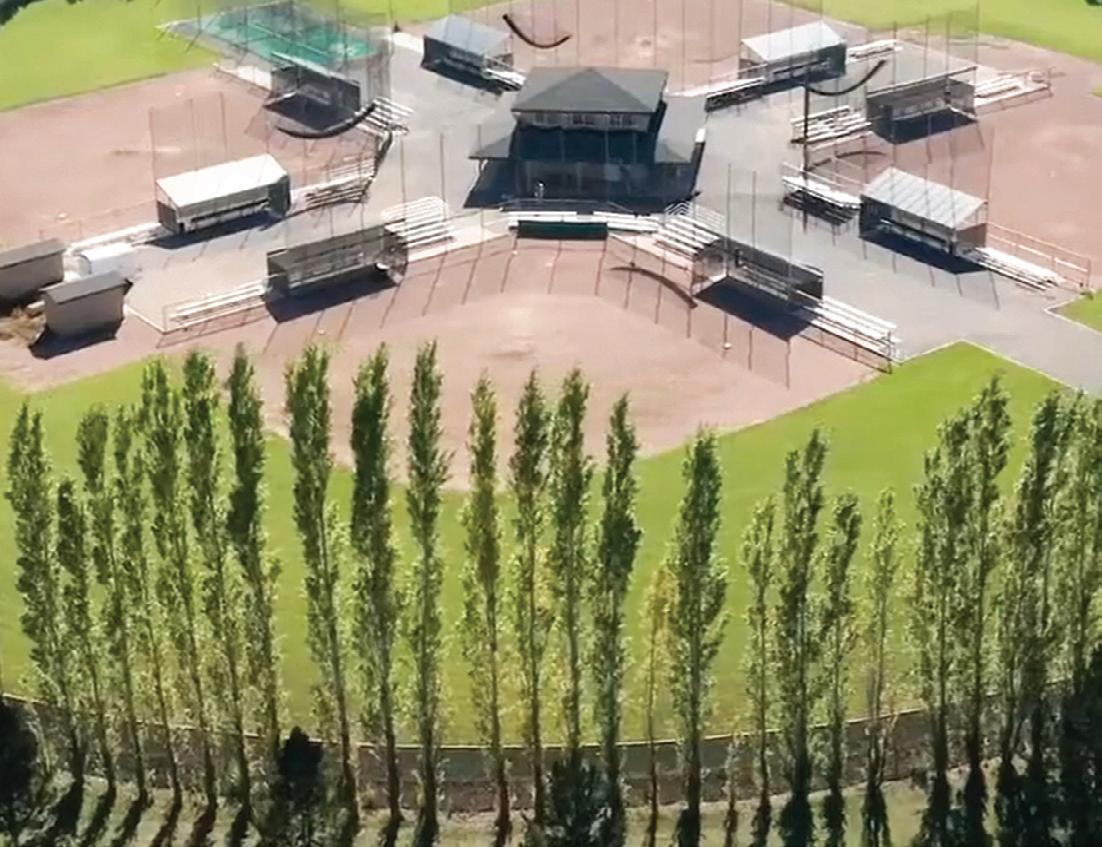






use of Rotary Park, the park provides a wide range of recreational opportunities beyond athletics. Rotary Park is home to Ellensburg’s first off leash dog park, a mountain bike skills course managed by volunteers from the Evergreen Mountain Bike Alliance, a network of soft and hard surface trails connecting over 250 acres of recreation land, as well as winter recreation in the form of groomed cross country skiing trails. The park has also served as the home to the ‘July 4th Community Celebration, the city’s annual ‘Touch a Truck’ event, and most recently ‘The Wall That Heals’ a traveling threequarter scale replica of the Vietnam Veterans Memorial in Washington, D.C. A highly anticipated, and exciting future addition to the park, is a 60,000 square foot recreation center, anticipated to open in spring of 2028. Built through a public/private partnership, this facility will include five full-court basketball courts, up to 7 full sized volleyball courts, pickleball courts, turf area, walking/running lanes, batting and pitching cages, multi-purpose room, and parks & recreation department office space. Like the outdoor amenities at Rotary Park, the community center will serve as a regional draw for tournament organizers, bringing much needed tourism to Ellensburg during the winter months and beyond. Over 300 new parking stalls will serve the recreation center, which can also be used by Rotary Park users. The recreation center will also provide much needed indoor recreation space for the Ellensburg and surrounding community, including city run programs and local club sports. Historically, there has been a shortage of available gym times for teams to practice, to the point where some of the club teams have been forced to travel over 45 minutes away so they can find available gym space to practice. This facility will provide space for those teams to stay local, while at the same time providing a place for a child to go shoot baskets or a father and daughter

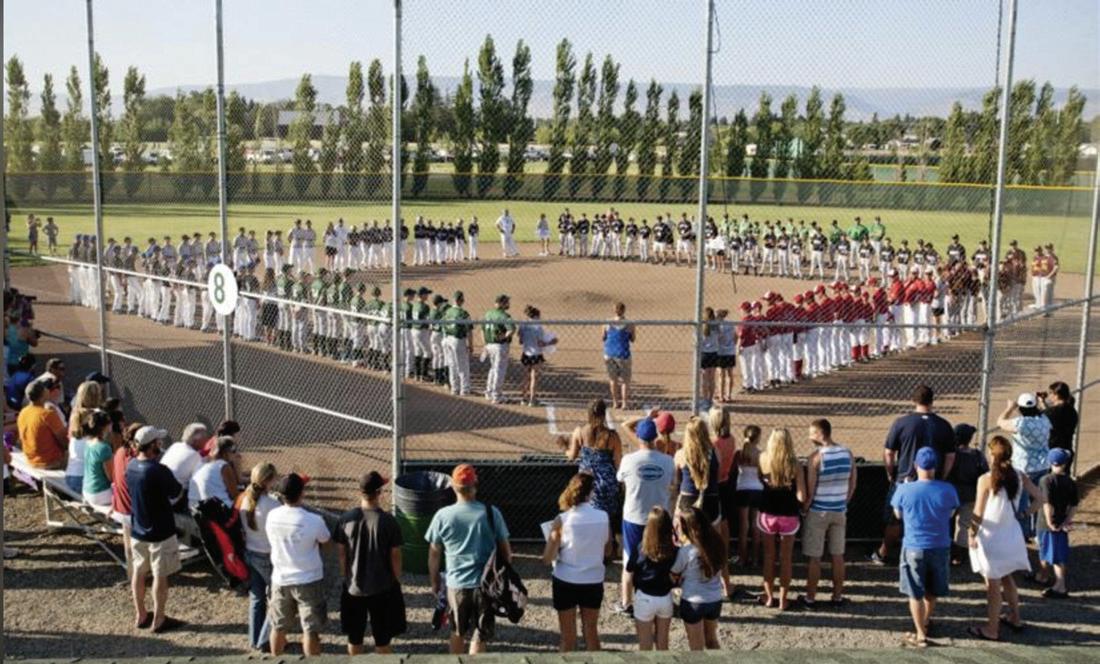





to play catch. When completed, the recreation center at Rotary Park will be the only facility of its kind in central Washington.
For the last 20 years, Rotary Park has been offering firstclass recreational facilities and we’re only getting started, we can’t wait to see what the next 20 years bring!






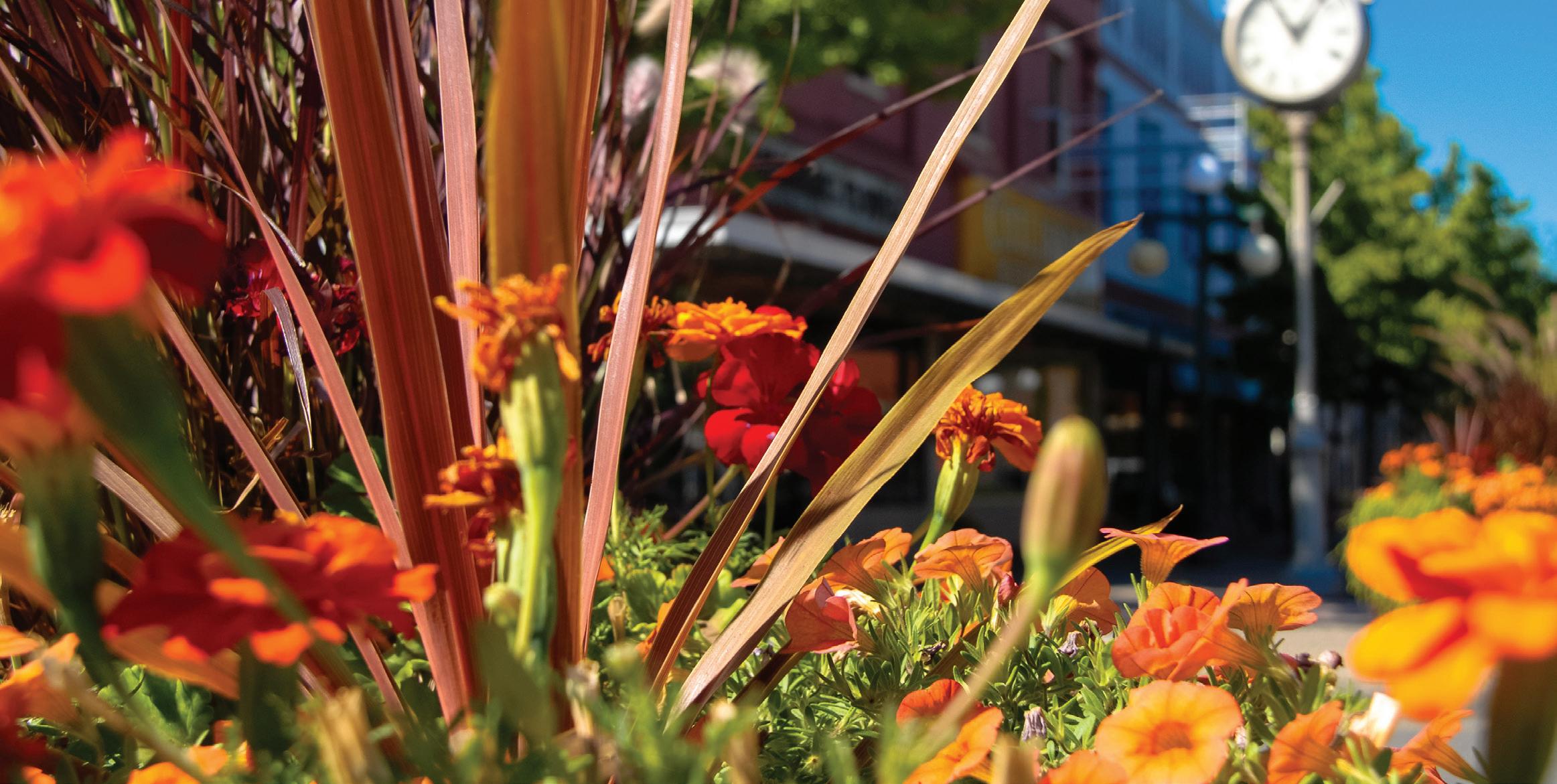











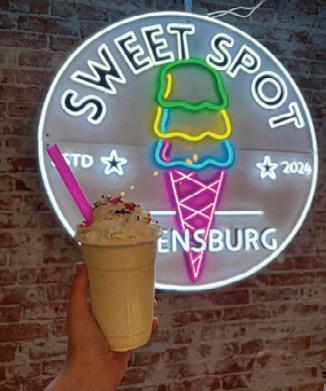

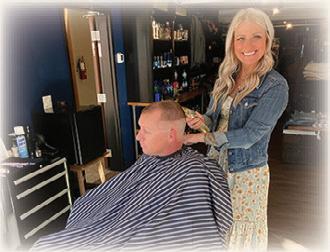

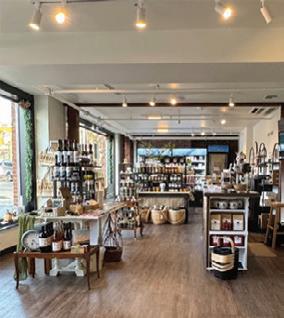





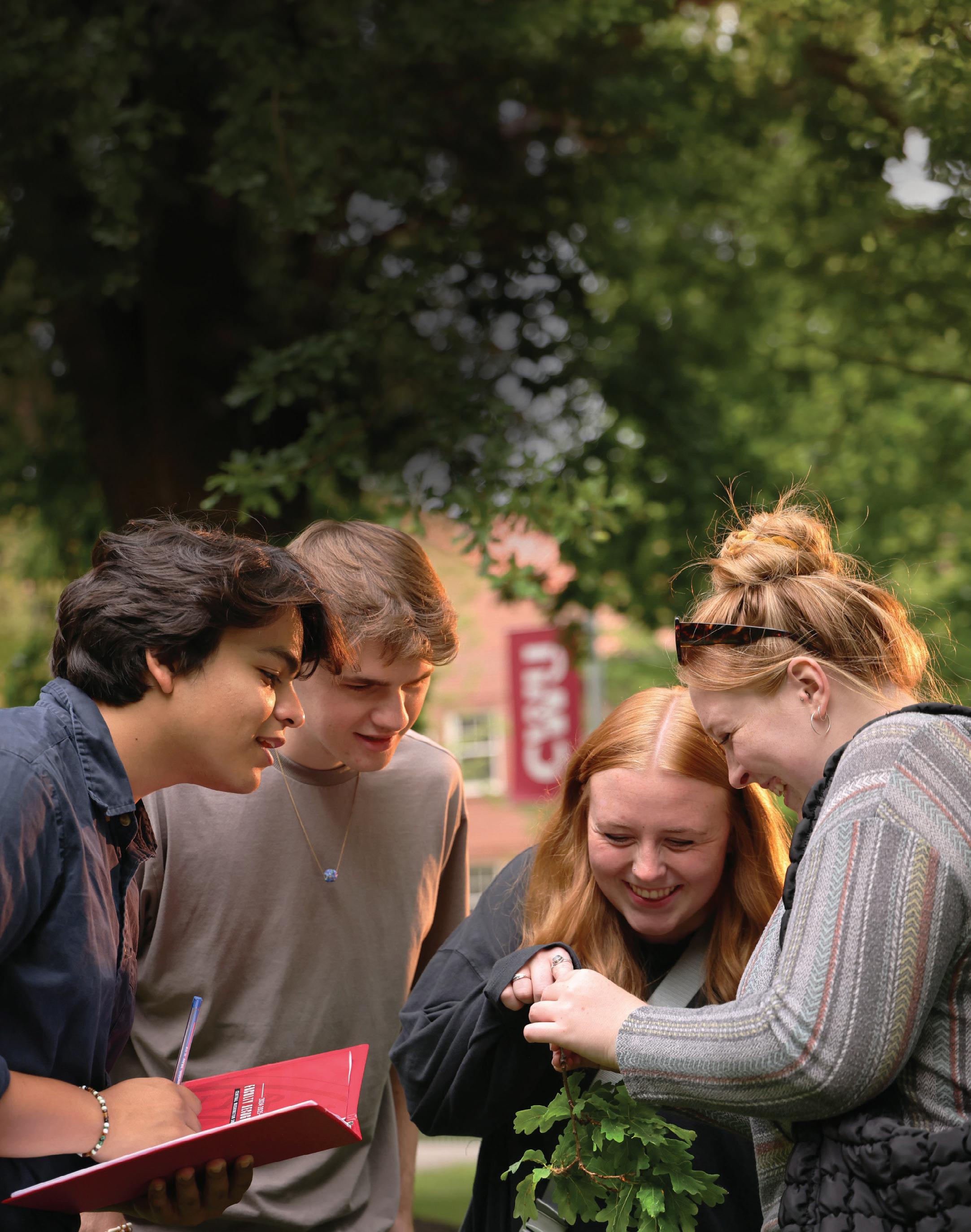
Great things happen when a community comes together with purpose.