
people moved into housing using case management services.
In 2013, we began offering case management services to help anyone, including vendors, with their needs — from obtaining identification cards and emergency cash for bills and food to accessing supportive programs and applying for housing vouchers. Our team builds long-term relationships with our vendors and other clients to understand their needs and help them create plans to achieve their goals.
people, including artists/vendors, used case management services,
Physical and mental health services, emergency cash assistance and housing services were provided hundreds of times over the last year.
of which were new clients.
VENDORS

Abel Putu, Abraham Aly, Archie Thomas, Aida Peery, Akindele Akerejah, Alia Haug, Amia Walker, Andre Brinson, Andre Baltimore, Andrew Anderson, Angie Whitehurst, Angela Morris, Anthony Carney, Apollos Robinson, Beverly Sutton, Brian Holsten, Brianna Butler, Cameé Lee, Carlos Carolina, Carlton Johnson, Charles Armstrong, Chris Boone, Chris Cole,
Chon Gotti, Conrad Cheek, Craig Thompson, Cynthia Herrion, Daniel Ball, Darrel Stone, Darlesha Joyner, David Snyder, Debora Brantley, Degnon Dovonou, Dominique Anthony, Don Gardner, Drake Brensul, El-O-Him, Elizabeth Windsor, Elynora Houston, Eric Glover, Eric Jamison, Eric Thompson-Bey, Evelyn Nnam, Faith Winkler, Five Fifty-One, Flegette Rippy, Frederic John, Frederick Walker, Gerald
Anderson, Gloria Prinz, Greta Christian, Henry Johnson, Indashow Birmandie Invisible Prophet, Ivory Wilson, Jacqueline Gale, Jacqueline Turner, James Davis, James Hughes, James Lyles III, Jay B. Williams, Jeanette Richardson, Jeffery McNeil, Jemel Fleming, Jenkins Dalton, Jennifer McLaughlin, Jewel Lewis, John Littlejohn, Josie Brown, Julienne Kengnie, Kenneth Bynum, Kenneth Middleton,
Kannon Brown, Katrina Anige, Kendarius Tucker, Kym Parker, L.Q. Peterson, Lawrence Autry, Leo Hughes Jr, Levester Green, Lillie Thomas II, Marc Grier, Marcus McCall, Mars, Maurice Carter, Melody Byrd, Milan Stevenson, Monique Rivers, Nikila Campbell, Patricia Donaldson, Patty Smith, Paul Martin, Phillip Black, Qaadir El-Amin, Queenie Featherstone, Rachelle Ellison, Randall Smith, Rashawn
Bowser, Reginald Black, Reginald Denny, Reneece Brinkley, Ricardo Meriedy, Richard Mooney, Rita Sauls, Robert Reed, Robert Vaughn, Robert Warren, Rochelle Walker, Ron Dudley, Ronnell Wilson, S. Smith, Sasha Williams, Saul Presa, Sharon Brown, Shawn Fenwick, Sheila White, Shuhratjon Ahmadjonov, Starchild BLK, Susan Wilshasen, Sybil Taylor, Tasha Savoy, Tim Holt, Tonya
Tony Morris, Vincent
BOARD OF DIRECTORS Clare Krupin, Chris Curry, Cole Ingraham, David Grant, Jonquilyn Hill, Matt Perra, Michael Vaughan Cherubin, NanaSentuo Bonsu, Phil
CHIH-RONG KUO Editorial Intern
The D.C. Housing Authority (DCHA) may face challenges in the next year as federal funding for its programs remains the same amid rising costs.
The U.S. Department of Housing and Urban Development (HUD) did not meet DCHA’s fiscal year 2026 budget request, interim DCHA Executive Director Nicole Wickliffe shared at DCHA’s Board of Commissioners meeting on June 10.
HUD’s decision will require the agency to “reposition dollars” in its current budget, which was approved by the Board of Commissioners in September 2025, according to Wickliffe. DCHA is still analyzing its federal funding and potential impacts and will form contingency plans based on those analyses, a DCHA spokesperson wrote in a statement to Street Sense.
“We have received our final budget for fiscal year ’26 from HUD. With that, we know we have to do some reprogramming, as we’ve talked about many months,” Wickliffe said during the meeting.
DCHA, like other housing authorities, has historically relied upon the federal government for funding, including for public housing and the Housing Choice Voucher Program (HCVP).
In September, DCHA’s Board of Commissioners asked HUD for an operating budget of $802,308,635, a 20% increase from its budget proposal for FY2025. HUD typically gives DCHA a 5-12% increase in funding each year, Wickliffe said at the meeting. But HUD did not approve any increase this year. Forced to cope with higher costs due to inflation and rising utility prices, DCHA must to do more with less.
Wickliffe attributed the funding constraints, in part, to HUD’s funding being based on DCHA’s activity from 2024, when fewer people were using housing vouchers. As of June, Wickliffe said the HCVP is more than full at 102-103% capacity, exceeding the federal funding provided for the vouchers.
DCHA began taking preemptive cost-saving measures in January, cutting the security deposit assistance program and sparking advocacy groups to push for more assistance this budget season. At the meeting, Wickliffe said DCHA aims to enact more cost-saving measures and to work with the mayor and councilmembers to secure additional security deposit funding. The budget passed by the D.C. Council includes $1.7 million.
“We [DCHA] will continue to prioritize sustaining the more than 30,000 families currently supported by DCHA housing programs, while also operating within our budget,” the spokesperson wrote. “DCHA is currently analyzing the changes in federal funding and how they may impact the Public Housing and Housing Choice Voucher (HCVP) programs.”
This isn’t DCHA’s only HUD-related budget challenge. Federal funding cuts will end housing assistance for hundreds of D.C. residents on Emergency Housing Vouchers (EHVs). The program was launched by then-President Joe Biden to provide emergency housing assistance during the pandemic to individuals or families who were homeless, at risk of homelessness, or leaving unsafe situations. While the program was slated to last until the end of the decade, HUD told public housing agencies to stop issuing EHVs in August 2025 and estimated it could only cover EHV families through 2026, following President Donald Trump’s proposal to cut HUD funding by 45%.
If DCHA’s funding for EHV runs out, the 517 families in the EHV program will lose their assistance. DCHA is exploring funding options and alternative affordable housing options for those under the EHV program, according to the spokesperson.
DCHA has an opportunity to apply to HUD for a shortfall award as part of the Consolidated Appropriations Act, which provides $337 million to public housing agencies experiencing or at risk of financial shortfalls. The deadline is Jan. 29, 2027.
CHIEF EXECUTIVE
OFFICER
Brian Carome
DIRECTOR OF PROGRAMS
Darick Brown
DIRECTOR OF VENDOR
EMPLOYMENT
Thomas Ratliff
EMPLOYMENT SPECIALIST
Esmat Amin
VENDOR PROGRAM ASSOCIATES
Aida Peery, Chon Gotti, Nikila Campbell
VENDOR PROGRAM VOLUNTEERS
Marcus McCall July 3
ARTIST/VENDOR
Kenneth Bynum July 10
ARTIST/VENDOR
Ann Herzog, Aiden Eisenschenk, Beverly Brown, David Fucillo,
Roberta Haber, Stephen Lennon
EDITOR-IN-CHIEF
Annemarie Cuccia
DEPUTY EDITOR
Donte Kirby

EDITORIAL INTERNS
Alexandra Lalli, Catherine Keightly, Chih-Rong Kuo, Julian Schnittker, Natalie Note, Raina Pawloski
SOCIAL MEDIA INTERN
Lucy Montalti
Greta Christian July 8
ARTIST/VENDOR
Maurice Carter July 10
ARTIST/VENDOR
DESIGN INTERN
Annabel Furton
ARTISTS-INRESIDENCE
Alexandra Silverthorne (Photography), Bonnie Naradzay (Poetry), David Serota (Illustration), Willie Schatz (Writing), Molly Pauker (Watercolor),
□ The Street Sense offices are closed Friday, July 3, for the Fourth of July holiday!
□ Trying to stay cool? You can always pick up a bottle or two of cold water in the admin office!
□ Find a list of vendor announcements and other useful information just for you at streetsensemedia. org/vendor-info.
Debbie Menke (Watercolor), JM Ascienzo (Yoga)
EDITORIAL VOLUNTEERS
Anne Eigeman, Ozioma Anyanwu, David Fucillo, Natalie Kinkead, Ned Cabot, Nora Scully
Read this democratically elected code of conduct, by vendors, for vendors!
1. I will support Street Sense Media’s mission statement and in so doing will work to support the Street Sense Media community and uphold its values of honesty, respect, support, and opportunity.
2. I will treat all others, including customers, staff, volunteers, and fellow vendors, respectfully at all times. I will refrain from threatening others, pressuring customers into making donations, or engaging in behavior that condones racism, sexism, classism, or other prejudices.
3. I understand that I am not an employee of Street Sense Media but an independent contractor.
4. While distributing the Street Sense newspaper, I will not ask for more than $3 per issue or solicit donations by any other means.
5. I will only purchase the newspaper from Street Sense Media staff and volunteers and will not distribute newspapers to other vendors.
6. I will not distribute copies of “Street Sense” on metro trains and buses or on private property.
7. I will abide by the Street Sense Media Vendor Territory Policy at all times and will resolve any related disputes with other vendors in a professional manner.
8. I will not sell additional goods or products while distributing “Street Sense.”
9. I will not distribute “Street Sense” under the influence of drugs or alcohol.
10. I understand that my badge and vest are property of Street Sense Media and will not deface them. I will present my badge when purchasing “Street Sense” and will always display my badge when distributing “Street Sense.”
SASHA WILLIAMS Vendor Journalism Fellow
Arecent study from the Columbia University Mailman School of Public Health found adverse health events increase housing instability and the risk of entering homelessness for people on Medicaid.
Medicaid enrollees who have gone through a sudden health crisis see a 40% to 56% increase in housing instability and are 6% to 10% more likely to enter homelessness. The study, conducted by Kacie Dragan, an assistant professor of Health Policy and Management at the Columbia Mailman School, looked at high-frequency health and residential data from New York City Medicaid enrollees between 2010 and 2019. Dragan took all medical enrollees who experienced a sudden hospitalization between 2012 and 2017 and compared them to a matched group without a sudden hospitalization.
“Much of the existing research has focused on narrow definitions of homelessness — like shelter use — or only on formal evictions. Our paper looks at a range of housing instability outcomes following major health events,” Dragan said in a press release. “It offers evidence for how health systems might use their existing capabilities to support patients at risk of instability — either by preventing disruptive health events in the first place or facilitating rapid support services during health crises to interrupt the long tail of social consequences that can follow.”
The study shows how health systems need to address more than just a person’s medical issues, and how a medical crisis can snowball into other crises, Dragan argues. Programs that provide help to apply for paid leave, subsidized housing, and emergency rental assistance can be key interventions to prevent 20,000 additional cases of homelessness among the U.S. Medicaid-insured population annually, according to the study. About 257,000 residents, or 38% of the District’s population, rely on Medicaid, according to Kaiser Family Foundation. Most of these residents live in Wards 7 and 8, majority-Black wards where 46% and 52% of residents, respectively, rely on the program.
“People experiencing serious illness are uniquely vulnerable to housing instability and residential displacement, suggesting that efforts to improve healthcare access and quality may also serve as important housing stabilization strategies,” Dragan said.
NATALIE NOTE Editorial Intern
The D.C. Council unanimously voted to approve the city’s final fiscal year 2027 budget on June 23, restoring funding to many social programs cut in Mayor Muriel Bowser’s original budget proposal.
The council added more than $400 million to the budget, with the majority coming from decoupling D.C.’s tax code from the federal tax code. This, plus $150 million from the District’s reserve, reversed cuts to popular programs like housing vouchers.
But the moves have also drawn criticism. Chief Financial Officer Glen Lee warned in a letter to Council Chair Phil Mendelson ahead of the vote the use of the reserve means he could declare the budget “unbalanced.” Many councilmembers also expressed concerns the body was only filling gaps for a year, setting the new mayor and council up with many of the same issues.
“If we do not begin to make difficult decisions in the near future, we may very well find ourselves in the same position next year, facing many of these same challenges,” Ward 7 Councilmember Wendell Felder said at the vote.
Ward 1 Councilmember Brianne Nadeau, who is stepping down after this term, thanked her colleagues and Mendelson for filling the gaps, but offered a similar critique on the reliance on one-time funding to support critical programs. She’s committed to proposing a wealth tax this fall, which she says could help the District afford to do more for its citizens.
“In May, we were handed a budget that was balanced on the backs of our most vulnerable residents, a budget that asked nothing of our most fortunate residents, and although council has identified one-time funding to address many, though not all, of the funding gaps, this budget still asks nothing of those who can afford more,” Nadeau said.
Some of the funds the council found went to a $28.2 million increase in funding for the Department of Human Services and D.C. Housing Authority to support 469 existing housing vouchers.
Vouchers have been one of the main points of concern this budget season, with Bowser proposing cuts to Permanent Supportive Housing. In May, advocates protested at D.C.’s Wilson Building, calling on the council to fund new vouchers to bring people out of homelessness.
Most of these 469 vouchers are currently being used by D.C. residents. Under Bowser’s budget, vouchers that went unused due to the recipient moving out of the city, passing away, or finding themselves no longer eligible for the program would have ceased to exist. Now, unused vouchers will be preserved and transferred to new families or individuals.
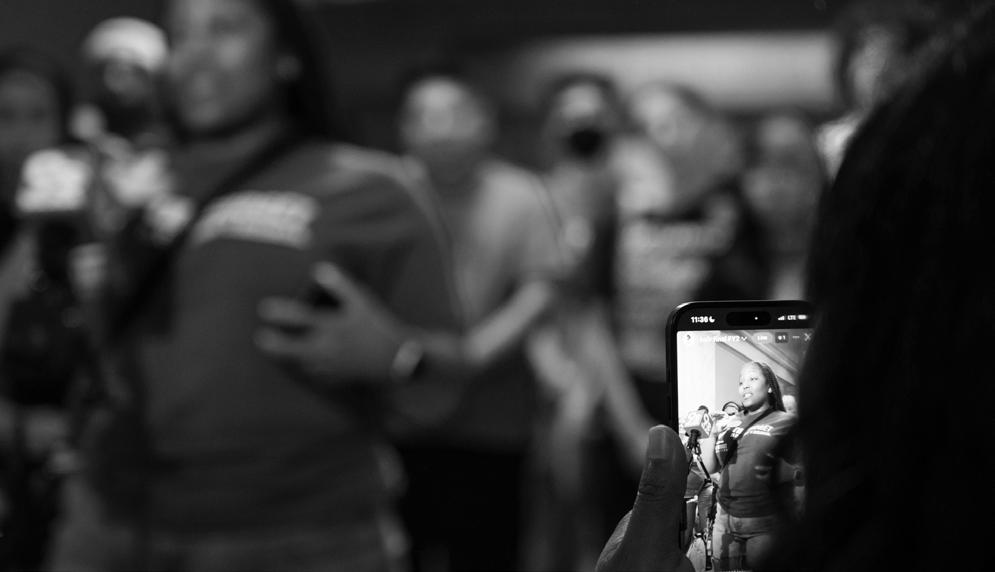
The final budget also funded 190 vouchers for families exiting the time-limited Rapid Rehousing program and earmarked $1.7 million to assist voucher holders with security deposits. The Office of Victim Services and Justice Grants also received $56 million, money that will be used in part to fund domestic violence services.
“These investments reflect the work of residents, advocates, workers, families, ANC commissioners, civic leaders, and community organizations who showed up, spoke up, and made clear that their neighborhoods and this city’s needs matter,” Ward 4 Councilmember Janeese Lewis George said.
Not all advocates’ demands were met. The council did not add new vouchers to the existing pool. Advocacy group D.C. Action argued this leaves over 500 households in danger of being in a shelter or on the streets, as the Biden-era Emergency Housing Voucher Program will no longer subsidize their housing once funds run out this year. The housing authority has said it is working on a plan to keep these people housed. Prior to the final budget vote, the council approved five amendments, including a contingency plan for any revenue exceeding the fiscal year 2026 estimate.
The contingency plan pledges the first $150 million in excess funds will go toward restoring the fiscal stabilization reserve. The next $9 million of recurring revenue will be transferred to the D.C. Housing Authority to use if the federal emergency housing voucher program expires. The next $3 million will be allocated for the Emergency Rental Assistance Program (ERAP).
If there isn’t excess revenue, the council’s final budget will not reverse cuts to ERAP, leaving the program with a $7 million budget, a $1.6 million decrease from fiscal year 2026. At a budget oversight hearing on April 30, advocates testified against cuts to ERAP, warning that without properly funding the program, other, more expensive, services like homeless shelters and emergency rooms will be forced to shoulder the burden of increased evictions.
“Prevention is cheaper than a crisis response,” Philip Johnson, a legislative advocacy fellow at the United Planning Organization, said at the April hearing. “If ERAP is not for low-income residents facing eviction, where is the funded alternative?”
In the final budget, the council was also able to restore funding to the Temporary Assistance for Needy Families (TANF), which provides cash assistance to families in need: $12.8 million to pause the implementation of time limits, $1.5 million to reduce sanctions, and $121,000 to expand TANF eligibility to pregnant people in their second trimester. $5.6 million for cost-of-living adjustments was left unfunded, according to D.C. Action.
The fiscal year 2027 budget also restored $1.5 million for permanent supportive/extended transitional housing for youth, which Bowser previously cut, and established a $250,000 grant for the Sasha Bruce Youthwork drop-in center, which lost District funding last year. The D.C. Commission on Poverty remained unfunded in the council’s final budget, despite advocacy from the commission’s leadership.
Mendelson has committed to holding a public hearing to discuss the issue of taxes and revenue in the fall, and Nadeau said she will soon introduce permanent legislation for a wealth proceeds tax.
“The next mayor will face a significant structural debt with the budget we’re passing now,” Nadeau said.
The budget will now go to Bowser’s desk for her signature.
ALEXANDRA LALLI Editorial Intern
The Trump administration has begun its second attempt to shift federal funding for homelessness toward temporary housing and treatment programs, rather than permanent housing.
The U.S. Department of Housing and Urban Development (HUD) released its new guidelines for the largest pool of federal homelessness funding, the Continuum of Care (CoC) grant, on June 1. The agency had attempted to implement a different set of guidelines last year, but was temporarily blocked following a lawsuit. Despite rolling back some of its more stringent restrictions in this most recent set of rules, HUD remains skeptical of Housing First programs. The guidelines could put some programs applying for grants in a difficult position and potentially change the nation’s homeless services landscape.
Last November, when HUD released its updated fiscal year 2025 funding application for the CoC, a federal program that provides funding for nonprofits working to end homelessness, programs found themselves facing an unprecedented level of funding constraints. HUD planned to cap the amount of funding localities could receive for Permanent Supportive Housing (PSH) to just 30% of their total funding, effectively moving a large portion of the program’s $3.9 billion budget towards transitional housing and programs prioritizing work requirements and mandatory treatment. This shift would have potentially forced 1,500 people out of housing and cost D.C. housing programs approximately $22 million, according to advocacy group the National Alliance to End Homelessness (NAEH).
Those guidelines were blocked by the courts. Now, HUD’s new guidelines remove the cap on PSH, but implement other limitations that would shift money away from permanent housing, setting aside $1.3 billion solely for temporary and supportive programs.
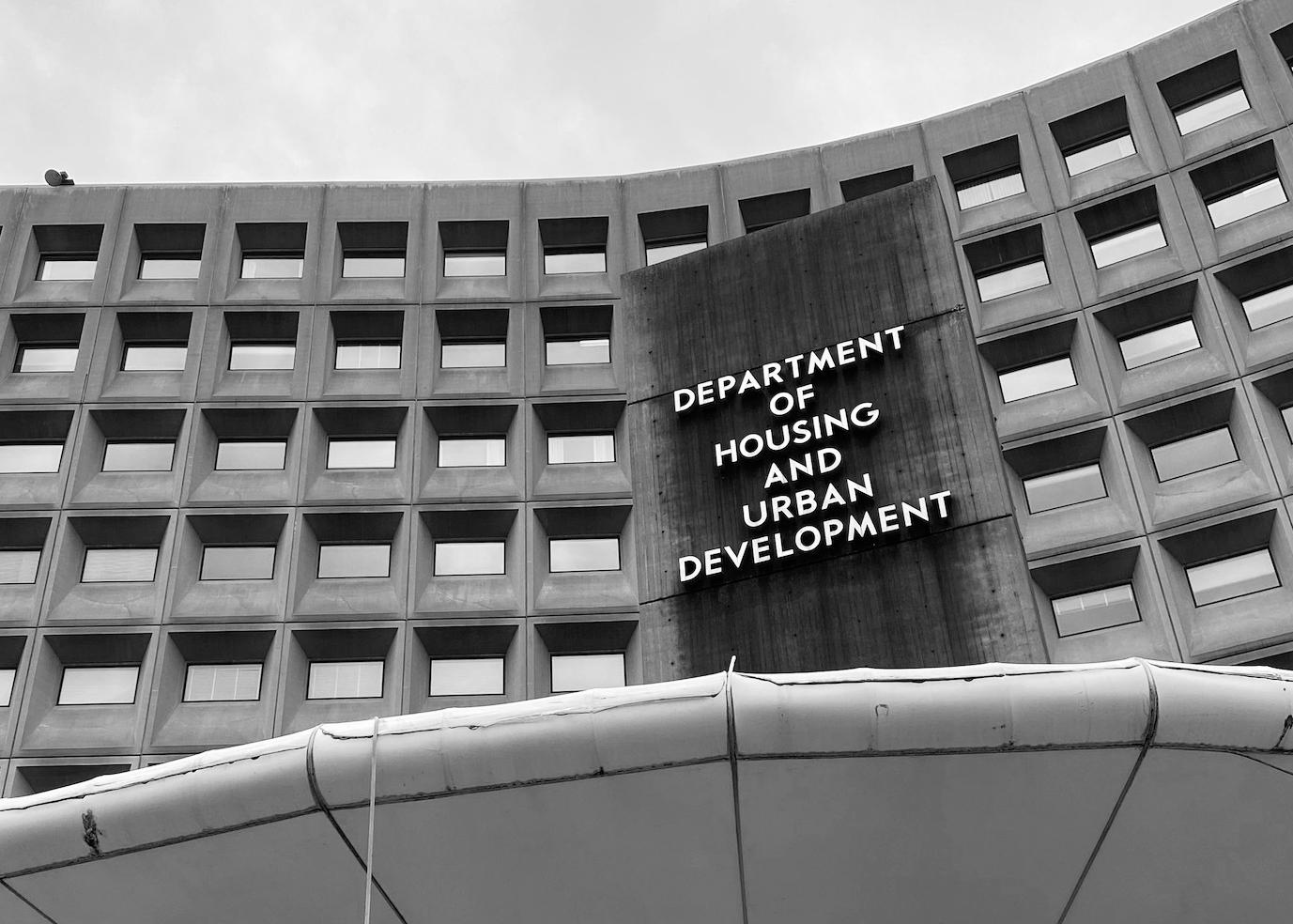
Both sets of funding guidelines reflect the Trump administration’s dislike of Housing First programs, long considered a bipartisan, mainstream response to homelessness. Housing First is an approach to the homelessness crisis that prioritizes providing individuals with permanent, stable housing before other means of progress, such as treatment programs or employment. Most experts agree the method has proven many times over to benefit individuals and families.
Per Sam Tsemberis, the founder of Pathways to Housing D.C. and an architect of Housing First, 85% of people in Housing First programs are successful within their first year in maintaining housing, as well as achieving other progress milestones, such as recovering from drinking or drug use.
However, the Trump Administration has shown vehement resistance to Housing First, arguing it has not worked to reduce homelessness. In 2025, Trump filed an Executive Order ending “...support for ‘housing first’ policies that deprioritize accountability and fail to promote treatment, recovery, and self-sufficiency—and holding grantees to higher standards of effectiveness in reducing homelessness and increasing public safety.”
Following the release of the first set of guidelines in late 2025, a group of states and the NAEH filed lawsuits challenging the restrictions. In April, a federal appeals court upheld an injunction blocking HUD’s funding plan. According to the Justia Opinion Summary, the court reasoned HUD’s actions were “...arbitrary and capricious, and would cause irreparable harm by creating funding gaps and service disruptions to vulnerable populations,” essentially accusing HUD of throwing a wrench by revising the guidelines in the middle of the grant cycle.
In the June Notice of Funding Opportunity, HUD clearly states its opposition to Housing First, calling it a “profound failure by any measure,” and claims to be “restoring the CoC program to its original goals of reducing homelessness and optimizing self-sufficiency by focusing on meaningful outcomes, expanding competition, prioritizing treatment, economic independence, and emphasizing law and order,” a description which points to the goals of temporary housing and supportive services. HUD has taken back the initial restrictions imposed on how much funding can go toward permanent housing, but seems poised to give favorable funding to projects focusing on job training, education, and health care.
Perhaps the most significant update to the guidelines is the removal of the 30% cap on funding for permanent housing. Though there is no strict cap, in a quest for “balancing” between permanent housing and temporary housing and supportive services, HUD is making it likely money is awarded to programs that reallocate funding to the latter projects.
HUD, in another policy change, dropped the annual renewal demand for Tier 1 programs, which are nearly guaranteed to receive funding, from 95% to 60%. This leaves many existing programs in Tier 2 limbo, where they may not be funded. Within Tier 2, new transitional housing and supportive services programs will be prioritized. So, if a program were to be ranked as Tier 2, its transition into temporary housing and services could earn it an edge in the competition, effectively encouraging programs in this tier away from long-term housing and a Housing First model.
HUD has also outlined a variety of prescribed criteria that will factor into its funding decisions. These criteria, less prominent in NOFOs during the Biden-era, which focused more on Housing First, include meeting service requirements (20 hours of voluntary work for public benefit), and whether participants are achieving employment or returning to their housing programs
In a recent meeting of homeless service providers, leaders said D.C. will continue to prioritize permanent housing projects, but some programs may convert to transitional housing or supportive services.
The NAEH filed another lawsuit on June 22 challenging the new guidelines, citing the more than “97,000 formerly homeless people, including families with children, those with disabilities, older adults, and veterans at risk of losing their permanent housing.” The lawsuit aims to block the guidelines before they can take effect in the grant application process.
Representatives from the National Homelessness Law Center emphasized the stakes of these new guidelines in their press release on the new lawsuit: “Make no mistake, these changes mean more people will enter homelessness,” they wrote. Antonia Fasanelli, the executive director of the National Homelessness Law Center, demanded the administration’s cooperation while voicing her support of the lawsuit. “The Trump administration should focus on ensuring that everybody has the housing and support they need and want,” she wrote.
Applications for funding are due to HUD by Aug. 24, and award announcements are expected to be released by the end of December.
CHIH-RONG KUO Editorial Intern
There have been 15 active cases of tuberculosis (TB) in D.C. homeless shelters since January 2025, with four in the last two months, DC Health confirmed to Street Sense. One of the cases is a former staff member; the others are shelter residents.
“This is the first TB outbreak DC has seen in shelters,” DC Health wrote. The Centers for Disease Control and Prevention (CDC) defines a large tuberculosis outbreak as one in which 10 or more related and verified cases of TB occur within a 3-year period.
Between 2019 and 2024, there were 137 reported TB infections in D.C., averaging 34 per year across the District’s 700,000+ population. In comparison, there are more than 5,000 people experiencing homelessness in D.C., a portion of whom use emergency shelters.
People with active TB have active TB germs. They usually have one or more symptoms of TB, such as weight loss, fevers lasting for several weeks, and a persistent cough, and can spread TB to other people. In contrast, people who have latent TB have inactive TB germs, do not have symptoms, and cannot spread TB to other people. There is no reported number of latent TB cases.
While active TB is considered a public health concern as it is infectious, the CDC advises treatment for both active and latent TB, as latent TB can develop into active TB. According to DC Health, people with active TB cases are in treatment and are in isolation at local hospitals. Currently, the outbreak is not affecting shelter bed availability.
In partnership with the D.C. Department of Human Services (DHS), DC Health created a TB screening tool used at admission in District-funded shelters, a representative from DC Health said at a recent meeting of homeless service providers. The agency is also evaluating each shelter for risks based on factors like age and the quality of the ventilation systems. While these measures have been implemented in response to the outbreak, they may continue as needed.
“DC Health and DHS are rolling out a TB screening tool in all shelters and will institute routine TB testing, if necessary,” DC Health wrote.
In addition to introducing testing and treatment measures at DHS shelters, DC Health plans to extend its support to day centers and non-DHS-funded shelters.
“DC Health is actively communicating with non-DHS-funded shelters, and we will be extending the same level of support to day centers,” DC Health wrote. “We have already provided TB information-sharing sessions for both clinical and non-clinical staff, including nearly 10 town halls with DHS staff, non-DHS staff, and community clinical providers.”
TB testing and treatment are brought to shelters so shelter residents do not have to travel for TB health care. However, anyone can access free TB testing and treatment at the DC Health and Wellness Center at 77 P St. NE.
REGINALD BLACK AKA DA’ STREET REPORTIN’ ARTIST Vendor Journalism Fellow
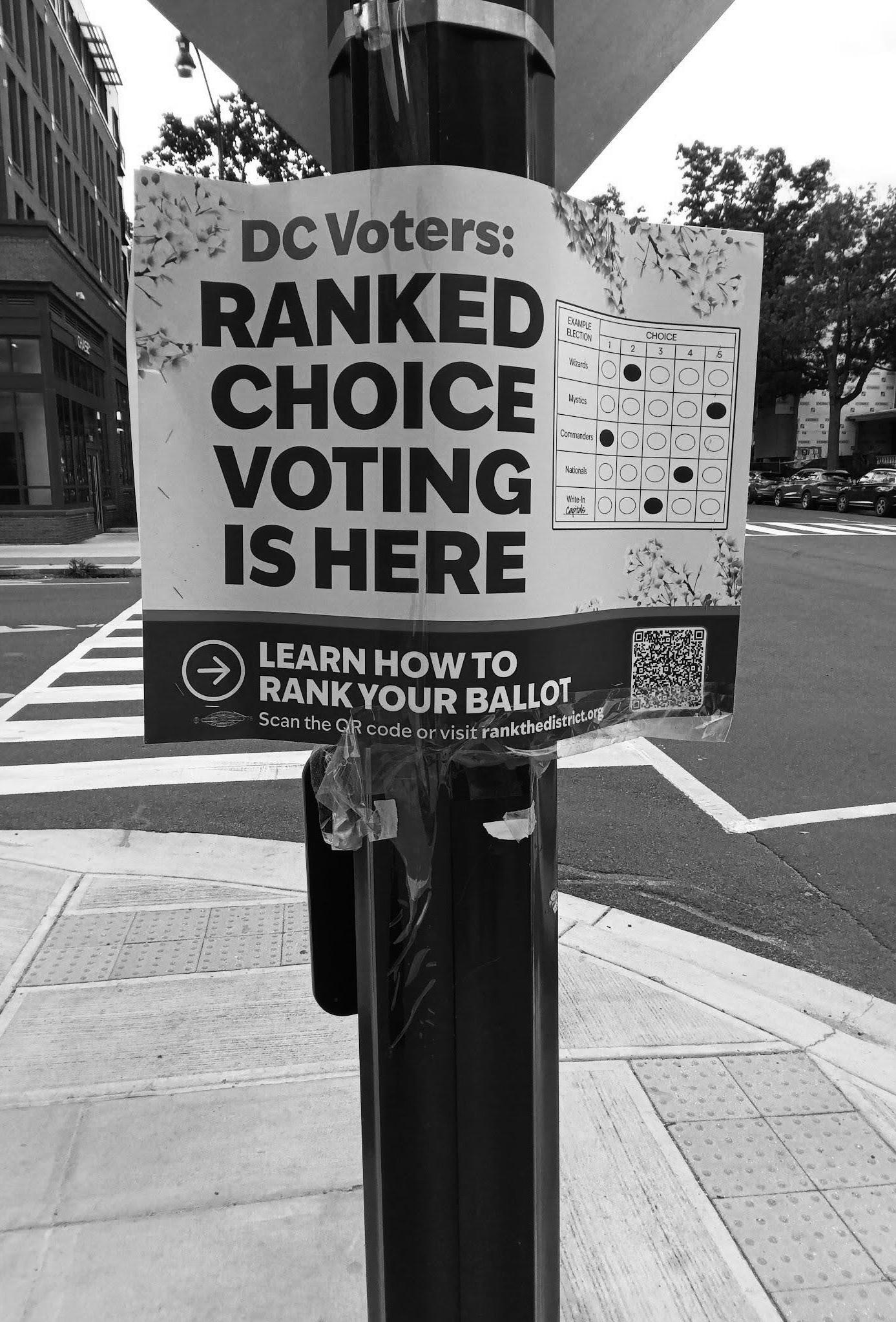
On June 16, D.C. voters completed the first election under ranked choice voting. Due to the elimination process, the District of Columbia Board of Elections posted its round-by-round results on June 21. This election represents a potentially significant impact on policy, including policing, education, and housing. A new government could mean D.C. has the opportunity to make headway on issues voters care about most, such as the threats from President Donald Trump to erode D.C’s home rule doctrine, which allows D.C. residents to control their local affairs, like the budget or electing a mayor and D.C. Council.
There are 35 new elected members of the D.C. Democratic Party who are part of the Free DC Slate. Free DC is a home rule advocacy organization that emphasizes the right of District of Columbia residents to self-govern, according to its website. Seventy-five percent of the slate’s candidates won elections to Democratic State Committee positions. An important addition in the fight for home rule is the Democratic nomination for a non-voting congressional delegate. Robert White secured this nomination by carrying 64% of the vote.
In a historic primary election under ranked choice voting, D.C. chose current Ward 4 Councilmember Janesse Lewis George as the Democratic nominee for mayor. Lewis George won more than 50% of the vote. Her toughest rival, former At-Large Councilmember Kenyan McDuffie, conceded the election to Lewis George on the morning of June 18. Throughout her second term as a councilmember, Lewis George promoted a social housing model through the introduction of the Green New Deal for Housing Amendment Act, which is still under council review. Social housing is a housing concept aiming to create subsidized or affordable housing, often publicly owned and managed. In contrast, Mayor Muriel Bowser, during her three terms, relied on public-private partnerships to promote housing affordability, as emphasized by Bowser’s deputy mayor for planning and economic development during the final budget engagement forum held by the Bowser administration in February. Lewis George’s win could introduce several projects following the social housing model. Lewis George vowed she will “launch Dignified Homes DC, a social housing program with a focus on publicly owned mixed-income housing, along with permanent affordable units.”
Other nominations included new councilmembers.
Oye Owolewa, a former U.S. shadow representative, secured 34% of the vote in the first round and won the nomination for at-large councilmember, eventually securing 50% of the vote in the last round, defeating Lisa Raymond, who secured 28% of the vote. Aparna Raj, with 52% of the vote, won the Democratic primary for the Ward 1 councilmember. These nominations mean November’s elections will lead to drastic changes in the council’s housing position.
Owolewa previously told Street Sense he would make financial commitments to the Housing Production Trust Fund, to preserve housing, help tenants purchase their buildings, help nonprofits acquire properties, and fund emergency rental assistance. Raj supported bridge housing and the Tenant Opportunity to Purchase Act (TOPA).
Also, Elissa Silverman will return to the at-large seat after losing an election in 2022 to McDuffie. Silverman shared with Street Sense that if awarded the term, she would focus on vacant public housing units.
With one ranked-choice voting cycle in the bag, it is likely most of these nominations will move on to be elected to their respective positions following the November general election. Typically, the Democratic nominee in D.C. moves on to be elected after primaries due to D.C. being a majority Democratic leaning city, according to Time Magazine. If the D.C. election tradition holds true, then D.C. could be looking at a more socialist lean in housing policy. Politics is ever-changing, and the first ranked choice primary election results show just that.
CATHERINE KEIGHTLY Editorial Intern
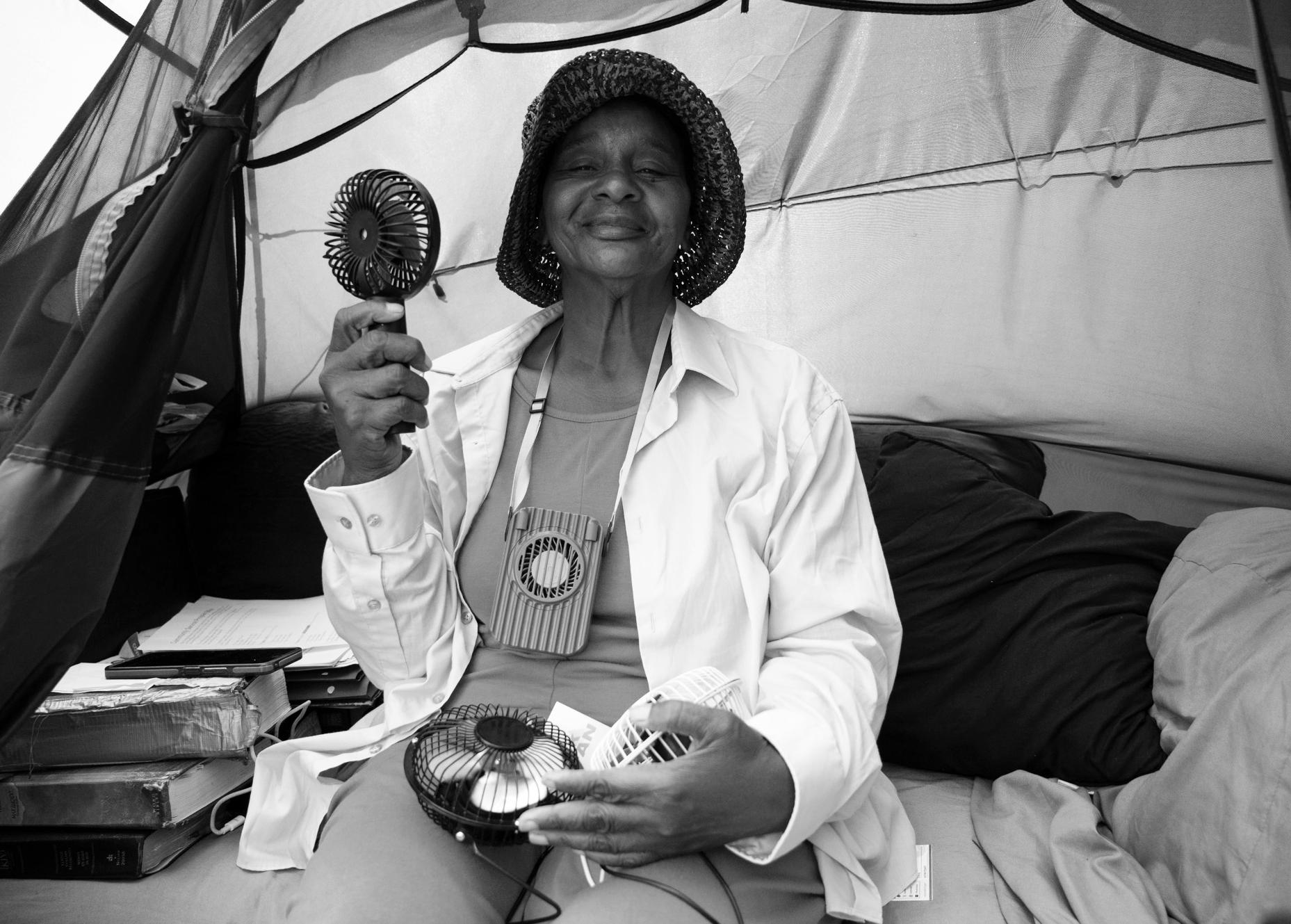
By the time Barbara Pierce wakes up on some summer mornings, the heat inside her tent is already overwhelming.
The 62-year-old, who lives outside and has diabetes, said the hot weather can leave her dizzy, drained, and exhausted.
“It’s very, very, very uncomfortable,” Pierce said. “If I pick up an object inside my tent, it’d be like it just got off a stove.”
During the summer, finding relief from dangerous temperatures can become a daily challenge for people who live outside.
According to the Environmental Protection Agency, extreme heat is one of the deadliest forms of severe weather in the United States. People who spend much of the day outdoors, including people living outside and staying in shelters, face increased health risks during periods of extreme heat because they have fewer opportunities to escape the dangerous temperatures. To reduce those risks, the District activates its Heat Plan each summer, opening locations where people can stay cool.
D.C.’s Homeland Security and Emergency Management Agency (HSEMA) issues Heat Alerts when the heat index is expected to reach at least 95 degrees and Extreme Heat Alerts for 105 degrees or higher. The alerts activate D.C’s network of cooling resources, which includes public libraries, recreation centers, day centers, public pools, and low-barrier shelters. Many of the resources, like libraries and shelters, are also open year-round.
During these alerts, outreach teams also distribute water and cooling supplies, conduct welfare checks, and help connect people with transportation and other available services.
Many of those resources become part of people’s daily lives during the summer. Thomas Wilson, for example, has developed his own routine to deal with the heat. During the hottest parts of the day, he moves between Adam’s Place Day Center, a nearby library, and occasionally, his storage unit.
“When it’s super hot, I try to go around the day center as much as possible because it’s a good temperature,” Wilson said.
D.C.’s day centers are open all year, but especially draw people trying to stay cool in the summer.
Michael Green said he regularly uses the New York Avenue Presbyterian Church and the Downtown Day Services Center to cool off during hot weather, explaining the summer heat has been “rough” this year.
“They let us sit up in [the church], and then they let us get cool so that we won’t overheat,” Green said.
The day center also provides food, water, showers, and help in obtaining identification documents. But, Green said, there are not enough similar places around the District to escape the heat.
“It’s a lot of homelessness out here, and there’s a lot of people that need shelter,” Green said.
D.C. also operates year-round shelters. According to a May shelter census, low-barrier shelter space was sometimes available as temperatures increased, but availability changes daily.
On average in May, the District reported 109 vacant beds for single adult men and six vacant beds for single adult women in its low-barrier shelter system. LGBTQ+ shelter beds were full.
While many of the places people experiencing homelessness use to keep cool are included in the District’s Heat Plan, multiple people said they don’t seek out official cooling centers, just familiar places to escape the heat.
Wilson, for one, uses libraries and day centers to keep cool, but he said he did not realize many of the District’s other cooling centers, often at recreation and community centers, were intended for adults experiencing homelessness.
“I know they be opening up the cooling centers, and I thought mostly kids be utilizing it,” Wilson said. “I never thought to take advantage of it myself.”
This is a common misunderstanding among individuals experiencing homelessness, said Alexis Johannessen, outreach director at the h3 Project, a nonprofit providing outreach. “They might know about the day centers or the shelters, but they might not necessarily think of places like the library or a recreation center as a cooling center,” Johannessen said.
Awareness was not the only challenge residents described. Green said access also becomes more difficult when cooling locations begin closing for the day.
“I don’t know what we gonna do,” Green said when asked about when cooling locations closed, often at 5 p.m.
Johannessen echoed Green’s concerns, saying District could benefit from having more cooling locations open later into the evening, when day centers are closed. When cooling locations close for the evening or on holidays, outreach workers often shift their focus to distributing water, encouraging people to seek shade, and helping them find whatever indoor spaces remain available, according to h3.
By the time Adam’s Place closes at 5 p.m., the hottest part of the day often isn’t over, and temperatures can still remain in the 90s. Wilson said that’s when finding water becomes more difficult.
“Only when the day center open,” Wilson said after being asked how often he can get water. “Once the day center closed, then it becomes a task.”
Residents can sign up for text or email updates through AlertDC to be notified when the District issues a Heat Alert or Extreme Heat Alert. A full list of cooling locations is available in the District’s Heat Plan. When it feels over 95 degrees, select day centers extend their hours, and low-barrier shelter lobbies remain open as cooling spaces.
If you or someone you know needs shelter, transportation, or a welfare check during a heat emergency, call the Homeless Services Hotline at 202-399-7093 or dial 311. The hotline is open daily from 8 a.m. to midnight.
People should also watch for signs of heat-related illness. Symptoms of heat exhaustion can include dizziness, headache, nausea, heavy sweating, weakness, or confusion, according to the Centers for Disease Control. If symptoms don’t improve after moving to a cool place and drinking water, or if someone loses consciousness, becomes confused, has a very high body temperature, or shows other signs of heat stroke, call 911 immediately. Heat stroke is a life-threatening medical emergency.
ANDREW ANDERSON Vendor Journalism Fellow
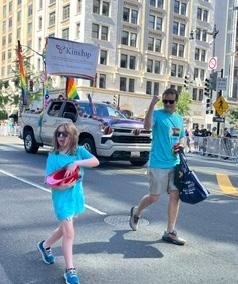
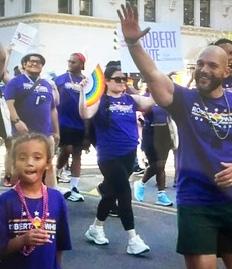
n June 20, hundreds took over Washington, D.C. for the Capital Pride Parade.
With proposed policies from the U.S. Department of Housing and Urban Development (HUD) asking communities looking for funding to sign covenants that deny transgender-inclusive housing, the Capital Pride Parade doubles as a celebration and act of resistance in a world becoming more hostile to the LGBTQ+ community. Street Sense journalism fellow Andrew Anderson documented the parade and talked with attendees about why it’s important to speak truth to power.
Anonymous, 44
Why is Pride important to you as a father?
As a father to two lovely children, I have the obligation to show them the world through the lens of my eyes, through which they see the world and shape how they see themselves. That’s what’s important to me as a father.
How can we make Pride better for the next generation?
We should start by electing better leaders who don’t have issues with others being themselves.


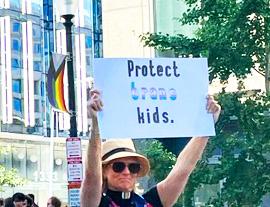

So, you are a supporter of the LGBTQ+ community, and you have… how long have you lived in D.C.?
I’ve lived in D.C. for over a decade, and I’m actually a member of the LGBTQ community.
How can these pride celebrations, the parade itself, how can they get better this year? This year and last year, Dupont Circle Park was closed to the Pride Parade due to safety concerns. How can we bring awareness to the issue of the National Park Service’s closing of the park for Pride?
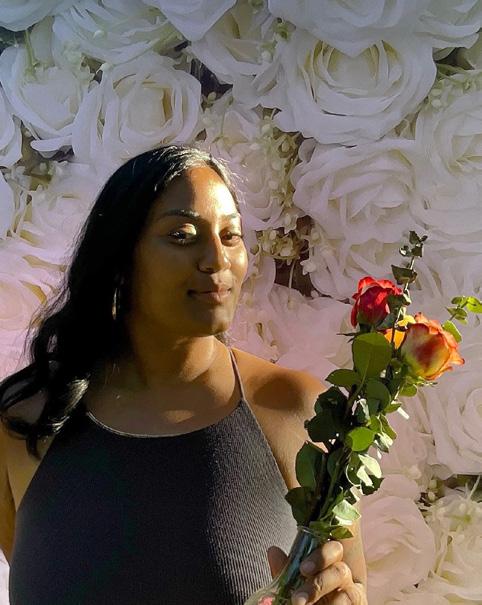
Absolutely, so I think that to be queer is to be liberated, and we deserve full access to our public spaces. Whenever we are protecting freedoms for those part of the LGBTQ+ community, we protect everyone’s freedoms. So, for us, I think it’s a lot about reclaiming our agency and pushing our elected officials to ensure that we have spaces to gather, to celebrate, to have joy in public, and be visible. I also think that there’s space for us to make sure that our Pride events have resources available. When you think about intersectional identities, a lot of the queer community experiences homelessness at a higher rate, experiences health issues at a higher rate, because of the fact that there are oppressive tendencies that harm us, so as much as it’s a celebratory and joyful event, we also want to make sure that we’re resourcing folks so that they can come and enjoy and not be sat there wondering where they’re going to sleep that night, so it’s a mix of making sure that we are protecting our right to convene in public, it is our right to assemble in the District of Columbia, and that we find ways to incorporate resourcing, whether it’s through agencies, through the government, or through any of our amazing community-based organizations, like Whitman Walker or HIPS.
Have you ever experienced systemic racism as a result of being part of a community, such as the LGBTQ community?
Yes, both as a brown woman myself, who is queer, when I am visibly queer, the intersectional identities have caused really uncomfortable engagements with folks that have homophobia in the way they interact with me. Moreover, when I first moved to D.C., I worked on a public health campaign, and we worked around PrEP and HIV education and prevention, the intersection for our Black and brown, and specifically trans community, but the queer community on the whole ends up experiencing heightened issues because of their race; you cannot separate the two identities. The experience of the white queer D.C. resident is infinitely different, and it doesn’t mean it is better. It means that there are systems in place that are more harmful when you have a Black and Black or brown identity intersected with being queer.
How can we overcome that and combat systemic racism, especially within the queer community?
I think, especially with some of the misunderstandings about what it means to be queer, there’s sometimes a fear of engaging with us human to human, to see us as a human first, and so I would encourage folks that maybe feel some sort of way towards the queer folks in your life to have a conversation, see that we are your neighbor, not the problem, we are not your villain, we are not your enemy, and once you start to see the things we have in common, we will begin to feel the urge to fight for one another, and that then allows us to go down these avenues we talked about earlier, whether it’s advocating for free public space, advocating for more inclusivity in our health care, or our housing, or being able to support each other by resourcing each other. It sounds really simple, but ground zero is determining whether or not you see the humanity of your queer neighbors.
Last thoughts: While progress continues to be significant, the challenges still remain.
RAINA PAWLOSKI Editorial Intern
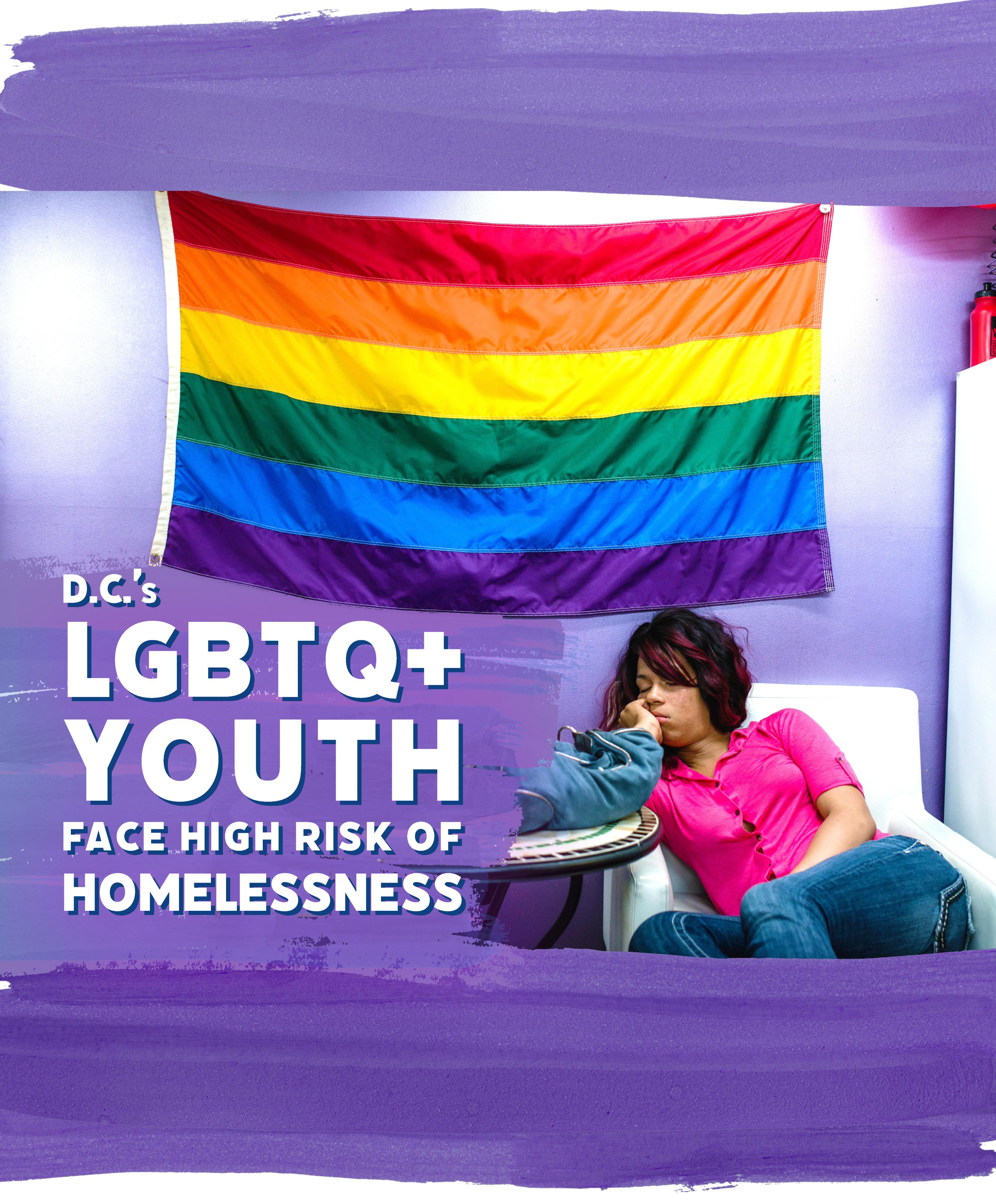
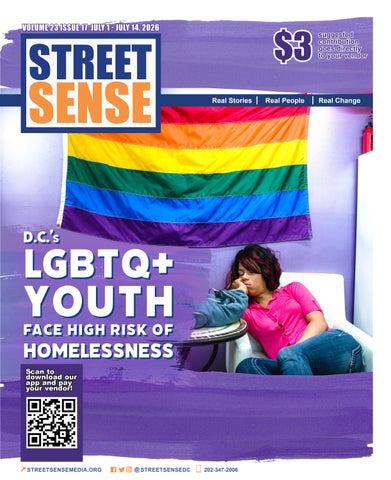
Though D.C. is known for its large LGBTQ+ population, recent surveys highlight how many queer youth and young adults in the District struggle with housing insecurity. Housing advocates are urging the city to do better as proposed federal rule changes threaten existing efforts.
Both young queer people who move to the District to find community and long-time queer residents are being priced out and left without housing. Out and Counted, a June survey conducted by The Wanda Alston Foundation and Loyola Marymount University of over 300 queer people in D.C. aged 18-30, found 1 in 4 LGBTQ+ young adults experienced housing instability — not having housing, frequently moving, or couch surfing — in their lifetime. An earlier, 2025 Youth Count of 846 young people from The Community Partnership revealed nearly 2 in 3 of unhoused youth in D.C. are LGBTQ+.
Housing advocates say not all shelters across the District have the resources to serve queer people, and those who find temporary housing can face unique challenges that make them more vulnerable to discrimination and the path to a permanent living situation especially difficult.
Cesar Toledo is the executive director for the Wanda Alston Foundation, the first organization to launch a transitional housing program specifically for queer and transgender youth in D.C. He said while housing insecurity is a “national crisis,” it is a particular issue in D.C. due to the city’s reputation as a “queer haven.”
D.C.’s large LGBTQ+ population can be traced back to the civil rights movement, when organizations like the Mattachine Society of Washington and the Gay Liberation Front were born and decided to centralize themselves in the capital. Today, D.C. has had the largest concentration of queer people per capita in the country, according to a 2024 report.
Andres Meza works with many young queer people as a bilingual street outreach specialist for SMYAL, a DC-based LGBTQ+ housing provider. He said queer youth face a mix of challenges that make them more vulnerable to being unhoused, like not having the support to evade homelessness.
“I think a lot of times queer people don’t have the safety net or the community that other communities may have, because once you experience homelessness, no matter what group you’re a part of, you’re alienated from them,” Meza said. “So to be a queer person already alienated from the world, and then to experience homelessness — now you’re alienated in general.”
Hancie Stokes, SMYAL’s director of communications, said familial rejection was one of the main drivers of housing insecurity in queer youth, as well as generational poverty. SMYAL’s director of youth housing, Liz Jaramillo, wrote via email LGBTQ+ youth face discrimination in school and employment, as well as barriers to access mental health and community support that make it more difficult for them to thrive, putting them at risk for homelessness.
LGBTQ+ specific housing programs in D.C., like SMYAL and Wanda Alston, do not have the resources to accommodate every unhoused queer youth, according to Stokes, making it important for general housing programs to be inclusive.
The 2025 survey revealed 29% of single youth stayed at adult shelters, and about 30% of those individuals did not know there were youth-specific shelters. Many queer youth report feeling harassed and unsafe in general housing programs, whether due to social discrimination or being forced to conform to gendered separations present in the majority of D.C. shelters.

Meza said it can be dangerous for queer youth when housing programs don’t hire people within the community to facilitate accommodations or prevent discrimination. He argued programs should hire people across identities within the LGBTQ+ community to create inclusive spaces for everyone.
Housing providers worry proposed changes at the federal level could have a lasting impact on housing programs for queer youth across America. Housing programs funded by the U.S. Department of Housing and Urban Development (HUD) could become less inclusive with a proposed revision to HUD’s Equal Access regulations. This rule would require HUD-funded facilities to ask questions about people’s gender identities and assign them accommodations based on their biological sex. Stokes said this can put transgender people at particular risk of discrimination.
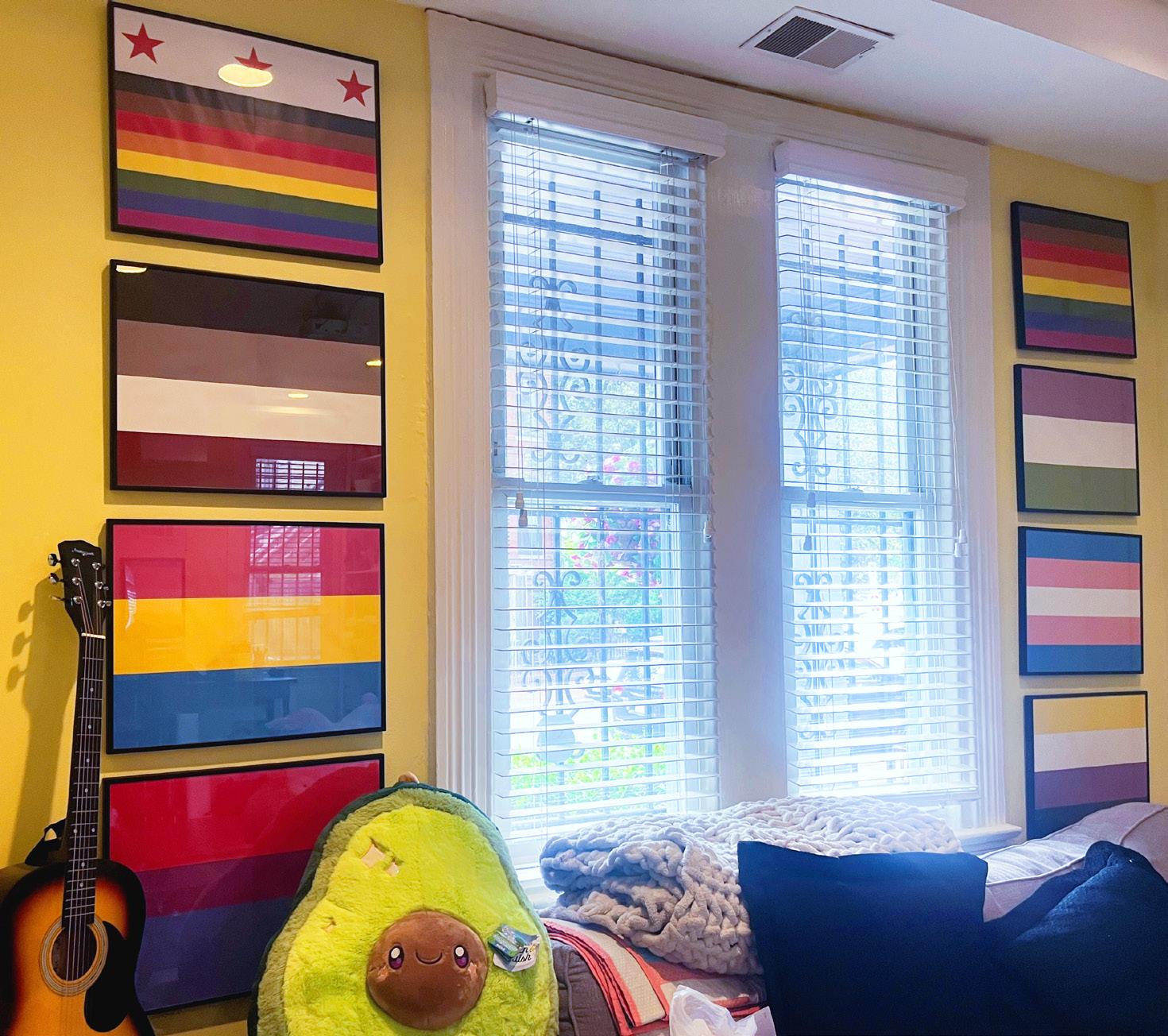
”Even in places where a housing provider might have an inclusive policy, if this directive goes through, it could undermine that,” Stokes said. “We can do this training right now, but also, if these laws come down, your funding to even have shelter is at risk.”
Public comments on the proposed revision are being considered by HUD, which will then publish a final review to determine how the Equal Access regulations will move forward. LGBTQ+ unhoused youth and young adults in D.C. are particularly vulnerable due to the federal backdrop of the Trump administration.
“We have seen increased anxiety and uncertainty among LGBTQ+ youth regarding their rights, healthcare access, and overall safety,” Jaramillo wrote. “While local protections remain important, national conversations and policy debates can have a real effect on young people’s sense of security and belonging. These concerns often compound existing challenges and can further impact housing stability and well-being.”
The Out and Counted report revealed a poor state of mental health among the District’s young LGBTQ+ community. It stated, “The findings indicate a profound Loneliness Paradox: in the nation’s ‘gayest city,’” over 80% of LGBTQ+ youth feel isolated. This is not merely a social deficit; it is a clinical one.”
Toledo said that even with D.C. being very politically active and queer, there are still plenty of LGBTQ+ youth and young adults who feel alone and isolated. This lack of community and mental strain is a factor that makes queer youth more vulnerable to becoming unhoused.
“We just had an incredible Pride weekend put together by the Capital Pride Alliance, and so when I read through the data, that 80% of our queer young adults reported feeling isolated often or sometimes, it was truly heartbreaking,” Toledo said. “It really speaks to the mental challenges and the harm that isolation can play in someone’s life.”
Toledo said D.C. has given so many queer people a place to call home, and now it is time for the older generations to ensure young LGBTQ+ people “can afford to stay here, thrive, and build families.”
“To advance to ensure that the queer and trans young people that we serve can really reach independence and secure stable housing, it’s going to take a community-wide effort,” Toledo said. “It’s going to take leadership from the next D.C. mayor and the D.C. Council, so it’s going to be challenging and daunting, but I’m so excited to be at the forefront.”
JULIAN SCHNITTKER AND CATHERINE KEIGHTLY Editorial Interns
hank Jesus God Almighty,” Barbara Pierce exclaimed from outside of her tent as the bright orange city-commissioned garbage truck rumbled away, empty, on June 16.
Pierce had successfully avoided an encampment closure, but she was an outlier. In the weeks of June 14 and June 21, the Office of the Deputy Mayor for Health and Human Services (DMHHS) completed full cleanups, biohazard removal, and closures at six other encampments, according to its website. Across May and June, DMHHS carried out at least 25 closures, according to its website and Street Sense reporting.
Around 9:30 a.m. on June 16, DMHHS officials, members of the Department of Behavioral Health Community Response Team, outreach workers, and an official tasked with biohazard removal arrived across the narrow street from Pierce’s tent in Langdon. An hour-long standoff ensued.
When DMHHS officials approached Pierce’s tent to issue a warning they would begin the cleanup in thirty minutes, they quickly learned Pierce would not comply. In fact, she had a new, novel strategy. “I got a restraining order on them,” Pierce, 62, told Street Sense. “They’re not supposed to touch my stuff, period.”
Pierce showed Street Sense a pile of documents, stacked neatly on a bin inside her tent. Pierce had filed a Civil Protection Order (CPO) against the entirety of DMHHS and another against the D.C. Department of Human Services (DHS). The documents indicated a court date on June 17, the next day.
A CPO must be directed toward an individual and is intended to provide relief from physical harm or property damage. Pierce told Street Sense after her court date that the judge did not grant her CPOs, but they had bought her time.
Pierce said she filed a CPO against the agencies because of her longstanding tensions with the crews tasked with carrying out cleanups of her belongings. Pierce first arrived at her spot in April of 2025 after the closure of the seasonal women’s shelter, Eve’s Place. DMHHS has carried out five encampment clearings at Pierce’s location in 2026, according to notices she saved.
Thomas Wilson, who frequents the Adams Place Day Center near Pierce’s tent, told Street Sense he had witnessed DMHHS staff dispose of Pierce’s previous tent, and she has been “fighting them” since the Trump Administration ramped up its enforcement of encampments in D.C.
Pierce said she has been diagnosed with diabetes, lung cancer, and kidney disease, factors which make moving difficult for her. She spends most of her days in her tent, keeping an eye on her belongings and reading the Bible.
“Dealing with this tent and DHS and DMHHS it’s been really hard to really do anything, because me trying to get these restraining orders, it’s been a real run around. And I’m tired,” she said, adding she has been attempting to secure a court date for her CPOs since January.
“Instead of taking my stuff and throwing it away and making me go back and forth, aren’t they supposed to be helping me?”
On the morning of the closure, DMHHS offered Pierce relocation to a shelter and storage of important belongings, but she rejected the offer.
“I didn’t like the idea of the shelter because I’m avoiding the people in the shelter,” Pierce said. Along with concerns about a lack of privacy, she cites a number of “run-ins” and verbal altercations with residents and staff members at the nearby drop-in center as a reason why she did not feel safe trying to “dodge and duck everybody… to keep a bed.” Earlier this month, Pierce said she was temporarily barred from the center due to one such altercation.
At 9:45 a.m., a DMHHS official returned to remind Pierce they would begin the cleanup at 10:00 a.m. She rebutted with a demand they call the police to serve the CPO. Eventually, she dialed 911 herself.
Two MPD officers arrived to speak with Pierce and the city officials. After reviewing the incomplete paperwork, they called in MPD Lieutenant John Sprague to clarify whether MPD was obligated to serve the order in the interim before the court date.
Soon after, the small crowd of officials and outreach workers across the street began to dwindle. Finally, even the garbage truck peeled away. Pierce rejoiced.
DMHHS did not respond to Street Sense’s request for comment about the agency’s response to the CPO. On the agency’s website, the cleanup is now listed as canceled.
The next day, Pierce says she attended her court hearing. She said the judge did not sign off on the CPO. Instead, representatives of DHS and DMHHS raised the prospect of bridge housing for Pierce. Pierce said she is “not ready” to move somewhere in which residents live in a “community situation,” referring to bridge housing’s semi-private rooms. She also expressed concern that without the guarantee of eventually getting Permanent Supportive Housing, she would still end up “back on the street.”
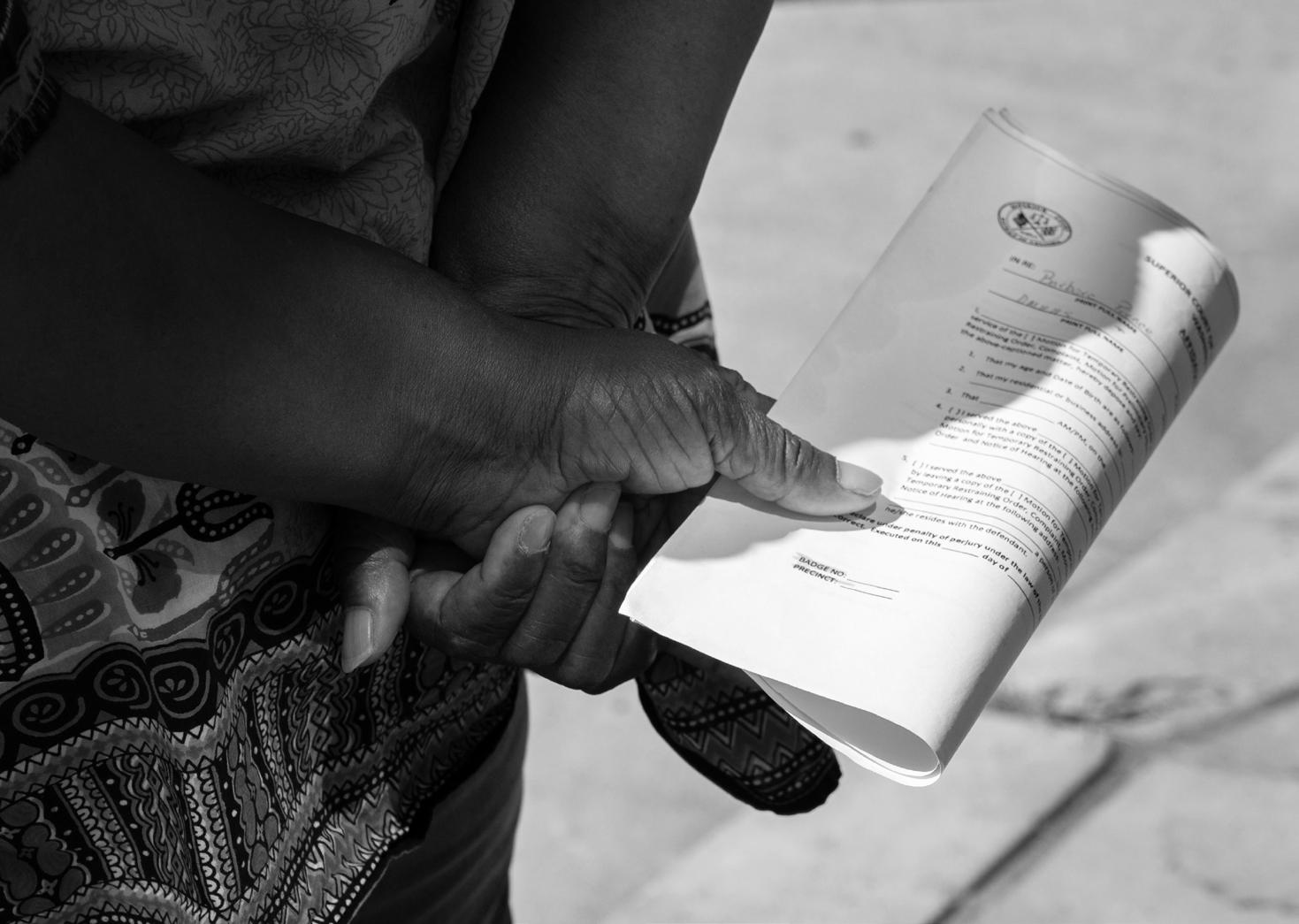
After leaving Pierce on June 16, DMHHS officials traveled to a second site at 4th and New York Avenues NW. Two residents, Alfonso Black and his wife, were on-site.
Black complained that because DMHHS arrived “late,” just before 11:00 a.m., the officials “rushed” him and his wife as they moved their belongings. Black and his wife declined transport to a shelter but accepted the offer to store some of their belongings.
On June 17, DMHHS conducted a closure at the intersection of Georgia and Missouri Avenues NW, clearing one tent but leaving a neighborhood water seller, Alan.
Alan operates a free-of-charge water bottle service, Alan’s Oasis. He was initially unsure whether or not he was a target of the scheduled cleanup, and told Street Sense he only learned his business was not under threat of removal when DMHHS arrived.
Alan expressed frustration with DMHHS’s repeated visits, citing insufficient warnings. He argued that since he is not “panhandling” for money and instead relies on donations, there is “nothing” he should be written up for.
While Alan’s Oasis was left intact, DMHHS completed a full cleanup of a nearby encampment at the same address. The encampment’s sole resident was notified by an outreach team the night before, according to Eden Clark, an outreach manager at Miriam’s Kitchen. The resident was not present at the time of the removal. DMHHS disposed of their tent and various personal items left behind.
The week of June 21, Street Sense reporters went to the locations of two additional scheduled encampment closures. They did not see residents or city workers at either location, but both are listed on DMHHS’s website as having been closed. DMHHS did not respond to a request for clarification.
On June 25, Dieudonne Bessang packed his belongings and moved to a new spot across the street from 900 10th St. NW. The cleanup was originally scheduled for June 18, but it was postponed due to the weather. Bessang had lived at the spot, directly in front of the Embassy Suites, for about two years. Hotel staff watched as officials cleared Bessang’s belongings.
The same day, an encampment cleanup on the corner of 26th and L Streets NW was cancelled because the resident had already relocated.
The final scheduled cleanup of the month took place on June 30 on the sidewalk of the 5500 block of Southern Avenue, SE. The resident had already vacated the site but left behind a tent and other belongings, including a walker, which DMHHS workers disposed of.
Raina Pawloski and Alexandra Lalli contributed reporting.
INVISIBLE PROPHET
Content warning: Rape
f you do not know this imperatrix, then you should.
IGisèle Pelicot is a French woman who had been drugged and raped by her husband, who stood by while 50 mentally unstable monsters had their way. It was assumed she was marital property.
I will quote her words in this opinion piece, but this is also the reality of hundreds of women’s lives, and men’s, and children’s.
As follows is a statement on the perspective of the perpetrators on trial spoken by Ms. Pelicot: “I think that as far as they’re concerned, they couldn’t have raped me because Mr. Pelicot was there and had given his consent. Therefore, they didn’t consider it rape,” she told the BBC.
BBC has an interview with Ms. Pelicot about her story and why she did not choose anonymity during her the trial of her rapist husband, along with the participants. She expressed a humbling experience as women stated this strength inspired them to live and speak up.
Her story began when Mr. Pelicot was caught filming up women’s skirts. They were both summoned to a French police station. As they were separated, Ms. Pelicot was probed about her husband’s life and activity. Problem was, she had no clue why they were asking such questions.
She had a “descent into hell” looking at the photos of her lifeless body, “I didn’t recognise myself,” she told BBC. “This woman was lying on the bed as if she were dead. There are men next to her. I didn’t understand who they were. I didn’t know them. I’d never met them.”
According to the BBC, “Police told Ms. Pelicot her husband had recorded, labelled and neatly catalogued the videos of the rapes on a hard disk, many of the men could not be identified.”
In 2011, she started having gynecological issues from being raped multiple times a week and because of the drugs for sedation. This also contributed to neurological problems, suffering memory loss.
Rapists don’t care and are not educated in women’s anatomy. We have more to bear than the male anatomy, as many women and children have died from sexual violence.
I’ve written about France’s justice system, which is a powerful statement alone against the U.S. and sexual violence crimes. This is her story to tell. Please watch her story on BBC if you have not already.
Gisèle Pelicot is an inspiration to all women. Her children, friends, and boyfriend are her support system. Not everyone has this platform or voice to stand against a neanderthal practice that is sexual violence.
I, Invisible Prophet, and all the other silent victims and survivors will continue to shine our voice. We are not our ancestors!!!!
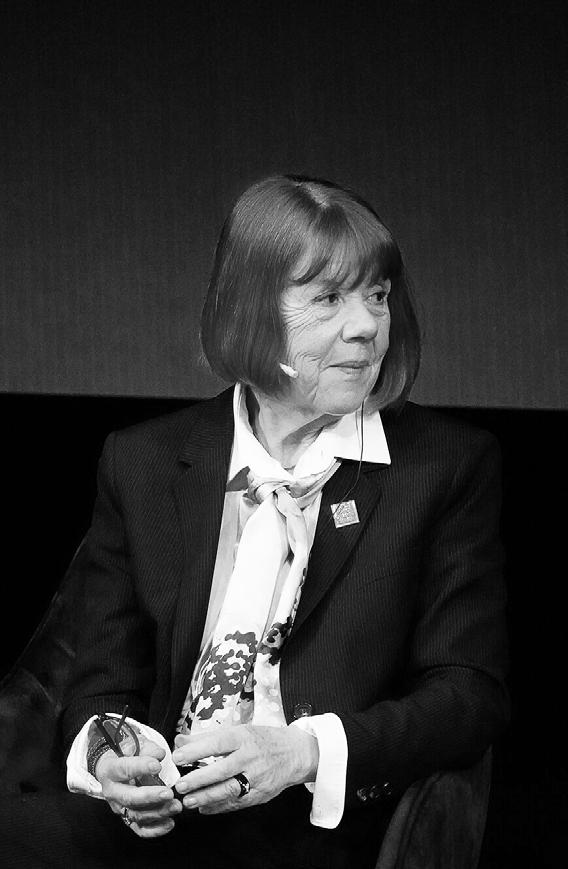
JOSIE BROWN Artist/Vendor
Father’s Day is a time to gather
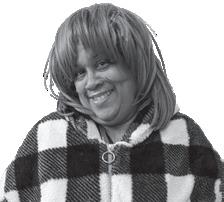
No matter what the weather, we should always be together
Father’s Day is to be clever and never say never, because life is forever
Father’s Day is a time not to stray but to walk in the straight and narrow way
Father’s Day is a day not to waste but run in the Christian race, Holding on to his amazing grace and feeling no disgrace
Father’s Day is a time to take a break without dismay; it’s not a race to stay safe!
SHAWN FENWICK
Artist/Vendor
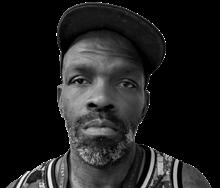
My name is Shawn Fenwick. I live in Washington, D.C. I was locked up for 20 years for a charge I didn’t do. I love to draw and read. My father didn’t care about me when I was 8 years old. My mother put me out of the house when I was 15 years old. I have been on the street since I was 15, taking care of myself. I learned to read when I was 45. I learned from using a cell phone. I have been back and forth to jail throughout my life, but I have been here in Washington for 14 years, not getting in trouble. I like to play chess and help the homeless. Thank you, Street Sense, for sharing my art.
FIVE FIFTY-ONE, AKA JOHN ALLEY Artist/Vendor
The only thing that can be procrastinated is love.
To understand is not to memorize the path in reverse.
There are no footprints on a diamond floor; there is no weight that melts the firmness of the sacred.
The faces of people are mirrors without reflection.
The only face in which another face is reflected is in the face of a lake made still by the absence of wind.
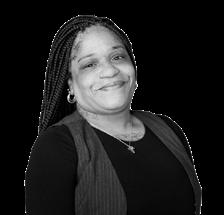
NIKILA CAMPBELL Artist/Vendor
Words reflect growth from Shorty, to women, to queen
This can cause trouble in your environment
It’s okay to grow
Even when your hair changes color, It shows growth
Some are born with inside growth, AKA wisdom
That old soul in a young body
It’s okay, people listen
The attention grabber is when someone says,
“That child has been here before”
You represent a greater growth
That represents a power within Is there intentional growth, positive or negative?
You start to notice your precious gift
The need is for others,
Not you
Growth goes from shy to confident
Everyone’s growth is different, But connected
Growth is set on a timer
You can’t hear it
Your body reflects it
It’s okay to let go or cut off unhealthy growth
That can stop your growth
Once upon a time, I was nothing, But I changed that thought to something People are humans who will hurt, But growth will teach you to keep it moving Don’t stay in unhealthy growth, It will stop your growth
I’m in the middle of a growth spurt
My spirit is positive with food for thought,
So my growth is healthy
I have unhealthy thoughts when I’m being attacked
But I was so scared of my thoughts before I
Changed what food I put in them
I was gracefully broken
That’s why my temple has been Given back to me graciously

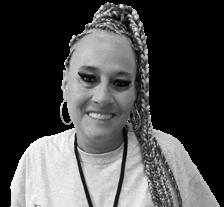
RACHELLE ELLISON
Artist/Vendor
What’s the world coming to?
In today’s day and age, it’s hard not to feel the rage
People have so much fear,
Because with this administration, we are moving to the rear, It seems, on every page
We are supposed to be moving forward to success
But the rich are getting richer, and those in poverty, so much less How do we survive without trauma and pain When it feels like we are in constant rain?
No depression, we must trust God through the storm
When we do this, a mighty faith we will form
There is nothing too powerful to overcome, Into the pain we must run
To get to the other side, No mistake about it, this will feel like a Ferris Wheel ride
Once you’re through the storm, trusting God, There’s so much growth and relief
All anything in life takes is a strong belief
RONNELL WILSON
Artist/Vendor
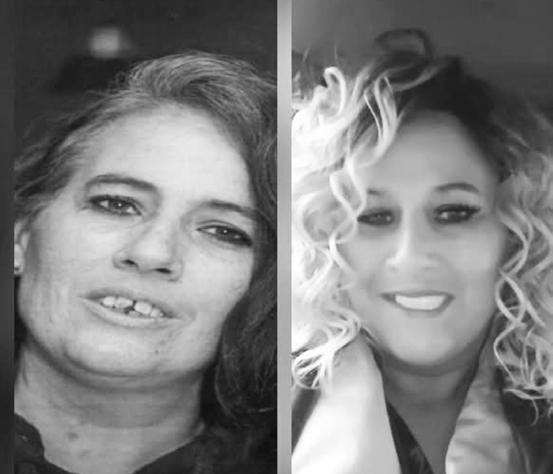
ANDRE BRINSON Artist/Vendor

Melveon, or as I call him, “Melli Mel.” I met Melveon in the early ‘90s, working at the National Air and Space Museum. We became good friends with about five of us going out partying to the New Jack sound.
I was on my way to meet him at another friend’s place. I just heard a shot, and I just knew something was wrong. I was wishing it wasn’t them, but it was (SMH). My friend Melveon is a good-hearted person. I’ve never seen him get out of character with anyone. I remember when he first started his road to recovery, getting clean from drinking. And he did a fantastic job at it since the shooting.
I hadn’t seen Melli Mel. I walked into Street Sense one day and heard his unique voice, and I knew it was him. We were both so happy to see each other. Old friends. Most of our friends are gone, so it was good to see him again. To my brother Melli Mel, I love you and thank you for your friendship. Peace with God.
MARCUS MCCALL Artist/Vendor
Dear reader,
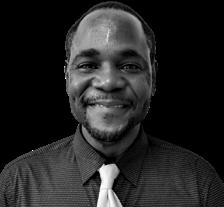
Is something that motivates us to shine
It can also force the need to hide
Either one on any day can definitely take you on a ride, When the universe forces you to decide
Humbleness is an ingredient to assist in whichever decision Too much of either may force you from Heaven
Just taking a knee may be the best place to be How great today must be With God in Heaven, and you here with me
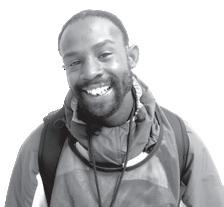
Do you ever feel like a loser? I do the things I do for people: give cash, open my home, show kindness, just to get outright disrespected. Loser me, that’s how I feel. “What am I doing with myself?” I ask myself all the time with racing thoughts.
Just a month ago, I got into a fight with my cellmate. He was trying to rob me of my commissary so he could get high in a level 7 prison, which is a high-custody place. Put in the hole or a special housing unit with a person who had two life sentences for trafficking drugs across the states and killing his cellmate. I’m sitting here with a person with nothing to lose, a guy from New York who had been to ADX, a supermax prison. With U.S. Penitentiary Canaan on lockdown now, the system still finds me a wild cellmate on the compound. This guy has been down for over 20 years and still found his way back down here, where he left 10 years ago.
Talk about mental health, LOL. Let’s get real. Sometimes I really feel like a loser. I feel like crying. I feel scared. Depression gets the best of me. Every time I’ve applied for Supplemental Security Income, I get denied!
God grant me the serenity to accept the things I can not change, the courage to change the things that I can, and the wisdom to know the difference.
Have a nice day!
GLORIA PRINZ
Artist/Vendor
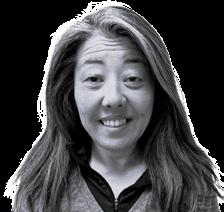
My courage is disruptive, I’m not playing by the rules. I confront things directly. I arrive at insights before they arise. Every observation is used to change at the core. Exposing gaps they did not realize existed. I am chosen, and thank God he awakened me to this gift of discernment. And I realize what I can’t carry anymore.
WILLIAM HARGROVE Artist/Vendor
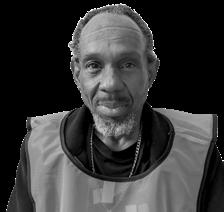
And, like this, don’t forget about your greatest advantage! You are surrounded by people who love you and will always be there for you. We are standing together, cheering you on.
ROCHELLE WALKER
Artist/Vendor
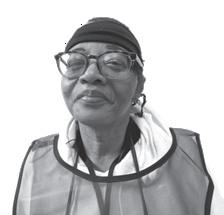
I am a Street Sense vendor who happily buys our paper, then happily sells our paper! I was who I was, I am who I am, the person on the street selling papers and promoting Street Sense Media from corner to corner.
We need donations to help us hope!!
I am also a poet and the heart-giver who gets real happy when I sell all my papers and when I sing and dance. My customers tell me they enjoy reading my poems. I am a seller and the happiest Street Sense Media vendor, wearing my badge and never being broke. Another very happy time is when I give a person something to eat or drink.
WARNING LABEL Artist/Vendor
Donny Boy, so I have a question. Is your being a buddy-buddy with two very well-known dictators just politics? Or is it something else? Just curious.
I’m thinking you plan to use the National Guard as your own private army. Use them on the American people. The fact that you have moved the National Guard into multiple states and major cities across the United States of America sounds like chess to me. Except you are playing just one game, not just with the people of the United States of America, but with the whole world. You seem to be moving people across a chessboard.
Most psychologists would call that a psychopath and/or a sociopath, just saying. Those are facts, by the way. Trust me, I may or may not be one myself.
P.S. A pawn is a pawn, no matter how much power and money.
DON GARDNER
Artist/Vendor
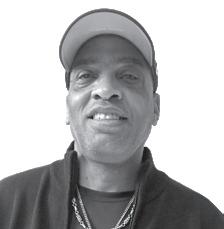
First and foremost, I give honor to God, my Lord and Savior Jesus Christ, and to the precious Holy Spirit. I also want to thank the Street Sense newspaper, the National Coalition for the Homeless, and the Speakers Bureau for allowing me to share a word about what it means and how it shows up in the lives of those experiencing homelessness.
I was once homeless. And if there’s one thing I know for sure, it’s this: Faith is not optional out there — it’s survival.
It takes faith to wake up in the morning, not knowing if you’ll eat. It takes faith to face a day without knowing where you’ll find water, use a restroom, or get clean clothes. It takes faith to lay your head down at night, not knowing if you’ll be safe, warm, or dry. Will it rain? Will it snow? Will it be too hot to sleep?
It takes faith just to make it through the day. There’s nothing glamorous about homelessness. I’ve lived it. I’ve seen it. I’ve felt it. Homelessness is hard. It breaks people down. Many people in the homeless community carry deep wounds — mental, physical, and emotional. Trauma doesn’t clock out. It follows you. And over time, it can take something even more valuable than shelter — it can take your hope.
And when hope fades, faith can begin to fade with it.
I’ve seen people lose their dreams. I’ve seen people lose their sense of purpose. I’ve seen people believe nobody cares whether they live or die. And the truth is, too many don’t make it back. When people lose faith — in themselves, in others, in systems, in God — they can begin to feel invisible. Forgotten. Disposable. But I stand here today as someone who made it through — not because everything around me changed right away, but because something inside me held on.
I didn’t lose faith in God. And I didn’t lose faith in myself.
Yes, I had faith in programs. I had faith in government support. I had faith in outreach workers and faith-based ministries showing up. And those things matter; they save lives.
But what carried me was deeper than systems. It was the Love of God Almighty, my mother, family, friends, and faith, rooted in something unshakable.
I was raised in the church, and those seeds stayed with me. Even in my lowest moments, faith reminded me my situation was not my identity. That my story wasn’t over.
Today, I believe with all my heart I didn’t go through homelessness just for me. I went through it so I could reach back and help someone else. To lift someone who feels forgotten. To encourage someone who feels lost. To remind someone their life still has value.
Because homelessness does not discriminate. It can happen to anyone — any race, any background, any age. A fire. A flood. A lost job. Domestic violence. One moment can change everything. And behind every person on the street is a story.
My story is one of faith.
Scripture tells us that without faith, it is impossible to please God. But I’ll tell you this — without faith, it’s also hard to keep going. That’s why we need each other.
We need people who are willing to be a light in dark places. People who won’t walk past someone in need as if they don’t exist. People who understand that sometimes the smallest act of kindness, a kind word, a smile, a moment of respect, can restore a piece of someone’s faith.
Because faith can be lost in a moment. But it can also be restored in a moment.
So I leave you with this: Be the light. Be the compassion. Be the reminder that people matter. And if you see someone who’s struggling — don’t just walk by. Reach out.
Because sometimes, the very thing that saves a life… is knowing somebody still cares.
God bless you.
With love and gratitude, your friend, Don Gardner
FREDERICK WALKER
Artist/Vendor
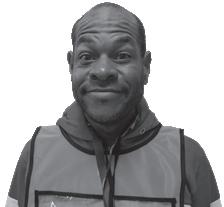
I want to take Little Ricky, my five-year-old son, to dinner at Dave & Busters. Or, if we don’t do that, we’ll have dinner at my place. And I want to take him to a movie, maybe “Captain America.” I know he likes that one.
I love my son. I am a good father.
LEVESTER GREEN Artist/Vendor
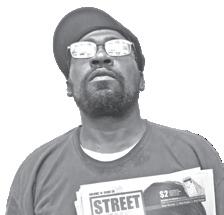
She was a great Clemson Tigers fan, alum, and supporter. Whenever the topic came up, I’d always be sure to make mention of Nancy O’Dell, also as a fan and supporter of the Tigers. I went to South Carolina State University, so I’d rep the Bulldogs, of course, coming out of the same area of the country. I’d mention Nancy due to her charitable work with Best Buddies, a nonprofit helping Down syndrome patients gain support.
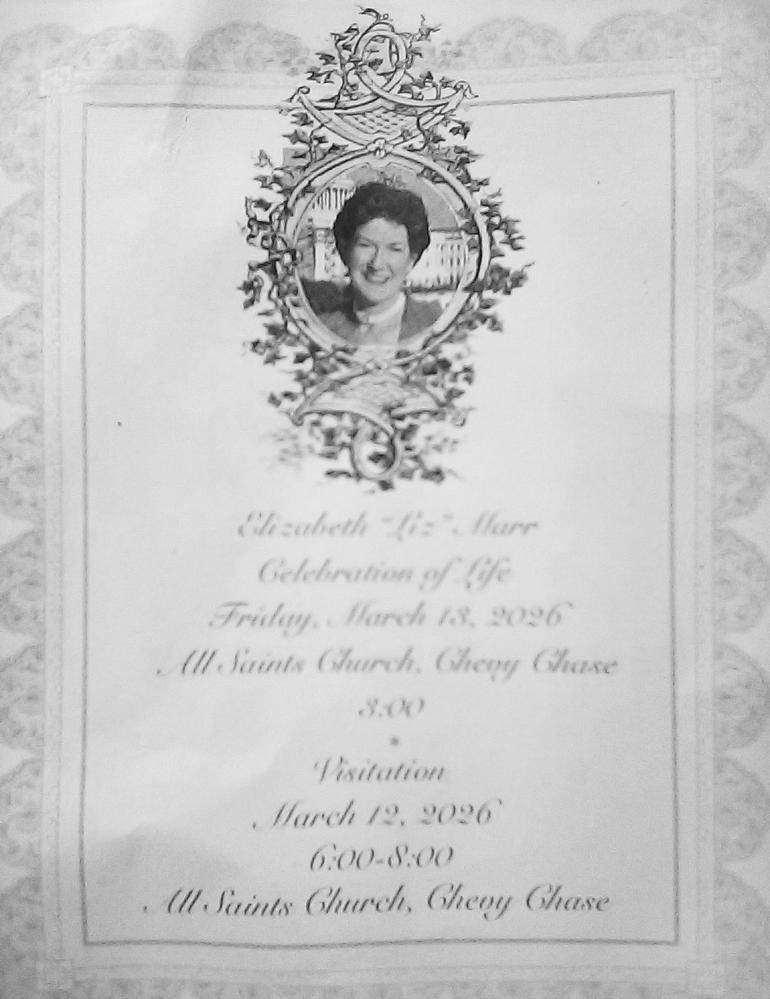
Liz Marr not only supported my Street Sense Media articles, but she also showed interest in my poetry books and autobiography, “We Were Just Joaning” and “Federal City Hustlerz.” I was also able to share the inspirational pamphlets, “Pancakes in Heaven,” with Liz before she passed from cancer recently, after years of ongoing struggle with the illness. I could only take it as a sign when snowflakes suddenly and unannounced started falling from the sky midday in March, the week of her homegoing services. Liz shared her ticket to the church’s pancake dinner event with me. It was her last and final gift to me, and the abrupt flurries were a reminder to keep the faith, fight the good fight, and endure on in this race of life.
May Liz rest in peace and thank God for my remaining supporters, plus the additional two I gained in getting reacquainted with former and bringing on board our new supporters, DC Peers! Welcome...
BRIAN HOLSTEN Artist/Vendor
The energy surrounds us.

How do we accustom ourselves to death, whereas life all around us shows communities shared by students and citizens are a liberation from success?
A dream arrived, and I saw it within her young eyes before a table filled with advocacy about special needs and interests. Her fantastic voice or persuasion was as powerful to anyone’s sensations as the colorful foliage that glorified Chestnut Hill.
We learned from each other while becoming more idealistic and intelligent human beings. Her flow of insight about great expectations was a hope that never dried up, even in the short time her life remained.
Having died one month later, she will not be seen again. Yet in that short time, we strove to progress collectively despite our fears about death reaching each living soul whose minds remember those memories of a greater energy with its insight into hope.
We shared one final conversation in living memory. We prayed together. Then, at a place of solitude, I noted a special gift I may provide to those within my promise.
I fulfilled that promise in neither glee nor acceptance, but to summon a higher value of believing in a better world tomorrow. Fifteen years later, I left a flower and a message online because I searched and found memories again.
Memories linger of disappointment, fear of time progressing, and death never leaving and happening so unexpectedly. Yet, our great expectations never dry up as the light of healing and faith jets us into the freedom to dream for a better world to live in.
1. Wry social/political satirist Mort 5. Daytime TV offering
9. “The Republic” writer 14. Floating on a deck, say 15. “Damn Yankees” seductress
16. 1998 Robert De Niro thriller
17. Awards given to knights unexpectedly? (2 wds.) (3,6)
19. Type of type
20. Sampled the soup, in a way (2 wds.) (3,4)
21. Latticework for vines
23. Famed photographer Adams whose first name is hidden in “Ocean’s Eleven”
24. Spacious
25. People who take daily naps, but only for 3-5 minutes? (2 wds.) (5,5)
31. School grp. that holds bake sales (abbr./initialism)
34. Large amount
35. Make rise, as bread dough
36. Yearn (for)
38. Acronymic Fla. neighbor of the Magic Kingdom
40. Big do - often conducted to support fundraising
41. Capable of handling a task (3 wds.) (2,2,2) (TIP OUT anagram)
43. Affirm
45. Fleshy mushroom
46. Chart with lines of bars that show a person’s growth rate?
48. Church council
49. Run up, as expenses (RUNIC anagram)
54. Whom “the accused” shall have the “Assistance of” per the Sixth Amendment to the Constitution
57. Country currently at war with Russia
59. “I wish I could ___ that” (disturbed viewer’s comment)
60. Last moments of a boxing match that ends in a TKO? (2 wds.) (5,4)
62. Actress Katey who played Peg Bundy
63. “___ Brockovich” or ” ___ go bragh”
64. “Double, double ____ and trouble; Fire burn and cauldron bubble... (Macbeth)
65. Devour, with “up” or “down”
66. Evaluate
67. Egyptian snakes
Down
1. Michelle Obama’s youngest
2. One of the pop. of approx. 4.8 billion humans on earth
3. Flocks : crows :: ____ : cows
4. Run out, as a subscription or membership
5. Common nickname for a skinny cowpoke
6. Seep
7. Brewpub offering
8. Flock leader, of a certain sort
9. Early arrival in the delivery room
10. Dawdle and fritter time away
11. Indigo dye source
12. South American monkey hiding in “Isn’t it ironic?”
13. Paper change for a five
18. Restaurant basketful
22. Old desk style with a secrecy/security feature (2 wds.) (4,3) (TROLLOP anagram)
24. Ejection penalty in soccer (2 wds.) (3,4) 26. Common solvent in nail polish remover
Heat up in a microwave, familiarly
SOLUTION: My Father’s a Stand-up Guy ____ Issue
LAST EDITION’S PUZZLE SOLUTION
28. Acronym for systems controlling indoor climate systems
29. Prefix with graph, photo or vision
30. Lose it, mentally and emotionally
31. In addition
32. Pith sun helmet.
33. Debut 1998 DreamWorks Animation feature with Woody Allen voicing an insect
37. Moves in close proximity to (2 wds.) (4,4) (AGREES ON anagram)
39. Egg cells
42. “Speaking just for me...” (2 wds.) (1,6)
44. Rotate rapidly
47. One often found playing a round
50. Trade treaty acronym that aids commerce in Cancun, Kalamazoo and Calgary (abbr./init.)
51. Hellos and goodbyes, in Italy
52. Open, as a parka
53. Film units, or some dances
54. Swear
55. “Chestnuts roasting _____ open fire” (2 wds.) (2,2)
56. Org. that provides handicaps for 47-Downs (abbr./init.)
57. The “U” of ICU
58. “Citizen _____” (classic movie with Orson Welles in the title role)
61. 401(k) alternative (init./acron.)

ANGIE WHITEHURST
Artist/Vendor
This is my housing
This is my home
The bag contains everything I own
No locks
This crossword puzzle is the original work of Patrick “Mac”McIntyre. It is provided to us courtesy of Real Change News, a street paper based in Seattle, Washington. Learn more about Real Change News and the International Network of Street Papers at realchangenews.org and insp.ngo.
No keys
No room of my own
Under the white-pillared eave of a sacred place
I leave my belongings
Till nighttime comes
I return
I rest
I sleep some
Protected under the sphere of a sacred place
Hoping to get a place of my own
I am waiting for the universal human rights to come
I feel safe in the open space under a sacred sun refuge
Until homeless knots are over, done, and gone!
Academy of Hope Public Charter School
202-269-6623 // 2315 18th Pl. NE
202-373-0246 // 421 Alabama Ave. SE aohdc.org
Bread for the City 1525 7th St., NW // 202-265-2400 1700 Marion Barry Ave., SE // 202-561-8587 breadforthecity.org
Calvary Women’s Services // 202-678-2341 1217 Marion Barry Ave., SE calvaryservices.org
Catholic Charities // 202-772-4300 catholiccharitiesdc.org/gethelp
Central Union Mission // 202-745-7118 65 Massachusetts Ave., NW missiondc.org
Charlie’s Place // 202-929-0100 1830 Connecticut Ave., NW charliesplacedc.org
Christ House // 202-328-1100 1717 Columbia Rd., NW christhouse.org
Church of the Pilgrims // 202-387-6612 2201 P St., NW (1-1:30 on Sundays only) churchofthepilgrims.org/outreach
Community Family Life Services 202-347-0511 // 4860 Fort Totten Dr, NE cflsdc.org
Community of Hope // 202-232-7356 4 Atlantic St., NW communityofhopedc.org
Covenant House Washington 202-610-9600 // 2001 Mississippi Ave., SE covenanthousedc.org
D.C. Coalition for the Homeless 202-347-8870 // 1234 Massachusetts Ave., NW dccfh.org
@StreetSenseMedia.org Housing/Shelter Vivienda/alojamiento Case Management Coordinación de Servicios
Father McKenna Center // 202-842-1112 19 North Capitol St., NW fathermckennacenter.org
Food and Friends // 202-269-2277
(home delivery for those suffering from HIV, cancer, etc) 219 Riggs Rd., NE foodandfriends.org
Foundry Methodist Church // 202-332-4010 1500 16th St., NW foundryumc.org/idministry
Identification services
Friendship Place // 202-364-1419 4713 Wisconsin Ave., NW friendshipplace.org
Georgetown Ministry Center // 202-338-8301 1041 Wisconsin Ave., NW georgetownministrycenter.org
Jobs Have Priority // 202-544-9096 1526 Pennslyvania Ave., SE jobshavepriority.org
Loaves & Fishes // 202-232-0900 1525 Newton St., NW loavesandfishesdc.org
Martha’s Table // 202-328-6608 marthastable.org 2375 Elvans Rd, SE
2204 Martin Luther King Ave. SE
Miriam’s Kitchen // 202-452-8926 2401 Virginia Ave., NW miriamskitchen.org
My Sister’s Place // 202-529-5991 (24-hr hotline) mysistersplacedc.org
N Street Village // 202-939-2076 1333 N St., NW nstreetvillage.org
New York Avenue Shelter // 202-832-2359 1355-57 New York Ave., NE
Patricia Handy Place for Women 202-733-5378 // 810 5th St., NW
Samaritan Inns // 202-667-8831 2523 14th St., NW samaritaninns.org
Samaritan Ministry 202-722-2280 // 1516 Hamilton St., NW 202-889-7702 // 1345 U St., SE samaritanministry.org
Sasha Bruce Youthwork // 202-675-9340 741 8th St., SE sashabruce.org
So Others Might Eat (SOME) // 202-797-8806 71 O St., NW some.org
St. Luke’s Mission Center // 202-363-4900 3655 Calvert St., NW stlukesmissioncenter.org
Thrive DC // 202-737-9311 1525 Newton St., NW thrivedc.org
Unity Health Care unityhealthcare.org - Healthcare for the Homeless Health Center: 202-508-0500 - Community Health Centers: 202-469-4699
1500 Galen Street SE, 1251-B Saratoga Ave NE, 1660 Columbia Road NW, 4414 Benning Road NE, 3924 Minnesota Avenue NE, 765 Kenilworth Terrace NE, 850 Delaware Ave., SW, 3240 Stanton Road SE, 3020 14th Street NW, 425 2nd Street NW, 4713 Wisconsin Avenue NW, 2100 New York Avenue NE, 1333 N Street NW, 1355 New York Avenue NE, 1151 Bladensburg Rd., NE, 4515 Edson Pl., NE
Washington Legal Clinic for the Homeless 1200 U St., NW // 202-328-5500 legalclinic.org
The Welcome Table // 202-347-2635 1317 G St., NW. epiphanydc.org/thewelcometable
Whitman-Walker Health 1525 14th St., NW // 202-745-7000 1201 Sycamore Dr., SE whitman-walker.org
Woodley House // 202-830-3508 2711 Connecticut Ave., NW
For further information and listings, visit our online service guide at StreetSenseMedia.org/service-guide
Store Sales Specialist
REI Co-op // D.C.
Part-time
Our team seeks a Store Sales Specialist to help us create better outdoor experiences by sharing knowledge, giving recommendations, and engaging with customers every day. With your help, we will deliver our 100% customer satisfaction guarantee by facilitating transactions, selling memberships, and offering REI products and services. In addition to helping keep the store looking good, you also help keep the merchandise organized on the floor.
Requirements: Store retail experience (preferred)
Apply: tinyurl.com/REIjobDC
Stocking Team associate
Walmart // D.C.
Part-time
Stocking associates are focused on unloading trucks and stocking new freight. They spend the majority of their time in the backroom.
Requirements: Stocking associates must be able to lift heavy objects in excess of 50 pounds.
Apply: tinyurl.com/WalmartStockingDC
Server Assistant
Ruth Chris // 2001 K St. NW
Part-time
Bussers set the stage for a memorable dining experience. You’ll deliver perfectly polished service one table at a time to help create the Sizzle Ruth’s Chris is known for. Assist servers with food delivery and maintain appropriate stock levels of glassware, silverware, and dishware.
Requirements: N/A
Apply: tinyurl.com/RuthChrisDC



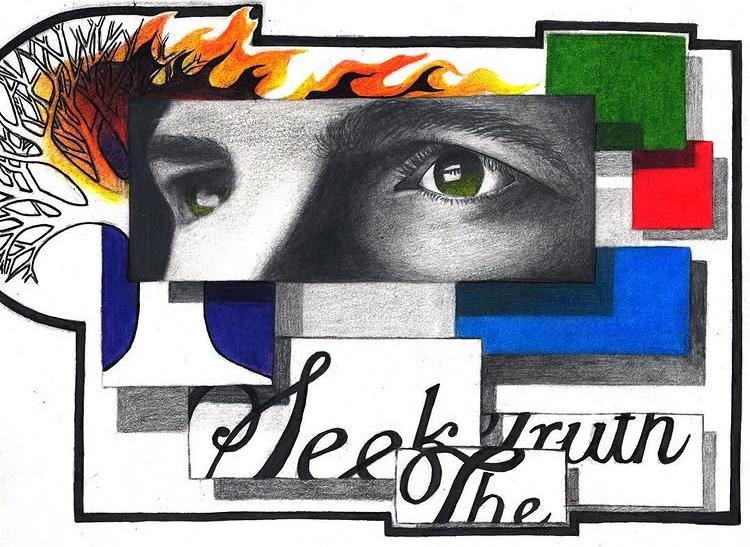

EL-O-HIM
Artist/Vendor
Oh, how I love to perform and be of service to I in all aspects, as we are alike and enjoy the quality of the arts and expression in creativity. I have sacrificed the body and mastered the mind, 20+ years in painting interior and exterior, designing — residential and commercially… Accent walls and rooms, marbling tabletops and other wood furnishings, custom ceiling murals. Also, a store mural in Suitland, Maryland, at Sneaker Premier. ALL FOR DONATIONS. 20,000+ hours freehand and freestyle Henna artist at Six Flags for two years and state fairs with every design original, never replicated. FOR DONATIONS. 5,000 + hours in photography. And of my father’s work, I will always be willing to uplift humanity in work, actions, and deeds in love, truth, peace, freedom, and justice. I’m here to be of service, enjoying the craftsmanship, creativity, and expression of beauty in all I provide, all the while producing satisfaction of quality, which will always be the mutual standard. I reach out to all who look forward, as I do, to be the Most High at what I love, and I seek the truth and know the truth and be the truth that I am excited in the soul to perform great works for all. I am of every word printed above and of every article, in the flesh, and in the name El-O-Him, published. I am the Most High in all that is love instead of hate, and available to have a discussion on every article, as I am here to step into the light that I am. From out of nowhere, here I am… to be the Most High I am able to be for all. A creator for Higher quality of life with the works of the Most High, developing perfection to be every word: love, truth, peace, freedom, and justice as I serve my neighbor. Honor and praises to Street Sense Media as I am performing my published words in truth as El-O-Him, vendor #773. I am grateful in advance for all donations and the opportunities to create and produce works of art. Thank you, Street Sense, vendors, and supporters in stabilizing houseless beings.
You can contact El-O-Him at theoneofsum1@icloud.com.
CARLOS CAROLINA AKA POETIC JUSTICE
Artist/Vendor
As I look into y’all’s eyes and see Mine — it’s understood
With honor, With promises
As I watch you blossom, My head bows
As I thank God aloud
For blessing me to be a father
Now I dream big, And plan longer
I shall pave a way, And as I plan away, Putting trust in faith — Yeah, this is a spiritual love story
Shall I mention — That through them very eyes, I look inside and see Mine
I see mine vision
For God gives gifts, And when he gives the gifts That he gives, He gives us children — honest
Don’t they be the umph in our stride, When we are in the pursuit to Try a little harder?
Don’t they make us think a little smarter?
And if it wasn’t for them very eyes, That I look inside and see mine, I’ll probably settle for a lot of less-than
Or be content with a whole lot of smaller, Or my son and daughter,
And as I lift my head to the clouds, All proud, I smile,
As I thank God aloud
For blessing me to be a father now Damn — “I’m a father now.”
JULY 1 - JULY 14, 2026 | VOLUME 23 ISSUE 17
