$3 suggested contribution goes directly to your vendor
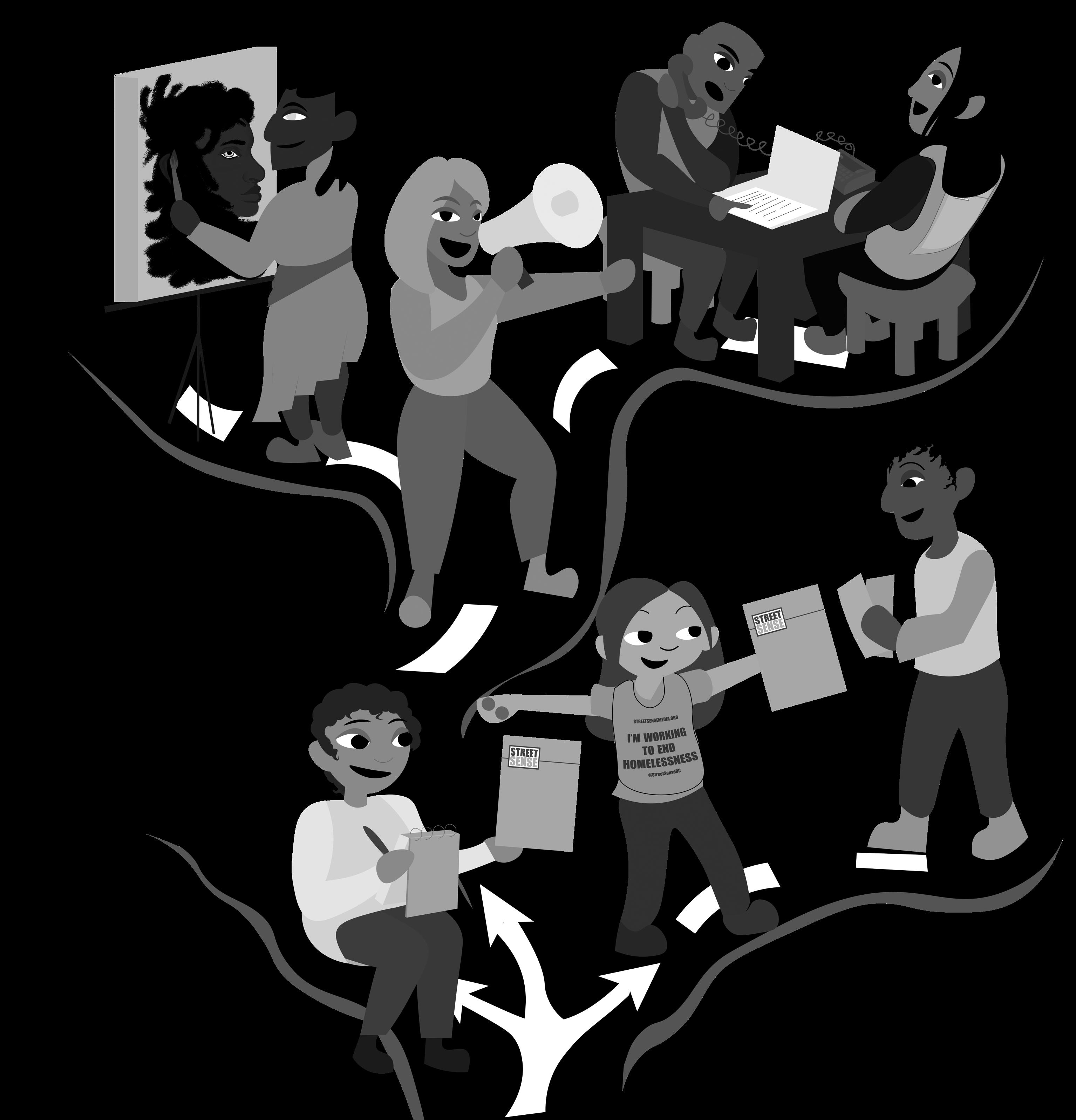
veryone at Street Sense Media works together to support and uplift our vendor community.
$3 You pay
DESIGN BY
THE TEAM
THE TEAM
VENDORS
Abel Putu, Abraham Aly, Archie Thomas, Aida Peery, Akindele Akerejah, Alia Haug, Amia Walker, Andre Brinson, Andre Baltimore, Andrew Anderson, Angie Whitehurst, Angela Morris, Anthony Carney, Apollos Robinson, Beverly Sutton, Brian Holsten, Brianna Butler, Cameé Lee, Carlos Carolina, Carlton Johnson, Charles Armstrong, Chris Boone, Chris Cole, Chon Gotti, Conrad
Cheek, Craig Thompson, Cynthia Herrion, Daniel Ball, Darrel Stone, Darlesha Joyner, David Snyder, Debora Brantley, Degnon Dovonou, Deonte Savoy, Dominique Anthony, Don Gardner, Drake Brensul, El-O-Him, Elizabeth Windsor, Elynora Houston, Eric Glover, Eric Jamison, Eric Thompson-Bey, Evelyn Nnam, Faith Winkler, Five Fifty-One, Flegette Rippy, Frederic John, Frederick Walker, Gerald
Anderson, Gloria Prinz, Greta Christian, Henry Johnson, Indashow Birmandie, Invisible Prophet, Ivory Wilson, Jacqueline Gale, Jacqueline Turner, James Davis, James Hughes, James Lyles III, Jay B. Williams, Jeanette Richardson, Jeffery McNeil, Jemel Fleming, Jenkins Dalton, Jennifer McLaughlin, Jewel Lewis, John Littlejohn, Josie Brown, Julienne Kengnie, Kenneth Bynum, Kenneth Middleton,
Kannon Brown, Katrina Anige, Kendarius Tucker, Kym Parker, L.Q. Peterson, Lawrence Autry, Leo Hughes Jr, Levester Green, Lillie Thomas II, Marc Grier, Marcus McCall, Mars, Maurice Carter, Melody Byrd, Milan Stevenson, Monique Rivers, Nikila Campbell, Patricia Donaldson, Patty Smith, Paul Martin, Phillip Black, Qaadir El-Amin, Queenie Featherstone, Rachelle Ellison, Randall Smith, Rashawn
Bowser, Reginald Black, Reginald Denny, Reneece Brinkley, Ricardo Meriedy, Richard Mooney, Rita Sauls, Robert Reed, Robert Vaughn, Robert Warren, Rochelle Walker, Ron Dudley, Ronnell Wilson, S. Smith, Sasha Williams, Saul Presa, Sharon Brown, Shawn Fenwick, Sheila White, Shuhratjon Ahmadjonov, Starchild BLK, Susan Wilshasen, Sybil Taylor, Tasha Savoy, Tonya Williams, Tony
Morris, Vincent Watts, Warning Label, Warren Stevens, Wayne Hall, Wendell Williams, Wendy Brown, William Hargrove, William Shuford, Willie Futrelle, William Young, Zero
BOARD OF DIRECTORS
Clare Krupin, Chris Curry, Cole Ingraham, David Grant, Jonquilyn Hill, Mary Casale, Matt Perra, Michael Vaughan Cherubin, Nana-Sentuo Bonsu, Phil Telfeyan
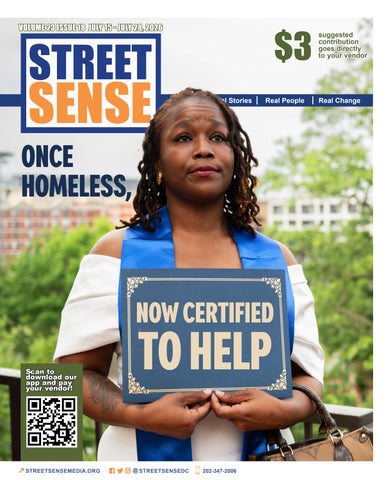
The Cover COVER
ANNABEL FURTON, PHOTO BY JULIAN SCHNITTKER
NEWS IN BRIEF
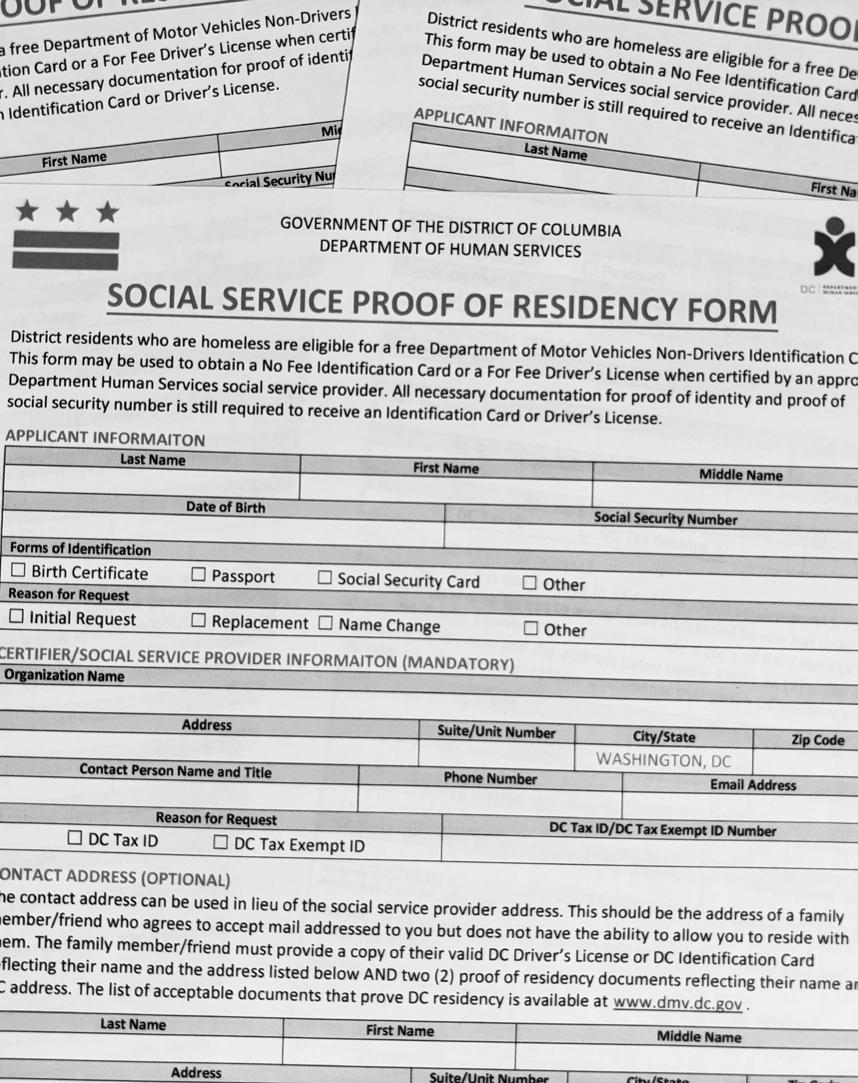
After criticism, D.C.’s DMV clarifies how unhoused people can get free IDs
RAINA PAWLOSKI Editorial Intern
The District updated its identification process for unhoused individuals looking to get an ID in July, after months of confusion and frustration from outreach workers. The changes will streamline the process and keep IDs free, but will not increase the number of places that can help people experiencing homelessness get necessary documents.
In many cases, identification is necessary to be employed, receive government assistance, rent an apartment, and access other resources. Generally, to obtain a free ID, a person experiencing homelessness can have one of a few approved providers complete the Homeless Services Proof of Residency Form on their behalf and bring it to a Department of Motor Vehicles (DMV) Service Center. But outreach workers have said changes and conflicting information over the last year have made IDs harder to get.
A June 18 memorandum circulated to homeless service providers stated the District’s identification card process has been updated. The memo was circulated to “support interagency partners and service providers in understanding the revised requirements, planned system enhancements, and the legal foundation guiding these changes.”
According to the memo, D.C.’s DMV and Department of Human Services (DHS) are coordinating to ensure both agencies’ websites reflect identical, accurate guidance as of July 1. As Street Sense reported, the District had previously offered proof of residency forms at more than 30 nonprofit organizations, but cut the list to just three centers for adults in the spring of 2025. DHS did not immediately update its website to reflect the change, creating confusion.
The memo also answers a long-standing question about whether people experiencing homelessness can get replacement IDs for free.
Previously, the District provided a fee waiver for original IDs, but organizations heard different things about renewal or replacement IDs, including that individuals would be responsible “for all associated costs.” Unhoused individuals have a higher risk of losing their identification, as living without a permanent address and dealing with weather, encampment clearings, and constant moving can make it hard to maintain important documents.
According to the memo, there are officially no fees for replacement IDs for anyone with a proof of residency form, which certifies they are homeless and reside in D.C. This update was made to better reflect D.C. municipal regulations, which authorizes issuance of no-fee identification to residents who “do not have a fixed, regular District residence as determined by the Department of Human Services,” the memo said.
The update also includes a “streamlined internal processing” system. The DMV said this new system will verify fee waivers are processed correctly, eligibility verification is accurately captured, and customers do not experience barriers at service centers, like unnecessary closures of centers and refusal of service.
These changes don’t address all the concerns outreach workers have raised about the ID process. When DHS cut the number of service centers from 30 to three, many people faced an added inconvenience in getting their ID, having to travel further or connect with new organizations. People looking for IDs have also reported locations running out of available forms, and concern about two of the locations being male-only shelters, which can make women reluctant to go there.
The memorandum stresses coordination between the DMV and DHS, but it is yet to be seen what impact the changes will have.
EVENTS AT SSM
ANNOUNCEMENTS
□ The July Vendors Meeting is Friday, July 24, from 2:00 p.m. - 3:00 p.m. Come for business, community, and pizza!
□ The Vendor Appreciation and Community Celebration Luncheon has a new date! Thursday, Aug. 6, at 12:00 p.m. Join us for lots of food, music, and fellowship! Wish we could, but please no guests.
□ Trying to stay cool? You can always pick up a bottle or two of cold water in the admin office!
□ Find a list of vendor announcements and other useful information just for you at streetsensemedia. org/vendor-info.
BIRTHDAYS
CHIEF EXECUTIVE
OFFICER
Brian Carome
DIRECTOR OF PROGRAMS
Darick Brown
DIRECTOR OF VENDOR
EMPLOYMENT
Thomas Ratliff
Amia Walker July 17
ARTIST/VENDOR
EMPLOYMENT SPECIALIST
Esmat Amin
VENDOR PROGRAM ASSOCIATES
Aida Peery, Chon Gotti, Nikila Campbell
VENDOR PROGRAM
VOLUNTEERS
Ann Herzog, Aiden Eisenschenk, Beverly Brown, David Fucillo, Mark Fehling, Roberta Haber
Read this democratically elected code of conduct, by vendors, for vendors!
1. I will support Street Sense Media’s mission statement and in so doing will work to support the Street Sense Media community and uphold its values of honesty, respect, support, and opportunity.
2. I will treat all others, including customers, staff, volunteers, and fellow vendors, respectfully at all times. I will refrain from threatening others, pressuring customers into making donations, or engaging in behavior that condones racism, sexism, classism, or other prejudices.
3. I understand that I am not an employee of Street Sense Media but an independent contractor.
4. While distributing the Street Sense newspaper, I will not ask for more than $3 per issue or solicit donations by any other means.
5. I will only purchase the newspaper from Street Sense Media staff and volunteers and will not distribute newspapers to other vendors.
DESIGN INTERN
Annabel Furton
ARTISTS-INRESIDENCE
Alexandra Silverthorne (Photography), Bonnie Naradzay (Poetry), David Serota (Illustration), Willie Schatz (Writing), Molly Pauker (Watercolor), Debbie Menke (Watercolor), JM Ascienzo (Yoga)
6. I will not distribute copies of “Street Sense” on metro trains and buses or on private property.
EDITORIAL VOLUNTEERS
Abigail Chang, Anne Eigeman, Ben Litoff, Candace Y.A. Montague, Chloe DiStaso, David Fucillo, Ehi Ukpokwu, Ingrid Gillies, Ozioma Anyanwu
7. I will abide by the Street Sense Media Vendor Territory Policy at all times and will resolve any related disputes with other vendors in a professional manner.
8. I will not sell additional goods or products while distributing “Street Sense.”
9. I will not distribute “Street Sense” under the influence of drugs or alcohol.
10. I understand that my badge and vest are property of Street Sense Media and will not deface them. I will present my badge when purchasing “Street Sense” and will always display my badge when distributing “Street Sense.”
Homeless D.C. residents can get a proof of residency form for a free ID. Photo by Katie Doran
Who’s homeless in D.C.? Breaking down the most recent numbers
ALEXANDRA LALLI Editorial Intern
As of this January, more than 5,000 people in D.C. were experiencing homelessness. While people experiencing homelessness can be seen as one group, each person’s experience is individual and may depend on their identity, history, and situation.
Following the release of the 2026 Point-In-Time (PIT) Count in May, Street Sense is providing a breakdown of the various populations experiencing homelessness in D.C. It’s important — for both D.C. lawmakers and residents — to have an accurate picture of homelessness in the District.
This January, the PIT Count found 5,363 people experiencing homelessness on one night. This includes 1,574 people across 533 families and 3,789 unaccompanied individuals. The vast majority of those people, 87%, were in shelter or transitional housing on the night of the count. Compared to the most recent national numbers, which show closer to 60% of individuals are in shelters, D.C. has a relatively low percentage of people living outside.
PIT data comes from a variety of sources; it’s not all-encompassing, but it tries to provide as accurate a snapshot as possible. For those in shelter, the data is pulled from the Homeless Management Information System, or other databases for programs that are privately funded or faith-based.
People who are unsheltered are ordinarily surveyed on the street the night of the PIT. However, due to severe inclement weather this year, the in-person count was cancelled. Instead, The Community Partnership for the Prevention of Homelessness, the nonprofit organization that collected the data, relied mainly on an estimate derived from averages based on previous years’ data. In any given year, the PIT is widely understood to be an undercount, so the true scale and shape of homelessness in the District might differ.
Where people sleep
87% of people were in shelter or transitional housing
The 2026 PIT found a 5% increase in homelessness from 2025, driven mainly by a 16% increase in family homelessness. There was also a five-person increase in unaccompanied adults and a 14-person increase in unaccompanied minors.
Of the more than 5,000 people experiencing homelessness, the data estimated 718 slept outside on the night of the count, a dip from the 792 counted in 2025. Nearly all of the people sleeping outside were single adults. Over half of this group is considered to be chronically homeless, meaning they have been homeless for at least one year, or several times over the span of three years. People who are chronically homeless generally qualify for higher levels of support, like permanent housing. Still, the vast majority of single people experiencing homelessness are in emergency shelters or transitional housing. The number of those housed in emergency shelters increased by 4% in 2025, totaling 2,430 people. Transitional housing numbers for individuals remained flat, with 641 people. Meanwhile, the number of families in shelters increased by 20%, and the number of families in transitional housing increased by 13%. There were 388 adults and 663 children in emergency housing, and 213 adults and 310 children living in transitional housing.
This increase was actually predicted by a recent change to the Rapid Rehousing Program (RRH), which has been criticized for not helping people exit homelessness long-term. At an agency budget hearing in May, D.C. Department of Human Services (DHS) Director Rachel Pierre said DHS had shifted its policy to encourage families to remain in shelter longer to give them time to draw up an exit plan with case managers, rather than immediately exiting them through RRH, which doesn’t work for everyone. In order to ensure the families who exit through RRH are ready, DHS now requires families to be working or engaged with a provider to join the program.
The number of families in shelters increased by 20%, and the number of families in transitional housing increased by 13%
Demographics
Identity plays a role in experiences of homelessness; for some individuals and families, it can make them more susceptible to homelessness and the barriers to support much higher.
Race: Black individuals are disproportionately affected by homelessness. The vast majority of people experiencing homelessness in the District, 91% of families and 79% of unaccompanied individuals, are Black. All other racial groups make up less than 10% of the entire D.C. unhoused population, according to this year’s PIT Count.
91% of families and 79% of unaccompanied individuals are Black
For comparison, 41.6% of D.C.’s overall population is Black. This disparity can be seen across the country and can be the result of unequal access to wealth and education beginning in childhood. Beyond that, redlining practices, which dictate neighborhood formations and their subsequent wealth gaps, created hurdles to homeownership for Black families.
Age: Forty-four percent of adults in families are between 25 and 34 years old, and 27% are between 18 and 24, meaning the majority of individuals in families experiencing homelessness are younger adults. However, 35% of individuals experiencing homelessness are 55+, close to or at retirement age. The past few decades have seen a national rise in senior homelessness: in 2024, seniors made up half of the homeless population, making them the fastest-growing group.
On the opposite end, the number of unaccompanied Transitional Age Youth (TAY) — those between 18-24 years old — decreased slightly to 333. However, the number of households headed by a TAY has increased by 36%, reaching 117 households. Heading a family at a young age presents its own challenges, which become difficult to navigate when experiencing homelessness and without the builtin support of family.
Gender: Gender critically impacts those experiencing homelessness. Women make up nearly 90% of adults in family households experiencing homelessness, potentially because domestic violence and single parenthood can force women into a position where they can no longer afford the cost of living. For adults in families, 44% reported experiencing domestic violence.
Unaccompanied women, who make up 32% of unaccompanied adults, are also impacted by domestic violence, as well as unique mental and physical health challenges, including menstrual health, physical and mental trauma from sexual assault, and pregnancy.
Of adults in families, 44% reported experiencing domestic violence
While women are more likely to experience homelessness in families, men make up the majority of unaccompanied individuals experiencing homelessness. Programs responding to family homelessness are more likely to receive funding and guaranteed support systems, like private rooms in shelters, which can mean single men have longer experiences of homelessness with less support.
Sexuality: Sexuality similarly presents challenges for those experiencing homelessness. The PIT Count found that 424 adults identify as LGBTQ+, making up 12% of people experiencing homelessness. Thirty-eight percent of unaccompanied 18-24 year-olds identify as LGBTQ+. LGBTQ+ individuals, especially youth, can face discrimination when it comes to seeking housing and support, including the threat of harassment in shelters. LGBTQ+ individuals can be turned away from shelters because of their gender identity, making it much more difficult to find stable housing, according to the National Coalition for the Homeless in D.C., according to the PIT count.
Life experiences: In addition to identity, those experiencing homelessness also face a variety of life circumstances that provide further challenges to their situation. Despite some assumptions homelessness is primarily a result of mental illness or addiction, these impact just a third of unaccompanied adults experiencing homelessness.
The leading disabling factor, mental illness, impacts 20% of unaccompanied adults. Unaccompanied women, in particular, grapple with mental illness, as 38% of single women have a history of it, compared to 26% of women (housed or unhoused) nationwide.
38% percent of unaccompanied 18-24 yearolds identify as LGBTQ+
Other conditions that may impact one’s experience of homelessness include substance abuse (11%), chronic health problems (15%), developmental disabilities (2%), living with HIV/AIDS (2%), and physical disability (14%). Adults in families do not experience these conditions nearly as much, with only 10% of adults in families reporting a history of mental illness.
These conditions can make employment a challenge. Still, nearly half (48%) of unaccompanied adults and 81% of families report a form of income, including public assistance or disability. One-quarter of adults in families and 44% of individuals report having a job. And yet, even with that income, the number of families in shelters has increased this year — employment and income are not always enough to prevent homelessness.
Homelessness, like any other life experience, is a diverse and complex situation. But knowing these factors can broaden one’s understanding of the spectrum of homelessness beyond what is seen daily.
2025 Youth Count reveals larger issue of youth homelessness in D.C.
RAINA PAWLOSKI Editorial Intern
Asurvey conducted at the end of last year gives new insight into young people experiencing homelessness in the District.
In a May meeting of the D.C. Interagency Council on Homelessness, The Community Partnership for the Prevention of Homelessness (TCP) shared data from the September 2025 Youth Count of unhoused youth in the District.
The Homeless Youth Census (HYC), or Youth Count DC, is required by the End Youth Homelessness Act of 2014. A sample of the unhoused youth population participated in a survey during September to collect more nuanced data on youth’s experiences and needs. This census and survey are different from the federallymandated Point-in-Time Count.
The yearly Youth Count data is used by TCP and the D.C. government to budget and plan for future programs. The information found in the census has sparked the creation of programs like The Youth Extended Transitional Housing Program, which allows young adults who enter the housing system to stay longer in transitional housing.
Of the 846 youth counted in 2025, 63% were classified as being “literally homeless,” or living without permanent housing, and 37% were “housing insecure,” or uncertain about their living situation.
The proportion of literally homeless youth increased by 11 percentage points since the 2024 count, rising from 52%. This is in part due to a change in the assumed housing status of youth who were unclear about their housing situation, staff from TCP explained. Census reviewers this year grouped those who were unsure of their status as “literally homeless,” when in past years they were considered “housing insecure.”
The Youth Count found Black, non-Hispanic youth were the largest demographic experiencing homelessness or housing insecurity, comprising 95% of the single youth and 93% who head family households. Ninety-five percent of youth-headed family households were headed by women.
Another demographic group that is experiencing high levels of homelessness is LGBTQ+ youth. Two out of three of the youth surveyed were LGBTQ+, reflecting a larger disparity prevalent in D.C.
At the same meeting, TCP discussed Homeward DC 3.0, the third installment of a strategic plan to address homelessness. Rather than having a separate youth homeless plan, as D.C. has in past years, youth will be incorporated into the broader plan. A focus in Homeward 3.0 will be creating a “unique” path to permanent housing for young adults, as TCP recognizes they require a specialized pathway for exiting homelessness.
A member of TCP said typically, youth will move and stay in multiple places for life transitions like education and job opportunities. TCP is working toward creating targeted interventions for those under 24 that better fit their naturally shifting housing needs.
In the meeting, attendees discussed the different pathways to permanent housing youth can take. Coordinated Assessment and Housing Placement (CAHP) is used to place individuals and families within the appropriate housing model, including traditional housing, temporary housing like shelter and bridge housing, and permanent housing.
Bridge housing is a form of temporary housing that provides semi-private rooms and individualized case management. It’s the newest model of housing in D.C. and the only form of temporary housing where multiple members of an adult household are guaranteed to stay together. This type of housing is particularly desirable for young couples who do not want to be separated by gender.
Youth shelters are another resource for unhoused youth. The data revealed 40% of single youth surveyed stayed for at least one night at a youth-specific shelter. Another 29% of single youth stayed at all-ages shelters, and about 30% of youth surveyed were not aware there were youth-specific housing options.
The Youth Count found 36% of single youth and 48% of youth head of households indicated an experience of domestic violence in their lifetime. Two-thirds of those individuals said they lost their original housing because of domestic violence. The survey also noted half of the youth counted were experiencing homelessness for the first time, and most had been experiencing housing insecurity or homelessness for over six months.
TCP is in the process of designing the 2026 survey, according to staff, and has been holding focus groups with youth and talking with providers. These discussions are used to determine the best questions they can ask to provide data to providers and outreach workers.
Overdose prevention machines in jeopardy over neighborhood concerns, permit process
CHIH-RONG KUO Editorial Intern
D.C.’s overdose prevention machines, which have operated since 2023, have recently come under scrutiny after an Advisory Neighborhood Commission (ANC) meeting where commissioners worried a machine was leading to public health concerns for the neighborhood.
At the same time, DC Health is seeking approval from the D.C. Public Space Committee (PSC) to continue operating 14 of the machines. At a June 25 hearing, the PSC tabled DC Health’s applications and asked the agency to submit new plans, noting some of the applications involved machines that would not require a permit. PSC hearings look over, approve, and make comments on fixtures on land affecting the public right of way, including sidewalks, streets, and alleyways.
If the application is denied, the vending machines would have to be removed from their current locations.
DC Health rolled out the vending machines in 2023, with community partners Family and Medical Counseling Services (FMCS) and Honoring Individual Power and Strength (HIPS) operating the machines. The vending machines offer free wellness supplies and life-saving tools, including Naloxone (Narcan), condoms, and hygiene products, to anyone who enrolls with FMCS or HIPS via their respective hotlines.
While the machines have been operating for several years, DC Health filed the permit application to PSC in 2026 after determining the vending machines required approval, the agency wrote in an email to Street Sense.
“The permitting requirement was not identified at the time these machines were installed,” DC Health wrote. Overdose prevention, or harm reduction, vending machines provide low-barrier, stigma-free “life-saving” supplies to address the District’s high rates of substance use and overdose, Angela Wood, a staff member at FMCS, said at the hearing. In 2024, D.C.’s overdose death rate was 1.87 times higher than the national rate.
“Vending machines extend what is already known about the extensive evidence-based practices of syringe service and overdose prevention and naloxone distribution programs, but it puts them in different community contexts that reduce barriers to the most marginalized communities,” Andrea Lopez, a professor at the Center for Substance Use Addiction & Health Research at the University of Maryland (UMD), said at the hearing.
UMD has worked with HIPS since 2021 to evaluate the vending machines’ impact on D.C., Lopez said at the hearing. While the research is still ongoing, Lopez said the interventions these vending machines provide, such as syringe services and naloxone distribution, are proven effective.
“There’s extensive research that shows that these interventions do not increase crime or drug use, but that they are cost-saving and play especially vital roles in reducing transmission of HIV and hepatitis C,” Lopez said.
The most contentious vending machine is at 1525 7th St., located next to Bread for the City’s Shaw branch in the ANC 2G neighborhood. The machine is operated by HIPS. As of May 2026, the vending machine no longer provides syringes, fentanyl test strips, snorting kits, and rectal drug administration kits due to “efforts to align with current federal administration requirements,” DC Health said at the hearing. HIPS machines are co-located with industrial Sharps boxes, where people can discard used syringes and needles, which can reduce the transmission of bloodborne infections like HIV and viral hepatitis through needle sharing.
Community members said the vending machine has led to discarded needles on sidewalks and an increased presence of intoxicated individuals in the neighborhood.
“This vending machine has also served as a magnet to bring folks into the community and is not serving folks from the community,” ANC 2G Commissioner Nicole Shea said at the hearing.
Shea argued the machine provides duplicative services to next-door Bread for the City, which houses a medical clinic providing harm reduction services. Bread for the City operates only during standard weekday hours, and new patients must call to make an appointment. The vending machines operate 24/7 and do not require speaking with a physician.
Many of the community members who raised worries said their concern was with an unattended machine dispensing drug paraphernalia, rather than with harm reduction services in general. Community member Daniel Bernier said these views reflected “not in my backyard” attitudes.
“We know we have a problem. We know we have health concerns. We just don’t wanna have to deal with it in our location,” Bernier said. “These machines provide critical services to people in our community.”
Community members also brought up concerns about the location of the 1525 7th St. machine. Under D.C. code, all areas within 1,000 feet of a public playground must be designated a drug-free zone, meaning any person who distributes or possesses with the intent to distribute a controlled substance will receive increased fines and punishments.
ANC Commissioner Rachelle Nigro alleged the 1525 7th St. vending machine could violate this, since it is approximately 370 feet away from the Kennedy Recreation Center. The vending machine does not provide controlled substances.
“Installing a machine that generates biohazard waste and distributes drug use paraphernalia is inappropriate in this area,” Nigro said.
At the end of the hearing, Public Space Committee Chairman Erkin Ozberk motioned to table the applications. Ozberk said DC Health should resubmit them and clarify the roles community partners and DC Health have in owning and maintaining the machines. The motion passed 4-0.
DC Health confirmed it is compiling the requested materials to revise the application and resubmit. The PSC has allowed the vending machines to remain operational while the application is under review.
“Someone who has been exactly where they are:” Formerly
homeless graduates from the Peer Case Management Institute hope to give back
JULIAN SCHNITTKER
Editorial Intern
Blue graduation caps, flowers, and balloons dotted the Howard School of Social Work’s auditorium on June 26, as a class of 33 case managers who have themselves experienced homelessness gathered to celebrate finishing a oneof-a-kind D.C. program.
First established in 2024, the Peer Case Management Institute (PCMI)’s mission is to address the growing social worker shortage by training individuals who have experienced homelessness in case management skills, with the aim of providing them pathways to employment in homeless services. This year was the program’s third cohort. Thirty-three participants graduated from the competitive 11-week program, which combined seven weeks of classroom education with four weeks of training in the field, working with local service providers.
PCMI is part of a broader movement to include people with lived experience in policymaking and homeless services. The program has three primary goals, said Miati Taliaferro, a program analyst with the D.C. Department of Human Services (DHS) and PCMI facilitator: to create careers for those who have experienced homelessness, to encourage them to apply their experiences towards the social work field, and to “create a new pipeline of quality case managers.”
All three goals rest on the idea that someone “...who knows the system best [is] probably someone who has had to work it for themselves,” Taliaferro said at the graduation.
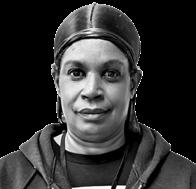
That’s true of Shaquita Williams, a graduate of the third PCMI cohort who has lived in D.C. her entire life. She initially felt isolated trying to access resources to “keep afloat” while experiencing homelessness, she said, especially after her son was born.
“It’s something that a lot of people in the community go through,” Williams said about homelessness. “I’ve always had the innate passion to help people, that put me in a position where I was like, let me take the educational route and do what I need to do to make sure I’m in a position where I can help people in a way that I know will benefit them in the long run.”
For years, D.C. has grappled with a shortage of social workers and attempted to facilitate pathways towards employment in the field. Because social workers are responsible for connecting clients to resources and supporting them through the often arduous process of securing housing, a shortage can leave clients in vulnerable positions.
The PCMI is a collaborative effort between the Howard University School of Social Work, DHS, The Community Partnership for the Prevention of Homelessness, and Pathways to Housing DC. Working groups from the D.C. Interagency Council on Homelessness, the Consumer Advisory Working Group, alongside its Youth Working Group, both of which have several members with lived experience of homelessness, spent “almost a whole year in developing the curriculum and programming” for the PCMI, ICH Executive Director Theresa Silla said.
“There is no greater form of reparation, restoration, like this one, where we are working together to empower all of us. Nothing for us without us,” Silla said in her speech at the graduation.
On June 26, Sheara Jennings, dean of the Howard University School of Social Work, opened the graduation ceremony, praising the graduates’ contribution to a “legacy of change agents and healers.”
This year, the program received 500 applications and only accepted 35 students, Jennings said. 33 completed all of the requirements. Candyce Coates, the chief of contracting and procurement for the Community Partnership for the Prevention of Homelessness, emphasized the rigor of PCMI’s application pool and curriculum.
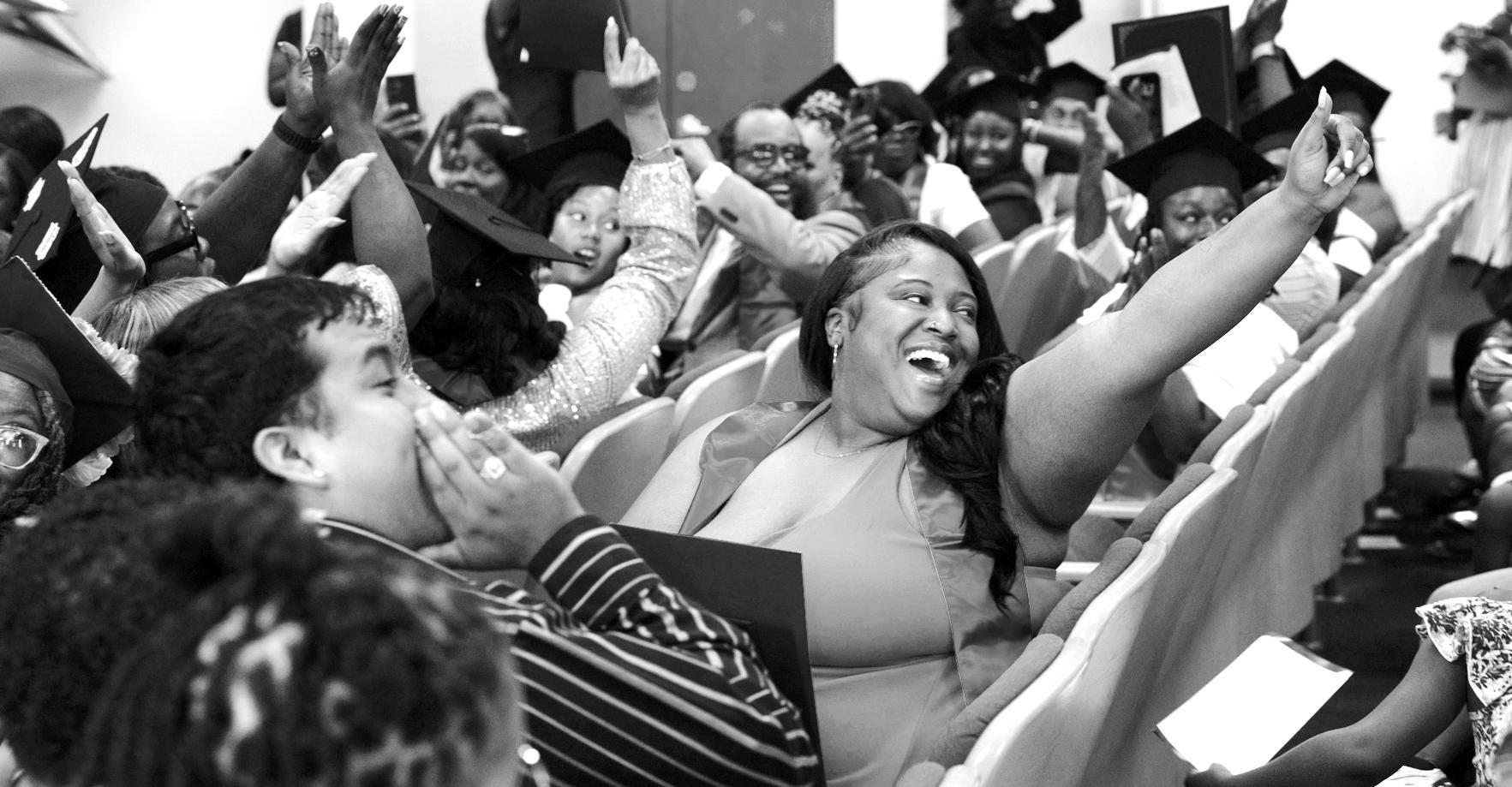
Graduates of the Peer Case Management Institute wave as Howard University faculty in attendance at the June 26 ceremony are recognized. Photo by Julian Schnittker
“We are daring you to press forward,” she said. “No one promised you an easy road. It will be hard, but you were selected to do this hard work.”
During their time in the PCMI, students learned skills including trauma-informed care, de-escalation techniques, and practical and field-based training, according to Taliaferro.
Communication, empathy, and compassion are critical for any case manager, said Williams. The PCMI helped instill those values in a professional context. More importantly, though, Williams said that successful case management means “being able to change perception, understanding that not everything someone brings to you is personal.”
Andres Meza, a graduate from the cohort, already had three years of experience in social work when he applied to the PCMI. During his time as an outreach specialist at the H3 Project, he was inspired by the unique contributions of a PCMI alumnus he worked alongside.
“[The H3 Project] had people who had degrees, they had people who had experience. But the peer specialist, he had something that you couldn’t train, you couldn’t teach,” Meza said. Meza said that watching a PCMI graduate at work made him realize that, despite his self-doubt about lacking a degree, “what I had was my lived experience with housing instability, with substance use disorder.”
Meza is currently working as the program manager for bilingual outreach at SMYAL.
While the PCMI’s professional development was important to him, in his eyes, “the most important piece about the PCMI is it confirms something that we feel, but we’re unsure about: It’s like, do we deserve to be in this space? And we do.”
Graduate Nikila Campbell was living in a tent when she first learned about the PCMI. She had worked in case management through the People for Fairness Coalition but did not have formal certification. Once she secured stable shelter, she decided to apply.
Campbell agreed mentors like Taliaferro instilled confidence in participants. “Even some women that didn’t think that they had it in them to speak and say what they could do, they were very articulate. So good. And they didn’t see it,” she said. “If they could just look and see what they could do, they [could] move so far in life. That’s all it is, it’s support.”
District officials hope PCMI graduates can instill a similar sense of hope and enduring connection for their future clients.
“There are going to be moments when someone sits across from you who has stopped believing that anyone can help them,” DHS Deputy Administrator Anthony Newman said to the graduates. “They may have already worked and moved through other systems and dealt with other providers. But then they’ll meet you. Someone who has been exactly where they are.”
Julia Robinson, an alumna from the PCMI’s second cohort in 2025, told the audience she first became unhoused when she moved to D.C. from Ohio and struggled to adapt to the high cost of living.
Robinson said she appreciated the PCMI’s unique emphasis on the “Black perspective” during her time in the program. She explained the “Black perspective” — a tenet of both the PCMI and the Howard School of Social Work’s curricula — is “a special sensitivity to the experiences of all oppressed and underserved groups in American society.” Social work as a field has historically perpetuated legacies of exclusion based on class and race. Robinson said the Black perspective plays an important role in the process of becoming housed and mentoring others through the process.
Through the PCMI, Robinson began her field training in the dining room of Miriam’s Kitchen, where she collaborated with team members and connected with clients.
“I have been able to network and build professional relationships and connections that can support my future employment and career growth,” she said. Robinson is now employed as a Bridge Housing case manager for Miriam’s Kitchen.
Following the speeches, graduates walked the stage to receive their degrees. As each name was called, the audience erupted into cheers. Graduates embraced each other as they funneled back into their seats. Some fought back tears.
Then, graduates were invited to turn and acknowledge their friends and family in attendance. Another round of cheers and tears commenced.
Tracy Whitaker delivered the final remarks to close the ceremony, entering to perhaps the loudest cheers of the night. Whitaker served as the former associate dean of the Howard School of Social Work, and she was the principal investigator for the PCMI’s inaugural class.
After thanking the individual staff members and logistics workers who make the program run, Whitaker spoke to the graduates directly.
“...we aren’t family until we laugh together, and we have laughed together over these past few weeks,” she said. “We will always have hills in our lives, and we have to remember that for every hill, we will find the strength to climb.”
Campbell says her cohort of PCMI graduates are extending peer support to each other beyond the case management context. They are still in touch through an active group chat and share information about resources and opportunities. Campbell described the group’s ethos as: “So what you learn, tell me, and I’ll tell you.”
After the ceremony, graduates and guests gathered for a reception with food, photos, and further congratulations.
When asked what she would say to someone considering applying to the PCMI, Williams said, “If it came across your mind, don’t stop thinking about it. It came across your mind because it’s probably a mission that is for you to take on.”
“If you want to help people, do it. Don’t hinder yourself,” she finished.
Editor’s note: Nikila Campbell is also a vendor, artist, and vendor program assistant with Street Sense.
A graduate uses her diploma to fan away tears as Tracy Whitaker addresses the graduates during the Peer Case Management Institute graduation ceremony on June 26. Photo by Julian Schnittker
A passion for people: Remembering Melveon Harp
NATALIE NOTE
Editorial Intern
n a cold afternoon during the 2024 holiday season, Melveon Harp and his congregation set up tables on an unassuming sidewalk in Silver Spring, Maryland. People lined the block, holding to-go boxes ready for a hot meal, a video of the event shows. Happy to be combining his passions of good food, religion, and helping others, Harp smiled as he filled someone’s plate. Harp’s smile was almost ever-present on his face. It reached all the way up to his eyes, no matter if he was meeting new people or seeing old friends. That smile is the first thing many people mention when remembering Harp, who died from Stage III prostate cancer on May 23. He was 64.
“Everybody loved him. He kind of brightened up the congregation when he walked in,” Joyce Coffey, Harp’s pastor with The Change in Christ Hand Ministry, said. “He was there because he was excited.”
Originally from Atlanta, Harp moved to Washington, D.C. to look for his mother. While the search eventually fizzled out, he stayed in the District and later fathered two sons, Melveon Jones, his younger son, told Street Sense.
Jones said his father faced many “uphill battles” throughout his life, struggling with homelessness, alcoholism, and cancer. However, no matter what Harp was dealing with, he was determined to shoulder it alone. Though Harp was diagnosed with cancer in late 2023, Jones said his father didn’t share he was sick until this year.
“He was one of the people that, he would take everyone else’s burden, but keep his silent,” Jones said. For most of his life, Harp served others by working as a cook at various D.C. restaurants, including the Corner Bakery Cafe, a national chain. Jones said cooking was his father’s passion, and he was happiest in the kitchen. Harp always loved to make bacon cheeseburgers, and got his grandson “hooked,” Jones said.
Harp came to two of his biggest passions late in life. In 2020, after meeting Coffey at a rehab facility, Harp joined her congregation, eventually becoming a deacon in training and getting baptized in 2024. Harp believed Jesus had saved him and devoted the last years of his life to his religion, decorating his apartment with Bible verses and posters of Jesus.
“He was literally a completely different person. The man went to church every Sunday, refused to miss a Sunday. The man paid his tithes and offerings,” Jones said. In addition to finding religion in his final years, Harp also found a new job. He became a vendor for Street Sense in early 2025. Jones said his father never had a bad day while selling the newspaper.
“Even on days that he didn’t really sell anything or make any money, my dad still came home with a smile on his face and was ready to go back out the next day,” Jones said.
Carlos Carolina, Harp’s friend and fellow Street Sense vendor, met Harp at Street Sense’s writers and poetry workshops. Carolina said Harp had a “vision” for the people of D.C. and the two spent time volunteering with the People for Fairness Coalition and advocating for tenants’ rights and equal opportunity in the District through conversations with D.C. lawmakers.
“He got a history with the homeless community, even though he has been housed for years,” Carolina said. “And I think that speaks to the passion that he has, still sticking in a fight and expressing his opinion and advocating for the betterment of the people who haven’t had the opportunity to be housed.”
Carolina said the last time he went to D.C.’s John Wilson Building with Harp, they stopped for lunch after a frustrating day talking to councilmembers. Speaking to Harp at McDonald’s, he felt the tension of the day almost instantly eased by Harp and his laugh.
“This is where Melveon, his spirit, will be missed because that sitting, that lunch that we had after, it just eased everything,” Carolina remembered. “From the laughter, from the jokes, from the environment. He was definitely an environment changer.”
Despite his sociable nature, Jones said his father did not have a lot of close friends outside of coworkers for most of his life. Street Sense gave Harp a group of friends, like Carolina, who checked up on him. Jones said he is grateful for all of the Street Sense vendors who befriended his father and cared enough to look after him.
“Just to see how many people reached out and checked out, like the stories that they shared after he passed. I didn’t even know that my dad had so many friends, that this many people cared about him,” Jones said.
Harp’s penchant for connection didn’t just apply to humans. Almost everyone who met Harp also heard about his beloved dog Smokey, who is now living with Jones and his family. Harp loved Smokey and even refused to get chemotherapy because he didn’t want to leave Smokey alone to go to appointments.
Jones said he wished Harp had told him about his illness earlier because he thinks there was more he could have done to give Harp time. But he isn’t upset at his father for keeping the diagnosis secret. In Harp’s last few months, according to Jones, his father was “emotionally made up” and accepting.
“I don’t think my dad was so much of tired, more just so he just knew his time was coming, so I felt like he was just doing things to enjoy his last few months,” Jones said.
Without Harp, Street Sense, D.C., and the world misses his calming energy, which could “bring chill to a chaotic situation,” Carolina said.
“It’s like picking all the marshmallows out of a box of Lucky Charms. It’s not the same cereal,” Carolina said.
Harp died on May 23, 2026, at 64. He is preceded in death by his eldest son Marcus Jones. Harp is survived by his youngest son Melveon Jones, his three grandchildren, and his dog Smokey.
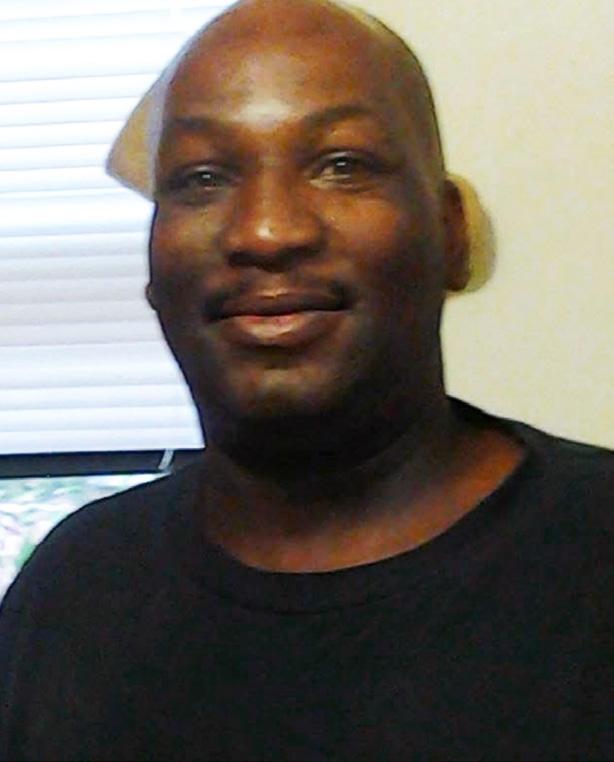
Melveon Harp joined Street Sense in 2025. Street Sense file photo
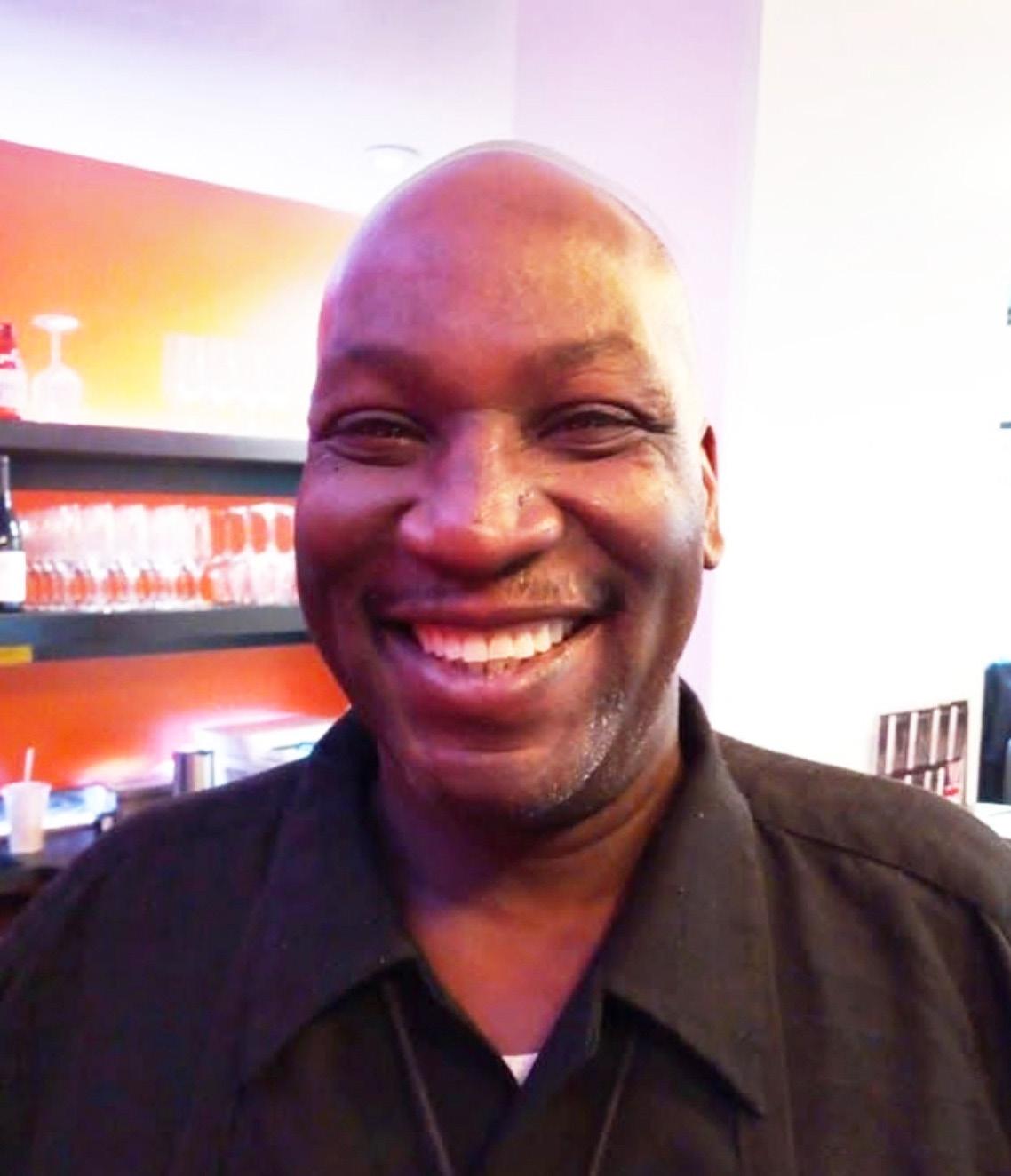
Melveon Harp died in May. Photo courtesy of Melveon Jones
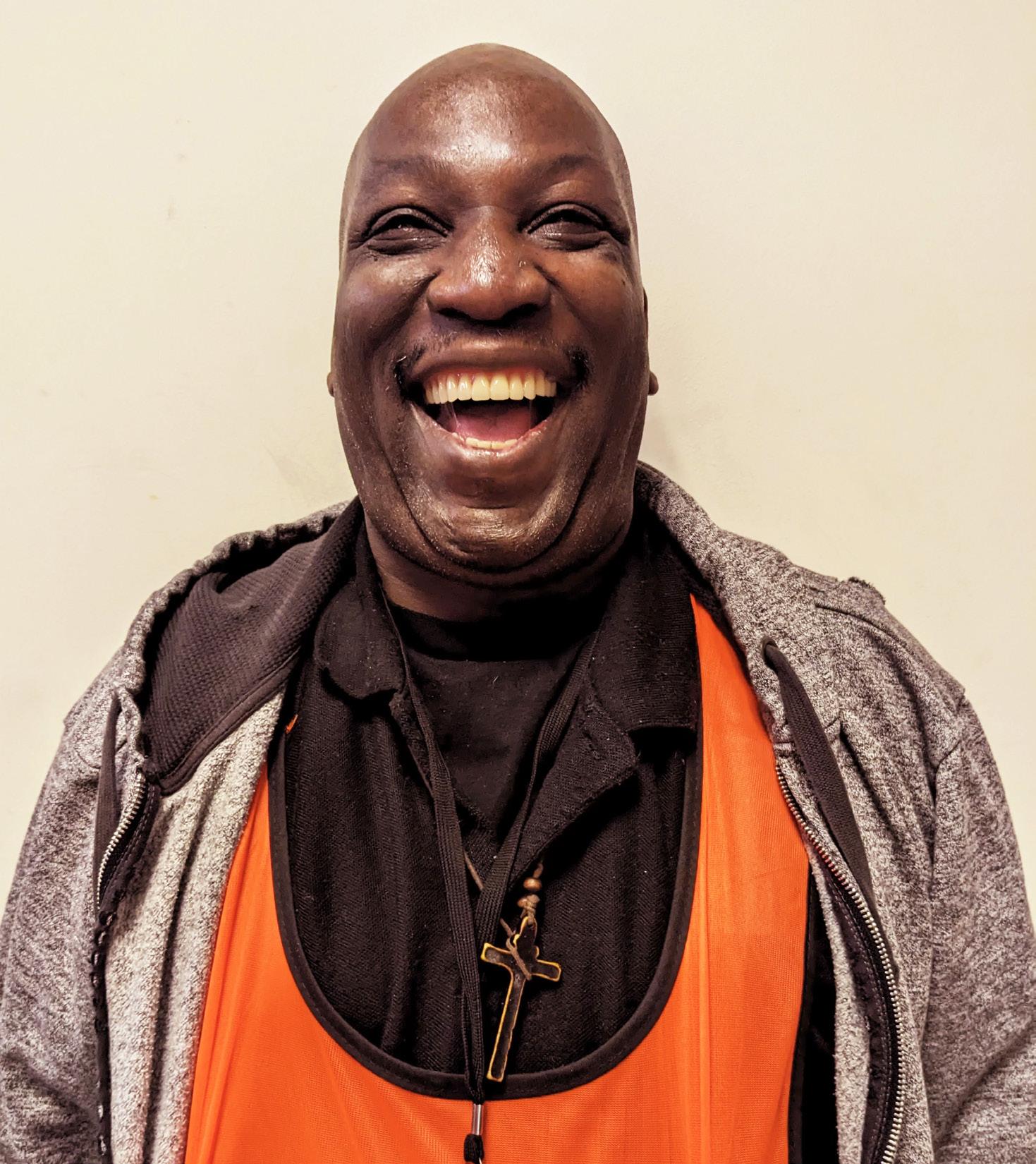
Melveon Harp was known for his smile. Photo courtesy of Melveon Jones
A new DCHA plan could limit housing choices and increase rent for families, critics say
CHIH-RONG KUO Editorial Intern
The D.C. Housing Authority (DCHA) voted to approve its Fiscal Year 2027 Moving to Work (MTW) Annual Plan at a Board of Commissioners meeting on July 8.
The plan updates interim reexamination policies and processes for public housing and voucher-based projects to save DCHA money during a tight budget year. Some advocates believe, however, the plan does more harm than good and disincentivizes families to work for fear of losing housing support. Four out of the five DCHA commissioners voted yes on the plan, while Commissioner Rhonda Hamilton abstained from voting.
MTW is a trial program authorized by Congress for participating public housing agencies, including DCHA, to find ways to use federal dollars more efficiently, increase housing choice for low-income residents, and help residents find employment. The MTW program governs public housing units and housing choice voucher (HCV) assistance programs. MTW offers DCHA flexibility by exempting the agency from some rules, allowing it to combine policies and access more funding.
While DCHA says this year’s plan will maintain access to affordable housing while saving the agency money, advocates at Legal Aid DC and Empower DC argue it will weather the department’s budget crisis at the expense of participating residents.
DCHA anticipates a significant federal budget shortfall in its housing assistance payment subsidy of about $35 million, which could impact 1,400 families, Theresa Silla, executive director of the D.C. Interagency Council on Homelessness, said at the July meeting. The plan attempts to offset some of these costs by making it easier for DCHA to raise rents on families in public housing.
“It’s really important to understand that these provisions are an attempt to share a little bit of the pain across all of our families so that we do not have to stop payment or otherwise impact these 1,400 families,” Silla said.
Public housing and voucher residents generally pay 30% of their income towards rent. The plan changes DCHA’s policy on interim reexaminations, a check-up that calculates a rent change when a family reports a change in income. It is unclear how frequently these reexaminations will occur, but families are required to report all income increases.
For HCV households, DCHA will consider raising rent if the annual increase in income is $2,400 or more. For public housing households, interim reexaminations will be conducted if the family reports any increase in income.
The new policy could create burdens for HCV and public housing households, many of whom work irregular hours or receive irregular pay, according to Sarah Plavcan, a senior staff attorney at Legal Aid DC. In particular, gig economy workers and hourly workers may report increases in income during surge seasons.
“You won’t have all of that extra money the next month. You’ll be asked to pay an additional amount beyond what you can reasonably pay,” Plavcan said. “When we’re talking about gig workers, they could end up being required to pay more than they make in the next month total.”
These burdens aren’t just financial, she said. The administrative responsibilities create additional work for the tenant.
“It is the time and the energy and the burden of having to continuously report your income, and for example, the fear that if you don’t report every single paycheck, then DCHA might say you’re in violation of the rules, so we might terminate you,” Plavcan said.
Additionally, Plavcan said the policy could disincentivize tenants from working more hours or accepting promotions, contradicting MTW’s objective of incentivizing households to work. Public assistance programs based on income can produce a phenomenon known as the benefits cliff, where families face restrictions that can cut them off from support if their incomes increase. This creates serious dilemmas if the increased income is not enough to replace the costs covered by the program resources.
“Every extra hour I work, that’s going to be counted towards what I have to pay, not just this month, but next month. So I’m just not going to take those extra hours,” Plavcan said.
While income increases might trigger a rent hike, the changes prevent HCV households from requesting an interim decrease, or a rent adjustment when a household’s income decreases, for three months following entering the program, moving to a new apartment, or another reexamination. Before, HCV households could request an interim rent decrease at any time. The MTW plan only provides exemptions for households experiencing layoffs or loss of benefits.
The limited exemptions raised concerns for advocates. In a written comment to DCHA, Legal Aid wrote the exemptions do not cover common cases like domestic violence, a family member of a participant becoming disabled, or unexpected changes in family composition. Legal Aid DC said the cost would be shifted onto financially vulnerable families who could pay more rent than they can afford for several months.
“To the extent that DCHA is expecting cost savings from this change, they expect those savings to come directly from the pockets of its participants,” Legal Aid wrote.
Plavcan questioned whether the changes would produce substantial savings for the agency. For example, implementing the interim reexamination policy could increase administrative costs since staff would have to spend more time reviewing income increases.
“The worst case scenario here is that DCHA is going to end up removing all of these rights for participants and for residents, and then they will still have this same enormous shortfall that they’re talking about,” Plavcan said.
Housing advocates also worry the revised plan will decrease housing choices for participants, contradicting the goal of the MTW program. One aspect prevents families with project-based vouchers from transferring to tenant-based units. Another prevents voucher households from requesting a transfer within two years of being at a property, an increase from the previous 12-month restriction. Critics said the initiative would lock tenants down to a property longer than a standard D.C. lease, so participating families would have fewer housing choices than unassisted families.
“These kinds of things speak to a system where tenants feel like they have little rights or options, and it perpetuates this distrust that exists between DCHA and their clients,” Daniel del Pielago, housing director of Empower DC, said.
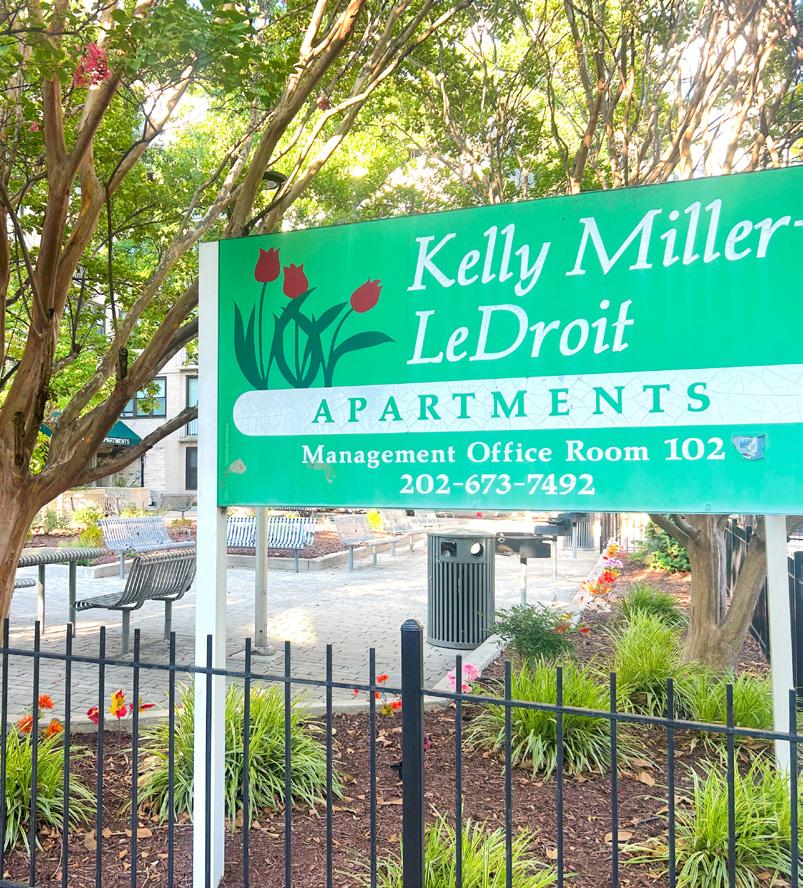
Of particular concern to del Pielago is the inclusion of a planned application to demolish or dispose of seven new public housing properties, including Kelly Miller Dwellings and LeDroit Apartments, amounting to 896 total units. Del Pielago said DCHA has applied for demolitions and disposals in past years but has not gone through with them, leaving residents with uncertainty. HUD authorizes public housing agencies to demolish public housing units that are obsolete due to their condition or location. Public housing agencies may also conduct a disposition of their properties, which transfers the public housing unit to another entity.
D.C.’s MTW plan already listed 7,468 public housing units as planned to be removed. Many of these public housing units will undergo a Rental Assistance Demonstration (RAD) conversion, which converts public housing stock to project-based voucher housing. The RAD program allows DCHA to secure other funding opportunities amid decreasing federal funding. This is especially important because federal public housing funding does not allow for the modernization of units, interim DCHA Executive Director Nicole Wickliffe said at a public hearing.
Instead of directly providing housing, public housing agencies subsidize rent for tenants in privately owned apartments.
“If these aren’t publicly held resources anymore, who knows what will happen in the future? We could lose, as mentioned, very important housing stock in the city,” del Pielago said. “A lot of these properties simply sit on significant swaths of land that, to private developers, to private business people, are where they can extract a lot of money, and that is often done without caring for what happens to the people that live there.”
While more than 8,000 public housing units could be approved for demolition or disposal in the MTW plan, DCHA will undergo a formal process before any project begins, an agency spokesperson wrote in a statement to Street Sense.
“There are additional steps, including robust engagement with any potentially impacted residents and submission of an application to the U.S. Department of Housing and Urban Development (HUD), before any demolition or disposition activity begins,” the spokesperson wrote. DCHA also confirmed it reviewed and considered all public comments during the public comment period, which ended on June 27. The agency has not published an updated version of the MTW plan based on public comments, but will post an updated version once it has submitted the plan to HUD. Approval of the plan does not necessarily mean these changes will occur immediately or at all.
“We hope that they will consider our comments and continue to keep in contact with the community about those changes if they do choose to implement them,” Plavcan said.
The D.C. Housing Authority’s Moving to Work plan allows the agency to dispose of several public housing properties, including Kelly Miller and LeDroit Apartments. Photo by Chih-Rong Kuo
OPINION
Creating equality and a stable mentality for the public!
Ihave a proposal I would like to think will gain attention. The idea is a portion of universal basic income (UBI) funding should come from the world’s largest social media platforms. Companies such as Meta, X, TikTok, and Snapchat generate billions of dollars by monetizing engagement, data, advertising, and artificial intelligence. While these businesses have created economic value, they have also benefited from content produced by users without compensating them. In today’s digital economy, governments should require these platforms to contribute directly to the public good by helping fund UBI.
The economy has shifted dramatically over the past two years. For myself, just reentering the community, it feels like a whole new world, and I was only gone 90 days. I thank God for Street Sense every time I pray. Social media companies have become some of the most valuable corporations, with market valuations reaching hundreds of billions or even trillions of dollars. According to Yahoo Finance, Meta has a current valuation of $1.48 trillion, while X’s is $44 billion. Their business models rely on users creating photos, videos, comments, reviews, and conversations to keep others engaged. Every interaction generates data analyzed to improve advertising, personalize content, and develop new artificial intelligence. In many ways, the users provide the raw material that makes these companies profitable.
This creates a compelling argument the wealth generated from these digital platforms should be shared broadly. Just as governments tax natural resources, property, or corporate profits, they could establish a digital services tax or social media revenue tax to fund UBI. Rather than placing the burden entirely on income taxes paid by workers, governments should recognize enormous wealth is being generated in the digital economy that should contribute to addressing poverty and economic insecurity.
One of the most immediate benefits of UBI would be help with rent payments. Housing is often one of the largest monthly expenses, and having a guaranteed source of income could make it easier to pay rent on time. Financial stability would allow me to focus on planning for the future instead of constantly worrying about how to cover basic necessities. Knowing I have support each month could also make it easier to save money for emergencies and investments.
Health care is another area where UBI could make a meaningful difference. Medical expenses, prescription costs, and unexpected health issues can quickly become financial burdens. With a guaranteed income, I would be better prepared to afford health care needs, attend checkups, and purchase medications. Good health would allow me to remain focused on building a better future instead of being held back by untreated medical concerns.
Perhaps the greatest impact of UBI for me would be its ability to support my entrepreneurial ambitions. Starting a small business requires time, dedication, and resources. Many aspiring entrepreneurs struggle because they must work multiple jobs, leaving little time or energy.
While homeless, I’ve had the opportunity to take entry-level bicycle mechanic classes, which gave me inspiration to own my own mobile bicycle shop. UBI could provide a financial cushion that allows me to dedicate attention to researching my market, creating a business plan, developing products, and building a customer base.
Having a reliable source of income could also reduce the fear of taking calculated risks. Instead of worrying one slow month might leave me unable to pay my bills, I could focus on making thoughtful business decisions that promote long-term success. UBI would not replace the hard work, discipline, or determination required to run a business, but it could provide the stability needed to stay committed during the challenging startup phase.
I would use the UBI payments to save for advanced bicycle courses, which are fairly priced but still expensive. Over time, my business would generate income, create jobs, and support economic growth while helping me achieve financial independence.
Ultimately, UBI could serve as a stepping stone rather than a permanent solution. With consistent support and responsible financial planning, I would use UBI as a tool to build a stronger future, achieve self-sufficiency, and create lasting opportunities for myself and others.
There are additional reasons why social media companies should contribute. These platforms have transformed labor markets by changing how people consume news, entertainment, and advertising. Traditional media industries have experienced significant disruption, while many small businesses depend on paid social media advertising to reach customers. At the same time, automation and artificial intelligence developed by technology companies have reshaped employment. A prime example is self-checkout registers in every local grocery store. As these technological changes increase productivity and profits, governments should ensure part of those gains are reinvested into society.
Funding UBI through social media taxation could also encourage greater corporate responsibility. Technology companies invest in content moderation, cybersecurity, and user safety, but governments bear many of the social costs associated with online misinformation, fraud, cyberbullying, and mental health challenges. A dedicated tax would not solve these
issues, but it would acknowledge platforms have broader responsibilities within the societies in which they operate and hold them accountable for their influence on the mentality of the American people.
Those against this proposal may raise valid concerns. Social media companies may argue higher taxes would discourage innovation, reduce investment, or lead to higher advertising costs for businesses. Not too long ago, I completed a survey where I asked some of my customers what they thought the pros and cons of UBI were; the most common concern was companies could relocate operations to countries with lower tax rates or pass costs on to consumers. These concerns suggest that any funding mechanism would need international coordination to maintain competitiveness.
Even so, governments around the world are already exploring digital services taxes. According to Vatcalc, Austria has a 5% tax on online advertising, while the UK has a 2% tax on marketplaces, social media, and search engines, which has been active since 2020. Adopting these efforts into a dedicated UBI funding stream is a logical extension of the principle that industries benefiting most from the digital economy should contribute directly to the public welfare. The modest tax applied consistently across major platforms should be used to generate substantial public revenue while preserving the companies’ ability to innovate and grow.
Furthermore, funding UBI through social media platforms reflects a broader question about economic equity in the digital age and will reshape what we know as equality. If billions of people collectively create the attention, data, and content that drive corporate profits, there is a reasonable argument society should share in the value created. For individuals like myself, that shared value could mean the difference between remaining trapped in homelessness and having the financial stability needed to secure housing, seek employment, and rebuild an independent life. While this proposal would require careful economic planning and political consensus, it offers one possible path toward aligning the extraordinary success of the digital economy with the broader responsibility of reducing poverty and expanding opportunity. This is the only way to create equality in modern times.
Wayne Hall is an artist/vendor with Street Sense Media.
HIV, mental health, and being homeless
Hello, my name is Dominique Anthony. When I was 26 years old, I was diagnosed with HIV and mental health issues. I want to talk about being homeless with no place to live, no place to take medicine, and nowhere to store the medicine in a safe place. When you are homeless, it’s hard to take care of yourself. Sometimes you don’t have access to healthy food, and sometimes, when you are homeless, you don’t have IDs or documents. You are a Jane Doe or John Doe, and I feel that is messed up because where are the family or friends to identify a person?
I feel we should do more for the unhoused population by doing wellness checks in the parks, Union Station, Martin Luther King Jr. Memorial Library, Farruget West, and Farruget North. I feel they should do another homelessness count with the new mayor and open up new shelters. I feel the 2nd and D shelter should be closed permanently because of the living conditions and complaints about the food served.
I feel like they should do more to protect those on the street. Being homeless is hard and causes depression. I was worried about how I was going to take my medication and have somewhere safe and sound. I also worried about where I was going to sleep at night and where my children were going to be, and then I worried about going to school.
Dominique Anthony is an artist/vendor with Street Sense Media.
WAYNE HALL
DOMINIQUE ANTHONY
A low wage gives inexperienced workers a ladder, while a living wage pulls it away
JEFFERY MCNEIL
m not an economist or a sociology major. I’m speaking from observation, not theory. I’m not feeling what politicians are trying to pass into law as a one-size-fits-all “living wage,” which is defined as the minimum income a worker needs in a given location to meet basic needs — housing, food, transportation, health care, and other essentials — without government assistance or extra jobs. It reminds me of the $1,200 stimulus check — people buying new TVs and spending like drunken sailors when it barely covered a month’s rent.
Twenty dollars an hour is roughly $800 a week before taxes, maybe $600 after. And that’s if you’re getting close to full-time hours, which many people aren’t. In places like D.C., people will flee to Virginia and Maryland, where they’re taxed less on higher wages. The higher wage still doesn’t match the cost of living, so workers come to D.C. to earn and take the money back to cheaper states. That means less local foot traffic, less profit, and less ability for businesses to pay those higher wages. I think about the higher-wage jobs I had at LA Fitness; I don’t see those in D.C. now.
I’ve lived in many places and worked through boom towns that are now hollowed out. Drive down I-95 through Reading and Allentown, Pennsylvania; my home state of New Jersey, where places like Camden, Paterson, and Atlantic City, once-thriving economies, are now desolate. Women are prostituting themselves for money, fathers are selling drugs or robbing, while mom and pop owners have to barricade their checkouts because people are angry, hungry, and desperate. People are willing to rob or kill to have potato chips; over time, working people steer clear because they don’t want to be carjacked or robbed in these places. It’s a vicious cycle. Despite all these failures, politicians do a daily double by slapping more regulations, wage hikes, and tax-the-rich policies
Calls for higher wages are a sugar high. If the cost of living is unaffordable, why not make sure every corporation hires workers for $100,000 a year, which will cover expenses?
I see post after post demanding wage hikes and wealth taxes in the wake of Elon Musk’s trillion-dollar pay package. Bernie Sanders called it an “absurdity” and pushed for raising the cap on taxable income; Elizabeth Warren has made similar calls. Musk has become the world’s first trillionaire while many people are struggling just to get by.
Not to be outdone, Senator Chris Murphy — who clearly has presidential ambitions — introduced a bill to raise the federal minimum wage to $25 an hour. As Murphy put it: “It’s not like we can’t pay a $25 minimum wage, we just choose not to because we’ve become okay with dozens and dozens of people in this country making hundreds of billions of dollars.”
Let that marinate. Most of these politicians haven’t run a business, yet they’re busy villainizing the people who create jobs and already pay above a so-called living wage. According to the Bureau of Labor Statistics, only 870,000 Americans work at or below the federal minimum wage — roughly 1% of hourly workers. Meanwhile, Musk and other billionaires say that in 10 to 20 years, work may be optional and money largely irrelevant thanks to AI and robotics. So I have to ask: is this about optics, or actually helping the dispossessed?
I challenge every economist and wage advocate to walk through Washington, D.C., and look at what these hikes actually do. Wage advocates never ask the obvious question: if someone can’t get hired at $10 an hour, why would they be more employable at $25? Walk through Ward 7 or Ward 8. You’ll go blocks without seeing foot traffic — just shuttered buildings and men on corners. It’s becoming the same on the corner where I sell papers. Back in 2010, D.C. was a boom town — thrift shops, mom-and-pop stores, jobs everywhere. You could walk across the street and pick up a second shift if you needed one.
Wage hikes weren’t the only cause of the decline, but they were a contributor. That Happy Meal at McDonald’s that cost $3 now costs $8. A
slice of pizza and a soda that used to run $8 is $20. A burger, fries, and a soda that used to cost $10 now cost $30 once you add higher wages, fees, and an auto-tip. Streets that used to be packed 24/7 now look like a disaster movie — boarded-up buildings, rotting storefronts, businesses and jobs fleeing to Maryland and Virginia, where wages are lower, and the cost of living is reasonable. A memo to states that haven’t raised their wages yet: vote no. What do I know? I’ve never walked the halls of the Brookings Institution or sat on a progressive think-tank panel. I learned business by losing money and making it, by getting hired and fired, by watching prosperity turn to misery inside of a month.
Here’s what I see: displacement and student-loan debt have pushed more people onto government assistance, so politicians try to make the rich pay for it. But the rich don’t pay — they leave or raise prices. The same politicians pushing the living wage also passed bad trade deals, high taxes, and policies that let a handful of investors buy up land. Now they try to fix the damage by raising labor costs, which just pushes prices higher and makes everything less affordable. Raise wages, and businesses mark up prices to cover the new labor cost. At this rate, they’ll be calling for $50 an hour in a decade. A living wage eliminates the purpose of a low-wage job. A low-wage job is like being drafted in the seventh round of the NFL. The player who gets picked isn’t there to pay rent on day one — he’s there to get into the industry, and he’ll do it for next to nothing because where you start doesn’t determine where you end up. The alternative is not being drafted at all.
It happens all the time. Kurt Warner stocked grocery shelves and played in the Arena League before landing a backup job with the Rams. When the starter got hurt, he stepped in, won a Super Bowl, made millions, and ended up in the Hall of Fame. Tom Brady sat on the bench until Drew Bledsoe got injured. Then he made millions, took pay cuts to help his team build around him, and now he’s a broadcaster and franchise owner. That’s what a low-wage job is for.
My dad always said to keep $2 in your pocket so you’d never be broke. That’s why I sold newspapers. I made $10 my first day. I didn’t scream that it wasn’t enough — I studied the guys making $20, then the ones making $100. I didn’t play the victim. I took the bad hand I was dealt and turned it into a straight flush.
I became a bartender the same way. I started washing dishes — not because I lacked skill, but because I’d messed up my life and was grateful for something besides selling papers. When I got sick and lost that job, my boss made me a server. On my first day, I worked all day and made $60. I could have complained, but I watched others make $300 and realized I had to get better. People walked out, I rang in wrong orders, I couldn’t handle the volume, but they stuck with me.
Then they gave me the worst shift — Saturday morning, 11 a.m. to 5 p.m., dead. Instead of sulking, I used the slow time to learn how to make drinks, clean, organize, and treat every customer like gold. I never judged the bad tippers; I treated everyone the same. When someone called out, I picked up extra shifts. Did it pay every bill? No. I combined that job with selling papers and running delivery routes just to make ends meet. I wrote on the side, never making real money, because I dreamed of publishing a book. I never expected six figures from a paper — I wrote because I believed in the work. I bartended because on a good night, I could make more than some professionals. I started with the worst shift, worked overtime when I could, and treated selling newspapers like a real business, not a corner hustle.
High wages won’t solve the affordability crisis. That comes down to money management — not putting yourself in situations over your head and knowing when to pay out of pocket or borrow smartly. Twenty dollars an hour won’t get anyone an apartment in D.C. anyway. And nobody asks the obvious question: if only 1% of workers earn $7.25, who are you fighting for? Most people who work are satisfied with what they have because the real alternative isn’t a higher wage — it’s no income at all.
Jeffery McNeil is an artist/vendor with Street Sense Media.
Ideas
APOLLOS ROBINSON
Artist/Vendor
Hair-raising ideas words scattered on paper like clipped hair on barbershop floors
The Poetry Salon
replicating his layout
Me vs. Me
RENEECE BRINKLEY
Artist/Vendor
You can’t do it, is all I hear When myself argues in my ear
Yes, you can, don’t listen to her I tell myself as I block my words
Remember, you tried this last week I shake my head as the voices speak
So what? This is a new day I look to God and start to pray
Did you pray when you were going bad? Now this has started to make me mad
Leave me alone, go away please I can’t, ‘cause you can’t be you without me
Look at the rainbow
SASHA WILLIAMS
Artist/Vendor
Summertime is starting and as spring ends, The girls and I got shakes
The rain came down on us,
But Onyx looked up and said…
“Look at the rainbow”
After the rain comes the rainbow
Let’s go to the end of the rainbow
Onyx said…
“Let’s go to the end of the rainbow and get gold”
“Yay,” I say, Let’s go…
New life
ABEL PUTU
Artist/Vendor
The new life is beginning, and the world is falling apart. The east and the west, the whole continent is falling apart everywhere, and we need to have unity. Food prices are getting ready to go to the sky, so everybody should start getting water and food and keep it good.
The new world order is coming. We will be controlled by the Antichrist AI. The military will not be able to have control over the whole world; that is why they are creating the AI robot, and it’s gonna start taking people’s kids from them. That’s what’s getting ready to happen. Make the world better to be unified. From the Black Mamba.
Summertime
ANTHONY CARNEY
Artist/Vendor
We will go swimming and splash in the water. Anyone ready to do a cannonball? I am! Back up, or you’ll be soaked.
Summer breeze makes me feel so fine. Just chillin’ in the coolness. Then we’ll get cooler by eating… ice cream! Let’s ride our bikes to the Mall. Or go to the beach in Miami or the Bahamas, where we can enjoy the blue waters. Or go jump off the diving board.
The kids are running around and having hot fun in the summertime. Make sure you do the same for yourself!
Spread love.
My name is Daniel Ball
DANIEL BALL
Artist/Vendor
Me and Sybil been together for 10 years.
Today is Wednesday, and we love each other dearly. And we love to eat some good fried chicken.
We both love to watch some football games, only on Sunday. And love is everlasting, true love forever.
We both have never cheated on each other in this world.
You know we love our Bible teacher, Reverend Glenna, on Sunday at 10 a.m.
Daniel and Sybil love to eat some McDonald’s food every other day. Daniel asked Sybil, would she like to have some children? “Some day in the future.”
Daniel said, “Let’s have writer’s group every Wednesday at 10:30 a.m.”
Happy birthday America
JACQUELINE GALE
Artist/Vendor
Happy birthday to my fellow readers.
Two hundred and fifty years is a milestone. I have been here for 50 of them, and it has been a blessed journey, though a difficult one. I have experienced homelessness for 37 years, traveling from state to state seeking a way forward. I am still traveling because I am eager to leave D.C. In my experience, it is a difficult place for those experiencing homelessness to find success without specific connections, and unfortunately, some take advantage of the oppressed. I continue to look for a better path.
Summer
BRIANNA BUTLER Artist/Vendor
Means dipping in the water at Sandy Point State Park, letting those waves push your body off the ground. Enjoying the sand beneath those feet! Sitting on a big beach towel while you watch, then joining all kinds of people playing on the volleyball net.
Enjoying delicious fried chicken, watermelon, and Little Debbies! Sipping a margarita (beacharita?) while reading a compelling romance or adventure novel that makes the time fly away. Playing in the bay with a bright pink (is there another?) flamingo float, then laughing as you fall off it and bust ass to get back on it.
Then there’s going to visit family in South Carolina, which of course means stopping to shop at South of the Border. Today, we have Buc-ee’s that looks like a gopher, whose face is on every kind of shirt, mug, and hat. This store has everything you’re looking for when you’re traveling.
I hope other people will come and share this experience with me. Happy nightlife, having a seafood bash and dancing to loud R&B music. Remember, you may have to wear sleeves so the mosquitoes won’t eat you alive and leave big marks on your skin.
So, get out. Camp. Go to the beach. See the world. Shake your booty!!
Homeless in my home country
WENDY BROWN Artist/Vendor
In another country, such as Norway, people may be housed because they are dispersed. If you run in somewhere, you may find people who are homeless, and they’ll need help. You could “get a job” here. If you get or give a donation, think about others. If they’re like you, they’ll return the favor and pay it forward.
These are the days of our lives. When Sunday rolls around, you’ll be tired. Hello! When you meet up in church, speak. Loving others is the key to keeping in touch.
“The working poor” is a definition I’ve tried to get rid of in my generation. Now, how is it? (Tomorrow I need those packs of cigarettes.) Surely you jest. I’m writing. Ms. Parker, what are you doing out here? It’s kind of dreamy (magical and sleepy).
Sue me! It’s not her name. Just hatin’. Just lovin’. Just buggin’. It could be any time of day or night, and it’s kids forever. Could it be the government or just Ms. Lincoln? Westmoreland can see whether Heights is good, for goodness’ sake. Okay, back to reality. The radio is on, and kids are playing. Someone’s reading. Looks like they work there. At least, it sounds like that.
In the park, interest is secondary because homeless persons tend to know a lot. Can you believe it? I can’t believe how hot homelessness is! I just got 100 apartments. The neighborhood has a nice quality. Trailers will be assigned to numerous entrances and to the stadium (seems to be the only job). Five entrances for team associates. Vocational whims can be taken care of in the trailer.
Langston may be a good place to relax. Hope you enjoy. Faith, love, peace, and Beetlejuice. Tomorrow, quick, see? Ambush any donation time, and this becomes a free handout. John time will be minimal. About those yesterdays, try to spend as much time as you can with your friends because this may be invaluable later. It couldn’t hurt.
At noon, you’ll know what will happen when midnight rolls around. Cold memory is a cold reminder.
God’s creation of his animals
TONYA
WILLIAMS Artist/Vendor
I love all animals of God’s creation.
I’ve had my cat, Kala, since she was eight months old. She’s now six! She is SOOOO cute. I didn’t want a cat, but my daughter surprised me with one for Christmas. Kala was very small, but she knew how to get into everything. She chewed my chargers in half. She chomped my shoelaces and my window blinds. She was a handful!
Now she’s older, so she’s winding down into a laid-back cat. But she’s still my baby girl! Sometimes when I go out, she looks at me like she can’t wait for me to come home. When I do, she’s at the door waiting for her treats. Once at 2 a.m., she got up, went to the kitchen, and started slamming the doors with her paws, trying to wake me up. She did, but she didn’t want anything. The nerve of her!
Still, she is a sweetheart. Everyone on my floor knows her and loves her. She runs up and down the hallway for her exercise. Amazingly, she lets me brush her and groom her. She loves giving me kisses and smooches. I think that’s because she puts her scent on me to let everyone know I am hers. (Yes, she’s also mine!)
Coffee
Some of us drink it
Some of us taste it to wake our brain cells
Its aroma, taste, and scent bring us joy
Some of us don’t like it
And prefer other forms of drinks, like tea
Some get brain freezes from iced coffee
The bean itself can be used to drink, to brew, and to eat
So people add it to their ice cream
To bless the bean
To know God has blessed it
The creation
The brain reacts to it
Our soul says something different
Some of us get it, some don’t
The joy, the life, that the bean brings helps
Those countries that grow the bean all give a part of God’s creation
They all know the truth
This is our world — pure and natural
It is a part of us
It wakes me in the morning
Coffee or tea calms my soul
Makes me happy
What makes you happy?
What brings you joy?
Before I wake, before my brain becomes alive
A piece of God’s grace, it helps to sip
It gets me through the day and wakes me up
And I say good morning to all of God’s creatures
Know God’s love helps
Know when he wakes you up, puts you to sleep, it helps I know where I am, and I know God’s love is always there
So I show the love
When it comes to all of God’s creations
I think the bean is the best
I love chocolate and bacon
So, whatever makes you happy
Be joyful, be happy
The smallest things are blessings
To, coffee
No time to laugh
CARLTON JOHNSON
Artist/Vendor
Finding no time to laugh by day
I can only dream as I press my head on the pillow
Nights are long under cross maintenance looking for the road to fertilize all dreams
Beautifulness folded within my dreams I am the keeper of my soulful bedtime dreams
First dance
JACQUELINE TURNER
Artist/Vendor
It was a party in the community room of Butler Gardens, our apartment complex in Southeast D.C., on Friday, 7:30-11:00 p.m. The price of admission? Two bottle caps.
I was around eight or nine years old. It was a really big deal. My sisters, Paulette and Diane, and everyone else were going. Because I had two older sisters, I would be able to stay until the end. But all of us had to be home immediately afterward.
First, I had to plan what to wear. Of course, I wanted to look good and be fly. So I wanted something of my sisters’. Unfortunately, Mom liked to dress me like a baby. But… this time she surprised me! She sewed up my dark blue dress with its lace collar and lace down the front. Then mom took it in on both sides, so it was a little tight. I just knew I looked great. And I had just started to have boobs!
The beginning was like every other dance: boys on one side, girls on the other, both laughing and pointing at each other. When the music started, my stomach cramped. Would anyone ask me to dance? If he did, would I dance right? But once a boy grabbed my hand and took me out on the floor, I started shaking my stuff! I was wild all over the floor. Then I knew I could dance.
After two or three fast songs, they played slow songs. I didn’t want to dance slow. The boys were fast and held you tight. I didn’t like that. Then, finally, the fast music was back.
We girls talked about which boys were cute and which boys dressed the best. Everybody liked one boy, Maurice Jones. He had light skin and good hair. I liked dark skin and curly hair.
At the end of the next slow record, the boy I liked asked me to dance. My first slow drag.
Very exciting!
I am going through it
SYBIL TAYLOR
Artist/Vendor
It has been a very rough, difficult time for me. I was evicted in November after my mom died, and I never got my inheritance. Someone in my family has gotten away with lies and put me in a living nightmare. They put my autistic sister out on her own due to greed. My sister, my brother, and me have never gotten our money. I've been homeless. I slept on the street and then in a shelter. I don't deserve this. My special needs sister stays with my brother. I've been through a horrific time. Even my side job boss turned against me when I got sick. No pay, he would not help me in my time of need. I haven't written for Street Sense because of sadness and being stressed out, overwhelmed, and depressed. I am coming back to selling papers and writing. I would love all my customers to buy my paper and support me. I am going through the storm alone.
This is summertime
GRETA CHRISTIAN Artist/Vendor
Summertime is here!
That means fun.
That means we play in the playground.
Summer is when you go out for dinner. Summer is when you sell your Street Sense papers.
You can go to outdoor movies.
Summer is not the time for school!
You go to museums.
You can look at outdoor art.
Summertime means more time in the park, And more time to see your parents.
Summertime is beach time!
Time to take a field trip.
Time to party.
More time to shop.
This month you can see the fireworks!
Summertime also means staying out of the heat.
Maybe stay in the house if that’s your best way to keep cool. So, get out there, play, and have a lovely summertime!
KYM PARKER
Artist/Vendor
MAURICE CARTER
Artist/Vendor
FUN & GAMES
1. Camp beds
5. ___ and Span (cleanser)
9. Flimsy, as an excuse or as a joke
13. Popular cookie
14. “Oh, ___ Beautiful Mornin’ “ (2 wds.) (4,1)
15. Not a sure thing, familiarly
16. Surrealist Joan who was a Picasso contemporary
17. Downed at the diner
18. Raison d’____ (Fr.)
19. She was the first female mayor of Seattle (6,6) 22. Lennon’s lady
23. Map abbr. that cannot have reference to a landlocked feature
24. “True dat!” (2 wds.) (3,3) (Y’ALL IS anagram)
28. Golf shot or geriatric setback
30. Artificially inflates, as a résumé or expense account
32. Bullfight “Bravo!” (Sp.)
33. This Washington native was the first American woman to summit and survive the descent of Mt. Everest ((7,5)
36. Musical term found, aptly enough, in “Maria Callas”
39. Nintendo’s Super ___
40. ___ Spumante
41. She was the first Washington woman to go into space as a NASA astronaut (6,6)
46. “So, this guy walks into a ____ and...” (start of a gazillion jokes)
47. West Coast sch. with a strong surfing team (abbr./init.)
48. Hidden ____ (concealed plan or purpose)
52. Changes, as a prior oral or written document
54. Per Doge guru Musk, too many corporate CEOs with this degree “parachute in” as leaders without truly understanding how to make great products (abbr./init.)
55. Billing time (abbr./init.) (typically around the 30th)
56. Building community and advocating for civil and human rights have been lifelong commitments for this longtime highly esteemed leader of Seattle’s El Centro de la Raza
60. The Emerald ___ (Ireland)
63. A place Mexico’s General Santa Anna never forgot
64. Genesis locale with fig trees and a snake
65. Campus area or the thigh muscle, informally
66. Roomy vehicle
67. Fully ____ (completely clothed)
68. Does some alteration, hemming or patching, say
69. The “Y” of Y.S.L.
70. Wife of Zeus (RHEA anagram)
Down
1. Jazz ensembles
2. “Murder on the ____ Express”
3. Paralyzing fear
4. The ash on Santa’s suit
5. “We ____ Overcome”
6. ____-cake (baby’s game)
7. Major highway from Fla. to Calif. (1-3)
8. George Bernard Shaw play that challenges Victorian gender roles and marital conventions (INCA DAD anagram)
9. “The Sound of Music” girl whose name anagrams to ELLIS)
10. Back of the boat
11. Co. with a plant that makes something (abbr.)
12. Hurricane’s center
14. Owl : wisdom :: ____ : sneakiness
20. Enjoy the Pacific Crest Trail
21. “Born Free” lioness
25. Nephews, to their parents
26. Very much (2 wds.) (1,3)
27. Himalayan legend
29. Neighbor of Yemen
30. Nom de plume (abbr.) (DUPES anagram)
31. The “A” in PTA (abbr.)
34. Neither Reps. nor Dems. (abbr.)
35. Pink, as a steak
36. “Dancing Queen” pop group
37. Not stay put
38. About, on a memo (2 wds.) (2,2) (incls. abbr.)
42. Some birth control options (abbr./init.)
43. Pure bliss
44. Botswana beast with two Bs in its name
45. Petri dish filler
49. The Space ____ (Seattle landmark and tourist attraction)
50. Use a makeshift page-bending bookmark (a no-no for public library patrons) (3-3)
51. Actress and Tony-winner Plummer (“Agnes of God” - 1982)
53. Must-haves
54. The ____ & the Papas
57. Map abbr. relating to a mtn.’s ht.
58. Put on board, as cargo
59. ____ Support (computer-savvy workforce component)
60. Those possessed by “geniuses” are 140 or higher
61. Good name for a lady legal professional?
62. The Rule of ____ (driving force behind the “No Kings Day” demonstrations)
PIECE OF THE WEEK
Urban bereft
REGINALD BLACK
Artist/Vendor
Take by force
A threat, violence
To personal property valuables
Steal or remove without right
Deprive their personal loot
Taken away and it’s expected
Withheld unjustly, most injuriously
Bereft to the utmost
Fierce by which
Property loot valuables
Withheld by violence
A silent but crushing sounding threat
Yet okay to unjustly steal away and be injurious
And it be expected due to lack
Deprived by force
The course
To steal something away
Being right to remove valuables
Just because contents are
In a space, not a place
This crossword puzzle is the original work of Patrick “Mac”McIntyre. It is provided to us courtesy of Real Change News, a street paper based in Seattle, Washington. Learn more about Real Change News and the International Network of Street Papers at realchangenews.org and insp.ngo.
Expect what you are due
Unjust, injurious desire
From personal property with rights
An encampment clearing. Photo by Reginald Black
COMMUNITY SERVICES
Academy of Hope Public Charter School
202-269-6623 // 2315 18th Pl. NE
202-373-0246 // 421 Alabama Ave. SE aohdc.org
Bread for the City 1525 7th St., NW // 202-265-2400 1700 Marion Barry Ave., SE // 202-561-8587 breadforthecity.org
Calvary Women’s Services // 202-678-2341 1217 Marion Barry Ave., SE calvaryservices.org
Samaritan Ministry 202-722-2280 // 1516 Hamilton St., NW 202-889-7702 // 1345 U St., SE samaritanministry.org
Sasha Bruce Youthwork // 202-675-9340 741 8th St., SE sashabruce.org
So Others Might Eat (SOME) // 202-797-8806 71 O St., NW some.org
St. Luke’s Mission Center // 202-363-4900 3655 Calvert St., NW stlukesmissioncenter.org
Thrive DC // 202-737-9311 1525 Newton St., NW thrivedc.org
Unity Health Care unityhealthcare.org - Healthcare for the Homeless Health Center: 202-508-0500 - Community Health Centers: 202-469-4699
1500 Galen Street SE, 1251-B Saratoga Ave NE, 1660 Columbia Road NW, 4414 Benning Road NE, 3924 Minnesota Avenue NE, 765 Kenilworth Terrace NE, 850 Delaware Ave., SW, 3240 Stanton Road SE, 3020 14th Street NW, 425 2nd Street NW, 4713 Wisconsin Avenue NW, 2100 New York Avenue NE, 1333 N Street NW, 1355 New York Avenue NE, 1151 Bladensburg Rd., NE, 4515 Edson Pl., NE
Washington Legal Clinic for the Homeless 1200 U St., NW // 202-328-5500 legalclinic.org
The Welcome Table // 202-347-2635 1317 G St., NW. epiphanydc.org/thewelcometable
Whitman-Walker Health 1525 14th St., NW // 202-745-7000 1201 Sycamore Dr., SE whitman-walker.org
Woodley House // 202-830-3508 2711 Connecticut Ave., NW
For further information and listings, visit our online service guide at StreetSenseMedia.org/service-guide
Store Associate
Aldi // Silver Spring, Maryland
Full-Time (Onsite)
Provide excellent customer service, stock shelves, operate registers, maintain store cleanliness, and assist with daily store operations.
Requirements: Ability to lift up to 45 lbs., customer service skills, teamwork, and flexible scheduling.
Apply: shorturl.at/U0qXb
Loss Prevention Supervisor
UNIQLO // Georgetown
Full-Time (Onsite)
Maintain store safety, prevent inventory loss, train associates on security procedures, and support daily loss prevention operations.
Requirements: Leadership and communication skills, loss prevention or security experience preferred, ability to lift up to 50 lbs., and flexible availability.
Apply: tinyurl.com/5h7exa27
Retail Operations Associate
Dick’s Sporting Goods // D.C.
Part-Time (Onsite)
Assist with the unloading of trucks and processing of freight and ensure that all merchandise and product received at the store is processed in accordance with established programs and procedures.
Requirements: Store retail experience (preferred). Ability to stand, bend, stoop, reach, push, pull and lift up 15 to 35 lb. items repetitively (up to 25 times per hour).