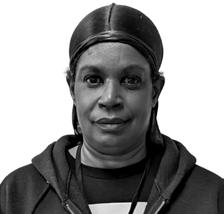
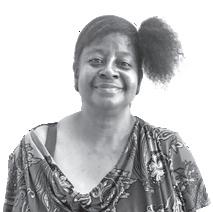
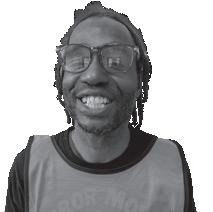
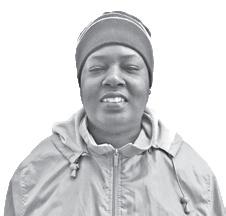
$3 suggested contribution goes directly to your vendor
THE
TEAM veryone at Street Sense Media works together to support and uplift our vendor community.
VENDORS
Abel Putu, Abraham Aly, Archie Thomas, Aida Peery, Akindele Akerejah, Alia Huag, Amia Walker, Andre Brinson, Andre Baltimore, Andrew Anderson, Angie Whitehurst, Angela Morris, Anthony Carney, Apollos Robinson, Beverly Sutton, Brian Holsten, Brianna Butler, Cameé Lee, Carlos Carolina, Carlton Johnson, Charles Armstrong, Chris Boone, Chris Cole, Chon
Gotti, Conrad Cheek, Craig Thompson, Cynthia Herrion, Daniel Ball, Darrel Stone, Darlesha Joyner, David Snyder, Debora Brantley, Degnon Dovonou, Dominique Anthony, Don Gardner, Drake Brensul, El-O-Him, Elizabeth Bowes, Elynora Houston, Eric Glover, Eric Thompson-Bey, Evelyn Nnam, Faith Winkler, Flegette Rippy, Frederic John, Frederick Walker, Gerald Anderson, Gloria Prinz, Gracias Garcias,
Greta Christian, Henry Johnson, Invisible Prophet, Ivory Wilson, Jacqueline Gale, Jacqueline Turner, James Davis, James Hughes, James Lyles III, Jay B. Williams, Jeanette Richardson, Jeff Taylor, Jeffery McNeil, Jemel Fleming, Jenkins Dalton, Jennifer McLaughlin, Jewel Lewis, John Littlejohn, Josie Brown, Julienne Kengnie, Kenneth Middleton, Kannon Brown, Kendarius Tucker,
Kym Parker, L.Q. Peterson, Lawrence Autry, Leo Hughes Jr, Levester Green, Lillie Thomas II, Marc Grier, Marcus McCall, Mars, Maurice Carter, Melody Byrd, Melveon Harp, Milan Stevenson, Nikila Smith, Patricia Donaldson, Patty Smith, Paul Martin, Phillip Black, Qaadir El-Amin, Queenie Featherstone, Rachelle Ellison, Randall Smith, Rashawn Bowser, Reginald Black, Denny,
$3 You pay
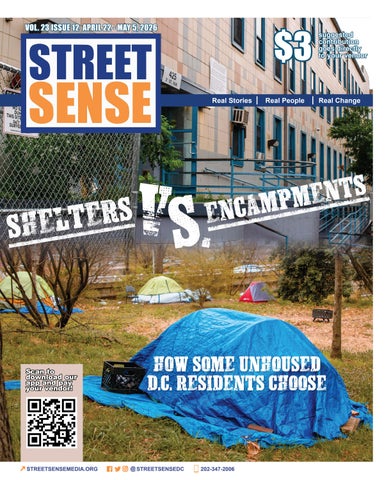
The Cover
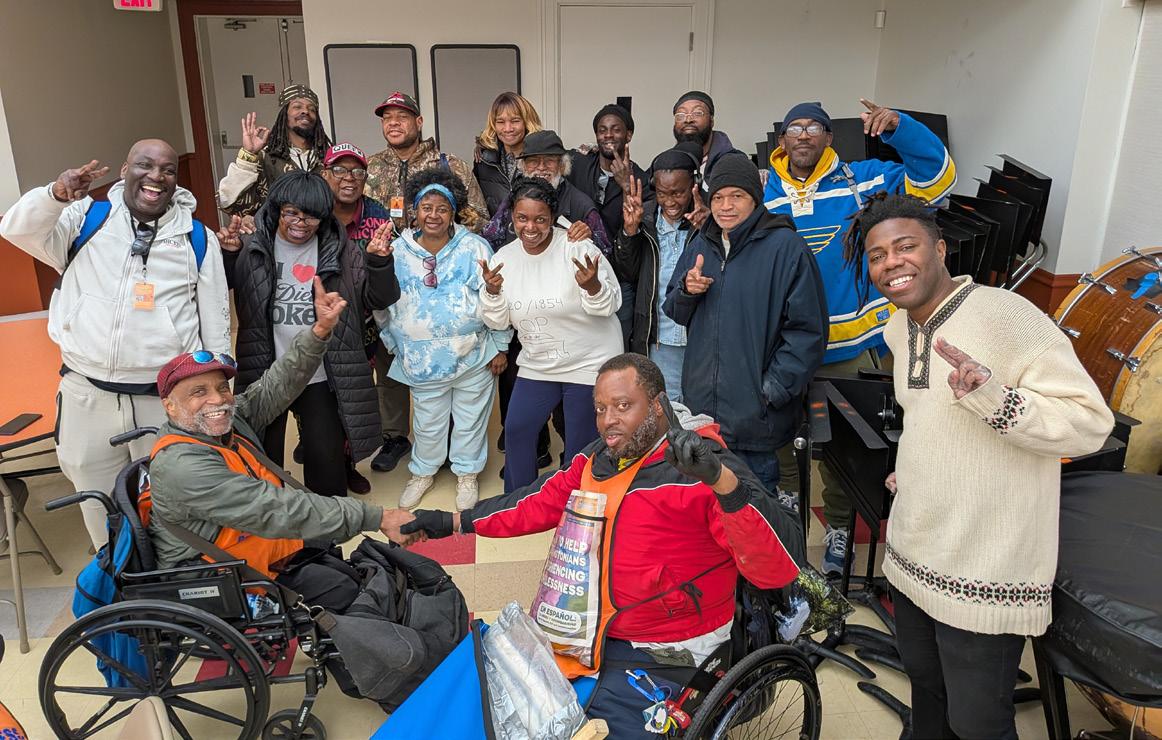
COVER DESIGN BY KEVIN AKAKPO, PHOTOS BY NINA CALVES & MADI KOESLER
Reneece Brinkley, Ricardo Meriedy, Richard Mooney, Rita Sauls, Robert Vaughn, Robert Warren, Rochelle Walker, Ron Dudley, Ronnell Wilson, S. Smith, Sasha Williams, Saul Presa, Shawn Fenwick, Sheila White, Shuhratjon Ahmadjonov, Stephen Lennon, Starchild BLK, Susan Wilshasen, Sybil Taylor, Tasha Savoy, Tim Holt, Tonya Williams, Tony Morris, Vincent Watts, Warning Label, Warren Stevens, Wayne Hall,
Wendell Williams, Wendy Brown, William Hargrove, William Shuford, Willie Futrelle, William Young, Zero
BOARD OF DIRECTORS
Ashley McMaster,
Cherubin,
Blake Androff, Clare Krupin, Chris Curry, Cole Ingraham, David Grant, Jonquilyn Hill, Matt Perra, Michael Vaughan
Nana-Sentuo Bonsu, Stanley Keeve
NEWS IN BRIEF
What Bowser’s proposed budget means for people experiencing homelessness
AUBREY BUTTERFIELD Editorial Intern
After a two-week delay, D.C. Mayor Muriel Bowser announced her 2027 fiscal year proposed budget, totalling $21.1 billion. The budget, which Bowser presented to the D.C. Council at the Martin Luther King Jr. Memorial Library on April 10, aims to grow the District’s economic opportunities in a tough financial period.
To maintain a balanced budget during a year of economic downturn, the city has to either raise taxes or cut millions from last year’s spending. Bowser’s budget opts for cuts from several city services, including existing homeless services programs, limiting the resources available for people experiencing homelessness to move into housing.
Several cuts are centered in the D.C. Department of Human Services (DHS), for which Bowser is proposing a 7.5% drop in funding from the 2026 fiscal year. Bowser did not propose funding any new Permanent Supportive Housing vouchers for the upcoming fiscal year, meaning D.C. residents who don’t already have vouchers won’t be able to use the resource to exit homelessness. The Way Home Campaign, a coalition of homeless service providers and advocates, is asking for the city to fund over 2,000 new vouchers for families and individuals.
Bowser also proposed cutting Rapid Rehousing by $3.2 million, which would prevent any new residents from accessing the subsidy. The program, which provides a year-long rent subsidy and security deposit alongside case management, supported 111 individuals and 654 families as of early March.
Another key proposed cut is an $11 million decrease to the Temporary Assistance for Needy Families (TANF) employment program, which provides career training, resources, and job placements to TANF recipients. The program is being cut to prioritize more effective workforce development programs, according to Director of the Office of Budget and Performance Management Jenny Reed.
“We took a very hard look at all of our workforce development programs this year… one of those programs that we saw that is not working particularly well is our TANF employment program,” Reed said at the budget presentation. “We do need to focus more on those programs that are delivering outcomes for residents.”
Under Bowser’s budget, the city’s Emergency Rental Assistance Program (ERAP), which supports low-income residents with preventing eviction and providing security deposits and first-month’s rent, would also lose funding for the third year in a row. ERAP would see a $1.6 decrease in its overall budget, with just $7 million available for those seeking rental assistance.
CHIEF EXECUTIVE
OFFICER
Brian Carome
DIRECTOR OF PROGRAMS
Darick Brown
DIRECTOR OF VENDOR
EMPLOYMENT
Thomas Ratliff
EMPLOYMENT SPECIALIST
Esmat Amin
VENDOR PROGRAM
ASSOCIATES
Aida Peery, Chon Gotti, Nikila Smith
VENDOR PROGRAM
VOLUNTEERS
Ann Herzog, Aiden
Eisenschenk, Beverly Brown, David Fucillo, Roberta Haber, Stephen Lennon
EDITOR-IN-CHIEF
Annemarie Cuccia
DEPUTY EDITOR
Donte Kirby
EDITORIAL INTERNS
Other proposed changes in DHS funding include a drop of over $18 million for the Homelessness Service Continuum, which provides a variety of resources to District residents, including temporary shelter, case management, and crisis intervention. Under the mayor’s budget, the program would lose $3,234,000 in its family-focused services, $753,000 in individual-focused services, and $14,783,000 in general services. It’s not yet clear what programs these cuts, if they took place, would impact.
Bowser also proposed a $4,411,000 drop in funding for Permanent Supportive Housing, and a $685,000 decrease for domestic violencefocused services.
Outside of DHS, other agencies with programs addressing homelessness and housing affordability would face cuts in the mayor’s proposed budget. The Deputy Mayor for Health and Human Services, which works closely with the D.C. Interagency Council on Homelessness and the city’s homeless services, would see a near-18% drop in funding.
Additionally, the Housing Production Trust Fund (HPTF) would see a significant hit, receiving just over $60 million in new funding compared to its usual $100 million. This is the lowest infusion the fund has received since 2016, when Bowser committed to providing $100 million annually to the HPTF. This comes after D.C. Councilmembers Brianne Nadeau and Robert White proposed The Housing Production Omnibus Act of 2026, a bill restructuring the fund, which is currently being heard in the D.C. Council’s Housing Committee.
Despite the proposed cuts, city officials said the budget aims to provide growth in support for D.C.’s homeless residents through onetime grants and investment in opportunities considered more effective and cost-efficient. For example, City Administrator Kevin Donahue said most families presenting as homeless enter through the Homelessness Prevention Program, which is getting a $1.5 million boost.
“We’ve added some money to the Homelessness Prevention Program, and I think that the discussion really is an incredibly cost-effective way of having families and individuals not end up in much more expensive parts of our system that we cannot sustain financially,” Donahue said.
The mayor also proposed a $25 million investment into another noncongregate shelter, providing temporary shelter and case management to those experiencing homelessness. This investment marks the third bridge housing site in the District, joining The Aston and E Street. Under the proposed budget, $3 million would also be set aside to invest in existing bridge housing.
The next step for the proposed budget is a series of council hearings, which began on April 20 and will go through May 12.
EVENTS AT SSM
ANNOUNCEMENTS
□ The April vendor meeting will be a week later than normal, on Friday, May 1, 2:00 p.m. - 3:00 p.m. Come for pizza, business, and fellowship!
□ The vendor survey is in full swing! $10 and ten papers for just ten minutes of your time. Sign up at the admin desk.
BIRTHDAYS
Chon Gotti April 22
ARTIST/VENDOR
Reginald Denny April 29
ARTIST/VENDOR
Saul Presa May 1
ARTIST/VENDOR
VENDOR CODE OF CONDUCT
Read this democratically elected code of conduct, by vendors, for vendors!
1. I will support Street Sense Media’s mission statement and in so doing will work to support the Street Sense Media community and uphold its values of honesty, respect, support, and opportunity.
2. I will treat all others, including customers, staff, volunteers, and fellow vendors, respectfully at all times. I will refrain from threatening others, pressuring customers into making donations, or engaging in behavior that condones racism, sexism, classism, or other prejudices.
3. I understand that I am not an employee of Street Sense Media but an independent contractor.
4. While distributing the Street Sense newspaper, I will not ask for more than $3 per issue or solicit donations by any other means.
5. I will only purchase the newspaper from Street Sense Media staff and volunteers and will not distribute newspapers to other vendors.
Anne Eigeman, David Fucillo, Ehi Ukpokwu, Jillian Pincus, Maryann Wenning
Alexandra Silverthorne (Photography), Bonnie Naradzay (Poetry), David Serota (Illustration), Willie Schatz (Writing), Molly Pauker (Watercolor), Debbie Menke (Watercolor), JM Ascienzo (Yoga)
6. I will not distribute copies of “Street Sense” on metro trains and buses or on private property.
7. I will abide by the Street Sense Media Vendor Territory Policy at all times and will resolve any related disputes with other vendors in a professional manner.
8. I will not sell additional goods or products while distributing “Street Sense.”
9. I will not distribute “Street Sense” under the influence of drugs or alcohol.
10. I understand that my badge and vest are property of Street Sense Media and will not deface them. I will present my badge when purchasing “Street Sense” and will always display my badge when distributing “Street Sense.”
Residents allege sexual harassment and transphobia in one of D.C.’s few shelters for LGBTQ+ youth
NATALIE NOTE
Editorial Intern
Current and former residents at an LGBTQ+ youth transitional housing program in the District said the program is falling short on its promise of creating a safe space for queer youth, with residents reporting alleged sexual harassment from other residents and deadnaming, misgendering, and mistreatment from staff.
Youth living at the Covenant House SHINE program, many of whom are transgender, said staff were not respectful of their gender identities. According to residents, staff moved trans youth into rooms that did not align with their gender, misgendered them, and disregarded requests for accommodations. Interviews with six current and former residents, two former staff members, and voice recordings obtained by Street Sense suggest conditions that contrast with the respectful and loving atmosphere the shelter advertises.
SHINE is a 24-bed low-barrier shelter for LGBTQ+ young people located in the Deanwood neighborhood of Northeast D.C. It opened in September 2021, filling a gap in services that was left by the closure of Casa Ruby, a shelter that provided temporary housing and services to queer youth. In D.C., there are few programs specifically for LGBTQ+ youth experiencing homelessness, despite the portion of homeless LGBTQ+ youth increasing in recent years. The 2025 Point- in-Time (PIT) Count showed LGBTQ+ youth ages 18-24 made up 38.4% of all homeless single youth, a 9% increase from 2024.
In an October 2021 release about the program from Covenant House Greater Washington, the SHINE transitional housing program is described as a safe space for LGBTQ+ youth experiencing homelessness. “All services are housed within a setting that provides safety, support, and allows youth to be their whole selves within the space; not having to compartmentalize their various identities to fit in or feel safe,” the release states. But residents tell a different story.
Remy Smith entered the SHINE program in October 2025 after leaving his family home. He began to have problems in his first month, when he started to experience sexual harassment from another resident.
Smith reported the alleged harassment to SHINE’s residential coordinator, Brittany Robinson. In voice recordings Smith shared with Street Sense, Robinson told Smith she had text messages showing Smith engaging in conversations with the person he accused of harassing him. In the voice recording, Robinson said this showed Smith was not being harassed.
Caitlyn Pinkney, a former SHINE resident who lived in the shelter with her wife, said they also both experienced sexual harassment and assault at the hands of a resident. Pinkney said a resident harassed her by repeatedly asking her about her bra size and sex life, and assaulted her wife by shoving his hand down her shirt.
When Pinkney and her wife were discussing the incidents with other residents in the communal kitchen, Pinkney said Robinson shut down the conversation.
When Smith discussed the alleged harassment he faced with other residents, he said it was seen as bullying the person he was accusing. Smith was suspended from SHINE for two weeks, while the alleged aggressor was allowed to remain in the program.
“Being suspended from SHINE just basically means, ‘Hey, you can’t come back for this time period,’” Smith told Street Sense Media. “So for whatever time you’re suspended, you’re just basically homeless.”
Covenant House Greater Washington declined to comment on whether the in-person harassment Smith reported was being investigated. Robinson did not directly respond to a request for comment, but Covenant House provided a statement to Street Sense responding to a separate set of questions.
Carlette Mack, interim chief executive officer of Covenant House Greater Washington, wrote via email Covenant House Greater Washington is aware of the public discourse regarding SHINE. She said Covenant House operates from a place of “respect and unconditional love.”
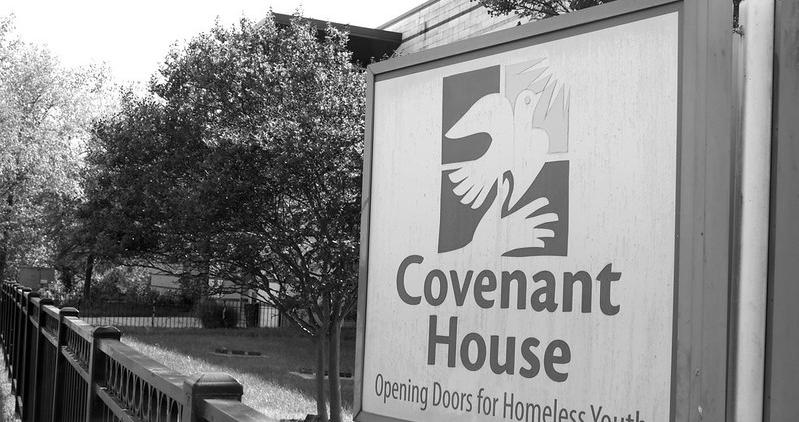
Covenant House Greater Washington runs the SHINE shelter. Photo by Natalie Note
When Smith returned to SHINE after being suspended, he said he was placed on the women’s floor, despite being a trans man. When he asked to be switched to a room with a male roommate, he said his request was denied.
“I refused to sleep in that room. I slept on the couch outside of my room for weeks because I wasn’t comfortable sleeping in that room,” Smith said.
In a recording of Smith asking to be moved to a different room shared with Street Sense, Robinson said comfort should not be Smith’s priority.
“I do try to make my residents feel as comfortable as possible, but I also have beds to fill, I also have other obligations that can take precedent over comfort,” Robinson said in the recording. “So I can’t guarantee comfort all the time.”
Smith said it was about more than just comfort, and his mental health declined significantly due to severe feelings of depression and dysphoria. Smith said he refused to shower and use the bathroom on the women’s floor, which caused his mental health to decline further.
Another resident, who asked to remain anonymous because she is still in the program, said when she entered the shelter, she thought staff would be trained to understand residents’ identities. But when a staff member shouted a derogatory slur against trans individuals while trying to break up a fight, the resident felt SHINE was not what it was advertised to be.
“I was expecting the staff to be more trained to understand more of the issues relevant to us, but it seems that in both trying to resolve conflicts and trying to understand us, it doesn’t seem that they really do,” she said.
The resident said the program uses a binary rooming system, with girls rooming on certain floors and boys rooming on others. She said often, trans residents are placed in rooms that align with their gender assigned at birth, not their gender identity. At one time, the resident said, all trans residents were moved to one side of the building, on the same floor, regardless of gender, with little explanation, which she said was “uncomfortable.”
“It’s very implied that they care more about a cis person’s comfort more than a trans person’s comfort,” she said. “Even if it makes us way more uncomfortable and dysphoric to be put into these places that we’re not really wanting to be in.”
A spokesperson from the D.C. Department of Human Services (DHS), which oversees city shelters, wrote in an email that the service provider at SHINE told DHS they assign rooms based on gender identity, not gender assigned at birth, as the resident reported. The spokesperson also wrote they provide culturally informed training to program staff.
Mack declined to comment on how many complaints have been filed against SHINE in the past year, accusations of misgendering and deadnaming, and what actions, if any, are being taken by Covenant House to address these issues.
“We require all staff to complete child protection training annually, and we regularly engage with youth, staff, and community voices to learn and evolve in ways that reflect their lived experiences,” Mack wrote in an email.
Former SHINE leadership said staff set the tone for how residents were treated. When SHINE opened, Taylor Chandler Walker was the program director. Chandler Walker, a trans woman herself, previously served as the public relations manager for Casa Ruby, a now-defunct shelter for LGBTQ+ youth. Because of her frustration with SHINE, Chandler Walker only worked at the program for two months.
Chandler Walker told Street Sense she felt SHINE should be staffed by members of the LGBTQ+ community and allies, but Covenant House did not honor that suggestion. She said that as a result, staff were hired whose beliefs did not align with the LGBTQ+ community.
Letter to the editor
The volunteer is, by definition, a person who freely offers to take part in an enterprise or undertake a task.
The three volunteers are; me, myself, and I; Daniel Melzine Kingery, 1961 to present.
1. Trash. This volunteering needs no approval from others. But, be aware the police will still arrest you; perhaps not for picking up the trash, but because you are homeless, even when you pick up society’s litter from around your area. In many instances, this will involve partial to total loss of your possessions. These arrests are because you sleep in public. These arrests and fines are because you are not paying for a hotel, motel, rent, or a mortgage.
2. Human Powered Vehicle project. If you are homeless and working on any project that is likely to get you off the streets without government assistance, you are also likely to be arrested if you take too long. During that arrest, the government is likely to lose and/or destroy your possessions.
3. Government office. The previous two items do not require community approval. Serving in office does require community support. Simply entering the race does not. The Federal Election Commission’s list of people who have run for president demonstrates how “far” a candidate gets without the community backing the campaign. It will also show you the nearly 400 registered
“They were deadnaming people. They were calling them out of character, misgendering, counseling them on them being sinners and wrong,” Chandler Walker said.
For Monroe Alise, the former residential coordinator at SHINE, and a trans woman herself, misgendering and deadnaming a trans individual or placing them in rooms that don’t align with their gender identity is more than uncomfortable; it’s traumatic. Alise said she equated being misgendered with being shot because it is so painful for a trans person.
“I can forgive you for shooting me once, maybe, but to continuously keep shooting me or intentionally choosing to shoot me, it’s violence,” Alise said. “It is absolutely violence. Misgendering, deadnaming is violence.”
On the Covenant House Greater Washington website, a post from June 2023 addressed the intersection of youth homelessness and the LGBTQ+ community. The blog states that to support the queer community, individuals should use inclusive language and respect individuals’ preferred pronouns and names.
In addition to not feeling their identities were respected, residents also reported issues with staff more broadly. Former SHINE resident Key’Niya Taylor said she would not describe SHINE as safe or supportive. Staff had clear favorites, she said, and were more lenient with residents they liked, letting them stay out later or be more flexible with the rules. Pinkney, the other former resident, said it seemed staff often favored the cis male patients over others.
“If you were a favorite you could, you could be out a bit later, or you wouldn’t get in trouble as quick, or they will give you a slap on the hands, or they or they will ignore certain things,” Taylor said. “They will see you as this golden child.”
Taylor said she was not a favorite because she pushed back too much on staff. She said to avoid increased scrutiny, she had to agree with the staff and not talk back.
“You have to just, unfortunately, play the nice card,” Taylor said. “You just have to just kiss ass.” Pinkney said Robinson would talk about residents’ personal information with others present, and reprimand residents in front of their roommates using specific personal details. “Health records, how long it’s been taking you to get a job, how you clean yourself, stuff like that,” Pinkney said. Pinkney said she and other residents in the program filed reports in October detailing their experiences within the program with DHS, Covenant House, and Robinson’s boss, but have received no response.
A DHS spokesperson wrote in an email to Street Sense they take client concerns seriously and have trauma-informed systems in place that include a daily review of complaints and unusual incident reports from DHS programs. DHS also conducts unannounced and scheduled site visits and gives consistent feedback and training to its providers, according to the email.
Residents said they had come to SHINE in hopes the shelter would be supportive, safe, and affirming of their identities. Many were drawn to the program specifically because it was highlighted as a shelter for LGBTQ+ youth. But six residents told Street Sense they would not recommend the program to other queer young adults.
Alise, the former residential coordinator, said when she was at SHINE, she worked hard to properly train staff and ensure they knew how to interact with residents without retraumatizing them. She said during intake, she would assure residents SHINE was a safe place where they could explore pronouns and names, and figure out their identity.
Alise said she is not surprised, now that SHINE staff are less connected to the LGBTQ+ community, that the program is having problems.
“When you don’t represent the people you’re serving, that is the biggest downfall of a lot of the community-based organizations that I see, where there is no representation inside with the employees.”
candidates, each with more or less community support, also failed the election.
Eventually, with this type of volunteerism, the support must come from people who will do far more than merely tell the volunteer that, if they can get on the ballot, they will vote for the candidate.
I can only tell you that I qualify for the positions of Washington, D.C. mayor, as well as president of “The United States of America,” and present to you my entire planned platform. From there, it is your duty to accept or reject this volunteer for either position.
You, and you alone, must weigh the pros and cons of supporting the platform and the candidate who offers it; either because this candidate is presently homeless or regardless of that fact, but hopefully because you reviewed the platform and consider it constitutionally solid.
The platform from 2008 is nearly identical today, with some minor improvements. The campaign website registered in 2008 is different today.
Today, you must decide whether you are going to act the same this election cycle and still expect better results, or whether you will improve your actions toward selecting better platforms and expecting better candidates.
Daniel Kingery owns and runs CleanHonestGovernment.com.
DANIEL KINGERY
Mayor’s budget proposes even harsher cuts to TANF than those going into effect this October
ELIZABETH SHORT Editorial Intern
very month, Monique Jackson must decide how to spend the $629 she receives from the District’s Temporary Assistance for Needy Families (TANF) program. Since Jackson lost her job as a paralegal in 2024, TANF has been the only steady cash coming into her household.
TANF helps Jackson, a lifelong Washingtonian, pay for clothing, household items, phone and internet bills, and extracurricular activities for her eight-year-old son. But with a slate of changes to the program taking effect this year, she’ll soon have less to work with.
Under TANF time limits passed as part of last year’s budget and going into effect this October, Jackson, who has been supported by the program on and off for eight years, will see her benefits decrease to $440 a month. By October 2029, her monthly benefit will be just $157.
Under Mayor Muriel Bowser’s proposed budget for the coming year, the drop could be even sharper; Jackson would receive no TANF benefits starting in October 2027.
District officials estimate 8,000 households may be in the same boat as Jackson, and will have to make less money stretch further when changes to the TANF program begin to go into effect later this year.
Three coming changes
TANF is a federal cash assistance program for extremely low-income families run by states, including D.C. In 2025, Mayor Muriel Bowser proposed sweeping changes to D.C.’s program, limiting how long people can receive aid. Although the D.C. Council rejected these new limitations for this year, fiscal year 2026, they are set to go into effect in October, when fiscal year 2027 begins. These changes will cause some TANF households to lose thousands in benefits every year. By October 2028, benefits will be cut by up to 81% for some families, according to a letter signed by local organizations. Starting in October, the D.C. Department of Human Services (DHS), which administers TANF, will eliminate the cost-of-living adjustment. This adjustment historically increased the maximum benefit people could receive by 2.9% annually, to keep up with inflation. Now, the maximum monthly benefit amount for a family of three will remain at $803 indefinitely.
DHS will also increase sanctions for those who fail to meet TANF’s work requirements, such as being employed, searching for work, or participating in education or training programs. Starting in October, households that don’t meet the requirement will lose 25% of their benefits, up from 6%.
The federal government only funds TANF for families up to 60 months. Since 2001, the District has covered benefits for families who exceed this time limit. Starting in October, DHS will reduce benefits for families who have been in the program longer than five years. The department will implement these cuts gradually, reducing benefits by 30% in 2026, 50% in 2027, and 75% in 2028. If a family of three reaches the 60-month time limit, their maximum benefit would fall from $803 today to $562 by the end of 2026, $402 in 2027, and $201 in 2028.
“The local cost share [of TANF] has compounded to unsustainable levels,” a representative from DHS said in an email. “TANF program expenses have grown 48% since 2020 and are forecasted to grow $11M more in FY26.” According to District officials, these cuts will save the city millions.
The mayor’s proposed budget would escalate these changes, increasing cuts for families who have reached this time limit to 100% next year. If the proposal is passed as written, starting in October 2027, D.C. families who have received TANF for over five years would no longer receive any support from the program.
These cuts are happening as the District is introducing new federally-mandated work requirements to the Supplemental Nutrition Assistance Program. “We’re in the midst of the greatest reduction of D.C.’s safety net in, at least, a generation,” said Ed Lazere, director of legislative advocacy at the United Planning Organization.
Impacts of TANF cuts
Between 15,000 and 17,000 families receive TANF benefits in the District, officials said at a March 6 hearing. Families use this money to pay for whatever they might need during the month: snacks, clothing, field trips, and, most often, rent.
“TANF is a critical safety net for families,” Jessica Berger, supervising attorney in the public benefits unit at Legal Aid DC, said.
According to District officials, roughly half of households receiving TANF in the District will reach the 60-month time limit this fiscal year. While officials expect 2,000 families to receive hardship extensions from time limit penalties, officials said, roughly 6,000 will see their benefits cut by 75% by 2028, or cut entirely next year, if Bowser’s budget is passed as written.
Increased hunger and homelessness will be two of the primary impacts of these cuts, advocates said. According to the Children’s Law Center, TANF cuts could also decrease school attendance, reduce educational success, limit brain development, and increase financial stress and child neglect.
“Our children are the future, so it’s also harming the city’s future if we pull the rug out from under our youngest residents and just make it harder for them to grow up healthy and strong,” said Lazere.
Cuts to TANF will disproportionately impact children of color and families living in Wards 7 and 8, where more than 50% of TANF recipients live. Over 96% of TANF recipients in the District are Black.
A 2021 study by the Center on Budget and Policy Priorities argued that TANF policies like time limits and work requirements disproportionately cut off benefits for families of color. While 68% of families experiencing poverty received benefits in 1996, that number had dropped to 23% by 2019.
“These types of punitive policies stem from history of anti-Black racism and the idea that only some families are deserving of support,” Legal Aid DC’s Lisa Meehan testified in a Feb. 26 hearing. “This history of racism bears out in the disproportionate impact of these cuts.”
Employment and education
Jackson first began receiving TANF eight years ago when she had her son. Before then, she was a social worker. While on TANF, Jackson has completed courses in electrical wiring, HVAC, stationary steam engineering, and law. Jackson also founded and ran a nonprofit organization, Children of the Light, which supported underprivileged children in D.C. Jackson always wanted to help people in her community. “D.C. is the community that made me,” she said.
Despite her resume, Jackson has struggled to find and maintain employment. In February 2023, Jackson found a job as a paralegal specialist with the D.C. government. But the department laid her off in March 2024 due to budget cuts.
Similar experiences are common for TANF recipients. In fiscal year 2025, the District’s TANF Employment and Education Program (TEP), which provides job coaching to recipients, only helped 10 people find jobs for every 1000 work-eligible TANF recipients, according to responses from DHS before the March hearing. DHS cited job cuts, budget constraints, and slow hiring for these low rates.
The mayor’s budget proposes cutting $11 million from TEP. “The District is prioritizing investments in other more cost-effective workforce development programs,” a representative from DHS wrote in an email.
While the D.C. Council will have hearings on the proposed budget over the next few months, Jackson and others like her will already begin to lose hundreds in income this October, regardless of whether these new changes are passed.
Jackson said she has “no clue” how coming TANF cuts will impact her and her son, or how she’ll manage the household after losing hundreds in income. She hopes she is able to find employment again before the cuts occur.
“It is such a drastic cut, that I don’t want to think about it,” said Jackson. She said the cuts will cause a huge setback, not only to her finances, but to what she’s accomplished in her life and education. She also said it would likely mean her son wouldn’t be able to participate in extracurricular activities.
“What these policies are doing is they’re asking the people with the least resources, the people that need the most help, to pay the biggest cost here. And that is just devastating,” said Berger. “That’s not reflective of D.C. values. We need to look real hard at ourselves in a tough budget year: Who is going to be paying that burden? It should not be our families in D.C. who have the most limited resources.”
Update
on SNAP
changes:
New SNAP work requirements are beginning June 1, instead of May 1. DHS updated its website in early April to announce this change. Starting June 1, whenever customers recertify for benefits, the agency will screen customers to determine whether new work requirements will apply to them. Customers who are required to meet the new work requirements but do not meet them will only be able to receive the benefits for three months in a three-year period. DHS recommends impacted customers seek SNAP Employment and Training services, prepare to show documentation of hours worked, and stay up-todate on agency communication.
Monique Jackson uses Temporary Assistance for Needy Families program to help support her son.
Photo courtesy of Monique Jackson
RANDOM ACTS OF KINDNESS
Hold that Tiger!: Do harm reduction strategies really work?
WENDELL WILLIAMS Artist/Vendor
Recently in Street Sense, there was a feature supporting harm reduction strategies used in combating drug use. Things like needle exchanges, public injection sites, or not being arrested for using drugs when you’re addicted. Now, those same types of approaches are being applied to address homelessness. I’ll admit right here, full stop, I’m not in favor of harm reduction strategies, for what I think is good reason. I’ve gotten to see the additional mess the approach caused in people’s lives, as if they weren’t already complicated enough. It adds one more element to the equation: the waste of time.
Let’s start with my general definition of harm reduction based on how it was applied in the areas in which I’ve worked, like shelters, treatment, case management, and homelessness prevention. Harm reduction is supposed to be (key word, supposed) a compassionate, evidencebased approach that minimizes the consequences of negative behavior, which could be anything from substance use to evictions to untreated or unaddressed mental health issues that could cause housing instability without requiring someone to immediately address those problems. We would prioritize those clients because of concerns for their safety, dignity, and autonomy, placing them in services like a housing first program or Rapid Rehousing. This sometimes meant they got help ahead of those who were compliant and working towards building a foundation. I disagree with these kinds of policies so much I have walked away from well-paying jobs. Some might say I have benefited greatly from harm reduction. At first glance, yes, but I beg to differ about the term benefit. In the long run, there’s one thing harm reduction practitioners don’t take into consideration: what’s supposed to reduce harm actually wastes a person’s most precious commodity, their TIME. I understand more than most how the loss of time can determine the outcome of your life, and how long you get to enjoy it, if at all.
The marching orders given to me long ago by two very wise old Black men who were my counselors in rehab, years apart in different cities, left me with similar basic messages. One, Allan J, who died 56 years sober and helped so many in Northern Virginia, would say repeatedly, “Everybody struggling can tell time, but not everybody struggling knows what time it is!” Followed by, “And it’s later than you think!” We don’t have all the time in the world to get it right. This is my biggest problem with harm reduction: it wastes valuable time and resources. Clients think they’ll have unlimited bites at the apple; there’ll always be another housing program they can tap into. And for a while it seemed so. But here comes the 47th president, and times, they are a-changing.
Well, welcome to the Trump and MAGA world. Those clients who had unsuccessful housing experiences in the past may not get those same opportunities for assistance anytime soon. And, as I used to share with clients, timing is everything.
Ray R, my counselor in Norfolk in 1985, said, “There’s no better reason to get something done than knowing there’s no room for failure.” Alcoholics call it “rock bottom,” and unless you hit it, there’s no motivation for change. The model used by those old timers was responsibility, accountability, uncomfortability, and here comes change. Ray said, “When in doubt or your back’s against the wall, all that’s expected is that you do your best and God will do the rest.” He didn’t push me to action; he just planted a seed and laid a simple set of tools at my feet for a better life.
It took me years to pick up and hold on to those tools, all the while never taking full responsibility for all the negative events in my life. I’d just play the blame game, like some casino card action, constantly reshuffling the deck and asking for more cards. Sometimes I’d get lucky, but in the end, you know the house always wins.
I started to end up in the same kind of places around the same kind of faces, wondering “How in the hell did I get here?” And after some time, I had to add “again” to my question. And they say insanity is doing the same thing twice, expecting different results.
Well, like being stuck in “Groundhog Day,” I’m convinced harm reduction doesn’t work because others and I were stuck and just going round and round. It’s like having to run the Game of Life with cement boots on, getting nowhere fast. As Pink Floyd sang, “No one told you when to run, you missed the starting gun,” and you’re back at GO without the $200 and homeless again, while more nonprofits have come online and others have expanded their reach. That’s what I saw looking back at myself, and later I saw it in my clients. But God forbid you suggested they take the long way home and build a house of brick, a solid foundation, including the skills needed for successful living. News flash: you don’t have to be a person with a master’s in social work to know what those skills are, nor do you need a degree to see whether homelessness and addiction are going up or down in your community.
About 70% of my clients at any given time had housing with assistance within the last few years. What would that tell you about the approach we’re using?
Frederick Douglass famously said to the Freedmen, “There’s no progress without struggle.” The same thing applies to those experiencing homelessness or addiction. There’s no quick fix. But most
clients don’t even hear me. They want the pot of gold, not realizing it is at the end of the rainbow for a reason. It is on the journey that we learn so much. So, you’ll have to work on yourself to get there. The shortcut builds no character, which I’ve seen and experienced. The time-consuming, step-bystep process of doing something in a way that encourages you to grow and develop as a person with lasting and transferable skills will carry you much further than waiting on Santa Claus to gift you the finished product. This is why I don’t celebrate when a client who is not physically disabled waits 10-12 years for a housing voucher and moves into an apartment with all new furnishings, like they won “The Price is Right.” My first thought is, what could a slightly motivated client do with 12 years other than waiting? Hell, Forrest Gump finished college and traveled the world. Harm reduction promoters, knowingly or unknowingly, just sell waiting.
This is why I’m such a big fan and supportive of these programs that have prerequisites. To own a home through Habitat for Humanity, you must first help out in the building of at least seven other homes first. Habitat has one of, if not the lowest, foreclosure rates in America. I wonder why?
Or take the Salvation Army’s adult rehabilitation centers, which help if you’re broke or uninsured and need substance abuse treatment. While I’m not a fan of its corporate religious behavior and messaging, the centers put people into action. Whether they stay 30 days or 3 years, they will understand the principles of getting into action and you being the change you want to see in your life. I’ve worked in shelters that required clients to deposit 80% of their income into a savings account there, or be forced to exit the shelter. You must deposit on “payday” no matter the source of income. They’re building the foundation of paying bills on time. Make sense?
In the end, change has nothing to do with money or lack of money. At some point, the individual needing help must take part in the responsibility for the outcome.
That’s something we don’t do enough now, in the fields of helping people dealing with shortcomings. After about 30 years of applying these techniques, we’ve failed, and some clients simply failed to do their part in helping themselves. A lot of my colleagues think that by spending more money, we can solve homelessness. I say, not in my lifetime.
I never dreamed I would be using a billionaire to explain applying harm reduction to homelessness. But let’s use Tiger Woods as a case study. With all of the talk of lack of resources being one reason harm reduction strategies might fail, here’s a case where money is no object, yet.... Tiger’s money allows him to try the harm reduction approach over and over to respond to his problems with substances. If he didn’t have money, he’d have hit a deep bottom. And we don’t know how many other situations he’s gotten out of.
He’ll wind up going to another luxury rehab, where there won’t be someone getting in his shit to help him figure out what’s got a hold of him so bad. And with the cost of rehab being $100,000 or more, there’s a business model in the way of best practices. How would I know? Well, I’ve gotten an unsuccessful result from a few of those rehabs practicing harm reduction. I ate well, rested, stayed in shape, and worked on my tennis game, while barely scratching the surface of what was going on with me, let alone beginning to look at solutions. Why? None of the nice, kind people working there wanted to make me or themselves feel uncomfortable. And like Tiger, metaphorically, I continued to crash over and over. The door was always open to come as long as someone was paying. Now use that same thinking and business model for the homeless services industry, because that’s what it is. It wouldn’t dare to change so much it would put itself out of business. Someone, please, look at the bottom-line numbers after all these years. I’m trying to tell as many as I can, but all shouting makes you do is lose your voice. Heard me lately?
The lights are dimming, but the band keeps playing the harm reduction song. What’s the fight song of Princeton University? Yeah, hold that Tiger!
A customer’s photo of Wendell selling the paper. Photo courtesy of Wendell Williams
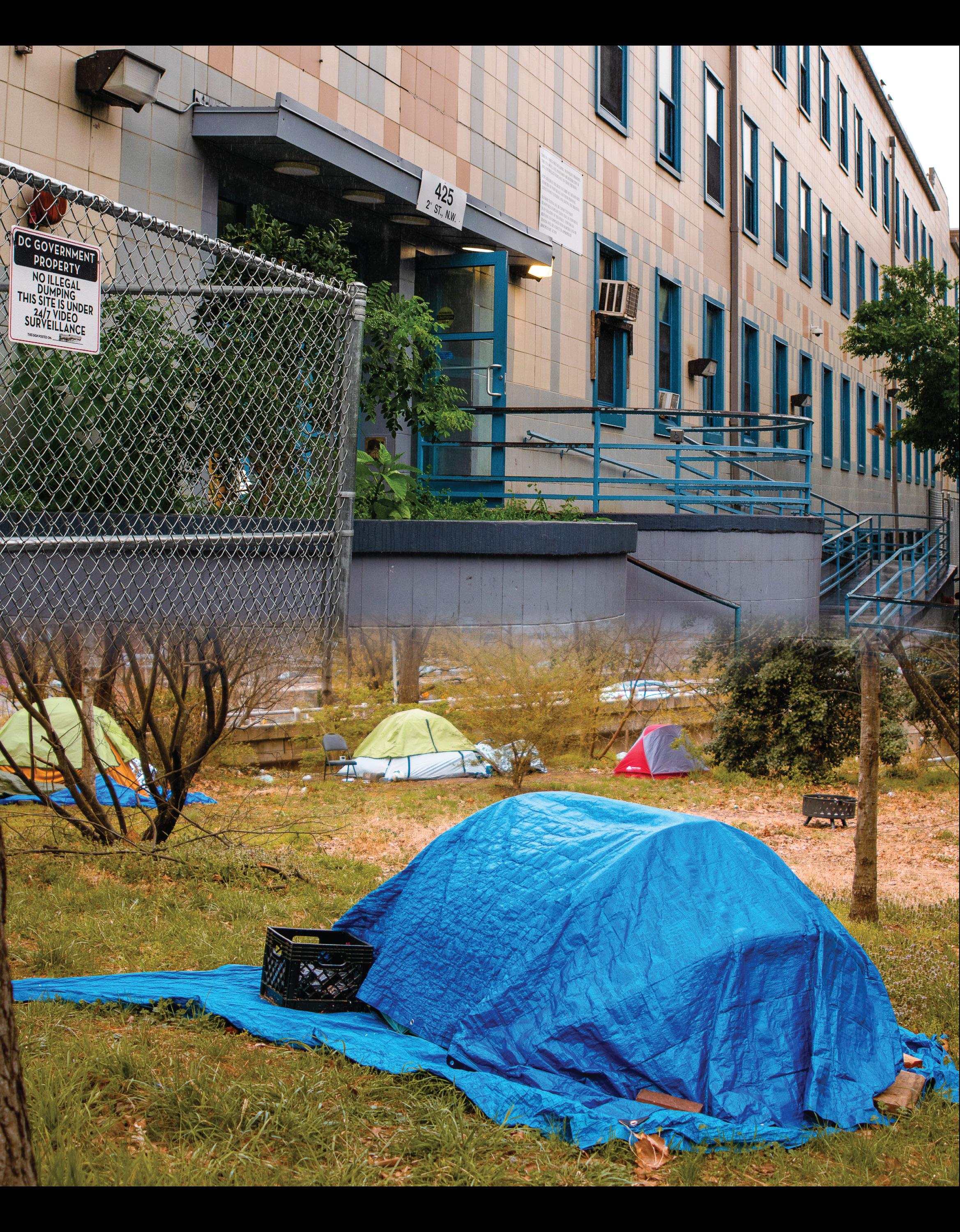
Why some unhoused D.C. residents say they prefer living outside over shelters
KATIE DORAN Editorial Intern
On any given day, there are more than 5,000 people experiencing homelessness in D.C., and almost 800 of them live outside.
Housed Washingtonians may not always understand why some people experiencing homelessness live in tents, encampments, or other arrangements outside, rather than staying in the city’s homeless shelters. But many people say they’ve had negative experiences in shelters, leading them to feel safer on the street.
“To the uninitiated, if somebody asked me, ‘Well, why don’t they just stay in a shelter?’ I’m like, ‘Have you ever been in a shelter?’” Andy Wassenich, director of policy at Miriam’s Kitchen, a homeless outreach organization, said.
The majority of people experiencing homelessness in the District do stay in shelters or transitional housing, which city officials maintain is the safest option, offering protection from the elements and a central place to access services. The District has worked in recent years to open new options that respond to some of the reasons people say they avoid shelter, though concerns around fear of violence, restrictions on belongings, or crowded conditions are still common.
“[Shelters are] the last option. I’d rather sleep outside, and I’ve done that plenty of times,” John Chambers, who has stayed at a shelter in D.C. a few times before, said. “The number one is just how dangerous it is… People are at their worst, really, at the shelters. I was at my worst, I was going through a real bad time, and really needed some help, and I didn’t get it there. So if I had to stay outside and do it on my own, I would do it that way.”
Where do I feel safe?
One early morning in March, Melvin Tibbs woke up at 801 East Men’s Shelter to find his phone out of battery. Another resident was using his charger without permission. According to Tibbs, an argument ensued, and the other man stabbed Tibbs in the neck with a sharp piece of metal. It was a “stupid confrontation for nothing,” Tibbs said, but it hospitalized him. Now, he told Street Sense, he wants to avoid homeless shelters.
“I’d sleep outside instead of being up in the shelter, man, because it shouldn’t be like that. Why you touching people’s stuff?” Tibbs said. “I’m just trying to get some help. That’s what I thought I was in there for. I was trying to get myself out of there.”
People experiencing homelessness in D.C. may stay away from shelters because they’ve experienced, witnessed, or heard about violence there. Chambers was at 801 East in March and said he witnessed Tibbs’ stabbing. Just a few years earlier, in 2023, Chambers himself was stabbed by another resident there, he said.
“I’ve seen people have guns there, knives there. It’s the wild, wild west,” Chambers said of 801 East. Weapons are prohibited in city shelters, a spokesperson for the D.C. Department of Human Services (DHS) wrote to Street Sense. 801 East is the only shelter Chambers has stayed in, but after experiencing violence there, he tries to avoid shelters altogether. People living outside commonly tell Street Sense they’re put off by shelters entirely after a bad experience at one location.
All staff in shelters are trained in crisis intervention, according to the DHS spokesperson, but Tibbs, Chambers, and others say they feel staff are not equipped to intervene or prevent violence and can react poorly when conflict breaks out. At a February oversight hearing for DHS, Remy Smith said that, at SHINE, a shelter for LGBTQ+ young people, staff did not respond to instances of violence and harassment.
“There were multiple times I witnessed verbal and physical fights between people in the building, and when these were reported to the staff, it was met with, ‘Hush. Don’t say anything,’” Smith said.
Different experiences with violence may shape where someone feels safest. As Wassenich said, “Safety is relative.” While those living in shelters may have concerns about staff or other residents, people living outside can face harassment from strangers passing by. Nationally, about 13% of violent attacks against people experiencing homelessness occur in shelters, while most occur outside.
Earlier this year, Jacques Santee told Street Sense they had been assaulted by someone trying to stab them while they were sleeping in their tent in the Capitol Hill neighborhood. In other cases, attackers have targeted multiple people experiencing homelessness: in 2024, a group attacked four people sleeping in an encampment in Silver Spring, Maryland, and two years earlier, a man shot five people experiencing homelessness in D.C. and New York City, killing two.
The Trump administration’s federal takeover of D.C. and crackdown on homelessness last August also led to more encampment closures and increased fear around safety for some residents living outside. While it’s rare for federal or city law enforcement to arrest someone sleeping outside, the presence of officers can make people feel uneasy.
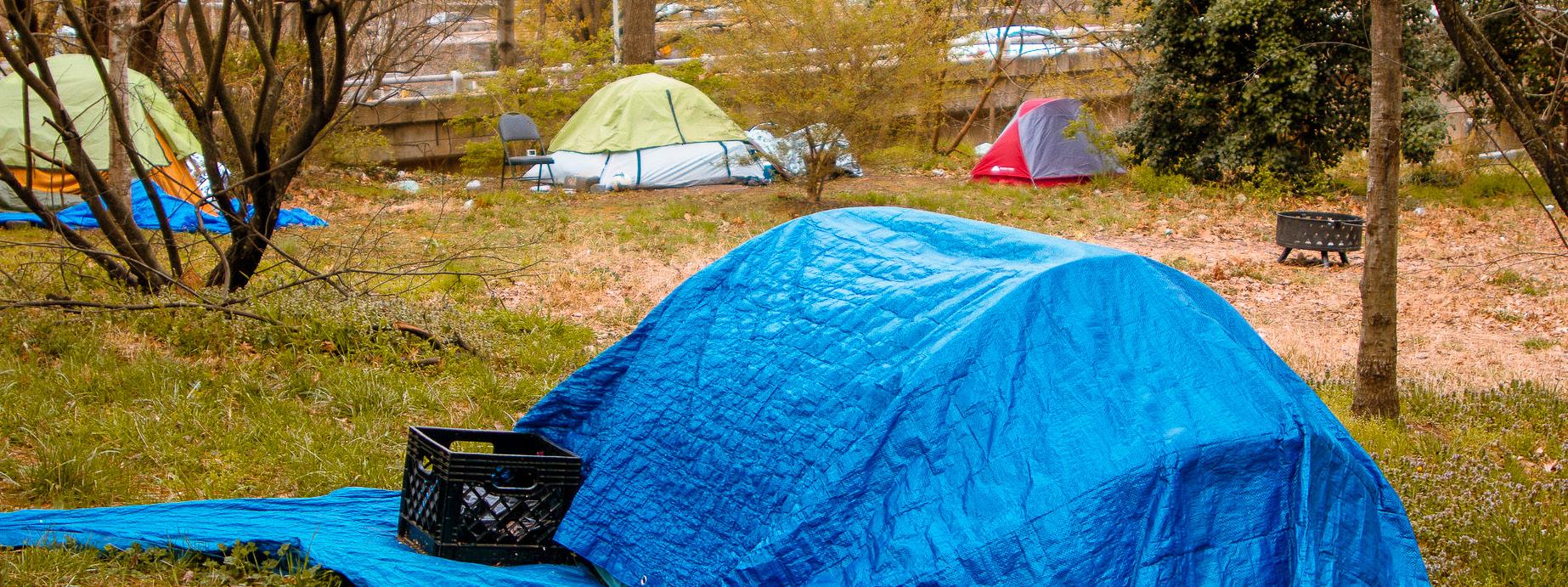
An encampment the city closed in April 2025. Photo by Madi Koesler
Weather is another element of safety, particularly during periods of extreme heat or cold. During the record cold of this past winter, four people likely experiencing homelessness died from hypothermia.
During the winter, D.C. opens temporary hypothermia shelters to increase bed capacity and keep people out of the cold. Demand for shelter is highest in the winter, suggesting some people sleep outside in temperate months, but go into hypothermia shelters during the cold.
“It’s so cold out here sometimes, or it’ll be so hot. You never really know what you get here. I wanted to be out of the weather, and not deal with that,” a resident at the Community for Creative Non-Violence (CCNV), D.C’s largest shelter, told Street Sense. The person asked to remain unnamed for privacy reasons.
What can I have?
Many shelters have restrictive policies around who can stay, what they can bring, and more. Josh, who introduced himself by his first name only, has been experiencing homelessness for 14 years. He’s stayed in shelters before and described going to a shelter as a “pile of work.”
“There’s so many hoops you gotta jump through, and so many different people you gotta talk to, and this person wants you to go somewhere else and do something, and then fill out this paperwork,” Josh said. “To jump through these hoops and spend all my time and resources to do that is just insurmountable.”
Many shelters restrict residents to only a couple of bags worth of items, and certain items may be banned. These rules are one of the “biggest barriers” to accepting shelter for many people, Wassenich said. “Whatever possessions that you happen to have, when you’re living on the street, that’s all you have.”
Josh, who lives outside in Navy Yard, said he doesn’t want to go back to a shelter in case he can’t bring all his possessions inside.
“The problem with the shelters is, the moment you come in, they say, ‘Okay, you can’t have that, you can’t bring this in here, you gotta toss that in the trash or store it somewhere,” Josh said. “Once you have no property, pretty much, they’re forcing you to be a beggar, to depend on other people, and that’s what I’m trying to avoid. That creates the problem they’re supposed to be there to try to mitigate.”
Some say they fear losing their belongings or having them stolen while living in close quarters. Bernard and his cousin Darnell, who introduced themselves by their first names and who live in an encampment in Navy Yard, both said they left shelters because residents stole or tried to steal their belongings.
“I already don’t have a lot. What I do have, I plan on keeping,” Darnell said. “I’m not trying to go to sleep and wake up without it, and now it has to be a confrontation.”
People experiencing homelessness may lose their belongings or have them stolen while living in encampments, too, if they have to leave them unattended to go to work or get meals. Those in encampments also face closures, when the city clears tents and other set-ups where people experiencing homelessness are living. If a resident is present during a clearing, they may move their belongings, but if they are not, the city encampment team may throw them out. While residents typically get at least seven days’ notice before an encampment closure, the city sometimes closes encampments with little warning, leading residents to lose possessions, including IDs and medications. In the last two years, D.C. has closed 200 encampments.
People who live outside say encampment closures are frustrating and inconvenient. “Why they coming to take my stuff, when I ain’t coming to take their house?” asked Bernard.
Who do I live with?
The city funds just over 1,100 low-barrier shelter beds for singles that people can walk up to the same day, with hundreds more beds spread across CCNV, higher-barrier shelters, family shelters, and temporary housing. In low-barrier shelters, residents can face crowded conditions and a lack of privacy when sleeping in communal rooms. Data from a recent week this April shows low-barrier shelters in the District operating at more than 98% capacity, with fewer than ten beds vacant some nights, though occupancy rates vary throughout the year.
With so many people in one space, Darnell and others worry disagreements with staff and other residents in shelters will escalate into conflict.
“I have a distinct memory of somebody saying to me, when offered the opportunity to go to the shelters, ‘Nah man, I’m trying to stay out of jail. If I go to a shelter, I’m going to get arrested, I’m going to get in a fight, and I’m going to go back to jail,’” Wassenich said.
Crowded facilities can also create cleanliness problems residents say are often not addressed. Apollos Robinson, an artist and vendor at Street Sense staying at the 801 East Men’s Shelter, said he was written up after reporting bed bugs and bringing one to the front desk.
“I set a bed bug on the desk. It’s okay for me to lay in the bed bugs every day, but if I lay one on the front, it’s not okay for it to be there?” Robinson said. “I don’t have nobody in my corner there.”
Some people may avoid shelters because of drug use in or near the buildings — while shelters generally prohibit drug use on the premises, many former shelter residents said it is still prevalent. “With the drug use that goes on there, if you’re in recovery, I wouldn’t recommend shelters,” Chambers said.
However, experiences vary: while some may avoid shelters due to drug use inside, others may avoid living outside for the same issue.
“It goes both ways. Some people feel like their sobriety is at risk if they go into a shelter,” Wassenich said. “I’ve also heard the opposite argument: ‘I need to get off the street or go to shelter, because there’s too many people around me with drugs.’”
For couples or adult families experiencing homelessness, restrictions on who can stay in a shelter also form a barrier.
Families with minor children can access an emergency shelter program that keeps them together; if they live outside, they face a higher risk of the city placing children in the child welfare system. But families without minor children generally cannot access the same program. Most low-barrier shelters, where residents sleep in rooms with many others, are single-gender or separate men and women.
“If you are a mixed-gender couple and you are unhoused, our low-barrier shelters are not an option for you. You will be split up, you can’t stay together,” Wassenich said.
The city recently opened two non-congregate shelters, where residents have semi-private rooms and mixed-gender families or couples can stay together. But non-congregate shelters are an option not all people experiencing homelessness have access to: residents have to be referred to the shelter and meet certain qualifications.
In addition to splitting up families, shelters may force people experiencing homelessness to surrender their pets. Nationally, about 10% of people experiencing homelessness have service animals or pets, though former DHS Director Laura Zeilinger testified restrictions on pets did not prevent a notable number of people from entering shelters. D.C. has no pet-friendly shelters, as a 2024 bill mandating DHS create one by October of this year remains unfunded.
Where can I get the help I need?
Having a central location to sleep, get food, and be connected with other resources and services can be a major draw for shelter residents.
“Outside, it’s hard to keep your stuff together all the time. I have to go three, four miles for laundry, go somewhere else for food, somewhere else to shower. It’s hard. I’m used to being in my home,” the CCNV resident said.
But others say that the resources offered in shelters don’t meet their needs. Josh, for example, has diabetes and said not being able to cook his own food while staying in shelters is a “serious medical hardship.” He prefers staying near the Whole Foods in Navy Yard, where he can grocery shop and prepare meals in the food court microwave.
Residents also said shelters do not always meet identity-related needs. At an oversight hearing in March, DHS Director Rachel Pierre said anyone can go to a shelter that aligns with their gender identity. But even at SHINE, a shelter designed for LGBTQ+ youth, Smith, a trans man, said staff were not supportive.
“My last month at the shelter, they decided to place me in a room strictly full of women,” Smith said at the February DHS hearing. “I told them it was making my mental health deteriorate, and they just told me that comfort isn’t an option sometimes, and I have to deal with it because my only options were to stay in the shelter or be homeless.”
Language access is another barrier. Shelters frequently lack bilingual staff, making it difficult for some residents to report concerns or seek help, though the city offers free access to translation through a Language Line.
At the February hearing, Heyden Rosendo testified in Spanish he was physically attacked at two different shelters. A translator interpreted his testimony: “He had struggled to report this to supervising staff due to language barriers, and he felt that there wasn’t proper training and trauma-informed approaches.”
There are numerous reasons why a person experiencing homelessness may prefer to live outside or in an encampment instead of in a shelter. D.C. has tried to respond to some of these concerns over the last decade, renovating older shelters and adding new options with more privacy. But some people still prefer not to stay there. Wassenich said it’s important to understand these varied experiences and meet them with respect.
“Freedom of choice is important. Folks who are unhoused and homeless, they still have rights. They still have the ability to state what they prefer. They still have dignity.” Wassenich said. “One of the ways, I believe, that you help people turn it around, is by giving them some level of comfort and agency.”
God knows exactly what He’s doing!
DONTÉ TURNER
Why the hell y’all blocking people intentionally from getting help? If y’all signed up for a job to help people with a life crisis, mental health issues, living issues, or issues in life, period, and the government officially licensed “you all” to help with the solution to these problems, what the eff you come to work fa?!
According to Western Community College, the “gist” of these diverse entities — doctors, lawyers, first responders, substance use disorder (SUD) programs, mental health services, and housing providers — is that they constitute a complex, interconnected system of community support designed to promote health, stability, and safety for vulnerable populations. However, when people like me enter their establishment, they engage in behaviors that violate company policies, such as having personal phone conversations, leaving their posts for extended periods, sleeping on the job (especially at the desk or in any position), not returning phone calls, and creating problems instead of resolving them. When situations like mental health actually occur, I’ve seen and have been told by some of their employers, “Look, I don’t feel like this s— today” or “You’re going to leave now when I tell you to” or “You get it when you get it; I really don’t care.” Some of these mentally ill and substance use-disordered individuals receive worse treatment than those in prison by those who say they are here to defuse the situations when they are the ones provoking it.
You do have some employees who not only work to provide, but provide the resources for mental health and SUD clients, housing, legal situations, etc., but they also actually go beyond while challenging those who oppose their efforts. Philippians 4:19 says, “And my God will supply all your needs according to His riches in glory in Christ Jesus.” Personally, I would like to say thank you for not just doing your job but actually meaning it when you say you care and love us. Initially, I trusted your co-workers’ words, but now their statements feel like venom when it comes from them. When people like them say they love me, I hear “Ef yo’ Black life, I marched for attention, not your help.” When I hear, “You can make it,” I hear, “I don’t want you to; I would prefer to work for the Klan than to see you succeed.” When you declare yourself to be a servant of God, I recognize the presence of the wolf that was referenced. When I hear “We’re here for you!” I see the other part you left out — “to be destroyed.” When we are denied the help we are promised, this is what people like me hear.
Men and women have been put in difficult situations we bring to them, and conversations may have not always gone right, or the outcome may not have come out the way we clients/customers may have or have not want(ed) it to, but the love they have in their heart to see us succeed is what we were looking for the whole time. I know we can be a problem sometimes, but you guys don’t kick people out, curse people out, write people up, all that other extra stuff others would give us. They did exactly what they got hired to do: give people the help they needed; they listened. Something most of y’all don’t do no mo’. You do whatever the hell you wanna do. Y’all slow to come to work and do nothing, rush to get off and go party and other things you on yo’ way to hell fa’. I know because you have your personal conversations out loud on the phone while on the clock.
These people are loyal and compassionate with us; they’re always consistent and persistent, even when the situation doesn’t even make any sense. They even take on the responsibilities of others, depending on the urgency of the situation. Too bad it’s always overlooked for what it is and looked at as soft and weak when the whole time, the weak ones are the people who are taking advantage of the weak. So, if that’s you, then I’m talking to you. I don’t care who you are or how rich you are; you can’t defeat the fact people of this stature are of importance, and y’all just in the way, not just in our way, but in the way, period. So if y’all can’t understand what I’m sayin’ in the educational sense, well then, lemme break it down to ya like we in da’ hood, “Y’all need to tighten up or get the ‘f’ out the way and let them work; let ‘em cook ‘cause y’all in da way.”
Donté Turner is an artist/vendor with Street Sense.
Barro
DRAKE BRENSUL Artist/Vendor
Partially clouded, the air was a little cold and she had to walk up a slight hill to go to work; the pavement being wet from the rain before morning. Opening the solidcore door against the faceted wall without windows for the front, to an inside room that was long. It housed about a hundred computers within its three rows. The mainframe cpu was racked up in the back. She went in to put her things away. Sometimes in the afternoon the room would lose its welcoming smell due to the allowance for the clients to take off their shoes. The whole room, twenty feet wide by forty feet long, had a residual smell.
Mostly across town the air was clean. It was still early morning and the cousins were eating breakfast together. “I just don't get what her mother's thinking,” he threw into the conversation. Somewhere around twenty-something, her mother was buying food while she was puttering through class at the local college. Each of them easily knew seventy or eighty relatives their area held around town. “Sending her off to work, when you know she is not going to have any time for herself and she can't get time for us, so she has no ‘anytime’ for what's in between.” The other accepted, “Maybe she doesn't know how to figure it. Let’s go up there to see what she is getting into. If it's just things she’s playing with, I am going to agree with what's being said.”
They came up to her barro and shuffled their feet, waiting for her shift to pass and returned. The days traveled without time. When they were long it’s because they were; when they were short it’s because they were being moved by someone else. At clever, a client comes in and did software moves. There were days cluttered with games. There were days that passed her by. Somedays they came in to send an email, or print a postcard. There were somedays… not somedays, and Sundays.
At dinner, they had a different time with things feeling; then being relayed into a relax. The woman did choose to sit, and sat she did, slowly picking at the food. Irritation drew an intensity to the air that was clear in sound. For it did not invite a way to open and move, and soon the woman didn't feel like finishing her food or just sit there. And she lit into her daughter. In town her cousins found. No. The next day no one showed up for work, as if they were told and obeyed.
To adjust, the cousins packed up some musical instruments and traveled to an intersection that did not really interfere with the lugar. They played long after the girl went home. They went home searching for no. In a few weeks, she found herself standing at the intersection. She was standing alone, on her way home, hearing the sound, through the redes that drew the streets and the houses of a barro, while the cousins were timing their music to be heard. When her cousins could see her in the distance, one of them walked over to her and suggested, “Go get some groceries, you need to eat in a conflict.” After she returned, they packed up and went home. Through a rhythmic start and stop of traffic lights pensively, they shared the mood they were creating with her, which was based on “have they lately” and the boys themselves were still coming on to the high. So the boys hinted to her, searching for a reaction to play with the music in her mind at work. After putting her things away, she put the food in the cabinets. Her money was good. Her mother looked at her unintentionally, because she was close to the time when she could go to the counter and pay for food, and they would not let her walk out with the food. In any case, her cousins were due for dinner too. The cousins had decided from their time with music to revenge her.
It was true from the comments at the pass that the town where their time was spinning will not let her, the child behind the counter, participate in the life and death quizzes that were all around her. To solve the aggravated numbers they decided to flux a conflict between two sides where they looked like contestants more than boys from that part of town. For if there was no child in their count, they were working to stay in the barro. So it was a game. The two boys fighting for their side. Somehow, they chaffed it and stuffed it back into the side of town where she worked, where they came from. Without leaving it, they now had something to work with. Irregularly so, she would be free from only work.
Rainy days like to come and go while her cousins from time to time again would return to her side. Playing the music they collected coins and paper bills the rhythm held, and sometimes separately and sometimes together they returned home. The month held the clients, and the hours held the game. She held the counter and was never one of them. The street traffic moves to any time of day; it walks in thickness and then thins and goes until it is slow enough to remember it was alone. At home she could see it took her, through the traffic she could only see the streets. One day rolled into another day, to the broken count of a knock on your door. The cousins decided to come over for dinner, the girl went to the grocery store to buy food for spoil, returning from work, making a pack of cabinets and boxes. The hour shifted to cook instead of shop, and the girl made dinner for everyone. They sat at the table, the food still on their plates when the argument broke out. “Listen, she is working all the time. There isn't any room for her to work the life and death scenarios we face to get a child into the world.” The cousins were cognisant that someone died on the side of the mother for the girl to have been born. With family, though, someone died on the side of the father also. Their minds were made up that the girl would not have enough time. The mother looked at the cousins, “We’re going to have to fight to get it through that process.” The cousins walked back to the hill to play music and returned to play with their questions, leaving a way for it to fester. The girl returned to work with the town being satisfied in the empty sound of a counter and the sound of time being installed.
The Grind, Ch. 10: Camille makes landfall
JEFFERY MCNEIL Artist/Vendor
Editor’s Note: This is chapter 10 of “The Grind.”
You can read past chapters on our website. In ’69, a Category 5 hurricane made landfall along the Gulf Coast. Weather experts didn’t see the warning signs and miscalculated the impact.
By the time they realized this was no ordinary storm, Camille tore into Louisiana — taking what it wanted until nothing remained but a barren wasteland.
As far as Camille was concerned, Darrell was her natural disaster. She had dealt with smooth-talking men before. She knew how to guard herself. But Darrell slipped past every defense. Versace shopping trips. Diamonds from the Ivory Coast. Four‑star restaurants. Connections everywhere. Then one day, he slid a gemstone ring onto her finger and told her he would divorce his wife, spend his life with her, and start a family.
It felt like a fairytale — Cinderella meeting her Prince Charming. But once she got pregnant, the fairytale didn’t match the reality. The dream story became a horror show.
In Biloxi, in 1969, when the winds finally dissipated and the rain vanished, survivors stepped outside to see their world destroyed. Everything they had worked for — gone. Camille woke up feeling the same way. Alive. Was this a dream, or was it really happening?
She stared at an old photo of her and Aisha, back when life still made sense. She thought about her old circle, the girls she used to run with, and wondered where they were now. Her brother was on the West Coast. Her sister was in Europe. And here she was…. alone.
The baby kept crying. Then the thoughts came — dark, unfiltered, heavy. Why did she carry this child? How was she supposed to raise her with nothing? A lace dress lay across the chair. Maybe she’d have to walk the streets just to feed herself.
The baby cried harder. Camille gripped the counter, shaken by the realization that scared her more than the thoughts themselves: They didn’t feel crazy. She glanced at the calendar, where today’s date was circled. In her mind, this was the day everything would change.
She walked to the mirror in her nightgown. She undressed, saying, “Men, get a good look, take it all. Some kind of man, Darrell is.” Then she picked up eyeliner and mascara and stared at her reflection. A slow grin formed. With a hysterical laugh, she thought, “I’m Daddy’s girl.”
“My baby is crying, and my nails aren’t done,” she mused as she brushed her long, wavy hair. “Men like girls with curls. I’m about to wreck their world.” She turned back to her daughter. “Don’t worry,” she whispered. “You’re going to learn from Mama how the game is played. Women have the leverage, not the men. Remember today who showed up for the harvest because soon there will be a feast.”
She grabbed her phone, looked at Jackson, and grinned. She’d see if Jackson will bring home the bacon. He has no choice. They could play, or she’d set him up for Darrell. What Jackson didn’t know was that this wasn’t an ordinary phone call — she was testing him.
Jackson was in his own trial by fire. Feeding Charlie, his goldfish, he muttered, “Darrell ain’t nothing but a piece of shit. Like a damn bug, always buzzing, always a nuisance.” When Camille’s name flashed on his phone, he scoffed. “I don’t feel sorry for her.”
He paced, working himself up. In his mind, she wanted attention, wanted men to adore her, but never chose anything real. She chased shine: status, gifts, appearances. Meanwhile, Darrell was out here borrowing money and pawning jewelry just to impress her.
Jackson looked at the fish tank and smirked. “Now she’s in a bind… and who is she calling?” He straightened up, ego swelling. “I built this empire the right way. I didn’t sell myself. I didn’t compromise. I did it on my feet, not bending the knee!”
Then, quieter, something in his conscience slipped out. “I’m a victim. All I ever wanted was to help people… and now they twist
it. Turn me into a monster.” His voice hardened. “I’m going to make them pay.”
When Camille’s name lit up again, he hesitated. He was vulnerable, even if he wouldn’t admit it. Loneliness carried weight. He wanted company, but lust came with a price, and money was something he valued more than pleasure.
He glanced at Charlie. “Halle Berry could walk in here naked, and I wouldn’t throw her a nickel.” He laughed, then exhaled. “Go away… I don’t need this.”
But storms don’t go away. They build. They return. They press…. until something breaks. The third call came. “Hello?” Silence. Then her voice was soft, shaky, but controlled. “Jackson… watch your back. Darrell isn’t just trying to destroy you legally. If he could, he’d put his hands around your neck and take your life.” Jackson had heard threats before. But something about Camille felt different. This felt real.
“I know your character,” she continued. “You barely know me, and you still sent money to feed my baby. Right now, you need me. I can clear your name. I have receipts from the church.”
Her voice cracked. “But I need help. My rent’s unpaid. My lights are about to be cut off. My baby has no clothes. I’m down to one diaper.” Each word landed heavier than the last.
It sounded biblical — a test, a deal. Jackson paused. Was this genuine, or leverage? Either way, he believed he could manage it. Keep emotion out. Treat it like business. He weighed the risks. His reputation was already under attack. If Camille had something real, something useful, then the situation was worth considering. That night, he stepped into the patio bar at Sinful Delights. Even at 3 a.m., the place was packed. It never slept. He ordered food and watched the room, calculating.
Then Joey Columbo walked in. Joey carried himself like he owned the place, and the crowd responded instantly, chanting his name after his tournament win. He made a spectacle throwing money around, buying drinks for everyone, then dropping to one knee to propose to Suzie. “I’m crazy about you.” Tears welled up as she answered in her Jersey voice, “Joey, you big meatball, I love you.”
Jackson joked, “She did the same thing with me in a trailer twenty years ago.” A loud crowd fell into deafening silence; his comment sent a jolt of tension through the Jersey night.
Suzie calmly walked over to Jackson with her drink and threw it right in his face. The liquid ran down the side of his cheek. He wiped his eyes and said, “Oh, Moscow mule. I prefer Casamigos.”
That’s when Joey lunged across the room like Superman, trying to get a piece of Jackson. Jackson grabbed a napkin and dried off. “Don’t do it to yourself, Joey,” Jackson said. “She’s not worth it.” Suzie, still shaking, said, “This was supposed to be the greatest night of my life, and this shit ruins it.”
As Jackson made a pretty exit, he told Joey, “We’re going to have to table this for another day, but take it easy on spending the money. I’m going to need those chips later.”
He picked up his phone and called Camille. “I might be able to help you.” She looked at her baby. One diaper left. No support. No time. This wasn’t about pride anymore. This was survival. She didn’t call back. She texted instead: she would come, but only if she could bring her daughter.
When Jackson read it, everything shifted. This wasn’t simple anymore. This had weight. Responsibility. He stared at the screen. He could send money and walk away clean. The logical move. The safe move. But logic wasn’t the only voice in the room. For the first time that night, Jackson hesitated. And that hesitation was where everything began to change.
At the border
JACQUELINE
GALE
Artist/Vendor
My life at the border was short-lived. During my time of homelessness, I was able to sleep at a shelter close to the border of San Diego and Tijuana. This was the largest shelter I have ever seen. One day, my fiancé said, “Let’s go across the border.” So I said, “Okay.” We walked along the bridge, and there were children selling candy. I have a soft spot for kids, so I purchased the candy. We got to the end, and there were children begging for something to eat, so I gave them the candy I had just purchased. We made to a hotel and paid for a night, and I slept like a baby. I awoke in the morning and there was a rainbow in the room, I turned over and my fiancé was not there. He was sitting with his feet in the chair, shivering, I looked on the wall and there was a bug as big as a human hand. No question asked, we ran for our lives. Making it back to the border without getting our deposit, I said I wanted a drink from Mexico. Although it was written in Spanish, I chose by color, and it was blue. Now my fiancé was walking about, I guess praying we weren’t eaten by that bug.
But in an instant, he turned around and said, “Jackie, watch out.” Someone was coming toward us. I threw the drink first (which was $15), then it was the chair, followed by the table. We ran to the border, and I was trying to tell them what happened. Instead, I was asked for my ID (which I had). We passed the border line, and I was still trying to tell someone what happened.
Instead, I was told, “Welcome to America.”
My journey
WENDY BROWN Artist/Vendor
Before joining Street Sense to earn extra income, I would work day labor and temporary stand-by jobs. But that contracting became meaningless, so sometimes a construction ticket would pay the bills. I was trying to get my credit repaired when I was contacted about a condominium.
The homeless dreamer
CARLTON
JOHNSON
Artist/Vendor
To walk in the wave of the night And starlight
To be held only by your eyes
In the nation’s capital of the world
To walk with the dreams of night
Be the holder within the new day
Toward the dream of a lifetime
Off the streets and no longer homeless
For this is my dream
Seasons for a reason?
ANGELA NORRIS Artist/Vendor
Blessed is our DMV with four seasons originally — summer, fall, winter, and spring.
A cycle denoting recreation, change, death, and life in a repeated rhythm for our being.
Some U.S. regions face two or three seasonal changes and others experience merely one.
But this cycle of four that reinstates life’s vigor in spring is a mystery compared to none!
Marked with bud-breaks, fresh rains, and mating songs, it even creates a resurgence of bugs.
Spring teems with new life and rejuvenates the old releasing deep sighs of relief to survive — by God’s grace — another year of cold.
More daytime, more light, and fresh air to enjoy the beginning of a new year’s cycle only the Great Creator can deploy!
Now, reflecting on this break in the weather with much gratitude and anticipation and hope for the better.
A prayer of thanks, mixed with hard lessons learned, revelations and new discoveries as profound as the changing weather.
God’s hand of love in all things new life over death, truth over lies, light over darkness — always forever true.
No fear, no sorrow too cold to endure further. Bless you, Lord, for another season of life, brought in the form of spring and help as to journey in your way on borrowed time into your tomorrow!
Budding
JACQUELINE TURNER
Artist/Vendor
It means self-love, taking the best care of my body, my mind, my spirit, my soul.
Doing the things I like and I love. Working with my plants to help them grow and thrive. Watching movies that interest me and help me fantasize.
Giving love in small bits so I don’t overdo the generosity and the sharing. Respecting people by not looking down on them and trying to understand their troubles, so I may be able to help them find a solution.
Don’t let sad things bring you down or depress you. Always be strong in spirit. Time goes on, and the outlook will turn positive. Like in yoga, in which changing my mind changes my thoughts. I can dismiss and forget the things that brought me down.
Respect everything. And love yourself. Without a doubt, that is the most important aspect of the flow of life.
I am a travelin’ man
ANTHONY CARNEY Artist/Vendor
I am a Washingtonian who likes to travel. I’ve been to the Bahamas, Florida, Georgia, Maryland, North Carolina, Puerto Rico, and Virginia. I’ve also been to the mountain top!
Dear diary
APOLLOS ROBINSON Artist/Vendor
Dear diary, you’re filled with insecurities If ever lost, the founder would be in disbelief
Don’t wanna be referred to as creepy
Dear diary
BRIANNA BUTLER Artist/Vendor
I wake up this morning thinking about how peaceful it is when you’re the first person to wake up and get ready. Then everyone gets up, and I talk to them about how busy we are going to be this month, helping and getting food from the food banks. I’m getting ready for the extreme weather I will be facing while distributing my good Street Sense paper. Also, shopping for others I help who can’t get to the grocery stores. I get on the bus, D20, listening to an app that helps nourish my soul and helps me be mentally focused in a great way.
I feel good not hearing the craziness going on around me. I’m enjoying a cool walk down the streets of D.C. Nothing is going on at the time, but people are getting their fill of coffee and breakfast sandwiches. It makes me want a sandwich, too. But I say, maybe later. I’m going to writers’ class right now to explain my mind on paper.
That’s the reason, most of our thoughts, we keep ‘em secret From us holding hands to the many foods we’ve cooked and eaten Always shutting it down, yet turn down for what Meshing well, me and my books
What comes natural for us, you might call spontaneous
This is how my body relaxes, all the negative stress of old age is lifted up, and there’s no pressure. Only good, positive thoughts are going on inside me. I see animals foraging for food just like us human beings. The food is scarce all over this city, but when we look up to God, our provider, everything is being taken care of right on time, just like his words said.
So let’s be happy! Grateful!
We gonna make it!
Women and HIV prevention
DOMINIQUE ANTHONY Artist/Vendor
My article is about PrEP, HIV, and women. I am a woman who has HIV, and I wish they had PrEP then. I would have taken the medication and not became HIV positive, but God saved my life.
I have been positive for 10 years, and I have a healthy lifestyle. If I were to meet someone who had just been diagnosed with HIV, I would tell them about living a healthier life. For example, taking your medication, getting a case manager, practicing safer sex, and caring for yourself. They should go to a lot of support groups, meet new people, learn how to get a good doctor, and love themselves. Don’t let this get the best of you.
I have learned since I have been HIV positive how to take care of myself and my body. I have relearned myself over and over again. I have a new positive outlook on sex and other practices. PrEP is a safe way for women and men to not get HIV. How to be safe: 1. Use condoms for each sexual act. 2. Check the date on condoms. 3. Don’t reuse condoms. 4. Throw old condoms away. 5. Get new condoms. 6. You can get condoms for free. 7. Get tested. 8. Know your status.
Some things about me
DANIEL BALL Artist/Vendor
My girlfriend is Sybil Taylor. Yes, we have been working for a long time at Street Sense.
I did not finish high school. But someday I will go back to summer school. Most of my friends finished high school.
I like to take Sybil out on a date on Saturdays. But when Sunday comes, I always go to hear Rev. Glenna Huber at the Church of the Epiphany.
Gift that keeps on giving
SASHA WILLIAMS Artist/Vendor
I’m thankful for the spring season. Make a wish, then blow…. mine is housing, hope and abundance, and prosperity now. Stability and security, cause it is the opposite.
Like maybe have this image in the offices and lounge cause we need light, love, and hope. So share this with everyone. We going to start a vibe. It may encourage one or some.
From the girls and I: don’t give up. Don’t give in to the negative vibes of the political disasters. Thanks for always letting me share.
Photo by Sasha Williams
Budding
MELVEON HARP
Artist/Vendor
Yay! Spring is on the way!
Mother’s Day
TONYA WILLIAMS Artist/Vendor
I love spring. The flowers bloom. The air feels fresh. And people are on the go. It’s traditionally time to think about your future and spring clean your home.
It’s time for me to learn how to get closer to God, to put more trust in my God, and to thank him for everything: my son, Melveon Jr.; my dog, Smokey; my grandson, Romelo; and my granddaughter, Destiny. I think my life is on a good track, and I know if I stay on that track, God will continue blessing me, as he does with everyone who believes in Him.
I need to set out more and enjoy the beautiful blossoms. Life is too short not to enjoy it. Street Sense has made me feel happy and good enough to try helping more people. Of course, I need to take care of my health to do that. But if I pray and keep God first, it gets easier. You must have patience. If you think positively, positive things will happen. So keep smiling and keep praying!
About Goldie
GRETA CHRISTIAN
Artist/Vendor
Goldie was a little kitten when I got him. Now he’s a big three year old, who celebrated his birthday on Feb. 16! He’s loving, but he gets into everything. He goes into the closet. He goes all over the bathroom — except the bathtub, because he doesn’t like water at all. He jumps on my bed. He’ll be all over the place if he comes to yours. And he acts up, like when he tries to bite me when I play with him. (Why do cats bite the hand they love?) He scratches me sometimes, but I guess that’s how cats play. So he can be a good cat and a bad cat. But I love him, and he loves me. He also loves to smell my food every time I eat. He likes chicken and turkey. But he hates vegetables!
I had never owned a cat until Goldie. I miss him when I go out to work at Street Sense. He must miss me, too, ‘cause he’s happy when I come back. And, so am I!
Easter surprise
ELIZABETH BOWES
Artist/Vendor
Easter eggs
Blue and red
Easter eggs
For you and me
Easter eggs
Candy sweet
Easter eggs
Are good to eat
Easter eggs
Pretty and fun to look at
But where, oh where is the Easter Bunny?
This is such a wonderful day! I love this day. And I love my mother so much. I miss her soooo much. But I know she is for sure in paradise with Jesus. Mothers are soooo special. Mothers are soooo beautiful. Always love your mother no matter what. Always respect your parents. Always give your mother hugs and kisses and love. You only get one, so love her always. Always honor your mother and your father. It says that in the Bible.
Ten-year anniversary
ERIC THOMPSON-BEY Artist/Vendor
March 10, 2016, was one of the happiest days of my life. I was not homeless anymore. After 19 years of shelters, park benches, and storefronts, I was blessed with housing. Ten years later, I am still at the same address.
Don’t get me wrong, there were some ups and downs. Maintenance problems, conflict with case management, and an altercation with a resident, but I held on. My home is my castle, and I treat it like one. It gives me peace of mind. If I want to block the world out, I go into my apartment, lock the door, turn off my cellphone and TV, and I’m in my own world. Oh, what peace and joy!
I can remember my first night there. Jeff Gray was the vendor manager at Street Sense. He took me to see my first apartment. I was living at the Second and D shelter, CCNV. When I opened the door with my key, a feeling of joy I can’t explain went through me. I opened the door, and the smell of fresh paint hit my nose. But there was no furniture. Me and Jeff did a walkthrough of my one-bedroom apartment. I can remember telling Jeff how I was going to decorate my new place. After about 30 to 45 minutes Jeff asked whether I was ready to go back to the shelter. I told Jeff I wanted to stay at my apartment for the night. He made a few calls and got the OK to take me to my storage unit and get my blow-up mattress and other items. We got an Uber to the unit, loaded all my property, and went back to my apartment. It did not cost me a dime. Street Sense paid for everything. That night, I made a video of my apartment, showing it off to whoever wanted to see it. I cried, and I cried all night. I posted that video on Youtube and it’s still there 10 years later! I am being housed by the Housing Up organization. The next day, while out selling my Street Sense papers, I got a call from Housing Up, telling me I needed to be at my apartment on Saturday between the hours of 12:00 and 5:00 p.m., because it was going to fully furnish my apartment. And it did furnish it.
Ten years later, the maintenance is great, the case management is awesome, and Mrs. Ridley goes out of her way for me. I appreciate her so much! Mrs. Robin, her supervisor, is always there when I call. I also appreciate her for all she’s done for me, and for putting up with me and my attitudes.
In conclusion, I think everyone deserves housing, and I hope God blesses everyone with housing. But God bless Street Sense Media and Housing Up.
What makes me
KYM PARKER
Artist/Vendor
The fact I love strongly
What I mean to me
Shows me how
To love myself
That I chose me
The me I love strongly
The me who loves God so much
She is always here
Every prayer, she hears us
She answers us
When we know, we can feel it
Deep in our souls
It is only through her love
We get where we are
The me who knows
That my life is right
The me who knows
What beauty is
The me who gives
With compassion
The shy me
The understanding me
The compassionate me
God made me all these
So, in her eyes, I’m perfect
The me who loves her
The me who makes it through
The me who loves myself
The me who loves that I can be funny
The path I’m on is
All because of her
When I get depressed, She talks me through it
She makes my soul sing
Like an angel’s harmony
When I wake up in the morning
She blesses me
That’s me
Don’t cry,
dry your eyes
RON DUDLEY Artist/Vendor
Content warning: This poem is about child sexual abuse.
She had eyes that sparkled, Dimples with short curly hair
Five kids at twenty three, No one really cares
Mother was very religious, Father was never around
To teach his baby girl
Life was full of ups and downs
She had her cycle at nine, And to the world, she was oh, so fine
A grown-up body on a baby’s mind
Her step brother blind
To the fact she’s his sister, he’s watching
And with no one there to stop him, He’s been seeing her blossom
When she closes her eyes at night, He’s the reason she has bad dreams
When she’s scared to go to sleep, He’s the reason she screamed
“Mommy, hold me, Daddy, save me, Cause it hurt and it bled when he raped me”
Oh, what a nightmare, baby, I know you scared You need a hug and someone who cares
Don’t cry, just take my hand
I’ll be there when you call
To catch your tears before they fall ‘Cause you done been through it all
Illustration by Elizabeth Bowes
JAMES HUGHES Artist/Vendor
FUN & GAMES
Across
1. Frowned upon content of some blue books?
5. ___, amas, amat … (Sp.)
8. Points at the dinner table
13. Political cartoonist Thomas who originated the use of a donkey as a Democratic Party symbol
14. Heavy sleeper Van Winkle of American folklore
15. Non corn- or olive- cooking oil option
16. Eight prefix with -pod or -pus
17. Like one “on a mission,” often
19. Someone who is young and inexperienced but nevertheless overconfident, in oldspeak
21. Box (abbr.)
22. Rope-a-dope boxer
23. Language ending after Japan and Vietnam, but not Russia
24. Tennessee athlete, for short
26. MPs’ quarry abbr./init./acron.)
28. Nursery items
31. Maury of 90’s -2000’s TV tabloid talk shows
33. Stop on a R.R. (abbr.)
34. Like most TV broadcasts, now (2 wds.) (2,2) (incls. abbr.)
35. Quick funding source that one could find overinteresting?
38. ____ girl! or ____ boy! (commonly heard intro to encouraging shouts)
41. ___ Grande
42. Japanese form of self-defense (I DO KIA anagram)
46. Possibly, in oldspeak
49. Long backless couch or sofa, usually with pillows and against a wall
50. Norma ___ (Sally Field role)
51. Enzyme suffix
52. Fed. auditing agency (abbr./init.)
54. Night school subj. for immigrants (abbr./ init//acron.)
55. Sounds and/or feels kinda sketchy (and a hint to the puzzle’s theme) (4 wds.) (5,1,3,5) (MY FETISH BIASES anagram)
59. “Don’t stop talkin’, gimme the deets” (3 wds,) (4,2,4)
60. Art ___ (architectural styles of Seattle’s Asian Art Museum and Fire Station 41 in Seattle’s Magnolia Neighborhood)
61. Fur pieces that sound like they were designed for thieves, maybe 62. Winter bug, familiarly 63. Campus bigwig
64. The Sun, for one (2 wds.) (1,4)
65. Egyptian cobra
66. “It’s ____” (“My treat”) (2 wds.) (2,2)
Down
1. Mt. Rainier topper, at times
2. Twice the speed of sound (2 wds.) (4,3)
3. Poirot portrayer Peter
4. Sporty car roof (1-3)
5. Disney mermaid
6. Central vein of a leaf
7. Reveals or unlocks, in verse (POSE anagram)
8. Asian capital whose name sounds like a competitive personality
9. Policeperson’s rank seen before Callahan, Clouseau, Gadget, Javert or Lestrade (abbr.)
10. Like some things that are odd? (2 wds.) (3,4)
SOLUTION: Journalism 101
11. Film director with a co starring role in “Inglorious Basterds” (3,4) (HIT ROLE anagram)
12. ___-fly (plate appearance that doesn’t count as an AB, briefly)
15. Official name of the highest minor league level in the MLB structure (2 wds.) (5,3)
18. Abbr. used for a specialty performed by physicians referred to as “gas passers” by their fellow surgeons in M*A*S*H* episodes (HASTEN anagram)
20. Washington State city on the Columbia near Walla Walla (COPAS anagram)
25. What Leary tripped on
27. Purplish color similar to lavender
29. Each of the “A”s in NBA, PGA, and PTA, briefly (abbr.)
30. Former S. Car. governor and U.S. ambassador Haley
32. Pesters to a point of utter frustration, as a relentless bill collector or sales person
36. 0900 hours in military lingo (2 wds.) (4,2) (incls. Lat. abbr.)
37. Free from (2 wds.) (3,2)
38. Mar. follower
39. China-shop purchases used for certain diningdrinking events described as “high” (2 wds.) (3,4) (ESTATES anagram)
40. Home decor sales venue that typically pops up in November and December, then quickly disappears (2 wds.) (4,3)
44. Video recorder affixed on or just behind a windshield, familiarly (2 wds.) (4,3) (MAD CASH anagram)
45. Possible number of “losers” in the game of Russian Roulette (2 wds.) (4,3)
47. Tool with a head and a claw
48. Some Gen Z-ers who spend a lot of time online (E-GIRLS)
53. Devoured with pleasure (2 wds.) (3,2)
56. Singer Fitzgerald
57. Fin. institution with a stylized rendition of Old Glory in its logo, for short (abbr./init.) (1,2,1)
58. “Thanks so much. I don’t know what ____ without you” (2 wds,) (2,2)
59. Bag-checking org. (abbr./init.)
This crossword puzzle is the original work of Patrick “Mac”McIntyre. It is provided to us courtesy of Real Change News, a street paper based in Seattle, Washington. Learn more about Real Change News and the International Network of Street Papers at realchangenews. org and insp.ngo.
Illustration OF THE WEEK
COMMUNITY SERVICES
Housing/Shelter Vivienda/alojamiento Case Management Coordinación de Servicios
Academy of Hope Public Charter School
202-269-6623 // 2315 18th Pl. NE
202-373-0246 // 421 Alabama Ave. SE aohdc.org
Bread for the City 1525 7th St., NW // 202-265-2400 1700 Marion Barry Ave., SE // 202-561-8587 breadforthecity.org
Calvary Women’s Services // 202-678-2341 1217 Marion Barry Ave., SE calvaryservices.org
Requirements: Customer service skills, teamwork, ability to work in fast-paced environment
Pay: $17.75 – $26.65/hr
Apply: shorturl.at/wczmd
Help Street Sense to keep changing lives
Dear reader,
Leonard was a giant of a man — tall, barrel-chested, with a booming voice. He could be gruff, even intimidating, and that often kept others at a distance.
But everything changed when Leonard joined the Devising Hope theater workshop, led by the talented Elizabeth Kitsos-Kang. There, a small group of Street Sense Media vendors and local high school students came together over eight weeks. What began as an unlikely mix of strangers grew into a close-knit community grounded in shared experience and trust.
In that space, Leonard began to open up. He spoke about the deep grief he carried after his wife was deported years earlier. Surrounded by people who genuinely cared, he allowed himself to be vulnerable. Through storytelling, his pain was transformed into something powerful — something beautiful.
This kind of transformation is at the heart of everything we do at Street Sense Media.
Whether on a theater stage, in the pages of our award-winning newspaper, or in conversations on a busy downtown street corner, storytelling connects people. It builds understanding. It brings us closer as a community. Just as importantly, research — and our experience — shows that storytelling helps break down barriers to case management and treatment. Once that barrier falls, our vendors are better able to take meaningful steps toward stability, health, and independence.
For 23 years, support from donors like you has made this work possible. You have helped create life-changing opportunities for men and women working to move out of homelessness and into brighter futures. You are an essential part of every success story.
Today, I’m asking you to renew your support with a gift to our annual spring appeal.
Last fall, in partnership with the D.C. Department of Human Services (DHS), we launched a new program to help vendors secure traditional employment. As part of this effort, we hired a full-time employment specialist to connect vendors with prospective employers and guide them through the job search and application process.
While this program is already making a difference, the DHS contract covers only 40% of its cost. We must raise the remaining 60% — $208,000 — to sustain and grow this critical work. And because our 2025 year-end appeal fell significantly short of its goal, the need is especially urgent.
Your gift today is an investment in the hopes and ambitions of the 110 individuals working every day to build better lives through Street Sense Media.
If you are able, please consider making a generous, tax-deductible contribution. You can give by check using the attached reply card and mail it to Street Sense Media 1317 G Street, NW Washington, D.C. 20005 or online at www.streetsensemedia.org.
Thank you for being such a vital part of our community — and for helping make stories like Leonard’s possible.
Sincerely,
Brian Carome CEO
Vendors and staff at a recent event. Photo by Thomas Ratliff