




treet Sense has produced thousands of articles on homelessness, housing, and povery, including some that led to change in the city. The paper has won awards from D.C.’s Society of Professional Journalism and regularly breaks news about homelessness and housing.
Abel Putu, Abraham Aly, Archie Thomas, Aida Peery, Akindele Akerejah, Alia Huag, Amia Walker, Andre Brinson, Andre Baltimore, Andrew Anderson, Angie Whitehurst, Angela Morris, Anthony Carney, Apollos Robinson, Beverly Sutton, Brian Holsten, Brianna Butler, Cameé Lee, Carlos Carolina, Carlton Johnson, Charles Armstrong, Chris Boone, Chris Cole, Chon
Gotti, Conrad Cheek, Craig Thompson, Cynthia Herrion, Daniel Ball, Darrel Stone, Darlesha Joyner, David Snyder, Debora Brantley, Degnon Dovonou, Dominique Anthony, Don Gardner, Drake Brensul, El-O-Him, Elizabeth Windsor, Elynora Houston, Eric Glover, Eric Thompson-Bey, Evelyn Nnam, Faith Winkler, Flegette Rippy, Frederic John, Frederick Walker, Gerald Anderson, Gloria Prinz, Gracias Garcias,
Greta Christian, Henry Johnson, Invisible Prophet, Ivory Wilson, Jacqueline Gale, Jacqueline Turner, James Davis, James Hughes, James Lyles III, Jay B. Williams, Jeanette Richardson, Jeff Taylor, Jeffery McNeil, Jemel Fleming, Jenkins Dalton, Jennifer McLaughlin, Jewel Lewis, John Littlejohn, Josie Brown, Julienne Kengnie, Kenneth Middleton, Kannon Brown, Kendarius Tucker,
Kym Parker, L.Q. Peterson, Lawrence Autry, Leo Hughes Jr, Levester Green, Lillie Thomas II, Marc Grier, Marcus McCall, Mars, Maurice Carter, Melody Byrd, Melveon Harp, Milan Stevenson, Monique Rivers, Nikila Smith, Patricia Donaldson, Patty Smith, Paul Martin, Phillip Black, Qaadir El-Amin, Queenie Featherstone, Rachelle Ellison, Randall Smith, Rashawn Bowser, Reginald Black,
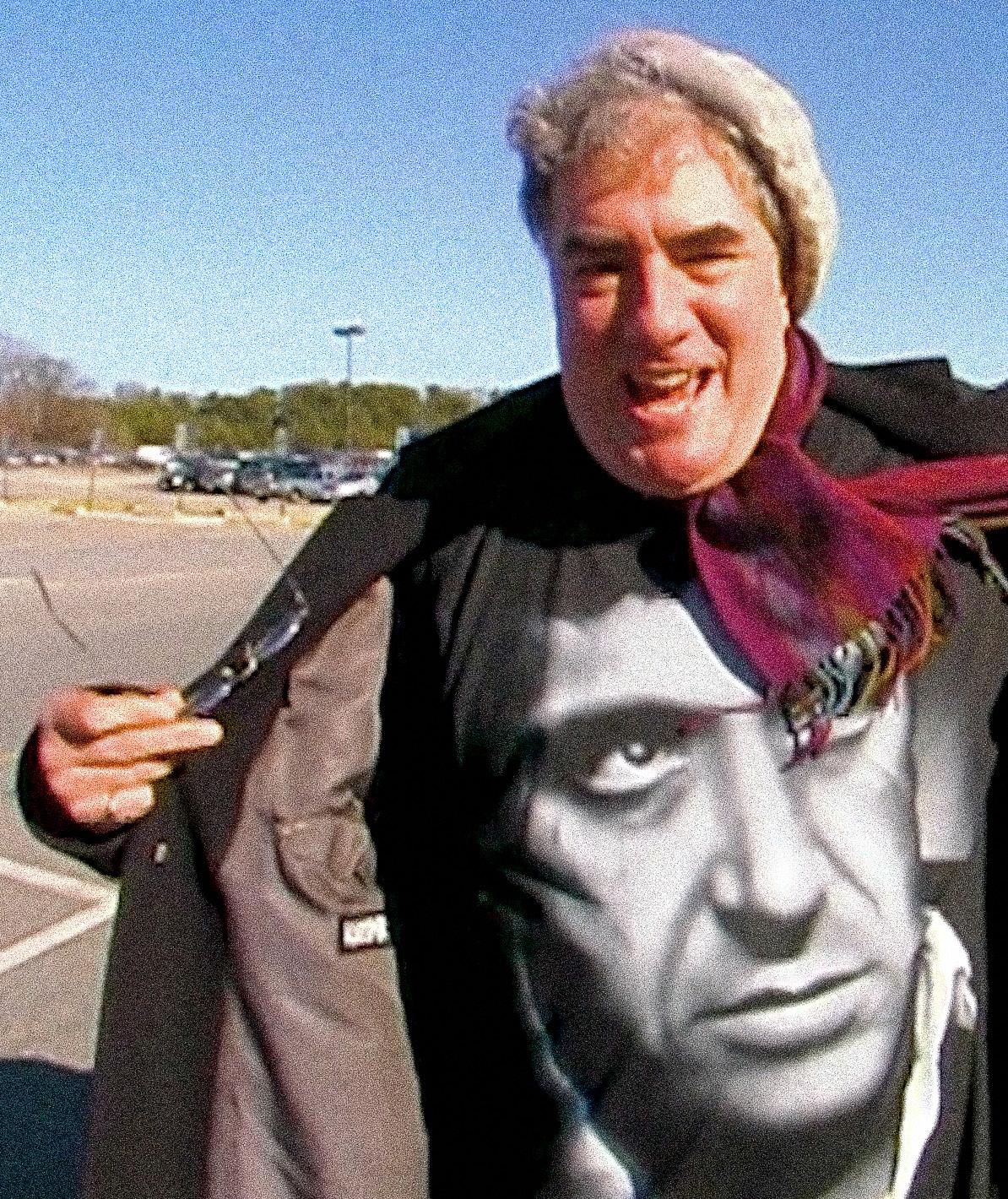
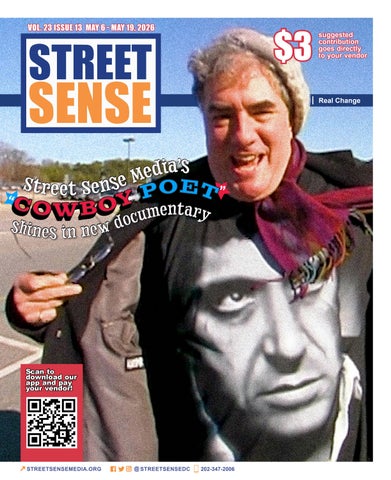
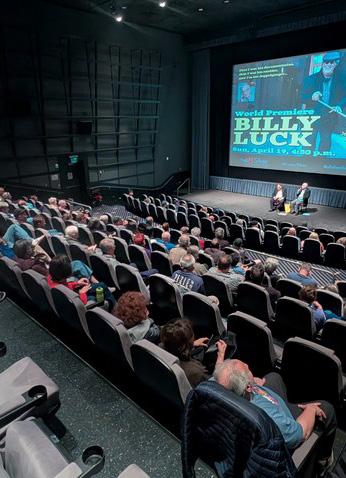
The Cover
COVER DESIGN BY KEVIN AKAKPO, PHOTO COURTESY OF JEFF KRULIK
Denny, Reneece Brinkley, Ricardo Meriedy, Richard Mooney, Rita Sauls, Robert Reed, Robert Vaughn, Robert Warren, Rochelle Walker, Ron Dudley, Ronnell Wilson, S. Smith, Sasha Williams, Saul Presa, Shawn Fenwick, Sheila White, Shuhratjon Ahmadjonov, Stephen Lennon, Starchild BLK, Susan Wilshasen, Sybil Taylor, Tasha Savoy, Tim Holt, Tonya Williams, Tony Morris, Vincent Watts, Warning Label,

Warren Stevens, Wayne Hall, Wendell Williams, Wendy Brown, William Hargrove, William Shuford, Willie Futrelle, William Young, Zero
BOARD OF DIRECTORS Ashley McMaster, Blake Androff, Clare Krupin, Chris Curry, Cole Ingraham, David Grant, Jonquilyn Hill, Matt Perra, Michael Vaughan Cherubin, Nana-Sentuo Bonsu, Stanley Keeve
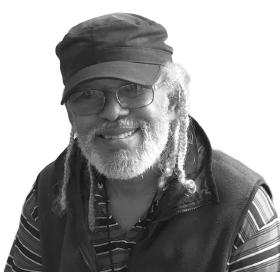
WARREN STEVENS
Artist/Vendor
Spring flowers and beautiful weather to take your mother out for Mother’s Day, spending time with family. When we were young, our mom would spend time with us, educating us and teaching us how to read and write. She would take us bowling, swimming, teach us how to ride a bike, drive a car, take us skating, take us to the movies, introduce us to golf, tennis, and drawing.
When our mom was living, we would throw picnics in our backyard. I would grill hamburgers, hot dogs, corn on the cob, chicken, and also have a marshmallow feast. My family and friends enjoyed my picnic every year. She is in a better place in heaven, smiling and proud of the good job she has done for us. We miss her very much. We think about her every day in my prayers. Now we are grown and still have a social life. My sister and her future husband would have a picnic on Memorial Day, which is a lot of fun. We would sit around in their backyard and have a feast, eating grapes and cooked salmon, and later go to the mall to walk around the shops and sit in a coffee shop, which is fun. The spring festival is everywhere in the District and Maryland. People will be selling at the stands everywhere in the parks. People will be talking and walking their pets at the parks and in the city. The children will enjoy their outings when school closes for the summer.
I will be sitting in my folding chair, selling papers in the nice weather. Customers give out gift cards. Sometimes they pay for the Street Sense paper on their phone using the app, which is very safe. Some days, customers offer to buy breakfast or lunch, which shows love and kindness. I enjoy that very much, which makes me laugh with joy. I go to my favorite restaurant, Denny’s, order breakfast and coffee, and read the Street Sense newspaper, which is very interesting.
Stay safe, happy spring.
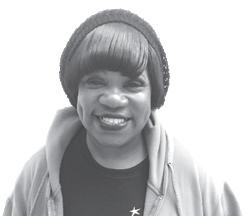
SYBIL TAYLOR
Artist/Vendor
Happy Mother’s Day to all the mothers. It has been two years since my mother passed away. I honor my mother with silver and gold roses, and dozens of flowers.
She is always in my heart with great memories. She was the best Mom in the world. She showed love for everybody. I know she is at peace with my Dad in their mansion in Heaven, enjoying their new life, good health, and peace and joy with our Heavenly Father. No pain or sickness, no suffering, enjoying the beautiful sparkling birds singing, beautiful gospel songs with beautiful sparkling flowers, frankincense, myrrh, and lots of food. Happy Mother’s Day to all the mothers in Heaven. Peace all day long. I love and miss you, Mom and Dad.
WILLIAM SHUFORD
Artist/Vendor

My mistake was being around people who wake up and come with negative energy day in and day out. Always keeping drama going, trying to start fights. From how I was raised, a church is supposed to be a peaceful place, but I see people. One minute, they talk about God, but that doesn’t last long because of street mentality.
I’m always thinking, how can we have unity when it’s always us fighting ourselves? Mental health is wild. I practice safe distance from certain people and just don’t or won’t go around a lot of settings. I move around alone if I’m not around the two positive people who introduced me to Street Sense.
I was always taught to be a leader and to never follow the crowd. I’ve made too many mistakes in my past, being around negative people. Now that I’m older, I pay more attention to body language.

El O Him May 7
ARTIST/VENDOR

Jeffery McNeil May 7
ARTIST/VENDOR
BIRTHDAYS
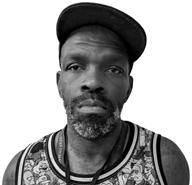
Shawn Fenwick May 14
ARTIST/VENDOR
EMPLOYMENT
CHIEF EXECUTIVE
OFFICER
Brian Carome
DIRECTOR OF PROGRAMS
Darick Brown
DIRECTOR OF VENDOR
EMPLOYMENT
Thomas Ratliff
Esmat Amin
VENDOR PROGRAM
Aida Peery, Chon Gotti, Nikila Smith
VENDOR PROGRAM VOLUNTEERS
Ann Herzog, Aiden
Eisenschenk, Beverly Brown, David Fucillo, Roberta Haber, Stephen Lennon
EDITOR-IN-CHIEF Annemarie Cuccia
DEPUTY EDITOR
Donte Kirby
EDITORIAL INTERNS

Paul Martin May 10
ARTIST/VENDOR
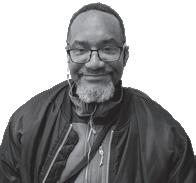
Marc Grier May 14
ARTIST/VENDOR
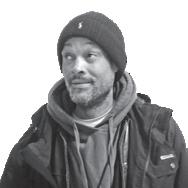
Carlton Johnson May 15
ARTIST/VENDOR
Aubrey Butterfield, Elizabeth Short, Grace Copps, Katie Doran, Kordell Martin, Maggie Westhoven, Natalie Note
WEB INTERN
Zachi Elias
GRAPHIC DESIGN INTERNS
Arisha Shumael,
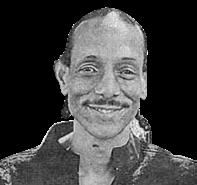
Conrad Cheek Jr. May 15
ARTIST/VENDOR
Kevin Akakpo
SOCIAL MEDIA INTERN
Harmony Jones
ARTISTS-INRESIDENCE
Alexandra Silverthorne (Photography), Bonnie Naradzay (Poetry), David Serota
□ Nine more days to take the vendor survey! $10 and 10 papers for just 10 minutes of your time. Signup at the admin desk!
□ Come to the awesome Yoga Workshop! Every Thursday from 11:30 a.m. - 1:00 p.m. No need to bring anything but yourself.
□ Find a list of vendor announcements and other useful information just for you at streetsensemedia.
Read this democratically elected code of conduct, by vendors, for vendors!
1. I will support Street Sense Media’s mission statement and in so doing will work to support the Street Sense Media community and uphold its values of honesty, respect, support, and opportunity.
2. I will treat all others, including customers, staff, volunteers, and fellow vendors, respectfully at all times. I will refrain from threatening others, pressuring customers into making donations, or engaging in behavior that condones racism, sexism, classism, or other prejudices.
3. I understand that I am not an employee of Street Sense Media but an independent contractor.
4.
5.
6.
(Illustration), Willie Schatz (Writing), Molly Pauker (Watercolor), Debbie Menke (Watercolor), JM Ascienzo (Yoga)
EDITORIAL VOLUNTEERS Anne Eigeman, Candace Montague, Natalie Kinkead, Sarah Eccleston
7.
8. I will not sell additional goods or products while distributing “Street Sense.”
9. I will not distribute “Street Sense” under the influence of drugs or alcohol.
10. I understand that my badge and vest are property of Street Sense Media and will not deface them. I will present my badge when purchasing “Street Sense” and will always display my badge when distributing “Street Sense.”
KATIE DORAN, KORDELL MARTIN, & NATALIE NOTE Editorial Interns
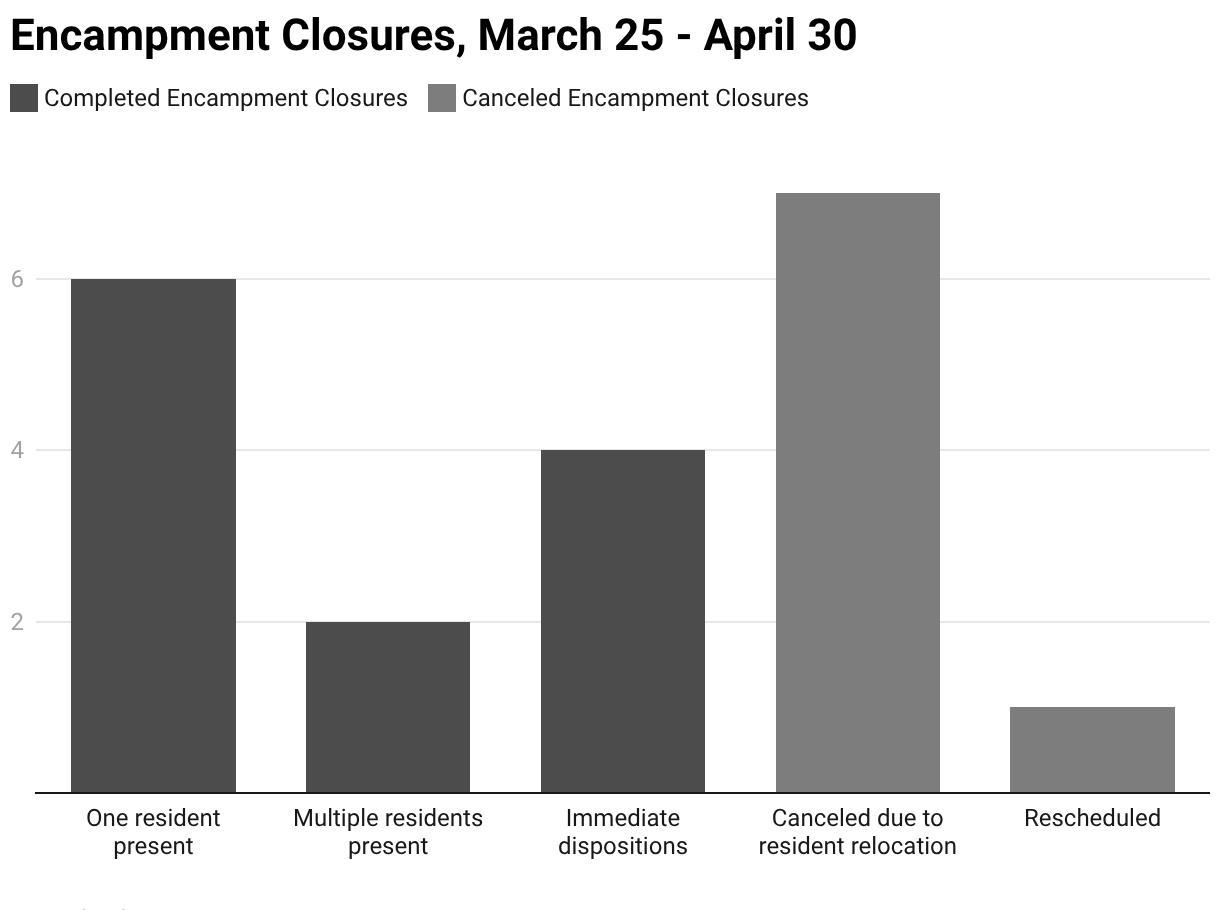
D.C. cleared 20 encampments of people experiencing homelessness between March 25 and the end of April. Most of these closures were at encampments with only one resident, and in many cases, residents left before the scheduled closure.
This marks a shift to smaller, more scattered encampments around D.C., as opposed to larger encampments with more residents. During the federal takeover in August, Trump directed law enforcement to “remove” homeless encampments, and the city cleared many encampments without prior notice. In the aftermath, many residents experiencing homelessness dispersed into smaller encampments, a trend that has continued since.
A spokesperson for the Deputy Mayor for Health and Human Services (DMHHS), which oversees encampment closures in D.C., told Street Sense the agency has observed a “gradual decrease” in the average number of residents per encampment since September 2025, after the federal takeover but before the start of hypothermia season.
As of March, DMHHS estimated there are 56 encampments in D.C., with only 14 of them having two or more residents. DMHHS defines encampments as “a set-up of an abode or place of residence of one or more persons on public property or an accumulation of personal belongings that is present even when the individual may not be.”
Between March 25 and April 30, D.C. scheduled 24 total encampment closures, 16 of which were completed and eight of which were canceled or postponed. Of the completed closures, half, or eight, had residents present during the closure. In two of these cases, the encampment had multiple residents, but in the remaining six, there was only one encampment resident.
In the other eight completed closures, there were no residents present at the scheduled time, and city workers discarded belongings left behind. In some of these cases, encampment residents may have already taken what they wanted with them, but in others, residents may not have known about the clearing or expected their items to be thrown away.
Separately, there were also seven scheduled closures that were canceled because residents had relocated and taken all of their belongings with them. The last scheduled closure was postponed.
The DMHHS spokesperson told Street Sense that through “consistent interagency coordinated outreach” — involving the city encampment team and its contracted outreach providers — many encampment residents move before scheduled encampment closures, taking any belongings they wish to keep with them.
In addition to the scheduled encampment closures, the city has conducted four immediate dispositions since late March, according to the DMHHS spokesperson. In immediate dispositions, the city closes encampments with little or no notice due to what it identifies as an imminent health or safety risk. Two of the recent immediate dispositions took place in Cleveland Park, while the remaining two were in NoMa and Chinatown.
At the scheduled encampment clearings that had residents present, many residents told Street Sense they were frustrated with the clearings.
On April 14, the city closed one encampment in the Navy Yard. The resident, Josh, who introduced himself by his first name, said he plans to continue living outside in the area. Outreach workers and the city encampment team helped him move his belongings down the block. Josh said encampment closures create inconveniences for people experiencing homelessness without helping get people into housing. “When they move a camp to another spot, it just spreads the destruction, it doesn’t resolve anything. It’s ludicrous, in my opinion,” Josh said. Josh, who has stayed in homeless shelters before, prefers living outside because it gives him more control over his possessions and because he can prepare food at a local Whole Foods food court, helping him manage his diabetes.
On April 21, the city cleared an encampment in front of the Martin Luther King Jr. Memorial Library, which has been the target of frequent clearing in recent months. The library was one of only two encampment clearings in the last month where more than one resident was present. By 9:45 a.m., a few minutes before the clearing was scheduled to start, most of the individuals who had slept in front of the library had packed up their things in preparation. Andre Juste, who had slept outside the library the night before, said he planned to come back to sleep there again once the clearing was over.
Juste said he enjoys sleeping by the MLK Library because of all the people he gets to meet. “You get to know each other. Sometimes people buzz, sometimes people get into arguments and later, at the end of the day, you still sleep next to each other,” Juste said.
Eric Sheptock, a formerly unhoused man who advocates for D.C. residents experiencing homelessness, said the encampment clearings conducted by the city are not effective at getting people off the streets. He said residents often move from an encampment that is being cleared, only to come back later or set up an encampment elsewhere.
“It’s been a game of Whack-a-Mole,” Sheptock said. “I’ve seen them pick up their stuff from one encampment, go two blocks and set up again somewhere else.”
When the clearing began, most residents were sitting with their belongings around the corner from the library or watching in the street. Two residents had left their items and were not present to claim them, so they were thrown away.
At 11:00 a.m., one resident was still packing up items and refused help from the officials and advocates present. The clearing team allowed the resident to pack their things and move them across the street before finishing the clearing.
At a few recent encampment closures, residents were confused about whether their encampment would be cleared due to unclear closure notices and information.
At one closure, scheduled for March 31, residents were surprised when the city encampment team never showed up. The DMHHS spokesperson told Street Sense the first closure was canceled because the resident at the intended location, which was in Navy Yard, had moved. However, the notice for this closure was posted directly above a setup belonging to Bernard and Darnell, cousins who introduced themselves to Street Sense by their first names. The morning of the closure, the two were still set up at the spot, expecting the encampment team would force them to move — but the city team never showed up.
Bernard and Darnell spend their days panhandling at the intersection by their encampment. That morning, Darnell’s sign read, “Peace and blessings, please help.”
At an encampment closure scheduled for April 15, the city encampment team posted the wrong address on the DMHHS website. This encampment was listed as 50 F Street NE, but the correct location was the same street address, in Northwest D.C., a few blocks away, near Union Station. When the city encampment team arrived at the northwest encampment, the resident was not present, though many belongings were left behind, including a shopping cart, two bikes, a chair, suitcases, and other bags. City workers tossed away all but one bag worth of items, saying the majority of the belongings were wet, soiled, or could not be stored.
A week later, an encampment closure was scheduled for the underpass in Whitehurst Freeway on April 22. The cleaning notice for this encampment was posted in the middle of a clearing next to the freeway. There were encampments hidden next to or underneath roads located on both sides of the notice, though only one side was cleared, causing confusion for residents in the area.
On the side that was cleared, the resident was not present, though there were belongings left behind that the city team tossed away. On the other side, at least three residents had encampments set up. Two spoke to Street Sense, and both said they thought their area would be cleared, so they packed up their belongings and prepared to move, though the area was not ultimately cleared.
“They keep messing with us when there’s so many open unused properties in Washington, D.C.,” James Jackson, one of the residents, said.
Jeff Padgett, another of the residents, said encampment clearings only harm people who don’t have other resources to turn to.
“It’s wrong. You’re stealing from someone who has nothing to begin with,” Padgett said. While his and Jackson’s encampments were not ultimately cleared, Padgett said he has been in several encampment closures before. “I’ve had to start over so many times… Just cause I’m homeless doesn’t mean I don’t have anything. I’m gonna hog everything I do have, that’s what that means.
NATALIE NOTE
Editorial Intern
Domestic violence is the leading cause of homelessness in the District, but each year, domestic violence service providers and advocates fight against budget cuts proposed by the mayor that they say would spell the end of many of the city’s domestic violence programs. This year is no different.
D.C. Mayor Muriel Bowser seeks a more than 10 percent cut to the Office of Victim Services and Justice Grants (OVSJG) budget for victim services and a more than 20 percent cut to the Department of Human Services (DHS) budget for domestic violence services in her proposed fiscal year 2027 budget. With domestic violence-related homicide on the rise in D.C. and demand for support from domestic violence survivors increasing, providers say if implemented these cuts would be deadly for victims of domestic violence.
Domestic violence services providers and victim advocates are already stretched thin due to the increasing need for emergency housing, legal aid, and mental health support from victims. Rising demand on top of cuts to the DHS and OVSJG budgets for domestic violence services in prior budget seasons has left providers fearing these cuts would caus the end of numerous programs, such as emergency housing shelters and advocacy organizations, throughout the city.
Koube Ngaaje, president and chief executive officer of the District Alliance for Safe Housing (DASH) — an organization that provides emergency housing, transitional housing, and financial assistance for survivors of domestic and sexual violence — said OVSJG provides the majority of the funding that 80 domestic violence services programs rely on. Ngaaje said these providers would need $59.6 million from the city to continue the same level of service they were providing in fiscal year 2026.
“Those 80 community-based and institutional partners, including six district agencies, are the backbone of the district’s safety, housing, and legal services system,” Ngaaje said.
The mayor’s office has been foreshadowing major budget cuts since February. The fiscal year 2027 budget represents a 3.3 percent budget cut from the fiscal year 2026 revised budget.
Michaela Deming, a policy director for the D.C. Coalition Against Domestic Violence, said if the cut to DHS domestic violence services funding goes through, it would make many programs unsustainable.
“We’ll have entire programs closing down,” Deming said. “That means emergency shelter like middle-of-the-night shelter closing down, and it means entire education and outreach programs so people know about what services are available, closing those down.”
According to the 2025 Point-In-Time (PIT) count, 48 percent of adults in homeless families reported a history of domestic violence during the 2025 point-in-time count, and 77 percent of those adults said domestic violence led to their current episode of homelessness. Among unaccompanied individuals, 22 percent reported a history of domestic or intimate partner violence, and 48 percent said that experiencing contributed to their homelessness.
Ngaaje said the wrap-around housing, legal, financial, and mental health support services organizations like DASH and others provide are vital in securing positive outcomes for survivors and removing them from homelessness. She said survivors of domestic violence are more likely to find security and succeed with domestic violence-specific services, not just traditional homelessness services.
“Survivors of domestic and sexual violence have unique needs, and when you put that DV lens at the intersection of homelessness, it does require specialized services,” Ngaaje said.
For Ngaaje, homelessness and domestic violence intersect, and the fact that less than one percent of domestic violence services are funded by DHS, the D.C. agency in charge of providing homeless services, shows that DHS is not recognizing the connection between domestic violence and homelessness.
“There is no way we will be able to solve homelessness if we do not properly invest to address the domestic violence,” Ngaaje said. “And because domestic violence is a leading cause of homelessness, you cannot support one without the other.”
Victim services funds within the OVSJG budget rose last year, which was the direct result of advocacy after the mayor’s proposed budget was released, according to Deming. But, Deming said, even with the additional funding, providers are still having to turn away victims who call looking for support.
“We’re in a time of economic downturn and increased domestic violence homicide, and so the need just keeps increasing, and we’re not meeting the need we already have,” Deming said. “So even with the increases that you see, we are still unable to meet current need.”
Ngaaje has seen these specialized services help survivors get out of the dangerous situations they might be experiencing at home and make it easier for them to leave by providing the legal services they might need to fight for custody of their children or the shelter with around-the-clock security they might need to feel safe again. And with domestic violence-connected assaults and homicides rising, providers expect more demand for their services.
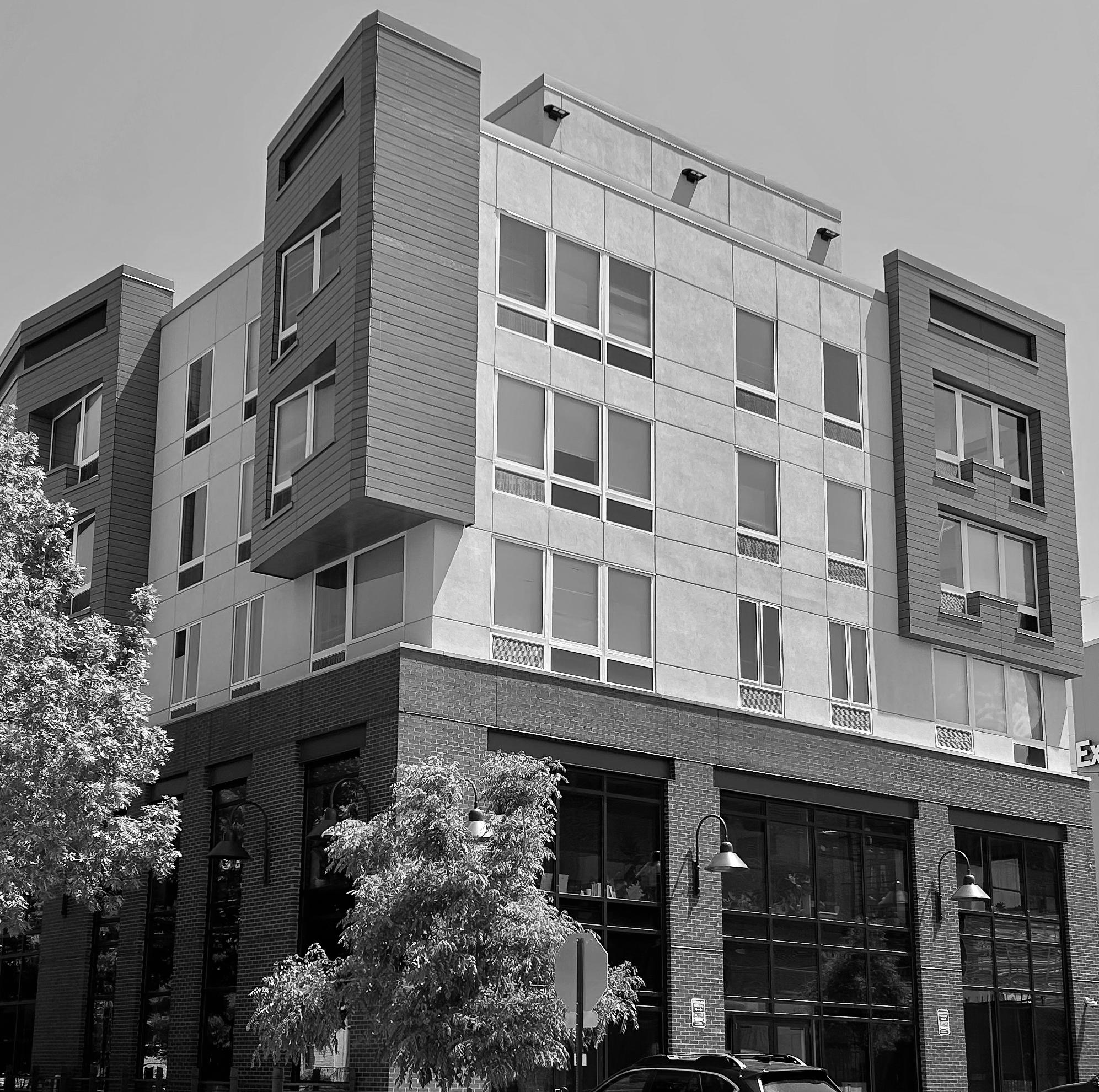
If the D.C. Council approves the mayor’s proposed budget cuts, Ngaaje said DASH would serve 1000 fewer individuals than it served last year across all their platforms. She said that would mean those individuals staying in unsafe situations could result in their deaths.
“We anticipate that there will likely be higher instances of domestic violence and/or sexual violence-related lethality,” Ngaaje said. “So we will lose people. People will die.”
Ngaaje said individuals will rely more heavily on D.C.’s emergency, non-domestic violencespecific services, which will cost the city more in the long term. She said it is “disheartening” that every budget season, domestic violence services providers have to advocate for their lifesaving services to be funded. These proposed cuts following the fiscal year 2026 reductions make the situation even more dire for providers.
“The organization is already operating with as lean a model as we possibly can,” Ngaaje said, referring to DASH. “Not only are we going to have direct impacts on survivors, but we are also going to have direct impacts on the organizations that are doing this work. We are going to dismantle the public safety infrastructure that the city relies on.”
Deming said, in addition to the cuts to DHS and OVSJG, all of the other cuts made throughout the budget, like harsh cuts to the District’s Temporary Assistance for Needy Families and the implementation of a childcare subsidy waitlist, have impacts on domestic violence survivors.
“We know that there is a direct safety impact when all of those other cuts happen as well,” Deming said. “And so we are also really concerned about and committed to advocating for the rest of the social safety net, SNAP, TANF, child care, all of those things, because survivors rely on those as well.”
Ngaaje hopes providers and advocates will be able to protect the OVSJG budget from the mayor’s proposed cuts. She said, looking at the budget, she would like to ask the D.C. government who it is prioritizing with this new budget.
“A couple of budget cycles ago, I said your budget is a moral document, but it is also a very clear statement of your priorities,” Ngaaje said. “So who will be prioritizing in this budget?”
AUBREY BUTTERFIELD, KATIE DORAN, & KORDELL MARTIN Editorial Interns
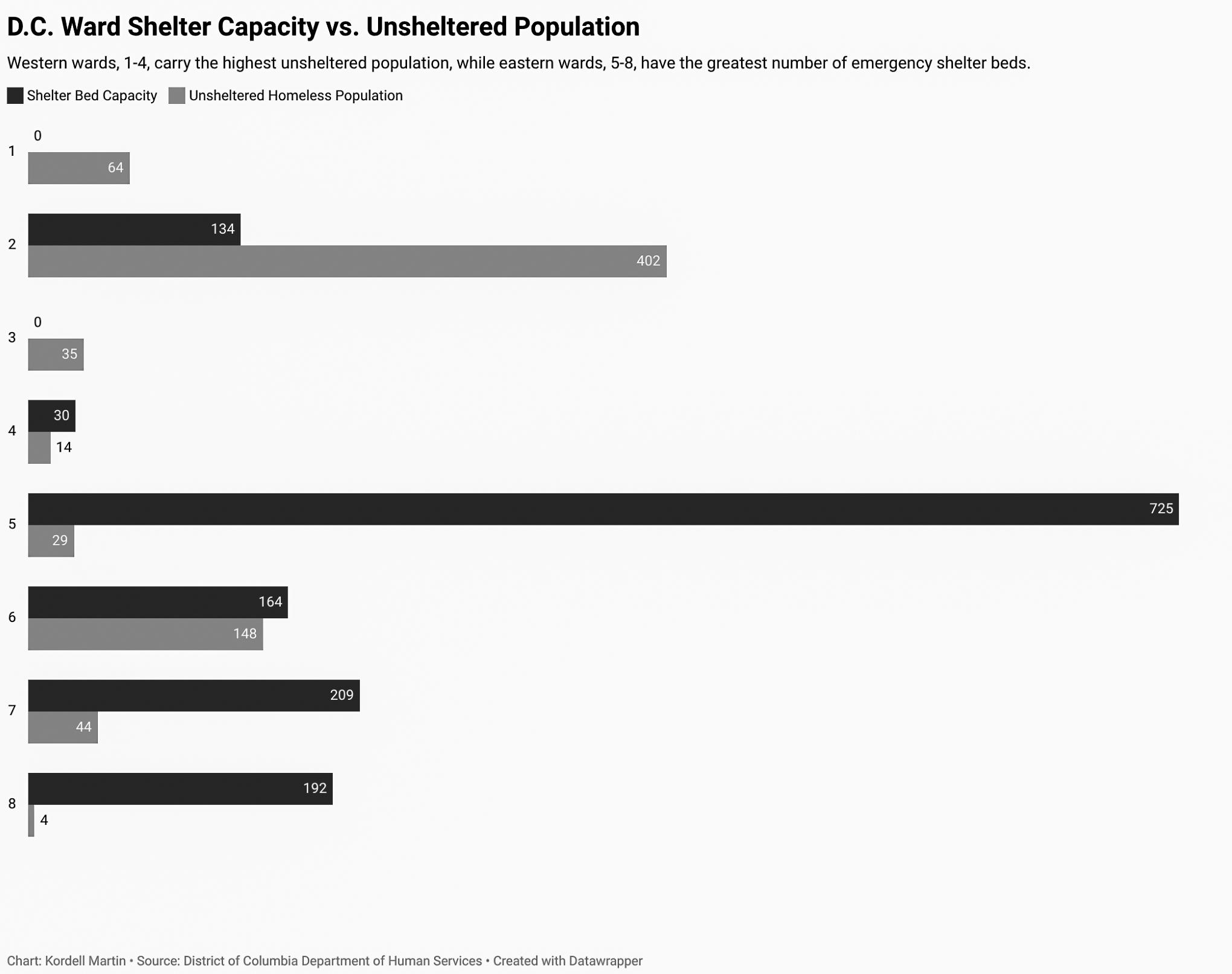
In her proposed budget, D.C. Mayor Muriel Bowser proposed funding toward renovating emergency and temporary homeless shelters, while longer-term housing options received funding hits. The proposal comes as shelters across the District grapple with high demand, with the population of people experiencing homelessness exceeding capacity in the city’s shelters and other housing programs.
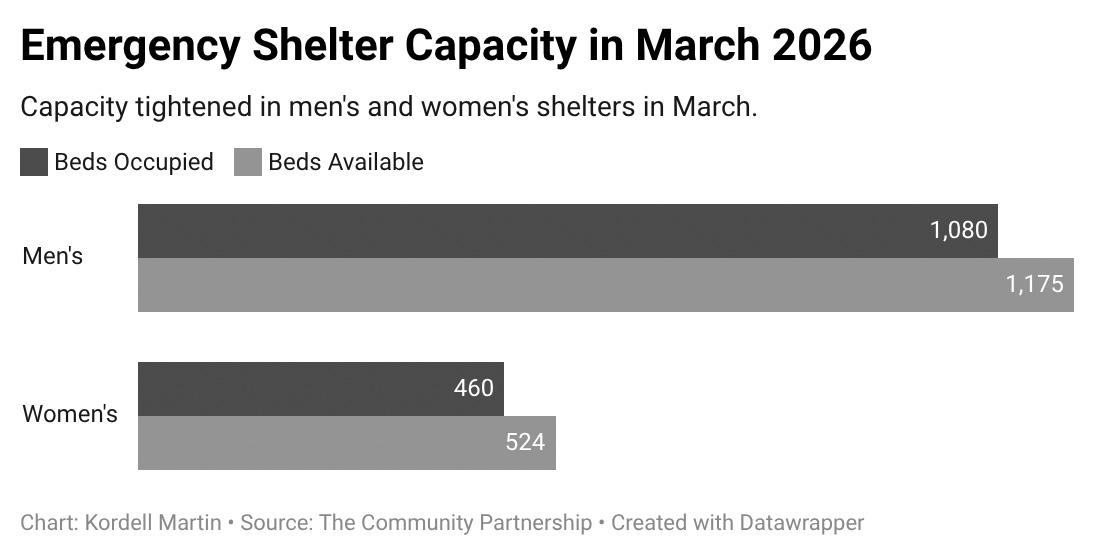
There are over 5,000 people experiencing homelessness in the District, far outnumbering beds in emergency shelters, according to the Metropolitan Washington Council of Governments’ 2025 Point-in-Time Count report. This includes 792 unsheltered individuals, or people living outside, according to the D.C. Department of Human Services (DHS). A DHS spokesperson told Street Sense that, as of April, there are 1,454 beds in low-barrier homeless shelters. In March, low-barrier shelters reached a nightly average capacity of 90%, according to a census conducted by The Community Partnership for the Prevention of Homelessness. Facilities with the most beds, New York Avenue Men’s Emergency Shelter and 801 East Men’s Shelter, operated at full capacity on average each night as reported in the census, reaching maximum occupancy of 437 beds. Men’s and women’s shelters across the city maintained an average of fewer than 100 vacancies a night. Shelter capacity is monitored nightly to determine if additional beds are needed to meet demand, according to the DHS spokesperson. Capacity demands can vary at different points of the year, as some shelters are open when weather poses a significant risk to the health of those experiencing homelessness, like hypothermia season, which DHS dates from Nov. 1 to April 15. Some prefer living outside to staying in shelters, but in other cases, if people seeking shelter are turned away, they may be forced to either sleep outside or travel to find facilities outside of their current ward. The DHS spokesperson said people experiencing homelessness can call the District’s Shelter Hotline for free transportation to shelters from anywhere in the city if they can’t find a facility near them.
Mayor Bowser presented her proposed Fiscal Year 2027 budget on April 10. The budget, which totals $1.1 billion less than the previous year, sees significant cuts to homeless service programs, including housing vouchers and Rapid Rehousing.
DHS is facing a 7.5% decrease in its overall budget. According to DHS Director Rachel Pierre in a briefing in partnership with the Interagency Council on Homelessness and Fair Budget Coalition D.C., the proposal provides opportunities for advancing shelter system reforms despite the difficult financial period.
The proposed budget will utilize just over $37 million in capital funds for the District’s shelter system. Last year, funding for the shelter system sat at over $76 million, which covered the creation of the New York Avenue shelter and the redevelopment of the Community for Creative Non-Violence (CCNV).
DHS plans to distribute this year’s funds through the replacement of the CCNV, which acts as the District’s largest homeless shelter, costing $28.6 million. Additionally, the New York Avenue shelter will be replaced for another $4 million. The Blair Shelter and Naylor Road Shelter will also see renovations, costing $1.5 million and $2 million, respectively. The rest of the capital funding will go toward the replacement of elevators at the 801 East shelter for $1 million.
The proposed budget allows for emergency shelters to support 405 families daily, compared to the 440 families currently supported by emergency shelters. In contrast, services like Permanent Supportive Housing (PSH) expect to assist nearly 3,000 families, alongside 4,734 individuals.
The budget proposal funds no new housing vouchers, leaving nearly 40,000 individuals in need of housing on the housing voucher waitlist.
Additionally, the Rapid Rehousing program’s $3.1 million cut means it will only be able to support 100 individuals in the upcoming fiscal year, which runs from Oct 1, 2026, to Sept 30, 2027, compared to the 111 individuals supported in the last fiscal year. New cases will be added only when previous individuals exit the program.
The prioritization of shelter renovations in the proposed budget will help with upkeep for short-term, emergency housing, but for D.C. residents who become homeless in the coming year, programs to assist in finding more permanent housing are limited.
Beyond emergency, low-barrier shelters, Bowser’s budget proposal also includes $25 million in funding for the city to purchase a new non-congregate shelter site. Non-congregate shelters, also known as bridge housing in D.C., are high-barrier shelters where residents have semiprivate rooms. To get into non-congregate shelters, residents have to be referred to the program and meet certain qualifications.
The District currently has two non-congregate shelters — the Aston and the E Street shelter — which are both in Northwest D.C. The proposed budget also includes $3 million in operating funds for these existing locations.
Most of D.C.’s shelters are congregate, meaning many people stay in the same room, and residents are typically divided by gender. Many Washingtonians experiencing homelessness who live outside say conditions like these prevent them from staying in shelters. But noncongregate shelters offer residents more privacy and allow mixed-gender couples and adult families to stay together.
However, some worry that investing millions in a third non-congregate shelter isn’t an efficient use of the city’s limited funds, especially as other housing programs face cuts and when existing bridge housing sites aren’t being used to their full capacity.
According to DHS oversight documents, the E Street shelter should be at its full capacity of 190 beds in use by June; the DHS spokesperson told Street Sense the shelter currently has 90 residents. The building for the Aston also has capacity for 190 residents, but the program is currently capped at 100 residents, and all of these seats are filled, according to the DHS spokesperson. The 100-resident limit comes from the Good Neighbor Agreement, which was approved by the Aston Community Advisory Team and is meant to govern relations between the shelter and the surrounding community, though the local Advisory Neighborhood Commission has passed three resolutions seeking to raise the cap.
The proposed budget includes a 3% increase in funding for the Aston and E Street to account for rising costs, but does not include funding to expand the Aston’s capacity.
“Given the tight budget circumstances we’re facing… we should be using every resource we have.” Kate Coventry, the director of legislative strategy at the D.C. Fiscal Policy Institute, said. “I will be asking the Council to examine whether or not it makes more financial sense to expand capacity at the Aston, where capacity has been kept artificially low by an enrollment cap, or whether it makes the most financial sense to open a third bridge housing site.”
DHS oversight documents say the agency is targeting a capacity of about 100 beds for the third bridge housing site, and that it anticipates the city will acquire the third site before the end of this calendar year. However, both the Aston and E Street shelters took over two and a half years from when the city identified the site for purchase to when the site opened. Both developments needed renovations and faced other unplanned delays before they opened. They were also significantly more expensive than the $25 million set aside for acquiring the third site; the Aston and E Street took about $33 million and $48 million, respectively, for acquiring the buildings and doing construction before opening.
“It is much more likely that we could get the Aston capacity increased faster than we could open a third bridge housing site,” Coventry said.
Non-congregate shelters are intended to connect residents with permanent housing. At the Aston, for example, in the last fiscal year, 54% of the 70 individuals who left the program for permanent housing, with the vast majority receiving PSH. However, advocates worry that if programs like PSH aren’t adequately funded by the new budget, bridge housing residents won’t be able to exit to stable, long-term housing.
“People will get in shelter and be trapped, and then we will need more shelter because we won’t have any movement,” Coventry said. “The idea is that bridge housing is a bridge to housing, not a bridge to nothing, which is what it is going to be without more resources.”
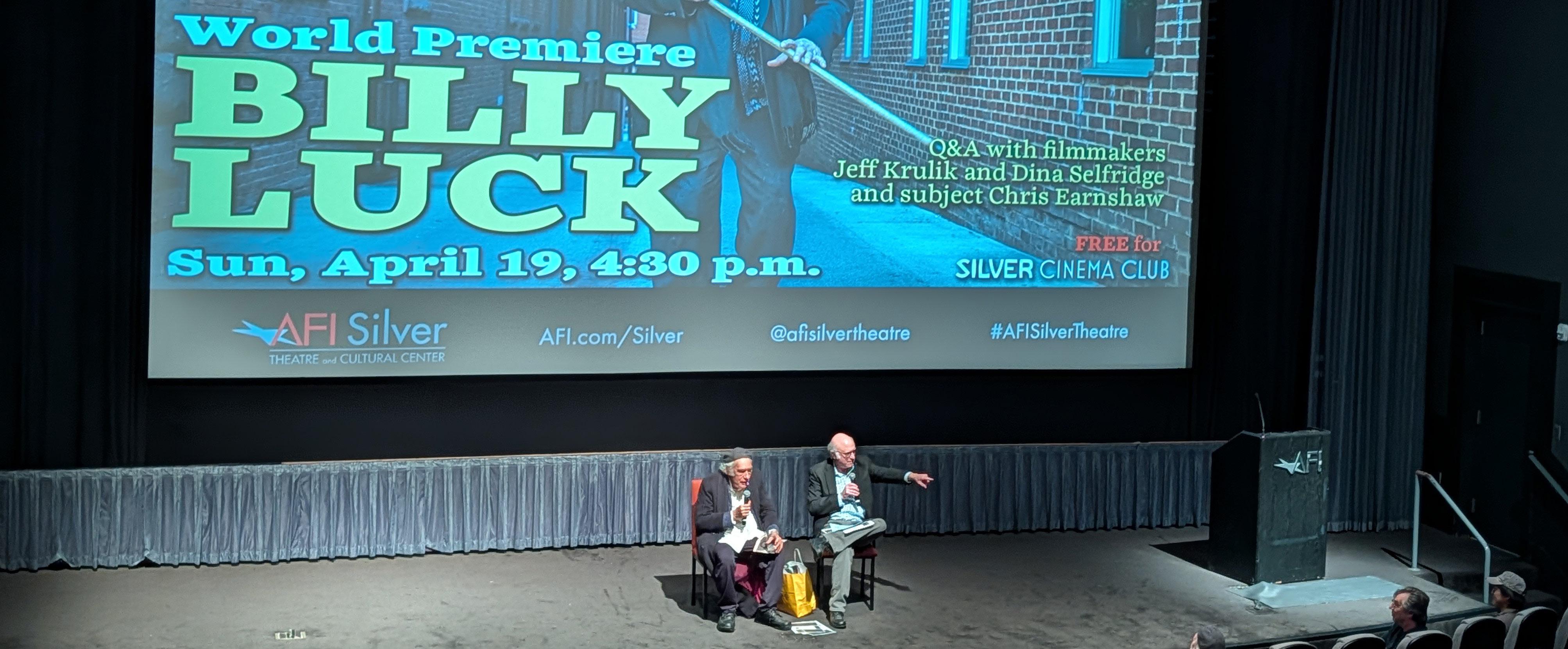
D.C. knows him as “The Cowboy Poet.” Street Sense knows him as Frederic John. He shines in “BILLY LUCK”
AUBREY BUTTERFIELD Editorial Intern
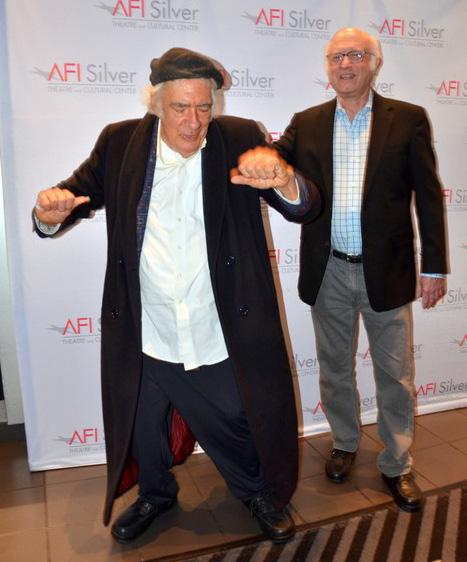
Jeff Krulik’s landline phone rang again. He had begun to anticipate the voice on the other line as Chris Earnshaw — also known as Frederic John — a D.C. local who had heard about his short film documentaries. Earnshaw needed Krulik’s help.
“He wanted me to help him make his film called “BILLY LUCK” that he wrote the script for,” Krulik said. “And he can nudge you. He won’t let it go.”
Krulik was initially hesitant, as he made his creative intentions clear: he doesn’t do narrative films. But that didn’t stop John from calling. After dozens of attempts and small chats over the phone, he convinced Krulik to meet him at a local restaurant to talk about his screenplay aspirations. Krulik brought his camera.
“I’m so grateful I did,” Krulik said. “He’s showing me all these photographs of the vanished landscape. I’ve always been interested in local culture, and, of course, the underbelly, if you will, or the real D.C.”
John’s screenplay, “BILLY LUCK,” aimed to take viewers around the “underbelly of Washington,” which interested Krulik, the District-grown documentarian. He was more charmed, however, by John’s self-collected and self-created rich history of D.C., illustrated through his time under the pseudonym “The Cowboy Poet.” Krulik didn’t know his next move, but he knew he had to keep John on camera, and John knew he needed Krulik’s attention.
“I thought, ‘There’s something going on here.’ And I’m like, ‘Okay, I know he wants me to make narrative films, but I want to work with this guy,’ and I want to get him kind of going around D.C., talking about what he was interested in, and that’s how we started,” Krulik said. “He moved me, he got me interested in what he was, you know, pretty much all about. Now, I didn’t really know him that well, but I took a leap of faith.”
The year 2000 began decades of film following John, also known as “The cowboy poet,” around D.C., “BILLY LUCK” came to life — though not how it was intended to. “BILLY LUCK” follows John and Krulik’s relationship across years of developing Earnshaw’s project, exploring fond memories, frequent bickering, and eventually, Krulik’s progression into becoming John’s doppelgänger as they battled through similar life challenges of hoarding and gambling.
The documentary was screened for the first time at the AFI Silver Theatre and Cultural Center in Silver Spring, Maryland, on April 19. The project has been years in the making, with Krulik meeting with his co-producers and long-time collaborators Greg DeLiso and Dina Selfridge over Zoom since 2020, twenty years after Krulik began filming. Due to the abundance of footage, Krulik and his editor, Brad Dismukes, edited the 90-minute first draft for months up until runtime, where Krulik stayed in a Virginia hotel for weeks before the premiere.
As a nice reward for his sacrifices, Krulik has been overwhelmed by support for the film. Friends, colleagues, and fans have flooded his social media praising the documentary for its humor, ambition, and humanity. Viewers reported feeling connected to John and his struggles, and appreciated the vulnerable and open look into his life that “BILLY LUCK” provided.
“If you have a lingering, insurmountable problem on your back, you’ll be able to relate to the universal themes of the film,” Davis White, who attended the premiere, wrote on Facebook. Krulik is particularly drawn to “eccentric” Washingtonians, leading John to be the perfect subject, according to both John and Krulik. His most notable work, “Heavy Metal Parking Lot,” spotlights oddball Judas Priest fans before the band’s 1986 Landover, Maryland concert.
“BILLY LUCK” opens with a conversation between John and Krulik, in which Krulik becomes frustrated as John struggles to express his talents. This point would become a recurring theme throughout the film, as John navigates how to show the world his work archiving the District.
John’s struggles were often connected to his own battles with bipolar disorder and alcoholism. As a result, he found himself deeply intertwined with horse gambling — a financial challenge for both himself and Krulik that is discussed intently in the film. The film covers from 2000 to the current day and, since the events of the documentary, John has celebrated over three decades of sobriety from drugs and alcohol and has done personal work regarding his finances.
“I don’t go around beating the drum for, ‘I’m in recovery,’ you know, like some of these big movie actors, you know, trying to get people to come in. I mean, I just try to be an example,” John said. “Because I don’t drink anymore, it means I have a better memory, and my personality is more settled, and I care about other people.”
Prior to his focus on photography talent, John had different plans for his creative endeavors. The documentary covers his time in New York, as he chased acting dreams. He would eventually work at Saturday Night Live and have an iconic cameo in “All That Jazz.”
Despite D.C.’s central focus in the film, John emphasized the importance of his experiences in New York, New Orleans, and Las Vegas in the shaping of his life. He joined the Screen Actors Guild and became invested in blues bands, taking pictures of his bandmates while learning guitar.
“I just had this love,” John said. “I took good portraits of the bluesmen in black and white with Polaroids, and that was an extension of what I’d done exploring around downtown. Here they were starting to tear down the old city, and I was just enthralled with the photographs of Walker, Evans, you know, and Dorothea Lange, you know, the people who took the pictures in the ’30s, and especially Berenice Abbott.”
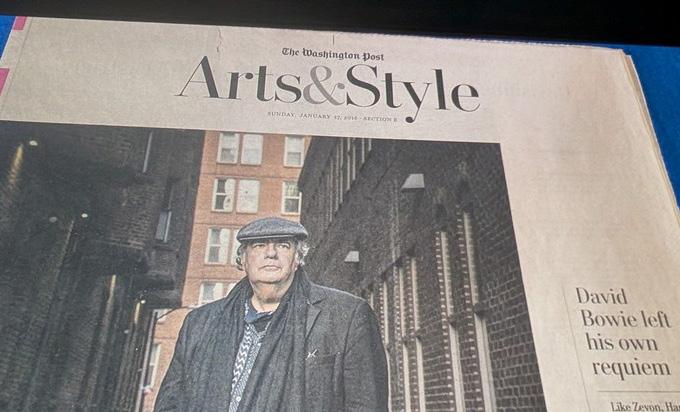
Following his stints across the country, John returned to the District. He would finally find recognition for his photographic work in a 2016 five-page feature in The Washington Post’s Sunday magazine, which showcased “The Polaroids of the cowboy poet” and his journey capturing his hometown. He would wind up contributing to the magazine, referring to himself as a “groupie” of the publication.
“If it wasn’t for The Post magazine, I don’t think a lot of people would have seen my pictures,” John said.
This moment became frustrating for Krulik, who felt excluded from the process after his years of work with John. After reflecting on his relationship with John, the documentary culminates in Krulik’s revelation that, over the course of decades enabling John, he has become him. This is most prevalent through shots of John and Krulik’s respective storage units and efforts to expand their art to the public.
The film is incomplete and is being prepared for another editing round. Krulik plans on continue to developing the film, including visual fixes, complete end credits, and more footage of his time with John. He continues to be intimately involved with the production of the film, drawing on past footage and occasionally recording more of John to finish storylines.
Today, John lives in the District with his partner and works as a vendor at Street Sense Media. He enjoys watching writers and photographers find their footing at the publication, and continues expressing his love for his hometown through his work. He remains in regular contact with Krulik and is still passionate about “BILLY LUCK” and other creative pursuits.
Parts of his screenplay have been published in Street Sense. The plot, he said, was inspired by the “melting pot” of New York Avenue and his affinity for the Skid Row neighborhood. While archiving the buildings through his photographs, he aimed to archive the stories of D.C. residents in the screenplay.
Though John no longer writes as often, he appreciates the creative freedom the paper has granted him and other homelessness advocates in getting their words heard.
“[They] would give me a lot of space with my photographs and stuff, but the paper is more of a constituency vehicle now, so that everybody gets a chance,” John said. “I don’t have to let people know I can write and take pictures, because they know that. So I’m all for giving other people a chance, and especially since I don’t do as much vending as a lot of the other members do.”
As John continues to shape his legacy, Street Sense remains a vital part of his story.
“All of these great people have come to Street Sense, and their memory will be perpetuated because they came to Street Sense,” John said. “Nobody who came to Street Sense ever had their life go downward. It always went upward.”
Krulik is in the process of planning the film’s public distribution. Updates on the status of “BILLY LUCK” can be found by contacting Krulik at jeff@jeffkrulik.com, or on his Facebook page, www.facebook.com/jeff.krulik.
SHANE SULLIVAN
here have been many radicalizing moments in my life, but few so acutely painful and memorable as witnessing the systems of structural violence that created the conditions for roughly 100 unhoused individuals to create community within encampments beneath the K, L, and M St. underpasses. These systems were layered with additional actors of harm levied against them — from the NoMa Business Improvement District’s (BID) behindthe-scenes attempts to forcibly displace them to the BID’s more public hostile architecture, including so-called ‘art installations’ costing hundreds of thousands of dollars, to the city workers instructed to bulldoze tents that contained individuals’ life belongings, to Deputy Mayor of Health and Human Services (DMHHS) Wayne Turnage’s brazen lies under oath when questioned by the D.C. Council, and to the council itself, which failed, in a 7-5 vote, to pass Councilmember Brianne Nadeau’s emergency legislation that would have enacted a 90-day moratorium on encampment ‘clearings’ and evictions during hypothermia season.
TI was an outreach worker with HIPS from 2014 - 2024, and recall watching the cold, detached manner in which most of the councilmembers spoke about unhoused individuals’ lives–a dehumanization, I suppose, that was necessary for them to cope with the cognitive dissonance of their vote. Escalating pressure from housing advocates who’d witnessed the violence of DMHHS’s so-called CARE pilot — very plain Orwellian doublespeak — is what drew enough attention to prompt Nadeau’s proposed legislation. Its failure to pass in many ways set the tone for the council’s actions as a body regarding homelessness for years to come under the Bowser administration. In that regard, as well as in witnessing an increase in evictions creating mass displacement of unhoused community members, I can think of multiple, heartbreaking examples of how that 7-5 vote cost people their lives.
I remember watching that council vote live and quietly noting of who voted for the economic interests of the NoMa BID over human lives. Councilmember and current mayoral candidate Janeese Lewis George supported Nadeau’s emergency moratorium on evictions. In contrast, then-Councilmember (and Lewis George’s primary opponent in the Democratic primary) Kenyan McDuffie was the final no vote.
In this election cycle, there has been a disappointing lack of focus on D.C.’s most marginalized residents, including unhoused individuals. And there are dozens of reasons, too many to name here, beyond that particular vote that I support Lewis George in her mayoral bid as the June 16 Democratic primary date quickly approaches. But I believe the ways in which elected officials advocate (or fail to advocate) for those with the least political power, unhoused people, and other groups I commonly engaged with as an outreach worker, including drug users, sex workers, formerly incarcerated individuals, and trans people, say a lot, especially when their response is silence. Centering our most marginalized community members holds vital importance unto itself, but also serves as a highly useful litmus test to determine who elected officials genuinely believe they are beholden to: everyday residents of D.C., or members of the political establishment and the ultra-wealthy.
One very notable exception to hyper-marginalized residents not being directly named has been the continued focus on D.C.’s ongoing federal occupation by U.S. Immigration and Customs Enforcement (ICE) and a half-dozen other federal law enforcement agencies all deputized to conduct immigration enforcement and instructed to ‘make D.C. beautiful’ through efforts that, per one of Trump’s hundreds of executive orders, includes reducing the visibility of unhoused individuals, by force or institutionalization if necessary.
Grassroots community organizations like Free DC (that endorsed Lewis George), Harriet’s Wildest Dreams, and Migrant Solidarity Mutual Aid (MSMA) have responded to the trauma being daily inflicted upon D.C. communities — especially migrants, unhoused people, and Black residents east of the river — by continuing D.C.’s longstanding legacy of building powerful social movements of mutual aid, community self-defense, advocacy, and protest, welcoming supportive elected officials into the fold in the absence of mayoral leadership.
It’s another realm in which Lewis George not only outshines McDuffie, but also has been the most vocal councilmember since day one of the occupation. She went live on Instagram during the detention of one of her Brightwood neighbors, using her platform to document the incident
to a large audience, which led to sustained pressure and the man’s release the next day. She has continually posted similar updates and documentation to craft mechanisms of accountability and keep migrant residents aware of potential threats.
She has spoken powerfully and repeatedly, often at Free DC events, demanding an end to the federal occupation, pairing that passion with pragmatism in her introduction (with four co-sponsors) of the Safe Community Places and Policing Amendment Act of 2025, legislation that would strengthen D.C.’s sanctuary values laws to expressly prohibit D.C. police from collaborating with federal agents regarding immigration enforcement by ending their participation in the taskforce. It’s been waiting to be referred out of committee by the council’s most conservative member and chair of the Committee on the Judiciary and Public Safety, Brooke Pinto, but whether legislatively or through the executive, Lewis George has on multiple occasions detailed her plan for ending local cooperation with this fascist administration’s whims as a day-one priority if elected mayor.
As a Ward 4 resident who has had many interactions with Lewis George over the years as a constituent, former outreach worker, and community-based advocate, I know the people-powered language of her campaign is sincere, and detractors whose instinctual reaction is cynicism have suffered so long under the status quo that it has limited their capacity to imagine a better world. Janeese Lewis George is fighting for the D.C. she was born and raised in, that she loves and knows is already beautiful because of its people, not in spite of us — and has proven through her leadership that she can execute her vision for an even more beautiful D.C., a vision in which everyday residents are at the center. All of us.
Shane Sullivan (they/them) is a former outreach worker with HIPS and co-founder and former core organizer with #DecrimPovertyDC who has been engaged in community-based advocacy and direct service in D.C. for over a decade. They are currently a student at Potomac Massage Training Institute (PMTI), rooting their training to become a certified bodyworker in their passion for harm reduction and health justice.
It was as if the United States’ families struck gold for 10 consecutive years. From 2011 to 2021, more and more families had the sense of comfort that comes with being able to plan their next meal. However, the U.S. Department of Agriculture (USDA) food security statistics show food insecurity has been getting worse over the last five years, and now it’s looking like an uphill climb with a cliff at the end. A BIG deal! ... For adults to little ones
In the DMV, 1.5 million people deal with food insecurity, according to a 2025 report from the Capital Area Food Bank. According to DCF, the people standing closest to the edge of this food insecurity cliff includes young people aging out of foster care, as well as 14 to 18-year-old youth with parents at risk of losing benefits.
Close to the edge, they may join the one in 10 children in Washington, D.C. already facing food insecurity, according to the Capital Area Food Bank. The ‘hot off the press’ news is that DHS extended the date from May 1 to June 1, so we have an extra month to collaborate on solutions.
Saving 25% from homelessness — moving away from the edge may help
Support during transitions to adulthood has been shown to be significantly effective for youth aging out of foster care. For example, Assembly Bill 12 (AB 12), enacted in 2010, created California’s Extended Foster Care Program. That extra support has led to lower rates of homelessness when compared to programs that don’t extend services, according to a 2017 report on homelessness and youth aging out of foster care.
Success story on the way: Jamie’s story
At a local coffee shop, I always enjoy brief chats with a cashier named Jamie. She excitedly shares highlights of her resiliency in conquering life’s challenges. Jamie, a 21-year-old aging out of the Foster Care System, cherishes her opportunity to go to college. Witnessing friends slip into homelessness, she skips meals to ensure she has enough money. She was so excited to be able to borrow a college book from the library. In her words, “This saved me from being a homeless student. I have no expenses left to cut.” Jamie’s latest worry is that she may fall short of the work hours required to retain her food benefits. She is doing her best to figure out how to stay on track, but says she could use some guidance. She was truly the inspiration for this article.
Common good for a common goal
Essentially, youth and the Department of Human Services (DHS) share a common goal to boost employment. With 95 D.C. restaurants closing in 2025, Shawn Townsend, president of the Restaurant Association of Metropolitan Washington, shares that sentiment.
So, what if we leveraged the already successful Common Good City Farm Youth Employment Program to help create and fill jobs? It already works with neighbors like us to nurture a sustainable community space for building food education and connection.
Today, the Common Good City Farm summer program is for high school-age students, but could we explore the possibility of offering a program like this to foster youth, 18 to 24 years of age? Imagine if we could expand this program to help youth grow knowledge of healthy food as well as healthy careers.
Mining for gold in D.C. — could we make this a reality?
To us, D.C is a gold mine of opportunity with us having the right people in the right D.C. places.
In interviewing heroes in our backyard, Darick Brown, director of programs for Street Sense, explains, “We have had a partnership with DHS Employment and Training since late October 2025, providing development workshops.” Esmat Amin, employment specialist, shared how they provide case management, resume writing, training, research, and collaboration on resources and job opportunities. With a passion to grow employment and training programs, they welcome opportunities like this to soar even higher.
We are so fortunate to have Rachel Pierre as DHS director. She has the credentials of a superhero with experience leading critical initiatives to expand access to housing, youth services, and community-based support programs. Similarly, Brian Campbell has an impressive biography. With these two top DHS leaders being parents of children in the same age group as the impacted age group, they may have the advantage of being able to visualize the incredible benefits of a program where youth are empowered to lead sustainable food solutions. Together, we can make a world of difference, starting in D.C.!
Reflection
Excitement to unite on solutions is spreading. Carlos Carolina, Street Sense vendor, expressed his enthusiasm to “uplift people” and “write more on solutions.” In chatting with Sonya Cooper of the Love More Movement, she shared how she was on her way to pick up extra lunches from catering providers to deliver them to food deserts. Creative kindness is everywhere, but what if we take it to a new level?
Thank you! To stay tuned as we expand the power of Road Trip Stories, follow our Youtube channel @GuidedResults.
He’s a true Washingtonian. Born in the Stronghold neighborhood of Ward through the University of the District of Columbia, Howard University, and the University of Maryland School of Law. He worked as an attorney for the Department of Justice under President Barack Obama.
He will help us maintain our voices against the federal government’s attempts to strip us of our home rule. I think his Homes for Every Generation plan will help low-income residents find affordable housing and also really help many, many unhoused D.C. residents who are unhoused. He also wants to reduce our energy costs through an effective assistance program.
Kenyan McDuffie is the right person to lead our city!
Jennifer McLaughlin is an artist/vendor with Street Sense Media.
VINCENT WATTS
Artist/Vendor
It’s that time again to review the movies you want to see before seeing them. So keep your money. Bring up your YouTube app, and let’s watch “Batman: Hush.” This one is another animated tale from DC Comics. The comic was written way back in 2003, a time when everything was a lot simpler. Gas prices were a buck sixty-four, and we had something called trade paperbacks making a second emergence.
“Batman: Hush” is a little... well... kind of like one of those variant cover books. You’d hope by picking it up you’d be judging it solely on its art work, and that would be sufficient. “An almost, ‘oh don’t tell me,’ but this cover is rather… nonexistent.”
I was immediately drawn in by Catwoman being entangled with Batman on the cover. It’s just… well… this story is chock-full of the usual. And, I mean, down to Superman saving Batman’s ass again, but that’s way, way down the line. You wouldn’t expect to see Poison Ivy and Bane working together again, but you do. You got Harley Quinn, the Joker, the Riddler...and it goes on, and on. Damien is in here too; we just don’t know what the hell is going on with him. No action! Damien is Bruce Wayne’s son. He’s Robin, by the way, if you didn’t know. This would all be fine; a bit much if you’re jumping into the franchise. Seeing this many characters, is like some hyperactive child who doesn’t know how to write a storyline. I like how it’s history-driven, but it loses continuity with relationships that would evolve with a bit more responsibility if simply written by someone else. You just want the main characters to bring more to the screen. You know Batman, Hush, and… Hush. The main characters in this graphic novel. Maybe give a history that’s somewhat introductory, but factual, with the entire Batman franchise. It very well may do this if you read everything, and have seen everything, and, I mean, everything. Like, live-action Joaquin Phoenix as the Joker, everything. What you don’t want to do is take all these wild story lines, grab your girlfriend, and bore her to death with this stopgap writing technique.
DC doesn’t skip out on the animation, though. Batman has gotten a lot better than in previous movies. This is a Batman we like when visually comparing him to the other double big chin guy from the 90s. Same voice, but without the mask, he looks like he sounds. Which is cool. Expressive with the serious tones, and no real facial expressions, which is also cool. Oh, and Selina Kyle is just hot, hot, hot. Throughout, they get a little hot and bothered. Like I said, though, the story needs some work. A little weak, if you ask some readers; with additional help from a video game, and an additional writer, apparently, this somehow became a set of two books. YouTube just featured the first movie for free, with its second book on the way later this year. Time Warner has to clean up, though. Too much of the same thing at the same time: three bats, two and a half jokers, two Supermans, and far too many payouts! We trust that James Gunn, as DCs pseudo CEO of comic book adaptation to screen, has had a handle on things, because things do look good; we just don’t know how they’re coming, and when they’re coming, since there’s so very much coming all at once. Gunn was brought in to produce “Creature Commandos,” an animated series of the monster Suicide Squad, and that went pretty well. Gunn got Robert Pattinson’s “The Batman” greenlit, directed by Matt Reeves. We still don’t know the creative control percentage that each director has, but if it’s anything like “Hush’s” run, DC should fire them all.
This movie series has a lot of hope riding on it. I just hope they put some serious thought into the production. Rumors have been hinting that they may even capitalize on the Court of Owls series. In the series, Batman is faced with this entirely creepy and mysterious family. It’s quite the riddle of movie chronology. No Riddler puns intended, or maybe intended. If he does do the entire series, Pattinson has a contract that looks something like Spiderman’s Tom Holland’s! That could be four to five movies out. We’ll have to wait and see if it’s truly seamless. You know how things go. Hopefully, it’ll suffice a lot better than its animated counterpart.
CRAIG THOMPSON Artist/Vendor
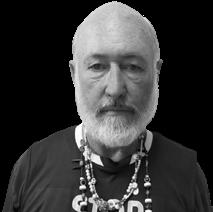
I’m just a snowflake needing an avalanche. In the tree of life, I’m just a little twig or branch. But I know it isn’t horror or war. What are we living for? What is really worth the fight? How do we know what is right? Christ or Hitler seems to be the choice. How should we use our voice? What will I precisely scream? Who in the holy f*** is our team? Will the righteous stand or sit? Who are those who never quit? We are all the human race. Who in it is our current face?
In the 1950’s, we were different folk; Japan rebuilt from World War II. This is what we ought to do. Every woman, every man, within Iraq and Afghanistan. Making them true and close allies. Now people come for Islam, with hate in their eyes. Listen here, you stupid tree. It’s called a non bank banks holding company. It helps developing countries with financial trunk. Are you idiots? Do you think global goals are bunk? The 17 are most important, I’m sure. If the world has an intelligent cure. Number 13, Climate Action. “I can’t get no satisfaction”! Line up people, 8 suits per bank. Rebuild the cities. DROP THE TANK.
JEANETTE RICHARDSON
Artist/Vendor
A dog!
When I was little, my dog and I ran together every day at around 7 a.m. Sadly, he’s not with me, though his memories are. But my neighbor’s dog has a lot of my dog’s actions and habits. When I see him, he’s very happy and frisky. He jumps on me and brings me many great memories.
Much of my experience this year has been seeing too many dog owners in my community not cleaning up after their dogs and leaving their mess for someone else. I’ve called around trying to see who can help out with that. My next-door neighbor’s dog is CoCo. I see them all the time. I’ve told her to let me know that she needs a babysitter — okay, dog sitter — to help out. I would love to do that for little CoCo.
MARC GRIER
Artist/Vendor
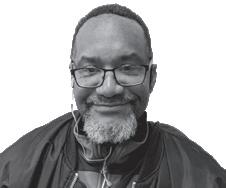
This is a day I wake up after just getting to sleep. I don’t know why, but when I go fishing, that’s what happens. But I finally get up, rush to get dressed, rush to get something to eat, and head down to the boat. I try to get there as soon as possible so I can get the best seat in the house. That’s at the back of the boat. At the corner of the boat is where you have more room. I finally make it. I’m on the boat, riding for two and a half, maybe three hours. And then, boom, I hit the Gulf Stream, the most beautiful thing you ever want to see. The water changes from dirty grey to aqua blue. That is my nostalgic moment.

JENKINS DALTON
Artist/Vendor
I am writing you a Love letter to tell you that I want You to be my friend and more Do you know how to read? Tell me what you think Of my fascination
I am a magnate, and I live In a luxury place, and not only Drive, I fly on my own planes
Sometimes I eat in Paris and sleep In Los Angeles, California
Don’t tell me about Madrid vs Finland
Don’t tell me about the tournament Or parties like Dancing with the Stars, I am not only wanted, I live there
I went to school, got a degree And I read like everyone Do you want to read to me?
I am looking forward to your letter Writing to a friend can be fun sometimes
I am telling you, Last night I had a date with Miss America, she is fine
Do you want me to assure you She is my best friend?
I am inviting her to The flea market this Sunday at Dupont Circle, and we can drive up
To New York after a short flight
That will be tall
But free to take away
Would you want to be my friend?
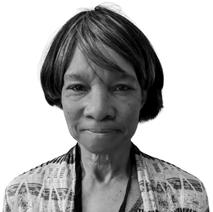
In the divine light of the new Earth, free choice truly is a gift. Given by the divine creator, this is all that is needed for humanity’s consciousness to lift every soul with the power to choose. Their focus and their reality is that there is no win or lose.
We come to Earth to create, evolving through love or hate. Even in the old Earth energies, free choice was absolute. In the third Earth, dense duality, the opposites led the way. Good or bad, the positive and the negative are gathering for the awakening. Rays of light aligned with the divine creator source within. It’s their free choice; always the light overpowering the darkness, releasing the power they stole from us.

The seeming battle of the light and dark is prominent for those who have just awoken. Revelation has made many hearts broken. But from the new Earth perspective, there is no end of life, both the physical and material.
The fifth Earth is a more intuitive, heart-centered space where synchronicities, miracles, and deep inner knowing become part of our everyday lives. An experience we come to live, learning through all peace and strife. As we move through the ascension, it’s natural for shadow aspects — both within us and in the world — to rise to the surface. We can feel uncomfortable, but it’s an essential part of healing and balancing karma. The key is to manage our energy and to stay grounded in higher vibrations. All had to be shown for humanity to be truly healed.
College classes all day long book reports, studying hard and tests in several classes (some think this is wrong!) Eating on the run which ain’t no fun, and late for class? it’s your ass! And they work for no money, which is NOT funny. So a shoutout to many various college interns. But the loudest SHOUT OUT to our fabulous Street Sense student interns!

STARCHILD BLK
Artist/Vendor
Thrifted fits, and a DJ’s beat Art that rises from the street. No fake flex, no shallow race, Just makers shaping sacred space. We swap, we share, we teach, we learn, In every heart, the fires burn. From every city, far and near — Come as you are. You’re welcome here.


EVELYN NNAM Artist/Vendor
A mother is the reason why we love
A mother is the rock that never breaks
The soothing voice that calms all fears
A mother works hard without a word
Sacrifices without a sigh
Prays her children will be successful
Prays for their dreams to all come true
She will wake up early
And be the last to sleep
She puts everyone before
Herself each day
She holds her family
With care and gentleness
She’s there through every storm and every season
A mother’s love outlasts any weather
When the world may feel cold and difficult
She is the warmth that pulls you through
No matter how far life takes you
A mother’s heart stays close to you
She taught us so much throughout life
How to dress, to speak, and to be kind
She dried our tears without a question
She held us close without a word
She makes us feel as though we matter
Even when the world makes us feel otherwise
A mother will carry the weight on her shoulders
Even when she doesn’t have the strength
A mother will make sure we never go without
She makes sure her children always eat
Will always love you like no other
Her love never fades and doesn’t run dry
It follows you everywhere
A mother’s love is given openly and freely
Now that we are all older
We can truly understand
What our mothers have gone through
Today, we honor her
The woman who gave us everything
Every day we give her our love and our respect
And praise her for the woman she is
Happy Mother’s Day to every mother, grandmother, Foster mother, stepmother, godmother, adoptive mother, or Sleep-in mother who takes children under their care
And shows affection and love to raise generations
Of teachers, painters, singers, doctors, lawyers, Managers, coaches, and dreamers who become achievers
Today, we celebrate you. Thank you!
Happy Mother’s Day, everyone!
FREDERIC JOHN Artist/Vendor
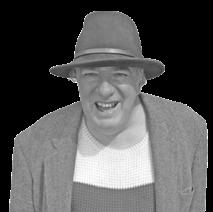
An “eldritch” poet/musician, now 93 years old, whom I’ve long admired — the creeping age has robbed my recall (temporarily!) of his name — issued a most profound utterance I frequently channel for comfort in this increasingly incomprehensible era. “My love for the language of which we speak and write is vast, and allows me to express myself fully, with precise and adoring articulation.”
Wow! Couldn’t possibly put it any better myself. Back in 1979-80, when I had more than ample idle time to spend (between challenging days on amazing movie sets), but not enough lettuce to blow at the Second Avenue off-track betting, I’d take my $6 down to the legendary 42nd Street ‘strip’ of massive movie marquees. These iceberg-sized bulbs of white Bakelite invited the fantasy-addled drifter inside, taking one past the crackedmirror arcades to the worn play seats, which once hosted Barrymores and Ziegfield Follies and Katharine Cornells and their glorious ilk.
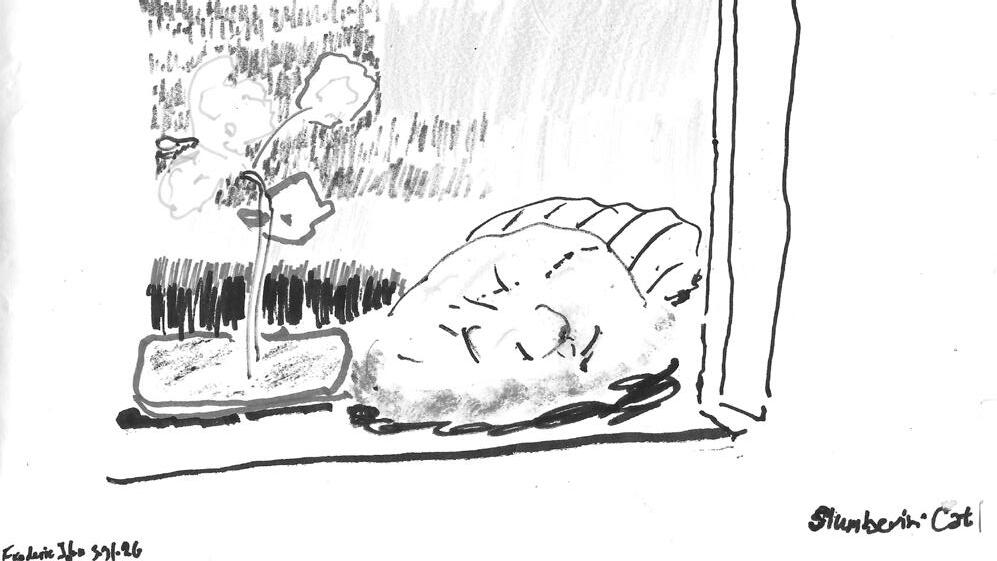
Now, the screen unfurled “Blood Beach,” “Goliathon,” “Halloweens” 1, 2, and 3, and never did you know who your chair-mate might be. As the “gimme” scares jumped out behind the rising minor surprise chords of the soundtrack, a hulking kid twice my size might leap in fright, “Oh sh**!!”
Or perhaps just slump down, zonked from the fatigue of an all-night bender. Maybe just the street politics over my head from somewhere in the upper deck spilling butter-corn and Pepsi -manna from above.
But in the murk of a glazed-porcelain Art Nouveau showplace like the New Amsterdam (built 1903, now encased in a patina of growing filth), I enjoyed the petrified glory of the old Broadway days — always checking, first looksies for every menace, real or imaginary. And — in view of the showering concession debris — I’d recommend “Always wear a hat inside the grindhouse theatres!”
JAMES DAVIS
Artist/Vendor

Look! There he is, dressed like the cover of GQ Magazine
In one of the finest outfits we’ve ever seen
You can talk about how he never bragged about what he had, How he made people smile when they felt sad He wouldn’t have been in such a pickle
If out of all his siblings who had a middle initial His family came out to help him celebrate They came on time because he hated people being late His kids, no grandkids to speak of… so far, Talked about him always being the party czar
He’s been on more naval ships than those who served
We can say he lived his life as he deserved
So look at him again; a face of no regret
He’s been gone for a while, but we haven’t missed him… yet! Whomever I’m talking about could be you or me
How people remember you is your legacy
JAMES LYLES, III
Artist/Vendor
Springtime is a wonderful time of year in our city. The weather warms. Tourists come from around the world to see the history of the United States of America by going to our many museums. They can also see some history by visiting the cherry trees Japan gifted as a sign of peace and friendship to this country in 1912. The most-visited cherry trees encircle the Tidal Basin, where the Jefferson Memorial sits. And every year, the fabulous Cherry Blossom Parade comes down Constitution Avenue and ends at 17th Street NW.

Hey, ladies and gentlemen. Spring is coming, and just in time! Think about it; no more cold days and nights. No more bundling up. Time to put away all your winter clothes and bring out your spring gear. So, let me ask you: How do you get ready for the closing of one season to open another? Do you wait until the last minute? Do you do it little by little, day by day, or right on time for the season? Do you go shopping?
Some people take out and replace. Of course, how you do it is up to you. Changing seasons can be exciting and fun! You have different holidays, fashion, events, and vacations. And changing seasons can be like changing moods. Think about that; when it’s warm, you’re outside more and more on the go, whereas cold weather makes you more cozy, a homebody. Me, I like the spring because it’s not too hot and not too cold. I enjoy the spring cookouts, boat rides, walks, and vacations with my friends and my family. The sun will be shining, our hearts will be fulfilled, and our faces will be smiling. Enjoying riding mopeds and bikes. Cars with their tops down. But, of course, by the end of the day, we get what our higher power gives us.
I will leave you with this visual: how do you change into the spring? Is it like your life?
S — something to look forward to P — preparing
R — riding
I — irresistible
N — nightlife
G — going out
Chums
5. Envelope or jewelry fastener
10. Small amounts
14. Amo, amas, ___
15. Near East hotel (anagram of RAISE)
16. Roasting rod or saliva, crudely
17. Porcine toon star’s main squeeze (7,3)
19. Church alcove
20. The Hippodrome or Madison Square Garden, e.g.
21. Like doors one may see through?
23. “How ____ can you go!”
24. Kind of pool
25. High craggy hill
26. Wonderment
27. Edible tubers of South America
28. Betty White’s much-loved character on old TV’s “The Golden Girls” (4,6)
32. Seattle catcher Raleigh who holds the MLB record for most home runs before the All-Star break
33. A port city in southern Ireland (ROCK anagram)
34. Roadside bombs, in mil. jargon (abbr./init.)
35. Feathered toon star quacker’s main squeeze (5,4)
38. Agenda
40. Accumulation of laundry, say
41. Kissing on the street, briefly (abbr./ initialism)
44. Singer-songwriter who’s recorded numerous duets with John Prine and had 2 Grammy-nominated albums of her own (4,2,4) (DISINTER ME anagram)
47. “___ Brockovich” or “___ go bragh”
48. Cry loudly
49. Egg cells (Lat. pl.)
50. Apply, as pressure
51. Word that reverses its meaning when an “n” is added to the front
52. Kidney-related
55. “Beau ___” (book and movie hero who has been portrayed by Ronald Colman, Gary Cooper and Guy Stockwell)
56. Handed-down history
58. The actress-comedienne responsible for the classic SNL skit with the recurring lines : “One ringy-dingy. Two ringy-dingy...” (4,6)
60. Kind of income or auto exhaust system
61. New Haven collegian, familiarly
62. Hammer part
63. Photo blowups (abbr.)
64. “Bye Bye Bye” band with a Bass singer (2 wds.) (1,4)
65. Banks on the runway who can easily become arty?
Down
1. Haitian honcho’s handle from 1957 - 1971 (4,3) (A DOC APP anagram)
2. Major country name that may be preceded by Central, North or South, but not East or West
3. Certain kind of football pass
4. “Me? Smoke? Nah, ____ your growth”
5. CBS cop show franchise with spinoffs set in Las Vegas, New York, Miami and Washington, D.C. (FBI Cyber Lab) (abbr./init./acron.)
6. Look before you ____
7. A Marx Brother musical instrument to either of the Mario Brothers (Ital.)
8. Sault ___ Marie (Fr.)
9. Clay, stool or homing follower
10. Org. that might have put your belt on a belt (abbr./init.)
11. Show approval for another’s efforts by clapping
12. Renounces someone to the point of removing them from one’s will
13. Condition that may apply to tomatoes in a saucepan or sots in a tavern
18. Opponent’s vote
22. Frozen carbon dioxide
28. “Vive le ___!”
29. Hosp. areas
30. Video chatting option
31. Albanian coin (ELK anagram)
33. Openness
35. Prosecutors, for short (abbr./ init.)
36. Cacophony
37. Final (abbr.)
38. Him or her
39. Leaning demonstrated by political enemy that every MAGA appears eager to “own”
41. “All Shook Up” star that ruled “Graceland”
42. Like 24-Across, only more so
43. Pre-cable reception helper or an insect’s feeler
44. Tristan’s love
45. “Decline and Fall” writer Waugh
46. Medical term for frenzied states once loosely applied to Pokémon and the Beatles
47. Release(d), as from an otherwise required payment or other responsibility
50. Characteristic embodied in the god complex
53. Comrade in arms
This crossword puzzle is the original work of Patrick “Mac”McIntyre. It is provided to us courtesy of Real Change News, a street paper based in Seattle, Washington. Learn more about Real Change News and the International Network of Street Papers at realchangenews. org and insp.ngo.

54. “You ain’t ____” (“True dat” alternative)
57. Volleyball doubles?
59. Private eye, in old
movie
Housing/Shelter Vivienda/alojamiento Case Management Coordinación de Servicios
Academy of Hope Public Charter School
202-269-6623 // 2315 18th Pl. NE
202-373-0246 // 421 Alabama Ave. SE aohdc.org
Bread for the City 1525 7th St., NW // 202-265-2400 1700 Marion Barry Ave., SE // 202-561-8587 breadforthecity.org
Calvary Women’s Services // 202-678-2341 1217 Marion Barry Ave., SE calvaryservices.org
Catholic Charities // 202-772-4300 catholiccharitiesdc.org/gethelp
Central Union Mission // 202-745-7118 65 Massachusetts Ave., NW missiondc.org
Charlie’s Place // 202-929-0100 1830 Connecticut Ave., NW charliesplacedc.org
Christ House // 202-328-1100 1717 Columbia Rd., NW christhouse.org
Church of the Pilgrims // 202-387-6612 2201 P St., NW (1-1:30 on Sundays only) churchofthepilgrims.org/outreach
Community Family Life Services 202-347-0511 // 4860 Fort Totten Dr, NE cflsdc.org
Community of Hope // 202-232-7356 4 Atlantic St., NW communityofhopedc.org
Covenant House Washington 202-610-9600 // 2001 Mississippi Ave., SE covenanthousedc.org
D.C. Coalition for the Homeless 202-347-8870 // 1234 Massachusetts Ave., NW dccfh.org
Father McKenna Center // 202-842-1112 19 North Capitol St., NW fathermckennacenter.org
Food and Friends // 202-269-2277
(home delivery for those suffering from HIV, cancer, etc) 219 Riggs Rd., NE foodandfriends.org
Foundry Methodist Church // 202-332-4010 1500 16th St., NW foundryumc.org/idministry
Identification services
Friendship Place // 202-364-1419 4713 Wisconsin Ave., NW friendshipplace.org
Georgetown Ministry Center // 202-338-8301 1041 Wisconsin Ave., NW georgetownministrycenter.org
Jobs Have Priority // 202-544-9096 1526 Pennslyvania Ave., SE jobshavepriority.org
Loaves & Fishes // 202-232-0900 1525 Newton St., NW loavesandfishesdc.org
Martha’s Table // 202-328-6608 marthastable.org 2375 Elvans Rd, SE
2204 Martin Luther King Ave. SE
Miriam’s Kitchen // 202-452-8926 2401 Virginia Ave., NW miriamskitchen.org
My Sister’s Place // 202-529-5991 (24-hr hotline) mysistersplacedc.org
N Street Village // 202-939-2076 1333 N St., NW nstreetvillage.org
New York Avenue Shelter // 202-832-2359 1355-57 New York Ave., NE
Patricia Handy Place for Women 202-733-5378 // 810 5th St., NW
Samaritan Inns // 202-667-8831 2523 14th St., NW samaritaninns.org
Samaritan Ministry 202-722-2280 // 1516 Hamilton St., NW 202-889-7702 // 1345 U St., SE samaritanministry.org
Sasha Bruce Youthwork // 202-675-9340 741 8th St., SE sashabruce.org
So Others Might Eat (SOME) // 202-797-8806 71 O St., NW some.org
St. Luke’s Mission Center // 202-363-4900 3655 Calvert St., NW stlukesmissioncenter.org
Thrive DC // 202-737-9311 1525 Newton St., NW thrivedc.org
Unity Health Care unityhealthcare.org - Healthcare for the Homeless Health Center: 202-508-0500 - Community Health Centers: 202-469-4699
1500 Galen Street SE, 1251-B Saratoga Ave NE, 1660 Columbia Road NW, 4414 Benning Road NE, 3924 Minnesota Avenue NE, 765 Kenilworth Terrace NE, 850 Delaware Ave., SW, 3240 Stanton Road SE, 3020 14th Street NW, 425 2nd Street NW, 4713 Wisconsin Avenue NW, 2100 New York Avenue NE, 1333 N Street NW, 1355 New York Avenue NE, 1151 Bladensburg Rd., NE, 4515 Edson Pl., NE
Washington Legal Clinic for the Homeless 1200 U St., NW // 202-328-5500 legalclinic.org
The Welcome Table // 202-347-2635 1317 G St., NW. epiphanydc.org/thewelcometable
Whitman-Walker Health 1525 14th St., NW // 202-745-7000 1201 Sycamore Dr., SE whitman-walker.org
Woodley House // 202-830-3508 2711 Connecticut Ave., NW
For further information and listings, visit our online service guide at StreetSenseMedia.org/service-guide
Department Supervisor
The Home Depot // Oxon Hill, MD
Full-Time (Onsite)
Lead, train, and support store associates; oversee department operations, customer service, and merchandising.
Requirements: Retail/customer service experience, leadership skills, ability to manage teams
Pay: Starting $21.50/hr
Apply: shorturl.at/0c5e3
Target Security Specialist (Assets Protection)
Target // Washington, D.C. / Maryland Area
Full-Time / Part-Time (Onsite)
Help keep guests, team members, and store assets safe. Monitor store activity, respond to incidents, support theft prevention, and use security systems and reporting tools.
Requirements: Observation skills, ability to stay alert, communication skills, basic security experience preferred
Pay: $20.00/hr
Apply: shorturl.at/WMxcN
Cashier / Front End Associate (Head Cashier)
The Home Depot // Washington, D.C.
Part-Time / Full-Time (Onsite)
Process customer checkout and returns, handle self-checkout area, support customer service, and assist with pricing and transactions. May help train and support other cashiers.
Requirements: Customer service experience preferred, basic cash handling skills, reliability
Pay: $18.50 – $19.50/hr
Apply: shorturl.at/4oWaQ
Dear reader,
Leonard was a giant of a man — tall, barrel-chested, with a booming voice. He could be gruff, even intimidating, and that often kept others at a distance.
But everything changed when Leonard joined the Devising Hope theater workshop, led by the talented Elizabeth Kitsos-Kang. There, a small group of Street Sense Media vendors and local high school students came together over eight weeks. What began as an unlikely mix of strangers grew into a close-knit community grounded in shared experience and trust.
In that space, Leonard began to open up. He spoke about the deep grief he carried after his wife was deported years earlier. Surrounded by people who genuinely cared, he allowed himself to be vulnerable. Through storytelling, his pain was transformed into something powerful — something beautiful.
This kind of transformation is at the heart of everything we do at Street Sense Media.
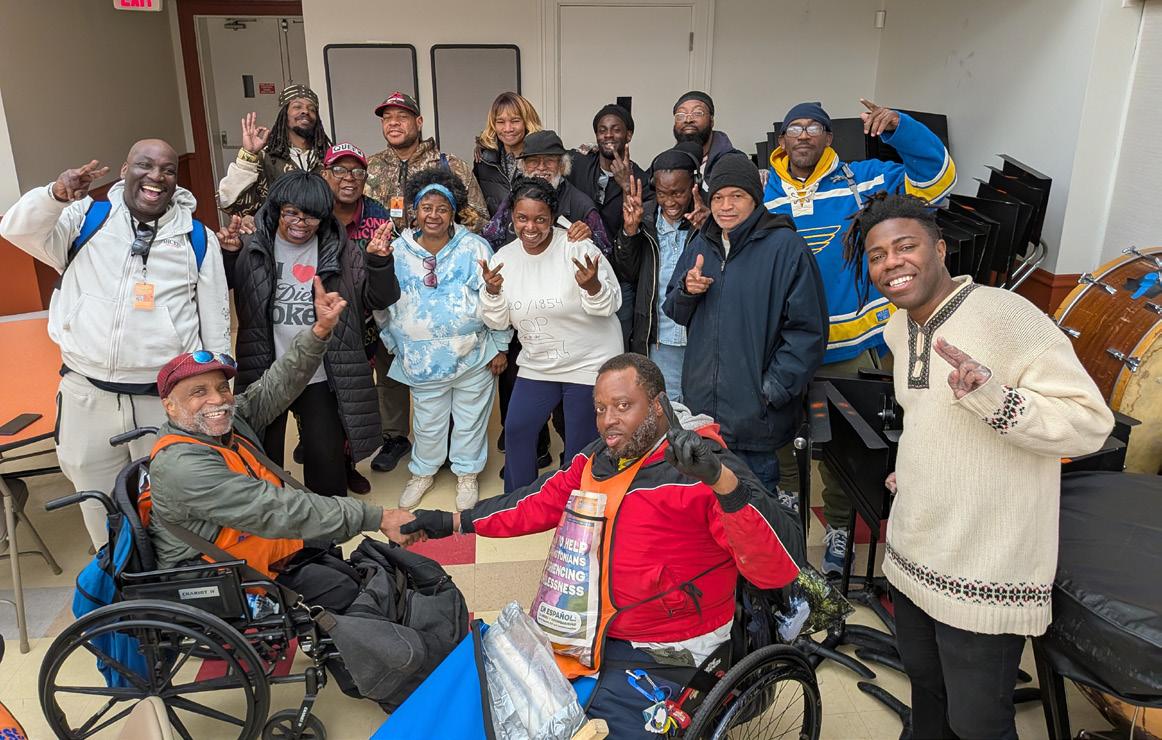
Whether on a theater stage, in the pages of our award-winning newspaper, or in conversations on a busy downtown street corner, storytelling connects people. It builds understanding. It brings us closer as a community. Just as importantly, research — and our experience — shows that storytelling helps break down barriers to case management and treatment. Once that barrier falls, our vendors are better able to take meaningful steps toward stability, health, and independence.
For 23 years, support from donors like you has made this work possible. You have helped create life-changing opportunities for men and women working to move out of homelessness and into brighter futures. You are an essential part of every success story.
Today, I’m asking you to renew your support with a gift to our annual spring appeal.
Last fall, in partnership with the D.C. Department of Human Services (DHS), we launched a new program to help vendors secure traditional employment. As part of this effort, we hired a full-time employment specialist to connect vendors with prospective employers and guide them through the job search and application process.
While this program is already making a difference, the DHS contract covers only 40% of its cost. We must raise the remaining 60% — $208,000 — to sustain and grow this critical work. And because our 2025 year-end appeal fell significantly short of its goal, the need is especially urgent.
Your gift today is an investment in the hopes and ambitions of the 110 individuals working every day to build better lives through Street Sense Media.
If you are able, please consider making a generous, tax-deductible contribution. You can give by check using the attached reply card and mail it to Street Sense Media 1317 G Street, NW Washington, D.C. 20005 or online at www.streetsensemedia.org.
Thank you for being such a vital part of our community — and for helping make stories like Leonard’s possible.
Sincerely,
Brian Carome CEO