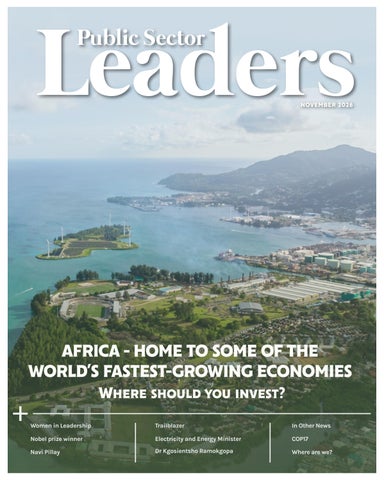
NOVEMBER 2026
AFRICA - HOME TO SOME OF THE WORLD’S FASTEST-GROWING ECONOMIES Where should you invest? Women in Leadership
Trailblazer
In Other News
Nobel prize winner
Electricity and Energy Minister
COP17
Navi Pillay
Dr Kgosientsho Ramokgopa
Where are we?
“ B R A I N F O O D
F O R
B U S I N E S S ”
LISTEN NOW
OM ARDRO THE BORD BEYOND OF SU CC ES S IN G TH E STAN DA RE DE FIN
Master the art of leadership and digital innovation with Ralf Fletcher, CEO of Topco Media, as he interviews and gains exclusive access to high-impact conversations with influential business leaders, politicians, and innovators redefining the future of business.
DEFINITELY A BAKKIE BUILT FOR EASIER LOADING MADE FOR HARD WORK
When productivity drives your business, every load counts. The new ISUZU D-MAX 1.9 Ddi Low Ride Single Cab features a purpose-built 1 700mm overall height for easier loading, a proven 1.9L turbo-diesel engine producing 110kW and 350 Nm of torque, a 2 330mm load box, and 2 100kg towing capacity. Backed by a 6-year/90 000km service plan, it’s built to keep your business moving.
Contents
NOVEMBER 20 26 | IS S UE 68
Editorial 34 | Strong El Niño
Temperatures soar as summer begins
40 | FuturePHARMA
CSIR launches new launches world-class pharmaceutical facility
44 | Medium-Term Budget Policy Statement
A stronger fiscal outlook offers hope for households and public services
46 | Mining and government partnership Unlocking growth, jobs and investment
Features
34 48 | Public Service Amendment Act
Building a more professional and accountable state
44
26 | Trailblazer
52 | Financial Fitness
Now that the votes have been counted, the hard work must begin
28 | Tech
54 | Legal Matters
12 | Cover Story
38 | In Other News
56 | Health & Wellness
10 | Addressing the Nation
Where should you invest in Africa?
Electricity and Energy Minister Dr Kgosientsho Ramokgopa
Creating a robust digital ecosystem through training and development
UN Biodiversity COP17
42 | Agriculture 24 | Women in Leadership Navi Pillay: A lifetime of leadership recognised with the Nobel Peace Prize
The 2027 agricultural outlook
50 | Regional Focus
Solar in the Western Cape
04 Public Sector Leaders | November 2026
Buy now, pay later: What to consider before you commit
Home surveillance and CCTV
Diabetes is South Africa’s leading cause of death
58 | Sporting Action
December sports calendar
60 | Upcoming Events November calendar
86,345
Government Employees Medical Scheme (GEMS): 2026 Annual General Meeting (AGM) Notice
CREATING SPECIAL BONDS FOR GOVERNMENT EMPLOYEES.
All GEMS members have been sent the draft 2025 GEMS Annual Integrated Report and Financial Statements containing the official notice of the 2026 GEMS Annual General Meeting (AGM) taking place virtually via the Zoom platform on Friday, 31 July 2026 at 15:00.
Should you be unable to attend the AGM, you may appoint a proxy to attend, speak and vote on your behalf by completing the proxy form. When returning your proxy form, kindly mark it for the attention of the Principal Officer with the reference 2026 GEMS AGM Proxy. It is important to note that your proxy form must reach us by 16:00 on Friday, 24 July 2026 to be considered.
In accordance with GEMS Rule 29.6, the GEMS Board of Having a place to call home something we all strive for. It’s a place to raise our families, grow Trustees require members wishing to attend theis AGM to Proxy forms may sent to: together and memories. At SA Home Loans, webeunderstand what owning a home means register online by 15:00 on make Friday,lifelong 31 July 2026. Please note • Email: enquiries@gems.gov.za; that online registration 15:00. registration to to you – will andclose we atwant to No make it possible for more people to achieve their goal of home ownership. attend the AGM will be allowed after 15:00. Accordingly, if you • Fax: 0861 004 367; or wish to attend the AGM, to www.gems.gov.za, click on • Post: GEMS, Private Bag X782, Cape Town, 8000. Here are akindly few go ways we can help you: the relevant link embedded in the 2026 GEMS AGM section and: For copies following AGM meeting documents, go toto BUYING A HOME: We have a special deal of forthegovernment employees, makingkindly it easier www.gems.gov.za and click on the relevant link embedded in the get onto the property ladder. Complete the online registration form by 15:00 on Friday, 2026 GEMS AGM section: 31 July 2026. It is important to note that only members • 2026 GEMS AGM Member Guide; If you already own your ownAGM home, you can switch your current bond to who haveRENOVATING registered will be admitted to the meeting; YOUR HOME: • 2026 GEMS Agenda;
Acquaint yourself with the Zoom user guide, which detailsLoans, • 2026 GEMS AGM Proxy Form; SA Home access extra cash, and get a better deal. Zoom’s functionality; and • 2025 GEMS AGM Minutes (draft);
Download the Zoom software for an enhanced Zoom/AGM 2025 GEMS Annual Integrated Report; You can access• finance to buy or build on land that has no title deed. BUYING OR BUILDING ON experience, should you prefer this to the standard • 2025 GEMS Trustee Remuneration Report; and COMMUNAL OR FAMILY LAND: Zoom/AGM web experience. • GEMS AGM Action List.
To find out more, speak to one of our friendly consultants who will guide you through the process. We thank you for your ongoing support and look forward to seeing you at the AGM.
0860 2 4 6 8 10
0800 00 4367 (toll-free)
www.sahomeloans.com www.gems.gov.za enquiries@gems.gov.za
@GEMSMEDICALAID1 @GEMSMEDICALAID Government Employees Medical Scheme
Use the QR Code to download the GEMS Member App
Terms and Conditions apply. Please refer to our website for further details. SA Home Loans is a Registered Credit Provider. Registration Number NCRCP1735. The Government Employees Medical Scheme (GEMS) is an authorised Financial Services Provider (FSP No 52861)
Working towards a healthier you
26
50
56
28
CREDITS PUBLIC SECTOR LEADERS The Digimag For Leaders In The South African Public Sector Fully Accredited Member of ABC
Deputy Editor Koketso Mamabolo koketso.mamabolo@topco.co.za Assistant Editor Shumirai Chimombe shumirai.chimombe@topco.co.za Contributors Jessie Taylor Wandile Sihlobo Thulani Dube Dr Rowen Govender Design Tashwell Brown
Advertising Sales, Distribution and Subscriptions Top Media & Communications (Pty) Ltd Tel: 086 000 9590 info@topco.co.za | www.topco.co.za CEO Ralf Fletcher TOPCO STUDIO Production Director Van Fletcher van.fletcher@topco.co.za Group Editor Fiona Wakelin fiona.wakelin@topco.co.za
Traffic Manager Daniël Bouwer artwork@topco.co.za SALES National Project Manager Emlyn Dunn Tel: 072 1263962 emlyn.dunn@topco.co.za
Printers LAW Print Images iStock / Unsplash / GCIS | Flickr Digital Publishing Platforms Issuu Magzter Media Carrier Head Office Top Media & Communications (Pty) Ltd T/A Topco Media Elkay House, 186 Loop St Cape Town Tel: +27 86 000 9590 Fax: +27 21 423 7576 Email: info@topco.co.za Website: www.topco.co.za (Scan QR code below to view website)
Brand Coordinators Sidney Phiri sidney.phiri@topco.co.za Zanele Qeqe zanele.qeqe@topco.co.za Kabelo Mayisa kabelo.mayisa@topco.co.za
06 Public Sector Leaders | November 2026
DISCLAIMER All rights reserved. No part of this publication may be reproduced, stored in a retrieval system or transmitted, in any form or by any means, electronic, mechanical, photocopying, recording or otherwise, without the prior written consent of Top Media & Communications (Pty) Ltd T/A Topco Media. Reg. No. 2011/105655/07. While every care has been taken when compiling this publication, the publishers, editor and contributors accept no responsibility for any consequences arising from any errors or emissions.
For Every Business. From transporting people to delivering goods, the Mercedes-Benz Vito offers versatile solutions for every business. The Vito Mixto combines people and cargo. The Vito Panel Van keeps your business moving. The Vito Tourer gets people where they need to be. The Mercedes Benz Vito. Discover more. Visit mercedes-benz.co.za/vans
They helped us build our dream house
Creating special bonds for Government Employees Having a place to call home is something we all strive for. It’s a place to raise our families, grow together, and make lifelong memories. At SA Home Loans, we recognise the significance of owning a home and are committed to making this dream a reality for government employees. Here are exclusive benefits designed just for you: BUYING A HOME
We understand the unique challenges government employees face, and that’s why we offer a special deal tailored to make it easier for you to own your own home.
RENOVATING YOUR HOME
If you already own your own home, SA Home Loans empowers you to enhance your living space. By switching your current bond to us, you can not only access extra cash for renovations but also secure a better overall deal.
BUYING OR BUILDING ON COMMUNAL OR FAMILY LAND
We recognise that not all land comes with a title deed. SA Home Loans provides exclusive finance options for purchasing or building on land without a title deed.
At SA Home Loans, we ensure that you have the support and resources needed to achieve your home ownership dreams. Contact one of our dedicated consultants today and take the first step towards creating your special bond with SA Home Loans.
0860 2 4 6 8 10
www.sahomeloans.com T’s and C’s apply. See website for further details. SA Home Loans is a registered credit provider. Reg. no. NCRCP1735.
EDITOR’S LETTER
Letter from the
BY FIONA WAKELIN
Editor
Welcome to the November edition of Public Sector Leaders (PSL) “Across the continent, governments have taken politically difficult decisions to restore macroeconomic stability, strengthen public finances, improve exchange-rate management and attract private capital. The result is a growing divergence between economies that are building resilience and those that remain vulnerable to external shocks,” - Isaah Mahlanga, Chief Economist at Rand Merchant Bank (RMB) Our Women in Leadership celebrates Nobel prize winner Navi Pillay, a landmark recognition of a South African woman whose career has helped shape international human rights law.
I
n his letter to the nation, penned on 9 November, His Excellency, Cyril Ramaphosa, focused on the results of the 2026 local government elections - as announced by the Independent Electoral Commission (IEC). “This year, we mark three decades since our Constitution was signed into law, establishing South Africa as a multiparty democracy in which every adult has an equal vote and those in power must regularly return to the people for a fresh mandate. At a time when democracy is being tested in a number of countries, last week’s poll shows that these foundations remain sound,” – President Ramaphosa. Our front cover takes a deep dive into investment prospects in Africa – in the lead article you will find the top countries that present golden opportunities, based on growth, scalability and resilience:
The November Trailblazer is Electricity and Energy Minister Dr Kgosientsho Ramokgopa who is preparing South Africa for a world in which electricity demand is being transformed by digital technology, industrial expansion and the transition to cleaner energy. Exciting new developments which you will find celebrated in these pages include the launch, by the Council for Scientific and Industrial Research (CSIR), of the FuturePHARMA facility in Pretoria - the continent’s first open-access facility for the production of smallmolecule Active Pharmaceutical Ingredients (APIs), vaccines, and biopharmaceuticals. The second piece of good news is that South Africa’s mining sector has been identified as a key driver of economic growth, investment and job creation under the third phase of the Government-Business Partnership for Growth and Jobs; for the mining industry, the partnership presents an opportunity to turn South Africa’s substantial mineral wealth into greater investment, production and economic participation. It also recognises that unlocking the sector’s potential requires more than favourable
commodity prices. Improvements to infrastructure, regulation, government processes and investor confidence will be essential. In terms of important public sector updates, we unpack the Medium Term Budget Policy Statement and the new Public Service Amendment Act. Climate change and global warming is a constant concern and it was a hard push to find any positive outcomes for the current Super/Strong El Niño currently baking southern Africa, the USA, South America, Indonesia and Australia: “It should be noted that the expected very strong 2026/27 El Niño event, combined with global warming, will likely result in 2027 being the warmest year ever recorded. The 2015/16 very strong El Niño event brought unprecedented heatwaves to the southern African region,” - South African Weather Service. Sticking with concerns about the environment, In Other News, we bring you the salient points as discussed at UN Biodiversity COP17: A global push to turn nature commitments into action. From myself and the amazing team, we hope you enjoy the read!
FIONA WAKELIN | GROUP EDITOR
November 2026 | Public Sector Leaders 09
ADDRESSING THE NATION BY FIONA WAKELIN
Now that the
votes have been
counted, the hard work must begin
10 Public Sector Leaders | November 2026
In his letter to the nation, penned on 9 November, His Excellency Cyril Ramaphosa focused on the results of the 2026 local government elections - as announced by the Independent Electoral Commission (IEC). On Wednesday 4 November, more than 15 million South Africans cast their ballots with the IEC, the police, the defence force and other government officials ensuring that voting proceeded smoothly
and securely. With more than 540 parties and close to 137,000 candidates standing, voters had a greater choice than at any time since 1994. “This year, we mark three decades since our Constitution was signed into law, establishing South Africa as a multi-party democracy in which every adult has an equal vote and those in power must regularly return to the people for a fresh mandate. At a time when democracy is being tested in a number of countries, last week’s poll shows that these foundations remain sound. “In democracies across the world, we are seeing political choices being shaped by the ‘bread-andbutter’ issues that matter most to voters. South African voters are no different. They want work and economic opportunity. They want reliable
and affordable supplies of water and electricity, well-maintained public spaces and neighbourhoods where they feel safe. They want municipalities that are well run and local finances that are soundly managed,” – H.E Ramaphosa President Ramaphosa was quite clear – now the work must now begin in earnest with the incoming councillors basing actions on the recommendations of the revised White Paper on Local Government which contains measures to put municipal finances on a sound footing, to direct more money to maintaining infrastructure and to ensure that services reach residents reliably. “We need to make local government an engine room of service delivery, a driver of development and a creator of opportunity. This calls for councillors who put the needs of communities ahead of any other interests, who listen and respond to residents and who carry out their duties with humility. It is up to all of us to ensure that democracy delivers for every South African and that local government works better for all,” – President Ramaphosa.
November 2026 | Public Sector Leaders
11
COVER STORY BY KOKETSO MAMABOLO
Africa - home to some of the world’s fastest-growing economies
Where should you invest?
T
he world is in a state of flux. Trade patterns are being rewoven, supply chains are shifting, and ‘uncertainty’ is the buzz word. In the middle of the storm we find ourselves in it is difficult to chart a clear investment path. “Yet, uncertainty is not synonymous with decline,” says Isaah Mahlanga, Chief Economist at Rand Merchant Bank (RMB) in their latest Where to Invest in Africa report. “It creates challenges and opportunities, winners and losers. It rewards economies that can absorb shocks, adapt quickly and maintain policy credibility in difficult circumstances.”
The answer to the question of where to invest in Africa, in times such as these, is not a simple one. The strongest performers are doing four things: maintaining consistent policy, strengthening institutions, diversifying their domestic economy, and improving governance. There’s good news for Morocco and Nigeria, but a slight disappointment for South Africa amid the positive signs. Resilience and vulnerability enter the mix The report is as focused as it is wide in scope. It ranks thirty-one economies based on twenty metrics across four
12 Public Sector Leaders | November 2026
pillars: economic performance and potential (35%), market accessibility and innovation (20%), economic stability and investment climate (25%), and social and human development (20%). These thirty-one economies represent 90% of the continent’s GDP, 83% of the population, and almost two-thirds of the land mass. Being able to handle ripple effects of uncertainty is the hot ticket right now. Hence the inclusion of a resilience and vulnerability matrix in this year’s report, which examines the policies, institutions and buffers that help an economy withstand and recover from shocks.
“Across the continent, governments have taken politically difficult decisions to restore macroeconomic stability, strengthen public finances, improve exchange-rate management and attract private capital. The result is a growing divergence between economies that are building resilience and those that remain vulnerable to external shocks.”
Resilience Index pillars 1. 2. 3. 4. 5.
Macroeconomic stability Market efficiency Good governance Social development Environmental management
Vulnerability Index pillars 1. 2. 3. 4.
Trade openness Export concentration Strategic imports Climate/geo exposure
Sub-Saharan Africa began 2026 as one of the fastest-growing regions in the world, and according to Mhlanga, reforms are contributing more to growth as opposed to it being tied to commodity cycles alone.
Seychelles, Mauritius, and Egypt hold the top three spots for the third year running. They are not just among the most popular places to go on holiday, they are also among the best places to invest because they offer good institutions and stability. RMB is candid about the fact that the island nations are not the best fit for every investor (mining etc.) and one would naturally think that an economy the size of South Africa’s ($485.54-billion), with the level of sophisticated financial architecture and strong regulatory environment would make it a more desirable investment destination. The resilience matrix explains why they punch above their weight. Seychelles is the most vulnerable economy of the thirty-one listed: its trade exceeds its output and most goods are imported. Yet it sits high on resilience, helped by deliberate institution-building which included the world’s first sovereign “blue bond” in 2018. Mauritius records the highest resilience score off the back of a fifty-year shift from sugar monoculture into finance, tourism, ICT and manufacturing. The report calls this the “Singapore Paradox”: a vulnerable economy that excels anyway because it has fortified itself.
Morocco overtakes South Africa This year Morocco climbs up to fourth, with South Africa dropping to fifth. How does an economy less than half the size of South Africa’s get there? Simply put: momentum. South Africa’s nominal GDP came in over $400-billion in 2025, but Morocco’s economy grew by 4.9% against a paltry 1.1%, and the gap widens once inflation is factored in. Moroccan inflation stayed below 3% from 2024 to mid-2026, while South Africa averaged 5% over the five years to the middle of this year. This matters to investors. In the report’s words: “Lower and more stable prices have reduced borrowing costs, preserved household purchasing power, and provided investors with a more predictable operating environment.” Morocco’s rise is a reflection of the work it has put into industrialisation, diversifying exports and investing in infrastructure, says RMB. The north African country has emerged as one of the continent’s leading manufacturing hubs, with automotive manufacturing playing a major role. Renault and Stellantis anchor a car industry that produced 501 965 vehicles in 2025 (South Africa produced 618 077), or 40.8% of Africa’s total, and the African Development Bank’s industrialisation index now ranks Morocco ahead of South Africa. Foreign direct investment roughly tripled from its 2023 low to $3.3-billion in 2025. Plus, Morocco hasn’t had to deal with electricity and logistics crises like South Africa. RMB is clear that this is no catastrophe for South Africa. It “remains among the continent’s most attractive
November 2026 | Public Sector Leaders 13
COVER STORY BY KOKETSO MAMABOLO
investment destinations and continues to benefit from deep financial markets, improving energy security, and reform momentum, but slower growth has seen it narrowly lose ground this year.” Since the start of the new administration, there are bright spots here and there: South Africa was removed from the Financial Action Task Force’s grey list last year; has gone well over a year without loadshedding; and Fitch delivered the country’s first upgrade in two decades. For Nigeria there is good news after going through what the report describes as “tough medicine”, with a seven-place leap to 11th. Côte d’Ivoire has gone up from 16th to 7th in the last two years, with 6.5% growth in 2025, inflation averaging 0.1%, and a new offshore oil and gas sector. Senegal unfortunately went the other way, from 8th to 19th. The new matrix sorts the thirty-one economies into four archetypes with geographic names. Plateaus, high resilience and low vulnerability, hold countries such as South Africa, Morocco, Algeria and Rwanda. Rift Walls, strong but always under strain, include Seychelles, Mauritius and Botswana. Basins, sheltered but shallow, include Kenya, Tanzania and Zimbabwe. For them, sustained reform could move them into the Plateau quadrant. Floodplains, exposed with thin defences, include the DRC, Mozambique and Nigeria. “The central message of this year’s report is ultimately an optimistic one. Africa remains home to some of the world’s fastest-growing economies, youngest populations and most significant untapped opportunities. But the continent’s success will be increasingly determined by resilience rather than aspiration alone.”
14 Public Sector Leaders | November 2026
Source: Where to Invest in Africa 2026/27 report | StatsSA
November 2026 | Public Sector Leaders
15
ADVERTORIAL
BY ZANDILE MPOSELWA
Tackling problem gambling is a shared responsibility
16 Public Sector Leaders | November 2026
A
s the South African government contemplates new gambling legislation and taxes, responsible gambling has become an important topic of conversation. But ensuring safe and responsible gambling is a complex task that relies on operators building protection into everything they do, players making use of available tools and the government devising a regulatory framework that makes both possible. Building a partnership between the public and the private sectors is therefore central to tackling problem gambling. At Sun International, we take responsible gambling very seriously. We are a founding member of the Responsible Gambling Foundation and, in October 2026, we launched our group Responsible Gambling Charter. The Charter’s central idea is that responsible gambling is a shared responsibility across players, operators, regulators and the government. South Africa has seen countless examples of what public-private collaboration can achieve, which is why Sun International welcomes constructive partnerships with government and regulators. As operators, we must uphold the law and give players the tools to protect themselves. Our Charter commits us to making tools such as deposit limits, cooling-off periods, self-assessments and self-exclusion easy to find and easy to use. They work like a seatbelt: they offer protection but only if the player chooses to use them. We are also going beyond legal requirements on advertising. We will not place time-dependent broadcast or display advertising between 06:00 and 08:00 or between 12:00 and 18:00, when children are most likely to be watching. We will not market to minors, to selfexcluded or at-risk players, or to anyone under an active restriction. But even the most committed operators can only do so much, and we cannot ignore players using unregulated, illegal operators which offer no protection.
The National Gambling Board has told Parliament that operators licensed in jurisdictions such as Gibraltar, Malta and the Philippines are active in South Africa. They pay no tax here and contribute nothing to the National Responsible Gambling Programme. The industry calls the share of gambling that stays in the licensed market “channelisation”. H2 Gambling Capital estimates South Africa’s channelisation rate is around 83%, meaning roughly five rand in every six is spent with licensed operators. This is relatively good by international standards, but it should not be taken for granted. Other countries show how quickly it can change. Kenya raised taxes on sports betting operators in 2019 and reversed course the following year, after revenues fell as consumers moved offshore. In the Netherlands, following tighter taxes and restrictions in late 2024, the regulator reported that by April 2026 only 53% of online gross gaming revenue was going to licensed operators. The lesson is not that gambling should be lightly regulated or that operators should escape taxation. We accept that a licence rightly brings obligations to protect players, pay tax and be held to account. But policy has consequences beyond its intentions. People who want to gamble will usually find a way. Rules that make the licensed market less competitive may reduce some gambling, but they will push the rest to operators who have no obligation to protect players or pay taxes. The government’s responsibility is to create regulation that protects players while keeping the licensed market viable, so operating legally is always the better choice.
operators? Once that is settled, we can design rules and taxes to achieve it. Second, what does it mean to hold a licence? A licence should bring obligations, but also clear benefits, including the ability to market responsibly and offer a competitive product. South Africa needs a consistent national regulatory framework, and we welcome moves in that direction. With new gambling legislation in preparation and National Treasury’s tax proposals on the table, now is the time for a serious conversation. In October, we met with Minister of Trade, Industry and Competition, Parks Tau, and were encouraged by the willingness on all sides to engage constructively. Dialogue of that kind is exactly what this moment calls for. The industry brings data, operational experience and an understanding of what works in practice. The government holds the regulatory and policy tools that act in the public interest. Neither can deliver effective player protection alone. As operators, we are ready to share what we have learned, to listen to concerns about our industry, and to be held to account for our commitments. In return, we ask for a regulatory framework that keeps players in the licensed market, where safeguards apply, and allows the legal gambling industry to continue creating jobs and contributing to the fiscus. Responsible gambling needs responsible players, responsible operators and responsible regulation. Getting there is everyone’s shared responsibility. Zandile Mposelwa is Public Affairs Director at Sun International.
Two questions should guide the framework now taking shape. First, what channelisation rate do we want as a country? How much gambling are we prepared to see go to unlicensed
November 2026 | Public Sector Leaders
17
SUN INTERNATIONAL · RESPONSIBLE GAMBLING CHARTER
Our commitment. Our responsibility. Our promise. Sun International’s Board-approved Responsible Gambling Charter sets out how the Group protects players and communities across its casinos and online platforms – and how it holds itself to account. Sun International believes gambling should be enjoyable and kept within limits. Its Charter builds on gambling regulation rather than replacing it and treats problem gambling as a key Group risk – because protecting players and communities is essential to the licence to operate.
Player Education Clear information, helpline details, reality checks and cooling-off periods across venues and platforms.
Ethical and Responsible Marketing Gambling presented as leisure, never as a financial solution, and never marketed to minors or vulnerable players.
Protecting Our Players Strict age and identity checks, deposit limits, self-exclusion and data-led monitoring to identify and support players at risk.
Staff Responsibility and Training Mandatory training so every concern is met with discretion and compassion.
Beyond what the law requires
Accountability
•
The Board’s Social and Ethics Committee
•
•
No online account activated where a player lists a SASSA grant or NSFAS funding as income Advertising watersheds for broadcast and display advertising, avoiding placement during school-run and after-school hours (06:00–08:00 and 12:00–18:00) to limit minors’ exposure to gambling advertising. 10% of gaming advertising dedicated to responsible gambling messages
oversees the Charter, with a dedicated steering committee reporting quarterly against four impact measures linked to executive performance. Sun International is pursuing international responsible gambling certification, establishing annual external audits, and will report progress in its Sustainability Report.
Working with regulators, counsellors and researchers, Sun International aims not only to meet the standard, but to help set it. Find the full Charter www.suninternational.com Need help? South African Responsible Gambling Foundation toll-free counselling line: 0800 006 008, or WhatsApp “help” to 076 675 0710. No persons under 18 permitted to gamble. Winners know when to stop.
Stay informed about environmental, social, & governance trends, strategies & best practices. Feature in our publication to join us in shaping a better tomorrow. World-Class Editorial Expert Contributors Targeted Audience Prestigious Partnerships
20 | Public Sector Leaders | July 2024 2 3 RD E D I T I O N
IMPUMELELO TOP EMPOWERMENT
145
WATER RESEARCH COMMISSION ADVERTORIAL
Water Research Commission
From stakeholder insight to research impact
S
cience, technology and innovation are the cornerstones of sustainable water resource management. A water science sector that adapts to society’s needs and delivers real, relevant solutions that improve lives on the ground is central to the strategic objectives of the Water Research Commission (WRC), South Africa’s main funder of water- and sanitation-related research. Established 55 years ago following a period of intense drought, the primary functions of the WRC are to promote coordination, cooperation and communication in water research; establish water research needs and priorities; stimulate and fund research according to priority; promote the effective transfer of information and technology; and enhance knowledge and capacity building in the water sector. Water is recognised as a strategic resource, critical for basic human needs and a driver for powering key economic sectors. The sustainable management of this scarce and finite resource underpins
the well-being and prosperity of South Africa and its people. For the water science community, the mandate is to coordinate and promote research, development and innovation (RDI) and translate it into real solutions that contribute towards addressing poverty, inequality and unemployment, while advancing economic growth, competitiveness and prosperity.
identifies gaps and emerging challenges across South Africa’s provinces, including those relating to water resource management, access to water and sanitation services, and areas experiencing water scarcity or constrained water availability. This evidence-based approach enables the WRC to direct research, development and innovation towards areas where it can have the greatest potential impact.
Under the leadership of WRC Board Chair, Dr Rethabile Bonang Melamu, the WRC has adopted a stakeholdercentric approach to identifying and addressing South Africa’s water and sanitation challenges. It engages with a broad range of stakeholders to understand their specific needs, priorities and challenges. These insights inform the prioritisation and development of the WRC’s research agenda, ensuring that research investment is aligned with sector needs and national priorities. Through this process, the WRC
The WRC’s leadership also reflects an important dimension of transformation in the water research space: creating opportunities for women to lead, participate and shape the future of the sector. This commitment to empowerment extends beyond leadership to supporting individual and institutional capacity building, developing emerging researchers and innovators, and creating partnerships that broaden participation in water science and innovation. It is explained as follows in the WRC Strategic Plan for the 2025/26 to 2029/30 planning
20 Public Sector Leaders | November 2026
Water use – This thematic area seeks to provide knowledge and innovation that ensures reliable, affordable and efficient water use services in domestic, industrial, agricultural and mining areas to enhance quality of life and contribute to economic growth and improved public and environmental health. Water quality and health – This thematic area drives integrated research and innovation to generate new knowledge, insights and data to inform appropriate health-based targets and thresholds for different water uses, as well as innovative water treatment and ecological infrastructure rehabilitation methods.
cycle: “The WRC is accountable to stakeholders who have legitimate and reasonable expectations for the research that the WRC enables. An informed society relies heavily on impactful stakeholder engagement that integrates the perspectives of various stakeholders. Such processes not only build trust but also enhance the relevance and acceptance of interventions by aligning them with local needs and contexts.” A practical example is the recent launch of the Arid Region Water Research Centre in collaboration with Sol Plaatje University, aimed at addressing critical water security issues affecting the Northern Cape and other regional and global arid regions.The Commission’s RDI activities are being executed through five thematic areas: Water availability – This thematic area seeks to ensure sustainable water availability across all scales and contexts, and to produce innovations that resolve water challenges and improve water management practices.
Water advisory support – This thematic area seeks to support extension services and strengthen capacity-building instruments through centres of excellence, communities of practice, research chairs and advisory panels at local, district, provincial and national levels. It will also accelerate development support for technologies ready for demonstration and transfer, while supporting grassroots innovators, startups and entrepreneurs. Knowledge services – Water RDI products must reach target audiences with different levels of expertise. Among its main stakeholders are academia, students, regulators and policy developers, water services and resource entities, the Department of Water and Sanitation and other government departments. An ongoing goal is to improve the accessibility of knowledge generated through WRC-supported research, in formats that are acceptable and understandable to each stakeholder type.“While we understand that water is cross-cutting, the WRC has opted for a themes-based approach to allow the organisation to organise its impact on two fronts: firstly, it allows for a more efficient administrative process, and secondly, it allows the Commission to highlight key identified priority areas,” notes WRC Acting CEO, Dr Stanley Liphadzi. The WRC RDI programme has identified priority
“Science, technology and innovation are the cornerstones of sustainable water resource management. A water science sector that adapts to society’s needs and delivers real, relevant solutions that improve lives on the ground.” research areas to address the needs of South Africa and its water and sanitation sectors. These include addressing water service delivery, particularly at local government level; increasing water use efficiency across all sectors; enhancing resilience to global changes, including climate change, urbanisation and population growth; accelerating digital transition for improved water and sanitation management; and pursuing new, emerging and fundamental RDI. Water RDI remains essential to ensuring a secure water future for all South Africans. By sustaining a small but productive water science sector, the WRC provides the knowledge and tools needed to understand and address society’s waterrelated challenges while developing innovative technologies, tools and practices that promote efficient water use, conservation and protection. At the same time, transformation of the water research sector is about more than the knowledge produced. It is also about who produces that knowledge, who leads the research agenda and who has the opportunity to shape the solutions of tomorrow. Through strong female leadership, capacity building, partnerships and support for emerging talent, the WRC is contributing to a more inclusive and representative water science community – one equipped to develop the solutions South Africa needs for a secure and sustainable water future.
November 2026 | Public Sector Leaders 21
Subscribe to Topco Media’s official Weekly newsletter as we keep you up-to-date with the latest business blogs and articles.
topco media
60 | Public Sector Leaders | September 2025
www.topco.co.za
WOMEN IN LEADERSHIP BY JESSIE TAYLOR
Navi Pillay: A lifetime of leadership recognised with the Nobel Peace Prize 24 Public Sector Leaders | November 2026
N
avi Pillay’s 2026 Nobel Peace Prize is a landmark recognition of a South African woman whose career has helped shape international human rights law. From challenging apartheid in local courts to serving in some of the world’s most important international judicial and human rights institutions, Dr Pillay has spent decades insisting that justice must apply to everyone. The Norwegian Nobel Committee announced on 9 October that the Nobel Peace Prize would be awarded to Dr Pillay for her efforts to promote peace and international law. It described her as a person of exceptional courage and integrity who had helped advance a more comprehensive global legal order. The committee recognised her contribution to ensuring that war crimes, crimes against humanity and genocide are prosecuted, as well as her work strengthening the institutions responsible for upholding international law. Promoting peace through legal principles The award also carries a wider message. The committee said that lasting peace depends on legal principles and accountability rather than on the will of powerful states or individuals. The committee highlighted Dr Pillay’s role in historic cases that showed how legal action can help prevent violence and hold perpetrators accountable. More recently, Dr Pillay chaired the UN Independent International commission of inquiry on the Occupied Palestinian Territory, including East Jerusalem, and Israel, from 2021 to 2025. The commission’s 2025 report concluded that Israel had committed genocide in Gaza, a finding rejected by Israel. She is also serving as an ad hoc judge at the International Court of Justice in the case brought by The Gambia against Myanmar under the Genocide Convention. Another of her significant contributions came during her time at the International Criminal Tribunal for Rwanda. Dr Pillay
was part of the tribunal that prosecuted those responsible for the 1994 genocide. In the landmark 1998 Akayesu judgment, the tribunal recognised that rape and sexual violence could constitute acts of genocide when committed with the intention of destroying a protected group. It was a major development in international law, recognising sexual violence as a weapon that can be used to destroy communities. Dr Pillay also played an important role in establishing that direct and public incitement to commit genocide could be prosecuted, even where the accused had not personally carried out the killings. These legal advances helped broaden the understanding of accountability for mass atrocities and strengthened the recognition of the experiences of survivors. Born in Clairwood, Durban, in 1941, Dr Pillay grew up in a working-class Indian family under apartheid. Her father was a bus driver, and she was one of six children. The family lived in a community designated for people of Indian descent, where segregation shaped everyday life. Her interest in justice emerged early. As a schoolgirl, she wrote an essay comparing the treatment of white and black people accused of similar crimes, questioning why the outcomes were so unequal. Her teacher recognised her potential and encouraged her to pursue further education. Her family and community helped raise the funds for her university application, enabling her to study law at the University of Natal. In 1995, Dr Pillay became the first black woman appointed as a judge of South Africa’s High Court. In 2008, she was appointed United Nations High Commissioner for Human Rights, becoming one of the most senior figures in the international human rights system.
Recognition and a continued commitment to justice Dr Pillay received news of the Nobel Peace Prize while in Nuremberg, Germany, attending a forum on international justice. Her response combined humour with a clear sense that the recognition carried responsibility. In an interview with ABC News, she joked that, at 85, she might now be able to sleep in every morning. However, she was quick to emphasise that her work was not over. “I’ll stop when human rights violations stop,” she said. She described the award as unexpected recognition that came with considerable influence, adding that she intended to continue standing up for others’ rights for as long as she was able. She said the prize brought renewed attention to international justice and the rule of law, which she believes are increasingly at risk. Her response reflected the consistency that has defined her career: recognition is valuable, but the work of protecting human dignity must continue. President Cyril Ramaphosa congratulated Pillay, describing the award as a tribute to her courage, integrity and lifelong commitment to justice. He said her achievement demonstrated South Africans’ contribution to peace and the advancement of humanity. Her Nobel Peace Prize is not only an acknowledgement of past achievements. It is also a reminder that leadership requires independence, courage, and a willingness to challenge injustice, even when it is difficult. Dr Pillay’s legacy shows how one person’s determination can help change institutions, strengthen protections and make the promise of equality more meaningful for people around the world.
Source: Norwegian Nobel Committee | ABC News | SA News | South African History Online | Human Rights Watch | The Guardian
November 2026 | Public Sector Leaders 25
TRAILBLAZER BY JESSIE TAYLOR
Electricity and Energy Minister Dr Kgosientsho Ramokgopa
S
outh Africa’s energy future is about more than keeping the lights on. It is about creating the conditions for industrial growth, attracting investment, developing local industries and ensuring that the benefits of economic progress reach more people. For Electricity and Energy Minister Dr Kgosientsho Ramokgopa, this broader vision was central to his keynote address at Windaba 2026, where he outlined the megatrends reshaping the electricity sector and the opportunities they present for the country.
Preparing for a new era of electricity demand Addressing delegates at the Cape Town International Convention Centre on 6 October, Minister Ramokgopa argued that South Africa must prepare for a world in which electricity demand is being transformed by digital technology, industrial expansion and the transition to cleaner energy. The address placed South Africa’s energy transition in a wider context. Renewable energy is
26 Public Sector Leaders | November 2026
becoming increasingly important, but the transformation cannot be achieved simply by building more wind and solar farms. Investment in transmission infrastructure, energy storage, skills development and flexible generation will be equally important to ensure that electricity reaches the people and businesses that need it. Minister Ramokgopa said that industrial expansion and digitalisation are changing how much electricity countries need and
when they need it. Data centres, electric transport, industrial production, buildings and cooling are all contributing to growing demand. South Africa must therefore plan not only for the electricity system it has today, but also for the economy it wants to build tomorrow.
Making the energy transition work for the economy Minister Ramokgopa brings experience in engineering, business leadership, local government and national infrastructure development to one of the country’s most important economic portfolios.
One of the most striking opportunities he highlighted was the potential to attract more data centres. These facilities are essential to digital services, cloud computing and the growing use of artificial intelligence. They also require substantial, dependable electricity supplies, making energy infrastructure a decisive factor in where companies choose to invest.
Before entering national government, Minister Ramokgopa built a career spanning the public and private sectors. In 2010, he became executive mayor of the City of Tshwane, a position he held until 2016. He subsequently served as Gauteng MEC for Economic Development, Agriculture and Environment.
Minister Ramokgopa told Windaba delegates that Eskom would soon announce measures to facilitate the construction of additional data centres in South Africa. Government believes the country could secure at least 0.4 GW of growing global data-centre demand, with the possibility of attracting more. This represents a potential opportunity rather than investment already secured. Minister Ramokgopa also indicated that water consumption had been considered in the plans, with recycled water intended to address concerns about the resources required by data centres. The potential benefits extend beyond the facilities themselves. Data-centre development can support construction, engineering, telecommunications and technical employment, while strengthening the digital infrastructure needed by businesses and public services. Realising this opportunity, however, will depend on reliable electricity, appropriate infrastructure and careful planning.
minister emphasised the importance of managing the transition carefully, noting that a successful transition requires supporting infrastructure and effective system management to accommodate renewable energy safely and reliably. Battery storage can help capture electricity when generation exceeds immediate demand and release it when it is needed. Flexible generation can provide additional support when renewable output falls, while stronger transmission networks can transport electricity from areas with abundant resources to centres of demand.
His national government career included leading Infrastructure South Africa and heading the Investment and Infrastructure Office in the Presidency. In March 2023, he was appointed Minister of Electricity, tasked with coordinating the government’s response to the electricity crisis. Following the formation of the Government of National Unity in 2024, he became Minister of Electricity and Energy, with responsibility for advancing energy security, infrastructure investment and South Africa’s energy transition.
The government’s procurement plans illustrate the scale of this challenge. The Department of Electricity and Energy announced the proposed approach to the first Section 34 determination under the Integrated Resource Plan 2025, prioritising 4,600 MW of battery energy storage systems and 5,000 MW of gas-to-power generation. The combined 9,600 MW represents proposed procurement capacity, not operational electricity generation. The first determination excludes new wind and solar capacity, which will be addressed in a subsequent determination.
That energy transition was another central theme of Minister Ramokgopa’s address. South Africa has substantial wind and solar resources, and expanding these technologies offers an opportunity to diversify electricity generation while supporting decarbonisation.
The department said the proposed capacity was intended to improve flexibility and reliability, reduce avoidable curtailment and support economic growth. This approach reflects the importance of matching generation investment with the operational needs of the electricity system.
Low-cost renewables are increasingly anchoring new generation investment, but their variable output creates a need for greater flexibility across the electricity system. The
Source: Engineering News | South African Government | Department of Electricity and Energy | Wits Business School
November 2026 | Public Sector Leaders 27
TECH THULANI DUBE
Creating a robust digital ecosystem through training and development
D
igital transformation has become one of the defining forces shaping the future of societies, organisations and economies. Across the world, technological advancements in artificial intelligence (AI), automation, data analytics, cloud computing and digital platforms are fundamentally changing how organisations operate and deliver value. However, while considerable attention is given to acquiring new technologies and modernising infrastructure, a critical question remains, that being, are organisations investing sufficiently in the people, leadership capabilities and institutional systems such as
internal processes, policies and governance required to make digital transformation sustainable. For African organisations, this question carries particular significance. The continent stands at an important intersection of demographic opportunity, economic development and technological advancement. Its growing youth population presents an opportunity to develop a globally competitive workforce. However, realising this potential will depend on whether education as well as training and development systems can equip young people with the relevant capabilities to participate
28 Public Sector Leaders | November 2026
meaningfully and contribute to the evolving digital economy. Creating a robust digital ecosystem therefore requires more than introducing new technologies. It requires deliberate investment in human capital, institutional readiness, leadership development and a culture of continuous learning. Investment in human capability One of the most common misconceptions about digital transformation is that it begins with technology procurement. Organisations invest in enterprise resource planning systems, artificial intelligence applications, digital
communication platforms and automated processes expecting immediate improvements in productivity and organisational performance. However, technology adoption without corresponding investment in human capability can produce limited returns. Employees may struggle to use new systems effectively while managers may lack the confidence to lead digital initiatives. Institutional structures may also remain resistant to new ways of working. A particularly relevant South African example is SPAR Group’s SAP implementation, which illustrates the risks of introducing major technology systems without sufficient organisational and employee readiness. Following the rollout of SAP at its KwaZulu-Natal distribution centre in 2023, SPAR experienced significant operational challenges. In its 2023 Integrated Annual Report, the Group identified several contributing factors, including solution readiness and data issues as well as shortcomings in change management. It acknowledged that user acceptance testing and training had not adequately prepared employees for complex operational scenarios. This experience reinforces the notion that successful digital transformation cannot be measured simply by whether a new system has been installed. It must also be assessed by whether employees understand, adopt and can effectively use the technology as well as whether the organisation’s processes and leadership structures are ready to support the change. SPAR’s experience demonstrates why investment in technology must be accompanied by effective change
management, practical training and sustained leadership support. The World Economic Forum’s Future of Jobs Report 2025 further highlights the scale of the challenge. It estimates that 59% of the global workforce will require training by 2030, pointing out that Artificial Intelligence, big data, cybersecurity and technological literacy are among the fastest growing skills requirements. Equally important are analytical thinking, resilience, creative thinking and leadership capabilities. These findings reinforce an important leadership consideration that digital transformation is as much about organisational development as it is about technological advancement. Leaders must therefore shift from viewing training as an operational expense to recognising it as a strategic investment in organisational sustainability and competitiveness. Africa’s digital transformation journey presents both significant opportunities and structural challenges. While investment in connectivity, digital infrastructure and technology entrepreneurship continues to expand, disparities in access to quality education, digital resources and relevant skills remain substantial. Integrating digital technologies into teaching, learning and research The African Union’s Digital Education Strategy and Implementation Plan (2023–2028) highlights the importance of integrating digital technologies into teaching, learning, research and general administration while also strengthening digital competencies and expanding access to enabling infrastructure. Its strategic priorities also emphasise digital content and platforms, effective governance, data management, innovation, research, partnerships
and sustainable financing. For organisational leaders, these priorities provide a practical framework for driving digital transformation through clear implementation plans, clear investment in infrastructure and skills development as well as the adoption of appropriate digital systems. Progress should be measured through indicators such as employee digital competency levels, technology adoption, the proportion of processes digitised, system reliability as well as improvements in operational efficiency. Regular performance reviews and digital maturity assessments can help leaders identify gaps, track progress and ensure that digital investments translate into measurable organisational value. South African institutions are already demonstrating how these priorities can be translated into practice. The University of Johannesburg, for example, has established the Centre for Digital Transformation to advance research, innovation and digital skills development including coding and digital literacy training for learners in underserved communities. This digital initiative further expands access to flexible, industry relevant online programmes and short learning opportunities. In the corporate sector, Vodacom has invested in continuous development through its digital learning platform that provides free educational resources for students. Similarly, the partnership between the Department of Higher Education and Training (DHET) and Microsoft South Africa demonstrates the value of public-private collaboration with initiatives covering AI training for TVET students, digital literacy and AI leadership development. Such developments demonstrate that
November 2026 | Public Sector Leaders 29
TECH THULANI DUBE
digital transformation cannot be separated from the broader education and training ecosystem. These examples illustrate that building a digital ecosystem requires a coordinated approach that connects technology investment with skills development, institutional innovation and industry partnerships. Crucially, leaders must ensure that these initiatives are embedded in organisational strategy and supported by a culture of continuous learning where employees are equipped not only to use emerging technologies but also to apply them to solve problems, improve performance and create new opportunities. Positioning Africa as an active contributor to the global digital economy More recently, the African Union’s Continental Education Strategy for Africa (2026–2035) has reinforced the importance of inclusive, relevant and lifelong learning, recognising digitalisation and artificial intelligence as important considerations in shaping the continent’s educational future. Similarly, UNESCO’s work with Benin, Burundi, Cote d’Ivoire and Senegal in developing AI competency frameworks for teachers and learners demonstrates the importance of building local capacity while ensuring that digital learning resources are accessible in relevant national languages. These initiatives reinforce the importance of positioning Africa as an active contributor to the global digital economy rather than merely a recipient of technological advancement. This requires deliberate
investment in the continent’s human capital. It requires organisations to not only adopt emerging technologies but also develop and influence the solutions that will shape the future of the global digital landscape. Building leadership that can strategically integrate technology into the organisation Beyond technical proficiency, successful digital transformation demands leadership that can strategically integrate technology into the broader organisational landscape while aligning it with strategic priorities, people development, governance frameworks and overall performance to create sustainable long term value. The modern executive must increasingly operate as a digital leader, even without necessarily possessing specialist technical expertise. This requires the ability to interpret technological developments, identify opportunities for innovation, assess risks and guide organisational change. Leadership development programmes must therefore evolve beyond conventional management training. Executives and senior managers need exposure to AI governance, data driven decision making, cybersecurity awareness, digital ethics, innovation management and technology enabled business models. Equally important is the ability to lead people through uncertainty. Digital transformation often disrupts established processes, reporting structures and professional roles. Without effective change management,
30 Public Sector Leaders | November 2026
employees may perceive technological advancement as a threat rather than an opportunity. Leaders must create environments where experimentation is encouraged, knowledge is shared and employees are empowered to develop new competencies. This also requires a shift towards distributed leadership. Digital transformation should not be the responsibility of the IT department alone. Human resources, finance, operations, academic departments and institutional leadership must collectively contribute to defining and implementing the organisation’s digital agenda.
The value of micro-credentials Traditional approaches to professional development, which often rely on occasional workshops and lengthy qualification programmes, are increasingly insufficient in an environment where technological competencies evolve rapidly. Organisations need more agile, flexible and responsive learning models. These may include continuous professional development, short learning programmes, microcredentials, workplace based learning, digital learning platforms and industry aligned certification pathways. Micro-credentials offer an important mechanism for addressing emerging
skills gaps through focused, assessed and quality assured learning that enables individuals to acquire and demonstrate specific competencies without necessarily undertaking a full qualification. Their flexibility makes them particularly relevant in a rapidly evolving digital economy where skills in areas such as artificial intelligence, data analytics, cybersecurity and digital leadership are increasingly important. For organisational leaders, the opportunity lies in integrating quality assured, industry aligned microcredential programmes into training and development strategies thus
ensuring that workforce development responds to emerging skills demands. By aligning these learning pathways with organisational priorities and employee development plans, leaders can foster a culture of continuous learning while strengthening institutional readiness and long term digital competitiveness. This is why the initiative currently being undertaken by SAQA (South African Qualifications Authority) through the National Working Group on MicroCredentials is particularly important as it strives not only to create a national policy on micro-credentials but create consensus in what may be termed a
November 2026 | Public Sector Leaders 31
TECH THULANI DUBE
micro-credential and how it becomes relevant in continuous learning. For African institutions and organisations, this creates an opportunity to strengthen collaboration between higher education institutions, training providers, industry and professional bodies. Such partnerships can ensure that training programmes respond to actual labour market requirements rather than operating independently of economic realities. However, the emphasis should not be exclusively on technical competencies. Digital literacy must be complemented by critical thinking, communication, problem solving, collaboration and ethical judgement. As artificial intelligence increasingly automates routine tasks and supports complex decision making, the ability to interpret information, exercise sound
judgement and apply contextual understanding becomes even more valuable. The objective should be to develop adaptable professionals who can learn, unlearn and re-learn as their working environments evolve. Strengthening institutional readiness for digital transformation For digital transformation to deliver sustainable value, organisations must go beyond technology adoption by strengthening their institutional readiness and cultivating a culture that encourages innovation, adaptability and continuous learning. Even the most capable workforce cannot sustain digital transformation within institutions that lack appropriate governance, infrastructure and organisational alignment. Institutional readiness requires leaders to assess whether
32 Public Sector Leaders | November 2026
existing systems, policies, processes and organisational culture can support technology enabled operations. This includes investing in reliable digital infrastructure, strengthening cybersecurity and data protection, developing clear AI use policies and ensuring that technology investments are aligned with institutional priorities. Importantly, organisations must establish mechanisms to measure whether digital transformation initiatives are producing meaningful outcomes. Training participation alone is not an adequate indicator of success. Leaders should evaluate improvements in productivity, service delivery, operational efficiency, employee capability, innovation and stakeholder experience. Furthermore, digital transformation must be
national boundaries. They participate in international supply chains, collaborate across geographical locations and increasingly depend on globally distributed talent and digital platforms. Consequently, African organisations must develop capabilities that are locally relevant but globally competitive so as to prepare for an interconnected digital future as well as navigate the global landscape successfully. This requires international partnerships, knowledge exchange, exposure to emerging technologies and alignment with internationally recognised professional competencies. It also presents opportunities for African organisations to export knowledge, develop innovative solutions and participate in global digital economies.
inclusive. In the African context, considerations such as connectivity costs, device accessibility, language diversity and varying levels of digital literacy cannot be overlooked. A digital ecosystem that excludes employees, communities or learners because of their circumstances ultimately undermines the very objectives it seeks to achieve. Organisations should therefore prioritise accessible learning opportunities, provide appropriate support and ensure that digital advancement contributes positively to socio-economic development. Competing in a global and interconnected landscape Globalisation has created increasingly interconnected economic and professional environments. Organisations are no longer competing exclusively within
creates possibilities, but people create impact. Building a robust digital ecosystem is therefore not a once off transformation project. It is a sustained commitment to developing talent, strengthening institutions and cultivating the leadership capabilities necessary to navigate an increasingly complex and interconnected world. For Africa, this is more than an organisational imperative, it is an opportunity to shape its economic future, unlock human potential and position the continent as an active contributor to the global digital economy.
However, global competitiveness should not come at the expense of local relevance. Africa’s greatest contribution may lie in developing solutions that respond to its unique socio-economic challenges while offering lessons and innovations that can be applied internationally. Ultimately, the success of digital transformation will be determined not simply by the sophistication of the technologies organisations acquire, but by their ability to develop people capable of using those technologies responsibly and effectively. Leaders must champion a new approach to training and development. One that integrates digital competencies, leadership capability, institutional readiness and continuous learning into the organisation’s long term strategy. The future belongs to organisations that recognise that technology
Thulani Dube, Head of Innovation and Advancement, Cornerstone Institute
November 2026 | Public Sector Leaders 33
EL NIÑO BY SHUMIRAI CHIMOMBE
Strong El Niño brings soaring temperatures as Summer season begins
“S
ea surface temperatures in the central and eastern tropical Pacific are forecast to increase to record levels during October-November-December 2026, reflecting the strengthening of the El Niño event which will drive weather patterns and impact economies, ecosystems and communities across the globe. It will continue to intensify ahead of its forecast peak in December. It is likely to bring aboveaverage temperatures to much of the globe and shift rainfall patterns, increasing the risk of drought and floods in different regions.”
World Meteorological Organisation (WMO)
What does this mean for South Africa? The South African Weather Service (SAWS) reported in a statement on 1 September that the latest predictions are indicative that the El Niño will likely intensify further to become the strongest event in living memory. A strong El Niño refers to an event where 3-monthly averaged sea surface temperature anomalies over the eastern central tropical Pacific Ocean exceed 1.5°C, while during a very strong El Niño, this part of the ocean is 2°C warmer than normal. The latest forecasts indicate that the current event will very likely exceed the 3°C threshold .
34 Public Sector Leaders | November 2026
According to the weather service most El Niño events bring belownormal rainfall and above-normal temperatures to the southern African region. Two of the most impactful El Niño events for the region were those of 1982/83 and 2015/16, which brought widespread drought. However, the very strong El Niño event of 1997/98, came with slightly above-normal rainfall over parts of South Africa’s summer rainfall region. “It should therefore be noted that, although below-normal rainfall is statistically the most likely outcome in southern Africa this summer, not
every El Niño event is associated with drought.” The seasonal forecast for November 2026 to March 2027 produced by SAWS indicates an increased likelihood of below-normal rainfall across large parts of the summer rainfall region, particularly across the interior and the northeastern half of the country, where substantial rainfall is normally received during summer. “It should be noted that the expected very strong 2026/27 El Niño event, combined with global warming, will likely result in 2027 being the warmest year ever recorded. The 2015/16 very strong El Niño event brought unprecedented heatwaves to the southern African region.” The region has continued to warm in the 11 years since then. “If the 2026/27 El Niño event brings the expected below-normal rainfall to southern Africa, it is likely that a high frequency of heatwaves will co-occur. These heatwaves have the potential to be severe. However, as current forecasts indicate the potential for an exceptionally strong El Niño, uncertainty remains regarding its eventual strength and regional impacts.
of water supply. Now when you are living in informal housing, you are facing a heatwave that lasts 10 to 14 days and the maximum temperature goes above 35° C. If you face that type of heat in informal housing and at the same time you don’t have easy access to cool water, this is literally a life-threatening situation. So we need to think about how we are going to ensure water supply to the most vulnerable people during times of these heatwaves.” SAWS has urged health authorities to use its Seasonal Outlook to strengthen preparedness for heat and potential water shortages, with particular attention to vulnerable communities - including women, children, older persons, persons with disabilities and communities living in high-risk areas - and to ensure the continuity of water, sanitation and health services. SAWS also highlighted that public communication should
emphasise adequate hydration, reduced exposure to excessive heat, access to cool or shaded spaces, responsible water use, and safe water and hygiene practices. Early action and disaster management National Disaster Management Centre (NDMC) Director for Disaster Risk Assessment and Early Warning, Pumeza Tyali has stressed that official weather forecasts should not remain as just technical information. They must be turned into practical action that reaches communities before hazards become disasters. She said that the NDMC is continuously coordinating efforts to bring resilience in the communities and monitoring the risks that are associated with El Niño. Early risk monitoring, contingency planning and coordination between national, provincial and local disaster
“For this reason, the extent of expected heatwaves and water scarcity associated with the event will be closely monitored and communicated among Disaster Management structures, weather sensitive industries, the media and the public.” Impact on health Speaking to SABC News, Prof Francois Engelbrecht, Director, Global Change Institute at Wits University said that the biggest risk this summer is the effect that these heatwaves will have on people living in informal housing. “I would say that’s our number one risk because we are currently also facing infrastructure issues in terms
November 2026 | Public Sector Leaders 35
EL NIÑO BY SHUMIRAI CHIMOMBE
management structures will be critical to reducing vulnerability during the season. “Preparedness must begin before the impacts are felt. This includes tracking hazards, identifying exposed areas, reviewing contingency plans and ensuring that warnings lead to practical measures on the ground. She explained that: Water and sanitation authorities are monitoring demand management and planning for possible drought conditions, while the agriculture sector is supporting farmers with timely advisories on crops, livestock, water availability and food security risks. The health sector is also stepping up its preparedness efforts including surveillance for water-related diseases, heat-related illnesses, and other community health concerns that may arise during periods of high temperatures and reduced rainfall. Provincial and local disaster management centres, together with fire and emergency services, are preparing through fire readiness measures, contingency plans, awareness campaigns and public information programmes. The message from the NDMC is clear: early planning, coordinated response and clear communication can help protect lives, livelihoods and essential services during the season. Impact on agriculture In an interview with SABC News, AgriSA CEO Johann Kotze gave some valuable insights into what El Niño could mean for South African agriculture.
He indicated that although the current situation is a major concern to farmers, particularly grain farmers on dryland, it was highly important to emphasise that there is no immediate threat to food security. “We had a fantastic two years. The prediction is we’re going to have the highest stock levels ever for grains, soya beans, sunflower, ground nuts. And that’s about 21.6-million tons. So it’s a massive opportunity for carryover stock up to next year. I think we would be in good standing with food security. If we look at the water table, we had some good rains. We didn’t have a dry spell before this El Niño, so at least there’s a bit of a leeway for us.” In terms of what measures farmers can take to mitigate the risk of an El Niño, Johann said that there are means and ends for the big commercial farmers to do this. However, the greatest concern is for medium-sized and small-scale farmers not being able to cope with El Niño. This is because in addition to high fertilizer prices and high fuel prices, they will have the devastation of not being able to plant or to buy into tech to help mitigate the risk. The Department of Agriculture said in its El Niño Advisory in September that it will continue to monitor conditions and provide updates through early warning information such as its regular advisories and daily extreme weather warnings. The Department at both provincial and national level will partner with all relevant stakeholders to continue raising awareness in the sector, and assist farmers in understanding, interpreting and
36 Public Sector Leaders | November 2026
utilising early warning information for disaster risk mitigation and response. On water security management According to Johann Kotze, South Africa is currently in good standing with dams being either full or nearly full. However, he expressed his concern about how the water is
stored and managed, with significant wastage of water being a major issue. Therefore priority needs to be given to improving the country’s water storage capacity. However, within the very real concerns and negativity associated with El Niño, Johann said that there was
the opportunity to identify areas of weakness and lessons to be learned. “What we’ve seen with El Niño is that it actually reveals the gaps we have to be self-sufficient in food security and the gaps we have in how we manage water in South Africa. I think we should not let go of the opportunity of what El
Niño is actually showing us in terms of water capacity, the storage of water, and the management of water.” Source: South African Weather Service (SAWS) | SABC News | Department of Agriculture | World Meteorological Organisation
November 2026 | Public Sector Leaders 37
IN OTHER NEWS BY JESSIE TAYLOR
Deputy Minister of Forestry, Fisheries and the Environment Narend Singh
UN Biodiversity COP17: A global push to turn nature commitments into action
T
he 17th Conference of the Parties to the UN Convention on Biological Diversity (COP17) brought countries together in Yerevan, Armenia, from 19 to 30 October, to assess progress towards the global goal of halting and reversing biodiversity loss. The summit came at a critical point in the implementation of the Kunming-Montreal Global Biodiversity Framework, the landmark agreement adopted in 2022 that sets out a
pathway to protect nature by 2030. For South Africa, the meeting was an opportunity to champion practical action, strengthen international cooperation and ensure that biodiversity protection supports sustainable development. The conference’s central task was the first global review of collective progress towards the framework’s 23 targets. These include conserving at least 30% of the world’s land, inland waters and oceans by 2030, restoring 30% of degraded ecosystems, reducing pollution and tackling
38 Public Sector Leaders | November 2026
invasive alien species. The review delivered a clear message: while countries have made progress, the world is not moving quickly enough. What happened at COP17? The most significant outcome was the adoption of the Yerevan Pathway, a package intended to accelerate implementation of the KunmingMontreal framework through to 2030.
It responds to the findings of the global review by identifying areas where governments need to act faster, including reducing harmful subsidies, increasing financial support for developing countries and ensuring that biodiversity is considered in national budgets and economic decisions. The agreement is important because it shifts attention from setting global ambitions to addressing the practical barriers that prevent countries from achieving them. Finance was a major focus of negotiations. Developing countries have argued that they cannot be expected to protect biodiversity of global importance without reliable access to the resources and technical support needed to do so. The framework calls for international biodiversity finance to reach at least $30 billion a year for developing countries by 2030. At COP17, governments agreed to review existing funding arrangements, establish criteria for a future permanent financing mechanism, and voluntarily broaden the contributor base. More than $1.8 billion in biodiversityrelated finance was announced during the conference, involving governments, philanthropies and investors. While this represents a positive contribution, it remains far below the scale of funding required The outcomes were reached against a challenging negotiating backdrop, but the adoption of the Yerevan Pathway demonstrated that countries could still find common ground on a shared global problem.
South Africa’s priorities South Africa arrived at COP17 with a focus on implementation and the support required to make global commitments achievable. Deputy Minister of Forestry, Fisheries and the Environment Narend Singh led the country’s negotiating team. In the lead-up to the summit, Singh said South Africa wanted an outcome that matched international ambition with practical resources, including finance, technology, and capacity building. This position reflects the country’s status as a megadiverse nation. South Africa is home to exceptional plant and animal diversity, but its ecosystems face mounting pressure. The 2025 National Biodiversity Assessment found that 986 ecosystem types assessed were under threat. South Africa’s priority was therefore to secure fair, predictable and accessible biodiversity finance. The country argued that funding must be available in forms developing nations can use, including public and grant-based support that does not add to debt burdens. It also called for stronger capacity building, scientific cooperation, knowledge sharing, and technology transfer. A second priority was fair and equitable benefit-sharing from digital sequence information (DSI) on genetic resources. DSI refers to digital information derived from genetic material, such as the DNA sequences of plants, animals and microorganisms. Such information can support research, innovation and commercial development, including in pharmaceuticals and agriculture. South Africa wants countries and
communities whose biodiversity contributes to these discoveries to share fairly in the benefits. Marine biodiversity was another focus. South Africa supported science-based processes for identifying and updating ecologically or biologically significant marine areas, while stressing that scientific descriptions should not determine questions of jurisdiction or governance. The country also highlighted the complementary role of the international agreement on biodiversity beyond national jurisdiction and its ongoing domestic processes towards ratification. The country also called for stronger cooperation among international agreements addressing biodiversity, climate change and land degradation. Healthy ecosystems can support climate adaptation, reduce disaster risks and strengthen water and food security. Bringing these priorities together can help governments make better use of limited resources while delivering benefits for communities and the economy. COP17 has reinforced that biodiversity is not a separate environmental concern, but a foundation for sustainable development. South Africa’s priorities reflect the need to protect its natural assets while ensuring that communities benefit and that developing countries have the means to deliver. With only four years remaining until the 2030 targets, the measure of success will be the action taken after delegates return home: stronger policies, effective investment and measurable improvements for nature.
Source: Daily Maverick | The Guardian | Department of Forestry, Fisheries and the Environment | United Nations Environment Programme | Reuters | IISD Earth Negotiations Bulletin
November 2026 | Public Sector Leaders 39
FUTUREPHARMA BY KOKETSO MAMABOOLO
Prof. Blade Nzimande, Minister of Science, Technology and Innovation, speaking at the launch of FuturePHARMA
Made in Pretoria
CSIR launches the FuturePHARMA facility
A
s Prof. Blade Nzimande said in early October, the Council for Scientific and Industrial Research (CSIR) is one of the country’s ‘crown jewels’. Their work cuts across industries, displaying remarkable flexibility, knowledge, and expertise. It is no surprise then that one of the most significant responses to lessons learnt from the COVID-19 pandemic emanates from this bastion of research and development.
Having witnessed the devastating impact of disruptions to global supply chains, price fluctuations, and shortages, there was a realisation that more local capacity was required to give local pharmaceutical companies and SMMEs access to the international standard facilities they need to produce the medicines South Africans need.
The Minister was speaking at the launch of the FuturePHARMA facility in Pretoria, the continent’s first open-access facility for the production of small-molecule Active Pharmaceutical Ingredients (APIs), vaccines, and biopharmaceuticals.
A local solution The numbers paint a picture of two worlds. While the continent has 26% of the global disease burden it produces just 3% of the world’s medicines. More than 95% of APIs are imported. In South Africa, only nine million people can afford private healthcare
40 Public Sector Leaders | November 2026
compared to 48 million people who cannot. Of the total pharmaceutical expenditure, the private sector accounts for 84% while the public sector only accounts for 16%. “The pandemic and subsequent instabilities in the global economic and geopolitical environment exposed the risks facing our country in the security of production and supply of vital lifesaving goods and services such as anti-viral therapies, vaccines and personal protective equipment (PPE’s),” said Prof. Nzimande. “More broadly, it raised a central concern about the sovereign capacity of the State to protect our
citizens from harm and to ensure their future prosperity.” It is because of this need to protect the country’s sovereignty that FuturePHARMA is seen as a ‘national health security asset’ which bridges the gap between laboratory research and commercial manufacturing. While the CSIR is at the helm, the facility was made possible with support from National Treasury, the German government, and the Technology Innovation Agency’s API Innovation Cluster programme. Aligned with the departments of Health and Small Business Development, and driven by the Department of Science, Technology, and Innovation, the initiative also involves collaborating with industry partners. “The challenge is that you cannot build emergency preparedness for pandemics and epidemics during the emergency itself,” said Dr Rachel Chikwamba, Group Executive: CSIR Advanced Chemistry and Life Sciences, in a press release following
the launch. “So, we have established FuturePHARMA as an innovation sandbox during normal or nonpandemic times, which can be rapidly reconfigured to make clinical-grade products in a health crisis.” FuturePHARMA will not only benefit the pharmaceutical industry but also academic institutions, training providers, and health policymakers. The facility is split into two components. One is the Investigational Vaccines and Biologics Facility, which focuses on proteinbased pharmaceuticals, virus-like particle vaccines, and subunit vaccines. The other is the Small Molecule API Development and Scale-up Facility, focusing on optimisation, process development, and pilot-scale manufacturing, which takes the risk out of the manufacturing process by ensuring proven technologies can be transferred to the commercial stage. “Too many promising innovations struggle to move from the laboratory into further development, commercial
production and broader social application. That is the challenge FuturePHARMA has been established to help address,” said President Cyril Ramaphosa, speaking to attendees at the launch. “A nation’s competitiveness rests on its ability to build world-class capabilities and to innovate. A nation’s progress depends on its ability to harness these capabilities to improve the lives and expand the prospects of its people. “The FuturePHARMA facility signals our resolve as South Africa to harness science, technology and innovation in pursuit of sustainable development. It signals our resolve to grow our industrial capabilities and to achieve meaningful health security and sovereignty.” “May this facility become a platform where South African knowledge is translated into technologies, where technologies become products, and where products create lasting social, industrial and economic value – both for South Africa and for our continent.”
President Ramaphosa and the Minister of Health on a tour of the CSIR’s FuturePHARMA facility in Pretoria Source: CSIR | The Presidency
November 2026 | Public Sector Leaders
41
AGRICULTURE BY WANDILE SIHLOBO
The 2027 agricultural outlook as El Niño hits southern Africa
O
increased energy costs but also complicated supply chains. Compounding the challenge in 2027 is the likely El Niño drought, which could push poverty up across most of southern Africa.
Ongoing geopolitical conflicts Many countries in the region face rising costs because of ongoing geopolitical conflicts, which have not only
Already, the Food and Agriculture Organization suggests the region may face challenging conditions that could be worse than the 2015-16 drought. In late June 2026, commenting on southern Africa’s recent droughts of 2015-16 and the expected 2026-27 drought, the Food and Agriculture Organization stated that “the most recent El Niño cycle brought the region’s worst drought in more than a century, leaving 61 million people in need of assistance, straining livestock, water systems and pasturelands, and
ctober was a special month in global agricultural and food organisations. On the 16th many celebrated World Food Day, which marks the founding of the United Nations Food and Agriculture Organization in 1945. It also gave countries a chance to reflect on their food security conditions and outline plans to strengthen resilience and contribute to efforts to reduce poverty in countries that remain highly impoverished. But this year’s World Food Day celebrations were different. Unlike in previous years, when some countries reported declining poverty levels, the outlook for 2027 is worrying, particularly in southern Africa.
42 Public Sector Leaders | November 2026
pushing more than 8 million people into food insecurity. “The forecast points to a greater than 50% probability of agricultural drought across large parts of Namibia and Botswana, extending into Angola, Zambia, Zimbabwe, South Africa and parts of Mozambique and Madagascar.” Under such prospects, fears are rising that the southern Africa region would face this challenge at a time when global humanitarian aid is also less available. Recent wars in the Black Sea and Middle East mean resources that would ordinarily be channeled to natural causes of poverty, such as the expected drought, are now constrained
window to assist with the current season. Countries that can import need to ensure they have access to food supplies and that the private sector has a clearer pathway to import. This means that where there are limitations on grain imports, such as bans on non-genetically-modified grains, such bans may need to be suspended for a period during the time of food needs. Moreover, ensuring feed supplies for livestock is another important consideration. Where fiscal space allows, household assistance may be necessary in the coming months, depending on whether the season turns out in the worrying way we fear. In countries with agricultural supplies in the region, it may be tempting to impose an export ban to protect domestic supplies. But such policy actions typically further exacerbate the challenge.
by competing needs in war zones. Moreover, the US administration’s decision to abandon US Aid also meant that the World Food Programme budget, which relied heavily on US Aid funding, will have fewer resources to assist. Therefore, if the expected drought devastates agricultural production, the southern Africa region may face a much tougher period than in the recent past in terms of food supplies. Challenges ahead Right now, the region is already at a point where farmers have started planting crops for the 2026-27 season, although some know the coming months may bring challenges. This also means governments have a limited
tonnes. Stocks were also ample at the start of the year, which further improved supplies. Moreover, South African agribusinesses are better placed to import when supply glitches occur. The country’s dam water supplies are over 80% full, which also suggests that fruit and vegetables typically produced under irrigation may be spared, to an extent, from the challenge we may witness in other countries in the region. In essence, southern Africa is likely to see a rise in poverty in 2027 because of the El Niño drought. While South Africa is as exposed to the drought challenge as the rest of the region, the impact may be much milder here. Still, the country may have to shoulder the region’s challenges, and export produce to its neighbours to stabilise regional food needs.
They reduce incentives for agribusinesses and farmers to expand production in favourable seasons and cause price shocks that worsen conditions for importing countries. What matters is transparent, timely information sharing so market participants can make timely decisions, and prices that adjust quickly to reflect each country’s realities in the region. South Africa’s position Closer to home, South Africa remains in a more fortunate position than much of southern Africa. The 2025-26 season was a period of abundance in grains and oilseed, ensuring ample supplies to cushion the country going into the next year.
Wandile Sihlobo is the Presidential Envoy on Agriculture and Land. He is also the chief economist of the Agricultural Business Chamber of South Africa, and a senior research fellow in the Department of Agricultural Economics at Stellenbosch University.
For example, the maize harvest is at a record 17.5 million tonnes, against the annual consumption of 12.0 million
November 2026 | Public Sector Leaders 43
MTBPS BY JESSIE TAYLOR
Enoch Godongwana, Minister of Finance of South Africa
The Medium-Term Budget Policy Statement: A stronger fiscal outlook offers hope for households and public services 44 Public Sector Leaders | November 2026
T
he 2025 Medium-Term Budget Policy Statement (MTBPS), tabled on 12 November by Finance Minister Enoch Godongwana, offers a cautiously optimistic blueprint for South Africa’s economic recovery - one built on fiscal consolidation, infrastructure investment and renewed confidence in the nation’s financial stability. For consumers, households and businesses, the implications are significant. The headline numbers show a welcome shift. Government debt is projected to stabilise at 77.9% of GDP in 2025/26 - the first time since the 2008 global financial crisis that public debt is not expected to rise as a proportion of national output. Treasury anticipates a primary budget surplus of R68.5 billion (0.9% of GDP) this year, with surpluses growing to a projected R224 billion by 2028/29. The overall budget deficit is slated to narrow from 4.5% to 2.7% of GDP over the medium term.
other critical sectors, via a revamped Budget Facility for Infrastructure (BFI), which will now operate four bid windows per year.
Stability, inflation and cost-ofliving pressure Perhaps the most tangible outcome for households is the decision to lower the official inflation target from a broad 3–6% range to a fixed 3% with a 1% tolerance band. The shift is designed to anchor inflation expectations, reduce volatility, and gradually bring down interest and borrowing costs - a move likely to preserve purchasing power, ease pressure on household budgets and improve long-term financial planning.
What the MTBPS means for consumers, households and businesses For households, the combination of stable public finances, a lower inflation target and infrastructure investment offers hope for a gradual easing of costof-living pressures. As inflation settles and interest rates potentially soften, consumers may see improved real incomes and purchasing power.
While the MTBPS revised the 2025 GDP growth forecast downward to 1.2%, from 1.4% earlier in the year, analysts describe this as a modest adjustment given global economic headwinds. More importantly, the balance between stabilising public finances and maintaining investment indicates that the government aims to support growth without resorting to austerity. One of the key themes of this MTBPS is a shift in spending from consumption to investment, particularly in infrastructure. Government resources are being mobilised to fund power, logistics, transport and
This focus is expected to deliver tangible long-term benefits: improved service delivery, better utilities, reduced business costs, and potential job creation as building projects take shape. For public-sector entities and service delivery agencies, the emphasis on state capability building and infrastructure renewal signals a more stable foundation for future planning and expansion. Social sectors are not left behind. The MTBPS maintains priority spending on education, health, and social support programmes, while signalling a more efficient use of resources.
For businesses, especially small and medium-sized enterprises, the renewed focus on logistics, infrastructure, and macroeconomic stability could ease operating costs, enable investment, and encourage growth. The improved fiscal outlook also raises the prospect of renewed investor confidence, which could spur new ventures and job creation. However, financial experts warned ahead of the MTBPS that “bracket creep”, where tax thresholds fail to keep pace with inflation, still risks eroding disposable income. But the overall tone of the MTBPS suggests a careful balancing act: protecting vulnerable households while steering the economy towards stability and growth.
The 2025 MTBPS represents more than just numbers and forecasts. It is a statement of intent: to stabilise debt, invest in infrastructure and deliver better public services - all while preserving affordability for citizens. If carried out effectively, the MTBPS could mark the beginning of a renewed growth cycle - one that benefits households, businesses and the broader South African economy. For now, the message is cautiously optimistic: with prudent fiscal management, inflation under control, and investment picking up, South Africa may be turning a corner, offering hope for improved living standards, renewed investor confidence, and stronger, more inclusive growth in the years ahead.
MTBPS in a nutshell South Africa’s 2025 MTBPS presents a stronger fiscal outlook, signalling renewed stability and a more sustainable growth path. Key numbers include: • Government debt is projected to stabilise at 77.9% of GDP in 2025/26 — the first stabilisation in more than a decade. • Treasury forecasts a primary surplus of R68.5 billion (0.9% of GDP) this year, growing to R224 billion by 2028/29. • The consolidated deficit is expected to narrow from 4.5% to 2.7% of GDP over the medium term. • Economic growth for 2025 has been revised slightly downward to 1.2%, reflecting global headwinds but steady domestic recovery. • South Africa has shifted to a new 3% inflation target, with a 1% tolerance band — the first change in 25 years.
Source: National Treasury | STANLIB | Banking Association of SA | Engineering News | SA News | Cape Business News | IOL | Reuters | Moneyweb
November 2026 | Public Sector Leaders 45
MINING SECTOR PARTNERSHIP BY JESSIE TAYLOR
Mining and government partnership: Unlocking growth, jobs and investment
S
outh Africa’s mining sector has been identified as a key driver of economic growth, investment and job creation under the third phase of the Government-Business Partnership for Growth and Jobs. The initiative brings government and business together to address obstacles holding back the economy, with the Minerals Council South Africa welcoming mining’s inclusion as one of four priority growth sectors. Launched by President Cyril Ramaphosa in August, Phase Three builds on earlier collaboration between government and business to address challenges in energy, transport and
logistics, crime and corruption, and youth employment. Its ambition is to help lift economic growth above 3% and contribute towards creating one million additional jobs by 2030. A major industry with room to grow For the mining industry, the partnership presents an opportunity to turn South Africa’s substantial mineral wealth into greater investment, production and economic participation. It also recognises that unlocking the sector’s potential requires more than favourable commodity prices. Improvements to infrastructure, regulation, government
46 Public Sector Leaders | November 2026
processes and investor confidence will be essential. Mining remains one of South Africa’s most important economic sectors, contributing significantly to exports, employment, government revenue and the development of other industries. The Minerals Council’s 2025 figures show that mining contributed R477 billion to the country’s gross domestic product (GDP), representing 6.2% of the economy. The industry also recorded mineral exports of R816 billion and employed an average of 470,457 people. Its influence extends well beyond those directly employed by mines.
This is where the Government-Business Partnership becomes particularly important. Rather than treating mining challenges as issues for the industry to resolve alone, the initiative provides a platform for government and business to work together on practical solutions. One of the opportunities identified at the launch of Phase Three is unlocking approximately R50 billion in capital tied up in planned projects facing delays. This represents investment that could potentially be brought into the economy if administrative, regulatory and other obstacles are addressed.
Mining supports businesses involved in transport, engineering, manufacturing, construction, equipment supply and professional services. The sector’s importance is expected to grow as global demand increases for minerals used in infrastructure, manufacturing, technology and the energy transition. The Minerals Council has repeatedly highlighted the need to improve the operating environment to attract long-term investment. Its position is that mining can make a greater contribution to economic growth and employment if companies can develop projects and move products to market more efficiently.
Turning partnership into practical progress Phase Three is structured around three pillars, bringing together existing economic reform priorities and new opportunities for growth. The first focuses on energy, transport, and logistics, which remain essential to improving the competitiveness of businesses across the economy. The second introduces four growth drivers: mining, tourism, infrastructure, and agriculture and agro-processing. The third focuses on confidence-building measures, including crime and corruption, local government challenges and youth employment. For mining, these areas are closely connected. Reliable electricity is essential for energy-intensive operations, while efficient railways and ports are needed to transport bulk commodities to domestic and international markets. A more predictable regulatory environment can also encourage companies to invest in exploration, develop new projects and extend the lives of existing mines. The progress made through earlier phases of the partnership provides a foundation for this work. Government and business have collaborated on interventions to stabilise the electricity
system and improve transport and logistics. Phase Three seeks to build on these efforts, ensuring that reforms are implemented and that improvements are sustained. The partnership is also intended to improve the conditions for privatesector investment. Mining projects often require substantial capital and long planning periods. Investors need confidence that applications will be processed efficiently, infrastructure will be available and regulatory requirements will be clear and consistently applied. Improving these conditions could help unlock investment in new exploration and mining projects, while supporting expansion and modernisation at existing operations. This, in turn, has the potential to create jobs across the mining value chain and strengthen the industries that supply and service mines. Importantly, the partnership’s ambitions extend beyond the direct contribution of large mining companies. More investment can create opportunities for smaller businesses, contractors and suppliers, while improved infrastructure can benefit other sectors and communities. Youth employment is also a cross-cutting priority, with the partnership seeking to ensure that economic growth creates opportunities for young South Africans. The Minerals Council has pointed to rising international demand for critical minerals as another reason to act. Minerals needed for modern technologies and infrastructure offer opportunities for South Africa to strengthen its position in global supply chains. Capturing these opportunities will require a competitive operating environment, investment in skills and infrastructure, and effective collaboration between government and industry.
Source: Mining Weekly | The Presidency | Minerals Council South Africa | Minerals Council South Africa | PwC | EWN
November 2026 | Public Sector Leaders 47
PUBLIC SERVICE AMENDMENT ACT BY JESSIE TAYLOR
President Cyril Ramaphosa with Prof. Somadoda Fikeni, Chairperson of the Public Service Commission
Public Service Amendment Act: Building a more professional and accountable state
S
outh Africa’s public service plays a central role in delivering the services, infrastructure and opportunities that communities depend on. The Public Service Amendment Act represents an important step towards strengthening that capacity by clarifying administrative responsibilities, improving accountability and supporting a more professional public service. The legislation forms part of a broader package of public administration reforms intended to improve the way government departments operate and ensure that public resources are used effectively.
Putting administrative responsibility where it belongs One of the most important changes introduced by the Act is the devolution of certain administrative powers from political executive authorities to heads of departments (HODs). Previously, ministers and members of provincial executive councils had substantial administrative responsibilities within their portfolios, including appointments and human resource management. The amendments seek to establish a clearer distinction between
48 Public Sector Leaders | November 2026
political leadership and the day-to-day administration of government departments. Under the revised framework, political executives retain responsibility for political leadership, policy direction and strategic priorities, while HODs assume greater responsibility for administrative decisions within their departments. The intention is to strengthen professional administration and reduce opportunities for inappropriate political interference in operational matters. It
employees’ rights. Effective administration requires consistent rules, sound evidence and decisions that can withstand scrutiny. Improving accountability and financial management The Public Service Amendment Act is one part of a broader effort to professionalise public administration. It should be read alongside the Public Administration Management Amendment Act, which addresses wider public administration issues, and the Public Service Commission Act, which strengthens the commission’s institutional framework. The Public Administration Management Amendment Act includes measures relating to employee transfers and secondments, professional development, conditions of service and restrictions on public employees conducting business with the state. It also strengthens the statutory role of the National School of Government in public sector education and training.
also reinforces the principle that senior administrators should be accountable for how their departments function and how public resources are managed. This shift places greater responsibility on HODs to ensure that departments operate efficiently, comply with legislation and deliver on their mandates. Greater administrative authority must be matched by integrity, competence and effective oversight. The reform could also help clarify accountability when departments fail to meet their obligations. Where responsibilities are clearly assigned, it becomes easier to identify who must address problems and take corrective action. Accountability must operate alongside fair procedures and the protection of
Together, these reforms seek to improve ethical conduct, develop public servants’ capabilities and create more consistent standards across government. The Public Service Commission Act adds another dimension by strengthening the commission’s capacity to promote constitutional values and professional ethics. Its provisions include establishing a supporting secretariat and extending its mandate to local government and public entities. Taken together, the legislative changes reflect an effort to address public administration as a connected system rather than treating individual departments in isolation. This is particularly important because service delivery
challenges often cross institutional boundaries. Effective infrastructure development, for example, requires coordination between departments, municipalities and public entities. Stronger administration and clearer accountability can help these institutions work towards shared objectives. Although the Public Service Amendment Act was signed into law in March, its practical implementation requires the applicable commencement arrangements and supporting regulations. In August, the Department of Public Service and Administration reported that the regulations needed to operationalise the amendment Acts were still being finalised. The next phase will be crucial. Departments will need to understand their revised responsibilities, update internal procedures and ensure that managers have the skills and systems required to exercise their powers appropriately. Training, communication and coordination will be essential to prevent uncertainty during the transition. The reforms also need to be supported by effective performance management, reliable financial controls and transparent recruitment processes. Without these practical measures, legislative changes risk having limited influence on everyday government operations. Building a capable state requires more than changing legislation. It demands competent leadership, ethical conduct and a sustained commitment to serving the public. If the reforms are implemented effectively, they can help strengthen government institutions and support the broader goal of a professional, accountable and development-oriented public service.
Source: The Conversation | Parliament of South Africa | Department of Public Service and Administration | Business Leadership South Africa | South African Government
November 2026 | Public Sector Leaders 49
REGIONAL FOCUS BY JESSIE TAYLOR
Western Cape Premier Alan Winde at the launch of Riversdale
Solar in the Western Cape: Powering a more resilient future
T
he Western Cape is accelerating its transition to renewable energy, with solar power playing a central role in efforts to strengthen electricity security, reduce costs, and support economic development. From a landmark municipal solar plant in Riversdale to new projects in Cape Town, the province is demonstrating how investment in alternative energy can help communities and businesses become more resilient. The drive is part of the Western Cape Energy Resilience Programme, which aims to expand electricity generation, diversify supply and reduce vulnerability to disruptions. It also reflects a broader shift in South Africa’s energy landscape, where municipalities and private
companies are increasingly exploring ways to generate and trade electricity beyond traditional supply arrangements. Speaking at the Solar and Storage 2026 Conference in Cape Town in October, Premier Alan Winde stressed that the province must maintain the momentum behind solar power and battery energy storage. He said the Western Cape was well on its way towards 2,000 megawatts of solar generating capacity, with a provincial target of 5,700MW in new generation capacity by 2035. The province’s progress could put it on track to reach this target ahead of schedule. Riversdale sets a national example One of the most significant developments is the Riversdale Solar Plant, officially inaugurated on 30 September
50 Public Sector Leaders | November 2026
2026. Developed through a partnership between the Western Cape Government and Hessequa Municipality, the project represents an important step towards improving the town’s energy resilience and reducing its dependence on Eskom. The facility comprises 10 megawatts-peak (MWp) of solar photovoltaic generation, capable of producing up to 15 million kilowatt-hours of electricity annually. It also includes a battery energy storage system with a capacity of 10 megawatt-hours, as well as monitoring and control technology to help optimise performance. The project cost approximately R210-million.
The plant’s significance lies not only in its generating capacity, but also in how it connects to the local electricity network. By embedding generation within the municipal network, the project can supply electricity locally and reduce the town’s reliance on Eskom. However, Riversdale remains connected to the Eskom network and continues to use some Eskom electricity. The municipality expected the plant to help moderate the impact of tariff increases, reducing the increase customers would face from 9% to 7%. It also creates a foundation for meeting future demand as the town grows. Riversdale is part of a broader provincial effort to expand electricity supply. The Western Cape Energy Resilience Programme was developed in response to the threat of persistent load-shedding and the effects of unreliable electricity on households, public services and businesses. The programme aims to create 5,700MW of new generating capacity by 2035, largely through solar energy and associated storage. The province’s progress could put it on track to reach its target ahead of schedule. The programme brings together projects led by provincial departments, municipalities and private-sector organisations. Cape Town explores new ways to generate and share electricity The City of Cape Town is also expanding its renewable energy capacity. At the conference, Winde highlighted the city’s 7MW solar plant in Atlantis and its plans to develop a 100MW solar facility. These projects form part of wider efforts to diversify electricity supply and reduce exposure to Eskom’s price increases. The City is also making it easier for households and businesses to apply for approval to install solar photovoltaic and battery systems. In September, it announced an online application platform designed to improve trans-
parency and reduce turnaround times for certain small-scale embedded generation installations. Another important development is electricity wheeling, which allows electricity generated at one location to be allocated to customers at another through an existing electricity network. In October, property company Redefine Properties launched a R106-million solar wheeling project at the Massmart Distribution Centre in Brackengate. The 7.014MW installation is expected to generate about 9,889 megawatt-hours of renewable electricity annually for properties including Kenilworth Centre, Blue Route Mall and The Towers office precinct. Wheeling can help businesses use suitable sites for large solar installations, even when their electricity demand is elsewhere. It can also create opportunities for private investment without requiring every business to build its own generating facility. The model depends on appropriate
agreements, metering and network arrangements, but it shows how municipal infrastructure can support a more flexible energy market. The Western Cape’s solar programme shows that energy resilience is best pursued through a combination of practical projects, municipal leadership and partnerships. Riversdale has demonstrated the potential of integrating solar generation and battery storage into a local electricity network, while Cape Town’s investments and wheeling initiatives illustrate different ways to expand renewable supply. The next challenge is to sustain that momentum, bring more municipalities into the process and ensure projects remain affordable and technically sound. Solar power cannot resolve every electricity challenge, but diversifying the energy mix can reduce vulnerability, create new investment opportunities and support more predictable service delivery.
Source: EWN | Western Cape Government | City of Cape Town | Engineering News
November 2026 | Public Sector Leaders
51
FINANCIAL FITNESS BY JESSIE TAYLOR
Buy now, pay later: What to consider before you commit
B
uy-now-pay-later (BNPL) services offer consumers a convenient way to spread the cost of purchases, often without paying interest. From clothing and household appliances to electronics, these payment options are increasingly visible at online checkouts and in retail stores.
For South Africans managing household expenses, the appeal is clear: instead of paying the full price upfront, shoppers can receive their goods immediately and settle the amount over several instalments. However, convenience does not necessarily
52 Public Sector Leaders | November 2026
mean affordability. Multiple payment commitments can quickly put pressure on a household budget, particularly when unexpected expenses arise. BNPL can be useful when managed carefully, but it should be treated as a financial commitment rather than extra spending power. Here’s what to consider before choosing this payment method.
SPREAD THE COST OF PURCHASES
One of BNPL’s main attractions is the ability to divide a purchase into smaller payments. Depending on the provider and product, consumers may pay in a few instalments over several weeks or months, rather than settling the full amount immediately. This can make a planned purchase easier to accommodate in a monthly budget. For example, a household that needs a replacement appliance may find it easier to manage several smaller payments than one large upfront expense, provided the repayments fit comfortably alongside rent, groceries, transport and other essential costs.
POTENTIALLY AVOID INTEREST CHARGES Some BNPL products offer interest-free instalments, making them an attractive alternative to carrying a credit card balance or taking out an interest-bearing loan. For someone who needs an essential item and has a reliable plan for repaying the amount, this can be a useful option. The important qualification is that interest-free does not always mean cost-free. Providers may charge fees for failed or late payments, while longer-term payment products may have different pricing structures. The terms also vary between providers.
CONVENIENT ACCESS TO GOODS WHEN NEEDED BNPL differs from traditional lay-by arrangements because customers generally receive their purchases immediately and pay over time. With lay-by, consumers typically pay towards an item before taking possession of it. Immediate access may be valuable when replacing a broken essential appliance or purchasing equipment needed for work. It can also make online shopping more convenient, as applications and approvals are often integrated into the checkout process.
IT CAN ENCOURAGE IMPULSE BUYING AND OVERSPENDING
One of BNPL’s biggest risks is psychological: a shopper may focus on the size of the instalment rather than the total price. An item that feels unaffordable at its full price can appear manageable when the cost is divided into smaller amounts. The solution is to include BNPL repayments in the same budget as all other expenses. Keep a record of every active plan, the outstanding balance, and the dates on which payments are due. Avoid opening another plan simply because a provider approves it, and do not use one credit product to cover repayments on another.
MISSED PAYMENTS CAN BECOME EXPENSIVE
BNPL is only a convenient way to manage cash flow if repayments are made as agreed. A missed instalment can trigger fees or other consequences under the provider’s terms. Depending on the product and circumstances, unpaid amounts may be referred for collection. Automatic deductions can also create problems if there is insufficient money in a linked bank account. A payment that fails shortly before payday may leave a consumer facing additional costs while still needing to cover everyday essentials.
CREDIT REPORTING AND REGULATION ARE CHANGING
BNPL users should not assume that these arrangements are invisible to the wider financial system. The South African market has historically treated many short-term, interest-free BNPL products differently from conventional credit agreements, although individual products and providers vary.
The National Credit Regulator has instructed providers to begin reporting consumer payment behaviour from February 2027. This matters because repayment information can affect how lenders assess a person’s existing financial commitments.
the total cost with other options, read the agreement and make sure the repayments fit your budget. If you are already struggling to cover monthly expenses or are relying on credit to buy groceries and other essentials, taking on another payment commitment may deepen the problem.
BNPL is not automatically good or bad. Its value depends on what you are buying, the terms offered and your ability to repay the amount without sacrificing essential expenses or longer-term financial goals. Before using it, compare
Used selectively and with a clear repayment plan, BNPL can offer flexibility. The key is to make the decision based on what you can afford, rather than what a provider is willing to approve.
Source: NPR | EWN | Standard Bank | Business Day | National Credit Regulator
November 2026 | Public Sector Leaders 53
LEGAL MATTERS BY JESSIE TAYLOR
Home surveillance and CCTV: Balancing security with the right to privacy
H
ome security has become an important consideration for South African households, with CCTV cameras, video doorbells and smart surveillance systems offering practical ways to monitor properties and deter crime. However, installing a camera does not give homeowners unlimited rights to record what happens around them. South African law recognises both the right to protect one’s property and the constitutional right to privacy, making the placement and use of surveillance equipment an important consideration. CCTV is not prohibited; rather, the challenge is ensuring that security measures are reasonable and do not unnecessarily intrude on neighbours’ private lives.
What does the law say about home CCTV? South Africa does not have a single law dealing exclusively with residential CCTV. Instead, several legal principles may apply, including constitutional privacy protections, common-law principles relating to privacy and nuisance, and the Protection of Personal Information Act (POPIA), depending on the circumstances. Homeowners may use CCTV as a security measure, but problems arise when cameras extend beyond monitoring their own property and intrude
54 Public Sector Leaders | November 2026
into a neighbour’s private space. A camera covering an entrance, driveway or boundary wall may serve a clear security purpose, whereas one persistently recording a neighbour’s garden or entertainment area raises different concerns. The key consideration is proportionality: whether the surveillance is reasonably necessary for the security purpose and whether it intrudes unnecessarily on someone else’s privacy. POPIA regulates the processing of personal information, including information that identifies an individual.
sion to disregard other people’s privacy. Constitutional protections and common-law remedies may still be relevant even where POPIA does not apply. Whether the household exclusion applies depends on the circumstances and nature of the surveillance. For organisations operating CCTV, visible signage, clear privacy information, restricted access to recordings and appropriate retention periods can help support compliance. Footage should be protected against unauthorised access, and recordings should not be kept indefinitely without a valid reason. Keeping surveillance lawful Homeowners can take several straightforward steps to improve security while reducing the risk of privacy disputes. The first is to consider the purpose of each camera before installation. Identify the areas that genuinely require monitoring, such as gates, entrances, garages and vulnerable boundary points.
CCTV footage can constitute personal information when people can be identified from the images or associated recordings. However, the Act contains an exclusion for the processing of personal information in the course of a purely personal or household activity. A homeowner using a camera for ordinary domestic security may therefore fall outside the scope of POPIA. This exemption should not be interpreted as permis-
Position cameras to focus on those areas rather than capturing a wide view of neighbouring properties. If a camera unintentionally records a neighbour’s garden, windows, or entertainment space, adjust its angle or use privacy-masking features where available. Motion detection and narrower fields of view may also reduce unnecessary recording. Audio recording deserves consideration because conversations can reveal more personal information than images alone. Disable audio where it is not necessary for the security purpose and seek legal advice if the system is intended to record conversations. It is also sensible to discuss the installation with neighbours, particularly where camera positions might cause concern.
Although their consent is not automatically required for every residential CCTV installation, explaining the system’s purpose and showing what it records can prevent misunderstandings and resolve concerns early. How recordings are stored and shared is just as important as where cameras are positioned. Homeowners should secure their systems with strong passwords, keep software updated and limit access to trusted people. Cloud accounts should also be protected, as poorly secured devices can expose recordings to unauthorised viewers. If a camera captures a suspected crime, preserve the relevant footage and provide it to the South African Police Service or another appropriate authority. Avoid posting images of suspected offenders on social media. Publicly identifying someone can create additional privacy and defamation risks, particularly if the person has been wrongly accused. Sharing footage for security purposes is different from publishing it online for public comment. CCTV can play a valuable role in protecting homes, families and communities. The legal position is not that homeowners must choose between security and privacy, but that surveillance should be proportionate to the risk it is intended to address. By carefully positioning cameras, limiting unnecessary recording and handling footage responsibly, homeowners can strengthen their security without compromising their neighbours’ right to privacy. A thoughtful approach also helps prevent disputes, protects relationships and supports safer communities.
Source: South African Government | Bregman Moodley Attorneys | Van Velden Duffey Inc | MJ Kotze Inc
November 2026 | Public Sector Leaders 55
HEALTH & WELLNESS BY DR ROWEN GOVENDER
Diabetes is South Africa’s leading cause of death What we can do to change this
T
he latest mortality statistics from Statistics South Africa (Stats SA) reveal a concerning reality: diabetes mellitus is now the leading single underlying cause of natural death in South Africa. According to the 2024 figures, diabetes accounted for 6.1% of all recorded deaths, ahead of hypertensive diseases and cerebrovascular diseases. These figures should concern every South African. Diabetes is not simply a condition associated with high blood sugar. When poorly managed, it can lead to life-threatening complications, including heart disease, kidney failure, stroke and vision loss. Yet, despite these serious consequences, there is also reason for hope. Type 2 diabetes, which
accounts for the majority of diabetes cases, can often be prevented or delayed, while those already living with diabetes can lead healthy, fulfilling lives with appropriate care. The challenge is ensuring that people understand their risks and recognise that small, consistent changes can make a significant difference. Prevention starts with everyday choices One of the most effective ways to reduce the risk of type 2 diabetes is through healthier lifestyle habits. This does not require expensive diets, gym memberships or dramatic changes overnight.
56 Public Sector Leaders | November 2026
Start with what is on your plate. Reducing sugary drinks, highly processed foods and excessive portions can make a meaningful difference. Choosing morevegetables, whole grains and fibre-rich foods, while being mindful of portion sizes, helps support healthier blood sugar levels and weight management. Physical activity is equally important. Something as simple as brisk walking for 30 minutes, five days a week, can improve the body’s ability to use insulin. The key is consistency. Finding an activity you enjoy makes it easier to maintain over time.
Maintaining a healthy weight is another important consideration. Research has shown that for people at high risk of developing type 2 diabetes, losing just 5–7% of their body weight, alongside regular physical activity, can significantly reduce their risk. However, we must also recognise that diabetes is not always the result of lifestyle choices. Family history, age, and other medical factors contribute to an individual’s risk. This makes regular health screening particularly important. Know your numbers before symptoms appear One of the greatest challenges with type 2 diabetes is that it can develop gradually, sometimes without noticeable symptoms. Increased thirst, frequent urination, unexplained fatigue and blurred vision are among the warning signs. However, waiting for symptoms before seeking medical advice may mean that opportunities for early intervention are missed. Individuals with a family history of diabetes, excess weight or high blood pressure should speak to a healthcare professional about appropriate blood glucose screening. Early detection can identify prediabetes, a stage where blood sugar levels are elevated but have not yet reached the threshold for diabetes. At this point, timely intervention can potentially prevent or delay progression to type 2 diabetes. Living with diabetes: Management makes the difference For those already diagnosed, diabetes management should become part of everyday life rather than something addressed only when complications arise.
Taking prescribed medication consistently is essential, even when you feel well. Diabetes can cause damage over time without obvious symptoms, which is why following a treatment plan is so important. Regular monitoring of blood glucose levels, together with HbA1c testing as recommended by a healthcare professional, helps determine whether treatment is working effectively. Managing diabetes also means looking beyond blood sugar. Blood pressure, cholesterol and kidney health require attention, while routine eye examinations and foot checks can help identify complications before they become serious. Healthy eating and physical activity remain important after diagnosis, but individuals should work with their healthcare teams to develop plans suited to their circumstances.
We also need to shift our thinking from treating illness to actively promoting wellness. Too often, people seek medical attention only when something goes wrong, rather than taking proactive steps to protect their health. The message is simple: do not wait for a diagnosis to start taking your health seriously. For those at risk, prevention begins with small, sustainable choices. For those living with diabetes, effective management can reduce complications and improve quality of life. South Africa’s diabetes statistics are a wake-up call, but they do not have to define our future. Through greater awareness, early intervention and a commitment to healthier living, we can begin to change this trajectory, one individual and one family at a time.
Equally important is recognising the emotional impact of living with a chronic condition. Managing diabetes can sometimes feel overwhelming, and support from family, healthcare professionals and community networks can make a meaningful difference. A shared responsibility for a healthier South Africa The rise in diabetes-related deaths is not only an individual health concern. It reflects a broader public health challenge that requires greater awareness, earlier diagnosis and improved access to ongoing care. Healthcare providers, educational institutions, employers and communities all have a role to play in encouraging healthier behaviours and making preventive healthcare more accessible.
Dr Rowen Govender is the Head of the School of Health Sciences and Deputy COO at Regenesys Education
November 2026 | Public Sector Leaders 57
SPORTING ACTION BY KOKETSO MAMABOLO
December sports calendar 58 Public Sector Leaders | November 2026
RUGBY Ireland Men vs Springboks Men 21 November Nations Championship Finals Weekend 27 - 29 November
CRICKET Proteas Men vs Bangladesh Men 2nd Test 23 - 27 November Proteas Men vs Bangladesh Men 1st ODI 1 December Proteas Men vs Bangladesh Men 2nd ODI 4 December Proteas Men vs Bangladesh Men 3rd ODI 7 December Proteas Men vs Bangladesh Men 1st T20 10 December Proteas Men vs Bangladesh Men 2nd T20 12 December Proteas Men vs Bangladesh Men 3rd T20 13 December Proteas Men vs England Men 1st Test 17 - 21 December Proteas Men vs England Men 2nd Test 26 - 30 December Proteas Women vs India Test Match 9 - 12 December
Proteas Women vs India 1st ODI 16 December Proteas Women vs India 2nd ODI 19 December Proteas Women vs India 3rd ODI 22 December Proteas Women vs India 1st T20 26 December Proteas Women vs India 2nd T20 29 December Proteas Women vs India 3rd T20 30 December
FOOTBALL Banyanya Banyanya vs Chinese Taipei 28 November Banyanya Banyanya vs Ecuador 1 December Banyanya Banyanya vs Uzbekistan 5 December
November
UPCOMING EVENTS BY FIONA WAKELIN
3 NOV - 3 DEC
4 NOV
7 NOV
Disability Rights Awareness Month 2026
South African municipal elections
National Children’s Day 2026
South Africa celebrates National Disability Rights Awareness Month annually between 3 November and 3 December. 3 December is the International Day of Persons with Disabilities, and is also celebrated as National Disability Rights Awareness Day.
The 2026 South African municipal elections were held on 4 November across South Africa, to elect councils for all district, metropolitan and local municipalities in each of the country’s nine provinces.
The Government of South Africa declared the first Saturday of November as the National Children’s Day. The aim of the National Children’s Day celebration is to highlight progress being made towards the realisation and promotion of rights of children. November is the month in which the Convention on the Rights of the Child was adopted by the United Nations in 1989. The Convention was the first international treaty ratified by our newly democratic government in 1994 in recognition of the centrality of children’s rights to our national development.
The Disability Awareness Month offers an opportunity for all of us to remove these barriers and to improve the quality of life of people with disabilities through concrete action. The Department of Women, Youth and People with Disabilities is responsible for driving the government’s equity, equality and empowerment agenda in terms of those living with disabilities.
The total number of voting districts heading into the elections was 4 488. A total of 10 526 council seats across South Africa’s local governments were contested in the elections. For local elections in SA, all metro and local council seats are elected directly, as are 40% of district seats. The other 60% of district seats are appointed after the election by their constituent local councils. A total of 620 political parties registered to participate in the elections.
60 Public Sector Leaders | November 2026
The Convention requires all countries to advance the social, economic, political and cultural rights of children. These rights are also aimed at creating a safe and nurturing environment for all children, allowing them to grow and thrive.
Calendar of events 15 - 21 NOV
21 NOV
25 NOV - 10 DEC
International Fraud Awareness Week
World Fisheries Day 2026
16 Days of Activism 2026
International Fraud Awareness Week encourages business leaders and employees to proactively take steps to minimise the impact of fraud by promoting anti-fraud awareness and education. Fraud awareness is critical at a time when organizations around the world lose an estimated 5 percent of their annual revenues to fraud. The National Anti-Corruption Hotline for the Public Service is a government initiative. It ensures that all cases of alleged corruption are reported centrally and re-directed to the relevant departments/ provincial administration for further attention.
World Fisheries day is celebrated every year on 21 November throughout the world by fishing communities. A recent United Nations study reported that more than two-thirds of the world’s fisheries have been overfished or are fully harvested and more than one third are in a state of decline because of factors such as the loss of essential fish habitats, pollution, and global warming. The World Fisheries Day helps in highlighting the critical importance to human lives, of water and the lives it sustains, both in and out of water. Water forms a continuum, whether contained in rivers, lakes, and ocean.
The 16 Days of Activism for No Violence against Women and Children Campaign (16 Days Campaign) is a United Nations campaign which takes place annually from 25 November (International Day of No Violence against Women) to 10 December (International Human Rights Day). The campaign has over the years raised awareness of the devastating impact that Gender-Based Violence and Femicide (GBVF) has on women and children, and the social fabric of our society. It has also been used to highlight the societal and systemic causes of GBVF, and to mobilise action at local, national, and international levels to eliminate all forms of gendered violence.
To report acts of corruption or fraud, dial the toll-free number 0800 701 701 or SMS 39772. Join the global effort to minimize the impact of fraud by promoting anti-fraud awareness and education.
During the 16 days, Government together with civil society and the private sector will host a series of community and sector dialogues and activities to foster a collaborative effort in dealing with GBVF.
November 2026 | Public Sector Leaders 61
Connect Where It Counts
Position your brand at the centre of vibrant economies, real conversations and everyday moments that matter. From digitally enabled commuter platforms to iconic high-impact billboards and immersive social spaces, innovation is at the core of everything we do. Through a powerful network of integrated platforms including Rank TV, In-Taxi TV, roadside billboards, mall screens, Adlites and Taverns of the Future we create a seamless, 360-degree media experience that reaches audiences wherever they live, commute, work and play. This is not just media placement. This is strategic connection.
Primedia Out Of Home:
info@topco.co.za 186 Loop St, Cape Town City, Centre, Cape Town, 8001, 0860009590
Topco Media
Go to our website
topcomedia_
www
topco.co.za
@TopcoMedia
@Topco_Media
Topco Media