When E. Nelson Bridwell was about five years old, he and his cousin Carol Stevens went to see a movie together.
“In those days,” Stevens recounts, “parents could take their children to the movies and leave them and then come back and pick them up when the movie was over.”
The movie was a Western, featuring cowboys and Indians, stampeding horses and gunfire. The two kids loved it—so much so that they decided to sit through it again. When they failed to emerge after the first showing, their parents went hunting for them but couldn’t find them in the darkened theatre.
After the second showing concluded, the two children found their way outside to discover it was dark and their parents were nowhere to be found.
They decided to walk home. They made their way through the Oklahoma City streets and soon passed a cemetery.
“And that’s when Nelson’s imagination went wild,” Stevens says.
The young boy started spinning improvised tales about the terrifying ghosts that haunted the graveyard.
The children’s parents soon pulled up in a car, and the terrified Stevens had never been so happy to see them.
“Nelson was just a little kid, but he knew how to make up stories,” Stevens says.
No doubt about it. Bridwell was a born storyteller, who
So Editor & Writer E . NELSON BRIDWELL Wrote
In 1978— And, In Spite Of Everything, He Probably Meant It!
by Reed Tucker
seemingly arrived straight from the womb understanding not just how to spin a yarn, but about their power. Stories were everything to him, and he’d later devote his life to them as a writer and editor at DC.
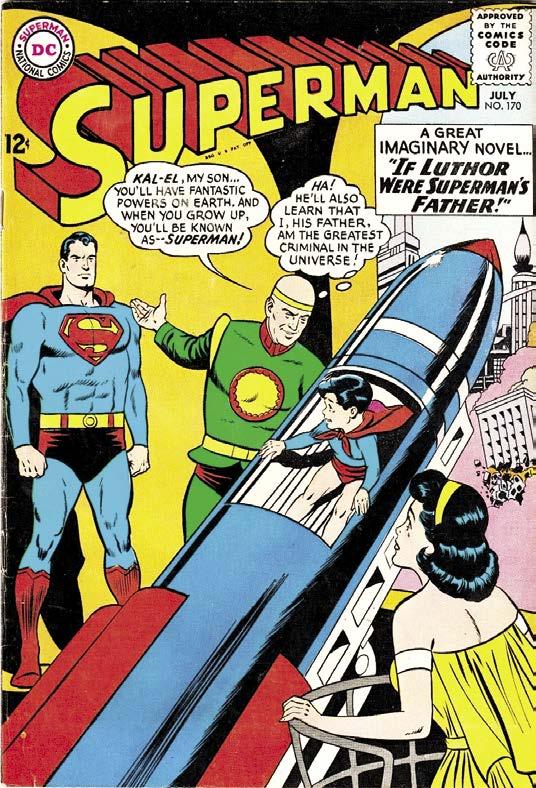
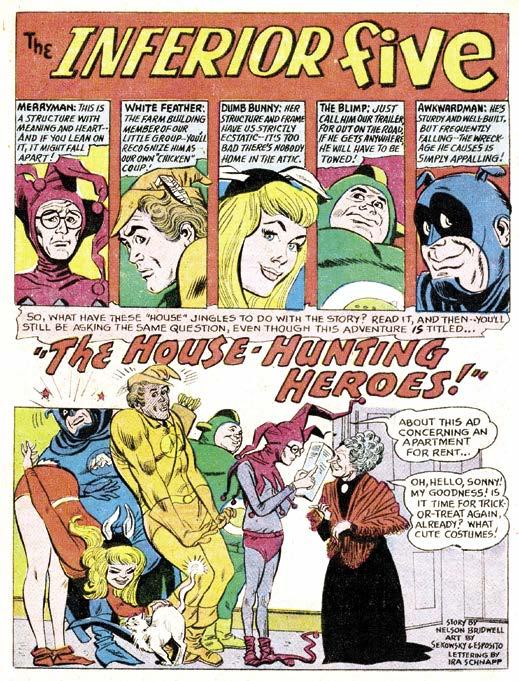
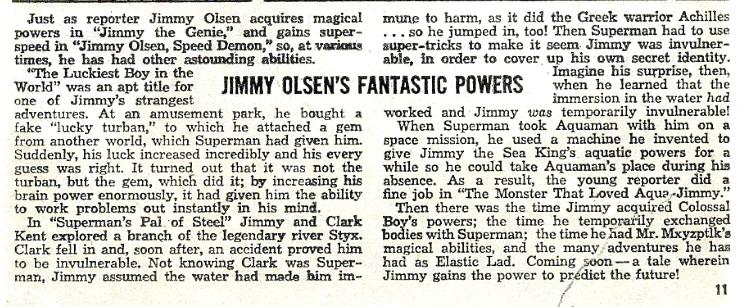
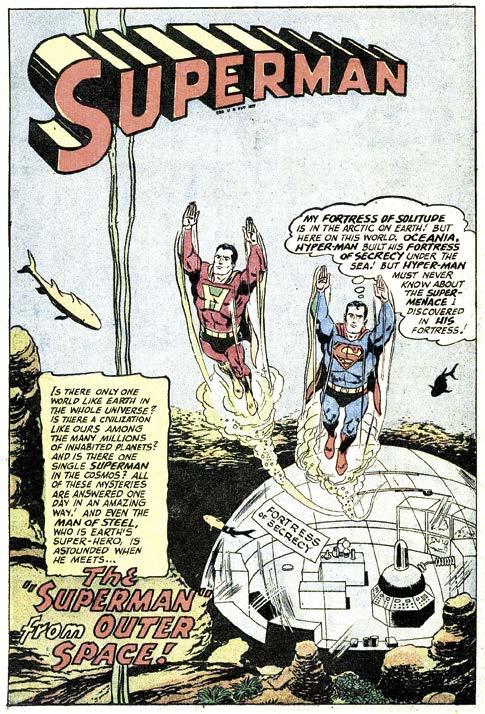
As an assistant on the Superman family titles and the writer on Secret Six, Super Friends, and other series, Bridwell left a major mark on the Silver and Bronze Ages and on many of the characters that he loved so dearly.
However, despite his influence and decades spent in the industry trenches, he often gets overlooked. The recent Black Adam movie, for example, failed to thank him in the credits, even though he was almost single-handedly responsible for bringing the character into the modern day.
But it’s not just Hollywood. Even to many hardcore comics fans, Bridwell remains a mystery. Very little has been written about him, and a web search won’t turn up much beyond a few articles listing his credits and repeating the well-worn observation that “he was DC’s encyclopedia.”
So why has E. Nelson Bridwell remained overlooked? Why hasn’t he gotten the credit he deserves?
For starters, if you know anything about the former editor, you know that he had social challenges. He was an odd, awkward person— an outsider with physical limitations and a collection of noisy tics, who didn’t easily fit in with others.
“He was a social misfit as a lot of people in comics were and are. At
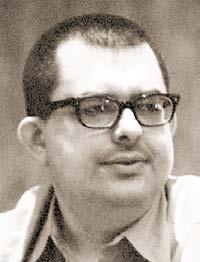
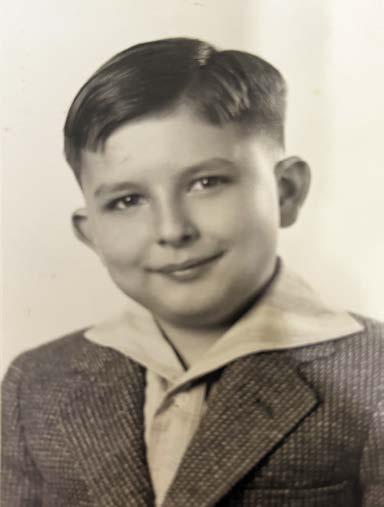
Nelson at age five. Photo courtesy of Reed Tucker.
least back then, it wasn’t a way to get girls like playing a guitar was,” says Anthony Tollin, a longtime DC colorist and friend of Bridwell’s.
Growing up, Bridwell’s family always knew he was a little different. But he was born at a time when whatever it was that made him that way—if it was indeed something beyond simply a quirky personality—wasn’t so well understood.
“Today, I think we would say that he had Asperger’s Syndrome,” says Tom Riggs, a retired physician who’s married to Nelson’s cousin Georgia.
Those with Asperger’s have trouble connecting with others, and Bridwell seemingly had few close friends and didn’t share much about himself with co-workers, leaving a hole in what we know about him.
once wrote. She was born with a congenital heart defect, and all of her life, “she was protected” by the family and told to “be careful,” recalls Stevens, who, in her younger years, worked on ion propulsion rocket engines.
As a child, Laurine had no hobbies, didn’t hike or swim. Instead, she would sit for hours making faces in a mirror or tending to stray dogs and cats.
She met Earl—a tall, plain-looking accountant—in 1930. Laurine’s younger sister Ruby had been set up on a date with him but felt no spark. Years later, Earl would enjoy ribbing Ruby about the diary entry she wrote following their only date: “Earl Bridwell: Cute car and that’s all!”
So Ruby passed along Earl to her older sister, Laurine.
Earl fell head over heels for her, and the pair were engaged a few weeks later. They married September 15, 1930, in the pastor’s study at the North Methodist Church in Sapulpa, a small town outside Tulsa where Laurine grew up.
Shortly after Laurine got pregnant with Nelson, Earl lost his bookkeeping job. The newlyweds were forced to move in with Laurine’s parents on their Sapulpa dairy farm.
Another reason he may get overlooked is that he died in 1987, aged just 55, from lung cancer. His untimely passing meant that he didn’t live long enough to see comicbooks take over global pop culture and to share in the publicity that has since come many creators’ way in the form of mainstream press coverage and Hall H Comic-Con appearances.
And so, I set out to create a fuller picture of Bridwell (hardly an easy task), not just to try and clear up a little of the mystery that surrounds him, but to help give him the due that many think he deserves.
Edward Nelson Bridwell—named for his great-grandfather— was born September 22, 1931, during the depths of the Great Depression. His parents, Laurine and Earl, were from Oklahoma.
Laurine was pretty, with “hair so black it glistened,” a relative
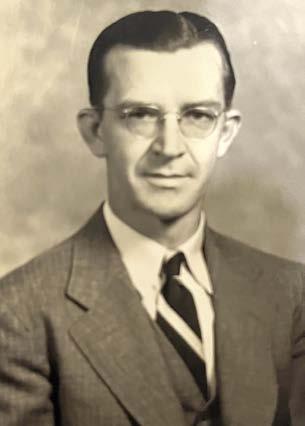
Earl & Laurine Bridwell Nelson’s parents. Thanks to Reed Tucker.
“His room was floor-to-ceiling comicbooks,” Georgia Riggs recalls. “You could barely walk in it. He had a desk and he was always drawing comic characters and, I’m sure, making up stories in his head. That was his world. And it was pretty isolating, and I don’t think very many people were allowed into it…. I don’t even know of a friend or a pal that he had growing up.”
Maybe not in person, but Bridwell began building relationships through the mail. Fandom became his outlet, and he increasingly engaged with the world from the safety of his Oklahoma City room, penning letters to the editor—and even an article for a 1950s issue of Hoohah!, one of the earliest comics fanzines.
While still in high school, he submitted creative costume ideas to Archie Comics’ Katy Keene and had a design published in the inaugural 1949 issue. The strip’s creator, Bill Woggon, and his assistant Floyd Norman “loved his submissions and… became eager to see what E. Nelson Bridwell would send us next,” Norman wrote to Mark Evanier in 2019.
He loved EC Comics and those from the American Comics Group, and his letters showed up frequently from the late 1940s throughout the 1950s in Shock SuspenStories, Adventures into the Unknown, and other titles.
In 1950, Bridwell graduated from Oklahoma City’s Central High School—though his school experience seems to have been far from normal. Curiously, he’s completely absent from the school’s yearbook from 1950 and the surrounding years. No photo, no
listing, no nothing.
Also, his diploma is dated January 1950, while the rest of the senior class wouldn’t finish until May, suggesting that he was on a different schedule. He also seems to have graduated later than he should have, based on his age. Stevens, six months younger, finished high school in 1949. It’s unclear exactly what happened, but it’s likely something kept Bridwell from attending school regularly.
It could have been his social challenges, but more likely it was a result of ill health. Bridwell said that was the reason he chose not to go to college. (He didn’t specify what was wrong with him, but at some point in his life, he had such severe digestive issues or ulcers that doctors removed part of his stomach.)
Instead of continuing with formal education, Bridwell decided to pursue his dream of working in comics. “I was living in Oklahoma at the time, so my prospects didn’t look that bright,” he said in a 1980 interview republished in Alter Ego.
He took the Famous Artists Course, a mail-order art tutorial advertised in comicbooks. “I studied art at home—and so can you!” one ad read, which one might imagine was a sales pitch that appealed to Nelson.
He spent hours in his room honing his craft, including creating his own line of 17 handmade issues in the style of Classics Illustrated—one of his favorite series. He wrote, illustrated in acrylic, and lettered the 48-page volumes (including fake house ads) tackling Shakespeare, Little Women, and other standards.
His first paid work, however, had come with an all-text horror story published in 1950’s Adventures Into the Unknown #9. The comic magazine had held a contest soliciting entries from readers, and Bridwell’s tale won third place—and a $10 prize. “The Gray One” was a classic twist-ending story about a big-game hunter who kills a fearsome wolf only to discover the animal has transformed into a
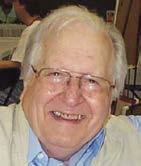
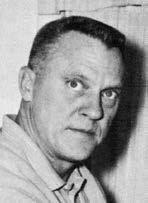
Nick Cardy A photo taken in 2004.
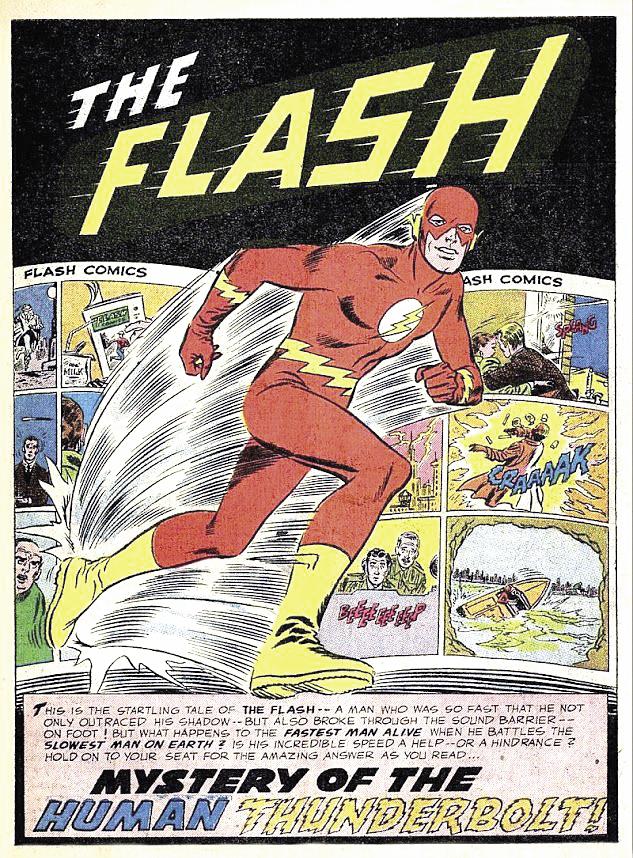
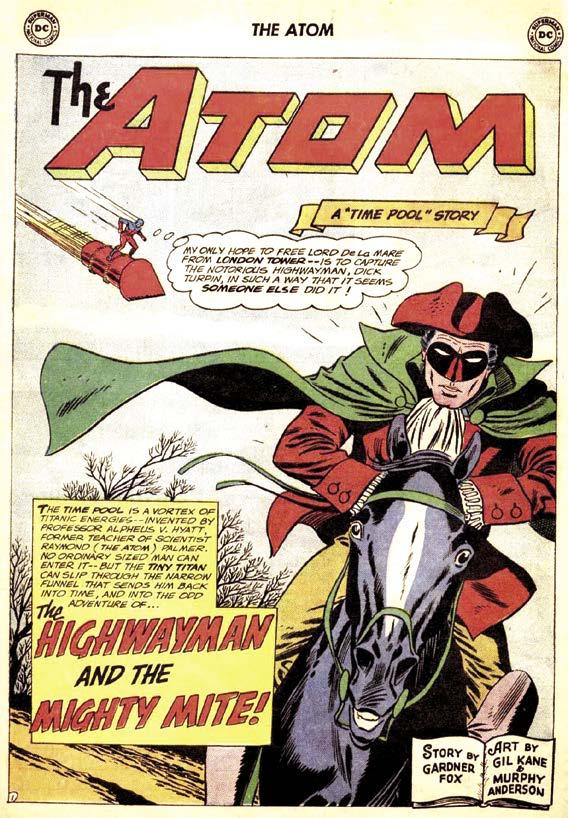
My Way Or The Highwayman
wrote.
His stream of letters soon drew the attention of Superman group editor Mort Weisinger, and in December 1963, Weisinger sent Bridwell a letter of his own, offering the aspiring writer an assistant editor position.
A recent editorial shuffle had left Weisinger with more work than he could handle, overseeing not just the Man of Steel stable but also World’s Finest Comics, wherein Superman co-starred with Batman and Robin. He was allowed an assistant— something most of the other editors didn’t have.
“The first time I heard the name Nelson Bridwell,” recalls Mort’s son Hank Weisinger, “was when my father came home and said, ‘You won’t believe this. I interviewed this guy today and he had encyclopedic knowledge of everything Superman.’ Then there was a pause and he said, ‘What kind of an idiot memorizes Superman comics?’”
The cantankerous Weisinger disdained fans, reasoning that their outsized voices did not represent the majority of readers. But he hired Bridwell, nonetheless.
“My father was always looking for talent because it made his job easier,” Hank Weisinger says.
Mort Weisinger might have especially valued Bridwell’s deep knowledge of continuity. Weisinger was notorious for recycling plots, and he may have been looking to Nelson to catch repetitive storylines before they made it into print.
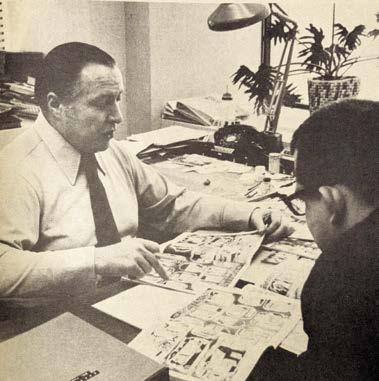
Bridwell packed up and headed to New York City—finally moving out of his parent’s Oklahoma City house at age 32— and started work at DC January 13, 1964 (according to ENB, though that was a Sunday). He settled into a modest apartment at 213 West 16th Street in Manhattan’s Chelsea neighborhood, and on his first day in the city he memorized the subway and street map
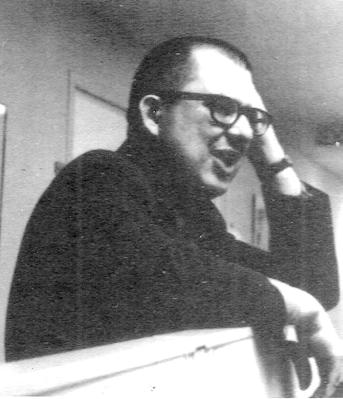
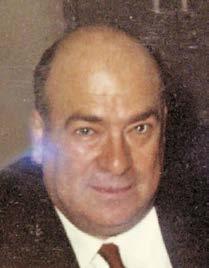
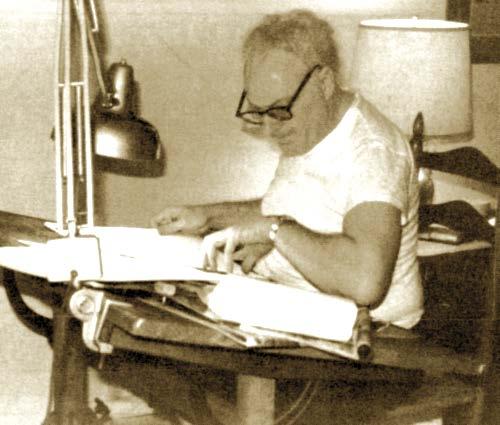
Photo from Cartoonist PROfiles #2; courtesy of Shaun Clancy.
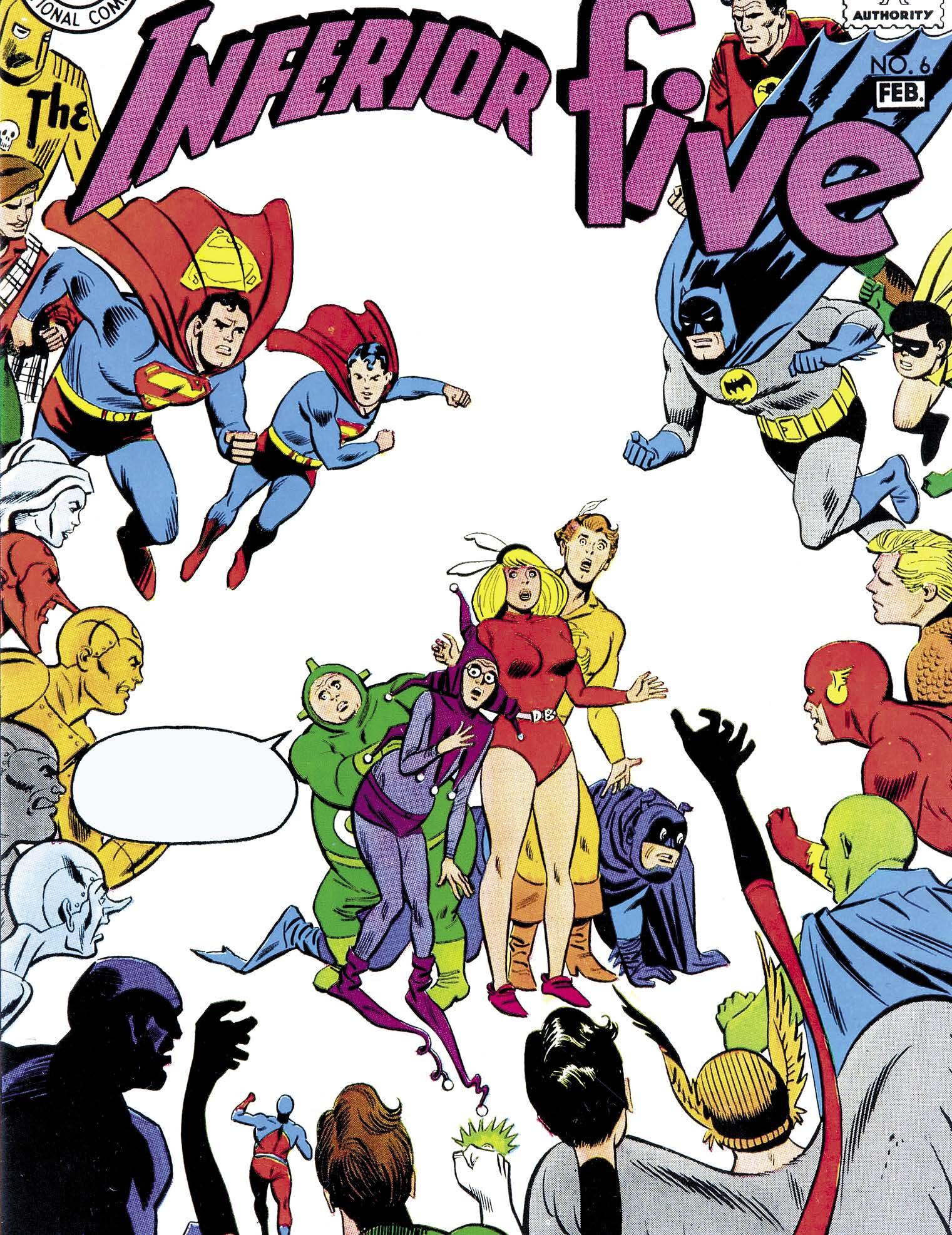
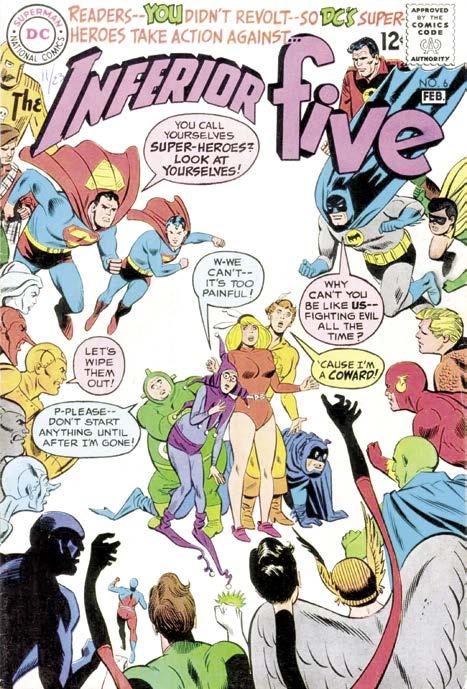
Five Into Four Won’t Go!
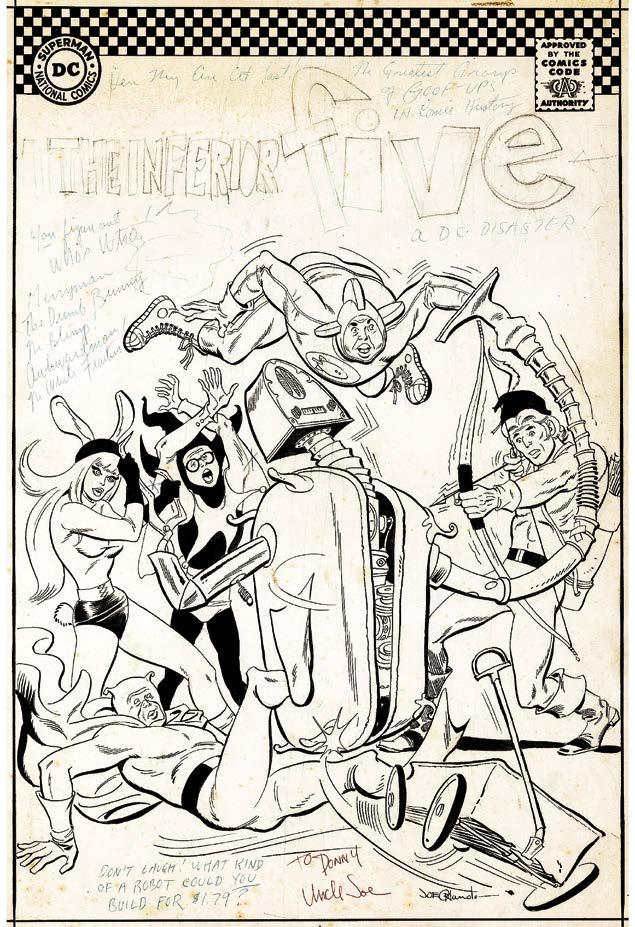
(Above:) By the time The Inferior Five received its own title, Joe Orlando had moved on to other projects—leaving behind the pencils for this never-published cover.
boy to Denny O’Neil and gave him a sneak peek of an upcoming issue of Jack Kirby’s Forever People
“There was absolutely nothing in it for him,” Lechner says. “I think he recognized someone who loved what DC did and was happy to share some of his love.”
That love extended to the publisher’s storied history. One of Bridwell’s favorite activities was perusing DC’s library containing bound volumes of nearly everything the company had ever published. His steel-trap knowledge of DC continuity was, it’s probably fair to say, unrivaled by anyone else in the world.
Dick Giordano famously once stuck his head into Bridwell’s office to ask how many moons Krypton had. Nelson’s response: “You mean originally, or when it exploded?”
All of that knowledge stuffed into his brain, all the trivia about Lois Lane’s mother’s maiden name, a villain’s first appearance. and Clark Kent’s social security number, made him the perfect person for another important job: reprints maestro.
Boys Of Steel
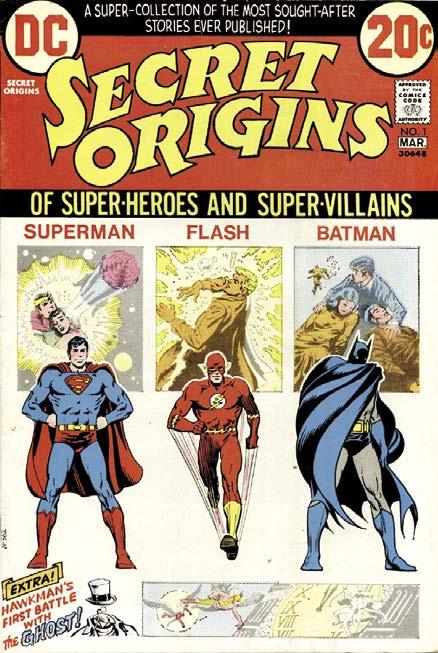
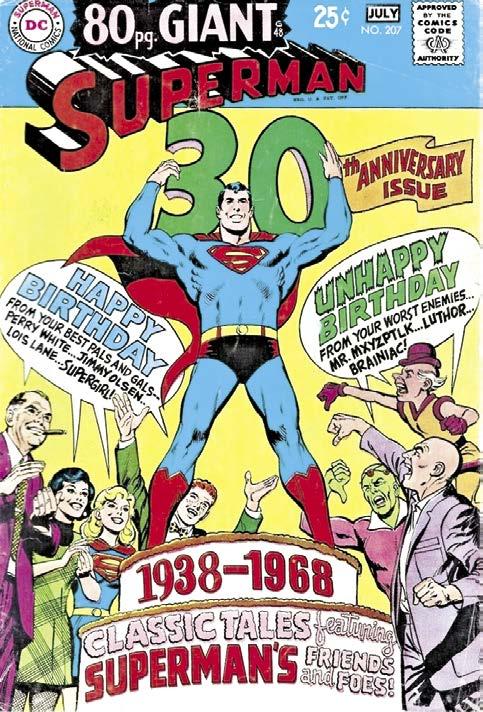
By the mid-1960s, reprints were cropping up more often in DC titles. In 1964, previously published stories had been added to Adventure Comics and World’s Finest, and the publisher also folded its annuals into a line called 80-Page Giant. The oversized books sold, at first, for a quarter and contained a mix of new and old stories. Bridwell was perfectly suited to flip through the Rolodex of stories in his head from DC’s massive back catalog and identify those worthy of being republished. He was also good at assembling packages of stories based around a single theme.
By the end of the 1960s, Bridwell had largely assumed control of the reprints—a function that became even more important once Infantino took over as editorial director, because he believed DC’s archive was one of the company’s strongest assets and should be plundered.
Bridwell’s reprint comics were seminal for fans coming of age in the 1960s and ’70s. In the days before the Internet or trade paperbacks or pricey archive hardcovers, these comics became one of the few ways readers could discover stories and characters from the past. And discovering these characters pulled them deeper into the hobby, tantalizing them with a small glimpse of the stories the DC universe was built upon and motivating them to seek out more titles and back issues. In this way, Bridwell was a major force in growing the industry.
Many of his reprint collections contained text pieces chronicling a character’s history or giving readers a professorial
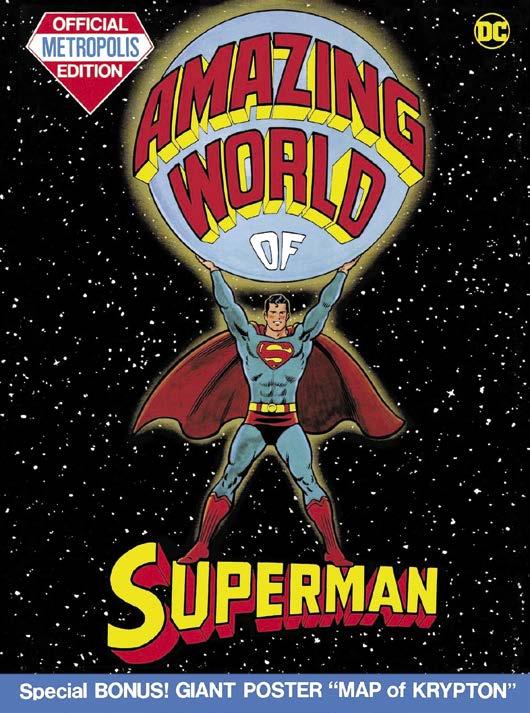
look at some aspect of comics history. He wrote the introductions for three popular hardcover reprint collections from Crown Publications in the 1970s: Batman: From the 30’s to the 70’s, Shazam! From the 40’s to the 70’s, and Superman: From the 30’s to the 70’s— exhaustively detailing the characters’ origins. For readers, it was like Wikipedia before Wikipedia existed.
“Nelson, more than anyone else, is responsible for my deep love of DC’s characters and history,” John Wells wrote on Facebook.
The 80-Page Giants continued as standalone specials through 1965, before the format was folded into DC’s regular titles, giving readers an oversized issue of Superman, Lois Lane, Batman, and others until the early 1970s.
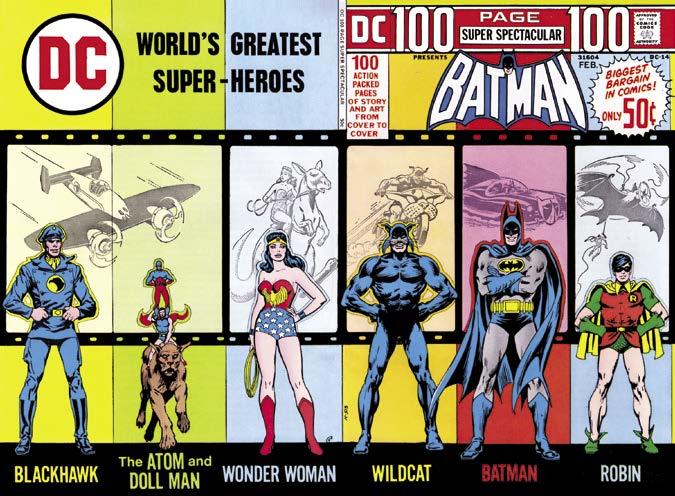
Those led to another line of beloved oversized comics: DC’s 100-Page Super Spectaculars, which the company billed as the “biggest bargain in comics.” Bridwell curated those and wrote the periodic “A Look Through the Super Spectacles,” a chummy column that dished on behind-the-scenes goings-on, answered letters, and meticulously chronicled DC’s history, as in #17, which cataloged the JSA and JLA’s membership timeline.
He came from a progressive family and held unusually progressive beliefs for a white man who grew up in the Midwest in the ‘30s and ‘40s. (It also set him apart in DC’s generally conservative workplace and its buttoned-up, conservative editors, like Robert Kanigher, Weisinger, and Schwartz.) The Spectaculars offered an occasional glimpse into his politics. In #16’s “Sgt. Rock” round-up, he bemoaned war comics’ use of black and Asian stereotypes. In all of his reprints, he also made a special effort to print
Fans continue to love him not only for the work he produced but for the legacy he left behind—arguably the most important of which was bringing new readers into the medium through his passion and evangelism in reprints and elsewhere.
He also helped pave the way for new talent. He was the first fan-turned-pro, and he made it possible for the legions of comic lovers who came behind him to have a career in the industry.
“Nelson was never anyone but the Nelson you remember,” his aunt Marjorie wrote to relatives in 1987. “Regret it, if you are among those who may have ridiculed him—you need forgiveness—for I am sure none of us qualify, as Nelson did, for the praise [obituaries have heaped on him].”
The respect continues, even decades after his death. Facebook is filled with remembrances and tributes on his birthday every year, and it’s clear he has not been forgotten.
“He got the fanboys through the door,” says Rozakis, who got his own job at DC after showing Bridwell some super-hero-themed puzzles he’d made, also catching Schwartz’s attention.
“It’s something the old pros could never feel ... something fantastic,” Bridwell said in Amazing World of DC Comics #17 about his fan-turned-pro career. “You’ve grown up reading these characters, and suddenly you’re not only working with them,
Transcribed by S.E. Dogaru — (Delayed from Alter Ego #200)
A/E
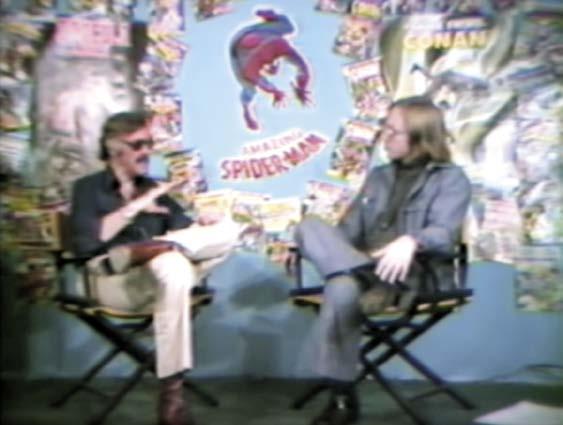
EDITOR’S INTRO: New York City, spring of 1976. That February, I had made arrangements to move to Los Angeles come July 4th, and I had thus been forced to renege on my acceptance of Stan’s offer to return to the post of editor-in-chief that I’d left in September of ’74. Stan had recently launched an hour’s-duration TV cable show, of which I had little inside knowledge then and recall even less now—except that cable shows then were quite different from what they were to become. Stan’s was, I think, more of what they called a “cable-access” show—free to the public on certain channels reserved, allegedly, for the “public interest.” No subscription fee, no special hook-up… you just had to find it!
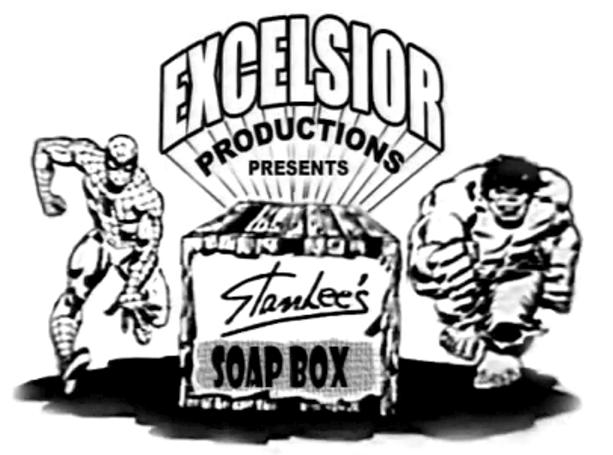
The show was called Stan Lee’s Soapbox… and, due to the vicissitudes of Fate, only two of its several episodes seem to have survived—one being that on which I was the guest. One other, atypical installment also exists, devoted entirely to footage from the recent 1976 Marvel Comic Art Convention; in terms of Marvel itself, it features prominently Stan, his daughter Joanie (now J.C.), artist John Buscema, then-editor-in-chief Archie Goodwin, and myself. I know there had also been one Soapbox episode featuring John Romita—and I suspect there’d been one featuring John Buscema as well… perhaps one or two others, with forgotten guests… and it’s to be hoped that at some future date copies of those shows will surface.
When, some years back, I was sent a DVD of “my” appearance, I was surprised to be reminded that Stan spent by far the largest part of his interview talking about Conan the Barbarian. Sure, it made sense to discuss it, since by that time the Cimmerian’s color title had become one of Marvel’s best-selling comics, as well as one of its most critically acclaimed… and there’s talk about the relatively new Savage Sword of Conan as well. However, missing from our back-and-forth is any mention of The Avengers, a major series of which I had written 70 regular issues plus a couple of annuals… or the various things Stan and I had accomplished together during my 2½ years as editor-in-chief from 1972 to 1974: the “mystery” books, both color and black-&-white… several popular kung fu series… my work on series such as The Incredible Hulk, X-Men, Daredevil, Sub-Mariner, Doctor Strange, Sgt. Fury, et al. In addition, it seemed to me as if at least a third of the time was spent on the various commercials, which Stan handled with his typical aplomb. All in all, it was a reasonably enjoyable experience, even if it seemed over with almost as soon as it had begun.
Why did Stan soon abandon the show for good? Well, for one thing, I suspect he decided it was more trouble than it was worth. Stan Lee’s Soapbox seems to have had a very limited reach, even in Manhattan. For example, the night the taped show on which I appeared was to be broadcast, I learned I couldn’t pick up that channel in my high-rise apartment on E. 86th Street (a major thoroughfare that led from Central Park eastward to Gracie Mansion, where the mayor resided)… and I had to go five or ten blocks south, to the apartment of my then-girlfriend, in order to view it. Even so, I’m grateful that the episode survives, since, although I interviewed Stan a time or three, this is the only occasion when Stan interviewed me.
The installment begins with the black-&-white title card shown above… which is followed by a shot of a placard proclaiming, as per the title I’ve given this piece: “Stan the Man” Interviews “Roy the Boy.” Then Stan’s genial, smiling face appears… and we’re off and running….
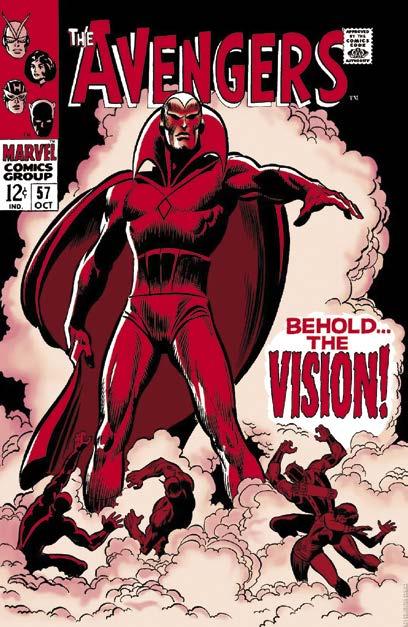
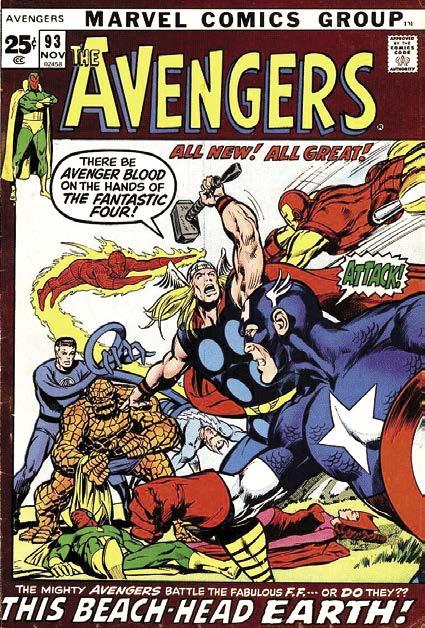
Roy was slightly disappointed that Stan dwelt for most of the hour on his Conan work, when they could have discussed The Vision (who debuted in The Avengers #57, Oct. 1968, as per this cover by John Buscema & George Klein) or the Kree-Skrull War (as exemplified by Neal Adam’s cover for Avengers #93, Nov. 1971)—or the rest of his long run on “The World’s Mightiest Heroes.”
STAN LEE: And once again, greetings, culture-lovers… tonight is really a special treat for me, and I hope it will be for you—because my guest is somebody who is not only an old friend and associate, but one of the genuine talented movers and shakers of our business: Roy Thomas, editor emeritus of Marvel Comics, and as good a writer as we’re ever going to find anywhere in the comic business and maybe in any other business. Roy, it’s really a pleasure having you tonight.
ROY THOMAS: Thanks for the buildup, except for the “old” part.
LEE: Well, I meant “old” in a figurative sense. Of course, you’ll always be “Roy the Boy” to me. How old were you when you started at Marvel, Roy?
THOMAS: Well, I’m informed by people in the industry that I was an old man, because I was pushing 25, and almost everybody else, yourself included, that I know got in when they were teenagers. But in the middle ’60s almost nobody had been getting into the field for several years. So, at 24, I guess I was fairly young.
LEE: Well, it’s a funny thing… when you started—[pause, as Stan dons a pair of reading glasses] I have to put these on, so I can see my security blanket here. [consults his notes] Okay. When you started, you looked so young because you were, as I remember, you were so innocent and so believing and trustful and everything.
THOMAS: It’s a long time ago.
LEE: Yeah. Oh, you changed! But anyhow, yeah, I remember, and you were absolutely a godsend to me because I was looking so
desperately for somebody who could handle all these books and do this writing and so forth, and it just was as though you were the answer to a prayer. Remember, you took over The Fantastic Four, you took over The Avengers, The X-Men… I guess you did almost all the stories— and as good as anybody could have wanted. [You] built up your own following. I began to hate you as the fans began to love you, but here we are. One thing I’ve always wondered, Roy— when you were young, most kids, they took up stampcollecting, they got into electric trains, they read comics, and then after a year or two of that they went to other things. What made you such a real devotee of comicbooks?
THOMAS: I think that things just have to hit you at the right age. I don’t know. Trains… I couldn’t afford to collect [toy] trains. for one thing. I always kind of wanted to, but that’s a lot of money. Stamps… collecting little tiny pictures… I couldn’t get interested in little tiny single shots. But when I was about 4½ years old, or maybe a little younger, I was walking with my mother… I’ve traced back to a drugstore in Jackson, Missouri, where I was born, and suddenly I looked up and saw all these colors and everything and I said, “What’s that?” And here were all these characters— Captain America and Superman and Batman and all these great characters. And at the age of four, before I could read them, my
“It
Was A Long Time Ago”
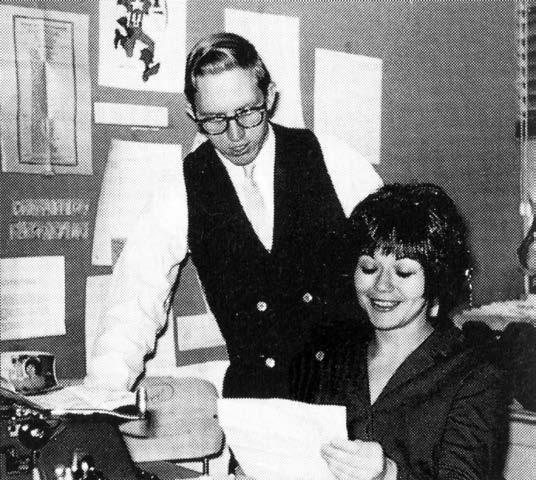
Roy in the Marvel offices at the desk of corresponding secretary Flo Steinberg, probably during the latter half of 1965, soon after he got his staff job. Wish we knew who snapped this shot!
Well, I did. [Some people] thought that the letterers were actually writing them, because nobody could possibly be editing a whole line of books and writing two or 300 pages a month. So we figured it was really all ghost-writing. At least a lot of people felt that you signed your name to a lot of things you didn’t really do, and it was actually the letterer doing it!
LEE: It’s funny. People do think that if people [do a lot] in our business, they think, ah, there must be somebody helping them. Now let’s get to the real heavy stuff.
Roy Thomas. I like to think that my name, for example, is associated with a strip like Spider-Man or The Hulk or whatever. In your case, while your name is also associated with many strips, I would have to think that when anybody who thinks of comicbooks and thinks of Roy Thomas—after they’ve thought
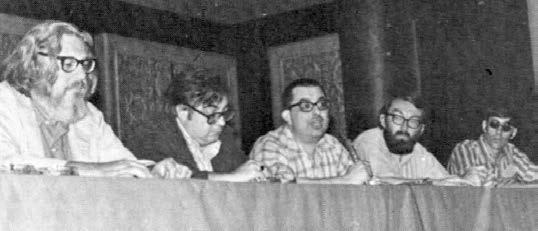
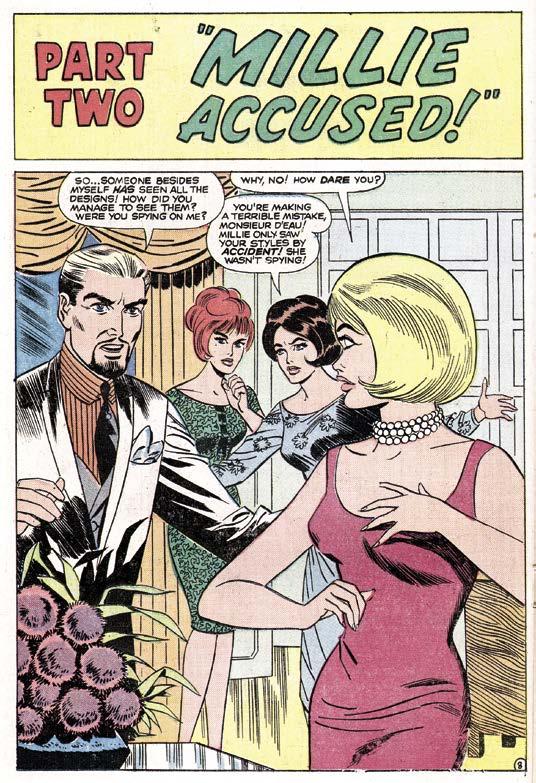
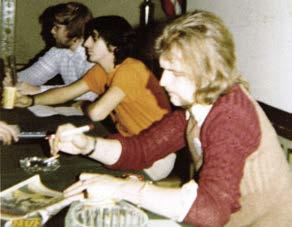
Barry Smith at an early-’70s comics convention of Millie the Model, their next thing has to be Conan the Barbarian THOMAS: So it seems.
LEE: And I have to admit this is one thing that I can take very little credit for, because it seems to me the first time you came to me and suggested doing Conan the Barbarian, my thought was, “Who’s interested in that?” Except maybe Roy Thomas. You said, “It’s sword-and-sorcery,” and I said to you, “What’s sword-and-sorcery?”
LEE: Yeah, I’m still not quite sure what it is, but I know it’s been very successful. What made you decide that was what you wanted to try?
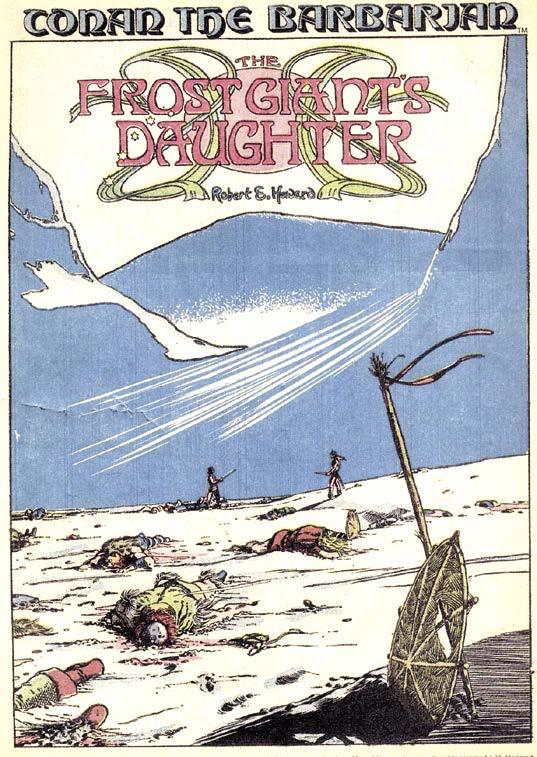
THOMAS: Well, basically, one thing that you’ve forgotten—and I often do, too—is that we were getting a lot of letters from readers who were aware that Conan the Barbarian was a series of books that was coming out in the late ’60s in paperback form, and it sold 2 or 3 million copies with these beautiful covers by Frank Frazetta. The stories were actually written for pulp magazines in the ’30s, and I had never read one. I had bought one, I started one, put it aside, but it seemed like the kind of thing that might just make it in comics, and we needed something different. You can’t do endless numbers of super-heroes. And actually, I think you were about as enthusiastic about it as I was. It’s just that we were not sure whether they’d survive.
LEE: I never thought it would be so good.
THOMAS: Oh, I didn’t, either.
LEE: No, I had been brainwashed by them, by the readers. I felt, if they don’t wear costumes and boots, they’re not going to sell. You remember what happened with The Fantastic Four in the beginning. We tried to tone down the costumes, and I got all this mail from readers: “We love the book. It’s great. Everything is fine, but I’ll never read another book if you don’t give them costumes.”
THOMAS: I think I wrote that one.
LEE: So you are the one who brainwashed me. I felt, you have to have super-hero costumes.
THOMAS: I did, too.
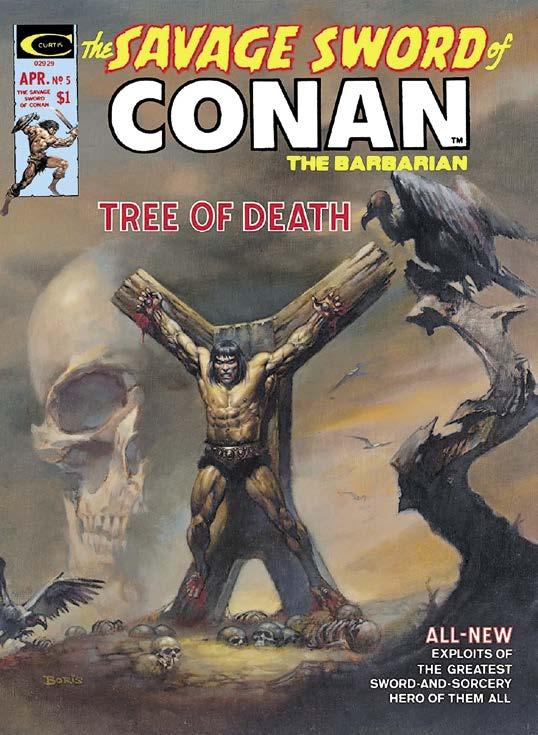
LEE: And is Conan like Tarzan—[wearing] sort of a loincloth? He did have little furry boots, as I remember, off and on. As a matter of fact, I promised you I would try to remember about the painting. This is a great lead-in. We even have a painting of a cover of Conan that Roy may want to talk about. Can you get that on the camera? Clearly enough? It’s a really beautiful painting. Who did it, Roy? What was the story? [camera focuses on original painting of the cover art for Savage Sword of Conan #5]
THOMAS: The painting underneath it—it’s really two paintings. The under-drawing was done by John Buscema, who does the book regularly. The finished painting over that was done by Boris Vallejo, who’s a very talented newcomer in painting in recent years. This is an illustration we did for one of our large dollar Conan magazines, and it’s the most famous Conan scene from literature. I wish I could say I made this up, but I didn’t. Conan was crucified and left to die on the desert by one of his enemies.
LEE: I remember that story.
THOMAS: That vulture that you see there is about to come down and try to peck out his eyes, thinking that he’s dead or dying. And what he does at that stage is—he bites the vulture’s neck, breaks it while it’s clawing against him, and so forth and kills it. You can’t have a hero very much tougher than that.
LEE: When you call him Conan the Barbarian, you’re not—or, I should say, when Robert E. Howard called him that— he wasn’t kidding. Well, there is something
about Conan. I guess he combines the primitive jungle excitement of Tarzan with a special savagery of his own, plus a great air of fantasy. There’s a lot of fantasy in those stories, I see.
Our time signal is being given. Roy, while you think of examples of the fantasy, all right, let me talk now about, let’s see— someday we’re going to have a big enough show that we have somebody else read the commercials. But anyway, here we go. I must admit, I like doing the one for Supersnipe especially. So let’s talk about the Supersnipe Bookshop.
Now as everybody who’s into comics knows, Supersnipe is the bookstore for the fan and the collector, located at 1617 Second Avenue, New York, near the corner of 84th Street. It has over 500,000 back issues. It has early delivery of all the new comics, so you never need miss your new books. They sell original artwork, they buy original artwork. Supersnipe buys complete collections, and, out of the goodness of their heart, to show how they care about you, they’re open from 12 to 6 Monday to Saturday, although apparently they don’t care about you on Wednesdays, because
recently at the Marvel Convention, and what I had to tell them was that I’m not a good person to ask it of, because I never really applied for a job in comics. I just sort of drifted into it. But one of the best steps, of course, is a good general education in writing, drawing, whatever you happen to want to get into. Of course, the more you know, the more you have to give the job when you finally get into it, that’s one thing.
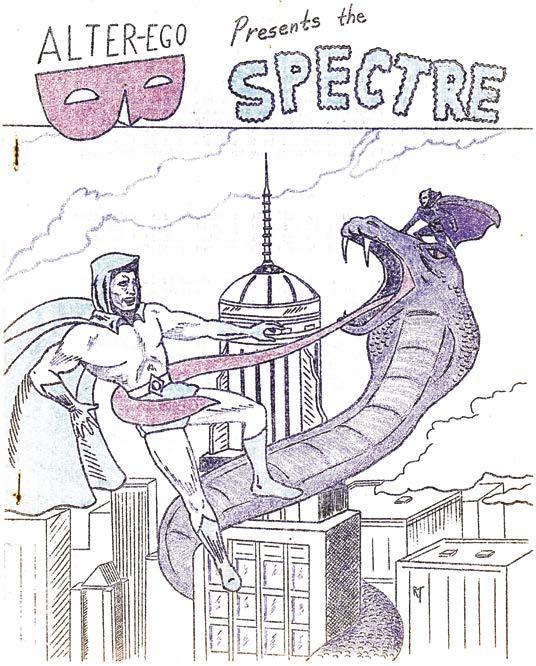
But as far as the direct steps, I think that the best thing to do is to try to get training through these amateur magazines like I did—the fanzines, which are magazines published by fans primarily for fans, because this is a good way to have your artwork, your writing, get published; it’ll be seen by people. You may even build a following and so forth. And the next thing you know, you might walk in and even the professionals may know who you are. I was a fan, and yet you knew vaguely who I was because I’d written these articles for fan magazines.
LEE: You bombarded us with that fanzine for years!
THOMAS: I just did three issues! But basically, it really isn’t a case of a guy just knocking on the door and walking in and saying, “I’d like to be a writer.” Also, with art or with writing, I think a very important thing is, don’t spend all your time imitating comicbook writing. Don’t spend all your time imitating comicbook drawing. Look at Romita—Kirby—Buscema—and, for writing, sure, look at the stuff that you and I and a lot of other writers you like have done. But also remember that all we are doing is reflecting what
we’ve read and what we’ve seen. So therefore, learn as much as you can. If you’re an artist, learn about anatomy. If you’re a writer, read as much as you possibly can. Fiction and nonfiction.
LEE: As a writer, it’s also a good idea if possible to do as Roy did with fanzines. But even in other ways, to build a reputation as a professional writer in another field. Sell stories to other magazines. Write a play, write a movie or something, because it’s tough to evaluate a person’s ability unless we see things he’s done. And I’m really glad you covered those points.
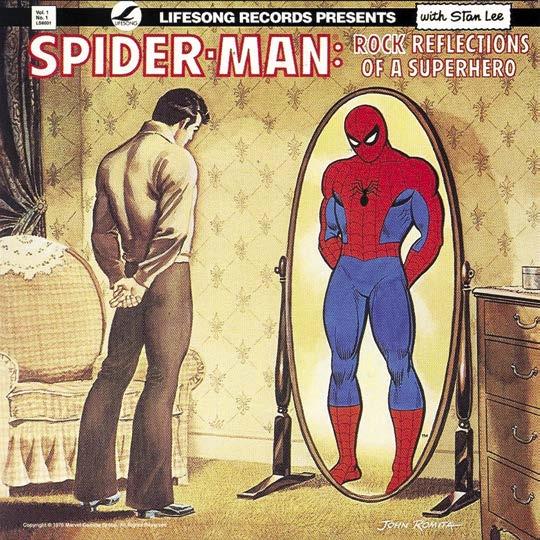
Now, we have one more commercial, which is of paramount importance. And all I have to do while I’m looking for it—let me show the album cover. It’s the Spider-Man album, Rock Reflections of a Superhero, not a kiddie album, a real rock album with pretty good music, pretty exciting music, I might say. And as an added kick, I have been told, and it says on the back of the cover, that The Incredible Hulk is on drums. Spider-Man is apparently doing something crazy there. Trumpet is the Mighty Thor, Black Panther on electric guitar, and so forth. You can’t get an album like that just anywhere… so let me tell you how to get your rock. Rock Reflections of a Superhero starring Spider-Man. Simply send to Superhero Merchandise, Post Office Box 777, Dover, New Jersey… that’s 07801. Now I read it slowly, write it down. I may not repeat it. And it’s a record album, $7.37 for the cassette… and the eight-track tape is $8.37. Both those amounts include postage and handling. That’s all you pay. Be sure to print your name and address, city, state, ZIP code, and age very clearly, and allow four weeks for delivery. We are going to be waiting to hear from you now.
And now back to Roy Thomas. Roy, we just have a minute or so to wrap up. Let me ask you this: Do you have any feelings about the future of comics? We know where we are today. Is it a field
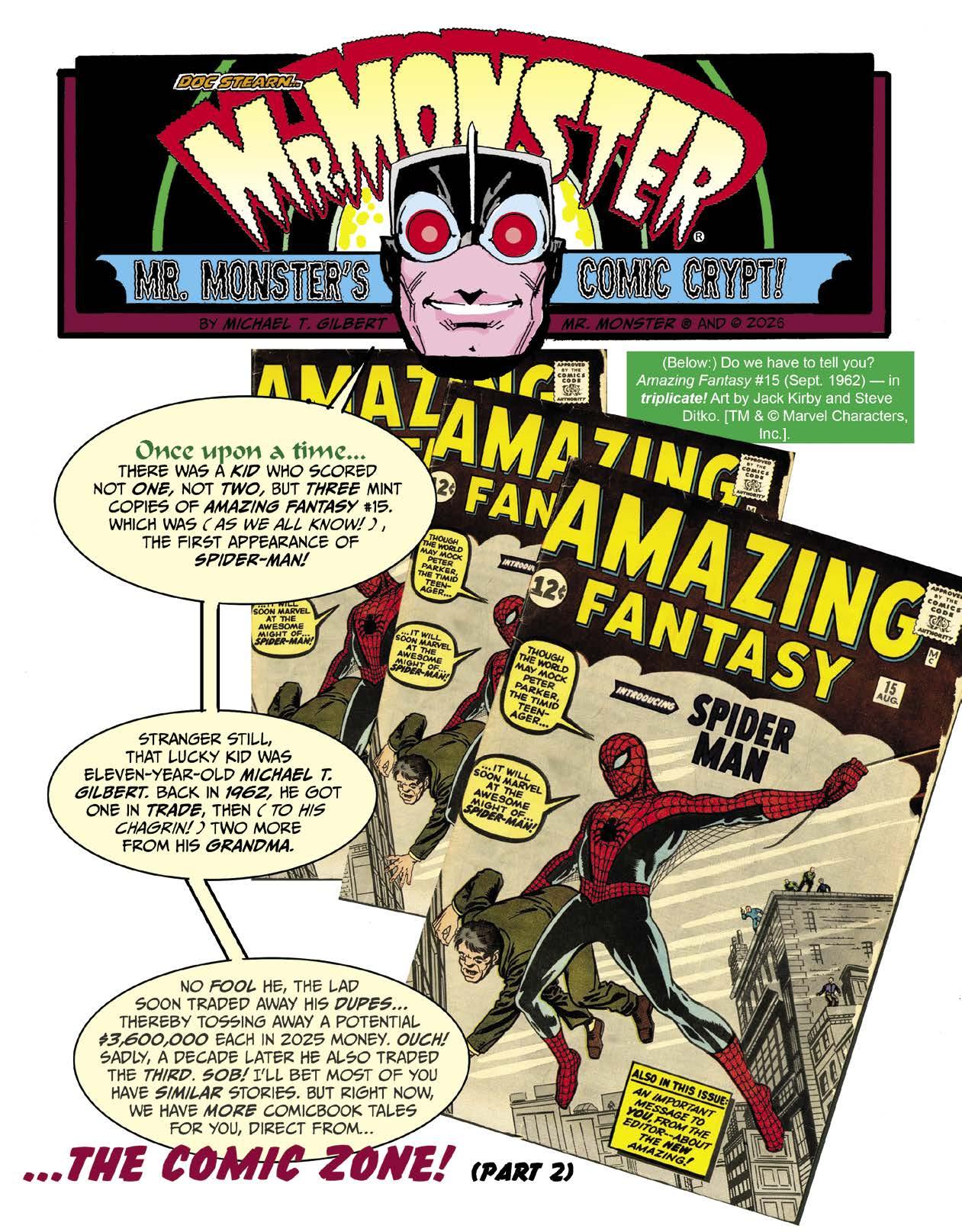
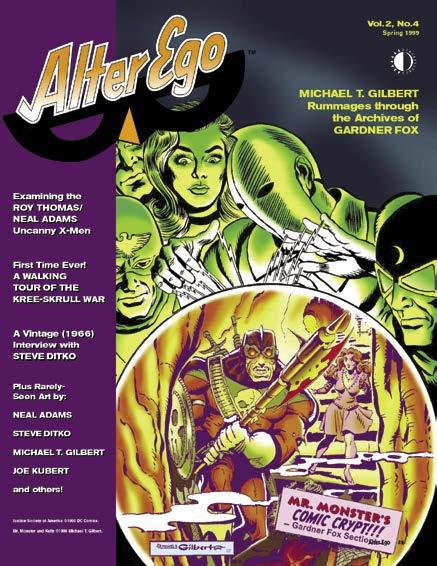
Alter Ego has actually gone beyond the 200 mark. Unbelievable! More unbelievable still is the fact that “Mr. Monster’s Comic Crypt!” has been in every issue (plus a few more when the magazine was part of Jon B. Cooke’s great Comic Book Artist, beginning in 1998).
If you’ve enjoyed my column over the decades, we can especially thank five people. First, huge kudos to the late Jerry Bails, who created the original fanzine version in 1961, with the assistance of Roy Thomas.
When I was a comic-starved fifteen-year-old kid in 1965, I got my hands on a couple of issues. It was love at first sight! The fanzine was chock full of arcane comicbook knowledge, information that was nearly impossible to find back then. I devoured it.
Next, of course, we need to thank Roy Thomas, who helped edit that first issue and contributed to all the rest. The original A/E fanzine lasted ten issues, from 1961 to 1969, with one final issue published by Mike Friedrich in 1978. I provided hand-separated colors for the front and back covers to Alter Ego #11, marking my only contribution to Volume One.
Roy has edited these 201 issues of Volume 3, plus the Comic Book Artist inserts (officially “Volume 2”) and various Alter Ego collections. We contributors depend on his attention to detail and deep comicbook knowledge to keep us honest.
Thanks, too, to publisher John Morrow for continuing to print the magazine for over 25 years. When Diamond Distributors unexpectedly declared Chapter 11 bankruptcy on January 25, 2015, owing a great deal to TwoMorrows, it looked like we might not make it this far. But John made it happen!
And another vote of thanks goes to Jon B. Cooke, who, in 1998, suggested that Roy revive Alter Ego as part of his Comic Book Artist magazine (later reinvented as Comic Book Creator).
And last, but certainly not least, I’d like to give credit to my wife, Janet Gilbert, a popular Disney comics writer for twentyeight years. When we were living in Eugene, Oregon, Janet discovered that the University of Oregon hosted the Gardner Fox collection. I spent many hours poring over boxes of that famous DC writer’s comics and papers. Which led to…
“The Fox and the Fans!”
One of the boxes contained fan letters that Gardner Fox had saved, including numerous letters written by fanboy supreme Roy Thomas. These started in late 1960, when Roy was about twenty, and went on for a few years. Since I’d worked with Roy on Pacific Comics’ Elric series, I thought he’d get a kick out of seeing his old fan letters.
He did, and suggested I write a column about the letters for a new version of Alter Ego coming out soon. Alter Ego revived? What timing! I wrote
Eastward Ho The Gilberts!
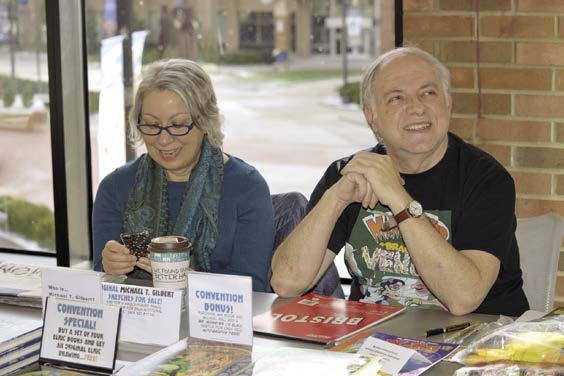
(Above:) Michael and wife Janet Gilbert at Kent, Ohio’s, Kent Comic Arts Festival in November 2018. This was mere months after the Gilberts moved from Eugene, Oregon, to Akron (and later Stow), Ohio. Photo by Wayne Alan Harold.
Is This The Only Channel We Can Get?
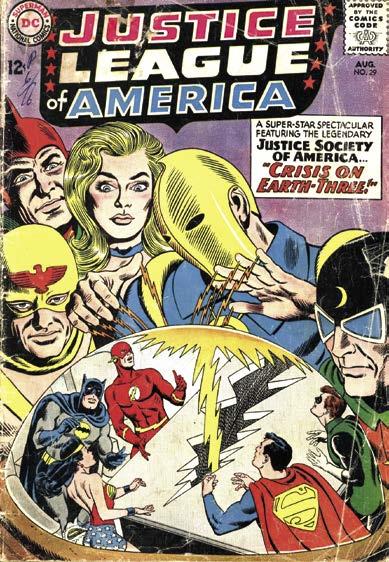
(Above left:) Mike Sekowsky & Murphy Anderson’s cover for Justice League of America #29 (Aug. 1964).
Mixing “The Big Red Cheese” With A Dish Of Ice Cream
by P. C. Hamerlinck
One-Shot Wonders
Fawcett published quite a few one-shot comics. Some of the more enjoyable of these were the Captain Marvel Adventures and Whiz Comics Wheaties giveaways (1946) [see Alter Ego #191]; Comics Novel #1 (“Anarcho, Dictator of Death,” featuring Radar the International Policeman) by Otto Binder & Al Carreno, and with a cover by Bud Thompson (1947); and Roy Ad & Bob Powell’s Vic Torry and His Flying Saucer (1950). However, there were earlier one-shot Fawcetts that have held greater significance in Fawcett history.
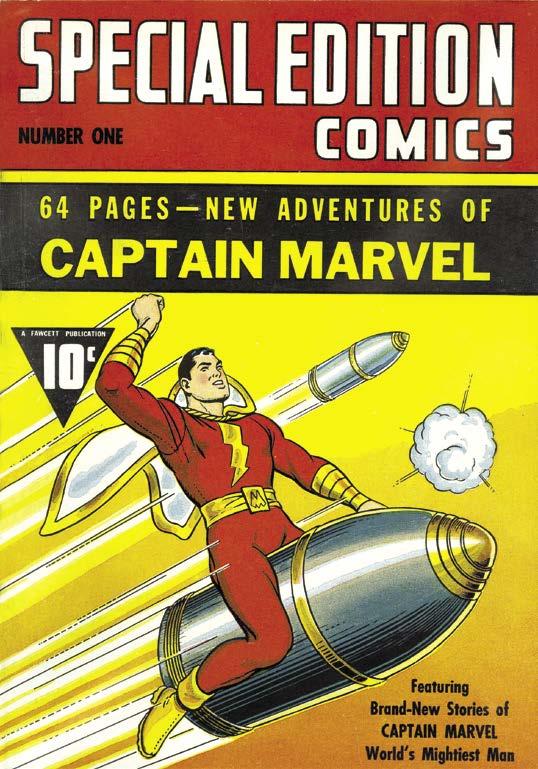
Although it had originally been planned as the first issue of a permanent series, Special Edition Comics #1 was released on June 1940 as a single book shortly after Fawcett Publications received their first nasty-gram of copyright infringement from National in
mid-1940. Fawcett’s idea was to give the impression that the title was not meant to be a continuous series as the publisher assembled their team of attorneys.
Nevertheless, the sales success of Special Edition Comics that summer prompted Fawcett to plan other Captain Marvel one-shot
Two Fawcett “One-Shot Wonders” —Or Maybe We Should Say “Marvels”!
(Left:) The marvelous Special Edition Comics #1 (on-sale mid-June 1940) by writer Bill Parker and artist C.C. Beck was one of the Captain Marvel stand-alone issues that paved the way towards a regular solo series for the World’s Mightiest Mortal.
Like the Fuller (brand) Brushes, Good Humor ice cream bars were sold doorto-door by quasi-independent vendors. They consisted of vanilla ice cream encased in a harder chocolate coating, on a stick. Launched in the 1920s, the independent vendors sold the bars from refrigerated trucks; the brand became successful during the Depression 1930s.
“specials” to capitalize on their best-selling character—most notably 64 Pages of New Captain Marvel Adventures, prepared by editor Ed Herron, who commissioned Manly Wade Wellman, Joe Simon, & Jack Kirby to produce it. It was released January of 1941, and soon led to the ongoing series, Captain Marvel Adventures
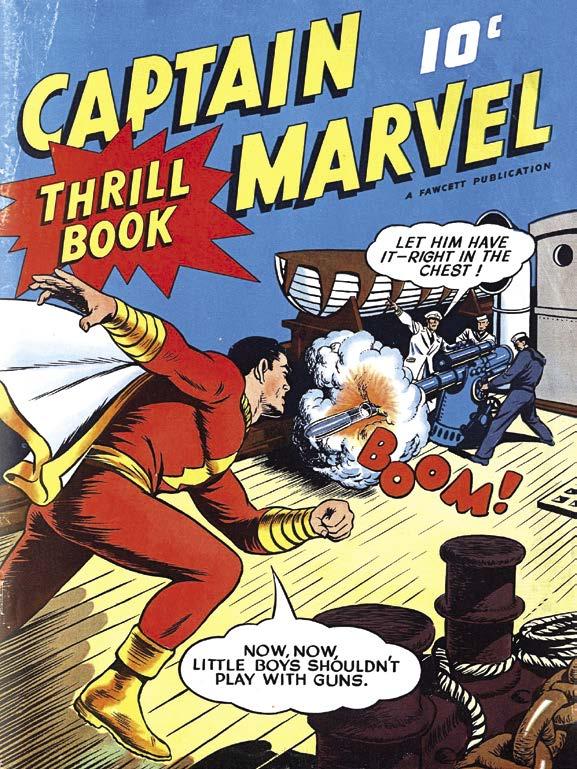
Soon thereafter, Fawcett’s editorial director Ralph Daigh ordered Herron to produce another all-Captain Marvel one-shot special, Captain Marvel Thrill Book, formatted magazine-sized with black-&-white interiors entirely composed of previouslypublished stories. The goal was to differentiate it from the Kirbycommissioned comic. The Thrill Book was released September 1941. Herron had selected Bill Parker-written stories from Whiz Comics #8, 10, 14, and even one from Special Edition Comics.
All of the Thrill Book tales were drawn by C.C. Beck (with assistance from Pete Costanza on some of them); Beck provided a new cover and, without halftone dots and off-registered coloring encumbering its black-&-white story pages, the publication
consequently became a superb showcase of a master artist. The book gave us Beautia—the target of a deadly Sivana plot—before writers had settled on making her the cackling doctor’s daughter … Captain Marvel vulnerable to poisonous gas in a haunted house… Captain Death and Professor Skull… and the infamous “Marvel College” story where Billy cheated on a school enrollment exam, and where Captain Marvel is capeless—an experimental modification to eliminate similarities to the Man of Steel. (However, once Fawcett’s lawyers unearthed a Superman copyright technicality, Cap’s distinctive cape made its flapping return after having vanished in Whiz #11 & 12.)
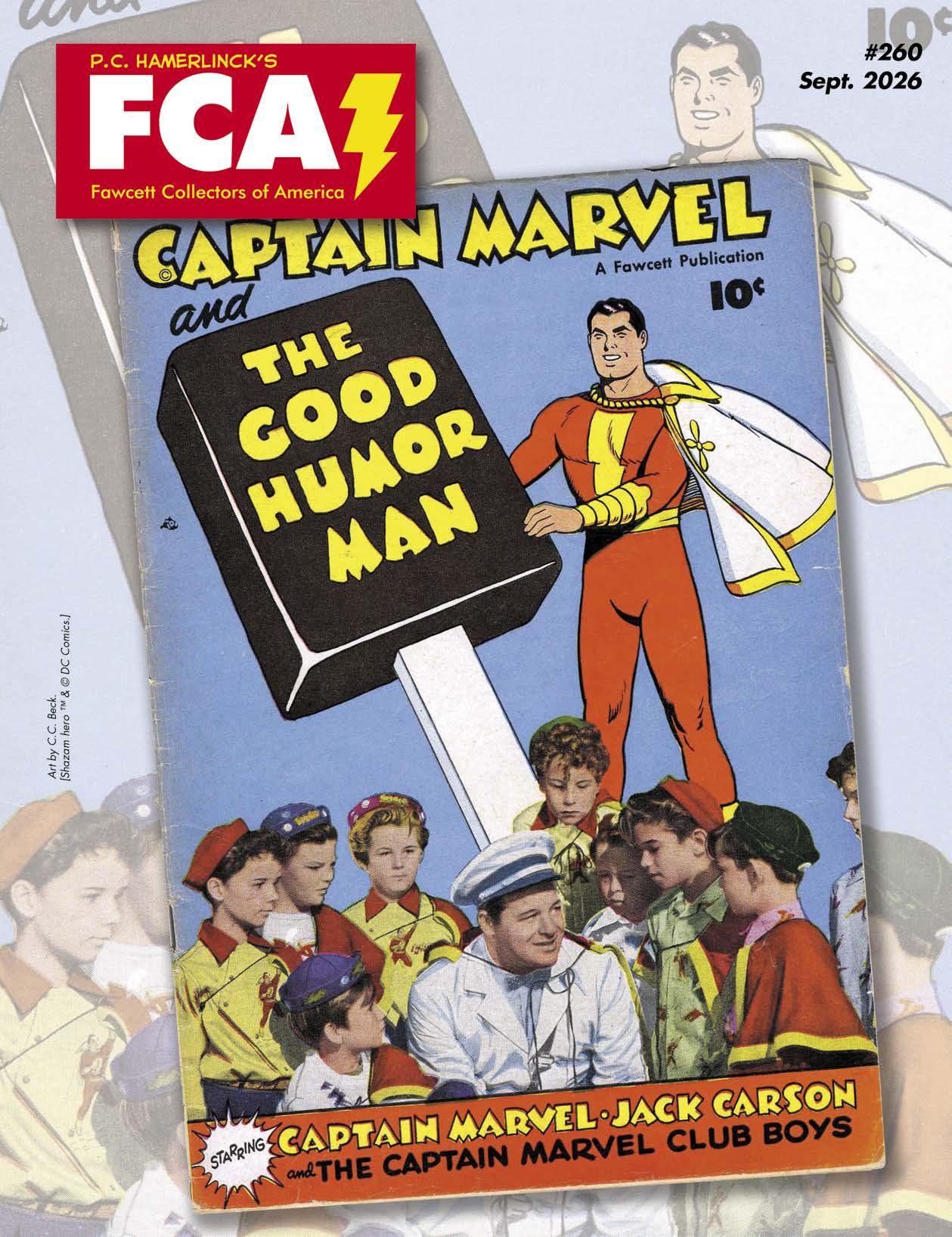
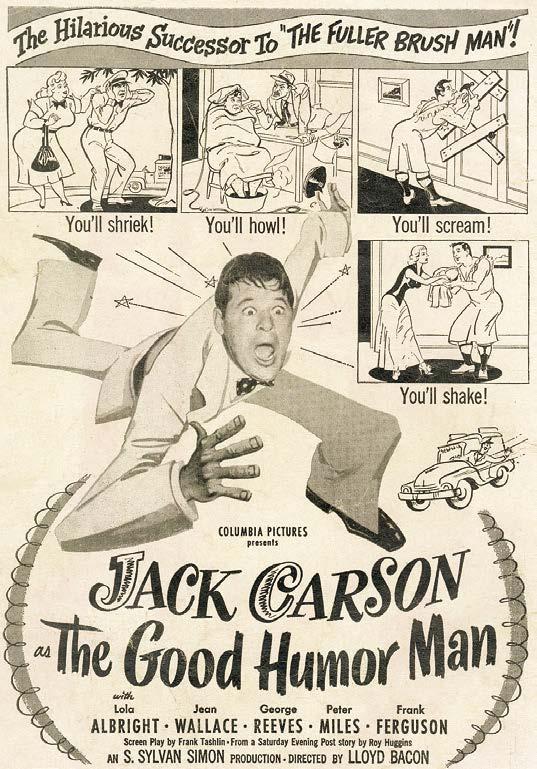
So how does Captain Marvel and The Good Humor Man tie-in comic weigh in amongst the Fawcett one-shots? The book hit newsstands on June 2, 1950, one day after the theatrical release of Columbia Pictures’ The Good Humor Man. Before we get to the Fawcett comic, let’s first examine the movie.
ALTER EGO #201
You Scream For Ice Cream
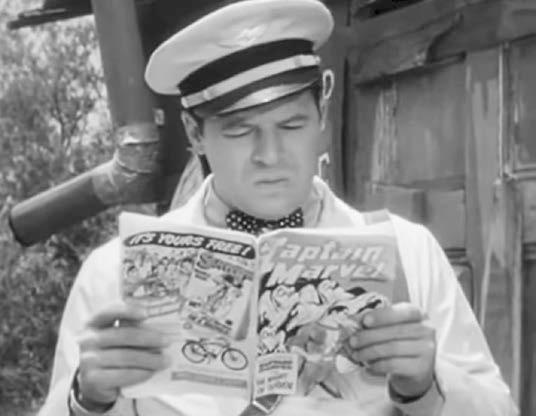
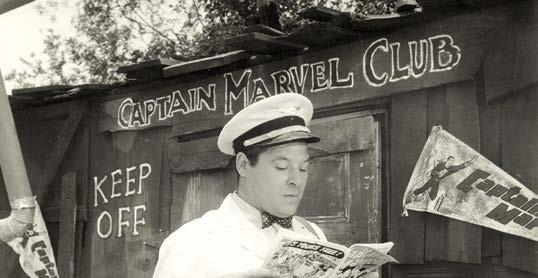
Directed by Lloyd Bacon, The Good Humor Man was a slapstick comedy which starred Jack Carson as a simpleton named Biff Jones, a Good Humor ice cream salesman who also happened to be a member of the neighborhood boys’ Captain Marvel Club.
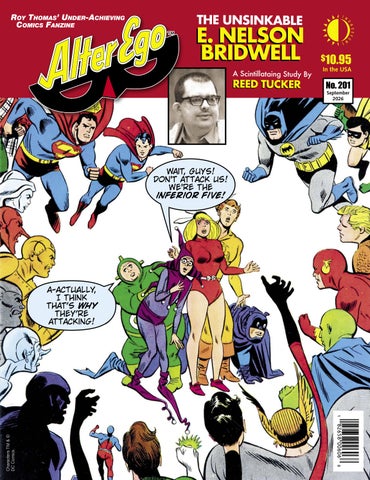
REED TUCKER spotlights DC human brain-trust E. NELSON BRIDWELL, the man behind countless tales of Superman, Shazam!, The Inferior Five, The Secret Six, and more! With art by SWAN, BORING, BECK, NEWTON, ORLANDO, SEKOWSKY, and others. Plus FCA (Fawcett Collectors of America), MICHAEL T. GILBERT in Mr. Monster’s Comic Crypt, and more! Edited by ROY THOMAS (84-page FULL-COLOR magazine) $10.95 (Digital Edition) $4.99