Readers encouraged to celebrate International Year of Rangelands and Pastoralists in this week’s guest column
Page 2
Check your answers in this month’s crossword puzzle
Page 3
Yonts Water Conference delivers low irrigation outlook
Page 15
Readers encouraged to celebrate International Year of Rangelands and Pastoralists in this week’s guest column
Page 2
Check your answers in this month’s crossword puzzle
Page 3
Yonts Water Conference delivers low irrigation outlook
Page 15
In the 18th snow report for Water Year 2026, the state’s snowpack telemetry data reads 46% of median, with a basin high of 88% and a basin low of 0%. Last year, the state was at 91% and at 97% in 2024. The report and a map displaying basin snow water equivalent percentages of median for the state may be found at wrds.uwyo.edu/ wrds/nrcs/nrcs.html
University of Wyoming (UW) Extension is offering a multi-week virtual webinar series featuring presentations on a wide range of wildfire-related topics. Sessions will explore community-level planning, livestock considerations, landscape-scale fuels management, wildfire smoke impacts on livestock and public health and more. Each webinar is offered live via Zoom and will be made available as recordings after it concludes. Webinars will be held every Thursday from April 30 to June 4 from 6-7:30 p.m. For more information or to register, visit wyoextension. org/wrir/wildfire-webinar/
The annual Sheepherder’s Festival is scheduled for May 8-9 at the Rockpile Museum in Gillette. Dinner will take place on May 8 at 5:30 p.m. and the festival will run from 9 a.m. to 3 p.m. on May 9. For more information, call 307682-7523.
The North American Limousin Junior Association (NALJA) and Limi Boosters will offer multiple scholarship opportunities to juniors who are pursuing higher education, including the Limi Boosters Donna Etherton National Scholarship, the Leonard and Vi Wulf Scholarship and NALJA Award of Excellence scholarships. The application deadline for all scholarships is May 15, and scholarships will be awarded during the 2026 National Junior Limousin Show and Congress in Circleville, Ohio. For more information or to apply, visit nalf.org/nalja/national-juniorlimousin-show-and-congress/ scholarships/
On March 24, National Agriculture Day, U.S. Secretary of Agriculture Brooke Rollins announced a renewed push by the U.S. Department of Agriculture (USDA) to promote its
updated, voluntary “Product of USA” labeling standard.
The rule, which officially took effect on Jan. 1, strictly requires any meat, poultry or egg products bearing
the Product of USA label must come from animals born, raised, harvested and processed in the U.S. “Our great patriot ranchers and
UW Ranching in the West series concludes with Rocky Mountain Land and Resource Management Conference
On April 15, ranchers, landmen and University of Wyoming (UW) students and staff gathered at the Marian H. Rochelle Gateway Center in Laramie for the Rocky Mountain Land and Resource Management Conference (RMLRMC).
Hosted jointly between UW’s College of Agriculture, Life Sciences and Natural Resources (CALSNR) and School of Energy Resources (SER), the day-long, student-led conference served as the culminating event for the 2026 Ranch
Management and Agricultural Leadership Ranching in the West Seminar Series.
Attendees enjoyed a variety of programming highlighted by a keynote address from Gov. Mark Gordon, panel discussions on ethics and reclamation and a presentation on land use rights and management from a Wyoming rancher. Agriculture and energy
To kick off the conference, UW CALSNR Farm Credit
Please see CONFERENCE on page 5
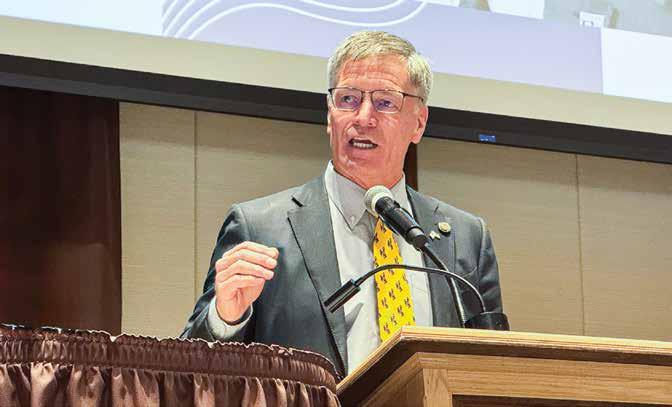
Ag and energy – Gov. Mark Gordon delivered a keynote address focused on the critical intersection between energy and agriculture in Wyoming during the Rocky Mountain Land and Resource Management Conference, held on April 15 at the Marian H. Rochelle Gateway Center in Laramie. WYLR photo
The University of Wyoming’s (UW) College of Agriculture, Life Sciences and Natural Resources (CALSNR) honored outstanding faculty and staff during the Annual Spring Awards Ceremony, held on April 9 at the Marian H. Rochelle Gateway Center in Laramie.
“Tonight we gather to celebrate the exceptional advancements and achievements of this college,” stated UW CALSNR Farm Credit Services of America Dean Kelly Crane during his welcome speech. “This event is dedicated to recognizing our outstanding faculty and the great work they do in three primary areas – teaching, research and Extension. We’re also here to celebrate our staff who are the absolute backbone of this institution and of CALSNR.”
CALSNR outstanding staff awards
To begin, Crane recognized two outstanding staff members.
The first honoree was UW Extension Communication and Technology Graphic Designer Jeremy Cain, who Crane noted has become “an indispensable member of the team.”
“He’s earned a reputation as not only a talented graphic designer, but a trusted collaborator and a real problem solver. His work spans far beyond design, supporting everything from publications management and printing logistics to photography, inventory and emerging systems which improve our efficiency,” Crane said. “He has consistently delivered work reflecting the highest standards of professionalism across Extension, and our college relies
The Sheridan Community Land Trust (SCLT) recently launched a virtual fencing pilot program aimed at making virtual fencing technology more accessible for small producers in Sheridan County.
Supported by the Plank Stewardship Initiative, the project seeks to connect small producers with virtual fencing technology at a more affordable price and give area ranchers an opportunity to test the technology in a practical manner, grounded in real working conditions.
The project
The Small Producer Virtual Fence Pilot Program will allow five to 10 local ranchers running 10 to 50 head of cattle to test virtual fencing technology on their operations at a lower cost, with a goal of

Economic fallout of rising fuel and energy costs will be most acute in rural America
The U.S. economy has continued to perform reasonably well despite a growing constellation of warning signs.
Buoyed by an escalating stock market in January and February and massive investments in artificial intelligence (AI), U.S. gross domestic product likely grew above two percent in the first quarter as the unemployment rate held around 4.3 percent and consumers maintained spending growth above two percent.
However, surging energy costs and extreme volatility in oil markets resulting from the ongoing Middle East conflict could shift the trajectory of the U.S. economy for the remainder of the year.
Despite historic levels of domestic oil production, U.S. fuel prices still react quickly to disruptions abroad, especially in the Middle East –the world’s leading region for proven oil reserves and spare production capacity.
Increased exports of premium-priced U.S. light, sweet crude oil has created tight domestic links to the global market, meaning jumps in global replacement costs quickly flow through to U.S. pump prices.
According to a new quarterly report from CoBank’s
250 head of participating cattle in total. According to a March 25 press release issued by SCLT, cost and scale are two of the biggest hurdles to implementing virtual fencing technology, as most systems are built for larger operations and require a minimum number of animals to get started.
The SCLT project seeks to close this gap and bring virtual fencing technology to smaller operations.
SCLT will provide GPS collars and cover the annual internet fee required to operate the system. The organization will also pay one-half of the annual subscription cost for participating small producers, reducing the standard cost of $90 per
Please see FENCING on page 14
America is very fortunate to have strong meat options at the grocery store. I’m only talking about beef, pork and lamb – we’ll leave chicken and turkey for another time.
In past years, the Dietary Guidelines for Americans didn’t favor meat as much as it did an all-vegetable diet.
Lately, however, people are looking for healthy sources of protein more often, and meat is being recognized by consumers for its many benefits and all of the ways they can cook lamb, pork and beef. Because of the protein factor, consumers are looking at meat in a new light today. I think it really all started during COVID-19 when meat was not as plentiful. Most people just wanted ground beef, but when ground beef wasn’t available, they started looking at pork, lamb and other cuts of beef.
Once consumers tried lamb, it became a lot more popular.
American lamb has had a terrible time throughout the years because Australia and New Zealand were allowed to import cheaper lamb products into the U.S. I’m sure it was an inferior product, but they had a large supply that American lamb couldn’t challenge.
American lamb supply is growing and so are the prices for those who raise it, along with a stronger wool market. Pork has always been a strong alternative, but the prices pork producers have been receiving have been dropping lately.
Pork has become an export product in the last few years, as demand from Mexico and other countries is increasing. I’ve heard close to one-half of America’s pork is exported to Mexico and other Central American countries.
America’s beef is strong today despite meatpackers’ over capacity and some feedlots in the Southwest are having financial issues with the U.S.-Mexico Border being closed to Mexican cattle.
The breeding of beef bulls to dairy cows is a great benefit, not only for dairy producers but also for feeders and packinghouses.
Today, data shows there are close to four million cattle on feed in the U.S. with a milk cow as a mother. That’s astounding. This new source of income – beef-on-dairy calves – is now getting close to the income of milk produced by the dairy industry.
Across the meat sector, labor, tariffs and high input costs are hurting everyone in the industry. Despite these impacts, beef is holding its own.
At this point in the cattle cycle, the number one threat to ending rising markets is a recession. The other threat is increasing the nation’s cattle herd numbers too fast for producers.
So far, there are no signs of a meaningful heifer retention taking place. This absence of a herd extension without a recession is telling cattle producers they will experience higher cattle prices for some time to come.
Consumers have responded favorably to the improved quality of American beef, lamb and pork. We can see it in the strong demand worldwide. Thanks to better genetics by producers and aggressive checkoffs, consumers have the best meat in the world coming from the U.S.

Wyoming Livestock Roundup (USPS # 005-774) is published weekly by Maverick Press, Inc. P.O. Box 850 • Casper, WY 82602 Periodicals postage paid in Casper, WY Fax: 307-472-1781 • E-mail: roundup@wylr.net
DENNIS SUN, Publisher • Cell: 307-262-6132 e-mail: dennis@wylr.net
HANNAH BUGAS, Managing Editor •
Subscription
Postmaster: Send address changes to: andrea@wylr.net
• P.O. Box 850 • Casper, WY 82602
The United Nations has declared 2026 the International Year of Rangelands and Pastoralism, providing us with a dedicated opportunity to celebrate a way of life we have unique access to here in Wyoming, and I would like to encourage everyone to remember the key role Wyoming’s rangelands and pastoralist history play in our state’s agricultural legacy.
While we may not all be familiar with the textbook definition of pastoralism, the concept is something I believe many are likely acquainted with.
Pastoralism is defined as a sustainable, adaptive form of animal husbandry where livestock are raised in expansive grassland environments unsuitable for cultivation or other uses. This definition directly describes Wyoming ranching, illustrating the intrinsic existence of pastoralism within our great state.
This isn’t something that is fabled
By Anna Holley
or symbolic of days gone by. It is something entwined in our daily lives, our heritage and our identities.
One doesn’t have to look far to see examples of pastoralist practices being utilized in Wyoming.
To be successful ranching in the face of Wyoming’s unique climate and geography, ranchers rely on rotational grazing, water development projects, wildlife conservation and invasive species control. These practices, among others, allow ranchers to maintain profitability without sacrificing ecological stewardship.
From seas of sagebrush to grassy foothills and rugged mountain peaks, Wyoming’s landscape is an unrivaled example of rangelands and their importance.
Roughly 85 percent of Wyoming is classified as rangeland, making it a critical ecosystem for native plants and wildlife, as well as a cornerstone for U.S. livestock production.
Ranchers operating in these areas exemplify a pastoralist commitment to maintaining ecosystem balance, ensuring the ecosystem’s diverse inhabitants are all given consideration in management practices without sacrificing the needs of one for the other.
Pastoralism also transcends animal husbandry and land management practices. At their core, pastoralist cultures rely on these practices, holding them sacred to their lives and identities.
We see this illustrated in Wyoming’s culture, where agriculture and stewardship pervade every aspect of the Cowboy State.
Ranching is more than an occupation. It is a calling that gets in your bones and becomes a central part of your identity. It isn’t simply something you do, it is who you are.
As we celebrate and observe the International Year of Rangelands and
Please see PASTORALISM on page 3



The Public Lands Council (PLC) invites grazing permittees to a roundtable on April 28 from 1-4 p.m. in Riverton to discuss federal lands grazing issues.
The roundtable will bring together permittees and lessees with leadership from the U.S. Forest Service and Bureau of Land Management in an effort to increase dialogue and onthe-ground problem solving for grazing issues in fulfillment of the U.S. Department of Agriculture’s (USDA) and U.S. Department of the Interior’s (DOI) Grazing Industry Plan released by the agencies last fall.
The roundtable will be designed to provide feedback to USDA and DOI about existing regulations and guidance documents, improvements in administration of the programs and methods to improve communication between the agencies and permittees.
Permittees and affiliate staff partners are invited to attend and engage in productive dialogue with federal agency partner staff. The discussion will be moderated by PLC staff and leadership.
For more information or to RSVP, e-mail info@publiclandscouncil.org. Location information will be provided upon RSVPing.
Anyone who has ever wanted to grow their own food but didn’t know where to start will soon have the opportunity to learn the basics during a free, live virtual gardening class designed specifically for beginners.
The “Get Your Garden Started” event will take place on April 28 at 8 a.m. via Zoom.
The 90-minute interactive webinar will guide participants through the essential steps of starting and maintaining a successful garden – even with little space or no prior experience.
Whether someone has a backyard, balcony, patio or small raised bed, the class will provide practical, easy-to-follow strategies for growing fresh food at home.
During the session, participants will learn how to plan a garden, improve soil quality, choose the right location for planting and maintain healthy plants throughout the growing season.
Participants will also receive bonus content covering seasonal gardening strategies for fall and winter, composting basics and ways to connect with a broader gardening community.
The class is free to attend, but space is limited and advance registration is required.
For more information or to register, visit beatsbedsbrowns.com/get-your-garden-started-virtual-event/.
continued from page 2
the marketing and communications director for the Wyoming Stock Growers Association. She can be reached at anna@wysga.org or 307-638-3942.

The Washakie County Conservation District (WCCD) will host a workshop focused on annual invasive grasses on May 12 at the Washakie Museum and Cultural Center in Worland.
The workshop partners with University of Wyoming’s (UW) Institute for Managing Annual Grasses Invading Natural Ecosystems, with other presenters to include U.S. Department of Agriculture’s Natural Resources Conservation Service Worland Field Office, Washakie Weed and Pest, UW Washakie Extension and Bureau of Land Management Worland Field office.
This is a free event and the public is encouraged to attend. Presenters will cover ecology, identification, environmental and economic impacts and management and control options, as well as planning and funding opportunities.
For more information, contact Amanda Konkowski at 307-431-3163.
To register, visit washakiecd.com/. Lunch is included with registration.
Nebraska Extension will offer a workshop titled “Tools and Tactics for Managing Drought” on April 21 in Scottsbluff, Neb. and April 22 in North Platte, Neb.
The workshop will offer ag producers knowledge on how to leverage drought monitoring and forecasting tools, assess drought impacts and risks, explore management options and identify resources.
Workshop topics to include leveraging monitoring and forecasting tools, identifying and assessing risks and impacts, fostering information exchange, exploring management options and tradeoffs and identifying support resources.
The workshop on April 21 will be held from 9 a.m. to 2:30 p.m. at the Panhandle Research, Extension and Education Center in Scottsbluff, Neb. and on April 22 from 9 a.m. to 2:30 p.m. at the West Central Research and Extension Center in North Platte, Neb.
The event is free, but space is limited. Lunch will be provided.
For more information or to register, visit nsco.unl.edu
The Bureau of Land Management (BLM) is seeking public comments on a proposed non-competitive, direct sale at fair market value of approximately 800 public acres across nine isolated parcels near Glenrock in Converse County.
The parcels are surrounded by private property with no public access and were deemed suitable for disposal and not needed for any other purpose in the Casper Resource Management Plan.
The sale would help resolve the fragmented land jurisdiction patterns in the area which makes management uneconomical with little to no public benefit.
Only the surface acres are being considered for proposed sale. The federal government will maintain rights to the subsurface mineral estate.
A notice will publish in the Federal Register to begin a 45-day comment period, which will end on May 28.
Written comments may be e-mailed to blm_wy_casper_ wymail@blm.gov with “Converse County NORA” in the subject line or delivered to the BLM Casper Field Office, Attn: Converse County NORA, 2987 Prospector Drive, Casper, WY 82604.
For more information, contact BLM Realty Specialists Sarah Naranjo at snaranjo@blm.gov or 307-775-6189 or Amelia Savage at alsavage@blm.gov or 307-480-8665.
The Wyoming Game and Fish Department (WGFD), in partnership with Gov. Mark Gordon and the Wyoming Sportsmen’s Group, will host the 2026 Sportsperson’s Conservation Forum June 26 at the CAM-PLEX in Gillette.
Now in its third year, the forum serves as a collaborative platform for Wyoming’s hunting and fishing community to engage directly with state leadership on wildlife management and policy.
The forum will utilize a mix of formal panels and interactive breakout sessions to maximize audience discussion.
The 2026 agenda includes panels on mule deer conservation strategies, guidance on how the public can effectively make its voice heard in the management process, an analysis of the components required to build durable and lasting conservation policy, a look at the role private landowners play in wildlife habitat and how sportspeople can foster better partnerships, perspectives on maintaining and expanding access to Wyoming’s outdoors and wildland fire recovery.
Tickets for the forum are $25 and include lunch for the full-day event.
For more information or to purchase tickets, visit wgfd.wyo.gov


producers grow, raise and harvest the world’s safest, most affordable and abundant food supply. American consumers want to support America by buying American, and this label will strengthen our food supply chain through transparency, fairness and trust,” states Rollins in the corresponding press release.
“This new standard policy ensures producers who invest in a fully American supply chain can compete fairly, and it gives consumers the confidence they deserve about the food they bring home,” she continues.
Closing longstanding loopholes
USDA’s updated guidance marks a significant shift from previous labeling practices overseen by the agency’s Food Safety
and Inspection Service (FSIS), which allowed the Product of USA label to be applied to meat processed in the U.S., even if the animal itself was born and raised in another country.
For years, industry stakeholders like the National Cattlemen’s Beef Association (NCBA) pushed back against this system, believing it confused and misled consumers.
In fact, a nationwide survey issued by USDA in 2022 found nearly one-half of consumers misunderstood the Product of USA label to mean the animal was born, raised and processed domestically. The survey also found consumers were willing to pay more for products that meet those expectations.
At a March 31 event in
Nevada, Iowa, NCBA Senior Vice President of Government Affairs Ethan Lane reiterated this sentiment.
“Previous packages with the Product of USA label could be from another country because the label is an FSIS label, which, for the last 35 years, has only gone to signify it has passed a USDA inspection process – that’s all it meant,” he explains.
But, under the new rule, this ambiguity is eliminated. Meat, poultry and egg products can only carry the label is they meet the full standard, and companies must be able to verify these claims.
“The only way you can use a born, raised and harvested label under the new rule is if you actually have a U.S. product and can demonstrate it with an affidavit or some kind of proof. It is the packers’ responsibility to put that it was born, raised and

harvested in the USA on the package,” Lane says.
The rule also includes state-based labeling, so products which meet the requirements can be labeled as born, raised and harvested in Wyoming, for instance, without undergoing an additional approval process beyond the standard USDA inspection.
Additionally, the updated guidance requires all regulated ingredients in multiingredient products must be of U.S. origin and all processing must occur domestically – with limited exceptions for spices and flavorings – in order to qualify for a Product of USA label.
Garnering strong support
Ag organizations and industry stakeholders have welcomed the updated rule, calling it a long-overdue step toward leveling the playing field for U.S. producers.
U.S. Cattlemen’s Asso-
to Berry or Largent Hereford Bulls or Feed Efficient Blk Angus Bulls from Beef Country Genetics or Lucky 7 Angus, CF: May ****50 Blk Pairs, Partial Dispersal due to drought, Mx Ages, April Calves
COWS Mowry Ranch 60 Blk Cows, Mx Ages, Bred to Sim/Angus Bulls, CF: End of April thru June, Shots: ScourBos 9, Boostered with ScourBos, ViraShield 6+VL5, Poured James Goodrich 60 Mostly Blk/Bwf, few Red Cows, Bred to Jorgensen Black Angus & Red Composite Bulls, CF: May-June, Home Raised, High Elevation, Cake Broke, Electric Fence Broke, Only Selling Due to Dry Conditions R & K Farms 55 Blk/Bwf Cows, 3 yr olds to SS, Bred to Bl SimmX/Angus Bulls, CF: April/May, Just want to be done calving Berger Ranches 45 Blk Cows, Mx Ages, Bred to Fancy Blk Angus Low PAP Bulls, CF: May/June, Home Raised, High Elevation, Selling only due to drought conditions Houts Cattle Co 40 Rd Cows, Running Age, Bred to Schuler Rd Angus Bulls, CF: April 15th for 45 days, Shots at Preg in fall: Vision 7, Vira shield 6VL5 PAIRS
TB Cattle Co 40 Blk 1st Calf Hfr Pairs, March/April Calves at Side, Calf Shots: 7-way at Birth, Heifer Shots: Vira Shield VL5, Safeguard, Poured w/ Clean-up
Horblit Ranches 38 Blk/Rd Cow Pairs, 3-10 yr olds (majority 3’s & 7’s), Calves at side was Born at the End of January to End of February, Shots at Birth: 7-way, Ochsner-Roth Genetics, Farm to Table (bred for carcass genetics) BREEDING BULLS
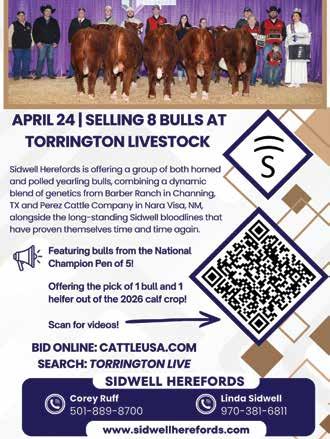
Sidwell Herefords 8 Yearling Hereford Bulls (Horned and Polled), Combining a Dynamic Blend of Genetics from Barber Ranch in Channing, RX and Perez Cattle Company in Nara Visa, NM, Along Side the Long-standing Sidwell Bloodlines that have Proven Themselves time and time again. Featuring Bulls from the National Champion Pen of 5, Offering the pick of 1 Bull and 1 Heifer out of the 2026 Calf Crop


CATTLE COUNTRY VIDEO PRODUCTION SALE SCHEDULE High Plains Showcase - Laramie, WY
Oregon Trail Classic - Gering, NE
Frontier Fall Round Up - Cheyenne, WY

ciation President Justin Tupper says he appreciates how the update closes loopholes that were previously allowed.
“The updated Product of USA label finally means what folks always assumed other inspection labels meant – the animal was born, raised, harvested and processed here at home,” Tupper says.
“We look forward to partnering with USDA on this effort and ensuring consumers across the country understand exactly what this label means.”
R-CALF USA Chief Executive Officer Bill Bullard mirrors this perspective, emphasizing the importance of giving consumers accurate information.
“Today, when consumers see the Product of USA label, they can be assured beef is entirely a USA product produced by domestic farmers and ranchers and by beef packers operating in the U.S.,” Bullard says. “This is a positive step in advancing our goal of empowering consumers to support America’s beef supply chain through their purchasing decisions.”
Environmental Protection Agency Administrator Lee Zeldin comments, “America’s farmers and ranchers are key to our national security, sustaining rural communities and keeping our food supply resilient. The Product of the USA label rewards American farmers and ranchers who grow, raise and process their products in the U.S., while giving consumers confidence they are supporting American agriculture.”
Small Business Administration Administrator Kelly Loeffler further states, “When we choose to purchase from American producers, we get a superior product while supporting the hardworking family farms who put it all on the line every day to feed, clothe and fuel our nation. Amid President Donald Trump’s work to end years of unfair competition and eliminate the massive red tape which has crushed domestic agriculture, Made in America is finally making a comeback.”
Hannah Bugas is the managing editor of the Wyoming Livestock Roundup. Send comments on this article to roundup@wylr.net.

Services of America Dean Kelly Crane and SER Acting Director Scott Quillinan delivered a welcome address focused on the importance of collaboration between agriculture and energy in Wyoming, placing particular emphasis on preparing the next generation to lead within this critical intersection.
“One of Wyoming’s distinctive competitive advantages is we do a better job of balancing ag, recreation, wildlife habitat and energy development than anyone else,” Crane said. “UW is poised to make sure the next generation understands the importance of collaborating among all of these uses, which is part of the reason for this conference today.”
“Wyoming really does power our nation, but this puts the burden back on us here,” Quillinan added. “The land use required to power our nation falls upon folks here at home, which is why it’s so important to continue to collaborate.”
“From the university’s perspective, we are training the next generation of industry leaders, policymakers, ranchers, farmers, wildlife and water resource managers, legislators and regulators,” Crane continued. “We take pride in being a headwater state.”
Keynote address Gordon delivered a keynote address focused on the critical intersection between energy and agriculture in Wyoming, highlighting the Cowboy State’s leadership in navigating these sectors in a productive, collaborative manner.
“The nexus between agriculture, natural resource management and developing our natural resources for the benefit of all is something Wyoming can do better than anywhere else,” Gordon said. “The people in this state – the developers, the landmen, the ranch owners and others –have a habit of trying to get things done.”
Emphasizing the Cowboy State’s close community ties, Gordon highlighted a state-
wide attitude of collaboration and shared respect regarding resource development which sets Wyoming apart from other states.
His comments reflected the importance of involving stakeholders, policymakers and the people of Wyoming in conversations to secure clean air, functional water resources, abundant energy and a bright future for the next generation as energy development continues to advance.
To underscore the importance of unity while navigating the developing energy landscape and bringing a positive attitude to developing conversations, Gordon discussed the Thunder Basin National Grassland as an example of successful collaboration between the U.S. Forest Service, Bureau of Land Management, oil and gas companies and local ranchers.
“This conversation didn’t happen because of what the government said,” Gordon emphasized. “It happened because the people on the ground respected each other, came together and understood they had to bury some hatchets in order to make progress.”
“This is a time with more challenges, but also more tools we can use to address those challenges as long as we keep our direction and our view bright,” Gordon added.
In closing, Gordon commented on the advancement of artificial intelligence (AI) technology, recommending people take advantage of the tool as a “tactical advantage” in synthesizing information while also value-checking outputs against learned knowledge.
“There’s a lot of conversation around how AI is going to revolutionize everything,” Gordon acknowledged. “When we think about how these tools are going to be meshed into what our future looks like, thinking strategically and being able to move forward is key.”
Additional highlights
The RMLRMC also featured a panel discussion on ethics moderated by Jacob Haseman, chairman emeritus
of the UW Professional Landman Industry Advisory Board.
Panelists included Mark Eisele, former National Cattlemen’s Beef Association president and owner of King Ranch outside of Cheyenne; Callie Burch, surface landman with Continental Resources and Doug Stark, interim director of UW RMAL.
“Ethics are generally not the law, but they certainly inform the law and professional legal business conduct in almost all professions,” Haseman emphasized. “Ethical principles – honesty, integ-

rity, loyalty, fairness, impartiality, candor fidelity and trust – help maintain personal integrity and public trust.”
Eisele, Burch and Stark commented on the importance of ethics in business and personal relationships, emphasizing Wyoming’s shared attitude of integrity and trust and how adhering to an ethical code drives success.
In the afternoon, a panel discussion shifted conversation to reclamation and restoration featuring Greyson Buckingham, chief executive officer and president of DISA Technologies; Josh Oakleaf, project manager with Wyoming Department of Envi-
ronmental Quality’s abandoned mines division; Timothy Hoelzle, deputy director of the U.S. Department of the Interior’s office of restoration and damage assessment and Joshua Sorensen, reclamation program manager at Jonah Field in southwestern Wyoming.
The panel was moderated by UW Interim Associate Dean and Wyoming Agricultural Experiment Station Director Brian Mealor and guided by questions submitted by UW students.
The day concluded with a presentation on land use rights and land management from Pete Arambel, owner
and operator of the Midland Ranch, a large-scale sheep and cattle grazing operation located in southwestern Wyoming. Arambel’s comments focused on ensuring a resilient future for energy and ag in Wyoming through sustainable production practices and informed cooperation, with an emphasis upon implementing land management practices which fit the operation to the environment rather than the environment to the operation.
Grace Skavdahl is the editor of the Wyoming Livestock Roundup. Send comments on this article to roundup@wylr. net.


Knowledge Exchange, rural communities are hit harder by rising gasoline and diesel prices because fuel is a larger and less flexible part of daily life and the local economy.
Longer driving distances, limited public transportation and heavy reliance on diesel intensive activities like farming, freight and construction mean price spikes show up quickly in household budgets and business costs.
U.S. economy
Despite persistent signs of a weakening labor market – declining job openings, weak wage growth and minimal job creation – the broader economy has continued to trudge forward like a tractor in low gear, but rising energy costs will boost headline inflation by about one percent in coming few months.
The longer-term effects of higher energy costs will be felt throughout the year as higher transportation and input costs work their way into every segment of the economy.
While higher income and asset-rich households can absorb higher energy costs, the bottom half of earners with less savings are caught between rising inflation and shrinking wage growth.
Many consumers will have no choice but to reduce discretionary spending, particularly in the retail goods, food service and hospitality categories.
U.S. government affairs Farm and rural advocates continue their calls for swift
and urgent action on a new farm bill, more aid and trade certainty.
The 2026 Farm Bill passed the House Agriculture Committee on a bipartisan vote in March after over 20 hours of debate.
Committee Chairman Glenn “GT” Thompson (R-PA) hopes to continue to secure support from his most conservative Republicans and to increase the number of House Democrats supporting the bill to ensure House passage when Congress reconvenes in mid-April.
The so-called “skinny” farm bill contains over 800 pages of program and policy improvements which will be of assistance in the current agriculture economy. These programs were updated in 2018, when the last farm bill was written.
Grains, farm supply and biofuels
Volatility in the energy markets provided grain farmers with new marketing opportunities, driving grain and oilseed prices up late last quarter.
Soybean prices rose 11.8 percent, driven by the soybean oil rally. Corn prices climbed four percent and wheat prices rose 21.5 percent.
The U.S. Department of Agriculture’s (USDA) Prospective Plantings report indicated farmers will increase soybean acres by four percent compared to last year while slashing corn and spring wheat acres.

$16,500 2013 MACK 600, 306,406 MILES EXTENSIVE ENGINE WORK DONE - $39,500 2008 LANDOLL 53’ HYDRAULIC TILT TRAILER. AG PULL OUTS. LOW MILEAGE USED ON RANCH TO MOVE BALER+SWATHER. NEW PAINT AND DECK. $75,000 OBO.
2007 KW W900L, STUDIO SLEEPER, 625 CAT, 18 SPEED TRANS., 40,000 REARS, PTO, HEADACHE RACK ENCLOSED, 315,000 ACTUAL MILES, $150,000 OBO. 2016 KUBOTA MX5200D TRACTOR 2023 CAT D6 DOZER 2023 CAT 420 BACKHOE 2023 CAT 906 LOADER 2018 CAT 930M LOADER 2022 FRIESEN TRAILER AIR COMPRESSOR CAT REACH FORKLIFT (TELEHANDLER)
2023 SA CARGO TRAILER 6X10 NEW PULLED 1500 MILES - $7,000.00
2013 JLG G6-42A EXTENDED BOOM SKYJACKSJ7135 SCISSOR LIFT THE BEST PRICES YOU CAN FIND!!!!
Corn demand remains resilient, but planted acreage is set to fall to 95.3 million acres, down 3.8 percent year-over-year as farmers eye more profitability with soybeans. U.S. farmers plan to drastically cut wheat acres, which are projected to fall to the lowest since recordkeeping began in 1919.
Improved commodity prices are not anticipated to offset higher input and production costs.
Fuel and fertilizer prices have increased 20 to 40 percent since the Iran conflict began, leaving buyers who delayed decisions more exposed. Ongoing supply chain disruptions for urea could recreate 2022-level fertilizer prices without 2022 crop price support.
USDA had expected fuel, lube and electricity expenses to ease, but the sharp increase in diesel prices following the onset of the war with Iran could add $2,000 in fuel costs per farmer and hundreds of thousands more for grain elevators.
The long-awaited renewable volume obligations under the Renewable Fuel Standard were announced on March 27, clearing an outlook which had been clouded in uncertainty for months.
Biomass-based diesel was the biggest winner with a 62 percent increase over last year’s mandated level, although nuances of the final rule will limit the upside potential for domestic feedstocks, particularly soy oil.
The Environmental Protection Agency also adjusted its renewable volume obligation to account for a 70 percent reallocation of previous small refinery exemptions. While the EPA issued E15 summertime waivers starting May 1, legislative action on a permanent solution remains stalled.
Animal protein and dairy
Meat and poultry products continue to resonate with consumers. Strong demand, especially for beef, is prompting optimism for the protein sector.
Lower feed costs remain a favorable tailwind for livestock producers. However, cattle feeders are beginning to feel an outsized impact of further herd contraction.
Cattle supplies remain limited and any herd growth

over the next few years will occur slowly.
U.S. hog margins remain firmly in the black. Iowa State University estimates indicate February marked the 23rd consecutive month of profitability for farrow-to-finish margins.
Broiler markets are under pressure as ample supplies of meat and slow-moving markets form a headwind to margins nearby. However, more chicken features and promotions in the months ahead should boost disappearance.
For decades, U.S. dairy markets have been balanced for butterfat with excess protein destined for the export market, but the tide has turned and America may be structurally short on dairy protein moving forward.
The changing dynamics between U.S. butterfat and protein production will cause more price fluctuation as dairy processors look to balance products in both domestic and international markets.
As the transition unfolds, there will be more market volatility ahead. Dairy farmers and processors should consider hedging opportunities when market prices look favorable and cover expenses because small product movements could significantly move prices.
Cotton, rice and sugar
Cotton prices forged a mild recovery last quarter rising 8.9 percent alongside price recoveries in other commodities driven largely by speculators hedging against inflation following the tumult in Iran.
U.S. farmers indicated they plan to increase cotton acreage in 2026, defying expectations for reductions as cotton farmers struggle with profitability versus other crops. Cotton acres in the U.S. are expected to rise to 9.64 million, up 3.9 percent year-over-year.
Cotton demand remains soft as consumers pull back on apparel spending with a rebound in inflation threatening to further erode disposable income.
Total U.S. rice acreage is set to plunge to its lowest level in five years as farmers struggle with exceedingly high production costs. Rice prices have floundered compared to other commodities as Indian supplies flood the
world market.
Rough rice prices managed to rebound last quarter, rising 14.6 percent on expectations of reduced acreage in the U.S. and around the world while speculative money flow brought additional price support.
USDA forecasts longgrain rice acreage in the U.S. will drop 22 percent from last year, falling to the lowest since 1983 as farmers in the southern U.S. shift acres primarily to soybeans.
Sugar prices continue to struggle under the weight of global oversupply and eroding consumer demand.
Widespread use of GLP-1 medications for weight loss is contributing to reduced sugar consumption.
U.S. raw sugar prices ended the quarter 4.5 percent higher, lagging the recovery in other commodities. Midwest refined white sugar prices remain at multiyear lows. World sugar prices continue to be pressured by higher exports from India and Brazil as both countries divert sugar from ethanol production to the export market.
U.S. sugarbeet acreage is expected to see a modest reduction in 2026, falling 1.5 percent year-over-year and dropping to the lowest level since 1982 with sugar prices at multi-year lows.
Food and beverage
Higher prices and increasingly cost-conscious consumers continue to take a toll on restaurant and retail grocery sales. The sagging numbers have prompted activist investors to play a more prominent role in corporate decision making.
In packaged food and beverage, activists have emphasized structural efficiency and simplification, targeting reductions in overhead, stock keeping units and brands through divestitures.
The restaurant sector has also seen considerable activism, most often encouraging closures or divestitures.
These efforts come as consumers adjust to higher prices for gas and other goods and services amidst moderate wage growth, which has prompted a shift away from dining out to more at-home meals.
Power and digital infrastructure
The U.S. natural gas
market is entering a fundamentally different era defined by global integration, structurally higher price floors and increased exposure to geopolitical and infrastructure risk.
While domestic supply remains abundant, the forces shaping future U.S. prices extend far beyond North American natural gas-directed production and weather. At the core of this shift is the growing role of liquified natural gas (LNG) exports in domestic price formation. The U.S. has become the world’s largest LNG exporter, effectively importing global volatility into what was once a largely domestic market.
For utilities and large gas consumers, long term planning, hedging strategies and rate design must adapt to this new reality – one in which U.S. natural gas is no longer insulated, predictable or cheap by default.
AI-related capital expenditures are reaching unfathomable levels as Amazon, Microsoft, Meta and Google race to build next-generation technologies.
U.S. hyperscalers spent an estimated $400 billion in 2025 and expectations are close to $700 billion this year. The highly concentrated nature of this capital spend– and the outsized impact it’s having on financial markets – is fueling concerns any slowdown could burst the proverbial AI bubble.
Those concerns have merit, but a closer look at the profitability of this spend and the shareholder value it’s creating suggests this cycle has yet to play out, and while risks exist, today’s market lacks the excess capacity and frothy valuations of the dot-com era.
CoBank is a cooperative bank serving vital industries across rural America. The bank provides loans, leases, export financing and other financial services to agribusinesses and rural power, water and communications providers in all 50 states. Headquartered outside of Denver, CoBank serves customers from regional banking centers across the U.S. and also maintains an international representative office in Singapore.
Reported By: Curt Cox, WYLR Field Editor April 10, 2026
5L Red Angus, Sheridan, Mont.
Auctioneer: Trent Stewart
196 Yearling Red Angus Bulls Avg. $9,676
19 Yearling Black “Profit-Plus” Bulls Avg. $8,842
Nine Yearling Char x Red Angus “Opti-Bulls”
Reported By: Curt Cox, WYLR Field Editor April 13, 2026
Billings Livestock Commission, Billings, Mont. Auctioneers: Greg Goggins 115
Top Sellers
Lot 22 – C Spear Dynamic N102 – Price: $30,000 DOB: 1/30/25
Sire: B A R Dynamic N102 Dam’s Sire: Sitz Resilient 10208 EPDs: BW: +1.4, WW: +87, YW: +150 and
Reported By: Curt Cox, WYLR Field Editor April 11, 2026
Bar X Ranch, LaGrange Auctioneer: Lander Nicodemus
50 Yearling Angus Bulls Avg. $8,470
Top Sellers
Lot 2 – K B X Big Country 5575 – Price: $30,000
DOB: 1/30/25 Sire: Kraye
Big Country 0179 Dam’s Sire: Wilkes 6-D Upshot 166
EPDs: BW: +1.3, WW: +78, YW: +133 and Milk: +38
Buyer: Lisco Angus, Douglas
Lot 3 – K B X Big Country 5579 – Price: $25,000
DOB: 2/5/25 Sire: Kraye Big Country 0179 Dam’s Sire: Wilkes 6-D Leupold 4777
EPDs: BW: +2.8, WW: +94, YW: +166 and Milk: +38
Buyer: Webo Angus, Lusk Lot 17 – K B X Stunner 5232 – Price: $12,000 DOB: 3/10/54 Sire: Musgrave 316 Stunner Dam’s Sire: Sitz
Response 405C EPDs: BW: +1.2, WW: +82, YW: +138 and Milk: +31 Buyer: TAG
Double H Angus, Ten Sleep
Lot 19 – K B X Rock
5688 – Price: $12,000 DOB: 2/3/25 Sire: Coleman Rock
7200 Dam’s Sire: S A V Transistor 1434 EPDs: BW: +1.7, WW: +67, YW: +120 and Milk: +22 Buyer: Fornstrom Ranch, Pine Bluffs
Lot 31 – K B X Charlo 5237 – Price: $12,000 DOB: 3/7/25 Sire: Coleman Charlo 0256 Dam’s Sire: EF Complement 8088 EPDs: BW: -0.2, WW: +59, YW: +103 and Milk: +31 Buyer: Jackie Nickel, Veteran
Reported By: Curt Cox, WYLR Field Editor March 26, 2026
Schuler Red Angus, Bridgeport, Neb. Auctioneer: Lex Madden
116 Yearling Red Angus Bulls Avg. $10,116
41 Yearling Schuler Red Composite Bulls Avg. $9,341
Top Sellers
Red Angus
Lot 4 – Schuler Power Plant-5545 – Price: $32,000
DOB: 3/7/25 Sire: ALC Proponent L72 Dam’s Sire: 5L Transporter 4916-25P EPDs: BW: -2.1, WW: +83, YW: +134 and Milk: +25 Buyer: Westphal Red Angus, Grass Range, Mont.
Lot 2 – Schuler Propulsion-N010 – Price: $17,500
DOB: 2/22/25 Sire: ALC Proponent L72 Dam’s Sire: Bieber Jumpstart J137 EPDs:
BW: -2.6, WW: +95, YW: +157 and Milk: +32 Buyer: Kenansville Cattle Company,
Top Sellers Red Angus
Lot 85 – 5L Y Not 223769N – Price: $27,500 DOB: 2/10/25 Sire: 5L Y Not 8071-509L Dam’s Sire: 5L Ultimatum 1893-03C EPDs: BW: -2, WW: +94, YW: +147 and Milk: +33 Buyer: Loosli Red Angus, Ashton, Idaho
Lot 2 – 5L Fiesta 19-113N – Price: $23,000 DOB: 2/16/25 Sire: 5L
Milk: +26 Buyer: Bar JV
Angus, Fairview, Mont.
Lot 3 – C Spear Dynamic
N001 – Price: $20,500 DOB: 1/31/25 Sire: B A R Dynamic N102 Dam’s Sire: Sitz Resilient 10208 EPDs: BW: +4, WW: +123, YW: +208 and Milk: +14 Buyer: Alta
Fiesta 558-356L Dam’s Sire: 5L Bourne 117-48A
EPDs: BW: -4.9, WW: +71, YW: +111 and Milk: +24
Buyer: Sandbur Ridge Red Angus, Petersburg, Neb. Lot 1 – 5L Identity 93-88N – Price: $22,000 DOB: 2/13/25 Sire: LSF
SRR Identity 0295H Dam’s Sire: LSF SRR King Arthur 0136H EPDs: BW: -4.9, WW: +94, YW: +152 and Milk: +31 Buyer: Ormiston
Genetics, Watertown, Wis.
Lot 10 – C Spear JVC
Prosper N26 – Price: $19,000 DOB: 1/8/25 Sire: Ellingson Prosper Dam’s Sire: G A R Ashland EPDs: BW: +3, WW: +100, YW: +156 and Milk: +20 Buyer: Half Dozen Ranch, Billings, Mont.
Farms, Kismet, Kan. Lot 140 – 5L Herd Saver 4993-14N – Price: $20,000
DOB: 1/30/25 Sire: 5L Herd
Saver 2776-76K Dam’s
Sire: 5L Who Dat 558-06H
EPDs: BW: -5.8, WW: +61, YW: +93 and Milk: +29
Buyer: Michigan State University, East Lansing, Mich. Lot 140 – 5L Identify 5205-150N – Price: $20,000
DOB: 2/9/25 Sire: LSF
SRR Identity 0295H Dam’s
Lot 56 – C Spear
Dynamic N002 – Price: $19,000 DOB: 1/15/25
Sire: B A R Dynamic N002 Dam’s Sire: Sitz Resilient 10208 EPDs: BW: -0.3, WW: +78, YW: +128 and Milk: +29 Buyer: Ty Neal, Denton, Mont.
Sire: 5L Quarterback
12055337 EPDs: BW: -2.4, WW: +85, YW: +129 and Milk: +30 Buyer: Tash Livestock, Polaris, Mont. Lot 214 – 5L Augustine 1962-298N – Price: $20,000 DOB: 3/12/25 Sire: LCOC Augustine U927E Dam’s Sire: 5L Foreman 2174370E EPDs: BW: -2, WW: +81, YW: +121 and Milk: +21 Buyer: Otley Brothers, Inc., Diamond, Ore.
Lot 23 – C Spear Dynamic N108 – Price: $17,500 DOB: 1/9/25 Sire: B A R Dynamic Dam’s Sire: V A R Conclusion 0234 EPDs: BW -1.4, WW: +93, YW: +154 and Milk: +31 Buyer: Jacobson Ranch, Sun River, Mont.
Kenansville, Fla.
Lot 33 – Schuler Private Label-4438 – Price: $17,500 DOB: 3/22/25 Sire: ALC Proponent L72 Dam’s Sire: Redhill 190A X072
45E EPDs: BW: -3, WW: +80, YW: +130 and Milk: +31 Buyer: CK Ranch, Ellsworth, Kan.
Lot 10 – Schuler AllPro-5568 – Price: $17,000 DOB: 3/13/25 Sire: Schuler Professional 3387 Dam’s Sire: WLF Profitmaker
E7030 EPDs: BW: -3.3, WW: +85, YW: +137 and Milk: +30 Buyer: Westphal Red Angus, Grass Range, Mont.

on his attention to detail, his creativity and his ability to manage multiple priorities seamlessly, often under pressure and without compromising quality.”
Crane added, “Cain is known for his humility, collaborative spirit and genuine respect for all of his causes. He listens carefully, welcomes feedback and finds thoughtful solutions which bring out the best in every project and every team. Calm, solutions oriented and always willing to go the extra mile, Cain exemplifies the very best of our commitment to service, innovation and excellent outcomes.”
Jack Ross, a senior associate in the Department of Zoology and Physiology, was the second outstanding staff awardee.
“Ross is widely recognized as the backbone of this department – an individual whose dedication, initiative and leadership ensures everything runs smoothly every day,” Crane stated. “From managing complex administrative responsibilities to anticipating challenges before they arise, Ross consistently goes above and
beyond to support faculty, staff and students alike.”
In addition to handling an extensive portfolio of responsibilities including everything from scheduling and hiring to student support and facilities coordination, Crane said Ross is also known for fostering community connection.
“Ross brings professionalism, warmth and a genuine commitment to supporting others, creating an environment where people feel welcome and supported,”
Crane said. “Whether assisting a student navigating a complex process, coordinating events which bring the department together or simply offering a calm and positive presence, Ross exemplifies the very best of service and collegiality.”
Extension awards
After recognizing Outstanding Staff Award honorees, UW Extension Director Dr. Mandy Marney announced the recipients of several UW Extension awards, which were presented last fall during an exclusive Extension event.
Sarah Gonzalez, an administrative assistant
with Albany County Extension, was named UW Extension Administrative Professional of the Year, and Goshen County Administrator and Youth Show Coordinator Sabina Wyse received the UW Extension Bright Future Award.
Additionally, Hailey Sorg, assistant Extension educator at Natrona County Extension and UW outdoor, recreation, tourism and hospitality Extension educator, received the UW Extension Newer Employee Award.
Individuals involved in the Cent$ible Nutrition Program’s (CNP) Harvest Bucks initiative were honored with the UW Extension Team Excellence Award, which intends to capture the collaborative work of Extension.
Marney explained the Harvest Bucks program is a nutrition incentive which helps individuals and families stretch food dollars, while gaining access to fresh, healthy produce. Participants receive “Harvest Bucks” which can be redeemed for fresh fruit and vegetables at participating stores and farmers markets.
“The program is designed to improve food security and nutrition for low-income households, while also sup-
porting more farmers and strengthening the global food system,” Marney stated. “The initiative benefited at least 88 families in dedicated communities.”
Individuals involved in the program and subsequently recognized include CNP Educators Stephanie Anderson, Mary Evans, Tanya McCoy and Angela Michel; Community Vitality and Health Extension Educator Vicki Hayman; CNP Director and Senior Extension Educator Mindy Meuli and CNP Program Manager and Marketing Specialist Kali McCrackin Goodenough.
To conclude the Extension awards, Marney honored Hot Springs County Extension Senior Educator Barton Stam with the Jim Debree Excellence in Extension Award, which is the highest honor Extension bestows on its educators.
Marney explained the award was established in 1996 to recognize employees with a minimum five years of service who demonstrate a high level of professional performance and personal commitment to professional development.
from a similar cloth. If we need something done and we need it done well and on time – with commitment and dedication – we can reach to people like these two,” Mealor said.
Next, Mealor presented Department of Plant Sciences Associate Professor Donna Harris with the Agricultural Experiment Station Early Career Research Award.
Mealor noted Harris has built a novel plant breeding program which includes drought tolerance and legume crops, early maturity and yield quality in dry beans, improvement of native plant materials and wildlife food plot mixes, pest resistance in alfalfa and evaluation of high-tech approaches such as drone-based groundpenetrating radar to improve infield phenotyping.
“This diversity reflects her personal commitment to conducting research relevant to stakeholders and improving agricultural enterprises in the state,” Mealor said.
the master’s student awardee, and Kiet Tran of the Department of Molecular Biology was the PhD student awardee.
Two individuals were also presented the CALSNR Outstanding Educator Award. They include Assistant Extension Educator Gretchen GasvodaKelso and Molecular Biology Associate Lecturer Kassandra Willingham.
According to Crane, the pinnacle of the awards ceremony is the Andrew Vanvig Outstanding Lifetime Distinguished Faculty Achievement Award, which is given in honor of a senior faculty member for their lifetime achievements in teaching, scholarship, creative activity and service.
This year’s awardee is Dr. Roger Coupal, professor of agricultural and applied economics.
We’ve removed the guess work, let our proven sire program add uniformity to your calf crop.

Stam was presented with the award for his dedicated professionalism, collaboration and event coordination, earning statewide respect for his expertise in range management.
Experiment station awards
The ceremony proceeded with Wyoming Ag Experiment Station Interim Director Dr. Brian Mealor taking the stage to present four awards to ag experiment station personnel.
First, two individuals were presented with the Kathleen Bertoncelj Agricultural Experiment Station Outstanding Staff Award.
Kalli Koepke, assistant farm manager at the Laramie Research and Extension Center, and Mike Albrecht, farm manager at the Sheridan Research and Extension Center, were the recipients.
“I’ve worked with these two for more than a decade, and they’re both kind of cut
Next, Mealor presented the Agricultural Experiment Station Outstanding Research Award, which went to Jerod Merkle, associate professor in the Department of Zoology and Physiology.
According to Mealor, Merkle’s research focuses on large ungulate ecology, migration and disease and has had a “profound scientific impact, delivering tangible benefits to Wyoming and the broader region.”
To conclude, Mealor awarded the Outstanding Research Support Award to Zhaojie Zhang, senior research scientist in the Department of Zoology and Physiology.
Other awards
Three additional awards were announced to round out UW CALSNR’s Annual Spring Awards Ceremony.
Two Reflections Student Author Awards were presented in memory of Lynn Feltner.
Marguerite Trost of the Department of Botany was
Crane stated, “Over nearly three decades at UW, Coupal has exemplified the very spirit of this recognition through his scholarship, leadership and unwavering commitment to service as a faculty member and former department head of ag and applied economics. He has strengthened programs, mentored colleagues and students and helped guide the strategic direction of this university.”
“Coupal’s impact extends far beyond campus, as well. His research and outreach have provided critical economic analyses to policymakers, Tribal governments and communities across Wyoming and beyond to help them navigate complex challenges related to energy transitions, natural resource management and rural economic development,” Crane continued. “Through his scholarship, service and engagement, he has helped inform decisions to shape the future of this state while improving the resilience of our communities.”
Hannah Bugas is the managing editor of the Wyoming Livestock Roundup. Send comments on this article to roundup@wylr.net.


Jan. 27, 1943 – March 28, 2026

John Leroy Hornecker, age 83, of Lander died on March 28 at Shepherd of the Valley Care Center in Casper, where he had lived for the past five years.
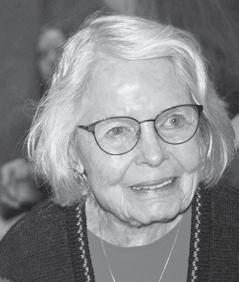
Patricia “Pat” McGinnis Campbell, an amazing and special lady, left her beloved family, dear friends and beloved ranch on April 7.
Pat was born March 2, 1929 in Provo, Utah to Joe and Eunice McGinnis. She grew up on Lake Street in Salt Lake City with her brother Bill, sister JoAnn and her lifelong best friend Betty Jean Cowley.
Her father Joe McGinnis was the grandson of William John McGinnis who came from Nebraska in 1880 and began to settle and ranch in the area known then as Midway. There were originally five of the children of this family and many more grandchildren who stayed and continued to develop a large portion of the area from LaBarge to Big Piney into ranching.
As a teenager, Pat spent the summers on part of the McGinnis Ranch with her Uncle Anderson and Aunt Delia. She remembered these times with great fondness, experiencing the hardships of ranching for the first time.
Pat graduated from the University of Utah (U of U) with high honors and a degree in English and library science. While she was attend-
John was born Jan. 27, 1943 in Lander to Albert and Betty Hornecker. He was raised on Squaw Creek and educated in Lander, graduating from Fremont County Vocational High School in 1961.
He was involved in Fremont County 4-H for 10 years, winning a trip to Chicago for livestock judging while he was in high school.
John was drafted into the U.S. Army in 1966, and he was honorably discharged in 1968. Trained as a heavy equipment operator, John served in Vietnam for a year. He earned the National
Defense Service Medal, Vietnam Service Medal, Vietnam Campaign Medal, Good Conduct Medal and Expert Rifle M-14 Badge.
While building roads through Vietnam, John befriended a German shepherd who became his best friend and protector. He wanted to bring his faithful companion back to Wyoming when his time in Vietnam ended, but he couldn't afford the shipping costs. His first dog after returning to the states was a German shepherd named Jerry.
John worked for U.S. Steel as a heavy equipment operator, and when the mine closed, he returned to the family cattle ranch on Mill Creek.
John, his dad Albert, his mom Betty and his uncle Jack built Hornecker Live-
stock Company into the largest non-Tribal ranch on the Wind River Reservation. The Black Angus operation consumed his life, which included cowboying, breaking horses, irrigating hundreds of acres, harvesting and stacking hay – first with small bales and later with loaves – and working cattle – calving, branding and doctoring.
John enjoyed everything about ranch life, including grazing cattle on the face of the Wind Rivers near Sinks Canyon, Dickinson Park and Togwotee Pass. He enjoyed pack trips in the Wind River Mountains, fishing for brook trout off of his horse Banjo, camping and exploring the Red Desert, visiting and telling stories with friends, dreaming about striking it rich
and spending time with his family, including his sister Chris’ family in Cody and his nieces Kim and Kris.
John married Joyce Nations on Dec. 18, 1977 in Lander. Joyce died on Sept. 20, 2015. They were married for 38 years.
John’s final years of life included many personal long-term health issues directly linked to his repeated exposure to Agent Orange in Vietnam, which the U.S. military used during the Vietnam War to destroy vegetation and crops. More than 20 million gallons were sprayed, causing severe, long-term health issues in millions of U.S. Veterans and Vietnamese people.
John is preceded in death by his parents, brother-in-law Gale Beers
and his wife Joyce. He is survived by his sister Christine Hornecker Beers of Cody; nephew Cody (Robyn) Beers of Riverton and his family; nieces Tina (Todd) Hardesty of Cody and Kim (Richard) Warner of Lander and their families; aunt Marietta Twitchell of Fort Washakie; brother-inlaw Jim Nations of Casper and dozens of Hornecker/ Iiams/Nations cousins.
Memorial services will be held at 10 a.m. on April 25 at the Fremont County War Memorial Monument, adjacent to the Fremont County Courthouse, in Lander, and military honors will be conducted.
Following services, John’s family and friends will convoy to St. Mary’s Mountain in the Red Desert for a barbecue lunch.
ing college, she spent her summers working as a cabin girl at the V-V Guest Ranch in Bondurant. She loved to tell the story about two handsome men coming in the kitchen of the lodge to grab lunches for their hunters.
It was early morning the first time she saw them. Harve Stone spoke to her, but Walden Campbell stood back and didn’t say anything – he was the one she decided to pursue and they dated for the next three summers.
After she graduated from the U of U, Pat applied and was accepted to Radcliff College in Cambridge, Mass., the sister school to Harvard. This was something she was proud of her whole life.
She was enrolled to begin her studies in January of 1953. She came to visit Walden on Dec. 2, 1952 to tell him goodbye, but he knew if she went back east, he would lose her. He asked her to marry him and they were married on the next day, Dec. 3, 1952, in Jackson.
Years later, all she had to show was the letter saying, “You have been accepted to Radcliff College,” but she admitted she was happy she made the choice to get married, saying it was meant to be.
Walden owned a ranch with his father in Bondurant. After he and Pat were married, they bought another ranch to add to the land they already had. There was no electricity but a light plant when they first moved to the ranch.
The two ranched together, with Pat always doing her part and Walden
his. There were a lot of “tough times” and times when she said she kept telling herself it would get better. As she aged, she looked back at the hard times as the glue that drew her family together and gave purpose to their life.
Their first son Kevin was born in 1954, followed by Katherine, Colleen and Lennie.
Walden died in 1979, leaving behind a young family, a young widow and the ranch they all loved. Pat stepped up to the plate in every way. She took a deep interest in the success of the ranch until the day of her death. She never wanted it to be sold or divided in anyway.
The ranch became the soul and world of her family, with her home the center of this world. She was so proud her grandson Walden chose to carry on the ranching tradition so passionately.
Pat put on the greatest dinners in the area when there was any occasion –holidays, brandings and haying. She never wanted anyone slighted. She was famous for her homemade rolls, and she was proud when her granddaughter Anna learned to make them.
Pat started up the library in Bondurant in the early 1960s so people would have access to books. She instigated the county roads being plowed all winter in 1967 when she was pregnant with Lennie because she said she was not going to move into town to wait for him to be born like she had to her other winter babies.
Later in life, she took a job at the Jackson Hole Pendelton Shop, a high-end clothing store. She loved beautiful quality merchandise and enjoyed selling people clothing they looked
sharp in.
She had an appreciation of quality in all things around her house and would rather go without than have what she called “junk.”
The Green River Valley Cowbelles/Cattlewomen awarded her with the Lifetime Member Award and Ranch Woman of the Year Award, and she was an integral part of the ranch, receiving the Centennial Ranch Award.
Pat served on the Board of Directors of the Wyoming LaBarge Oil Company
for 27 years. Her McGinnis family had created this company many years ago, and it is still active today. She traveled abroad on two different trips seeing England, France, Italy, Spain, Ireland and Wales. She was enriched by these adventures, and she loved the beauty around her.
She loved wildflowers, autumn leaves, wildlife, song birds that flew in front of the kitchen window and warmth from the kitchen wood stove she baked her most delicious food in.
The bond she created with her children and grandchildren of unconditional love was a gift each of them will always have in their heart. She left behind an example of how to love and how to live with integrity, honesty, forgiveness and acceptance. She will be missed by many friends, as well as her children Kevin, Katherine, Colleen and Lennie; grandchildren Heidi, Walden (Josephine), Anna (Yancy) and Jenni and great-grandchildren Daviel and Little Joe.
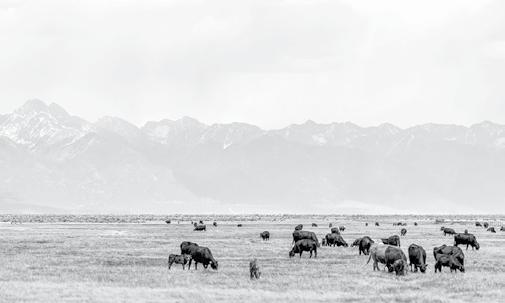
at many kitchen tables, I have witnessed the full spectrum of emotion and complexity these decisions carry. Here is an honest look at the forces that bring families to that table. (800) 237-7844 | bill@billbahny.com | www.billbahny.com
THE LOSS OF THE PATRIARCH OR MATRIARCH is perhaps the most common catalyst. When the family's anchor is gone, so too is the singular vision that kept the operation running and the family unified. Grief, estate settlements, and unresolved questions about who truly wants to carry the ranch forward often surface simultaneously.
INTERNAL FRICTION turns the land into a battleground for older wounds. The sibling who stayed and sacrificed versus the one who left decades ago but holds equal legal interest — these dynamics make ranch succession uniquely painful, and a sale often becomes the only resolution everyone can agree upon.
LIFE TRANSITIONS accumulate quietly until the equation no longer works. Declining health, divorce, retirement, or physical limitation are some of the problems that could come up. Choosing to sell at the right time is not surrender — it is stewardship.
FINANCIAL PRESSURE is more common than outsiders realize. Drought, rising input costs, estate taxes, and compressed margins can make even well-run operations cash-poor despite being land-rich. A thoughtful sale preserves far more family wealth than one forced by distress.
THE STAY-BEHIND CHILD faces the most painful reality of all — having invested their entire life in the ranch, they may now find themselves in the minority on a decision that dismantles everything they built. Their contribution deserves to be honored, even when a sale is unavoidable.
WHEN HEIRS MOVE ON, holding a complex operating asset they cannot manage is neither practical nor responsible. Passing land to a buyer who will pour their life into it is itself a tribute to what was built there.
A SKILLED BROKER brings market expertise, an objective voice, and professional guidance through one of the most emotionally charged transactions a family will ever face. That representation is not an expense — it is a protection.
THE FINANCIAL REALITY demands an honest question: has this land been a lifestyle or a capital investment? Usually both. Naming that balance clearly is the foundation of a decision every family member can ultimately live with.
The goal is never simply to complete a transaction — it is to honor what the ranch has been, treat every family member fairly, and place the
April 1-26
April 19
Nebraska Sandhills Rancher Fire Relief Auction, online. To donate, visit farmauction.net/nsrfr-auction/?utm_source=FBInsta&utm_medium=post&utm_ campaign=nsrfr-auction&utm_content=post. To bid, visit bidkraupie.com/ auctions/5556-nebraska-sandhills-rancher-fire-relief-fundraising-auction?utm_ source=FBInsta&utm_medium=post&utm_campaign=nsrfr-auction&utm_ content=donations-auction-link
Wyoming 4-H Sixth Annual Virtual Career Night, 5 p.m., Zoom. For more information, contact Washakie County 4-H Educator Amber Armajo at amwall@uwyo.edu or 307-347-3431. To register, visit bit.ly/wy-4h-career-fair
April 21 Nebraska Extension Tools and Tactics for Managing Drought Workshop, 9 a.m.-2:30 p.m., Panhandle Research, Extension and Education Center, Scottsbluff, Neb. For more information or to register, visit nsco.unl.edu
April 22 University of Wyoming Extension Pesticide Safety Education Program, 9 a.m.-12 p.m., Midvale Firehall, Pavillion. For more information or to RSVP, contact the Fremont County Extension Office at rmeeks2@uwyo.edu or 307332-2363.
April 22 Nebraska Extension Tools and Tactics for Managing Drought Workshop, 9 a.m.-2:30 p.m., West Central Research and Education Center, North Platte, Neb. For more information or to register, visit nsco.unl.edu
April 23 Wyoming Game and Fish Department “Carrying Capacity: The Hunt for Resilience” Film Screening, 5:30-8 p.m., Buffalo Bill Center of the West, Cody. For more information, visit wgfd.wyo.gov
April 25 University of Wyoming Extension Harvest Wyoming Pre-Conference Workshop, Cody and Powell. For more information or to register, visit bit.ly/ harvest-wy
April 26 University of Wyoming Extension Harvest Wyoming Conference, Holiday Inn, Cody. For more information or to register, visit bit.ly/harvest-wy
April 28 Get Your Garden Started Webinar, 8 a.m., Zoom. For more information or to register, visit beatsbedsbrowns.com/get-your-garden-started-virtual-event/
April 28 Public Lands Council Federal Lands Grazing Roundtable, 1-4 p.m., Riverton. For more information or to RSVP, e-mail info@publiclandscouncil.org.
April 29 Growing Food in Wyoming Masterclass: Soil and Seeds, 7-9 p.m., Zoom. For more information or to register, visit dirtworkswyo.com
April 30 University of Wyoming Extension Wildfire Webinar Series: Integrated Fuels Management Within the Wind River and Big Horn Basin, 6-7:30 p.m., Zoom. For more information, visit wyoextension.org/wrir/wildfire-webinar/
April 30-May 1 2026 Wyoming Outdoor Recreation Summit, Platte Valley Community Center, Saratoga. For more information, visit uwyo.edu/worth/events/wors.html or contact Taylor Kruger at tkruger@uwyo.edu or 307-766-5019.
May 1 Wyoming Game and Fish Department Aquatic Invasive Species Inspector Training, 9 a.m.-4 p.m., Laramie Regional Office, Laramie. For more information or to register, visit wgfd.wyo.gov
May 1 Art and Authors Meet and Mingle: Sip, Savor and Shop, 5-9 p.m., The Red Lion Hotel and Conference Center, Cheyenne. For more information, contact Carol Horam at 307-112-8703.
May 4 Uinta Veterinary Hospital Free 4-H Beef Class, 6-7 p.m., Uinta Veterinary Hospital, Fort Bridger. For more information, call 307-783-0570 or e-mail uinta@uwyo.edu.
May 5-7 2026 Animal Agriculture Alliance Stakeholders Summit, The InterContinental Kansas City at the Plaza, Kansas City, Mo. For more information or to register, visit animalagalliance.org/initiatives/stakeholders-summit/
May 7 University of Wyoming Extension Wildfire Webinar Series: Collaborative Community-Level Planning for Wildfire Risk Management, 6-7:30 p.m., Zoom. For more information, visit wyoextension.org/wrir/wildfire-webinar/
Galloway, Clayton - Manderson
1 Blk Cow, 1265# $18900
1 Blk Cow, 1415# $18400 Walking Nine
Russell Land & Livestock - Basin
1 Blk Cow, 1485# $17600
Shenton, Todd - Idaho Falls
2 Mxd Cows, avg. 1453# $17500
May 7
May 8-9
Wyoming Game and Fish Department “Carrying Capacity: The Hunt for Resilience” Film Screening, 6-8 p.m., Center of the Arts, Jackson. For more information, visit wgfd.wyo.gov
Sheepherder’s Festival, Rockpile Museum, Gillette. For more information, call 307-682-7523.
May 12 Washakie County Conservation District Annual Invasive Grasses Workshop, Washakie Museum and Cultural Center, Worland. For more information, contact Amanda Konkowski at 307-431-3163. To register, visit washakiecd.com/
May 13 Growing Food in Wyoming Masterclass: Fertilizer and Soil Amendments, 7-8 p.m., Zoom. For more information or to register, visit dirtworkswyo.com
May 14
May 21
May 21-22
Bull, 2295# $19000 Moline Legacy - Thermopolis
1XBred Bull, 1635# $18850 Friesen, Travis - Basin
1 Blk Bull, 2415# $18500 COWS Heart T Ranch
1 Blk Cow, 1215# $19100
4 Blk Cows, avg. 1409# $18800 Lewton, Kent - Ten Sleep
1 Blk Cow, 1365# $19100 Leclair, Arleen - Arapahoe
1 Blk Cow, 1330# $19000 Buckskin Ranch
3 Blk Cows, avg. 1227# $18900
2 Rd/Blk Cows, avg. 1503# $18800
2 Blk Cows, avg. 1388# $18700 TE Ranch Ltd Part - Cody
2 Blk Cows, avg. 1413# $18800
Borre, Gene - Burlington
1 Blk Cow, 1350# $18700
3 Blk Cows, avg. 1737# $17900
1 Blk Cow, 1500# $17600 Gillett, Gary - Powell
2 Blk Cows, avg. 1545# $18450
1 Red Cow, 1375# $16600 Hoggs Black Diamond Cattle - Manderson
1 Blk Cow, 1400# $18400 Hoffman, Ron - Thermopolis
2 Blk Cows, avg. 1468# $18300 Pearce, James - Powell
1 Blk Cow, 1445# $18300
Galloway Ranch LLC - Ten Sleep
3 Blk Cows, avg. 1500# $18250
C&R Cattle Co. - Powell
1 Blk Cow, 1315# $18100 Buckskin Ranch
3 Blk Cows, avg. 1290# $17900 Herman Livestock LLC - Burlington
2 BWF Cows, avg. 1530# $17700 Greet Ranch, Inc. - Ten Sleep
3 Blk Cows, avg. 1465# $17700
Doyle McKim & Sons - Manderson
2 Blk Cows, avg. 1458# $17300
Skorcz, Brian - Farson
1 Blk Cow, 1530# $17100
Bassett, Jackson - Lovell
1 Blk Cow, 1110# $16600
Cauffman Land & Cattle - Burlington
1 Blk Cow, 1145# $16400
Warner Living Trust - Pavillion
1 Hrfd Cow, 1700# $15500 McIntosh, Ruth - Burlington 1 CharX Cow, 1135# $15000
• Upcoming Sales •
April 23 – All Class Cattle April 30 – No Sale May 7 – Weigh-Up Special May 14 – Pair, Bred Cow & Heifer Special May 21 – Weigh-Up Special w/ All Class Cattle, Sheep & Goat May 28 – All Class Cattle
Consignments • April 23 • All Class Cattle • Starting at 11 a,m. TD Farms – 135 weigh-up cows, maintenance ration. Orchard Ranch – 200 steers, red & black, few CharX, 550-600#, two rounds of shots, weaned. Glenn Nelson – 15 mixed black, 550-650#, weaned. May 7 • Weigh-Up Special w/ All Class Cattle Orchard Ranch – 65 spayed hefiers, black and CharX.
University of Wyoming Extension Wildfire Webinar Series: Impacts of Wildfire Smoke on Livestock and Grazing After Wildfire, 6-7:30 p.m., Zoom. For more information, visit wyoextension.org/wrir/wildfire-webinar/
University of Wyoming Extension Wildfire Webinar Series: Best Practices to Reduce the Risk to You and Your Home, 6-7:30 p.m., Zoom. For more information, visit wyoextension.org/wrir/wildfire-webinar/
Stockmanship and Stewardship, Indian Livestock Days, Farmington, N.M. For more information, visit stockmanshipandstewardship.org/
April 20 Rock Lake Angus 2026 Production Sale, the Big Red Barn, Wheatland, 307331-1175, rocklakeangus.com
April 21 Treasure Bull Test Cowboy’s and Cowgirl’s Performance Bull Sale, Western Livestock Auction, Great Falls, Mont., 406-788-9869, 406-390-5473, treasurebulltest.com
April 23 XL Angus Ranch Annual Bull Sale, at the ranch, Evansville, 307-258-0107, ballewranch.com
April 24 Jordan Cattle Co. Annual Bull Sale, St. Onge Livestock, St. Onge, S.D., 307-660-1380. 307-351-9574
April 25 Abernathy Ranches Angus Cattle Inaugural Bull Sale, at the ranch, Lander, abernathyranches.com
April 25 25th Annual High Country Horse Sale, Lucky Moon Arena, Laramie, 307329-7400
April 27-May 1 Lytle Red Angus Best Last Chance Sale, online on DVAuction, 605-4417658, lytleredangus.com
May 2
Leachman Cattle Grasstime Bull and Female Sale, Meriden, 970-568-3983, leachman.com
May 2 Lamar Community College Legacy Horse Sale, 2401 S. Main Street, Lamar, Colo., 719-336-6663, 719-336-1624
May 7 J Spear Cattle Company Annual Production Sale, Belle Fourche Livestock Auction, Belle Fourche, S.D., 605-685-5964, 605-279-1026
May 23 17th Annual Full House Horse Sale, Weston County Fairgrounds, Newcastle, 307-746-5690, 307-746-8592, 307-746-8536, fullhousehorsesale.com
Sept. 5
Huskerland Horse Sale Extravaganza, Burwell Livestock Market, Burwell, Neb., 308-383-0039, dvauction.com
Sept. 12 Sanbar Ranch Quarter Horses 15th Annual Production Sale, Producers Livestock, Salina, Utah, 435-469-1232, sanbarranch.net

The following article appeared in the May 27, 1897 issue of the Saratoga Sun:
The bridge built by W.B. Cowan across the Platte River near his place for the accommodation of himself and neighbors went out last Saturday and came near being the cause of the loss of the lives of three men.
The bridge has been out of repair for a year or more and was being repaired at the time it went out.
James Cowan, James Deegan and John McFarlane were engaged in the work when the part they were on was carried down the stream. The men were all three submerged and
escaped with difficulty.
James Cowan was fortunate enough to catch a floating log over which he threw one arm and swam to the shore with it, landing well downstream. Deegan managed to float on some portion of the bridge until he passed under an overhanging tree, the branches of which he caught and swung himself free from the icy flood.
McFarlane was thoroughly drenched but managed to save himself with difficulty, for the pier was washed out from under him.
Mrs. W.B. Cowan had a narrow escape also. W.B. Cowan had just driven her up to look at the work. She stepped onto the bridge
intending to walk out on it, when something caused her to go ashore. She was only fairly well out of danger when the structure went out.
When the trouble was over, part of the men were on one side of the river and part on the other, though all were safe. It was a close call for all three of the men.
Excerpts from a letter written by W.B. Cowan, dated June 1, 1897, gives a more colorful account of the near tragedy.
Cowan wrote, in part, “Now I’ll tell you of the event which made May 22 memorable and might have proved a tragedy. At this time of year, the Platte River is a wide, deep and rapid stream carrying away the snow from the mountains on either side of the valley 10,000 feet above sea level. This last winter, the snow has been very heavy and the river was in a tearing torrent. We have a bridge over it something like this…” But, then, that’s a story for the next Postcard
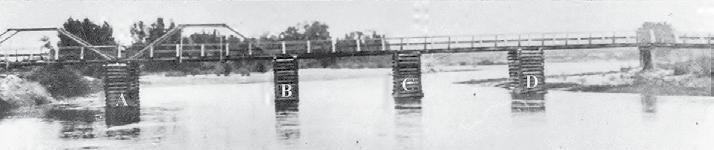
Source: USDA AMS Livestock, Poultry & Grain Market News, Torrington
National Sheep Summary As of April 10, 2026
Compared to last week slaughter lambs traded 10.00-20.00 higher and ewes firm. All sheep sold per hundred weight (CWT) unless otherwise specified. Slaughter Lambs: Choice and Prime 1-3: San Angelo: 50-60 lbs 386.00-460.00; 80-90 lbs 382.00; 90100 lbs 344.00.
Billings: No test.
Ft. Collins: 50-60 lbs 342.50-375.00; 60-70 lbs 345.00-365.00; 70-80 lbs 340.00-372.50; 90-100 lbs 355.00-380.00; 110-120130 lbs 315.00-355.00.
Sioux Falls: 60-50 lbs 415.00-425.00; 70-80 lbs 355.00-400.00; 80-90 lbs 360.00-405.00; 90-100 lbs 380.00; 100-110 lbs 322.00-395.00; 120-130 lbs 285.00; 130-140 lbs 270.00-275.00; 140-150 lbs 280.00-281.00; 150-160 lbs 240.00-270.00. Slaughter Ewes: Good 2-3: San Angelo: 149.00-185.00.
Billings: No test.
Ft. Collins: 115.00-180.00.
Sioux Falls: 120.00-170.00. Feeder Lambs: Medium and Large 1: San Angelo: No test.
Billings: No test.
Sioux Falls: 30-40 lbs 560.00; 40-50 lbs 480.00-525.00; 50-60 lbs 465.00-510.00; 60-70 lbs 395.00-435.00; 70-80 lbs 387.50390.00.
Ft. Collins: 40-50 lbs 380.00-410.00. Replacement Ewes: Medium and Large 1-2: San Angelo: No test.
Billings: No test.
Ft. Collins: No test.
South Dakota: No test.
Sioux Falls: No test.
Sheep and lamb slaughter under federal inspection for the week to date totaled 30,000 compared to 29,000 last week and 42,647 last year.
Source: USDA- CO Dept of Ag Market News Service, Greeley, CO
Wyoming Hay Summary
As of April 15, 2026
Compared to last week, bales of alfalfa grass and pellets sold steady. Demand was good. Quite a few people calling and looking for hay to purchase. Hay contacts are sold out of 2025 hay and are waiting to start the new crop hay probably the last week in May if every works out correctly. Irrigation water is the big topic on the hay calls. Some areas will have normal amounts of water and other districts are limiting the amount of water and the days to use it. Released on Monday, April 13, the state’s SNOTELs are reading 46% of median with a basin high of 88% and a basin low of 0%. Last year the state was at 91%, and at 97% in 2024. Lack of snow fall this year is what has put the halt on the irrigation water for this growing season. Hopefully good Ole Mother Nature will bring the rains to grow the grass, hay and replenish the water in lakes and reservoirs. Next report will the first part of June.
Source: USDA AMS Livestock, Poultry & Grain Market
Torrington
Montana Hay Summary As of April 3, 2026
Compared to last report(3-20-26): Hay sold mostly steady to 15.00 higher. Hay supplies across the state have tightened significantly. Lower quality hay saw a strong uptick in price as buyers search for feed to meet needs. Hay continues to be delivered along the highline for 215.00- 245.00 delivered. Spring rain and snow showers were scattered across the state over the past two weeks but moisture varied greatly by location. Hay is starting to be delivered in from North Dakota as supplies have tightened over the last few weeks. According to the drought monitor 65.58% of the state is in Moderate drought or worse, down 1.12% from 2 weeks ago. 21.19% of the state is in an Severe drought or worse, up 1.49% from 2 weeks ago. 3.96% of the state is in Extreme drought or worse, unchanged from 2 weeks ago. 0% of the state is in Expectational drought, unchanged from 2 weeks ago. Notably, 93.51% of the state is abnormally dry, up 1.09% from 2 weeks ago.
- Hay Conventional
South Dakota Hay Summary
As of April 10, 2026
Good demand for grass hay currently, light to moderate demand for alfalfa. Good interest from beef cattle operations looking to buy grass hay, not near the interest in buying alfalfa currently. Large dairy operations continue to feed haylage, which is keeping the alfalfa market under some pressure. Warmer temps and some rain in the forecast for the weekend and the start of next week. Good demand for corn stalks yet.
- Premium
-
Straw (Corn Stalk) Round
Source: USDA AMS Livestock, Poultry & Grain Market News, Worthing, SD
LOOKING FOR 5-6 DRIVERS 7 DAYS A WEEK FOR 2 RUNS FROM CASPER TO WORLAND, WY, $33.39/HOUR TO START: Must have CDL, pass background check and clean MVR. E-mail resumes to dingoboy6342@yahoo.com or call Matt, 801-641-4109 4/18

FRIDAY, MAY 1, 2026 5-9 P.M. Join GFWC Wyoming for an evening to celebrate local

NE. The main focus of the Cowboy/Pen Riders are spotting, pulling, diagnosing and taking cattle to the hospital and shipping fat cattle. This person will need to be a team player who is seeking a long-term position. You will have the opportunity to work with and learn from some of the best in the industry. We offer a benefits package that includes health insurance, dental, vision, 401(k), health savings, life insurance and paid vacation. Retention bonus offered to full-time employees. Incentives paid out at 6 months and 1 year of employment. If you are interested stop by and fill out an application or visit our website at Call Mike Faimon at 406-469-1585 or Davin Arnold 970-301-3098 for more information.
LOOKING FOR A FULL-TIME HAND who can irrigate and drive a tractor, references are a must. Call 307-754-5864 4/18
IMMEDIATELY SEEKING FULL-TIME FARM/RANCH
INDIVIDUAL FOR A REMOTE NORTHEAST WYOMING RANCH: The role supports the current foreman and works alongside to ensure smooth and efficient operation of livestock, haying, equipment and facility management. Applicant must have a strong agricultural background and a hands-on approach to problem solving and daily ranch work. This is a long-term position and offers a clear path to increased responsibilities, pay and leadership. Housing is provided. Must have a clean driving record. Please send resume with references and telephone number by mail or e-mail to: PeeGee Ranch, 1251 Lower Powder River Road, Arvada, WY 82831, pgranch@rangeweb. net. NO telephone calls 5/2
LOOKING FOR RANCH ASSISTANT PROPERTY MAN-
AGER: Full-time position for large ranch located in Park County, WY. Responsibilities include: Lawn care, irrigation, agricultural equipment maintenance and general residential, building and property maintenance. Salary range of $45$60K depending on experience. Living on property is required for employment. House and vehicle will be provided. Property is located 10 minutes from downtown Cody, WY. Position is available for immediate hire. Please send resumes to mgiliati@acpg.com 4/18

2035. $3,500 OBO. Call 307-532-0112, leave message 5/2



FEED TRUCK DRIVER AND COWBOY WANTED: Western Nebraska calf grow yard is looking for a self-starter capable of supporting and working with a feedyard team to ensure general maintenance and caretaking of livestock, equipment and facilities. Ability to take work direction and change priorities as needed. Valid driver’s license required, CDL would be a plus. Knowledge and prior experience in feedlot and farm work preferred. Pay negotiable based on experience, housing available. Duties may include but are not limited to: Feed truck driving and mechanical skills for basic feed truck/tractor maintenance; farming to include all aspects of haying and irrigation; facility maintenance, build electric fence, repair pens, welding, stock tank and water line work, clean pens, hauling manure, spraying weeds; assist with the care and processing of cattle/ pen riding. Send resume to P.O. Box 1248, Torrington, WY 82214, fax to 307-532-7899 or e-mail info@flagranchllc. com. Potential applicants with questions call 307-5327885 or 307-534-6259 4/18
SUPERIOR CONTRACTING LLC LOCATED IN WHEATLAND, WY, A FAST GROWING IRRIGATION COMPANY SERVICING PLATTE COUNTY, SOUTHEAST WYOMING AND SURROUNDING AREAS, IS IN SEARCH OF AN IRRIGATION TECHNICIAN SPECIALIZING IN THE INSTALLATION, maintenance and repair of precision agricultural irrigation equipment, primarily center pivots. One year minimum irrigation industry experience with certification. Proficient in technical knowledge of irrigation systems and troubleshooting along with system installation, assembly, diagnostic, repair, preventative maintenance and technology management. Able to work outdoors and operate heavy equipment. Must be able to perform labor-intensive tasks. Must be willing to work independently, possess excellent recordkeeping and have exceptional customer service skills. Must
SUPERIOR CONTRACTING LLC IS SEARCHING FOR AN EXPERIENCED HEAVY EQUIPMENT OPERATOR TO WORK REMOTE: Duties will include operating, maintaining and inspecting heavy construction equipment (e.g., excavators, bulldozers, loaders, backhoes, graders, cranes) to perform earthmoving, material handling, site preparation and related tasks safely, efficiently and according to project plans and regulatory requirements. Operator must read and follow work orders, site plans, grade stakes and instructions from supervisors or engineers. Report mechanical issues promptly and coordinate repairs with maintenance staff or vendors. Position equipment accurately using survey references, GPS or laser grade systems to meet project tolerances. Load/unload materials, secure loads and assist with rigging and signaling when required. Follow site safety plans and OSHA regulations and use PPE and operate equipment in accordance with manufacturer and company safety procedures. Communicate effectively with site crews, foremen and traffic control personnel and assist with site setup and cleanup. Maintain daily logs of hours, material moved and work performed. Participate in safety meetings and trainings. Strong situational awareness and commitment to safety. Good communication and teamwork skills. Comfortable working outdoors in varied weather and at construction sites. Possible overtime, early starts, or weekend work depending on project schedules. Valid driver’s license required and must pass a drug screen. Call 307-331-0257 or e-mail accounting@scllc19. com 4/25
RANCH HAND/GROUNDS
KEEPER: Full-time position at a family-owned ranch near Cody, WY and located in the Shoshone National Forest. Position entails lawn care, irrigation, heavy equipment operation, carpentry, equipment maintenance, building maintenance and overall residential and agricultural prop erty maintenance. Experience is welcome but will train the right candidate. The ideal candidate will be reliable; have a strong work ethic; be able to perform individually and with a team; be a self-starter and enjoy work ing outdoors. Benefits include health, with optional dental and vision; paid-time off and 401(k) with employer matching contri bution. For the right candidate housing on property is also available. Salary based upon previous experience. resumes to emilyb@collier groupoffice.com and cg1@ colliergroupoffice.com 5/2




AGRI-ONE FINANCIAL: Farm/ ranch and all commercial loans. RATES AS LOW AS 5%. We have been helping with all aspects of agricultural, commercial financing and management for years. LET US HELP YOU on



REGISTERED WYOMING BRAND FOR SALE: LSC, renewed to March 1, 2027. Call for pricing, 307-259-5485 5/9

CAUCASIAN SHEPHERD PUPPIES: Eight weeks old April 27. Good family and livestock guard dogs, $300. Text or leave a message, Ashley, 406-901-0565 5/9
PUPPIES FOR SALE: Border collie puppies, fourth generation working lineage, 16 weeks old. With some training. Three males and 1 female. $300. Call 307-2711009. To view photos, go to www. wylr.net in the classifieds 4/25
WANTED RECIP COWS: Must be open!! Two to 6 years old, Red Angus or Angus-based cows. For more information, call Corie Mydland, 406-8555598 (cell), Trans Ova Genetics, Joliet, MT 4/18
YEARLING BLACK ANGUS BULLS: AI sired by heifer bull Connealy Patent. Semen tested. Minatare, NE. Call Byron Miller, 303-818-8152, leave message 6/6
MYDLAND ANGUS RANCH: Yearling Angus bulls. Performance tested, EPDs available. Home raised. Call 406-5913404 or 406-855-5598 5/2
YEARLING ANGUS BULLS: These bulls are grown, not fattened, will get out and cover cows. Many will work on heifers. We will deliver. Call Joe Buseman, 605-351-1535 5/2
REGISTERED ANGUS
YEARLING BULLS: Breeding soundness, fertility tested and PAP tested. Ready to go to work. Call Paul at TAG Double H Cattle Co., Ten Sleep, WY, 307-690-4225 5/2




SALE * CHRISTENSEN RED
ANGUS * SALE: Registered, vaccinated and fertility tested bulls. We have a deep carcass, high ADG packaged with moderate to low birthweights available. Call 406-208-4315 or e-mail criters64@gmail.com 5/9
BEST LAST CHANCE SALE!!
LYTLE RED ANGUS is offering yearling bulls from our herd founded on 30+ years of selection for fertility, consistency and efficiency. Highly adaptable, our bulls have proven themselves from Arizona to New York state. Get your next bull through our online-only auction hosted by DV Auction. Opens April 27, closes May 1. Visit www. lytleredangus.com or call Zeb, 605-441-7658. To view photos, go to www.wylr.net in the classifieds 4/25
RED ANGUS HIGH-ELEVATION
YEARLING BULLS FOR SALE IN NORTHEASTERN UTAH:
Out of AI and bull-bred sires. Will be trich, semen tested and fed for free until April 15. $3,500/head. Bar Lazy TL Ranch, David, 435-828-1320, barlazytlranch@ gmail.com 6/13
SIMANGUS YEARLING BULLS FOR SALE BY PRIVATE TREA-
TY: Bulls priced for every budget. Bulls have GE EPDS, are homozygous polled, most are homozygous black. Bulls can be inspected at Dilka Cattle, pictures available by request. Bulls sired by BAS Money Maker, Gibbs Essential, Gonsior Batman and CCR Pounder. All bulls guaranteed for first breeding season. Information on the bulls may be requested by e-mail at thedilkas@aol.com or calling 970-396-8791 5/2
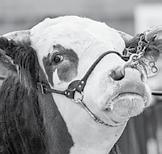
TWO-YEAR-OLD HEREFORD
BULLS: Canadian registered. Fertility checked. View photos at www.workingherefords.com Estermann Herefords, 308-3404159 or 308-963-4473 5/2
REGISTERED HEREFORD
BULLS FOR SALE: Overaged bulls to cover more cows! Videos, photos, EPDs and certificates available. Call Troy Rasmussen, TSR Cattle Co., 605-690-0100 5/2
REGISTERED YEARLING POLLED HEREFORD BULLS FOR SALE PRIVATE TREATY: Great dispositions. Suited for making the most efficient cow, the baldy. Heifer and cow bulls available. Call Lee, 402-984-0132 or Aaron, 308-249-3306 4/18
REGISTERED SIMMENTAL/ ANGUS YEARLING BULLS FOR SALE: Bulls out of some of the best AI bulls in the country. Including OMF Epic, Bridle Bit Recharge, Payroll and WHF Double Up. All bulls are out of high quality cows with great bloodlines. Bulls have been semen tested with great scrotal scores. $5,000$6,000. Call 801-722-9267 5/9

LOOKING TO LEASE A RANCH FOR APPROXIMATELY 150-200 HEAD OF COWS. Prefer area in Johnson and Sheridan counties. Call 307290-1643 4/25
FERRAT RANCH LIMOUSIN OFFERING 18-MONTH-OLD REGISTERED PUREBRED LIMOUSIN BULLS BY PRIVATE TREATY THROUGH THE END OF APRIL: Athletic, pasture/forage raised, fall born. Fertility and DNA tested. Fully guaranteed and ready for delivery. Catalog available upon request. Call John 406-949-7911 or Samantha 406-949-0869, e-mail ferratranch@gmail.com 4/25
PARK COUNTY, WY RANCH NEAR CODY, WY IS AVAILABLE FOR A LONG-TERM LEASE: The ranch has over 50,000 acres and supports an irrigated hay base with BOR water rights. Carrying capacity is 700 animal units year-round with hay production. Willing to split the hay ground and grazing. Please e-mail Melanie Giliati at mgiliati@acpg.com for details 4/25
FOR SALE THREE 2-YEAROLD GELDINGS, grade horses, all half brothers. These young geldings have had lots of groundwork and rode in the round pen. Ponied through cows. Gentle, willing and ready to continue their training. $2,700 each OBO. Call for more details, 605-350-0495 5/9
SPRING’S HERE!! BOOT UP AT MOSS SADDLES, BOOTS AND TACK!! $AVE ON BOOTS!!! HONDO, BOULET, JUSTIN WORK BOOTS, TWISTED X (boots and shoes) and more!! Something for everyone!! GREAT selection of GIFTS for GRADUATION and MOTHER’S DAY!! WE CAN ship!! Shop Moss Saddles, Boots and Tack, 4648 West Yellowstone Highway, Casper, WY 307-472-1872. Our family serving yours for 50 years!! Check us out on Facebook or our website 4/18
OPEN POLLINATED SEED CORN out produces hybrid for silage and grazing quality grain, $69/bushel +S/H. Call 217-8573377 or text cell 217-343-4962, visit website www.borriesopenpollinatedseedcorn.com 4/18
BROME GRASS HAY FOR
SALE: 750 large round bales, 2024 and 2025, 10 miles from Miller, S.D., $130/ton, net wrapped, good quality. Call Tom 605-870-0719 or Tyler 605-871-3878 5/9
ALFALFA HAY FOR SALE: 2025 and 2024, various RFV, various protein and various prices. Tested by Dairyland Labs. Call 605-5308089, Miller, S.D. 5/2
ALFALFA, 3x3 bales, shed stored. ALSO, CERTIFIED TRITICALE STRAW, long stem round bales, $130/bale. ALSO, TRITICALE GRAIN $0.35/lb. bulk or totes. Farson, WY. Call 307-3500350 5/2
HAY FOR SALE: 2025 grass/ alfalfa, first and second cutting alfalfa, millet, haybet barley and CRP hay. ALSO, 2025 GRINDING HAY also available. All in netwrapped round bales. Semi load delivery available. Call for pricing, ask for Klint, 701-290-4418, if no answer, send a text or keep trying 4/25
CERTIFIED WEED-FREE
PURE ALFALFA HAY: 2025 third and first cutting available in small squares, averaging 70-80 lbs. Will load trucks and any open trailer. MONIDA OATS: $16/cwt. Combine run, great for seed or feed. Will auger into truck, trailer or large totes/ag bags. Located between Powell and Cody, WY. Certified scales on site. Call or text Knopp Farms for details, 307-254-0554 5/23
BARLEY STRAW: Certified weed-free small squares, $4/bale. ALSO, 5x6 round bales, $125/ton. GRAIN OATS, wheat and barley, $20/cwt. Greybull, WY area. Call 307-762-3878 or 307-899-4714, leave message 4/18


HOME RAISED, SIX-YEAROLD JERSEY MILK COW: Has mostly been hand milked but works well as a nurse cow. Started lactation March 18 and is producing 5 gallons per day, super gentle. $5,200, Hulett, WY. Call Jerry, 307-467-5343, leave a message 4/18
FAITHFUL FEEDERS: Heifer development, backgrounding and grass calf prep. Billings, MT. Call Ryan, 406-696-0104 4/10 CUSTOM FEEDING AND FINISHING FOR CATTLE AND SHEEP. Cactus Hill Ranch Company, Fort Collins, CO. Contact AJ Nelson, 970-3728273 5/2

SUMMER PASTURE WANTED FOR YEARLINGS: Seeking summer grass for 2026. For 500-1,500 head. Wyoming, Colorado, Nebraska, South Dakota. Prefer long-term potential, competitive rates offered. Call Jon, 831-240-5795 TFN
CUSTOM BOOT MAKER: Boot and shoe repair, service nationwide. Shock Boot Repair, 307680-9219, Gillette, WY 4/18

WEANER PIGS FOR SALE. ALSO, butcher hogs. Located in Powell, WY. For more information, call 307-271-1014 1/16
MERRITT CATTLE POT: Good ranch trailer. Call 307855-6739 4/18
2018 DODGE RAM 3500: 4x4, crew cab, 6.4 Hemi. Gooseneck hitch, 94,000 miles. Covercraft seat covers, WeatherTech floor mats. New transmission. Call Dan, 307250-2178 4/18

LODGEPOLE OUTDOOR FURNACES, 307-223-2046. Your authorized Central Boiler Dealer. Get your outdoor wood furnace today!! Efficient wood heat. Heat multiple buildings. Invest in your heating, don’t just pay for it!! See us at www.cb.lodgepoleproducts. com!! 4/25

SALE: Landoll 6230 36’ rock flex disc with 3 bar mulcher. Phillips 4305 43’ rotary harrow. Sunflower 33’ cushion gang disc with 3 bar mulcher. 24’ portable ground hay/bale feeder. Vermeer BP 7000 bale processor with hydraulic deflector. Gehl 1410 manure spreader, 410 bushel with slop gate, double floor chains, tandem axle. Burns portable loading chute. Miller Pro 18’ chuckwagon with tandem running gear. 2022 Kenworth T680 day cab semi, PACCAR engine, automatic transmission, air ride, aluminum wheels, 486,242 miles, very nice. John Deere 714A and 716A chuckwagons with John Deere tandem running gear. H&S 7+4 16’, 20’ and 24’ chuckwagons with bunk feeding extensions and tandem 14 ton running gear. J&M 385 gravity box with 12 ton gear, truck tires. 12’ and 14’ HD box scrapers with tilt. All in very nice condition!! Call 605-999-5482 5/2

FEED/GRAIN FOR SALE: Alfalfa, cane and millet hay. Large squares and rounds. Semi loads only. Will deliver. Call 970-227-2760 5/9
PREORDER YOUR 2026 NEW CROP ALFALFA HAY AT VALLEY VIDEO HAY MARKETS, LLC: Representing the best producers in eastern Wyoming and western Nebraska. Call Barry McRea, 308-235-5386, www.valleyvideohay.com 5/2

MONTANA RAILROAD SERVIC-
ES: Railroad ties, switch ties and other railroad materials for fencing and landscaping. Best pricing and quality in the region. Call 406-9623514, Silesia, MT. Located 10 miles south of Laurel, MT (off of Clarks River Rd., the old highway). Visit our website at www. mtrrservices.com 4/18
REELFAST ELECTRIC FENCE
REEL: Messing with electric fence can be a hassle, but it doesn’t have to be… ReelFast runs off an 18 volt drill with 1/2 mile spools. Saves you time and fits on any hitch. Located in all Bomgaars stores. Contact us at ReelFast!! Call Monica Williams at 308750-4688 or visit www.electricfencereel.com 5/2
LODGEPOLE PRODUCTS, 307-742-6992, SERVING AGRIBUSINESSES SINCE 1975!! Treated posts, corral poles, buck-and-rail, western rail, fence stays, rough-sawn lumber, bedding. SEE US at www.lodgepoleproducts.com and click our “Picking A Fence Post” tab to see why folks choose our posts!! TFN
PIPE FOR SALE!! 2 7/8”, 3 1/2” tubing, 4” drill pipe, 4 1/2” casing, 5” casing, 7” casing. Rods 3/4”, 7/8” and 1” located in Montana, can ship anywhere. Call Mike, 602-758-4447. To view photos, go to www.wylr.net in the classifieds 5/30
WE WILL PICK UP SCRAP IRON: On-site processing and removal. Receive $$$ top dollar $$$ for your junk!! Call for details, Pacific Steel and Recycling, 307-234-6006. Casper/ Central Wyoming 4/18
PRAIRIE DOG PROBLEMS? Free extermination! Call 920609-8927 5/2
• Reinke center pivot sales and field design •
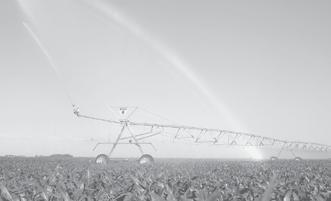


Irrigation Systems
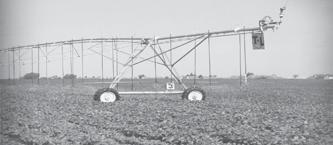
The choice is simple. Big Horn Truck and Equipment Manderson, WY rairdenjlw@tritel.net • 800-770-6280 USED IRRIGATION PIVOTS FOR SALE, www.zimmag.com ● 2014 Zimmatic 8500 7 tower 1,286’, 5,132 hours ● 2020 Zimmatic 8500 7 tower 1,286’, 500 hours ● 2013 Valley 7000 7 tower 1,336’, 3,882 hours. Call 402910-3236 4/18
collar annually to $45 per collar per year for the duration of the three-year program.
SCLT Director of Conservation and Resource Management John Graves says the project is about “putting a tool in the hands of local producers and seeing if it actually works for them on the ground.”
“We’ve heard from a lot of folks who are interested but just can’t make the numbers work at their scale,” says Graves in the press release. “This pilot is designed to take the first step with them and reduce some of the risk.”
Virtual fencing
In the fall of 2025, SCLT launched a local virtual fencing pilot project for larger producers in Sheridan County which has since
brought the technology to nearly 1,000 head of cattle in the area.
The press release states the small producer project will build on this work with a focus on monitoring how the technology holds up across smaller, more fragmented areas of ground.
SCLT says virtual fencing has the potential to benefit cattle producers and the environment alike, with potential benefits ranging from reduced time spent on building fence and checking cattle to improving grazing distribution and protecting sensitive ecological areas without installing permanent infrastructure.
“The balance between production and stewardship is something our producers already care about,” Graves
PREMIER PIVOT AND GRASS
PASTURE IN GOSHEN COUNTY, WY: This well designed 368+ acres hay and pasture property features an 86+ acre Reinke center pivot contiguous to native grass pasture with a stock well. The entire property is fully enclosed with perimeter fencing, with the center pivot separately fenced. Pivot is planted to alfalfa. Property can be split. $759,000. HIGHWAY 92 HIGH PRODUCTION FARM: Prime 200+ acre farm featuring 2 Zimmatic center pivots, excellent soils, 2 older, livable homes and 191 acres of reliable water rights from the Goshen Irrigation District. Unbeatable location along Highway 92, 6 miles south of Torrington, WY, for convenient access. A strong producer and solid investment at $1,250,000. Pictures at www. buyaranch.com. Call Casey Essert, Land Broker, 307-5321750 TFN
ANTLER MARKET STEADY TO STRONG!!! MAY 8-9 PETSKA FUR WILL BE BUYING ALL GRADES OF ANTLER AND LATE SEASON FUR IN THE FOLLOWING TOWNS AND LOCATIONS: MAY 8: Ft. Bridger 6:15-6:30 a.m., Cash Store; Evanston 7:10-7:40 a.m., Prairie Inn; Kemmerer 8:409 a.m., Ham’s Fork Station; Cokeville 9:45-10 a.m., Flying J Truck (drive thru, call Greg); Afton 11-11:30 a.m., Tractor Supply; Thayne 11:45 a.m.-12 p.m., Farmer’s Feed (drive thru, call Greg); Alpine 12:30-1 p.m. Grey’s River Saloon; Hoback Jct. 1:30-1:50 p.m., Hoback Market/Exxon (drive thru, call Greg); Bondurant 2:10-2:20 p.m., Elk Horn Bar (drive thru, call Greg); Bondurant 2:30-2:45 p.m., Post Office (drive thru, call Greg); Daniel 3:15-3:30 p.m., The Den (drive thru, call Greg); Pinedale 3:45-4 p.m., Gannett Sports (drive thru, call Greg); Big Piney 4:40-5 p.m., Public RR/ Visitor Info. Parking (drive thru, call Greg); La Barge 5:30-5:45 p.m., All American Fuel (drive thru, call Greg); Green River 7-7:20 p.m., Hitching Post (drive thru, call Greg); Rock Springs 7:40-8:10 p.m., WY Wool Warehouse; Wamsutter 9-9:15 p.m., Conoco (drive thru, call Greg). MAY 9: Rawlins 6-6:15 a.m., Tractor Supply; Saratoga 7-7:30 a.m. Saratoga Feed & Grain; Elk Mountain 8:10-8:30 a.m., Conoco on I-80 (drive thru, call Greg); Hanna 8:45-9 a.m., Hanna Market (drive thru, call Greg); Medicine Bow 9:10-9:30 a.m., JB’s (drive thru, call Greg); Rock River 9:40-10 a.m., Rancher’s Supply (drive thru, call Greg); Laramie 10:50-11:30 a.m., West Laramie Fly Shop. For more information, call Greg, 308-7500700 or visit www.petskafur. net 5/2
says. “This just gives them another way to do both at the same time.”
SCLT emphasizes the pilot program is a learning project, and while SCLT will provide guidance and support, producers will remain in control of using the technology to manage cattle movement and make day-to-day decisions on their operations.
“If the project works as intended, it will prove smaller producers can use the same tools as larger operations to save time, improve grazing and care for the land,” the press release states. “Just as importantly, it will give producers the chance to decide for themselves whether it’s worth adopting long-term.”
How to participate
Small producers operating in Sheridan County who may be interested in participating in the pilot program are encouraged to visit the SCLT website at sheridanclt. org/small-producer-virtualfence-pilot-program/ for more information or to fill out an application.
SCLT will choose up to 10 producers to participate
ANTLER MARKET STEADY TO STRONG!!! MAY 13-15 PETSKA FUR WILL BE BUYING ALL GRADES OF ANTLER AND LATE SEASON FUR IN THE FOLLOWING TOWNS AND LOCATIONS: MAY 13: Newcastle 7:10-7:30 p.m., Voelker’s Body Shop. MAY 14: Newcastle 6:30-6:50 a.m., Voelker’s Body Shop; Upton 7:20-7:40 a.m., Joe’s Grocery (drive thru, call Greg); Moorcroft 8-8:20 a.m., The Coffee Cup (drive thru, call Greg); Sundance 8:45-9:30 a.m., Rapid Stop; Beulah 9:5010:10 a.m., Truck Stop (drive thru, call Greg); Spearfish, S.D. 10:20-10:50 a.m., Butcher Block (sticking with old location on fairgrounds road); Belle Fourche, S.D. 11:20 a.m.-11:50 a.m., Runnings (Old Belle Inn parking lot); Aladdin 12:2012:50 p.m., General Store (drive thru, call Greg); Hulett 1-1:30 p.m., Tower Valley Ag Supply; Alzada, MT 2-2:20 p.m., B&J Convenience (drive thru, call Greg); Gillette 7-7:30 p.m., Rocky Mountain Sports and Howard Johnson Motel room 143 7:45-8:15 p.m. MAY 15: Gillette 5:45-6 a.m., Rocky Mountain Sports (drive thru, call Greg); Wright 6:20-6:50 a.m., Rest Area (drive thru, call Greg); Midwest 7:50-8:10 a.m., Sinclair Truck Stop (drive thru, call Greg); Kaycee 8:35-9 a.m., Sinclair Truck Stop; Sheridan 10:30-11 a.m., Sportsman’s Warehouse; Buffalo 11:45 a.m.-12:15 p.m., Good 2 Go; Ten Sleep 1:50-2:20 p.m., Pony Express; Hyattville 3-3:20 p.m., Paint Rock Processing (drive thru, call Greg); Manderson 3:40-3:50 p.m., Hiway Bar (drive thru, call Greg); Basin 4-4:20 p.m., Overland Express Mart (drive thru, call Greg); Greybull 4:40-5 p.m., Overland Express Mart (drive thru, call Greg); Lovell 5:40-6 p.m., Good 2 Go (drive thru, call Greg); Byron 6-6:15 p.m., Cardtrol Station (drive thru, call Greg); Powell 6:30-6:50 p.m., Murdoch’s (drive thru, call Greg); Cody 7:30-7:50 p.m., Nature’s Design Taxidermy; Meeteetse 8:30-8:45 p.m., on street in front of firehouse (drive thru call, Greg); For more information, call Greg, 308-750-0700 or visit www. petskafur.net 5/9
ANTLER MARKET STEADY TO STRONG!!! MAY 16-18 PETSKA FUR WILL BE BUYING ALL GRADES OF ANTLER AND LATE SEASON FUR IN THE FOLLOWING TOWNS AND LOCATIONS: MAY 16: Worland 7:30-8 a.m., Coop One Stop; Thermopolis 8:50-9:20 a.m., Renegade Guns; Shoshoni 10:10-10:30 a.m., Fast Lane/Exxon (west of truck diesel pumps, (drive thru, call Greg); Riverton 11-11:45 a.m., Vic’s Body Shop (behind the Dollar Tree); Hudson 12:10-12:20 p.m., Wyoming Custom Meats (drive thru, call Greg); Lander 12:50-1:30 p.m., Pit Stop; Jeffrey City 2:30-2:45 p.m., Split Rock Cafe (drive thru, call Greg); Muddy Gap 3-3:10 p.m., (drive thru, call Greg); Alcova 3:50-4 p.m., Sloanes General Store (drive thru, call Greg); Casper 4:30-5:15 p.m., Wagner Outdoor Sports; Glenrock 5:45-6 p.m., east exit on I-25 (drive thru, call Greg); Douglas 6:30-6:45 p.m., Douglas Feed. MAY 17: Douglas 6:30-6:45 a.m., Douglas Feed (drive thru, call Greg); Orin Junction 7-7:10 a.m., Fast Stop (drive thru, call Greg); Lost Springs 7:30-7:40 a.m., truck pull off 1 mile east (drive thru, call Greg); Manville 8-8:10 a.m., Truck Stop (drive thru, call Greg); Lusk 8:30 a.m.-9 a.m., Decker’s Grocery; Hartville 9:45-10 a.m., Miner’s & Stockman’s Restaurant (drive thru, call Greg); Guernsey 1010:30 a.m., Crazy Tony’s; Wheatland 11-11:30 a.m., Wheatland Travel Center; Chugwater 1212:15 p.m., Stampede Saloon (drive thru, call Greg); Cheyenne 12:45-1:15 p.m., Tractor Supply; Archer 1:40-1:50 p.m., Home on the Ranch Processing (drive thru, call Greg); Carpenter 2:10-2:30 p.m., Antelope Truck Stop (drive thru, call Greg); Pine Bluffs 2:45-3 p.m., Sinclair (drive thru, call Greg); LaGrange 5-5:20 p.m., Bear Mtn. Stage Stop; Hawk Springs 5:30-5:45 p.m., Longbranch Saloon (drive thru, call Greg); Yoder 5:45-6 p.m., Yoder Store (drive thru, call Greg); Lingle 6:30-6:45 p.m., Ty’s Pit Stop. MAY 18: Torrington 6:50-7:20 a.m., Insight Precision Arms; Scottsbluff, NE 8:30-9 a.m., Murdoch’s. For more information, call Greg, 308-7500700 or visit www.petskafur. net 5/9

in the project, and selected producers will be notified following review.
Collar deployment is anticipated to occur in late July through early August, with exact timing coordinated directly with participants based on individual schedules. Since this is a working
pilot, SCLT reminds prospective partners to expect involvement with initial setup, including assisting with collaring cattle and familiarizing themselves with the virtual fencing system.
In addition, the organization says ongoing feedback will also be an impor-
tant part of the project as SCLT works alongside producers to get a feel for what works best in real-world conditions.
Grace Skavdahl is the editor of the Wyoming Livestock Roundup. Send comments on this article to roundup@wylr.net.
The annual Yonts Water Conference, held on April 8, packed the auditorium and overflowed into side rooms, with 270 attendees at the Panhandle Research Extension and Education Center in Scottsbluff, Neb.
The crowd of Nebraska and Wyoming ag producers and irrigation stakeholders in the North Platte River Valley gathered to receive updates on snowpack and runoff conditions, reservoir carryover, tunnel replacement progress and resources and options from the U.S. Department of Agriculture’s (USDA) Risk Management Agency (RMA).
Snowpack and runoff estimates
The U.S. Bureau of Reclamation (BuREC) provided estimates for snowpack and runoff for the North Platte River Basin.
The 2026 forecasted runoff and inflow for the North Platte Project – including the Pathfinder and Guernsey reservoirs – is approximately 550,000 acre-feet. This number includes water ownership and carryover of 340,000 acre-feet in both reservoirs.
The 550,000 acre-feet of water is split between the Pathfinder Irrigation District, Goshen Irrigation District and Gering-Fort Laramie Irrigation District. The amounts each district will receive will depend on the final estimated forecasts from BuREC and on each district’s carryover amounts.
Other irrigation districts in the North Platte River Valley may have some storage water carryover at Glendo and rely on natural-flow water rights.
The average runoff and inflow is around 891,000 acre-feet. The snowpack and runoff started approximately 30 days earlier than normal, with a snow water equivalent approximately nine to 10 inches less than normal. North Platte River Basin snowpack is at 39 percent of normal at this time.
Currently, Pathfinder Reservoir, which is 343,194 acre-feet full, and Seminoe Reservoir, which is 323,363 acre-feet full, are each 32 percent full. Glendo Reservoir, at 349,607 acre-feet, is 71 percent full.
Water allocations
Water allocations are expected for the 2026 growing season. The trigger amount for a forecasted allocation is a supply of less than 1.1 million acre-feet.
“We have received interest from irrigation districts regarding water loans,” said BuREC Wyoming Office Water Scheduler George Finnegan. “We have approached Wyoming’s Seminoe and Alcova reservoirs – the Kendrick Project – and they have agreed to work with us.”
Irrigation districts would need to notify BuREC of their interest in a water loan, the requested water quantity and the payment terms. The water loan cannot exceed 100,000 acre-feet, and the loan request must
be approved by the CasperAlcova Irrigation District, the state of Wyoming and BuREC, and a National Environmental Policy Act review must be completed.
The cost has yet to be determined, there is no carryover and loaned water must be repaid to the CasperAlcova Irrigation District prior to 2027 water delivery.
The potential for a call on the river by the senior water right holders exists, and the details of the call would have to be worked out by Nebraska and Wyoming.
Duration and timing of water deliveries will take place will be determined by irrigation districts at a later date.
Many of the producers at the meeting are also waiting on the irrigation districts’ decisions. Given the current drought, producers are hard-pressed to make agronomic decisions for their operations.
“Well, it sure looks like we’re in a situation where we’re not going to be allowed a lot of irrigation water,” said Doug Harimon, Scottsbluff farmer and crop adjuster. “It is getting pretty dire. The problem is our ground is so dry right now getting the crop started is an issue. Even if we have 40 to 50 days of water, we will need it just to get the crop up.”
Other conference highlights Nebraska Extension personnel provided information on nitrogen application rates, amounts and timing to help reduce over-application and avoid groundwater contamination.
The conference also highlighted research on deficit irrigation for area crops to producers, should there be limited water supplies this growing season.
Field specific evapotranspiration for sugarbeets, corn and dry beans for irrigation water application management can be found at go.unl.edu/o4uc. The free ACREE app is a mobile irrigation-scheduling tool that does not require soil-moisture sensors.
Representatives from the Gering-Fort Laramie Irrigation District and HDR Engineering provided an update on the replacement of Tunnel No. 2 on the Goshen/GeringFort Laramie Irrigation District’s main line canal.
New entrances and exits for the tunnel are being constructed for the digger shield to commence tunnel replacement starting in the fall of 2026.
The two affected irrigation districts have secured the funds to replace both tunnels, thanks to efforts by Nebraska and Wyoming legislative representatives and BuREC.
USDA RMA representatives outlined programs available to producers and answered questions about potential scenarios producers may encounter with the expected water shortage in the North Platte River Valley.
Local Meteorologist Don Day provided the spring and
early summer weather outlook to wrap up the conference.
Gary Stone and John Thomas are Nebraska Extension water and crops educators, Jessica Groskopf is a Nebraska Extension agricultural economics cropping systems educator, Dr. Xin Qiao is the Nebraska Extension water irrigation specialist and Chabella Guzman is a communications specialist at the University of Nebraska-Lincoln’s Panhandle Research, Extension and Education Center. They can be reached by visiting extension.unl.edu
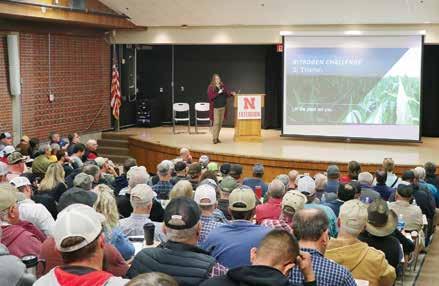
Annual conference


by Lee Pitts Spying Eyes
I hate George Eastman and his darned cameras.
Although French Scientist Joseph Nicéphore Niépce is credited with having invented the first camera in 1826, Eastman was the sicko one could say “developed” the first commercially successful camera in 1888.
Some people called his invention a “roll film box,” but Eastman called it Number One Kodak and its successors have tormented me my entire life.
In order to get photos from Eastman’s camera, a person had to send the camera containing the film to Rochester, N.Y., where the film was developed, prints were made, the camera was loaded with new film and returned, along with the photos.
So, one can understand why the sighting of a camera back then was a rare occurrence.
Fast forward to today, and a person can hardly turn around without having their picture taken. For an ugly guy like me who has always
hated having his picture taken, one can imagine why I spit on the grave of George Eastman.
The eyes are everywhere.
Cameras take your picture if you run through an orangereddish light, and the cops send you a ticket in the mail.
A guy can’t even go into Victoria’s Secret to buy a birthday present for his wife without being watched by a camera.
A person can’t run through their own house half naked after leaving their manure-stained clothes in the mudroom as they head for the shower without someone taking a picture which will appear on some sicko’s YouTube page and get a million views.
People aren’t even safe from spying eyes out in the boonies, as some animal rightists with a drone will take a photo of them castrating a bull or spurring their horse.
Sure, I know all of these cameras leering at us can be used for good.
I know Ring cameras have been used to track assassins and arsonists and people can see who is stealing their Amazon packages from miles away, but I’m not sure the benefits outweigh the loss of our freedom and privacy.
I’ve been in embarrassing predicaments before and I’m sure you have too where the last thing you wanted was to have someone catch a “Kodak moment” – like the time I got bucked off the kid’s horse.
They even have cameras now in the halls of hospitals, and I dread being photographed by some peeping Tom while I’m wearing one of those hospital gowns with the gaping hole in the back.
How many prints does a person want of themselves with their arm fully inserted into a cow’s rectum, dragging a calf to the fire or trying to eat one of those six patty hamburgers?
I was in Farm Supply the other day trying to find a new jacket for my wife and I held a frilly one up to my chest to see how big it was, and I’m quite confident someone snapped a photo of me trying on women’s wear which they’ll use to blackmail me.
The main thing I worry about is being caught on camera doing something that will land me in the hoose-
gow. I’m not talking about robbing a bank, but what if I’m caught on film standing next to shady characters like my congressman, banker or a cow buyer?
Will the Environmental Protection Agency fine me if some eye in the sky takes a photo of me accidentally spilling a thimble full of diesel on the ground or peeing on an endangered tree when I’m far from the nearest facilities?
Will I be shunned if I’m caught eating chicken, putting recyclables in my regular trash or shooting pool when I should have been going to church?
The idea of cameras everywhere would be a lot more palatable to me if they were placed in the smokefilled backrooms catching congresspersons being paid off by lobbyists or cop cameras were attached to wolves so we’d have photos of them in the act of killing lambs or munching on a baby calf.
I fear the day when I’m using the Porta Potty at a bull sale and one of my traitorous traveling comrades sees the opportunity for a photo op, so he opens the door and catches me with my pants down around my ankles and he says, “Say cheese,” and that photo will be on TMZ or all over the internet by nightfall.
On April 9, Gov. Mark Gordon, Utah Gov. Spencer Cox, New Mexico Gov. Michelle Lujan Grisham and Colorado Gov. Jared Polis released a statement on the proposed draw down of Flaming Gorge and other upper basin reservoirs.
“This is an unprecedented year on the Colorado River, and likely will be one of the worst on record. A dry year like this reminds us of why it is critical that all who rely on this resource learn to live within its means and adapt our uses accordingly,” the governors begin.
“The Upper Division States of Colorado, New Mexico, Utah and Wyoming are actively and strictly regulating water uses. Because of such diminished runoff, existing state laws in the Upper Division States require water users to face cuts to water rights dating back to the 1800s. These cuts are mandatory, uncompensated and will have significant impacts on water users, including Upper Basin Tribes and local economies,” they state.
“It is critical any releases made by the federal government from Flaming Gorge and other upstream reservoirs are in compliance with existing agreements, particularly the 2019 Drought Response Operations Agreement between the Bureau of Reclamation and the Upper Division States and governing law and done for the purpose of protecting Lake Powell,” they continue. “We must have a clear understanding of how these proposed releases will effectively protect elevations at Lake Powell. Once the releases conclude, we expect all water released from Flaming Gorge and other upstream reservoirs will be fully recovered.”
“Further, any releases must be appropriately sized. Years like this one remind us appropriate water storage helps us survive the dry years, and we must be prepared not only for this year but future dry years, as well as average years,” they add. “As we continue to comply with commitments to our water users and the Law of River, we recognize the impacts of water shortages and water releases from Upper Basin reservoirs on local communities – not only related to future water supply availability, but also how they affect jobs and local recreational and other economies. We recognize the need to live within the available supply and expect other communities to do so as well.”
1065# $286.00 LANDER 16 Heiferette, 1053# $285.00
8 Heiferette, 1078# $279.00 12 Heiferette, 1107# $274.00 RIVERTON 8 Heiferette, 1190#
UT 4 Steer, 506#
616#
590#
UT
Steer, 558#
Steer, 550#
PINEDALE 2 Steer, 572#
BASIN 1 Steer, 570#
KINNEAR
139 Steer, 630#
WOODRUFF, UT 15 Steer, 612# $480.00
MOUNTAIN VIEW
11 Steer, 585#
RANDOLPH, UT
4 Steer, 661#
KINNEAR
27 Steer, 712#
WOODRUFF, UT
17 Steer, 694#
$468.00
$440.00
$419.50
$414.00
FORT BRIDGER 11 Steer, 743# $390.00 HEIFERS
COKEVILLE
4 Heifer, 396# $527.50
CRAIG, CO 3 Heifer, 406# $522.50
MOUNTAIN VIEW 4 Heifer, 418# $507.50
RANDOLPH, UT
BASIN
11 Heifer, 465#
$497.00
2 Heifer, 470# $490.00
CRAIG, CO 4 Heifer, 457# $482.50
FARSON 7 Heifer, 490# $473.00
COKEVILLE
12 Heifer, 518# $462.50
MOUNTAIN VIEW 15 Heifer, 528# $455.00
RANDOLPH, UT 7 Heifer, 569#
PINEDALE 5 Heifer, 602#
BASIN 3 Heifer, 596#