WAIC Bookmark and Beyond winners highlighted Page 8
On March 27, the Environmental Protection Agency (EPA) issued new guidance regarding diesel emission systems, removing a longstanding requirement for urea quality sensors in diesel exhaust fluid (DEF) sys-
Quick Bits
Snow Report
In the 22nd snow report for Water Year 2026, the state’s snowpack telemetry data reads 41% of median, with a basin high of 84% and a basin low of 2%. Last year, the state was at 69% and at 108% in 2024. The report and a map displaying basin snow water equivalent percentages of median for the state may be found at wrds.uwyo.edu/ wrds/nrcs/nrcs.html
Annual Rodeo
The 38th Annual Overland Stage Stampede Rodeo will take place in Green River June 5-6. Gates will open at 6 p.m. and the performance will start at 7 p.m. Entries open on May 28, and entry fees are $125 per person. To enter, call Wade Durham at 406581-7223. Tickets can be purchased in advance at the Green River Chamber of Commerce, the Rock Springs Chamber of Commerce or online at rodeoticket.com. Tickets purchased in advance cost $8 for adults and $4 for youth and seniors. Tickets can also be purchased for $10 at the gate for adults or $5 for youth and seniors. For more information, call 307-872-0514.
Heat Webinar
The public is invited to join the National Weather Service (NWS) and Centers for Disease Control and Prevention for a free public webinar titled “Preparing for Extreme Heat: The Latest Guidance for the 2026 Heat Season” on May 18 from 12-1:30 p.m. Topics will include the NWS’s latest heat safety graphics; a deep dive into experimental HeatRisk; an introduction to the new Probabilistic HeatRisk Prototype; a review of other heat tools such as heat index, wet bulb globe temperature and the Heat and Health Tracker and an interactive question and answer session. For more information or to register, visit register.gotowebinar.com/register/ 7859632826776067926
tems and allowing manufacturers to rely upon nitrogen oxide (NOx) sensor technology instead.
A March 27 EPA press release states the updated guidance is part of the association’s efforts to address
nationwide concerns from farmers, truckers and other diesel equipment operators regarding sudden speed losses and shutdowns caused by DEF sensor failures.
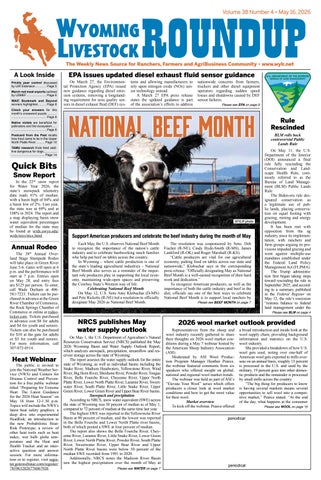
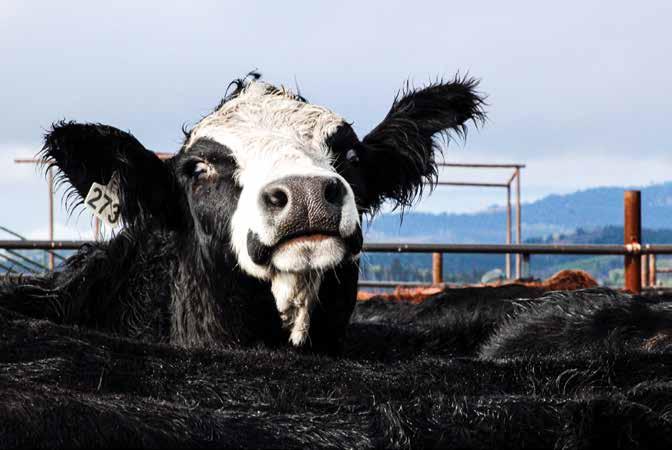
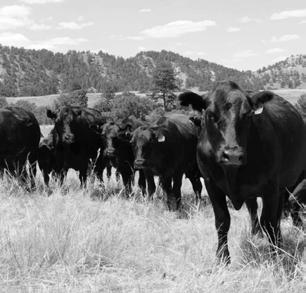
NATIONAL BEEF MONTH
Support American producers and
Each May, the U.S. observes National Beef Month to recognize the importance of the nation’s cattle industry and to celebrate hardworking ranch families who help put beef on tables across the country.
In Wyoming – where cattle production is one of the state’s leading agricultural industries – National Beef Month also serves as a reminder of the important role producers play in supporting the local economy, maintaining wide-open spaces and preserving the Cowboy State’s Western way of life.
The resolution was cosponsored by Sens. Deb Fischer (R-NE), Cindy Hyde-Smith (R-MS), James Lankford (R-OK) and Roger Marshall (R-KS).
“Cattle producers are vital for our agricultural economy, putting food on tables across our state and nationwide,” Klobuchar says in the corresponding press release. “Officially designating May as National Beef Month is a well-earned recognition of their hard work and dedication.”
Celebrating National Beef Month
On May 12, U.S. Sens Amy Klobuchar (D-MN) and Pete Ricketts (R-NE) led a resolution to officially designate May 2026 as National Beef Month.
To recognize American producers, as well as the importance of both the cattle industry and beef in the diet, officials say one of the best ways to celebrate National Beef Month is to support local ranchers by
NRCS publishes May water supply outlook
On May 1, the U.S. Department of Agriculture’s Natural Resources Conservation Service (NRCS) published the May 2026 Wyoming Basin and Water Supply Outlook Report, which analyzes snowpack, precipitation, streamflow and reservoir storage across the state of Wyoming.
The report assesses the water supply outlook for the entire state of Wyoming, as well as individual basins including the Snake River, Madison Headwaters, Yellowstone River, Wind River, Big Horn River, Shoshone River, Powder River, Tongue River, Belle Fourche River, Cheyenne River, Upper North Platte River, Lower North Platte River, Laramie River, Sweetwater River, South Platte River, Little Snake River, Upper Green River, Lower Green River and Upper Bear River basins. Snowpack and precipitation
According to NRCS, snow water equivalent (SWE) across the state of Wyoming was 38 percent of median as of May 1, compared to 72 percent of median at the same time last year.
The highest SWE was reported in the Yellowstone River Basin at 90 percent of median, and the lowest was reported in the Belle Fourche and Lower North Platte river basins, both of which posted a SWE at four percent of median.
The report also shows the Belle Fourche River, Cheyenne River, Laramie River, Little Snake River, Lower Green River, Lower North Platte River, Powder River, South Platte River, Sweetwater River, Upper Bear River and Upper North Platte River basins were below 50 percent of the median SWE recorded from 1991 to 2020.
Additionally, NRCS notes the Madison River Basin saw the highest precipitation over the month of May at
Representatives from the sheep and wool industry recently gathered to share their thoughts on 2026 wool market conditions during a May 7 webinar hosted by the American Sheep Industry Association (ASI).
Moderated by ASI Wool Production Program Manager Heather Pearce, the webinar featured comments from six speakers who offered insight on global, national and regional wool market trends.
The webinar was held as part of ASI’s “Elevate Your Wool” series which offers producers a closer look at wool market conditions and how to get the most value for their wool.
Market overview
To kick off the webinar, Pearce offered
Rule
Rescinded
BLM rolls back controversial Public Lands Rule
On May 11, the U.S. Department of the Interior (DOI) announced a final rule fully rescinding the Conservation and Landscape Health Rule, commonly referred to as the Bureau of Land Management (BLM) Public Lands Rule.
The Biden-era rule designated conservation as a legitimate use of public lands, placing conservation on equal footing with grazing, mining and energy development.
It has been met with opposition from the ag industry since its implementation, with ranchers and farm groups arguing its provisions impeded grazing and went against multiple-use mandates established under the Federal Land Policy Management Act (FLPMA).
The Trump administration first began taking steps toward rescinding the rule in September 2025, and according to a summary published in the Federal Register on May 12, the rule’s rescission “restores balance to federal land management under the
a broad introduction and inside look at the wool supply chain, providing background information and statistics on the U.S. wool industry.
She provided a breakdown of how U.S. wool gets used, noting over one-half of American wool gets exported to mills overseas on an annual basis, roughly 15 percent is processed in the U.S. and used by the military, 19 percent goes into other domestic products and the remainder is processed by small mills across the country.
“The big thing for producers to know is having several markets means several opportunities to sell wool into a competitive market,” Pearce stated. “At the end of the day, what happens at the consumer
WYLR photo
The Meatpackers, Always in Trouble
The top four meatpackers always seem to have a bullseye on their backs, and most of the time I think they deserve it.
These days, large meatpackers can’t find a win except to say, “Well, we’re not losing as much money as we were.”
I’ve always said we need meatpacking houses to meet the demand of U.S. beef consumers and U.S. beef exports. This demand is currently hard to meet with the record low number of cattle in the nation, and according to many, these low numbers are not going to change much in the next few years.
The current drought across cattle country is not going to help to rebuild the cattle herd, which is not good news for any meat processor.
As I’ve said a number of times, when major meatpackers get into trouble, they simply pay a large fine and go on with their business. They never seem to contest the charges against them.
Recently, a federal judge granted preliminary approval to a proposed $47 million class action settlement between Tyson Foods and commercial and institutional indirect purchaser plaintiffs in the ongoing cattle and beef antitrust litigation.
The plaintiffs in the case include restaurants, catering companies and other foodservice operators alleging anticompetitive conduct in the fed cattle and beef markets.
This is typical of some of the cases against the meatpackers.
The approval reads, “The litigation against Tyson and other released parties will remain stayed pending final approval of the settlement. The order stated the settlement does not constitute an admission of wrongdoing or liability by Tyson.”
This approval comes at a time when the U.S. Department of Justice (DOJ) is investigating Tyson, JBS, National Beef and Cargill. DOJ and U.S. Secretary of Agriculture Brooke Rollins have accused the “Big Four” of price fixing and colluding to artificially raise beef prices.
The DOJ’s proposed settlement with Agri Stats would require the data company to overhaul how it collects, reports and distributes meat industry data as federal officials continue broader antitrust investigations into the protein sector.
Filed in the U.S. District Court for the District of Minnesota, this lawsuit would resolve claims brought by the U.S. and six states alleging Agri Stats’ reporting practices facilitated anticompetitive behavior in chicken, turkey and pork markets. The settlement was also entered without Agri Stats admitting wrongdoing or liability.
Under the proposed judgement, Agri Stats would be prohibited from offering sales report books and barred from reporting sales data except in limited circumstances, such as providing individual companies with their own data.
The settlement would require Agri Stats to make reports and manuals available for purchase to any person in the U.S. including buyers such as grocery stores and restaurants, under terms no less favorable than those offered to meat processors.
Again, I’m wondering why the DOJ won’t uphold the Packers and Stockyards Act of 1921. It has had numerous updates, some as recent as last year.
Everyone needs to read the 10 page overview to understand what it is all about.
Box 850 • Casper, WY 82602
postage paid in Casper, WY Fax: 307-472-1781 • E-mail: roundup@wylr.net
GUEST OPINIONS
Securing the Future of Wyoming Agriculture is Critical
Agriculture is a key industry to the state of Wyoming. Not only is it economically vital to the health and future of our state, it is also a central part of the history and culture in Wyoming.
As one of the first industries in this state, agriculture is, in many ways, the backbone of our state. Other industries may surpass agriculture in regard to total economic impact, but none of them are more important to the state as a whole.
Wyoming remains the leader in the U.S. in average operation size for farms and ranches, is a major producer of livestock and crops with over 29 million acres operated – not including federal or state permits and leases –and has an annual total economic contribution to the state exceeding $2.5 billion.
The economic impact isn’t the only value found in Wyoming ag. The ancillary benefits to agriculture keep our communities strong, our identity intact and our heritage alive.
Because of this, it’s important to find ways to secure the viability of our industry well into the future.
As part of this effort, Gov. Mark Gordon initiated the Cowboy State Agriculture Initiative and formed a working group in the fall of 2025 to develop a strategic plan to preserve and enhance the Wyoming agriculture industry for current producers and generations to come.
This group was comprised of key shareholders in the industry including representatives from state
CURT COX, Director of Livestock Field Services • 307-630-4604 • curt@wylr.net CALLI WILLIAMS, Livestock Field Services Rep. • 605-695-1990 • calli@wylr.net
By Doug Miyamoto
government, industry associations, academia and the legislature, with the overarching goal of charting a path forward with actionable steps to help preserve and propel the agricultural industry in Wyoming into the future.
The overarching goal of this group was to keep working lands in Wyoming working. Maintaining these lands and continuing agricultural operations provides food, fiber, habitat, water and open space.
The idea of maintaining these lands is more than just maintaining a functional agriculture business, it provides numerous benefits. These lands support our rural communities, provide habitat for our wildlife to help prop up our tourism and hunting industries, helps advance energy development, maintains the open spaces we all enjoy and more.
All of these benefits are interconnected with agriculture, and the work this industry does is at the center
of it all in many cases.
The next generation of agriculturalists, whether operating a family ranch or researching new crops and techniques, is essential to maintaining the benefit agriculture provides to Wyoming.
To do this, individuals seeking a successful career in agriculture need more tools in their toolbox.
The business and financial knowledge required of any person working in agriculture has continued to broaden. On top of understanding their specific operation, those in ag must also understand regulations, marketing, finance and interpersonal communications.
We need to develop and retain individuals dedicated to this profession and lifestyle by providing the best education, business climate and opportunities for growth as possible.
We need to provide ample opportunity for young professionals to enter the industry and ensure existing industry members have the necessary tools to adapt in an ever-changing world.
To achieve this, the initiative focused on projects and efforts to foster innovation, market expansion, diversification and the sustainability of Wyoming agricultural enterprises along with projects and initiatives which expand capacity, develop well-educated leaders, expand and maintain the workforce and enhance advocacy for Wyoming agriculture.
The working group recently concluded their
efforts and presented Gordon with the Cowboy State Agriculture Initiative Final Report. In the report, the group identified four key areas of focus.
First is farm and ranch financing, which includes providing new producers with access to capital and expanding operations, marketing and trade, healthcare and other costs of doing business.
Second is water, including current infrastructure concerns, future infrastructure, water rights and uses.
Third is education, including kindergarten through 12th grade education, post-secondary teachers and students and continuing education and applied research.
Third is the importance of succession planning, resources and challenges. These four areas and their subcategories were discussed at length, along with input from the public, and the group provided action items to move each of these areas forward.
Agriculture is the one industry we cannot live without. If we cannot feed and clothe our population, we are not secure.
This is why it’s vital to the future of our state and country to keep working lands working and provide opportunities to move forward for our agricultural community. The Cowboy State Agriculture Initiative was set up to do just this.
Doug Miyamoto is the director of the Wyoming Department of Agriculture and can be reached by visiting agriculture.wy.gov
From the Publisher Dennis Sun
Doug Miyamoto Courtesy photo
CWD confirmed
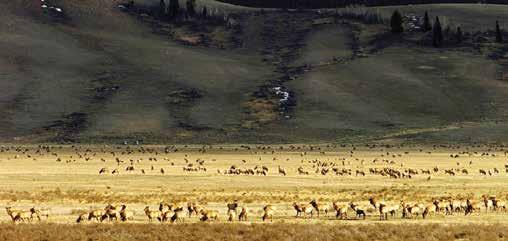
The Wyoming Game and Fish Department (WGFD) and the U.S. Fish and Wildlife Service (FWS) announced chronic wasting disease (CWD) has been detected in Wyoming Elk Hunt Area 77 on the National Elk Refuge, which is managed by FWS.
National Elk Refuge biological staff humanely euthanized and sampled an adult cow elk suspected of having CWD. Tests conducted at the WGFD Wildlife Health Laboratory confirmed a positive case. All CWD samples, including those collected on the refuge, are sent to the WGFD health lab for processing.
This is the first documented case of CWD in the hunt area and the first confirmed case of an elk with CWD on the refuge.
Moving forward, National Elk Refuge staff will increase monitoring and surveillance of herds for CWD, re-evaluate existing programs and implement additional biosecurity protocols to keep people and wildlife safe. Any changes will be shared with the public.
CWD is a fatal neurological disease which affects deer, elk and moose. WGFD partners with FWS to manage wildlife on federal lands and both will continue monitoring CWD over time to further understand the potential impacts of the disease and evaluate future management actions.
For more information on CWD testing, transmission, carcass transportation and disposal regulations, visit wgfd. wyo.gov/wyoming-wildlife/wildlife-disease-and-health/ chronic-wasting-disease
Bison anniversary celebrated
Bison enthusiasts across the country are gearing up to celebrate a remarkable milestone – the 10-year anniversary of the bison being named the official national mammal of the U.S. This anniversary arrives at a meaningful moment, as the nation also prepares to mark its 250th birthday.
As a keystone species, bison shape and sustain the landscapes they roam. Their presence enriches grasslands, supports biodiversity and reflects a conservation story unlike any other. The national mammal designation honors not only the ecological power of these “ecosystem engineers,” but also the cultural, historical and economic significance they hold for Tribal Nations, ranchers, conservationists and communities across the country.
On May 9, 2016, former President Barack Obama signed the bipartisan Bison Legacy Act, officially recognizing the North American bison as the national mammal. The legislation celebrated the species’ extraordinary recovery from near extinction and acknowledged its deep ties to Indigenous peoples, its role in shaping the American West and its growing importance in regenerative agriculture and conservation.
The effort to secure this designation was led by a broad coalition, including the National Bison Association, the InterTribal Buffalo Council and the Wildlife Conservation Society.
Throughout the year, communities nationwide will host “Bison-tennial” celebrations, bringing people together to reflect on the bison’s past, celebrate its present and look toward a vibrant future.
Public meeting set
The Wyoming Game and Fish Department (WGFD) will host a public meeting in Laramie on May 26 to gather public input and answer questions regarding proposed changes to multiple regulation chapters.
The meeting will be held at the WGFD Laramie Regional Office beginning at 6 p.m.
Regulations with proposed changes include Chapter 35, Hunting Permit Regulations for Persons with Disabilities; Chapter 44, Regulation for Issuance of Licenses, Permits, Stamps, Tags, Preference Points and Competitive Raffle Chances; Chapter 47, Gray Wolf Hunting Seasons; Chapter 51, Private Fish Hatcheries; Chapter 54, Home State License Suspension Procedures for the Wildlife Violator Compact and Chapter 62, Regulation for Aquatic Invasive Species.
Proposed regulation updates and statements of reason are available online at wgfd.wyo.gov/get-involved/ public-input
The public comment period for Chapters 35, 44, 47, 51, 54 and 62 is open until 5 p.m. on June 10. Public comments will be shared with the Wyoming Game and Fish Commission prior to their July 14-15 meeting in Sheridan.
Interested parties can submit comments online at wgfd.wyo.gov, in person at meetings or via mail to WGFD, 3030 Energy Lane, Casper, WY 82604.
USDA announces payments
On April 14, the U.S. Department of Agriculture (USDA) announced payments under the 2026 Pima Agriculture Cotton Trust Fund and the 2026 Agriculture Wool Apparel Manufacturers Trust Fund.
Currently, U.S. fabric and clothing manufacturers must comply with a tariff inversion – a tariff policy which reduces the cost of moving production overseas and exporting finished goods back into the U.S. compared with importing fabric and manufacturing domestically.
The annual Pima Cotton and Wool Trust payments provide financial support to U.S. companies equal to the benefits manufacturers would receive if duty reductions remained in effect, allowing them to grow payrolls, increase production and regain market share.
Section 12314 of the 2014 Farm Bill established the Pima Cotton Trust, which USDA administers. The Pima Cotton Trust is currently funded through 2031 with $16 million in Commodity Credit Corporation (CCC) funds each year.
The purpose of the Pima Cotton Trust is to reduce the economic injury to domestic cotton manufacturers resulting from tariffs on cotton fabric which are higher than tariffs on certain apparel articles made of cotton fabric.
The law mandates payments under the Pima Cotton Trust include 25 percent to one or more nationally recognized associations established for the promotion of Pima cotton for use in textile and apparel goods, 25 percent to yarn spinners of Pima cotton who produce ring-spun cotton yarns in the U.S. and 50 percent to manufacturers who cut and sew cotton shirts in the U.S. and certify they used imported cotton fabric in the preceding year.
Section 12315 of the 2014 Farm Bill established the wool trust, which USDA also administers. The wool trust is currently funded through 2031 with up to $30 million in CCC funds per year.
The purpose of the wool trust is to reduce the injury to domestic manufacturers resulting from tariffs on certain wool fabric that are higher than tariffs on certain apparel articles made of wool fabric.
The wool trust provides four types of payments – payments to manufacturers of certain worsted wool fabrics; monetization of the wool tariff-rate quota; duty compensation payments for wool yarn, wool fiber and wool top and refunds of duties paid on imports of certain wool products.
For more information, visit fas.usda.gov/programs
SNAP rule published
On May 7, the U.S. Department of Agriculture (USDA) published a final rule regarding stocking standards for retailers participating in the Supplemental Nutrition Assistance Program (SNAP), ensuring a broader variety of nutritious food is available to SNAP participants at authorized retailers across the country.
Since the beginning of the Trump administration, the Food and Nutrition Service has taken action on nearly 3,200 retailers regarding current stocking standards, either for failing to meet them upon application or failing to maintain them once authorized. The latter results in disqualification from accepting SNAP benefits.
Retailers authorized to accept SNAP benefits must now carry seven varieties of items across four categories of staple foods – protein, grains, dairy and fruits and vegetables. This change more than doubles the requirement of available foods, emphasizes more whole foods, increases the perishable food requirements and eliminates loopholes which have allowed retailers to count certain snack foods toward their staple food requirements.
These changes will not only ensure vulnerable families in need have more nutritious options wherever they shop but demand more accountability from retailers who not only have stocked the bare minimum but have seen the most program violations, including benefit trafficking and other fraudulent behavior.
Free Fishing Day set
The Wyoming Game and Fish Department (WGFD) invites anglers to celebrate Free Fishing Day on June 6. Each year, WGFD designates the first Saturday of National Boating and Fishing Week as a free fishing day when anyone can fish in Wyoming – except within the Wind River Reservation and Yellowstone National Park – without a fishing license.
All fishing regulations, creel and size limits, gear restrictions and stream closures remain in effect. Anglers can review the 2026 Fishing Regulations online before heading out and planning their trips with the interactive fishing guide.
Participants will need to bring their own fishing gear to these events, and all children must be accompanied by an adult.
Families can enjoy fun fishing events throughout the state on June 6, as well as a few additional events planned for later dates.
For more information or a complete list of events across the state, visit wgfd.wyo.gov
principles of multiple use and sustained yield by prioritizing access, empowering local decision-making and aligning the BLM’s implementing regulations with statutory requirements and national energy policy.”
The rescission has been met with enthusiasm from ag industry groups and significant concern from conservationists, and the rule continues to garner controversy long after its initial implementation.
Longstanding controversy
The Public Lands Rule has been surrounded by controversy and received harsh criticism from the ag industry since it was first instated.
In 2024, Wyoming and Utah filed a joint lawsuit claiming the BLM sidestepped the National Environmental Policy Act and calling for the rule to be vacated, according to a May 11 WyoFile article by Katie Klingsporn.
Klingsporn further re-
WEDNESDAY, MAY
COMPLETE OR PARTIAL DISPERSALS
ports a coalition of energy, mining, farming and ranching groups including the Wyoming Farm Bureau Federation (WyFB), American Petroleum Institute and Western Energy Alliance also challenged the rule in court.
In September 2025, the BLM published a notice in the Federal Register proposing to rescind the 2024 rule.
“The previous administration’s Public Lands Rule had the potential to block access to hundreds of thousands of acres of multiple-use land –preventing energy and mineral production, timber man-
agement, grazing and recreation across the West,” said U.S. Secretary of the Interior Doug Burgum in a September 10, 2025 press release. “The most effective caretakers of our federal lands are those whose livelihoods rely on its well-being. Overturning this rule protects our American way of life and gives our communities a voice in the land they depend on.”
A win for ag Ag industry groups are celebrating the rescission, arguing ranching is an effective form of conservation and thanking the current admin-
307-421-8141
20, 2026 - PAIR/BRED COW SPECIAL
Jim Licking 42 Blk Cow Pairs, Complete Dispersal, Mx Ages, Tagged to Match, April Calves at Side, Sired by Kyle Kilty Blk Angus Bull “Stunner 4002”, Calf Shots: Enforce 3, One Shot BVD, Ultra Choice 7, Calves are Slick, Cow Shots: Scour Guard 4KC, Vira Shield 6+VL5, Ivermax Pour On ****18 Blk Cows, Complete Dispersal, Mx Ages, Bred to Kyle Kity Blk Angus Bull “Stunner 4002”, CF: Now, Shots: Vira Shield 6+VL5, Scour Guard 4KC, Ivermax Pour On BRED COWS Wurtsmith Land & Cattle 40 Mx Cows, Mx Ages, Bred to Blk Angus Bulls, CF: June/July, Current on all Shots Berry Family Trust 12 Blk/Bwf Cows, Running Ages, Blk Cows Bred to Blk or Hereford Bull; Bwf Cows Bred to Blk
thru June, Shots: ScourGuard 4KC, Vira Shield 6+VL5, Poured Horse Creek Angus, LLC 1 Blk Angus Cow 1600#, Mx Age, Bred to Horse Creek Angus Bulls, CF: June, Cow Shots in the Fall: Cattle Master Gold, Scourguard PAIRS Irvine Ranch 40 Blk Cow Pairs, Mx Ages, Tagged to Match, Calves Born in March, Sired by Blk Angus Bulls, Calves have not been worked, Cows have NOT been Exposed back to Bulls Patrick Brothers 16 1st Calf Red Angus Heifer Pairs, Tagged to Match, Heifers are on a Complete Modified Live Vac. Program, Calf Shots: Vision 7 w/Spur, Nasalgen 3 PMH, Steer calves are banded (Note; 11 hd are AI’d Sired by Stockyard and Born March 1 bal is bull bred and Born March 4 thru 15th) Roth Land & Cattle 14 F1 Baldies or Red Angus Cow Pairs, Mx Ages, Tagged to Match, Calves Born: March/April, Calf Shots: BarVac CD/T, Multimin, Not Branded, Cows have been on a Yearly Complete Modified Live Vac. Program, Selling only due to drought conditions Horse Creek Angus, LLC 10 Blk Angus Cow Pairs, 1400#, Calves at side are 25 to 75 days old, Sired by Horse Creek Angus Bulls, Calf Shots: Enforce 3, Bovi-Shield Gold One Shot, Ultrabac w/Somnus, Steers are Knife Cut, Cow Shots in the Fall: Cattle Master Gold, Scourguard Bridle Bit Cattle Co. 7 Blk/Rd Cow Pairs, 3 yr olds to SS, Tagged to Match, Calves Born: March 15 to May 1 Andy Stellpflug 4 Mx Cow Pairs, Mx Ages, Tagged to Match, Calves have been worked
FRIDAY, MAY 22, 2026 - ALL CLASSES
Michael Schmitt - Torrington, WY 307-532-1776
Ty Thompson – Lusk, WY 307-340-0770
Zach Johnson Lingle, WY –307-575-2171
Jeff Ward – Laramie, WY 307-399-9863
Tam Staman – Crawford, NE 308-631-8513
Justin Smith - Lusk, WY 307-340-0724
Hunter Dockery - Lusk, WY 307-340-1202
Ben Kukowski - Kaycee, WY 307-217-1472
Garrett Nunn - Laramie, WY 307-460-1649
Scott Redden - Burns, CO 970-596-3588
istration for restoring practical multiple-use management opportunities to producers.
WyFB has opposed the rule since its introduction in 2024 and praised the rescission in a May 13 press release.
“We are pleased with the BLM’s announcement to rescind the Public Lands Rule,” says WyFB Executive Vice President Kerin Clark. “Our organization requested a withdrawal of the rule when it was issued in May 2024 seeing it as detrimental to public land management.”
“The rule would have made ‘non-use,’ also described as conservation, as a use on BLM land,” Clark continues. “This would have been in contradiction to the multiple-use mandate given to the BLM by Congress through FLPMA.”
“Multiple-use management provides for public lands to be utilized and stewarded through use,” she adds. “Grazing permittees contribute to the overall stewardship of the lands through stimulating plant growth, supporting wildlife, fire mitigation and improving the health of rangelands.”
The Public Lands Council (PLC) also praised the rescission in a May 12 press release, stating, “Today, the Trump administration announced a final rule to rescind the ill-advised Public Lands Rule, alongside a landmark proposed rule to reform BLM grazing regulations. Individually, these actions are consequential to cattle and sheep producers across the West. Together, they are a clear signal of BLM’s commitment to restoring effective multiple-use management and the agency’s investment in promoting strong rangeland resilience.”
“From day one, public lands ranchers were clear with the Trump administration –we needed them to remove policies which illegally picked winners and losers in public land management, and we needed them to deliver on their commitment to bring important reform to the agency’s 35-year-old grazing regulations,” adds PLC President Tim Canterbury. “Today, they have delivered repeal of the Public Lands Rule which would have resulted in removal of grazing under the
guise of ‘conservation’ principles, even though science demonstrates the benefits of our highly-managed grazing on these landscapes.”
Mixed reaction
Outside of the ag industry, the rescission has garnered mixed reactions including significant concern from conservationist groups.
Following the BLM’s announcement, several conservationist groups including the Wyoming Wilderness Association (WWA) issued statements criticizing the decision.
“To rescind the Public Land Rule betrays the trust of thousands of citizens who believed themselves to be represented when conservation was finally given a seat at the table,” states Jennie Mans, WWA’s BLM wildlands director, in a May 11 press release. “Wyoming’s BLM lands –approximately 18.4 million acres representing 30 percent of our state – are critical to safeguarding wildlife habitat, migration corridors and our cultural heritage.”
“The Public Lands Rule restored accountability, science-based management and public transparency – ensuring conservation was treated as a legitimate use of our shared lands and, in doing so, acknowledging a truer meaning of multiple use,” Mans continues. “Working lands should work for all Americans, not just those with industrial interests at heart.”
However, others – including Gov. Mark Gordon –maintain conservation will not be impeded by the rule’s rollback. In a May 11 press release, Gordon called the decision a “welcome return to the statutory principle of true multiple use on our public lands.”
“Wyoming people have long understood conservation and responsible use are not mutually exclusive,” Gordon says. “Our ranchers, energy producers, sportsmen, counties and local communities have cared for these lands for generations while supporting jobs, schools, economies and wildlife habitat.”
Grace Skavdahl is the editor of the Wyoming Livestock Roundup. Send comments on this article to roundup@wylr.net.
EXTENSION EDUCATION
By Amy Smith, UW Extension Educator
The name prickly pear is often used to describe many species in the Opuntia cacti family.
The prickly pear is a native perennial plant which occurs naturally in sandy, gravelly or rocky rangeland soils. However, it can also be found in valleys, flats and canyons as well. It requires very little water and is extremely heat tolerant.
Prickly pear cactus grows low to the ground in a prostrate or spreading clump formation. However, it can reach a height of over three feet under certain conditions.
A deep fibrous root system allows the prickly pear plant to utilize the smallest amounts of moisture during drought conditions.
Prickly pear cacti reproduce using both sexual and asexual reproduction. It reproduces sexually by seeds or asexually by stems – otherwise known as pads.
The pads are green in color with spines varying in size from tiny, fine, hair-like spines to larger spines measuring four-fifths to one- and one-fifth inches long. The
the spines must be burned or removed. The tuna pods house numerous white, flattened seeds which are twotenths to three-tenths of an inch long.
Seed dispersal occurs in a variety of ways – through water movement, animals and surfaces of vehicles.
Rangelands which have experienced several years of significant drought may easily become overpopulated with prickly pear as it outcompetes most grass species under prolonged hot and dry conditions.
Uses
spines are found in clusters of one to nine spines per group.
Leaves, which are small and scale-like when they appear on young branches or pads, are not usually present.
Asexual reproduction occurs when the pads detach, grow new roots and develop into a new plant. This reproduction method is most common, especially during periods of drought or environmental stress.
The prickly pear cactus produces flowers during June and July. However, in years of significant drought, the prickly pear will still produce flowers after a good rainstorm. The flowers of the prickly pear are relatively large and showy and range in color from lemon yellow to orange with a distinct green stigma in the center.
Once the flowers have been pollinated, the prickly pear produces a fleshy pearshaped fruit with small fine spines. Often referred to as a “tuna,” the fruit is edible for wildlife and humans.
However, before using them for domesticated livestock or human consumption,
The Prickly Invader: Control of Prickly Pear Cactus by Lee Pitts
Small mammals, reptiles, birds and insects use prickly pear for protection and cover.
Numerous native pollinators have been observed visiting prickly pear flowers, and larger mammals utilize the pad and tuna of the prickly pear as a food source, especially after wildfires have burned the spines off the pads. Coyotes have been also been known to consume the tuna, spines included.
The prickly pear is highly digestible to livestock, although the cactus plant and the vegetation underneath are not generally consumed because the spines cause injury to the nose, mouth and tongue. Once the spines have been removed, either manually or by wildfire, the prickly pear may be freely consumed. It is high in soluble carbohydrates.
Weediness
Although the prickly pear cacti is a native plant, it can easily become a nuisance under certain conditions. If stands of the cacti are not managed properly, they may displace desirable vegetation. This most often occurs on overgrazed rangeland.
The prickly pear has also been placed on the noxious weed list for some counties in Wyoming.
To determine if it is listed in a specific county, visit a local county weed and pest office.
Non-chemical control
The most effective control is achieved when a combination of methods is used in a comprehensive integrated control plan. However, when controlling small patches of prickly pear, using a single method may be successful.
Mechanical control includes any method which physically removes the top of the prickly pear plant, including disking, plowing, scraping or cutting the cacti pads at or just below the soil surface.
However, if the vegetative portion of the plant is not collected, new plants often take root from the disturbed pads and expand the cacti patch.
Mechanical control methods are most effective when combined with more than one method of control.
Cultural control utilizes a variety of methods, such as using certified weed-free hay, seed, mulch or soil, including topsoil, fill dirt and growing medium.
Avoid driving directly over or through a cacti patch.
If avoidance is not possible, inspect, clean and remove seeds or vegetative material from all equipment, vehicles, animals or clothing following activity in or around infested areas.
Chemical control options are available to control prickly pear cacti. When using chemical control methods, always read and follow all product label directions and use precautions for specific treatment locations.
Products containing the active ingredients picloram or fluroxypyr – both restricted use – have been shown to effectively control prickly pear cacti.
Chemical applications should be applied when the cacti are actively growing. Late summer or early fall applications may also be effective, as this is when the plants are actively moving nutrient reserves to their roots in preparation for winter, carrying the applied chemicals down to the roots as well.
Keep in mind prickly pear cacti are hard to control. If chemical control methods are used, it may take six to eight months before there are visible results, and death may take a year or more.
For help determining management options or developing a management plan, contact a local University of Wyoming (UW) Extension office or county weed and pest office.
Trade or brand names used in this publication are used only for the purpose of educational information. The information given herein is supplied with the understanding no discrimination is intended, and no endorsement information of products by UW Extension is implied. Nor does it imply approval of products to the exclusion of others, which may also be suitable.
Amy Smith is a UW Extension educator based in Goshen County. She can be reached at asmit207@uwyo. edu or 307-532-2436.
During a 50-year career of taking bids at all kinds of auctions, the dumbest thing I’ve ever been asked was, “Who’s bidding against me?”
I don’t know if it was every ring man’s rule, but I had a personal policy I would not divulge such information even if I knew the answer. After all, I had a hard enough time spotting bids in my own section, let alone interfering in a fellow bid spotter’s business.
When asked, I always answered the question one of two ways. Either I replied, “You think I have eyes in the back of my head?” Or, “Don’t bid anymore and we’ll both find out.”
I didn’t divulge the name of the contending bidder because I either didn’t know it or because I thought it violated the person’s right to privacy.
Why do you think some bidders wink, barely move their head or raise a finger to bid instead of standing up and waving an American flag like one fellow did at John Wayne’s sale every year?
There are a couple of reasons why folks like to bid in private.
Some bidders have such
a high opinion of themselves they think others will watch them to see if they bid to get some idea if the animal currently selling is any good. In this case, bidding in a bodacious manner will only increase the number of bidders bidding against you.
The epitome of such behavior happened at our big summer video sale I announced for over 20 years.
A rancher who was admired for having a good eye was in attendance at every sale, but right before a lot of calves he really wanted was about to sell, he’d leak out of the landscape and bid on a telephone out in the lobby, less than 20 yards away from where the auction was being conducted.
Others simply didn’t want people to know their business – including their wife or their banker.
For years I took the bid of a rancher who always sat right next to someone who filled both positions – wife and banker. I swear he was so sneaky, I bet his wife never knew when he was bidding.
I can only remember one time I violated my own rule. If the male of our spe-
cies has a fatal flaw, I’d have to say it’s that we usually tend to have an inflated opinion of ourselves, which quite often can be an erroneous assumption.
A prime example was the arrogant, mean and disliked rancher who should have etched into the mirror he admired every chance he got, “Objects in the mirror aren’t as important as they appear.”
He sat in the front row at every bull sale he attended even though he paid the
price by being bombarded with manure-laden sawdust.
I don’t know if he thought it was the King’s row or it was just so he could continually ask, “Who is bidding against me?”
I got so tired of him pestering me, one time when I had both bidders sitting in my section after his usual query, I bent down and whispered in his ear, “I don’t know his name but it’s the guy who your poor, tormented wife just ran off with.”
The arrogant rancher
turned 15 shades of purple, and I thought he was going to stroke out right then and there. I never saw a guy bid so fast in my life.
They say pride goeth before the fall, and his certainly did. To make a long story short, the guy wound up with 15 bulls when he only came to buy three.
Those 15 bulls – many of them near the end of the sale order – sold for three times the sale average, and they included the high seller of the entire sale at $15,000.
Afterwards, I spoke with the contending bidder on every bull, and he told me the arrogant rancher’s contribution that day was, “Just the down payment on the upcoming divorce settlement.”
Author’s note: I’ve been waiting impatiently to tell this true story for years, and now it can finally be told because the last of the principals involved has finally passed on. I didn’t want the cocky cattleman to suffer any more humiliation than he already had.
Proud Of His Pride
OBITUARIES
Steve Elliott Price April 21, 1956 – May 4, 2026
Steve Elliott Price, age
of Cheyenne passed
away unexpectedly on May 4 while visiting family in Dundee, Mich.
Steve was born on April 21, 1956 in Julesburg, Colo. to Mildred M. (Sewald) Price and Robert A. Price. He was one of three children and grew up in Colorado, graduating from high school in Sedgwick, Colo. before beginning a lifelong career in ranching.
From an early age, Steve developed a deep appreciation for the land, hard work and the Western way of life. Ranching was more than a career to him – it was part of who he was.
Over the years, he became known for his strong work ethic, leadership and ability to manage large operations, including the Wyoming Hereford Ranch and Warren Ranch. Following his retirement from ranching, Steve continued to work for 21st Century Equipment, delivering John Deere equipment throughout the region.
Steve had a passion
for roping, rodeos, working as an auctioneer and volunteering on multiple local and state boards. It was through one of these events he met the love of his life, Robin. Although their paths crossed years earlier, timing eventually brought them together, and they were married on Feb. 17, 2012 in Cheyenne.
Above all else, Steve valued family. He never met a stranger and was known for his quick wit, easy conversation, Wild West stories and “old Indian tricks.”
He loved gathering with those closest to him,
lending a hand whenever needed and staying connected to the people he cared about most.
His steady presence, sense of humor and generous heart will be deeply missed by everyone who knew him.
Steve is preceded in death by his grandparents Emray and Ione Price and Paul and Josephine Sewald; his parents Mildred and Robert Price and his two stepchildren Kestin Braden and Kristy Van Der Hoeven.
He is survived by his beloved wife Robin Price of Cheyenne; his chil-
dren Brandon (Courtney) Price of Iowa, Britt Price of Cheyenne and Brady Price of Pine Bluffs; his stepchildren Amy (Bret) Smith of Michigan, Random (Michael) Muse of Oklahoma and Nicole Kersey (Candace Farrow) of Canada; his siblings Wayne (Mary) Price of Colorado and Charlotte (Jim) Mollendor of Iowa; 15 grandchildren and three great-grandchildren, as well as numerous nieces and nephews.
A celebration of Steve’s life will be held at the Event Center at Archer in Cheyenne on May 23 from 11 a.m. to 4 p.m.
March pork exports third largest on record, beef variety meat value reaches new high
March exports of U.S. pork were among the largest on record, concluding a very strong first quarter, according to data released by the U.S. Department of Agriculture (USDA) and compiled by the U.S. Meat Export Federation (USMEF).
While March beef exports were below last year – largely due to the ongoing lockout by China
CLAY CREEK ANGUS
– the value of beef variety meat shipments reached a new monthly high, surpassing the previous record from January.
Monster first quarter for pork to Mexico
pace in both volume at 778,939 mt and value at $2.17 billion. Exports are on a record pace to Mexico and Central America.
increased 50 percent to $135.6 million – the highest on record.
Pork exports totaled 285,567 metric tons (mt) in March, up six percent from a year ago – the largest in five years and the third largest on record. Export value increased four percent to $803.2 million, the second highest on record, trailing only April 2021.
March exports increased year-over-year to leading market Mexico, as well as to Japan, Central America, the Dominican Republic, the Philippines and Taiwan. Shipments were steady to South Korea and Canada. March was an outstanding month for export value per head slaughtered, which was the third highest on record at $72.93.
Through the first quarter, pork exports were three percent above last year’s
Beef variety meat reaches a new high March beef exports totaled 97,731 mt, down 11 percent from a year ago, while value fell eight percent to $844.7 million.
Shipments increased year-over-year to Mexico, Central and South America, the Caribbean and Indonesia and were steady to Korea and Taiwan. However, these results were offset by minimal exports to China, and exports were also below last year to Japan and the Middle East. Excluding China, March exports were four percent above last year’s volume and increased eight percent in value.
The March export results included 29,062 mt of beef variety meat, up 24 percent from a year ago and the largest since 2017.
Variety meat export value
March was a very robust month for per-head export value, which equated to $456.56 per head of fed slaughter.
Through the first quarter, beef and beef variety meat exports totaled 275,355 mt, down 11 percent from a year ago, while value fell seven percent to $2.35 million. Excluding China from these results, exports were three percent higher than a year ago in volume and increased nine percent in value.
“The sustained momentum for U.S. pork exports is impressive in the Western Hemisphere, but it is also encouraging to see demand climbing in key Asian markets, led by a welcome rebound in Japan,” said USMEF President and Chief Executive Officer Dan Halstrom.
“On the beef side, while China has now been absent for more than year, the U.S. industry is making strides in other markets,” Halstrom added. “The supply situation makes it difficult to grow export volumes, but exports are commanding strong prices. Expanding beef variety meat demand is especially critical, as this makes such a key contribution to the value of every animal.”
Lamb export volume lower March exports of U.S. lamb muscle cuts totaled 247 mt, down 11 percent from a year ago, but value increased four percent to $1.6 million.
First-quarter exports were nine percent above last year’s pace in both volume at 811 mt and value at $4.5 million.
Growth was primarily led by the Caribbean, but shipments also increased to Central America and Asian markets.
USMEF collects and analyzes market intelligence, implements promotional programs and collaborates with industry stakeholders and governmental agencies to increase U.S. red meat exports. For more information, visit usmef.org
70,
Adobe Stock photo
purchasing locally raised beef products.
Fortunately, producers across the West have increasingly started to market beef direct-to-consumer through freezer beef sales, farmers markets, local butcher shops and online storefronts.
For individuals unable to purchase directly from a producer, industry officials encourage shoppers to simply choose beef products over other sources of protein during their regular trips to the grocery store and to support businesses which source beef from U.S. producers.
They also note restaurants and grocery stores may feature locally raised beef this month as part of seasonal promotions and campaigns.
Notably, National Beef Month is celebrated alongside National Barbecue Month and National Hamburger Month, all of which coincide with the beginning of summer grilling season.
As late-spring brings warmer temperatures and two widely celebrated holidays – Mother’s Day on the second Sunday of the month and Memorial Day on the last Monday in May – Americans start to host more backyard barbecues and cookouts.
From burgers and steaks to brisket and ribs, beef remains a staple at these gatherings, but in observance of National Beef Month, industry officials encourage individuals to try new beef recipes or explore less familiar cuts as a way to celebrate the versatility of beef.
Beyond the grill, producers and beef advocates may use the month of May to share information about modern cattle production, animal care practices and stewardship efforts taking place on their operations via social media campaigns, educational outreach programs and other local events.
Recognizing the U.S. beef industry
According to data published by the U.S. Department of Agriculture’s (USDA) Economic Research Service (ERS), the beef industry is one of the largest sectors of U.S. agriculture, contributing billions of dollars annually to the nation’s economy through cattle production, processing and exports.
In fact, ERS data from 2024 – the most recent on file – shows total value of cattle and calf production in the U.S. at $83.1 billion, total cash reciepts at $112.1 billion and total value of beef exports at $9.9 billion.
In Wyoming, USDA’s National Agricultural Statistics Service reports inventory of all cattle and calves at 1.26 million head as of Jan. 1, 2024, with beef cow inventory totaling 671,000 head and total value of inventory at $2.29 million.
This places Wyoming
25th in the national ranking, following the top 10 states, in order, of Texas, Nebraska, Kansas, California, Oklahoma, Missouri, Iowa, South Dakota, Wisconsin and Colorado.
This year, the observance of National Beef Month comes as the U.S. cattle industry continues to navigate historically tight cattle supplies, strong consumer demand and high retail beef prices.
USDA data also shows the national cattle inventory continued its downward trajectory going in to 2026, with 86.2 million head of cattle reported on Jan. 1 – the lowest level in 75 years, following ongoing drought, elevated feed costs and widespread herd liquidation.
Despite this, beef demand has remained as strong as ever and consumers continue prioritizing beef purchases even in the face of record-high prices at the meat counter.
Strong demand and limited supplies have also pushed cattle prices to record or near-record levels in many markets over the past year, creating opportunities for cow/calf producers.
Additionally, while analysts note rebuilding the national herd will likely take several years – leading to tight supplies and ele
input costs and market volatility, they are also optimistic about the future of the beef industry.
During the CattleFax Outlook Seminar held on Feb. 5 as part of CattleCon 2026 in Nashville, Tenn., CattleFax experts noted, “Despite near-term volatility, the long-term outlook remains positive. Strong domestic demand, improving beef quality and sufficient packing capacity are expected to continue supporting profitability for the cow/calf sector as the industry moves into the next phase of the cattle cycle.”
For producers, National Beef Month provides an opportunity to showcase the hard work, dedication and resilience required to raise cattle in an ever-changing agricultural landscape.
For consumers, the month serves as a reminder of the connection between ranchers and food products found at grocery stores, restaurants and family dinner tables.
Whether purchasing local beef, preparing a favorite recipe or thanking the producers who help feed the nation, industry officials believe National Beef Month offers countless opportunities to celebrate the cattle industry throughout the month of May.
Hannah Bugas is the
145 percent of median, while the Belle Fourche River Basin saw the lowest amount at 64 percent of median.
Streamflow yields
For median streamflow yields, NRCS expects all Wyoming basins – except the Upper Green, Lower Green, Little Snake and Cheyenne river basins – to average 57 percent from May through September.
Streamflow yields for these four exceptions are expected to average 55 percent, 54 percent, 35 percent and 21 percent, respectively, from May through July.
Expected streamflow yields for individual basins across the state include the Shoshone River Basin at 93 percent of median, the Yellowstone River Basin at 89 percent of median, the Snake River Basin at 79 percent of median, the Wind River Basin at 68 percent of median and the Big Horn River Basin at 65 percent of median.
NRCS predicts streamflow yields for the Tongue River Basin, Powder River Basin, Upper North Platte River Basin, Laramie River Basin, Lower North Platte River Basin and Sweetwa-
ter River Basin will respectively report 58, 54, 38, 37, 32 and 31 percent of median.
Reservoir storage
For the entire state of Wyoming, NRCS expects average reservoir storage at 88 percent of median, down from 94 percent at the same time last year.
The majority of reservoirs reported numbers below median including those in the Upper Bear River Basin at 42 percent, the Laramie River Basin at 47 percent, the Upper North Platte River Basin at 57 percent, the Cheyenne River Basin at 74 percent, the Belle Fourche River Basin at 86 percent and the Lower North
Platte River Basin at 89 percent.
Reservoir storage in the Wind River Basin was near median at 91 percent, as was storage in Lower Green River Basin reservoirs and the Boysen Reservoir in the Big Horn Basin, both of which posted numbers at 96 percent of median.
The Buffalo Bill Reservoir on the Shoshone, as well as the Upper Green River and Snake River basin reservoirs reported numbers above median at 112 percent, 117 percent and 122 percent, respectively.
Hannah Bugas is the managing editor of the Wyoming Livestock Roundup. Send comments on this article to roundup@wylr.net.
WYLR photo
As spring stretches into longer, warmer days, the West will come alive with vibrant colors and the flutter of delicate wings. Amid this hum of activity, a small and often overlooked wildflower is playing a critical role in sustaining pollinators and native ecosystems.
Although native violets are frequently dismissed as weeds in lawns and pastures, the dainty flower is actually highly beneficial to the environment and essential to the survival of pollinators, specifically fritillary butterflies.
“With their heart-shaped leaves and cheery blue flowers, violets really aren’t bad guys. In fact, they are the host plant for a wide range of butterflies known as fritillaries,” writes Justin Wheeler in an April 7, 2017 Xerces Society blog post. “Like monarchs, whose caterpillars only feed on milkweed, the 14 species of greater frit-
illaries and 16 lesser fritillaries will only lay their eggs where there are violets for their larva to feed upon.”
Nebraska Extension Master Gardener Laurie Zitterkopf reiterates the significance of native violets in the life cycle of fritillary butterflies.
“The fritillary butterfly lays her egg in the fall. The egg then hatches and overwinters,” Zitterkopf explains. “In the spring, it must find a native violet plant to feed.”
This biological relationship makes violets critical across the Intermountain West, where multiple fritillary species and other important pollinators depend on them.
Fritillary butterflies
Wyoming is home to several fritillary species, including the regal, Northwestern, coronis and variegated fritillaries.
Among them, the regal fritillary stands out as a “prairie specialist” and a species
of growing conservation concern. Once widespread, its populations have declined significantly due to habitat loss and fragmentation, and in 2024 the western population was proposed to be listed on the Endangered Species Act.
Although fritillaries are often mistaken for monarch butterflies due to their similar orange and black coloring, they differ in both pattern and behavior.
While adult butterflies feed on nectar from a variety of flowers, such as milkweed, thistle butterfly weed, lilacs and mints, fritillary caterpillars are far more picky.
“Like many other butterflies, caterpillars are very selective about what they eat. They do not go for milkweeds as do monarchs – they prefer violets instead. Without violets, there would be no fritillaries,” notes an undated U.S. Forest Service (USFS) publication.
Austin Snook • 307-290-2161
Taylor Snook • 307-290-2273
Craig Deveraux • 307-746-5690
Dan Catlin • 406-671-7715
Clint Snook • 307-290-4000
Cheyenne Seymour • 605-641-0638
Casey Sellers • 307-217-2614
Jim Forbes • 307-351-5932
"From
May 13, 2026
This dependence creates a relationship based on delicate timing.
“The females emit an enticing aroma called a pheromone to attract males. The adults mate in the summer. Afterwards, females will sometimes take a nap for a few weeks, known as diapause. They emerge from diapause in late summer and lay their eggs near patches of violets,” USFS explains.
“Caterpillars hatch in the fall and go to sleep right away without feeding. They sleep through the winter and will only awaken in the spring at the same time violet plants begin to grow. Timing is important to the hungry caterpillar,” USFS continues.
“It is feared global warming may disrupt this synchronization, which would prove catastrophic to fritillary caterpillars. Studies are underway to verify whether this is already taking place.”
Daniel Escoz • 307-217-1440
Tye Curuchet • 307-351-8666
JJ Butler • 307-231-6878
Chris Rodriguez • 307-217-2172
Kyle Kallhoff • 605-881-1526
Kade Kinghorn • 307-620-0525
Jake Underwood • 307-660-5989
Donny Scantling • 307-217-0537
Native violets
In addition to their important relationship with fritillary butterflies, violets provide other benefits to native ecosystems.
According to Zitterkopf, violets provide early season nectar for bees and other pollinators, which helps support biodiversity at a time when few other plants are blooming, and their presence encourages pollinator activity, which is essential for fruit and vegetable production in both home gardens and agricultural systems.
Below ground, the flower’s deep root systems help break up impacted soil, improving aeration and drainage.
“This action helps pull essential nutrients such as potassium and calcium to the surface, where they become available to other plants,” Zitterkopf states.
low-growing plant – typically about four inches tall – Zitterkopf says moderate grazing can actually benefit the plant by preventing taller vegetation from shading it out.
Other species found across the West include the hooked-spur violet, a purple-blue variety commonly found in moist areas, and the mountain white violet, which grows at higher elevations.
The yellow sagebrush violet and goosefoot violet are also present in parts of the state.
Protecting both species
For producers and landowners living in the Intermountain West, experts note the importance of maintaining native plant diversity –including violets – as they play a critical role in supporting beneficial pollinators and overall ecosystem health.
Nice run of pairs, feeders, and weigh ups today. Pairs and grass cattle selling on a slightly softer market due to the dry conditions everywhere. Weigh up market full steady. Thank you for your business!
Above ground, violets are not only beneficial, they are also useable. In fact, because they are rich in vitamins A and C, violet leaves can be added to salads or cooked like spinach, while blooms are commonly used as edible garnishes.
Several native violet species can be found across Wyoming, blooming in meadows and open woodlands and along streams and shaded canyons.
Zitterkopf notes Nutall’s violet, a bright yellow species with purple stripes, is common in prairie landscapes, blooms from April through early summer and is particularly well adapted to grazing systems. Because it is a
As concern grows over pollinator declines and habitat loss, small management decisions can make a big difference, even if it means rethinking the role of plants once considered undesirable. Without violets, fritillary butterflies wouldn’t survive, and without fritillaries and other pollinators, the broader ecosystem would feel a significant negative impact.
Therefore, individuals may want to consider allowing patches of native violets to persist in pastures, hay meadows and other areas this spring to help sustain fritillary populations and fellow pollinators.
Hannah Bugas is the managing editor of the Wyoming Livestock Roundup. Send comments on this article to roundup@wylr.net.
Bookmark and Beyond
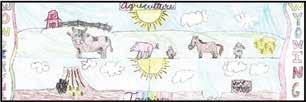
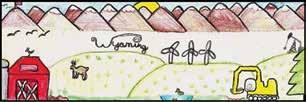
Each year, to showcase their understanding and appreciation of Wyoming’s essential resources, secondthrough fifth-grade students from across the state create bookmarks illustrating a Wyoming resource message through Wyoming Agriculture in the Classroom’s Bookmark and Beyond Program.
This year, 13 winning designs were printed and distributed throughout the state.
For coming weeks, the Roundup will share photos of the 2026 Bookmark and Beyond finalists.
Fourth-grade finalist
Created by Tana Sasse, fourth grade, Moorcroft Elementary, Moorcroft, taught by Amber Burch, sponsored by Jonah Bank of Wyoming
Fifth-grade finalist – Created by Annabelle Lott, fifth grade, Lyman Intermediate School, Lyman, taught by Christi Meeks, sponsored by Only Co.
Adobe Stock photo
The updated guidance is expected to save farmers $4.4 billion a year in repairs and lost productivity and provide $13.79 billion in annual savings to Americans, according to the U.S. Small Business Administration.
New guidance
In the press release, EPA Administrator Lee Zeldin says the new guidelines will help keep American operators from losing days in the field or on the road due to faulty DEF systems.
“Failing DEF systems are not an East Coast, West Coast or Heartland issue – it is a nationwide disaster,” Zeldin comments. “I have heard from truck drivers, farmers and many others complaining about DEF and pleading for a fix in all 50 states.”
“Americans are justified in being fed up with failing DEF system issues,” he continues. “EPA understands this is a massive issue and has been doing everything in our statutory power to address this. Farmers and truckers should not be losing billions of dollars because of repair costs or days lost on the job.”
EPA’s new guidance will allow manufacturers to stop inaccurate DEF system failures by removing traditional urea quality sensors and switching to NOx sensors, and the agency affirms approved NOx sensor-based software updates can be installed on existing engines without being treated as illegal tampering under the Clean Air Act.
EPA anticipates the switch will “greatly curb errors that traditional sensor technologies have been prone to and reduce the issues Americans face with inaccurate DEF failures,” according to the agency’s press release.
The agency adds the guidance does not weaken or remove emissions standards, but rather ensures standards are met in a practical, real-world manner.
“EPA remains committed to protecting human
health and the environment while ensuring Americans who feed, clothe and power our economy are not burdened by unnecessary system failures,” the agency states.
Longstanding issues
Truckers, motorists and farm equipment operators have long expressed concerns over failure of ureaquality sensors, reporting DEF system failures have triggered unnecessary vehicle derates or shutdowns even when DEF quality was not compromised.
EPA explains, since 2010, most on-road diesel trucks and many types of nonroad equipment including tractors and construction machinery have used selective catalytic reduction systems which inject DEF into exhaust streams to reduce NOx emissions.
In August of 2025, EPA issued new guidance calling on engine and equipment manufacturers to revise DEF system software in existing vehicles and equipment to massively reverse deratements which harm farmers and truckers, according to the agency.
“Prior to EPA’s August 2025 guidance, when DEF ran out or there was an unexpected mechanical failure, systems forced a vehicle to drastically reduce speed or become inoperable,” EPA explains. “In many cases, vehicles were limited to as little as five miles per hour within hours of a DEF-related fault. This caused needless frustration, operational delays and real economic hardship for operators.”
Industry reaction
Multiple trucking and farm advocacy groups have praised the latest DEF guidance, calling it a commonsense solution to issues which have plagued diesel operators and put a damper on productivity for decades.
In a March 27 press release, American Trucking Associations (ATA) Vice President of Energy and Environmental Affairs Patrick Kelly praised the addi-
tional flexibility afforded by the updated guidance.
“ATA welcomes EPA’s updated guidance providing additional flexibility on DEF quality monitoring and preventing forced shutdowns,” Kelly says. “As we have previously said, these systems have too often sidelined otherwise safe, compliant trucks due to faulty or unreliable DEF quality sensors – an issue compounded by widespread parts shortages in recent years. When a bad sensor can trigger a full inducement, the result is unnecessary downtime, unnecessary towing costs,
strained supply chains and higher costs across the board.”
“EPA’s decision to provide manufacturers with flexibility to suspend these inducements and eliminate problematic sensors altogether by monitoring a truck’s actual emissions is a pragmatic solution reflecting how these systems perform in the real world,” Kelly continues. “ATA appreciates EPA’s willingness to listen to industry and act. We will continue working with the agency and our industry partners to ensure emissions regula-
tions are both effective and workable for the men and women who keep America’s goods moving.”
U.S. Secretary of Agriculture Brooke Rollins also expressed support for the updated guidance, emphasizing the Trump administration remains committed to serving American farmers and truckers.
In the March 27 EPA press release, Rollins reiterates the updated guidelines will allow engine manufacturers to update their systems to monitor the specific pollutants the EPA is targeting rather than DEF itself,
protecting equipment and the environment alike.
“I’m proud to see the EPA responding to the demands of consumers and working to implement real change to solve these issues,” says Rollins. “This powerful step will provide much needed relief, but we will continue to work towards a solution to protect the environment while eliminating damages to farmers and truckers nationwide.”
Grace Skavdahl is the editor of the Wyoming Livestock Roundup. Send comments on this article to roundup@wylr.net.
CALENDAR
EVENTS SALES
May 18 Preparing for Extreme Heat: The Latest Guidance for the 2026 Heat Season Free Public Webinar, 12-1:30 p.m., online. For more information or to register, visit register.gotowebinar.com/register/7859632826776067926
May 21 University of Wyoming Extension Wildfire Webinar Series: Best Practices to Reduce the Risk to You and Your Home, 6-7:30 p.m., Zoom. For more information, visit wyoextension.org/wrir/wildfire-webinar/
May 21-22
Stockmanship and Stewardship, Indian Livestock Days, Farmington, N.M. For more information, visit stockmanshipandstewardship.org/ May 22 U.S. Department of Agriculture Roundtable Hosted by the Public Lands Council and the Association of National Grasslands, Rapid City, S.D. For more information, contact Isabelle Buhr at isabuhr12@gmail.com or 308765-2502.
May 23-24 37th Annual Wyoming Weapons Collectors Association Memorial Weekend Gun Show, Fremont County Fairgrounds, Riverton. For more information or to reserve a table, visit wyomingweaponscollectors.com or call 307-349-4914.
May 24 Wyoming Game and Fish Department Aquatic Invasive Species Inspector Training, 9 a.m.-4 p.m., Pinedale Regional Office, Pinedale. For more information or to register, visit wgfd.wyo.gov
May 26 Wyoming Game and Fish Department Public Meeting, 6 p.m., Wyoming Game and Fish Department Laramie Regional Office, Laramie. For more information or to submit public comment, visit wgfd.wyo.gov
May 27 Growing Food in Wyoming Masterclass: Managing Weeds Organically, 7-8 p.m., Zoom. For more information or to register, visit dirtworkswyo.com
May 28 University of Wyoming Extension Wildfire Webinar Series: A Case Study of the 2024 Elk Fire Response, 6-7:30 p.m., Zoom. For more information, visit wyoextension.org/wrir/wildfire-webinar/
May 30-31 Dusty Vaquero Days, the CAM-PLEX, Gillette. For more information, visit dustyvaquerodays.com
May 30-31 Wind River Flywheelers 30th Annual Antique Engine and Tractor Show Shoshoni. For more information, call Sonja Holm at 307-921-9371, Cindy Leonhardt at 307-851-9681 or Dave Stark at 307-850-2744.
June 1 Wyoming Game and Fish Department Aquatic Invasive Species Inspector Training, 9 a.m.-4 p.m., Green River Regional Office, Green River. For more information or to register, visit wgfd.wyo.gov
June 1 Uinta Veterinary Hospital Free 4-H Sheep and Goats Class, 6-7 p.m., Uinta Veterinary Hospital, Fort Bridger. For more information, call 307-783-0570 or e-mail uinta@uwyo.edu.
June 1-2 2026 Annual Tractor and Equipment Safety Course, Legacy of the Plains Museum, Gering, Neb. For more information or to register, visit unmc.edu/ publichealth/cscash/outreach/farm-safety-days.html
June 3 2026 Annual Tractor and Equipment Safety Course, Sheridan County Fairgrounds, Gordon, Neb. For more information or to register, visit unmc.edu/ publichealth/cscash/outreach/farm-safety-days.html
June 3-5 Wyoming Stock Growers Association Cattle Industry Convention and Trade Show, Holiday Inn Convention Center, Cody, For more information and to register, visit wysga.org
June 4 University of Wyoming Extension Wildfire Webinar Series: Positive and Negative Impacts to Wildfire Habitat, 6-7:30 p.m., Zoom. For more information, visit wyoextension.org/wrir/wildfire-webinar/
June 5-6 38th Annual Overland Stage Stampede Rodeo, gates open at 6 p.m., performance starts at 7 p.m., Green River. For more information, call 307-872-0514. To purchase tickets, visit rodeoticket.com
June 6 Wyoming Free Fishing Day. For more information or a complete list of events across the state, visit wgfd.wyo.gov
June 7 Wyoming Game and Fish Department Aquatic Invasive Species Inspector Training, 9 a.m.-4 p.m., Jackson Regional Office, Jackson. For more information or to register, visit wgfd.wyo.gov
June 8-12 University of Wyoming 2026 Ranch Camp, Ladder Ranch, Carbon County. For more information or to apply, visit bit.ly/4rkLAe2
Hildebrand, Sheila - Red Lodge
2 Blk Cows, avg. 1280# $18600 Greer, Lory - Hyattville 1 Red Cow, 1250# $18600 Lake, Jerry - Thermopolis 1 Blk Cow, 1220# $18600 2 Blk Cows, avg. 1278# $18300 Greer, Ann - Worland
1 XBred Cow, 880# $18500 Hamilton Ranch, Inc. - Hyattville
May 23 17th Annual Full House Horse Sale, Weston County Fairgrounds, Newcastle, 307-746-5690, 307-746-8592, 307-746-8536, fullhousehorsesale.com
May 31
June 12-13
June 16-18
June 25
June 30
July 6-10
July 13-15
July 20
July 24
July 27-31
Aug. 4-5
Aug. 10-11
Aug. 17
Aug. 17-21
Aug. 22
Aug 22-25
Sept. 5
Sept. 5
Sept. 10
Sept. 12
WYO Ranch Horse and Stockdog Sale, Pitchfork Ranch, Meeteetse, 307248-1530, wyoranchhorsesale.com
Cowgirl Cadillacs Horse Sale, Sheridan, cowgirlcadillacs.com
Superior Livestock Auction Corn Belt Classic, South Sioux City Marriott Riverfront, South Sioux City, Neb., 800-422-2117, superiorlivestock.com
Northern Livestock Video Early Summer Special, 866-616-5035, northernlivestockvideo.com
Cattle Country Video High Plains Showcase, University of Wyoming Marian H. Rochelle Gateway Center, Laramie, 888-322-8853, cattlecountryvideo.com
Superior Livestock Auction Week in the Rockies, The Steamboat Grand, Steamboat Springs, Colo., 800-422-2117, superiorlivestock.com
Western Video Market, Silver Legacy Casino Resort, Reno, Nev., 530-3473793, wvmcattle.com
Northern Livestock Video Auction Summertime Classic, 866-616-5035, northernlivestockvideo.com
Stellpflug Cattle Company “New Frontier” Female Sale, at the ranch, Guernsey, 307-351-1712, stellpflugcattle.com
Superior Livestock Auction Video Royale, Winnemucca, Nev., 800-4222117, superiorlivestock.com
Cattle Country Video Oregon Trail Classic, Gering Civic Center, Gering, Neb., 888-322-8853, cattlecountryvideo.com
Western Video Market, Little America, Cheyenne, 530-347-3793, wvmcattle.com
Northern Livestock Video Auction Early Fall Preview, 866-616-5035, northernlivestockvideo.com
Superior Livestock Auction Big Horn Classic, Sheridan, 800-422-2117, superiorlivestock.com
Memory Ranches Fourth Annual Foal Sale, at the ranch, Wells, Nev., 208412-6156, 208-695-0399, memoryranches.com
Lauing Mill Iron L Ranch 21st Annual QH Production Sale, online auction only, prohorseservices.com, 605-347-6193, 605-280-0698, 605-280-0398, lauingmillironlranch.com
Proffit Ranch 25th Annual Labor Day Horse Sale, Diamond X Barn, Evanston, 307-723-5857, proffitranch.blogspot.com
Cattle Country Video Frontier Fall Roundup, Cheyenne Frontier Days Event Center, Cheyenne, 888-322-8853, cattlecountryvideo.com
Open Box Rafter Ranch Quarter Horses 33rd Annual Production Sale, Rapid City, S.D., 605-538-4450, rafterranch.com
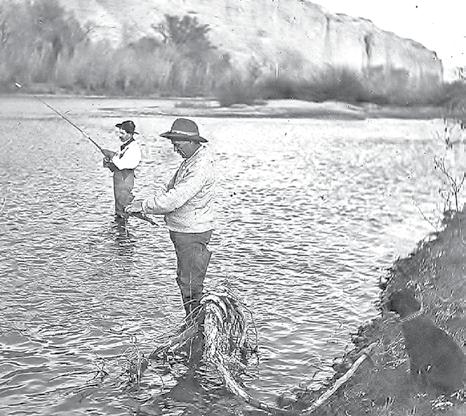
According to historic accounts, the Upper North Platte River, which flows North through Saratoga, hasn’t always been a Blue Ribbon trout stream.
Early-day trappers who ranged up and down the valley – which extends from North Park, Colo. near Walden, Colo. to Seminoe Dam north of Sinclair – in the period between 1850-70, swore there were no game fish in the North Platte or its tributaries in those days.
PAIRS
Cook, Keeton - Greybull
2 Red Pairs, 3-4 YO $4550/Hd. Double Dollar Cattle Co. - Lovell
10 Blk Pairs, ST $3750/Hd. Cauffman Land & Cattle - Burlington
8 Blk Pairs, ST $3700/Hd. Emerson, James - Worland
5 Blk Pairs, ST $3650/Hd. HEIFERS Turner, Theresa - Basin
2 Jersey Hfrs $2600/Hd.
• Upcoming Sales • May 21 – Weigh-Up Special w/ All Class Cattle, Sheep & Goat May 28 – All Class Cattle
However, by the time Warm Springs – later named Saratoga – was established around 1874, residents discovered there were thousands of trout in the river.
Several theories abound as to how the rivers, streams and lakes of the valley became stocked with trophy trout.
One is that in 1871 or 1872 a westbound Union Pacific express train loaded with Eastern trout bound for the West Coast became stranded on the Fort Steele Bridge across the Platte, and the crew was forced to dump its load of dying fish into the river.
From there, thousands of brook and rainbow trout migrated 30 miles upstream and flourished
in the waters fed by warm springs and flowing with tons of natural feed. Historians also contend the newly planted small trout had little competition and few predators.
Another account claims the first trout were planted in the Sierra Madre Mountains west of town and were Colorado cutthroat brought over from the Little Snake River drainage near Baggs in cream cans and pails, then released in Jack Creek around 1880.
Yet another story states a rancher brought in the first shipment of brook trout in 1888 and planted
them in Brush Creek, thus populating streams adjacent to the Wyoming and Colorado border.
All or none of these fish tales may be true. Take your pick. The first fish hatchery was established on Heather Creek in 1906 and began planting local streams with rainbows and browns. The National Fish Hatchery, which exists today, was opened in 1915 and for years stocked local streams and lakes with a variety of trout.
History of the fabulous fishing in the Saratoga and Encampment area, plus more fish tales, will be spun next week during a Tuesday Talks program at the Community Center when several local fishermen, guides and Trout Unlimited members get together to set the record straight.
Don’t bet your favorite fishing pole on these folks getting all of their stories together.
Compared to last week slaughter lambs 10.00 to 30.00 lower. Slaughter ewes sold with higher undertones. All sheep sold per hundred weight (CWT) unless otherwise specified. Slaughter Lambs: Choice and Prime 1-3: San Angelo: Wooled and shorn 60-70 lbs 350.00; 70-80 lbs 354.00-365.00.
Billings: No test.
Ft. Collins: Wooled and shorn 80-89 lbs 370.00-390.00; 90-99
Replacement Ewes: Medium and Large 1-2: San Angelo: No test.
Billings: No test.
Ft. Collins: No test.
South Dakota: No test.
Sioux Falls: No test.
Sheep and lamb slaughter under federal inspection for the week to date
totaled 34,000 compared to 33,000 last week and 36,000 last year.
Source: USDA AMS LPG Market News, San Angelo, Texas National Wool Review As of May 8, 2026 Domestic
Source: USDA- CO Dept of Ag Market News Service, Greeley, CO
Montana Hay Summary
As of May 1, 2026
Compared to last report(4-17-26): Hay sold mostly steady to 5.00 higher. Hay supplies across the state continue to tighten and many producers are completely sold out of hay. Some producers are holding over some hay for personal use in case drought conditions worsen. Lower quality hay continues to see strong demand as ranchers search for hay to feed cows while they wait for there to be enough grass to turn out. Spring rain and snow showers were scattered across the state over the past two weeks but moisture varied greatly by location. Overall, much of the state remains dry and in some form of a drought. New crop contracts are starting to be written and demand for new crop hay is good to very good. Ranchers report they need more hay than last year as many are trying to grow their herds and will have more mouths to feed this winter. Asking prices are 170.00-180.00 from several producers across the state with some ranchers locking in these prices quickly. There is a major concern over how much hay will be produced this summer. Many irrigation districts have already announced they will have a very short irrigation season due to low river and stream flows. This, coupled with drought conditions will limit the volume of hay produced. According to the drought monitor 57.18% of the state is in Moderate drought or worse, up 0.14% from 2 weeks ago. 28.30% of the state is in an Severe drought or worse, unchanged from 2 weeks ago. 5.17% of the state is in Extreme drought or worse, up 3.27% from 2 weeks ago. 0% of the state is in Expectational drought, unchanged from 2 weeks ago. Notably, 94.28% of the state is abnormally dry, up 0.79% from 2 weeks ago.
Peaches to be destroyed
According to a May 12 article published in The Fence Post written by Rachel Gabel, a bankruptcy filing in California has left hundreds of workers without jobs and fruit growers with no buyer for their harvest season, which runs from May through September.
The 139-year-old Del Monte fruit and vegetable canning company filed for Chapter 11 bankruptcy last July and has closed their Modesto, Calif. and Hughson, Calif. canneries.
Central California peach farmers, many of whom had 20-year contracts with Del Monte, are left without alternative buyers for their crops and are preparing to destroy about 420,000 clingstone peach trees.
Western Growers Board Member and Colorado Peach Grower Bruce Talbott said clingstone is grown primarily for canning, while the freestone variety, like those grown in Colorado, are grown for the fresh market so the surplus peaches and orchard removals aren’t likely to affect Colorado growers.
Last week, lawmakers announced affected growers could receive up to $9 million in federal aid to remove the 3,000 acres of orchards to allow growers to pivot to a different crop. This will remove 50,000 tons of peaches from production and save farmers an estimated $30 million in additional losses, although it’s unclear what crop growers are likely
to transition to.
Pacific Coast Producers purchased Del Monte’s canned fruit business and agreed to purchase about 24,000 tons of peaches, leaving 50,000 tons without a buyer and set for destruction.
Talbott said Palisade, Colo.’s peach crop is at about 80 to 90 percent good with some hail damage. Delta County, Colorado and Utah growers all experienced a hard freeze, resulting in no significant crop.
Water also remains top of mind, and Talbott said the canal has never been shut off mid-season, but this has been a part of discussions as growers plan for a potentially dry summer.
CLASSIFIEDS
The Natrona County Predator Management District is holding its 2026 Budget/Board Meeting on Tuesday, June 2nd, beginning at 6:00 p.m. This meeting will be held at the Wyoming Wool Growers, 811 N. Glenn Road, Casper. All producers, Wyoming Game and Fish representatives, Wildlife Service representatives and the public are invited to participate. The purpose of this meeting is to review the 20262027 proposed budget submitted to the Department of Audit and Animal Damage Management Board (ADMB). For additional information, please contact the NCPMD office at ncpmd1@charter.net
NOTICE: Publication in this newspaper does not guarantee the legitimacy of any offer or solicitation. Take reasonable steps to evaluate an offer before you send money or provide personal/financial information to an advertiser. If you have questions or believe you have been the victim of fraud, contact the Wyoming Attorney General’s Office, Consumer Protection Unit, 109 Capitol Building, Cheyenne, WY 82002, 307-7776397 TFN
Events
THE ASSOCIATION OF NATIONAL GRASSLANDS would like to invite grazing associations across the National Grasslands to participate in the USDA roundtable HOSTED BY THE PUBLIC LANDS COUNCIL IN RAPID CITY, S.D., ON MAY 22. For more information, call Isabelle Buhr at 308-765-2502 or e-mail isabuhr12@gmail.com 5/16
Help Wanted
FULL-TIME RANCH MANAGER: BISON RANCH, SHERIDAN, WY. We are seeking a dedicated, experienced ranch manager to join our growing bison ranch operation. This is a hands-on role for someone who takes pride in hard work, reliability and caring for land and livestock. Responsibilities: Daily care and management of bison herd. Maintaining fencing, equipment and ranch property. Assisting with feeding, health checks and handling livestock. General ranch maintenance and upkeep. Supporting ongoing growth and operations of the ranch. Requirements: Prior ranching or livestock experience (bison experience preferred but not required). Strong work ethic and reliability. Ability to lift heavy items and perform physical labor daily. Self-motivated and able to work independently. Available to start immediately. Salary starts at $145,000 and up. This is a full-time position with opportunity to grow alongside a rapidly expanding ranch. Apply today if you’re ready to work hard and be part of something being built from the ground up. Call Landon, 205531-9819 or e-mail sheryl@ bisonunion.com 5/16
WASHAKIE COUNTY IS SEEKING APPLICANTS FOR A SEASONAL GROUNDSKEEPER FOR THE WASHAKIE COUNTY FAIRGROUNDS: This position pays $16/hour and offers up to 40 hours/week. Applications are available at www. washakiecountywy.gov/employment and may be returned to the Washakie County Clerk, 1001 Big Horn Ave, Worland, WY 5/30
RANCH MAINTENANCE/ ANIMAL CARE: Barn and kennel-type duties along with facility and grounds maintenance. Looking for a reliable self-motivated individual with a great work ethic who has some experience in caring for animals and ranch-type work. Proven organizational skills, attention to detail and a team player attitude are required. Job facilities are located 17 miles west of Cheyenne, WY. Applicants MUST possess a valid driver’s license, have reliable transportation and be able to work a flexible schedule. Rotating weekend coverage is mandatory for this position. Hiring for full-time position. Call 307-275-2090 or e-mail resume to brittiny@rfholdings. org 5/16
LIVESTOCK FEEDERS LLC Red Cloud, NE
Come Join the Gottsch Livestock Feeders Family! Gottsch Livestock Feeders is looking for Cowboys/Pen Riders for their feedyard in Red Cloud, NE. The main focus of the Cowboy/Pen Riders are spotting, pulling, diagnosing and taking cattle to the hospital and shipping fat cattle. This person will need to be a team player who is seeking a long-term position. You will have the opportunity to work with and learn from some of the best in the industry. We offer a benefits package that includes health insurance, dental, vision, 401(k), health savings, life insurance and paid vacation. Retention bonus offered to full-time employees. Incentives paid out at 6 months and 1 year of employment. If you are interested stop by and fill out an application or visit our website at
www.gottschcattlecompany.com
Call Mike Faimon at 406-469-1585 or Davin Arnold 970-301-3098 for more information.
WANTED: Valley Foods in Saratoga, WY has an immediate opening for a meatcutter. Experience is preferred but not necessary. Ideal candidate is self-motivated, efficient and customer service minded. Pay DOE. Send resume to valleyfoods9024@ hotmail.com 6/6
quired for employment. House and vehicle will be provided. Property is located 10 minutes from downtown Cody, WY. Position is available for immediate hire. Please send resumes to mgiliati@acpg.com 5/16
AGRI-ONE FINANCIAL: Farm/ ranch and all commercial loans. RATES AS LOW AS 5%. We have been helping with all aspects of agricultural, commercial financing and management for years. LET US HELP YOU on a consulting level with management to increase profitability, deal with and fix credit problems and for all your financing needs. WE CARE AND HAVE WORKING PROGRAMS designed for the farmer/rancher and not the banker. Please call Steve, 303-773-3545 or check out our website, www. agrionefinancial.com. I will come to you and get the job done!! 5/16
REGISTERED WYOMIING BRAND FOR SALE, lazy RM. RRC, RHH, renews in January 2027, 2 sets of hot irons and 2 sets of electric irons. $3,000. Calls only, 307899-3737 5/16
REGISTERED WYOMING BRAND FOR SALE: LRC, LSS, LSH. Comes with 2 fire irons and 3 electric irons. Two of the electric irons are brand new. Can be used on horses, cattle and sheep. $2,500. Call or text for more information, 307-575-7065 5/30
REGISTERED WYOMING BRAND FOR SALE: One iron brand, LRC, RSS, LSH. Good through January 2027. $5,000. Call 307-6600169 5/23
REGISTERED WYOMING BRAND FOR SALE: One iron brand, LRC, LHS, LTH. Good through January 2027. $5,000. Call 307660-0169 5/23
REGISTERED WYOMING BRAND FOR SALE: One iron brand, LRC, RHH. Good through January 2031. $5,000. Call 307660-0169 5/23
AKC BERNESE MOUNTAIN DOG PUPPIES: All first shots, microchipped and vet checked. Ready for their new homes now!! $1,200. Call or text 605-680-2571. To view photos, go to www.wylr.net in the classifieds 5/23
33 OAK, A 2-YEAR-OLD INTACT MALE BORDER COLLIE AND TRUE WORKING CATTLE DOG, sells MAY 31 at the WYO Ranch Horse & Stockdog Sale in Meeteetse, WY. Powerful, gritty, kid safe and bred for real cattle work, Oak will be a valuable ranch asset. For more information visit www.wyoranchhorsesale.com or call/ text 307-248-1530 5/16
Cattle
WANTED RECIP COWS: Must be open!! Two to 6 years old, Red Angus or Angus-based cows. For more information, call Corie Mydland, 406-8555598 (cell), Trans Ova Genetics, Joliet, MT 5/16
REGISTERED ANGUS YEARLING AND 2-YEAR-OLD BULLS FOR SALE, visit www. crookedcreekangus.com or call 785-332-6206, St. Francis, KS 8/29
SPENCER & SONS ANGUS: Offering yearling Black Angus bulls. Sons of Sterling Pacific, Top Gun, Alcatraz plus and Raven Powerball. ALSO, 2 Red Angus heifer bulls. Thirty-one years AI breeding. Reasonably priced, Fromberg, MT. Call 406425-3814 5/30
REGISTERED BLACK ANGUS BULLS FOR SALE: Zoetis 50K DNA tested, full EPDs available. Fertility tested. Light birth EPDs plus good maternal traits. Delivery available. Neal Ranch, call Lyle, 406679-1976, Ty, 307-752-4419 or Perrie, 406-660-2055. To view photos, go to www.wylr.net in the classifieds 5/23
REGISTERED BLACK ANGUS YEARLING AND 2-YEAR-OLD BULLS: For sale private treaty. Performance and fertility tested. Delivery available. REPLACEMENT HEIFERS available. TRANGMOE ANGUS RANCH, Glendive, MT. Call 907-2326093, 406-687-3315 or 406989-3315 6/20
YEARLING BLACK ANGUS BULLS: AI sired by heifer bull Connealy Patent. Semen tested. Minatare, NE. Call Byron Miller, 303-818-8152, leave message 6/6
REGISTERED ANGUS YEARLING BULLS: Breeding soundness, fertility tested and PAP tested. Ready to go to work. Call Paul at TAG Double H Cattle Co., Ten Sleep, WY, 307-690-4225 5/30
BEST LAST CHANCE SALE!! LYTLE RED ANGUS is offering private treaty bulls from our herd founded on 30+ years of selection for fertility, consistency and efficiency. Highly adaptable, our bulls have proven themselves from Arizona to New York state. Age-advantaged and yearling bulls available. Passed breeding service exams and ready to go!! Visit www.lytleredangus.com or call Zeb, 605-441-7658. To view photos, go to www.wylr. net in the classifieds 5/23
Red Angus
We will deliver. Call Joe Buseman, 605-351-1535 5/30
SALE * CHRISTENSEN RED ANGUS * SALE: Registered, vaccinated and fertility tested bulls. We have a deep carcass, high ADG packaged with moderate to low birthweights available. Call 406-208-4315 or e-mail criters64@gmail. com 6/6
RED ANGUS HIGH-ELEVATION YEARLING BULLS FOR SALE IN NORTHEASTERN UTAH: Out of AI and bull-bred sires. Will be trich, semen tested and fed for free until April 15. $3,500/head. Bar Lazy TL Ranch, David, 435-828-1320, barlazytlranch@gmail.com 6/13
Red Angus
SIMANGUS YEARLING
BULLS FOR SALE BY PRI-
VATE TREATY: Bulls priced for every budget. Bulls have GE EPDS, are homozygous polled, most are homozygous black. Bulls can be inspected at Dilka Cattle, pictures available by request. Bulls sired by BAS Money Maker, Gibbs Essential, Gonsior Batman and CCR Pounder. All bulls guaranteed for first breeding season. Information on the bulls may be requested by email at thedilkas@aol.com or calling 970-396-8791 5/30
3/H SIMMENTAL RANCH, PLAINS, MT OFFERS POWERFUL SIMANGUS BULLS: Yearlings and 18-month-olds sired by top AI genetics. Bred for performance, soundness and longevity, with a strong emphasis on calm disposition. These bulls are built to work and last in real world conditions. Call Alan at 503-931-6815, to find the right fit for your program. To view photos, go to www. wylr.net in the classifieds 5/16
TWO-YEAR-OLD HEREFORD
CUSTOM FEEDING AND FINISHING FOR CATTLE AND SHEEP. Cactus Hill Ranch Company, Fort Collins, CO. Contact AJ Nelson, 970-372-8273 5/30
SUMMER PASTURE WANTED FOR YEARLINGS: Seeking summer grass for 2026. For 500-1,500 head. Wyoming, Colorado, Nebraska, South Dakota. Prefer long-term potential, competitive rates offered. Call Jon, 831-240-5795 TFN
LOOKING TO LEASE A RANCH FOR APPROXIMATELY 150-200 HEAD OF COWS. Prefer area in Johnson and Sheridan counties. Call 307-290-1643 5/23
Ranch for Lease
PARK COUNTY, WY RANCH NEAR CODY, WY IS AVAILABLE FOR A LONG-TERM LEASE: The ranch has over 50,000 acres and supports an irrigated hay base with BOR water rights. Carrying capacity is 700 animal units year-round with hay production. Willing to split the hay ground and grazing. Please email Melanie Giliati at mgiliati@ acpg.com for details 5/30
Hay & Feed
PREORDER YOUR 2026
NEW CROP ALFALFA HAY AT VALLEY VIDEO HAY MARKETS, LLC: Representing the best producers in eastern Wyoming and western Nebraska. Call Barry McRea, 308-235-5386, www.valleyvideohay.com 5/30
ALFALFA HAY FOR SALE: 2025 and 2024, various RFV, various protein and various prices. Tested by Dairyland Labs. Call 605-530-8089, Miller, S.D. 5/30
HAY FOR SALE: 2025 grass/ alfalfa, first and second cutting alfalfa, millet, haybet barley and CRP hay. ALSO, 2025 GRINDING HAY also available. All in net-wrapped round bales. Semi load delivery available. Call for pricing, ask for Klint, 701-2904418, if no answer, send a text or keep trying 5/23
MONIDA OATS: $16/cwt. Combine run, great for seed or feed. Will auger into truck, trailer or large totes/ag bags. Located between Powell and Cody, WY. Certified scales on site. Call or text Knopp Farms for details, 307-254-0554 5/23
BARLEY STRAW: Certified weed-free small squares, $4/ bale. ALSO, 5x6 round bales, $125/ton. GRAIN OATS, wheat and barley, $20/cwt. Greybull, WY area. Call 307762-3878 or 307-899-4714, leave message 5/16
Trucks & Trailers
MERRITT CATTLE POT: Good ranch trailer. Call 307-855-6739 5/16
Equipment
JACKSON
WE WILL PICK UP SCRAP IRON: On-site processing and removal. Receive $$$ top dollar $$$ for your junk!! Call for details, Pacific Steel and Recycling, 307-234-6006. Casper/ Central Wyoming 5/16
WE BUY MINERALS, ROYALTIES AND OVERRIDES: Anywhere, any size. We offer maximum value for your assets. Call 1-866-687-2456 or e-mail innerarityoffice@gmail.com today 8/1
Hay Equipment
TWO JOHN DEERE 566 ROUND BALERS FOR SALE: Twine tie only. Both field ready. Call 605-280-3748, Murdo, S.D. 57559 5/23
ORIGINAL ROUND BALER BELTING FOR ALL MAKES: Save $100s. Free shipping, www.balerbelts.com. Call Hammond Equipment, 334627-3348 10/24
FOR SALE: Quarter Horse filly, 2-year-old out of Boon San, 40 days of riding, ready for the next step and to be put on cattle. Fast and quick, $6,500. ALSO, yearling stud Quarter Horse colt, red roan, out of Little Trump and Sophisticated Cat. $6,500 OBO. Located in Westcliffe, CO. Call 731518-6184 5/16
FOR SALE: Eighteen ft. camper trailer, 1980’s, $1,000; One pickup box trailer and 1 flatbed trailer, single axle, $1,000; ATV trailer with dump bed, UTV trailer with dump bed and UTV trailer with flatbed, $500 OBO; 2006 Yamaha TW200, $1,500; 2004 Suzuki 400 ERCE, $1,000; 2000 Polaris 425 ATV, $2,000; 1997 Seadoo watercraft, 3 person, $1,000. Call 307358-1866 5/16
FOR SALE: New Holland 7150 hydroswing, low acres. Rowse 9’ pull type sickle mower. CIH 1100 9’ pull type sickle mower. H&S 12 wheel finger rake. Phillips 4305 43’ rotary harrow. New Holland 195 manure spreader, 410 bushel with slop gate, double floor chains, tandem axle. Behlen Country cattle working chute with automatic headgate. Apache portable creep feeder. Burns portable loading chute. 2019 Mack day cab semi, MP8 engine, 10 speed manual transmission, tires like new, air ride, aluminum wheels, 646,581 miles. 2019 Diamond C 22’ dove tail car trailer with ramps, 8,000# axles, low miles. Vermeer BP 7000 bale processor with hydraulic deflector. Miller Pro 18’ chuckwagon with tandem running gear. John Deere 714A and 716A chuckwagons with John Deere tandem running gear. H&S 7+4 16’, 20’ and 24’ chuckwagons with bunk feeding extensions and tandem 14 ton running gear. J&M 385 gravity box with 12 ton gear, truck tires. 12’ and 14’ HD box scrapers with tilt. All in very nice condition!! Call 605-999-5482 5/30
BULLS: Canadian registered. Fertility checked. View photos at www.workingherefords. com. Estermann Herefords, 308-340-4159 or 308-9634473 5/30 Brown Swiss
WANTED: Sugar Bars and nonSugar Bars-bred saddle horses for the 24TH ANNUAL SUGAR BARS LEGACY SALE SUN., SEPT. 20 Held in Sheridan, WY. NEW ONLINE BIDDING option thru Frontier Live. Please contact Jim, 406-812-0084 or e-mail deerrunranch@gmail. com for consignment and sale information 5/23
HORSE TRAINING: Will train horses to drive, single or double. Call Joe at 701-851-0357 5/23
Saddles & Tack
SPRING’S HERE!! BOOT UP AT MOSS SADDLES, BOOTS AND TACK!! $AVE ON BOOTS!!! HONDO, BOULET, JUSTIN WORK BOOTS, TWISTED X (boots and shoes) and more!! Something for everyone!! GREAT selection of GIFTS for GRADUATION and FATHER’S DAY!! WE CAN ship!! Shop Moss Saddles, Boots and Tack, 4648 West Yellowstone Highway, Casper, WY 307-472-1872. Our family serving yours for 50 years!! Check us out on Facebook or our website 5/16
Custom Boot Maker
CUSTOM BOOT MAKER: Boot and shoe repair, service nationwide. Shock Boot Repair, 307680-9219, Gillette, WY 5/16
WEANER PIGS FOR SALE. ALSO, butcher hogs. Located in Powell, WY. For more information, call 307-271-1014 1/16
2023 KAWASAKI MULE PRO FX SIDE-BY-SIDE, 6,000 miles. Good condition. $9,500. Call KJ, 307-254-0409 5/23
FOR SALE: 2022 JOHN DEERE 915 NINE SHANK RIPPER. Bought new, used on less than 250 acres. Call 970-6862250 5/30
FOR SALE: 227 Caterpillar feller buncher with rotary cup saw, $30,000. Four ft. metal band saw, $375. 1985 Ford F150, 6-cylinder automatic transmission, $2,500. 1976 Ford F350, 12’ flatbed, 360 engine, 4 speed transmission, $3,000. Fiberglass 8’ camper shell, $300. Wheatland, WY. Call Greg at 970-566-6527 5/16
Repairs & Maintenance
GET ER DONE REPAIRS: ATVs, UTVs, motorcycles, heavy equipment and tractors. Repair or rebuild gas or diesel engines. ALSO FOR SALE: 1986 Ford 460 motor with an auto transmission, only 30,000 miles, runs good for $1,500 and 4 cylinder Caterpillar engine, $5,000. Call 307-3581866 5/16
Equipment
WANTED: Old snub nose, cab over truck, 30s,
Fencing
MONTANA RAILROAD SERVICES: Railroad ties, switch ties and other railroad materials for fencing and landscaping. Best pricing and quality in the region. Call 406-962-3514, Silesia, MT. Located 10 miles south of Laurel, MT (off of Clarks River Rd., the old highway). Visit our website at www.mtrrservices.com 5/16
LODGEPOLE PRODUCTS, 307-742-6992, SERVING AGRIBUSINESSES SINCE 1975!!
Treated posts, corral poles, buck-and-rail, western rail, fence stays, rough-sawn lumber, bedding. SEE US at www.lodgepoleproducts.com and click our “Picking A Fence Post” tab to see why folks choose our posts!! TFN
IRRIGATED 80 + FARM AND HOME : Classic, beautiful ranch-style home with a blend of country charm. Situated on 80 + acres with an irrigation well for the wiper pivot. Features a versatile Cleary building, well-maintained livestock corrals and a character filled antique loft barn. Positioned 6 miles northeast of Henry, NE in Sioux County. $775,000. PREMIER PIVOT AND GRASS PASTURE IN GOSHEN COUNTY, WY: This well designed 368+ acres hay and pasture property features an 86+ acre Reinke center pivot contiguous to native grass pasture with a stock well. The entire property is fully enclosed with perimeter fencing, with the center pivot separately fenced. Pivot is planted to alfalfa. Property can be split. $759,000. Pictures at www.buyaranch. com. Call Casey Essert, Land Broker, 307-532-1750 TFN
Equipment
LODGEPOLE OUTDOOR FURNACES, 307-223-2046. Your authorized Central Boiler Dealer. Get your outdoor wood furnace today!! Efficient wood heat. Heat multiple buildings. Invest in your heating, don’t just pay for it!! See us at www.cb.lodgepoleproducts. com !! 5/30
PIPE FOR SALE!! 2 7/8”, 3 1/2” tubing, 4” drill pipe, 4 1/2” casing, 5” casing, 7” casing. Rods 3/4”, 7/8” and 1” located in Montana, can ship anywhere. Call Mike, 602-758-4447. To view photos, go to www.wylr.net in the classifieds 5/30
BROWN SWISS BULL: Six months old, Select Sire breeding, $2,500. Call 307-358-9323 6/6
Irrigation
Irrigation
Killebrew Irrigation
SALE REPORTS
J Spear Cattle Company Annual Production Sale
Reported By: Curt Cox, WYLR Field Editor May 7, 2026 Belle Fourche Livestock, Belle Fourche, S.D. Auctioneer: Seth Weishaar 60 Yearling Angus Bulls Avg. $9,933
Sire: Connealy Commerce Dam’s Sire: SUA Prosperity 5079 EPDs: BW: +2.4, WW: +68, YW: +123 and Milk: +27 Buyer: Mike and Anita Heathershaw, Quinn, S.D.
Texas A&M team finds cattle feed additive can cause heart damage in dogs
A livestock feed additive commonly used to promote growth in cattle, swine and poultry may pose a serious risk to dogs, according to a new case report from researchers at Texas A&M University’s College of Veterinary Medicine and Biomedical Sciences (VMBS).
The report, published in Veterinary Record Case Reports, describes two cases of dogs treated at the Texas A&M Small Animal Teaching Hospital (SATH) which consumed ractopamine, an additive mixed into livestock feed to help animals such as cattle, pigs and poultry grow lean muscle, which dogs may accidentally ingest if they have access to feed or storage areas.
While both dogs experienced similar clinical signs, their outcomes differed significantly, highlighting the importance of early recognition and treatment.
“This had not previously been described in veterinary literature as a natural exposure in dogs,” said Dr. Sonya Wesselowski, associate professor of cardiology in the VMBS Department of Small Animal Clinical Sciences. “Being able to document these cases helps raise awareness of what can happen and how serious it can be.”
In one case, the dog’s owners quickly realized their dog had consumed the feed additive and induced vomiting shortly after ingestion. The dog later required hospitalization for cardiac monitoring and supportive care but ultimately recovered and returned to a normal life.
In contrast, the second dog was found in critical condition after an unknown period of exposure on a rural property.
Without early treatment, the dog developed severe cardiac complications and died despite intensive treatment.
“Because this resulted from exposure to a common feed additive, one of the most important things for us is getting this information into literature so it becomes something veterinarians can recognize and act on,” said Sophie Tippit, a VMBS Doctor of Veterinary Medicine (DVM) candidate.
For pet owners, especially those in agricultural settings, the findings highlight the importance of keeping livestock additives out of reach of dogs to limit the possibility of accidental ingestion.
The effects of ractopamine on the heart
When the two dogs were brought to the SATH, both were experiencing significant cardiovascular effects, including abnormal heart rhythms and elevated cardiac troponin levels, a blood marker which indicates damage to the heart muscle.
“These cases show us this particular drug overstimulates the body’s fightor-flight system, essentially putting the heart into overdrive,” Wesselowski said. “When this happens excessively, it can cause direct damage to the heart muscle cells and trigger dangerous arrhythmias.”
The cases also revealed an important clinical consideration for veterinarians – standard treatments for certain heart rhythm disturbances were not effective in these patients.
“Typically, when we see ventricular arrhythmias, we reach for drugs like lidocaine first,” Tippit said. “But because of how ractopamine works, it wasn’t effective. Once we understood the mech-
anism, using beta blockers made much more sense and was more successful.”
Because ractopamine is commonly used in livestock production, the findings are particularly relevant for pet owners in agricultural and rural settings.
“Many owners don’t realize these types of feed additives can be harmful to their companion animals,” Tippit said.
Because these exposures can happen unintentionally, prevention is especially important for pet owners.
“Wherever these products are stored, they need to be kept inaccessible to dogs,” Wesselowski said.
“If there’s any concern about exposure, seeking veterinary care quickly can make a critical difference.”
Advancing veterinary knowledge through clinical cases
The case report highlights how the Texas A&M Veterinary Medical Teaching Hospital uses real-world cases to expand veterinary knowledge and improve patient care beyond a single clinic visit.
“When cases come through our hospital, we’re focused on helping the individual patient and client,” Wesselowski said. “But there’s also a bigger mission – sharing what we learn and helping future patients.”
Because natural exposure to ractopamine in dogs had not previously been documented, publishing these findings provides veterinarians with new information which can guide diagnosis and treatment in similar cases.
“If they’re dealing with a possible toxin exposure in a dog living on a farm or ranch, this is something to have on their radar,” Wesselowski said. “Veterinari-
ans should consider ractopamine exposure in cases involving unexplained arrhythmias and initiate treatment quickly, including decontamination and cardiac monitoring.”
The findings will also contribute to broader toxicology resources used by veterinarians, helping improve clinical decision-making in emergency situations.
“This becomes part of the knowledge base veterinarians can access when they’re working through cases like this,” Wesselowski said.
The work was supported in part by the VMBS Heart Trust, which plays a critical role in advancing learning and discovery within the hospital.
“Sometimes there are additional tests that won’t change the outcome for a patient, but they help us understand what’s happening and teach our students and residents,” Wesselowski said. “The Heart Trust fund allows us to do this without placing additional burden on the client.”
In this case, the fund made it possible to confirm the cause of toxicity, ensuring the findings could be shared with the veterinary community.
“It allows us to maximize what we learn from each case,” Wesselowski said. “Even when an outcome is tragic, we can use the knowledge to help other animals in the future.”
To help support cases like this and advance veterinary knowledge, visit the VMBS Heart Trust at vetmed.tamu.edu/giving/opportunities/heart-trust/.
Camryn Haines is the communications coordinator for VMBS. This article was originally published in VMBS News on May 5.
Heart health research – Dr. Sonya Wesselowski, pictured left, and Doctor of Veterinary Medicine Student Sophie Tippit, pictured right, examine a dog at the Texas A&M University Small Animal Teaching Hospital while studying the effects of ractopamine toxicity on canine heart health. McKenna Baker photo
level really tells us what people want and are willing to spend money on, which then dictates what manufacturers are looking for and willing to pay.”
Wool supply chain
Following Pearce’s introduction, Dan Gutzman, retired wool department manager with Pendleton Wool Mills, offered a more in-depth look at how wool flows through the supply chain.
Gutzman discussed factors which have the most impact on ultimate payout from wool buyers, primarily focusing on quality from shearing to market.
He encouraged producers to take a hands-on role in quality inspections during shearing, taking care to limit foreign materials like vegetable matter, paint, straw and excessive dirt from compromising the wool clip.
“After many years of being in and around the shearing process, the one thing I can say without a doubt is money is made from the shearing blades to packaging,” Gutzman said. “It really does make a difference watching what’s going into the bag.”
Gutzman emphasized buyers prioritize quality, easy-to-blend wool clips, noting cleaner wool leads to less loss during processing and higher profits for the
buyer and the producer.
He stressed the importance of preparation as the first step in ensuring profit, saying wool buyers tend to seek out producers with reputations for quality wool clips.
“The best thing a producer can do is be known for good preparation,” Gutzman said. “The best venue for getting wool marketed easily is providing a good product, because buyers will find it.”
Global markets
Next, Anodyne Wool Director of Sustainability Erin Dorf gave an update on consumer trends and factors affecting the global wool market.
Her comments highlighted an unprecedented, unpredictable time for the wool industry, where consumer trends indicate a high demand for wool but economic pressures pose threats.
She began by calling attention back to January conditions where consumer interest in wool was soaring and market prices matched. Today, in spite of continued widespread cultural interest in wool, Dorf warned increased prices across the board resulting from the war with Iran threaten to push consumers into more conservative spending habits where affordability is prioritized and luxury spending is cut back.
She explained the ripple effects from the blockade of the Strait of Hormuz have led consumers from an era of value-based sourcing to survival-based sourcing and emphasized the impending energy crisis poses serious threats to consumer patterns.
“The higher the price of oil goes, the higher the cost of conversion is for wool,” Dorf stated. “We need to be realistic about input costs and conversion costs associated with turning raw wool into a garment, knowing consumers are going to be stressed and spending on clothing – especially luxury clothing – is going to be one of the first things consumers cut.”
With this, Dorf encouraged producers to consider the power of liquidity rather than trying to wait out market conditions in hopes of higher prices.
“There is so much uncertainty, my advice is liquidity is king right now,” Dorf said. “If we hold on to our wool waiting for January prices to come back, we risk the industry moving on without us.”
“If we price ourselves out of the market today, we risk losing seasons down the road as well,” she added. “It’s a really fine line we’re trying to tread right now.”
On a positive note, Dorf emphasized consumer interest in wool products is still present and encouraged producers to get involved with
short supply chain opportunities through small and mid-size mills.
“People want something real in a world of social media and artificial intelligence,” Dorf said. “They want something touched by human hands and made with natural fibers and human craftsmanship.”
“Culturally, people are really interested in what the wool industry has to offer,” Dorf concluded. “This interest is set against the backdrop of an affordability and energy crisis which adds a lot of uncertainty to trends.”
U.S. markets
Wool Partners, Inc. Agent Lisa Surber was next to speak, sharing a “cautiously optimistic” overview of U.S. wool markets.
According to Surber, wool prices continue to trend higher in 2026, reaching numbers last seen in 201819 with prices supported by domestic and international interest across fine and medium wool types.
Surber also said the volume of wool being traded in the U.S. signals a “renewed movement and improved confidence for both domestic and export buyers” and noted tighter global supplies coupled with increased demand for natural, traceable fibers continues to support market prices.
“One of the strongest trends in the trading environment right now is premiums paid for verified, wel-
fare-driven wool programs, particularly the Responsible Wool Standard (RWS),” Surber stated. “Across both domestic and international markets, RWS wool continues to command some of the highest prices for U.S. producers, and global apparel brands are increasingly prioritizing traceability.”
“Major outdoor and performance apparel companies are continuing to expand their commitments to these programs, which we think is going to create a long-term demand for compliant clips,” she added.
“The current market continues to reward producers who focus on wool quality, consistency and uniformity, proper preparation, packaging and traceability and welfare standards,” Surber concluded. “Overall, the tone for the wool market remains cautiously optimistic.”
Regional markets
Finally, wool buyers Darrell Keese of Keese International and Gary Groenewold of Groenewold Wool shared regional U.S. updates.
For the Western U.S., Keese highlighted keen competition and high interest in wool of all types and micron counts, from finer fleeces to coarser carding wools.
He echoed Gutzman’s sentiments about the importance of preparation when it comes to marketing wool, recommending a few shearing practices including limiting or avoiding paint
entirely, pulling bellies and clashing wool to get the best prices.
“If you want to get the most for your wool, put it up well and pay attention to the product you’re putting out there,” Keese said. “Buyers want wool right now, so get it to the market quick.”
Groenewold briefly discussed the state of the wool industry in the Midwest and Eastern U.S., emphasizing roughly one million pounds of wool goes into a landfill every year due to poor quality or unmarketable traits.
To cut down on this issue, Groenewold recommended producers start by taking one additional step to make their wool better –from keeping vegetable matter out of fibers to making sure to separate wool clips by color.
In closing, Pearce highlighted some helpful resources to help wool producers stay informed including the U.S. Department of Agriculture’s weekly market news updates and a buyer directory and wool calculator available on ASI’s website at sheepusa.org
The webinar concluded with a question and answer session where speakers weighed in on questions submitted by producers from across the nation.
Grace Skavdahl is the editor of the Wyoming Livestock Roundup. Send comments on this article to roundup@wylr.net.
TAMU expert discusses how watermelon research shapes melons on the table
Those who think choosing the right watermelon can be challenging, should step into the shoes of the scientists focused on making them healthier, crispier, more flavorful and resilient.
Dr. Kevin Crosby, Texas A&M AgriLife Research vegetable breeder, professor and associate head of graduate programs in the Texas A&M University (TAMU) Department of Horticultural Sciences, has spent more than two decades improving melons with one goal in mind – enhancing the consumer experience while supporting long-term production and sustainability for growers.
“Consumers consistently prefer red watermelons, but this doesn’t mean the eating experience has to stay the same forever,” he said. “We’re looking for characteristics which enhance the consumer experience, but we’re also focused on improving how plants perform for growers because they have bottom lines to consider.”
Unlocking flavor and nutrition potential
Crosby said there is considerable potential to broaden the fruit’s flavor profile and its nutritional value by exploring genetic variability.
He is crossing cultivated watermelons with wild African relatives. These wild lines bring strong disease resistance but often come with poor eating quality – bitterness, hard texture or oversized fruit. It can take years
of strategic crossing to retain resilience while reintroducing sweetness, crisp texture and the sizes shoppers expect.
The work takes time, but the results are promising.
Crosby’s program uncovers entirely new flavor profiles, including experimental lines with elevated acidity to deliver a sweet-and-sour punch reminiscent of pineapple. Others offer tropical notes, and one even draws comparisons to mango.
Crosby said these creative flavor profiles mirror what consumers have embraced in melons, where grocery shelves have expanded far beyond the classic watermelon, cantaloupe and honeydew trio.
“Some of these experimental watermelons don’t have the traditional flavor profile, but people say they taste great, and this opens the door to new markets,” he said. “It’s about giving growers and gardeners options and new ways to connect with the people enjoying what they produce.”
The nutritional value in watermelons is another emerging frontier Crosby explores. In partnership with the Vegetable and Fruit Improvement Center, Crosby’s team evaluates compounds like amino acids, carotenoids and lycopene.
Watermelons already contain several beneficial amino acids linked to human wellness, and breeding lines
with elevated levels could strengthen the fruit’s role in a healthy diet – all without changing the familiar taste consumers enjoy.
Breeding toward better performing watermelon
Great-tasting, nutrientrich fruit only matters if it can be grown sustainably.
Watermelon producers face mounting hurdles, including disease pressure, labor shortages, heat stress and limited irrigation.
This is where Crosby’s long-term focus on disease resistance becomes critical.
“Watermelon growers can get hammered by disease,” Crosby said. “So, making progress with disease resistance to reduce losses and the cost of fungicide treatments is where we can make a big difference for growers.”
His work targets some of the most damaging pathogens affecting growers from Texas to Florida, helping reduce crop loss, protect yields and lower reliance on chemical inputs.
Improvements in fruit durability and shelf life –from reducing internal breakdown to enhancing crispness – also support both grower profitability and consumer satisfaction.
Whether it’s new flavors, improved nutrition or resilient plants sustaining a vital agricultural industry, Texas A&M AgriLife’s watermelon research is designed to bring better fruit from field to
table, and as new experimental lines ripen each summer, Crosby said the potential for innovation is only growing.
“Breeding new melon varieties is a long process,” he said. “We might find amazing disease resistance and then realize the fruit is too big or too bitter, so we go back and start again. Some of these projects have been 20 years in the making, but we’re seeing real progress which could pay dividends for growers and give con-
sumers great options at the grocery store.”
Adam Russell is a communications specialist for Texas A&M AgriLife. This article was originally published by AgriLife Today on April 22.
Improving plant performance –Dr. Kevin Crosby, pictured center, has conducted watermelon and melon breeding research for more than 20 years. He’s focused on characteristics to improve plant performance with both producers and consumers in mind. Texas
A&M AgriLife
photo by Courtney Sacco
Hot,
Three years ago, unending, relentless snow blanketed much of western Wyoming. Warm temperatures melted the top layer and then froze, forming a crust which proved deadly for Wyoming’s mule deer and pronghorn, wiping out tens of thousands of animals.
For many biologists, it was the worst winter they could remember.
Fast forward to today, much of the state just experienced the driest and warmest winter in recorded history.
For many herds still recovering from the 2022-23 winter, the relative warmth and lack of snow brought good news. They didn’t have to scrape through crusted tops to find critical calories or wander long distances looking for bare ground to rest their weary legs. Unfortunately, if a landscape stays this dry, the upcoming summer, fall and winter could prove just as deadly.
“We could see longterm decline in body condition lead to worse overwinter survival, fewer fawns on the landscape and poorer reproduction,” said Troy Fieseler, a Wyoming Game and Fish Department (WGFD) terrestrial habitat biologist out of Pinedale. “Cascading problems are a real concern.”
While the outlook right now feels bleak, no one has yet raised alarms. Wild-
life managers like WGFD’s Daryl Lutz remain hopeful the state will receive a couple of those million-dollar rainstorms to restore the prairie and foothills to what they should be, but he and many others – including anyone who experienced freak dust storms and cherry trees blooming in March – are worried.
“Certainly for mule deer it won’t be good. Antelope are a desert species and have more ability to adapt,” Lutz said.
If the state receives rain, he said, “We might be okay, but I just don’t know.”
No water, no plants
There’s no doubt mild winters benefit many wildlife species. Even moderate winters can take their toll on wildlife as animals struggle to find dried bits of food to munch and burn extra calories trudging through snow. Extremely mild winters like the one much of the West just experienced, created few of those impediments, according to Justin Binfet, WGFD deputy chief of wildlife.
Fawns and calves born last year will likely survive at greater numbers than normal. Pregnant does will also fare better.
But if those drought conditions continue, the same animals that benefited could soon lose.
Little snowpack and limited spring rains in lower elevation basins and foothills translates into smaller, less nutrient rich plants and wildflowers so many big game depend on for survival. It also means less growth on important shrubs like bitterbrush and sagebrush, according to Binfet. Deer and antelope require these shrubs for forage throughout the year, particularly in critical winter months.
Years of research with the Wyoming Range Herd has shown how mule deer in particular respond to changes in food availability.
Deer will likely deliver plenty of fawns this year, especially after the mild winter, but if those same mothers can’t find enough to eat, they will produce less milk for their young, said University of Wyoming Professor Kevin Monteith, a longtime mule deer researcher.
Less milk leads to weaker, smaller bodied fawns which struggle to survive the upcoming winter. If the drought becomes severe enough, even adults may not live.
“If it’s another relatively mild winter, then they can access what food is there and will be less reliant on fat reserves to persist through winter,” Monteith said. “But a moderate winter they are not equipped for – from a
fat perspective – can come as a hit.”
Connectivity helps
While the forecast feels dire, biologists also emphasize Wyoming’s big game like elk, deer and pronghorn evolved in an arid landscape prone to extremes, and each species has developed its own strategies for dealing with literal feast and famine.
“One thing this winter tells us – which we struggle to accept, given the nature of the people we are – is in many respects, we’re not in control here,” Monteith said.
There are, however, ways to help buffer herds from the worst of the inevitable swings, he added, and one of those is understanding and conserving all of the ways big game move around a landscape.
The easier species like mule deer and pronghorn can move in search of more nutritious food, the better chance they have to access valuable nutrition. Migration corridors provide species with paths to protein-packed munchies in the mountains and foothills and take pressure off lower elevation summer ranges.
Recent research published in the journal Current Biology by lead Author Anna Ortega outlines how mule deer that migrate over long distances return to winter range each year fatter and with more fawns than their short-term migrant or resident counterparts.
The study shows the importance of keeping landscapes connected, she said, especially during tough years.
This is why biologists and researchers stress the importance of wildlife friendly fencing or removing fencing altogether. People replaced more than 30 miles of fences in the Pinedale region alone last year, according to Fieseler. Each of those miles offer more opportunities for movement.
“We can moderate those enormous fluctuations or extremes,” said Monteith, through managing habitat, populations and invasive species.
And in the meantime, biologists hope it will rain.
Christine Peterson is a freelance writer for WyoFile Casper Star-Tribune National Geographic and Outdoor Life. This article was originally published by WyoFile on April 14.
RIVERTON LIVESTOCK AUCTION
1378#
1435#
1445#
2 Heiferette, 870# $317.00
Heiferette, 947# $285.50
2 Heiferette, 965# $278.00
2 Heiferette, 972#
1 Cow, 1085# $250.00
RIVER 2 Cow, 1070# $248.00
YEARLINGS
Arapahoe Ranch– 400 Blk Ang &AngX Strs 500-600#. High elevation. IMI Global certified. No hormones. Rec Ultrabac 7/Somubac, Inforce 3 & Bovishield Gold One Shot @ branding & weaning in Oct. Been out on meadow & hay fed. Sired by Sitz, Stevenson & Walter Black Ang bulls. Very high quality! Matt & Theresa Brown- 40 Blk Ang Replacement Hfrs 750#. 10 CharX Replacement Hfrs 750#. Rec 2 rounds of shots & poured. One brand. Reputation & High elevation! Burton Ranch- 15 Blk Ang & AngX Strs & Hfrs 500600#. Complete vacc, 2 rounds of shots. Long time weaned. High desert. One brand.
PAIRS
Armada Ranch- 40 Blk Ang & AngX(F1 BWF) 2 & 3 Yr old Pairs. Tagged to match. Calves rec 7 way @ birth. Calves are sired by Paintrock & Conneally Black Angus bulls. No brands on calves. One iron, fancy! Ranch raised, High desert, 1st & 2nd calf cows!
WEIGHS
Martin Land & Livestock- 15 test cows, 21 weigh cows.
TUESDAY,
National Elk Refuge – Hundreds of wapiti on the National Elk Refuge near Jackson set about grazing on the evening of March 17. A paucity of snow precluded the need to supplement feed for the elk which dispersed to forage for themselves. WyoFile photo by Angus M. Thuermer Jr.