Lawmakers, USDA target food supply chain resilience
Efforts to strengthen America’s food supply chain and expand meat processing capacity gained momentum this month as federal lawmakers and the U.S. Department of Agricul-
Efforts to strengthen America’s food supply chain and expand meat processing capacity gained momentum this month as federal lawmakers and the U.S. Department of Agricul-
The Wyoming Livestock Roundup Office will be closed July 3 in observance of America’s 250th year of independence. We wish all of our friends, families and dear readers a safe and happy Fourth of July.
The Albany County CattleWomen’s 2026 Ranch Tour is set for July 18 in Laramie. Attendees will meet at the south end of the Wyoming Territorial Prison Historic Site at 8 a.m., and the tour will depart at 9 a.m. The event is free and open to the public and includes an informative tour guide. For more information, visit wyaccw.com or call 307-742-0288.
For farmers and ranchers planning to fill the feed gap by planting annual forages from Aug. 1 through July 31, 2027, the U.S. Department of Agriculture’s (USDA) Risk Management Agency’s (RMA) Annual Forage Insurance Program provides the option of taking coverage for a lack of precipitation. The enrollment deadline is July 15, and producers considering the program are encouraged to re-enroll or visit with a crop insurance agent to learn how the product works.
John Graham’s Eighth Annual Coyote Days is scheduled for Aug. 14-15 at the Niobrara County Fairgrounds in Lusk. The event will feature 20 instructional demonstrations on all aspects of the predator control and fur harvesting industries, along with vendors, drawings, a banquet, a fur fashion show and more. For more information, call 307-334-9930.
The Wyoming Game and Fish Department (WGFD) is providing information and resources to report suspected cases of New World screwworm in Wyoming. The public can help monitor wildlife through game cameras while scouting, hunting, recreating or observing wildlife, and instructions for reporting suspected infestations to WGFD can be found at wgfd.wyo.gov/wyoming-wildlife/wildlife-diseaseand-health
ture (USDA) unveiled separate initiatives designed to support independent processors, improve market access and enhance local and regional food systems.
Together, the proposals address concerns many producers have raised since the COVID-19 pandemic exposed vulnerabilities within

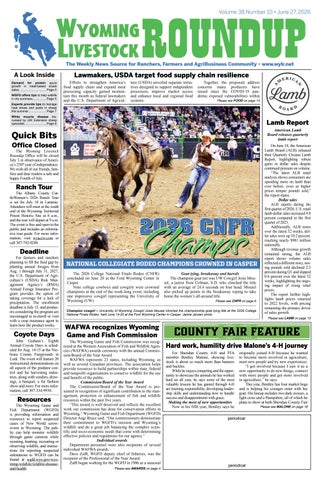
The 2026 College National Finals Rodeo (CNFR) concluded on June 20 at the Ford Wyoming Center in Casper.
Nine college cowboys and cowgirls were crowned champions at the end of the week-long event, including one impressive cowgirl representing the University of Wyoming (UW).
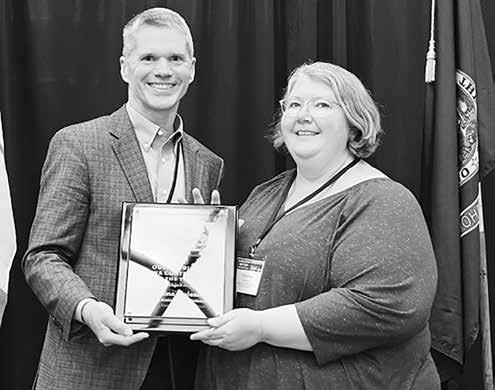
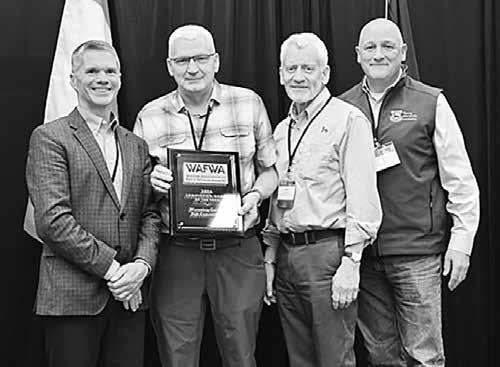
The Wyoming Game and Fish Commission was recognized at the Western Association of Fish and Wildlife Agencies (WAFWA) awards ceremony with the annual Commission/Board of the Year Award.
WAFWA represents 23 states, including Wyoming, as well as several Canadian provinces. The association helps provide resources to build partnerships within state, federal and nonprofit organizations to conserve wildlife for the use and benefit of the public.
Commission/Board of the Year Award
The Commission/Board of the Year Award is presented in recognition of significant contribution to the management, protection or enhancement of fish and wildlife resources within the past five years.
“This award is well deserved and reflects the excellent work our commission has done for conservation efforts in Wyoming,” Wyoming Game and Fish Department (WGFD) Director Angi Bruce said. “Our commissioners demonstrate their commitment to WGFD’s mission and Wyoming’s wildlife and do a great job balancing the complex scientific and socio-economic needs that come with determining effective policies and regulations for our agency.”
Individual awards Department personnel were also recipients of several individual WAFWA awards.
Dave Zafft, WGFD deputy chief of fisheries, was the recipient of the Professional of the Year Award.
Zafft began working for the WGFD in 1986 as a seasonal
Goat tying, breakaway and barrels
The champion goat tier was UW Cowgirl Josie Mousel, a junior from Colman, S.D. who clinched the title with an average of 24.4 seconds on four head. Mousel also picked up points in the breakaway roping to take home the women’s all-around title.
American Lamb Board releases quarterly lamb report
On June 18, the American Lamb Board (ALB) released their Quarterly Circana Lamb Report, highlighting robust gains in dollar sales despite continued pressure on volume.
“The latest ALB retail analysis shows consumers are spending more on lamb than ever before, even as higher prices temper pounds sold,” the report states.
Dollar sales
ALB reports during the first quarter of 2026, U.S. retail lamb dollar sales increased 9.8 percent compared to the first quarter of 2025.
Additionally, ALB notes over the latest 52 weeks, dollar sales were up 10.2 percent, reaching nearly $981 million nationally.
Although revenue growth remained strong, the ALB report shows volume sales reflected a different story, noting pounds sold declined 2.5 percent during Q1 and slipped 0.6 percent over the latest 52 weeks, highlighting the ongoing impact of rising retail prices.
The report further highlights lamb prices returned to 2022 levels, with pricing remaining the primary driver of sales growth.
For Sheridan County 4-H and FFA member Bentley Malone, showing livestock is about so much more than banners and buckles.
While he enjoys competing and the opportunity to showcase the animals he has worked hard on all year, he says some of the most valuable lessons he has gained through 4-H are learning responsibility, developing leadership skills and understanding how to handle success and disappointment with grace. Making the most of new opportunities Now in his fifth year, Bentley says he
originally joined 4-H because he wanted to become more involved in agriculture, meet new people and try new experiences.
“I got involved because I saw it as a new opportunity to do new things, connect with more people and get more involved in agriculture,” he says.
This year, Bentley has four market hogs and is helping his younger sister with her goat. His lineup includes two dark crosses, a light cross and a Hampshire, all of which he plans to show at both Sheridan County Fair

New World screwworm (NWS) is causing trouble and costing dollars in Texas and New Mexico. As of June 25, 20 cases have been found, and I figure if there have been 20 cases found in livestock and pets, there are probably another 20 cases or more in wildlife.
Female screwworms will find an open wound on any warm-blooded animal to lay its eggs, and the larvae eat the flesh surrounding the wound. If left untreated, the animal eventually dies.
The good part about releasing sterile male flies in affected areas is female flies only mate once, and if the wild female flies mate with a sterile partner, the pest’s life cycle stops. This control method worked to many years ago during an outbreak in the U.S. and Mexico.
The potential path of the pest looks to go north and northeast from South Texas, especially along the coast from Texas to Florida.
The High Plains Region looks to be safe from NWS, unless it shows up as larvae in an infected wound on an animal.
Weather patterns and temperatures will influence the movement of the NWS. Pupae development cannot live below about 58 degrees, and the adult fly’s favorite temperature is around 81 degrees. It looks like cool nighttime temperatures will control NWS.
Along with our temperatures, I hear rainfall and moisture will dictate to what extent the pest lives. If some do get to our region, they will soon be a dead this year with our drought.
Besides Mexico and the Central America, the U.S. Department of Agriculture (USDA) is doing a heck of a job controlling the fly. We have to work closely with these countries to control NWS in our states. Other countries live with NWS, while the U.S. doesn’t want the pest at all.
The USDA currently produces sterile flies in Panama and is investing $21 million to support Mexico. Moore Air Base near Edinburg, Texas currently has a fly dispersal facility where pupae from Panama arrive and are readied for distribution. USDA is also constructing a production facility at Moore Air Base which should be operational in the fall of 2027.
As of June 17, the number of sterile flies released in Texas and New Mexico was 135,623,026 via aerial dispersal, 12,079,200 via ground dispersal and 5,238,496 via vehicular dispersal.
In Wyoming, Gov. Mark Gordon convened an ad hoc animal health panel with state veterinary and public health officials to strengthen communication and preparedness efforts surrounding NWS.
The governor said, “The goal was to expand outreach ahead of Wyoming’s peak summer travel, backcountry recreation and rodeo season.”
Gordon also said, “There are no reported cases in Wyoming. However, Texas and New Mexico are tracking instances, so it is important to keep all citizens informed, including pet owners, campers, rodeo athletes and sportsmen, in addition to our ag, ranching and wildlife communities. I’m satisfied with the extensive outreach regarding NWS which has been outgoing to our ag, livestock and wildlife professionals.”
We applaud the governor and members of the group for being so proactive.

My daily prayers are that American farmers have a good year where they produce safe food and fiber for the people of this great country.
U.S farmers have proven over and over again to feed our people and provide food for many around the world.
The importance of American sugar production
More than 100 countries produce sugarbeets or sugarcane.
The sugarcane sector produces about 80 percent of the world’s sugar demand, and India is the largest sugarcane producer.
In the U.S., the sugarbeet and sugarcane industries need each other to maintain balanced sugar production for the benefit of American taxpayers.
To meet America’s sugar needs, the U.S. Department of Agriculture (USDA) monitors the amount of sugar produced domestically, along with sugar supplied by more than 41 foreign countries which have been given access through trade agreements to import sugar into the U.S. market at or near duty-free rates.
America provides market access to 41 countries and is the world’s biggest sugar importer, which explains why so many developing countries support the current U.S. sugar policy.
Lessons from history
My mother used to advise us about the lesson’s history can teach us.
Looking back at the history of this beloved country, America was once largely dependent on foreign nations for sugar.
By Klodette Stroh
Sugar was rationed 84 years ago during World War II. After the war, the U.S. government encouraged sugar production at home to make sure Americans were never again without this critical food ingredient.
History taught us another important lesson in 1974, when the U.S. Sugar Act expired. The world price of sugar skyrocketed to 60 cents per pound, and American consumers suffered. Then, the price dropped to three cents per pound, forcing many sugarbeet and sugarcane farmers out of business.
However, consumers did not see savings in their food prices.
These examples show why it is important for the U.S. to protect a strong and reliable domestic sugar supply.
Sugar program and farm bill
To protect taxpayers from unstable sugar prices and supply insecurity, Congress included a sugar program in the farm bill in 1981. This program stabilized the price at a reasonable level and assured American consumers, along with large sugar users such as candy, cereal and soft drink makers, a reliable and high-quality supply of pure, natural sugar.
The last farm bill, passed in 2018, expired in September 2023 and is currently running on a one-year extension.
Congress negotiates a new farm bill every five years. The 2023 Farm Bill was extended in September 2023 to be negotiated in 2024 and has a price tag of $1.5 trillion attached to it.
A flood of imported, subsidized foreign sugar is putting American farms and jobs at risk and jeopardizing the secure supply chain for sugar.
On April 30, the U.S. House of Representatives passed the Farm, Food and National Security Act of 2026. Now it will be taken to the U.S. Senate. Hopefully by the end of 2026 we will have a farm bill.
Sugarbeet production in the U.S.
Looking back to the history of sugarbeet production in America is very impressive to me.
Most sugarbeet crops are grown in the Western part of the U.S.
In 1902, federal irrigation projects were authorized by President Theodore Roosevelt to build dams and irrigation systems to grow crops and help populate the western states. Sugarbeets became one of the major crops grown by flood irrigation methods in cooler temperature areas.
Today, nine million tons of sugar are produced each year by 11,000 beet and cane farmers on two million acres.
Sugar creates more than 151,000 U.S. jobs in more than two dozen states and adds more than $23 billion to the U.S. economy.
The top states producing sugarbeets include Michigan, Montana, Idaho, Washington, Colorado, Nebraska, North Dakota, South Dakota, Minnesota, Oregon, California and my home state of Wyoming.
Approximately 1.1 million acres are used for sugarbeet production. Please see SUGAR on page 4
postage paid in Casper, WY Fax: 307-472-1781 • E-mail: roundup@wylr.net
DENNIS SUN, Publisher • Cell:
HANNAH BUGAS, Managing Editor • hannah@wylr.net GRACE SKAVDAHL, Editor • grace@wylr.net
CANDICE PEDERSON, Production Coordinator • candice@wylr.net
JODY MICHELENA, Advertising Director • jodym@wylr.net
DENISE OLSON, Classified Sales Manager • 307-685-8213 • denise@wylr.net
ANDREA ZINK, General Manager • andrea@wylr.net
CURT COX, Director of Livestock Field Services • 307-630-4604 • curt@wylr.net
CALLI WILLIAMS, Livestock Field Services Rep. • 605-695-1990 • calli@wylr.net
Livestock Roundup • P.O. Box 850 • Casper, WY 82602 Wyoming Livestock Roundup (USPS # 005-774) is published weekly by Maverick Press, Inc. P.O. Box 850 • Casper, WY 82602
Nebraska Extension Beef Systems will present a mineral nutrition event entitled “Making Mineral Supplementation Decisions with Confidence” on June 29 from 10 a.m. to 12 p.m. at the Prairie Winds Community Center in Bridgeport, Neb.
The program will aid livestock producers in making more informed mineral supplementation decisions to fit their operation and will provide practical information on evaluating mineral needs, as well as provide insight into how livestock producers can maximize their return on investment.
Information will also include understanding factors influencing mineral availability and identifying cost-effective supplementation strategies.
Producers are asked to bring their mineral tags.
The event is free, but to ensure enough materials are available, interested producers should RSVP to Brock Ortner at 308-327-2312.
On June 20, Jace Thompson of Billings, Mont. was crowned the 2026 World Livestock Auctioneer Champion.
The 2026 World Livestock Auctioneer Championship was held at St. Onge Livestock near Deadwood, S.D. as part of the Livestock Marketing Association’s (LMA) Annual Convention.
According to a June 23 Western Ag Network article, Thompson follows in the footsteps of his grandfather Warren Thompson and his father Ty Thompson, a past World Livestock Auctioneer Champion. The family has spent generations building a reputation for excellence in the auction business.
As the newly crowned World Livestock Auctioneer Champion, Thompson will serve as an ambassador for LMA and the livestock marketing industry over the next year. His primary goal is to help introduce more young people to the opportunities available in agriculture.
Thompson now begins his year-long role as ambassador for the livestock marketing industry and LMA.
On June 23, the Wyoming Livestock Board (WLSB) issued an update on Wyoming’s response to New World screwworm (NWS) being detected in the U.S.
As of June 25, there were 20 cases of NWS confirmed in the U.S., with 19 cases located in Texas and one case in New Mexico.
WLSB notes statewide response activities will follow the U.S. Department of Agriculture’s (USDA) New World Screwworm Response Playbook, which contains information on infested zones, requirements for leaving an infested zone, NWS fly surveillance and control and more.
Additionally, WLSB notes all animals originating from an NWS infested zone intended for importation into Wyoming are required to comply with the requirements outlined in the playbook, and pre-movement inspection certificates and certificates of veterinary inspection (CVI) for animals from infested zones must be verified by a WLSB representative.
Currently, WLSB does not have additional requirements for animals imported into Wyoming from an infested zone or infested state aside from requirements outlined in the playbook and the current state import rules.
Animal owners are responsible for following state import rules when bringing their animals into Wyoming, and veterinarians are responsible for completing CVI’s which comply with all state import rules.
For more information, contact WLSB at 307-777-7515 or e-mail lsbforms-applications@wyo.gov.
On June 3, Gov. Mark Gordon signed Executive Order (EO) 2026-03, Data Centers the Wyoming Way, establishing the Wyoming Data Center Development Framework to guide responsible development in Wyoming.
The EO outlines a set of principles to ensure Wyoming remains competitive in attracting investment while protecting ratepayers, natural resources, local communities and Wyoming’s way of life.
The framework emphasizes water sustainability, wildlife conservation, workforce development, transparency, grid resiliency and stewardship, community engagement and national security.
The EO directs executive branch agencies to coordinate efforts related to data center projects and identify opportunities to improve regulatory efficiency, transparency, workforce readiness and interagency cooperation.
The framework reinforces Wyoming’s commitment to ensuring new data centers bear the costs associated with their power demands, while encouraging projects which provide long-term benefits to Wyoming communities, workers, schools and local governments.
On June 10, U.S. Sen. John Barrasso (R-WY) welcomed Mike Vickrey of Pinedale to Washington, D.C. to testify on the importance of Colorado River negotiations during a Senate Energy and Natural Resources committee hearing.
Vickrey, a member of the Green River Valley Cattlemen’s Association, discussed the importance of water certainty for ranchers and farmers in Wyoming and other Upper Basin states. He also discussed the ways Wyoming contributes to conservation efforts which maintain water access for all seven Basin States.
In his testimony, Vickrey discussed how ranchers, farmers and other businesses in Wyoming depend on the Colorado River for water certainty.
Vickrey also discussed how water used in Wyoming is conserved for downstream use by Lower Basin states and said any Colorado River management plan should factor in the importance of changes to the water supply.
To view a transcript of Vickrey’s testimony, visit energy.senate.gov/services/files/BDE555AE-B354-4EC7A908-E6F63D08193B
On June 17, the U.S. Department of Agriculture’s (USDA) Rural Development (RD) Mission Area announced a modernization and restructuring effort to strengthen customer service, improve program accessibility and enhance support for rural communities across the country.
This effort aligns with USDA’s broader initiative to modernize operations, increase accountability and ensure federal resources are positioned where they can deliver the greatest impact.
RD maintains the largest field-based presence in the federal government, with more than 3,000 employees serving in over 400 offices throughout rural America.
Under this modernization effort, RD will maintain its National Capital Region (NCR) presence to be responsive to Congress, interagency needs, regulatory work and policy coordination, while relocating select NCR-based positions to St. Louis, Mo. and Dallas/Fort Worth, Texas.
These new locations will serve as operational hubs supporting loan and grant processing, program management and maintain the mission of serving rural communities.
On June 22, the National Wheat Foundation (NWF) hosted its annual educational wheat farm tour for Congressional staff, U.S. Department of Agriculture (USDA) employees, University of Maryland personnel and other stakeholders interested in learning about modern wheat production.
The tour was designed to provide participants with a greater appreciation for the complexity of modern farming and the broad network of professionals who work alongside producers to help deliver food, feed, fuel and fiber.
Attendees saw wheat being harvested and asked indepth questions about programs available to farmers and also had the opportunity to observe firsthand the stewardship practices farmers use to protect and enhance natural resources including soil, water, air and wildlife habitat.
“Nothing replaces the experience of standing in a wheat field and seeing firsthand the decisions, partnerships and investments which go into producing a successful crop,” said Scott Brown, Idaho wheat farmer and chairman of NWF.
“Farmers work every day to balance productivity, conservation and risk management while providing a safe and abundant food supply. Tours like this help connect policymakers and agricultural stakeholders with the realities of farming and build a greater understanding of the challenges and opportunities facing American agriculture,” he added.
The U.S. Department of Agriculture’s (USDA) Department of Foreign Agricultural Service (FAS) is currently accepting applications for its Agribusiness Trade Mission to Accra, Ghana, set for Sept. 22-25.
During the trade mission, U.S. participants will engage in targeted, one-on-one business meetings with qualified buyers from across the region.
Staff from USDA’s FAS and regional market experts will also provide in-depth market briefings, site visits and networking events to help American businesses successfully navigate the West African market.
“This mission to Ghana is a chance to introduce buyers from across West Africa to the highest-quality goods America’s farmers, ranchers and producers have to offer,” said USDA Under Secretary for Trade and Foreign Agricultural Affairs Luke Lindberg. “Expanding our export footprint here brings America’s bounty to new markets and brings new sales back to rural America, building strong farms and communities for generations to come.”
Interested exporters must register by July 1 via the application available at fas.usda.gov/topics/trade-missions/ghana-september-2026


How sugar is made from sugarbeets
To understand why sugar policy matters, it is also important to understand the work and cost involved in producing sugar here at home.
The process of making sugar from sugarbeets starts with sugarbeet seed companies, which provide certified beet seeds to growers. The cost of sugarbeet seed is between $250 and $300 per acre, mainly because of Environmental and Protecetion Agency safety regulations. Fertilizer itself costs more than $280 per acre.
After sugarbeets are harvested, they are transported to a factory. Each load is weighed and sampled before being delivered to the piling areas. The beet sample is checked for soil tare, which is the amount of non-beet material delivered. The sample is also checked for sugar content, which is the amount of sucrose in the crop, and nitrogen content, which helps recommend future fertilizer use to the farmer.
From these elements, the actual sugar content of the load is calculated, and the grower’s payment is determined.
At the factory, the beet roots are washed, mechanically sliced into thin strips and passed through a machine called a diffuser to extract the sugar into a water solution.
The final step involves molasses, which has been extracted from sugarbeets. It is placed in a centrifuge to remove the liquid and produce pure granulated sugar.
The rising cost of farming
American farmers’ operating margins are being squeezed each year due to rising labor, fuel, seed, fertilizer, equipment and interest rate costs.
My husband Rick and I grow our crops with flood irrigation, and the cost of fuel at more than $5 per gallon is unbelievable.
American farmers are some of the most efficient farmers in the world in their practices, but we must keep in mind today’s high cost of production. For sugarbeet
farmers in irrigated areas, production costs can be between $1,300 and $1,500 per acre.
Farming is a business, just like any other business. The cost of production has to be covered by the price of the commodity in order for farmers to keep farming. It is hard for any business to operate in the red. Low commodity prices drive American farmers out of production and into bankruptcy.
According to the American Sugar Alliance (ASA), 110 foreign countries subsidize their sugar production, consumption and trade in some way. This makes sugar one of the most heavily subsidized commodities and, therefore, distorted markets in the world.
Brazil, India and Thailand are the largest sugar exports in the world. They all heavily subsidize their own sugar producers, which helps drive global prices below the cost of production. India sugar producers received $17.6 billion
sugar subsidies last year.
Please bear in mind, U.S. sugar producers support this kind of subsidyfree, free-trade system. It’s known as the zero-forzero sugar policy and it operates at no-cost to U.S. consumers.
ASA stated, “Without American family farms and American factories which produce real sugar, America will be dependent on unreliable foreign suppliers for this essential food ingredient. Passing a farm bill is a critical step forward in ensuring we do not offshore our family farms or American food production.”
U.S. history has given us a good example to not make the same mistake again. Preserving American factory jobs, American family farms and a strong supply of an Americanmade ingredient is something worth fighting for.
U.S. farmers are the hand that feeds us and most of the world.
Klodette Stroh is the national sugar chairman of Women Involved in Farm Economics. She can be reached at strohfarms@ tritel.net.
NO SALES FROM JULY 1ST TO JULY 7TH
Wednesday, July 8th - Pair & Bred Cow Special Friday, July 10th - All Classes
Wednesday, July 15th - Feeder Special Friday, July 17th - All Classes

Michael Schmitt - Torrington, WY 307-532-1776
Ty Thompson – Lusk, WY 307-340-0770
Zach Johnson Lingle, WY –307-575-2171
Jeff Ward – Laramie, WY 307-399-9863
Tam Staman – Crawford, NE 308-631-8513
Justin Smith - Lusk, WY 307-340-0724
Hunter Dockery - Lusk, WY 307-340-1202
Ben Kukowski - Kaycee, WY 307-217-1472
Garrett Nunn - Laramie, WY 307-460-1649
-
technician and earned his master’s degree in fisheries biology in 1991.
Zafft began his fisheries career in earnest as a Lander Regional Fisheries biologist. He also worked as an instream flow biologist, fish population biologist, supervisor of the aquatic assessment crew, assistant fisheries management supervisor and fisheries management supervisor.
Christina Maleesa, WGFD federal aid coordinator, received the Outstanding WAFWA Contributor of the Year for her work both within the state and with partners on grant writing.
Maleesa has worked for WGFD since 2014 and has served as the federal aid coordinator for the department since 2023.
In addition to her fiscal oversight, she represents U.S. Fish and Wildlife Service Region Six on the national Federal Aid Working Group. Her commitment to excellence has earned her numerous honors, including the WGFD 2022 Fiscal Employee of the Year and a Director’s Coin for her administration of the Governor’s Big Game License Coalition.
“We are proud of both Zafft and Maleesa, and we are grateful for all they do to ensure our ability to continue serving Wyoming and its wildlife,” Bruce said. “Our agency is full of dedicated professionals who help keep Wyoming at the forefront of conservation in the country, and these awards are well deserved.”
WGFD is dedicated to conserving, enhancing and protecting Wyoming’s exceptional fish and wildlife resources and the habitats that support them. For more information, visit wgfd.wyo.gov
Staman – Crawford, NE
Smith - Lusk, WY 307-340-0724
Hunter Dockery - Lusk, WY 307-340-1202 ***Ben Kukowski - Kaycee, WY 307-217-1472
Garrett Nunn - Laramie, WY 307-460-1649 *** Scott Redden - Burns, Co 970-596-3588
Protein-rich meat snacks are entering a period of accelerated growth as dietary preferences and eating habits evolve.
Increased use of GLP-1 medications for weight loss has elevated the importance of protein intake and smaller portion size, while broader consumer interest in convenience and value continues to shape food buying patterns.
Together, these trends have fueled a sharp rise in meat snack sales and significant investments in new processing capacity.
Growing popularity
According to a new report from CoBank’s Knowledge Exchange, meat snacks represent a major area for product innovation, allowing traditional animal protein companies to become more consumer-centric and differentiate their offerings in an increasingly competitive marketplace.
While beef has historically been the primary protein source for meat snacks, the report notes opportunities for growth and innovation extend to pork, poultry and even exotic meats.
“Consumer demand today is largely driven by a focus on protein content, nutrient density, clean
labels and reduced processing,” said Brian Earnest, CoBank lead animal protein economist. “Meeting these preferences is crucial in today’s food landscape, and meat snacks check several of the boxes.”
“We expect beef will continue to dominate the category, but with supplies constrained due to a contracting U.S. cattle herd, the opportunity for pork and poultry to offer valueoriented meat alternatives is rising,” Earnest added.
Meat snack sales have increased more than 45 percent in the past four years, reaching $4.4 billion annually, according to Circana.
This growth has triggered a wave of investments in the category.
Since 2020, over $1 billion in additional processing investment for meat snacks has been announced, compared with $8 billion across all animal protein processing.
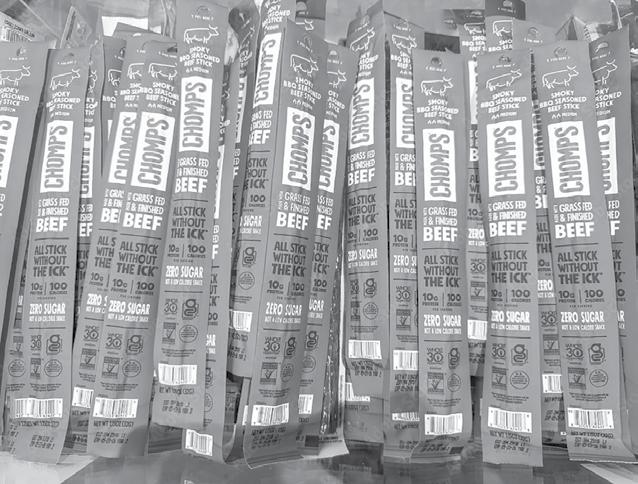
In 2025, several plants opened or began construction across the country, including investments from popular brands like Chomps, Jack Link’s and Archers.
Jack Link’s announced a $450 million investment for a new plant in Georgia, while Chomps has new man-
ufacturing facilities under construction in Missouri and Nebraska to double its meat snack production.
Market challenges
While these investments reflect confidence in the long-term momentum for meat snacks, the category is not without risk.
The U.S. Dietary Guidelines for Americans released earlier this year emphasize protein intake but also advise minimizing highly processed foods. This could pose challenges for some meat snack products, particularly if new regulations or legislation defining ultra-processed foods are introduced.
However, many recent product launches have explicitly emphasized simplicity, transparency and fewer ingredients.
Jack Link’s is positioning its three ingredient meat snacks as “honest, simple, minimal ingredient products.”
Archer Meat Snacks grew sales by 57 percent in 2025, driven in part by its clean label, high protein and culinary inspired flavor offerings.
Beef supply constraints could present another hurdle for expanding meat snack production.
More stable supplies
After a winter of record-low precipitation and unseasonably warm temperatures, the Wyoming Game and Fish Department (WGFD) is closely monitoring habitat conditions and wildlife impacts across the state.
The lack of consistent snowpack at lower elevations led to an unusually early spring green-up or resulted in no significant greenup at all in places, especially across southeast Wyoming.
Wildlife impacts
While the mild winter and early growth of vegetation led to high winter survival, wildlife managers are concerned about how long those nutritious forage conditions will last, even with the slight uptick in moisture which has fallen this spring.
Limited deep soil moisture is expected to reduce annual production of important shrubs used by pronghorn and mule deer.
Biologists expect a shortened window of high-quality forage could lead to lower fawn survival and reduced weaning weights this fall, as females face high nutritional demands while raising young and preparing for winter.
Wetlands and riparian areas may also experience lower-than-normal water levels this year. These areas serve as important “sponges” on the landscape, providing water, food and cover for a wide variety of wildlife species, as well as recharging aquifers which supply streams.
As smaller, ephemeral streams dry up, wildlife will increasingly concentrate around livestock tanks, irrigated agricultural lands and other dependable water sources. This can increase wildlife conflicts and damage concerns on private lands.
WGFD uses a variety of management tools to maintain healthy populations, and hunters and landowners are an essential component in sustaining herds and habitats.
By adjusting the structure of hunting seasons, managers can partner with hunters and landowners to reduce wildlife conflicts and help maintain herds at carrying capacity.
This year, managers in southeastern Wyoming increased a number of license types for this reason, including many pronghorn opportunities as well as maintaining
of pork and poultry, however, create opportunities for new product innovation and further category expansion. Ready-toeat bacon and pork sticks are gaining traction, while turkey and chicken sticks offer convenient, on-thego protein options which could broaden the category’s appeal.
Meat snacks have also expanded their audience beyond the traditional young male consumer.
Chomps reports 70 percent of its consumers are female, and the potential to reach new demographics – including families and
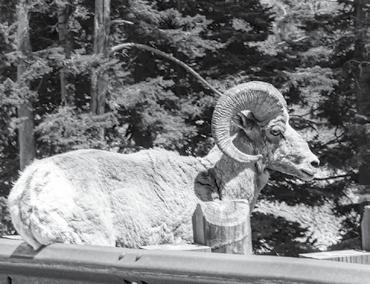
WYLR photo
unlimited Type Eight cow/calf elk licenses in several areas.
Habitat counts
To improve long-term drought resilience, WGFD is executing several habitat improvement projects in 2026.
Three beaver dam analog projects and spring protection efforts will protect water sources for both wildlife and livestock.
Following treatment of more than 50,000 acres of cheatgrass in 2025, additional aerial herbicide treatments are also planned at the Thorne-Williams and Laramie Peak Wildlife Habitat Management Areas to ensure native vegetation has the best possible chance to recover when moisture returns.
How to help
Residents and recreationists can also help wildlife during dry conditions by giving wildlife extra space, particularly around water sources and avoiding repeated disturbance; keeping dogs under control, especially near wetlands, riparian areas and crucial summer habitat; reporting sick or unusually stressed wildlife to local WGFD personnel via the Stop Poaching Hotline at 1-877-WGFD-TIP and/or volunteering for habitat improvement projects or picking up trash at favorite outdoor recreation areas.
Even during difficult drought conditions, habitat improvement efforts, responsible recreation and public lands stewardship can help Wyoming’s wildlife remain resilient
WGFD is dedicated to conserving, enhancing and protecting Wyoming’s exceptional fish and wildlife resources and the habitats that support them. For more information, visit wgfd.wyo.gov
and growth – The increase in popularity of meat-based snacks has triggered a wave of recent investments in the category, including new plants opening by
younger snackers – continues to grow.
Reflecting this shift, several meat snack companies have broadened their marketing strategies to appeal to a wider range of consumers.
“Protein has become a top priority for consumers in America and globally, and meat snacks are well-positioned to help meet this demand,” said Earnest. “While growth in some food categories may be tapering, meat snack sales are accelerating. Innovation, value, portability and rising protein demand are all spur-
ring optimism for continued growth in meat snack items alongside other core protein offerings.”
CoBank is a cooperative bank serving vital industries across rural America. The bank provides loans, leases, export financing and other financial services to agribusinesses and rural power, water and communications providers in all 50 states. Headquartered outside of Denver, CoBank serves customers from regional banking centers across the U.S. and also maintains an international representative office in Singapore.

In second place was Faith Lundberg of Tarleton State University, followed by Alyssa Gary of McNeese State University.
In the breakaway roping, Texas Tech Cowgirl Jessi Everett finished in first place with a total of 9.9 seconds on four runs.
University of West Alabama Cowgirl Ivy Bone finished second, followed by South Plains College Cowgirl Kassidy Robertson in third.
The barrel racing crowned Texas A&M University’s (TAMU) Devin Young as champion, with a total time of 55 seconds across four runs.
Raegan Chance of Northwest Mississippi Community College came in second, followed by Ceily Simpton of TAMU in third.
Bulls and broncs
In the bull riding, Odessa College Cowboy Hayden Welsh came out on top with an average score of 251.75, highlighted by
an 88.25-point ride during the short go.
Lane Vaughan of Western Texas College finished second, followed by Brock Cooper of Treasure Valley Community College in third.
The champion saddle bronc rider was Tagg Bond of Clarendon College, who finished the week with an average score of 340 points across four rides.
Jack Ford of McNeese State University came in second, followed by Dane McPhail of Fort Scott Community College.
The bareback riding saw a three-way tie for first between Missouri Valley College Cowboy Kooper Heimburg, Clarendon College Cowboy Carson Hildre and Tarleton State University Cowboy Daxtyn Feild, who split the championship with scores of 326.50 points on four rides.
Roping and wrestling
Bismarck State College Cowboy Tyler Hansen won the tie-down rop-
ing title with an average time of 38.3 seconds on four runs.
Cutter Pareo of Eastern New Mexico University came in second, followed by Clint Southworth of the University of Tennessee-Martin in third.
In the team roping, Marcus Marriott of Blue Mountain Community College and Sam Saunders of Treasure Valley Community College took first place with a total time of 23.1 seconds on four head, highlighted by a lightning-fast 4.4-second short go run.
Belden Cox and Jett Stewart of Weatherford College finished second overall, followed by Southern Utah University duo Blake Bowler and T.J. Bowler in third.
In the steer wrestling, Clarendon College’s Andrew Morian claimed the championship with an average of 17.1 seconds on four head.
Parker Sandstrom of Bismarck State College finished second, followed by Clay Tom Hurt of Sam Houston State University in third.
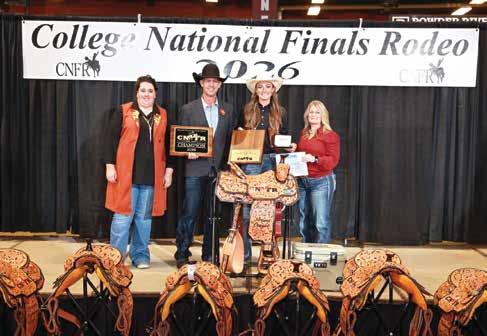
Teams and all-around The 2026 Champion All-Around Cowboy was Bismarck State College Cowboy Tyler Hansen who finished the week with a total of 310 points, and the 2026 Champion All-Around Cowgirl title went to Mousel who swept the competition to finish the week with
a total of 395 points.
Clarendon College finished as the champion men’s team with a total of 1,100 points and TAMU came out on top as the champion women’s team with a total of 692.5 points.
The UW women’s team finished second overall, collecting a total of 405 points
while the UW men’s team came in sixth with a total of 485 points.
The CNFR is slated to return to Casper in June of 2027.
Grace Skavdahl is the editor of the Wyoming Livestock Roundup. Send comments on this article to roundup@wylr.net.
Researchers have uncovered new insights into how phosphorus from recycled materials moves through soil, offering guidance to support more sustainable fertilizer use.
Phosphorus is an essential nutrient for plant growth, yet many soils lack enough of it to support strong crop yields. Farmers often rely on fertilizers made from mined phosphorus – a limited, nonrenewable resource.
As global agriculture shifts toward more sustainable practices, researchers are exploring alternative fertilizer recipes made from waste materials. These “recycled” ingredients include sewage sludge, leftover solids from water treatment; sewage sludge ash from when those leftovers are burned and meat and bone meal –bones and tissues which are not consumed.
Phosphorus research
In a recently published study, researchers from Den-

mark, Brazil, Germany, Lithuania and Switzerland used the Canadian Light Source (CLS) at the University of Saskatchewan to examine how phosphorus from these recycled fertilizers behaves in different soils over time.
The goal was to better understand when and where this phosphorus becomes available to plants – critical information for improving its effectiveness in agricultural settings.
The researchers used the CLS to identify the chemical forms and precise amounts of phosphorus present in both the fertilizers and soils.
“Phosphorus is one of the most difficult elements in the soil to analyze in a conventional lab,” says Aimée Schryer, lead author of the study and postdoctoral researcher at the University of Copenhagen. “It’s hard to make reliable conclusions or recommendations producers can use in the field based on those results. It’s
more of a guess.”
“This is why using the synchrotron was so helpful. It allowed us to discover exactly what’s within our soils and in these recycled fertilizers so we’re much more confident with our conclusions,” Schryer adds.
Results and impact
The team found recycled phosphorus behaves differently than conventional mineral fertilizers.
While mineral phosphorus typically becomes less available over time, some recycled sources – particularly those derived from sewage sludge – became more available with time and moved further through the soil as time passed.
Having the recycled fertilizer move further through the soil is a significant advantage over mined fertilizer, which normally stays put, explains Schryer. More movement can make the fertilizer easier for plants to access.
The study also found
Austin Snook • 307-290-2161
Taylor Snook • 307-290-2273
Craig Deveraux • 307-746-5690
Dan Catlin • 406-671-7715
Clint Snook • 307-290-4000
Cheyenne Seymour • 605-641-0638
Casey Sellers • 307-217-2614
Jim Forbes • 307-351-5932
"From

soil type plays a significant role. Certain combinations of soil and recycled fertilizer improved phosphorus movement and availability, while others limited it, even under favorable conditions.
Overall, the results show a one-size-fits-all approach does not work when it comes to recycled fertilizers. Instead, farmers and researchers must consider both the type of soil and the timing of application to maximize effectiveness.
Daniel Escoz • 307-217-1440
Tye Curuchet • 307-351-8666
JJ Butler • 307-231-6878
Chris Rodriguez • 307-217-2172
Kyle Kallhoff • 605-881-1526
Kade Kinghorn • 307-620-0525
Jake Underwood • 307-660-5989
Donny Scantling • 307-217-0537
June 24, 2026 • No Report
Thank you for your business!
Using advanced tools at the CLS allowed the team to better understand the different forms of phosphorus present – information which is essential for making accurate predictions about how fertilizers will perform.
This research represents an important step toward reducing reliance on mined fertilizers and advancing a more circular agricultural system, where waste materials are reused productively.
Necessary nutrient – In a recently published study, researchers found recycled phosphorus became more available to plants with time, whereas conventional mineral phosphorus typically becomes less available with time.
Schryer says, while field studies are an important next step, her team’s findings will help inform future research and the development of practical recommendations for farmers.
Victoria Schramm is a communications coordinator for CLS, a national research facility based at the University of Saskatchewan in Saskatchewan, Canada. This article was originally published by CLS on June 9.


I keep hearing how the beef industry needs to use social media to be totally transparent about the way we produce beef. I couldn’t disagree more.
Does a gastroenterologist explain everything they’ll do before giving you a colonoscopy? Do lab technicians write tell-all books about how they process urine or fecal samples? Do coroners have websites showing them performing an autopsy? Do politicians tell their constituents about all of their dirty little secrets?
Of course not, and I
can tell you from experience there are things we should keep to ourselves if we want to keep consumers eating beef.
For example, in the April issue of one of my favorite magazines, Gulf Coast Cattleman, there was a story titled “A Closer Look” which was a very graphic story about the chip business, and I’m not talking about computer chips.
The story explained how ranchers should score their cows’ manure from one to five, with three being optimal – the perfect cow pie, if you will.
Number five is like hard balls stacked on top of each other, while number one manure is jet propulsion feces coming out of a cow’s butt with “the consistency of cream soup.”
The story included fullcolor pictures of each type of manure.
Although the story was informative, I gotta say, after reading it I lost my appetite and couldn’t finish my lunch of Campbell’s Creamy Mushroom Soup.
While this story was very apropos in a cattleman’s magazine, I’m not sure it’s something we should share in the New York Times or on YouTube. Should we use checkoff dollars to show examples of each kind of fecal matter in Good Housekeeping? Of course not.
Here’s another example which did not go over very well after I was asked
by a female friend how I’d go about artificially inseminating a cow.
I explained restraining the female bovine in a chute and how one’s arm is shoved into the rectum of a cow first to remove any manure, then reinserted to grab the cervix.
It was about this time my traumatized friend fainted. The last I heard, she’d become a vegan, joined a commune and was living in a yurt.
I’ll never forget the incident occurring on a United flight years ago.
As a writer, when I’m short on ideas, there are two things I can do guaranteed to give me inspiration – take a steamy, hot shower or fly on a commercial airliner.
Baxter Black told me some of his best stuff was written on an airplane.
Looking out at the clouds from a window seat
always made me as calm as a cadaver in a casket and my creativity flowed freely, so I always used this time to write.
Naturally, I never encouraged conversation on an airplane, but there was one guy years ago in the middle seat who insisted on trying to converse with me.
He asked, “What do you do for a living?”
I explained I was a rancher, and he said he’d never met one before so he had several questions he was confused about –specifically the difference between a bull and a steer.
In an effort to curtail the conversation, I went into graphic detail about a couple ways to turn a bull into a steer.
“First you throw the bull calf to the ground and either use a Callicrate Bander to apply a very
tight band at the base of the bull’s scrotum, which would – over time – atrophy the bull’s testicles and they’d fall off,” I explained. “Or you can cut off the bottom one-third of the bull’s scrotum and pull on both spermatic cords then use a tool to crush the cords and cut off the testicles which we’d eat later for lunch.”
By this time, you could hear a pin drop in the 737 as those within ear shot were hanging on to every word. The women were nodding their heads up and down and cheering on the male’s emasculation, while the men were squirming in their seats and turning green in the gills.
I learned from this experience if we’re gonna be totally transparent about everything we do in this business, always have the barf bag out of the seat pocket and available for use.
A hot, dry summer is in full swing across the West, and experts are reminding sheep producers seasonal heat and insect pressure can have significant impacts on flock health.
With the potential to affect everything from feed intake and weight gain to immune function and reproductive performance, proactive management is key to minimizing loss and keeping sheep healthy and productive throughout the hottest months of the year.
Mitigating heat stress
According to multiple Extension publications from services in Nebraska, Missouri, Ohio and Alabama, heat stress occurs when animals cannot dissipate enough heat to maintain their body temperature.
Although outdoor temperature is the most obvious component affecting heat stress, other factors like humidity, sunlight exposure, wind speed and water availability can also influence body temperature regulation.
In a June 18 newsletter, the Idaho Sheep and Goat Health Board (ISGHB) notes signs of heat stress include increased panting and respiration, drooling, lethargy, reduced grazing activity, going off of feed altogether and congregating in shade or around water sources.
“Producers should adopt a multidisciplinary approach to lessen the impact of high heat and humidity,” states University of Missouri Small Ruminant Specialist David Brown, further encouraging producers to provide adequate shade and ensure sheep have access to cool, clean water at all times.
Brown notes, on average, sheep and goats will drink one to two gallons of water a day and lactating animals will consume even more. He cites research conducted at the University of Maryland showing
sheep drink 12 times more water when it’s dry and the temperature exceeds 100 degrees Fahrenheit.
Many livestock specialists also recommend handling and transporting animals during early morning or later evening hours when temperatures are lower and moving animals to barns, temporary structures or other shaded areas with ample air circulation during heat waves.
Shearing sheep in the spring is also critical, as sheep with heavy fleeces or too little wool are less tolerable to hot, summer temperatures.
“Spring shearing allows for enough wool growth prior to summer for heat to escape the sheep’s body,” explains ISGHB. “Shearing just before a heat wave can cause unintended stress like sunburn and decreased ability to regulate body temperature effectively.”
Brown echoes this sentiment, citing studies showing sheep with a one-inch fleece tolerate higher temperatures than sheep with less wool.
Reducing pest pressure
As temperatures climb, insect populations do too.
Flies, gnats, ticks and other biting insects can create constant irritation and cause sheep to spend less time grazing and more time fighting flies.
ISGHB notes, “Heat and insects exemplify each other’s effects. As temperatures rise, insect populations explode.”
The board goes on to note several fly species can pose challenges for sheep producers.
“House flies can carry diseases, stable flies and black biting flies leave behind painful bites and blowflies can cause fly strike in areas of soiled wool or open wounds,” ISGHB states.
To combat this, experts recommend integrated pest management, including a combination of sanitation,
grazing management and chemical controls.
Removing manure accumulation, maintaining clean feeding and watering areas and eliminating standing water can help reduce insect breeding sites. Producers may also utilize approved sprays, pour-ons, dips and other pesticides, and experts recommend rotating products to avoid resistance.
Additionally, experts say rotational grazing systems can also help disrupt insect life cycles and reduce pasture overcrowding, and the American Consortium for Small Ruminant Parasite Control recommends producers incorporate fecal egg counts and FAMACHA scoring into their parasite management programs.
Nutrition and breeding considerations
Stress from heat and insects can have lasting impacts long after the summer is over.
According to ISGHB, heat-stressed animals will experience reduced feed consumption, lower average daily gains, compromised immune function and increased susceptibility for disease.
“Summer heat stress and insect presence can impact lamb health during vital growth stages,” the board writes. “During the summer, maximize nutrient density while minimizing digestive heat. Feed growing lambs during the coolest parts of the day; ensure easy access to cool, fresh water
and electrolytes and reduce high-fiber forages as they generate excess body heat.”
Researchers have also documented reproductive impacts from prolonged heat and insect stress.
According to University of Minnesota Extension, elevated temperatures may reduce sperm production and libido in rams while negatively affecting embryo survival and fetal development in ewes.
To prepare for fall breeding season, producers should ensure rams are in good body condition, are free of parasites and receive adequate nutrition leading up to and after the breeding season.
Producers may also consider reviewing a flush-
ing plan for their ewes prior to breeding.
“This may look like movement to high-quality pasture or supplementation with a high-energy diet,” ISGHB says. “Ensure selenium is always offered or provide a complete mineral mix.”
“Each operation is run in its own unique way. These are a few considerations while navigating the hot and ‘buggy’ season ahead,” the board continues. “External factors may be out of our control, but weathering the effects is always possible with preparation.”
Hannah Bugas is the managing editor of the Wyoming Livestock Roundup. Send comments on this article to roundup@wylr.net.

During an April 27 episode of the American Sheep Industry Association (ASI) Research Update Podcast, University of Wyoming Extension Sheep Specialist Dr. Whit Stewart discusses risk factors for white muscle disease in lambs, as well as the importance of proactive nutrition to help combat the issue.
Hosted by Jake Thorne, Texas A&M AgriLife Extension sheep and goat program specialist, the episode delves into an issue which can quietly rob producers of lamb vigor, growth and survivability – selenium deficiency.
“From weak newborn lambs to cases of white muscle disease, getting trace mineral nutrition right can have a major impact on flock performance and the bottom line,” Thorne emphasizes.
Stewart’s comments focus on how to identify and combat risk factors for selenium deficiency leading to white muscle disease and emphasize the importance of proactive nutritional management practices to help producers ensure lamb health.
White muscle disease
To kick off the conversation, Stewart provides a scientific explanation of white muscle disease and its relationship to selenium deficiency.
White muscle disease, or nutritional myopathy, is a degenerative condition of skeletal and cardiac muscle caused by failure of the antioxidant system, Stewart explains.
The most common causes of white muscle disease are selenium deficiency and vitamin E deficiency, as both nutrients play a vital role in regulating internal functions.
In cases of white muscle disease, oxidative damage causes muscle cells to break down resulting in tissue death and a whiteish appearance to the muscle.
In skeletal cases, Stewart says general weakness, stiff gaits and difficulty standing are all warning signs of the disease, while cardiac cases often result in sudden death, paralysis and respiratory distress.
“The hallmark is loss of function, not struc-
tural abnormality,” Stewart emphasizes. “If the system falls behind, you start to see these problems.”
Importance of selenium
Selenium plays a vital role in several key bodily functions. In sheep, Stewart explains higher levels of selenium have been linked to better performance under heat stress conditions, as well as improved reproduction.
The mineral is also critically important to regulating thyroid function, as well as neutralizing oxidative stress and promoting muscle health.
For these reasons, ensuring adequate selenium intake is vital to ensuring flock performance in ewes, lambs and rams alike.
Ensuring adequate intake
Stewart notes promoting sufficient selenium levels in lambs starts with implementing proper nutritional strategies in ewes, emphasizing the process of passive transfer helps equip lambs with essential nutrients including selenium.
“A lot of minerals are deposited across the placenta, especially as the

fetus is developing,” Stewart says. “Requirements increase dramatically from breeding to gestation and into lactation.”
“Ewes are not only producing a lot of energy to produce milk, but they’re also shuttling minerals,” he adds. “Oftentimes we forget – especially with selenium –a good mineral program and ensuring good intake during gestation is a way to fortify lambs growing inside ewes with an adequate mineral status.”
Further, he notes there are injectable solutions which can help treat true cases of selenium deficiency in lambs but strongly recommends producers focus on proper nutrition as a preventative measure first and take the proper diagnostic steps to identify white muscle disease before administering injectables indiscriminately.
Regarding whole flock health, Stewart says having a good vitamin and mineral package to supplement alternative feed sources in areas of drought and on ranges with poor-quality forage is vital.
Testing protocols
Stewart explains there are several testing options producers can implement to monitor selenium levels in soils and feedstuffs, including supplements, and recommends producers do so to better understand intake levels.
He also warns producers to be wary of selenium toxicity and take extra precautions to ensure supplements do not exceed the recommended limit and not to feed
excess supplements in areas of selenium-rich forage.
On the topic of ranges, Stewart recommends testing soils across all potential grazing sites and testing any outside feed sources – particularly hay fed during lambing – for selenium levels.
In cases of death loss where producers are concerned about white muscle disease, Stewart recommends testing tissue samples to analyze nutrient deficiencies and comparing the results to evaluate management practices.
“Testing biological tissue will tell you with a high degree of certainty whether your management protocol was adequate or not,” Stewart says, adding local Extension resources and state diagnostic labs provide reference ranges to
help interpret findings.
Overall takeaways
In closing, Stewart offers some overall takeaways, once again emphasizing ensuring adequate selenium intake starts with providing proper nutrition.
Further, he reiterates passive transfer from colostrum equips newborn lambs with vitamins and minerals in addition to antibodies and recommends paying close attention to ewe nutrition and management to ensure a healthy lamb crop.
“Get a good program in place at breeding to ensure these animals get off to a better start,” Stewart says.
“Prioritize management when it pays off the most.”
Grace Skavdahl is the editor of the Wyoming Livestock Roundup. Send comments on this article to roundup@wylr.net.

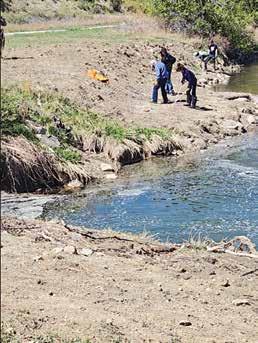
The Wyoming Game and Fish Department (WGFD), in collaboration with local conservation partners, has initiated a critical bank stabilization project along the North Platte River.
Located adjacent to the Casper Regional Office, the project incorporated an inchannel rock vane and 200 feet of woody toe to stabilize the eroding area. Once construction was complete, additional “living structures” – specifically transplanted native willows – were staked to reinforce the shoreline and protect the river’s ecosystem.
The North Platte River is a world-renowned trout fishery which serves as a primary source of municipal water and a central hub for outdoor recreation. However, heavy runoff and high usage can accelerate bank erosion, introducing excessive sediment into the water.
“Willows are the ‘anchors’ of a healthy riverbank,” says John McCoy, WGFD Casper Region aquatic habitat biologist. “Unfortunately, staking willows along an eroding bank often isn’t enough in a degraded condition. By installing in-stream structures, we can take the pressure off of the impacted riverbank and allow staked willows and other riparian vegetation to take hold, while also improving localized trout habitat.”
“Conversely, the instream structures would not be able to persist in the long term without the establishment of willows. The success
of the riverbank stabilization relies on both treatments,” McCoy continues. “Unlike concrete or rip-rap, willows grow and adapt, providing a long-term, self-healing solution to erosion.”
The importance of willows
The role of these native shrubs extends far beyond just holding dirt. The stabilization project provides fourfold benefits for the Casper community.
First is fish habitat. Overhanging willows provide crucial shade to keep water temperatures cool and offer cover where trophy trout can hide from predators. Shaded cover is critical in times of low water and drought, like humans may experience this summer. They also host terrestrial insects which fall into the river, providing a consistent food source.
Willows also serve as wildlife corridors. The thickets created by these transplants provide nesting habitat for songbirds and cover for small mammals and mule deer.
Water trails and recreation are also a benefit. For kayakers, rafters and floaters, stabilized banks mean safer entry and exit points and fewer dangerous undercut banks which can trap watercraft.
The fourth and final benefit is municipal water quality. By reducing erosion, the project prevents silt and sedi ment from clouding the water, which reduces the cost and complexity of water treatment for the City of Casper.

A community effort Willow staking was made possible by the dedicated, hands-on help of the Grey Reef Chapter of Trout Unlimited. Volunteers assisted WGFD in the careful collection of willow cuttings from healthy donor sites and the subsequent planting along the river’s edge.
“We want to extend a sincere thank you to the Grey Reef Chapter of Trout Unlimited,” says McCoy. “Their commitment to the North Platte ensures this river remains a crown jewel of Wyoming for generations
to come. This isn’t just about the fish, it’s about the health of the entire Casper corridor.”
Residents are encouraged to watch the progress of the new plantings as they leaf out this spring, and WGFD asks recreationists avoid walking directly on the newly planted willow stakes to allow their root systems to take hold.
WGFD is dedicated to conserving, enhancing and protecting Wyoming’s exceptional fish and wildlife resources and the habitats that support them. For more information, visit wgfd. wyo.gov




June 25-July 1 Great American State Fair, National Mall, Washington, D.C. For more information, visit freedom250.org/celebration/the-great-american-state-fair
June 26-27 National Bison Association Western Regional Bison Conference, Syracuse, Utah. For more information, visit nationalbison.org/wp-content/ uploads/2026/03/2026-Western-Bison-Conference.pdf
June 29 Nebraska Extension “Making Mineral Supplementation Decisions With Confidence” Program, 10 a.m.-12 p.m., Prairie Winds Community Center, Bridgeport, Neb. For more information, call Brock Ortner at 307-327-2312.
June 30 2027 State Wildlife Action Plan Virtual Public Meeting, 1-2 p.m., online. For more information, visit wgfd.wyo.gov/wyoming-wildlife/wyoming-state-wildlifeaction-plan
June 30 Producers and Agricultural Professionals Field Day, Powell Research and Extension Center, Powell. For more information, visit facebook.com/p/PowellResearch-and-Extension-Center
July 1 Wyoming Livestock Board “What U.S. Livestock Producers Need to Know About Foot and Mouth Disease Vaccine” Webinar, 10 a.m., Zoom. For more information or to register, visit us02web.zoom.us/webinar/register/WN_ YUo5Xh9MTWetuJAEOY1zVA?utm_medium=email&utm_source=govdelivery#/ registration
July 1 University of Wyoming Sheridan Research and Extension Center Field Day, Sheridan Research and Extension Center, Sheridan. For more information, contact shrec@uwyo.edu.
July 3 Wyoming Livestock Roundup Office Closed in observance of Independence Day. Wishing all of our friends, families and dear readers a safe and happy Fourth of July.
July 3-4 81st Annual Ten Sleep Rodeo, Ten Sleep. For more information or to purchase tickets, visit tensleeprodeoassociation.com or call 307-251-7693.
July 3-11 Central Wyoming Fair and Rodeo, Casper. For more information, visit centralwyomingfair.com
July 6-11 98th Annual Rooftop Rodeo, Estes Park, Colo. For more information or to purchase tickets, visit rooftoprodeo.com/
July 9 2026 Range War Rodeo Series, 7 p.m., Buffalo. For more information, visit rangewarrodeo.com
July 10-12 Up in Arms LLC Flea Market and Gun Show, Cody Recreation Gymnasium, Cody. For more information, call 308-420-2295.


Shaffer, Ryan - Thermopolis
Red Cow, 1200# $18450 1 Red Cow, 1320# $18150 Redland, Spencer - Basin 2 Blk Cows, avg. 1270# $18400 Love, Valerie - Thermopolis 2 Rd/Blk Cows, avg. 1160# $18400 1 Red Cow, 1225# $18200 Hampton Sheep Co. - Ten Sleep 1 Blk Cow, 1065# $18400 Whitlock, Emily - Lander
2 BWF Cows, avg. 1365# $18400 Whitlock, Will - Alcova
2 Blk Cows, avg. 1315# $18350
2 BWF Cows, avg. 1413# $18200 Lyman Ranch Co. - Ten Sleep
1 Blk Cow, 1440# $18250
2 Blk Cows, avg. 1733# $17700
1 Blk Cow, 1705# $17450 TD & Sons LLC - Worland
1 Blk Cow, 1555# $18100 Caines Land & Livestock - Hyattville
2 Blk Cows, avg. 1578# $18050 Undem, Joel - Lovell
1 BWF Cow, 1465# $18000 Brewster Ranch LLC - Ten Sleep
2 Blk Cows, avg. 1300# $18000 Nix, Nate - Cody
2 Blk Cows, avg. 1573# $17950 Roman, Ruben - Riverton
1 Red Cow, 1595# $17900 Sinn, George & Sons - Worland
1 Blk Cow, 1675# $17900
2 Blk Cows, avg. 1795# $17550 Whitt, Star - Big Timber
1 Blk Cow, 1205# $17900 Bentley, Larry - Thermopolis
1 Blk Cow, 1425# $17850
July 10-18
July 12-14
Converse County Fair, Douglas. For more information, visit conversecountyfair.com
2026 Cattle Industry Summer Business Meeting, Gaylord Rockies Resort and Convention Center, Aurora, Colo. For more information or to register, visit ncba.org/events/summer-business-meeting
July 13 25th Annual Angus Foundation Golf Tournament, Quail Chase Golf Course, Louisville, Ky. For more information or to register, visit angus.org/foundation
July 17-26
July 18
July 18-25
July 18-26
1 CharX Cow, 1155# $17800
JOH Ranch - Meeteetse
1 Blk Cow, 1420# $17700 Ward, Paul - Thermopolis
1 Blk Cow, 1290# $17700
Geis, Ernest - Worland
1 Blk Cow, 1615# $17600
Hershberger, Ray - Powell
1 Blk Cow, 1320# $17600
Folsom, Jim - Thermopolis
1 Blk Cow 1535# $17550
Hinckley Ranch LLC - Shell
2 Blk Cows, avg. 1875# $17450
Coyote Springs - Riverton
2 Blk Cows, avg. 1420# $17400
McCarthy, Roalene - Omaha
2 Blk Cows, avg. 1500# $17250
Humphrey, Bobby - Thermopolis
1 Blk Cow, 1555# $17200
Kienlen, Caleb - Worland
1 CharX Cow, 1750# $17100
McIntosh Rev Trust - Rawlins
1 Blk Cow, 1505# $1700
Villanueva, Jose - Powell
1 Blk Cow, 1355# $16200
• Upcoming Sales •
July 9 – All Class Cattle
July 23 – All Class Cattle, Sheep & Goat
Aug. 6 – All Class Cattle
Aug. 20 – All Class Cattle, Sheep & Goat
Cheyenne Frontier Days, Cheyenne. For more information or to purchase tickets, visit cfdrodeo.com
Albany County CattleWomen Ranch Tour, Laramie. For more information, visit accw.com or call 307-742-0288.
Washakie County Fair, Worland. For more information, visit washakiecountyfair.com
Teton County Fair, Jackson. For more information, visit tetoncountyfair.com
July 19-21 Ag Media Summit 2026, Hyatt Regency St. Louis at the Arch, St. Louis, Mo. For more information or to register, visit agmediasummit.com/
July 21-25 Park County Fair, Powell. For more information, visit parkcountyeventsandfair.com/home
July 22-25
Sublette County Fair, Big Piney. For more information, visit sublettecountyfair.com
July 22-Aug. 1 Albany County Fair, Laramie. For more information, visit albanycountywy. gov/435/Albany-County-Fair
June 30
July 6-10
July 13-15
July 20
July 21
July 24
July 27-31
Aug. 4-5
Aug. 10-11
Aug. 17
Aug. 17-21
Aug. 22
Cattle Country Video High Plains Showcase, University of Wyoming Marian H. Rochelle Gateway Center, Laramie, 888-322-8853, cattlecountryvideo.com
Superior Livestock Auction Week in the Rockies, The Steamboat Grand, Steamboat Springs, Colo., 800-422-2117, superiorlivestock.com
Western Video Market, Silver Legacy Casino Resort, Reno, Nev., 530-3473793, wvmcattle.com
Northern Livestock Video Auction Summertime Classic, 866-616-5035, northernlivestockvideo.com
Tri Brothers Equipment Summer Consignment Auction, Torrington, 307575-2427 307-338-8216, tribrothersauctions.com
Stellpflug Cattle Company “New Frontier” Female Sale, at the ranch, Guernsey, 307-351-1712, stellpflugcattle.com
Superior Livestock Auction Video Royale, Winnemucca, Nev., 800-4222117, superiorlivestock.com
Cattle Country Video Oregon Trail Classic, Gering Civic Center, Gering, Neb., 888-322-8853, cattlecountryvideo.com
Western Video Market, Little America, Cheyenne, 530-347-3793, wvmcattle.com
Northern Livestock Video Auction Early Fall Preview, 866-616-5035, northernlivestockvideo.com
Superior Livestock Auction Big Horn Classic, Sheridan, 800-422-2117, superiorlivestock.com
Memory Ranches Fourth Annual Foal Sale, at the ranch, Wells, Nev., 208412-6156, 208-695-0399, memoryranches.com

Compiled by Dick Perue rrichardperue@gmail.com

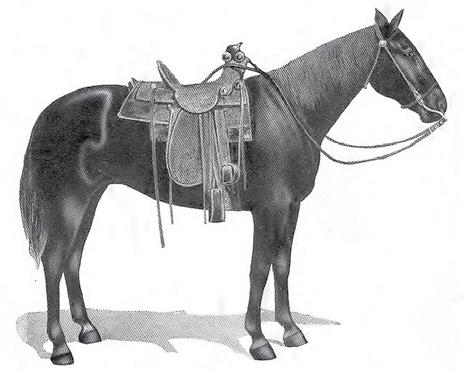
One of the highlights of U.S. President Theodore Roosevelt’s visit to Wyoming in 1903 was the gift of a saddle horse, according to historical accounts.
Wyoming Historian Phil Roberts wrote in his “Buffalo Bones” column, “Roosevelt’s three day trip to the state in 1903 was one of the most publicized visits by any chief executive.”
The president’s Wyoming trip began aboard a special train at the railroad station in Evanston and ended astride a horse in Cheyenne.
The train stopped in Laramie where citizens were at the depot in force to greet the Old Rough Rider. Several of them, knowing of the president’s fondness for riding, proposed he go to Cheyenne by horseback, Roberts noted.
Roosevelt accepted the invitation, and his entourage plus several local dignitaries and cowboys made the circuitous
65-mile ride horseback over Sherman Hill, stopping at the Van Tassell Ranch for lunch.
Upon his arrival in Cheyenne, the citizens showed the president “a Wild West show,” and during a break in the action, Douglas residents presented Roosevelt with a horse named Ragalon.
“I am going to name
him Wyoming for the people who have been so generous to me. I shall be proud in Washington, D.C. to ride the finest horse which the great ranges have ever produced,” the president said. He rode the horse to a barbecue at the Warren Ranch that evening. Roosevelt and his newly acquired mount Wyoming left Cheyenne the next day for Washington, D. C. and the duties of the presidency. Roosevelt could then say he had ridden the ranges of Wyoming while serving as the country’s 26th president, according to the article by Roberts.
Teddy could also boast he could saddle up to ride the streets of our nation’s capitol with Wyoming between his legs.
of Ag Market News Service, Greeley, CO
Nebraska Hay Summary As of June 18, 2026
Compared to last report bales of alfalfa sold steady to 5.00 higher from east to west. Grass hay fully steady on old crop hay with a higher undertone noted on limited new crop grass bales. Wheat hay on new crop sold sharply higher. Sun-cured alfalfa pellets sold 20.00 higher in the East and 30.00 higher in the west. Dehy alfalfa Pellts sold steady. Ground and delivered hay steady. Demand was good in most areas of the state with very good demand in the west. Drought and burnt land continues and these area are seeking large quantities of hay to feed their livestock. Most of the wheat crop in the west that was on dryland ground has been cut and baled. Alfalfa tonnage has been all over the place with reports coming in from 1⁄2 to 2 tons per acre. Irrigation water is just now getting turned on in some areas in the western part of the state with other districts thinking it will be July 1 before canals are full. Few, very small grasshoppers are starting to surface across the region and may have to be sprayed. Central
Crop
Source: USDA AMS Livestock, Poultry & Grain Market News, Kearny, NE
Colorado Hay Summary
As of June 18, 2026
Compared to last report: Trade activity Moderate. Demand Good to Very Good on both old crop and new crop hay. 3x3’s of old crop alfalfa horse hay sold $5.00 per bale higher this period. According to the U.S. Drought Monitor’s High Plains Summary for June 16, 2026, across the High Plains states, drought continues to persist across western Kansas and eastern Colorado. The most severe and exceptional drought areas extend from eastern Wyoming into western and northern Nebraska and far southern South Dakota. Continued lack of rainfall and warmer- thannormal temperatures led to worsening drought conditions in the plains of eastern Colorado and small portions of northwestern Kansas. Exceptional drought was expanded across three counties in the Nebraska panhandle, where pastures and dryland wheat conditions are the poorest seen in decades, as a result of the record warm, dry winter followed by meager spring rainfall. The agricultural impacts in western Nebraska were confirmed by drought indicators spanning the last 6-12 months. For Drought Classifications, 34.62% of the state falls in Extreme-Exceptional drought (D3-D4) categories, and 65.38% of the state falls into the Abnormally Dry-Severe Drought (D0-D2) categories. The next available report will be Thursday, July, 2 2026. Mountains & Northwest Colorado
WANTED RECIP COWS: Must be open!! Two to 6 years old, Red Angus or Angus-based cows. For more information, call Corie Mydland, 406-8555598 (cell), Trans Ova Genetics, Joliet, MT 6/27
NOTICE: Publication in this newspaper does not guarantee the legitimacy of any offer or solicitation. Take reasonable steps to evaluate an offer before you send money or provide personal/financial information to an advertiser. If you have questions or believe you have been the victim of fraud, contact the Wyoming Attorney General’s Office, Consumer Protection Unit, 109 Capitol Building, Cheyenne, WY 82002, 307-777-6397 TFN
UP IN ARMS, LLC FLEA MARKET AND GUN SHOW July 10-12, Cody, WY at the Cody Recreation Gymnasium. Open to the public. Fri., July 10, 3-7 p.m. Sat., July 11, 9 a.m.-5 p.m. Sun., July 12, 9 a.m.-3 p.m. Giving away a .22 pistol Sunday at 2 p.m., must be present to win, 21 years of age and able to pass background check. Buy, sell, trade. Adults $6, children 12 and under free (when accompanied by an adult). For more information, contact Lisa, 208-420-2295 7/4
Wyoming Sugar Company is now hiring for a welder: Looking for a capable, prompt and disciplined welder for our facility. This person would be responsible for all welding and mechanic projects such as fabrication and maintenance throughout our facility. Preferred qualifications: Any welding certifications. Mechanic experience, pipe fitting experience. Starting wage $24.27/hour or DOE. Send resume to mrideout@wyosugar.com

are interested stop by and fill out an application or visit our website at Call Mike Faimon at 406-469-1585 or Davin
FULL-TIME RANCH MANAGER: BISON RANCH, SHERIDAN, WY. We are seeking a dedicated, experienced ranch manager to join our growing bison ranch operation. This is a hands-on role for someone who takes pride in hard work, reliability and caring for land and livestock. Responsibilities: Daily care and management of bison herd. Maintaining fencing, equipment and ranch property. Assisting with feeding, health checks and handling livestock. General ranch maintenance and upkeep. Supporting ongoing growth and operations of the ranch. Requirements: Prior ranching or livestock experience (bison experience preferred but not required). Strong work ethic and reliability. Ability to lift heavy items and perform physical labor daily. Self-motivated and able to work independently. Available to start immediately. Salary starts at $145,000 and up. This is a full-time position with opportunity to grow alongside a rapidly expanding ranch. Apply today if you’re ready to work hard and be part of something being built from the ground up. Call Landon, 205-531-9819 or e-mail sheryl@ bisonunion.com 7/11
WIGGINS FEEDYARD, LLC HIRING FULL-TIME EMPLOYEE: Current driver’s license required. Call Sue Wiggins, 308-279-0924, e-mail sswiggins@wigginsfeedyard.com, 10077 U.S. 385, Bridgeport, NE 69336, provide references with phone numbers 7/4
MEATCUTTER WANTED: Valley Foods in Saratoga, WY has an immediate opening for a meatcutter. Experience is preferred but not necessary. Ideal candidate is selfmotivated, efficient and customer service minded. Pay DOE. Send resume to valleyfoods9024@ hotmail.com 7/4
RANCH HAND FOR FARM AND RANCH IN NORTHEAST
COLORADO: Seeking an experienced quality ranch hand with a good work ethic and responsible enough to work on their own. The position requires livestock care, helping with calving and branding, moving cows to pasture and cornstalks. There is some farming to prepare fields for planting corn, putting up hay and working on pivot sprinklers. Also putting up electric fences and maintaining all pasture fences. Work pickup and housing with utilities provided. Wages based on knowledge and experience. Send resume, references and work history to bkkramer.kk@gmail.com. Call Kim at 970-520-2513 6/27
RANCH HAND/GROUNDS
KEEPER: Full-time position at a family-owned ranch near Cody, WY and located in the Shoshone National Forest. Position entails lawn care, irrigation, heavy equipment operation, carpentry, equipment maintenance, building maintenance and overall residential and agricultural property maintenance. Experience is welcome but will train the right candidate. The ideal candidate will be reliable; have a strong work ethic; be able to perform individually and with a team; be a self-starter and enjoy working outdoors. Benefits include health, with optional dental and vision; paid-time off and 401(k) with employer matching contribution. For the right candidate housing on property is also available. Salary based upon previous experience. Send resumes to emilyb@colliergroupoffice. com 7/25


BULLS FOR SALE: Registered yearling and 2-year-old Black Angus range bulls for sale private treaty. Good selection for heifers and cows. From popular sires and industry leaders. Semen tested and ready to go. CLAY CREEK ANGUS, 307-762-3541, www. claycreek.net 6/27
REGISTERED ANGUS YEARLING BULLS: Breeding soundness, fertility tested and PAP tested. Ready to go to work. Call Paul at TAG Double H Cattle Co., Ten Sleep, WY, 307-690-4225 6/27
REGISTERED ANGUS YEARLING AND 2-YEAR-OLD


AGRI-ONE FINANCIAL: Farm/ ranch and all commercial loans. RATES AS LOW AS 5%. We have been helping with all aspects of agricultural, commercial financing and management for years. LET US HELP YOU on a consulting level with management to increase profitability, deal with and fix credit problems and for all your financing needs. WE CARE AND HAVE WORKING PROGRAMS designed for the farmer/rancher and not the banker. Please call Steve, 303-773-3545 or check out our website, www.agrionefinancial.com. I will come to you and get the job done!! 7/11
CUSTOM HARVESTING SERVICES: Wheat, corn, millet, milo and sunflowers. Running Case IH combines with full support equipment. Timely, reliable and competitive rates. For more information, call 2D Harvesting, 970-630-8639, Wray, CO 7/4


MINI DACHSHUND PUPPIES:
Born April 23. First shots and dewormed. Dad AKC blk/tan, Mom ACA red, 9 lbs./each, $1,000. Call 406-598-5444. To view photos, go to www.wylr. net in the classifieds 6/27
LIVESTOCK GUARDIAN
DOGS: PUPS FOR SALE: Great Pyrenees/Akbash/Anatolian/Maremma mix pups. Both parents are on site and guarding livestock. Born Feb. 25. Located east of Chugwater, WY. Priced with the rancher in mind. For further information call Donna, 307262-5699 or Clay, 307-3315762 6/27
BULLS FOR SALE, visit www.crookedcreekangus. com or call 785-332-6206, St. Francis, KS 8/29
BEST LAST CHANCE SALE!!
LYTLE RED ANGUS is offering private treaty bulls from our herd founded on 30+ years of selection for fertility, consistency and efficiency. Highly adaptable, our bulls have proven themselves from Arizona to New York state. 15-month old bulls available. Passed breeding service exams and ready to go! Visit www. lytleredangus.com or call Zeb, 605-441-7658. To view photos, go to www.wylr.net in the classifieds 7/18
SALE * CHRISTENSEN RED ANGUS * SALE: Registered, vaccinated and fertility tested bulls. We have a deep carcass, high ADG packaged with moderate to low birthweights available. Call 406-208-4315 or e-mail criters64@gmail.com 7/4
WEAVER FAMILY PUPPIES PRODUCERS OF HIGH-QUALITY, WELL-SOCIALIZED AND FAMILY-FRIENDLY BERNEDOODLE PUPPIES. A designer breed of the Bernese Mountain Dog and Miniature Poodle. The result is a beautiful low shedding, medium sized pet, with lots of affection. We are located in the gorgeous Bitterroot
3/H SIMMENTAL RANCH, PLAINS, MT OFFERS POWERFUL SIMANGUS BULLS: Yearlings and 18-month-olds sired by top AI genetics. Bred for performance, soundness and longevity, with a strong emphasis on calm disposition. These bulls are built to work and last in real world conditions. Call Alan at 503-9316815, to find the right fit for your program. To view photos, go to www.wylr.net in the classifieds TFN


3,500 HEAD FEEDLOT NEAR WATERTOWN, S.D.: Specializing in replacement dairy cattle and custom beef operations. AI service available. Shots/vaccines to your protocols. Room available. Call/text to talk rates, Nathan, 605-868-7383 7/11
CUSTOM FEEDING AND FINISHING FOR CATTLE AND SHEEP. Cactus Hill Ranch Company, Fort Collins, CO. Contact AJ Nelson, 970-372-8273 8/22 FAITHFUL FEEDERS: Heifer development, backgrounding and grass calf prep. Billings, MT. Call Ryan, 406-696-0104 4/10
SUMMER PASTURE WANTED FOR YEARLINGS: Seeking summer grass for 2026. For 500-1,500 head. Wyoming, Colorado, Nebraska, South Dakota. Prefer long-term potential, competitive rates offered. Call Jon, 831-240-5795 TFN
LOOKING TO LEASE A RANCH FOR APPROXIMATELY 150-200 HEAD OF COWS. Prefer area in Johnson and Sheridan counties. Call 307-290-1643 7/18
PARK COUNTY, WY RANCH NEAR CODY, WY IS AVAILABLE FOR A LONG-TERM LEASE: The ranch has over 50,000 acres and supports an irrigated hay base with BOR water rights. Carrying capacity is 700 animal units year-round with hay production. Willing to split the hay ground and grazing. Please email Melanie Giliati at mgiliati@ acpg.com for details 6/27
RANCH HORSES WANTED: Sound, rope broke and gentle. Call 605-347-3403 or 605499-9088 6/27
BOOT UP FOR SUMMER!! $AVE on BOOTS: HONDO, BOULET, JUSTIN WORK BOOTS, TWISTED X (boots and shoes) and more!! SOMETHING for EVERYONE!! Great SELECTION of GIFTS for all OCCASIONS!! WE CAN ship!! Shop Moss Saddles, Boots and Tack, 4648 West Yellowstone Highway, Casper, WY; 307-472-1872. Our family serving yours for 50 years!! Check us out on Facebook or our website 6/27
WEANER PIGS FOR SALE.
ALSO, butcher hogs. Located in Powell, WY. For more information, call 307-271-1014 1/16
NEW CROP IRRIGATED ALFALFA AND GRASS HAY FOR SALE: Round bales. Top quality. Located in O’Neill, NE. For more information and pricing, call Jerald Pritchett, 402-3404154 7/18
2024 HAYGRAZER: 4x5 round bales and 4x4x8 big squares, good cow hay. Discounted because of age, $50/ton. Provide your own freight. Call 806-7813976 6/27
HAY FOR SALE, new crop, $350/ton. Contact Crosby Farms, 307-272-3712, Cowley, WY 7/18
BARLEY STRAW: Certified weed-free small squares, $4/bale. ALSO, 5x6 round bales, $125/ton. GRAIN OATS, wheat and barley, $20/cwt. Greybull, WY area. Call 307-762-3878 or 307-899-4714, leave message 7/11
ATTENTION FEEDLOTS AND BACKGROUNDERS!!
Chopped alfalfa (3 inches) feed mixer ready. We are a large scale hay farm with our own trucks and can work with your delivery schedule. Stored inside sheds immediately after baling. No rain. No wastage due to weathering!! Call/text Rob’s cell 204-209-1066 or e-mail rob@redriverforage.com. To view photos, go to www.wylr. net in the classifieds 7/11
FEED/GRAIN FOR SALE: Alfalfa, grass and rye/triticale mix hay. Large squares and rounds. Semi loads and delivery only. Call 308-882-1498 7/4
CERTIFIED TRITICALE
STRAW: Long stem round bales. Farson, WY. Call 307350-0350 6/27
400 TONS DURUM STRAW: Round bales, 1,000 lbs., $60/ bale, 780 bales available. Excellent bedding or feed. Call 406765-7172 6/27
MONIDA OATS: $16/cwt. Combine run, great for seed or feed. Will auger into truck, trailer or large totes/ag bags. Located between Powell and Cody, WY. Certified scales on site. Call or text Knopp Farms for details, 307-254-0554 7/18
1980 S 1750 SERIES INTER-
NATIONAL TRUCK: Gray and white, 406 engine, 5&2 manual transmission, 18 steel box with stock racks, good rubber, freshly painted. Very solid truck. For more information and pricing, call 605-380-0887 7/4
2018 DODGE RAM 3500: 4x4, crew cab, 6.4 Hemi. Gooseneck hitch, 94,000 miles. Covercraft seat covers, WeatherTech floor mats. New transmission. Call Dan, 307-250-2178 7/11

ROTO GRIND TUB GRINDER: Good condition. Pulls well behind a pickup for transport, $9,000 OBO. Leave message, I will call you back, 406-5847582 6/27
FOR SALE: Alfalfa and alfalfa/grass mix, large rounds with net wrap, several hundred bales, nice hay. 2022 KW T680 day cab semi with PACCAR MX-13 engine, automatic transmission, air ride, air slide 5th wheel, aluminum wheels, 486,100 miles, asking $29,500. New Holland 9’ sickle mower. Rowse 9’ pull type sickle mower. CIH 1100 3 pt. 9’ sickle mower. Hesston/ AGCO 5556 large round baler with net wrap and twin tie, 8,631 bales. H&S hay windrow fluffer. H&S 12 wheel finger rake. Ford 7N tractor with wide front and 3 pt. Schulte hydraulic rock picker with 3 bat reel. New Holland 195 manure spreader, 410 bushel with slop gate, double floor chains, tandem axle. Behlen Country livestock working chute with automatic headgate. Apache portable creep feeder. Burns portable loading chute. 2019 John Deere 714A chuckwagon with John Deere tandem running gear. H&S 7+4 24’ chuckwagon with bunk feeding extensions and tandem 14 ton running gear. J&M 350 gravity wagon with 385/65 R22.5 tires and ag topper. 12’ and 14’ HD box scrapers with tilt. All in very nice condition!! Call 605-999-5482 7/4
1985 GMC 7000 TRUCK: 5&2 transmission, 20 ton Harsh hoist, 18’ box, silage end gate, new carburetor and fuel pump, $8.000; 1,000 GALLON WATER TANK ON FLATBED, fits on a pickup, $1,000; FOR-MOST HYDRAULIC SQUEEZE CHUTE WITH PALPATION CAGE, breast bar, neck extensions and more, good working condition, $8,000. Call 307-8573102, early morning, noon or evening 7/4

Copper wire is being stolen from electrically powered pivot systems world-wide. Many growers have resorted to 24-hour

LODGEPOLE OUTDOOR FURNACES, 307-223-2046. Your authorized Central Boiler Dealer. Get your outdoor wood furnace today!! Efficient wood heat. Heat multiple buildings. Invest in your heating, don’t just pay for it!! See us at www.cb.lodgepoleproducts. com!! 6/27
NEW HOLLAND 855 BALER: Has been reconditioned. Always been shedded. TWO INTERNATIONAL MODEL 7100 DRILLS: Purchased new in 1986. Always been shedded. HAVE LIQUID FERTILIZER TANKS WITH SQUEEZE PUMPS, both 14’, has hitch to pull both planters at the same time. Call 303-9472338 or e-mail slhieb@msn. com 6/27

ORIGINAL ROUND BALER BELTING FOR ALL MAKES: Save $100s. Free shipping, www.balerbelts.com. Call Hammond Equipment, 334627-3348 10/24


PIPE FOR SALE!! 2 7/8”, 3 1/2” tubing, 4” drill pipe, 4 1/2” casing, 5” casing, 7” casing. Rods 3/4”, 7/8” and 1” located in Montana, can ship anywhere. Call Mike, 602-758-4447. To view photos, go to www.wylr.net in the classifieds 11/7




RAIL TIES: #1-9 ft., #1 and #2-8 ft. SWITCH TIES: 12 ft. and 14 ft. USED CULVERTS: Three ft., 2 ft., 18” and various lengths. ALSO, 14 pieces of heavy duty schedule 80 PVC, 3.5” ID, 20 ft. long with stainless steel couplers. Call EMC2, 307-6302345 or 307-534-5253 6/27
WE DO ALL TYPES OF FENCING!! Agricultural, commercial, residential, with 3 generations of experience. Call Glen 605-3805311 or e-mail fenceguru@ live.com 7/11
LODGEPOLE PRODUCTS, 307-742-6992, SERVING AGRIBUSINESSES SINCE 1975!! Treated posts, corral poles, buck-and-rail, western rail, fence stays, rough-sawn lumber, bedding. SEE US at www.lodgepoleproducts.com and click our “Picking A Fence Post” tab to see why folks choose our posts!! TFN





By Jedidiah Hewlett, UW Extension Educator


Starting a business might seem like a scary thing to do.
Considering other successful businesses with a physical or online presence, it can be tempting to dismiss a potential venture because it’s “too ordinary” or “it would be too much work.”
The other end of the spectrum involves running blindly down a path of buying and selling, expecting things to just work out on their own.
A successful business owner will avoid these two extremes, acknowledging running a business will require effort – often mundane effort – yet finds fulfilment in the process.
The rewards of owning a side hustle or a Fortune 500 company belong solely to those who do what they can with what they have, and anyone can do this.
Writing a business plan is a great place to start before committing to the journey of business ownership.
The best part about crafting a business plan is it is a fail-safe activity. If the idea turns out to be less than ideal, then all that is lost is the time spent exploring this alternative.
A successful business
venture will only be helped by sufficient investigation prior to an official launch.
Hopefully the following steps will pave the way to crafting a robust business plan.
Create the vision
A business requires a vision which is clearly identified by the person or team beginning the venture. A vision is necessary because it gives direction to the efforts made in the process of operating the enterprise and establishes what success looks like.
Without a vision, a start-up can fail very quickly because of frantic attempts to do too many things at once.
The vision should be broadly written but practical and achievable at the same time. This allows for a large enough scope to permit growth or improvement, while also placing the target within reach from the beginning.
A few examples of vision statements include “transform condemned and wasted resources into marketable products” and “responsibly steward livestock, land and people toward their flourishing.”
These are good examples of vision statements because they are specific
continued from page 1
the nation’s highly consolidated food supply chain, and industry leaders believe both could create new opportunities and improve supply chain resilience.
On June 18, Sens. Adam Schiff (D-CA), Amy Klobuchar (D-MN), Cindy HydeSmith (R-MS) and Jim Justice (R-WV) introduced the American Food Supply Chain Resiliency Act, which aims to build upon existing USDA investments designed to strengthen regional food systems and create new market opportunities for producers.
According to the corresponding press release, a key provision in the bill would make the USDA’s Resilient Food Systems Infrastructure Program (RFSI) permanent.
This program provides funding to states for projects which improve food supply chain infrastructure and market development and allows states to award grant money for equipment purchases, value-added processing projects and supply chain improvements.
The bill would also establish a Regional Food Systems Hubs Program within USDA which would be tasked with creating at least 10 regional
but not restrictive, allowing for constant improvement while providing direction for day-to-day activities and long-term planning decisions alike.
Identify a mission
Once a vision of the business is established, a mission or purpose should be identified as well.
The mission of the enterprise answers the question of “what does this business do, and why does it exist?”
The mission might be making the best homemade soap in town, recycling green waste from the neighborhood to reduce the landfill load or providing a remote bookkeeping service to clients so they don’t have to travel.
The mission and vision go hand in hand and might need to be adjusted over time.
If using the analogy of a car, the vision might be thought of as the windshield and the mission is the engine.
Although crafting good goals can be a challenge, there is no replacing the clarity and sense of direction the process of setting goals can bring.
Setting goals creates tangible steps to take along the path toward the vision. Goals can apply to different aspects of the business and different time scales as well. Even the business plan writing process might involve goals.
The best measure of a good goal is the mnemonic “S.M.A.R.T.,” which stands

for specific, measurable, attainable, relevant and time-bound.
A good goal might be something like “enumerate resource requirements for two new products before Dec. 31.”
In the planning process, a goal might be “identify and interview one business competitor about how to manage insurance before the end of May.”
It is important to keep goals for the business plan focused on the first six to 12 months of operation and restrict these to five goals or objectives at a time.
Too many goals can create a situation where there seems like too much to do, while if only a few goals are established and met, the goal setting process will need to be repeated frequently.
Provide context
An important step in the business planning process is to set down the historical context that led to the idea of starting a business.
Perhaps there was a
need identified in the community which has been unmet for several years or a consistent demand from potential customers wanting a particular product.
Potential business owners may have work experience or educational background which qualifies them for the type of venture they are considering.
This section of the business plan can be only a few sentences, but it is helpful to clarify the motivation behind starting the business. If the reason is simply “life is too boring,” then the desire to carry on the business may fade quickly.
A short section detailing the status of the business is also helpful to include. Whether the planning process is relatively far along or still in the preliminary stages, it is good to be clear about where things stand.
The use of candor in a business plan will help remove emotion from the decision to launch a busi-
ness or not. If the business plan takes a significant amount of time to complete, the context and progress in the planning process may need revisions and updates over time.
Business planning might not be the most appealing thing to do, but it is very important to the success of the venture.
Business planning is the vehicle allowing dreams to come to fruition or at least establish whether those dreams can be used to turn a profit or not.
There is nothing wrong with hobbies, but too often hobbies make bad businesses, and business ownership is rarely sustainable just as a hobby. When the desire to turn a hobby into a business venture arises, it is best to work through the planning process with consideration and diligence.
Jedidiah Hewlett is the University of Wyoming Extension educator serving Converse County. He can be reached at jhewlett@ uwyo.edu or 307-358-2417.
hubs across the U.S. to expand producer assistance.
“Codifying these programs will benefit consumers, producers and rural communities by providing more options, increasing access and creating new and more markets for small and mid-sized producers,” the senators write.
Small Processors Action Plan
Two weeks prior to the announcement of the American Food Supply Chain Resiliency Act, U.S. Secretary of Agriculture Brooke Rollins announced USDA’s new Small Processors Action Plan on June 3.
According to the department, small and very small meat and poultry processors account for more than 90 percent of federally-inspected establishments nationwide, yet many struggle with regulatory burdens, staffing challenges and limited access to capital needed for expansion.
The Small Processors Action Plan seeks to address these concerns and maintain existing food safety standards.
Under the initiative, USDA aims to improve customer service and responsiveness, create easier ways for small plants to submit and track appeals and requests, establish dedicated customer
support to help small businesses navigate processes and get timely responses, expand access to assistance for plants with limited technology and make requirements clearer and easier to navigate.
Additionally, the plan looks to update and expand plain-language guidance provided by USDA’s Food Safety and Inspection Service; improve visibility of available support, escalation paths and points of contact; launch simpler tools to help plants utilize USDA systems; improve consistence through training and guidance and strengthen coordination with the Small Business Administration to ensure small plants are aware of all available resources.
“Today’s announcement marks another step toward rebuilding our domestic beef industry,” Rollins says. “The actions contained in the new Small Processors Action Plan modernize USDA’s approach to the people and small businesses who process locallygrown American beef and protein.”
“We are removing overly burdensome red tape, improving service and giving small plants the clarity and support they need to operate safely, grow and compete,” she adds.
“By expanding local processing capabilities, we’re continuing to bolster our domestic producers, which are central
to President Donald Trump’s Make America Healthy Again agenda.”
MPPEP funding
In addition to the Small Processors Action Plan, Rollins announced a fourth round of funding through the Meat and Poultry Processing Expansion Program (MPPEP).
With this, the department will make $60 million available to eligible meat and poultry processors who are seeking to expand capacity, improve efficiency and increase competition within the processing sector.
Funding will be split evenly between two categories – one for small and very small processors and another for intermediatesized facilities.
Eligible applicants include for-profit businesses, nonprofit organizations, producerowned cooperatives, Tribes and Tribal entities. Facilities must be independently owned, domestically owned and physically located within the U.S. or its territories.
According to USDA, the funding is intended to encourage competition, strengthen supply chain resilience and improve access to processing services for livestock producers.
Industry support
Multiple ag groups welcomed both announcements.
The National Association of State Departments of Agriculture (NASDA), American Farmland Trust (AFT), National Farmers Union and Farm Credit Council voiced support for the American Food Supply Chain Resiliency Act.
“NASDA applauds the introduction of the American Food Supply Chain Resiliency Act and supports its efforts to codify the RFSI and to establish the Resilient Food Systems Hubs Program,” states NASDA Chief Executive Officer Ted McKinney. “These investments will strengthen regional food systems by expanding and diversifying domestic market access for farmers, improving supply chain resilience, supporting farm viability and increasing procurement opportunities for institutions like schools and hospitals.”
AFT President John Piotti comments, “This important legislation will help farmers access new markets, keep working lands in production and create economic opportunities in communities across the country. AFT applauds Schiff, Hyde-Smith, Klobuchar and Justice for this practical, bipartisan approach to strengthening regional food systems and ensuring the long-term viability of American agriculture. When farms
thrive, America thrives.”
The announcement of the Small Processors Action Plan and additional MPPEP funding also garnered praise from industry groups.
The U.S. Cattlemen’s Association (USCA) praised USDA’s efforts and emphasized the critical role local and regional processors play within rural communities.
“Providing cattle producers with more local and regional processing options is essential to restoring competition, strengthening the cattle marketplace and delivering affordable, high-quality protein to American families. For years, USCA has advocated for policies to expand local and regional processing capacity and reduce the choke points created by excessive consolidation in the packing sector,” says USCA President Justin Tupper.
“Small and very small processors are the backbone of rural America,” Tupper continues. “When they have the tools and support they need to succeed, producers gain real market access; consumers gain access to local, reliable food options and our rural communities grow stronger.”
Hannah Bugas is the managing editor of the Wyoming Livestock Roundup. Send comments on this article to roundup@wylr.net.
“Average retail lamb prices increased 12.6 percent year-over-year in Q1, rising from $8.13 per pound to $9.15 per pound,” reads the report. “Every U.S. region experienced price increases, with the Southeast posting the largest jump and becoming the highestpriced region at $9.74 per pound.”
“Despite inflationary pressures and broader consumer concerns about household spending, lamb has demonstrated remarkable resilience, maintaining strong dollar performance nationwide,” the report continues.
Domestic lamb
On a positive note, ALB notes one of the most encouraging trends for American producers is the continued momentum behind domestic lamb.
According to the report, domestic lamb outperformed both imported lamb and the overall category for the fifth consecutive quarter.
“Over the last 52 weeks, domestic lamb sales increased 12.4 percent in dollars and 5.7 percent in volume at participating ALB retailers,” the report states. “This stands in sharp contrast to the broader lamb category, where volume remained essentially flat.”
ALB says domestic lamb’s growing market share suggests consumers are increasingly seeking American-produced product, even in a higher-priced environment.
Category leaders
In terms of category growth, several cuts delivered standout performances during the quarter, with ground lamb and racks leading the way.
Racks and rib roasts were the clear category winner, according to the report, generating a 18.4 percent increase in dollar sales during Q1, which accounted for nearly one-half of the category’s overall dollar growth.
Ground lamb continued its multi-year growth trajectory, posting a 12 percent increase in dollar sales despite a decline in pounds sold.
ALB further notes demand for ground lamb remains exceptionally strong, reaching a new weekly sales record of $1.68 million during January.
The report also highlights growth in ingredient cuts which saw a 15 percent increase in dollar sales and a remarkable 29.3 percent increase in volume sales compared to Q1 findings from 2025.
In addition, whole leg cuts saw a 12.8 percent increase in dollar sales, and blade chops saw a 10.2 percent increase in dollar sales.
Regional growth
According to ALB, every major U.S. region recorded dollar growth during Q1.
Leading regions included the South Central Region at a 17.2 percent increase, the Southeast Region at a 14 percent increase and the Plains
Region at a 13.4 percent increase.
“The South Central and Plains regions also posted meaningful volume growth, demonstrating consumer demand remains strong in several developing lamb markets,” the report states.
ALB further highlights Houston as “one of the industry’s strongest growth stories” in terms of metropolitan markets, noting Q1 dollar sales in the city surged 20.6 percent yearover-year, while pounds sold increased 12.8 percent.
Houston was one of only two major markets to post volume gains, as Seattle also delivered impressive results with dollar sales up 14.3 percent and volume increasing 4.9 percent.
Once again, ALB notes the effects of higher prices affected traditional highconsumption markets such as San Francisco and Boston, which each continued to generate sales growth but experienced significant declines in volume.
Holiday performance
Seasonal demand remained important to the lamb industry, according to the report, with Easter remaining the largest selling period for lamb.
“Easter 2025 was the strongest performance on record,” the report states. “Christmas 2025, however, produced mixed results. Dollar sales matched the previous year, but volume declined noticeably.”
“As the quarter closed, sales activity was already building in anticipation of

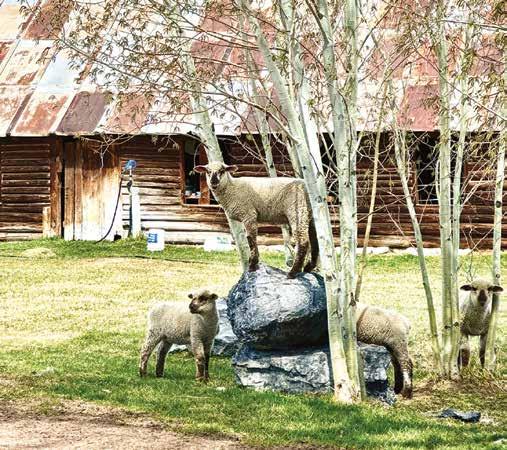
Easter 2026, positioning the industry for another important holiday selling season,” the report continues.
Looking ahead
In closing, ALB offers some key takeaways regarding Q1 performance and potential future trends.
“The Q1 results reinforce a trend which has defined the lamb category for much of the past two years – consumers continue to value lamb enough to absorb higher prices,” the report emphasizes. “The
challenge for the industry moving forward will be sustaining demand while navigating elevated retail pricing and broader economic uncertainty.”
“Still, the continued growth of domestic lamb, record-setting ground lamb performance and expanding opportunities in markets provide strong signals the category’s long-term fundamentals remain healthy,” the report continues.
The bottom line, according to ALB, is lamb contin-
ues to outperform expectations at retail.
“While higher prices are driving much of the category’s dollar growth, domestic lamb is capturing market share, innovative cuts are finding new consumers and key growth markets are delivering encouraging volume gains,” the report concludes.
Grace Skavdahl is the editor of the Wyoming Livestock Roundup. Send comments on this article to roundup@wylr.net.
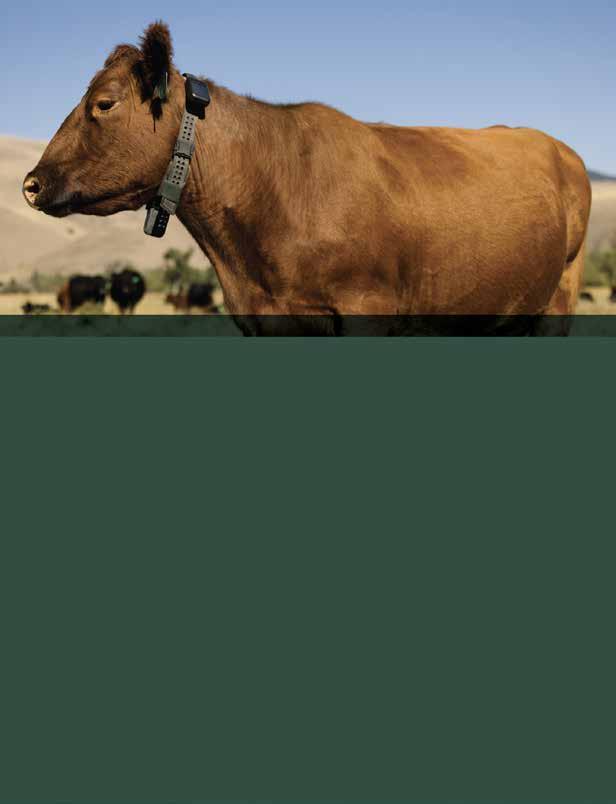

and Wyoming State Fair.
The family also hopes to exhibit at least one or two hogs at the Northern International Livestock Exposition in Billings, Mont. and recently showed at the Battle of the Bighorns in Sheridan in late May.
“I did pretty well there,” he says. “I got first in my classes with one of my dark crosses, fourth with my Hampshire, fifth with my light cross and fifth with my other dark cross.”
“With early shows and jackpots, I don’t worry too much about how I place though, since my target shows are later in the season, like state fair,” he adds. “I look at jackpots more as a chance to practice my showmanship skills and get my pigs desensitized.”
Working hard, staying humble
Like many successful exhibitors, Bentley understands quality livestock don’t simply appear on show day and being a tough competitor doesn’t happen overnight. Preparing for each show requires months of dedication, consistency and attention to detail.
“There’s a lot that goes into it,” he says. “Every day we’re supplementing them, adjusting their feed, clipping and working their hair, plus desensitizing them and walking them a lot to make sure they’re ready for whatever comes next.”
“Then, in the weeks
leading up to a show, we step it up, clipping more, making sure they’re worked every single day and dialing in their environment and feed so they’re looking their best by the time the big shows hit,” he adds.
This behind-the-scenes preparation is what Bentley enjoys most about 4-H.
“My favorite part is learning about the animals, getting new animals each year and understanding how feed and nutrition help them change over the season, plus learning about things like reproductive systems,” he shares.
Outside of showing livestock, Bentley also enjoys competing in livestock and meat judging, which have provided invaluable experiences like attending a meat judging camp at Texas Tech University.
“It was a really cool experience,” he says. “I’m looking forward to all of the other opportunities 4-H and FFA have given me.”
Additionally, Bentley is grateful for the invaluable lessons 4-H and FFA have taught him – lessons he will carry through life long after his livestock projects are finished. He credits the program for improving his communication and leadership skills, especially when it comes to his siblings.
“I want to set a good example for my siblings and show them what it means to win humbly and lose gracefully,” he states.
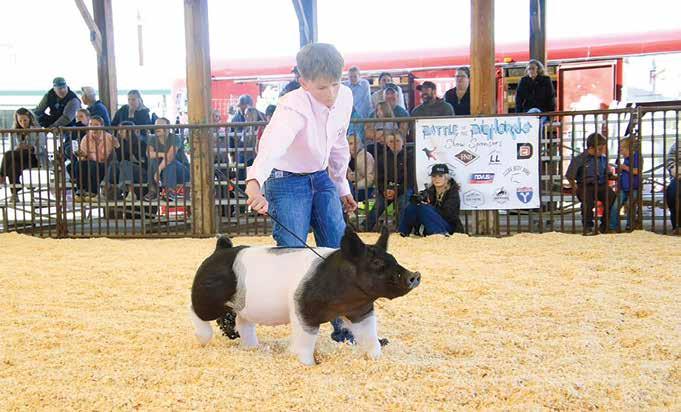
Striving for personal growth
Bentley is quick to credit his support system – especially his parents Ty and Ryliann Malone – for the opportunities he has been given and thank them for all of their help along the way.
From hauling livestock and attending camps to offering advice in the barn and ringside, he says their support has been instrumental throughout his showing career.
“My parents are out there with me every single day, giving me pointers on how to improve,” he says. “They help keep my atti-
tude in check and keep me humble, while also hauling me to shows, taking me to camps and organizing jackpots so I can get my pigs desensitized before the bigger shows hit.”
“Beyond my parents, I also have a great support system of people who’ve taught me more about livestock structure, feed and nutrition and how different feeds change different parts of the animal,” he adds. “I’m really grateful to learn from people who know more about livestock than I do.”
With county and state fair quickly approaching, Bent-
ley says his goals are focused on both personal growth and competitive success.
He hopes to continue improving his showmanship skills, become more confident in the ring and learn to focus on the things he can control.
“There’s so much in showing animals that’s out of your hands, and one of my biggest goals this year has been learning how to take losses,” Bentley shares. “It’s still hard for me sometimes and it’s tough to manage the emotions that come up in the ring, but it’s okay to feel those things. I’m just
trying to keep a level head when it matters most.”
As showing season reaches its pinnacle, Bentley is excited to see his months of hard work come to fruition.
Whether it’s competing in the show ring or helping his siblings in the barn at home, he is dedicated to demonstrating the values 4-H and FFA strive to instill in all of its members – hard work, humility and a willingness to never stop learning.
Hannah Bugas is the managing editor of the Wyoming Livestock Roundup. Send comments on this article to roundup@wylr.net.
Heiferette, 985#